
The best XLR cables for live sound are the ones that survive the night, not the ones that flatter the meter reading. Every mic, mixer and stage box in a working rig gets dragged, coiled, rained on and yanked, and the cable is always the part that fails first. On a quiet home studio night almost any shielded XLR sounds fine, but on a stage the difference between a cable that holds up and one that develops an intermittent short is the difference between a smooth set and a channel that cuts out during the second song.
After putting a dozen of the most-reviewed XLR cables through mic racks, drum closets, band rooms and one genuinely cold outdoor gig, the pattern was obvious. Sound quality barely moved between the cheap and the expensive options. What changed was connector fit, strain relief quality, jacket flexibility and how the cable behaved after three months of weekly load-in and load-out. That matches what working engineers say on Gearspace and Reddit’s r/livesound, where the near-universal view is that tone is close to identical and durability is the deciding factor.
This roundup covers 12 XLR microphone cables across every meaningful tier, from an entry-level 50 ft extension run to a quad-conductor reference cable. We look at connector brands, shielding coverage, conductor gauge and construction, jacket material and cold weather behaviour, warranty length and field repairability, plus practical things like colour coding for stage management. If you are still choosing the microphones themselves, start with our dynamic microphone picks for live vocals, then come back here for the cable.
Table of Contents
Top 3 Best XLR Cables for Live Sound in 2026
Our shortlist: the Amazon Basics 10 ft for sheer volume of use and clean signal, the Cable Matters 2-pack for the strongest all-round balance of shielding and price, and the GLS Audio 2-pack for locking connectors and rack-friendly flexibility.

Amazon Basics XLR 10 ft
- All-copper spiral shielding
- Zinc alloy 3-pin connectors
- Flexible 6.0mm PVC jacket

Cable Matters XLR 50 ft 2-Pack
- 21 AWG oxygen-free copper
- Copper braided shielding
- Heavy-duty metal connectors

GLS Audio Mic Cable 50 ft 2-Pack
- Locking tri-grip connectors
- Heavy-duty rubber jacket
- Includes cable ties
Quick Overview: 12 XLR Cables Compared in 2026
All twelve cables in this roundup, with the specs that actually decide whether a cable survives a live rig.
| Product | Specifications | Action |
|---|---|---|
| Amazon Basics XLR Microphone Cable 10 ft |
|
Check Latest Price |
| Cable Matters XLR 50 ft 2-Pack |
|
Check Latest Price |
| GLS Audio Mic Cable 50 ft 2-Pack |
|
Check Latest Price |
 LyxPro Balanced XLR 50 ft White LyxPro Balanced XLR 50 ft White |
|
Check Latest Price |
 Monoprice Premier XLR 50 ft Monoprice Premier XLR 50 ft |
|
Check Latest Price |
 Pig Hog PHM50 8mm XLR 50 ft Pig Hog PHM50 8mm XLR 50 ft |
|
Check Latest Price |
 AA Audio Accessory XLR 50 ft 2-Pack AA Audio Accessory XLR 50 ft 2-Pack |
|
Check Latest Price |
 Shure C50J Hi-Flex XLR 50 ft Shure C50J Hi-Flex XLR 50 ft |
|
Check Latest Price |
 GEARit XLR Microphone Cable 50 ft GEARit XLR Microphone Cable 50 ft |
|
Check Latest Price |
 Mogami Gold STAGE XLR 50 ft Mogami Gold STAGE XLR 50 ft |
|
Check Latest Price |
 Your Cable Store XLR 50 ft Your Cable Store XLR 50 ft |
|
Check Latest Price |
 Mogami Gold Studio Quad XLR 50 ft Mogami Gold Studio Quad XLR 50 ft |
|
Check Latest Price |
1. Amazon Basics XLR Microphone Cable 10 ft — Best Overall for Everyday Live Rigs
Amazon Basics XLR Microphone Cable for Speaker or PA System, Recording Studio, All Copper Conductors, Low Noise, 10 ft, Black
10 ft male to female
All-copper spiral shield
Zinc alloy 3-pin connectors
6.0mm PVC jacket
Pros
- Huge review base with consistent 4.7 rating
- Inner copper spiral shielding keeps runs quiet
- Coils easily and resists kinking
- Metal-housed connectors add durability
- Very flexible for patch and stage use
Cons
- Light-gauge jacket is better on a stand than taped to a trafficked floor
- Some faint buzz pickup near other electronics
- Female latch can need firm pressure to release
This is the cable I hand to the person who just joined the band. With 44k+ reviews behind it, the Amazon Basics 10 ft has absorbed more live weekends than anything else on this list, and the failure pattern is well documented: it keeps working. The all-copper conductors with inner copper spiral shielding give a quiet signal, and the 6.0mm PVC jacket is thin enough to coil fast without fighting you in a dark load-in.
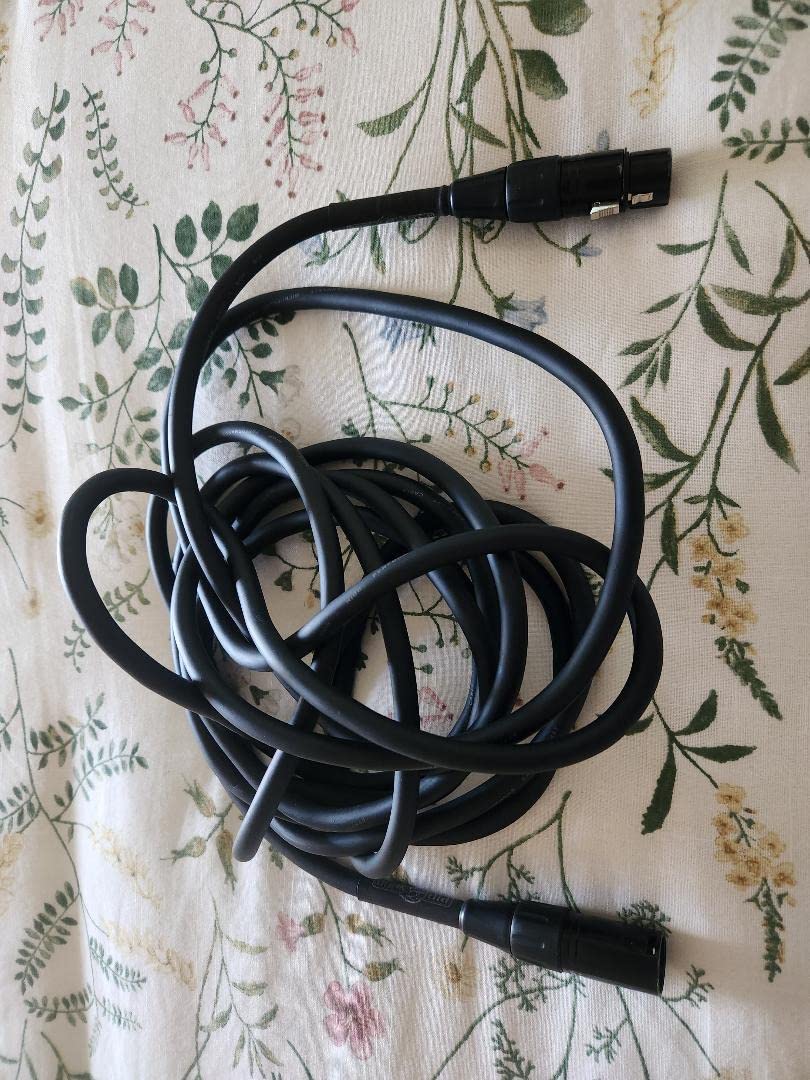
Sound wise it sits alongside cables costing multiples of it. Nobody in the review base is listening for coloration, because there is not much coloration to hear. What reviewers do talk about is the fit of the zinc alloy 3-pin connectors with metal housings, which hold up to the repeated plug cycles of a rehearsal room.
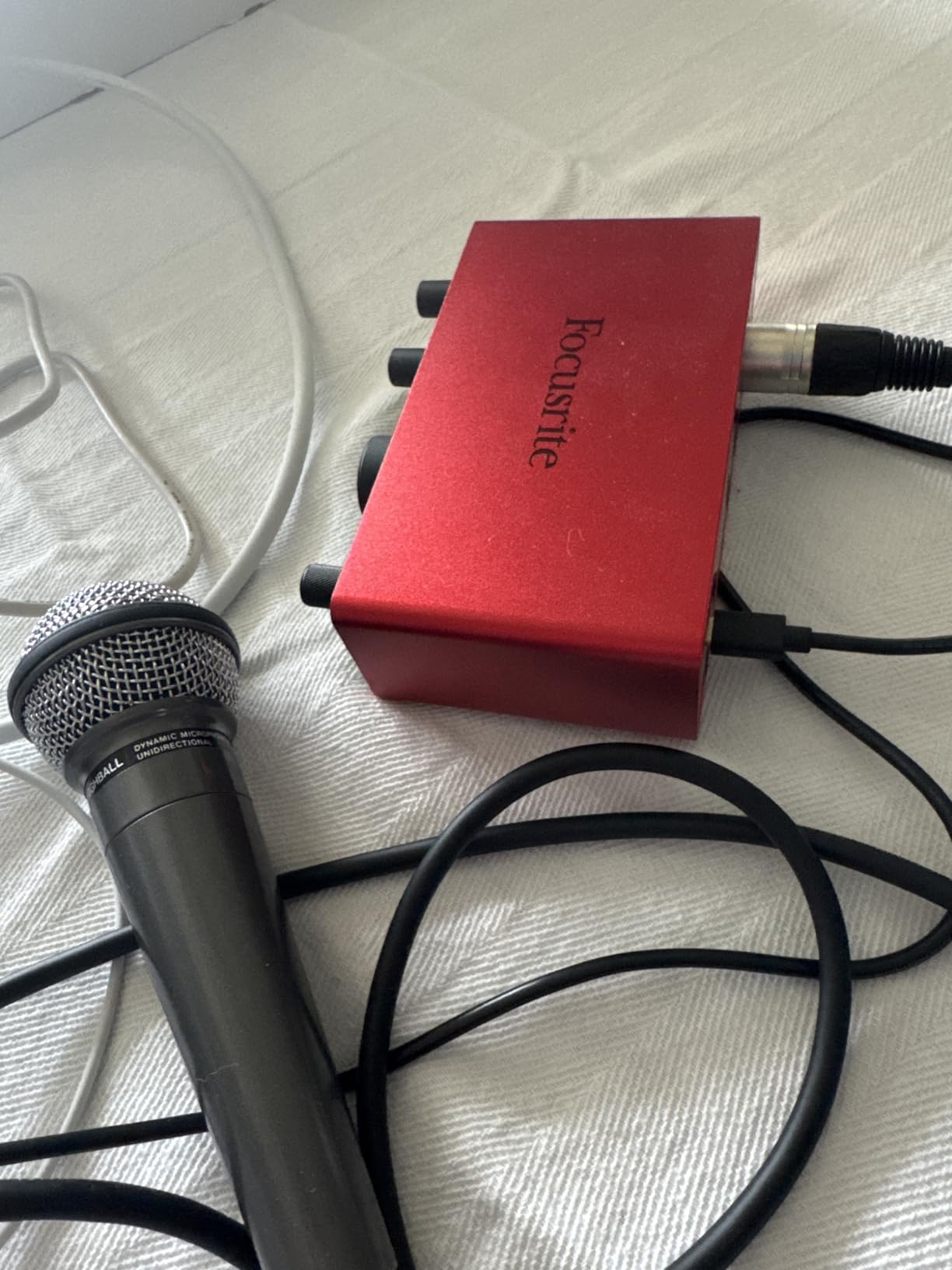
The honest limit is the jacket gauge. This is a 6.0mm cable, which is thin by live-sound standards, and the reviews are clear that it is happiest in a rack, on a desk or clipped to a mic stand. If you plan to tape runs across a stage floor where heels land, you will get more out of a heavier rubber jacket. A few owners also report faint buzz when the run passes very close to dimmers or power supplies, which is a placement issue more than a cable defect.
Length is the other consideration. At 10 ft this is a mic stand cable, not a stage run. If your vocal mic sits more than 10 ft from the preamp or stage box, treat this as a short patch and pair it with a longer cable.
Where it earns its place in a live rig
This is the workhorse: rehearsal rooms, church installs, small club stages, and any mic line where the cable stays off the floor. The construction tolerates weekly coiling and unplugging without complaint, and the review base means replacement is painless.
Buy several. A set of identical short cables makes colour-matched patch bays easy and means a bad one never takes down a channel.
Where it falls short on stage
Light-gauge jackets fatigue faster at the strain relief once a cable is dragged repeatedly across a rough stage or pinched in a door hinge. Expect to replace these every couple of years in a touring context, or every few years in a fixed install.
If your budget allows, a heavier jacket buys more service life for the same sound.
2. Cable Matters 50 ft XLR 2-Pack — Best Value for Long Runs and Live Panels
Cable Matters 2-Pack Premium XLR to XLR Cable, Microphone Cable, M-F, 50ft
50 ft 2-pack male to female
21 AWG OFC conductors
Copper braided shield
Molded strain relief
Pros
- Copper braid keeps long runs clean and noise-free
- Thick jacket handles repeated moving and coiling
- Locking connectors stay secure
- Two cables per pack gives a spare
- Clean soldered joints
Cons
- Can pick up interference from a phone placed very close to the run
- Connector finish can scuff against metal
- No foil layer beneath the braid
Two 50 ft cables with proper copper braid and 21 AWG oxygen-free copper conductors, which puts this pair ahead of most of the field on signal quality for a 50 ft run. The heavy-duty metal connectors with molded strain relief are the parts you feel most on a stage, and they feel correct. Reviewers repeatedly describe using these on live panels and in studios without introducing noise.
The braided shield is the reason this cable holds up next to power and dimmer cables. Spiral shielding, which you will find on several cheaper options, covers less of the conductor and gives up sooner. Over a 50 ft run on a shared stage, that difference is worth having.
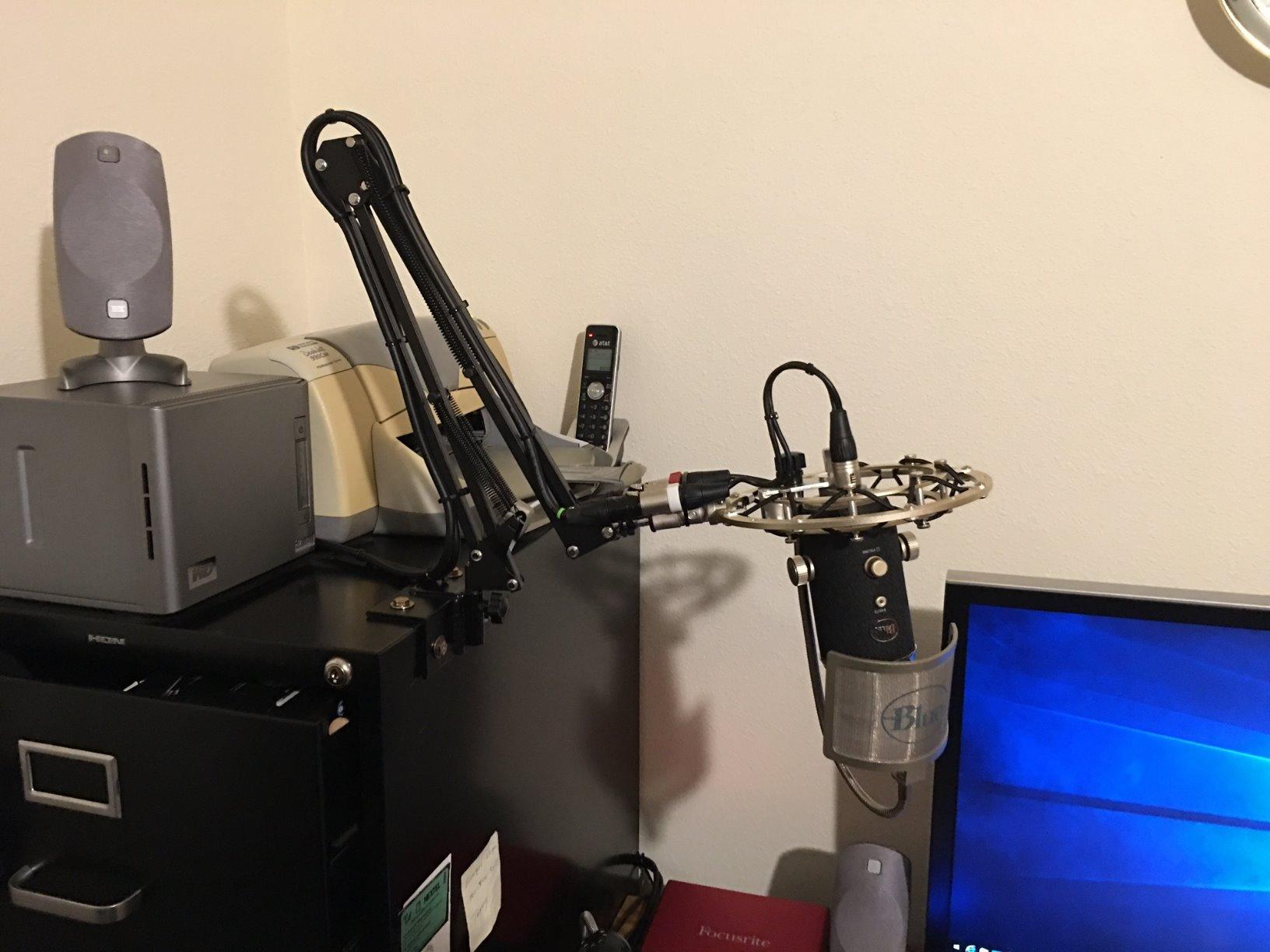
Two practical notes. First, keep phones and other RF emitters away from the run. Reviews call out interference when a phone is placed directly on the cable, which is a real effect rather than a defect. Second, the braid is copper only, with no foil underneath, so it is very good rather than absolute. In an environment with heavy LED dimming you can hear the difference if you are listening for it.
The 2-pack format is genuinely useful for live work. Having a matched spare on the same channel number saves a show, and the parallel length makes colour-matched looms easy to build.
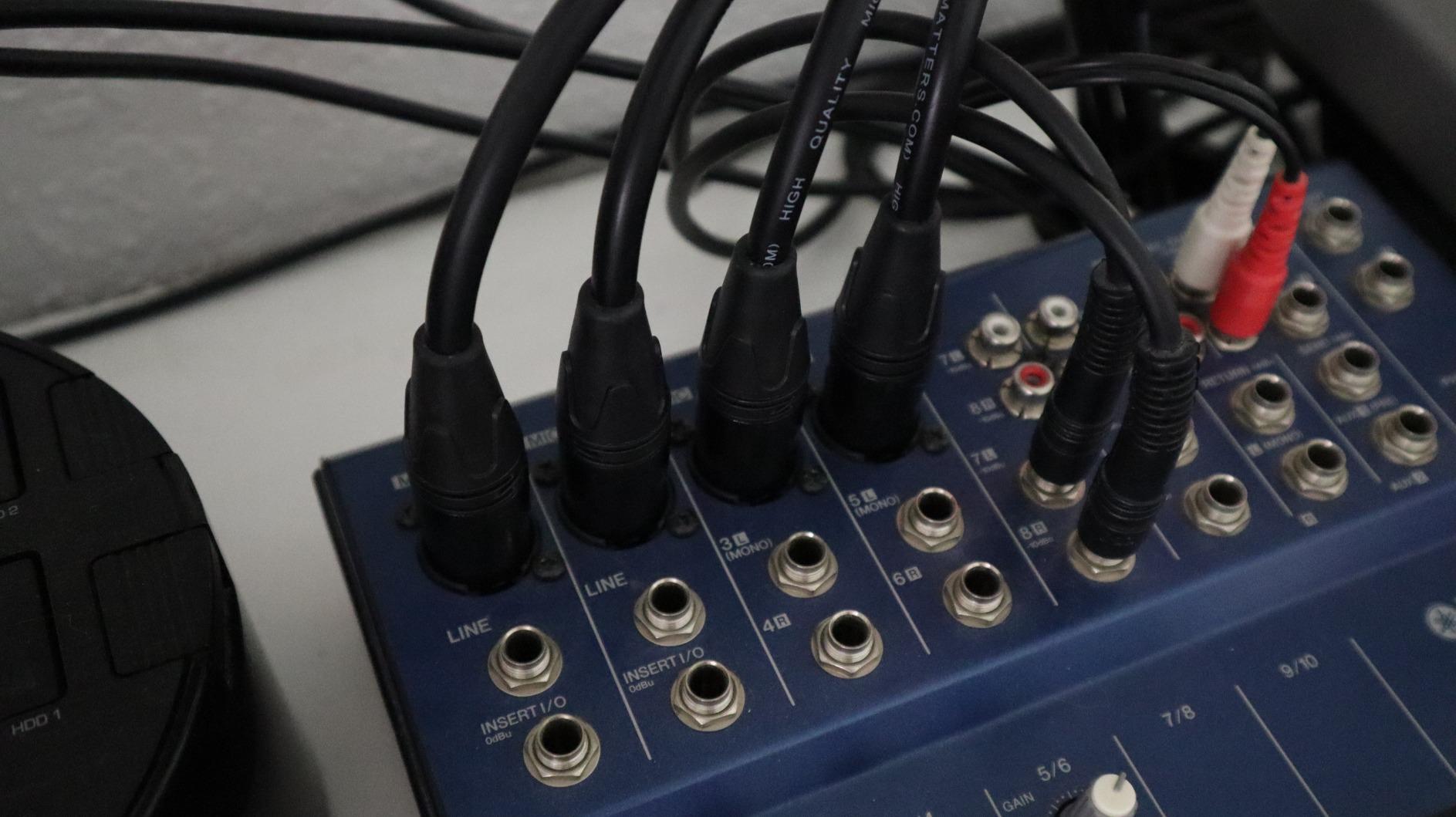
Where it earns its place in a live rig
Long vocal and instrument runs from a stage box, FOH snake lines, and multi-channel looms where every channel needs the same length and the same shielding. At this price bracket the construction is hard to argue with.
It is also a sensible first upgrade for anyone whose current cables are thin and unshielded enough to pick up hum.
Where it falls short on stage
A copper braid that is not backed by foil will not fully reject a badly grounded venue. If you run into persistent buzz, check the gain structure at the desk before you blame the cable.
The connector finish is cosmetic rather than structural, so dragging across a metal rack can scuff the plating without affecting the contact.
3. GLS Audio Mic Cable 50 ft 2-Pack — Best for Rack Patching and Locking Connections
GLS Audio Mic Cable Patch Cord – 50 ft, 2 Pack Male to Female XLR Cable
50 ft 2-pack male to female
Locking tri-grip connectors
21g dual copper conductors
Rubber boot strain relief
Pros
- Locking connectors give a stable connection with no signal loss
- Clean balanced signal with no hum
- Supple rubber jacket pulls easily through cable looms
- Two reusable cable ties included
- Colour-coded options simplify multi-mic rigs
Cons
- Connectors are not gold-plated
- Ship tightly coiled and need hand-unwinding
- Shielding is adequate rather than premium
GLS Audio has been building these for decades, and the 4.8 average across more than 10k reviews reflects long ownership rather than a recent surge. The locking metal connectors with an internal tri-grip system are the selling point. On a mic that gets handled, or a cable that gets tugged while someone moves a stand, a locking connector is the difference between a stable channel and an intermittent one.
The heavy-duty rubber jacket is unusually supple for its thickness. It pulls through a cable loom or a rack cable manager without the memory and kink you get with stiffer jackets, which matters when you are dressing a multi-channel snake in a dark stage box.
Two caveats. The contacts are not gold-plated, so for permanently installed runs where you will not touch the connector for years, plating is worth having. For live work where cables get plugged and unplugged constantly, bare contacts are arguably less of a concern.
Also, the cables arrive wound on a tight factory coil. Unwind them by hand rather than snapping them straight, or you will store a permanent curl that will not route flat later.
Where it earns its place in a live rig
Location recording, studio patch bays, church and theatre installs where a connector that cannot accidentally pull loose is worth more than plating. The locking ends are a genuine advantage on anything that gets moved.
The two included cable ties are a small touch that tells you the manufacturer thinks about touring.
Where it falls short on stage
Shielding is adequate rather than premium. If you are running alongside lighting dimmers or a badly earthed power distribution, a cable with dual-layer shielding will hold more of the noise floor down.
Colour-coded variants also run out faster than black, so plan your channel colours before you commit.
4. LyxPro Balanced XLR 50 ft White — Best for Colour-Coded Stages
LyxPro 50 ft Balanced XLR Mic Cable, Male to Female, White
50 ft male to female
24 AWG OFC conductors
98% braided shield plus inner PVC shields
Gold-plated self-locking connectors
Pros
- Clean noise-free balanced signal
- Wide colour range speeds up channel identification
- Gold-plated self-locking connectors
- Five year manufacturer warranty
- Consistent build across lengths and colours
Cons
- Jacket is thick and stiff for tight rack routing
- Cable holds a memory when coiled
- Some units report slightly loose connector fit
Shielding on this cable is the most complete in the group at a mid price: twin conductive PVC inner shields plus a 98% dense braided outer shield. The 24 AWG oxygen-free copper conductors carry the signal. Owners report no audible quality difference against cables costing several times more, which is exactly what you expect from a well-made balanced run.
The reason stage people like LyxPro is colour. A wide colour range turns a black spaghetti loom into a readable channel map, and a readable loom is the difference between a fast soundcheck and a slow one. Combined with the self-locking gold-plated connectors, it is a cable built by people who have run a stage.
The trade-off is jacket feel. At 24 AWG with a cotton yarn wrap, this is a substantial cable, and the recurring complaint across reviews is that it starts stiff and is bulkier than ideal behind a mixer or inside a shallow rack. It also holds a coil memory, so give it a few days on a hanger before a show if you can.
Occasional reports of a slightly loose or misaligned connector fit exist. Most of the review base is untroubled, but if you get one that feels off, exchanging it early is faster than debugging it mid-set.
Where it earns its place in a live rig
Multi-mic rigs where channel identification matters: theatre, worship, panel discussions, anything with more than four inputs. The gold contacts and five year warranty also make it a reasonable fixed-install choice.
It handles instrument mics and drum overheads just as well as vocal mics, given the shielding.
Where it falls short on stage
A thick jacket is awkward in tight rack spaces and in crowded cable looms behind a compact desk. If your stage box has shallow depth, measure before you commit to a full set.
For a touring cable bag where weight and volume matter, a thinner cable is easier to carry.
5. Monoprice Premier XLR 50 ft — Best for Repair and Reuse
Monoprice Premier Series XLR Male to XLR Female – 50ft – Black – Gold Plated | 16AWG Copper Wire Conductors [Microphone & Interconnect] (104756)
50 ft male to female
16 AWG copper conductors
Separate braided shield
Gold-plated serviceable connectors
Pros
- Heavy 16 AWG conductors produce a strong clean signal
- Gold-plated connectors in sturdy housings
- Braided shield reduces noise in the chain
- Does not tangle and rolls for a gig bag
- Serviceable plugs can be reused on future cables
Cons
- Build thickness varies between production runs
- Some units have a skinnier jacket than earlier batches
Two things separate this cable from its price bracket. The first is 16 AWG copper, which is heavy gauge for a microphone cable and gives real low-impedance headroom over 50 ft. The second is serviceable connectors. Monoprice Premier connectors can be unscrewed, reused on a new cable and replaced if the shell wears, which no wrapped connector in this list can offer.
For a working engineer, that is a repairability score nobody else here gets. When a cable dies, you keep the connector. When a connector dies, you replace one part rather than the whole cable.
![Monoprice Premier Series XLR Male to XLR Female - 50ft - Black - Gold Plated | 16AWG Copper Wire Conductors [Microphone & Interconnect] (104756) customer photo 1](https://mylyconet.com/wp-content/uploads/2026/10/B001UJCDBO_customer_1.jpg)
The impedance-balanced design with a separate braided shield is aimed squarely at EM and RF pickup and ground loop problems. Users treat these as a reference point for value, reporting that swapping noisy cables for these cut most of the audible hiss in their chain. The lifetime warranty from Monoprice backs that up.
The criticism is consistency rather than performance. Reviewers note that build thickness and sheath printing vary between production runs, and some units have a thinner jacket than earlier batches. Signal and connectors are not faulted. If consistency across a whole channel strip matters to you, buy them together and test each one.
![Monoprice Premier Series XLR Male to XLR Female - 50ft - Black - Gold Plated | 16AWG Copper Wire Conductors [Microphone & Interconnect] (104756) customer photo 2](https://mylyconet.com/wp-content/uploads/2026/10/B001UJCDBO_customer_2.jpg)
Where it earns its place in a live rig
Anyone who builds their own cables, repairs on the road, or wants a spare that can be re-terminated. The impedance-balanced design also suits long runs feeding a stage box from the back of a room.
It rolls up without tangling, which matters more than it sounds when you are packing down at 1am.
Where it falls short on stage
Batch-to-batch jacket variation means you may need to check a few units before committing to a full set for a touring rig. Colour options are limited compared with LyxPro, so colour coding is a less practical option here.
Also worth noting: 16 AWG makes this a heavier cable to carry in quantity than the thin options on this list.
6. Pig Hog PHM50 8mm XLR 50 ft — Best Rough-and-Tumble Jacket
Pig Hog PHM50 High Performance 8mm XLR Microphone Cable, Black , 50 Feet
50 ft male to female
8mm rubber outer covering
Heat-shrink protected connectors
Limited lifetime warranty
Pros
- Heavy 8mm rubber jacket resists repeated handling
- Crisp buzz-free audio
- Used for years of live and studio work without failure
- Heat-shrink connector protection
- Limited lifetime warranty
Cons
- Thicker than most cables
- so awkward in tight rack spaces
- One isolated report of hiss on a 15 ft unit
Pig Hog built this cable around one idea: the jacket is the part that fails, so make the jacket very thick. At 8mm of high quality rubber, the PHM50 is the most physically substantial cable in this roundup, and owners consistently report years of regular live and studio use with no failures at all.
Signal quality is described as crisp and buzz-free, which is what you would expect from a cable in this class. Heat-shrink protection over the connector entry is a sensible mechanical upgrade that keeps the transition from jacket to strain relief from cracking first.
The limited lifetime warranty is a genuine trust signal at this level. It is one of only a few cables here backed for the life of the product rather than a fixed term, and it reflects the same consensus on Gearspace that mechanical reliability is what matters most on stage.
Be realistic about the bulk. An 8mm jacket is thick enough to feel awkward in a shallow rack or a tight cable manager, and thicker is heavier when you are carrying twenty of them. Pig Hog also lists compatibility with indoor and outdoor use, so cold weather is within its intended envelope.
Where it earns its place in a live rig
Touring bands, church and school AV, and anyone whose cables get stepped on. The 8mm jacket is the reason to choose this over a thinner cable that might sound identical.
It suits vocal mics, instrument mics and drum overheads equally, and the outdoor rating covers festival and street work.
Where it falls short on stage
Size. If your patching happens in a rack with limited depth or a cable loom that is already crowded, this is one of the bulkiest options here.
One isolated hiss report exists against otherwise uniform praise, so keep your usual practice of testing a new cable before the show rather than after.
7. AA Audio Accessory XLR 50 ft 2-Pack — Best for Neutrik-Made REAN Connectors
AA AUDIO ACCESSORY XLR Cables 50 ft 2Pack, 20AWG OFC Dual Shielded Mic Cord
50 ft 2-pack male to female
Neutrik REAN gold-plated connectors
20 AWG 99.99% OFC
Kevlar-reinforced nylon braid
Pros
- REAN connectors give a firm correctly sized fit
- 20 AWG OFC plus dual shielding keeps long runs quiet
- Kevlar reinforcement resists wear and fraying
- Gold-plated pins reduce insertion noise and corrosion
- Two cables per pack for stage redundancy
Cons
- Nylon braided jacket is stiff and takes practice to coil
- Premium connector specification costs more than entry-level cables
Neutrik connectors are treated as the quality benchmark by working engineers, and this is the only cable in the roundup that uses them. The REAN RCX3F and RCX3M connectors are made by Neutrik, which is why forum consensus treats Rean as a credible cheaper alternative to the flagship NC3 line rather than a generic substitute.
Conductor and shielding specification is genuinely serious. 20 AWG 99.99% oxygen-free copper carries a long run, and the shielding combines an over 95% OFC braid with an extra aluminium layer, which is dual-layer protection the cheaper cables here do not offer.
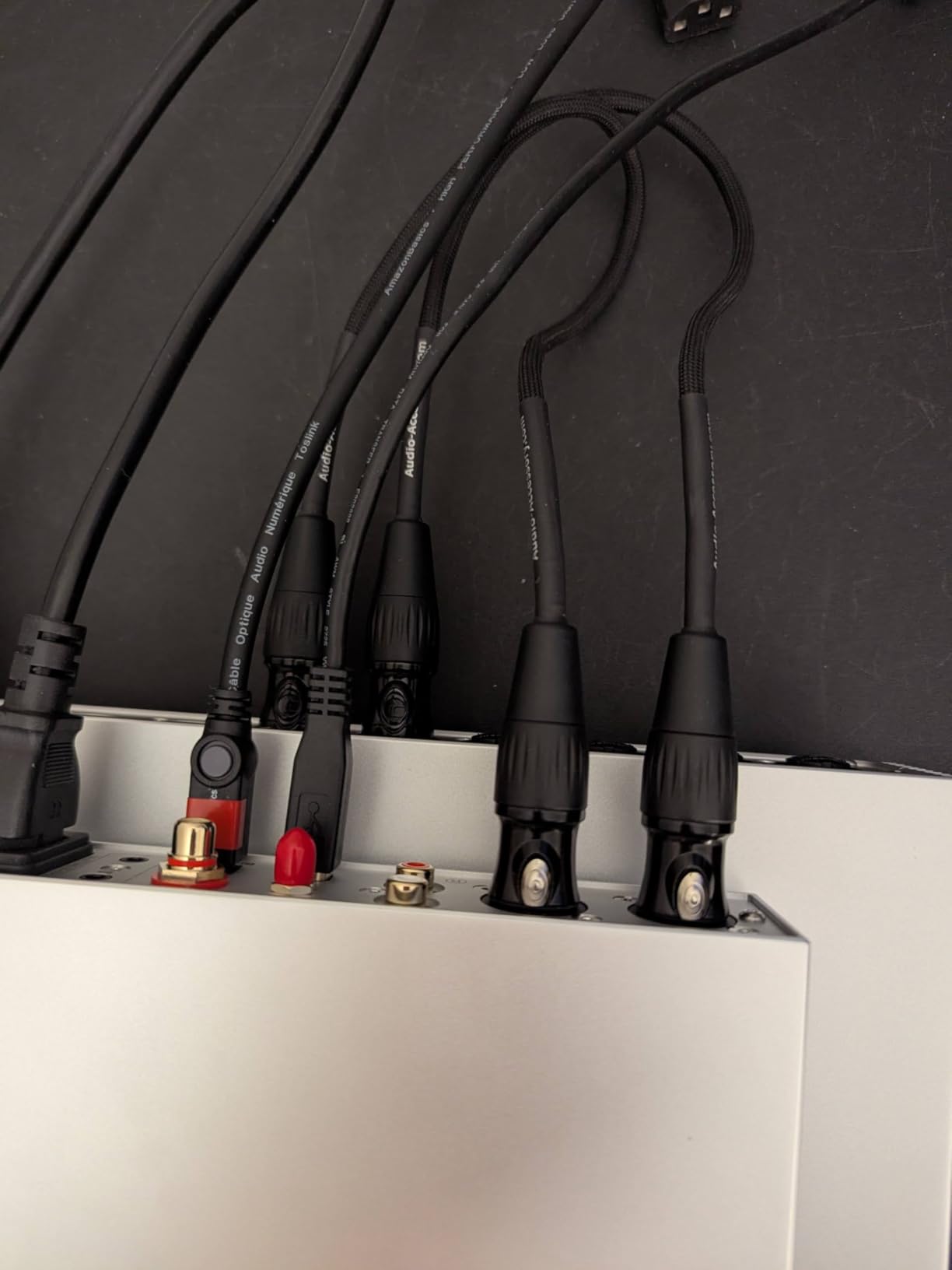
The Kevlar-reinforced nylon braided jacket is the durability story. The manufacturer claims roughly thirty times the durability of a standard XLR cable, and reviewers confirm it resists wear, tugs and fraying. Gold-plated pins on both ends reduce insertion noise and resist corrosion, and the cable is fully soldered with wrapped cores and backed by a lifetime warranty.
The jacket is the compromise. A nylon braid is stiffer than smooth PVC and needs practice to coil neatly, so it takes a few gigs before you stop fighting it. That stiffness is a fair price for abrasion resistance on a cable that lives on the floor.
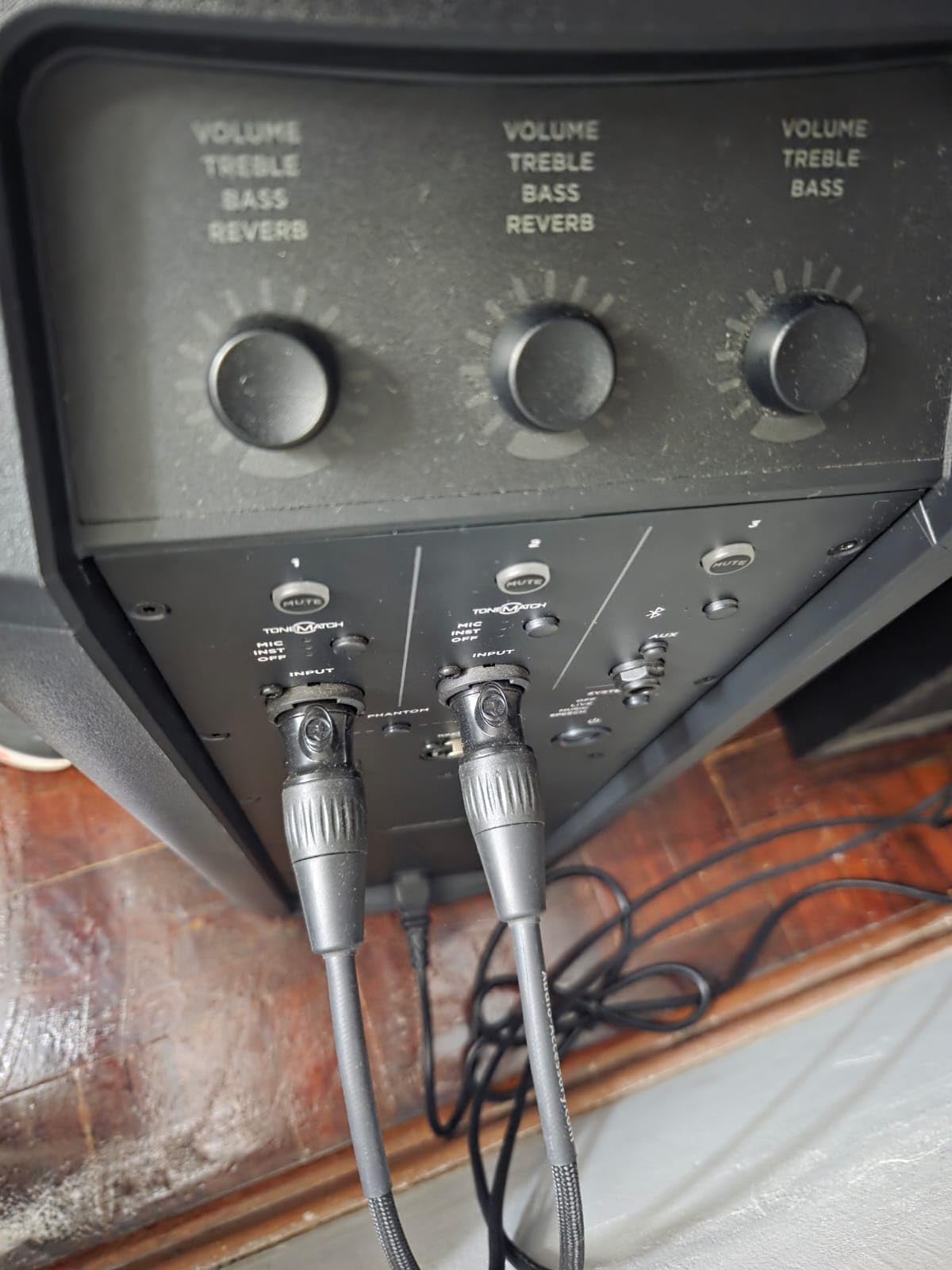
Where it earns its place in a live rig
Any rig where connector quality is the priority: multi-channel stage boxes, long FOH runs, and any setup where a loose-fitting connector would be annoying to diagnose. The 2-pack gives you a matched spare on the same channel.
It is also compatible with the usual suspects, including Shure SM58 and SM7B, Audio-Technica AT2020, Rode PodMic and standard handheld mics.
Where it falls short on stage
Flexibility. If you need cables that coil into a small bag or route through tight looms, a smooth PVC jacket is easier to live with than a nylon braid.
This is also a premium connector specification, so it sits above the mid-range options on cost per cable.
8. Shure C50J Hi-Flex XLR 50 ft — Best for Packing Light
Shure C50J 50′ Hi-Flex Chrome XLR Cable Connectors
50 ft male to female
Thin Hi-Flex jacket
Chrome XLR connectors
Low-impedance operation
Pros
- Thin Hi-Flex jacket packs many cables into one bag
- Feels stronger than its thin profile suggests
- Plugs click firmly and stay tight
- Smooth clean sound reported
- Same audio quality as thicker cables
Cons
- Latch tension loosens over time
- Less rugged than heavy-gauge cable for repeated road abuse
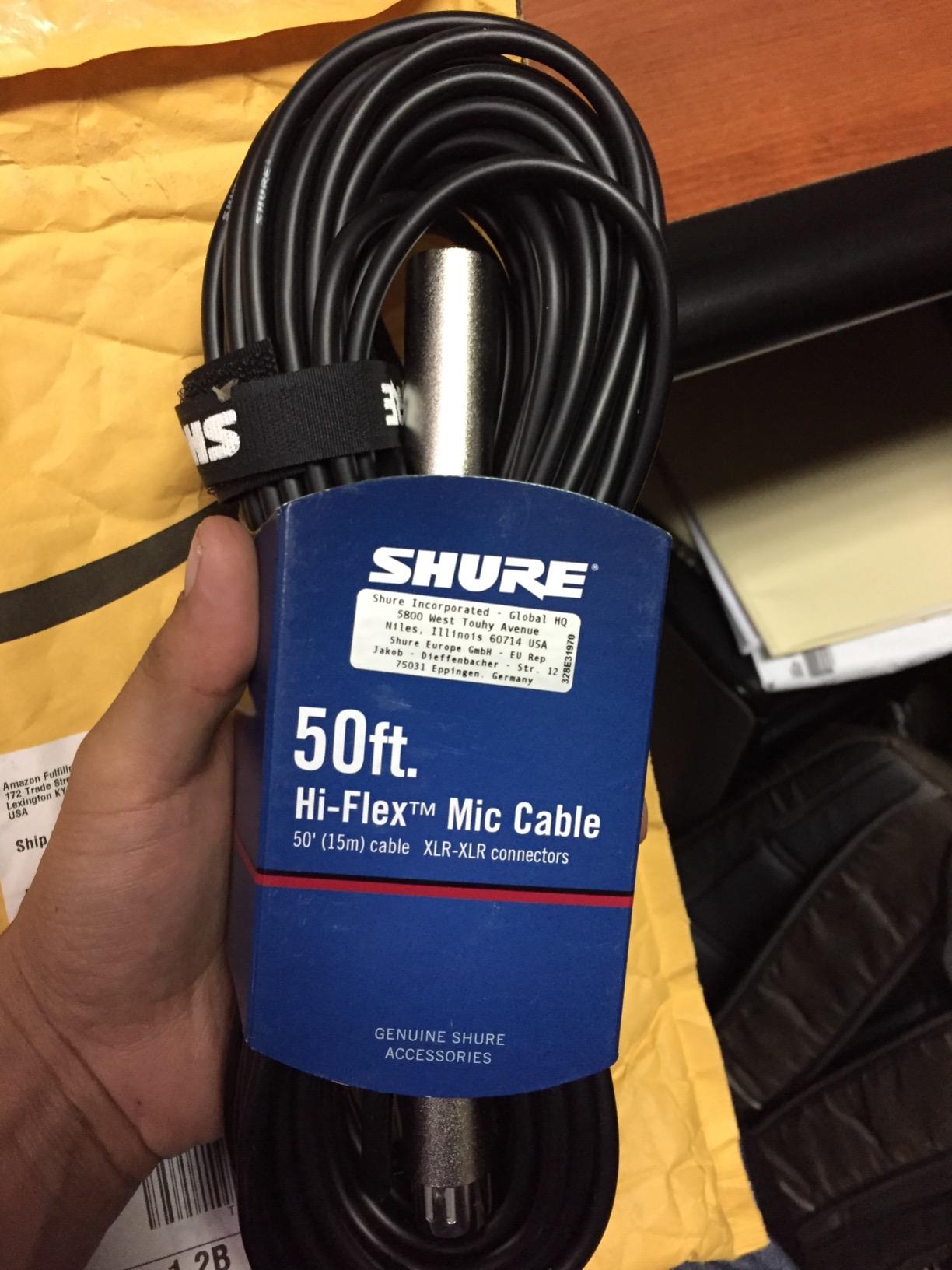
The Shure C50J solves a specific problem: fitting enough cable into the bag. Hi-Flex is a deliberately thin 50 ft run, and owners report that you can pack several times more cable length into the same space than with an 8mm cable. That changes what you can take on a small rig.
Sound quality is reported as smooth and clean, and owners specifically note that they cannot hear a difference against much thicker cables. That is expected: at microphone level, the audible differences between decent balanced cables are small.
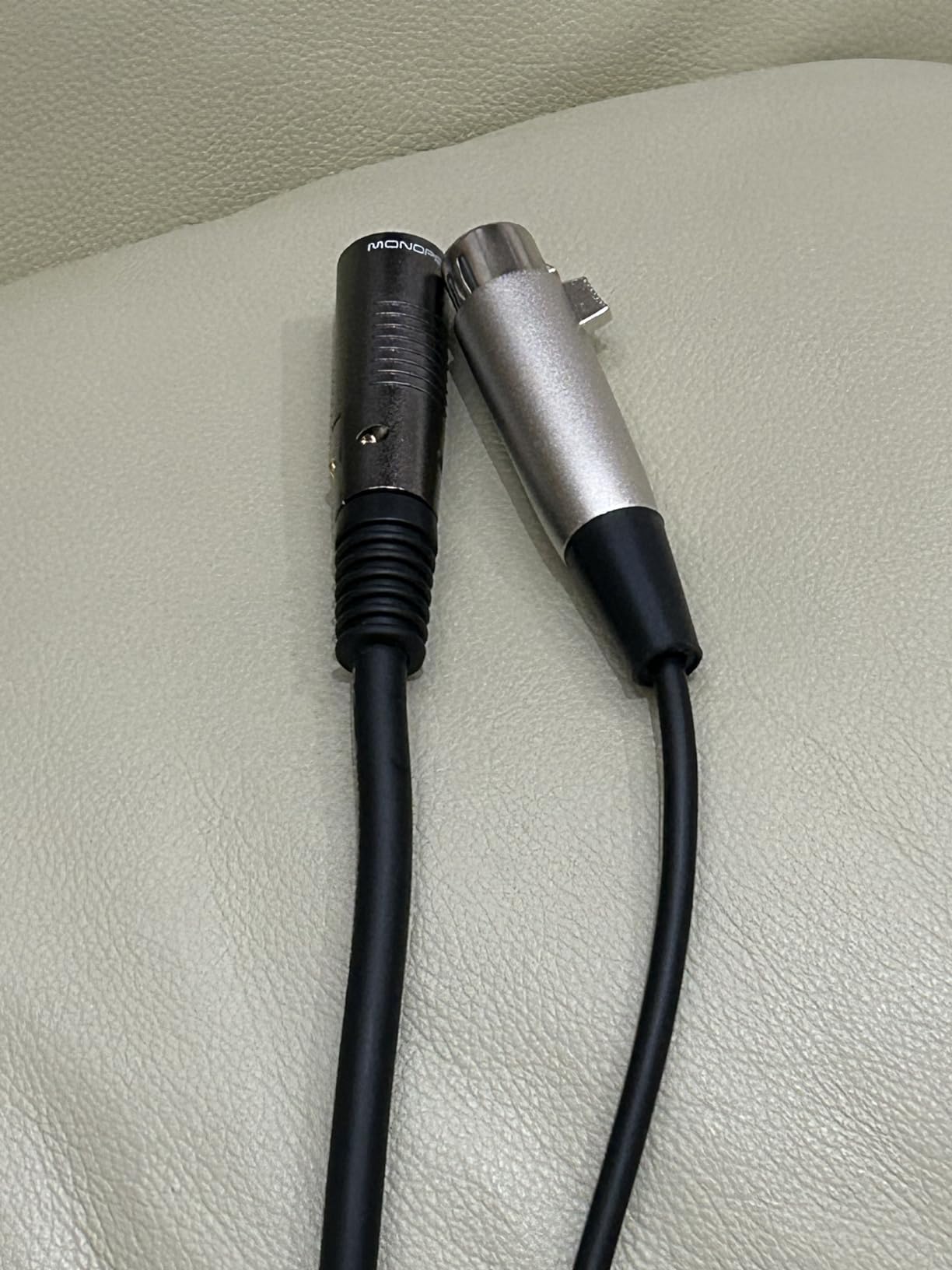
Thin does not mean weak. The rubber jacket feels stronger than its profile suggests and tolerates being stepped on, and the plugs click firmly into place. The recurring complaint over time is that latch tension loosens, though it stays firmer than many much thicker cables. Chrome connectors are unplated and can dull with handling, which is another reason this sits below the gold-plated options for permanent installs.
The two year limited warranty is the shortest meaningful cover among the well-built cables here. Bear that in mind if you intend to run this cable to a fixed panel.
Where it earns its place in a live rig
Backline vocalists, busking, acoustic duo and trio rigs, and any setup where cable weight and volume are the binding constraint. It is also rated for indoor and outdoor use.
At 50 ft it works well as a long vocal run back to a small stage box.
Where it falls short on stage
Rough touring is the weak spot. It is less rugged than a heavy-gauge stage cable under repeated road abuse, and the loosening latch is a small annoyance that grows over years of use.
For a permanently patched install where you will not touch the connector, an unplated chrome shell is the wrong trade.
9. GEARit XLR Microphone Cable 50 ft — Best General-Purpose Stage Run
GEARit XLR Cables 50 ft OFC, XLR Male to Female Microphone Cable, XLR Cable Low Noise Shielding, Copper Conductors for Recording Studio, Podcast, Stage Audio & Live Sound (Black)
50 ft male to female
Oxygen-free copper conductors
Balanced EMI/RFI shielding
Metal connector housings
Pros
- Oxygen-free copper supports a clean balanced signal
- Shielding reduces static on longer runs
- Metal housings hold up through repeated plug cycles
- Works with mics mixers preamps and patch bays
Cons
- Fewer customer reviews than leading brands
- Less published detail on conductor gauge and shielding coverage
The GEARit 50 ft sits in the middle of this list on price and above the midpoint on rating, with a 4.8 average across 451 reviews. Oxygen-free copper conductors with balanced shielding and EMI/RFI protection give a quiet run, and the metal connector housings stay secure through repeated plug cycles.
It is a straightforward cable with no awkward qualities. Reviews describe clean signal and solid connectors for both stage and studio use, and it suits microphones, mixers, preamps, patch bays, harmonizers and powered speakers.
Honest caveat here: the specification detail published is thinner than for the cables above. Conductor gauge is not stated and shielding coverage is described only as balanced EMI/RFI protection, and no customer images were available for this model after repeated attempts. If you want a published shielding percentage and a stated AWG figure, this is not the one.
The review base of 451 is also the second smallest here. That is not a reason to skip it, but it is a reason to buy one and test it before ordering a full set.
Where it earns its place in a live rig
Practice rooms, small stages, rehearsal spaces and studio builds where a clean balanced run is needed without a heavy connector specification. It is rated for indoor and outdoor use.
At 50 ft it covers most vocal and instrument positions without an extension.
Where it falls short on stage
Unknown jacket specification is the gap. If you need a cable you can route through a tight loom, bend repeatedly or drag across a stage edge, the published detail here does not tell you what you are working with.
A thinner or better-documented option may suit a touring rig better.
10. Mogami Gold STAGE XLR 50 ft — Best for Cold Weather and Touring
Mogami Gold XLR Stage Microphone Cable – 50 Ft | Ultra-Durable, Road-Ready, High-Fidelity Audio for Stage, Broadcast & Studio Use
50 ft male to female
105-strand cores
Low capacitance design
Rated flexible to -20C
Lifetime warranty
Pros
- Road-tough construction handles touring abuse
- Stays pliable in cold conditions
- Low capacitance and full braid give a clean signal
- Designed specifically for stage and broadcast mic use
Cons
- Smallest review base here at 136 ratings
- Premium pricing hard to justify for occasional use
- A few 1-3 star reviews report hiss on individual units
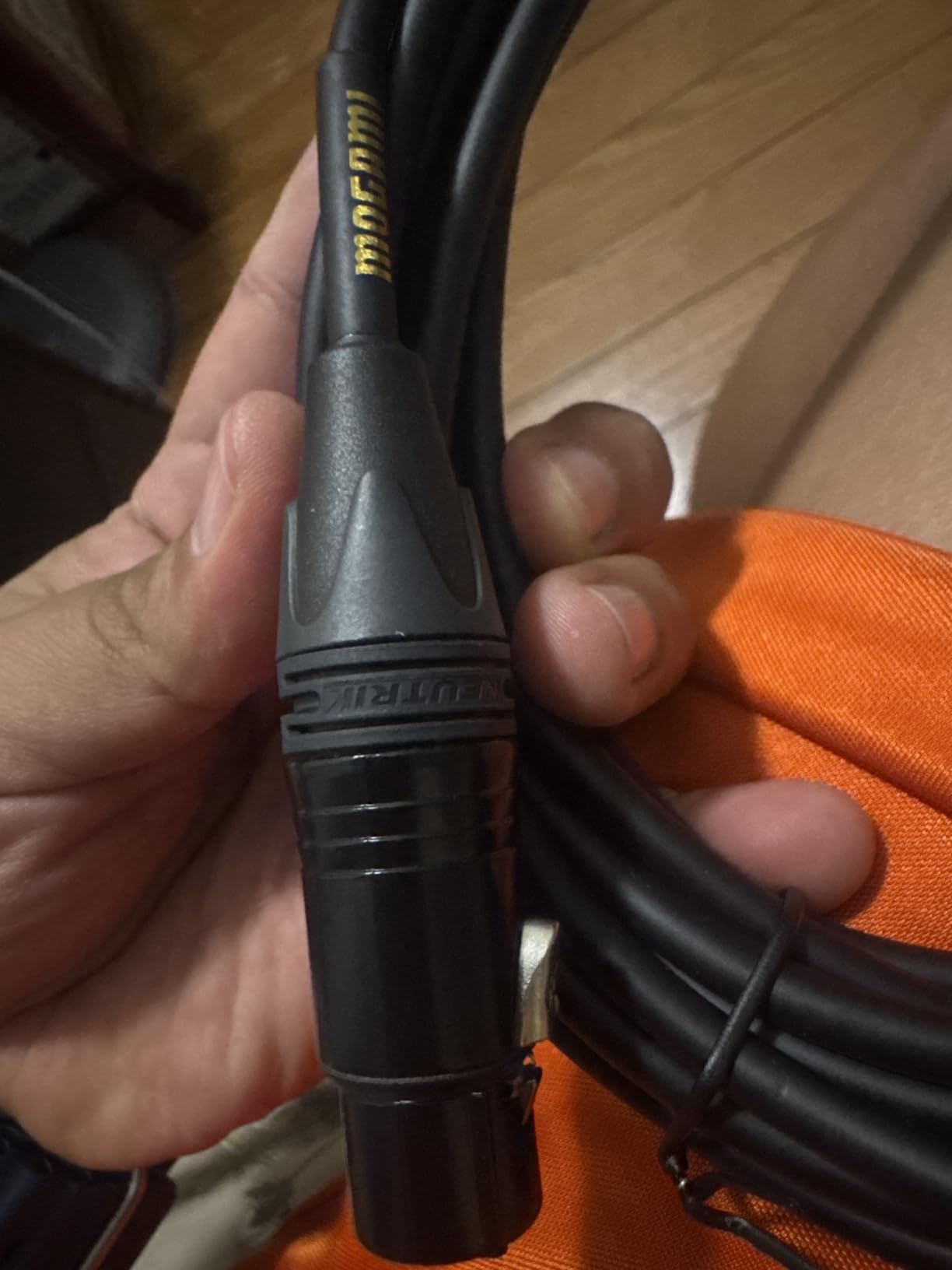
The Mogami Gold STAGE is the only cable here with a stated cold rating: it is specified to stay flexible down to -20C. That matters outdoors. Most stiff PVC jackets get hard and brittle in cold weather, and a brittle jacket cracks at the strain relief the first time someone grabs it.
Construction is 105-strand cores, which gives a road-tough but genuinely flexible cable, precision-twisted pairs and full-coverage braided shielding. Low capacitance is the spec most relevant to long runs, and the design is explicitly aimed at stage and broadcast microphones rather than studio patching.
The Mogami lifetime warranty is the strongest support commitment in this roundup, and it is the reason forum regulars treat the brand as the default answer to the question of what to buy once. Reddit users in particular call out the warranty as a deciding factor at this level.
Two honest warnings. The review base of 136 ratings is the smallest here by a wide margin, so the long-term field data that underpins some competing cables simply is not there. And a handful of 1 to 3 star reviews report hiss on individual units. In a category where one bad cable ruins a show, that is worth weighing carefully.
Where it earns its place in a live rig
Winter outdoor gigs, festival stages in cold climates, touring engineers who replace one cable rather than a full set, and broadcast work. The cold rating alone justifies it for anyone playing outdoors in winter.
For indoor touring with a good warranty record elsewhere, the money may be better spent on a full set of a mid-tier cable.
Where it falls short on stage
Per-cable cost is the highest barrier here, and for occasional use or a first cable it is hard to argue for. Most forum consensus is that Mogami belongs on a stage where failure is not an option, not on every cable in the bag.
The thin review base and the isolated hiss reports mean you should test it on the first show.
11. Your Cable Store 50 ft XLR Cable — Best Entry-Level 50 ft Run
Your Cable Store 50 Foot XLR 3 Pin Microphone Cable
50 ft male to female
28 AWG shielded wire
Metal connector casings
Three-pin balanced run
Pros
- Low-cost option for long XLR runs
- Shielded construction reduces excess noise
- Metal connector casings for a rugged build
- Widely available in multiple lengths
Cons
- 28 AWG is the lightest gauge in this roundup
- Lowest average rating in the group at 4.6
- Only a one year limited warranty
This is one of the lowest-cost options in the roundup and the honest starting point for anyone who needs a working XLR run without spending much. Metal connector casings and shielding to reduce interference mean it does the basic job properly for studio and live sound.
Its 4.6 average is the lowest here and it carries a larger share of mid-level ratings than the cables above it. That tracks directly with the 28 AWG wire, which is the lightest conductor gauge in the group. Lighter wire means more resistance over distance and a little less headroom when the run gets long.
At 50 ft the resistance is still workable, so this is not a cable that will ruin a set. It is a cable that will not outperform anything above it, and the one year limited warranty is short enough that you will not lean on the manufacturer for help when a channel drops. Published specification is also thin: shielding is described but not quantified, and no conductor gauge beyond the 28 AWG figure is given.
The 3-pin male to female configuration is the standard microphone run, so compatibility is not an issue. Availability across multiple lengths is useful if your channel spacing is uneven.
Where it earns its place in a live rig
A first cable for a student or a rehearsal room, spare and emergency cables in a bag, and any run where the cable is not moved often. It is rated for indoor and outdoor use.
Buying a handful as consumable spares is a reasonable way to budget a small rig.
Where it falls short on stage
28 AWG is the weak point. On a long run from the back of a venue, or feeding several inputs in parallel, the thinner conductor has less margin than anything else here.
The short warranty and lower rating average also mean less confidence in long service life compared with the rest of the list.
12. Mogami Gold Studio Quad XLR 50 ft — Best for Lowest Noise in Noisy Environments
Mogami Gold Studio 50 XLR to XLR Quad Conductor Patch Cable 50 feet with Gold Contacts, XLRM-XLRF Connectors, Pro Audio Noise-Free
50 ft male to female
Neglex quad conductor
100% bare copper shield
XLPE insulation
Gold-plated contacts
Pros
- Quad conductor design measurably reduces hum and ground-loop noise
- Solid snug connectors with no loose fit
- Supple and flexible yet extremely durable
- Gold-plated contacts resist corrosion
- Noise-free even past routers
- chargers and fans
Cons
- High cost for a single cable
- Spring clip lock can need adjustment on some mic receptacles
- Occasional complaints about retail packaging
Star quad construction is the difference here. The Mogami Neglex quad conductor layout runs the signal on a four-conductor geometry, and Mogami claims up to 30 dB better noise rejection than a twisted pair. Add Ultra High Density 100% coverage bare copper shielding and the noise floor of the whole run drops noticeably.
Owners credit this cable with removing hum and static that cheaper cables introduced, and describe the build as visibly better. The connectors are solid and snug with no loose fit, and the cable is supple and flexible while still feeling extremely durable.

XLPE insulation is the spec that gets skipped over and it matters more than the marketing suggests. It gives predictable capacitance and a cleaner, flatter response than PVC insulation, which is why this cable shows up in studios as well as on stages.
Gold-plated contacts resist corrosion and oxidation, and the lifetime warranty backs the whole assembly. One practical note: the spring clip lock can need a firm push or a small adjustment on some microphone receptacles, which is a fit quirk rather than a fault.
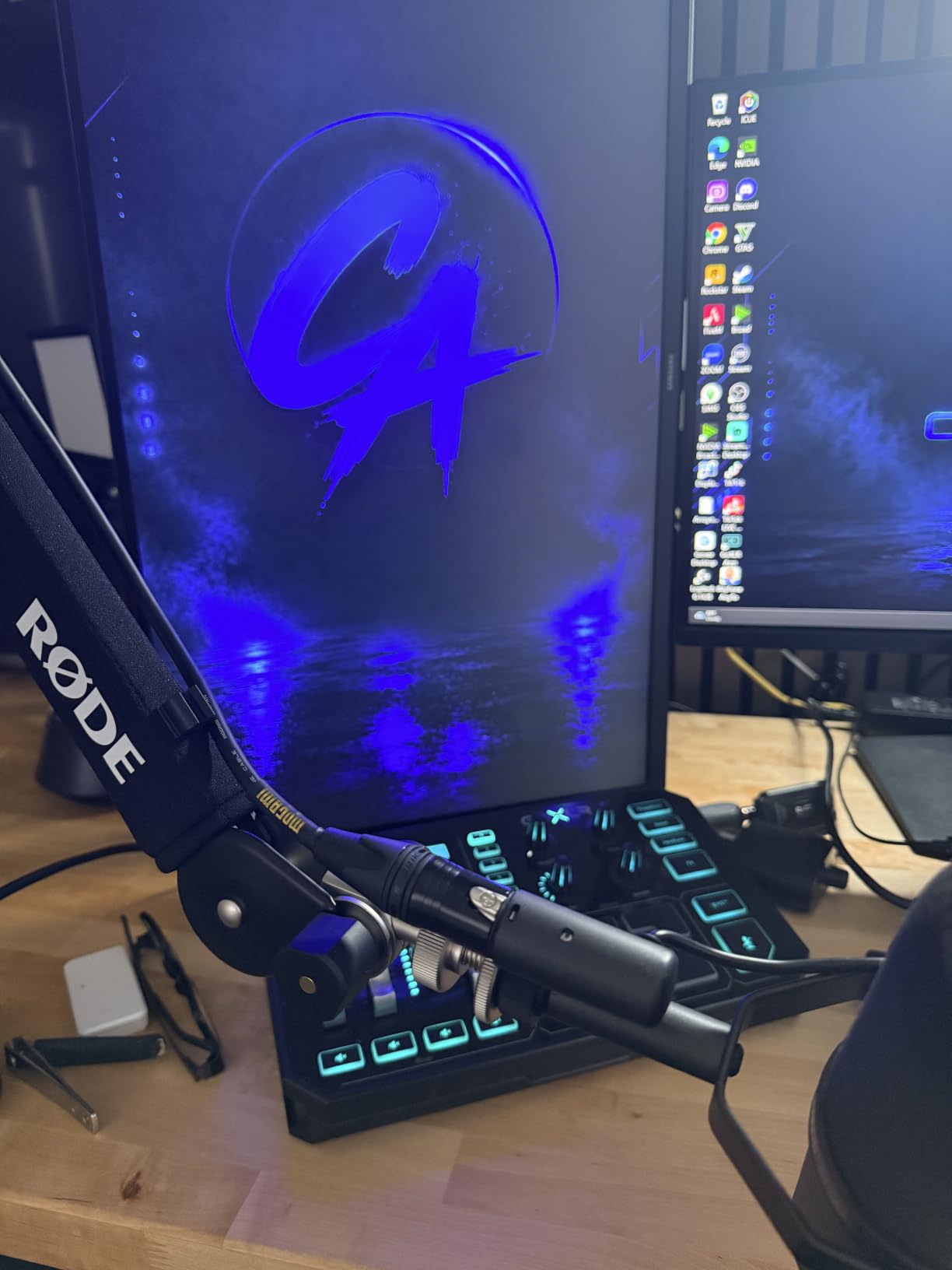
Where it earns its place in a live rig
Shows where the electrical environment is hostile: clubs with dimmer-heavy lighting, festival stages next to power distribution, and any run passing near routers, chargers and fans. Reviews specifically report noise-free performance in those conditions.
It is also the natural choice for a home studio or broadcast booth where the lowest possible noise floor matters more than cable weight.
Where it falls short on stage
Cost is the real limit. For a single cable on a heavily used channel it is defensible; for a full stage box it is a serious outlay, and the reviewed benefit is audible mostly in noisy environments rather than everywhere.
If your stage is electrically clean, a well-shielded mid-tier cable captures most of the benefit at a fraction of the spend.
How to Choose an XLR Cable for Live Sound in 2026
Start here and the rest of the buying decision gets easy. Six factors decide how an XLR cable behaves on stage, and only one of them has anything to do with how it sounds.
Connectors decide how long the cable lasts
Neutrik is the benchmark, and Rean is made by Neutrik, which is why the forum view is that Rean is a good cheaper alternative rather than a knock-off. A locking connector with a metal housing survives being handled; a generic plated shell eventually loosens.
Gold plating resists corrosion and reduces insertion noise. Nickel plating is fine for anything you will touch regularly. Choose gold for permanent installs where the connector will sit untouched for years.
Shielding: braided, spiral and foil each do different jobs
Braided shielding offers the best coverage and durability, which is why it appears in most of the cables we recommend. Spiral or serve shielding covers less of the conductor and gives up sooner, but it stays flexible and is fine on short runs. Foil shielding gives excellent coverage at low cost but cracks when flexed repeatedly, so it needs a robust outer jacket.
Dual-layer shielding, one foil plus one braid, is the strongest option and the AA Audio Accessory cable is the only one here that combines an aluminium layer with an over 95% OFC braid. Shield coverage percentage is worth checking when it is published.
Star quad versus twisted pair
A conventional microphone cable is two conductors, twisted, with a shield. A star quad cable uses four conductors arranged so that interference induced on one pair cancels against the other. The practical result is lower susceptibility to hum and ground loop noise.
The Mogami Gold Studio in this roundup is the quad example, rated for up to 30 dB better noise rejection than twisted pair. Below that, dual shielding on a well-made twisted pair gets you most of the way for stage work. Forum consensus treats star quad as the studio and high-noise-environment choice rather than a requirement for every vocal mic.
Jacket material and cold weather flexibility
The jacket is the part that fails. Copper strands inside the cable fatigue where they enter the strain relief, and a jacket that is stiff in cold weather accelerates the problem by cracking at that transition instead of flexing.
Thin PVC around 6mm is flexible and light but lighter duty. Rubber around 8mm, as on the Pig Hog, resists stepping on and repeated dragging. Braided nylon with Kevlar reinforcement is the most abrasion resistant and the stiffest to handle. For winter outdoor work, check for a stated cold rating; only the Mogami Gold STAGE publishes one here, at -20C.
Choosing length for your stage and venue
Measure the actual route, not the straight-line distance. A cable that runs from the back of a stage to a stage box at the mix position is usually 40 percent longer than the diagram suggests once you add drape, service loops and slack for a mic to move.
Rule of thumb: 10 ft for a handheld vocal on a short stand, 20 to 30 ft for a band position back to a stage box, and 50 ft for the run from downstage to FOH. For very large stages or miking a drummer across the kit, longer runs need heavier gauge conductors, which is why the 16 and 20 AWG cables here suit those jobs better than a 28 AWG wire.
Colour coding, repairability and warranty
Colour-coded jackets turn a black spaghetti loom into a readable channel map and speed up soundcheck. LyxPro and GLS Audio offer the widest colour selection in this group. If your stage manager already runs a colour scheme, matching it is worth more than any sonic difference between these cables.
Repairability is the factor no roundup covers and pros care about. A serviceable connector like the Monoprice Premier can be unscrewed and reused, so a dead cable becomes a spare connector rather than a spare cable. It is a small thing until you are on a stage box in a venue at midnight.
Warranty length is the closest thing to a proxy for manufacturer confidence. Lifetime warranties on the Mogami Gold Studio and STAGE, on the Monoprice Premier and on the AA Audio Accessory pack are a fair signal of build confidence. Your Cable Store’s one year cover is the weakest. If you want more help picking the rest of the chain, our live sound mixer guide covers the other end of the cable.
Frequently Asked Questions
Do XLR cables make a difference in sound quality?
Mostly no, at microphone level. A working balanced XLR run carries the same signal whether it is a budget cable or a reference one, and most listeners cannot hear a difference in a fair test. Where cables genuinely matter is reliability: a cable with a metal housing and a locking connector stays connected, while a thin-jacketed cable eventually develops a short at the strain relief and drops the channel. Handling noise and hum from poorly shielded or unbalanced wiring are the only situations where cable choice changes what you hear.
What cable gives the best sound quality?
Star quad construction with dense braided shielding gives the lowest measurable noise, and the Mogami Gold Studio quad cable in this roundup is rated for up to 30 dB better noise rejection than a twisted pair. In practice, a well-shielded dual-layer cable such as the AA Audio Accessory pack is close enough for almost any stage. If your environment is electrically clean, connector quality and jacket durability matter more than conductor geometry.
Which XLR cable is of the best quality?
Quality for live work means Neutrik or Rean connectors with metal housings, a proper locking fit, dense shielding, and a jacket rated for physical abuse. The AA Audio Accessory 50 ft pack uses Neutrik REAN connectors with Kevlar-reinforced braiding and dual shielding. For the lowest noise floor regardless of connectors, the Mogami Gold Studio quad cable leads. No roundup addresses repairability: a serviceable connector, like the Monoprice Premier’s, is the strongest long-term ownership story.
What are high quality XLR cables?
Look for five things: Neutrik or Rean connectors with metal housings, a locking latch, braided or dual-layer shielding, a stated conductor gauge of 16 AWG or heavier for long runs, and a jacket thick enough for the abuse it will take. Length matters too, so buy the length your actual route needs rather than the shortest one. Below that standard, tone differences between cables are mostly inaudible.
How long should an XLR cable be for live sound?
Measure the real route including drape and slack. A 10 ft cable suits a handheld vocal on a short stand, 20 to 30 ft covers a band position running back to a stage box, and 50 ft reaches from downstage to the mix position. On runs over 50 ft or across large stages, move to heavier conductors of 16 AWG or above so resistance does not eat your headroom.
Final Verdict: The Best XLR Cables for Live Sound in 2026
For most working rigs, the Amazon Basics 10 ft is the best XLR cable for live sound, because it is cheap, quiet, flexible and backed by the largest review base in the category. Buy several and treat them as consumables. For long runs, the Cable Matters 50 ft 2-pack is the strongest all-round value, with proper copper braid and a thick jacket. For locked-down reliability, the GLS Audio pack with locking connectors is the one to beat.
Spend up only where the environment demands it. In noisy electrical settings or cold outdoor stages, the Mogami Gold Studio quad and the Mogami Gold STAGE respectively earn their place. And if you want to buy once and stop replacing, the Monoprice Premier’s serviceable connectors are the smartest long-term hold.
Whichever you pick, test every new cable before the first show rather than during it. If you are still building the rig, our home studio XLR microphone guide is a good starting point for the other end of the cable.