

An acoustic guitar plugged straight into a mixing desk is a gamble. The signal is unbalanced and high impedance, so the tone arrives thin and bright, hum creeps in over long cable runs, and the first thing the sound engineer does is plug a microphone in front of it anyway. A DI box fixes that in one move, and picking the right one for your instrument is the difference between sounding like a plugged-in acoustic and sounding like a session guitarist.
We spent weeks putting ten of the boxes most acoustic players end up owning through their paces for this guide to the best di boxes for acoustic guitars: the LR Baggs Venue DI and Para Acoustic, the Radial Pro DI, Pro48 and StageBug SB-2, the Whirlwind IMP 2, the ART DualZDirect, the Caline CP-40, and the two acoustic processors from Fishman and Zoom. Every unit here earns its place because it solves a specific problem, not because of a badge on the box.
What separates them is pickup compatibility. A piezo undersaddle feed needs gain and a phase switch, a magnetic pickup barely needs either, and a guitar with an onboard preamp can feed a passive transformer directly. We leaned on the pickup decision early because getting that backwards wastes money faster than anything else in a signal chain. If you are still choosing an instrument, our guide to the best acoustic guitars for beginners covers the pickup options you will meet on the way.
The other thing worth flagging: house PA systems are never consistent. A rig that sounds perfect in a rehearsal room can turn shrill in a room with hard walls and a reflective ceiling, which is why feedback control earns its own section later. Working players who gig regularly usually land on a box with a tunable notch filter, and everything smaller than that is a compromise they have learned to live with.
Table of Contents
Top 3 DI Box Picks for Acoustic Guitars
The LR Baggs Venue DI takes the top slot because it combines the whole acoustic job in one enclosure with no help: adjustable gain, a five-band EQ with two tunable midrange bands, a Garrett Null notch filter, a chromatic tuner and a footswitch boost. For a working singer-songwriter who changes instruments, it removes the guesswork.
The Whirlwind IMP 2 is the opposite philosophy and just as useful. It is a fully passive transformer box with no controls at all, it has been on stage for two decades, and it will not add a decibel of noise to your signal. If you want the shortest possible path from guitar to console, that is the box.
The Radial Pro DI sits between them. It is passive like the Whirlwind but uses a heavier custom transformer and an I-beam chassis, which makes it the pick for anyone running stereo acoustic rigs, backing tracks or a pair of guitars through one mixer channel.

LR Baggs Venue DI
- 5-band EQ with tunable mids
- Garrett Null notch filter
- Chromatic tuner
- Boost footswitch

Whirlwind IMP 2
- Fully passive transformer design
- TRHL riveted transformer
- Compact steel chassis
- No power required

Radial Pro DI
- Custom transformer
- Stainless steel I-beam chassis
- Passive mono XLR output
- No power required
Best DI Boxes for Acoustic Guitars in 2026 at a Glance
Every box below does one of four jobs: passive conversion for a clean stage signal, active conversion with gain, acoustic tone shaping and feedback control, or full acoustic processing. The table lists all ten in review order.
| Product | Specifications | Action |
|---|---|---|
| LR Baggs Venue DI |
|
Check Latest Price |
 LR Baggs Para Acoustic DI LR Baggs Para Acoustic DI |
|
Check Latest Price |
 Caline CP-40 Caline CP-40 |
|
Check Latest Price |
| Whirlwind IMP 2 |
|
Check Latest Price |
| Radial Pro DI |
|
Check Latest Price |
 Radial Pro48 Radial Pro48 |
|
Check Latest Price |
 Fishman ToneDEQ AFX Fishman ToneDEQ AFX |
|
Check Latest Price |
 Zoom AC-3 Zoom AC-3 |
|
Check Latest Price |
 ART DualZDirect ART DualZDirect |
|
Check Latest Price |
 Radial StageBug SB-2 Radial StageBug SB-2 |
|
Check Latest Price |
What a DI Box Does for an Acoustic Guitar
A DI box converts your guitar’s unbalanced, high-impedance instrument signal into a balanced, low-impedance microphone-level signal that a mixing desk can accept properly. That single conversion fixes three things at once: level loss, cable noise and ground hum.
Electric guitars get instrument inputs on desks for this reason. Acoustics mostly do not, so they end up going through an input built for microphones, and the impedance mismatch drains the high end and leaves the signal vulnerable to interference. The remedy is a direct box rather than an instrument preamp, because the conversion happens without adding gain you did not ask for.
Three features explain most of the differences between the boxes here. Balanced output runs through a transformer or active circuit so that noise cancels along the cable. Ground lift breaks the electrical path between your guitar’s chassis and the console’s, which silences the 50 or 60 Hz hum you get when two grounded paths meet. Impedance matching is the invisible one, and it decides whether your guitar sounds like itself.
Phantom power is worth understanding too. It is 48 volts sent down a balanced XLR cable by the mixing desk to power microphones. The boxes that accept phantom power let you run them from the desk instead of a battery, which removes a failure point from a touring rig.
Microphone versus DI is worth settling as well. A mic captures the room, the air movement and the strings, which is why live acoustic players often prefer one. A DI captures only the string output, which is why it is far easier to control, free of crowd noise and identical every night. Most working players carry a pickup for soundcheck, play the gig behind a mic, and use the DI for the mix feed or as the fallback when a stage box goes down.
That fallback role is where a plain passive transformer earns its place. If your plan already includes a microphone, a box with no EQ and no power is one less thing to charge, one less thing to fail, and something you can hand to a sound engineer without a conversation.
Active vs Passive DI Boxes for Acoustic Guitar Pickups
Active and passive DI boxes sound different because they lose signal differently. A passive box is a transformer only: it attenuates the hot instrument signal and can also damp resonance around the pickup, which sounds tighter but darker. An active box adds a low-noise amplifier stage to replace the lost level, which keeps more sparkle and needs power.
The pickup decides which one you want more often than people expect:
Piezo or undersaddle pickup, no onboard preamp: use an active DI. The signal is weak and needs gain, so the Radial Pro48 or the LR Baggs boxes with adjustable gain are the right fit.
Magnetic pickup such as an acoustic soundboard transducer: use a passive DI. The output is already hot and the transformer will not choke it.
Active onboard preamp on an acoustic-electric: a passive DI is the simplest choice, though an active DI with a pad also works if you want the level back. Our picks for stage-ready acoustic-electrics are in the best acoustic-electric guitars for gigging guide.
Mixed piezo and microphone blend system: use a passive DI and manage level at the desk. Blending two sources already pushes the signal, so the box should take energy out of it rather than add a gain stage.
Here is the mistake that shows up most often on forums: running a passive box into a mixer channel with too much gain to compensate, which amplifies whatever noise the passive path picks up. If you hear hiss after the box, gain staging upstream is usually the cause, not the box itself.
Matching a DI Box to Your Guitar and Your Style
Body size changes what a piezo pickup sounds like, and that changes what the box has to fix. A dreadnought produces a strong low-mid bloom that gets muddy fast through a PA, a small-body or parlor guitar is top-heavy with a hollow midrange, and a jumbo behaves in between. Tone controls handle all three, but knowing which end needs attention saves a lot of trial and error.
Flatpicking a dreadnought with a piezo is the case most DI boxes were designed around. The attack is sharp, the low-mid boom is loud, and the sustained notes feed back in bright rooms, so a box with a tunable notch and sweepable mids, such as the LR Baggs Venue DI or Para Acoustic, does the most useful work here.
Fingerstyle players work at lower volume and need the opposite: a signal that stays clear when played softly and does not thin out when you lean into the strings. A compressor such as the one in the Fishman ToneDEQ AFX does more for that than extra EQ does, because it evens out the level difference between a quiet thumb-and-finger pattern and a loud chord.
For flatpicking country and folk sets where volume changes constantly between rhythm and lead, a boost is more useful than more low end. The boost footswitch on the Venue DI raises level rather than gain, which keeps the tone unchanged while you take a solo, and the Fishman unit does the same job as part of a full signal chain.
Singer-songwriters who play an acoustic-electric with a magnetic pickup and run a microphone are the clearest case for a passive box. The Radial Pro DI and the Whirlwind IMP 2 give you a clean balanced feed with nothing to adjust, and the ART DualZDirect adds a second channel for the nights you pair the guitar with keys.
1. LR Baggs Venue DI Acoustic Guitar Preamp and DI
L.R. Baggs Venue DI Acoustic Guitar Preamp and DI
5-band EQ with tunable mids
Garrett Null notch filter
Chromatic tuner with footswitch mute
9V battery powered
Pros
- Handles passive and active pickups with adjustable gain
- Tunable notch filter really does tame piezo feedback
- Integrated tuner saves a pedalboard slot
- Boost footswitch handles solo transitions
Cons
- No onboard effects
- so it only covers preamp and DI duties
- One of the bulkiest boxes here at 1.2 kg with a 9 x 9 x 2 inch footprint
This box lives on my board permanently and I have stopped looking for a replacement. The gain control is the reason. Most players carry one DI and play several guitars, and the Venue covers everything from an undersaddle piezo on a small-body guitar to an acoustic-electric with a hot onboard preamp without a gain change.
The EQ is the second reason. Five bands with sweepable low-mid and high-mid sections means you can take the hollow boom out of a small guitar or the nasal edge off a dreadnought without guessing, and the Garrett Null notch filter is a narrow cut at a specific frequency that kills feedback without thinning the whole signal.
Reviewers consistently point at the feedback control circuitry and the tuner as the features that justify the price in this range, and the review profile reflects that, holding a 4.7 star average across 252 reviews. The footswitchable tuner mutes the output while you tune, which sounds obvious written down and saves a lot of noise in a loud room.
The boost footswitch is a clean volume lift for a solo or a transition from fingerstyle to strumming, not a gain boost that adds distortion. That distinction matters because the last thing a piezo-equipped acoustic needs is a treble boost into an already bright room.
Choose the Venue DI if you play more than one acoustic
Buy this one when your signal chain has to cover a dreadnought with a piezo, an older acoustic with a magnetic pickup, and an acoustic-electric with an onboard preamp, because the adjustable gain and the five-band EQ absorb all three without rewiring anything. It is also the right answer for anyone playing rooms where feedback is a regular problem and who does not want to carry a separate notch box.
Skip the Venue DI if pedalboard space is tight
At 1.2 kg with a 9 x 9 x 2 inch footprint, this box takes real board estate you may not have. If your board is already carrying a tuner, a compressor and a looper, a smaller unit like the Whirlwind IMP 2 or the Radial StageBug SB-2 leaves room for the pedals, and you can add feedback control at the console instead.
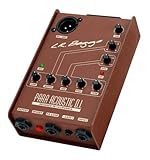
2. LR Baggs Para Acoustic D.I.
LR Baggs Para Acoustic D.I.
Balanced XLR and unbalanced quarter-inch outputs
5-band EQ with tunable notch
Phase inversion switch
Runs on 9V battery or 48V phantom
Pros
- Balanced and unbalanced outputs cover stage and studio use
- Tunable notch and midrange bands for piezo problems
- Phase inversion helps with hum and feedback
- Runs from a battery or console phantom power
- Steel enclosure built for touring
Cons
- No built-in tuner or onboard effects
- Needs battery or phantom power so it is not fully passive
- No boost footswitch for quick level changes
The Para is the box I recommend when someone asks for one acoustic DI and nothing else. It has been the studio and stage reference for years, and the flexibility of dual outputs plus the choice of battery or phantom power means it drops into almost any rig without a conversation about power.
Five bands with tunable notch and midrange sections handle the standard piezo problems, and the phase inversion switch is more useful than most players expect. Flipping phase is often the difference between a clean mix and a comb-filtered one when your guitar sits near a vocal mic or a room speaker.
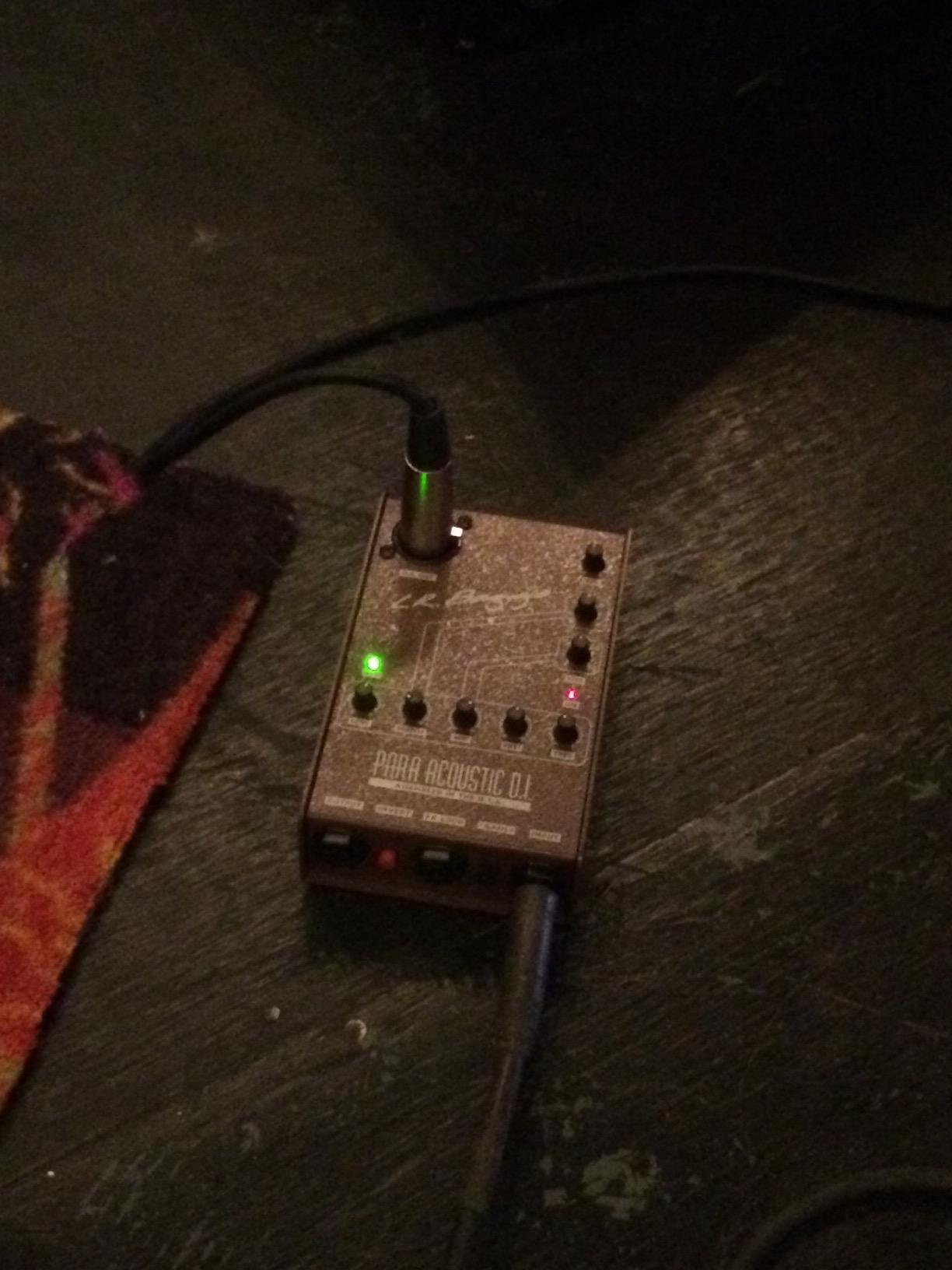
At 0.67 kg in a steel chassis, it is heavy enough to survive a van tour and small enough to sit anywhere on a board. The 4.7 star average across 249 reviews says owners are satisfied with tone shaping and reliability rather than looking for anything to criticise.
One practical note: the two midrange knobs do similar jobs and the labels are not obvious. Spend five minutes with a sine tone or a familiar reference track and you will know which one is the low-mid scoop and which is the presence band. Once that is clear, the EQ becomes quick to dial in under pressure.
Choose the Para DI for a permanent stage box
This is the pick for a player with one guitar who wants a transparent, reliable stage box with enough EQ to solve piezo problems and nothing else to think about. The dual outputs mean you can send a balanced signal to the console and an unbalanced one to a local amp or interface at the same time, which is what makes it useful in a small venue where you might feed both.
Skip the Para DI if you want a tuner and boost on the board
The Venue DI covers everything the Para does and adds a chromatic tuner and a boost footswitch. If you are choosing between them and you already own a tuner pedal, the Para is the more focused tool and the lighter one. If you do not own a tuner, the Venue saves a slot and a hundred grams of thinking about it.
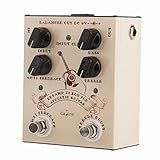
3. Caline CP-40 DI-Box for Acoustic Guitar
Caline CP-40 DI-Box for Acoustic Guitar
Anti-feedback footswitch
XLR DI output
True bypass switching
9V power at 50 milliamps
Pros
- Low cost way to tame piezo hum and EQ a signal
- Anti-feedback switch does reduce feedback
- Lightweight at 0.43 kg and easy to add to a board
- XLR output feeds a small PA or mixer directly
Cons
- Input and output jacks sit on the wrong sides for pedalboard use
- No phase inversion switch
- Noticeable hiss even with nothing plugged in
The CP-40 sits at the entry point of this roundup and it does one thing well for very little money. The anti-feedback footswitch engages a filter that multiple owners confirm actually reduces feedback, which is more than plenty of inexpensive boxes manage.
It is not a substitute for a proper preamp on a good pass-through system. The gain boost is modest, the noise floor is audible in a quiet room, and the tone is thinner and duller than the dedicated acoustic units here. At 4.1 stars from 141 reviews, that split is exactly what buyers describe.
Choose the CP-40 for practice, open mics and a first pedalboard
Pick this if you are putting a piezo pickup into a budget acoustic, playing small open mic nights, and want feedback control plus an XLR feed without committing real money. Paired with an inexpensive undersaddle pickup it does the job, and the anti-feedback footswitch gives you something to press when a room gets reflective.
Skip the CP-40 if noise floor matters to you
If you record at home or play in acoustic spaces where a quiet signal matters, the audible hiss will bother you more than the price saved. The ART DualZDirect or the Whirlwind IMP 2 are both passive designs that add nothing to a quiet signal, and the jack layout on the CP-40 makes cable routing awkward on a pedalboard where every inch counts.
4. Whirlwind IMP 2 One-Channel Passive Instrument Direct Box
Whirlwind IMP 2 1-Channel Passive Instrument Direct Box
Passive transformer design
No power supply required
Riveted TRHL transformer
7.35 x 6.85 x 2 inches and 8.8 ounces
Pros
- Passive transformer design gives a clean noise-free output
- Very small footprint for a tight pedalboard
- Solid steel chassis with a riveted transformer mount
- No power supply needed on a crowded board
Cons
- Fixed passive attenuation means a lower output that needs careful gain staging
- Chassis feels light for its size
The IMP 2 has been around for two decades and its review profile shows it: 4.8 stars from 578 reviews, the largest review base in this roundup, with very little one-star feedback. Owners repeatedly describe a clear improvement in signal clarity over generic DI boxes, and the design has no battery to fail and no electronics to add noise.
It converts a line or instrument-level unbalanced signal into a low-impedance microphone-level balanced one using a TRHL transformer that is riveted rather than glued to the chassis. That detail matters on the road, because a glued joint is the first thing that shakes loose.
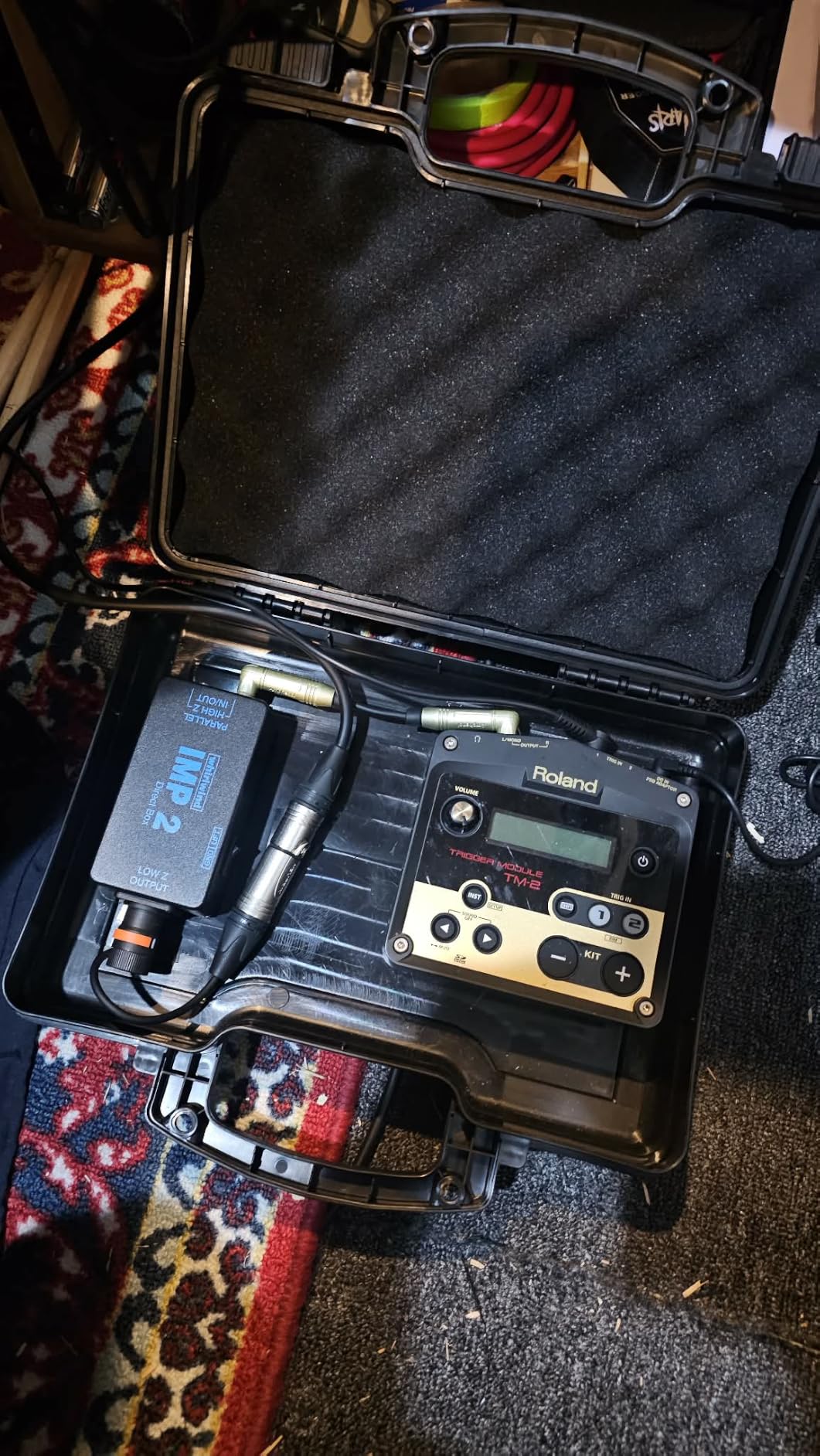
Being passive means there is a fixed level reduction you cannot adjust, so the box output is quieter than an active unit. That is not a flaw, it just means you set gain at the console with the guitar signal at a normal playing level rather than cranking the channel to compensate for a weak source.
For durability, forum accounts of this box surviving unheated storage in a trailer for weeks and still working without complaint are typical rather than remarkable. It appears everywhere from acoustic and bass rigs to trigger and backing-track setups, which tells you how little it asks of a signal chain.
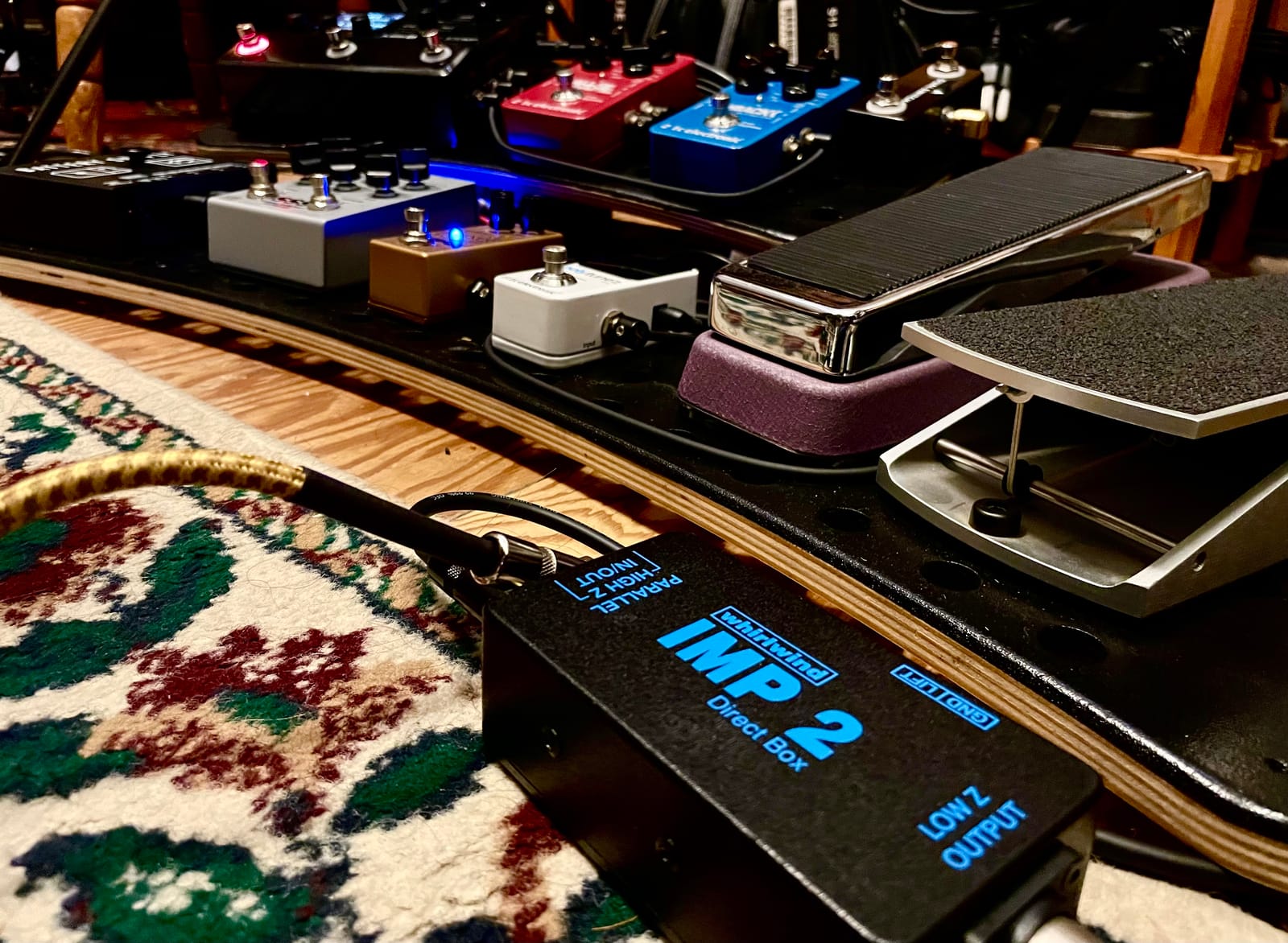
Choose the IMP 2 when you want nothing between guitar and console
This is the right box for a passive-output guitar, a magnetic pickup, or any setup where you would rather control tone at the desk than on the floor. It is also the easiest unit here to mount: at 8.8 ounces and roughly 7 by 7 inches it fits where a stompbox would not, and with no power connection it frees up a spot on a crowded power supply.
Skip the IMP 2 if your pickup needs gain
An undersaddle piezo with no onboard preamp puts out a weak signal, and a passive transformer will only attenuate it further. You would end up turning the console channel up so far that you hear the room instead of the guitar. For that case, go active with the Radial Pro48 or pick a box with adjustable gain like the LR Baggs Venue DI.
5. Radial Pro DI Passive Direct Box
Radial Pro DI Passive Direct Box
Custom transformer in a stainless steel I-beam chassis
Passive mono XLR output
18 kHz frequency response
Two-year warranty
Pros
- Custom transformer gives a fuller and more transparent passive signal
- Rugged I-beam construction built for touring
- No power supply to run or fail
- Well regarded for acoustic and bass in live and studio work
Cons
- Passive level loss means console gain and pad settings need care
- Costs more than entry-level passive boxes for the same core function
Owners report that a passive transformer usually sounds better than what it replaced, and this box holds a 4.7 star average across 595 reviews, the largest well-reviewed sample in this roundup.
It is rated for acoustic guitars, bass, keyboards, drum machines and professional snake systems, with a stated frequency response up to 18 kHz and mono XLR output. The stainless steel I-beam chassis is the same construction approach Radial uses on their higher-end boxes, and it survives being stepped on.
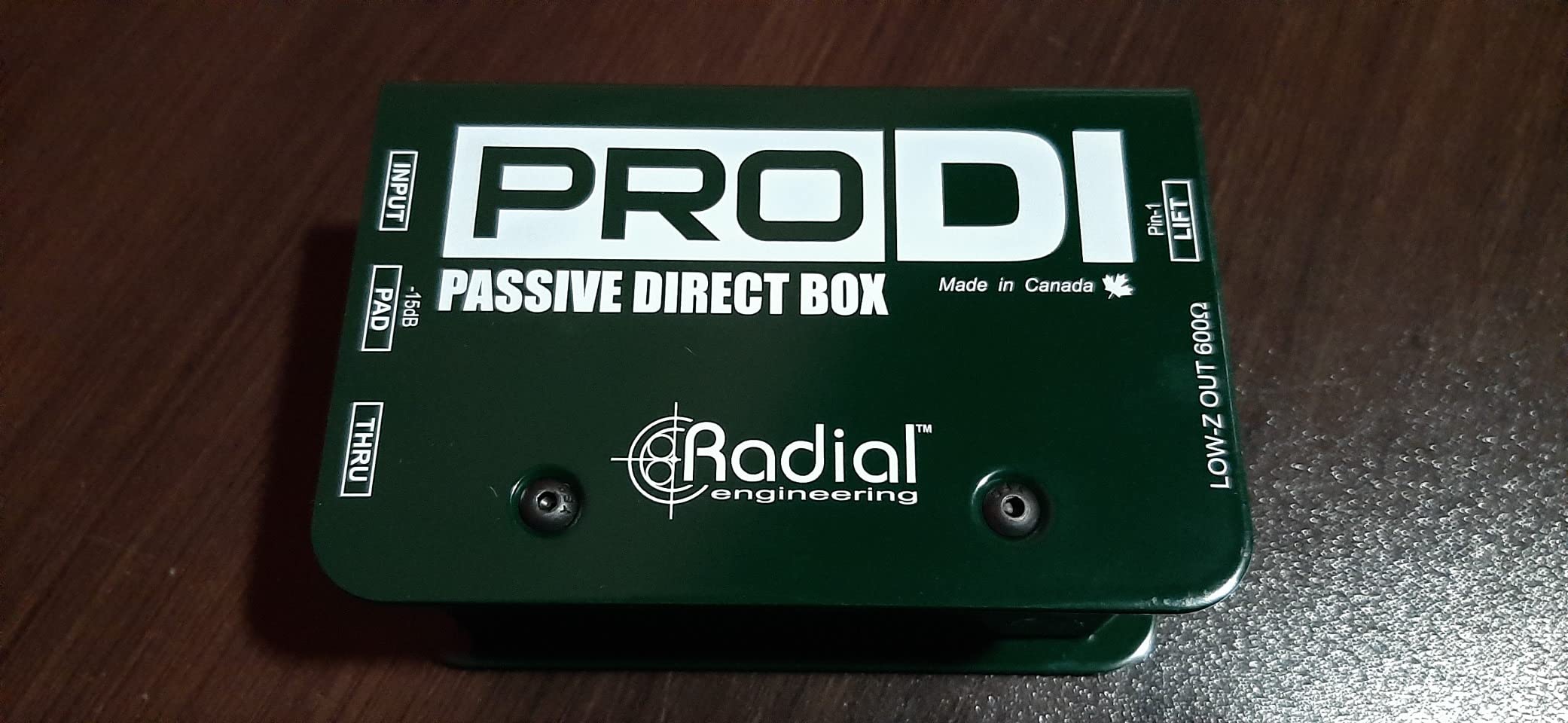
Owners accept one consistent caveat: the passive design drops level, so mixer gain and pad settings need care. That is a one-time learning cost rather than a running annoyance, and once your console channel is set for an instrument-level source, you never touch it again.
A few users report persistent hiss with this box specifically, which is worth knowing about. More often than not, that traces back to gain staging at the console, since the same passive path that some players describe as transparent is being pushed harder on their rig than it needs to be.
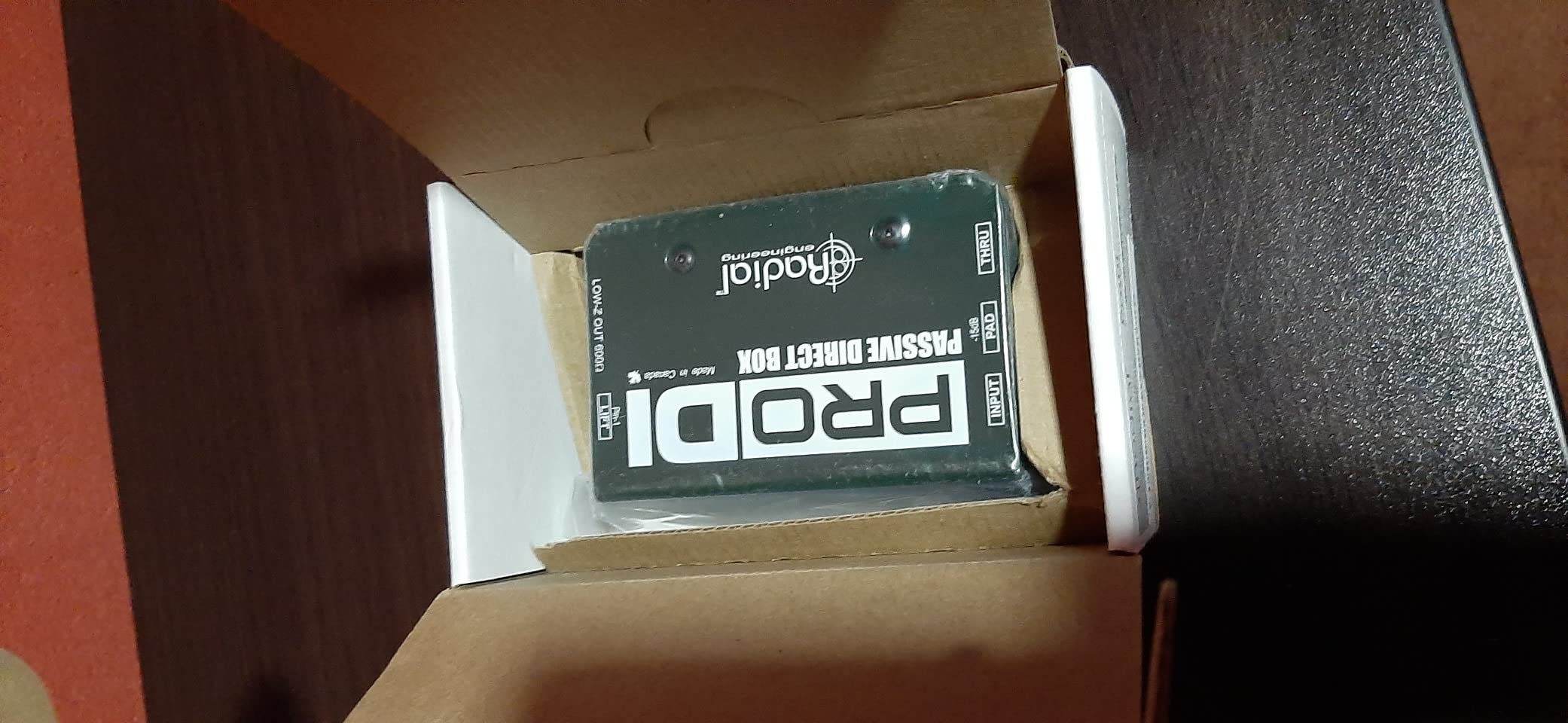
Choose the Pro DI for a passive source with headroom to spare
Buy this when your guitar has an onboard preamp, a magnetic pickup, or a stereo output you plan to merge. It handles multiple sources in one rig, comes with a two-year warranty, and gives you a reliable balanced line for a PA snake, an interface or a snake box without adding a power supply to the count.
Skip the Pro DI if you want two channels or tone shaping
There is no EQ, no notch filter and no gain control here, because the Pro DI is a converter and nothing more. If your problem is piezo quack or feedback rather than signal routing, you will spend your time at the console instead. The ART DualZDirect gives you two channels plus pad, phase and ground lift switches if you need more routing flexibility in one box.
6. Radial Pro48 Active 48-Volt Compact Direct Box
Radial Pro48 Active 48-Volt Compact Direct Box
Active low-noise op-amp circuit
Switchable minus 15 dB pad
Balanced mono XLR output
Powered by phantom power or battery
Pros
- Active circuit preserves level and avoids passive losses
- Low-noise op-amp suits high-output acoustic sources
- Minus 15 dB pad tames hot passive guitars
- Compact steel chassis with a balanced XLR
Cons
- Requires phantom power or a battery
- Active circuitry adds a small amount of noise versus a quality passive transformer
The Pro48 is the active counterpart to the Pro DI and the answer for anyone whose guitar outputs more than a passive transformer can take without complaining. The low-noise op-amp circuit replaces the lost level rather than making up for it, so a piezo or an active onboard preamp arrives at the console with the top end intact.
It holds a 4.7 star average across 206 reviews, and the recurring theme is that the active circuit avoids the level loss and colouration of passive boxes while the pad handles the opposite problem when a passive guitar is running hot.
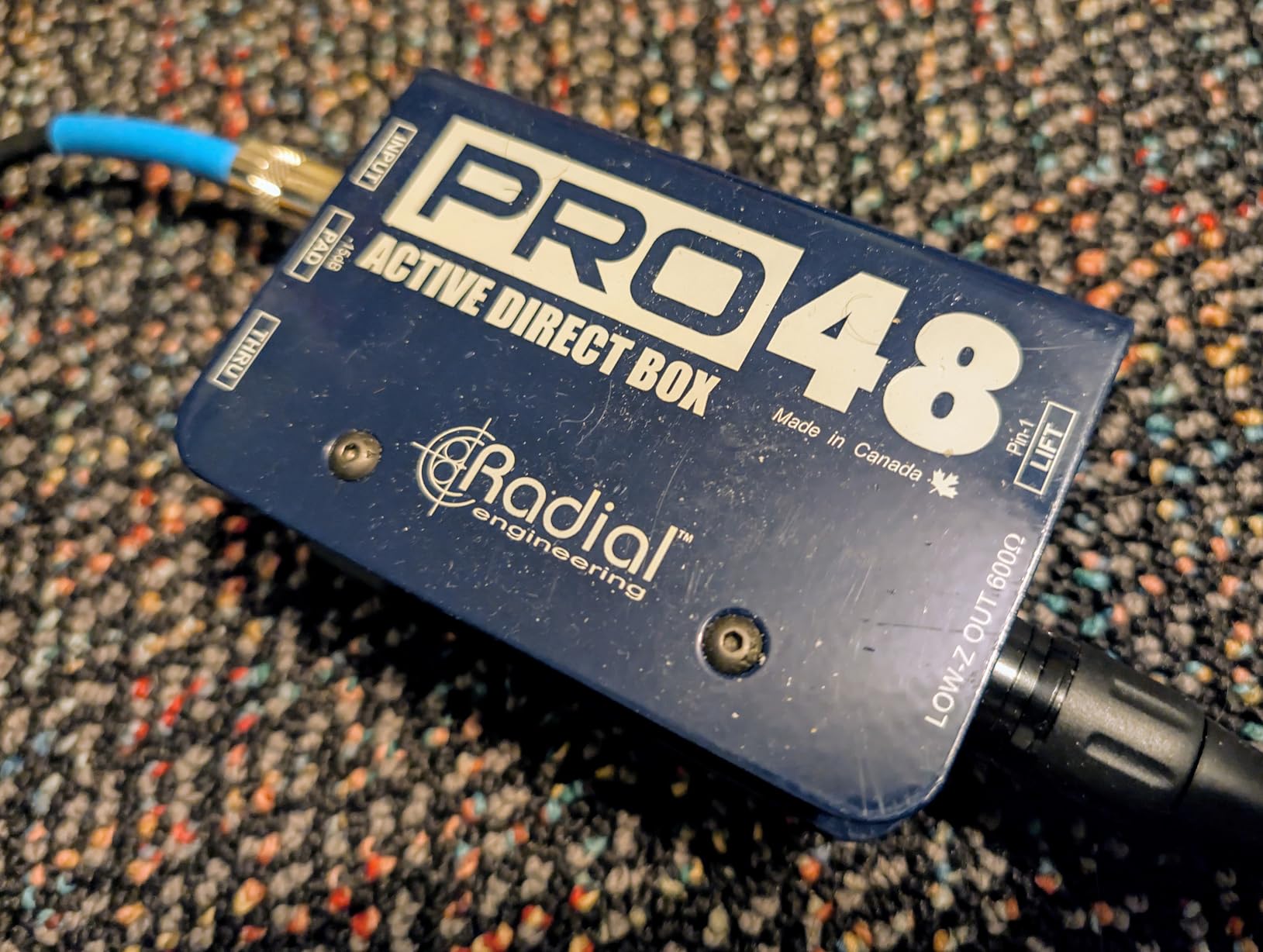
That switchable minus 15 dB pad is the feature to think about. If you move between an acoustic-electric with a hot onboard preamp and a passive guitar with a magnetic pickup, one box can cover both without you riding the trim control on every song.
The compromise is power. Phantom power from the console solves it neatly when the desk provides it, but on a crowded pedalboard with a passive rig already in place, one more cable and one more battery is friction. Some owners also note a small amount of inherent noise from the active stage compared with a good passive transformer, though the review profile does not treat it as a serious fault.
Choose the Pro48 for piezos and active preamps
This is the pick for an undersaddle pickup without an onboard preamp, or an acoustic-electric with an active preamp that needs level rather than attenuation. Pair it with a console providing phantom power and you have a box that never runs flat, never runs out of battery mid-set, and feeds a long snake run without noise.
Skip the Pro48 if your board has no power budget left
Every phantom-capable box needs either a console feed or a battery, and a board carrying tuners, modulators and loopers may not have either to spare. If your guitar already outputs a hot, balanced-capable signal, the Radial Pro DI gives you the same chassis family with no power at all and a marginally purer path.
7. Fishman ToneDEQ AFX Preamp EQ and DI Box with Dual FX
Fishman ToneDEQ AFX Preamp EQ and DI Box with Dual FX
Acoustic preamp with compressor and boost
3-band EQ and low cut filter
Phase switch
Balanced DI with quarter-inch out
Pros
- Compressor
- EQ and boost give a full sound from a small rig
- Low cut filter and phase switch control feedback on stage
- Balanced DI plus quarter-inch out allows flexible splits
- Limited lifetime warranty
Cons
- Delay and reverb cannot be used at the same time
- No built-in tuner and no mute switch
- Enclosure feels light and plasticky for the price
The ToneDEQ AFX is the most complete single-box solution in this group for a player who wants a full acoustic chain from a single footswitch. At 350 g and just under 9.5 inches square, it replaces a preamp, a compressor, a boost and a DI, which is a lot of pedalboard saved.
Fishman makes pickups, so the preamp voice is tuned for acoustic instruments, and the compressor smooths out the wide dynamic range of a strummed guitar before it hits the desk. The 3-band EQ, low cut filter and phase switch cover the feedback problems that come with a bright room.
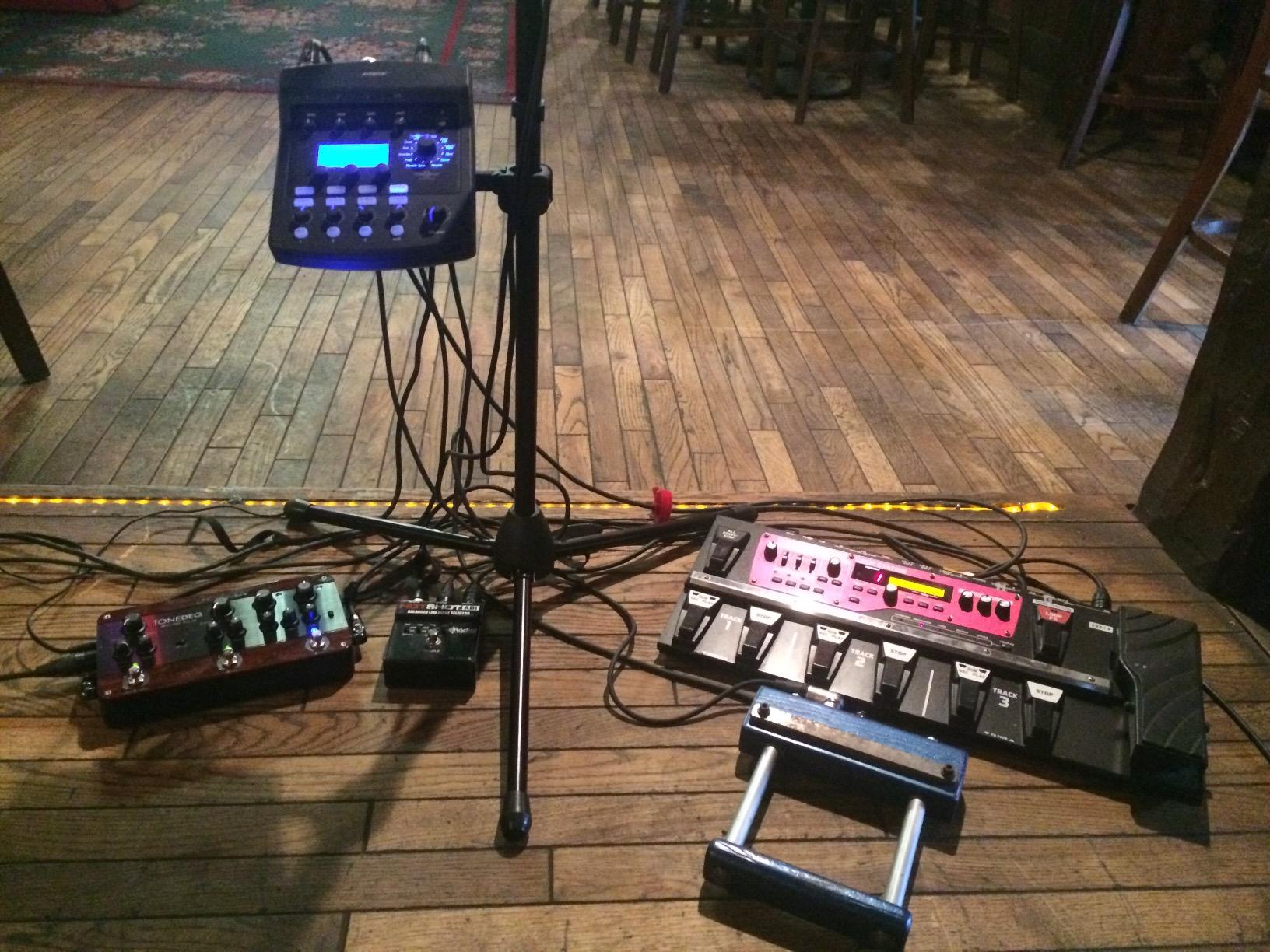
Players doing hundreds of gigs a year report consistent tone, and several owners describe it as the best acoustic pedal they have used. The balanced DI output plus quarter-inch out means you can split to a PA and a monitor amp at once, which is exactly what a singer-songwriter with an acoustic-electric needs.
One design limitation shapes how you use it: delay and reverb cannot run together, because the effects are grouped rather than individually tweakable. If your sound depends on both at once, plan to run one of them from somewhere else in the chain.

Choose the ToneDEQ AFX to collapse a long signal chain
Pick this if you currently run a preamp, a compressor and a boost and you would rather have one switch instead of three. It suits a strumming singer-songwriter who needs consistent volume across quiet and loud passages, and the compressor is doing real work that a DI cannot.
Skip the ToneDEQ AFX if you want fine-grained effects control
The grouped effects and the lighter, plasticky feel at this price point put it behind a dedicated multi-effects unit for anyone who wants to shape delay and reverb independently. Players who need a tuner on the board should also note there is none here, so you would still need a tuner pedal or a clip-on.
8. Zoom AC-3 Acoustic Pedal for Guitar with DI and Modeling
Zoom AC-3 Acoustic Pedal for Guitar with DI, Acoustic Modeling, 9 Effects
16 body and model presets with piezo or magnetic select
Anti-feedback control
Built-in LED chromatic tuner
Two balanced XLR outputs with pre and post
Pros
- Sixteen body presets plus piezo or magnetic selection for accurate tone matching
- Anti-feedback function removes problem frequencies at a press
- Two XLR outputs with pre and post control for splits
- Built-in tuner and footswitchable 9 dB boost
Cons
- One of the bulkiest boxes here at 2.7 pounds
- Modeling presets take practice to match to a given instrument
The AC-3 is unusual in this roundup because it models the guitar itself rather than just shaping the signal. Sixteen body types and fifteen specific guitar models, combined with a piezo or magnetic input selector, mean you can change the fundamental voice of your instrument rather than only its balance.
The anti-feedback function is genuinely useful. Instead of you hunting for the offending frequency, it detects and removes problem feedback frequencies when you press the footswitch, which saves a lot of trial and error in a room you have never played before.
Two balanced XLR outputs with pre and post control, plus two quarter-inch outputs, let you split one signal to a PA and one to monitors with different processing. Run the pre-post setting to send a clean feed to the desk while your monitors get the modeled sound.
Power options are unusually flexible: two AA batteries, the included AC adapter, or USB bus power from a computer. At 2.7 pounds and roughly 6 by 4 inches it is one of the bulkiest boxes in this roundup, and reviewers list that bulk as the main drawback alongside the learning curve on the presets.
Choose the AC-3 when your guitar’s voice is the problem
This is the pick for a guitar that sounds thin or boxy through a PA, or for anyone who wants to audition what a different body style would do to their signal. The piezo and magnetic selector also means one box covers two very different instruments without guessing at gain settings, and the LED tuner removes another pedal from the board.
Skip the AC-3 if board space or weight matters
At 2.7 pounds, that bulk is the main reason to look elsewhere, particularly if you do not actually use those presets. If your aim is a clean balanced signal to the desk with nothing else going on, the Whirlwind IMP 2 or the Radial Pro DI does that job and leaves your board lighter.
9. ART DualZDirect Dual Professional Passive Direct Box
ART DualZDirect Dual Professional Passive Direct Box
Fully passive with no battery required
Two channels in one enclosure
Switchable 0, minus 20 or minus 40 dB pad
Ground lift and phase invert
Pros
- Fully passive design so no power supply is needed
- Switchable pad
- low-pass filter
- phase invert and ground lift
- Extruded aluminium body resists slipping on stage
- Two channels in one box
Cons
- Large passive signal reduction can confuse users expecting line level
- Number of small buttons makes accidental presses likely
The DualZDirect is the most flexible passive box here for a specific reason: it has two channels in one chassis. Convert a stereo keyboard or pedalboard pair, or run two acoustics into one mixer channel with the merge switch, and you have done it without buying two boxes or finding two positions on the board.
It converts 50k ohm inputs into 600 ohm balanced outputs with fully passive transformer design, so there is no battery to run and nothing to fail. Owners frequently compare it favourably to costlier boxes and note that for acoustic guitar the signal comes out louder, clearer and fuller than cheaper passive designs.
The switchable pad at 0, minus 20 and minus 40 dB, plus a low-pass filter, phase invert and ground lift, covers most of the troubleshooting you would otherwise do at the desk. The ground lift in particular isolates inputs from the chassis, which is the fix for hum in a setup with several grounded devices.
Two caveats show up repeatedly in reviews. The passive signal reduction is large, so it catches out users who plug a line-level source into an input built for instruments, and the number of small toggle switches means you should check positions after moving the box rather than assuming a setting stuck.
Choose the DualZDirect for stereo sources and two-into-one routing
Pick this when you run a stereo pair, a keyboard feeding a pedalboard, or two guitars you sometimes want summed. Two channels plus a switchable pad and ground lift in one passive box is a combination nothing else in this roundup offers, and the three-year manufacturer’s warranty is a reasonable signal on build quality.
Skip the DualZDirect if you need gain
There is no active stage and no adjustable gain, so a weak piezo signal arrives at the console smaller than it started. This box is for sources that already output a healthy instrument level. If your guitar needs gain, the Radial Pro48 or an LR Baggs box with adjustable gain is the correct direction.
10. Radial StageBug SB-2 One-Channel Passive Instrument Direct Box
Radial StageBug SB-2 1-Channel Passive Instrument Direct Box
Passive Eclipse ET-DB3 transformer
Stereo-to-mono merge
15 dB pad
Weighs 7 ounces in a stainless steel case
Pros
- Radial build quality with a clean noise-free passive signal
- Very small and light so it mounts under a pedalboard
- Stereo-to-mono merge and 15 dB pad add real flexibility
- Solves ground hum in synth and pedalboard setups
Cons
- Significant passive level drop that some owners find excessive
- One review reported an already oxidised top screw shortly after delivery
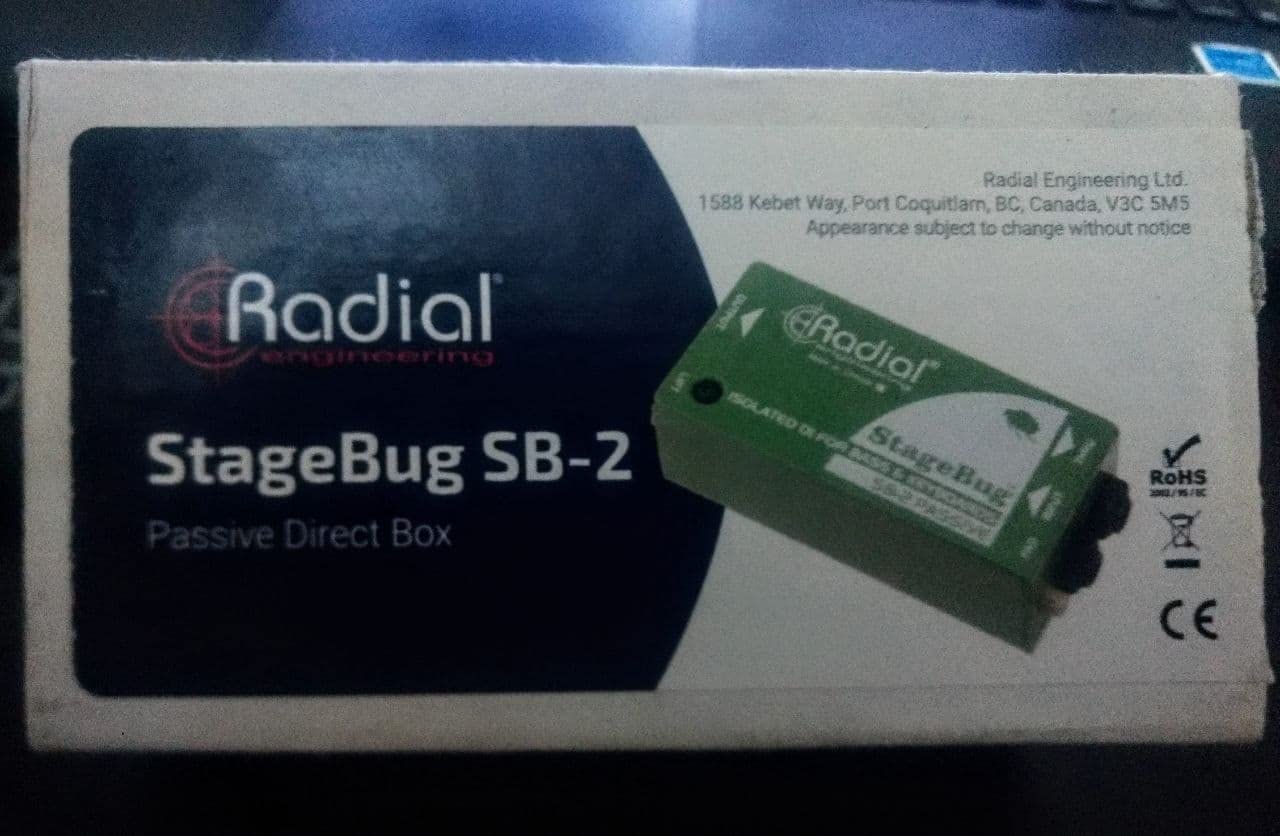
The StageBug SB-2 solves the problem nobody else here does: how to fit a proper DI into a board with no room left. At 7 ounces in a stainless steel case it mounts under a mini pedalboard or sits in a bag pocket, and it is built by Radial with an Eclipse ET-DB3 transformer, so the signal quality is not the compromise.
Rated 4.8 from 131 reviews, it is used well beyond acoustics, with owners pairing it with bass, keyboards, steel pans and stereo rigs. Reviewers describe it as noticeably better than cheaper boxes it replaced, which is a fair summary of the whole class.
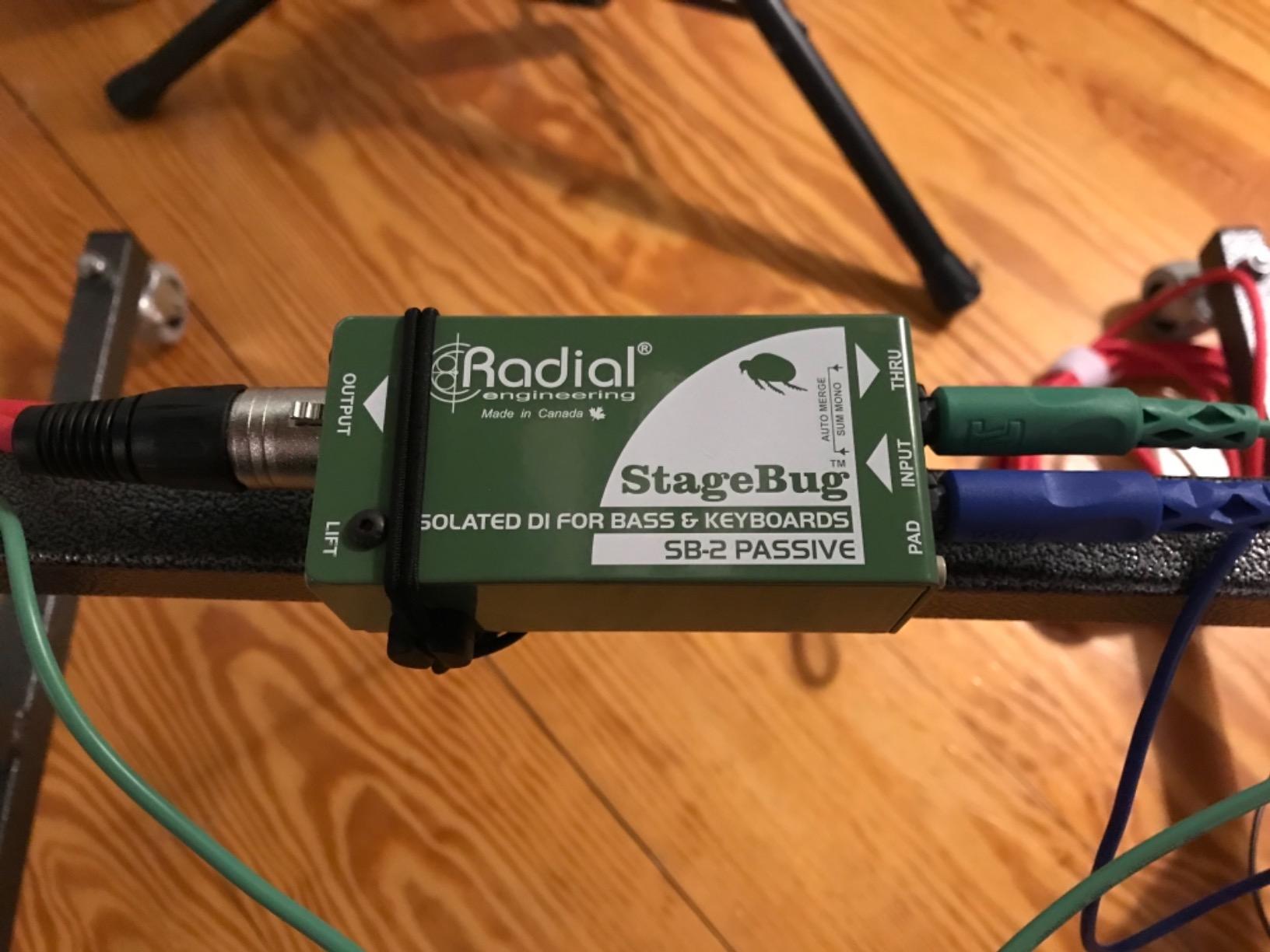
The stereo-to-mono merge and the 15 dB pad make it more capable than a bare transformer. Merge lets you combine two unbalanced outputs into one console channel, and the pad handles sources that run hot, which is common when a passive guitar with an onboard boost feeds an input.
The most repeated caveat is the passive level drop, and at least one owner returned the unit over it. That is a real limitation rather than a flaw: a passive design cannot restore what it attenuates, so gain staging at the console is part of using it.
Choose the SB-2 when board space is the binding constraint
Pick this if you have already filled a pedalboard and still want a transformer-isolated, balanced feed with a ground hum fix. The weight and size make it easy to forget it is there, and the two-year warranty covers the sort of gear that gets moved and dropped regularly.
Skip the SB-2 if you need gain or a second channel
There is no active circuitry, no gain control and one channel. The ART DualZDirect covers the two-channel case with more switching, and the Radial Pro48 covers the gain case. If neither applies to your rig, this is a clean, quiet converter that does one job extremely well.
How to Choose a DI Box for Your Acoustic
Start with the pickup, then work outward. Everything else on this list is a preference; the pickup is a constraint. Write down whether your instrument uses a piezo, a magnetic pickup or an onboard preamp, and whether that system is passive or active.
Check input level before anything else. If the output is weak, you need gain from an active DI or a box with an adjustable gain control. If the output is hot, a passive transformer will preserve more detail. Guessing here is the most common reason a new DI sounds worse than the guitar plugged in directly.
Decide how much EQ you actually use. A five-band EQ with tunable mids, as on the LR Baggs Venue DI and Para Acoustic, fixes problems in the room. A three-band EQ, as on the Fishman ToneDEQ AFX, handles less. If your gigs are in small bars where the engineer controls tone, skip the EQ and take a passive box.
Treat feedback control as a separate feature. A tunable notch filter narrows the cut to one problematic frequency; the Zoom AC-3 detects and removes it for you. Neither is a substitute for facing the guitar away from the PA or lowering the stage volume, but both buy you margin in a bright room.
Count your power budget. Boxes that run on phantom power or batteries add a cable and a failure point. Phantom power from the desk is the cleanest option if it is available. On a crowded board, a fully passive box like the Whirlwind IMP 2 or the ART DualZDirect removes one variable entirely.
Check the outputs you actually need. A balanced XLR sends to a console and a snake. An unbalanced quarter-inch output feeds a small amp or an interface. The Para Acoustic and the ToneDEQ AFX give you both, which matters when you might feed a PA and a monitor amp from one box.
Test before you commit. With the box in hand, run your guitar at normal playing volume, sweep the EQ with the room quiet, then raise the volume until it howls and find where the notch filter helps. If a passive box hisses, plug the guitar in directly and listen for the same noise before blaming the box.
One more tip for home recording: a DI gives you a clean feed, but the room still colors the sound. If you are chasing a record-like acoustic tone, treatment in the recording space matters as much as the box, and our guide to the best acoustic panels for recording rooms covers that side of it.
Fly-Date PA Survival Notes
Rental PA systems are the real test of any acoustic DI. Walk in, play, and the first problem is almost never the box. It is that nobody has set a channel for your guitar, so you are feeding a microphone input designed for a vocal at a much lower level.
Bring the XLR cable to the console yourself if you can, and set a channel with the high-pass filter engaged at around 80 Hz to clear stage rumble. Then ask for your notch and EQ moves at the desk rather than reaching down to a pedal between songs. Boxes with a footswitch, like the LR Baggs units, are easier to play with, but the desk is where the changes stick.
And check the spare routing before the first set, not during it. A second output from your box, whether the quarter-inch out on the Para Acoustic or a merge switch on the ART DualZDirect, gives you a fallback if a channel is dead.
Frequently Asked Questions
What is the best acoustic DI box preamp?
The LR Baggs Venue DI is the most complete acoustic DI preamp in our roundup because it combines adjustable gain, a five-band EQ with tunable low-mid and high-mid bands, a Garrett Null notch filter for feedback control, a chromatic tuner and a boost footswitch in one unit with a balanced XLR output.
Why use a DI box for an acoustic guitar?
A DI box converts your guitar’s unbalanced, high-impedance signal into a balanced, low-impedance microphone-level signal a mixing desk can handle. That fixes level loss, cable noise over long runs and 50 or 60 Hz ground hum in one conversion, and many boxes add EQ and feedback control for live rooms.
Do DI boxes affect sound quality?
They do, and the direction depends on the design. A passive transformer attenuates the hot instrument signal and can damp resonance around the pickup, which sounds tighter but darker, while an active box with a low-noise op-amp restores level and keeps more top end but needs power and adds a small amount of inherent noise.
Which DI box has the best sound?
It depends on your guitar and your room rather than on one box universally. A passive transformer such as the Radial Pro DI or Whirlwind IMP 2 suits hot outputs and adds the least noise, while an active box such as the Radial Pro48 suits piezos that need gain, and the LR Baggs Venue DI wins when you want tone shaping and feedback control in the same box.
Should I use an active or passive DI with an acoustic guitar?
Use an active DI with a piezo or undersaddle pickup that has no onboard preamp, because the weak output needs gain. Use a passive DI with a magnetic pickup or an acoustic that already has an onboard preamp, since the transformer will not choke a hot signal and needs no power.
Conclusion
Start with your pickup, because it rules out half the field before price ever enters the conversation. A piezo without an onboard preamp points you at an active box with gain, ideally one with a tunable notch filter, and the LR Baggs Venue DI is the most complete version of that.
A magnetic pickup or an acoustic with an onboard preamp points you at a passive transformer, where the Radial Pro DI for durability, the Whirlwind IMP 2 for footprint, the Radial StageBug SB-2 for mounting under a board and the ART DualZDirect for stereo and summed routing are all sensible destinations. Players who want modelling, compression and a tuner in one switch should look at the Zoom AC-3 or the Fishman ToneDEQ AFX.
Whichever one you choose, spend ten minutes setting the console channel before the first rehearsal rather than the first gig. That is where the best cajons for acoustic musicians and your DI will meet the same room, and only one of them has a notch filter.