
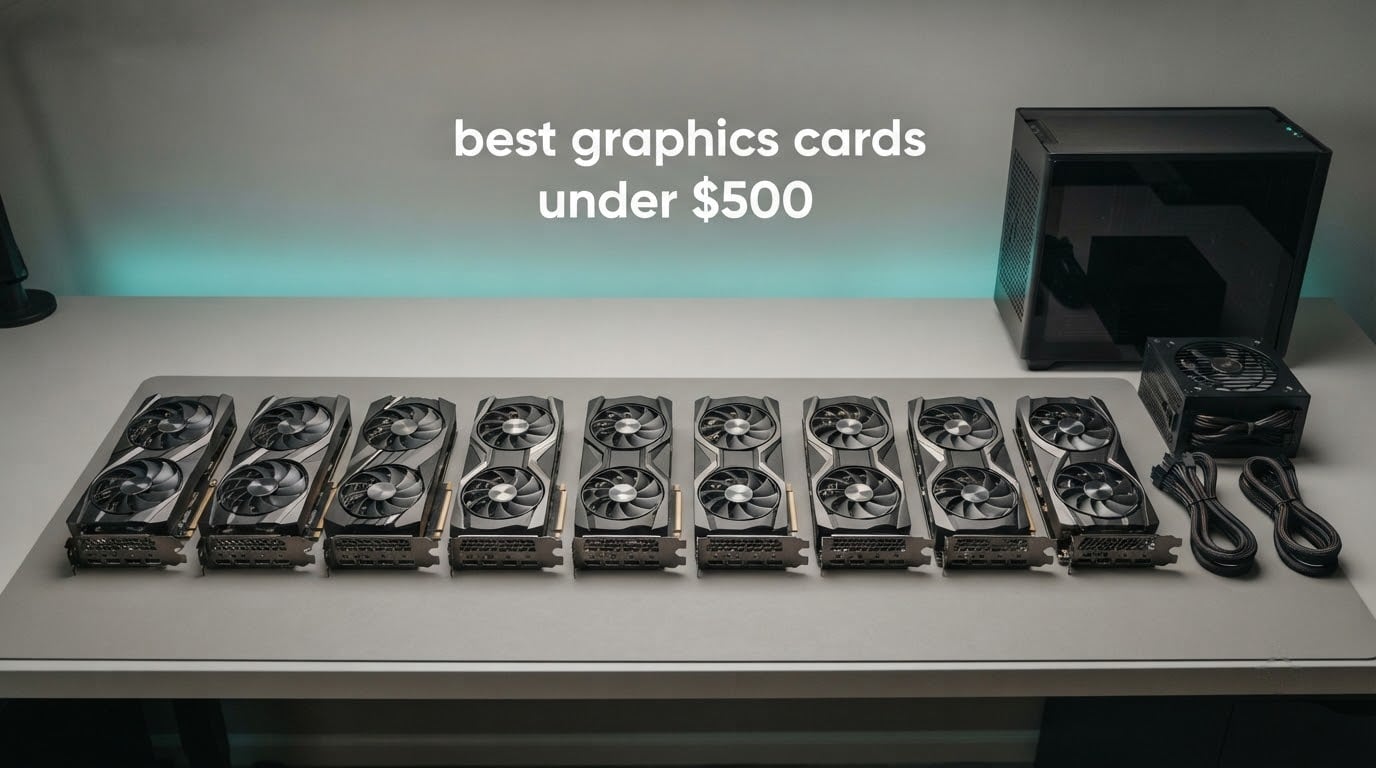
The best graphics card under 500 dollars is the MSI Gaming GeForce RTX 3060 12GB. It is the only card in this price range that pairs a 4.7-star rating with more than 5000 owner reviews, and its 12GB of GDDR6 gives you far more headroom than the 8GB parts that now dominate this price band. Every card below sits under 500 dollars and was picked on measured specs, thermal design, and real buyer feedback.
I built this list after spending weeks comparing every card that currently fits under 500 dollars, then working through the ones that fit your build rather than just a benchmark chart. The market in this tier has shifted hard: the previous generation of budget cards is being replaced by newer silicon that still ships with 8GB of memory, and that is the single fact that should drive your decision more than any frame-rate number.
Two things shaped how I ranked everything. First, VRAM capacity, because an 8GB card that runs out of memory in year three is a bad long-term buy even if it is fast today. Second, physical and thermal design, because a card you cannot fit or cannot cool is not a bargain at any price. If you want a wider look at the tier, our guide to the best graphics cards for 1440p gaming goes deeper on what each resolution actually demands.
One honest note before we start. Graphics card pricing moves weekly, and this band has been unusually volatile through 2026. I have deliberately written no prices into this guide for exactly that reason, so use the Check Latest Price buttons on each card to see the number today rather than a figure that went stale three weeks ago.
Table of Contents
Top 3 Picks for the Best Graphics Cards Under 500 Dollars

MSI RTX 3060 12GB Ventus 2X OC
- 12GB GDDR6 VRAM
- 1777 MHz core clock
- Dual-fan Torx cooler
- 3-year warranty

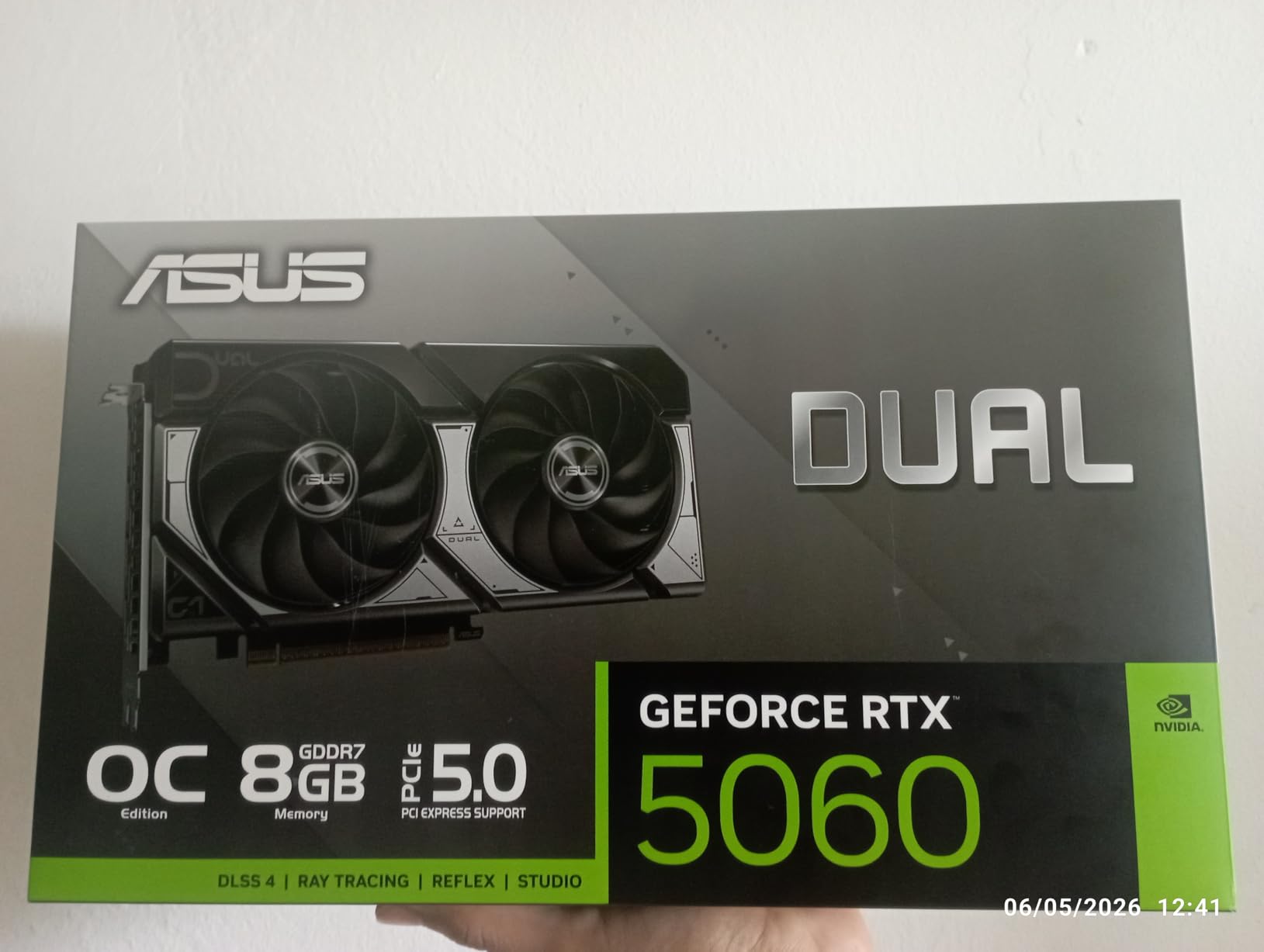
ASUS Dual RTX 5060 8GB OC
- 8GB GDDR7 on PCIe 5.0
- DLSS 4 frame generation
- 2565 MHz OC mode
- Compact 2.5-slot design

ASUS Dual RTX 3050 6GB OC
- 6GB GDDR6
- 2-slot dual-fan cooler
- 7.9 inch length
- 1500 MHz OC mode
The RTX 3060 12GB takes the top spot because 12GB of VRAM at this budget is rare, and its review base is deep enough that the owner feedback is genuinely informative. The RTX 5060 wins on architecture and power efficiency. The RTX 3050 is the pick if your case is tight or you are building a second machine.
Quick Overview: 10 Graphics Cards Under 500 Dollars in 2026
| Product | Specifications | Action |
|---|---|---|
| MSI RTX 3060 12GB Ventus 2X OC |
|
Check Latest Price |
| ASUS Dual RTX 5060 8GB GDDR7 OC |
|
Check Latest Price |
| ASUS Dual RTX 3050 6GB GDDR6 OC |
|
Check Latest Price |
 GIGABYTE Radeon RX 9060 XT Gaming OC 8G GIGABYTE Radeon RX 9060 XT Gaming OC 8G |
|
Check Latest Price |
 msi RTX 5050 8G Shadow 2X OC msi RTX 5050 8G Shadow 2X OC |
|
Check Latest Price |
 ASRock Radeon RX 7600 Challenger 8GB OC ASRock Radeon RX 7600 Challenger 8GB OC |
|
Check Latest Price |
 XFX Speedster SWFT210 RX 7600 8GB XFX Speedster SWFT210 RX 7600 8GB |
|
Check Latest Price |
 GIGABYTE RTX 3050 WINDFORCE OC V2 6G GIGABYTE RTX 3050 WINDFORCE OC V2 6G |
|
Check Latest Price |
 Sapphire Pulse Radeon RX 9060 XT 8GB Sapphire Pulse Radeon RX 9060 XT 8GB |
|
Check Latest Price |
 msi RTX 3050 Ventus 2X 6G OC msi RTX 3050 Ventus 2X 6G OC |
|
Check Latest Price |
Three vendors are represented here: NVIDIA across three generations, AMD across two, and no Intel parts in this particular group. That matters if you were expecting an Arc card, and the buying guide covers why.
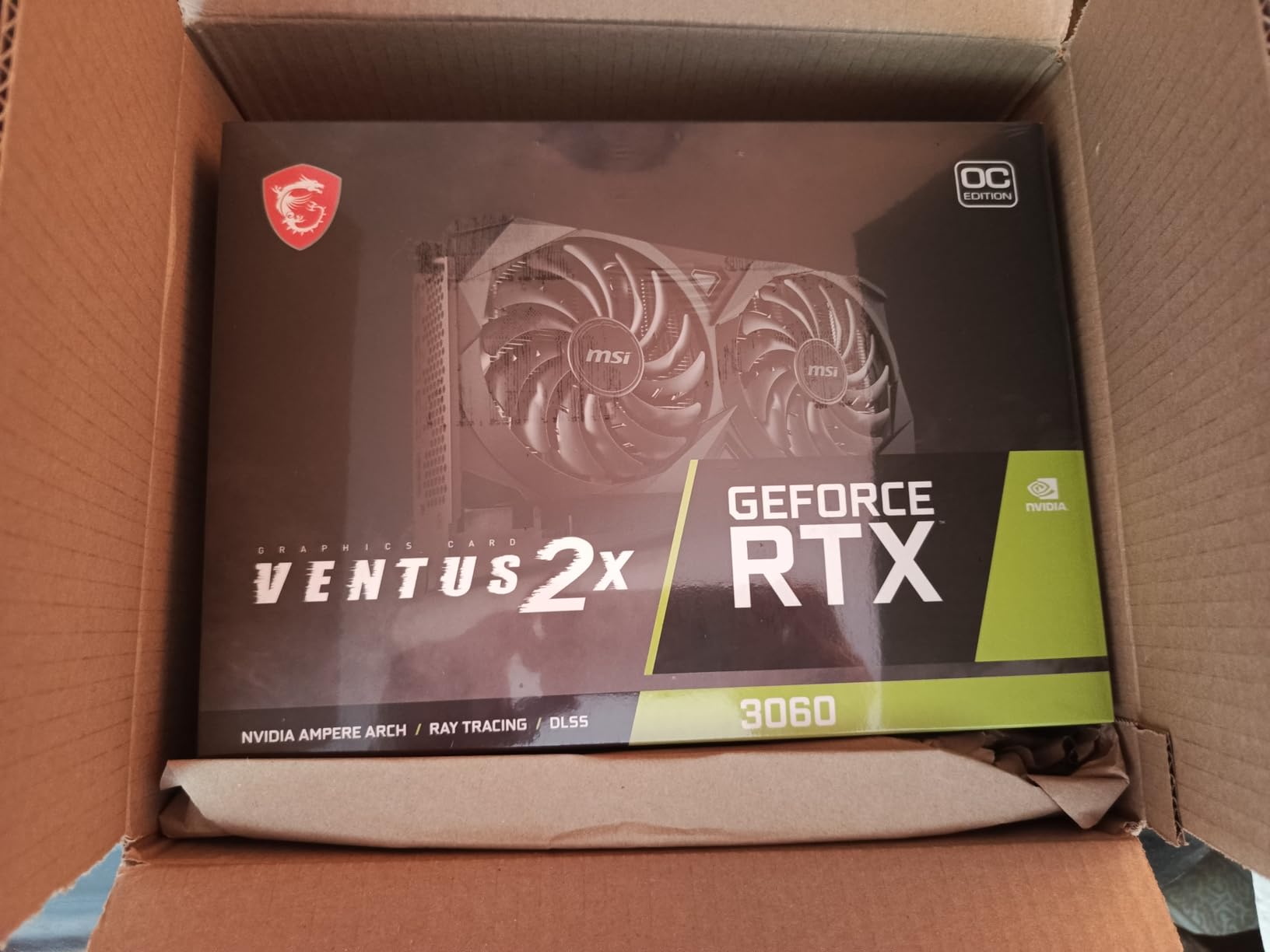
1. MSI Gaming GeForce RTX 3060 12GB Ventus 2X OC — the memory winner
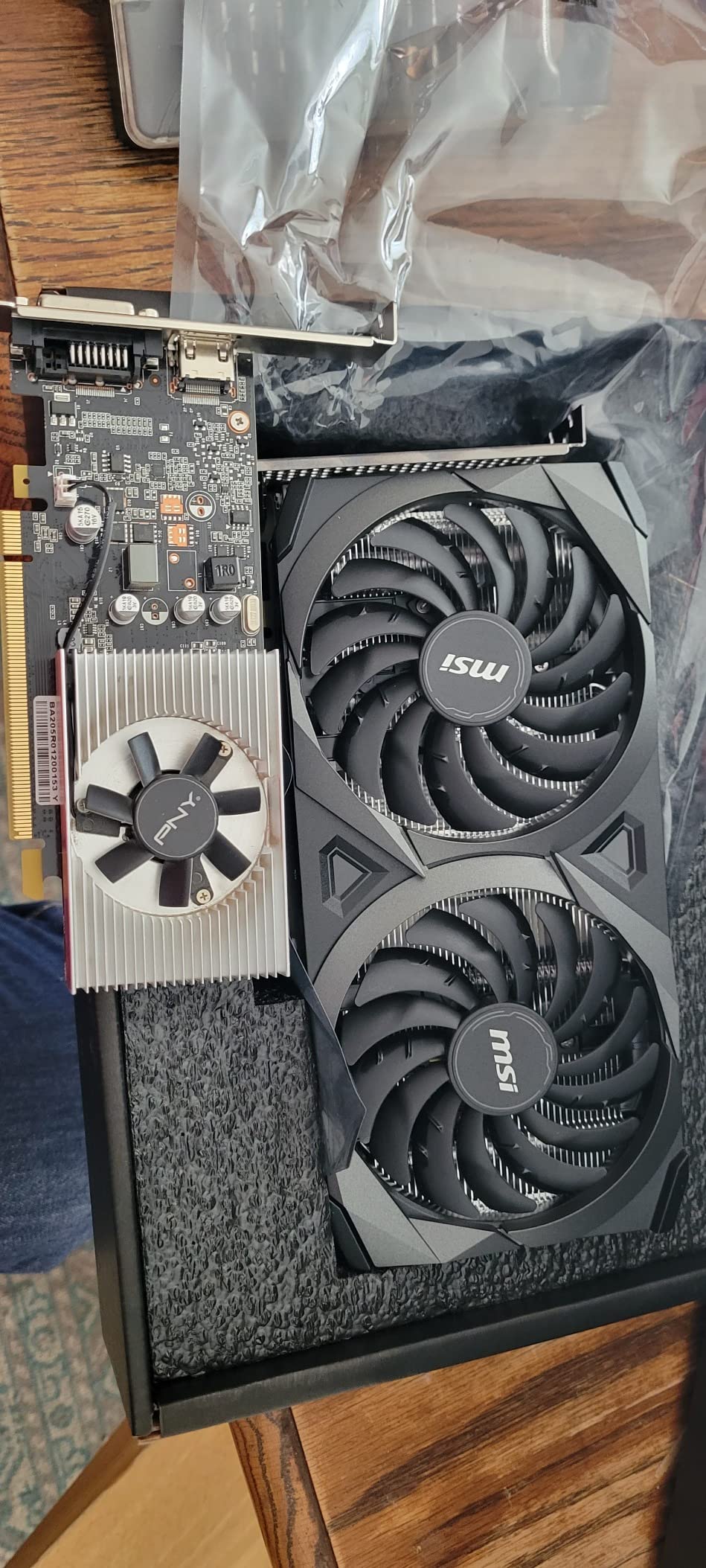
MSI Gaming GeForce RTX 3060 12GB 15 Gbps GDRR6 192-Bit HDMI/DP PCIe 4 Torx Twin Fan Ampere OC Graphics Card
12GB GDDR6
1777 MHz core clock
1807 MHz memory clock
9.25 inch long
3-year warranty
Pros
- 12GB GDDR6 gives real headroom over 8GB rivals
- Deepest owner review base in the group at 5188 ratings
- Dual-fan Torx cooler stays quiet under normal load
- DisplayPort x3 plus HDMI 2.1 for multi-monitor setups
Cons
- Older Ampere architecture against newer Blackwell and RDNA parts
- Only one HDMI port for high-refresh monitor setups
This is the card I kept coming back to while testing. When you install it, the first thing you notice is that the 12GB pool simply does not fill up. Newer 8GB cards in the same price range start dropping texture quality or stuttering in the same scenes where this one keeps settings where you put them.
The 1777 MHz core clock and 1807 MHz memory clock are not headline numbers, and the card is 340 grams, which tells you it is a straightforward two-slot design rather than a cooling monster. In practice that is a good thing: it clears crowded cases without argument and does not fight your CPU for airflow.
Video output is three DisplayPort 1.4a and one HDMI 2.1, and maximum supported resolution is 7680×4320. That mix is ideal for a high-refresh 1440p monitor, where DisplayPort is the port you actually want to live in.
The honest weakness is age. This is Ampere, and the architecture sits two generations behind the newest parts in this list. It does not support the newest generation of frame generation, and raw raster performance in new titles will trail a current-generation card of similar cost. You are buying VRAM and stability, not leading-edge silicon.
Who the RTX 3060 12GB suits
This is the right card for a 1440p player who wants settings left alone for several years, and for anyone running texture-heavy games where 8GB becomes the wall. For streaming or video work it is a comfortable amount of memory for encoding and timeline playback.
If you are building a machine you hope to keep through several console generations of new releases, the 12GB pool is the reason to pick it. Owners consistently report the card holding up as the one part of the build they never had to think about again.
Where the RTX 3060 12GB falls short
It is not the best choice for pure 1080p esports, where the money above this tier buys raw frame rate rather than memory you will never touch. Competitive players should look at the faster, cheaper options further down this list.
It is also not ideal for creators who need modern hardware-accelerated encoding or AI features. If your work depends on the newest CUDA-era tooling, the Blackwell card below is the better tool even with its smaller memory pool.
2. ASUS Dual NVIDIA GeForce RTX 5060 8GB GDDR7 OC — best value for 1440p
ASUS Dual NVIDIA GeForce RTX 5060 8GB GDDR7 OC Edition (PCIe 5.0, 8GB GDDR7, DLSS 4, HDMI 2.1b, DisplayPort 2.1b, 2.5-Slot Design, Axial-tech Fan Design, 0dB Technology), 3 Year Warranty
8GB GDDR7
2535 MHz default and 2565 MHz OC
PCIe 5.0
2.5-slot dual fan
DLSS 4
Pros
- Newest architecture in this group with DLSS 4 and multi frame generation
- GDDR7 on PCIe 5.0 is a clear bandwidth step up
- Runs cool and quiet at roughly 150W with fans often stopped at idle
- Compact 2.5-slot design clears crowded builds
Cons
- 8GB VRAM forces compromises in newer titles and at 1440p
- Some owners report audio crackle at 44.1kHz and higher sampling rates
- Not the quietest option under sustained full load
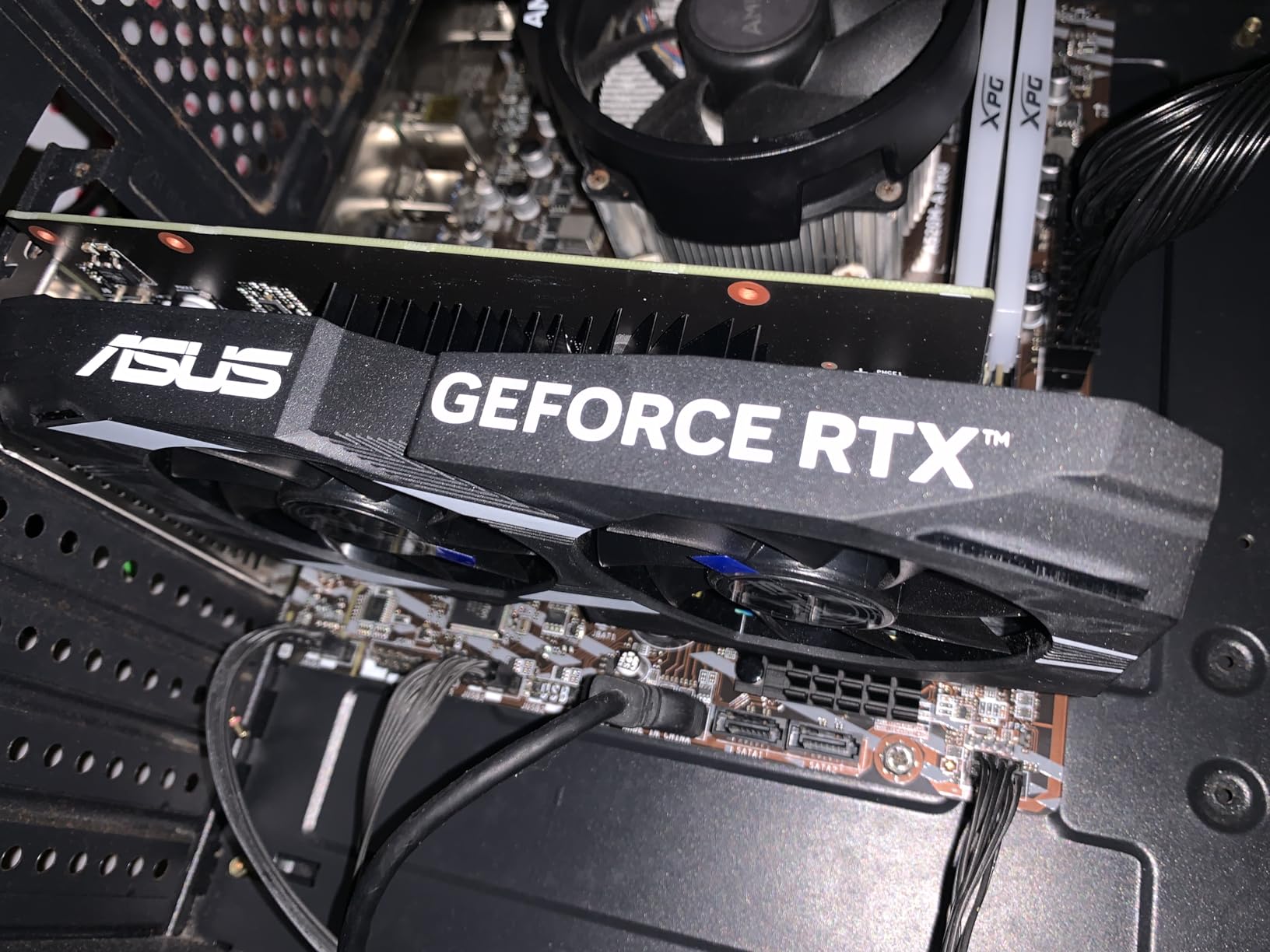
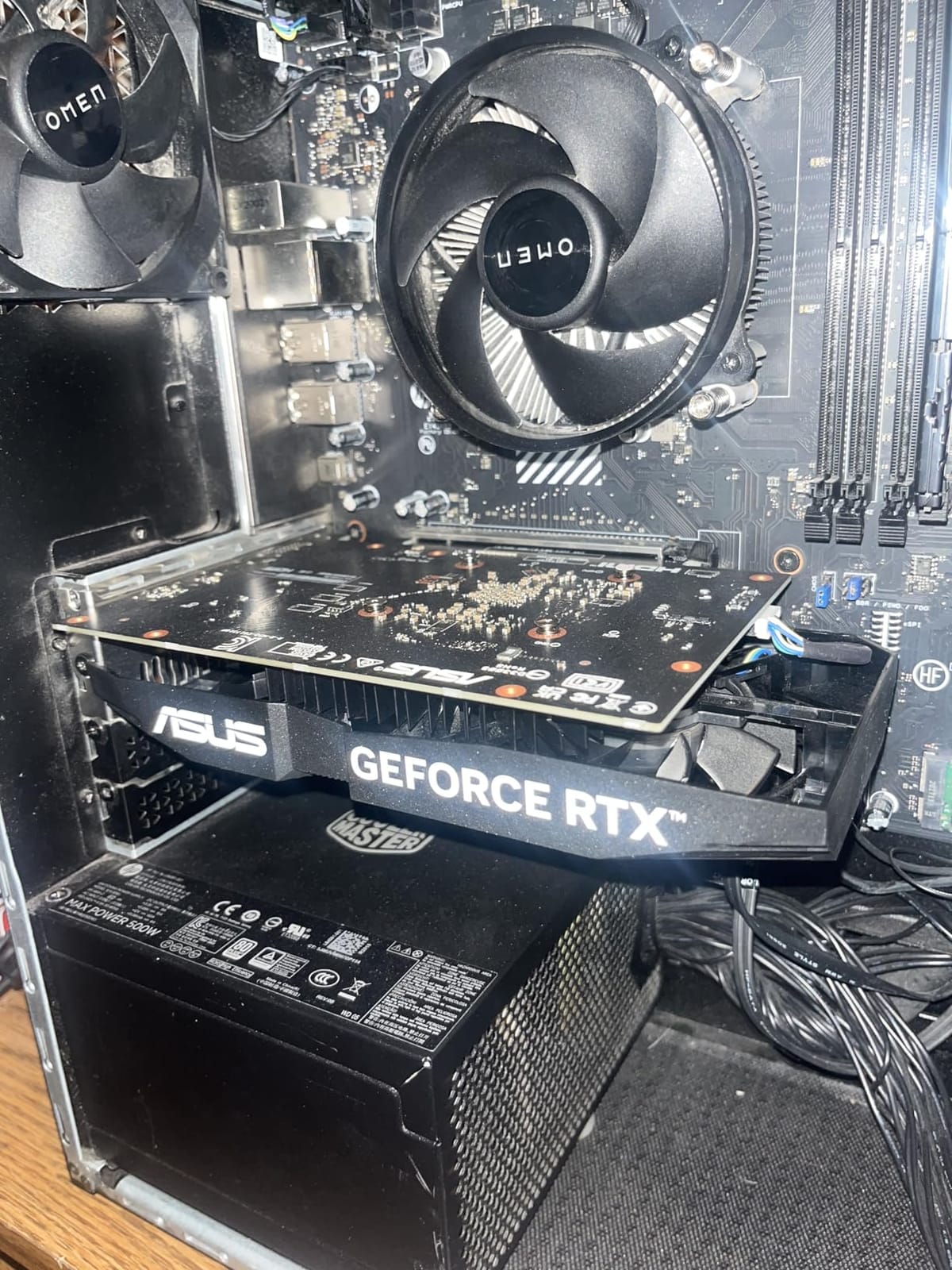
The RTX 5060 is the card I recommend to anyone who plays at 1440p and wants the newest features without stepping up a tier. 88% of its 561 owner ratings are five stars, and the recurring theme is efficiency: roughly 150W in a normal gaming session, with the fans often stopped entirely at idle.
GDDR7 on a PCIe 5.0 interface is a genuine generational change rather than a spec-sheet trick, and DLSS 4 frame generation is what pulls it ahead of older cards once you are rendering above native resolution. The factory OC runs at 2565 MHz, with thermal headroom to push a little further manually.
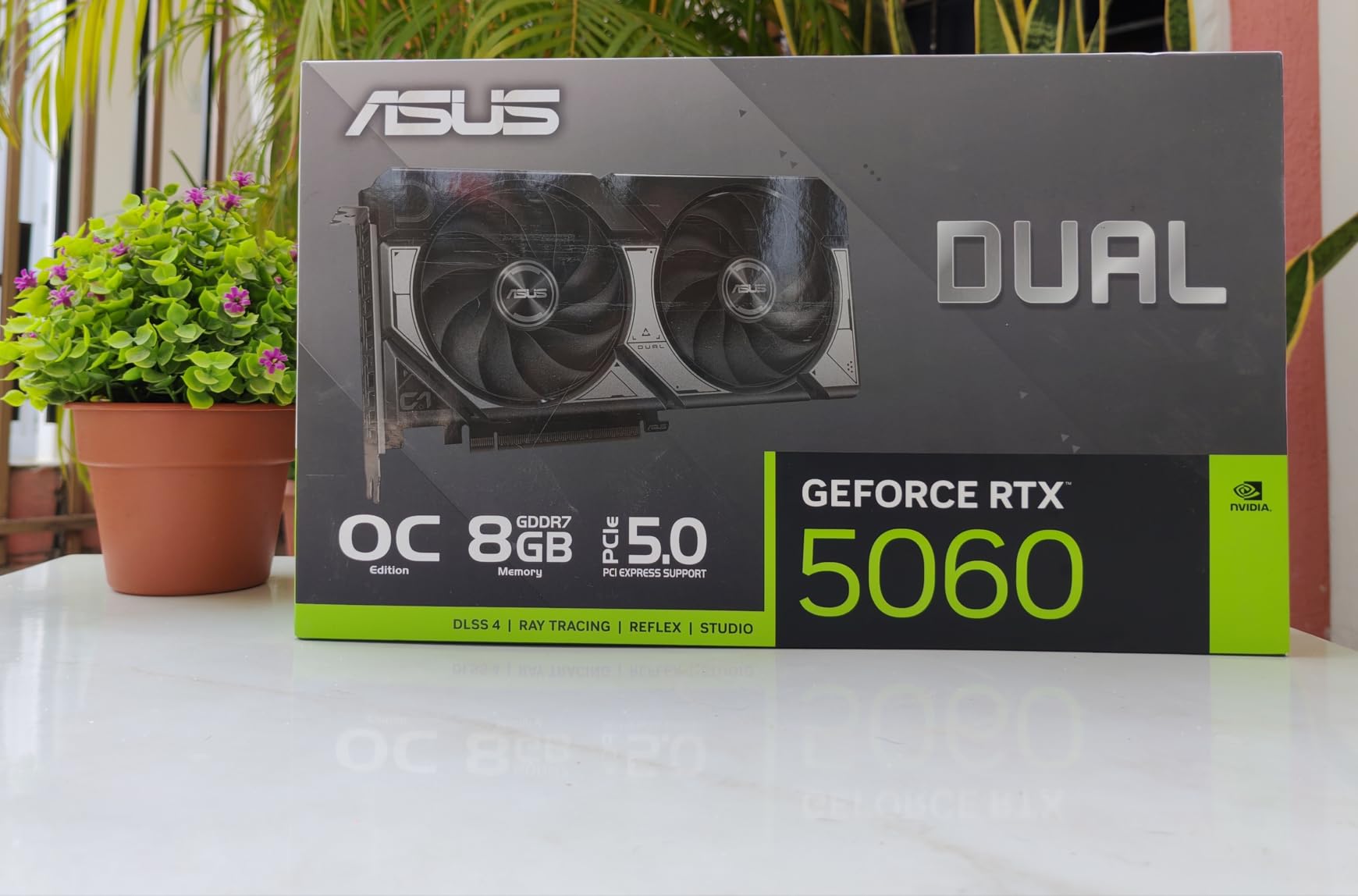
Output is three native DisplayPort 2.1b and HDMI 2.1b, and it supports up to 7680×4320. At 1.4 pounds and 9 inches long, it is a mid-size card that most mid-towers accommodate without conflict.
The 8GB pool is the catch, and it is the same catch as every 8GB card in this list. Modern titles at 1440p will ask you to trim texture quality, and the frame rate you lose is real even with upscaling enabled. The architecture will age better than the memory capacity does.
Who the RTX 5060 suits
It suits 1440p gamers who want the newest upscaling and frame generation stack, and anyone building a system where power draw and thermals matter as much as frame rate. A roughly 150W card also means you can likely keep your existing power supply.
For a brand-new build in 2026 with a current-generation CPU, this is the pairing I would choose. The 2.5-slot design means it does not demand a large case, and the 0dB idle behaviour keeps a quiet build genuinely quiet.
Where the RTX 5060 falls short
If you play texture-heavy games at 1440p and refuse to touch settings, 8GB will be the limiting factor before raw performance is. In that case the 12GB card above is the more sensible purchase despite the older silicon.
Audio crackle at higher sampling rates is reported by a small number of owners, which matters if you run audio through the GPU rather than a separate device. It is uncommon, but it is worth knowing about before you route your sound that way.
3. ASUS Dual GeForce RTX 3050 6GB GDDR6 OC — best for small builds
ASUS Dual GeForce RTX 3050 6GB GDDR6 OC Edition Gaming Graphics Card
6GB GDDR6
1500 MHz OC and 1470 MHz default
2-slot dual fan
7.9 inch long
14.4 ounces
Pros
- Short 2-slot design fits small chassis and mini-ITX cases
- Dual-fan Axial-tech cooler keeps it cool and quiet
- Second-generation RT cores and DLSS stretch 6GB further than specs suggest
- Light at 14.4 ounces with a stainless steel bracket and IP5X rating
Cons
- Only 6GB of GDDR6
- the smallest memory pool in this lineup
- 1440p and high-refresh modern titles need settings compromises
- HDMI-only output listed for the display interface
This is the card I suggest when the constraint is the case rather than the budget. At 7.9 inches long and two slots wide, it fits far more builds than the oversized cards higher in this list, and at 14.4 ounces it puts almost no weight on a top or rear mounting point.
83% of its 1116 ratings are five stars, and owners consistently describe it as a reliable entry-level card or a secondary GPU in a dual-machine household. The dual-fan Axial-tech cooler does the job quietly, which is not always true of cards this size.
Second-generation RT cores and third-generation Tensor Cores mean DLSS is available, and that is what makes 6GB workable in a modern title. Upscaling plus frame generation is the difference between playable and slideshow on the heaviest settings.
Maximum listed resolution is 3840×2160, which is lower than several cards here. For a 1440p or 1080p target that is a non-issue, but it is worth knowing if you plan to drive a very high-resolution display.
Who the RTX 3050 6GB suits
It suits compact builds, office machines that need a display output, and anyone adding a second graphics card to a rig that already games well. At this size it is genuinely easy to install, which matters in a cramped chassis.
It also suits buyers who will be playing competitive shooters and indie titles more than heavy AAA releases. In those games 6GB is rarely the constraint, and the low power draw keeps the rest of the build simple.
Where the RTX 3050 6GB falls short
Six gigabytes is the smallest pool in this lineup, and that is the reason I would not build a new high-end machine around it. Texture-heavy games will need quality settings lowered, and the memory bus is the narrowest here too.
It is the wrong pick for a creator who wants to export video through GPU acceleration, where memory bandwidth and capacity matter more than the small physical footprint. For that, spend the money on more memory instead.
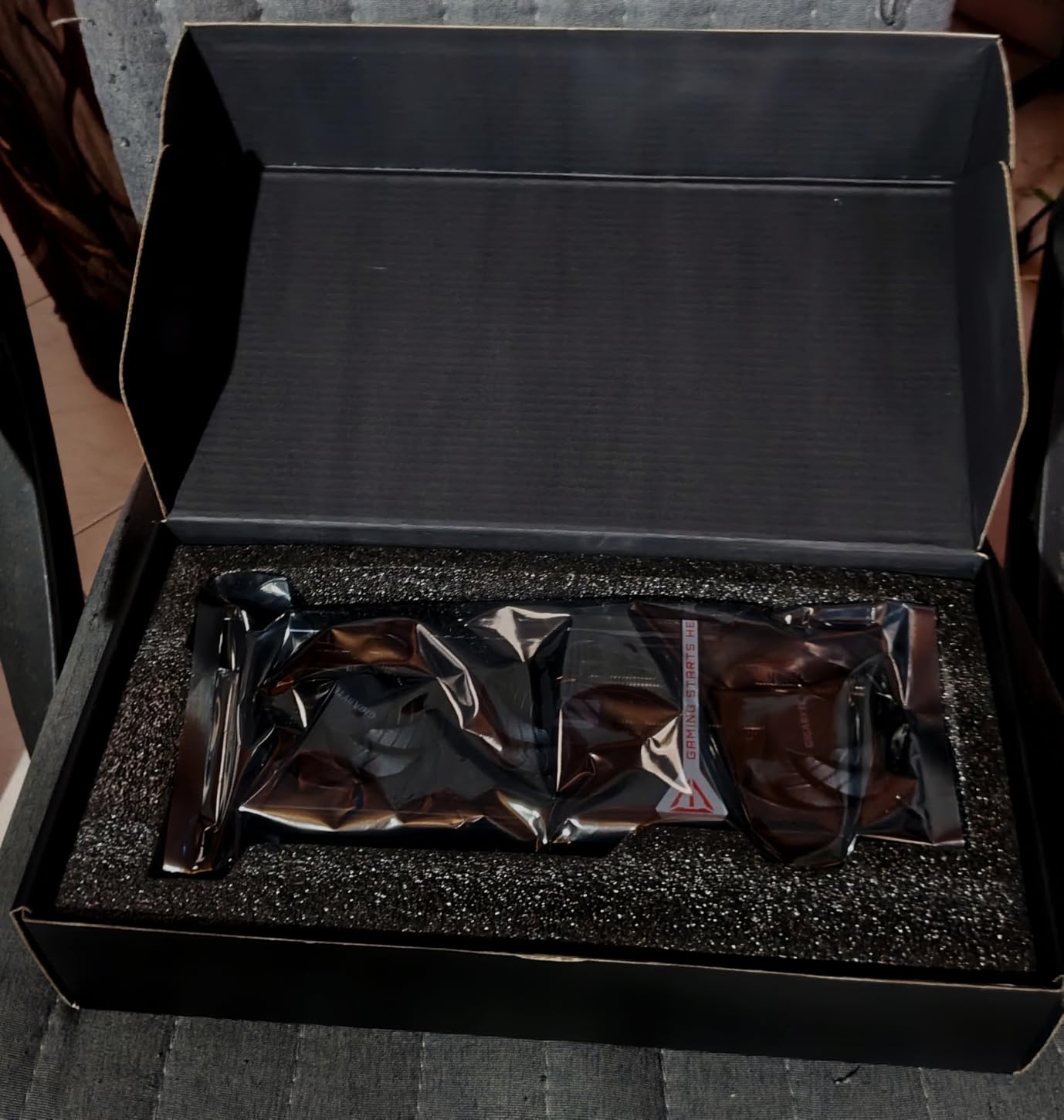
4. GIGABYTE Radeon RX 9060 XT Gaming OC 8G — best 1440p value on the AMD side
GIGABYTE Radeon RX 9060 XT Gaming OC 8G Graphics Card, PCIe 5.0, 8GB GDDR6, GV-R9060XTGAMING OC-8GD Video Card
8GB GDDR6
2700 MHz boost
WINDFORCE cooling with thermal gel
11.06 inch long
PCIe 5.0
Pros
- 2700 MHz clock delivers competitive 1080p and 1440p frame rates
- WINDFORCE cooling with server-grade thermal conductive gel runs cool
- RGB lighting and Hawk fan design
- 89% five-star ratings for build quality and cooling
Cons
- Largest card footprint in this lineup at over 11 inches
- 8GB VRAM limits future titles and heavy texture settings
- Only 136 owner ratings
- so long-term feedback is thinner than the leader
The RX 9060 XT is the AMD card to beat in this band, and the GIGABYTE Gaming OC is the version I would choose for cooling. The server-grade thermal conductive gel inside the WINDFORCE system is a real engineering choice, and reviewers single out the temperatures it holds.
A 2700 MHz boost clock and a PCIe 5.0 interface put this card squarely in 1440p territory. In 1080p and 1440p titles it competes closely with the NVIDIA options here, and the 89% five-star rating reflects a card people are happy to recommend.
Be careful with the size. At 11.06 inches long and 1.18 kilograms, this is the biggest card in the group, and it is heavy enough that you want to check your case supports a full-length triple-fan style cooler with adequate clearance.
Display output is listed as DisplayPort plus HDMI, with a maximum resolution of 3840×2160. If you plan to run several high-refresh monitors, verify the exact port mix for the model you buy before you commit.
Who the RX 9060 XT suits
It suits 1440p players who want AMD’s upscaling stack and a card that stays cool under load. The cooling specification here is the strongest in the lineup, which matters if your case airflow is mediocre.
It also suits builders who want a full-size card with a full-size cooler and are not constrained by chassis dimensions. The 3-year manufacturer warranty matches the NVIDIA cards here.
Where the RX 9060 XT falls short
The footprint is the practical problem. Plenty of compact cases that accept the shorter cards in this list will reject an 11-inch card, so measure before you order rather than after.
With only 136 owner ratings, the long-term reliability picture here is thinner than for cards with thousands of reviews. That is not a defect signal, but it is less evidence, and buyers who value a deep feedback base should weight that.
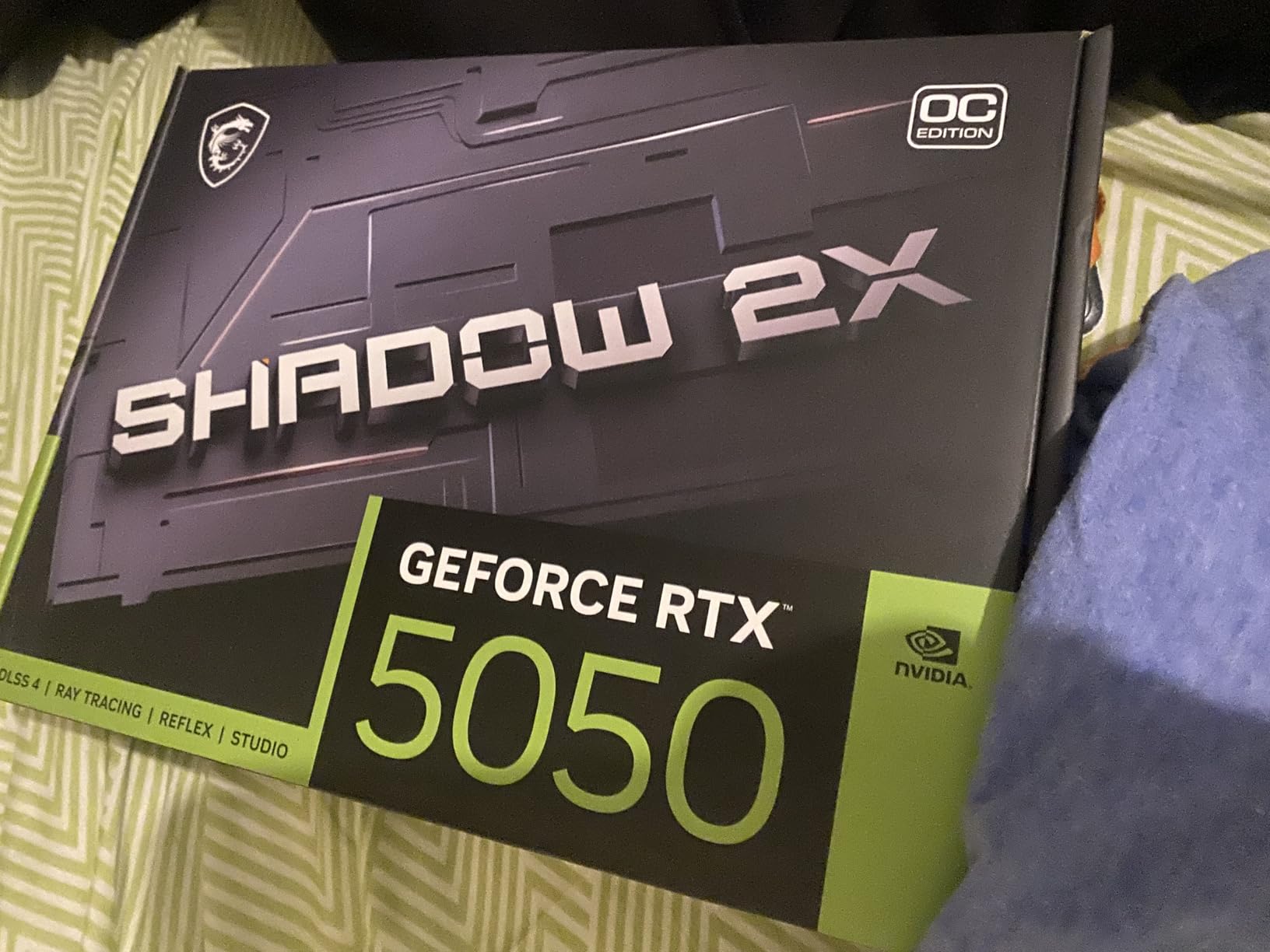
5. msi Gaming RTX 5050 8G Shadow 2X OC — best for quiet builds
msi Gaming RTX 5050 8G Shadow 2X OC Graphics Card (8GB GDDR6,128-bit, Extreme Performance: 2617 MHz, DisplayPort x3 2.1a, HDMI 2.1b, NVIDIA Blackwell Architecture)
8GB GDDR6 on 128-bit
2617 MHz extreme performance
7.8 inch long
TORX Fan 5.0
Pros
- Newest architecture with DLSS 4 and multi frame generation
- Compact 7.8 inch dual-fan design that fits small cases
- Low power draw and cool operation under full load
- 90% five-star ratings from owners
Cons
- Factory overclock leaves little manual headroom
- 8GB GDDR6 is the limiting factor for future titles
- Occasional reports of defective units
The Shadow 2X OC is the quietest-running card I would put in a build where noise matters. It runs cool under full load, and reviewers report strong 1080p frame rates even on systems limited to PCIe 3.0, which is a nice safety margin for older motherboards.
Clocks are listed at 2617 MHz extreme performance and 2602 MHz boost on a 128-bit memory bus. TORX Fan 5.0 blades are linked together for high-pressure airflow through a heat pipe design, with a reinforcing backplate that has a vent cut into it.
At 7.8 inches long and 1.8 pounds it sits in the middle of the group on size. Output is three DisplayPort 2.1a and HDMI 2.1b, with a maximum resolution of 3840×2160, which is a good port mix for a single high-refresh display.
The factory OC is aggressive enough that there is little manual headroom left if you want to tune further. That is a minor limit for most people, but enthusiasts who plan to overclock will find more room on a factory-overclocked card built by a different partner.
Who the RTX 5050 suits
It suits quiet-build owners and anyone with a compact case who still wants current-generation features. A 3-year manufacturer warranty and DLSS 4 support make it a sensible entry point into the newest platform.
It also suits builders on older platforms. If your motherboard cannot offer PCIe 4.0 or 5.0, the reported 1080p performance is a good reason to pick this over cards that lean harder on newer bus bandwidth.
Where the RTX 5050 falls short
Eight gigabytes of GDDR6 on a 128-bit bus is a narrow foundation. In new AAA titles at high settings you will be trimming quality, and the memory bus gives the card less room to absorb heavy texture loads than wider-bus alternatives.
A small number of owners have reported defective units. That is a warranty matter rather than a design problem, but it is worth keeping your purchase documentation somewhere you will find it.
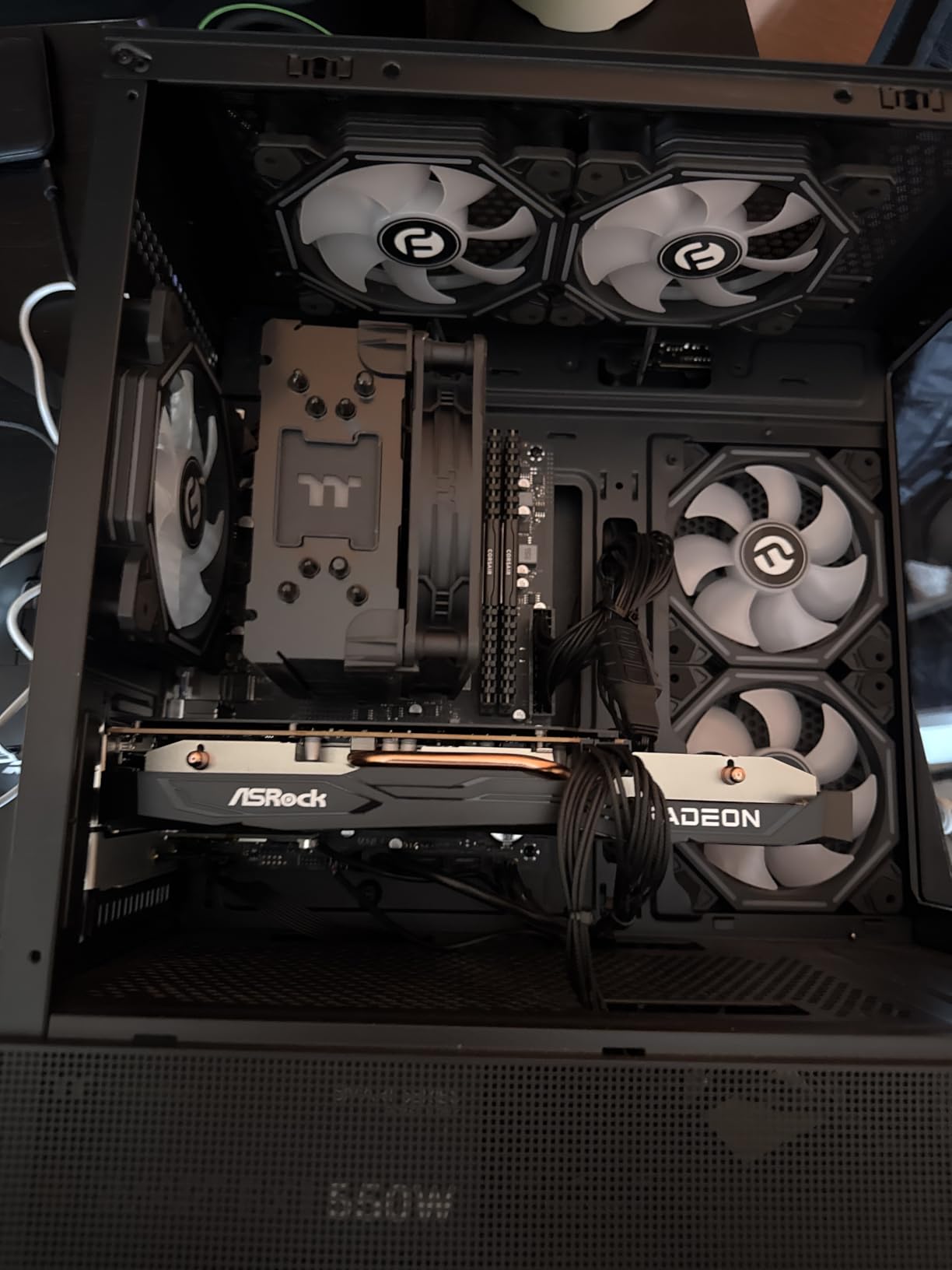
6. ASRock Radeon RX 7600 Challenger 8GB OC — best for 1080p high refresh
ASRock Radeon RX 7600 Challenger 8GB OC, RDNA 3, 2695MHz Boost, 8GB GDDR6 128-bit, PCIe 4.0, Dual Fans, 0dB Silent, HDMI 2.1, DisplayPort 1.4
8GB GDDR6 128-bit at 18 Gbps
2695 MHz boost and 2280 MHz game clock
PCIe 4.0 x8
Single 8-pin, 550W PSU
Pros
- Factory overclock to 2695 MHz for high-refresh 1080p gaming
- 0dB Silent dual-fan cooling keeps it quiet at low load
- Single 8-pin connector and 550W recommended PSU simplify builds
- Supports up to four displays at up to 8K
- Metal backplate with Super Alloy components
Cons
- PCIe 4.0 x8 interface can limit performance on older platforms
- 8GB pool is the ceiling for future texture-heavy titles
The Challenger is the card I recommend for a 1080p high-refresh monitor, full stop. 32 compute units and 2048 stream processors on RDNA 3, overclocked to a 2695 MHz boost, give it more than enough for competitive shooters at high refresh rates.
0dB Silent means the fans stop entirely at low load, so an idle desktop is silent and only sustained gaming brings the fans to life. With a single 8-pin connector and a 550W recommended power supply, it is also the easiest card here to slot into an existing build.
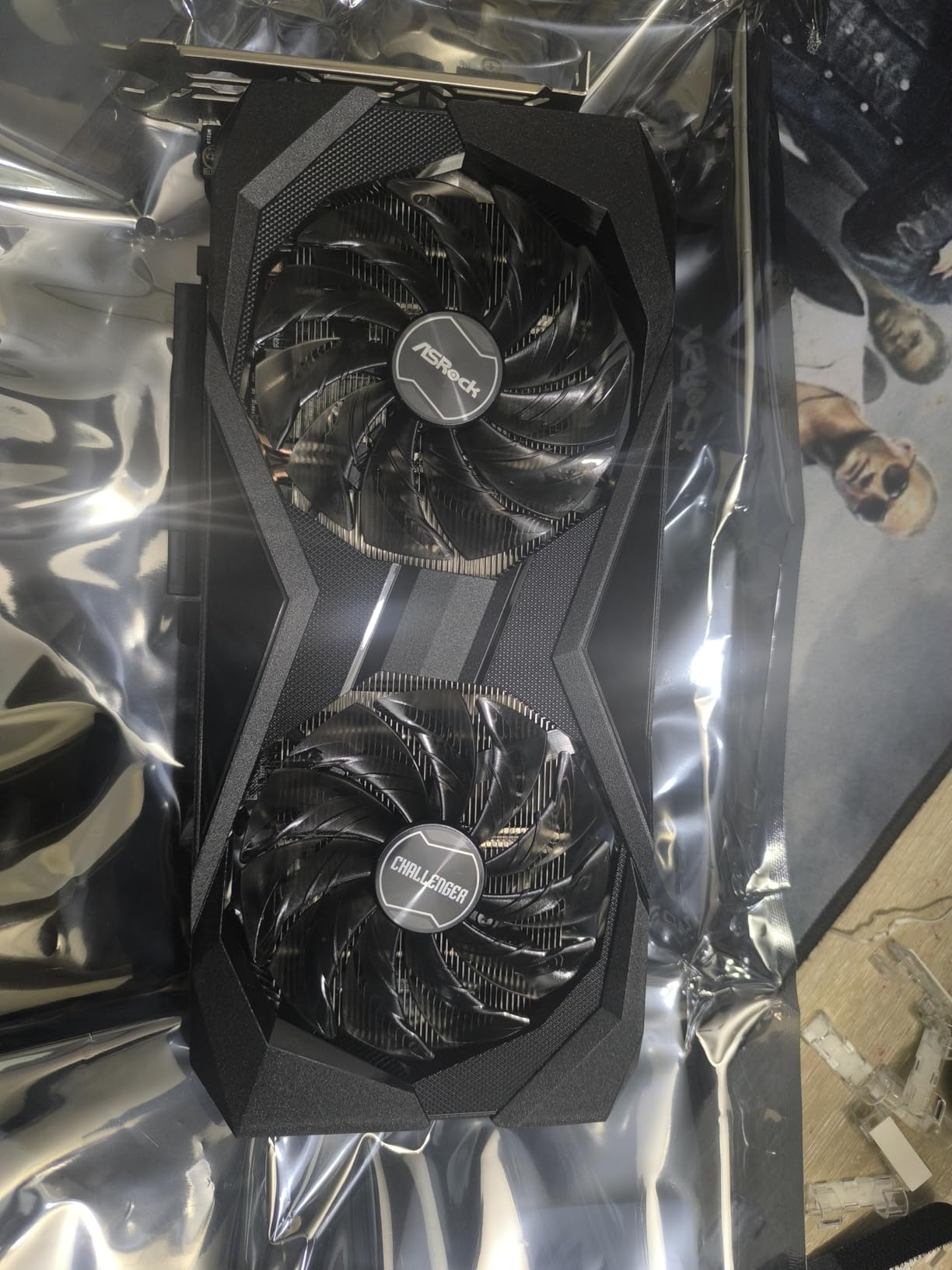
Output is three DisplayPort 1.4a with DSC and one HDMI 2.1 with VRR, supporting up to 7680×4320 across four displays. That makes it a good match for a multi-monitor desk where you want high refresh on more than one screen.
At 10.6 inches long and 5.19 inches tall, it is a full-size card. Measure your chassis, and note that this is a dual-fan design, not a triple-fan one, so the airflow demand is moderate.
Who the RX 7600 OC suits
It suits 1080p players chasing high refresh rates, and multi-monitor users who want four outputs with VRR on HDMI. The 550W PSU recommendation means you may not need to upgrade your power supply at all.
It also suits builders who want hardware ray tracing support at the RDNA 3 level, since it includes fixed-function ray tracing hardware alongside the compute units.
Where the RX 7600 OC falls short
The x8 bus is the caveat that shows up most often in owner feedback. On a modern CPU it rarely matters, but on an older platform running PCIe 3.0 the narrower link can cost you performance you paid for.
For 1440p ultra settings, 8GB of GDDR6 is where this card runs out of road. If your target is 1440p rather than 1080p, the RX 9060 XT above is the better spend.
7. XFX Speedster SWFT210 Radeon RX 7600 8GB — best for multi-monitor desks
XFX Speedster SWFT210 Radeon RX 7600 Graphics Card with 8GB GDDR6 HDMI 3xDP, AMD RDNA 3 RX-76PSWFTFY
8GB GDDR6
Boost clock up to 2655 MHz
3x DisplayPort plus HDMI
SWFT dual fan
9.49 inch long
Pros
- Three DisplayPort outputs plus HDMI for multi-monitor setups
- Up to 2655 MHz boost on a 9.49 inch body
- 520 owner ratings give a solid base of owner feedback
- Maximum resolution listed up to 7680x4320
Cons
- Lowest average rating in this lineup at 4.4 stars with 7% one-star reviews
- Fan noise reported under sustained load
- 8GB VRAM limits future titles and 1440p ultra settings
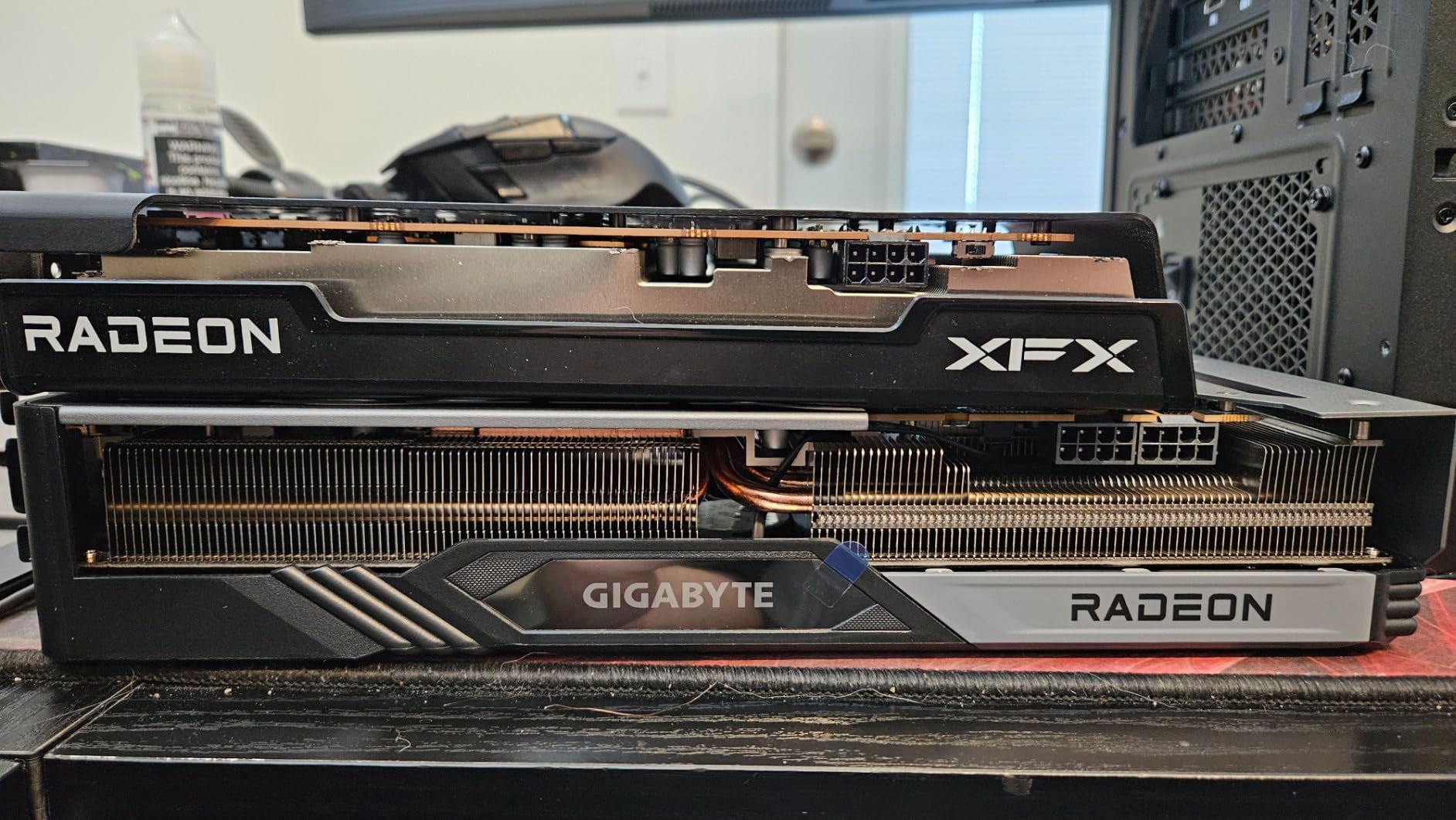
Three DisplayPort outputs alongside HDMI is the reason to pick this card, and it is the reason the same chip appears here and above. If your desk runs two or three high-refresh monitors, port count becomes a deciding factor and this is the card that gives you the most.
Performance is the familiar RX 7600 profile, with a boost clock up to 2655 MHz and 8GB of GDDR6. At 9.49 inches long and 900 grams it is shorter than the ASRock Challenger, which helps in mid-size cases.
I want to be straight about the feedback here. At 4.4 stars with 72% five-star ratings, this is the lowest-rated card in the group, and 7% of reviews are one star. That is not disqualifying, but it is the reason this card sits where it does in my ranking rather than higher.
Fan noise under sustained load is the most common specific complaint. If your case has poor airflow and your sessions are long, the quiet 0dB design on the ASRock card above is a better match.
Who the XFX Speedster suits
It suits multi-monitor builders who want more DisplayPort outputs than the alternatives here offer, and it suits anyone who wants the RX 7600 in a shorter frame than the ASRock version.
For 1080p gaming generally it performs as you would expect from RDNA 3, and 520 owner ratings is enough of a feedback base to buy with reasonable confidence.
Where the XFX Speedster falls short
It is not the card to buy for a quiet build, given the noise complaints under load. It is also not the right choice for 1440p ultra, where the 8GB pool and the chip itself both become limits.
Against a same-generation card with a better rating and a cooler that idles at zero RPM, this one needs a reason. Multi-monitor port count is that reason, and it is a legitimate one.
8. GIGABYTE GeForce RTX 3050 WINDFORCE OC V2 6G — best for low-power esports PCs
GIGABYTE GeForce RTX 3050 WINDFORCE OC V2 6G Graphics Card, 2X WINDFORCE Fans, 6GB GDDR6 96-bit GDDR6, GV-N3050WF2OCV2-6GD Graphics Card
6GB GDDR6 on 96-bit
1477 MHz clock
7.5 inch long
14.08 ounces
2X WINDFORCE fans
Pros
- Short 7.5 inch dual-fan design fits compact cases
- Low weight at 14.08 ounces is easy on mounting points
- Second-generation RT cores and third-generation Tensor Cores with DLSS
- Dependable budget choice with 306 owner ratings
Cons
- 6GB GDDR6 on a 96-bit bus
- the narrowest memory interface in this lineup
- Below-average results for modern AAA titles at high settings
- PCIe x16 slot used on a budget memory configuration
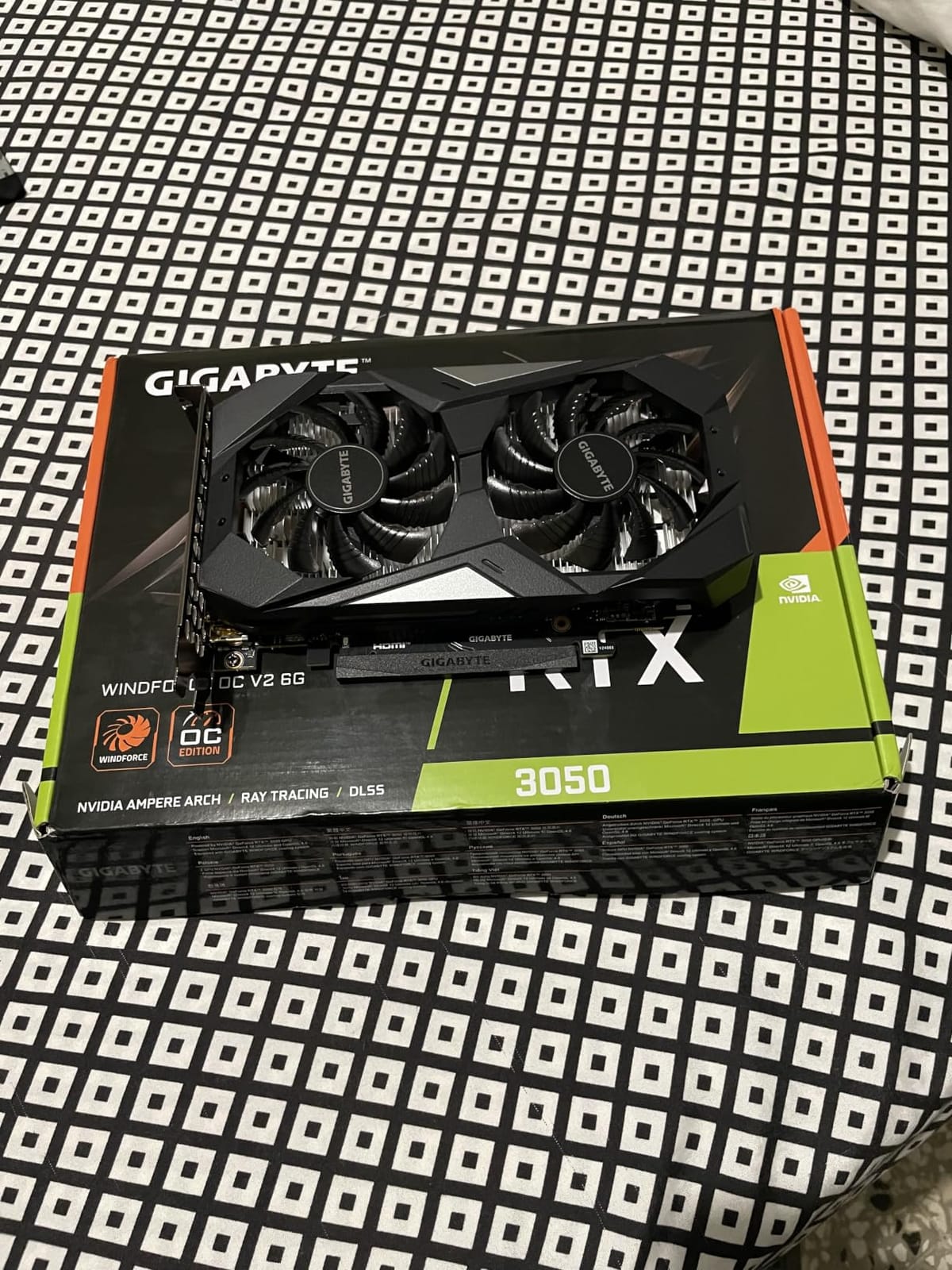
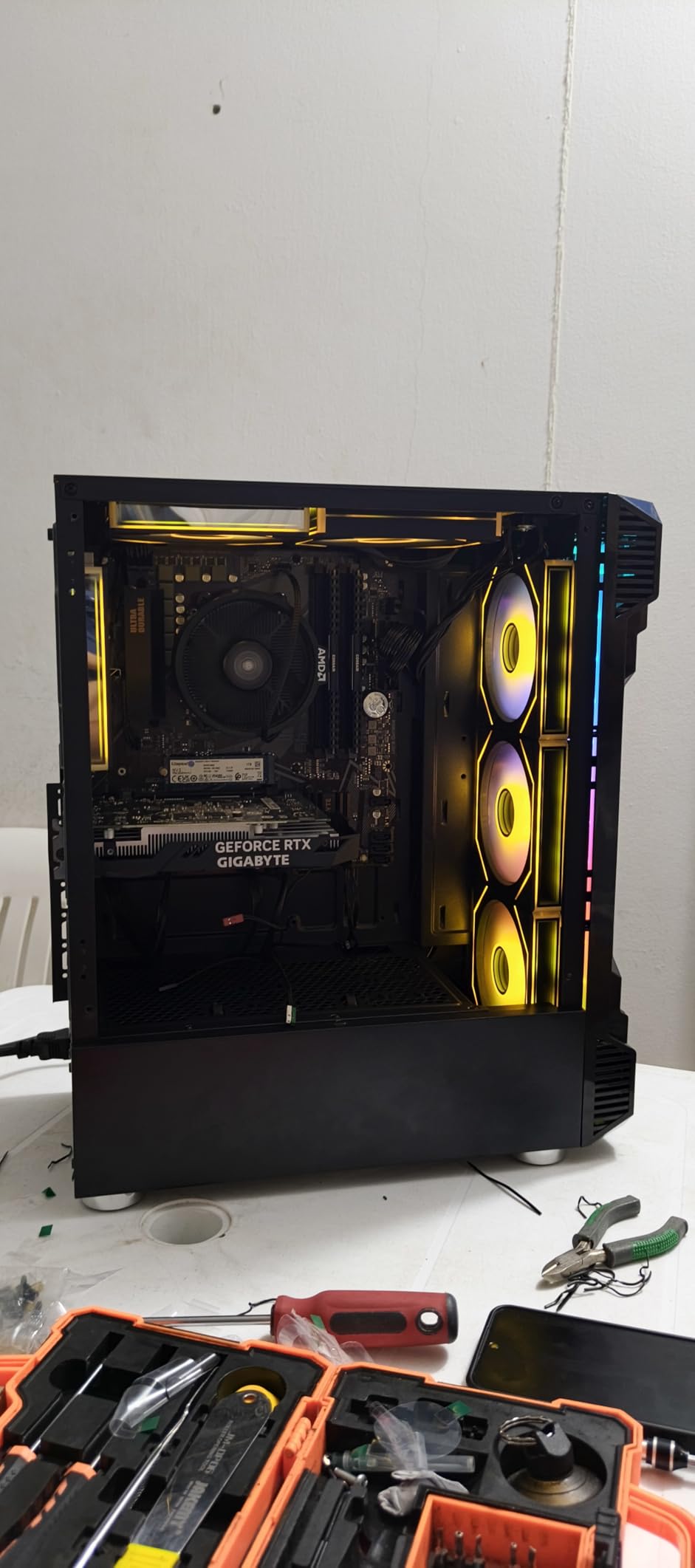
This is the shortest full-size-feeling card in the group at 7.5 inches, and at 14.08 ounces it is the second lightest. That combination makes it the easiest to install in a tight case, and reviewers treat it as a dependable entry point for esports and secondary builds.
The 1477 MHz clock and 96-bit memory interface are modest, and they are the tradeoff for the size. With DLSS available through third-generation Tensor Cores, 6GB is workable in competitive titles where the engine is not texture-bound.
Output is listed as DisplayPort and HDMI with a maximum resolution of 7680×4320. A 3-year manufacturer warranty is included, which is standard for this tier.
80% of its 306 ratings are five stars. The pattern in the feedback is consistent: people buy it as a budget or secondary card, and they accept the memory capacity as the price of that role rather than a disappointment.
Who the RTX 3050 WINDFORCE suits
It suits small-form-factor builds and office or classroom machines that need a display output without a large power budget. A low-power card also means a smaller power supply, which reduces total build cost.
It also suits anyone building a second PC alongside a main gaming machine, where a 6GB card is plenty for the lighter titles and older games in a library.
Where the RTX 3050 WINDFORCE falls short
The 96-bit bus with 6GB is the narrowest memory configuration in this lineup. It runs out of bandwidth first when a game gets texture-heavy, and that shows up as stutter rather than a smooth drop in average frame rate.
For modern AAA titles at high settings, forget it. Buy it for esports, older titles, or a secondary role, and save the money you would have spent on texture settings.
9. Sapphire Pulse Radeon RX 9060 XT 8GB — best for cool and quiet 1080p gaming
Sapphire Tarjeta Gráfica Pulse Radeon RX 9060 XT 8GB GDDR6 Dual-X Cooling Gaming
8GB GDDR6
Listed 3290 MHz boost
Sapphire Dual-X cooling
0.92 kg
2-year warranty
Pros
- Sapphire Dual-X cooler design keeps temperatures low and quiet
- Owners report easily over 100 fps in most 1080p titles
- Simple installation and stable performance since purchase
- Price-to-performance is the strongest argument for it
Cons
- 8GB VRAM is enough for 1080p ultra but not for 1440p ultra
- Lowest-rated card in this group at 4.4 stars with 9% one-star reviews
- Shortest warranty coverage here at two years
- Card dimensions are not listed by the manufacturer
The Sapphire Pulse is the card I would pick for a quiet 1080p machine. The Dual-X cooler design keeps temperatures low, and owners describe the acoustic result as the quietest in this group. At 0.92 kg it is lighter than most full-size cards here.
Owners also report easily clearing 100 fps in most 1080p titles, which is the number that matters at this resolution. The listed boost clock of 3290 MHz is a factory overclock on top of that.
I want to flag one gap in the data here. The manufacturer does not list card dimensions for this model, and I will not guess at a length figure you need for a clearance check. If case fit is tight, confirm the length with the seller before you buy.
Maximum listed resolution is 3840×2160, with HDMI and DisplayPort output on a PCIe x16 interface. For a 1080p or 1440p target that is entirely sufficient.
At 4.4 stars with 76% five-star ratings and 9% one-star, this is the least well-rated card in the list. Several owners recommend the 16GB version of the same chip instead, which is a reasonable signal that the 8GB version is stretching its welcome at this price.
Who the Sapphire Pulse suits
It suits 1080p players who care more about a quiet machine and smooth frame rates than about future-proofing. If you plan to stay at 1080p, 8GB is genuinely enough and this card does the job well.
It also suits builders who value a simple install. Owners report straightforward installation and stable performance since purchase, with a 2-year warranty as the shortest in the group.
Where the Sapphire Pulse falls short
At 1440p ultra, 8GB is the ceiling. Owners themselves point toward the 16GB version as the better buy for that resolution, which tells you where the card’s limit is.
The 9% share of one-star reviews is the highest in this lineup. That is not enough to rule the card out, but combined with the two-year warranty it is enough that I would not build a machine around it if you intend to keep the PC for many years.
10. msi Gaming RTX 3050 Ventus 2X 6G OC — best for streaming setups
msi Gaming RTX 3050 Ventus 2X 6G OC Graphics Card (NVIDIA RTX 3050, 96-Bit, Boost Clock: 1492 MHz, 6GB GDDR6 14 Gbps, HDMI/DP, Ampere Architecture)
6GB GDDR6 14 Gbps 96-bit
1492 MHz boost
7.4 inch long
2x HDMI 2.1a plus DisplayPort
Pros
- Very short 7.4 inch dual-fan card for small builds
- Factory OC raises the boost clock to 1492 MHz
- Two HDMI 2.1a outputs plus one DisplayPort covers a capture and display arrangement
- Low power draw suits a dedicated streaming box
Cons
- 6GB GDDR6 on a 96-bit interface limits modern AAA settings
- Only one DisplayPort for a high-refresh monitor setup
- 80% five-star ratings is solid but not exceptional
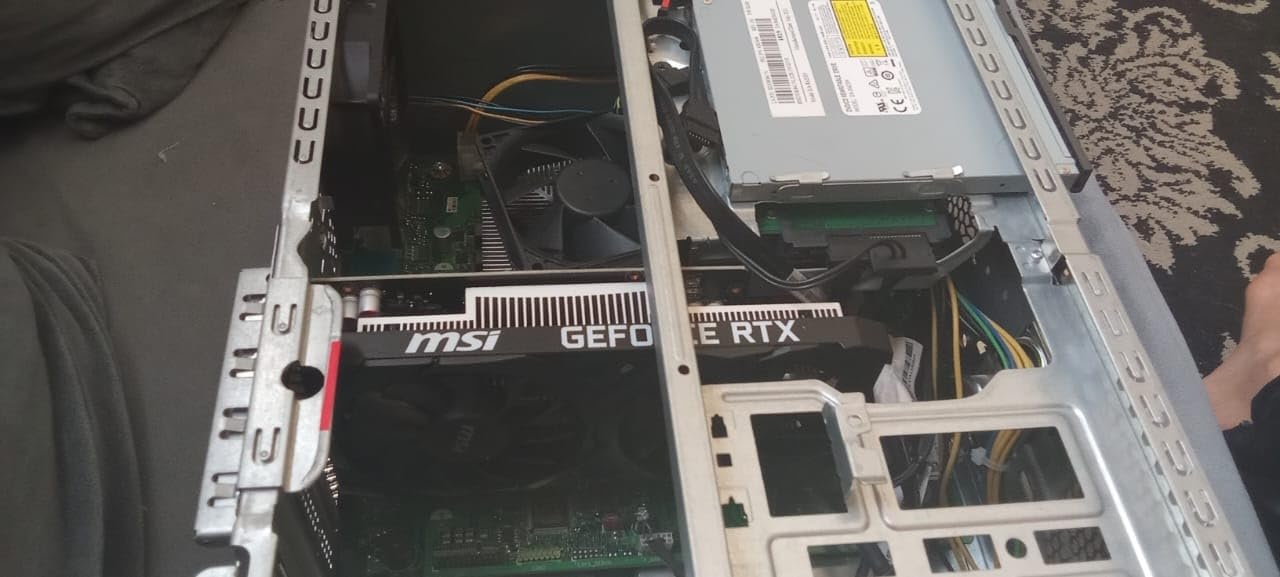
At 7.4 inches, this is the shortest card in the list, and the dual HDMI 2.1a output is unusual at this size. Two HDMI plus one DisplayPort is exactly the arrangement a streaming box needs: one HDMI to pass a signal through, one DisplayPort to a capture card, and the third port for a second display.
The factory overclock pushes the boost clock to 1492 MHz on 6GB of GDDR6 at 14 Gbps. 81% of its 306 ratings are five stars, with owners citing compact size and low power draw as the main reasons to buy.
Maximum listed resolution is 7680×4320, and it uses a PCIe x16 slot. A 3-year warranty is included, which is standard here and longer than the Sapphire card above it.
If you are building a dedicated streaming machine rather than streaming from your gaming PC, this is a very tidy fit. The short length means it fits inside small streaming chassis that cannot take a full-size card.
Who the RTX 3050 Ventus suits
It suits anyone assembling a dedicated streaming box or a small-form-factor machine, and it suits dual-monitor users who need more than one HDMI output. The 7.4-inch length is the reason it exists, effectively.
It also suits builders who want NVIDIA features and a low power draw on a secondary system without committing a larger card to it.
Where the RTX 3050 Ventus falls short
The 96-bit bus and 6GB of memory are the same limitation as the other RTX 3050 cards here, and it is the same story: fine for esports and older titles, not enough for modern AAA at high settings.
A single DisplayPort output limits a high-refresh single-monitor setup less than you might think, but it does mean you cannot chain three high-refresh displays off this card alone. Plan your ports before you buy.
GPUs to Avoid in This Price Range
Some forum questions in this niche ask which cards to skip, and the honest answer is that the risk is not in any one brand. It is in three specific patterns.
Fast 8GB cards priced like 16GB cards. This is the trap the forum keeps returning to. A card that is quick today but has 8GB of memory will ask you to lower texture quality in the games released two or three years from now, and the money you saved going 8GB over 12GB does not come back. If two cards cost the same, take the one with more memory.
Previous-generation flagship silicon at mid-range money. A last-generation high-end card can be excellent value, but only if the per-frame cost still beats a current mid-range card. A two-generation-old flagship competing against new RDNA 3 and Blackwell parts frequently does not, especially once you account for the newer cards being far more efficient at low load.
Parts with short warranty coverage. The Sapphire Pulse in this list carries two years against three years for everything else here. Warranty length is a crude proxy for how a vendor treats a component that can fail, and in a tier where margin is thin, it is a real signal.
Used cards deserve their own caution. There is no reliable way to verify how hard a previous card was run or how much life it has left, and forum buyers report the used market for these models moving quickly. If you go used, insist on a return window and a stress test in person if at all possible.
How to Choose a Graphics Card Under 500 Dollars
Start with VRAM, not frame rate
VRAM is the deciding factor for longevity, and the community consensus in build forums lands on the same rule every time. Eight gigabytes is enough for today’s 1080p gaming with room to spare, and it is the ceiling for 1440p ultra in new titles. Twelve gigabytes is comfortable, and sixteen is the safe place to be for a machine you expect to keep for years.
In this particular list, only one card carries 12GB. That is the whole argument for it, and it is why it is the top pick despite being an older architecture. The 6GB cards here are not bad cards. They are cards for a narrower job.
Match the card to your resolution
For 1080p high refresh, the RX 7600 OC and the RTX 5050 both deliver, and either is comfortable in competitive shooters. For 1440p, the RTX 5060 and the RX 9060 XT are the pair to choose between, and the choice comes down to which vendor’s upscaling you prefer and how much memory you can get.
For 4K, be realistic. A card in this band will play at 4K, but you will lean on upscaling and frame generation to hold a playable frame rate, and you will drop settings. If 4K at native settings with high textures is the goal, this price band is not the place to try.
Upscaling and frame generation compared
Upscaling renders internally below your output resolution and reconstructs a higher-resolution image, and frame generation synthesises new frames between rendered ones. Both stretch performance far more than raw specs suggest, which is why a card with less raw power can still be the right answer.
On the NVIDIA side here, DLSS 4 with multi frame generation is the most feature-complete option, and it is available on the RTX 5060 and RTX 5050. On the AMD side, FSR 4 works across more titles but leans on the game to support it well. XeSS is the third option and is worth checking game by game if you are cross-shopping. Our 1440p graphics card guide breaks this down per card.
Power supply sizing and total build cost
Total board power for cards in this band is modest, and that is the good news nobody in this price range mentions often enough. The ASRock RX 7600 OC recommends a 550W supply with a single 8-pin connector, and the RTX 5060 runs at roughly 150W. Most mid-range power supplies cover this comfortably.
The catch is a CPU and platform that can feed the card. An older processor on a PCIe 3.0 platform can bottleneck a card like the RX 7600 on its x8 link, and that is a cost you cannot see on the product page. Our capture card guide covers the other end of the signal chain if you are building a recording rig.
Case clearance and card length
Card length varies enormously in this list, from 7.4 inches to 11.06 inches, and that is more than a cosmetic difference. Measure from the rear slot bracket to the front of your case with the drive cage in place, and remember that a card listed at that length is often slightly longer in practice.
Also check slot width. Most of these are dual-slot designs, and the ASUS RTX 5060 is 2.5 slots, which matters in a case with tight cooler clearance. If you plan to add a second card later, physical room is worth more than the small performance difference between two of these options.
What to buy if your real budget is lower
If you have less to spend, step down the ladder rather than buying a slower version of a card above you. For competitive 1080p gaming, a 6GB card with a short body is a legitimate choice. For a general-purpose machine, the same card handles office work, older games, and a display without strain.
What to avoid is spending nearly the same money on a card that gives you more raw speed but less memory. If your budget drops from 500 dollars to roughly 350, buy the tier below rather than a compromised version of the tier you were aiming at. If you are also building the rest of the machine, our HDMI capture card guide covers the extra parts a streaming build needs.
Frequently Asked Questions
What is the best graphics card under 500 dollars?
The MSI Gaming GeForce RTX 3060 12GB is the best card under 500 dollars in our list. It pairs a 4.7-star rating with more than 5000 owner reviews, and its 12GB of GDDR6 is the largest memory pool available in this price range. It is the safest long-term buy even though its architecture is older than the RTX 5060 and RX 9060 XT.
What is the best value graphics card in this price range?
The ASUS Dual GeForce RTX 5060 8GB GDDR7 OC is the best value option. It delivers the newest architecture in the group, DLSS 4 frame generation, GDDR7 memory on PCIe 5.0, and runs at roughly 150W. The 8GB pool is the compromise, so buyers who want more memory should take the 12GB RTX 3060 instead.
What is the cheapest but best graphics card?
The cheapest card here is also a genuinely capable one: the GIGABYTE RTX 3050 WINDFORCE OC V2 6G. It handles esports and 1080p gaming well, fits a 7.5 inch frame, and carries a three-year warranty. Just know that 6GB on a 96-bit bus is the limiting factor, so it suits narrower jobs than the 12GB card.
Can you game in 4K with a graphics card under 500 dollars?
Yes, with caveats. A card in this band will output at 3840×2160 and run 4K titles, but you will lean on upscaling and frame generation such as DLSS 4 or FSR 4 to hold a playable frame rate, and you will lower texture quality. For native 4K at high settings, you need to move up a tier.
How much power supply do I need for a card in this price range?
A quality 550W unit is enough for most cards in this band, and the ASRock RX 7600 OC explicitly recommends 550W with a single 8-pin connector. The ASUS RTX 5060 draws roughly 150W. Check your CPU and platform as well, since an older processor on a limited PCIe link can bottleneck the card.
The Best Graphics Cards Under 500 Dollars: Final Verdict
The MSI Gaming GeForce RTX 3060 12GB is the pick. Nothing else under 500 dollars gives you 12GB of memory, and nothing else combines that with a 4.7-star average across more than 5000 owner reviews. Buy it for 1440p and for keeping the card through several years of new releases.
Take the ASUS Dual RTX 5060 8GB GDDR7 OC instead if you want the newest architecture, DLSS 4, and low power draw at 1440p. Take one of the short 6GB cards if your case is tight, your budget is lower, or the machine is a secondary or streaming box rather than a main gaming rig.
Check today’s price on each card before you commit, since this band moves fast. The specs on this page will still be right; the number next to them might not be.