
A digital mixer routes every source through digital signal processing instead of analog circuitry, which puts EQ, compression, gating, effects, monitor mixes and show files inside one box you can recall in a second. For a live band that is the whole argument: one person, one tablet, and a rig that walks out of a rehearsal room into a club and onto a stage. If you are shopping for the best digital mixers for live bands in 2026, the ten boards below are the ones worth shortlisting, each with the limitations you will not find on a manufacturer spec sheet.
Most of the decision-making happens at load-in. It is 1 a.m., the room is empty, the PA is patched, and somebody has to decide whether the console sits on a stand, in a rack at the back of the house, or on a chair in the middle of the floor. That one choice rules out half the analog desks people start shopping for, and it is why tablet-controlled and rack consoles dominate this list.
We worked through channel counts from real band input lists instead of marketing totals, tested the routing and scene-recall workflows that decide whether a show goes smoothly, and flagged the wireless and firmware problems that appear on real stages. Our powered mixer guide for bands covers the simpler small-room option, and our live sound mixer overview explains the signal path these consoles sit at the end of.
Table of Contents
Top 3 Picks for Live Bands in 2026
Three boards cover most of what a working band needs, from a weekend bar slot to a worship room with a fixed desk. The XR18 wins overall because it pairs the most preamps with genuine multitrack capture in a body you can carry with one hand. The Ui16 is the value pick when four real XLR aux outputs matter more than show files. The LiveTrak L-8 is the one to buy if every set should come home recorded.


Best Digital Mixers for Live Bands at a Glance in 2026
This is the short version of the guide. Match input and preamp counts against your band input list first, then check how the console gets controlled, because that decision affects your show more than the mixer engine underneath.
| Product | Specifications | Action |
|---|---|---|
 Behringer XR18 Behringer XR18 |
|
Check Latest Price |
| Zoom LiveTrak L-8 |
|
Check Latest Price |
| Soundcraft Ui16 |
|
Check Latest Price |
 Behringer X32 Behringer X32 |
|
Check Latest Price |
 Behringer XR16 Behringer XR16 |
|
Check Latest Price |
 Behringer X32 Compact Behringer X32 Compact |
|
Check Latest Price |
 Allen and Heath CQ-18T Allen and Heath CQ-18T |
|
Check Latest Price |
 Midas MR18 Midas MR18 |
|
Check Latest Price |
 PreSonus StudioLive 32SC PreSonus StudioLive 32SC |
|
Check Latest Price |
 PreSonus StudioLive 24R PreSonus StudioLive 24R |
|
Check Latest Price |
1. Behringer XR18: the best digital mixer for live bands overall
Behringer X AIR XR18 18-Channel, 12-Bus Digital Mixer for iPad/Android Tablets with 16 Programmable Midas Preamps, Integrated Wifi Module and Multi-Channel USB Audio Interface
16 Midas preamps
18 inputs and 12 buses
18x18 USB multitrack
7.1 lb tablet body
Pros
- 16 combo TRS and XLR inputs in a very small footprint
- Rugged housing that survives regular gigging
- Built-in tri-mode Wi-Fi that can bridge to an external router
- 18-track recording plus a large library of rack effects
- Colour-coded channel and bus labelling with DCAs for subgroups
Cons
- No AES50 connection for stage box expansion
- The iPad app lacks the real-time analyser the PC and Android apps have
- No security on the built-in wireless signal
Sixteen fully programmable Midas-designed preamps feed eighteen inputs and twelve buses, and the whole console weighs 7.1 pounds, so it fits in one hand on the stairs to the booth. Control comes from an iPad or Android tablet over the built-in tri-mode Wi-Fi router, which means you can stand at the monitors, the drum riser or the middle of the floor and still hear what the main PA hears.
The decisive feature for a live band is the recording path, not the channel count. The bidirectional 18 x 18 USB interface writes every input to the tablet or a computer while you mix, so a Wednesday rehearsal produces the same multitrack files a studio session would have cost you. Add per-channel compression, gating, parametric EQ and the effects library, and one box has replaced an analog board, a rack of outboard units and a two-channel field recorder.
Eight outputs including main left and right, plus DCAs for group control, let a drummer move the whole kit or a guitarist move the backline with one gesture. The app writes channel names into the interface instead of onto tape on the desk, so the layout behaves more like a lighting desk than a sound board and takes about an evening to learn.
Eighteen inputs covers a four-piece with a disciplined kit, four vocal mics, two guitar and bass feeds and a laptop track with channels to spare. The Dugan-style auto-mixing on the spec sheet handles gain sharing for worship and conference cases, though it depends on current firmware, so update the desk at home rather than at soundcheck.
How it handles a real stage load
Sixteen of the eighteen inputs have Midas-designed preamps, and that is the number to plan around when everyone shouts into the same condenser mic. Group the kick, snare and toms on one DCA, the guitars on another and the vocals on a third, and a support act with no mixing experience can be handed two faders instead of a routing matrix.
Where it falls short on stage
There is no AES50 connection, so you cannot expand with a Behringer S16 or DL32 stage box the way you can from the larger X32 desks. That closed expansion path is the single biggest reason some bands step up. The built-in wireless signal is also unsecured, so anything on the same network nearby can join and adjust levels, and the iPad app omits the real-time analyser the Android and PC versions include.
2. Zoom LiveTrak L-8: the best mixer for bands that record every show
Zoom LiveTrak L-8 Battery Powered Mixer/Recorder for Musicians & Podcasters
8 channels
6 preamps at -121dBu
12 tracks at 96kHz to SD
Battery powered
Pros
- Records 12 tracks simultaneously at 24-bit and 96kHz to SD card
- Six preamps with a -121dBu noise floor and up to +54dB of gain
- Four headphone outputs with three independent monitor mixes
- Per-channel 3-band EQ and onboard effects
- Records to SD card and to a computer over USB at the same time
Cons
- An SD card is needed for standalone multitrack and is not included
- Eight inputs means several sources share a channel
- No full desk format for a large stage
The L-8 is not trying to be a front of house desk. It is a small mixer and a standalone field recorder in one body, which is exactly what a lot of bands want: walk in, hit record, play the set, walk out with a complete multitrack on an SD card. Twelve tracks capture simultaneously at 24-bit and 96kHz, a higher sample rate than most touring consoles record at.
Six preamps with a -121dBu noise floor and up to +54dB of gain is a quiet front end for a board this size, and every channel carries 3-band EQ and effects. Four headphone outputs with three independent monitor mixes give a drummer, a bass player and two wedges their own feed from one box, which removes a whole class of monitor problems on small stages.
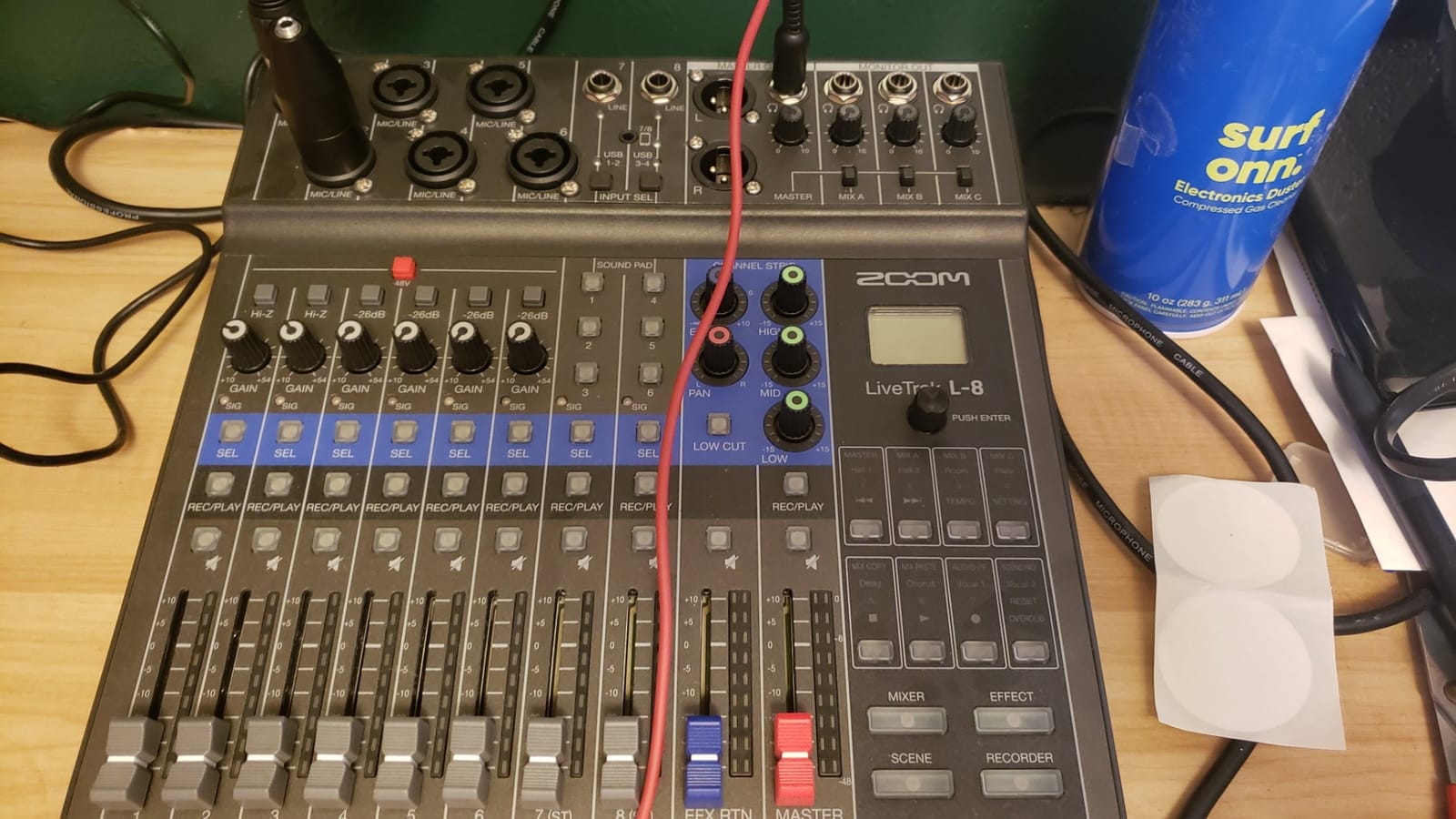
It records to a computer over USB at the same time as to the card, so you can back up or hand files to a DAW while the card keeps recording independently. That redundancy is the feature that wins over sceptics: if the USB session drops, the card still has the show. Sound pads and a dedicated phone input also make it a natural podcast and streaming desk.
The body measures 11.1 by 10.55 by 2.91 inches and runs on battery power, so it works in a hall with no outlets and on a busking pitch with no mains. r/livesound members recommend the LiveTrak line regularly for singer-songwriters, and the pattern we see is that the units that get gigging hard tend to come back fine.
When this becomes your front of house desk
Eight channels is the limit. Six combo inputs plus two stereo inputs take a two-piece or a stripped acoustic trio with a playback track, and four headphone outputs make it an excellent compact monitor hub alongside a bigger console. If you want a rehearsal archive and an in-ear rig without a second box, this is the cheapest way to get both.
Where it falls short
An SD card is required for standalone multitrack recording and is not included, so buy one before the first rehearsal. Channel sharing is the other constraint: eight inputs means a laptop feed, a click and a couple of ambience mics force doubling up, which usually means a compromise on the mix. There is no full desk format for a large stage position either.
3. Soundcraft Ui16: the best value console with four real aux outputs
Soundcraft Ui16 Remote-Controlled 16-Input Digital Mixer
8 combo and 4 XLR inputs
4 balanced XLR aux outs
dbx AFS2 and Lexicon FX
7.9 lb, rack mountable
Pros
- Quiet and clean for the size and quieter than a comparable 8-channel analog slider mixer
- Small at 7.9 pounds and rack mountable
- Control from iOS
- Android
- Windows
- Mac or Linux with up to 10 devices
- dbx AFS2 and Lexicon FX processing built in
- Two independent network interfaces for Wi-Fi and Ethernet
Cons
- An analog signal path with digital control rather than a true digital engine
- Built-in hotspot range can be around 20 feet without an external access point
- Background hiss limits quiet studio work
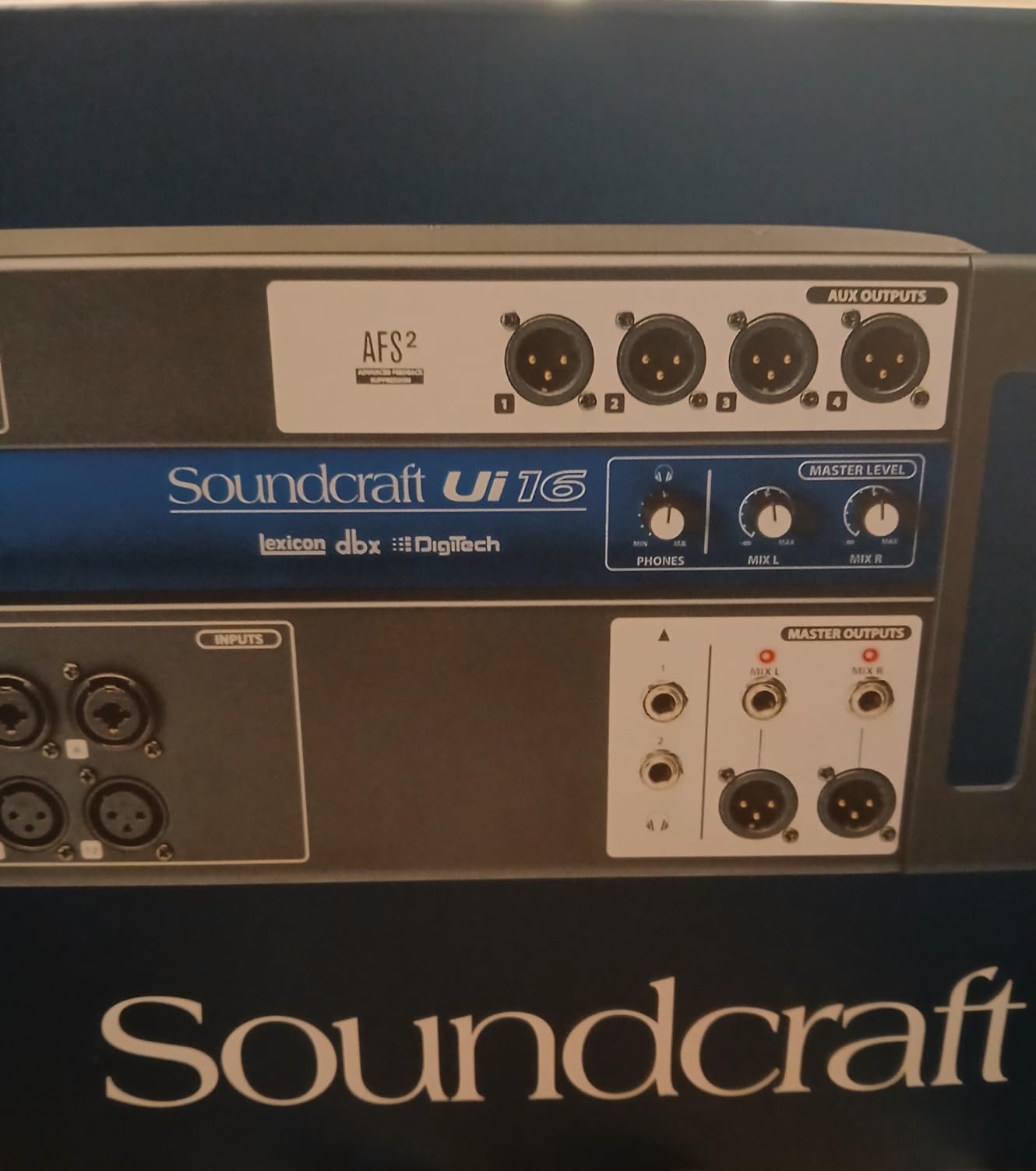
Sixteen inputs means eight XLR combo mic or line inputs, four XLR mic inputs, two instrument channels and a stereo RCA line input. The four balanced XLR aux outputs are the feature that most often forces bands upward into a more expensive board, and they mean four real monitor mixes with no extra hardware.
Processing includes dbx AFS2 automatic feedback suppression, DigiTech amp modeling for guitar and acoustic channels, and three dedicated Lexicon FX busses for reverb, delay and chorus. A 31-band graphic EQ, noise gate and compressor sit on all outputs, with a real-time frequency analyser on inputs and outputs, which is more outboard modelling in one enclosure than most analog rigs of its era offered.
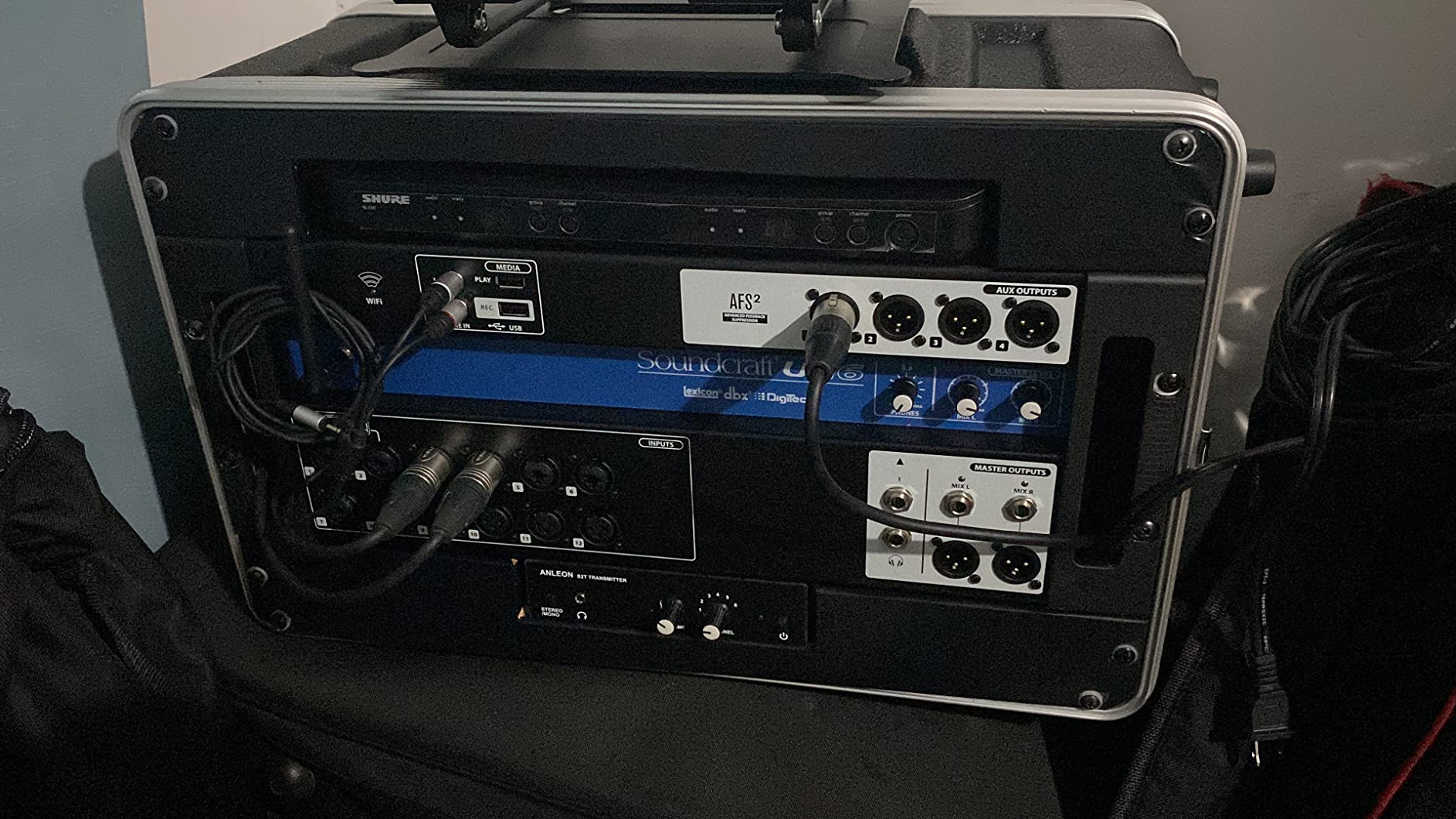
Control runs through an HTML5 interface in the browser of whatever device you own, across iOS, Android, Windows, Mac and Linux, with up to ten devices connected at once. Two independent network interfaces allow simultaneous control by Wi-Fi and Ethernet, so you can run the house mix from a laptop at the booth and adjust monitor settings wirelessly from the stage box.
At 19 by 7 by 4.3 inches and 7.9 pounds it racks into a small case, sits on a table or lives permanently bolted into a rehearsal room. That matters because most small venues have nowhere at front of house to put a full-size analog desk, which is the decisive practical reason tablet-based rigs took over.
What makes it work in a small venue
For monitor work, four balanced XLR auxes plus two headphone outputs cover a band that wants wedges rather than full in-ear systems, and one aux can feed a delay tower or sidefill without stealing a bus. Automatic feedback reduction handles the wedge-pointing-at-the-vocal-mic problem that ends most first gigs.
Where it falls short
This is a digitally controlled analog mixer, so program audio is not converted to digital except for USB stick use. There is no multitrack export and no scene recall of the X32 kind, so a band that wants every channel captured should look elsewhere. The built-in hotspot range is the most common complaint at around 20 feet, several owners solved it with an external 5GHz access point, and background hiss rules out quiet studio work.
4. Behringer X32: the fader-based desk for a full band input list
Behringer 32 40-Input 25-Bus Digital Mixing Console, Black (X32)
40 inputs and 25 buses
32 Midas preamps
25 motorized 100 mm faders
16 XLR outs with 8 DCAs
Pros
- Reviewers repeatedly compare the value to consoles costing several times more
- 25 motorized 100 mm faders for instant overview and scene recall
- 8 assignable DCA groups plus 16 mix buses to organize the band
- Dynamic LCD scribble strips replace masking tape on every channel
Cons
- Routing menus take real study and many operations work in groups of eight
- Per-channel LED meters are coarse for comparing channels
- Built-in USB recording is WAV only and cannot record and playback at once
Forty input channels and 25 buses is enough headroom for a six-piece band plus guest, ambience channels, several effects returns and four monitor mixes without a compromise, and 32 programmable Midas preamps mean the whole band runs through real microphone preamps. It carries a 4.7 rating from 384 reviews, the highest in this group.
The 25 fully automated motorized 100 mm faders are what make a show repeatable. Recall a scene and every fader physically travels to the position you saved, so the desk looks like the mix you built at soundcheck. With eight assignable DCA groups and 16 buses you can run the band from six or seven faders and leave the rest for detail work.
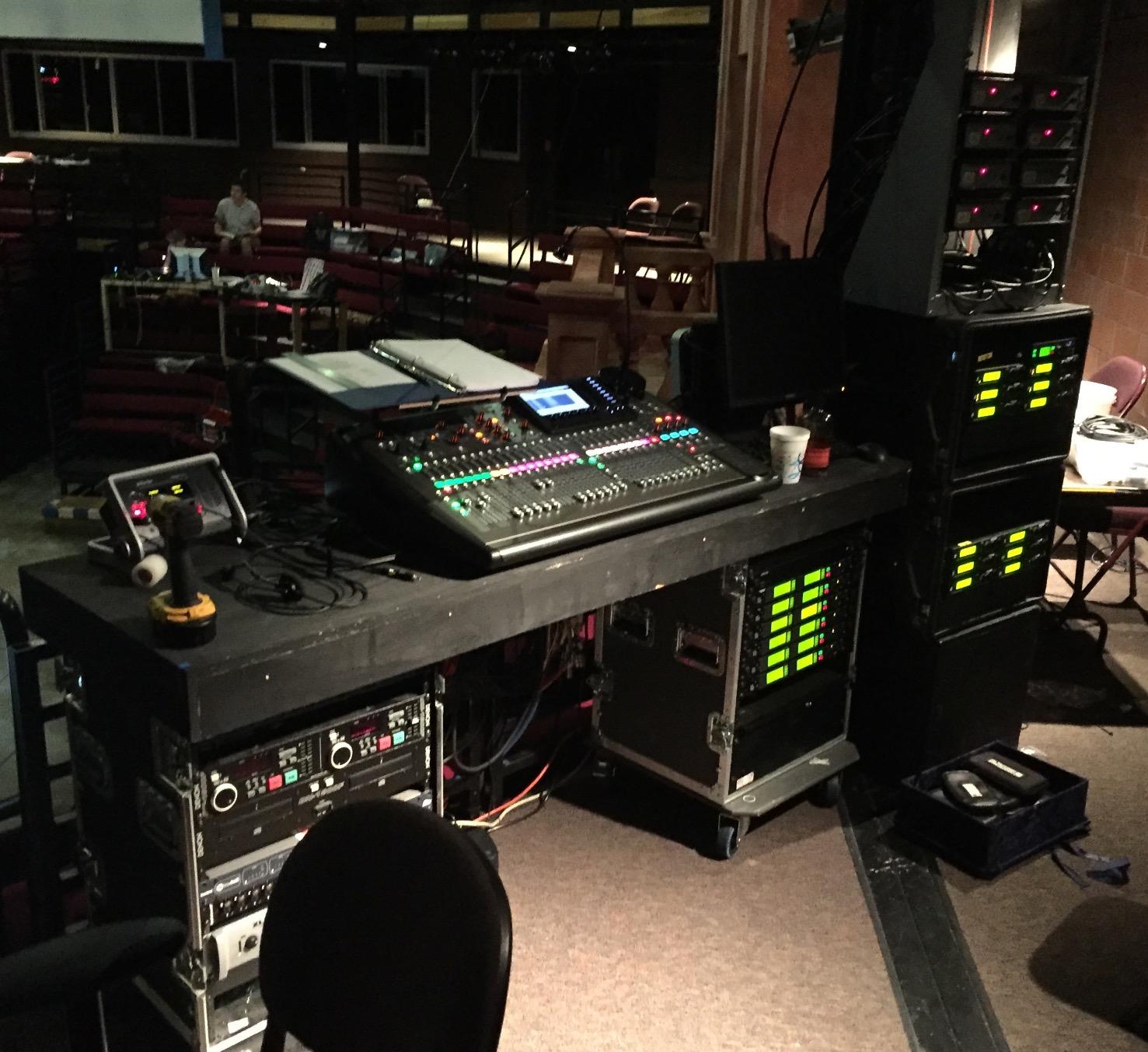
Individual and dynamic LCD scribble strips on all channels and buses mean labels are typed, not written. The scene, snippet and cue recall system saves partial changes you can roll back, six assignable mute groups give one-touch access to mid-set moves, and outputs include 16 XLR outputs, six line inputs and outputs, two headphone connectors and a talkback section.
r/livesound regulars name the X32 platform as the default recommendation and cite the X32 Rack specifically for in-ear rigs. Long-term owners in churches and theatres report the hardware running indefinitely, and the depth of tutorial material available is the best of any console here, which matters given how much the routing takes to learn.
What a working engineer actually uses
The learning curve is the real cost of this board rather than the money. Routing looks opaque on day one and much of the operation works in groups of eight channels, which is confusing until it clicks. Budget a weekend with the desk, and note that scene recall plus DCAs mean a support act or a guest engineer can be handed a working mix without a full handover session.
Where it falls short
Per-channel LED meters have low resolution with coarse steps, so comparing two similar sources by eye takes practice. Built-in USB recording is WAV only and cannot record and playback at the same time, and the first four FX slots serve side-chain or insert use, leaving four stereo bus-style FX channels for classic reverb and delay work.
5. Behringer XR16: the budget console for a first paid run of shows
Behringer X AIR XR16 16-Input Digital Mixer for iPad/Android Tablets with 8 Programmable Midas Preamps, 8 Line Inputs, Integrated Wifi Module and USB Stereo Recorder
16 inputs with 8 Midas preamps
Built-in tri-mode Wi-Fi
6.6 lb tablet body
USB stereo WAV
Pros
- Per-channel compression and gating with parametric EQ on every input
- Compact 6.6 pound body suited to mobile and rack setups
- Control from a tablet or phone so one person can mix from anywhere in the room
- The app names channels for you instead of requiring tape labels
- Quiet operation with no reported noise problems
Cons
- On-board Wi-Fi can drop out and needs an app restart
- An external router is needed for a reliable long-range private network
- Records only a stereo mix rather than separate tracks
The XR16 is a compact board and a straightforward way to get real digital processing into a rehearsal room. Sixteen inputs with eight Midas-designed preamps, 12 mix buses and per-channel compression, gating and parametric EQ replace an analog mixer plus a rack of outboard units with one 6.6 pound box a band can carry themselves.
Because the app names channels for you rather than expecting labels, two people can share a rehearsal room and both find their inputs instantly. Long-term owners in churches and small bands report quiet operation and faster setup than a board-and-snake system, and 16 channels covers a trio or quartet with room left for playback and effects returns.
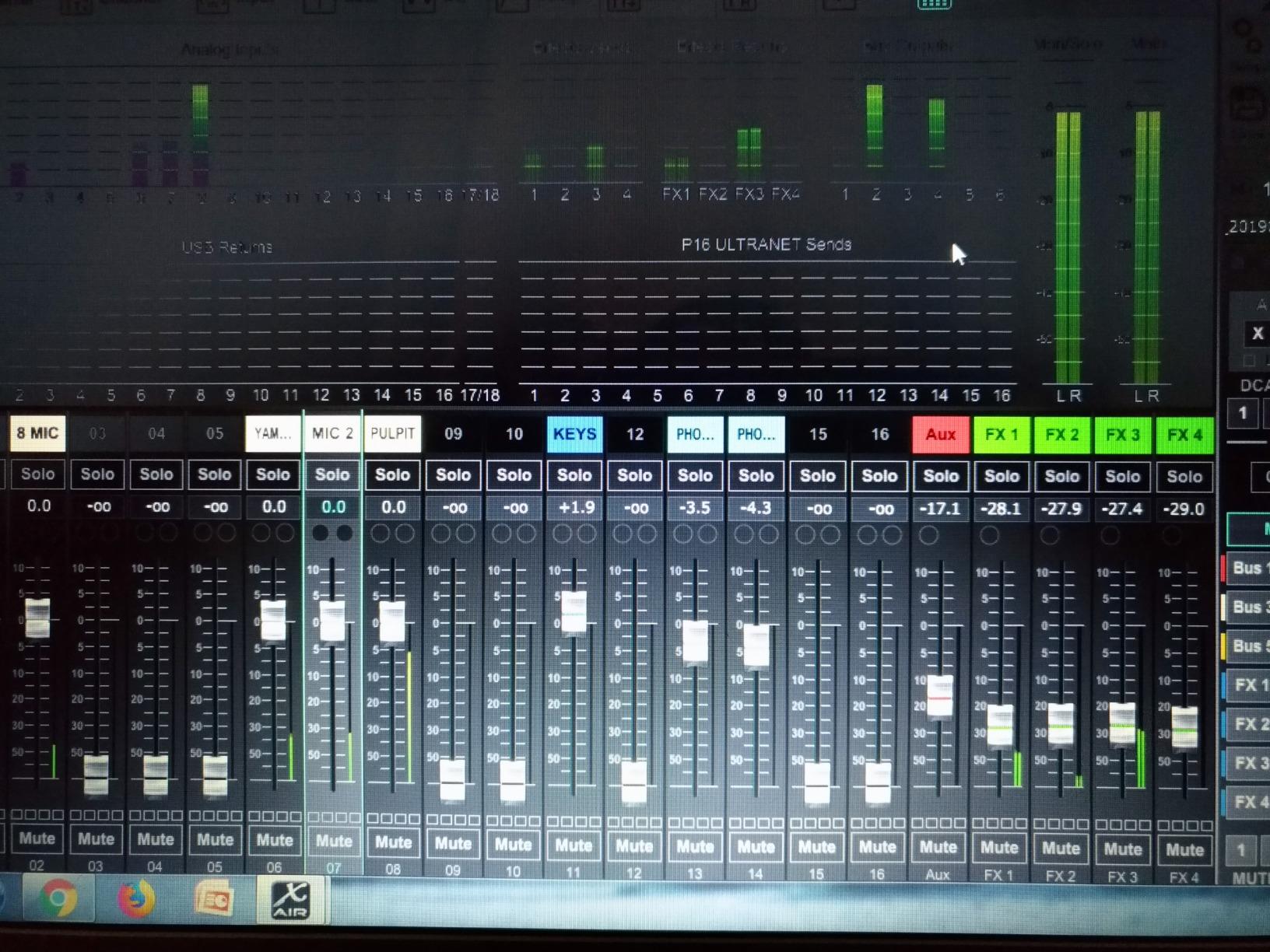
Dugan-style auto-mixing manages microphone gain sharing for panels and worship rooms, the USB connector handles uncompressed stereo WAV recording and playback, and outputs on XLR keep the connection to a small PA straightforward. The point of this board is that one person with no engineering background can get a usable mix out of a four-piece in an afternoon.
Eight outputs including main left and right plus DCAs give group control over kits and backlines, and the 4.4 rating from 232 reviews reflects a board that does the fundamentals reliably rather than one that excites. It also makes a sensible permanent rehearsal room desk that can be left with a saved scene ready to play.
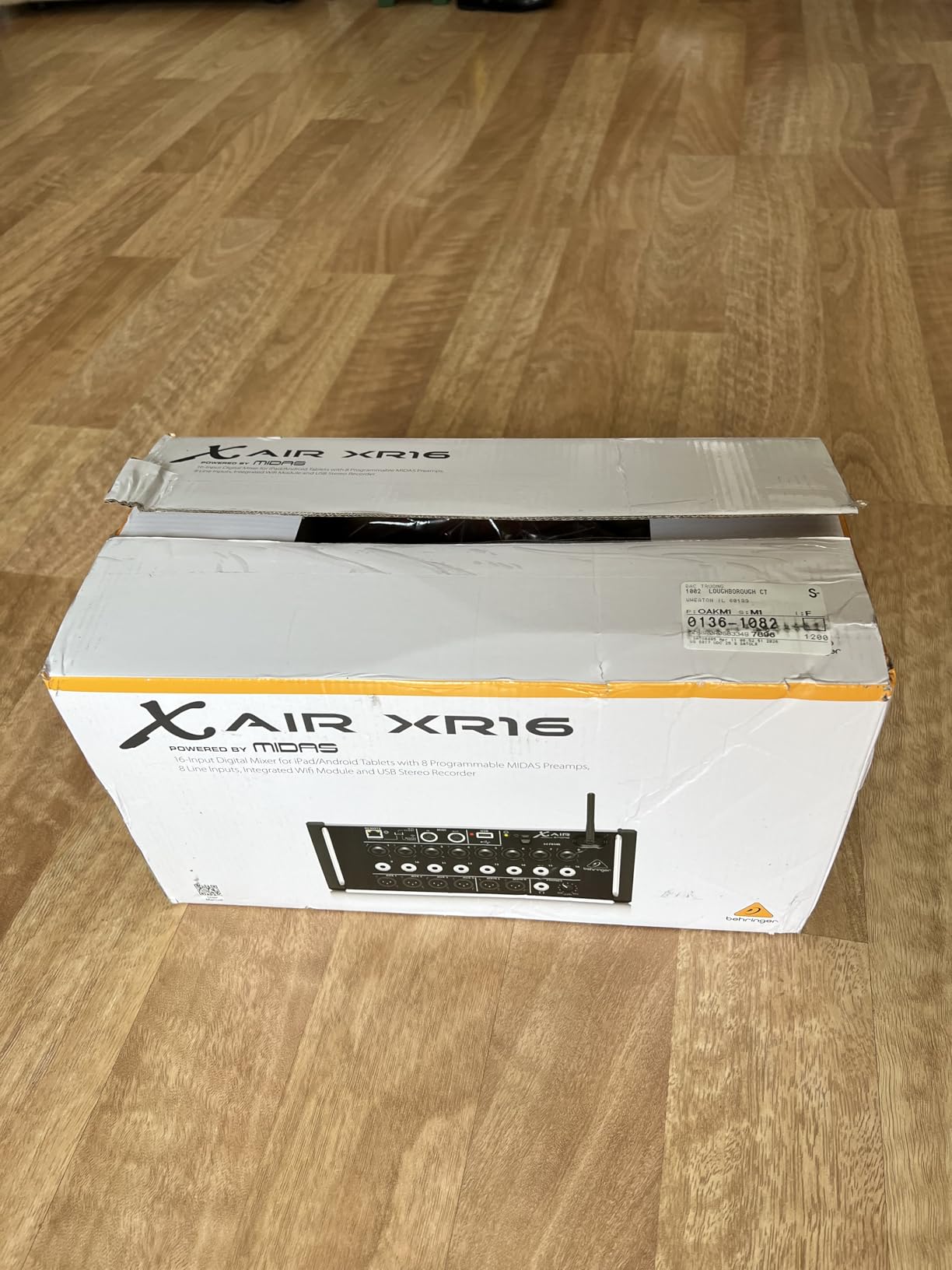
When this is the right box
Pick the XR16 when the room is small, the band is four people or fewer, and nobody is asking for multitrack show files. The per-channel processing is the argument, not the channel count. Eight preamps cover a full kit or a four-voice band, and the remaining inputs handle returns and playback inside a 16-channel frame.
Where it falls short
The on-board Wi-Fi signal can drop out and needs an app restart, and an external router is needed for a reliable, long-range private network. Recording is limited to a stereo mix rather than separate tracks, USB recording has been reported as intermittent by at least one owner, no printed quick start guide is included, and like the XR18 this console is built to sit on stage where power loss or spilled liquid is a risk.
6. Behringer X32 Compact: the same desk in a body you can actually lift
BEHRINGER X32 COMPACT
40 inputs and 25 buses
17 motorized 100 mm faders
16 Midas preamps
34 lb and 20 inch deep
Pros
- The compact chassis keeps the full 25-bus and 40-input architecture of the larger X32
- 17 motorized 100 mm faders give channel overview and reliable scene recall
- Dynamic LCD scribble strips on all channels and buses
- 8 XLR outputs plus 6 line inputs and outputs with a talkback section
- 34 pounds is far easier to move and rack than the full-size console
Cons
- Only 17 faders so extra inputs are reached through page groups
- Same Behringer menu structure and learning curve as the rest of the family
- At 34 pounds it still needs a case or two people
The X32 Compact keeps the full 40-input, 25-bus architecture and the motorized fader workflow of the full X32 and does it at 34 pounds instead of 45.4 in a body less than half as deep. For a band that loads in and out itself, that difference decides more shows than any processing upgrade.
You still get 16 programmable Midas preamps, 17 fully automated motorized 100 mm faders and dynamic LCD scribble strips on every channel and bus. Its 4.7 rating from 211 reviews matches the full-size console, which tells you the smaller chassis costs no audio quality, and scene recall behaves identically, so a show file written on one desk loads on the other.
Eight XLR outputs plus six line inputs and outputs, two headphone connectors and a talkback section cover routing for a band with in-ear mixes, and 25 buses means you are not short of monitor destinations. At 20.08 by 24.61 by 8.46 inches it fits on a standard board table where the full console overhangs, which matters in a small club.
The reason it belongs here rather than with the tablet consoles is that it does not depend on a device to change a level. Combined with AES50 stage box expansion, which the XR18 and XR16 do not offer, it is the desk we would put on a shortlist first for a touring four-piece or five-piece.
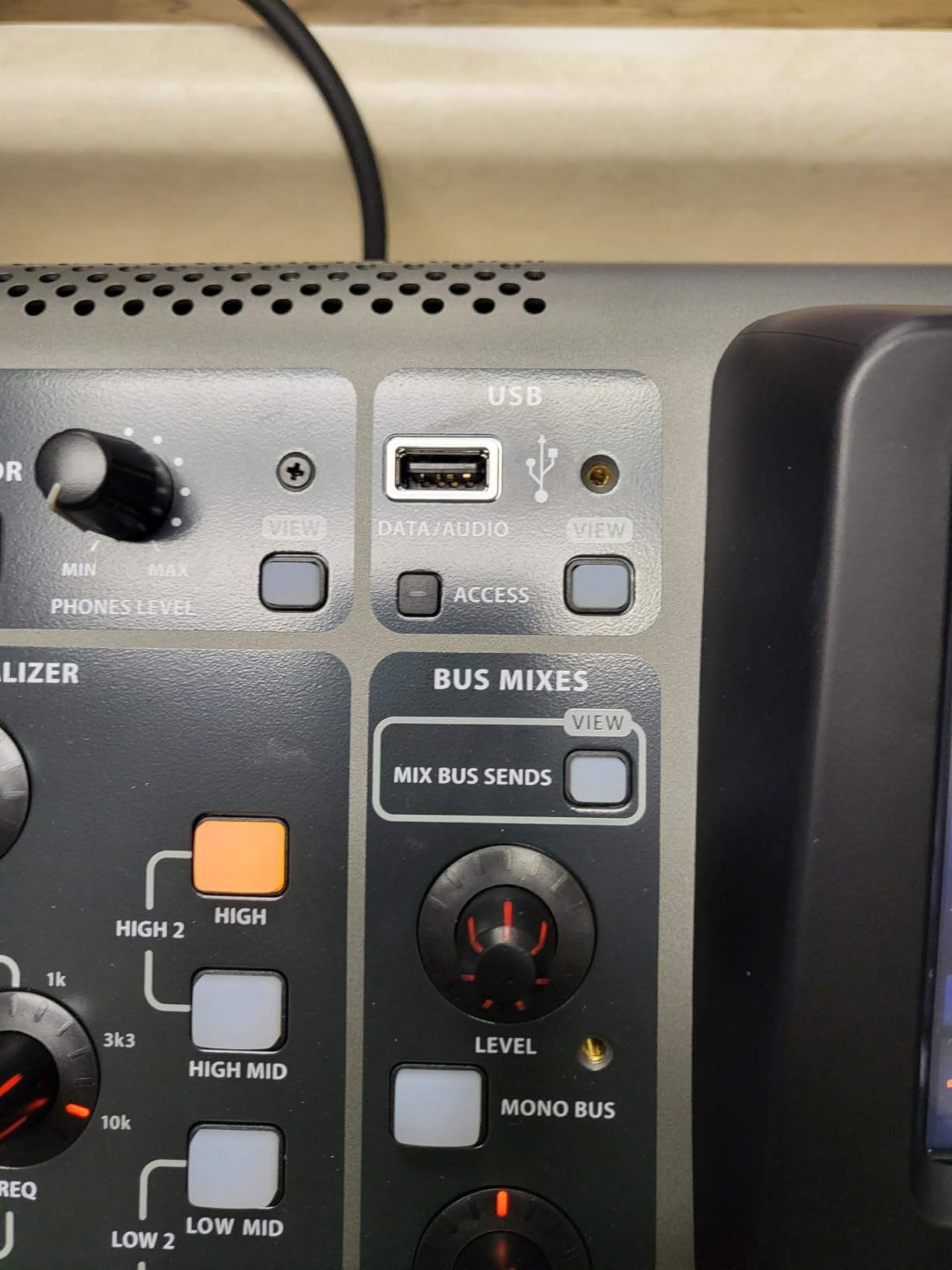
What changes against the full-size X32
Only 17 faders are motorised, so beyond that point inputs are reached through page groups rather than all being visible at once. That is a real adjustment for anyone used to a wall of faders and the one compromise you accept for the weight saving. Sixteen Midas preamps is the number to plan around rather than the 40 channels, since the local desk expects channel strips to be fed from a stage box.
Where it falls short
The menu structure and learning curve are identical to the rest of the X32 family, so nothing is easier here than on the full-size board. The retrieved review data carried no written customer review text, so most limitation themes come from the platform rather than from quoted owners, which is worth knowing when weighing the rating.
7. Allen & Heath CQ-18T: the best compact board for a fixed room
Allen & Heath CQ-18T Digital Mixer with 7″ Touchscreen WiFi and Bluetooth Connectivity
16 mic or line inputs
2.4GHz and 5GHz Wi-Fi
7 inch touchscreen
24x22 USB and SD
Pros
- 16 mic or line inputs with 8 combi connectors plus a stereo line input
- Dual-band 2.4GHz and 5GHz Wi-Fi with automatic channel selection
- Stereo Bluetooth input for direct playback from a phone
- 24x22 USB interface and 24x22 SD record and playback
- Light 10.3 pound body with a shallow 3.5 inch profile
Cons
- Only 16 inputs which is fewer than the 18 to 40 channel boards here
- A touchscreen workflow is less tactile than a fader surface
- No physical surface to fall back on if the controlling device fails
The CQ-18T solves the problem that makes compact consoles nerve-racking: wireless flakiness. Where rivals lean on a 2.4GHz hotspot that drops at the far side of a room, this one has built-in 2.4GHz and 5GHz Wi-Fi with automatic channel selection, so it finds a clean path rather than making you hunt for one.
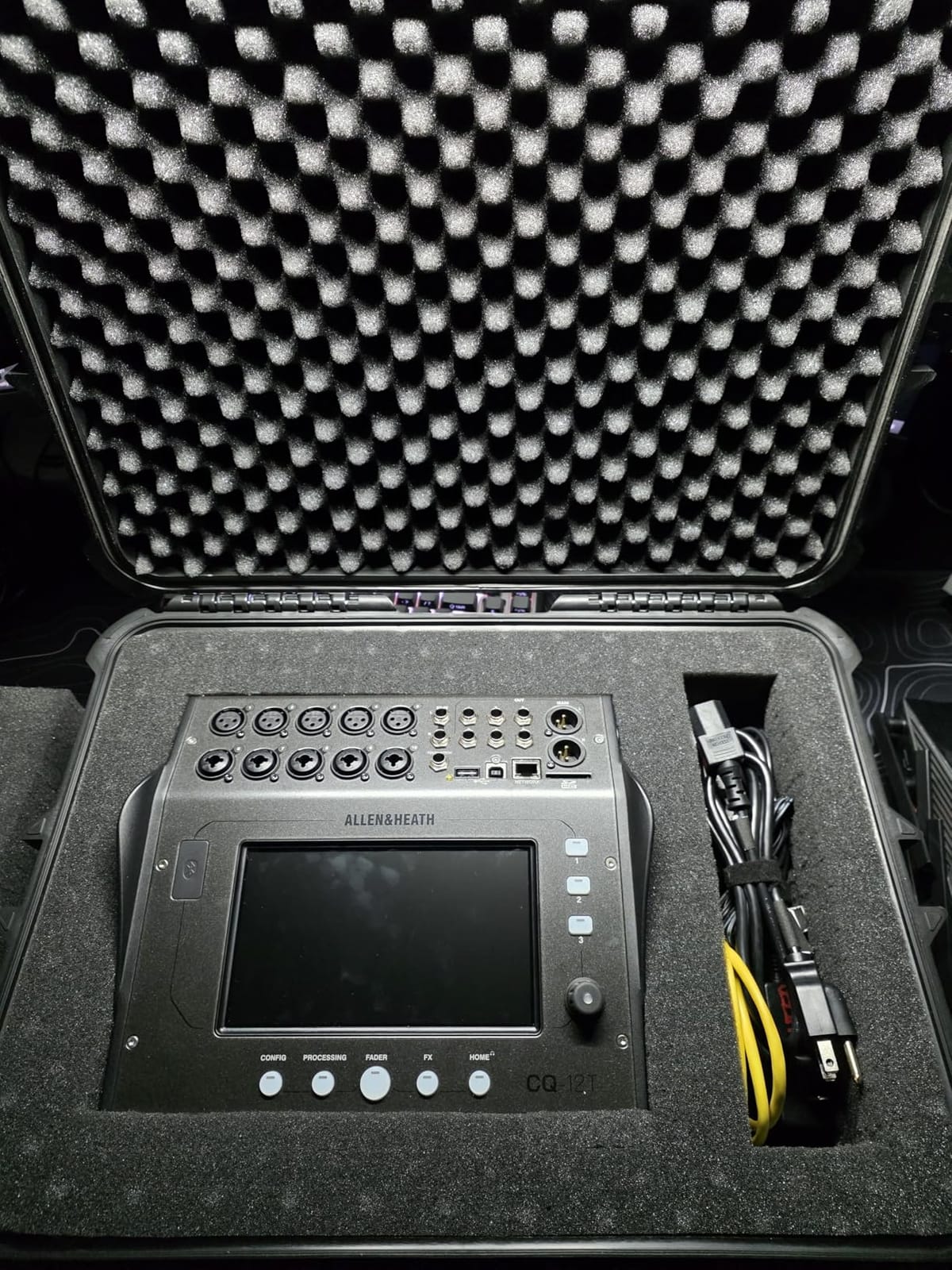
You get 16 mic or line inputs, eight of them combi connectors, plus a stereo line input, and a 7-inch capacitive touchscreen with an associated rotary control and three custom SoftKeys and three custom SoftRotaries. Four FX engines are built in, and the console weighs 10.3 pounds in a body only 3.5 inches deep, which suits a small stage or a permanent install.
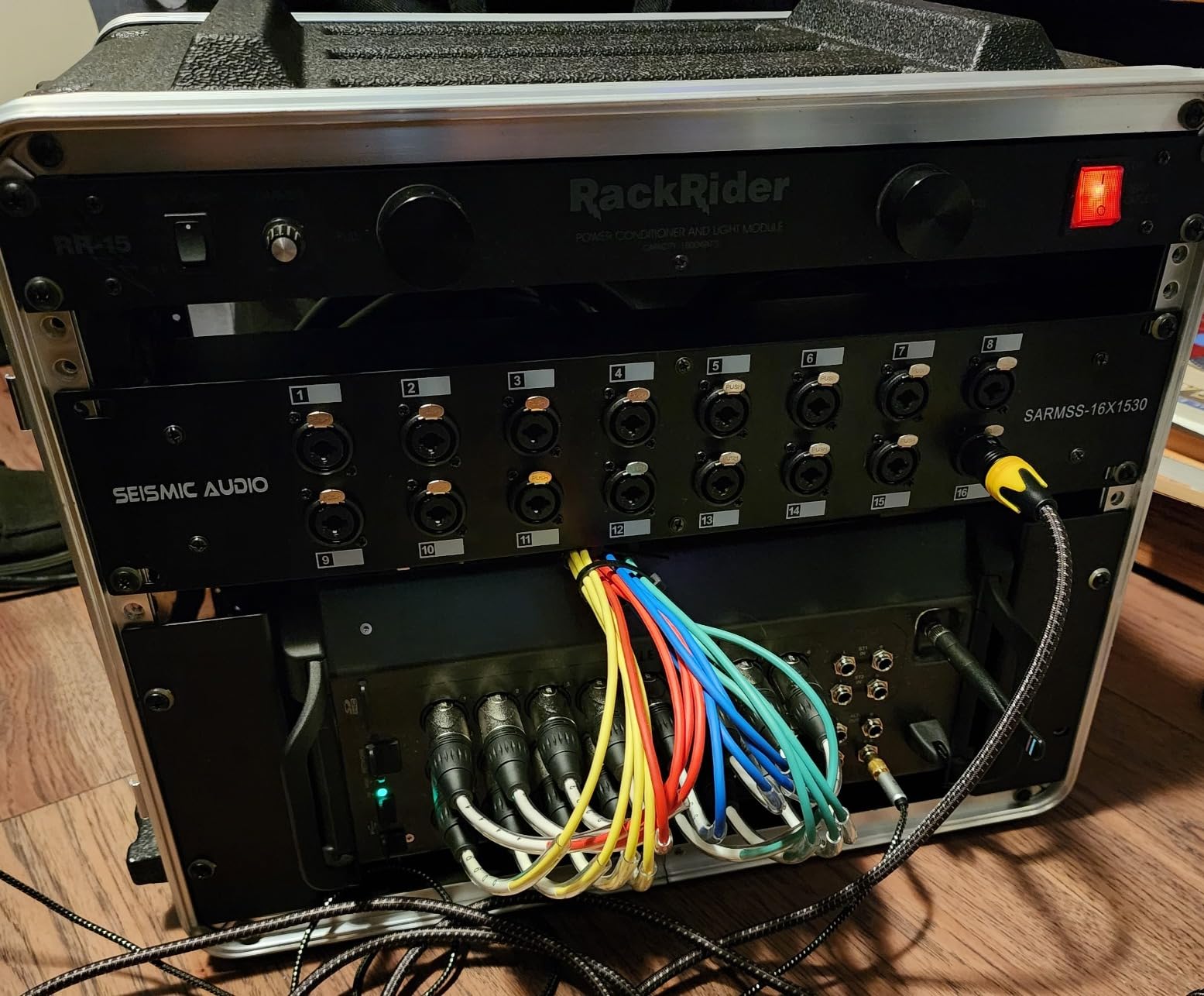
The recording paths are unusually generous for the size: a 24×22 USB audio interface and 24×22 SD record and playback means 24 channels can be captured to a card with no laptop in the loop. That makes it a strong rehearsal room desk for a band that wants to review a multitrack of its own practice rather than of the show.
Stereo Bluetooth input is a small touch that matters more than it sounds. A phone can feed playback into the desk without a cable across the stage, which is what you want for backing tracks between songs without spending a channel and a cable run on them.
Why it suits a fixed room better than a touring rig
Dual-band Wi-Fi with automatic channel selection, a touchscreen interface and no need for more than a tablet or phone make this the easiest of the ten to leave installed and hand to whoever is on duty. Allen & Heath build quality at a mid-tier price point matters in a room operated by rotating volunteers rather than one engineer.
Where it falls short
Sixteen inputs is fewer than the 18 to 40 channel boards here, so a six-piece with a full kit needs disciplined gain staging. The touchscreen workflow takes practice and is less tactile than a fader surface, which matters in a dark venue, and at 3.5 inches deep it relies on remote control with no physical surface to fall back on if the controlling device fails.
8. Midas MR18: the compact board with Midas PRO preamps
Midas MR18 18-Input Digital Mixer for iPad/Android Tablets with 16 Midas PRO Preamps, Integrated Wifi Module and Multi Channel USB Audio Interface
16 Midas PRO preamps
18 inputs and 12 buses
18x18 USB 2.0
3.9 kg tablet body
Pros
- Sixteen award-winning Midas PRO microphone preamplifiers
- Built-in tri-mode Wi-Fi router for direct operation
- 18x18 bidirectional USB 2.0 audio interface
- Dugan-style auto-mixing for microphone gain sharing
- Tablet-controlled operation on iPad and Android
Cons
- Requires a tablet for operation and none is included
- USB 2.0 rather than a newer interface standard
- No physical faders on the console itself
The MR18 exists for one reason: the preamps. Sixteen award-winning Midas PRO microphone preamplifiers sit behind eighteen inputs, and the PRO stage is a generation above the Midas-designed preamps found in the X AIR boards. If a band’s entire sound lives in the first hour of the signal chain, that difference is audible before you touch an EQ band.
Everything else follows the established X AIR pattern. A built-in tri-mode Wi-Fi router means direct operation without an external router, the 18 x 18 bidirectional USB 2.0 interface handles multitrack recording to a tablet or computer, and Dugan-style auto-mixing manages gain sharing for rooms where many mics feed one channel.
Where the preamp difference shows up
Midas PRO preamps have more headroom, which means you can run hotter sources such as stereo DI feeds, expensive condensers or an aggressive guitar channel without pushing into the noise floor. On a five-piece where vocalists bring their own microphones, front-end headroom is worth more than extra buses you never patch. At 3.9 kg it is one of the lighter consoles here.
Where it falls short
A tablet is required for operation and is not included, and there are no physical faders, so every level change is a gesture on a screen you cannot feel in a dark room. The USB interface is 2.0 rather than a newer standard, and with 47 reviews the 4.5 rating rests on a thinner base than its rivals.
9. PreSonus StudioLive 32SC: the best console for a virtual soundcheck
PreSonus StudioLive Series III 32SC Digital Console Mixer
32 recallable channels
FLEX DSP with 286 processors
SD record with Virtual Soundcheck
Pros
- 32 fully recallable channels with motorized faders
- A dual-core FLEX DSP engine running 286 simultaneous processors
- Onboard multitrack SD card recorder with true Virtual Soundcheck
- 16 FlexMixes that work as aux
- subgroup or matrix mixes
- 128-channel 64x64 USB interface
- the most of any mixer here
Cons
- AVB network setup can be complex on first install
- Reports of registration issues with previously owned bodies
- No integrated Bluetooth
The StudioLive 32SC is built around a different question than the rest of this list: how do you soundcheck without the band being there. A dual-core FLEX DSP engine powers 286 simultaneous processors, and the onboard multitrack SD recorder works with true Virtual Soundcheck, so you can load last week’s show files at home and build the mix before anyone travels.
Thirty-two fully recallable channels with motorized faders and 16 FlexMixes give a serious surface. FlexMixes work as aux mixes, subgroups or matrix mixes on the same bus, so one monitor mix can feed a wedge, an in-ear system and a recording feed without duplication. The 128-channel 64×64 USB interface is the largest here and feeds a DAW without an aggregate or interface box.
AVB networking ties the console into PreSonus stage boxes, EarMix personal monitor mixers and AVB switches, so a band running in-ear systems can build a matched ecosystem rather than a collection of borrowed parts. Studio One Artist and Capture are included, and at 22 pounds in a portable, rack-mountable form factor this is a desk you can move between a rehearsal room, a church and a club.
The 3-year manufacturer warranty is the longest listed here. With 286 processors available, dense compression, gating and EQ on every input plus four effects slots run at once without fighting for capacity, which on smaller consoles forces compromises at exactly the wrong moment.
Why Virtual Soundcheck changes rehearsal
A band with a multitrack of the last show can rehearse against it without the whole lineup present. The drummer checks timing against the recording, the singer works on a harmony that went wrong, and whoever mixes rebuilds the balance from real show audio rather than a rehearsal room that sounds nothing like the venue.
Where it falls short
AVB network setup can be complex on a first install and you need compatible switches and stage boxes. Product registration issues have been reported with previously owned bodies, which matters if you buy used, one owner reported a faulty fader motor, and there is no integrated Bluetooth so playback sources need a cable. The 4.2 rating across 32 reviews is the lowest here on the thinnest review base.
10. PreSonus StudioLive 24R: the rack console for a permanent install
PreSonus StudioLive Series III 24R Digital Rack Mixer with Studio One Pro Software
24 XMAX Class A preamps
40x40 USB and 55x55 AVB
16 FlexMixes and 4 subgroups
10.8 lb rack body
Pros
- 24 locking combo mic and line inputs with recallable XMAX Class A preamps
- 40x40 USB 2.0 and 55x55 AVB recording interfaces
- 16 FlexMixes plus 4 dedicated subgroups
- Fat Channel processing with vintage EQ and compressor modes on every channel
- Scene management with Scene Safe
- Studio One Pro DAW and Capture software included
Cons
- Rackmount only with no physical faders on the unit
- Requires an external control surface
- tablet or software to mix
- USB 2.0 rather than a newer interface standard
- AVB networking needs compatible switches
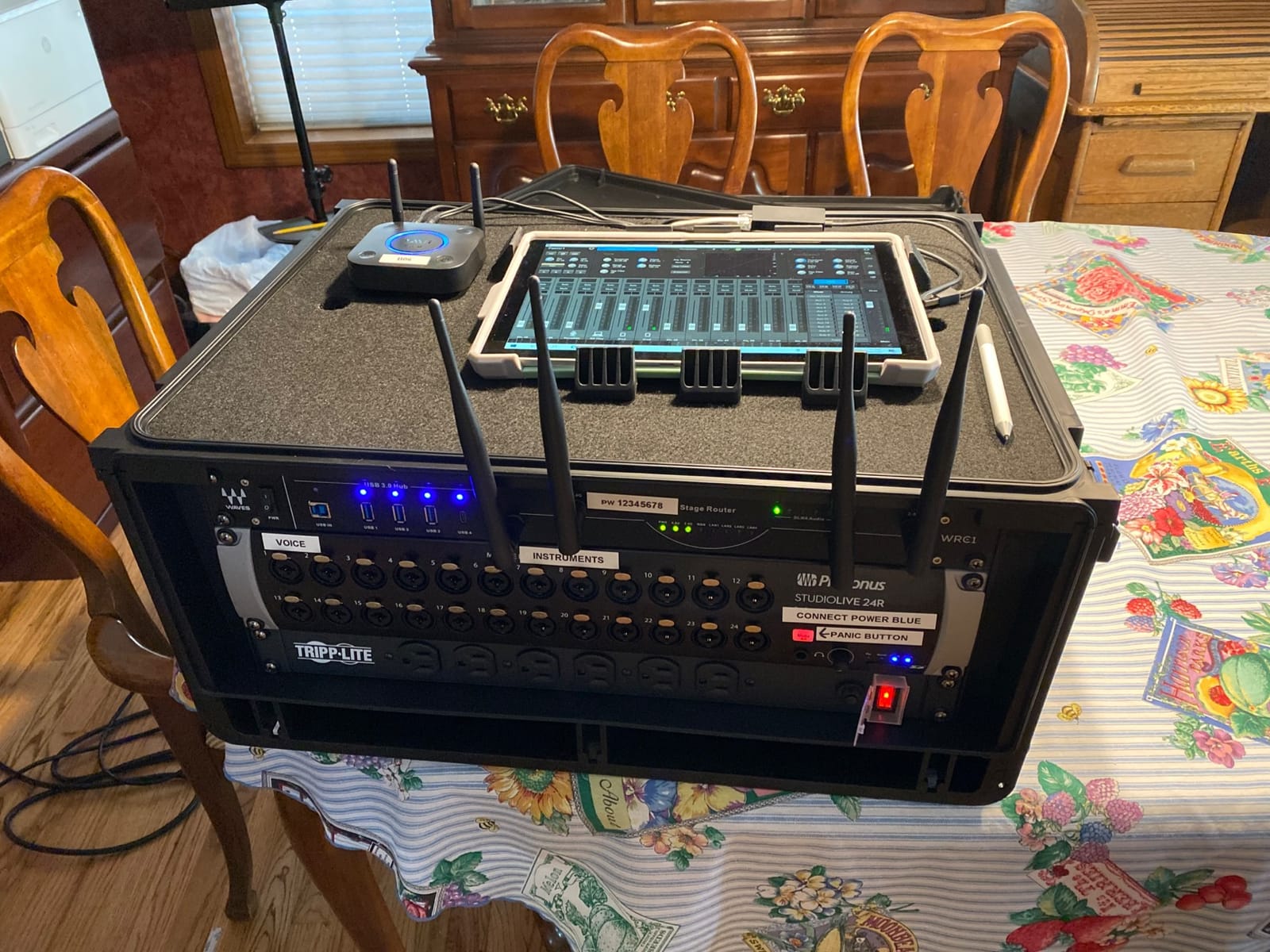
The StudioLive 24R is the one to choose when the console lives in a rack and never comes out. It is a 32-channel digital rack mixer built from 24 analog and 8 digital channels, with 24 locking combo mic and line inputs and recallable XMAX Class A preamps, and it weighs 10.8 pounds. Install it once and it becomes part of the room.
Fat Channel processing with vintage EQ and compressor modes is available on every channel with A/B compare, so you can move between a modern and a vintage character without losing your settings. Sixteen FlexMixes and 4 dedicated subgroups cover monitor routing, and Scene Safe protects the channels a volunteer operator is most likely to disturb.
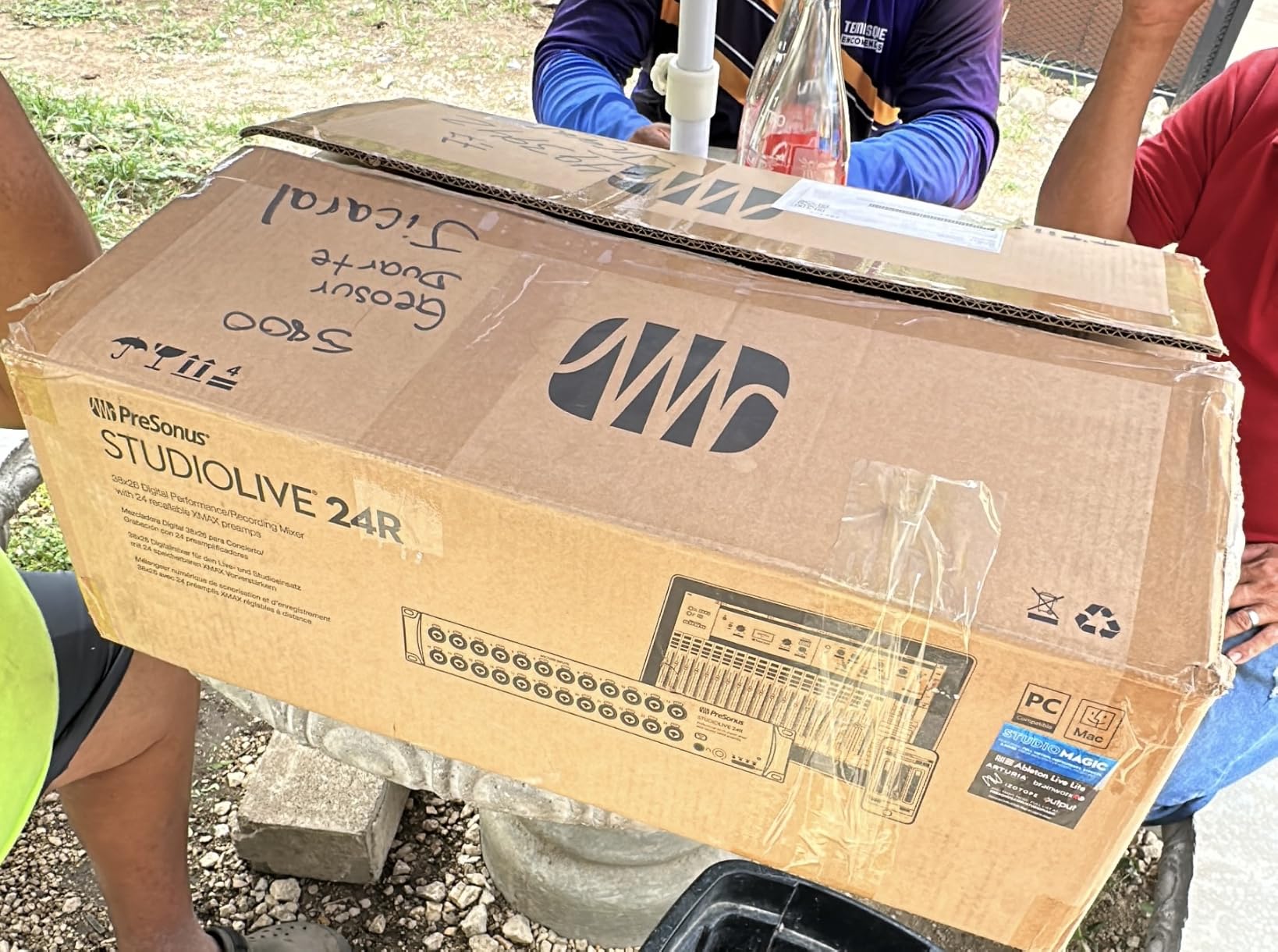
The recording and networking paths are generous: a 40×40 USB 2.0 interface for multitrack to a computer, a 55×55 AVB interface for networked workflows, and onboard stereo recording to SD card. AVB stage box mode plus a stage box with monitor mixer mode lets a small stage box serve both input and mix duties, and QMix-UC compatibility lets each performer pull their own mix on a phone.
Studio One Pro, Capture and UC Surface touch-control software for Mac, Windows, iPad and Android are included. For a church, a community theatre or rehearsal space with a fixed control position, that bundle is a bigger part of the case than the hardware alone.
Where a rack console actually wins
A rack console removes the constraints that push most small rooms toward tablets. There is no desk to find space for at front of house, the console can sit beside the stage box at the back of the room, and control happens from any tablet or laptop on the network. With Scene Safe and a saved show file, the room sounds the same whether the person on duty has mixed for ten years or ten weeks.
Where it falls short
It is rackmount only with no physical faders, so it depends entirely on an external control surface, tablet or software to mix. In a venue with unreliable wireless that is real exposure, and unlike the X32 platform there is no motorized fader surface you can add to reclaim tactile control. The USB interface is 2.0, AVB networking needs compatible hardware, and 44 reviews is a smaller base than the flagship boards.
How Many Channels Does a Live Band Actually Need?
Count your inputs before you count features. The most common question on live sound forums is simply how many channels a band needs, and the honest answer is that it depends more on your drum mic count than on how many people are on stage. Write out your real mic choices, then add headroom.
A four-piece with a disciplined four-piece kit needs around eight drum inputs for kick, snare, toms, one overhead pair and a room mic, then two guitar feeds, a bass feed and four vocal mics pushes you to 18. Add a laptop or click feed and you are at 19 before ambience channels.
A five-piece with a fuller kit usually needs 12 to 14 drum inputs once overheads and room mics are counted, which brings a full band to 22 or 24 including playback. A six-piece with keys, percussion and a two-amp rhythm guitar setup lands near 28, and that is where a 40-input board with stage box expansion stops being overkill.
Our rule is to add 25 percent headroom to whatever list you write, because spare channels cover what nobody planned: an extra hi-hat mic, a guitar changeover feed, a ceiling ambience pair, or an effects return. The live sound mixer overview explains how those channels route into buses and monitor mixes once you have them.
How to Choose a Digital Mixer for Live Bands
Preamp count is the first filter, and it is the specification that most changes the sound of a live band. Everything downstream is a processing chain you can adjust, while the preamp decides how much clean gain you get before noise. Look for eight preamps minimum on a compact board, sixteen on anything covering a full band, and check whether that count is on paper or on the physical inputs.
Second, decide how the console gets controlled, because this is the decision you live with at 2 a.m. Motorized faders with scene recall mean the desk shows you the mix and travels to the positions you saved. Faderless designs with a touchscreen or tablet app mean fewer faders to carry and more routing, but every level change becomes a gesture on a screen you cannot feel, which slows down fast adjustments in a dark venue.
Third, look at stage box and network options. A console with AES50 or AVB can take inputs from a stage box at the band end, shortening analogue runs and adding channels beyond the local inputs. The XR18 and XR16 lack AES50 entirely, which is why bands planning a big stage or a long cable run often step up to an X32 desk instead.
Fourth, check the app ecosystem and wireless design. A built-in router that works in an empty rehearsal room is not the same as one that holds a connection in a room full of other RF gear. Dual-band Wi-Fi with automatic channel selection addresses this directly, and for the rest the practical answer is a dedicated external router on a 5GHz band.
Fifth, think about what feeds the console from a computer. Backing tracks and click should arrive through a DI box into a line input rather than a laptop headphone output, which is noisy and clips easily. If the console has instrument inputs with amplifier modelling, a guitar can be shaped through the desk and one more box leaves the signal chain.
Finally, weigh latency honestly and update firmware at home. Digital sends to monitors add a small delay against an analog board, and a veteran engineer on a live sound forum raised exactly that as a reason to learn analog first. Separately, several boards here list features that arrive or improve through firmware, and owners report that a first power-up update clears out-of-the-box problems on the X32 platform, so update in the week before a show and never in the venue.
Digital vs Analog: Who Should Still Start on an Analog Board
The strongest argument against starting on a digital console comes from engineers who learned on analog desks, and it deserves a hearing. A veteran on a live sound forum argues that beginners should learn gain staging, buses and inserts on something like a small analog board, because digital is not a substitute for learning the fundamentals, only a way to route around them.
The skills that matter at a gig are signal flow, gain staging, and knowing why a channel feeds a bus and what happens when it does. An analog board makes those visible because there is one physical path you can trace with your hands. A digital console hides all of it behind a routing matrix, and the result is a band that can call a show but cannot fix it when the show goes wrong.
There is a practical argument for analog first in specific cases. If your band rehearses in one room and plays in that same room, and the room already has a working desk, a second console solves nothing. And if you cannot yet decide whether you need a mixer at all, an audio interface with a handful of inputs may serve a rehearsal and recording rig better than any console on this list.
Our view is that digital is the right destination for a gigging band and the fundamentals are worth learning along the way. The order that works is to understand gain staging and buses on a small board first, then move to a console that recalls the show for you every time. Once the fundamentals are in place, the digital surface is a shortcut rather than a mystery.
Building the Rest of the Rig Around Your Console
The console is usually the cheapest part of a digital live rig, and the budget surprise for most bands is everything around it. An external Wi-Fi router, a tablet in a case, a stage box, a set of cables and a proper case for the console all add up, and a band that plans the whole list avoids the load-in argument.
For tablet-controlled consoles, budget a dedicated 5GHz router rather than relying on the built-in hotspot, and keep the tablet in a case with a screen that will survive stairs. For fader-based consoles, budget a flight case or hard cover, since the thin factory covers sold with the larger desks do not survive a van.
Stage box needs are the other variable. Desks with AES50 or AVB can take inputs from a stage box at the band end, which shortens analogue runs and adds channels. If your console has no stage box protocol, a long analogue multicore to the band end becomes the weak link in the rig, and that is worth factoring into the console decision rather than discovering mid-tour. Our stage lighting guide for live bands covers the other end of the same cable run.
Frequently Asked Questions
What is a digital mixer used for?
A digital mixer routes audio through digital signal processing rather than analog circuitry, giving per-channel EQ, compression and gating, onboard effects, scene recall, monitor mixes and multitrack recording in one enclosure. For a live band it replaces racks of outboard processing, recalls a whole show file instantly at soundcheck, and lets one person mix from a tablet anywhere in the room.
How many inputs does a live band need?
A four-piece band with a disciplined drum mic list needs around 18 to 20 inputs including playback and ambience, a five-piece with a fuller kit lands near 22 to 24, and a six-piece with keys and percussion approaches 28. Add 25 percent headroom to your own mic list, because spare channels cover the things nobody planned.
Which digital mixer is best for live sound?
For most working bands the Behringer XR18 is the strongest all-round choice, with 16 Midas-designed preamps, 18 inputs, 12 buses and an 18 x 18 multitrack USB interface in a 7.1 pound tablet-controlled body. Bands that want physical faders and scene recall should look at the Behringer X32, and rooms that need four XLR aux outputs get more from the Soundcraft Ui16.
What are the disadvantages of digital mixing consoles?
The common complaints are a learning curve around routing, coarse channel meters, dependence on a tablet or app that can fail mid-show, unreliable built-in wireless in crowded rooms, and added latency on digital monitor sends. Faderless designs also remove tactile control in dim venues, and boards without stage box protocols such as the XR18 limit expansion options.
What is the best audio mixer with recording capabilities?
The Zoom LiveTrak L-8 records 12 tracks simultaneously at 24-bit and 96kHz straight to SD card with no computer involved, while the PreSonus StudioLive 32SC adds true Virtual Soundcheck for mixing a show file before the band arrives. The Behringer XR18 offers an 18 x 18 bidirectional USB interface for tablet or computer multitrack, and the Allen and Heath CQ-18T records 24 channels to USB and SD.
Do I need a digital mixer for live performances?
Most bands playing regularly do benefit, because a digital console recalls the mix, gives every channel EQ and compression, and frees the engineer from carrying outboard gear. For a band rehearsing and playing in one room with a working desk, a second console may solve nothing. Learn gain staging and buses somewhere first, since digital will not teach them for you.
Final Verdict: Best Digital Mixers for Live Bands in 2026
The Behringer XR18 is the best digital mixer for live bands overall, because 16 Midas-designed preamps, 18 inputs and a bidirectional 18 x 18 multitrack interface in 7.1 pounds solve the most problems for the least carrying. The Soundcraft Ui16 is the value pick when four XLR aux outputs matter more than show files, and the Zoom LiveTrak L-8 wins for bands that want every set on an SD card.
Choose the Behringer X32 or X32 Compact when you want motorized faders and a show file that travels, the Allen & Heath CQ-18T for a fixed room with crowded wireless, the Midas MR18 for Midas PRO preamps, and either PreSonus board for multitrack and studio integration. Whatever you pick, update the firmware at home, budget for the router, tablet and case, and write your input list down before you shop.