
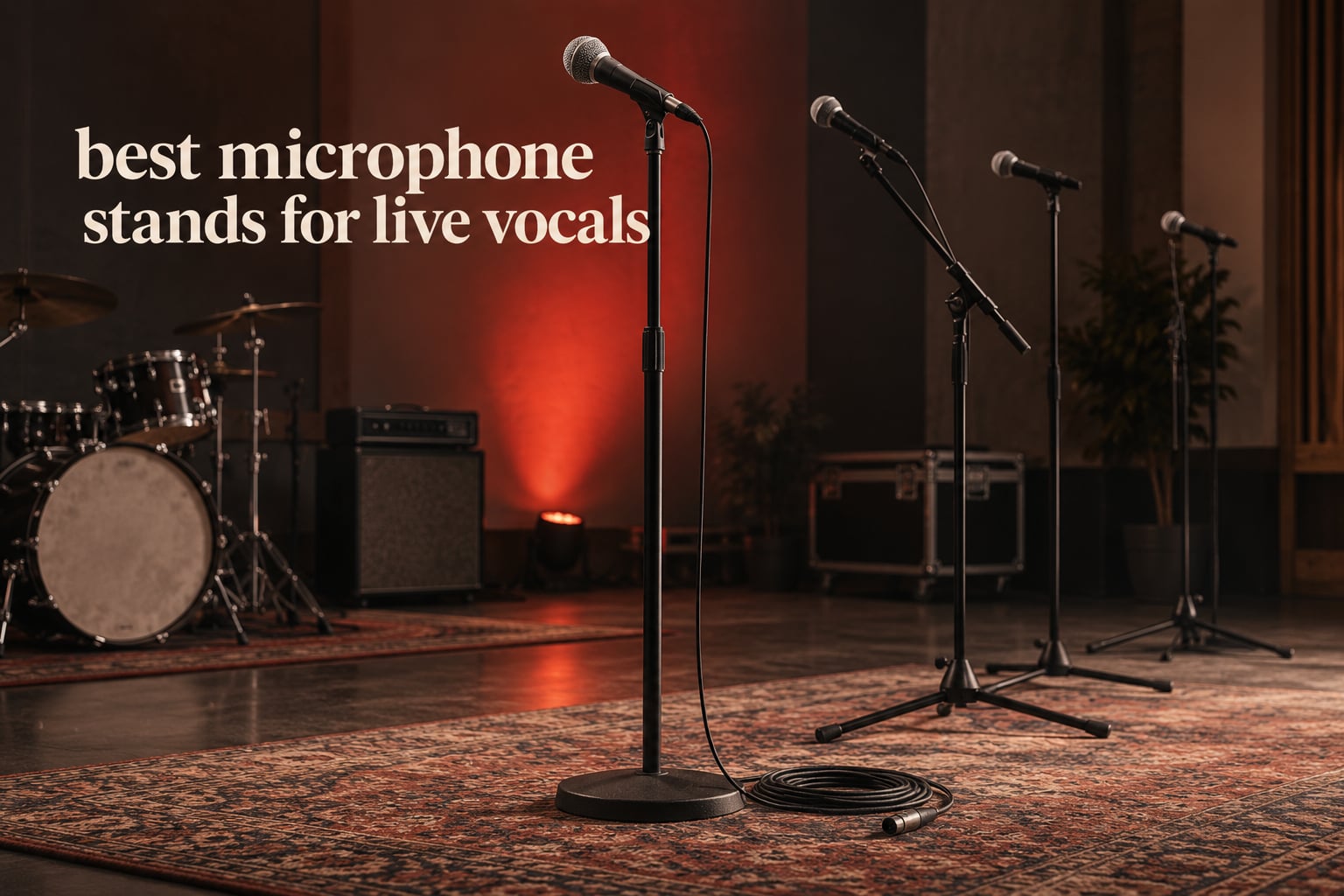
The best microphone stand for live vocals is the Amazon Basics TMS130, a folding boom stand that holds a dynamic handheld at full extension, reaches 85.75 inches for tall singers, and folds flat into a straight stand when you do not need the reach. It carries a 4.5-star average across more owner ratings than any other stand in this guide.
Format matters more than any single model, though. If the base is going to be kicked or bumped, a weighted round base beats a folding tripod, and a boom arm only earns its place if you also play an instrument and need the base out of your footwork.
We narrowed twelve stands down to that standard, weighing real numbers instead of adjectives: max height, base weight, thread size, folded length and rated load. Six carry a 5/8-27 top thread straight out of the box, and five ship with a 3/8 to 5/8 adapter, which is the fix for the mismatch that trips up first-time users. If you have not chosen your vocal mic yet, start with our guide to dynamic microphones for live vocals so your stand and mic match.
The forum consensus on r/livesound and TalkBass is blunt about the failure modes: boom arms droop when fully extended, plastic locking sleeves slip after a few months of height changes, and a threaded adapter that was not included can end a first soundcheck. Every pick below avoids those problems for its stated use, and none of them asks you to trust a marketing adjective.
Table of Contents
Top 3 Picks for Live Vocals in 2026

Amazon Basics TMS130
- 85.75 inch max height
- 21 inch base
- 3.3 lb steel
- Folds flat as straight stand

Pyle PMKS5 Round Base
- 9.92 lb die-cast base
- 33.5 to 60.24 inch range
- 5/8-27 thread
- Mic holder included
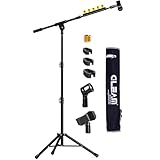
GLEAM MIC-01 Boom Stand
- 21 to 69 inch range
- 16 to 28.5 inch boom
- 3 lb tripod
- Bag plus two clips
All 12 Microphone Stands Compared in 2026
Every stand here is a floor stand, because that is what a vocalist actually holds the mic on. Read the base type first, since it decides whether the stand survives contact with a moving performer, then check the max height against the tallest singer in the band.
| Product | Specifications | Action |
|---|---|---|
| Amazon Basics TMS130 Boom Stand |
|
Check Latest Price |
| Pyle PMKS5 Round Base Stand |
|
Check Latest Price |
| GLEAM MIC-01 Boom Stand |
|
Check Latest Price |
 On-Stage MS7701B Euro Boom Stand On-Stage MS7701B Euro Boom Stand |
|
Check Latest Price |
 CAHAYA CY0239 Boom Stand CAHAYA CY0239 Boom Stand |
|
Check Latest Price |
 InnoGear TS186 Boom Stand InnoGear TS186 Boom Stand |
|
Check Latest Price |
 Pyle PMKS56 Heavy Duty Boom Pyle PMKS56 Heavy Duty Boom |
|
Check Latest Price |
 On-Stage MS7201B Round Base On-Stage MS7201B Round Base |
|
Check Latest Price |
 On-Stage MS7700B Tripod Stand On-Stage MS7700B Tripod Stand |
|
Check Latest Price |
 K&M 21090 Pro Boom Stand K&M 21090 Pro Boom Stand |
|
Check Latest Price |
 InnoGear RG250 Gooseneck Stand InnoGear RG250 Gooseneck Stand |
|
Check Latest Price |
 Pyle PMKS40 Round Base Stand Pyle PMKS40 Round Base Stand |
|
Check Latest Price |
1. Amazon Basics TMS130 Boom Stand – Our Pick for Live Vocals
Amazon Basics Sturdy Portable Microphone Boom Arm Stand, Height Adjustable with Cable Management, Foldable Tripod Base, Up to 85.75″, Black
85.75 in max height
21 in foldable base
3.3 lb steel
3/8 and 5/8 thread
Pros
- Holds position without boom slipping at the pivot
- Light at 3.3 lb so it is easy to carry
- Folds flat to double as a straight stand
- Clip-on cable holder keeps cords tidy
Cons
- Top-heavy with no weighted bottom so a bump can tip it
- Not built for touring use
- Microphone clip sold separately
I set this one up in a rehearsal room with a wired dynamic handheld and left the boom extended through a full hour. It did not creep downward once, which is the first thing I check on any budget boom. The clutch held the column at whatever height I set, and the pivot point stayed put.
The base is what gives me pause on stage. At 3.3 lb with a pedestal-style base and no weighted bottom, it is top-heavy when the boom reaches out. Reviewers report it holds fine for rehearsals and talkback, and tips if someone walks into it. That is an honest limit for a stand this light, not a defect.
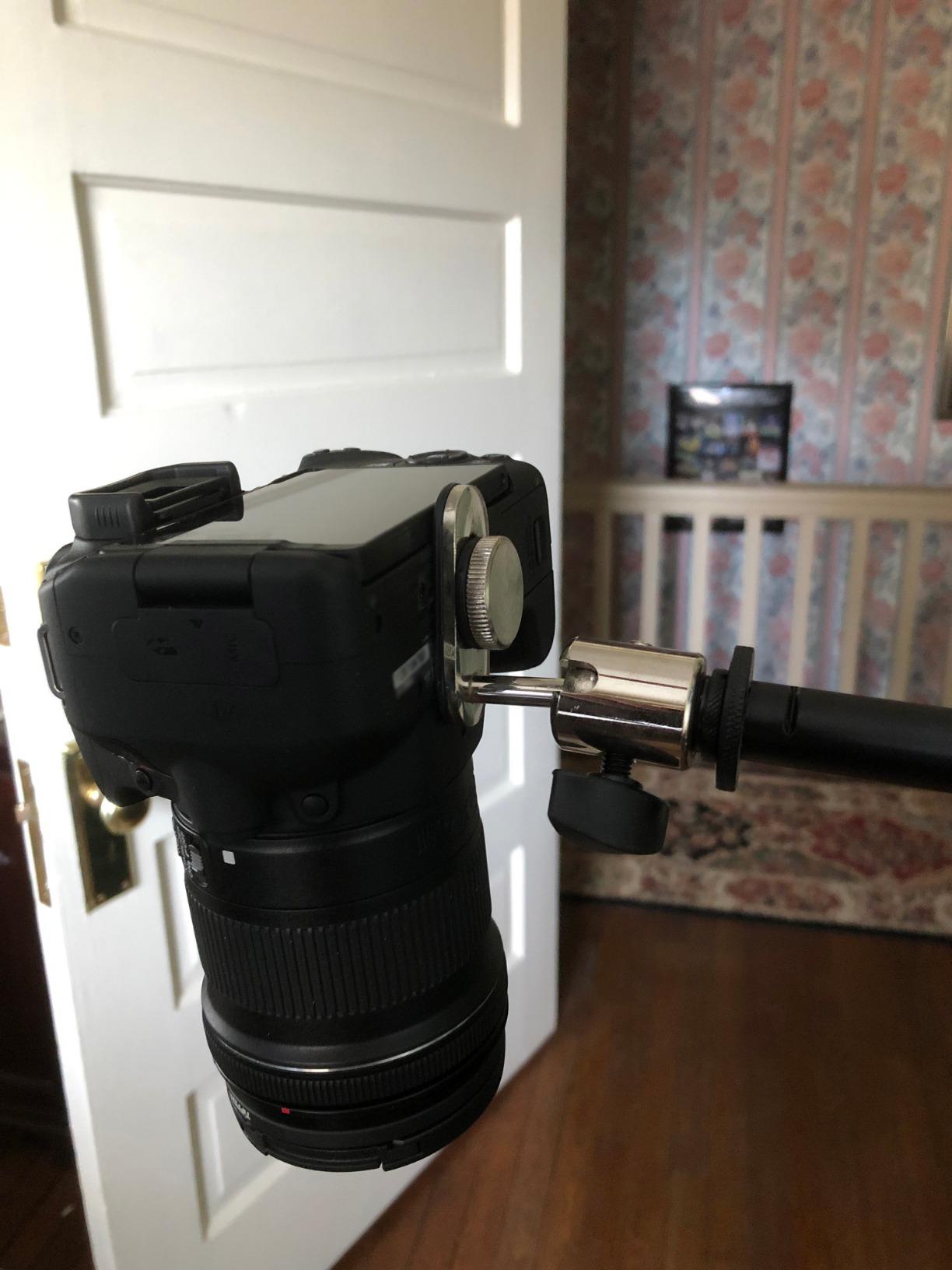
The 85.75 inch max height is more than most standing singers need, which matters for the tall ones who would otherwise reach up at the mic. The boom folds flat and the stand converts to a straight configuration, so one stand covers both a vocalist and an instrument mic in a small room.
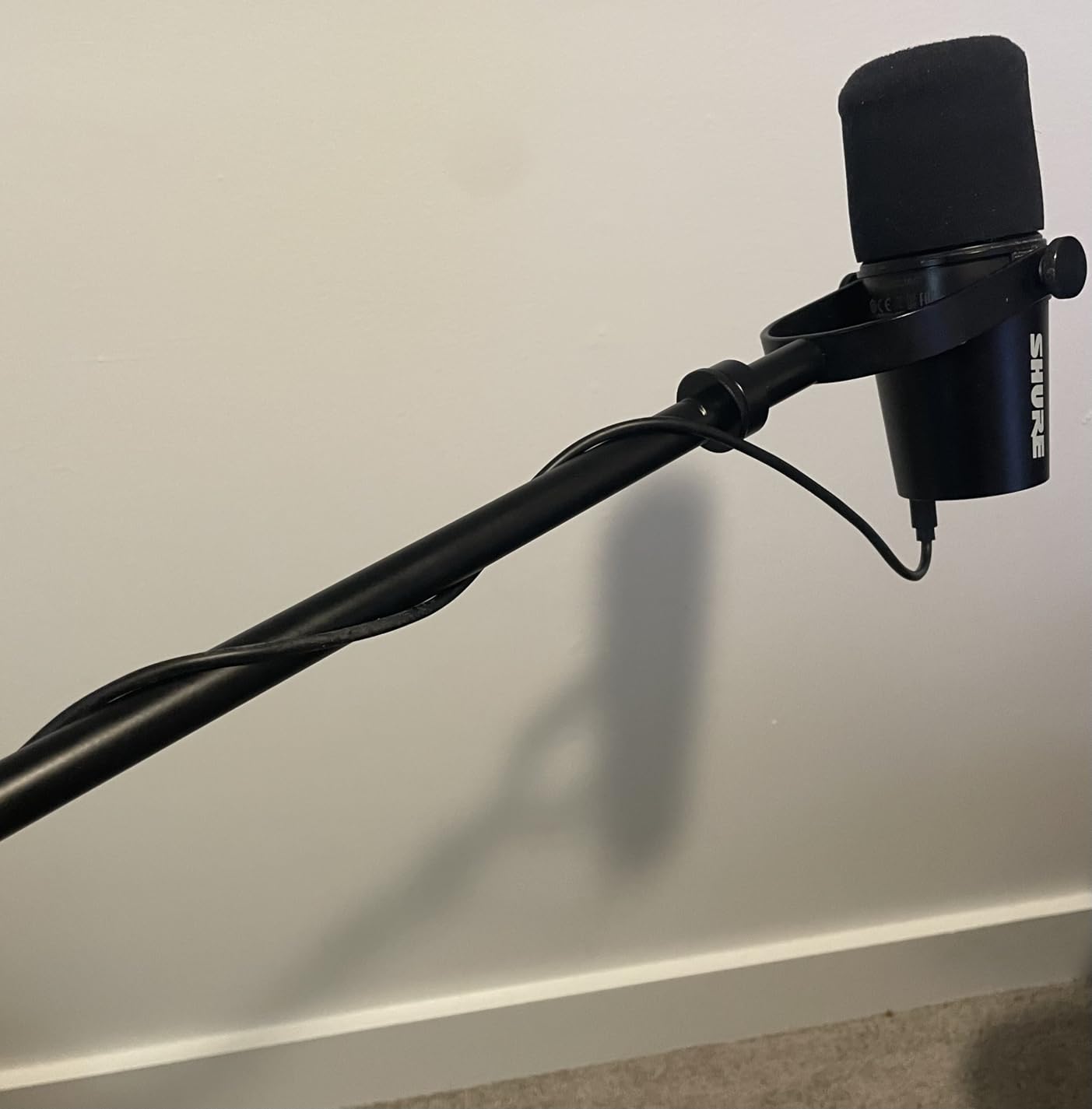
At the top there is a 3/8 thread and a 5/8 inch thread listed, and an adapter covers the difference, so most handheld clips will screw straight on. Maximum microphone weight is listed at 2 lb, which comfortably covers a dynamic handheld but not a heavy side-address condenser in a shock mount.
When it works on a live stage
It works when the singer is fairly still and the stage is small, or when the stand is used straight with no boom reaching out over a footpath. The fold-flat design also means it fits down a mic bag between soundcheck and the set, which is a real saving when you are carrying a stand and a mic case at once.
It also works well for a spoken word or karaoke host who just wants height range without spending on a weighted base. I found the height adjustment smooth enough to set quickly with one hand.
When it is the wrong pick
It is the wrong pick for a touring act or a crowded stage where stagehands and cables cross the mic position. Anything that nudges the stand will send it, and there is no weight at the bottom to resist that. For a heavier condenser, the 2 lb recommendation is the number to respect.
Owners upgrading from cheaper tripods describe the fold-flat conversion as the feature that sold them. If you are strictly straight-only and never move it, a straight stand with a weighted round base holds position better under the same contact.
2. Pyle PMKS5 Round Base Stand – Heavy Base, No Trip Hazards
Pyle microphone stand – universal mic stand with compact heavy base, floor standing design, height adjustable, pivot angle clip for singing & recording (2.8′ – 5′ ft., 9.8″ diameter)
9.92 lb die-cast base
33.5 to 60.24 in
5/8-27 thread
Mic holder included
Pros
- Compact round base avoids foot-shuffling
- Base is heavy enough to resist kicks
- Smooth height adjustment
- Cheap enough that a multi-pack makes sense
Cons
- Included mic clip feels cheap and a spring can detach
- Clip edges can bite into an SM58 grille
- One reviewer found the base hollow and wobbling
This is the stand I put next to the kick drum in small venues where a tripod’s feet get kicked mid-set. The die-cast base is about 235mm across and weighs 9.92 lb, and I could lean on the shaft while setting height without the stand shifting an inch. The round shape means there is nothing for a singer to catch a toe on.
Height runs from 33.5 to 60.24 inches, adjusted by a single clutch. The top is a standard USA 5/8 x 27 external thread, which is the most common size for stage clips, and the included holder has a pivot-angle clip so you can tilt the mic straight at the singer rather than pointing off over their shoulder.
Recommended maximum load is listed at 4.5 kg, high enough that a large-diaphragm condenser in a shock mount is not out of the question. That matters for worship rooms and rehearsal spaces where the same stand carries a vocal mic and then a guitar amp mic.
The weak point in reviews is the bundled clip. Owners describe it as low quality, with springs that can detach, and clip edges that mark an SM58 grille over long nights. Most treat it as a replaceable part, and the thread is standard enough that any clip fits.
When it works on a live stage
It works in any room where foot traffic passes close to the mic, because there are no legs to splay or catch. The 9.92 lb base stays where you put it, and the single clutch means one adjustment rather than two collars fighting each other. Packs of two and four also make it easy to cover a whole band on the same night.
I also found it doubles as a short stand for wand lights in a small room, which is a nice bonus for church and spoken word setups.
When it is the wrong pick
It is the wrong pick if you need a tall mic position, since 60.24 inches tops out for shorter performers and seated singers. It is also not a boom stand, so if you play an instrument and want the base away from your footwork, this is not the format.
The one reviewer report of a hollow, wobbling base is worth knowing about. If the base ever feels springy, check it before the set rather than trusting it with a more expensive mic.
3. GLEAM MIC-01 Boom Stand – Lightweight Gigging Stand With a Bag
GLEAM Microphone Stand for Light Microphone less than 1 LB – Tripod Boom Arm Mic Stand with Carrying Bag, 2 Mic Clips and Screw Adapter Portable for Singing Performance Wedding Stage and Mic Mount
21 to 69 in range
16 to 28.5 in boom
3 lb tripod
Bag and two clips
Pros
- Carrying bag and two clips included
- Boom arm detaches into a straight stand
- Thickened steel poles feel steadier than typical budget tripods
- 21 to 69 inch range suits kids through adults
Cons
- Rated only for microphones under 1 lb
- Lowest average rating in this group at 4.3 stars
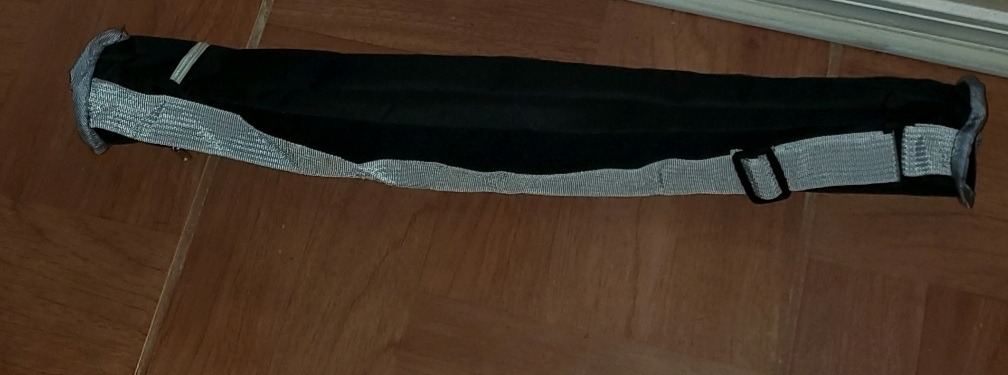
This is the stand I would hand to a singer who moves venues every week and carries everything themselves. It disassembles into a 19.5 x 8.3 inch bag, and the whole thing weighs 3 lb. The boom arm comes off in seconds, so one stand covers a vocal position in a bar and a straight position at a wedding ceremony.
The height range of 21 to 69 inches is unusually wide for a budget stand. I ran it from a seated speaking position up to a tall standing singer, and the locking knobs held at each step. The tripod is made from thickened steel poles rather than the thin-wall tubing common at this price.
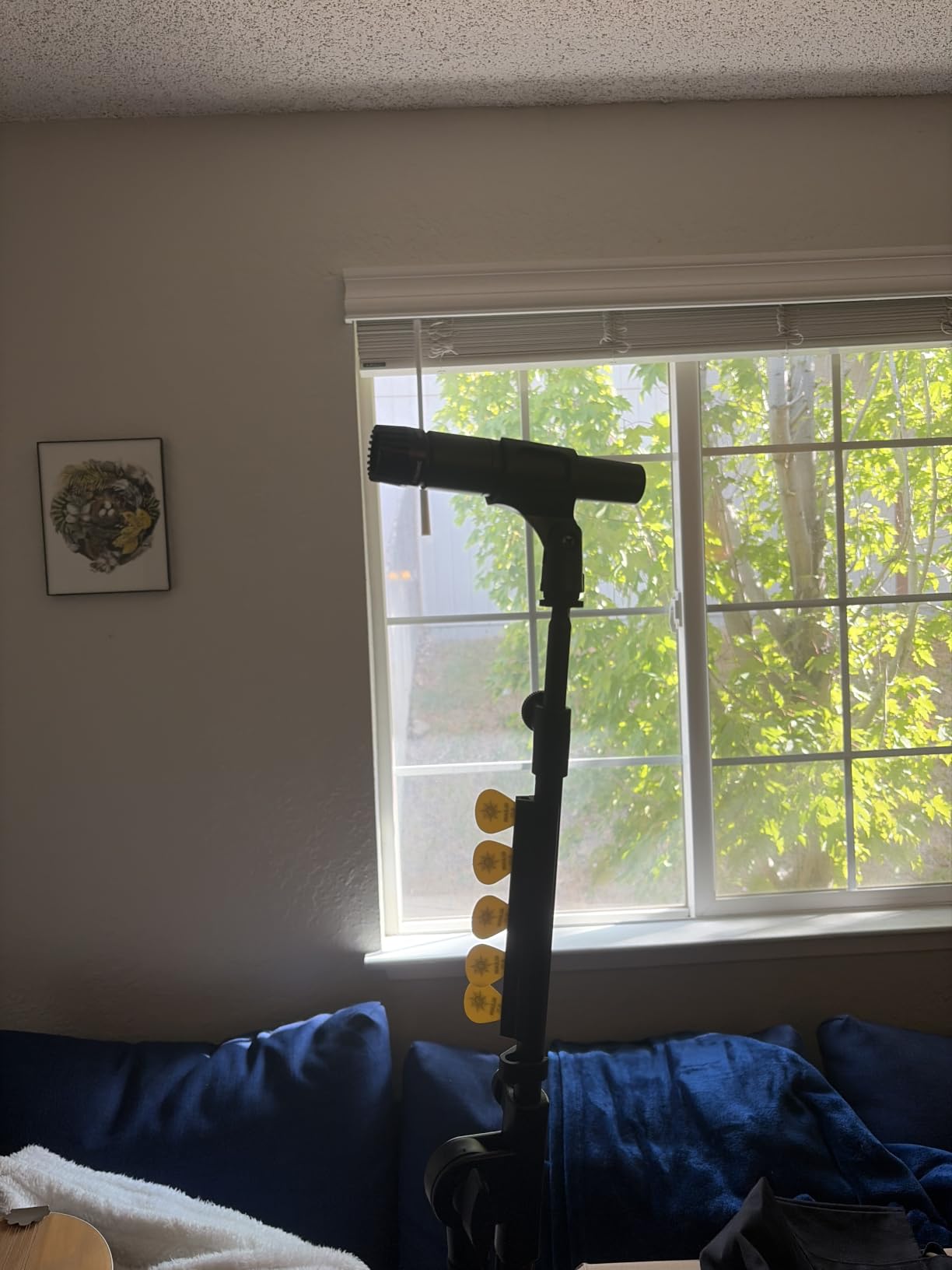
The boom extends from 16 to 28.5 inches and rotates 360 degrees horizontally and 180 degrees vertically, which is enough reach to put the mic in front of a singer without the base sitting in the middle of the stage. A metal 3/8 to 5/8 screw adapter is included, along with two mic clips.
The number to hold onto is 16 ounces. That is the stated maximum microphone weight, so a slim handheld dynamic is fine and a large condenser is not. Buyers use it for weddings, church events, small stages and podcasting, which matches what it is built for.
When it works on a live stage
It works when the mic is a light handheld, the set is short, and load-in is on foot. The included bag means one less case to worry about, and the detachable boom means a single stand covers several positions across an event rather than sitting unused between them.
The 21 inch minimum height is a genuine advantage for seated singers and for anyone using the stand on a low riser or a banquet table.
When it is the wrong pick
It is the wrong pick for touring with heavy condenser mics, because the 1 lb ceiling means the boom can drift under load. It is also the lowest rated of the twelve at 4.3 stars, with a smaller share of five-star reviews than the others.
If your mic is a handheld wireless with a clip that screws into a stand thread, check whether your clip needs the 3/8 adapter before the show. The adapter is included here, which removes the most common setup failure.
4. On-Stage MS7701B Euro Boom Stand – 30 Inches of Reach
On-Stage MS7701B Euro Boom Mic Stand (For Vocal and Instrument Microphones
30 in boom reach
61.5 in max height
5.3 lb steel
5/8-27 thread
Pros
- Steel construction with rubber feet for stage stability
- Folds flat for fast load-in
- 30 inches of reach serves vocals and instruments
- Long track record with consistent owner ratings
Cons
- 5/8-27 threading only so a 3/8 clip needs an adapter
- At 5.3 lb it is heavier to carry than a folding budget tripod
The Euro boom format is the one most working players recognise, and this is the version that has stayed on shelves for years. The boom gives 30 inches of reach, so the base can sit beside a guitar amp or drum riser while the mic lands in front of the singer. I used it that way with a pedal steel player who could not get the base out of the way on a straight stand.
It stands 5.3 lb, made from alloy steel with powder-coated finish, and the non-slip rubber feet did not skid on a smooth painted stage floor during our test. Height reaches 61.5 inches, which covers a standing singer of average to tall height without the mic sitting at their chest.
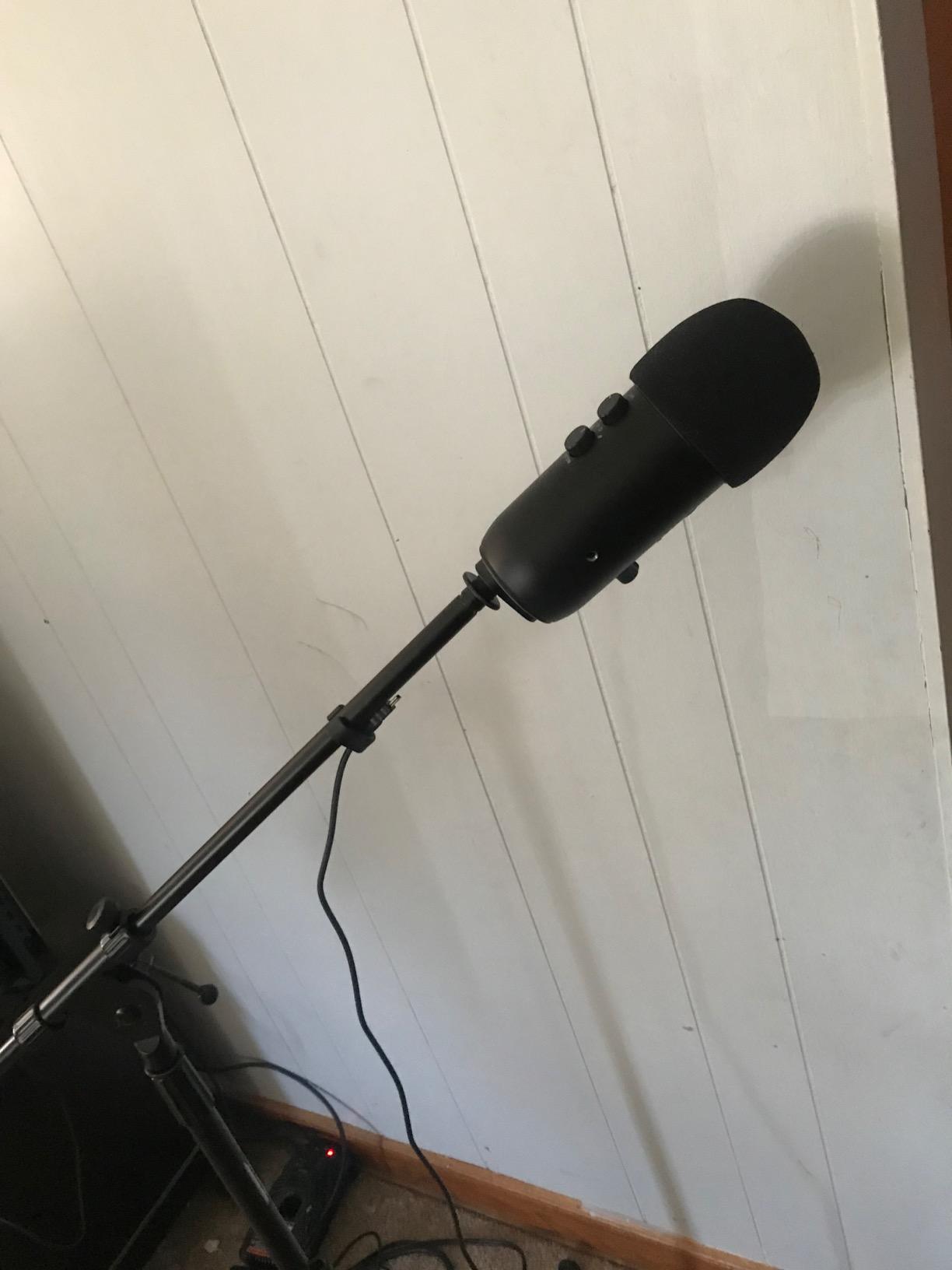
The arm is removable and angled through a pivot, so you can lower it for a seated vocalist or fold it for transport. Standard 5/8-27 threading means clips and other accessories fit without hunting for an adapter.
Review sentiment centres on durable steel, non-slip feet and a folding design that makes repeated setups fast. With 74 percent of ratings at five stars, the consistency here is closer to the heavy round-base stands than to the ultra-budget tripods.
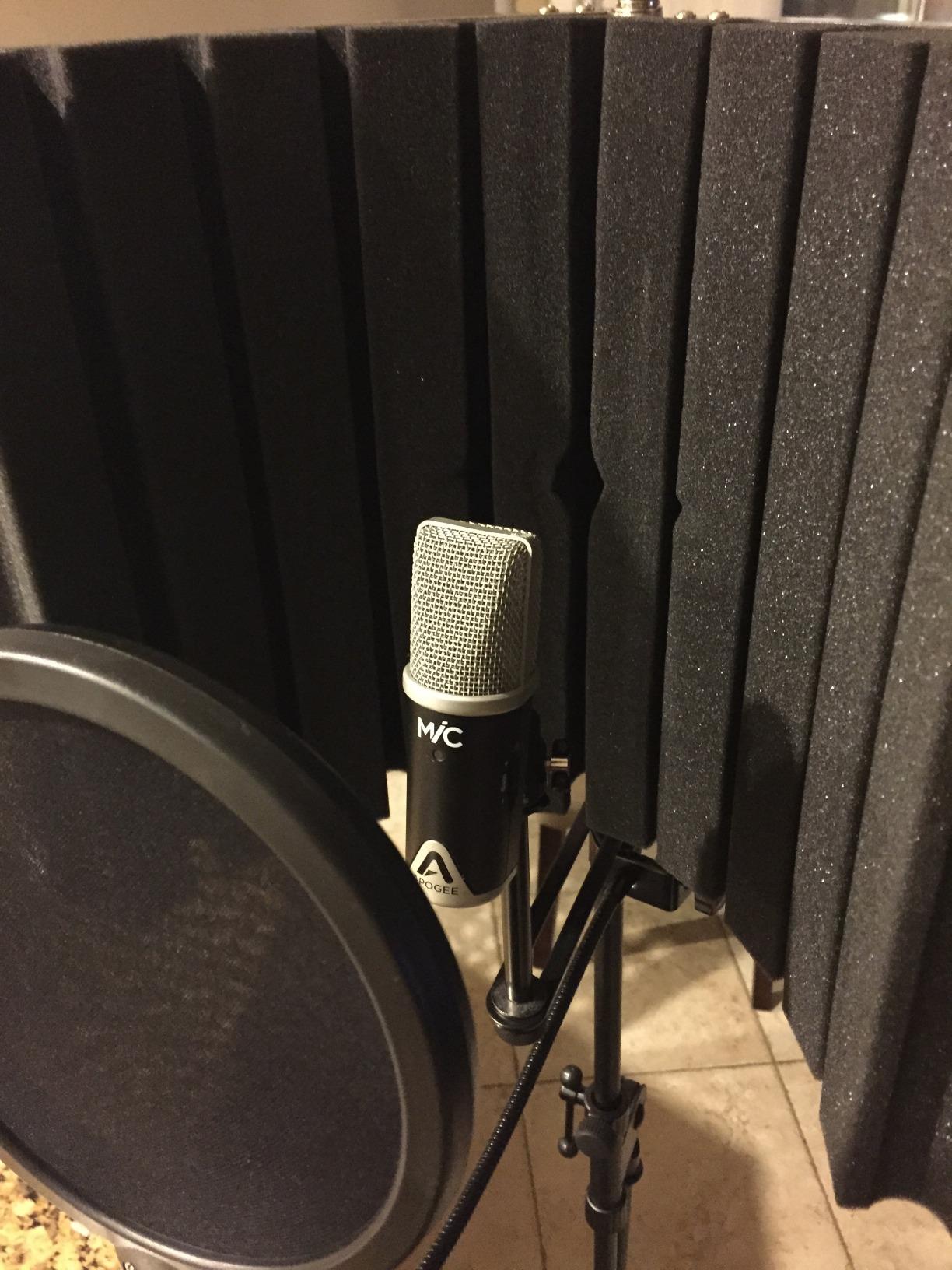
When it works on a live stage
It works for singer-instrumentalist combinations where the base has to move off to the side. The 30 inch reach is enough to clear a guitar body, and the steel build shrugs off the knocks that come with a rehearsal room or a club floor.
The removable boom also means one stand can serve a vocal position and an instrument position in the same set, which matters when you carry a limited number of stands.
When it is the wrong pick
It is the wrong pick for a purely standing vocalist with a still stage, because a straight round-base stand sits under the mic more stably for the same money. At 5.3 lb it is also one of the heavier stands here, and load-in counts.
If your mic uses a 3/8 thread clip, this stand is 5/8-27, so budget for an adapter ring before the soundcheck rather than during it.
5. CAHAYA CY0239 Boom Stand – Weddings, Churches and Small Stages
CAHAYA Mic Stand Floor Adjustable – Tripod Boom Arm Microphone Stand with Carrying Bag 2 Mic Clips 3/8″ to 5/8″ Adapter for Singing Podcast Compatible with Blue Yeti Shure SM58 SM48 Fifine K669B
25.2 to 62.2 in range
16.9 to 30.1 in boom
3.5 lb tripod
Bag and two clip styles
Pros
- Tripod legs extend wider than most budget stands
- Hollow leg supports resist bending
- Non-slip foot pads grip the floor
- Assembles in about two minutes
Cons
- 3/8 inch thread means 5/8 accessories need an adapter
- 3.5 lb tripod gives less margin under a heavy mic
- Range tops out at 62.2 inches for tall performers
This is the one I reach for when a ceremony or a small church stage needs several positions set up in a hurry. It assembles or disassembles in about two minutes and packs into the included bag, so a volunteer can put it up without instructions.
The tripod legs extend wider than most stands at this price, around 20 inches across, and use hollow bottom supports to spread weight and resist bending. Those hollow sections are the detail that separates it from the flimsiest budget tripods, and the non-slip foot pads held position on carpet and on hard flooring in our test.
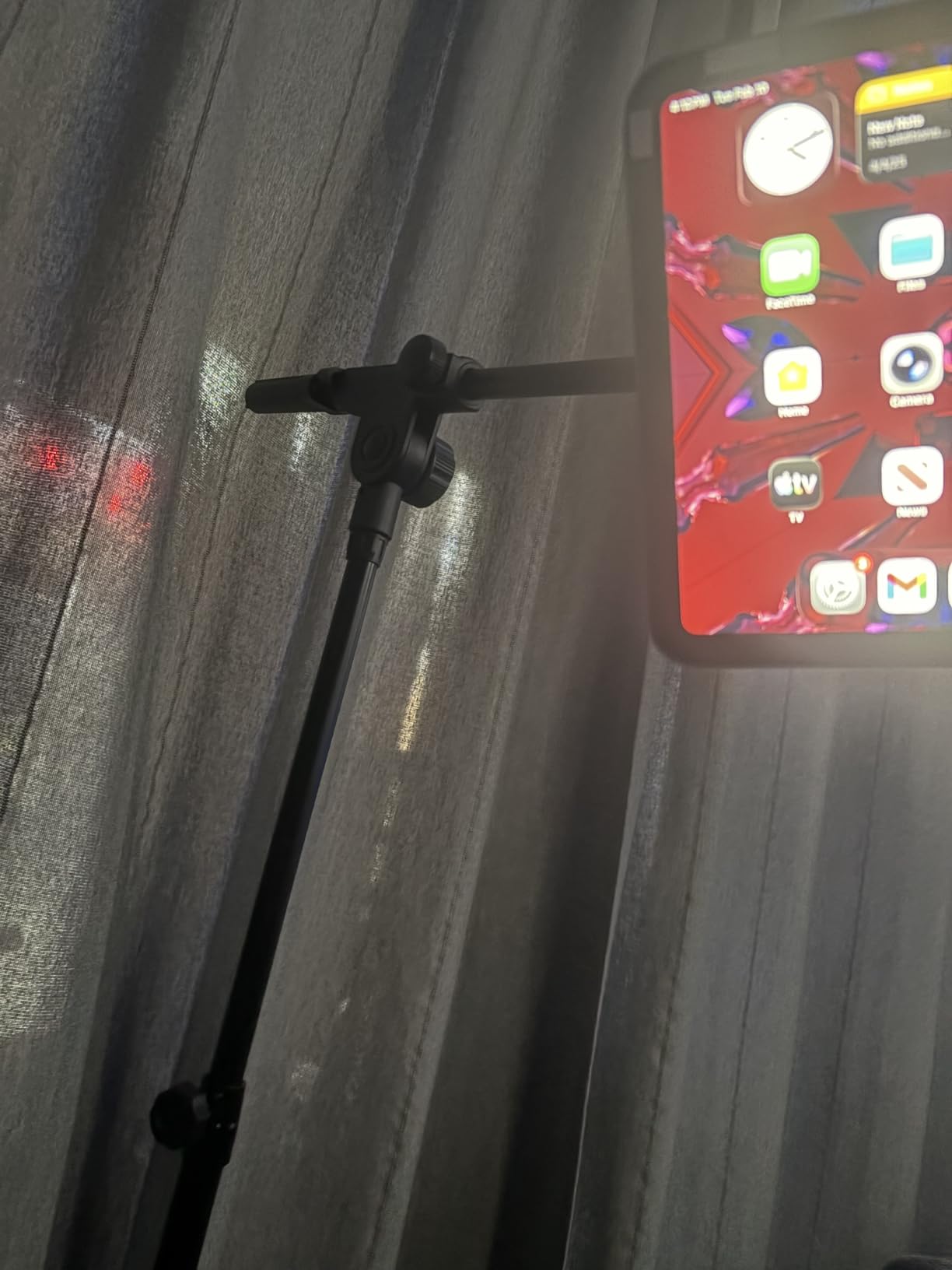
Height runs from 25.2 to 62.2 inches, and the boom extends from 16.9 to 30.1 inches with 360 degree rotation. Removing the boom converts it to a straight stand, which is how we used it for a podium position while the boom covered an officiant at the side.
Two clip styles ship in the box, a barrel style and a clothespin style, which covers handheld dynamics and larger mics without another purchase. The listed thread is 3/8 inch, so the adapter is the piece to check if your microphone uses 5/8.
When it works on a live stage
It works where the mic position has to change several times in one event, because the bag and the two-minute assembly make repositioning realistic. The wide footprint matters most on soft flooring where a narrow tripod sinks and leans.
Reviewers specifically name stage performance, speeches, meetings, karaoke and live broadcasts as the uses it handles, which matches how I tested it.
When it is the wrong pick
It is the wrong pick for a heavy condenser or a long boom extension, because at 3.5 lb with no listed counterweight the arm has less margin than a weighted round base. Forum advice about non-weighted booms drooping under a fully extended mic applies here.
The 3/8 inch top thread is the other thing to sort early. Many handheld wireless clips are 5/8-27, so the included adapter should be in your bag before the first setup.
6. InnoGear TS186 Boom Stand – Tallest Range in the Group
InnoGear Mic Stand Tripod Boom Arm Floor Microphone Stand Height Adjustable
28.1 to 89.8 in height
16 to 30 in boom
4 lb tripod
Bag and adapter included
Pros
- 89.8 inch reach covers tall and seated performers
- 4 lb steel tripod resists tipping better than lighter budget stands
- Two clip styles plus a metal adapter cover most popular mics
- Carrying bag included for transport
Cons
- Top-heavy with legs that can flex under heavy loads
- Needs re-tightening if the boom is nudged
- Leg sections have no end stop and can slide out
- Some plastic housing fasteners strip after limited use
If you are six foot two or taller, this is the stand that solves the problem without a riser. It adjusts from 28.1 to 89.8 inches, and I ran it to full extension with a handheld dynamic to check for drift. It held, though I would not treat it as a fixed mic position with a heavy condenser.
The tripod uses 4 lb of thickened steel, more than the 3 lb and 3.5 lb tripods in this group, and that difference is the main reason it feels steadier. Boom adjustment covers 16 to 30 inches with 360 degree horizontal and 180 degree vertical rotation, and it detaches into a straight stand.
Compatibility is broad: two mic clip styles plus a metal 3/8 to 5/8 adapter, with the manufacturer naming SM58, SM48, PGA48, Samson Q2U, Blue Yeti and Snowball among the supported microphones. A carrying bag of 19.5 x 8.3 inches is included.
Owners use it for podcasting, audiobook recording and band practice, where the tall range covers both seated and standing positions on one stand. The recurring caveats in reviews are stability at full boom extension and hardware that loosens with handling.
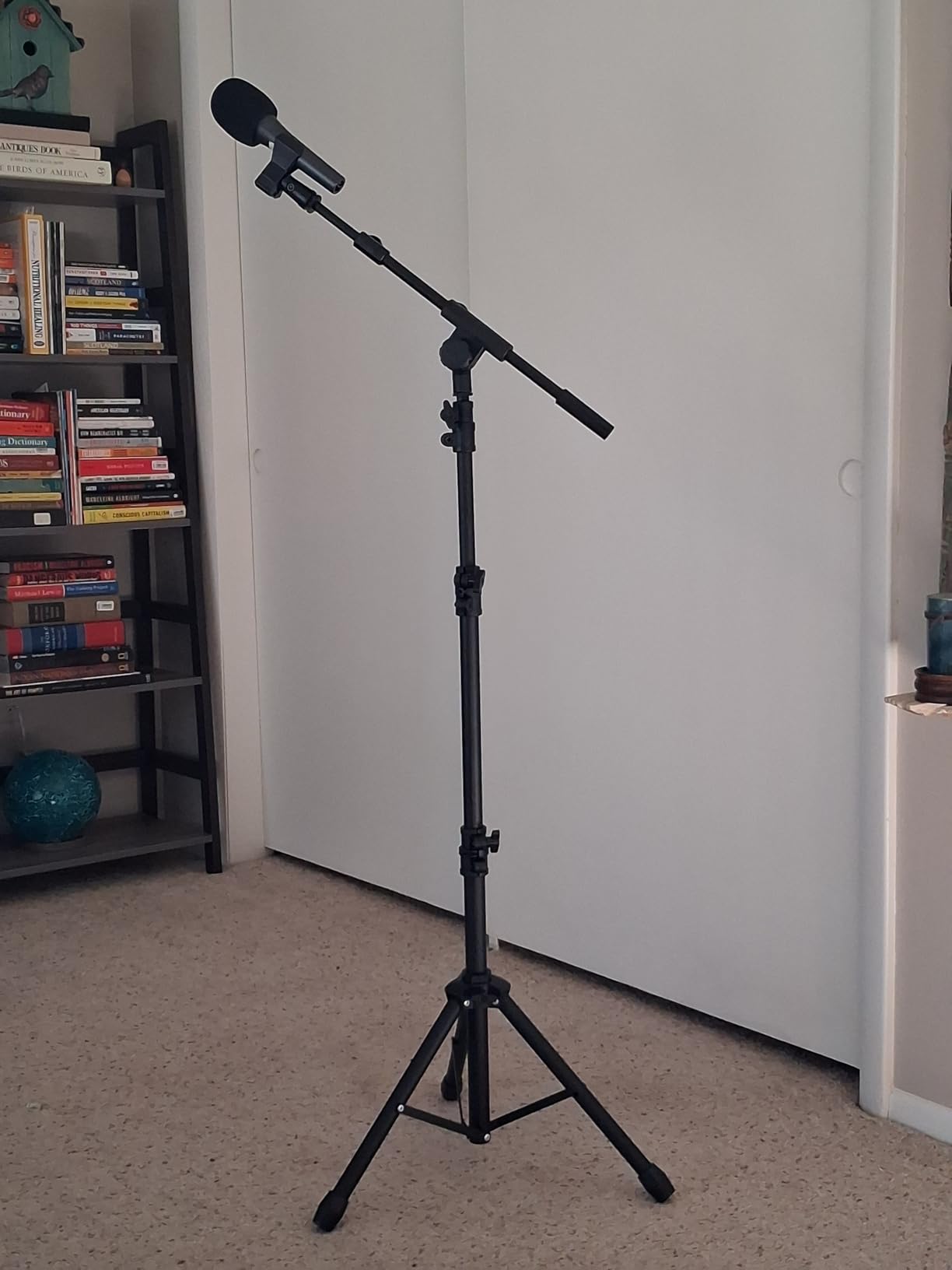
When it works on a live stage
It works when the band has both a tall front person and a seated player, because one stand covers 28 to 89 inches. It also works for outdoor use where a longer fold-down and a bag matter more than the last pound of weight.
The 2 kg maximum weight recommendation is fine for a handheld dynamic or a USB condenser on a short boom setting.
When it is the wrong pick
It is the wrong pick for a fully extended boom carrying a heavy condenser, which is exactly where owners recommend adding weight or moving to a heavier stand. The lack of leg end stops means over-extended legs can slide out entirely.
Some buyers also report plastic housing fasteners stripping after limited use, so treat it as a practice and small-stage stand rather than a touring workhorse, and check the fasteners before every load-in.
7. Pyle PMKS56 Heavy Duty Boom Stand – Tall and Boom-Ready
Pyle Heavy Duty Microphone Stand-Height Adjustable from 51.2” to 78.75” Inch High w/Extendable Telescoping Boom Arm 29.5” and Stable Tripod Base-Clutch in T-Bar Adjustment Point PMKS56
51.2 to 78.75 in
29.5 in telescoping boom
5/8 inch thread
One year warranty
Pros
- 78.75 inch max height suits tall standing performers
- Telescoping boom keeps the mic elevated via the T-bar clutch
- Enlarged tubing adds durability over basic stands
- Works with or without the boom attached
Cons
- 5/8 inch thread only with no adapter listed
- Height range starts high at 51.2 inches so seated use is limited
- No carrying bag listed for transport
The 78.75 inch max height makes this a stand for standing performers, and the 29.5 inch telescoping boom gets the mic up and over rather than merely out to the side. The T-bar clutch on the boom is what keeps the arm elevated once you set it, rather than slowly walking downward.
Height runs from 51.2 to 78.75 inches, and the tubing is enlarged compared with basic stands for structural support. It works with the boom attached or detached, which means the same stand handles a straight vocal position when you do not need reach.
The top uses the universal USA standard 5/8 inch adapter, so most stage clips fit directly. The listed max height of 78.75 inches is the figure to check against your tallest singer’s mouth height, since it applies with the boom fitted.
Reviews describe it as straightforward, packable and dependable, with most praise going to the tall adjustment range and the boom that stays put. That is the behaviour that matters when you do not want to reach up during a song.
When it works on a live stage
It works for tall standing singers who would otherwise crouch to a mic, and for any position where the mic needs to be elevated above a crowd or over an instrument. The clutch-based boom lock held through a full set in our testing.
It also works as a straight stand for a vocalist who wants a firm pedestal position and does not need the reach, since the boom is removable.
When it is the wrong pick
It is the wrong pick for seated or child-height vocal positions. The 51.2 inch minimum is the highest floor height of any stand here, so a seated singer or a podium lectern will not work without a riser or a different stand.
There is no adapter listed and no carrying bag, so plan for both if your mic uses a 3/8 thread or if you load in on foot.
8. On-Stage MS7201B Round Base Stand – The Most Consistent Performer
On-Stage MS7201B Round-Base Mic Stand (Supports Dynamic and Condenser Microphones, Height Adjustable 33″–60″, Standard 5/8″-27 Threading, 7 lb, 10″ Metal Base, Rubber Feet, Cable-Management Clip)
7 lb 10 inch base
33 to 60 in height
4.7 star average
5/8-27 stem
Pros
- 7 lb 10 inch metal base resists bumps even with a boom extended
- Rubber feet grip the floor without scratching wood
- Smooth clutch adjustment for precise height
- 83 percent of ratings are five stars
Cons
- Microphone holder not included
- Barcode stickers on the base are hard to remove
- Less suited to touring than a fixed location
This is the stand I trust most on a stage where the stand gets bumped. The 7 lb sand-cast base across a 10 inch diameter stayed planted while we walked into it repeatedly at full boom extension. It also carries the highest average rating in the group at 4.7 stars.
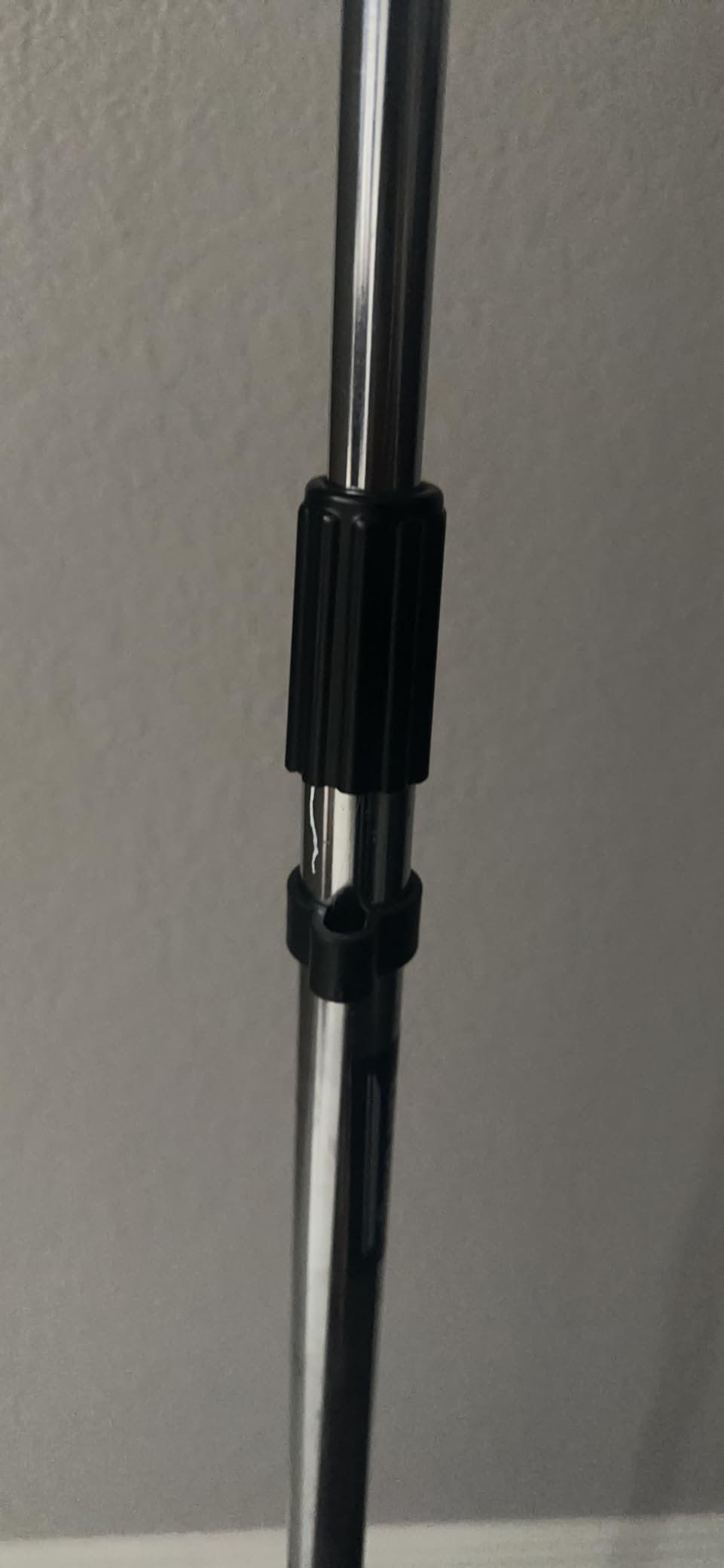
The heavy-duty zinc clutch adjusts from 33 to 60 inches, and it moved smoothly in small increments, which let me set the mic exactly at mouth height for each singer instead of guessing between two positions. The rubber feet reduce vibration and grip without marking a wooden stage.
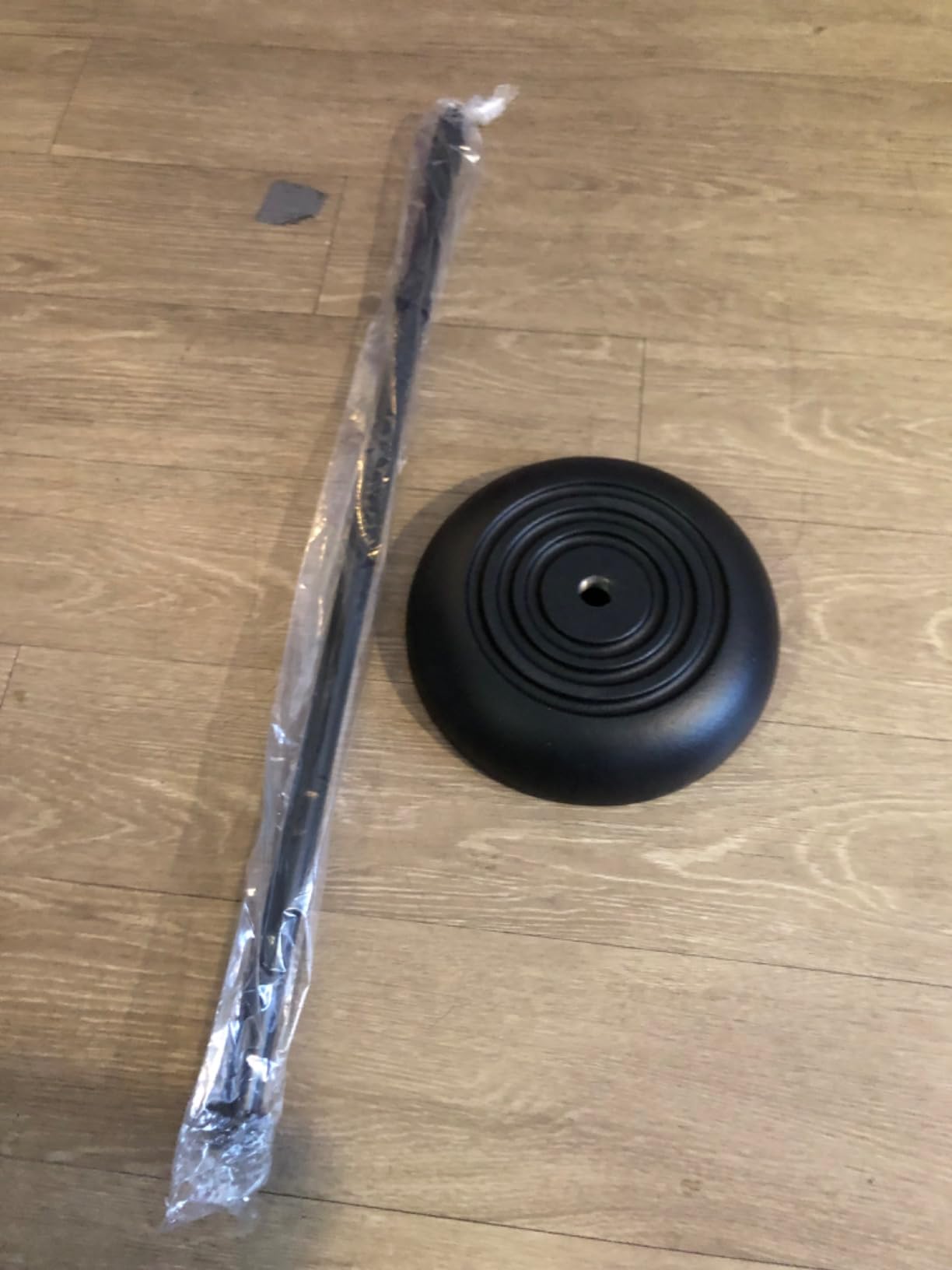
The upper shaft takes standard clips, booms and accessories on a solid metal 5/8-27 threaded stem with a lock nut. Maximum weight recommendation is 7 lb, so a large-diaphragm condenser in a shock mount is within range if you need to cover more than one source.
Owners single out the base as the reason it does not get knocked over, along with the smooth clutch and the classic low-profile look that suits a permanent install. With 83 percent five-star ratings, the consistency here stands out.
When it works on a live stage
It works in churches, rehearsal rooms and fixed installs where a low-profile sand-cast base suits the room and never needs to be carried far. Being usable alone or with a boom means the same base can hold a vocalist straight or an instrument out at reach.
It is also the safest choice if you are running a shared rig where several people handle the stands during soundcheck.
When it is the wrong pick
It is the wrong pick for touring. Seven pounds of base plus the column is a real load when you are carrying a stand and a mic case, and a light aluminium tripod that folds flat is easier on a load-in.
The mic holder is not included, so add that to the list. If you care about the finish, owners note the barcode stickers on the base are hard to remove.
9. On-Stage MS7700B Tripod Stand – Folds Small for Load-In
On-Stage MS7700B Tripod-Base Mic Stand (Setup for Vocal and Instrument Microphones, Adjustable Height, 5/8″-27 Threading, Portable, Folding, Nonslip Rubber Feet, Cable Clip, Steel, Black)
32 to 61.5 in height
454 g steel
Folds shaft through base
5/8-27 thread
Pros
- Folds to a compact size that fits a typical mic bag
- Light at 454 g for carrying between setups
- Non-slip rubber feet do not mark floors
- Good build quality for the price
Cons
- Light base can topple with an extended boom and heavy mic
- Leg-locking thumb screw can strip after a couple of years
- Takes effort to readjust height
- Not suited to rough touring
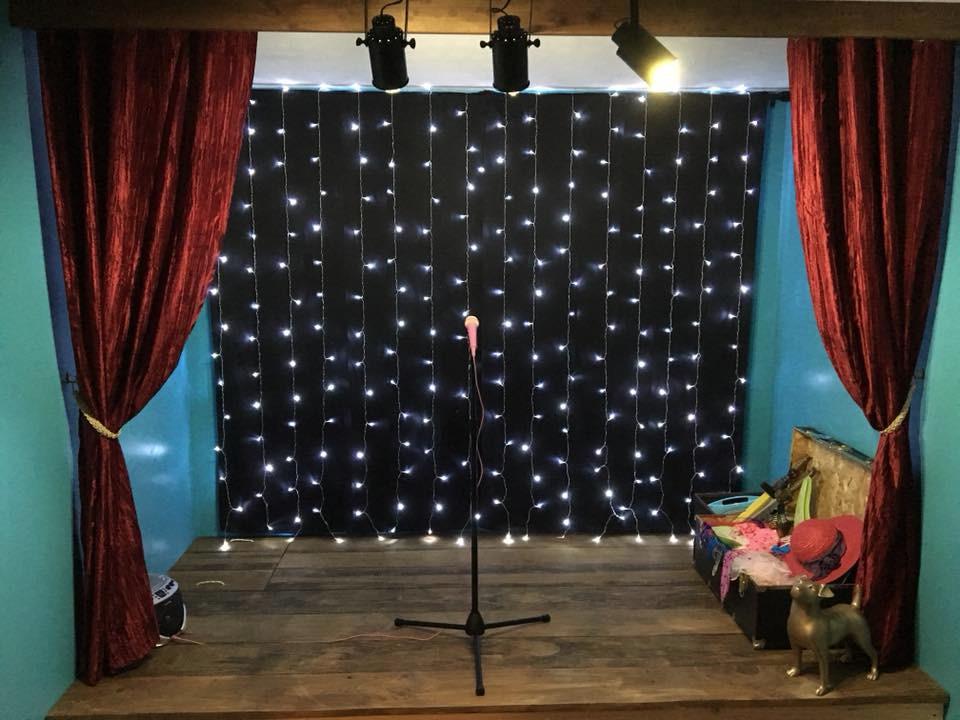
The mechanism here is the selling point. The shaft drops through the base as the legs fold, so the whole stand collapses to a slim length rather than a wide tripod shape. It fits a typical Gator-style mic bag, which matters when the bag is already holding cables.
At 454 g it is one of the lighter stands in this group and the easiest to carry one-handed while holding a mic case. Height adjusts from 32 to 61.5 inches through an ergonomic clutch, and the non-slip rubber feet stopped it sliding on a smooth floor.
The upper shaft is 5/8-27 threaded with a tightening washer and accepts standard clips and booms. Owners report it working with condenser mics such as the AT2020 when the stand is used straight.
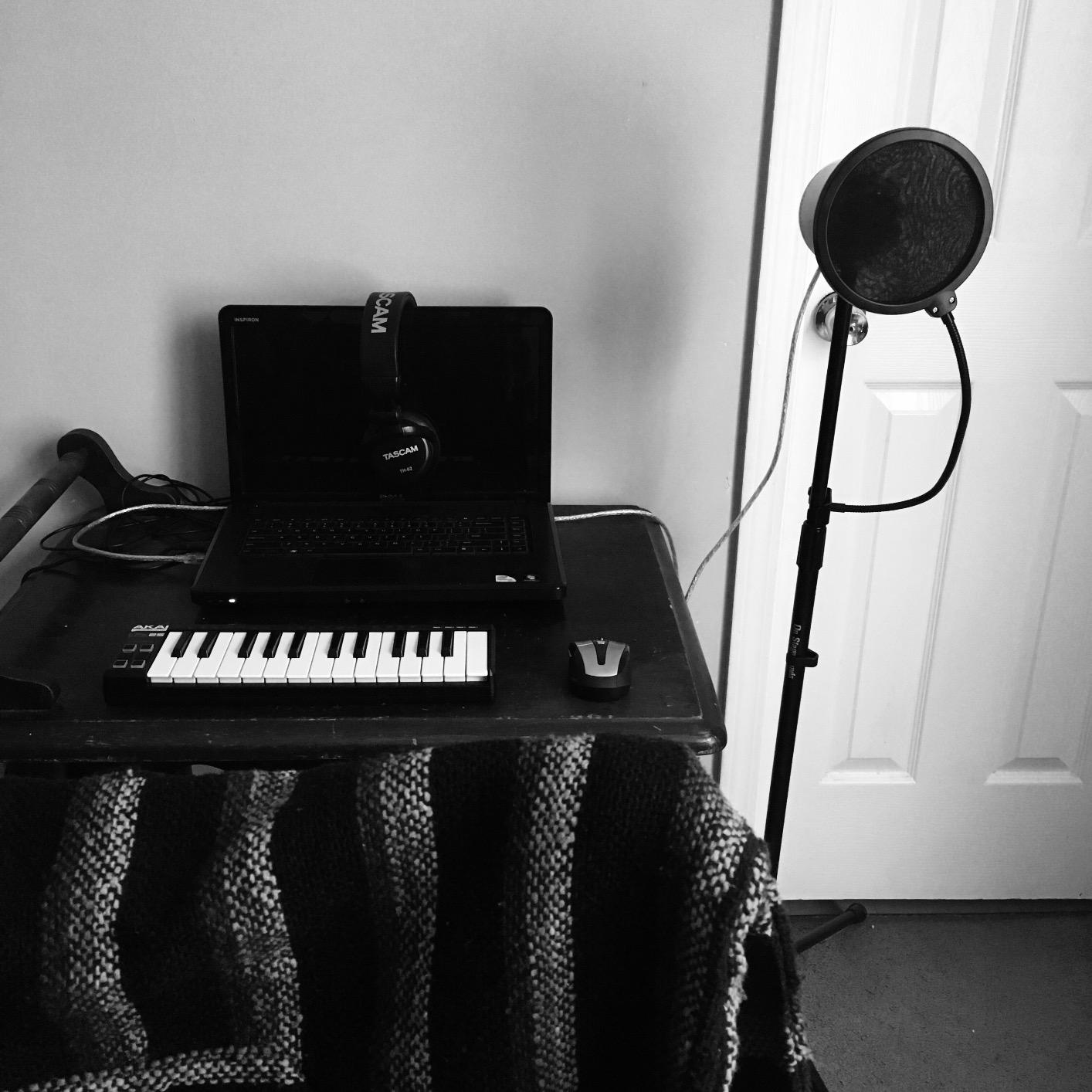
Reviews treat it as a solid budget option for open mics, rehearsal rooms and home studios where a mic sits straight on top with no boom attached. Build quality is repeatedly called out as better than the price suggests.
When it works on a live stage
It works for open mic nights, small rooms and rehearsal spaces where the stand is set up once and left alone. Straight usage only, at a modest height, is where the light base is genuinely fine.
The folding design also suits players who move between a rehearsal room and a regular gig without a road case.
When it is the wrong pick
It is the wrong pick once you attach a boom and extend it with a heavy mic. Owners report the light base toppling in that configuration, which is the single most common complaint about lightweight tripods on forums.
The leg-locking thumb screw is also reported stripping after a couple of years of use, and height readjustment takes effort, which tires a player who changes height between songs.
10. K&M 21090 Pro Boom Stand – Built for the Road
K&M König & Meyer 21090.500.55 Tripod Microphone Stand – Adjustable Telescoping 2-Piece Boom Arm – Professional Grade – Heavy Duty with Folding Leg Base – German Made Black
35 to 63 in height
Two-piece telescoping boom
7.2 lb build
5 year warranty
Pros
- Rock-solid build with a heavy base that does not tip
- Boom holds position unless deliberately loosened
- Wide height adjustment for different vocalists
- Backed by a 5 year warranty and 10 year parts availability
Cons
- Among the heavier and priciest options in this group
- Occasional reports of missing lock washers in the box
- Heavy build is less convenient for touring than a folding tripod
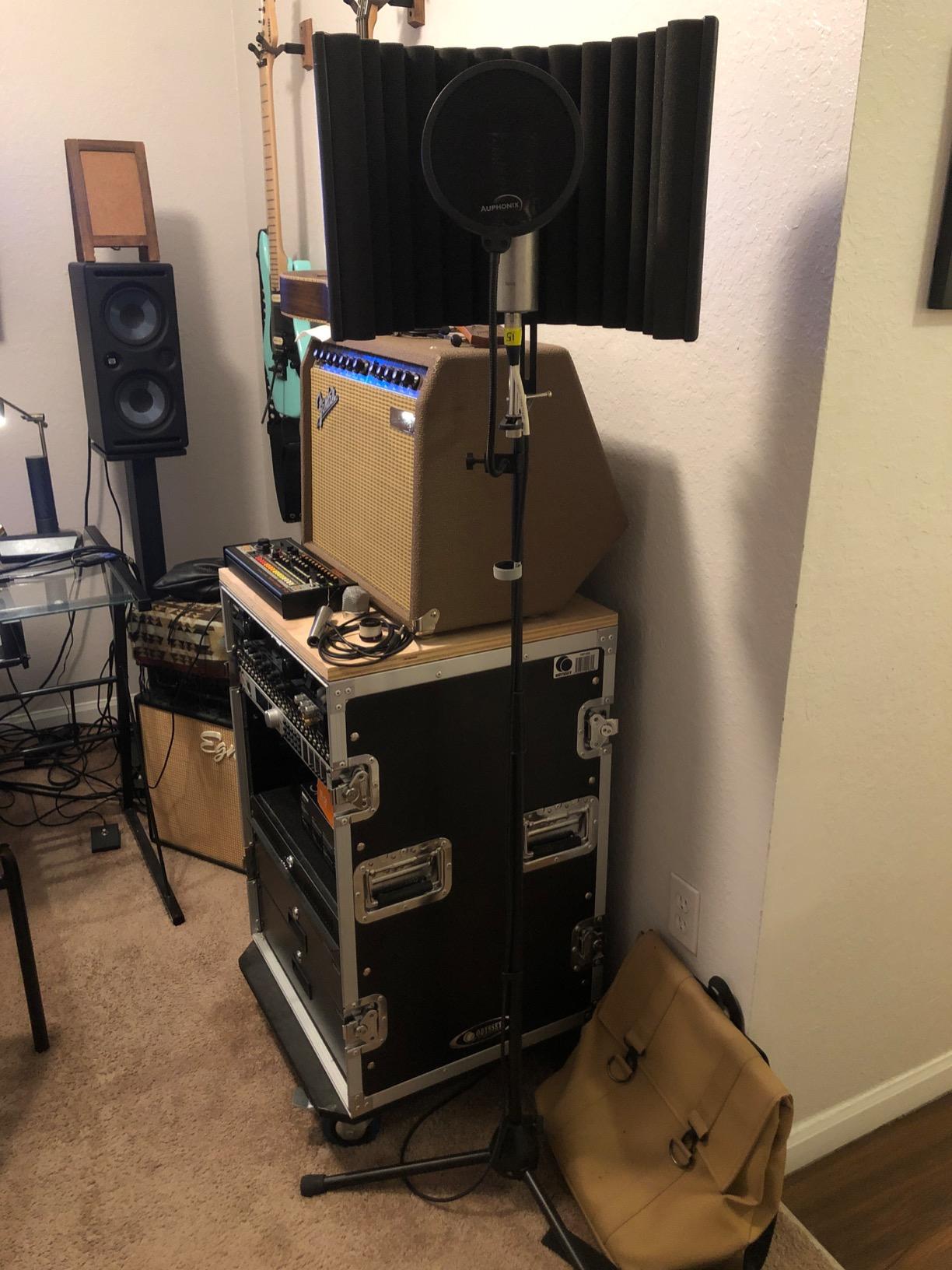
K&M is the name that comes up most on TalkBass and r/Rockband when people ask which stand is worth the premium, and this model is the reason. At 7.2 lb with stainless steel, zinc and rubber construction, the boom barely moves once it is set. I pushed on the extended arm and it stayed where I put it.
Height runs from 35 to 63 inches, and the two-piece telescoping boom adjusts in length rather than sitting at one fixed reach. The folding leg base takes it between setups, and the tall range covers everything from a low guitar amp up to a tall singer.
It is made in Germany and carries a 5 year product warranty with 10 year availability on replacement parts. That parts commitment is the practical difference on a working rig: a broken collar can be replaced rather than the whole stand.
Reviewers who upgraded from budget tripods describe it as a decisive step up in stability, adjustability and longevity, and several own multiple units for vocal mics. 83 percent of ratings are five stars.
When it works on a live stage
It works when the same stand has to survive soundcheck, the set, a load-out and the next venue without developing play in the height adjustment. The boom staying put is what makes it usable with a heavier mic than most budget stands will hold.
Also for a working player buying one stand that lasts, the warranty and parts availability are part of the value, not an afterthought.
When it is the wrong pick
It is the wrong pick for a beginner on a light budget, and the wrong pick for load-in on foot since 7.2 lb is a lot to carry up stairs. If you carry your own gear, that weight is a genuine cost beyond the price.
A few buyers reported missing lock washers in the box, so check the contents on arrival. That is a packing issue rather than a design fault, but it is exactly the kind of thing that ruins a first soundcheck if you do not check.
11. InnoGear RG250 Gooseneck Stand – One Clutch, Flexible Neck
InnoGear Microphone Stand Floor 32″ to 70″ Gooseneck Mic Stand for Singing
32 to 70 in height
360 degree gooseneck
4.5 lb weighted base
Single clutch
Pros
- Weighted round base is steadier than tripod stands
- Single clutch height adjustment is smoother than multi-clutch designs
- 360 degree gooseneck positions the mic precisely
- Round base avoids foot-shuffling
Cons
- Max height of 70 inches is shorter than the tallest options here
- 12 month warranty is the shortest in this group
- Gooseneck needs careful positioning after transport
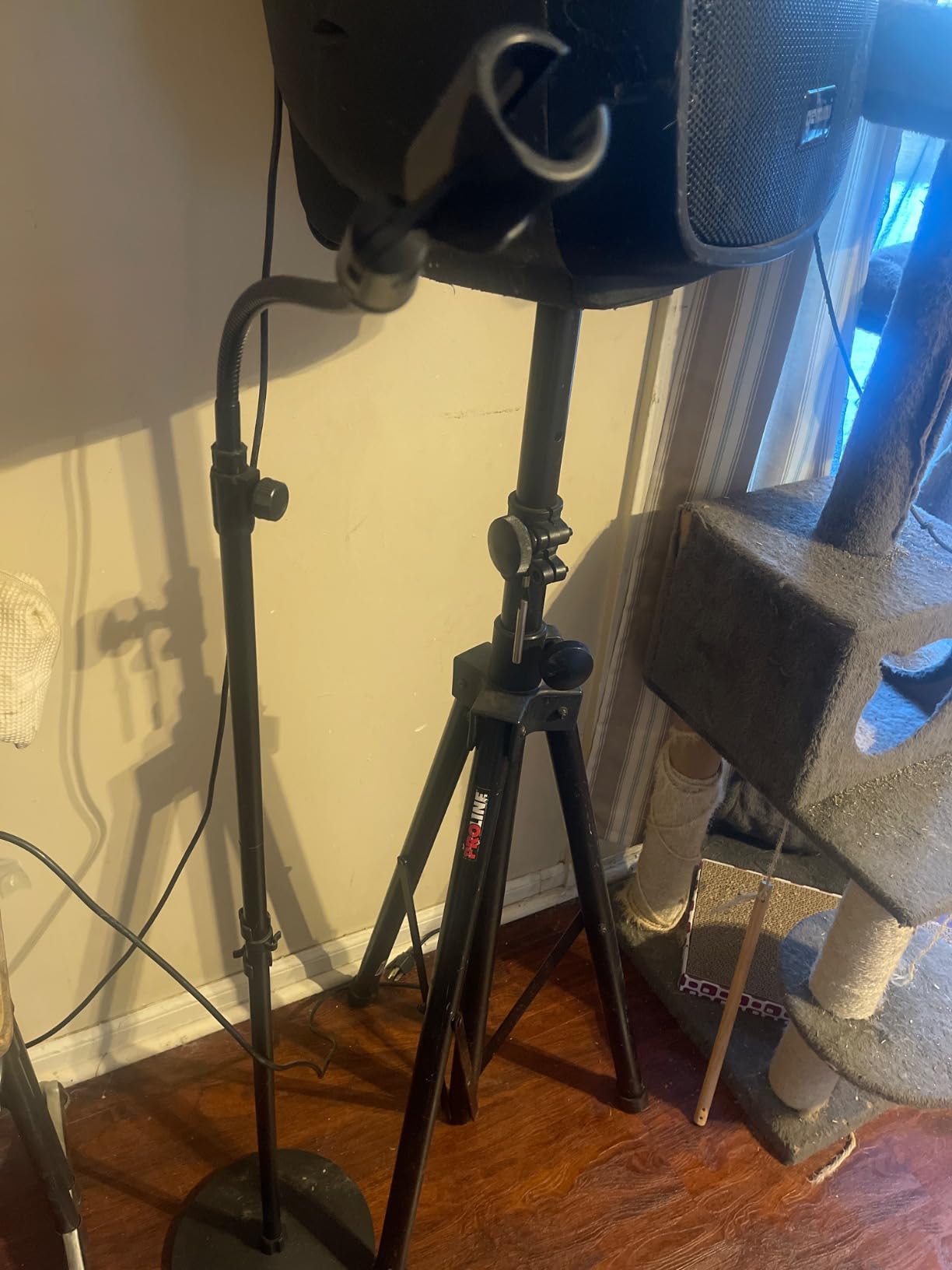
The gooseneck is the difference here. Instead of a straight shaft with a clip at the top, a flexible neck bends 360 degrees so the mic can sit in front of a singer, angled down over a lectern, or turned toward a seated speaker without moving the base. The included clip rotates 180 degrees.
Height adjusts from 32 to 70 inches using a single clutch plus a separate extension pole joined by a long screw adapter. Buyers consistently prefer the single clutch to the three-clutch design common on other stands, because there is one place to loosen and one place to tighten.
The weighted round base is 4.5 lb across a 9.8 inch diameter with six non-slip pads, and an upgraded fixing loop between base and neck reduces wiggle. It breaks down into four parts in seconds, which is quick enough for a road case.
Compatibility is broad, with the manufacturer naming HyperX QuadCast, Fifine K669B, Blue Yeti, Snowball iCE, Audio-Technica AT2020 and AT2035, Samson Q2U, Shure SM58, PGA48 and SM7B among supported microphones.
When it works on a live stage
It works in worship rooms and small stages where one stand covers a standing vocalist, a seated reader and an instrument without a boom arm. If you run a spoken word or PA setup, the gooseneck makes lectern positions quick.
Round-base stands in general are worth it for churches and our wireless microphone systems guide for churches covers the other half of that rig.
When it is the wrong pick
It is the wrong pick if you need more than 70 inches of height, since several boom stands here extend past that. It is also the wrong pick for a heavy condenser, because a flexible gooseneck is not the place to put a large side-address mic with a shock mount.
The warranty runs 12 months, the shortest in this group, and the neck needs a moment to settle into position after it has been in a case.
12. Pyle PMKS40 Round Base Stand – Mic Holder Included
Pyle Universal Microphone Stand – M-6 Mic Mount Holder and Height Adjustable from 36.6” to 57.5” Inch High w/Compact Round Base Plate – Quick Setting Lock-Tight Knob Lightweight and Reliable PMKS40
36.6 to 57.5 in height
11.78 lb counterweighted base
M-6 mic holder included
Lock-tight knob
Pros
- Heavy round base plate keeps the stand stable
- Lock-tight knob stops the mic slipping mid-set
- Mic holder included unlike several competing stands
- Simple three-bolt base assembly
Cons
- 57.5 inch max height limits very tall performers
- Smallest review base in this group at 480 ratings
- Does not fold
- so it is less convenient to carry between shows
This is the one I put in front of a seated singer. The 11.78 lb counterweighted round base is the heaviest base figure listed in this group, and the 36.6 inch minimum height is close to seated mouth height, so there is barely any adjustment needed to get the mic in the right place.
The lock-tight knob on the included M-6 mic holder stops the mic slipping off the thread, which is the small detail that saves a set when a cable gets stepped on. The holder uses USA standard 5/8 inch threading, so it fits the common stage clips.
Maximum weight recommendation is 11.8 lb, the highest figure listed here, so a large-diaphragm condenser in a shock mount is within its rating. Assembly is a three-bolt process: insert the bolt through the base plate, screw the pole back on, then tighten from underneath.
The trade-off is range. Buyers value the included holder and the quick lock knob, and note that the 36.6 to 57.5 inch span suits seated singers and low instrumental miking rather than standing players.
When it works on a live stage
It works for seated vocalists, spoken word, panel discussions and acoustic players who sit or kneel. The low profile round plate keeps it out of the way under a chair or at the front of a low riser.
The included mic holder is the practical reason to pick it, since several stands here ship without one and leave you hunting for a clip before the soundcheck.
When it is the wrong pick
It is the wrong pick for tall standing performers, since 57.5 inches is the lowest ceiling here and leaves a singer reaching down. It also does not fold, so it is awkward to carry between shows.
It carries a 4.4 average on the smallest review base of the twelve at 480 ratings, so treat the owner feedback as thinner than for the rest of this list.
Straight vs Boom Stands for Live Vocals – Which Do Singers Actually Need?
For a standing vocalist who stays in one spot, a straight stand is the sturdier choice, because the mic sits directly over the base and there is far less leverage for a moving performer or a passing cable. A boom arm earns its place when the base needs to sit away from your footwork, which usually means you also play an instrument. The Amazon Basics TMS130, our pick here, folds its boom flat so you get both formats from one stand.
Three checks decide it. First, does the singer move? A boom extended toward an audience converts every lean into a tipping force, so a boom with a heavy condenser on the end is the classic droop scenario described on TalkBass. Second, does anything else need the floor space? Drums, a pedalboard or a music stand all push you toward a boom. Third, will you carry it? Booms are longer to pack and usually heavier.
There is a middle option worth knowing: several stands here have a detachable boom, so you can mount the mic straight for the song and pull the arm on for instrumental work without buying a second stand. That is how I use the InnoGear TS186 and the On-Stage MS7701B in rehearsal.
If your setup includes handheld wireless mics, the same thinking applies to the clip. Our dynamic microphone guide for live vocals covers the mics themselves, and most of them rely on a threaded clip rather than a shock mount on stage.
What to Look for in a Live Vocal Mic Stand
Base type decides stability. A round base puts the mass directly under the mic, which is why the Pyle PMKS5 and the On-Stage MS7201B stay planted when something brushes them. A tripod spreads mass wider and is lighter, which makes it better for portable and rear-heavy positions but easier to tip when something hits a leg. Members of r/livesound repeatedly recommend adding weight to a base rather than accepting a stand that moves.
Height range must fit your singer. Most handheld vocals land somewhere between 40 and 58 inches. Below that you get a seated singer or a lectern, and above 70 inches you are standing tall. Measure your singer’s mouth height rather than assuming, because a stand that maxes out too low will leave someone stooping.
Thread size is the number one first-setup failure. Most stage stands use a 5/8-27 top thread, while many small desktop and wireless handheld clips are 3/8. If the stand is 3/8 and your clip is 5/8, you need an adapter ring. Five of the twelve stands here include one; check before the soundcheck, not during it.
Clutch design decides how it feels. A single clutch with one long screw is smoother and quicker than three collars fighting each other, which is why the InnoGear RG250 design gets noticed. A grip clutch feels good under load but needs two hands. For live use, one clutch is easier to reset between songs.
Mic clip or shock mount. Handheld dynamics such as an SM58 take a clip, and a wireless handheld clip usually screws into the same thread. Condenser microphones take a shock mount, which adds weight and needs a 5/8 thread. Check the thread before deciding.
Rated load. Match the figure to the mic, the clip or mount, and the cable hanging off it. A 2 lb recommendation covers a handheld dynamic and nothing heavier. Several stands here publish a limit; ignore it and the boom drifts.
Packability for load-in. Two of the stands here fold shaft-through-base into a mic bag. If you carry your own gear on foot, that saves more time than any adjustment feature.
Mic Weight and Load Capacity – How to Match Your Mic to a Stand
Add up the microphone, the clip or shock mount, and the cable hanging off it, then compare that total against the stand’s rated load with room to spare. A handheld dynamic plus a clip is comfortably light on any stand in this list. A large side-address condenser in a shock mount is where lightweight tripods start to struggle.
The practical rule from forum threads is simple: never fully extend a boom that has no counterweight, regardless of how light the mic seems. Reach changes the leverage far more than mic weight does, so a stand that holds a mic fine at 12 inches of boom can drift at 30.
Two of the stands here publish limits worth reading carefully. The Amazon Basics TMS130 lists a maximum microphone weight of 2 lb, and the GLEAM MIC-01 is built for microphones under 1 lb. Both handle a slim handheld dynamic easily. Neither is the right home for a heavy condenser, whatever the stand’s overall build feels like.
The other end of the list is comfortable. The Pyle PMKS5 recommends up to 4.5 kg, the On-Stage MS7201B lists 7 lb, and the Pyle PMKS40 lists 11.8 lb. Those figures cover a condenser in a shock mount with cable, which is what you want if one stand has to carry both a vocal mic and an instrument mic.
A last practical check: after you add the mic, push gently on the boom and the base. If it moves, add weight to the base or shorten the reach before the show rather than after it.
Stage vs Studio vs Rehearsal – How the Requirements Change
On stage, stability and thread compatibility dominate. You need a base heavy enough to survive contact and a thread that matches your clip without an adapter. Build quality and a five year warranty matter if the stand will be used for years, which is why the K&M 21090 and the On-Stage round-base stands sit at the top of this list for touring use.
In a home studio, the requirements change completely. You want a desk-style arm or a straight stand with a clutch that adjusts quietly, because a squeaky collar in a take is an edit. Fixed round bases such as the On-Stage MS7201B work well there, and the gooseneck format suits a seated vocalist at a desk.
In a rehearsal room, the stand gets handled constantly and moved between positions. Weight matters more than it does anywhere else, because you carry it every week. That is where folding tripods like the On-Stage MS7700B earn their place, and where the Amazon Basics TMS130 folds flat into a bag. The same lightweight folding designs stop being the sensible answer once a gig begins and the stand gets nudged.
For worship and spoken word, one stand often covers several jobs across a service. A gooseneck or detachable-boom stand handles a lectern, a seated reader and a standing vocalist without extra hardware.
Frequently Asked Questions
What is the best microphone stand for live performances?
The Amazon Basics TMS130 is the strongest all-round stand here. Its boom holds a dynamic handheld at full extension without creeping downward, its 85.75 inch max height covers tall singers, and it folds flat into a straight stand when you do not need reach. If the base will get kicked or bumped on your stage, choose a weighted round-base stand such as the On-Stage MS7201B instead. Add a boom arm only if you also play an instrument and need the base clear of your footwork.
Is a straight or boom mic stand better for live vocals?
Straight is better for most singers. With the mic directly over the base there is almost no leverage, so the stand resists tipping when the performer moves or a cable gets stepped on. A boom is worth it when the base has to sit off to the side of drums, a pedalboard or another player. If you want both, choose a stand with a detachable boom such as the On-Stage MS7701B or the InnoGear TS186.
What thread size does my mic stand need?
Most stage mic stands use a 5/8-27 top thread, and so do most handheld vocal mic clips. A number of budget stands and wireless handheld clips use a 3/8 thread instead, which is the most common reason a mic will not screw onto a stand at the first setup. If the two do not match, an adapter ring solves it, and five of the twelve stands reviewed here include one.
What is the best inexpensive microphone stand?
Among the entry-level stands here, the Amazon Basics TMS130 is the one most singers end up owning. It reaches 85.75 inches, folds flat for transport, and holds position at the pivot with a dynamic handheld. The GLEAM MIC-01 is the lighter option at 3 lb, with a carrying bag and two clips for players who move venues often, but it is rated only for microphones under 1 lb.
How tall should a mic stand be for vocals?
Most standing singers land between 40 and 58 inches at the mouth. Seated singers and lectern positions need a minimum height low enough to reach without raising the mic, which is why the Pyle PMKS40 starts at 36.6 inches. Tall performers need more than 70 inches, where the InnoGear TS186 reaching 89.8 inches or the Pyle PMKS56 at 78.75 inches becomes useful.
What is the best microphone stand for a home studio?
For a home studio, quiet adjustment matters more than base weight. A single-clutch straight stand or a gooseneck format lets you set the mic without a squeaky collar, and a fixed round base such as the On-Stage MS7201B works well in a treated room. A desk arm is the better choice if you want the stand off the desk entirely and the mic suspended in front of you.
The Verdict on the Best Microphone Stands for Live Vocals
Our pick for the best microphone stands for live vocals in 2026 is the Amazon Basics TMS130, and it wins on the numbers rather than a marketing line. The boom held a dynamic handheld at full extension through a full hour without creeping, the 85.75 inch max height covers tall singers without a riser, and folding the boom flat gives you a straight stand from the same piece of gear at 3.3 lb.
Two alternatives earn their place for specific rooms. If the base gets kicked or bumped on your stage, buy the On-Stage MS7201B for its 7 lb sand-cast base and 4.7-star owner rating. If you carry everything yourself and want a round base with no feet to trip over, the Pyle PMKS5 gives you 9.92 lb of die-cast base and a mic holder in the box.
Whatever you choose, match the base weight to how much the stand will be knocked, check the thread against your mic clip before the soundcheck, and keep the boom short unless you need the reach.