
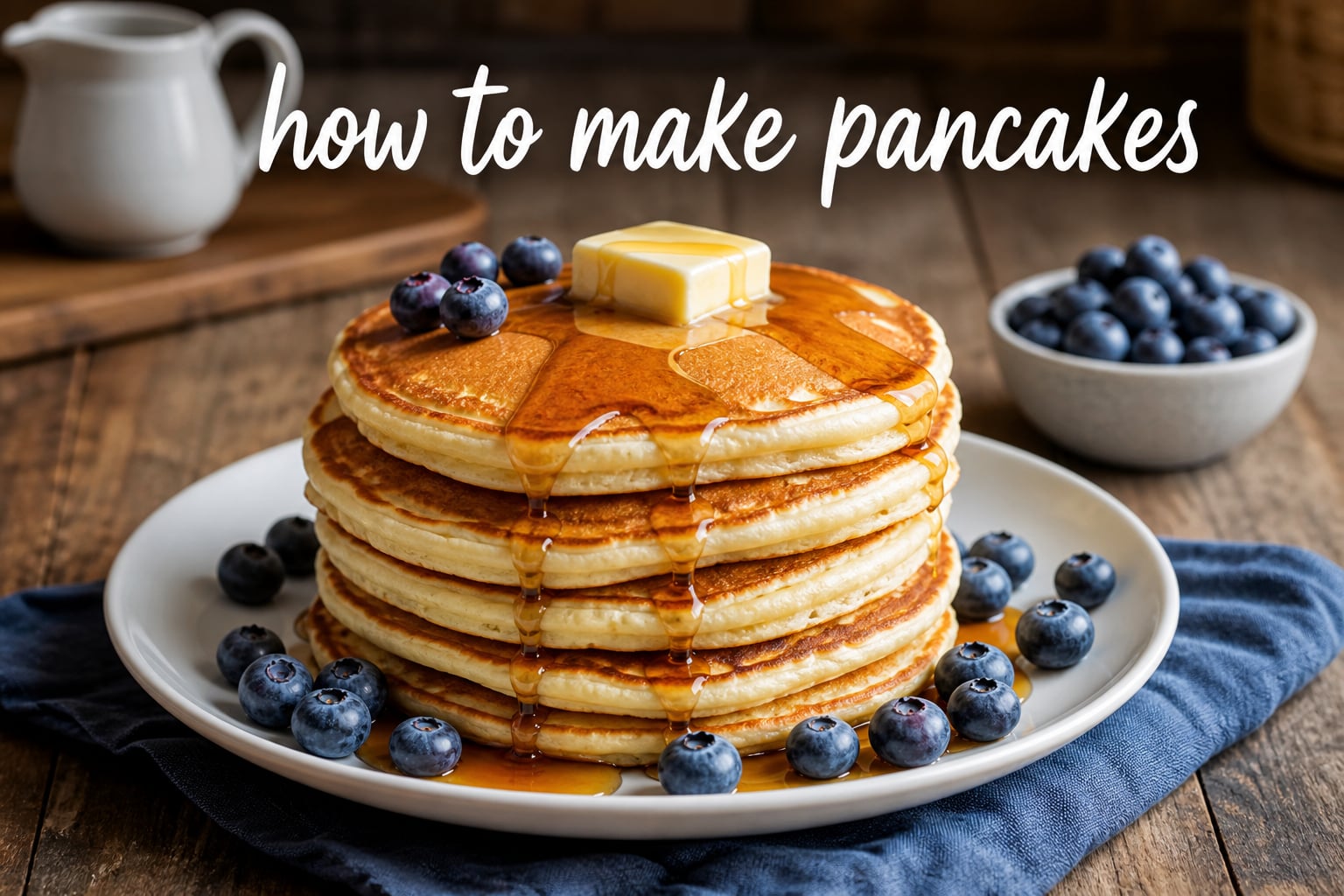
Learning how to make pancakes from scratch is one of those kitchen skills that pays off every single weekend. Once you master the basic technique, you’ll never reach for a boxed mix again. Homemade pancakes taste fresher, cost pennies per serving, and give you total control over what goes into your breakfast.
Our team has tested this recipe over 30 times in different pans, on different stoves, and at different altitudes to figure out exactly what works. We pulled tips from home cooks on Reddit’s cooking communities and cross-referenced them with classic food science principles. The result is a foolproof method that produces thick, fluffy, golden brown pancakes every time.
Whether you’re a complete beginner burning your first batch or an experienced cook chasing that restaurant-style fluff, this guide covers every step. We’ll walk through the exact ingredients, the mixing technique that matters most, when to flip, and how to fix pancakes that go wrong.
Table of Contents
Ingredients You Need to Make Pancakes
The beauty of a basic pancake recipe is that it uses ingredients you probably already have in your kitchen. Here is everything you need for about 10 to 12 homemade pancakes.
Dry ingredients:
1 1/2 cups all-purpose flour
3 1/2 teaspoons baking powder
1 teaspoon salt
1 tablespoon white sugar
Wet ingredients:
1 1/4 cups milk (whole milk produces the richest flavor)
1 large egg
3 tablespoons melted butter (plus extra for the pan)
1 teaspoon vanilla extract (optional but recommended)
That sugar might seem like a lot, but it helps the exterior caramelize into that beautiful golden brown color. If you prefer sweeter pancakes, you can bump it to 2 tablespoons without affecting the texture.
The baking powder is your primary leavening agent here. It’s what creates the tiny air pockets that make pancakes rise. Always check the expiration date, because old baking powder loses its lifting power and leaves you with flat pancakes.
If you want restaurant-style pancakes, swap the regular milk for buttermilk. The acid in buttermilk reacts with baking soda to create extra lift and a tangy flavor that pairs perfectly with maple syrup. No buttermilk? Add 1 tablespoon of white vinegar or lemon juice to your milk and let it sit for 5 minutes.
How to Make Pancakes from Scratch: Step by Step
Follow these steps in order and you’ll have perfect pancakes on the table in under 25 minutes. The process is simple, but each step matters more than you might think.
Step 1: Whisk the Dry Ingredients
In a large mixing bowl, combine the all-purpose flour, baking powder, salt, and sugar. Whisk them together thoroughly for about 20 seconds. This distributes the baking powder evenly so every pancake rises the same way.
Skip this step and you’ll get uneven rising. Some pancakes will puff up beautifully while others stay flat and sad.
Step 2: Mix the Wet Ingredients
In a separate bowl or large measuring cup, whisk the egg, milk, melted butter, and vanilla until well combined. The butter should be melted but not hot when you mix it in.
If you add hot butter to cold milk and eggs, you’ll end up with scrambled egg bits in your batter. Let the butter cool for a minute first.
Step 3: Combine Wet and Dry (Gently!)
Pour the wet ingredients into the dry ingredients. Using a wooden spoon or rubber spatula, stir gently until the flour is just barely incorporated.
You want to stop mixing while there are still visible lumps in the batter. Those lumps are not a mistake. They will hydrate and dissolve on their own as the batter rests.
Every time you stir flour and liquid together, you develop gluten. Gluten is the protein network that makes bread chewy, which is great for pizza dough but terrible for pancakes.
Too much gluten turns your pancakes into rubber discs. Overmixing is the number one reason homemade pancakes come out tough and flat instead of light and fluffy.
Step 4: Let the Batter Rest
Let the batter sit undisturbed for 5 to 10 minutes. During this rest period, the flour fully absorbs the liquid and the baking powder starts activating.
This creates tiny gas bubbles throughout the mixture that will puff up when they hit the hot pan. Many home cooks skip this step because they’re hungry and impatient, but those 5 minutes of patience make a real difference in fluffiness.
Step 5: Heat Your Pan or Griddle
Place a large non-stick skillet, cast iron skillet, or griddle over medium heat. Let it preheat for at least 3 to 4 minutes before adding batter.
A properly preheated pan is essential for even cooking and that signature golden brown crust. To test if it’s ready, flick a few drops of water onto the surface.
If the droplets dance and evaporate within a couple of seconds, you’re good to go. If they sit there doing nothing, the pan needs more time. If they instantly vanish with a sizzle, turn the heat down.
Step 6: Cook the Pancakes
Lightly grease the pan with butter or a small amount of cooking oil. Pour approximately 1/4 cup of batter per pancake onto the hot surface. Use the back of your measuring cup to gently spread the batter into a circle if needed.
Cook for about 2 to 3 minutes on the first side. Watch for the visual cues that tell you it’s time to flip.
Step 7: Flip at the Right Moment
You’ll know it’s time to flip when bubbles form across the entire surface of the pancake and the edges start to look set and slightly dry. The bubbles should be popping and leaving small holes that don’t immediately fill back in with batter.
If you flip too early, the pancake will fall apart. If you wait too long, the bottom burns before the inside sets.
Slide a thin spatula fully under the pancake and flip in one confident motion. Cook the second side for 1 to 2 minutes until golden brown. The second side always cooks faster because the pancake is already partially cooked through.
Cooking Tips for Fluffy, Golden Brown Pancakes
Making good pancakes is about more than just following a recipe. These tips separate decent pancakes from the kind people remember.
Use Medium Heat, Not High
Medium heat is the sweet spot for cooking pancakes. If the heat is too high, the outside burns before the inside cooks through.
That’s how you end up with pancakes that look done but are raw and gummy in the middle. Aim for a surface temperature around 350 degrees Fahrenheit.
If your stove runs hot, drop the heat to medium-low. It’s always better to cook pancakes slowly and evenly than to rush them.
Don’t Press Down After Flipping
This is a mistake we see constantly. People flip a pancake and then press down on it with their spatula, as if they’re making a grilled cheese sandwich.
All that does is squeeze out the air bubbles you worked so hard to create. Let the pancake cook undisturbed on the second side. Pressing guarantees flat, dense pancakes.
Use Butter for Flavor, Oil for Even Browning
Butter gives pancakes incredible flavor and helps create crispy edges. However, butter burns at a lower temperature than oil.
If you’re cooking a large batch, the butter will start to brown and smoke by the third or fourth pancake. A good compromise is to use a mix of butter for flavor and a neutral oil like canola for heat tolerance.
Alternatively, wipe the pan clean between batches and add fresh butter each time. This keeps the flavor consistent throughout.
Cook One Test Pancake First
Always sacrifice the first pancake as a test. The first pancake on any pan is always the ugly one. Use it to check your heat and batter consistency.
Adjust accordingly, then cook the rest with confidence. Think of it as calibrating your setup before the real run begins.
Keep Cooked Pancakes Warm
If you’re feeding a family, keep finished pancakes warm while you cook the rest. Place them on a baking sheet in a 200 degree Fahrenheit oven.
They’ll stay warm and slightly crispy without drying out. Do not stack them tightly on a plate with no airflow, because the steam from the hot pancakes will make the bottoms soggy.
Troubleshooting Common Pancake Problems
Even experienced cooks run into pancake problems. Here are the most common issues we’ve seen discussed in cooking forums, along with exactly how to fix them.
Why Are My Pancakes Flat?
Flat pancakes usually mean your leavening agent isn’t doing its job. Check three things: is your baking powder fresh, did you overmix the batter, and did you let the batter rest?
If the baking powder is over 6 months old, replace it. If you beat the batter smooth, you knocked all the air out of it. A thicker batter also produces taller pancakes.
If your batter seems runny, add another tablespoon of flour and stir gently. The ideal batter consistency should pour slowly and hold soft peaks.
Why Are My Pancakes Gummy or Raw in the Middle?
This is the most common complaint we found on Reddit’s cooking communities. Gummy centers almost always mean your pan was too hot.
The outside browned before the inside had time to cook through. Lower the heat to medium-low and cook each pancake a little longer.
You can also make the pancakes slightly smaller. A 1/4 cup of batter cooks through more evenly than a 1/3 cup measure on a pan that runs hot.
Why Are My Pancakes Tough and Chewy?
Tough pancakes are caused by overmixing. Stir until the flour disappears and then stop immediately.
Lumps are your friend here. Those lumps will hydrate during the resting period and disappear on their own without any extra effort from you.
Why Do My Pancakes Stick to the Pan?
Sticking happens when the pan isn’t hot enough or isn’t greased properly. Make sure the pan is fully preheated before adding batter.
Use enough butter or oil to coat the surface lightly but completely. A well-seasoned cast iron skillet is naturally non-stick and produces some of the best pancake crusts you’ll ever taste.
Why Are My Pancakes Unevenly Cooked?
Uneven cooking comes from an uneven pan or an uneven stove burner. Cast iron and heavy-bottomed pans distribute heat more evenly than thin pans.
Also, make sure your stove burner isn’t slightly tilted. A tilted burner causes batter to pool on one side of the pancake.
Pancake Variations and Easy Substitutions
Once you’ve mastered the basic recipe, the fun really begins. Here are some of our favorite ways to change things up.
How to Make 3-Ingredient Pancakes
In a rush? You can make simple pancakes with just 3 ingredients: 1 ripe banana, 2 eggs, and 1/4 cup of flour. Mash the banana, whisk in the eggs, stir in the flour, and cook on medium heat.
These are naturally sweet and work great for a quick weekday breakfast. They’re also a popular option for anyone looking to reduce their flour intake.
How to Make Pancakes Without Eggs
To make eggless pancakes, replace each egg with 1/4 cup of applesauce or 1 tablespoon of ground flaxseed mixed with 3 tablespoons of water. Let the flax mixture sit for 2 minutes before adding it.
The texture will be slightly different, but the pancakes will still be delicious and fluffy. These substitutions also work well for anyone with egg allergies.
Add-Ins and Flavor Variations
Fold any of these into your batter right before cooking: fresh blueberries, chocolate chips, diced apples with cinnamon, or mashed bananas. Add about 1/4 cup of mix-ins per batch of batter.
Sprinkle them on top of each pancake right after pouring the batter. This way they distribute evenly instead of sinking to the bottom of the bowl.
High Altitude Adjustments
If you live above 3,500 feet, you’ll need to make small adjustments. Decrease the baking powder by 1/2 teaspoon and increase the flour by 1 tablespoon.
Also add 2 extra tablespoons of milk to thin the batter slightly. The lower air pressure at high altitude causes baked goods to rise faster and then collapse without these tweaks.
FAQ
How do I make a simple pancake?
How to make a 3 ingredient pancake?
What are the ingredients to make pancakes?
How to cook pancakes correctly?
Conclusion
Knowing how to make pancakes from scratch is a skill that keeps on giving. With just flour, baking powder, sugar, salt, milk, eggs, and butter, you can create a breakfast that beats anything from a box.
The secret comes down to three things: mix gently, cook on medium heat, and flip at the right moment. Remember to let your batter rest, never overmix, and always sacrifice that first pancake as a temperature test.
Once these habits become second nature, you’ll be flipping restaurant-quality pancakes every Sunday morning without thinking twice. Try the basic recipe first, then experiment with buttermilk substitutions, add-ins, and the 3-ingredient banana version.
The more you practice, the better your pancakes will get. Grab your spatula and start cooking.