
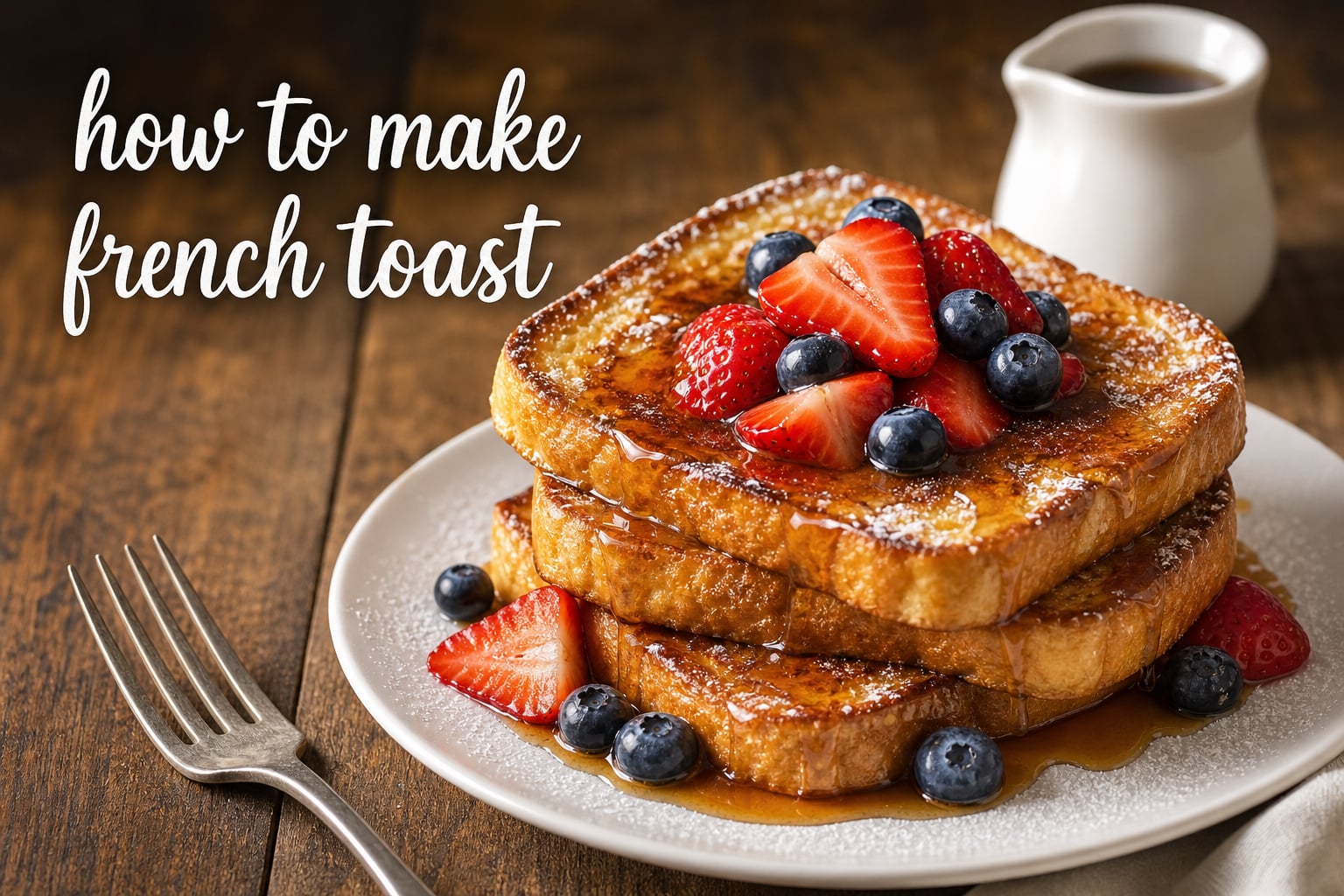
French toast is one of those breakfasts that sounds fancy but takes about 15 minutes and a handful of pantry staples. If you have ever wondered how to make french toast that is crisp on the outside and custardy in the middle — not soggy, not burnt — you are in the right place. I have burned my share of slices and soaked bread until it fell apart, so this guide distills everything I have learned into a foolproof method.
I pulled tips from home cooks on the r/Cooking and r/FrenchToast communities to fill in the gaps most recipes skip. Whether you are making breakfast for one on a Tuesday or brunch for the whole family on a weekend, the technique below works every single time.
You will learn the exact egg-to-milk ratio, the best bread to grab, the right pan temperature, and the small details — like how to tell when it is time to flip — that separate a decent slice from a great one.
Table of Contents
What Is French Toast?
French toast is a breakfast dish made by dipping bread in an egg and milk mixture, then cooking it on a skillet until golden brown. The egg mixture creates a custard-like coating as the bread cooks, while the bread absorbs the mixture to become tender and flavorful inside.
The beauty of french toast is that it transforms simple day-old bread into something worth waking up for. It is easy, versatile, and made with ingredients you almost certainly already have in your kitchen.
How to Make French Toast: Ingredients You’ll Need
The classic french toast recipe needs just five everyday ingredients. Here is the ratio I use for 4 slices, which serves two people:
4 thick slices of bread — brioche, challah, or thick-cut white bread work best
2 large eggs — this gives the custard enough structure to set
1/2 cup milk — whole milk is richest, but any milk works
1 teaspoon vanilla extract — for warm, bakery-style flavor
1/2 teaspoon ground cinnamon — optional, but it makes the kitchen smell amazing
1 tablespoon sugar — optional, adds a touch of sweetness to the batter
Butter or oil — for greasing the pan
That is the entire french toast batter: eggs, milk, vanilla, and a pinch of cinnamon. Some cooks add a tablespoon of flour to thicken the mixture so it clings to the bread instead of pooling at the bottom of the dish — a trick I picked up that makes a noticeable difference.
Best Bread for French Toast
The bread you pick matters more than any other ingredient. After testing several types, here is how they stack up:
Brioche — rich, buttery, and slightly sweet. My top pick for special occasions.
Challah — eggy and tender with a great structure that holds up to soaking.
Thick-cut white or Texas toast — the everyday winner, easy to find and affordable.
Sourdough — adds a tangy contrast that pairs beautifully with sweet syrup.
French bread or ciabatta — works in a pinch, but slice it thick yourself.
Day-old bread is the secret weapon here. Fresh bread soaks up too much batter and falls apart, while bread that has sat out overnight absorbs the mixture evenly without turning to mush. If you only have fresh bread, toast the slices lightly first to dry out the surface.
How to Make French Toast Step by Step
Here is the complete step-by-step method. Follow it once and you will have the rhythm memorized.
Step 1: Make the custard. In a shallow bowl or pie dish, whisk together the eggs, milk, vanilla, cinnamon, and sugar until completely smooth. The mixture should be a uniform pale yellow with no streaks of egg white remaining. A flat dish matters because it lets you soak the bread evenly.
Step 2: Heat the pan. Place a large skillet or griddle over medium-low heat and add a tablespoon of butter. Let the butter melt until it just starts to bubble and foam, but not brown. Medium-low is the sweet spot — high heat burns the outside before the inside cooks.
Step 3: Soak the bread. Dip one slice of bread into the egg mixture and let it sit for about 5 to 10 seconds per side. Thick bread can handle 15 to 20 seconds, but do not leave it in long enough to get soggy. The goal is an even coating, not a saturated sponge.
Step 4: Cook the first side. Transfer the slice to the hot pan and cook for 2 to 3 minutes. You will know it is time to flip when the edges look dry and the bottom is a deep golden brown. Lift a corner gently with a spatula to check the color.
Step 5: Flip and finish. Carefully flip the slice and cook the second side for another 1 to 2 minutes. The second side always cooks faster because the bread is already warm. Press lightly in the center — it should feel set, not liquid.
Step 6: Serve immediately. Move the finished slice to a plate and keep it warm in a 200 degree oven while you cook the rest. Add more butter to the pan between batches so each slice gets that crisp, golden edge.
Top with maple syrup, fresh berries, powdered sugar, or a dollop of whipped cream. The whole process from mixing to plating takes about 15 minutes.
Pro Tips for the Best French Toast
These are the small adjustments that take french toast from good to memorable.
Cook on medium-low heat. This is the single most important tip I can share. Rushing on high heat leaves you with a burnt outside and a raw, eggy middle. Patient, lower heat lets the custard set all the way through.
Add a tablespoon of flour to the batter. This is the secret ingredient that one top-ranking recipe swears by, and it works. The flour thickens the mixture so it coats the bread instead of running off, giving you a thicker, more custardy layer.
Swap milk for heavy cream. If you want an extra-rich version for a holiday brunch, replace half the milk with cream. The texture becomes almost dessert-like.
Use a second bowl for the egg mixture. Pouring batter through a fine mesh strainer before soaking removes any egg chunks, giving you a perfectly smooth coating every time.
Do not overcrowd the pan. Cook two slices at most in a standard skillet. Crowding drops the pan temperature and leads to steamed, pale toast instead of golden, crisp edges.
How to Store and Reheat French Toast
French toast stores surprisingly well, which makes it perfect for meal prep. Let any leftovers cool completely, then stack them in an airtight container with a sheet of parchment paper between each slice so they do not stick together.
In the fridge, cooked french toast lasts 3 to 4 days. Reheat it in a toaster on a medium setting for the crispiest result, or warm it in a 350 degree oven for about 8 minutes. The microwave works in a pinch but softens the edges.
You can also freeze it for up to 2 months. Lay the slices flat on a baking sheet to freeze individually, then transfer them to a freezer bag. Pop a frozen slice straight into the toaster for a quick weekday breakfast — no thawing needed.
To make french toast ahead of time, cook a full batch on Sunday and reheat portions through the week. You can also mix the egg batter the night before and store it covered in the fridge, which shaves precious minutes off your morning.
Troubleshooting: Why Is My French Toast Soggy or Burnt?
Most french toast problems come down to heat and soaking time. Here is how to fix the most common complaints.
Soggy middle: The bread soaked too long or the heat was too low to set the custard. Dip for just 5 to 10 seconds per side and cook on medium-low until the center feels firm when pressed.
Burnt outside, raw inside: Your pan is too hot. Drop the heat to medium-low and be patient — french toast rewards a slow, even cook.
Bread falling apart: You are using bread that is too fresh or too thin. Use day-old bread sliced at least 3/4 inch thick, and handle it gently with a wide spatula.
Pale, anemic slices: The pan was not hot enough when the bread went in, or you used too little butter. Make sure the butter is foaming before adding the bread.
Not enough flavor: Add an extra splash of vanilla, a pinch of salt to the batter, or a dusting of cinnamon sugar on top after cooking. A little salt especially makes the sweetness pop.
French Toast Variations and Dairy-Free Options
Once you master the basic method, the variations are endless. Here are a few worth trying.
Cinnamon sugar french toast: Add an extra teaspoon of cinnamon and roll the cooked slices in cinnamon sugar right out of the pan for a churro-style finish.
Stuffed french toast: Sandwich two thin slices around a layer of cream cheese, Nutella, or sliced strawberries, then dip and cook as usual.
Dairy-free french toast: Swap the milk for oat milk, almond milk, or coconut milk — the custard sets up almost identically. Use a plant-based butter or a light coating of neutral oil in the pan.
Air fryer french toast: For a hands-off version, soak the bread, place it in an air fryer basket at 350 degrees, and cook for 6 to 8 minutes, flipping once. It comes out evenly crisp with less butter.
Savory twist: Skip the sugar, vanilla, and cinnamon, and add a pinch of black pepper and herbs to the egg mixture. Top with a fried egg and hot sauce for a savory breakfast.
FAQ
How do you make French toast step by step?
What is French toast batter made of?
How do you make easy French toast?
Why is my French toast soggy?
Conclusion
Learning how to make french toast comes down to a few simple principles: use day-old bread, soak it briefly, and cook on medium-low heat until golden. Nail those three things and the rest is just personal preference — your favorite toppings, your go-to bread, and the variations you decide to explore.
Grab a loaf of thick-sliced bread, whisk up a quick custard, and give this method a try this weekend. Once you taste the difference a few small tweaks make, french toast will become a regular in your breakfast rotation.