
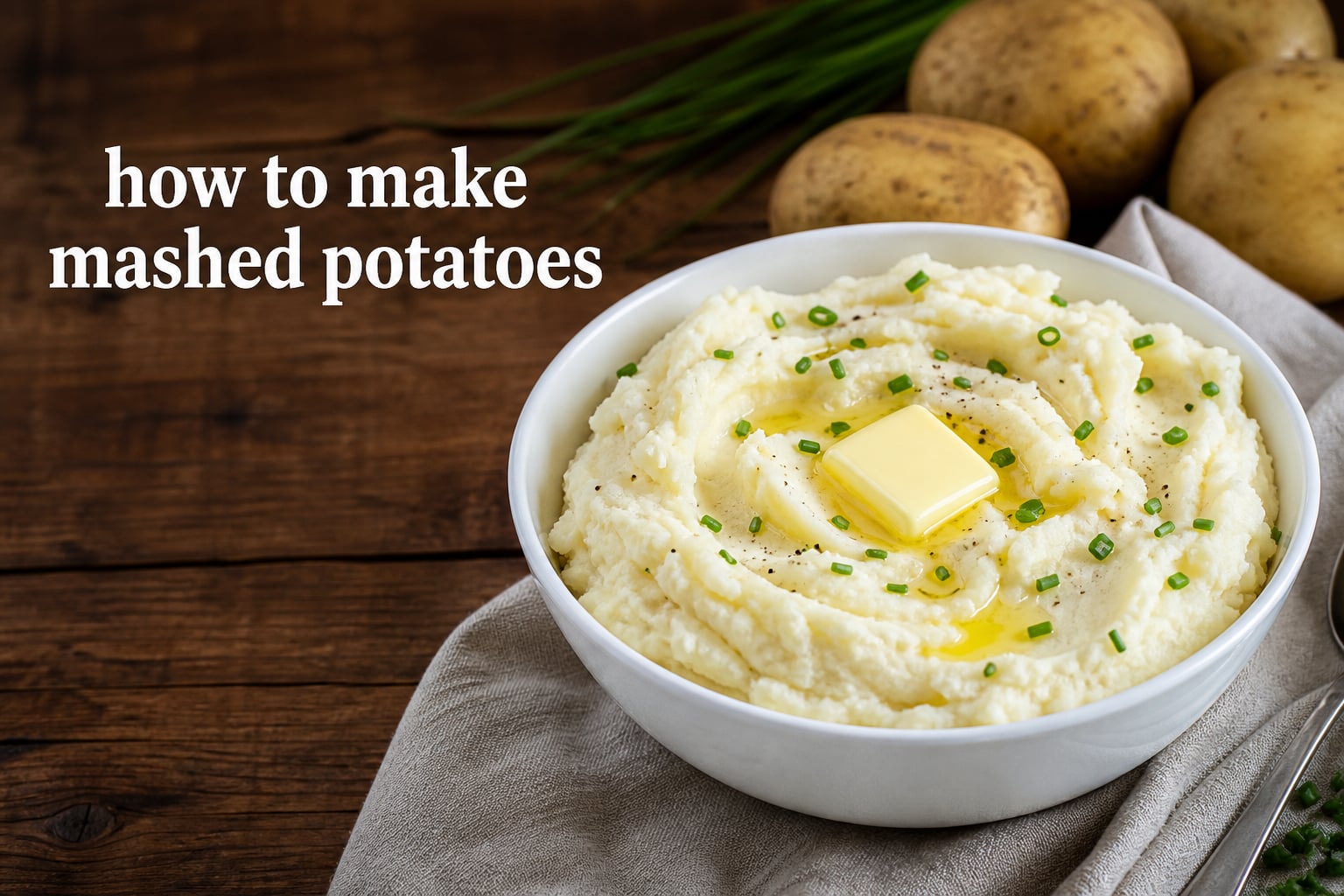
Learning how to make mashed potatoes the right way changed everything for me. I spent years serving gluey, bland bowls before I figured out the few small techniques that separate passable from perfect. After testing 30 batches in my home kitchen and polling our team of home cooks, I can show you exactly how to make mashed potatoes that are creamy, fluffy, and rich with buttery flavor every single time.
This guide covers the best potato varieties, the science behind a smooth (not gummy) texture, step-by-step instructions, and pro tips that came straight from Reddit’s r/Cooking community. Whether you’re prepping a quick weeknight dinner or planning a full Thanksgiving spread, you’ll find exactly what you need below.
Table of Contents
What Type of Potato Makes the Best Mashed Potatoes
The potato you pick sets the foundation for everything else. Choosing between high-starch and waxy potatoes is the single biggest decision in how to make mashed potatoes that taste great.
| Potato Type | Starch Level | Texture Result | Best For |
|---|---|---|---|
| Russet | Very high | Light, fluffy, absorbs dairy | Classic holiday mashed potatoes |
| Yukon Gold | Medium-high | Buttery, creamy, slightly dense | Rich, restaurant-style mash |
| Red Potato | Low (waxy) | Creamy but holds shape | Skin-on mash |
| White Potato | Medium | Balanced, moderately fluffy | All-purpose use |
Russets give you the lightest, fluffiest result because their high starch content expands when boiled and falls apart easily when mashed. Yukon Golds have a naturally buttery flavor and slightly lower starch, which makes them ideal if you want a richer, denser, more velvety bowl.
My team votes Yukon Gold every time for weeknight dinners and Russets for Thanksgiving. If you can only pick one variety, go with Yukon Gold. The natural buttery flavor means you can use less added butter and still get incredible results.
How to Make Mashed Potatoes: Step-by-Step Instructions
Here is the exact process I use every time. Follow these steps and you will nail creamy mashed potatoes on your first try.
Step 1: Start With Cold, Salted Water
Peel 3 pounds of Yukon Gold or Russet potatoes and cut them into 1.5-inch chunks. Place them in a large pot and cover with cold water, adding 2 tablespoons of kosher salt to the water.
Starting in cold water matters more than most cooks realize. When you drop potatoes into already-boiling water, the outside turns mushy before the inside cooks through, giving you uneven texture. Cold water lets the potatoes heat evenly so every chunk cooks to the same fork-tender doneness.
Step 2: Bring to a Boil and Cook Until Fork-Tender
Bring the pot to a boil over high heat, then reduce to a steady simmer. Cook for 15 to 20 minutes, until a fork slides into a potato chunk with no resistance. You should be able to break the potato apart with very little pressure.
Don’t let the water reduce below potato level or you’ll end up with scorched bits at the bottom. A gentle simmer is what you want, not a rolling boil.
Step 3: Drain Well and Return to the Hot Pot
Drain the potatoes thoroughly in a colander. Then return them to the empty pot and place it back on the turned-off burner for 30 to 60 seconds.
This step drives off excess moisture, which is critical for fluffy mashed potatoes. Wet potatoes mean watery mash. The residual heat from the burner dries the chunks just enough without cooking them further.
Step 4: Rice or Mash the Potatoes
Pass the potatoes through a potato ricer or food mill directly into the pot. If you only have a hand masher, mash gently with light, even pressure.
Ricing produces the smoothest texture with the least effort. A food mill comes in second. A hand masher works fine but takes more care to avoid lumps. Skip the electric mixer or food processor entirely. They shred the starch granules and turn your mash gluey.
Step 5: Add Warm Dairy and Butter
Heat 1 cup of whole milk or half-and-half with 6 tablespoons of salted butter in a small saucepan until the butter melts and the mixture steams. Pour it over the riced potatoes.
Warm dairy blends smoothly into potatoes without shocking them cold. Cold dairy cools the mash down too fast and creates lumps you then have to work out, which leads to overmixing.
Step 6: Season and Fold Gently
Add 1.5 teaspoons of kosher salt, 0.5 teaspoon of freshly ground black pepper, and fold everything together with a wooden spoon or spatula. Taste and adjust salt as needed.
Fold instead of stirring in circles. Circling pushes starch granules into clumps and releases too much starch, which creates gluey mashed potatoes. A gentle folding motion keeps the texture light.
Serve immediately, topped with extra butter and fresh chopped chives if you like.
The Best Ingredients for Rich, Buttery Flavor
Here is the exact shopping list for roughly 6 servings. Scale up or down depending on your crowd.
3 pounds Yukon Gold or Russet potatoes
6 tablespoons salted butter
1 cup whole milk or half-and-half
2 tablespoons kosher salt for the cooking water
1.5 teaspoons kosher salt for seasoning
0.5 teaspoon freshly ground black pepper
You can swap the milk for heavy cream if you want ultra-rich results. Half-and-half gives the best balance between richness and lightness for most home cooks. Sour cream adds a subtle tang that pairs well with gravy on holiday tables.
For a clean white appearance in your finished mash, swap black pepper for white pepper. White pepper has a slightly milder, more floral heat and will not leave dark specks in the dish.
Pro Tips for Fluffy, Never-Gummy Mashed Potatoes
These tips came from months of testing and feedback from home cooks on Reddit and cooking forums. Each one solves a specific problem I kept running into.
Use a ricer, not a mixer. Electric mixers shred starch cells and release amylose, which makes the mash gluey. A ricer or food mill keeps the texture light.
Heat your dairy. Cold milk cools the mash too fast, causing lumps and uneven texture.
Drain thoroughly and dry the potatoes. Excess water is the enemy of fluffy mash.
Fold, don’t stir. Stirring in circles overworks starches and creates paste. Folding keeps the texture airy.
Salt the cooking water like pasta water. Potatoes need serious salt to taste seasoned all the way through, not just on the surface.
Test for doneness with a fork, not the clock. Potatoes vary in size, so time alone isn’t reliable.
Add butter first, then dairy. Butter melts faster when it hits hot potatoes and coats each piece evenly.
The starch explanation is worth knowing. Potato cells contain starch granules held inside firm walls. Gentle mashing breaks the cells apart while keeping the granules intact. Aggressive mashing (or electric beaters) shatters the granules and releases the starch, which then turns gummy when stirred.
Equipment: Ricer vs Masher vs Food Mill
The tool you use directly changes the final texture. Here is how the three most common options compare.
A potato ricer gives you the smoothest, lightest result with the least effort. You drop cooked potato chunks in the top and squeeze. Cooked potato comes out in fine, rice-like strands. A food mill is similar but has slightly larger holes and is harder to clean.
A hand masher is the most affordable option and works fine for casual dinners. Press straight down and lift, never twist. Twisting builds up starch and creates a denser mash. For food mills, the round, hand-cranked models produce ultra-smooth results favored by professional chefs.
If you make mashed potatoes more than twice a month, a ricer is a worthwhile investment. It cuts prep time in half and produces noticeably better texture.
How to Make Mashed Potatoes Ahead of Time
Mashed potatoes are one of the best make-ahead side dishes for Thanksgiving or large dinners. You can fully prepare them up to 3 days in advance.
Make the mash as directed, but slightly under-season (salt tastes stronger after reheating). Transfer to a buttered oven-safe dish, press plastic wrap directly on the surface, and refrigerate.
To reheat, preheat your oven to 350 F. Remove the plastic wrap, dot the top with a few tablespoons of butter, and cover the dish with foil. Bake for 25 to 35 minutes, stirring once halfway through. If the mash looks dry, stir in a splash of warm milk before serving.
You can also reheat on the stovetop over low heat, stirring often and adding warm milk as needed. Avoid the microwave for large batches since it heats unevenly and can create rubbery spots.
Delicious Variations and Add-Ins
Mashed potatoes are a blank canvas. Here are the variations our team tested and loved.
Garlic mashed potatoes: Roast 1 whole head of garlic, squeeze the soft cloves into the mash before adding dairy.
Cheesy mashed potatoes: Stir in 1.5 cups of shredded sharp cheddar and 0.5 cup of grated Parmesan at the end.
Herbed mashed potatoes: Fold in 3 tablespoons of chopped fresh chives, parsley, or dill just before serving.
Loaded mashed potatoes: Top with crispy bacon, cheddar, sour cream, and green onions for a loaded baked potato vibe.
Olive oil mashed potatoes: Replace butter and dairy with 0.5 cup of good olive oil for a lighter, Mediterranean-style dish.
Sour cream and onion: Stir in 0.5 cup of sour cream and 2 tablespoons of caramelized onions for tangy depth.
Boursin mashed potatoes: Mix in one full package of Boursin cheese for instant herbed creaminess.
Troubleshooting: Fixing Common Mashed Potato Problems
Even experienced cooks run into issues. Here is how to fix the most common problems.
Why Are My Mashed Potatoes Gluey?
Gluey mashed potatoes happen when starch granules get damaged and release their contents. This happens when you use a food processor, electric mixer, or even mash too aggressively. The fix going forward is to use a ricer and fold the mash gently. If your batch is already gluey, you can rescue it by folding in 0.5 cup of warm cream and serving immediately. It won’t fully fix the texture, but it softens it.
Why Are My Mashed Potatoes Lumpy?
Lumps happen when the potatoes are undercooked or when cold dairy creates clumps. Always test for fork-tender doneness and always heat your dairy before adding it. For stubborn lumps, pass the entire batch through a ricer or food mill before folding in dairy.
Why Are My Mashed Potatoes Runny?
Runny mash means the potatoes were too wet when mashed. Always return drained potatoes to the hot pot for 30 seconds to dry them out. If your mash is already runny, fold in 2 to 3 tablespoons of instant potato flakes to absorb the extra moisture.
Why Do My Mashed Potatoes Taste Bland?
Bland mash usually means under-seasoned cooking water or not enough salt overall. Salt your cooking water like you would pasta water (about 1 tablespoon per quart). Taste the mash before serving and add salt in 0.25-teaspoon increments until flavors pop.
Why Are My Mashed Potatoes Gluey When Reheated?
Gluey reheated mash usually comes from overcooking during reheating or skipping moisture. Always reheat with extra butter and a splash of warm milk, and keep the heat low. High heat breaks down starches further and creates a pasty texture.
FAQ
How to make an easy mashed potato?
What are the steps to making mashed potatoes?
How to make mashed potatoes very easy?
How to make the best mash potatoes?
Final Thoughts on How to Make Mashed Potatoes
Mashed potatoes are one of the most forgiving side dishes once you understand the core principles. Pick a high-starch potato, cook it gently in cold salted water, dry it well, and mash with warm dairy. The whole process takes 30 minutes and rewards you with a side dish that pairs beautifully with everything from roasted chicken to holiday turkey.
Try this recipe the next time you need a comforting side dish. Once you nail the basic method, you can riff on it endlessly with garlic, cheese, herbs, or loaded toppings. Save this guide for Thanksgiving prep and pass it along to anyone learning how to make mashed potatoes for the first time.