
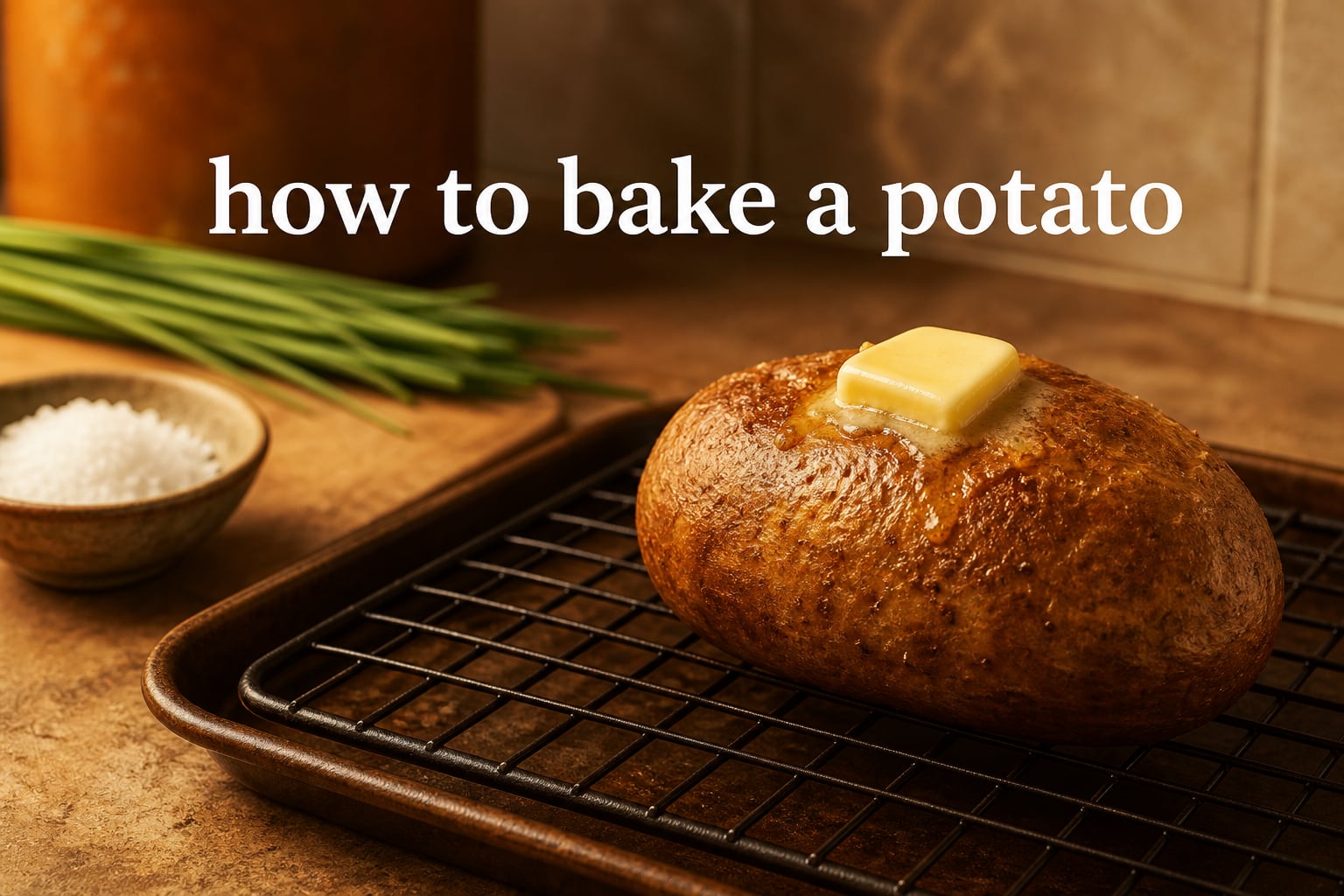
If you have ever cut into a baked potato expecting pillowy fluff and instead met a dense, gummy center, you already know the dish is deceptively simple. A great oven baked potato comes down to three things: the right spud, enough dry heat, and time for moisture to escape the skin. Once you nail those, you can skip the steakhouse surcharge and make a better potato at home any night of the week.
This guide walks through how to bake a potato the way I do it after testing dozens of methods across the last few years. You will get a step-by-step oven method, a temperature and time chart, the honest answer on foil, a brined variation that produces extra-fluffy results, and answers to the questions I get asked most often in my own kitchen.
Table of Contents
How to Bake a Potato in the Oven (Step-by-Step)
The best oven baked potato takes 45 to 60 minutes at 425 to 450 degrees Fahrenheit, with no foil, rubbed in oil and salt, and rested on a wire rack so heat circulates on all sides. That is the short version. The longer version follows in five steps you can repeat without thinking.
Step 1: Choose the Right Potato (Russet Wins)
Russet potatoes are the gold standard for baking because they are dense, starchy, and low in moisture. That high starch content is what turns fluffy when baked, and the thick skin crisps beautifully under dry heat.
Yukon Golds work in a pinch but lean waxy, so the inside turns creamy rather than fluffy. Red potatoes and baby new potatoes have even less starch and are better suited for roasting or boiling. If you can only find one variety at the store, reach for the largest russets you can get, ideally 10 to 12 ounces each.
Look for potatoes that feel heavy for their size, with smooth, unblemished skin and no green spots. Green patches indicate solanine, which tastes bitter. Skip any that are soft, wrinkled, or sprouting.
Step 2: Preheat the Oven and Prep the Potato
Preheat your oven to 425 degrees Fahrenheit if you want a balance of speed and crispness, or 450 degrees for the deepest, crackliest skin. Both work, and I usually default to 450 because the extra heat buys you better browning in the same amount of time.
Scrub each potato under cold running water and pat it completely dry with a kitchen towel. Moisture on the skin is the enemy of crispness, so do not skip the drying step. I learned this the hard way after a batch came out leathery on a humid summer day.
Prick the potato all over with a fork, about 8 to 10 times on every side. This gives steam a path to escape so the potato does not burst in your oven. It also shortens cook time slightly by allowing initial moisture release.
Step 3: Season the Skin for Crispy Results
Rub the entire surface of the potato with about a teaspoon of olive oil or melted butter. The fat conducts heat, helps the salt adhere, and is the single biggest factor in getting that crackly, salty jacket.
Sprinkle generously with kosher salt or flaky sea salt. Do not be shy. A heavy salt coating is what gives the skin its signature texture and flavor. I usually add a few grinds of black pepper at this stage too.
Place the potato directly on the oven rack, or on a wire rack set over a baking sheet. Both methods let air circulate. A flat baking sheet alone works but produces a slightly softer bottom because the potato sits in its own trapped steam.
Step 4: Bake at 425 to 450 Degrees
Slide the potatoes into the preheated oven and bake for 45 to 60 minutes, depending on size. Plan on about 45 minutes for a medium 8-ounce potato and 60 minutes for a large 12-ounce one at 450 degrees. At 425 degrees, add roughly 5 to 10 minutes.
Rotate the potatoes once at the halfway mark if your oven runs unevenly. I do this on the convection setting, and on conventional ovens I rotate front to back so the back of the oven does not over-brown the rear potato.
Resist the urge to open the oven door more than you need to. Every time you let heat escape, you add a few minutes to the total cook time and you lose the dry, hot environment that crisps the skin.
Step 5: Check for Doneness
A perfectly baked potato reaches an internal temperature of 205 degrees Fahrenheit. At that point the starch granules have fully gelatinized and the interior is light and dry, not gummy.
You can confirm this with an instant-read thermometer inserted into the thickest part. If you do not have one, squeeze the potato gently with an oven mitt. It should give easily, like a ripe avocado, and a fork or skewer should slide into the center with no resistance.
Cut it open immediately and fluff the inside with a fork. Add a pat of butter, a pinch of salt, and a crack of pepper right away so the heat melts everything together. That first bite of crispy skin and steamy interior is your reward for waiting.
Should You Wrap a Baked Potato in Foil?
No, do not wrap a baked potato in foil. Foil traps the moisture that escapes from the potato during baking, which steams the skin from the outside in and leaves it soft, pale, and slightly soggy. The crispy jacket you want only forms when dry oven air can carry that moisture away.
Restaurants wrap baked potatoes in foil mostly to hold them longer in warming drawers, not to cook them. The foil keeps a baked potato hot for 30 to 45 minutes after it leaves the oven, but it has already compromised the texture by then.
The science is straightforward. A potato is roughly 80 percent water. In a dry oven, that water exits through the skin as steam, leaving behind a dehydrated, glassy surface that crisps further as the interior starches set. Wrap the potato in foil and you create a humid microenvironment that rehydrates the skin instead of drying it.
If you absolutely must use foil, do it only for the final 10 minutes of cooking to retain heat for serving, and never for the full bake. Better yet, skip it entirely. Your baked potato will taste better without it.
Baked Potato Temperature and Time Chart
At 400 degrees Fahrenheit, a medium russet potato takes 60 to 75 minutes. At 425 degrees it takes 50 to 60 minutes, and at 450 degrees it takes 45 to 55 minutes. The hotter the oven, the faster the cook and the crispier the skin.
Here is a quick reference for a medium 8 to 10 ounce russet potato placed directly on the oven rack:
- 375 degrees Fahrenheit: 75 to 90 minutes
- 400 degrees Fahrenheit: 60 to 75 minutes
- 425 degrees Fahrenheit: 50 to 60 minutes
- 450 degrees Fahrenheit: 45 to 55 minutes
For larger 12 to 14 ounce potatoes, add 10 to 15 minutes to any of those times. Smaller 6 ounce potatoes finish about 10 minutes faster. Always trust internal temperature over the clock, because two potatoes from the same bag can vary by 20 minutes based on density and moisture.
For extra-crispy skin, bake at 450 degrees on a wire rack and brush the potato with a thin second coat of oil at the 30-minute mark. The second coat of oil essentially deep-fries the skin in place and produces the crackle you would expect from a restaurant.
The Brined Method for Extra Fluffy Potatoes
Brining a potato before baking is a simple trick borrowed from The Kitchn’s test kitchen that produces a noticeably fluffier, more flavorful interior. You soak the raw potatoes in salted water for at least an hour, or up to overnight, before drying, oiling, and baking them as usual.
To brine, dissolve 2 tablespoons of kosher salt in 4 cups of cold water. Submerge the scrubbed potatoes and refrigerate for 1 to 24 hours. Drain, pat very dry, and proceed with oil, salt, and the oven method above.
The salt solution seasons the potato all the way through, not just on the surface, and the long soak slightly breaks down the outer layer of starch. The result is a baked potato with a drier, more uniform interior and a saltier, more savory flavor from edge to center.
Brined potatoes also tend to bake a few minutes faster because the pre-soak loosens the structure. If you try this once, you will probably never go back to a plain potato, especially for loaded baked potatoes where the seasoning needs to compete with heavy toppings.
Common Mistakes That Lead to Soggy or Dense Potatoes
The most common mistake is wrapping the potato in foil for the entire bake, which we already covered. The second most common mistake is not drying the potato well enough after washing. Surface water turns to steam under the oil and prevents browning.
Another frequent culprit is underbaking. Many home cooks pull the potato at 45 minutes regardless of size and are left with a hard, dense center. The fix is simple: use an instant-read thermometer and wait for 205 degrees, even if that means going an hour and 15 minutes on a large russet.
Skipping the oil is also a mistake. Plain dry salt on a dry potato produces a leathery skin rather than a crispy one. The fat is what conducts heat into the surface and crisps it, and a small amount goes a long way. One teaspoon per potato is plenty.
Finally, do not overcrowd the oven. If potatoes are packed tightly together, the steam from one gets trapped against the next, which softens the skins. Leave at least 2 inches of space between each potato and rotate them once halfway through baking.
Loaded Baked Potato Toppings
Once you have a perfect baked potato, the toppings are where it gets fun. The classic loaded baked potato starts with butter, sour cream, shredded sharp cheddar, crumbled bacon, and sliced chives or green onions. That combination has earned its place on steakhouse menus for a reason.
For a lighter version, try plain Greek yogurt instead of sour cream, fresh herbs like dill or parsley, and a squeeze of lemon. Smoked salmon, capers, and a touch of crème fraîche make a more elegant version that works well for brunch.
Vegetarian and vegan options are easy too. Smashed avocado, black beans, salsa, and pickled jalapeños turn a baked potato into a hearty meatless meal. Cashew sour cream and tempeh bacon keep the loaded theme while skipping the dairy.
Whatever you choose, fluff the inside first with a fork and add the butter while the potato is hot so it melts down into the flesh. That single step separates a good loaded baked potato from a forgettable one.
Frequently Asked Questions
How long does it take to bake a potato at 400 degrees in the oven?
What is the best way to bake a potato?
What temperature should a baked potato be cooked at?
Should you wrap a baked potato in foil?
How do I know when a baked potato is done?
Can I bake a potato in the microwave or air fryer?
Final Thoughts on How to Bake a Potato
If you remember nothing else from this guide on how to bake a potato, remember this: russet, oil, salt, hot oven, no foil, and an internal temperature of 205 degrees Fahrenheit. Those five details cover 95 percent of what separates a great baked potato from a disappointing one.
Once you have the basics down, you can experiment with the brined method for an even fluffier texture, or play with toppings to match whatever you are serving. A good baked potato is one of the cheapest, most satisfying side dishes in any home cook’s rotation, and it rewards repetition. Bake one tonight and you will see exactly what I mean.