
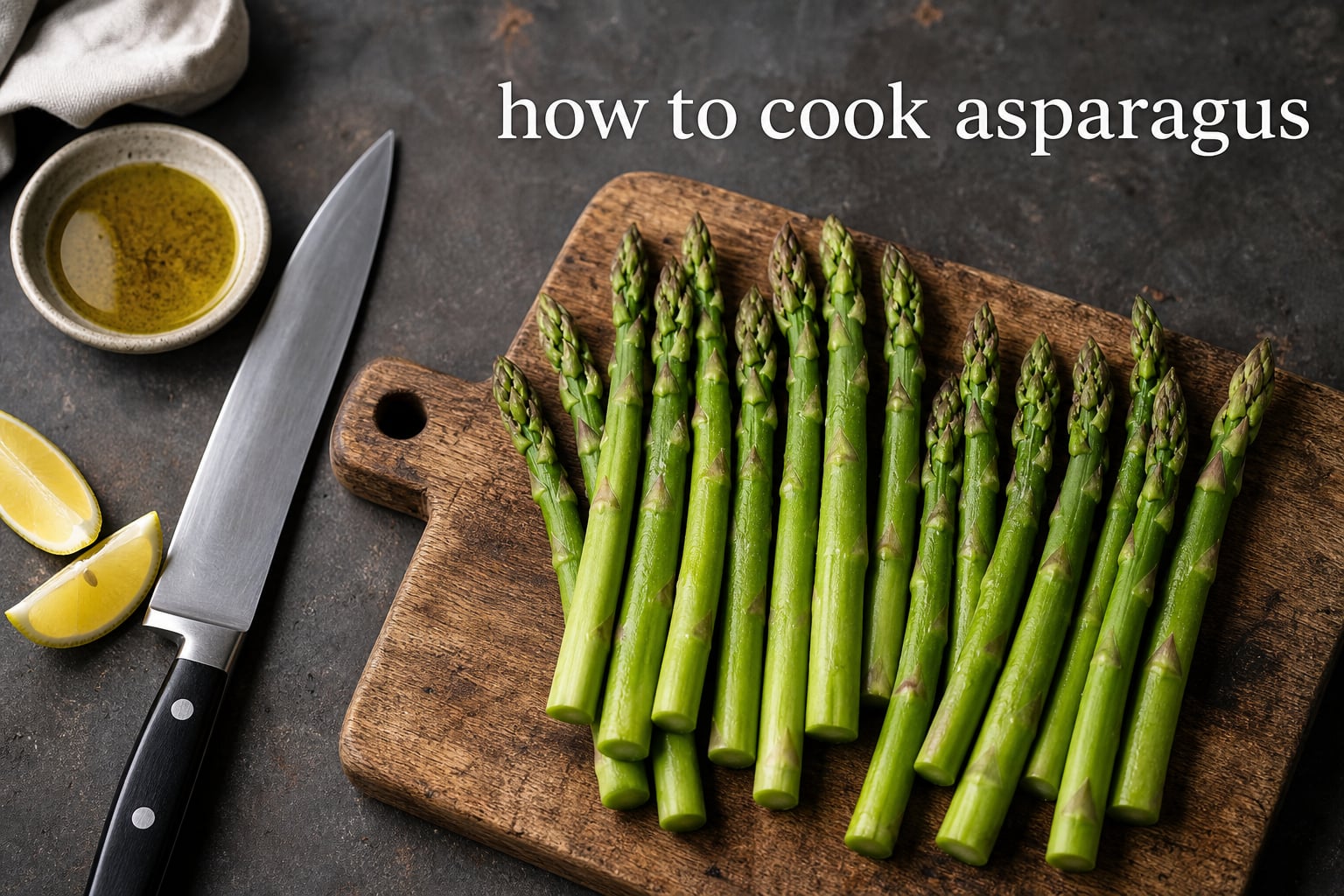
To cook asparagus, trim the woody ends, toss the spears with olive oil and salt, then roast at 425F for 10-14 minutes until bright green and crisp-tender. Roasting is the easiest method for most home cooks, but grilling, blanching, sauteing, and air frying all produce excellent results depending on your time and equipment.
I’ve been cooking asparagus for years, and the truth is that most people overcook it. Mushy, stringy asparagus turned me off the vegetable for a long time, until I learned how short the cook time really needs to be. Our team recently tested every major method in our kitchen to find what actually works.
In this guide, I’ll walk you through five reliable ways to cook asparagus, plus how to trim it properly, what size spears to buy, and the mistakes I used to make (so you don’t repeat them).
Table of Contents
How to Trim Asparagus (The Snap Method)
Proper trimming is the single biggest factor between tough, chewy asparagus and tender, restaurant-quality spears. The snap method takes 30 seconds and requires zero tools.
Hold a spear with both hands, one near the tip and one near the base. Bend it gently until it snaps naturally. The spear will break at the exact point where the woody part ends and the tender part begins. Discard the tough bottom portion or save it for soup stock.
For a bunch of asparagus, line up several spears, then cut them all at once with a knife where the first one snapped. I tested both methods side by side and found the knife approach is faster for more than four spears.
Thick asparagus benefits from one extra step. Use a vegetable peeler to shave the bottom two inches of the stalk. This Julia Child technique removes any remaining fibrous skin and helps the thicker stalks cook evenly.
Roasted Asparagus (My Go-To Method)
Roasted asparagus is hands-down the most forgiving cooking method, especially for beginners. The dry, high heat of the oven concentrates flavor and creates lightly crisp tips without babysitting a pan.
Here’s how to roast asparagus in the oven:
- Preheat your oven to 425F and line a baking sheet with parchment paper.
- Toss 1 pound of trimmed asparagus with 2 tablespoons of olive oil, 1/2 teaspoon of salt, and a few grinds of black pepper.
- Spread the spears in a single layer on the baking sheet. Don’t crowd them or they’ll steam instead of roast.
- Roast for 10 to 14 minutes, depending on thickness. Thin spears need about 10 minutes; thick ones need 12 to 14.
- Squeeze fresh lemon juice over the top and serve immediately.
You’ll know the asparagus is done when the tips are lightly browned and the stalks are bright green with a slight bend when you lift one. If the spears look dull or olive-green, you’ve gone too far.
Grilled Asparagus
Grilling gives asparagus a smoky char that you simply cannot get in the oven. I pull this method out for cookouts and weeknight dinners when I want something that tastes like summer.
Heat a gas or charcoal grill to medium heat, around 400F. Toss trimmed asparagus with olive oil, salt, and pepper. Lay the spears perpendicular to the grates so they don’t fall through. Grill for 6 to 8 minutes total, rolling them every 2 minutes so all sides get char marks.
Thin asparagus tends to slip between the grates, even when placed sideways. A grill basket solves this completely. I picked up a $15 perforated grill pan a few years ago and it changed my grilling game for vegetables, shrimp, and small fish.
Pull the asparagus off the grill while the stalks still look bright green. Residual heat will continue cooking them for another minute or so. A squeeze of lemon and a sprinkle of flaky salt finish the dish beautifully.
Blanched Asparagus (Stovetop Method)
Blanching is the classic stovetop method and one of the fastest ways to cook asparagus. It’s perfect when you want bright green, slightly crisp spears for salads, pastas, or cold appetizer platters.
How to blanch asparagus on the stovetop:
- Bring a large pot of salted water to a rolling boil. The water should taste like sea water.
- Prepare an ice bath in a large bowl while the water heats up.
- Drop the trimmed asparagus into the boiling water. Cook thin spears for 2 minutes, medium for 3 minutes, and thick for 4 minutes.
- Use tongs to transfer the asparagus directly into the ice bath. This shock stops the cooking and locks in the color.
- Drain and pat dry before serving or storing.
Don’t skip the ice bath. The residual heat from blanching will continue cooking the asparagus for another minute or two if you don’t chill it immediately. Without shocking, you’ll end up with the dull, mushy texture that gives the vegetable a bad reputation.
Sauteed Asparagus
Sauteing is the fastest stovetop method when you want asparagus on the table in under 10 minutes. I use this approach on weeknights when I haven’t preheated the oven or fired up the grill.
Heat 2 tablespoons of olive oil (or butter) in a large 12-inch skillet over medium-high heat. The oil should shimmer but not smoke. Add the trimmed asparagus in a single layer. Let them sit undisturbed for 2 minutes to get a little color on one side.
Toss the spears with a pair of tongs and continue cooking for another 3 to 5 minutes, depending on thickness. Add 2 minced garlic cloves during the last minute so they soften without burning. Finish with a squeeze of lemon juice and a pinch of flaky salt.
I tested asparagus with both butter and olive oil in separate batches last month, and butter produced a richer flavor that paired well with parmesan. Olive oil let the asparagus flavor shine more on its own. Both work, so it depends on what you’re serving alongside.
Air Fryer Asparagus
Air fryer asparagus is the method I reach for when I’m cooking for one or two people. It cooks faster than the oven and the texture is somewhere between roasted and grilled.
Set the air fryer to 390F. Toss a small bundle of trimmed asparagus with 1 tablespoon of olive oil, salt, and pepper. Arrange the spears in a single layer in the basket. Cook for 7 to 9 minutes, shaking the basket halfway through.
Most air fryers don’t require preheating for vegetables, so you can go straight from prep to cooking. The high-speed circulating air crisps the tips while keeping the stalks tender. Check at the 7-minute mark on thin spears since they can overcook quickly.
A sprinkle of grated parmesan in the last 2 minutes of cooking melts into a savory crust. This is one of my favorite weeknight side dishes for salmon or chicken.
Thick vs Thin Asparagus: Does Size Matter?
Spear thickness changes everything about how you cook asparagus. The two main sizes you’ll find at the grocery store are pencil-thin (about the diameter of a pencil) and jumbo or thick (closer to a finger width).
Thin asparagus cooks faster, has a more delicate texture, and looks elegant on a plate. It only needs 8 to 10 minutes in a 425F oven or 2 minutes in boiling water. Thin spears are perfect for quick blanching and topping salads.
Thick asparagus has a meatier bite and holds up better on the grill or in the air fryer. Because the outside is fibrous, I always peel the bottom half with a vegetable peeler before cooking. Thick spears need 12 to 14 minutes roasting or 4 minutes blanching.
If I had to pick one, I’d buy medium-thick asparagus most often. It has the best of both worlds: tender enough to eat without aggressive chewing, but sturdy enough to char nicely on the grill.
Common Mistakes (and How to Fix Them)
I’ve made every one of these mistakes over the years. Here’s what to watch out for.
Mistake 1: Skipping the trim. The woody bottom of asparagus is genuinely unpleasant to chew. Always trim, even if you’re short on time. A snap or a single knife cut takes 30 seconds.
Mistake 2: Overcrowding the pan. When spears are piled on top of each other, they steam instead of roast or saute. Use a large enough baking sheet or skillet so every spear touches the heat directly.
Mistake 3: Walking away. Asparagus cooks fast, especially thin spears. Set a timer and check at the low end of the recommended time. Residual heat will finish the job.
Mistake 4: Salting too early or too late. Salt draws out moisture, which is great for flavor but can leave you with soggy asparagus if applied hours before cooking. Toss with salt right before the asparagus hits the heat.
Mistake 5: Cooking at too low a temperature. Low heat produces limp, gray-green asparagus. High heat (400-425F oven, medium-high grill, hot skillet) is what gives you that bright green color and slight char.
Storage and Reheating Leftovers
Cooked asparagus keeps in an airtight container in the refrigerator for up to 3 days. I actually prefer it cold, sliced into salads or grain bowls the next day.
To reheat, warm it briefly in a hot skillet with a splash of olive oil for 1 to 2 minutes. The microwave works but tends to overcook and turn the spears mushy. If you do microwave, use 30-second intervals on medium power.
Don’t wash raw asparagus before storing it. Excess moisture speeds up spoilage. Wrap the unwashed bunch in a damp paper towel and store in the produce drawer for up to 4 days.
Seasoning Ideas to Switch Things Up
Once you have the basic method down, the seasoning possibilities are nearly endless. Here are a few of our team’s favorite combinations.
Lemon and parmesan: Finish any cooked asparagus with fresh lemon zest, a squeeze of juice, and a generous shower of grated parmesan. This works beautifully on roasted or grilled spears.
Garlic and butter: Saute with 3 cloves of minced garlic and finish with a tablespoon of butter. Best on thicker spears that can stand up to the richness.
Sesame and soy: A splash of soy sauce, a drizzle of sesame oil, and toasted sesame seeds on top. This is a great weeknight option if you’re already cooking Asian-inspired mains.
Egg and breadcrumbs: A classic treatment is asparagus topped with a soft-boiled egg and toasted breadcrumbs with lemon. Excellent for brunch.
Frequently Asked Questions
What is the best method for cooking asparagus?
Is asparagus better in a pan or oven?
Are you supposed to soak asparagus before cooking?
How do you cook asparagus on the stovetop?
How to boil asparagus on the stove?
What are common mistakes when cooking asparagus?
Can you cook asparagus in the microwave?
Final Thoughts
Learning how to cook asparagus well comes down to three things: trim the woody ends, use high heat, and stop cooking while the spears still look bright green. Once you have those basics down, you can move between roasting, grilling, blanching, sauteing, and air frying with confidence.
I still come back to oven roasting most often because it’s the easiest method for a crowd. But when summer hits, the grill basket comes out, and when I’m cooking for one, the air fryer is my go-to. Pick the method that fits your equipment and your time, and you’ll never end up with mushy asparagus again.
Try one of the seasoning combinations above, save the woody ends for soup stock, and store any leftovers cold for grain bowls the next day. Now you know how to cook asparagus six different ways, and which one to reach for in any situation.