
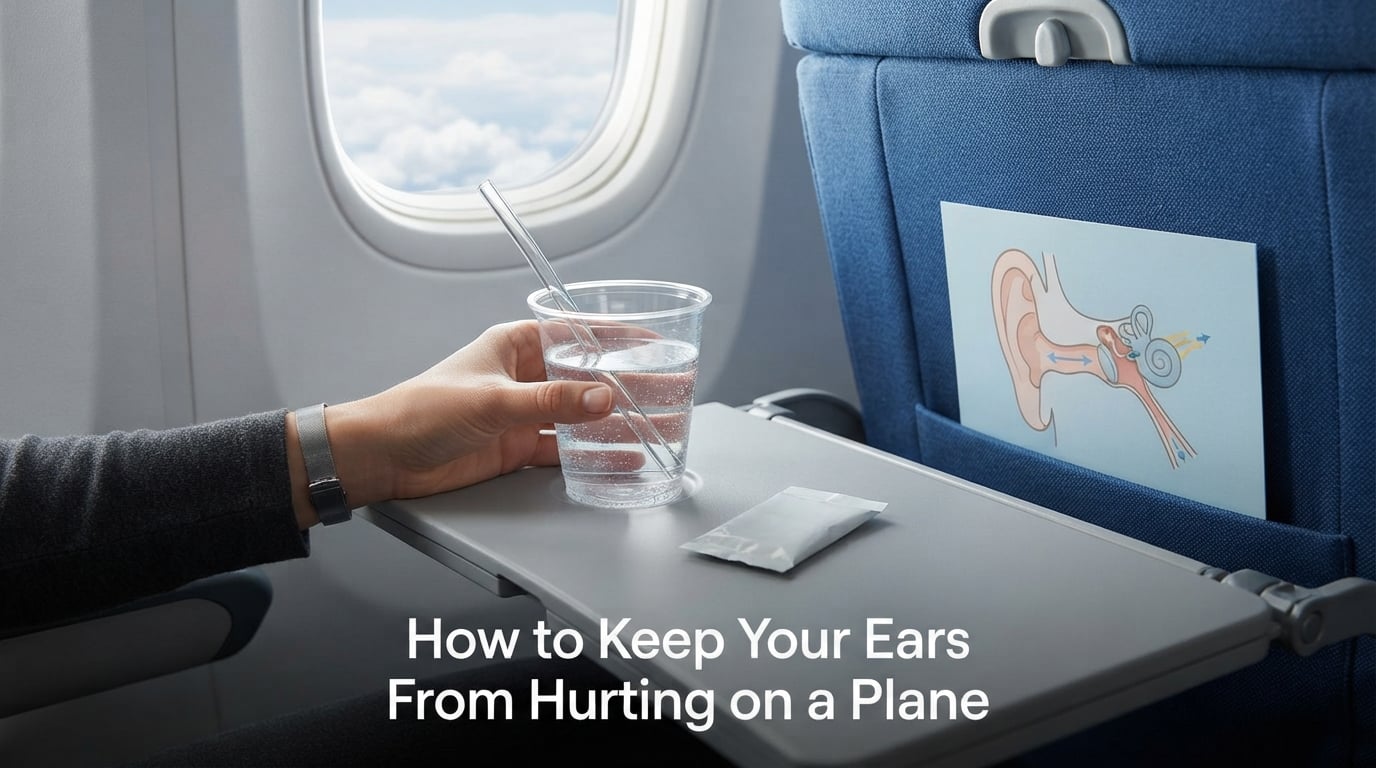
Knowing how to keep your ears from hurting on a plane can turn a painful descent into a manageable part of travel. The practical goal is simple: help air move through the Eustachian tubes so pressure on both sides of each eardrum stays closer to equal.
The best time to start is before discomfort builds, especially during descent. Swallowing, chewing, yawning, and gentle pressure-equalizing maneuvers give most travelers several ways to respond without waiting for sharp ear pain.
Airplane ear is usually temporary, but a cold, allergies, or an ear infection can make it much harder to clear pressure. This guide explains what is happening, what to do at each stage of a flight, how to help children, and when a blocked or painful ear needs medical attention.
Table of Contents
Airplane ear happens when middle-ear pressure cannot equalize
Airplane ear, also called ear barotrauma or aerotitis media, is ear pain or fullness caused by a fast change in cabin pressure. It often feels like muffled hearing, popping, pressure, or a sharp ache; the more severe symptoms tend to arrive during landing.
Behind your eardrum is the middle ear, a small air-filled space. A narrow passage called the Eustachian tube connects that space to the back of the nose and throat, opening briefly when you swallow or yawn.
During ascent, the air in the middle ear expands and usually escapes fairly easily. During descent, cabin pressure rises, and air needs to move back into the middle ear; that direction can be tougher when the tube is swollen or blocked.
When the pressure differs too much across the tympanic membrane, the eardrum stretches and hurts. That is why ear pain during landing is common, and why a stuffy nose or sinus congestion raises the chance of trouble.
How to keep your ears from hurting on a plane: start these seven actions early
Start equalizing during the cabin crew’s descent announcement rather than waiting for pain. These seven actions are the most useful first line of defense for ear pressure on a plane.
- Stay awake for takeoff and landing. You cannot swallow, yawn, or respond to mounting pressure while asleep.
- Swallow often. Take small sips of water, or swallow saliva every few seconds when your ears begin to feel full.
- Chew gum or suck a hard candy. The repeated jaw and swallowing motion can help the Eustachian tube open; choose an age-appropriate option.
- Yawn deliberately. A wide, slow yawn can create the throat movement that opens the tube, even if you are not tired.
- Use a gentle Valsalva maneuver. Pinch the nostrils, close the mouth, and blow very softly as though blowing your nose; stop as soon as you feel a pop or release.
- Plan for congestion before travel. If allergies, a cold, or sinus symptoms are closing your nose, ask a clinician or pharmacist in advance whether a treatment is appropriate for you.
- Consider filtered flying earplugs. Purpose-made filtered earplugs may slow the pressure change at the eardrum, but they work best alongside swallowing or a gentle maneuver.
Repeat the simple actions throughout descent. One swallow may not open both tubes, so a steady rhythm of sipping, chewing, and yawning is more helpful than one dramatic attempt after severe pain has started.
Tip: Keep water and gum where you can reach them before the descent begins. Travelers who wait until their ears are already blocked often find that the usual tricks feel less effective.
Gentle pressure-equalizing maneuvers can clear a stubborn ear
Swallowing and yawning are the least forceful ways to equalize ear pressure naturally, so begin there. If an ear remains full, a gentle Valsalva maneuver is a common next step.
The Valsalva maneuver works when the exhale stays gentle
To do the Valsalva maneuver, sit upright, close your mouth, and pinch both nostrils shut. Try to exhale softly against the closed nose for about a second or two, then release and swallow.
You may feel a light pop, click, or release of pressure. Do not blow hard, strain, or keep pushing if nothing happens; too much force can hurt the ear and is not a better way to equalize.
If only one side feels blocked, take a break, swallow a few times, yawn, and try another very gentle attempt. People in travel discussions sometimes say tilting the blocked ear toward the shoulder helps them, but this is not a substitute for gentle technique or medical advice.
Warning: Stop a maneuver if it causes significant pain, dizziness, or ringing. Do not forcefully blow against a pinched nose when you have severe ear pain, an active ear infection, or a recent ear procedure unless a clinician has told you it is safe.
The Frenzel maneuver offers a lower-pressure alternative
The Frenzel maneuver is another way to move air toward the middle ear without using the chest to blow. It can take practice, so it is better learned on the ground when you are comfortable, not for the first time during a painful landing.
Pinch your nostrils closed, close the back of your throat as if you are about to lift something, and make a soft “K” sound or raise the back of the tongue. The tongue movement compresses a small amount of air near the nose and may create a gentle pop.
There is no prize for forcing either maneuver. If chewing, swallowing, and gentle attempts are not working, pause, breathe normally, and keep trying low-force actions as the plane continues its descent.
Filtered earplugs can slow the change but cannot clear congestion
Filtered earplugs marketed for air travel may make pressure changes feel more gradual. Put them in before the plane starts descending and follow the maker’s instructions, since putting them in after pain begins gives them less chance to help.
They do not open a swollen Eustachian tube, and ordinary noise-blocking plugs do not reliably manage middle ear pressure. Keep swallowing or yawning while wearing them, and remove them only as directed once cabin pressure has stabilized.
Babies and children need active swallowing during takeoff and landing
Babies and young children cannot reliably yawn on command or perform a Valsalva maneuver, so the useful tool is swallowing. Offer a breast, bottle, or pacifier during takeoff and the descent, with the timing adjusted to the child’s normal feeding needs.
For an older child, small sips of water, a chewable snack, or gum only if they are old enough to chew it safely can keep the swallowing motion going. Explain that their ears may feel full and ask them to tell you early, rather than waiting until they are crying from pain.
A sleeping child may not be swallowing enough to equalize. If practical, gently wake them as descent begins and offer a drink or comfort item; do not force a feed or put anything in the mouth of a sleepy child who cannot safely manage it.
Parents often report feeling helpless when a baby cries on descent, but crying itself can involve swallowing and pressure changes. Focus on calm, age-appropriate soothing and get pediatric advice before the trip if your child has ear symptoms, repeated airplane ear, or a current infection.
A cold, allergies, or ear infection makes flying harder
A cold, sinus infection, allergy flare, or ear infection can swell the lining around the Eustachian tube. That makes a pressure imbalance more likely and can turn a previously easy flight into severe ear pain.
If travel is optional and you have significant congestion, ear pain, or an active infection, ask a clinician whether delaying is safer. This matters even more for anyone who has had difficult barotrauma or ear surgery in the past.
Some adults use decongestants or nasal sprays before flying, but they are not right for everyone. A pharmacist or clinician can check medical conditions, other medicines, pregnancy, and age before recommending a specific option; follow the product directions and do not use medication only because another passenger says it worked for them.
Saline nasal spray or rinse may be another option for some people with nasal dryness or congestion, but it does not replace care for a suspected infection. Seek individualized advice if you have high blood pressure, heart disease, glaucoma, prostate symptoms, or take medicines that could interact with decongestants.
Persistent ear pressure after landing usually improves, but red flags need care
After the flight, keep the approach gentle: sip fluids, swallow, yawn, and avoid repeatedly forcing your ears to pop. A warm compress held against the outer ear may feel soothing, and normal pressure changes over the next several hours can gradually clear ear fullness.
Travelers often worry when an ear still feels blocked eight hours later. A short-lived plugged sensation can happen, but pain or muffled hearing that persists, gets worse, or lasts for days deserves a call to a clinician, especially after flying with a cold.
Get prompt medical care for bleeding or fluid draining from the ear, sudden major hearing loss, severe vertigo, intense or worsening pain, or a fever with ear symptoms. These can signal more than routine airplane ear, including a possible eardrum injury or infection.
Frequent flyers with recurring severe symptoms, chronic Eustachian tube dysfunction, or repeated inability to equalize should arrange an evaluation with an ear, nose, and throat specialist. A clinician can look for allergies, sinus disease, structural concerns, or other causes instead of leaving you to repeat the same unsuccessful flight routine.
FAQs answer common airplane-ear concerns
How long does airplane ear pressure last?
How do you relieve painful ear pressure on a plane?
Do earplugs help ear pain when flying?
How do you know if your eardrum bursts on a plane?
Early swallowing and gentle equalizing are the practical flight plan
To keep your ears from hurting on a plane, start early: stay awake for descent, swallow or chew regularly, yawn, and use a gentle pressure maneuver only when needed. Plan ahead when congestion is likely, help children swallow, and treat severe or persistent symptoms as a reason to seek medical care rather than something to push through.