
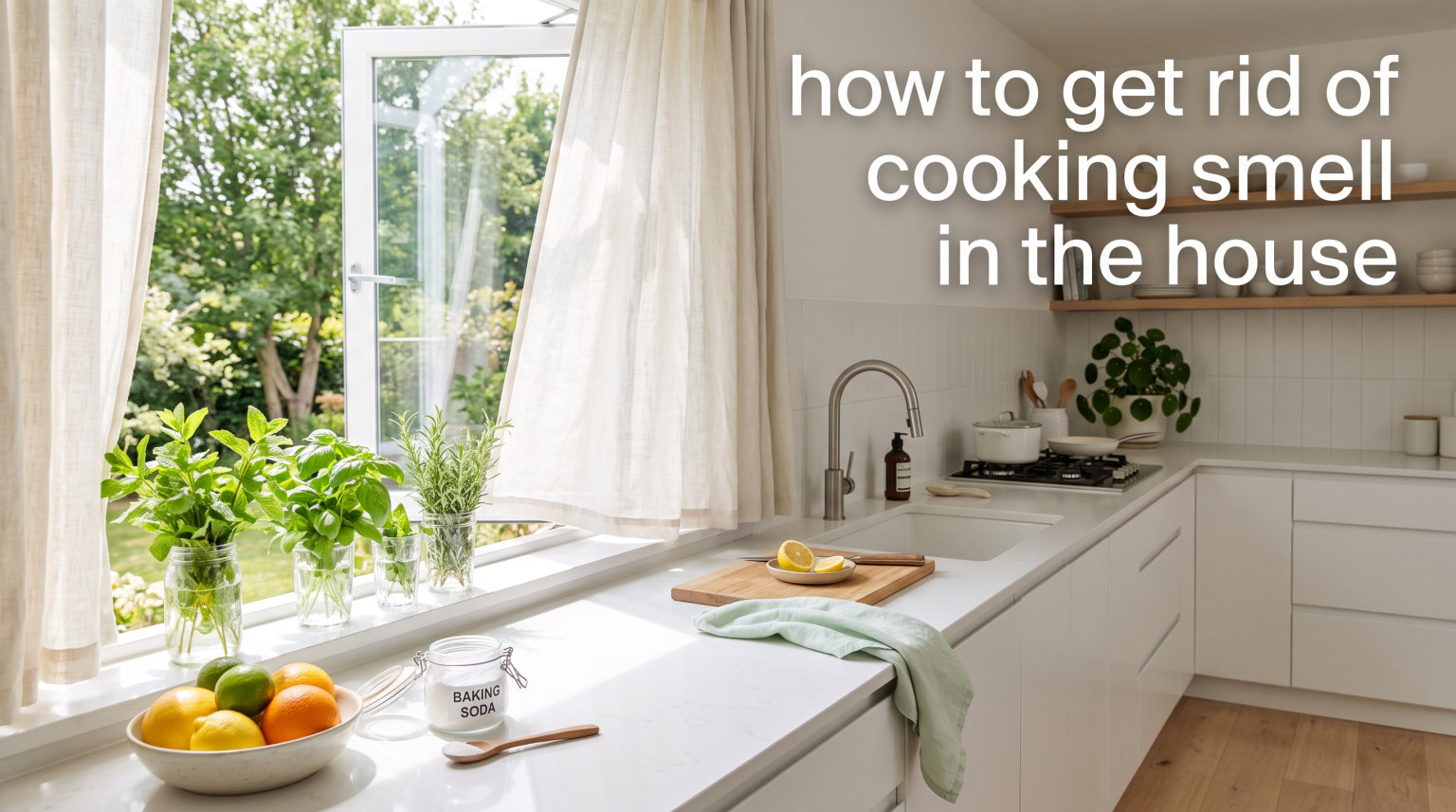
That lingering aroma of last night’s dinner is a problem almost every home cook knows too well. Learning how to get rid of cooking smell in the house matters because those food odors don’t just fade on their own. They cling to curtains, soak into upholstery, and settle into the tiniest crevices of your kitchen.
I’ve spent years testing these methods in my own small kitchen, where one pan of seared salmon can perfume the entire apartment for days. This guide walks through what actually works, why smells stick around, and how to stop them before they spread. You’ll find quick fixes, the proven vinegar method, and preventive habits that keep your home smelling clean.
Table of Contents
Why Cooking Smells Linger So Long
Cooking releases tiny particles of fat, water vapor, and volatile compounds into the air. When those aerosolized grease droplets land on surfaces, walls, and fabrics, they keep releasing odor molecules for hours or even days afterward.
This is the main reason a house still smells like dinner long after the dishes are washed. The smell is not really in the air anymore. It is sitting in a thin invisible film on your stovetop, vent hood, cabinets, and soft furnishings.
Strong ingredients like garlic, fish, and curry make the problem worse because their aromatic compounds are oil-soluble and particularly sticky. Heat also pushes those particles deeper into fabrics and porous materials. Understanding this matters because it explains why simply opening a window is rarely enough on its own.
Quick Solutions: 5 Methods to Try Right Now
When you need fast relief, start with one of these proven approaches. Each targets a different part of the problem.
Boil the vinegar solution: Mix 1 cup white vinegar with 1 cup water and simmer for 15 minutes to neutralize airborne odors.
Open windows and run the exhaust fan: Create cross-ventilation to push stale air out while you cook.
Set out bowls of baking soda: Place 2 to 3 small bowls around the kitchen overnight to passively absorb smells.
Wipe down greasy surfaces: Hit the stovetop, vent hood, and nearby counters with warm soapy water right after eating.
Simmer a citrus pot: Boil lemon or orange peels with cinnamon sticks to replace lingering odors with a fresh scent.
For mild cooking smells, any single method may be enough. For stubborn odors like fish or fried food, combine two or three approaches at once. I usually run the vinegar boil and the exhaust fan together for the fastest results.
How to Get Rid of Cooking Smell in the House: The Core Methods
The most reliable way to get rid of cooking smell in the house combines neutralizing, absorbing, and ventilating. The methods below cover each step, with specific instructions and the situations where each one shines.
Method 1 – The Vinegar Boil (Most Effective)
The vinegar method is the single most recommended solution across every major source, from Serious Eats to countless Reddit threads in r/CleaningTips. It works because vinegar contains acetic acid, which neutralizes the alkaline odor molecules that cooking releases.
Rather than masking smells the way a candle or air freshener does, vinegar actually breaks down the compounds causing the odor. The vinegar scent itself disappears within about 30 minutes once the room cools and ventilates. I was skeptical the first time I tried it, but the results genuinely surprised me.
Step-by-step vinegar method:
Combine 1 cup white vinegar and 1 cup water in a small saucepan or pot. Use plain distilled white vinegar, not apple cider vinegar, which has its own lingering scent.
Bring the mixture to a rolling boil, then immediately reduce the heat to a steady simmer.
Let it simmer uncovered for 15 minutes. Keep the kitchen doors open so the steam can circulate through every room where the cooking smell has spread.
Turn off the heat and let the pot sit for another 10 to 15 minutes to continue releasing neutralizing vapor.
Open a window or run the exhaust fan for 10 minutes to clear the last of the vinegar scent along with the neutralized cooking odors.
For especially strong smells like fried fish or heavy curry, double the recipe to 2 cups vinegar and 2 cups water, and simmer for up to 25 minutes. Real users consistently report this as the most effective method they have tried, and I reach for it first every single time.
Method 2 – Ventilation Techniques
Ventilation is your first and best defense, and it works best when you start before you even turn on the stove. Air movement physically carries odor particles out of your home instead of letting them settle.
Switch on your range hood or exhaust fan the moment you begin cooking, not after the smell has already built up. Keep it running for 15 to 30 minutes after you finish, since grease and vapor continue to circulate even after the burner is off.
If you have windows on opposite sides of your kitchen, open both to create cross-ventilation. A box fan placed in one window facing outward turns this into a powerful exhaust system. I keep a small fan dedicated to exactly this job during the warmer months.
Check your range hood filter regularly. A greasy, clogged filter recycles dirty air right back into your kitchen and undermines everything else you do. Most metal mesh filters can be soaked in hot soapy water and reused.
Method 3 – Baking Soda as an Odor Absorber
Baking soda physically absorbs odor molecules rather than covering them up. It is cheap, fragrance-free, and completely safe to use around food.
Place 2 or 3 shallow bowls of baking soda around the kitchen, focusing on spots near the stove and trash can. Leave them out overnight for mild to moderate smells.
For stronger odors, sprinkle baking soda directly on the stovetop and surrounding counters after they cool, then wipe it away with a damp cloth. An open box tucked near the kitchen vent or behind the trash can provides passive, ongoing odor control for weeks at a time.
Method 4 – Natural Solutions (Coffee, Citrus, Cinnamon)
Once you have neutralized the worst of the smell, natural aromatics add a fresh layer of scent without the chemical load of synthetic air fresheners. These are my go-to choices when guests are coming over.
Coffee grounds absorb odors while releasing a rich, pleasant aroma. Set out a shallow bowl of dry, used coffee grounds near the stove overnight.
Citrus simmer pots are a favorite for replacing cooking odors with something inviting. Simmer lemon or orange peels, a cinnamon stick, and a few whole cloves in water for 20 to 30 minutes. The steam carries the scent through the house, and the spices leave a warm note that lasts for hours.
Activated charcoal bags offer a set-and-forget option for chronic odor issues. Tuck one near the trash can or in a kitchen corner, and it will quietly absorb smells for up to three months before needing replacement.
Method 5 – Surface Cleaning That Stops Re-Odor
This step is the one most people skip, and it is exactly why smells keep coming back. Every invisible film of grease on your kitchen surfaces keeps releasing odor long after the meal is over.
Wipe down the stovetop, the front of the range hood, nearby cabinet doors, and the backsplash with warm soapy water or a vinegar-diluted spray. Do this while the surfaces are still slightly warm, because grease wipes away far more easily before it cools and hardens.
Do not forget the walls and ceiling near the stove. A quick pass with a damp microfiber cloth lifts the aerosolized oil that settles there after frying. Finish by emptying the trash and wiping down the inside of the trash can lid, which traps odors of its own.
When to Use an Air Purifier
If you cook daily with strong-smelling ingredients, or you live in a space where opening windows is not practical, an air purifier becomes worth the investment. I added one to my own kitchen after a particularly stubborn curry incident.
Look for a unit with both a HEPA filter and an activated carbon filter. The HEPA layer captures grease particles and aerosols, while the activated carbon adsorbs the volatile compounds that cause odor. A HEPA filter alone will not remove smells, because odor molecules are far too small for it to trap.
Run the purifier on its highest setting during and for an hour after cooking. In a small apartment, this can be the single most effective long-term solution for households where strong spices are part of the daily menu.
Preventive Measures While You Cook
The best way to deal with cooking smell is to stop it from spreading in the first place. A few small habits during cooking make a dramatic difference.
Always pre-heat your ventilation. Turn on the range hood or exhaust fan before you start cooking, not when the smell hits. Pre-emptive airflow keeps odor particles moving out from the very first minute.
Cover pans whenever you can. A lid traps the majority of steam and aerosolized grease inside the pan, dramatically reducing how much escapes into the room. This works especially well when cooking fish, curry, or anything that splatters.
Choose your cooking method wisely. Baking, roasting, and steaming release far fewer odor particles than pan-frying or deep-frying. When you do fry, use a splatter screen to contain the oil mist.
Keep interior doors closed to bedrooms and closets while you cook. This stops cooking smells from settling into clothing, bedding, and upholstered furniture, which are notoriously difficult to deodorize later.
Tackling Specific Strong Odors
Some ingredients fight back harder than others. Here is how I handle the worst offenders in my own kitchen.
Fish and seafood: These are the toughest cooking odors to remove. Boil the vinegar solution before, during, and after cooking. Simmer a separate pot with lemon slices and water to add fresh citrus notes. Wipe all surfaces immediately, because seafood oils oxidize and intensify in smell over time.
Curry and heavy spices: Curry powder contains oil-soluble compounds that penetrate paint, fabrics, and even wood. Run the exhaust fan the entire time, wash cooking oil containers promptly, and follow up with a thorough surface cleaning. A bowl of milk left out overnight also helps absorb persistent spice odors.
Garlic and onion: These are easiest to handle when you address the source. After chopping, rub a stainless steel spoon or your stainless steel sink with wet hands to neutralize the sulfur compounds on your skin. For the kitchen, the vinegar boil plus a wipedown of cutting boards and knives usually clears the smell within an hour.
Burnt food: Burnt odors are particularly stubborn because the carbonized particles are tiny and pervasive. Remove the burnt item immediately, ventilate aggressively, and run the vinegar method twice. Sprinkle baking soda over any burnt residue in the pan before soaking it.
Apartment and Small Space Solutions
Small apartments amplify every cooking smell because there is less air volume to dilute it. The trade-off is that smaller spaces are also easier to ventilate and deodorize quickly.
If you cannot open windows, rely on a portable air purifier with an activated carbon filter placed near the kitchen. A bathroom exhaust fan can also help pull air through the apartment if your kitchen lacks its own vent.
Use the vinegar method right after cooking, before odors have time to settle into fabrics. Keep soft items like jackets and blankets away from the kitchen area, or store them in closed closets during meal prep.
A bowl of white vinegar left out overnight in a studio apartment works quietly while you sleep. Many renters in small spaces report this single habit keeps their home smelling neutral even with daily cooking. I did this for two years in a 400-square-foot studio, and it made a noticeable difference.
FAQ
What is the hardest smell to get rid of in a house?
How do I remove cooking smells without opening doors or windows?
Why does my house smell so bad after cooking?
Can cooking smells go through walls?
Does vinegar really get rid of cooking smells?
Conclusion
The most effective approach to how to get rid of cooking smell in the house combines the vinegar boil, thorough surface cleaning, and good ventilation. Adding preventive habits like covering pans, pre-heating the exhaust fan, and closing bedroom doors stops most odors before they spread.
Keep baking soda, white vinegar, and a microfiber cloth within reach of your stove, and you will be ready for anything dinner throws at you. Your kitchen can stay fresh and inviting, even on the nights you cook the boldest, most fragrant meals.