
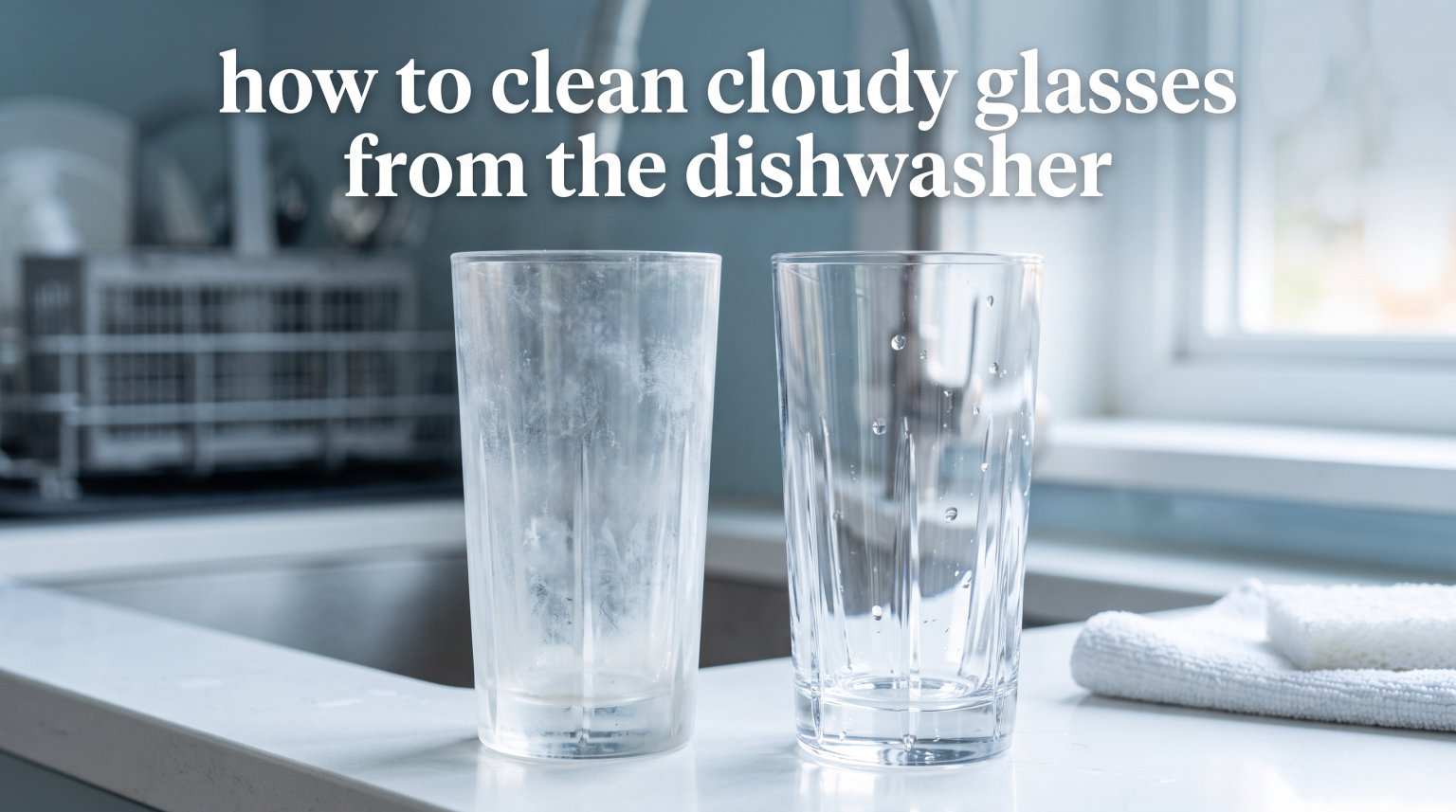
Opening a clean dishwasher to find your favorite drinking glasses covered in a dull, milky film is frustrating. You ran the cycle, used detergent, and somehow your glassware looks worse than before it went in. If you are wondering how to clean cloudy glasses from the dishwasher, you are far from alone. This is one of the most common household cleaning complaints, and the good news is that most cloudy glasses can be restored to crystal clarity with supplies you already have in your kitchen.
The key is knowing whether your cloudiness comes from hard water mineral deposits or permanent etching. Both look similar, but only one is reversible. I have dealt with this problem in my own kitchen, and after testing multiple methods, I can walk you through exactly what works and what does not.
In this guide, we will cover what causes cloudy glassware, how to test whether the damage is fixable, and step-by-step cleaning methods using vinegar, baking soda, Bar Keepers Friend, and lemon juice. We will also cover how to prevent cloudiness from coming back in the future so your glasses stay sparkling wash after wash.
Table of Contents
What Causes Cloudy Glasses from the Dishwasher
Cloudy glasses from the dishwasher are caused by one of three things: hard water mineral deposits, detergent etching, or soap residue. Understanding which one you are dealing with determines whether your glasses can be saved.
Hard Water Mineral Deposits
Hard water is the most common culprit behind cloudy glassware. When your water supply contains high levels of calcium and magnesium, those minerals get baked onto your glasses during the heated drying cycle. The result is a white, chalky film that clings to the surface.
This type of cloudiness is removable. The mineral buildup sits on top of the glass rather than damaging it, which means an acidic solution like vinegar can dissolve it completely. If you live in an area with hard water, this is almost certainly what you are seeing on your glasses.
Detergent Etching
Etching is a different story. This happens when aggressive dishwasher detergents, combined with high water temperatures and soft water conditions, literally scratch the surface of the glass at a microscopic level. Over time, those tiny scratches create a permanent cloudy or rainbow-like film.
Etched glasses cannot be fixed. No amount of soaking or scrubbing will restore the glass surface because the damage is physical, not just a coating. Many people confuse etching with hard water buildup and waste hours trying to clean something that is permanently altered.
Soap Residue and Detergent Film
The third cause is soap residue. If you use too much detergent, the wrong type of detergent, or if your rinse aid dispenser is empty, a thin layer of soap film can coat your glasses. This film looks cloudy and sometimes feels slightly slippery to the touch.
Soap residue is the easiest to remove. A simple hand wash with warm water and dish soap usually clears it right up. However, if it keeps coming back, you likely need to adjust your detergent amount or switch to a detergent formulated for hard water.
How to Test If Cloudiness Is Removable
Before you spend time cleaning, you need to determine whether your cloudiness is removable hard water buildup or permanent etching. There is a simple test that takes about five minutes and uses nothing more than household vinegar.
Dip a finger in white vinegar and rub it on a small cloudy area of the glass. Alternatively, soak a corner of a paper towel in vinegar and press it against the cloudy spot. Hold it there for about 30 seconds, then wipe the area dry.
If the cloudiness disappears where the vinegar touched, you are dealing with hard water mineral deposits. That means your glasses can be restored using the cleaning methods below. The acidic vinegar dissolved the calcium and magnesium buildup on contact.
If the cloudiness remains unchanged, you are likely dealing with permanent etching. No cleaning method will restore etched glass because the surface itself has been physically altered. In that case, your best option is prevention with any replacement glassware you buy.
One note from my own experience: test more than one glass. It is possible for some glasses in a load to have hard water deposits while others show etching, especially if they are different ages or made from different materials.
How to Clean Cloudy Glasses from the Dishwasher: Vinegar Soak Method
The vinegar soak is the most effective and widely recommended method for removing hard water deposits from cloudy glasses. It works because the acetic acid in vinegar breaks down calcium and magnesium minerals on contact. Here is the step-by-step process.
Step 1: Gather your supplies. You need white vinegar, a bowl or container large enough to submerge your glasses, warm water, mild dish soap, and a microfiber cloth for drying.
Step 2: Prepare the vinegar soak. Fill your bowl or container with enough undiluted white vinegar to fully cover the cloudy portions of your glasses. For wine glasses with long stems, you may need a tall container or to soak them in stages.
Step 3: Soak for 15 to 30 minutes. Submerge the glasses in the vinegar and let them sit. Fifteen minutes handles light to moderate mineral buildup. For heavy deposits, extend the soak to 30 minutes. Do not leave glasses soaking overnight, as prolonged exposure to acid can affect delicate glass over time.
Step 4: Hand wash and dry. Remove the glasses from the vinegar and wash them by hand in warm, soapy water. Rinse thoroughly with clean water, then dry immediately with a microfiber cloth. Drying right away prevents new water spots from forming.
Your glasses should come out crystal clear. If some cloudiness remains in stubborn areas, move on to the baking soda paste method below for targeted treatment.
Baking Soda Paste Method for Stubborn Spots
When the vinegar soak removes most of the cloudiness but leaves behind stubborn spots, a baking soda paste gives you targeted scrubbing power without scratching the glass. Baking soda is mildly abrasive, which helps lift mineral deposits that the vinegar soak loosened but did not fully dissolve.
To make the paste, mix two to three tablespoons of baking soda with just enough water to form a thick consistency. You want it spreadable but not runny, similar to toothpaste.
Apply the paste directly to the cloudy spots using your fingers or a soft sponge. Gently rub in circular motions for about 30 seconds per spot. Avoid pressing hard, since excessive force can scratch delicate glass surfaces.
Rinse the glass thoroughly with warm water to remove all baking soda residue. Dry immediately with a lint-free or microfiber cloth to prevent new water spots from forming.
For very stubborn deposits, you can combine methods. Soak the glass in vinegar first for 15 minutes, then apply the baking soda paste while the glass is still wet. The combination of acid and gentle abrasion tackles even heavy mineral buildup effectively.
Bar Keepers Friend Method
Bar Keepers Friend is a community favorite for restoring cloudy glassware, frequently recommended on cleaning forums and in discussion groups. It contains oxalic acid, which is particularly effective at dissolving mineral deposits and hard water stains.
To use Bar Keepers Friend on cloudy glasses, sprinkle a small amount of the powder onto a wet sponge or soft cloth. The key here is to use plenty of water. Users on cleaning forums consistently recommend using it as a wet application rather than a dry paste, since a hard paste can scratch glass.
Gently rub the wet mixture over the cloudy areas in circular motions. Work in small sections and keep the surface wet throughout the process. Rinse thoroughly with warm water and dry with a microfiber cloth immediately.
Test this method on a small area first if you are working with delicate or expensive glassware. While Bar Keepers Friend is generally safe on glass, it is always smart to confirm on an inconspicuous spot before treating the entire surface.
Lemon Juice and Citric Acid Alternatives
If you do not have vinegar on hand or cannot stand the smell, lemon juice and citric acid are effective alternatives. Both contain natural acids that dissolve hard water mineral deposits the same way vinegar does.
For the lemon juice method, soak cloudy glasses in pure lemon juice or a mixture of half lemon juice and half water for 15 to 30 minutes. The citric acid in the lemon breaks down calcium and magnesium deposits just like acetic acid in vinegar. Hand wash and dry as usual afterward.
Citric acid powder is another option. Dissolve one to two tablespoons of citric acid in warm water and soak your glasses for 15 minutes. Citric acid is available at most grocery stores and is especially popular for cleaning because it leaves no odor behind.
Some people also run an empty dishwasher cycle with a cup of lemon juice or citric acid powder in the detergent dispenser once a month. This helps remove mineral buildup from the dishwasher itself, which can reduce cloudiness on future loads.
How to Prevent Cloudy Glasses from the Dishwasher
Cleaning cloudy glasses is satisfying, but preventing the problem in the first place is even better. Once you get your glasses crystal clear again, these prevention tips will keep them that way.
Use a rinse aid. Rinse aid is the single most effective prevention tool. It helps water sheet off your glasses during the rinse cycle instead of forming droplets that leave mineral deposits behind. Keep the rinse aid dispenser full at all times, and check it every few weeks.
Use less detergent. More detergent is not better. Using too much detergent leaves residue on your glasses and can accelerate etching, especially in soft water areas. Follow the manufacturer’s recommended amount, and if you notice cloudiness, try reducing the detergent by half to see if it helps.
Check your water temperature. Dishwasher water that runs too hot can contribute to both etching and mineral deposit baking. The ideal dishwasher water temperature is between 120 and 140 degrees Fahrenheit. If your water heater is set higher than 140 degrees, consider lowering it slightly.
Switch to a hard water detergent. If you live in a hard water area, use a dishwasher detergent specifically formulated to handle mineral-rich water. These detergents contain water-softening ingredients that prevent calcium and magnesium from depositing on your glassware. Many users on cleaning forums report success with detergent pods that include built-in rinse aid.
Run hot water before starting the dishwasher. Turn on your kitchen faucet and let it run until the water is hot before starting the dishwasher cycle. This ensures the dishwasher starts with hot water rather than filling with cold water that sits in the pipes and may carry more sediment.
Load glasses properly. Make sure glasses are angled downward and not touching each other. Proper spacing allows water and rinse aid to reach all surfaces evenly, which prevents spots and film in hard-to-reach areas.
Consider a water softener. If hard water is a persistent problem throughout your home, a whole-house water softener can make a dramatic difference. Just make sure the system is functioning properly. Several forum users reported that their water softener had stopped working without their knowledge, which is why cloudiness appeared suddenly after years of clean glasses.
When to Replace Cloudy Glassware
Sometimes cleaning is not enough, and it is time to replace your glassware. Knowing when to stop trying to restore glasses saves you time and frustration.
If the vinegar test shows that your cloudiness is permanent etching, replacement is your only option. Etching worsens over time, and etched glass will continue to look cloudy no matter how many times you wash or soak it.
Look for visible signs of permanent damage. A rainbow-like or iridescent film that shifts colors when you tilt the glass is a classic sign of advanced etching. Small pits, rough patches, or scratches you can feel with your fingernail also indicate physical damage that cannot be reversed.
Consider the age and value of the glassware. Inexpensive everyday glasses that have become permanently etched may not be worth hours of cleaning effort. Replacing them with dishwasher-safe glassware designed to resist etching can save ongoing headaches.
If you are replacing glassware, look for glasses labeled as dishwasher safe and tempered. These are made with harder glass that resists both etching and thermal shock, giving you a longer lifespan even in hard water conditions.
Frequently Asked Questions
Can you fix glasses that have gone cloudy in the dishwasher?
How do you get glasses that a dishwasher made cloudy clean?
How do you make cloudy glasses crystal clear again?
Why is my dishwasher leaving haze on my glasses?
What is the best dishwasher detergent for cloudy glasses?
Conclusion
Dealing with cloudy glasses from the dishwasher is a frustrating but fixable problem once you understand what you are up against. The vinegar soak method is your best first step, and in most cases it will restore your glassware to its original clarity in under 30 minutes.
Remember to run the vinegar test before you start cleaning. Knowing whether you are dealing with removable hard water deposits or permanent etching saves you from wasting time on glasses that cannot be saved. The baking soda paste and Bar Keepers Friend methods are excellent backups for stubborn spots that the vinegar soak does not fully resolve.
Once your glasses are clear again, focus on prevention. Keeping your rinse aid dispenser full, using the right amount of hard water detergent, and maintaining proper water temperature will keep cloudiness from coming back. A little prevention goes a long way toward protecting your glassware for years to come.