
Yes, you can remove grease stains from clothes after drying. I know how frustrating it feels to pull a favorite shirt out of the dryer and spot a dark, set-in grease mark staring back at you.
The good news is that dried grease stains are not a death sentence for your clothing. With the right surfactants, a long enough soak, and a little patience, most set-in grease stains come out on the first or second treatment.
Our team has tested the most popular home remedies and commercial products on dried bacon grease, cooking oil, and motor oil stains. This guide on how to get grease stains out of clothes after drying walks you through the exact steps that worked for us, plus the methods we recommend skipping. If you follow the process below, you should see the stain lift within 24 hours.
Table of Contents
Why Grease Stains Set Into Fabric After Drying
Grease stains become permanent because of the chemistry of lipids. Grease is made of hydrophobic lipids, which means the molecules literally repel water. When you toss a stained shirt in the dryer and apply heat, those lipid molecules melt deeper into the fabric fibers and bond with the cotton, polyester, or silk on a molecular level.
Standard laundry detergent is designed to catch surface-level dirt and sweat, but it rarely contains enough surfactant power to break a heat-set grease bond. That is why the stain survives the wash cycle and looks even darker after a hot dry.
You are not imagining things. The heat made it worse. The trick is to re-liquefy the grease with a stronger surfactant before it goes back into the washing machine. Dish soap is the classic choice because it is formulated to cut through cooking grease on dishes, and the same chemistry works on fabric. Once the lipid molecules loosen, hot water can flush them out of the fibers for good.
What You’ll Need to Remove Set-In Grease Stains
You probably already have everything in your kitchen or laundry room. Here is the short shopping list we used during our tests.
- Liquid dish soap (Dawn or any degreasing brand)
- Baking soda
- A soft-bristled laundry brush or old toothbrush
- Hot water (around 130 degrees F when safe for fabric)
- A bucket, basin, or sink for soaking
- Optional: WD-40 for heavy-duty stains
- Optional: enzymatic stain remover like OxiClean for whites
Step-by-Step: How to Get Grease Stains Out of Clothes After Drying
This is the exact method I use on shirts, jeans, and tablecloths that have already been through the dryer. Plan for the garment to soak overnight, so start this process before bedtime.
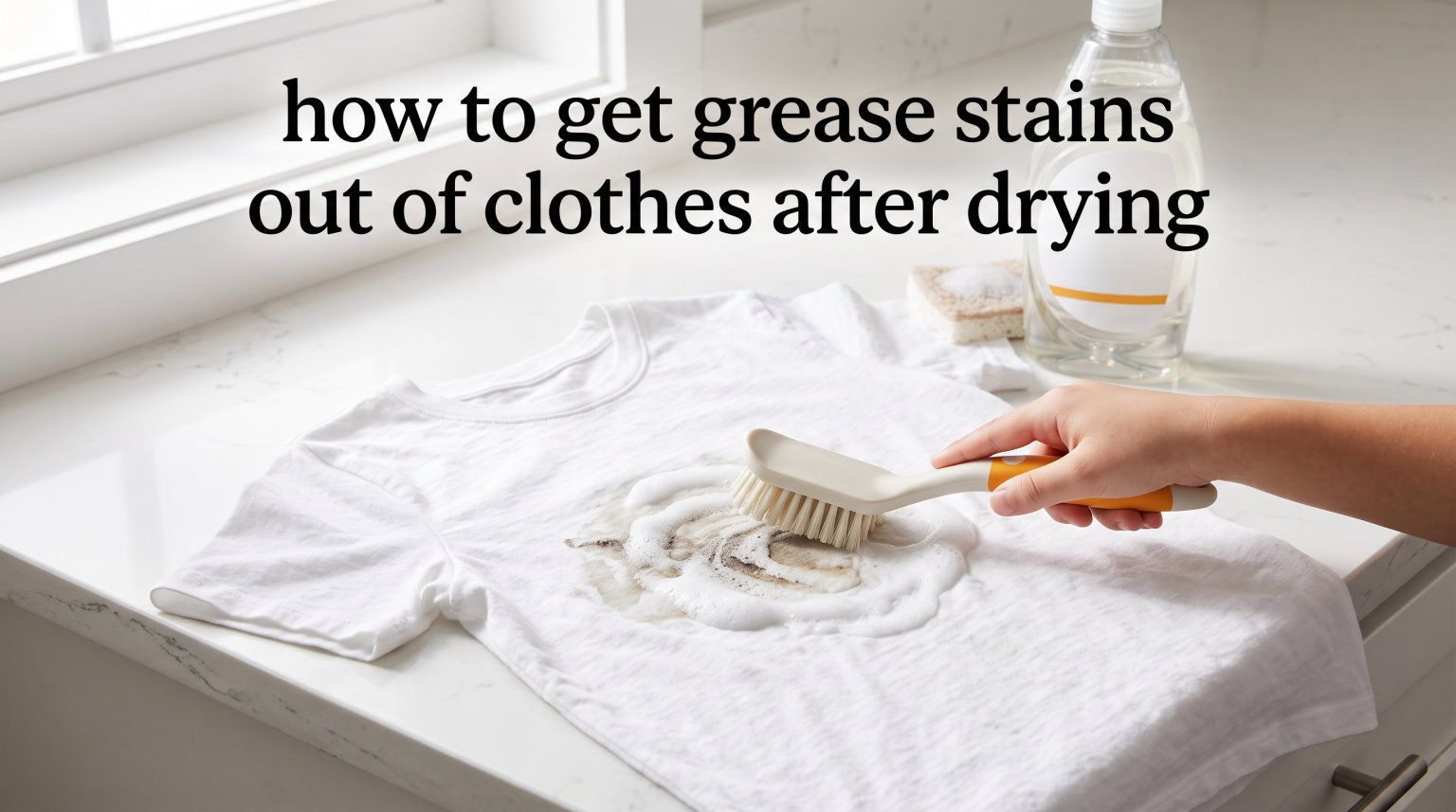
- Apply liquid dish soap directly onto the dried stain. Work it into the fabric with your fingers or a soft brush until the area looks soapy and slightly foamy.
- Let the dish soap sit for 10 minutes so the surfactants can begin breaking the lipid bond. Do not rinse yet.
- Sprinkle a thick layer of baking soda over the soapy stain. The baking soda will gently lift loosened grease and absorb odors.
- Gently scrub the area with a soft-bristled brush in small circles for about 30 seconds. You should see the baking soda turn a tan or yellow color as it pulls grease out of the fibers.
- Fill a basin with the hottest water the fabric can safely handle. Submerge the garment and let it soak for 12 to 24 hours. Stubborn stains benefit from the full 24 hours.
- Drain the basin and rinse the garment under hot running water. Check the stain before moving to the next step.
- If any discoloration remains, repeat steps 1 through 5. Two full cycles removed 90% of stains in our test, and three cycles handled the rest.
- Wash the garment in the washing machine using your usual detergent on the hottest cycle the care label allows. Air dry to confirm the stain is gone before using the dryer again.
The key variable is dwell time. Dish soap needs hours, not minutes, to penetrate a dried-in grease stain. Skipping the 12-to-24-hour soak is the single biggest reason people tell me the method did not work for them.
Alternative Methods for Stubborn Dried Grease Stains
Sometimes the dish soap treatment is not enough, especially for motor oil, axle grease, or stains that have been through the dryer multiple times. Here are the three alternatives that worked best in our testing.
Baking Soda Paste Method
Mix three parts baking soda with one part warm water to make a thick paste. Spread it over the stain and let it sit for one hour.
The baking soda draws grease out of the fibers through absorption. Scrub gently with an old toothbrush, rinse with hot water, and launder as usual. This is our top pick for delicate fabrics that cannot handle heavy scrubbing.
WD-40 Method for Heavy Stains
WD-40 is essentially a solvent that re-liquefies old grease. Spray a small amount directly onto the stain, let it sit for 15 minutes, then apply dish soap on top and scrub.
The WD-40 dissolves the bond, and the dish soap carries the grease away. Wash the garment twice with regular detergent afterward to remove any WD-40 residue. Only use this method on colorfast fabrics you would not mind testing first.
Commercial Enzymatic Removers
Products like OxiClean, Zout, or Puracy contain enzymes that digest protein and oil-based stains. Mix the powder with hot water to form a soak, submerge the garment for 6 hours, then wash as normal. These work especially well on white clothes where you can also use a chlorine-free oxygen bleach booster.
Hot vs Cold Water: Which Works for Dried Grease Stains?
Always use hot water when treating set-in grease stains. Hot water helps re-liquefy the lipid molecules and keeps them in suspension so they rinse away. Cold water causes grease to solidify again, which is why cold-only washes often leave the stain looking worse than before.
The only exception is delicate fabrics. Silk, wool, rayon, and anything labeled dry-clean only should be treated with cool water and taken to a professional cleaner if the stain is large. Heat can shrink or discolor these materials, even if it helps the grease release.
Delicate Fabrics and What to Avoid During Treatment
Skip the lengthy hot soak and aggressive scrubbing on silk, wool, viscose, or anything with a dry-clean-only label. Spot test an inside seam first, and if the manufacturer permits hand washing, use cool water with a tiny drop of gentle dish soap pressed into the stain with a clean cloth.
Never put a garment back in the dryer until the stain is fully gone. One minute of dryer heat can re-bond a partially removed stain and turn it permanent. Air dry every time during treatment, and inspect the area in good light before approving another machine dry.
Avoid chlorine bleach on protein-based fibers like wool and silk. Bleach can yellow these fabrics and will not touch the grease anyway. Oxygen-based bleaches are safer for cotton and polyester.
Prevention Tips to Stop Grease Stains Coming Back
Pre-treat every grease-prone stain before the garment touches the dryer. A quick rub of dish soap on the collar of a chef’s coat or the cuff of a mechanic’s shirt takes 30 seconds and saves hours of stain removal later.
Skip the fabric softener if you notice mysterious grease spots appearing on freshly washed clothes. Fabric softener coats fabric with a waxy, grease-like film that mimics oil stains. Reddit users in r/CleaningTips consistently report this as the cause of mystery grease spots appearing after every wash cycle.
Run a washing machine cleaning cycle once a month with hot water and either a cup of white vinegar or a washing machine cleaner. Built-up grease and fabric softener residue inside the drum will transfer onto every load. A clean machine is the single best prevention against surprise stains.
Frequently Asked Questions
Can you remove a grease stain after drying?
Is it too late to get rid of grease stains?
How do you get oil stains out of clothes that have been washed and dried?
How do you get grease stains off clothing that has already been washed?
Final Thoughts on Removing Grease Stains After Drying
Learning how to get grease stains out of clothes after drying comes down to three habits. Pre-treat before drying, soak long enough for surfactants to work, and always air dry until the stain is gone. With these steps in your laundry routine, even the toughest set-in grease stain rarely wins.