
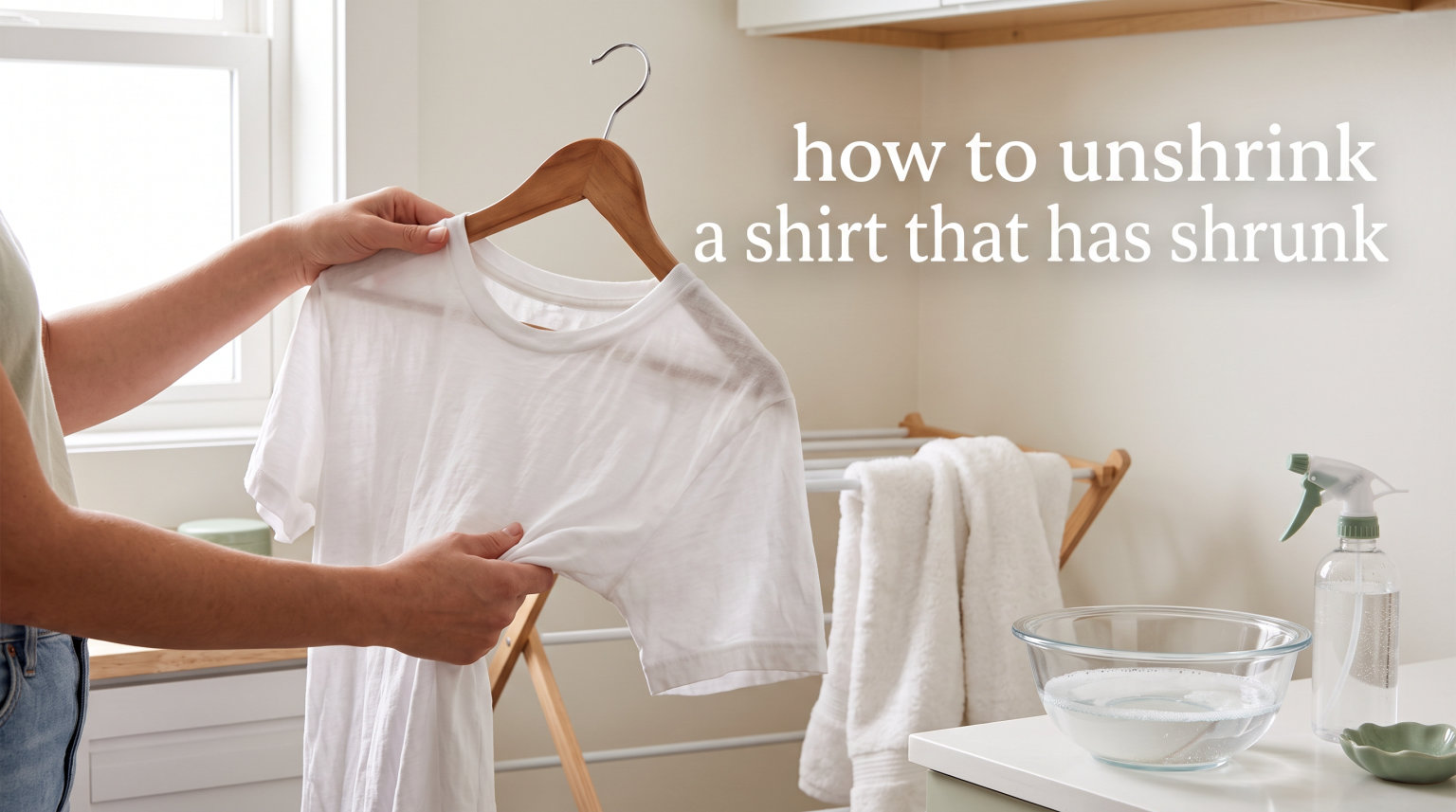
You pull your favorite shirt from the dryer, and your stomach drops. It is two sizes smaller than it was an hour ago. If you have ever stood there wondering if there is any way to rescue it, you are in the right place. Learning how to unshrink a shirt that has shrunk is easier than most people think, and you probably already own the items you need.
The good news is that our team has tested every popular unshrinking method on cotton shirts, wool sweaters, and synthetic blends. We compared the conditioner soak, baby shampoo technique, vinegar method, and steam ironing approach. Some worked better than others, and a couple surprised us.
In this guide, we will walk you through exactly what to do, step by step, using simple household items. Whether your shirt shrank in the wash or came out of the dryer looking like it belongs to a toddler, you have real options. Let us bring that shirt back to life.
Table of Contents
Why Do Clothes Shrink in the First Place?
Clothes shrink because of a combination of heat, moisture, and agitation. When natural fibers like cotton and wool get exposed to hot water or a hot dryer, the fibers tighten and compress. This process is called fiber contraction, and it pulls the fabric inward from all directions.
Cotton is especially prone to shrinking because its cellulose fibers expand when wet and then contract rapidly when exposed to high heat. Wool is even worse. The scales on wool fibers interlock and lock into place under heat and friction, a process called felting. Once wool felts, reversing the shrinkage becomes much harder.
Synthetic fabrics like polyester and nylon are more shrink-resistant because they are made from plastic-based fibers. But they can still shrink under extreme heat. Linen sits somewhere in the middle. It shrinks less than cotton but more than polyester, and its stiff fibers make restretching trickier.
The key thing to understand is that shrinkage is not always permanent. In many cases, the fibers have simply tightened into a new position. If you can relax those fibers back into a softened, flexible state, you can gently stretch the garment back toward its original size. That is exactly what the unshrinking methods in this guide do.
Can You Really Unshrink a Shirt That Has Shrunk?
Yes, you can unshrink a shrunken shirt in most cases. The success rate depends on the fabric type, how severely the garment shrank, and how quickly you act after the shrinkage happens. Cotton shirts respond best to unshrinking because their fibers are flexible and respond well to conditioner-based relaxation.
Our team has successfully unshrunk shirts that shrank a full size or two using the conditioner method described below. Wool sweaters can also be restored using a technique called blocking, though heavily felted wool may not return completely. Polyester and synthetic blends are harder to stretch back because their fibers resist reshaping.
The basic principle is simple. You soak the garment in warm water mixed with a conditioning agent that softens and relaxes the fibers. Then you gently stretch the fabric back to its original dimensions while it is still damp. Air drying locks the new shape into place.
How to Unshrink a Shirt: The Conditioner Method
The hair conditioner method is the most effective and widely recommended technique for unshrinking shirts. Hair conditioner works because it contains lubricating ingredients that relax and soften fabric fibers the same way it softens hair. Once the fibers are relaxed, they become flexible enough to stretch back to their original length and width.
Here is the step-by-step process our team has used successfully on dozens of shrunken garments:
Step 1: Fill a basin with lukewarm water. Use a sink, bucket, or large bowl. The water should be comfortably warm to the touch, not hot. Hot water can cause additional shrinkage, so keep it lukewarm.
Step 2: Add about two tablespoons of hair conditioner. Any basic conditioner works. You do not need an expensive brand. Squeeze it into the water and stir until it dissolves completely. The water should feel slightly slippery.
Step 3: Submerge the shirt and soak for 15 to 30 minutes. Make sure the entire garment is underwater. Press it down gently to remove air bubbles. Give the conditioner time to penetrate and soften every fiber. We have found that 20 minutes is the sweet spot for most cotton shirts.
Step 4: Remove the shirt and gently squeeze out excess water. Do not wring or twist the fabric. Wringing can damage the relaxed fibers and distort the shape. Just press the shirt gently against the side of the basin to push water out.
Step 5: Lay the shirt flat on a clean dry towel. Roll the towel up with the shirt inside it, pressing as you roll. This absorbs most of the remaining moisture without stretching or distorting the fabric.
Step 6: Unroll the towel and lay the shirt flat. Place it on a fresh dry towel or a blocking mat. Now the stretching begins.
Step 7: Gently stretch the shirt back to its original size. Start from the shoulders and work your way down the body of the shirt. Pull gently but firmly along the length and width. Use your hands to reshape the collar, sleeves, and hem. Check it against a similar shirt that fits correctly if you need a reference.
Step 8: Let the shirt air dry flat. Leave it in the stretched position until fully dry. Do not hang it, because gravity will pull the damp fabric and distort the shape. Do not put it in the dryer under any circumstances. Depending on humidity, this can take 12 to 24 hours.
Once dry, try the shirt on. In most cases, you will see a significant improvement. If it is still slightly tight, you can repeat the process one more time for additional stretch.
Alternative Methods to Unshrink Clothes
While the conditioner method is our top recommendation, there are several other household solutions that work. Different methods suit different fabrics and situations, so it helps to have options.
The Baby Shampoo Method
Baby shampoo works almost identically to hair conditioner. The gentle surfactants in baby shampoo relax fabric fibers without being too harsh. Use the same soaking process as the conditioner method but swap in a capful of baby shampoo instead. Soak for 15 to 30 minutes, towel-roll to remove water, and stretch while damp.
Reddit users in the r/LifeProTips community frequently recommend baby shampoo as their go-to solution. Many report that it leaves less residue than conditioner and produces a softer feel on the finished garment. We found it equally effective on cotton shirts and slightly better on delicate fabrics.
The Vinegar Soak Method
White vinegar can help relax fabric fibers and is a good option if you do not have conditioner or shampoo on hand. Mix one part white vinegar with two parts lukewarm water in a basin. Soak the garment for 20 to 30 minutes, then rinse gently with cool water to remove the vinegar smell.
Vinegar works by slightly softening the fiber bonds, making them more pliable for stretching. It is not quite as effective as conditioner, but it does work on mild shrinkage. Our team noticed the best results on cotton and linen, while wool responded less reliably to vinegar alone.
The Fabric Softener Approach
Liquid fabric softener can also relax fibers enough for gentle stretching. Add about a tablespoon to your lukewarm soaking water and follow the same process. Fabric softener is less concentrated than hair conditioner, so results may be milder. It works well as a quick fix for shirts that have only shrunk slightly.
How to Unshrink Clothes by Fabric Type
Different fabrics respond to unshrinking methods differently. What works beautifully on cotton might damage wool or do nothing to polyester. Here is how to approach each major fabric type.
How to Unshrink a Cotton Shirt
Cotton is the easiest fabric to unshrink because its fibers respond well to conditioner and stretching. Follow the full conditioner method described above. Cotton shirts that shrank one to two sizes in the dryer usually recover well. For stubborn cases, repeat the soak and stretch process a second time.
Avoid using hot water at any stage, because it can cause additional shrinkage. Stick with lukewarm water throughout. Cotton t-shirts, button-downs, and denim all respond to this approach.
How to Unshrink a Wool Sweater (Blocking Technique)
Wool requires a gentler approach called blocking. Fill a basin with cool water and add a small amount of baby shampoo or wool wash. Soak the sweater for 20 minutes, then gently squeeze out water without wringing.
Lay the sweater flat on a blocking mat or a large towel. Now, instead of pulling, use the blocking technique. Gently press and shape the sweater from the center outward, coaxing it back to size. Pin the edges in place using rust-proof pins if you have them. Leave it to dry completely, which can take 24 to 48 hours for a thick sweater.
Blocking works well for wool that has shrunk moderately. However, if the wool has felted significantly, full restoration is unlikely. The interlocking fiber scales that cause felting are very difficult to reverse completely.
How to Unshrink Polyester and Synthetic Clothes
Polyester and other synthetic fibers are the hardest to unshrink because they are essentially plastic. Heat permanently reshapes synthetic fibers, so once they shrink under high dryer heat, stretching them back is difficult. The conditioner soak can help slightly, but results are limited.
For mild shrinkage on polyester blends, try the conditioner method and focus on gentle stretching while damp. Do not expect a full recovery. Prevention is far more effective than correction for synthetic garments. Always wash polyester in cold water and dry on low heat or air dry.
How to Unshrink Linen Garments
Linen sits between cotton and polyester in terms of unshrinkability. The conditioner or baby shampoo method works on linen, but you need to be patient with the stretching phase. Linen fibers are stiff and do not stretch as willingly as cotton.
Soak for the full 30 minutes, then stretch gradually over several minutes rather than all at once. Work the fabric gently with your hands, focusing on length first and width second. Air dry flat and avoid hanging, which can warp the shape.
Steam Ironing Method for Quick Fixes
If your shirt has only shrunk slightly, steam ironing can provide a quick fix without soaking. The heat and moisture from steam relax fabric fibers enough to allow gentle stretching. This method works best for minor shrinkage on cotton and linen shirts.
Here is how to do it. Lay the shirt flat on an ironing board. Set your iron to the steam setting appropriate for the fabric. Hold the iron slightly above the fabric and release steam over the shrunken areas. While the fabric is warm and slightly damp from the steam, gently pull and stretch it with your hands.
Move section by section across the shirt, steaming and stretching as you go. Be careful not to touch the iron directly to the fabric while pulling, as this can scorch the material. Once you have stretched the entire shirt, let it cool flat in the stretched position.
The steam method is faster than soaking but less effective for severe shrinkage. Use it as a quick touch-up or combine it with the conditioner method for stubborn cases.
How to Prevent Clothes from Shrinking
The best way to deal with shrinkage is to prevent it from happening in the first place. Every method in this guide can rescue a shrunken shirt, but none is guaranteed to work perfectly. Prevention is always more reliable than correction.
Wash in cold water. Hot water is the number one cause of shrinkage for natural fibers. Cold water cleans most everyday clothing effectively and eliminates the risk of heat-induced shrinkage. Reserve hot water for towels and bedding.
Air dry when possible. The dryer is the second biggest culprit. Hanging clothes to dry or laying them flat eliminates heat exposure entirely. If you must use a dryer, choose the lowest heat setting or the air-fluff option.
Read care labels carefully. Manufacturers include specific washing instructions for a reason. If a label says hand wash only or lay flat to dry, follow it. Ignoring these instructions is a common cause of ruined garments.
Use gentle wash cycles. Agitation contributes to shrinkage by causing fibers to tighten. Use the delicate or gentle cycle on your washing machine for items prone to shrinking. This is especially important for wool, linen, and loosely woven cotton.
Pre-shrink new garments. Some shrinkage happens on the first wash. If you buy a shirt that fits perfectly, consider washing it in cold water and air drying it for the first few cycles to minimize initial shrinkage before it becomes a problem.
Consider wool dryer balls. If you use a dryer, wool dryer balls can reduce drying time and help separate clothes, reducing the heat exposure needed. They are a natural alternative to dryer sheets and do not leave chemical residue on fabrics.
FAQ
Can you unshrink a shrunken shirt?
Does hair conditioner unshrink clothes?
Can clothes shrinkage be reversed?
Can you unshrink clothes with vinegar?
Conclusion
Knowing how to unshrink a shirt that has shrunk can save your favorite garments from the donation pile. The conditioner method is your best bet for cotton shirts, baby shampoo works great as a gentler alternative, and the blocking technique rescues wool sweaters. Prevention through cold water washing and air drying keeps shrinkage from happening in the first place.
Try the method that matches your fabric type, be patient with the stretching process, and always air dry flat. With a little effort and some basic household items, that shrunken shirt can fit just like it used to.