
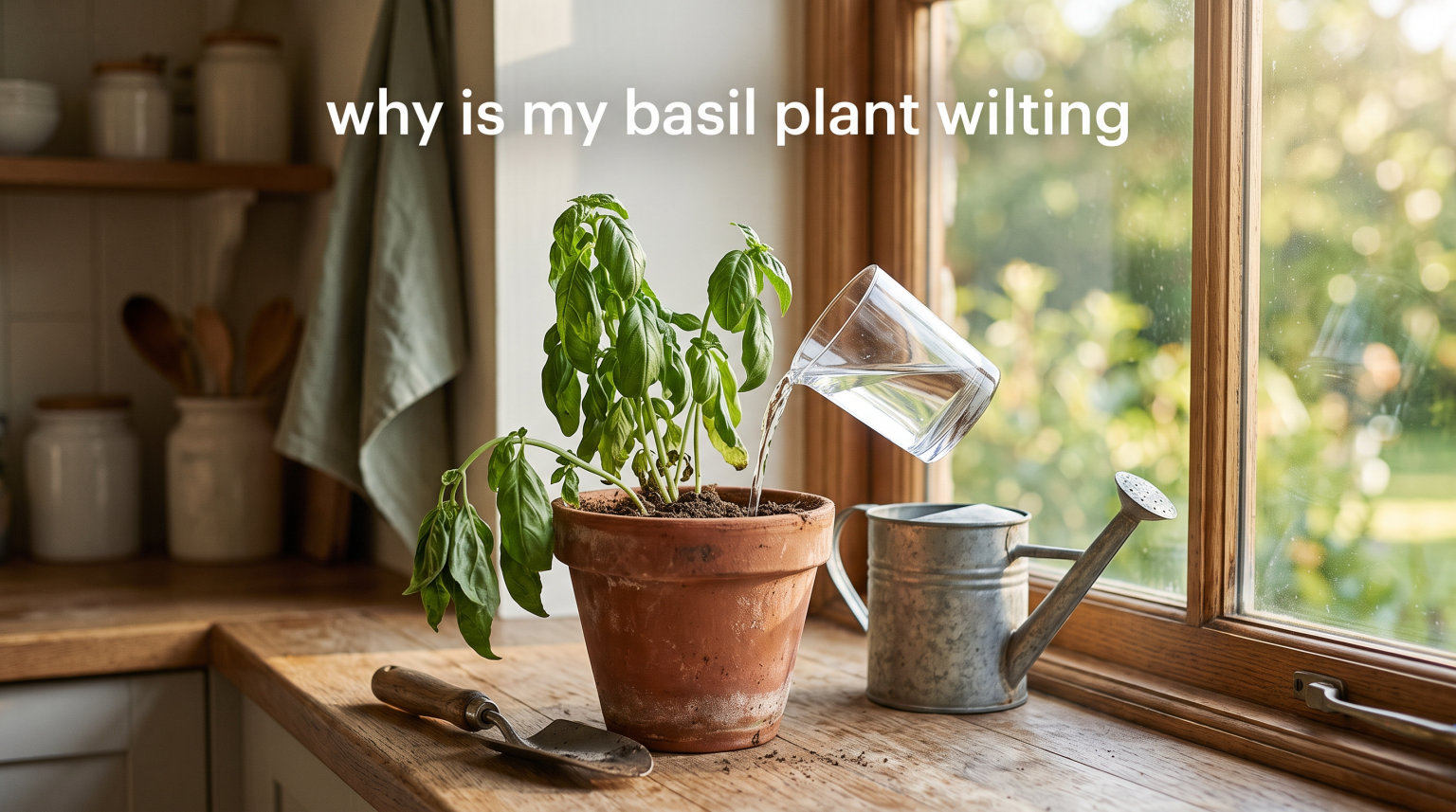
If you are staring at a drooping basil plant right now and wondering what went wrong, you are not alone. I have personally lost basil to overwatering, underwatering, and a surprise frost, so I know the panic that comes with wilting basil leaves. The good news is that most basil plants can recover once you figure out the cause and act within a few days.
This guide covers the seven most common reasons a basil plant wilts, how to tell them apart, and the exact steps I use to revive a struggling plant. By the end, you should be able to look at your basil and know exactly what it needs to bounce back in 2026.
Table of Contents
Quick Diagnosis: What Type of Wilting Are You Seeing?
The fastest way to figure out why your basil plant is wilting is to check three things: the soil, the stems, and the leaves. Most causes of wilting basil can be ruled in or out in under two minutes with this checklist.
- Soil check: Stick your finger one inch deep. Is it bone dry, slightly moist, or soggy and smelly?
- Stem check: Are stems firm and green, or soft, brown, and mushy near the base?
- Leaf check: Are leaves drooping but green, yellowing from the bottom up, crispy at the edges, or streaked with brown spots?
- Pattern check: Does the plant recover overnight and wilt again at midday, or does it stay wilted around the clock?
If your basil droops in the heat of the day but perks up by morning, that is usually just heat stress and is not an emergency. If it stays wilted all day and the soil feels wet, you are probably overwatering. If the soil feels dry two inches down, the answer is almost always underwatering. Use this quick read to point yourself toward the right fix below.
Underwatering: The Most Common Cause of Basil Wilting
Underwatering is the number one reason basil wilts, and it is the easiest problem to fix. When soil dries out completely, basil leaves lose turgor pressure and droop within hours to protect what little moisture remains in the plant.
Symptoms of an underwatered basil plant:
- Soil is dry and pulling away from the sides of the pot
- Leaves feel papery or crispy at the edges
- Lower leaves yellow and drop first
- The whole plant looks limp but stems are still firm
Why it happens: Missed waterings, hot weather, small pots that dry out fast, or hydrophobic soil that repels water instead of absorbing it. I have seen supermarket basil dry out and wilt within a single afternoon on a sunny windowsill.
How to fix it: Water slowly and deeply until water runs out the drainage holes. If the soil has become hydrophobic and water rolls off the top, set the entire pot in a basin of room-temperature water for 20 minutes so the root ball rehydrates from below. Once the plant perks up, switch to checking the soil daily and watering whenever the top inch feels dry.
Overwatering: Why Too Much Water Makes Basil Droop
Overwatering causes wilting in a different way. When soil stays soggy, roots cannot get oxygen, so they suffocate and stop delivering water to the leaves. The plant looks thirsty even though it is sitting in moisture.
Symptoms of an overwatered basil plant:
- Soil feels wet or soggy days after watering
- Lower leaves turn yellow while staying soft
- Stems feel soft near the soil line
- You may notice fungus gnats hovering around the pot
Why it happens: Pots without drainage holes, watering on a fixed schedule instead of checking soil, oversized pots that hold too much moisture, and heavy garden soil that does not drain well. Forum users often share this exact line: “I water every morning and it is still wilting” – and the answer is usually to water less, not more.
How to fix it: Stop watering and let the top two inches of soil dry out. Move the pot to a spot with good airflow and indirect light so it dries faster. If the pot has no drainage holes, repot immediately into a container with at least one large hole. Trim any yellow leaves so the plant can put energy into new growth instead of trying to save damaged foliage.
Temperature Stress and Sun Exposure
Basil is a tropical herb that thrives between 65 and 85°F. Outside that range, basil leaves droop as a stress response even when soil moisture is fine.
Common triggers: Cold drafts from open windows or air conditioning vents, nights below 50°F, sudden relocation outdoors without hardening off, and intense midday sun on a south-facing wall. A basil plant that droops at noon and recovers by evening is usually reacting to heat and sun, not water issues.
How to fix it: Move the plant away from cold drafts and AC vents. Provide afternoon shade if it is outdoors in summer. If you just brought basil home or moved it outside, give it 5 to 7 days of gradual exposure to its new conditions before expecting normal growth.
Root Rot: When Wilting Means Trouble Below the Soil
Root rot is what happens when overwatering goes on long enough for fungus to take hold. Once roots turn black and mushy, they can no longer pull water up, so the plant wilts permanently even in moist soil.
How to confirm root rot: Slide the plant out of its pot and look at the roots. Healthy basil roots are white or pale tan and firm. Rotted roots are black, brown, slimy, and may smell sour. If more than half the root system is mushy, the plant is unlikely to recover.
How to treat mild root rot: Cut away every soft, dark root with clean scissors until only firm white roots remain. Dust the cuts with ground cinnamon (a natural antifungal) or a sulfur-based fungicide. Repot into fresh, well-draining potting mix and a clean pot with drainage holes. Hold off on fertilizing for 4 weeks.
When to discard the plant: If the main stem is brown and mushy at the base, or if most of the root ball has collapsed, the plant will not come back. Toss it, sanitize the pot, and start fresh. It is better to compost one plant than to spread fungal spores to your next one.
Transplant Shock After Repotting
Wilting after repotting is one of the most common search questions around basil care. The roots were just disturbed, and they need time to re-establish contact with the surrounding soil.
Typical symptoms: The whole plant droops for 3 to 7 days after repotting or moving outdoors, even with proper watering. Leaves may curl slightly but stay green.
How to fix it: Keep the soil evenly moist but not soggy, place the plant in bright indirect light for a few days, and skip fertilizer until you see new growth. Most basil plants bounce back from transplant shock within 7 to 14 days. As long as the stems stay firm and green, the plant is recovering.
Fusarium Wilt: The Disease That Cannot Be Cured
Fusarium wilt is a soil-borne fungal disease that specifically targets basil. There is no cure, and infected plants must be removed to protect other herbs nearby.
How to identify Fusarium wilt: Look for brown streaks running up the stems, yellowing that starts on one side of the plant while the other side looks normal, and sudden wilting that does not respond to watering. The classic giveaway is one-sided wilting – half the plant looks dead while the other half still has healthy leaves.
What to do: Pull the plant, roots and all, and bag it for the trash. Do not compost it. Sanitize the pot with a 10% bleach solution before reuse. If Fusarium is a recurring problem in your garden, switch to Fusarium-resistant basil varieties and avoid planting basil in the same spot for at least 3 years.
Pest-Related Wilting
Insects rarely kill basil on their own, but a heavy infestation of aphids, spider mites, or whiteflies can stress a plant enough to cause wilting. Sap-sucking pests drain moisture from leaves faster than the roots can replace it.
Signs to look for: Sticky residue on leaves (honeydew from aphids), fine webbing on the undersides of leaves (spider mites), tiny white flies that flutter when you brush the plant, and visible clusters of green, black, or white insects on new growth.
How to fix it: Spray the plant with a strong jet of water to knock pests off, then treat with insecticidal soap or neem oil every 5 days for 3 weeks. Prune away the most damaged leaves. Healthy basil usually outgrows pest pressure once the infestation is under control.
How to Revive a Wilting Basil Plant: Step-by-Step
Once you have identified the cause, follow this exact order to give your basil the best chance of recovery. I have used these steps on supermarket basil, container basil, and garden basil with consistent results.
- Diagnose first. Check soil moisture, stem firmness, and leaf color before you add or remove water.
- Adjust watering. If dry, soak the root ball. If soggy, let it dry and check drainage.
- Trim damaged leaves and stems. Use clean scissors to remove yellow, brown, or mushy growth so the plant focuses energy on healthy tissue.
- Move to proper light. Basil wants 6 to 8 hours of bright, indirect light or direct morning sun with afternoon shade.
- Maintain temperature between 65 and 85°F. Move away from cold drafts, AC vents, and hot windows.
- Hold off on fertilizer for 4 weeks. Stressed roots cannot absorb nutrients and fertilizer can burn them.
- Be patient. Most basil plants show visible recovery within 5 to 14 days when the underlying cause is fixed.
Prevention: How to Keep Your Basil Healthy
Preventing wilting is far easier than reviving a dying plant. Once I switched to these habits, I went from losing basil every few months to keeping the same plant productive for over a year.
Watering best practices: Check the soil daily and water only when the top inch feels dry. Water at the base of the plant in the morning so leaves stay dry. Bottom-watering once a week encourages deep root growth and prevents hydrophobic soil.
Container and soil requirements: Use a pot with drainage holes and a well-draining potting mix that contains perlite or coarse sand. Avoid heavy garden soil in containers. A 6 to 8 inch pot is ideal for a single basil plant.
Light and temperature management: Basil needs 6 to 8 hours of light daily. Outdoors, choose a spot with morning sun and afternoon shade. Indoors, a south-facing window with filtered light works well. Keep temperatures steady between 65 and 85°F.
Supermarket basil specific tips: Grocery store basil is usually packed with dozens of seedlings in one small pot, which causes fast wilting because the roots compete for water. Split the clump into 3 to 4 smaller pots within 48 hours of purchase, or transplant the whole thing into a larger container with fresh soil. Most forum users report their supermarket basil died within days because they skipped this step.
Common mistakes to avoid: Watering on a fixed schedule instead of checking soil, leaving the plant in a nursery pot without drainage, placing basil in direct afternoon sun in summer, fertilizing a stressed plant, and ignoring the first signs of yellowing. Catching problems early is the single biggest factor in keeping basil alive.
When to give up on a plant: If the main stem is brown and mushy, the roots are black and slimy, or the plant has not improved after 3 weeks of proper care, it is time to compost it. Holding onto a doomed plant only spreads disease and wastes resources that could go to a healthy replacement.
Frequently Asked Questions
How to fix a droopy basil plant?
Can a wilted basil plant be saved?
What does an overwatered basil plant look like?
Will basil grow back after wilting?
How long does it take for basil to recover from transplant shock?
Why is my basil wilting and turning brown?
Final Thoughts
If you have been asking why is my basil plant wilting, the answer almost always comes down to water, temperature, or root health. Start with the soil check, identify which symptom pattern matches your plant, and apply the fix within 24 hours for the best chance of recovery.
Most basil plants that look doomed can be saved with quick action. Use the diagnostic checklist, follow the revival steps, and your basil should be producing fresh leaves again within a few weeks.