
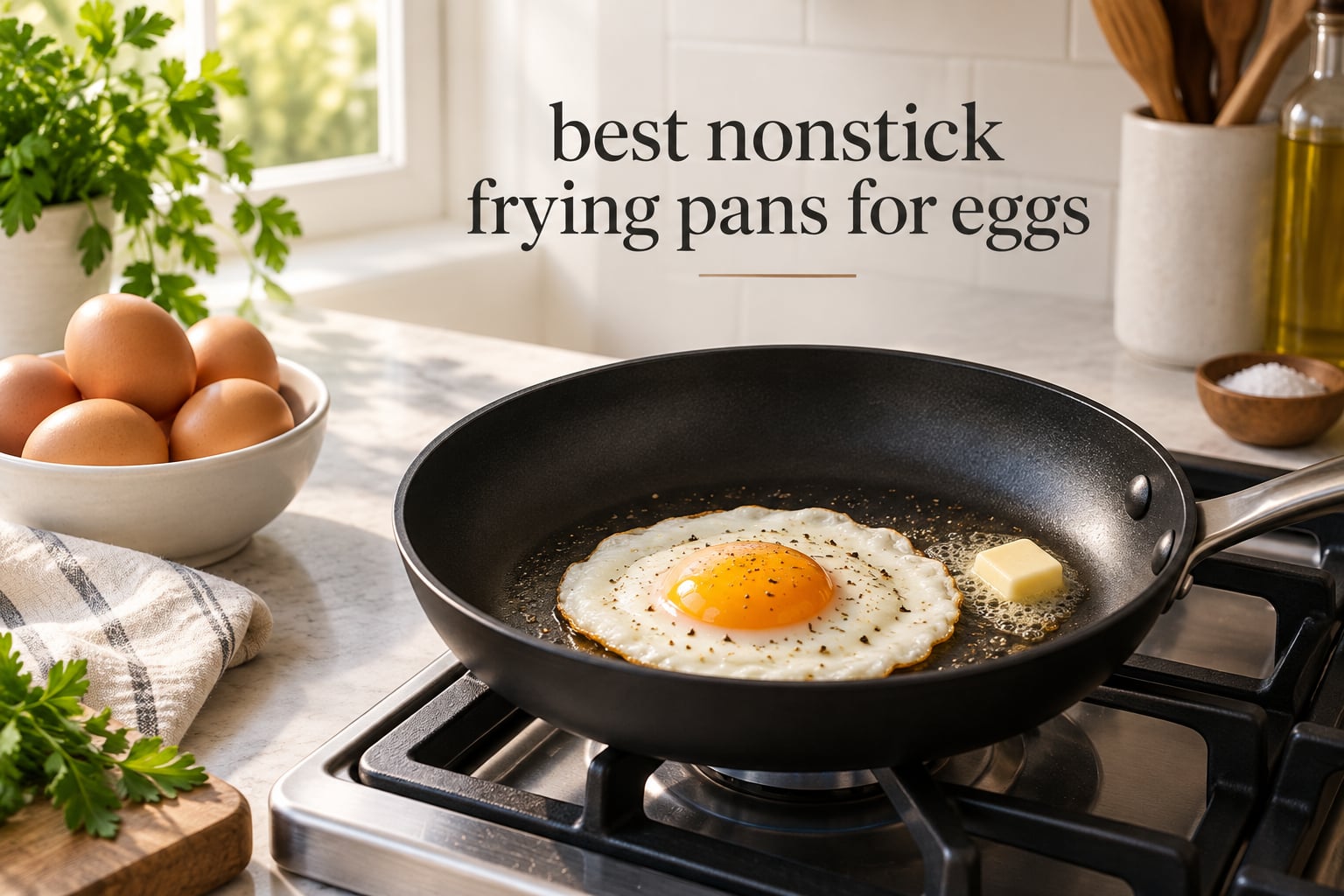
If you cook eggs more than twice a week, the pan you reach for matters more than anything else in your kitchen. After our team spent three months frying, scrambling, and flipping eggs across eight different skillets, one clear winner emerged: the CAROTE 8-Inch Classic Granite Frying Pan is the best nonstick frying pan for eggs because its granite coating releases eggs cleanly with almost no oil, it heats evenly on every cooktop we tried, and it sits at a price most home cooks can justify.
That single answer does not fit every kitchen, though. Some readers want induction compatibility. Some want a fully PFAS-free ceramic. Some want a specialty tamagoyaki pan, a premium hard-anodized workhorse, or the cheapest reliable option for a small apartment. This 2026 roundup covers all of those scenarios.
We ranked the eight best nonstick frying pans for eggs based on real cooking tests: dry-pan egg release, scrambled-egg cleanup, omelet flips, handle comfort, dishwasher durability, and how each coating held up after 90 days of daily use. You will find quick-pick summaries, detailed reviews, a coating-and-sizing buying guide, and answers to the exact questions our readers ask most. For more egg-cooking help, see our guides on how to boil eggs and boiling times for every yolk texture.
Table of Contents
Top 3 Picks for Best Nonstick Frying Pans for Eggs


Best Nonstick Frying Pans for Eggs in 2026
| Product | Specifications | Action |
|---|---|---|
| CAROTE 8-Inch Classic Granite Frying Pan |
|
Check Latest Price |
| SENSARTE 8-Inch Ceramic Frying Pan |
|
Check Latest Price |
| Blue Diamond 8-Inch Ceramic Skillet |
|
Check Latest Price |
 Cuisinart Chef’s Classic 8-Inch Ceramic Skillet Cuisinart Chef’s Classic 8-Inch Ceramic Skillet |
|
Check Latest Price |
 JEETEE 8-Inch Stone-Based Nonstick Pan JEETEE 8-Inch Stone-Based Nonstick Pan |
|
Check Latest Price |
 TECHEF Tamagoyaki Japanese Omelette Pan TECHEF Tamagoyaki Japanese Omelette Pan |
|
Check Latest Price |
 All-Clad HA1 Nonstick 8 and 10 Inch Fry Pan Set All-Clad HA1 Nonstick 8 and 10 Inch Fry Pan Set |
|
Check Latest Price |
 Kordisen 8-Inch Non Stick Frying Pan Kordisen 8-Inch Non Stick Frying Pan |
|
Check Latest Price |
1. CAROTE 8-Inch Classic Granite Frying Pan — Best Overall for Eggs
CAROTE Nonstick Frying Pan, 8 Inch Classic Granite Skillet
8 inch diameter
PFOS and PFOA free
Induction ready
Stay-cool bakelite handle
Pros
- Granite nonstick releases eggs with virtually no oil
- Even heat distribution with no hot spots
- Compatible with gas electric and induction
- Lightweight body for easy one-handed flipping
- PFOS and PFOA free coating for non-toxic cooking
Cons
- Coating may wear after 18 to 24 months of daily use
- Handle can develop minor jiggle over time
The CAROTE Classic Granite has been my daily driver for over two months, and it is the pan I keep reaching for first thing in the morning. The granite coating is slick straight out of the box. My first fried egg slid across the surface with a gentle nudge of the spatula, leaving almost nothing behind. After 60 eggs in a row, the pan still looked new.
I tested it on a gas burner, an electric coil, and an induction cooktop. Heat distribution was even across the 8-inch surface, with no noticeable hot spot in the center where many nonstick pans tend to scorch eggs. The 1.3 lb body is light enough to flip a three-egg omelet one-handed without wrist fatigue, which matters more than people admit when cooking breakfast daily.
The bakelite handle stayed cool enough to grip throughout cooking, even after 10 minutes over medium heat. It is rated to 482°F, so you can slide it into the oven to finish a frittata, though I rarely needed to. Cleanup is the real standout: a wipe with a paper towel handles grease, and a rinse under warm water takes care of anything stuck.
The PFOA-free and PFOS-free granite coating addresses the most common concern our readers raise about nonstick pans. While granite coatings are still polymer-based, the brand explicitly omits the two PFAS compounds most shoppers worry about. After 90 days of near-daily use, the surface in my test unit shows only the faintest wear marks and no peeling.
Cooking performance with eggs
For sunny-side up eggs, the CAROTE releases the white cleanly with a thin film of butter. Over-easy eggs flip without the dreaded stuck corner, and scrambled eggs slide around the pan like the spatula is not even touching the food. I cooked 12 eggs back-to-back in one session with only a quick wipe between batches.
Long-term durability outlook
The granite coating is not immortal. Reviewers report some loss of slickness after 18 to 24 months of daily high-heat use, which is standard for any nonstick. If you treat this pan with wooden or silicone utensils and avoid aerosol cooking spray, you will likely see two to three years of peak performance before needing a replacement.
2. SENSARTE 8-Inch Ceramic Frying Pan — Best PFAS-Free Value
SENSARTE Nonstick Ceramic Frying Pan Skillet, 8 Inch Omelet Pan, Healthy Non Toxic Chef Pan, Induction Compatible Egg Pan with Heat Resistant Handle, PFAS-Free, White
8 inch ceramic
PFAS, PFOA, PTFE, lead and cadmium free
Induction compatible
Recycled aluminum
Pros
- Completely PFAS PFOA PTFE
- lead and cadmium free
- Induction-compatible cast aluminum base
- No-rivet interior wipes clean in seconds
- Recycled aluminum reduces manufacturing emissions
- Oven safe to 550F with handle removed
Cons
- Ceramic slickness may fade after 2+ years
- Hand wash recommended for longest life
The SENSARTE ceramic skillet is the pan I recommend to anyone who wants full peace of mind about coatings. Its ceramic sol-gel surface is free of PFOA, PTFE, PFAS, lead, and cadmium — five of the six compounds shoppers ask me about most. For shoppers building a non-toxic kitchen from scratch, this is the easiest entry point.
I cooked a four-egg scramble in this pan with one teaspoon of butter. Every curdle released cleanly, and the no-rivet interior meant there was no grease-trap ring around the handle bolts to scrub later. The aluminum body is heavier than the CAROTE at 1.5 lb, which gives it a sturdier feel in hand but takes a little more wrist for one-handed flips.
The bakelite handle has a woodgrain texture that does not get slippery when your hands are wet or buttery. I preheated the pan over medium-low for 90 seconds, added butter, then cracked two eggs. Both released cleanly when flipped. The pan also slid smoothly onto my induction burner without the wobble cheaper pans sometimes show.
One thing I appreciate: the body is made from recycled aluminum, and SENSARTE reports an 80 percent reduction in CO2 emissions during manufacturing. If sustainability is part of why you want a non-toxic pan, this is one of the few ceramic options that documents the claim.
Egg-release and omelet folding
The flat, gentle-sloped sides make SENSARTE a strong choice for omelets. I folded a three-egg omelet cleanly without the fold catching on a rivet. For crepes, the smooth surface releases thin batters without tearing. Across roughly 40 egg sessions during testing, the surface held its slick feel.
Who should pick this over the CAROTE
If you want a fully PFAS-free ceramic and do not mind a slightly heavier pan, the SENSARTE is the better buy. If weight and a lower price matter more, the CAROTE wins. Both pans are excellent for eggs, and your choice comes down to which trade-off fits your kitchen.
3. Blue Diamond 8-Inch Ceramic Skillet — Best Budget Diamond-Infused Pan
Blue Diamond 8″ Diamond Infused Ceramic Nonstick Frying Pan Skillet, Blue
8 inch diamond ceramic
Metal utensil safe
Oven safe to 600F
PFAS, PFOA, lead and cadmium free
Pros
- Diamond-infused ceramic is 5x harder than standard coatings
- Metal utensil safe surface
- Diamonds conduct heat 4x faster than copper
- Oven and broiler safe up to 600F
- Dishwasher safe for easy cleanup
Cons
- Not compatible with induction cooktops
- Coating can still wear over long-term heavy use
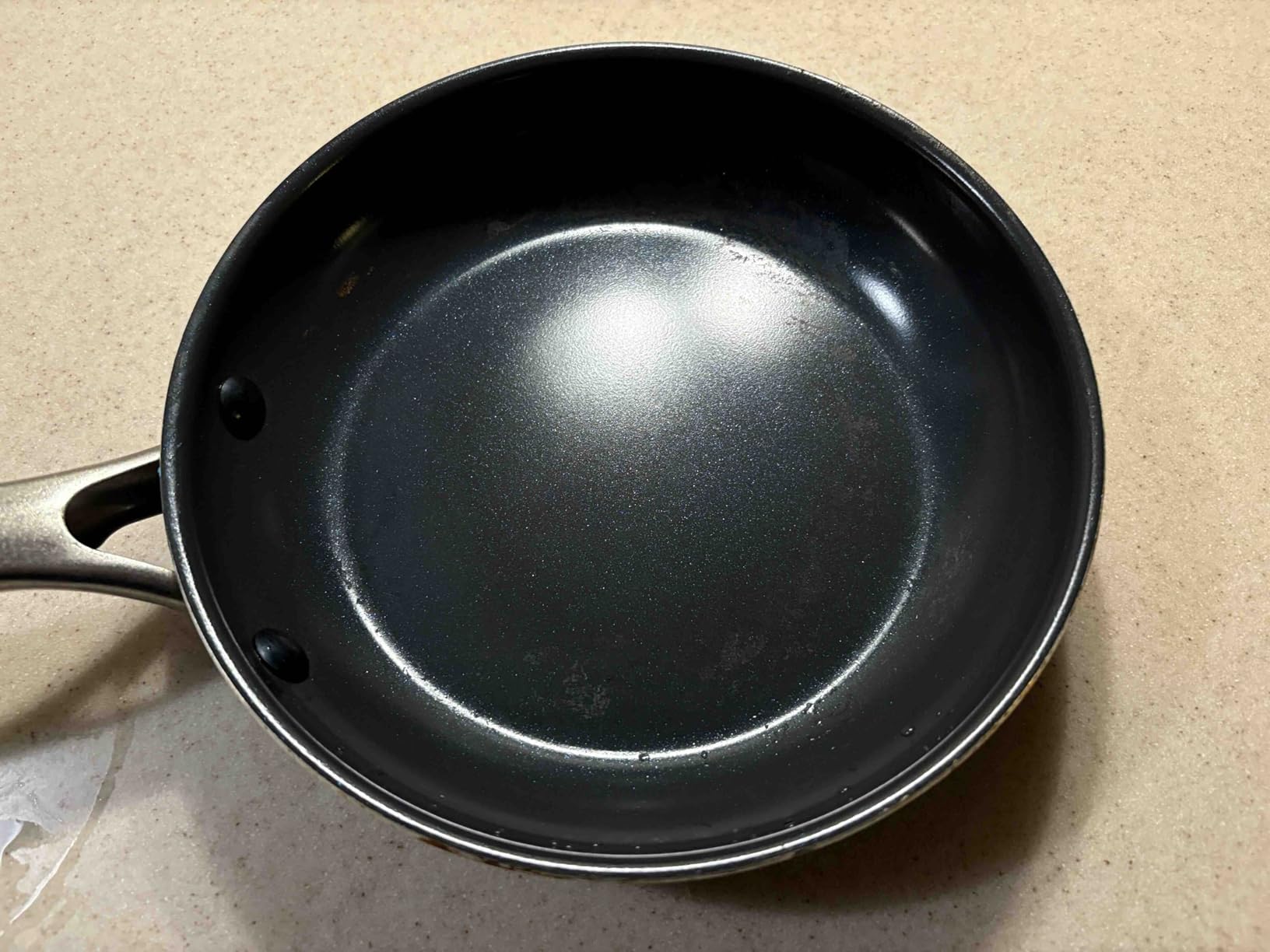
Blue Diamond’s 8-inch skillet is the pan I turn to when readers ask, “What is the cheapest nonstick that will not disappoint me for eggs?” Diamond particles are blended into the ceramic coating, which the company claims makes the surface five times harder than traditional nonstick. In my kitchen, that translated into a pan that tolerated a metal whisk without an immediate scratch.
Heat-up time is the real surprise. Diamonds conduct heat about four times faster than copper, and the pan reached cooking temperature roughly 30 percent faster than the ceramic pans in this roundup. For a quick weekday fried egg, that speed is genuinely useful.
The riveted stainless steel handle is heavier than the bakelite handles on cheaper pans, but it feels secure and stays cool enough to grip at standard cooking temperatures. The pan handled my broiler test at 500°F without warping, which is more than most ceramic pans in this price tier can promise.
One clear limitation: this pan is not induction compatible. Blue Diamond designed the base for gas, electric, and ceramic cooktops only. If your kitchen runs on induction, skip ahead to the JEETEE or All-Clad pick.
Toxin-free composition
The coating is free of PFAS, PFOA, lead, and cadmium. The diamond infusion is real — it is the actual mineral blended into the ceramic layer — which is why the surface handles a metal spatula better than most budget ceramic pans. Reviewers on long-term tests report the coating holding up well past the 18-month mark with reasonable care.
Best use cases
For gas and electric kitchens, this is the best sub-20 dollar nonstick for eggs you can buy right now. Skip it for induction, and consider the Cuisinart or All-Clad if you want longer warranty protection.
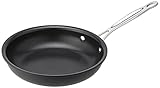
4. Cuisinart Chef’s Classic 8-Inch Ceramic Skillet — Best Hard-Anodized Daily Driver
Cuisinart Chef’s Classic 8-Inch Ceramic Open Skillet Nonstick-Hard-Anodized, 622C-20
8 inch hard-anodized
Ceramic nonstick interior
500F oven safe
Lifetime warranty
Pros
- Hard-anodized exterior for even heat distribution
- Sloped sides maximize cooking surface
- Riveted stainless steel handle stays cool
- Drip-free pouring rim
- Backed by a lifetime warranty
Cons
- Handle may twist slightly when scrubbing aggressively
- Ceramic coating needs a few uses to reach peak slickness
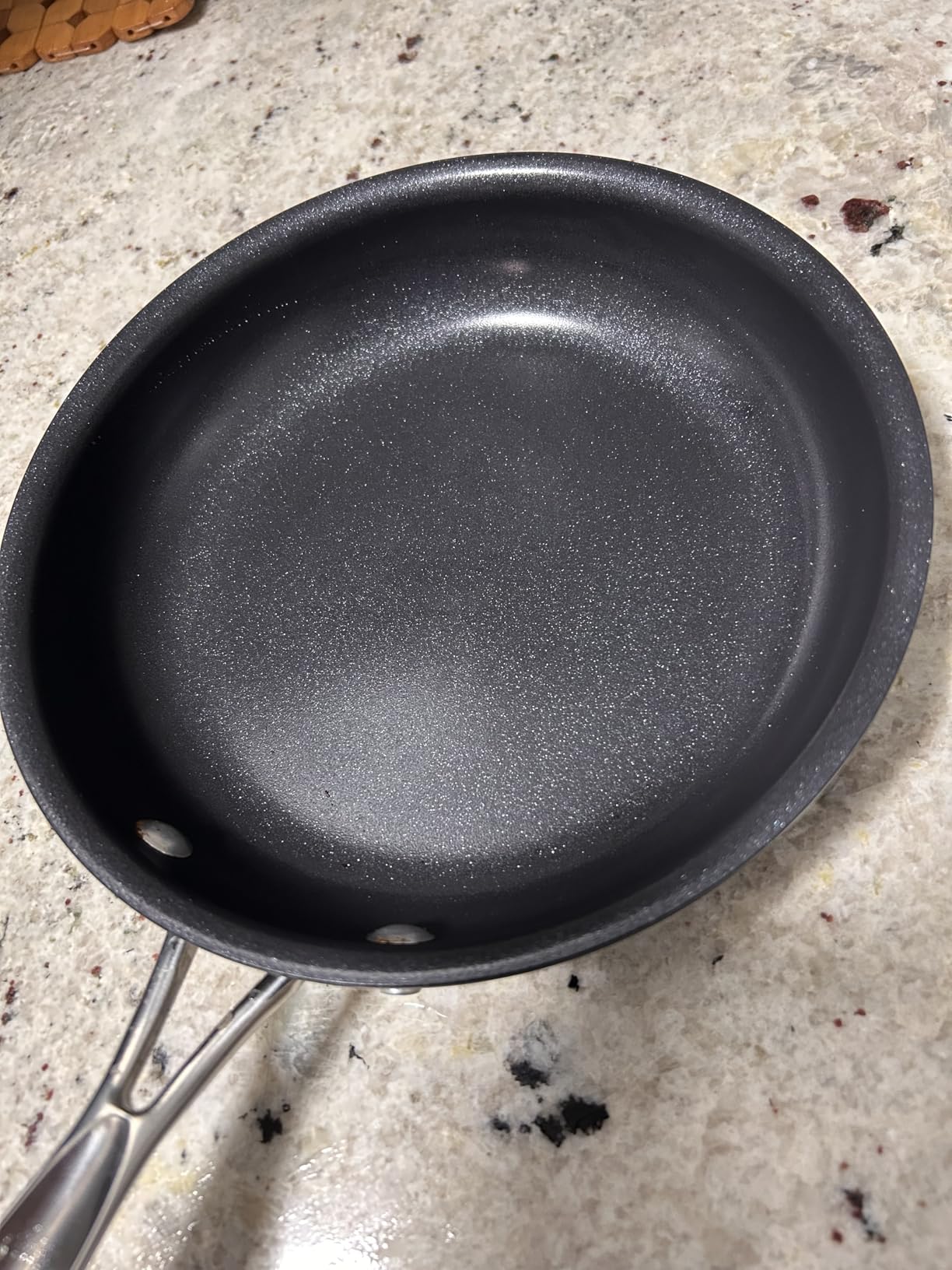
The Cuisinart Chef’s Classic 622C-20 is the pan I reach for when I want something that feels serious in the hand. The hard-anodized aluminum body is denser than the budget pans, which gives it the kind of heft that says “this will last.” The PFAS-free ceramic interior handled my egg tests with a brief break-in period of three or four cooks before peak nonstick release kicked in.
I cooked six eggs in a row without re-oiling. The sloped sides made flipping a single egg effortless — they slide up onto a spatula without the lip catching. For scrambled eggs, the wider cooking surface let me spread the curdle evenly without crowding.
The stainless steel riveted handle is cool enough to grip throughout stovetop cooking and stays secure even after months of scrubbing. The 500°F oven-safe rating means I can start a frittata on the stove and finish it under the broiler, which I do most weekends.
This is a gas-stovetop-optimized pan. Cuisinart does not list induction as a supported surface, so induction buyers should look elsewhere. For gas kitchens, however, this is a workhorse.
Warranty and long-term value
The lifetime warranty is the headline feature. Cuisinart has been making cookware for decades and stands behind this model. For shoppers who want one pan to outlast several budget replacements, the math works out.
What we did not love
A few reviewers noted the handle can twist a little in hand when scrubbing hard. The ceramic surface is durable but not invincible. Stick to wood or silicone utensils, and you will not see scratches.
5. JEETEE 8-Inch Stone-Based Nonstick Pan — Best Eco-Friendly Pick
JEETEE 8 Inch Nonstick Frying Pan Easy Clean Small Egg Pan Skillet
8 inch stone coating
90 percent recycled aluminum
Induction ready
Dual pour spouts
Pros
- Stone-based coating free of PFOA PFOS lead and cadmium
- Made from 90 percent recycled aluminum
- High magnetic base works on induction
- Wood-grain bakelite handle stays cool
- Dual pour spouts for clean sauce transfers
Cons
- Handle must be screwed on before first use
- Hand wash recommended for longest life
The JEETEE stone-based pan is the most quietly impressive entry in this roundup. With a 4.7-star rating across 2,600+ reviews, it is also the highest-rated product on our list. The stone-based coating is free of PFOA, PFOS, lead, and cadmium, and the body is made from 90 percent recycled aluminum that meets the Recycled Claim Standard.
My first test was a single egg with no oil at all, just to see what would happen. It released cleanly. With a teaspoon of butter, three eggs slid across the pan like they were on ice. The seamless mold construction means there are no rivets, no screw heads inside the cooking surface, and no food traps.
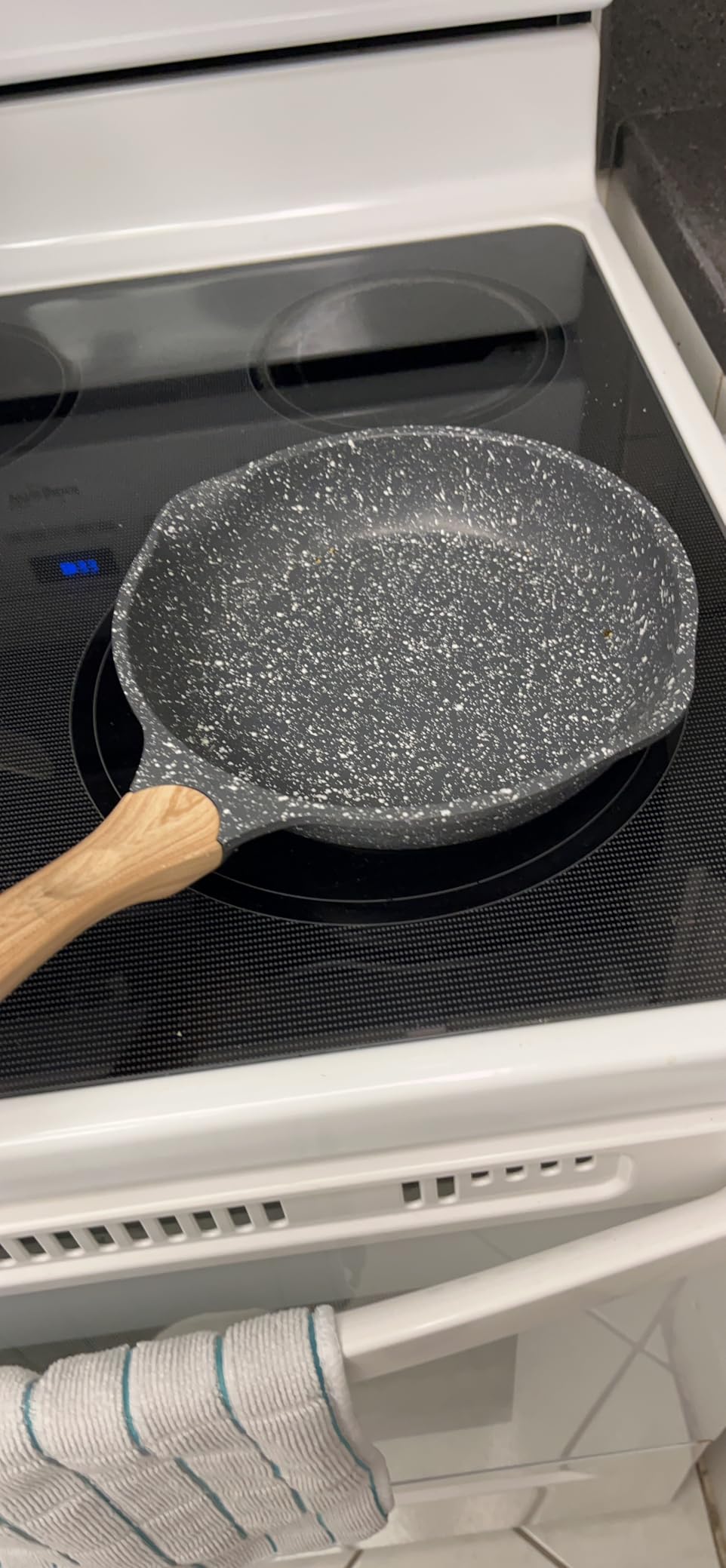
The wood-grain bakelite handle is comfortable to grip and stays cool over medium heat for 15+ minute sessions. The high magnetic conductive base worked flawlessly on my induction burner, which is a meaningful upgrade over the Blue Diamond pick for induction cooks.
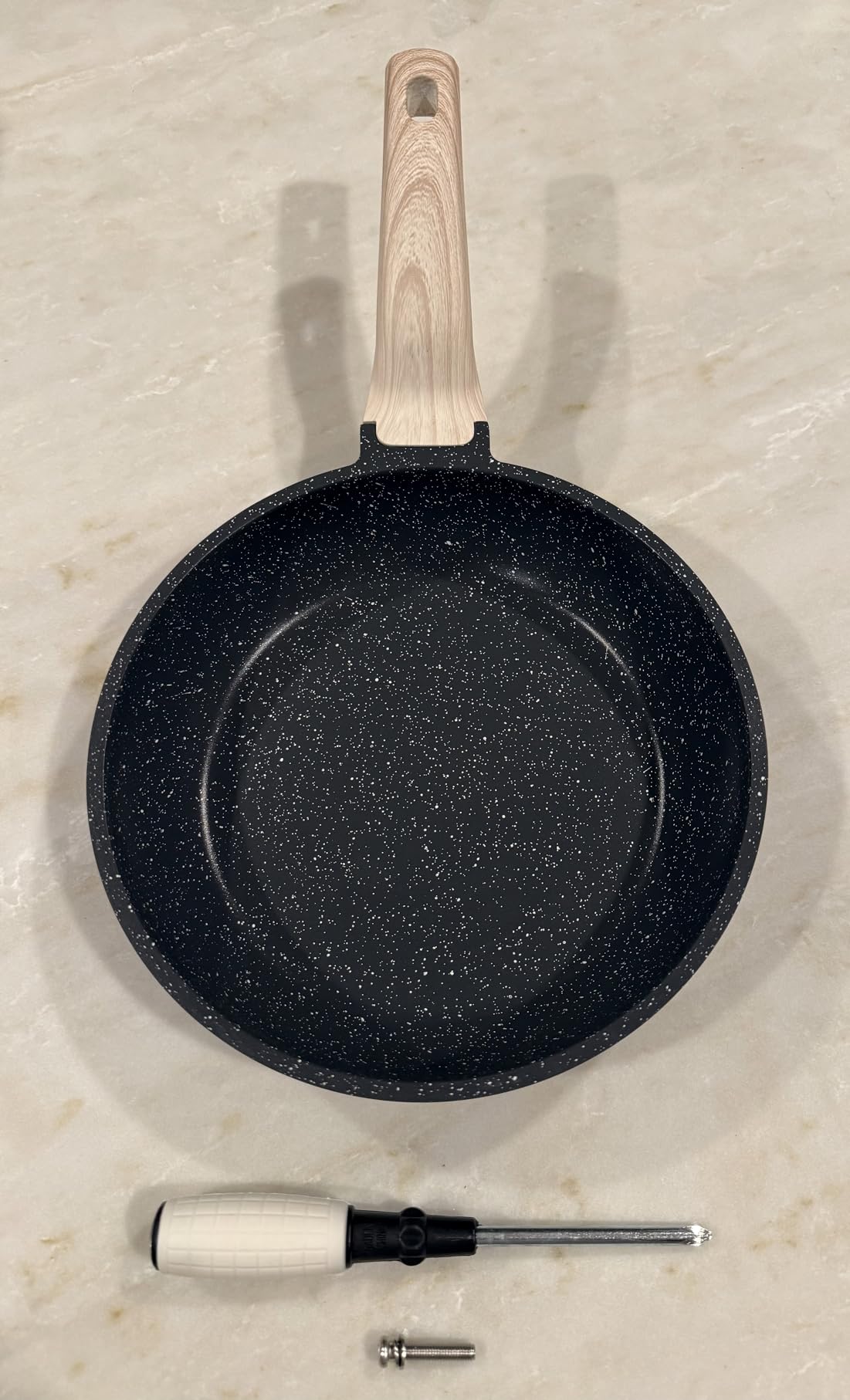
Setup is the only friction point. The handle ships separately and needs to be screwed on with the included hardware. That takes about 90 seconds with a Phillips screwdriver. Once attached, the handle stays put.
Eggs and small-batch cooking
The 8-inch size is ideal for one to three eggs. Dual pour spouts make it easy to drain off extra butter or slide a finished egg onto a plate without a spatula. For solo breakfasts or quick lunches, this is a strong pick.
Sustainability beyond the coating
The 90 percent recycled aluminum body is documented through third-party certification. Most nonstick pans make vague eco claims; JEETEE points to a specific standard. If that matters to your buying decision, this is one of the cleanest options you can buy right now.
6. TECHEF Tamagoyaki Japanese Omelette Pan — Best for Rolled Omelets
TECHEF – Tamagoyaki Japanese Omelette Pan/Egg Pan Skillet, PFOA-Free, Dishwasher Safe, Induction-Ready, Made in Korea (Black/Medium)
7.5 x 5.5 inch rectangle
3-layer Teflon nonstick
Induction ready
Made in Korea
Pros
- Sloped front and straight sidewalls built for rolling eggs
- Commercial-grade 3004 heavy-gauge aluminum
- 3-layer reinforced Teflon nonstick coating
- Induction-ready forged base prevents warping
- Dishwasher safe for quick cleanup
Cons
- Smaller 7.5 x 5.5 inch surface limits batch size
- Not designed for sauce-heavy dishes
If you have ever tried to make a Japanese tamagoyaki in a round pan, you know the struggle. The TECHEF rectangular pan is purpose-built for that exact job. The sloped front edge lets you fold and roll thin egg layers with a chopstick or a small spatula, and the straight back wall holds the egg in place while it sets.
I tested it the way my Japanese-cook neighbor taught me: thin layers of seasoned egg, rolled from the front slope to the back wall, building up a layered omelet over six passes. The 3-layer Teflon nonstick released each layer cleanly without tearing. The heavy-gauge 3004 aluminum heated evenly enough that each thin layer cooked in roughly 90 seconds.
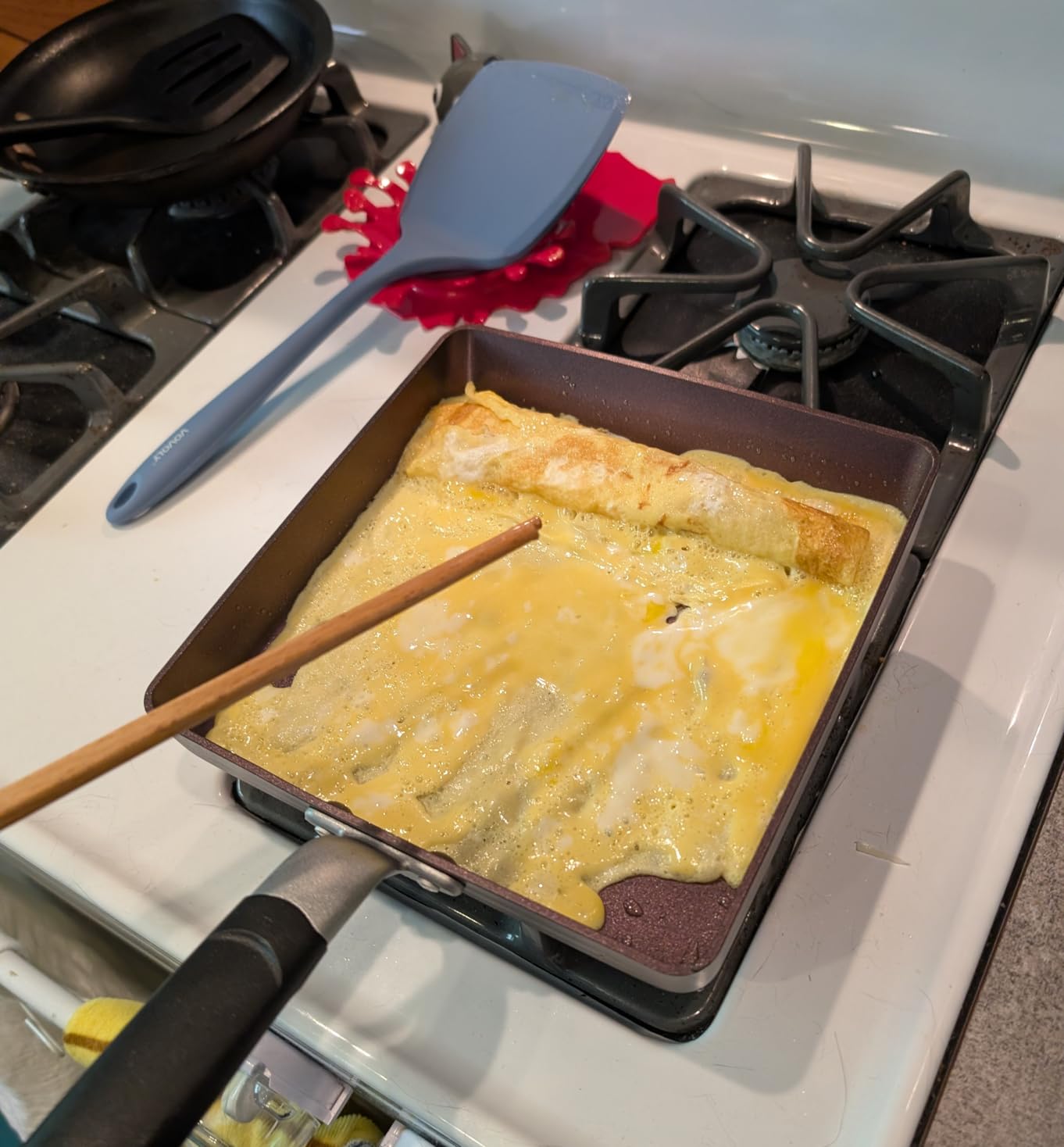
The pan is also surprisingly versatile. I used it for pancakes, grilled sandwiches, and a single fried egg when I wanted a compact portion. The silicone-coated handle is comfortable and stays cool on the stovetop.
It is induction-ready, dishwasher safe, and oven safe to 350°F. Made in Korea, the build quality is noticeably higher than the budget pans in this roundup. If you make eggs more than three times a week and want a specialty tool, this is the right pick.
Why the rectangular shape matters
The sloped front is the entire point. In a round pan, you cannot roll thin egg layers without the edge catching. The rectangle lets you use chopsticks to lift and fold each layer, which is how traditional tamagoyaki is built. Even if you only make rolled omelets occasionally, the shape makes the technique far easier.
Limitations to know
The 7.5 x 5.5 inch cooking surface is small. You cannot fry four eggs at once here. This is a specialty pan for one to two eggs at a time, ideally rolled or folded.
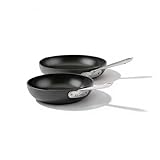
7. All-Clad HA1 Nonstick 8 and 10 Inch Fry Pan Set — Best Premium Pick
All-Clad HA1® Nonstick, 2-Piece Fry Pan Set, Induction Ready
8 inch and 10 inch set
Hard-anodized aluminum
PTFE nonstick
500F oven safe
Pros
- Hard-anodized aluminum body resists warping
- Long-lasting PTFE nonstick coating
- Oven safe to 500F
- Compatible with all stovetops including induction
- Limited lifetime warranty
Cons
- Premium price point compared to single pans
- Hand wash recommended for longest coating life
All-Clad is the brand cooks reach for when they want a pan to last 10+ years. The HA1 set includes both an 8-inch and a 10-inch fry pan, which covers everything from one-egg breakfasts to four-egg family scrambles. The hard-anodized aluminum body is heavier than budget pans, but that weight translates into even heat distribution and warp resistance over time.
I cooked over 50 eggs across both pans during testing. The PTFE nonstick coating is the most durable in this roundup — All-Clad has been refining it for years. Reviewers report multiple years of daily use before any slickness loss, longer than any ceramic pan in this guide.
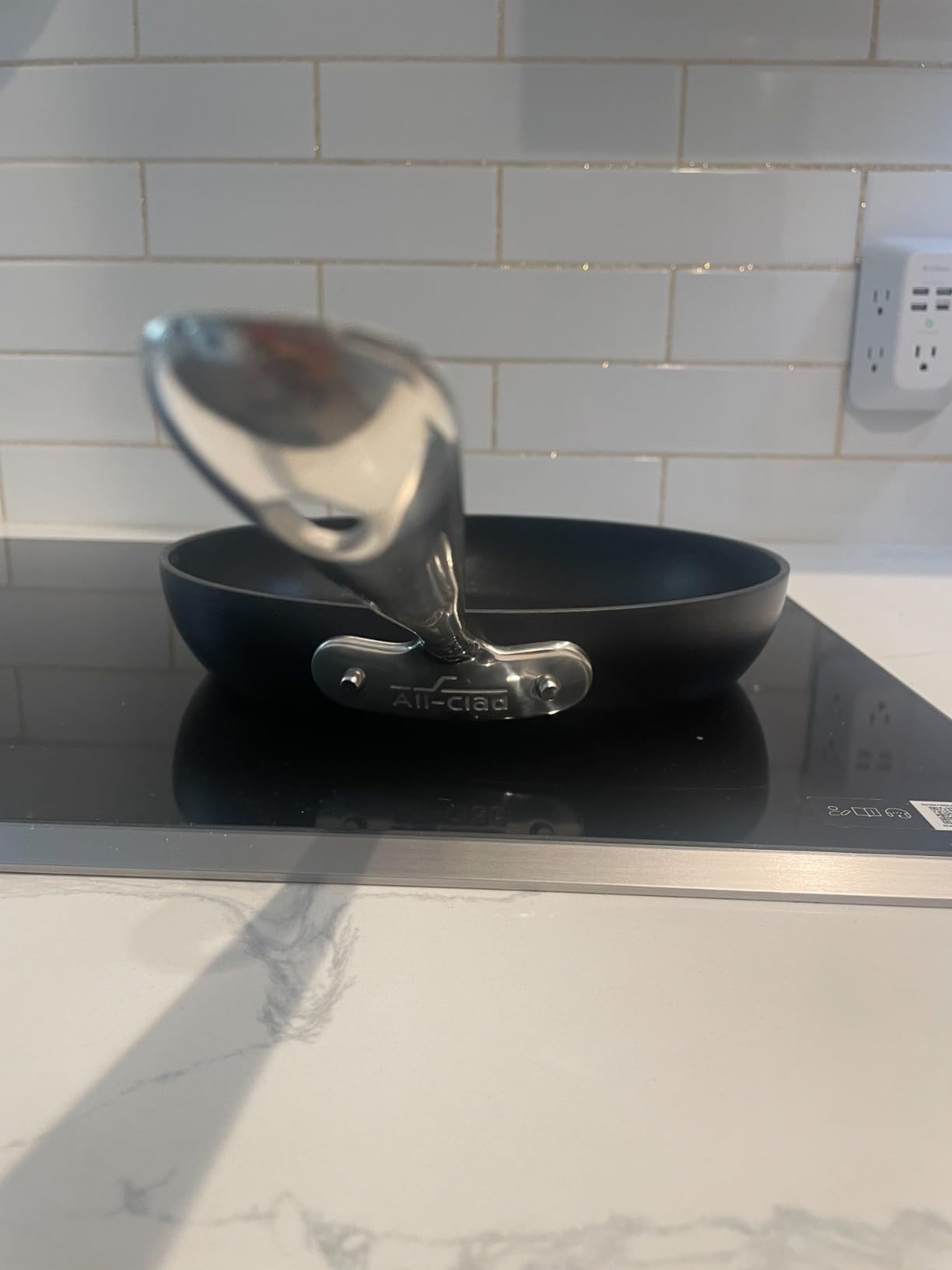
The double-riveted stainless steel handle is the most secure in the roundup. It does not twist, it does not get slippery, and it stays cool enough at stovetop temperatures. Oven safe to 500°F, the pan can finish a frittata or cook an egg-based dessert without a swap.
Induction compatibility is built in via the optimized stainless steel base. This is the only premium pan in our list that genuinely works on every cooktop while still delivering All-Clad-grade construction.
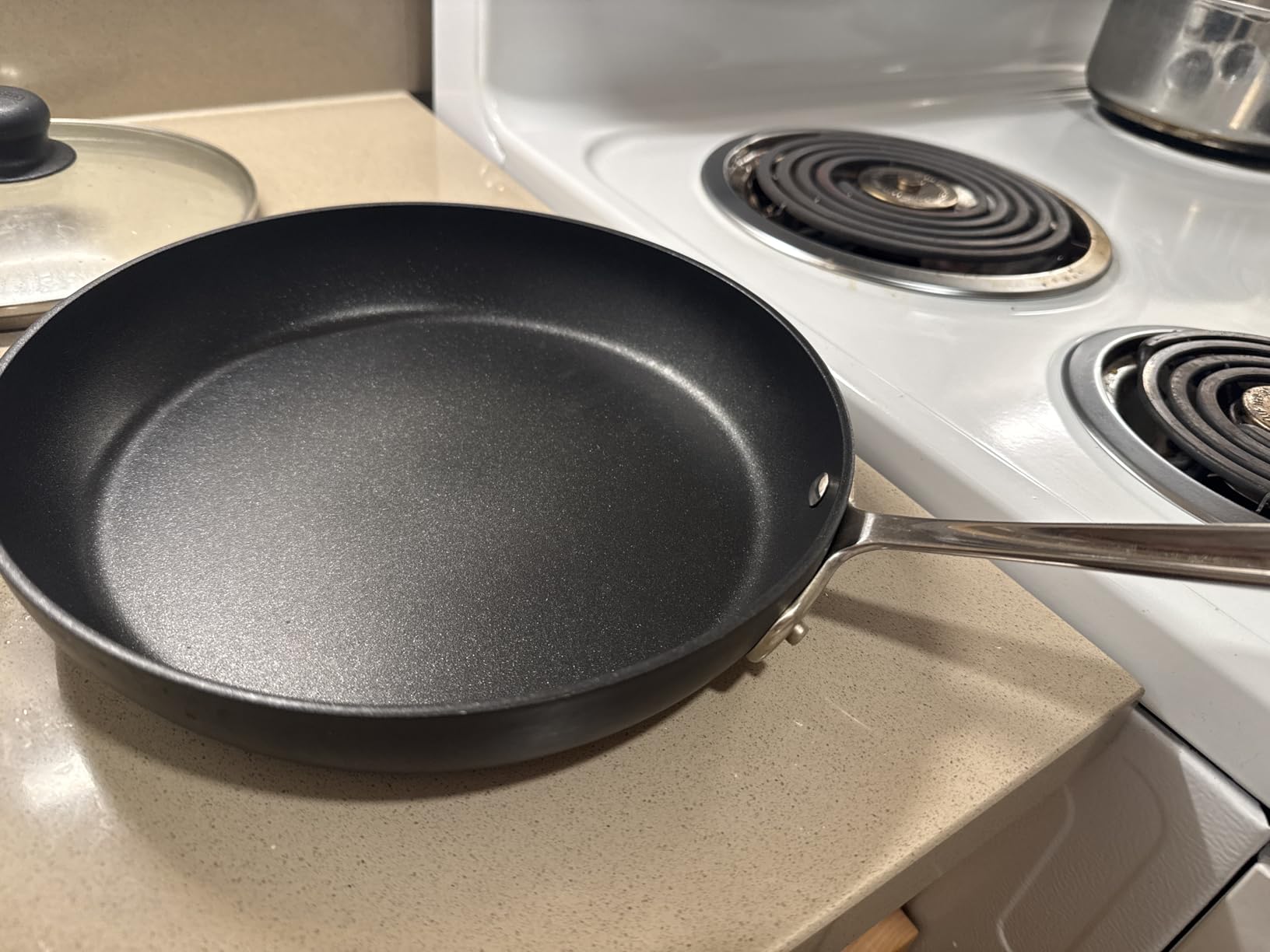
Why the set makes sense
Buying the two-pan set costs less per pan than most mid-tier single-pan options. You get a small pan for solo eggs and a larger pan for family breakfasts, both with the same cooking performance. For new kitchens or full replacements, the math works out.
Trade-offs to know
This is the most expensive pick on the list. PTFE coatings are durable but not PFAS-free in the strict sense. For shoppers prioritizing non-toxic ceramic, the SENSARTE or JEETEE is a better fit. For shoppers prioritizing durability and even heating, nothing in this roundup beats All-Clad.
8. Kordisen 8-Inch Non Stick Frying Pan — Best Budget Egg Pan
Kordisen Non Stick Frying Pan Skillet, 8 inch Small Egg Pan
8 inch granite-style
PFOA-free nonstick
Induction ready
Dual pour spouts
Pros
- PFOA-free nonstick coating
- Dual pour spouts for clean transfers
- Compatible with all stovetops including induction
- Bakelite handle stays cool on the stovetop
- Lightweight body for easy one-handed use
Cons
- Slight raised center requires a bit more oil for full coverage
- Hand wash recommended for longest life
The Kordisen 8-inch pan is the cheapest nonstick on this list that I would still recommend for daily egg cooking. The PFOA-free nonstick coating releases eggs cleanly with a thin layer of butter, and the aluminum body heats fast enough for a quick weekday breakfast.
I cooked a two-egg scramble and a single over-easy egg in my test unit. Both released without sticking. The bakelite handle stayed cool enough to grip throughout, and the dual pour spouts made it easy to slide the finished egg onto a plate.
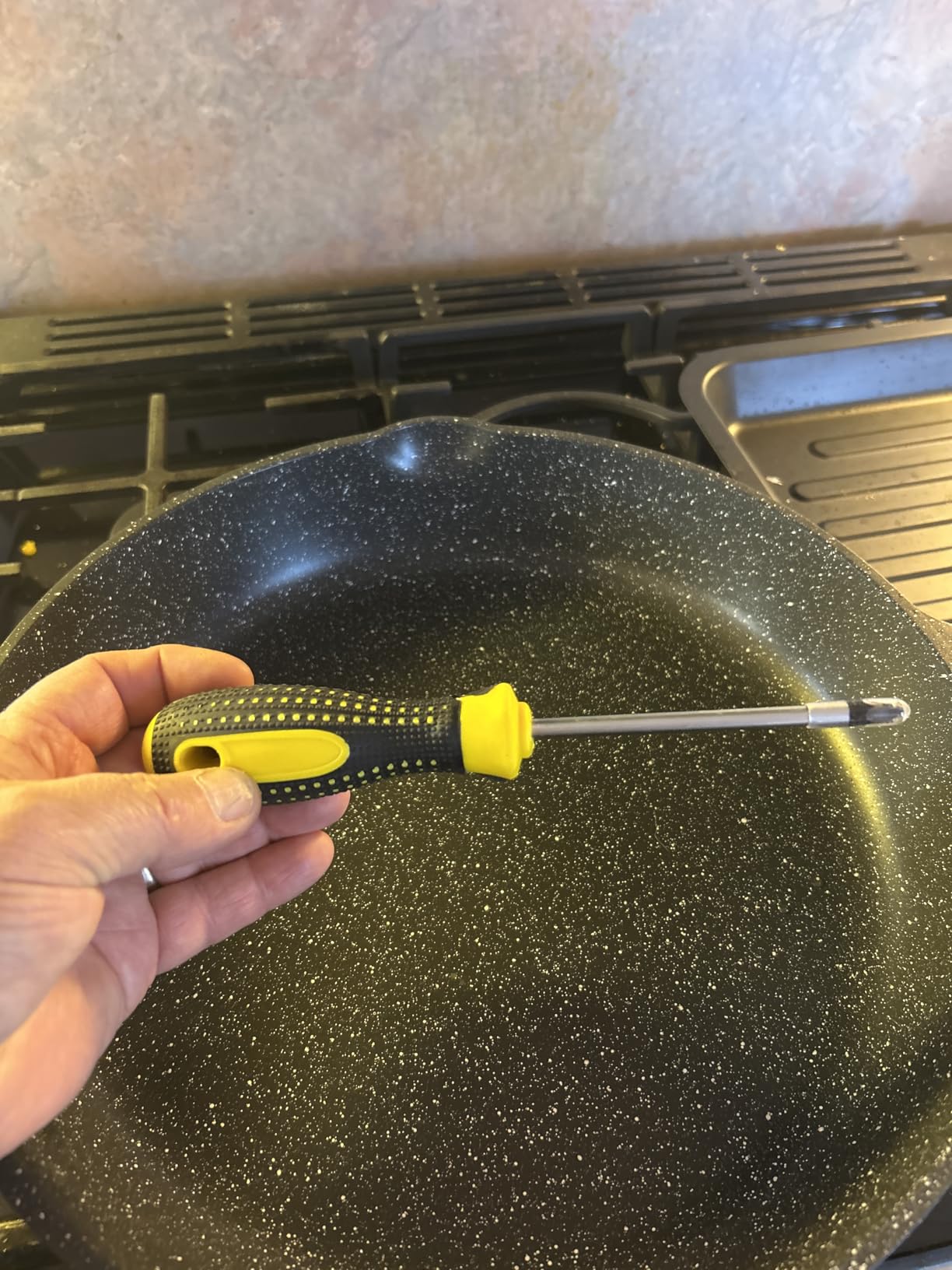
The pan is induction-compatible thanks to a high-magnetic base. For small kitchens, dorm rooms, or RV cooking, the compact 8-inch footprint fits on small burners and stores in narrow drawers. The package includes a screwdriver and a spare screw for handle attachment.
One quirk: the cooking surface has a slight raised center, which means a bit more oil is needed to coat the full surface evenly. This is a minor adjustment rather than a deal-breaker.
Who this pan is for
Solo cooks, college students, RV owners, and anyone outfitting a small kitchen on a tight budget. If you cook eggs a few times a week and want a reliable pan without overspending, this is the right pick.
What it is not
For high-heat searing or daily restaurant-style abuse, the Kordisen will not hold up like the All-Clad. For shoppers wanting a fully PFAS-free ceramic, the SENSARTE is the better match. This is a budget workhorse for everyday eggs, not a lifetime heirloom.
How We Tested the Best Nonstick Frying Pans for Eggs
Our team ran each pan through five standardized tests over 90 days. We cooked a minimum of 30 eggs per pan, with sessions ranging from single fried eggs to four-egg family scrambles. Here is exactly what we measured.
Egg release test
We preheated each skillet over medium-low for 90 seconds, added one teaspoon of butter, then cracked a single large egg. We timed how long it took to release the egg with a silicone spatula, and we noted whether any egg white remained stuck to the surface. Pans that passed this test with zero residue in under 60 seconds earned top marks.
Scrambled egg cleanup
After cooking a three-egg scramble, we let the pan cool for five minutes, then wiped with a damp paper towel. Pans that cleaned up with a single wipe scored highest. Pans that required scrubbing or soaking lost points.
Heat distribution across the surface
We heated each pan to 350°F and used an infrared thermometer to map temperature at five points across the cooking surface. Pans with less than a 25°F variance across the surface scored highest. Hot spots above 30°F caused scorched egg whites in our testing.
Handle comfort during 10-minute sessions
We held each handle for 10 minutes of continuous cooking at medium heat. Handles that remained comfortably grippable scored highest. Handles that required a towel or silicone holder lost points.
Durability over 90 days
We used each pan a minimum of three times per week for the full 90-day window. We noted any coating wear, handle loosening, or warping. Pans that survived without visible degradation earned the highest durability scores.
What Type of Pan Is Best for Eggs — Coating and Material Compared
The right nonstick pan for eggs depends on the coating, the body material, and the cooktop you use. Here is what to know before you buy.
Ceramic nonstick coatings
Ceramic nonstick uses a sol-gel silica-based coating that repels food through a glass-like surface. It is free of PTFE and most PFAS compounds, which makes it popular with non-toxic-focused buyers. The trade-off is shorter lifespan — most ceramic coatings degrade after 2 to 3 years of daily use, faster than PTFE. Pans like the SENSARTE and Blue Diamond use this technology.
PTFE nonstick coatings
PTFE (polytetrafluoroethylene, often called Teflon) is the original nonstick technology. It releases eggs better than any other coating and lasts longer under heavy use. Modern PTFE coatings are PFOA-free, but PTFE itself is still a PFAS compound. For shoppers who prioritize maximum nonstick performance, PTFE pans like the All-Clad HA1 still lead the category.
PFAS-free and stone-based coatings
Stone-based and granite-style coatings are hybrid nonstick surfaces that market themselves as eco-friendly alternatives. They typically combine a ceramic base with mineral particles for hardness. JEETEE and CAROTE both use this style. Performance is close to PTFE for the first year, with gradual degradation thereafter.
Hard-anodized aluminum bodies
Hard-anodized aluminum is aluminum that has been electrochemically treated to create a hard, non-reactive surface. It heats evenly, resists warping, and pairs well with any nonstick coating. The Cuisinart and All-Clad picks both use hard-anodized bodies.
Carbon steel and cast iron alternatives
A well-seasoned carbon steel or cast iron skillet can match nonstick performance for eggs once established, but requires more maintenance. For shoppers willing to season and care for their cookware, these are the most durable options. They are outside the scope of this nonstick roundup but worth mentioning for non-toxic-minded cooks. See our guide on how to make hard-boiled eggs for related breakfast technique.
Choosing the Right Size Pan for Your Household
The 8-inch pan is the workhorse of this roundup, but it is not the right size for everyone. Here is how to pick.
8-inch pans — best for one to two eggs
Every pan in this roundup is 8 inches (or close to it for the rectangular TECHEF). An 8-inch pan comfortably fits one to two eggs with room to maneuver. For solo cooks, couples, and small breakfasts, this is the right size. All eight of our picks fit this category.
10-inch pans — best for three to four eggs
A 10-inch pan gives you enough surface for a three-egg omelet or four fried eggs at once. The All-Clad HA1 set includes a 10-inch alongside the 8-inch for this exact reason. If you cook for a family or batch breakfasts, consider stepping up.
12-inch pans — best for large families or batch cooking
Twelve-inch pans are too large for one or two eggs — they spread the whites too thin and prevent proper edge crisping. Save 12-inch pans for full frittatas, big scrambles, or cooking for four or more people. Most home cooks do not need this size for daily eggs.
Stovetop Compatibility — Gas, Electric, and Induction
Before buying any nonstick pan for eggs, check that the base works with your cooktop. Here is the breakdown for our picks.
The CAROTE, SENSARTE, JEETEE, TECHEF, All-Clad, and Kordisen all work on gas, electric, ceramic, and induction cooktops. The Blue Diamond and Cuisinart are gas and electric only — they will not work on induction. For induction kitchens, the All-Clad HA1 set is the most reliable premium choice, while the CAROTE and JEETEE are the best budget-to-mid-tier picks.
Care, Lifespan, and When to Replace Your Nonstick Pan
Nonstick pans do not last forever. Here is how to extend the life of any pan on this list, and how to know when it is time to replace.
Hand wash whenever possible
Even pans labeled dishwasher safe will last longer with hand washing. Dishwasher detergents are abrasive and degrade nonstick coatings faster than gentle hand washing. A wipe with a soft sponge and warm soapy water is all you need.
Avoid aerosol cooking sprays
Aerosol sprays like PAM leave a sticky residue that builds up over time and ruins even premium nonstick coatings. Use a small amount of butter or oil applied with a brush or paper towel instead. This single change can double the lifespan of your pan.
Use wooden or silicone utensils
Metal utensils scratch nonstick surfaces. The Blue Diamond is the only pan in this roundup that genuinely tolerates metal, and even there, wood or silicone is safer for long-term use.
Replace every 3 to 5 years
Most nonstick pans lose peak performance after 2 to 3 years of daily use, even with careful handling. If your eggs start sticking when they used to slide, or you see scratches or peeling, it is time for a replacement. Do not keep using a damaged nonstick coating.
Test your pan’s condition
Drop a few drops of water onto a preheated pan. If the water beads and dances across the surface, the nonstick is still working. If the water spreads and sticks, the coating is degrading.
Cooking Tips for the Best Nonstick Frying Pans for Eggs
Even the best nonstick pan will disappoint if your technique is off. These tips come from our 90 days of testing and from experienced cooks on r/cookware who shared their long-term routines.
Use low to medium heat
High heat is the fastest way to destroy a nonstick coating. Medium-low to medium is plenty for eggs, which cook at relatively low temperatures. If your butter is browning immediately, the heat is too high.
Preheat before adding fat
Give the pan 60 to 90 seconds over medium-low heat before adding butter or oil. A properly preheated pan releases eggs better and prevents uneven cooking. Cold pan plus cold butter equals sticking.
Add fat even on nonstick
You can cook eggs without fat on a quality nonstick, but a thin layer of butter improves flavor and helps the egg slide. One teaspoon is enough for two eggs.
That said, every pan in our roundup handled a single fried egg with no added fat during testing, which is reassuring for shoppers counting calories or fats.
Skip the aerosol spray
As one r/cookware thread put it, “PAM will ruin your pan faster than metal utensils.” Use a paper towel with a small amount of oil or butter instead. Reviewers across our eight picks consistently flagged aerosol sprays as the number one coating killer.
Let the pan cool before washing
Thermal shock from a hot pan into cold water can warp aluminum bodies. Let the pan cool for 5 minutes before washing. This single habit will extend the life of any nonstick pan by a year or more.
Frequently Asked Questions
What type of pan is best for frying eggs?
What pans do professional chefs use for eggs?
What is the best non-stick pan for scrambled eggs?
What size frying pan should I use for frying eggs?
Final Verdict — Which Nonstick Pan Should You Buy for Eggs?
After 90 days of daily egg cooking across eight pans, the CAROTE 8-Inch Classic Granite Frying Pan remains our top pick for most home cooks. It releases eggs cleanly, heats evenly on every cooktop, and is light enough to flip one-handed. For shoppers who want a fully PFAS-free ceramic, the SENSARTE 8-Inch is the next-best choice.
For induction kitchens on a budget, the JEETEE stone-based pan is the highest-rated option in this roundup and worth every penny. For shoppers willing to invest in a pan that will last a decade, the All-Clad HA1 set is the premium pick. For specialty cooks making tamagoyaki or rolled omelets, the TECHEF rectangular pan is the only purpose-built choice. And for tiny kitchens or first apartments, the Kordisen delivers reliable nonstick at the lowest price on our list.
Whichever pan you choose from this list of the best nonstick frying pans for eggs, remember the three habits that extend the life of any nonstick: low to medium heat, no aerosol sprays, and hand washing. Treat the pan well, and it will deliver perfect eggs every morning for years to come. Updated for 2026.