
The Potensic ATOM is the best drone for beginners with camera in 2026. It weighs 249g, records 4K/30fps on a real 3-axis gimbal, flies about 32 minutes per battery, and costs a fraction of what the bigger DJI models do. If you want the safest way to start flying indoors, the DJI Neo wins on guard coverage and stability. If you want the smoothest footage from a sub-250g aircraft, the DJI Mini 4K takes it.
Weight and registration: Every pick except one sits at or under 249g, which keeps recreational flying in the US out of the registration queue.
Camera quality: Look for a real 3-axis gimbal if you care about smooth video. Electronic image stabilization is a decent second best.
Beginner features: GPS hold, return to home, altitude hold, and a controller in the box matter more than any headline spec.
Battery life: Advertised totals are usually several batteries added together. Real single-battery flight is roughly 15 to 32 minutes.
I have spent years flying camera drones and reading owner reports on flying forums, and the pattern is consistent: the first drone matters far less than people think, as long as it holds position, comes back when you lose it, and survives a bad landing. Everything below is built around that.
This guide covers 12 models across three tiers, from an entry-level starter to a creator kit with obstacle sensing. We decode the spec marketing, explain the weight class rules that decide whether you need a license, and flag the accessories worth buying on day one. If your real goal is aerial stills for a photography portfolio, read our guide to drones with cameras for aerial photography instead.
Table of Contents
Top 3 Picks for Best Drones for Beginners With Camera
The Potensic ATOM is the pick we recommend first because it is the only sub-250g drone in this list with a mechanical gimbal, strong GPS hold in wind, and a visual tracking feature that works. The DJI Mini 4K earns its slot on wind handling and a 10km transmission system that stays solid in open country. The DJI Neo is the most forgiving aircraft to fly indoors and the easiest to hand to a nervous first-timer.
Best Drones for Beginners With Camera in 2026
| Product | Specifications | Action |
|---|---|---|
 Potensic ATOM Potensic ATOM |
|
Check Latest Price |
 DJI Mini 4K DJI Mini 4K |
|
Check Latest Price |
 DJI Neo DJI Neo |
|
Check Latest Price |
 Holy Stone HS175D Holy Stone HS175D |
|
Check Latest Price |
 Potensic ATOM SE Potensic ATOM SE |
|
Check Latest Price |
 Holy Stone HS360S Holy Stone HS360S |
|
Check Latest Price |
 Bwine F7MINI Bwine F7MINI |
|
Check Latest Price |
 Ruko U11MINI 4K Ruko U11MINI 4K |
|
Check Latest Price |
 DJI Mini 5 Pro Combo DJI Mini 5 Pro Combo |
|
Check Latest Price |
 SKYROVER X1 SKYROVER X1 |
|
Check Latest Price |
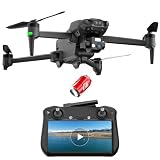 karuisrc K600PRO karuisrc K600PRO |
|
Check Latest Price |
 karuisrc K600GPS karuisrc K600GPS |
|
Check Latest Price |
One note on the table above: the K600PRO is the only entry that needs registration in the US, because at 0.73kg it is nowhere near the sub-250g weight class. Everything else keeps recreational flying simple.
How to Read Drone Specs Before You Buy
Drone spec sheets are written to sound impressive, not to inform. Four claims do most of the confusing, and learning to decode them will save you from disappointment on day one.
What 4K actually means on a budget drone
A listing that says 4K usually means the camera captures 3840×2160 pixels at some sample rate and upscales the frame. The real tell is the sensor size and the still-image resolution. A 1/3-inch CMOS sensor with 12MP stills gives you usable 4K/30fps and nothing more. A 1-inch sensor with 50MP stills is a genuinely different class of image.
Several cheap listings advertise 4K while their own detail section lists 1080p output. The karuisrc K600GPS is one of those: the title says 4K, the spec line says 1080p EIS. Always read the resolution row, not the title.
EIS is not a gimbal
Electronic image stabilization crops and shifts the frame inside the camera to cancel out shake. It works reasonably well on smooth, slow flights. A 3-axis gimbal physically rotates the camera on three motors to keep it level and level the horizon. On a moving subject, a gimbal is far better.
Rough rule: if you mostly want photos and stable hover shots, EIS is fine. If you want moving video of people, animals, or vehicles, buy the gimbal version. Six drones in this list have a real mechanical gimbal.
Battery math and advertised range
When a listing says 96 minutes of flight, that is almost never one battery. Divide by the stated battery count and you get the real per-battery number. The Bwine F7MINI ships with three batteries at 32 minutes each. The Holy Stone HS175D ships with two at roughly 23 minutes each.
Advertised range is marketing too. The Holy Stone HS360S claims 10000 feet of control range; owners report that useful control drops off far sooner, especially with buildings in the way. Treat every range figure as a maximum in open sky with a clear line of sight, not a working distance.
App support decides whether you keep the drone
Every drone here flies through a phone app, and that app is a real risk. Two picks in this list require sideloading because the operating app is not available in the main store, which is a genuine annoyance for anyone who has never done it. Check app availability before buying, especially if you switch phones often.
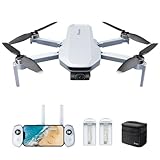
1. Potensic ATOM 3-Axis Gimbal Drone, 249g With 64 Minutes of Flight
Potensic ATOM 4K GPS Drone, 3-Axis Gimbal, 6KM Transmission, 64 Mins Flight
249g
3-axis brushless gimbal
4K/30fps with 12MP stills
64 min with two batteries
Pros
- Real mechanical gimbal at a beginner price
- Strong GPS hold in wind
- Visual tracking and QuickShots work well
- Under 249g so no FAA registration
Cons
- No obstacle avoidance sensors
- Props are louder than comparable DJI models
- Auto white balance often needs manual correction
This is the drone I hand to friends who tell me they want “the best one.” It is not the most capable aircraft here, but it is the shortest path from unboxing to usable footage, and that is what a first drone has to do well.
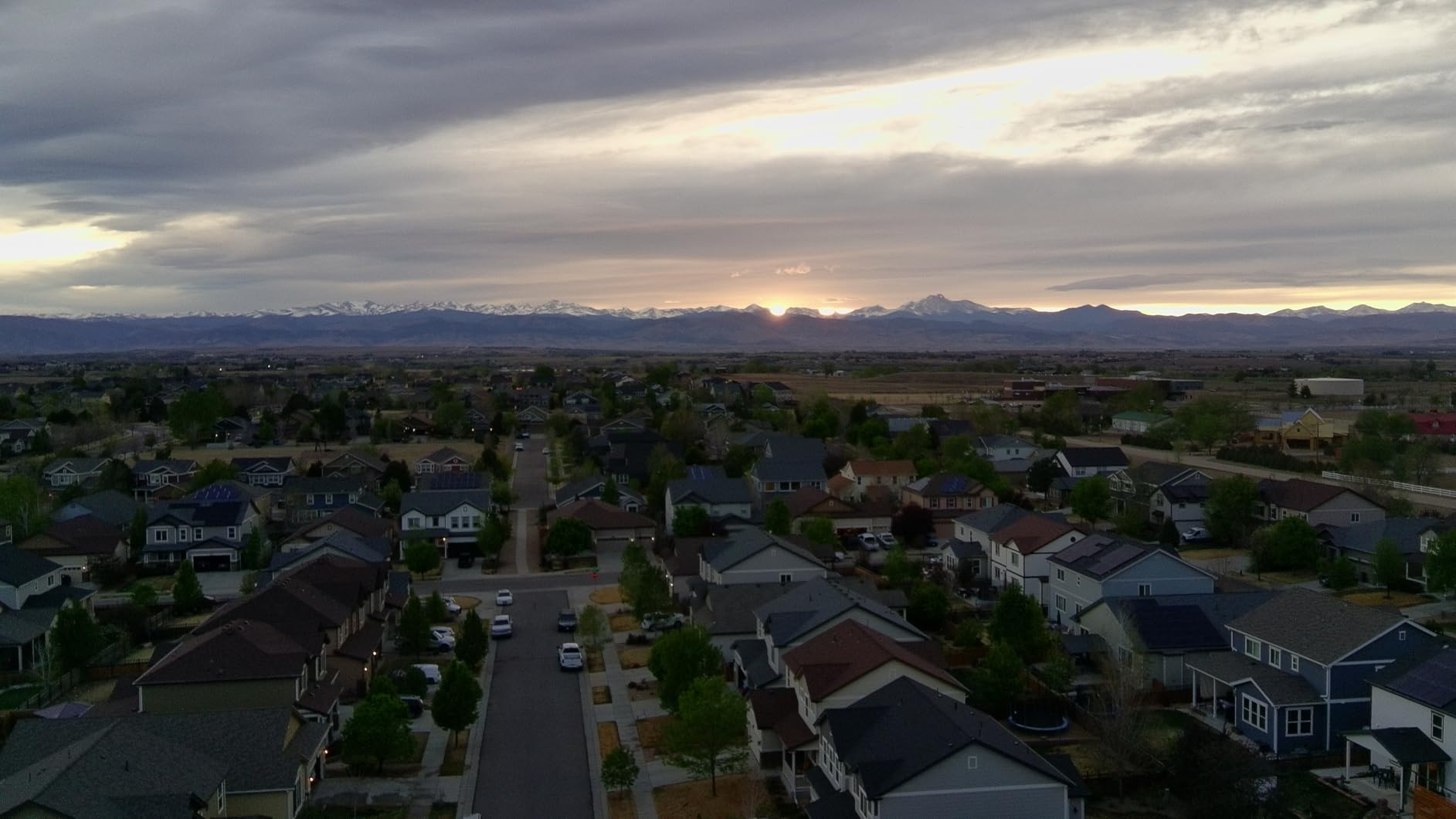
Owners consistently call the gimbal the reason it stands out. Video looks level and steady in a way that EIS-only drones in the same price band cannot match, and the 12MP stills are good enough for prints and social posts without any editing.
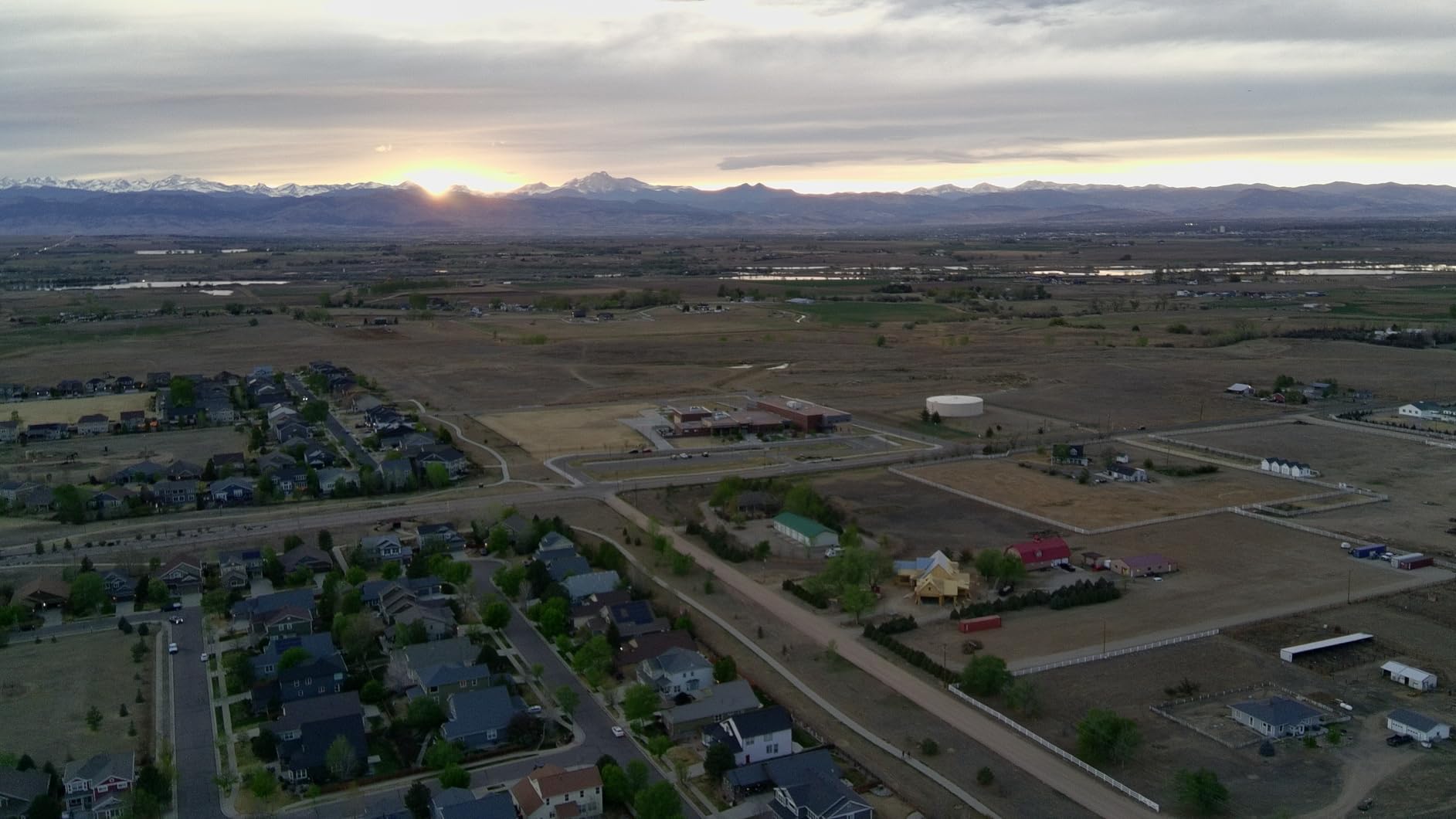
The wind handling surprised me. At 249g I expected a drone that drifted and fought every gust, but the brushless motors and level-5 wind capability hold position far better than the weight suggests. The 6km transmission stays clean across open fields.
Two batteries at roughly 32 minutes each add up to the advertised 64. That is a genuinely useful number when you are learning, because you spend more time practicing than filming on your first dozen flights.
What you gain by choosing this drone
The gimbal is the headline, but the visual tracking and QuickShots modes are what make it feel modern. Set the drone down, walk into frame, and it follows you at a distance you set in the app. Rocket, Circle, Spiral, Boomerang, and Pull-Away are all one tap away.
Downward vision and time-of-flight sensors handle low-altitude precision, so it holds a steady hover while you frame a shot at ground level. It also accepts firmware updates over the air, which is how you get bug fixes without sending it in.
Where it falls short
There are no obstacle avoidance sensors. If you fly toward a tree at speed, the drone will hit it. Every pilot needs eyes on the aircraft, and this one more than most.
Auto white balance struggles in mixed light, so owners often drop into manual exposure. Footage transferred through the app can also arrive at 720p rather than the recorded 4K, so grade from the card, not the phone.
2. DJI Mini 4K With 3-Axis Gimbal and 10km Transmission
DJI Mini 4K, Drone With 4K UHD Camera, Under 249 g
240g
3-axis gimbal
10km HD video transmission
31 min per battery
Pros
- Class-leading gimbal smoothness for the weight
- Bestseller in hobby quadcopters
- Handles level-5 wind
- Compact enough for a small bag
Cons
- No subject tracking or follow-me mode
- No obstacle avoidance of any kind
- Real flight time falls short of 31 minutes
Every serious beginner conversation eventually lands on the Mini 4K, and it is not hype. The gimbal is better than what you get on drones costing twice as much, and the whole aircraft folds down to almost nothing in a backpack.
It handles wind better than anything else under 250g in our group, holding steady in conditions that push lighter aircraft around. The brushless motors and 38kph wind resistance rating are not marketing here.

At 240g it sits comfortably in the no-registration class for recreational flying, and the included controller means you can fly without touching your phone battery at all. One-tap takeoff and landing make the learning curve short.
Expect around 25 to 28 minutes per battery in real conditions rather than the stated 31. Bundles are offered with 31, 62, or 93 minutes total depending on how many batteries you take.

What you gain by choosing this drone
QuickShots give you Helix, Dronie, Rocket, Circle, and Boomerang with a single tap, which is how most beginners capture their first smooth moving shot. The 10km transmission is head and shoulders above anything else at this weight, useful if you fly on open trails or beaches.
It also records DNG stills alongside JPEG, which gives you editing latitude later. Very few beginner drones do.
Where it falls short
There is no tracking of any kind. No follow me, no active track, no subject lock. If your goal is walking-and-talking video of yourself, this is not the aircraft.
There is also no obstacle avoidance and a default altitude ceiling of 120m. Initial app setup and registration can be fiddly, especially on Android, so budget an extra ten minutes before your first flight.
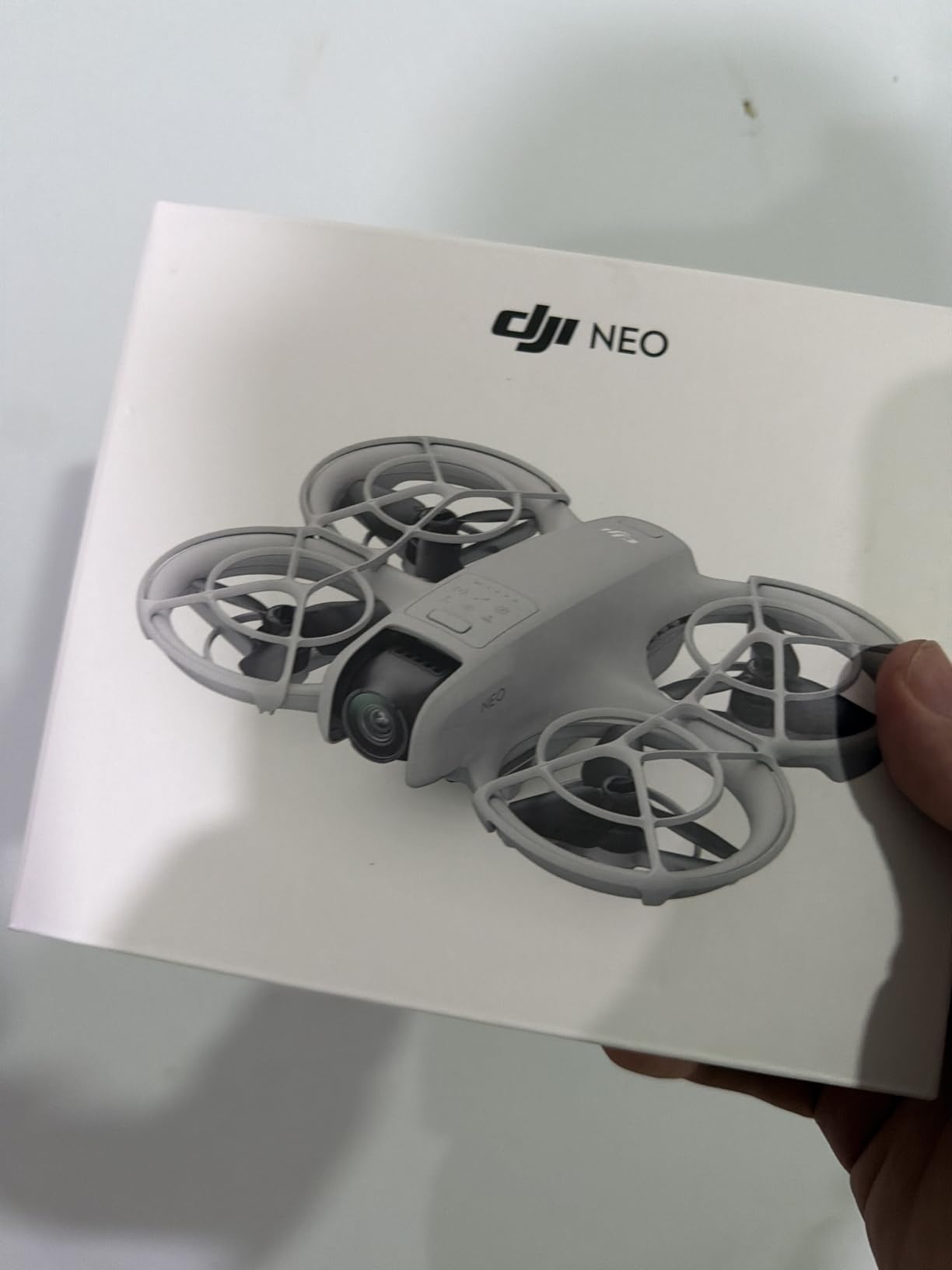
3. DJI Neo 135g Self-Flying Drone With Propeller Guard
DJI Neo, Mini Drone with 4K UHD Camera for Adults, 135g Self Flying Drone that Follows You, Palm Takeoff, Subject Tracking, QuickShots, Stabilized Video, Built-In Propeller Guard (Controller-Free)
135g
Palm takeoff and landing
Full propeller guards
4K ultra-stabilized video
Pros
- Full propeller guards make indoor flying safe
- Makes 12 8x10 photos and vertical clips
- Works with no controller at all
- Rock solid hover even in a breeze
Cons
- Roughly 15 minutes per battery with no card slot
- No vertical video mode
- DJI Fly app must be sideloaded on Android
The Neo is the drone I recommend to anyone nervous about flying, and to parents buying for a child in a small apartment. The full-coverage propeller guard means it cannot hurt anyone or anything, which changes the whole learning experience.
It is 135g, sits in your palm, and takes off from your hand with one press. There is no controller to learn, no pairing, no sticks to hold wrong. You launch, it hovers, and you talk to it.
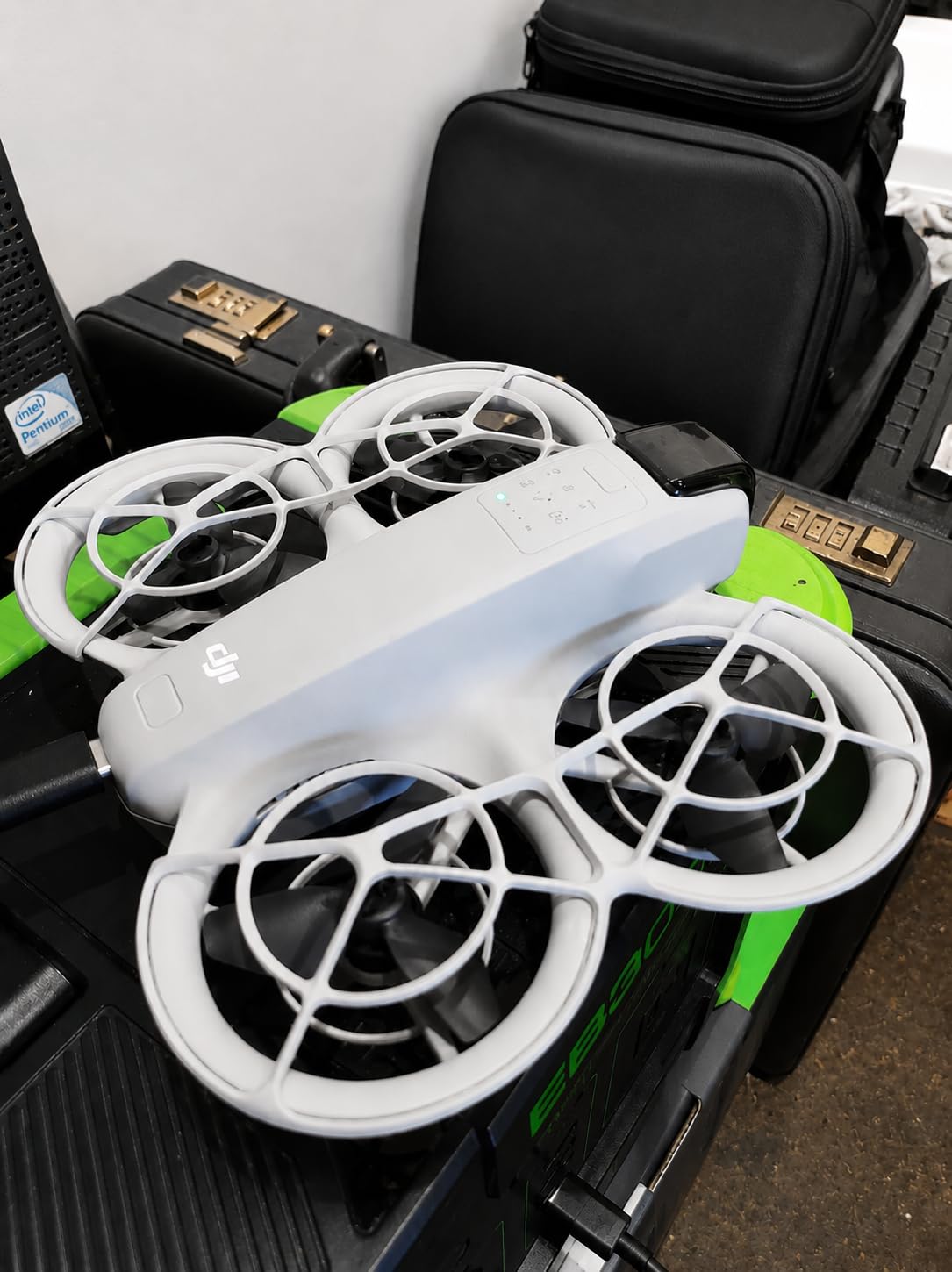
Hover stability is exceptional for its size, indoors and outside in light breeze. Subject tracking works well enough that you can walk along a path and have the Neo keep you framed, which is how most people get their first usable footage.
At roughly 15 minutes per battery, plan on short sessions. There is one battery in the box and no microSD slot, so clips live on internal storage and transfer through the app.
What you gain by choosing this drone
Eight QuickShots modes cover the automated moves beginners want most, and control works by voice, mobile app, or an optional dedicated remote if you decide you want real sticks later. That upgrade path matters.
Level-4 wind resistance and 4K ultra-stabilized video are impressive for a palm-sized aircraft with no gimbal in the traditional sense.
Where it falls short
Fifteen minutes of flight is the real limit on how much you can practise. This is a drone for learning gestures and getting comfortable, not for long sessions at a park.
There is no vertical shooting mode, which rules it out if your goal is short-form social video. The camera is not a true high-end 4K and has no zoom, and on Android the DJI Fly app has to be installed outside the Play Store, which is a stumbling block for non-technical buyers.
4. Holy Stone HS175D GPS Drone Under 249g With 46 Minutes of Flight
Holy Stone HS175D GPS Drone with 4K Camera for Adults, Under 249g, Foldable RC Quadcopter with Auto Return, 46 Mins Long Flight, Follow Me, Brushless Motor, Circle Fly, Waypoint Fly, Altitude Hold
Under 249g
4K stills with 110 degree lens
46 min with two batteries
GPS return home
Pros
- Excellent still photo quality for the price
- Very easy to learn with a stable hover
- Folds down with a carrying case
- Reliable GPS return to home
Cons
- No gimbal so video is noticeably shaky
- Real control range is much shorter than advertised
- GPS sync can take several attempts
The HS175D has the highest review count of any drone we looked at, and that tells you something real: it sells because it works and it survives beginners. Owners describe it as a calm, predictable aircraft that holds a hover without drama.
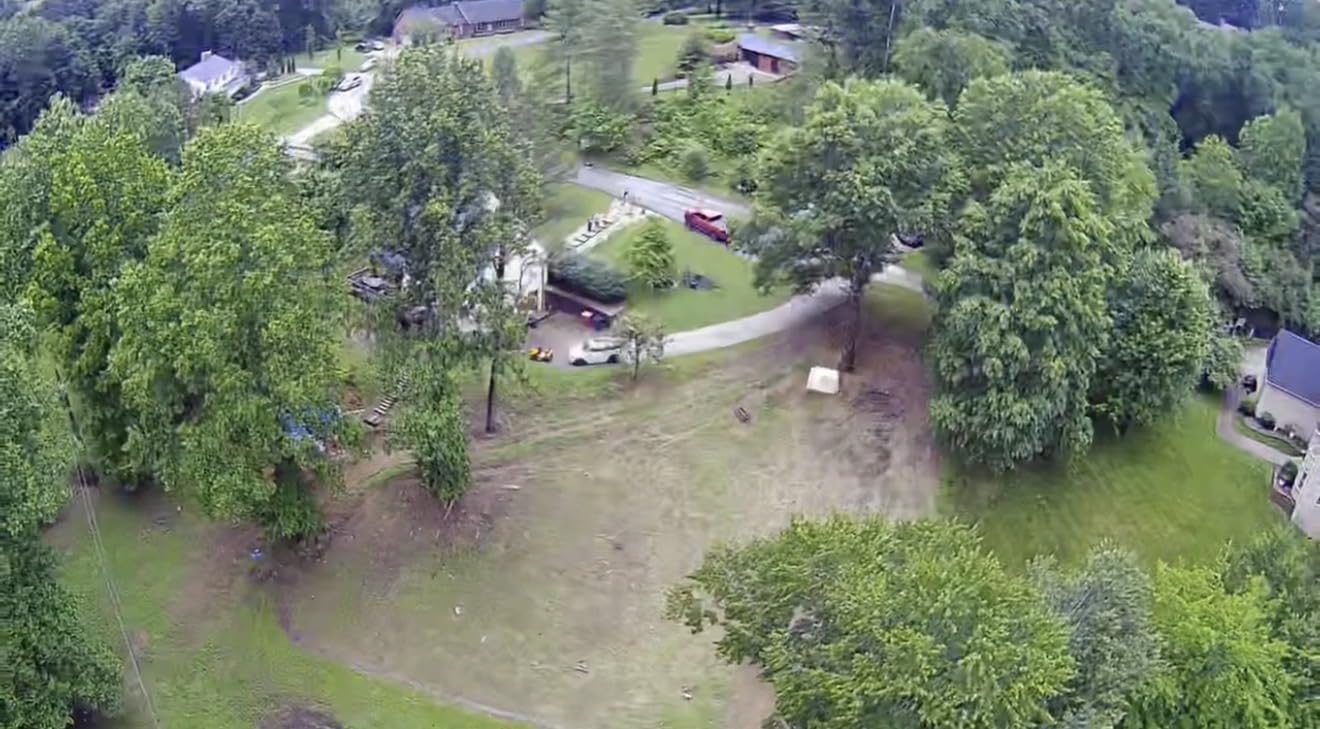
The 110-degree wide lens with 90-degree adjustable tilt is the reason we picked it for photos. You can tilt the camera down without changing aircraft heading, which makes overhead shots of groups and landscapes far easier to frame.
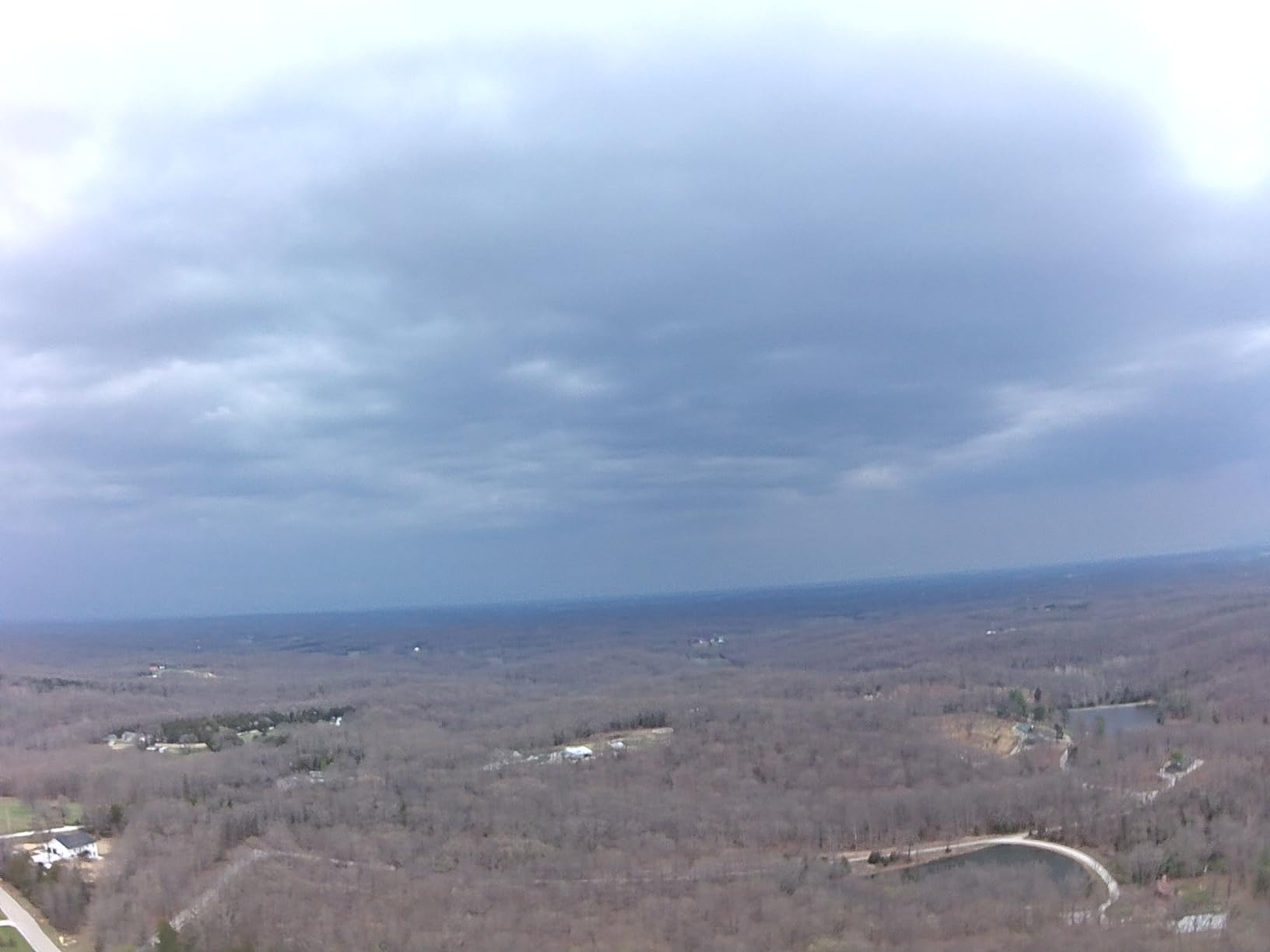
Two batteries give roughly 20 minutes each. Altitude hold, optical flow positioning, headless mode, one-key takeoff and landing, and speed adjustment cover the full beginner control vocabulary, and circle fly, waypoint flight, point of interest, and gesture control are all included.
It folds down and comes with a carrying case, so it lives in a backpack without becoming a problem. The listing notes no FAA or Remote ID requirement for this weight class.
What you gain by choosing this drone
The smart flight modes are unusually complete for the money. Follow me, waypoints, circle flight, and gesture control give you automated shots on day one, which keeps the learning curve interesting rather than repetitive.
The 5GHz live video view is smooth enough to frame shots from the ground, and the optical flow sensor gives it a usable indoor mode for hovering in a hallway before you ever take it outside.
Where it falls short
There is no gimbal. Video is visibly shaky, and if moving video is your main goal, this is the wrong purchase no matter how good the photos look.
The advertised 500 metre range is a maximum in open sky, and the frame can struggle to hold position in moderate wind. Owners also report that the GPS satellite sync and calibration sometimes needs more than one attempt, which is the most common early frustration.
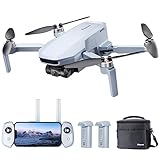
5. Potensic ATOM SE GPS Drone With 4K EIS Camera
Potensic ATOM SE GPS Drone with 4K EIS Camera, Under 249g, 62 Mins Flight, 4KM FPV Transmission, Brushless Motor, Max Speed 16m/s, Auto Return, Lightweight and Foldable Drone for Adults Beginner
Under 249g
4K EIS with Sony 1/3 inch sensor
62 min with two batteries
4km transmission
Pros
- Excellent stability and GPS hold in moderate wind
- Longest per-battery time in this group
- Beginner mode makes learning easy
- Responsive support and warranty replacements
Cons
- No three-axis gimbal so footage is less smooth
- No obstacle detection sensors
- Camera has no zoom and no internal storage
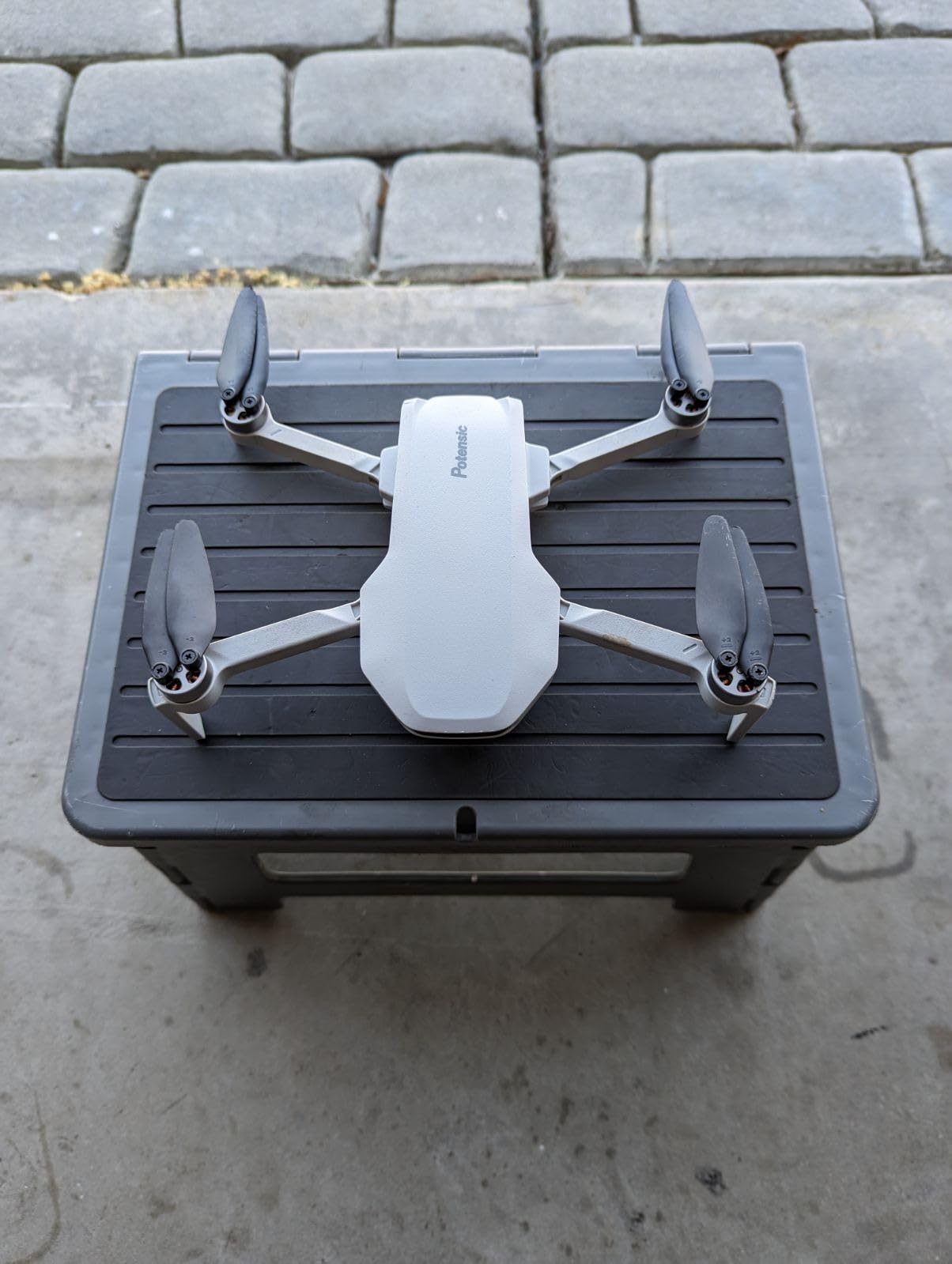
The ATOM SE is the one to buy if your biggest worry is battery anxiety. Two 2500mAh batteries give roughly 31 minutes each, which is the longest genuine per-battery flight time under 250g in this group.
The 1/3-inch Sony sensor with ShakeVanish electronic stabilization produces 4K/30fps that holds together well on slow pans and orbits. It is not gimbal footage, but on a first drone you will not notice the difference half the time.
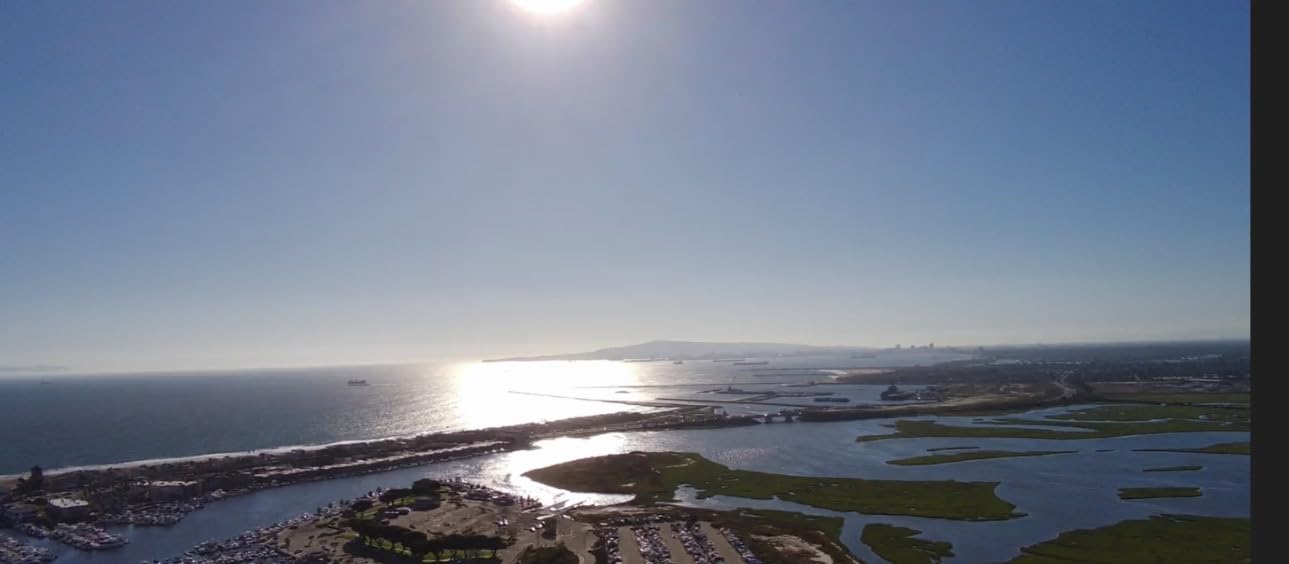
Stability is the headline. Owners report it holding position in moderate wind better than pricier competitors, and the GPS lock is quick. SurgeFly gives you beginner, normal, and sport modes up to 16m/s for when you want to push it.
PixSync 2.0 transmission reaches up to 4km with a stable feed, and three phone adapter cables are in the box so you can connect almost any handset. Firmware updates come over the air.
What you gain by choosing this drone
Flight time and stability together mean fewer crashes from low batteries and less fighting with wind. For a pilot who wants to practise, that combination is worth more than a better sensor.
It folds to travel size and sits in the sub-249g class, so no registration for recreational flight. Level-5 wind resistance with brushless motors backs up the stability claims.
Where it falls short
No gimbal means moving video will look shakier than the Potensic ATOM or DJI Mini 4K, and the difference is obvious side by side. There are no obstacle detection sensors.
The camera has a fixed focal length with no zoom, still photos are limited for large prints, and there is no internal storage, so a microSD card is required before you can record anything.
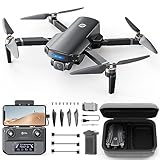
6. Holy Stone HS360S 249g Foldable GPS Drone
Holy Stone GPS Drone with 4K UHD Camera for Adults Beginner; HS360S 249g Foldable FPV RC Quadcopter with 10000 Feet Control Range, Brushless Motor, Follow Me, Smart Return Home, 5G Transmission
213g
4K UHD with 1/3 inch CMOS sensor
5GHz transmission
GPS smart return home
Pros
- Very easy to fly for a first-time pilot
- GPS return home makes it easy to find
- Durable frame that survives crashes
- Strong Holy Stone customer support
Cons
- No gimbal so video is noticeably shaky
- Only one slow-charging battery in the box
- Controls feel unresponsive at the low end
The HS360S is the most forgiving aircraft in this group, and for many first-timers that matters more than image quality. It is 213g, sits low, and hovers without drifting into anything.
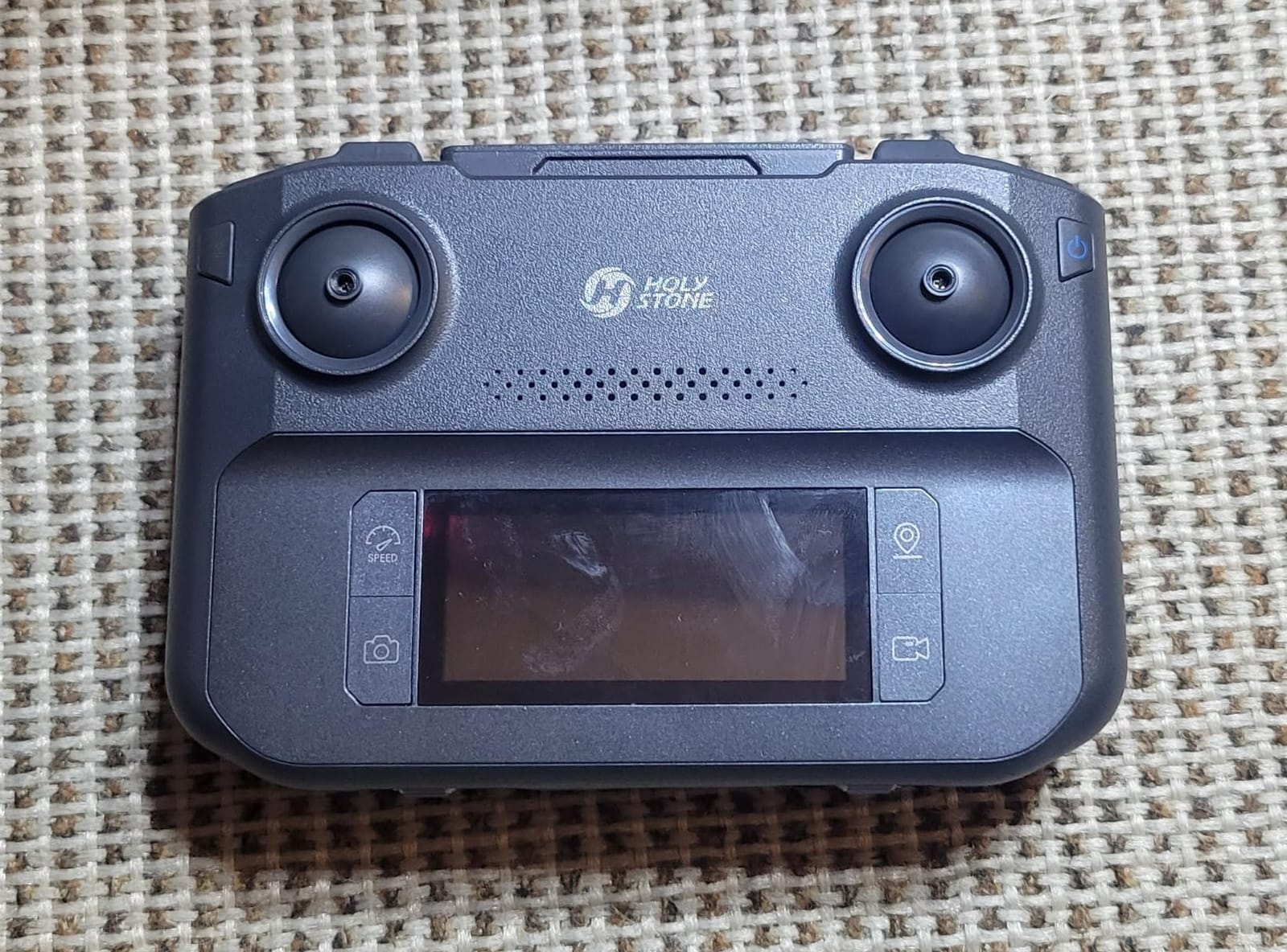
The single-cable phone connection is a thoughtful detail: no Wi-Fi password juggling, and the live image streams cleanly from the moment you connect. The transmitter itself feels solid in the hand.
The 1/3-inch GalaxyCore sensor records 4K UHD at 3840×2160 with an 85-degree wide angle and a 90-degree remote tilt, which is enough for holiday clips and travel shots.
Beginner mode and optical flow positioning make the first ten flights uneventful. Spiral up, catapult, 1-tap ascension, follow me, waypoint flight, and point of interest cover the smart mode list.
What you gain by choosing this drone
The frame survives crashes, which matters because your first twenty flights include a lot of them. Holy Stone support is also consistently praised by owners, and spare batteries are easy to find.
At 213g it stays inside the no-registration weight class, and it folds down small enough for a carry-on bag.
Where it falls short
There is no gimbal, so video shakes noticeably. Some owners report hovering drift after short periods of use and a calibration step that needs redoing.
Only one battery is included and it charges slowly, which limits how much you can fly in a session. The controls also feel unresponsive at the low end, giving a two-speed feel that some pilots find frustrating.
7. Bwine F7MINI 4K Video Drone With 3-Axis Gimbal
Bwine F7MINI 4K Video 8K Photo Drones with Camera for Adults 3-Axis Gimbal
249g
48MP 1/2 inch CMOS
3-axis gimbal
96 min with three batteries
Pros
- Largest still sensor in the sub-250g class
- Real 3-axis gimbal
- Three batteries for the longest total flight time
- Shell case included
Cons
- Thinner long-term owner feedback than the rest
- 8K photo mode is a resolution label rather than true 8K detail
- App workflow takes practice to learn
The F7MINI pairs the biggest camera sensor we found under 250g with a real 3-axis gimbal, and it includes three batteries rather than two. That combination is unusual at this price and it is the reason this drone made the list.
The 1/2-inch CMOS sensor with f/1.8 aperture captures 48MP stills described as 8K photos, alongside 4K/30fps video. Detail retention is noticeably better than 12MP sensors on the same class of aircraft.
Three 32-minute batteries with PD 3.0 fast charging add up to the advertised 96 minutes. For someone who wants to practise rather than shuttle, that is the most air time in the group.
The 1503 brushless motor pushes a 31mph top speed and level-5 wind resistance, and transmission runs up to 20,000 feet on paper with a smart return-to-home and a 120dB locator buzzer if you lose it in brush.
What you gain by choosing this drone
Sensor size means better photos in low light and more room to crop, which is what separates this from the 12MP crowd. Optical flow positioning also lets it hover indoors, which the gimbal models often cannot do well.
Beginner mode, follow, orbit, and waypoint modes are all there, and it sits at 249g so recreational flying stays out of the registration queue.
Where it falls short
The review history on this listing is thinner than the others, so we have less long-term owner feedback to draw on. Treat first impressions as provisional.
The advertised 20,000 feet of transmission is a maximum in open sky, not a working range. The app workflow takes a little practice, and 8K photo mode is a resolution label rather than something you will print at size.
8. Ruko U11MINI 4K Drone With 3-Axis Gimbal and 96 Minutes
Ruko Drone with Camera for Adults 4K Video & 8K Photo, 96 Mins Flight Time
248g
1/2 inch 48MP CMOS
3-axis brushless gimbal with EIS
96 min with three batteries
Pros
- Takes tree strikes and hard landings without damage
- Three batteries give roughly 20 to 30 minutes each
- Quadruple positioning system with TOF and optical flow
- Helpful customer support
Cons
- Real video range is far below the advertised figure
- Camera is good rather than class-leading
- Batteries drain faster in cold weather
The Ruko U11MINI is the one I would buy for someone who will absolutely crash it. Owners report it coming back from tree strikes and rough landings without damage, and at 248g it still sits inside the no-registration class.
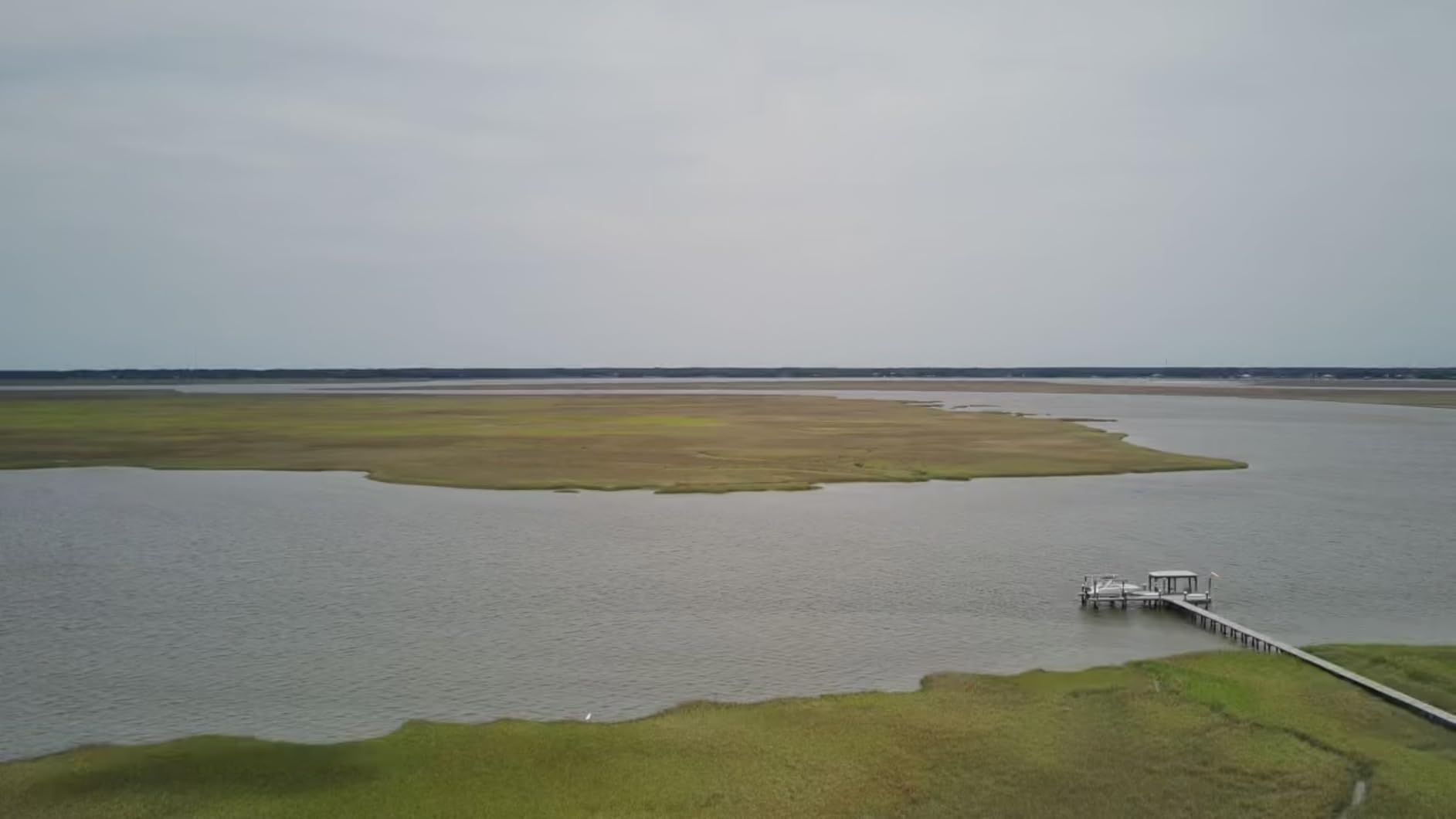
The camera is a 1/2-inch CMOS producing 48MP stills and 4K/30fps video, stabilized by a 3-axis brushless gimbal layered with electronic stabilization. That combination is rare under 250g.
Three intelligent flight batteries ship in the box, and owners report roughly 20 to 30 minutes each depending on conditions. A carrying case, spare propellers, and a screwdriver are included too.
Positioning is the strongest here: time-of-flight, optical flow, barometric altitude hold, and GPS all work together, which makes low-altitude hovering over uneven ground far more predictable than on most of this list.
What you gain by choosing this drone
Beginner mode, AI takeoff and landing, GPS with a locator beeper, and auto return on low power or signal loss cover the safety basics well. The three-battery package removes the single most common frustration for new owners.
MicroSDXC support means you record to a card directly rather than routing everything through a phone.
Where it falls short
The advertised 20,000 foot transmission is optimistic. Owners report real usable range being far shorter, especially with any obstruction in the way. Plan flights in open areas.
Cold weather drains the batteries noticeably faster, which matters if you fly in winter. The camera output is good but not class-leading for what you pay.
9. DJI Mini 5 Pro Fly More Combo With DJI RC 2 Controller
DJI Mini 5 Pro Fly More Combo Plus with DJI RC 2, Drone with Camera, 1-Inch CMOS, 4K Drone for Beginners, Obstacle Sensing, ActiveTrack 360°, 225° Gimbal Rotation, Extended Battery Life
249g
1-inch CMOS sensor
Omnidirectional obstacle sensing
52 min per battery
Pros
- Sharp 4K/60fps HDR video and 50MP stills
- True vertical filming with 225 degree gimbal roll
- ActiveTrack 360 handles cycling and fast subjects
- Three batteries plus ND filters in the box
Cons
- Wind performance is weaker than larger DJI drones
- No adjustable aperture and ND filters are awkward
- Not the gentlest first drone for a crash-prone pilot
The Mini 5 Pro is the step up for someone who already knows what they want: cinematic-looking footage, a one-inch sensor, and the first real obstacle sensing in this guide. It is 249g, so it keeps the lightweight regulatory advantage.
The 1-inch CMOS records 4K/60fps HDR video and 50MP stills, which is a genuine jump in dynamic range and detail. The 225-degree gimbal rotation means true vertical filming without cropping, which is what you want for short-form video.

Nightscape omnidirectional obstacle sensing with forward LiDAR is the feature that changes how you fly. It sees branches, wires, and walls from multiple directions, so slow creative passes near structures stop being a gamble.
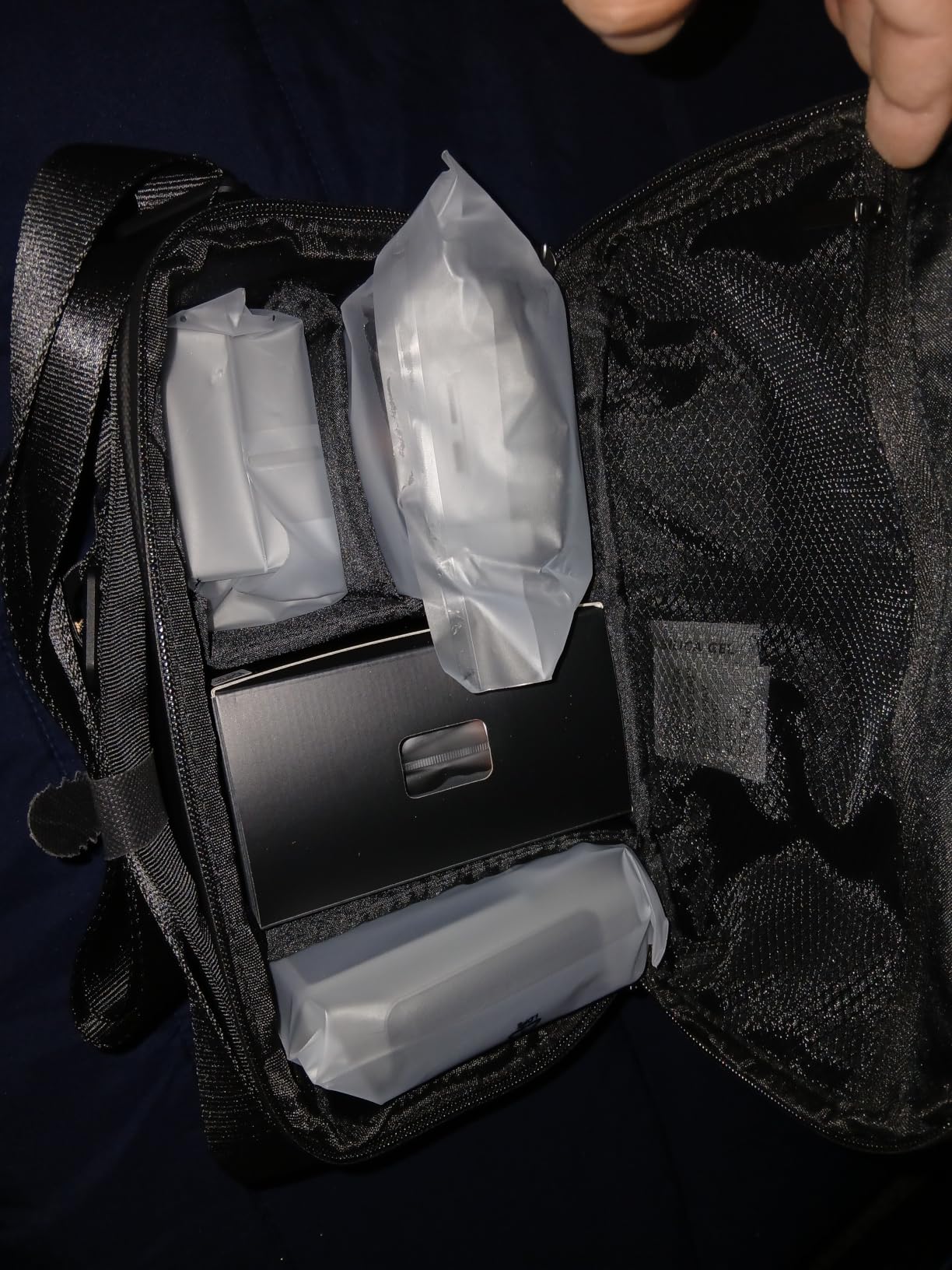
The Fly More Combo Plus includes three Intelligent Flight Battery Plus units, a two-way charging hub, an ND filter set, a shoulder bag, and the DJI RC 2 with its own screen. Extended batteries run up to 52 minutes each.
What you gain by choosing this drone
ActiveTrack 360 handles fast subjects and cycling, which no other sub-250g drone here manages. For anyone shooting action footage, that is the single feature that justifies the jump in class.
There is 42GB of internal storage, so you can shoot without a card and still move footage off quickly. Video transmission is smooth and range performance is strong in open terrain.
Where it falls short
Wind performance trails larger DJI aircraft, so it grounds more often on exposed hillsides. There is no adjustable aperture, and owners find the ND filters awkward to fit.
Signal can drop quickly in mountainous or obstructed terrain, and the RC 2 screen is hard to read in direct sun. It is also a costly aircraft for a crash-happy beginner, which is why it is not our top pick despite the strongest camera.
10. SKYROVER X1 Combo With Screen Controller and 360 Degree Obstacle Avoidance
SKYROVER X1 Drone with Camera Combo with Screen Controller, 4K/60fps Video, 8K Photo, 360° Obstacle Avoidance, Under 249g, 9.32-Mi Transmission, AI Night Shot, 96-Min Flight Time with 3 Batteries
249g
1/1.32 inch CMOS
360 degree obstacle avoidance
5.5 inch 700-nit screen remote
Pros
- Highest rated drone in this group
- Real 360 degree obstacle avoidance with a bright screen remote
- 1/1.32 inch sensor records 4K/60fps HDR and 48MP stills
- Three batteries for 96 minutes total
Cons
- Operating app is not available on the Google Play store
- Controller software can be glitchy and the manual is thin
- Spare parts and accessories are harder to source
The X1 is the most interesting drone here and the highest rated of the twelve. It puts a 1/1.32-inch sensor, real 360-degree obstacle avoidance, and a 5.5-inch screen remote into a 249g body, which is a combination nobody else in this price range offers.
The 5.5-inch 700-nit touchscreen at 60Hz is genuinely readable in direct sunlight, and it means you never touch your phone to fly. That single design choice removes the most common beginner frustration with phone-only controllers.
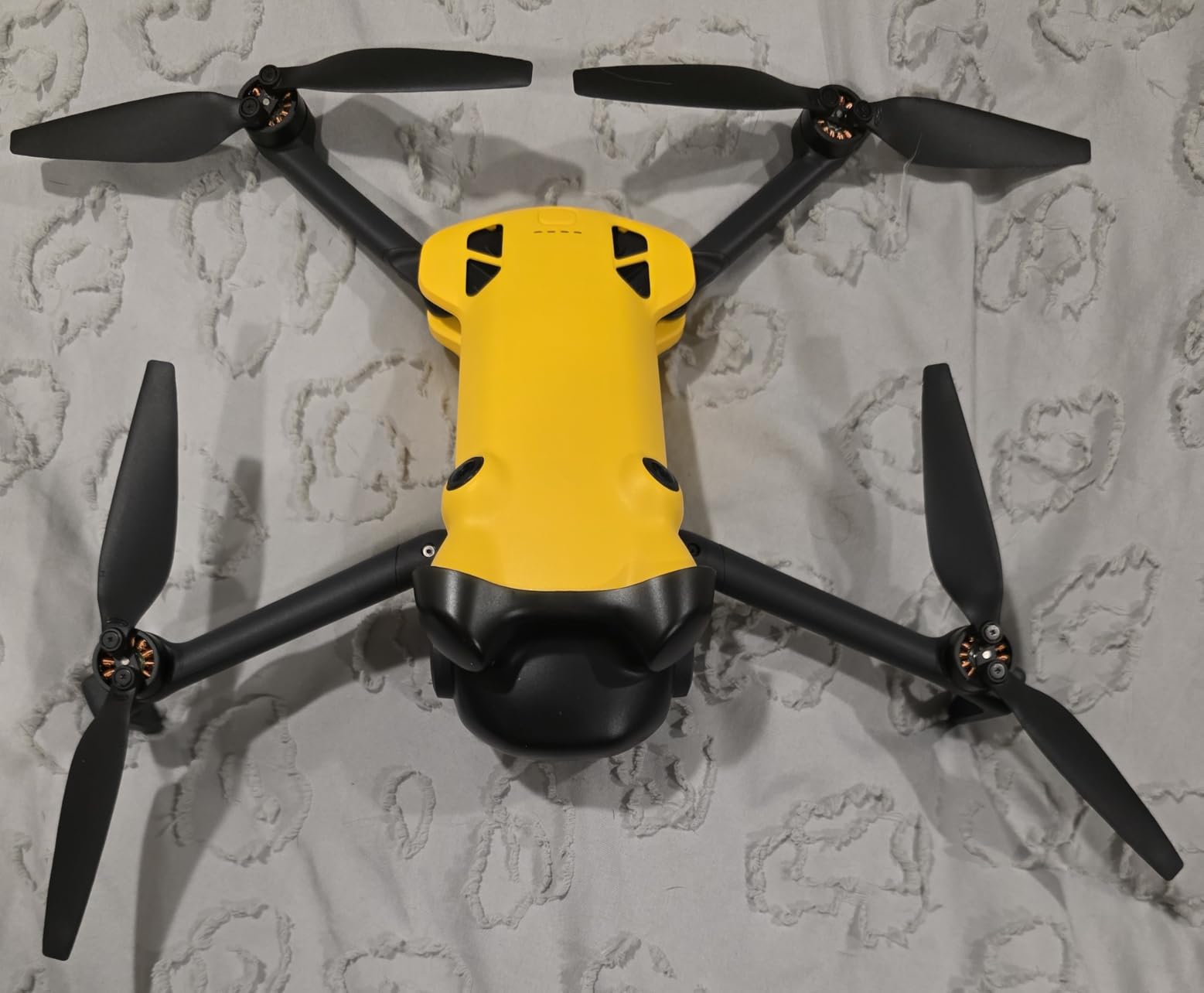
Image quality is excellent: 4K/60fps HDR video, 48MP stills, and a 3-axis gimbal keeping the frame level. Slow motion runs to 4K/100fps and there is a timelapse mode.
Three batteries give up to 96 minutes total, at 32 minutes each, and SkyBridge transmission reaches up to 9.32 miles with a 1080p/60fps live view. AI auto track, smart spotlight, and dual tracking all work.
What you gain by choosing this drone
Obstacle avoidance is the reason to buy it. Flying a 249g drone between trees or alongside a building changes from nerve-wracking to routine, and that confidence is what keeps people flying past the first month.
At 249g it folds flat for travel, and the bundle includes a charging hub, gimbal protector, three propeller pairs, and a shoulder bag.
Where it falls short
The operating app is not available on the Google Play store, so Android users have to sideload it. That is a real barrier for anyone who has never installed an app outside the store.
Owners report occasional controller software glitches and a thin manual, and spare parts are harder to find than for a DJI. The review base is also the thinnest here at 255 ratings, so we would treat the strong rating with some caution.
11. karuisrc K600PRO With 5.5 Inch Screen Controller
K600PRO GPS Drone with EIS 4K Camera for Adults Beginner,3 Axis Gimbal Professional Long Range Drone with 5.5” Touchscreen on Controller,Auto Return Follow Me,15KM FPV Transmission 55 Min Flight Time
730g
5.5 inch touchscreen controller
3-axis gimbal with EIS
55 min from one battery
Pros
- Integrated 5.5 inch screen means no phone needed
- Three-axis gimbal plus EIS for smooth 4K
- 55 minute runtime from a single battery
- Six GPS modules help low-altitude stability
Cons
- At 730g it is well above the 249g threshold
- Newer listing with limited long-term review history
- Registering adds paperwork and cost
The K600PRO is the odd one out in this roundup: a large aircraft that flies without any registration shortcut. At 0.73kg it is nearly three times the weight of everything else here, and that changes the rules rather than just the handling.
What it gets you is endurance and a big screen. The 5.5-inch touchscreen is built into the controller, so there is no phone dependency at all, and a single 3500mAh battery runs about 55 minutes, the longest per-battery flight in this group.
The camera combines 4K EIS capture with a three-axis gimbal and 50x zoom, which is a rare combination. Transmission is advertised at 15km, though treat that as a maximum rather than a working distance.
Beginner aids are thorough: one-key takeoff, auto return, height lock, beginner mode, and time-of-flight sensing. A 16GB SD card slot handles onboard storage.
What you gain by choosing this drone
If you are already registered, or intend to get certified, this is a serious aircraft with no size penalty on flight time. The 55-minute battery means fewer swaps on a long day out.
Follow me, orbit, and point-of-interest flight are all present, and the 11.1V brushless setup has the power to fly in conditions that ground a 249g drone.
Where it falls short
The weight is the whole issue. Above 250g you need to register the aircraft in the US and you fly under the full recreational rule set rather than the relaxed sub-250g one. That is paperwork and a recurring fee for a first drone.
It is also a newer listing with a limited long-term review history, and it is far less forgiving than the guarded, lightweight options here. We would not start with this aircraft.
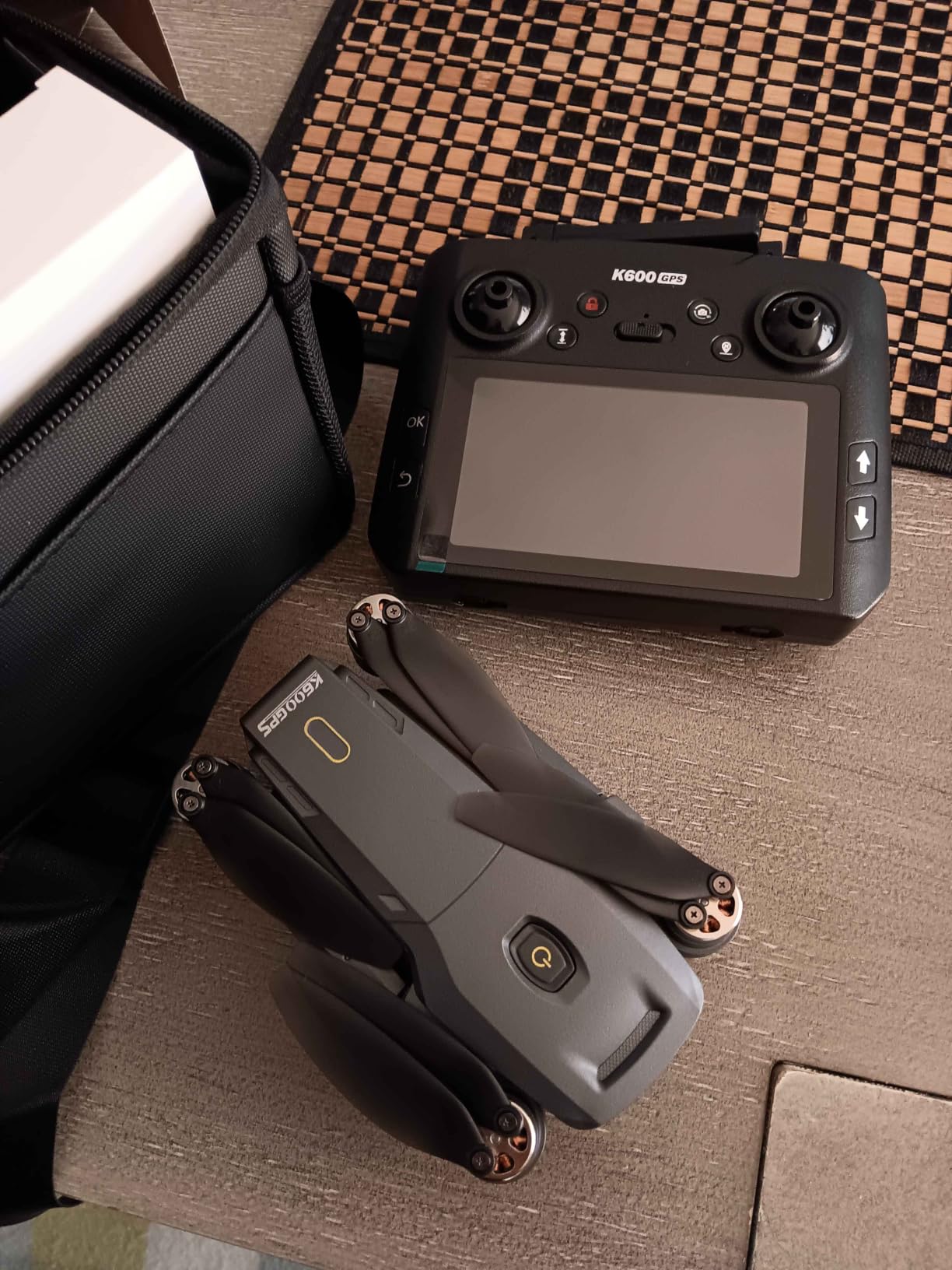
12. karuisrc K600GPS Under 249g With 4.5 Inch Screen Controller
GPS Drone with EIS 4K Camera, 4.5″ FPV Screen, 5GHz Transmission Foldable Drone with Brushless Motor, Auto Return Follow Me, Gesture Control, Al Track&Orbit Mode for Adults/Kids/Beginners, Under 249g
206g
4.5 inch screen controller
1080p EIS camera
Propeller guards included
Pros
- Built-in screen means no phone and no drained handset
- Propeller guards make it safe for kids
- One-key takeoff headless mode and 3D flips
- GPS auto return plus optical flow positioning
Cons
- 1080p only despite 4K wording in the listing
- Flight time of roughly 15 to 22 minutes
- Weak instructions and troubleshooting documentation
The K600GPS is the cheapest way to put a drone in a child’s hands, and the reason is the propeller guards. Combined with the 4.5-inch screen and one-key controls, it tolerates the kind of handling that destroys unguarded aircraft.
At 206g it folds flat, stays inside the no-registration weight class, and comes with a carrying case. The screen controller means no phone is required, which also solves the problem of a drained handset ending a flight.
That said, be clear about what you are getting. The camera records 1080p with EIS behind a 90-degree adjustable lens, not the 4K the listing headline suggests. Flight time is roughly 15 to 22 minutes, which is short.
Safety and simplicity are the reason it is here. GPS auto return on low battery or signal loss, optical flow positioning, waypoint fly, trajectory flight, follow me, orbit, and AI tracking give you a full mode list at the lowest outlay in this group.
One-key takeoff and landing, headless mode, 3D flips, and three-speed adjustment make it forgiving enough for an older child learning with adult supervision.
What you gain by choosing this drone
It is the lowest-cost entry point here, and the built-in screen plus guards remove two of the three reasons new pilots give up in the first month: draining a phone and wrecking a prop.
The folding design and included carrying case mean it can live in a small bag and travel without a dedicated drone case.
Where it falls short
The video is 1080p, and no amount of processing turns that into 4K. If image quality is why you want a drone at all, this is not the machine.
Some units report difficulty taking off or responding to controls, and the documentation is weak, so expect some setup friction. Owners also note short flight time, which limits practice.
Buying Guide: What to Look for in Your First Camera Drone
Specs are the least reliable part of buying a first drone. These seven factors actually predict whether you will still be flying it six months from now.
1. Confirm the controller is in the box
This is the most common beginner regret, and it appears constantly in flying forums. A phone-only drone feels imprecise, has a short effective range, and dies when your battery drops. If a listing does not say a transmitter is included, assume it is sold separately and budget for it.
Two picks here solve this differently: the K600GPS and the K600PRO both have a screen built into the controller, and the SKYROVER X1 does too. Every other model on this list ships with a dedicated transmitter.
2. Prioritise GPS hold and return to home
A drone without GPS drifts with any air movement and can end up in a tree. GPS-assisted hover and automatic return to home are the two features that separate a beginner drone from a toy. Every pick in this roundup has both.
Optical flow positioning is a bonus: it lets the drone hold a stable hover indoors over smooth floors, which is where new pilots should spend their first ten flights.
3. Decide between EIS and a gimbal, honestly
A 3-axis gimbal mechanically keeps the camera level. Electronic image stabilization crops and shifts the frame in software. For photos and slow orbits, EIS is fine. For video of moving subjects, gimbal only. Six picks here have a real gimbal.
4. Do the battery math before you buy
Multiply the per-battery time by the number of batteries included, and expect about 20 percent less than advertised in real conditions. A drone with three batteries beats one with two at the same per-battery time, because you spend less of your session waiting for a charge.
Also check that spare batteries are sold separately and reasonably priced. That is a better value purchase than upgrading the whole aircraft.
5. Watch the weight class carefully
Under 250g is the magic number for relaxed recreational flying in the US. It is also easy to cross accidentally: a heavier extended battery can push a drone that was listed at 249g over the line. Check the takeoff weight with the battery you actually intend to fly.
Weight also changes how the aircraft handles wind. Bigger drones fly in stronger conditions, so if you plan to fly on exposed coastlines or hills, a larger aircraft may serve you better despite the registration paperwork.
6. Verify the app is available where you need it
Two drones on this list require installing their app outside the main app store. Check before you buy, especially if you are not confident with phones. An app that stops being supported can end your flying life even with a perfect aircraft.
7. Look for guards if anyone else will be near it
Full-coverage propeller guards, like the ones on the DJI Neo and the K600GPS, make indoor and near-people flying genuinely safe. Most accidents involve people, not trees. If a child will be handling it, guards are not optional.
Once you are comfortable, a gimbal drone with a card slot and spare batteries is the sensible second purchase. If your interest is photography rather than video, pair it with a good stills workflow and read our beginner DSLR camera guide for the ground shots that a drone cannot take.
Do You Need a License or Registration to Fly a Camera Drone?
This is the question that puts most first-time buyers off, and the answer is friendlier than most people expect. In the US, recreational flying under 250g carries no license requirement at all.
The 250g threshold
Every drone in this roundup except the karuisrc K600PRO weighs 249g or less. Under that weight, US recreational flyers do not need to register the aircraft and do not need a licence. You still fly under the full set of FAA rules: stay under 400 feet, keep the aircraft in your line of sight, and stay away from people and airports.
The 1:1 rule sets horizontal distance. Over people who are not participating in your flight, keep 20 feet away in the United States, with a narrow allowance for very small aircraft. Over any structure or open water, you need the owner’s permission.
TRUST certification and Part 107
The TRUST test is a free online knowledge check for recreational pilots, required before your first flight for any registered aircraft. It takes about 20 minutes and covers airspace rules, weather minimums, and your responsibilities as a remote pilot in command.
Part 107 is the certification for anyone flying for money or as part of a job. It does not apply to hobby flying. If you later want to shoot paid work or monetized content, that is the path, and it requires you to be at least 16 years old.
Registration rules above 250g
Above 250g you must register the drone with the FAA. Registration has a small fee, lasts three years, and applies to both recreational and commercial use. It also applies to any aircraft you fly commercially regardless of weight.
Remote ID is a separate broadcast requirement that has been extended for most new aircraft. For a beginner buying today, the simplest approach is to stay under 250g and sidestep the question entirely.
Can a child fly one of these drones?
In the US there is no minimum age to fly a drone. The rules are simple and worth knowing before you buy a first drone for a child: no minimum age to fly, 13 to register an aircraft, and 16 to hold a Part 107 certificate. Outside the US the numbers differ, with Canada using 14 and 16 tiers and the UK requiring an Operator ID at 18.
Whatever their age, a child should fly in a clear open space with an adult supervising, and a fully guarded drone is the right choice.
What about the FCC Covered List and DJI?
Regulatory interest in foreign-made drones has grown, and some manufacturers now appear on the FCC Covered List, which restricts adding new equipment authorisations for those models. For a first-time buyer the practical questions are availability of batteries, continued app support, and repair parts, not abstract policy.
Check that the specific model you want still has app support and accessible spare parts where you live. Most of the picks here remain straightforward to run, and models with built-in screen controllers reduce your dependence on a phone app entirely.
How We Picked These Drones
Every drone here was assessed against the same six criteria, chosen because they are what predict a good first six months of flying rather than what looks good on a spec sheet.
First, stability and GPS hold, judged from long-term owner reports rather than single flights. Second, whether a controller is included. Third, real stabilisation, with gimbals ranked above EIS. Fourth, honest flight time, calculated per battery rather than from the total. Fifth, build quality and crash survival. Sixth, whether the app is supported where you live and whether spare parts exist.
We excluded listings where the headline resolution contradicted the specification section, since that pattern reliably tracks with disappointing footage. We also weighted review counts heavily, because a drone with a thousand owners has a known failure mode and a drone with two hundred does not.
Frequently Asked Questions
What is the best first drone to buy for a beginner?
Which drone can fly without a license?
Which drone is easiest to fly for beginners?
What is the 1:1 rule for drones?
Does the FAA know if you fly above 400 feet?
How much does a beginner drone with a camera cost?
Why did the US ban DJI drones?
Can a child fly a drone alone?
Conclusion: Where to Start With Your First Camera Drone
For most people buying the best drones for beginners with camera in 2026, the answer is the Potensic ATOM. It is the only sub-250g drone here that combines a real 3-axis gimbal with strong wind handling and working tracking, and it will teach you to fly without ever making you feel like you are about to lose it.
Spend less and take the DJI Neo if the priority is safety and the simplest possible first flight. Spend more and take the DJI Mini 4K if smooth video is what you actually want to shoot, or the SKYROVER X1 if flying near trees and structures makes you nervous.
Whatever you pick, practise the hover first, buy a second battery before anything else, and stay under 400 feet. That habit will keep you flying long after the novelty wears off. For packing and travel, our camera backpack guide covers fitting a drone safely into a bag you already own.