
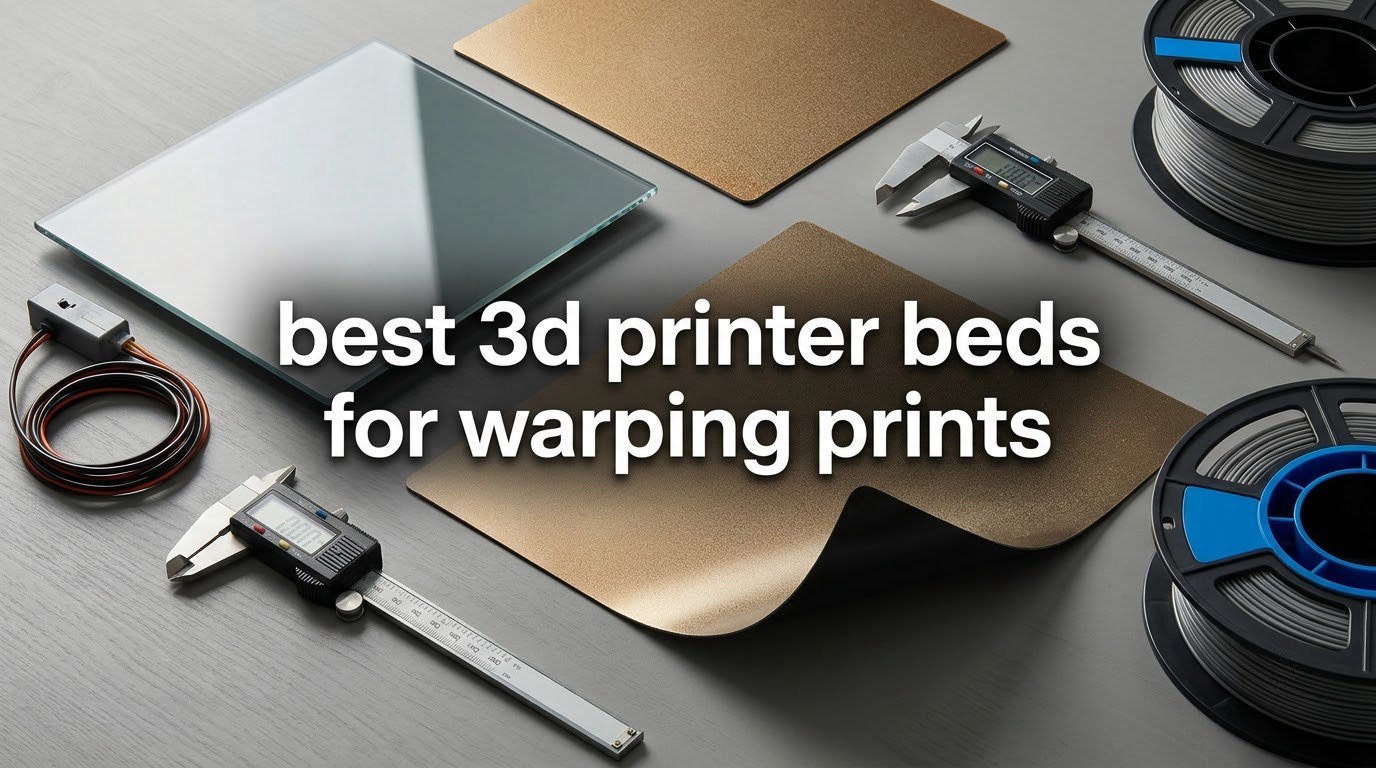
Warped prints are the most expensive kind of mistake in FDM printing. You spend six hours watching a large ABS plate build, the corners curl off the bed at hour four, and the whole job goes in the bin. Most of that waste traces back to a build surface that grips too weakly, sits unevenly, or runs too cold for the filament you are using.
That is what this roundup is about. I compared the build plates and glass beds that people actually swap onto budget and mid-range printers, looking at one question only: which surface keeps a part flat from the first layer to the last? If you have not built a printer yet, start with our beginner printer guide first, then come back here.
Table of Contents
Quick Answer: Best Build Plate for Warping
The best build plate for warping is a textured PEI-coated spring steel sheet rated to 250C or higher. The texture raises adhesion while the bed is hot, the spring steel core stays flat across a large footprint, and the coating lets go as the plate cools so the part drops free. Add a brim, keep the bed at 55-60C for PLA or 90-110C for ABS and ASA, and corner lift largely disappears.
Quick picks:
Best overall – the Creality original removable magnetic surface, the widest install base and the easiest swap between plates.
Best value – the coated Ender 3 glass bed, where borosilicate flatness does the heavy lifting at the lowest cost of the three.
Best for high-temperature work – any plate with a textured side rated to 300C for ASA, PC and nylon.
Best budget route – plain borosilicate glass plus a glue stick, still the cheapest reliable anti-warp stack.
Best key number – plate thickness, and 0.77mm of spring steel deforms far less on a 310mm bed than a thin sheet.
Best first-layer speed – 20-25mm/s on the first layer keeps heat in the plastic long enough for it to bond.
Best setting – keep the bed hot until the part is off, because a cold plate releases a print that the surface had already gripped.
Top 3 Best 3D Printer Beds for Warping Prints


The three products above are the ones I would put on a printer today. The magnetic surface wins on install flexibility, the coated glass bed wins on flatness per unit of effort, and the PEI spring steel sheet is the best balance of grip and release for most filaments.
Best 3D Printer Beds for Warping Prints in 2026
All twelve plates below sit in the three size families that cover almost every consumer printer: 235x235mm, 253.8x241mm and 257x257mm. The key features column is the part that matters for warp, not the marketing extras.
| Product | Specifications | Action |
|---|---|---|
| Removable Magnetic Build Surface |
|
Check Latest Price |
| Coated Ender 3 Glass Bed |
|
Check Latest Price |
 PEI Spring Steel Sheet 235mm PEI Spring Steel Sheet 235mm |
|
Check Latest Price |
 Bambu Lab PEI Build Plate Bambu Lab PEI Build Plate |
|
Check Latest Price |
 Borosilicate Glass Bed 235mm Borosilicate Glass Bed 235mm |
|
Check Latest Price |
 Prusa Sized Textured PEI Plate Prusa Sized Textured PEI Plate |
|
Check Latest Price |
 Double Sided PEI Spring Steel Double Sided PEI Spring Steel |
|
Check Latest Price |
 Creality Large Format PEI Plate Creality Large Format PEI Plate |
|
Check Latest Price |
 BCZAMD Prusa Gold PEI Sheet BCZAMD Prusa Gold PEI Sheet |
|
Check Latest Price |
 Creality Ender Textured PEI Plate Creality Ender Textured PEI Plate |
|
Check Latest Price |
 Thick 0.77mm Textured PEI Thick 0.77mm Textured PEI |
|
Check Latest Price |
 IdeaFormer Textured PEI Plate IdeaFormer Textured PEI Plate |
|
Check Latest Price |
1. Creality Original Removable Magnetic Build Surface – Best Overall for Warping
2PCS Creality Original Ultra Removable Magnetic 3D Printer Build Surface
Flexible magnetic surface
Bend to release
Cut to any size
Heated or non-heated
Pros
- Removable surface releases models without tools
- Trimmable to fit any build size
- Works on heated and non-heated FDM beds
- Two pack allows hot swapping
Cons
- Magnetic layers must bond precisely on first install
- Orientation can need rotating to find the magnetic direction
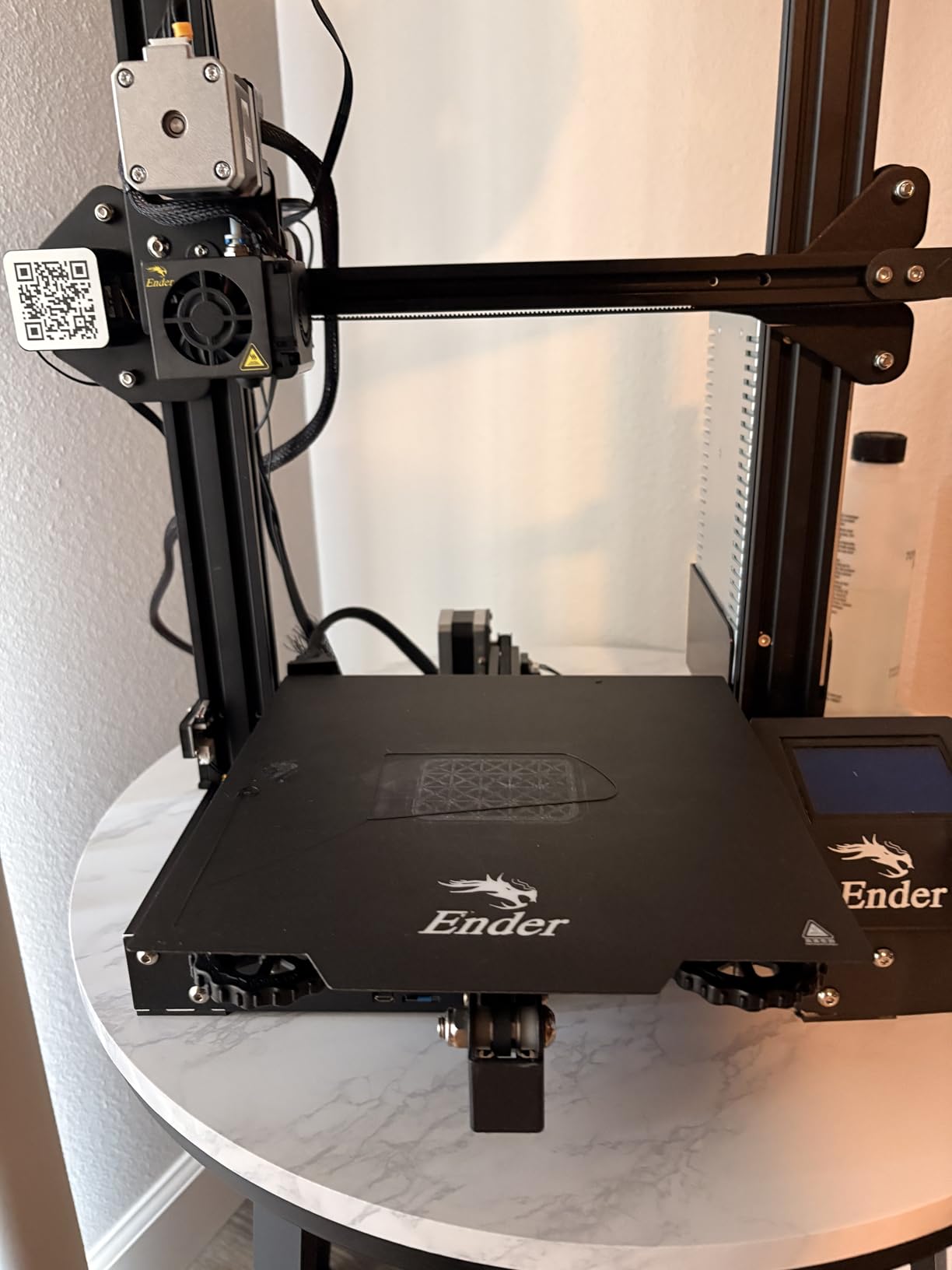
This is the surface I keep coming back to for warp control, and the reason is the installation model rather than the material. The upper layer is a flexible magnetic sheet and the lower layer is a 3M adhesive base you stick to any existing plate, so the whole thing is removable in seconds and you can run two surfaces without waiting for the bed to cool.
The anti-warp benefit is real but indirect. A removable plate lets you keep a dedicated high-temp surface for ABS and ASA separate from a general surface for PLA, which stops you from trading one filament problem for another. Bending the sheet also releases parts cleanly, so you are not levering a warped corner off with a spatula and stressing the first layer.
What surprised me is how much the flexibility itself helps with warp symptoms. A rigid plate forces you to fight the part, while a sheet that curves a few millimeters lets the part peel away from the last layer naturally instead of tearing at the corners. For tall or slightly undersized footprints, that difference is often the difference between a clean print and a scrapped one.
The catch is installation. The soft magnetic sticker and the top layer have to adsorb to each other completely, and if they separate you rotate the plate 90 degrees and try again. Get that step right once and the system behaves predictably for a long time.
Who this surface works best for
It suits anyone printing mixed filaments on a shared machine, because a two pack means one surface can live permanently on the bed while the other sits in a drawer. It also works on non-heated beds, which matters if you print on a machine with no heater and rely purely on surface energy and brim to hold a part down.
It is a good match for anyone who fights corner lift on a budget printer with a warped original bed, since the surface itself stays flat regardless of what is underneath it. Reviewers consistently point to easy model removal and the ability to trim the sheet as the two features they use most.
Where it falls short
This is not a high-temperature plate. If your work is mostly ASA, polycarbonate or nylon, you want a coating rated well above 200C rather than a general-purpose flexible surface. Buying a dedicated textured plate for those filaments costs less frustration later.
The two-layer magnetic sandwich is also the weak point. A part that pulls hard on a corner during a large ABS print can stress the bond, so make sure both layers are fully seated and the base is applied to a clean bed before the first high-temp job.
2. Creality Ender 3 Coated Glass Bed – Best Value Anti-Warp Plate
Creality Ender 3 Glass Bed Upgraded Build Surface Plate, 235x235x4mm
Carbond coated borosilicate
235x235x4mm
Needs binder clips
Pros
- Strong adhesion fixes edge curling
- Flat rigid surface cuts first layer ripples
- Improves dimensional accuracy
- Easy to clean with alcohol
Cons
- Parts are hard to remove once adhered
- Clips occupy build area
- Thicker than original so Z stop needs resetting
Coated glass is the classic answer to warping on an Ender-class machine, and the reason is geometry. A 4mm borosilicate plate does not flex, so a large flat part stays supported across its whole footprint instead of bridging over a dip in the middle. Reviewers repeatedly describe the upgrade as the thing that eliminated edge curl on their machine.
The Carbond coating gives you adhesion without glue, which removes a variable from the equation. When your failure mode is corner lift rather than a leveling problem, a flat plate that grips on contact is usually enough to change the outcome on the first try.
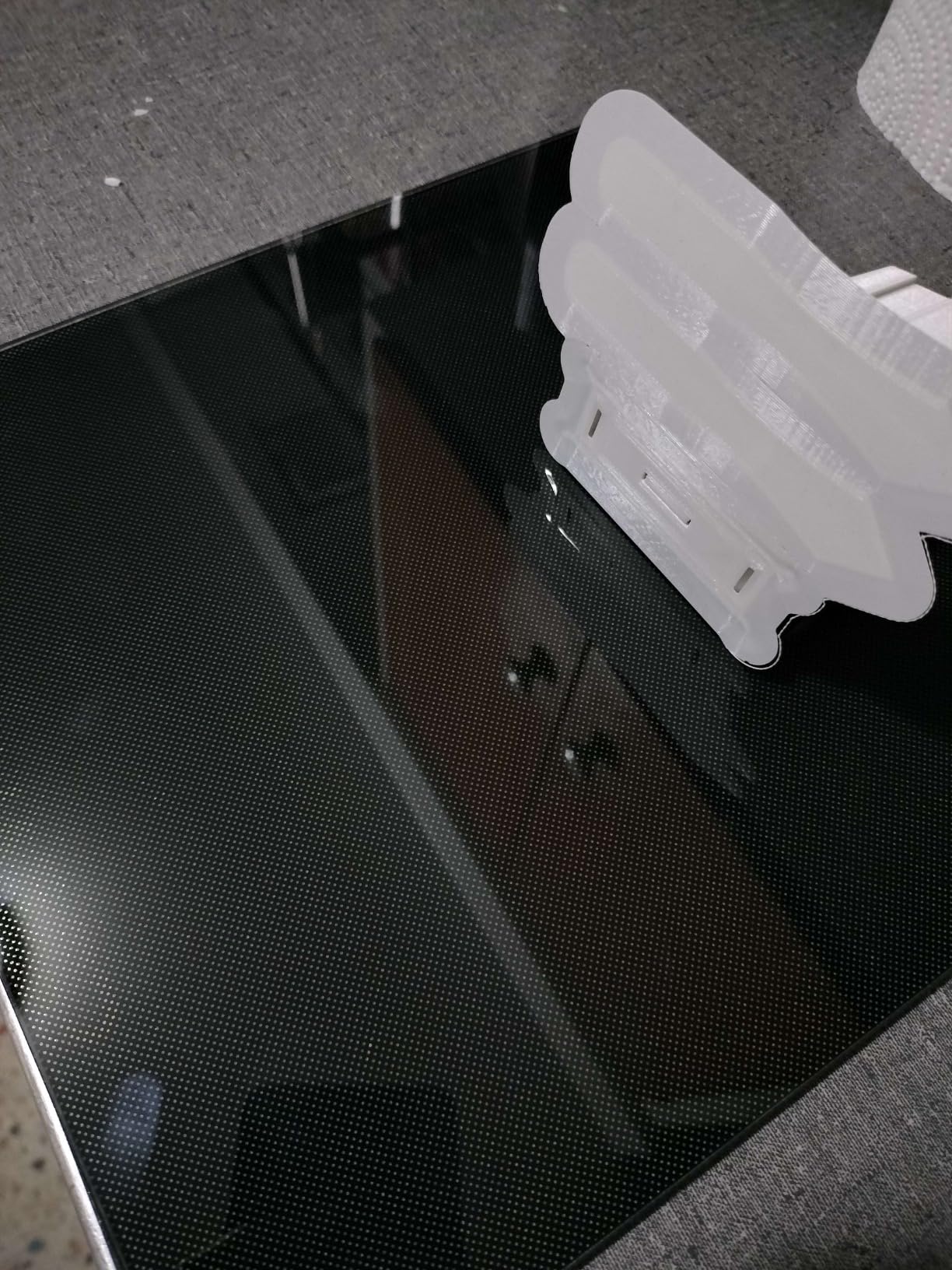
The etched logo is a small but smart detail. Earlier versions left a visible indentation in the bottom of prints, and a shallower mark keeps the surface visually and dimensionally neutral for parts that get displayed.
Cleaning is straightforward. Wipe with isopropyl alcohol before a print, and many owners note that a slightly tacky cleaned surface actually improves release for the next part rather than harming it.
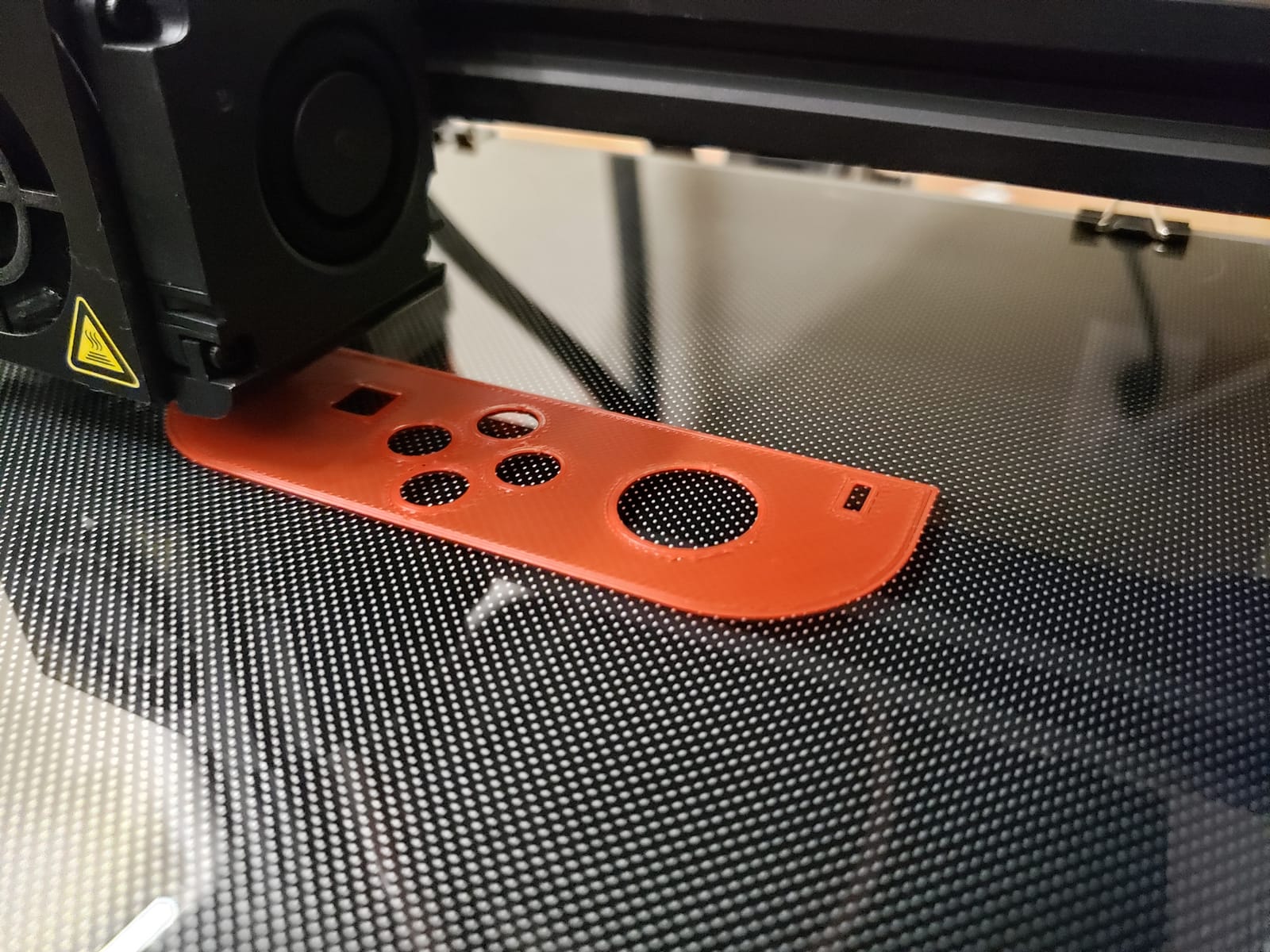
Who should choose this bed
It is built for Ender 3, Ender 3 Pro, Ender 3S, Ender 3 V2, Ender 5, CR-20 and CR-20 Pro owners, and for anyone who prints large flat PLA parts and wants a rigid, dimensionally accurate base. It is also a sensible second plate to keep beside a flexible one, since glass handles display-quality bottoms well.
Choose it when your existing bed surface is dented, bubbled or peeling. Replacing a tired coating with rigid coated glass resolves a class of problems that no temperature setting can.
What to watch out for
Removal is the trade-off. Once a part has bonded to the coating, it often needs to cool fully, and some owners drop the plate in cold water or a freezer to get a clean release. That is a routine, but it is a routine.
Two other practical notes. You need binder clips, and those clips sit inside the build area where the print head can hit them. The plate is also thicker than a magnetic sheet, so re-run your Z-offset before the first print or the nozzle can crash into the glass.
3. Comgrow PEI Spring Steel Sheet 235x235mm – Best All-Round Textured PEI Plate
Comgrow PEI Sheet Magnetic Flexible Heated Bed, PEI Spring Steel 235x235mm for ELEGOO Neptune 3 Pro/4/Anycubic Kobra/Creality Ender 3/Ender 3 Pro/Ender 3 V2/3 V2 Neo/Ender 3 Neo/Adventurer 5M
Textured PEI on spring steel
235x235mm
Bend to release
Pros
- Firm textured adhesion reduces warping
- Flex to release instead of prying
- Survives repeated heat cycles
- Works on a long list of budget printers
Cons
- Needs a magnetic or adhesive base layer
- Spring steel conducts heat faster than glass
Textured PEI on spring steel is the default anti-warp surface for good reason, and this 235mm sheet is the cheapest way into it. The powder-coated texture gives the first layer mechanical grip while the bed is hot, which is exactly what a shrinking part needs from the surface it sits on.
Warping is a thermal problem, so the surface only solves the adhesion half of it. What this plate does well is give you the first half consistently: firm grip on layer one, and a flex that releases the part without a spatula once the bed cools.
Heat cycling is the durability story. Reviewers report the coating holding up over repeated bed cycles, and a flexible spring steel core returns to flat after every bend, so the plate does not slowly go out of plane the way a cheap adhesive sheet can.
One practical note that catches people: spring steel moves heat faster than glass, so mid-bed temperatures can run cooler than your setpoint. If adhesion feels weaker than expected, raising bed temperature slightly is usually the fix rather than reaching for a different plate.
Best use cases for this sheet
It fits the ELEGOO Neptune 3 Pro and 4, Anycubic Kobra, the Ender 3 family, CR-20 and Ender 5 series, which covers a large share of the printers sold in the last few years. It handles PLA, PETG, ABS and other filaments listed by the manufacturer, so it is a safe all-round swap.
It suits anyone who wants a first-layer grip strong enough to fight corner lift but still wants to pop parts off by hand. The matte texture also leaves a clean finish on the underside of functional parts.
Reasons to pick something else
If you run ASA or polycarbonate as your primary material, look for a coating rated to 300C instead. The general PEI coating here is a better fit for everyday filaments than for sustained high-temperature work.
It also needs a magnetic base or adhesive layer to sit on the heated bed, so budget for that if your printer has no magnetic sheet already fitted.
4. UniTak3D PEI Build Plate for Bambu Lab Platforms – Best for Bambu Lab Owners
PEI Build Plate for Bambu Lab X2D/P2S/P1S/A1/P1P/X1C/X1/X1E 3D Printers
Textured and smooth PEI
257x257mm
Textured side to 300C
Pros
- Textured side grips harder than gold PEI
- Double sided for glossy bottoms
- Genuine PEI handles high bed temps
- Sized for the full Bambu platform range
Cons
- Smooth side needs glue stick except for PLA
- Must re-level when switching sides
- Needs careful cleaning to protect the coating
This plate covers the whole 257mm Bambu Lab range, from the X1 and X1C through the A1, P1P, P1S and P2S models. The black textured side is the anti-warp side, and it is rated to 300C, which puts ABS, ASA, nylon and PC in range for a single plate.
The double-sided layout is the clever part. Textured side for grip when the material is difficult, smooth side with a glue stick for a glossy bottom surface on display models, and the plate only has to be re-leveled once per switch rather than twice per print.
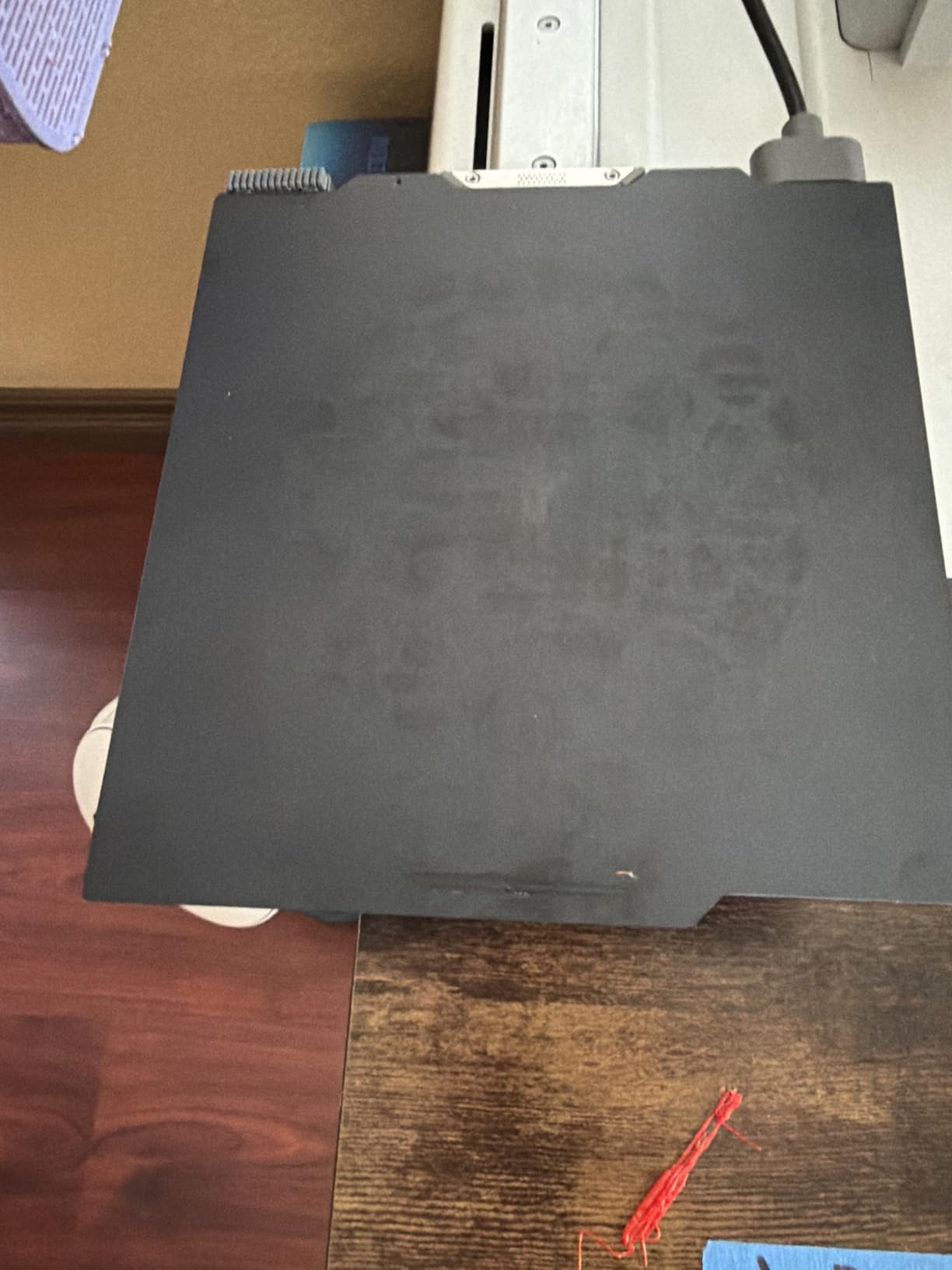
Compared with the gold powder-coated plates on the market, reviewers report stronger grip on the textured face. That matters most on large flat prints where the internal stress is highest and the first layer has the most work to do.
Peel the protective film from the smooth side before you use it, and treat the coating gently. A wipe with isopropyl alcohol and a soft cloth is enough; strong chemical cleaners are what wear these coatings out.
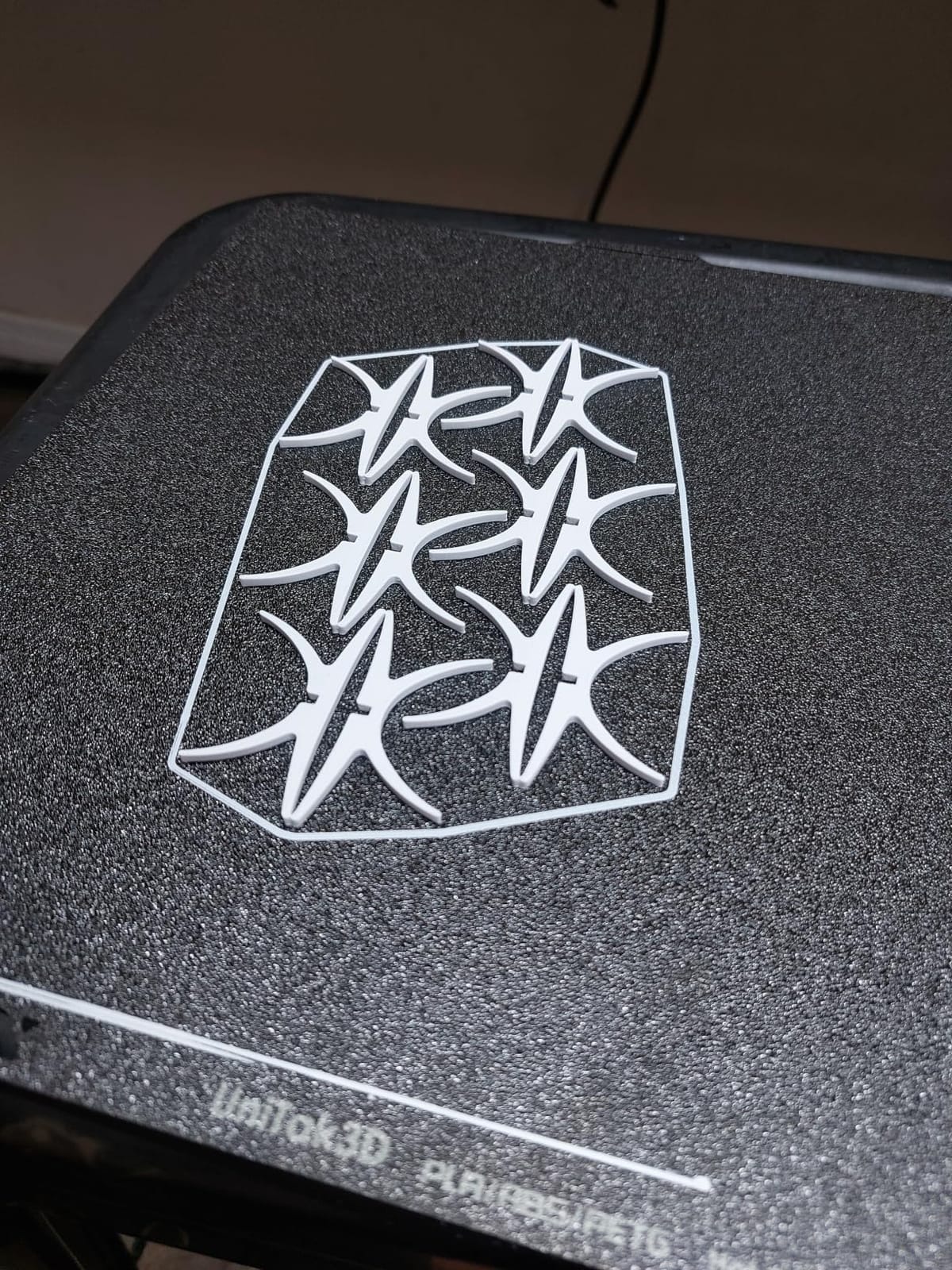
Is it worth switching if you own a Bambu Lab?
Only if your current plate is failing you. If you mainly print PLA and PETG at moderate sizes, the plate that came with the machine handles it. If you print large ASA or nylon parts, the 300C textured rating is the reason to look here.
It is also a good second plate for a two-material workflow, since hot-swapping between a textured plate and a smooth one avoids re-gluing mid-session.
Weak points to consider
The smooth side is weak on its own. It releases poorly and needs a glue stick for anything except PLA, so treat it as a finishing surface rather than an anti-warp surface.
Its rating distribution shows a higher one-star share than comparable plates, with occasional fit and coating complaints. Measure your bed before ordering, and re-level after any side change.
5. Sovol Borosilicate Glass Bed 235x235mm – Best Flat First Layer on a Budget
Glass Printer Bed 235x235x3.8mm Borosilicate 3D Printer Print Platforms
Borosilicate glass
235x235x3.8mm
Resists heat shock
Pros
- Very low thermal expansion so it stays flat
- Exceptionally flat improves first layer
- Easy to clean with water and glass cleaner
- Thick enough that no extra clips are needed
Cons
- Needs a separate glue layer to hold parts
- Will not work with metal-only bed sensors
- Thicker so Z offset needs adjusting
Borosilicate glass is still the most dimensionally stable surface you can put on a heated bed. Ultra-low thermal expansion means the plate does not grow and shrink with the bed cycle, so the flatness you level once stays flat through a long print.
For warp specifically, the value is subtle. Glass does not grip on its own, so it relies on an adhesive layer, and a glue stick on glass is genuinely effective for PLA. The combination gives you a rigid anchor plus a controllable chemical grip, which is a different balance of properties than PEI.
At 3.8mm the plate is thick enough to ignore heat entirely, and the rounded edges are comfortable to handle when you lift a part off. It fits the Ender 3 family, CR-6 SE, CR-20 and CR-20 Pro.
Cleaning is refreshingly simple compared with coated surfaces. Wash with water, use a glass bed cleaner, wipe it dry, then apply a thin layer of printing glue. The glue layer, not the glass, is the consumable you will replace regularly.
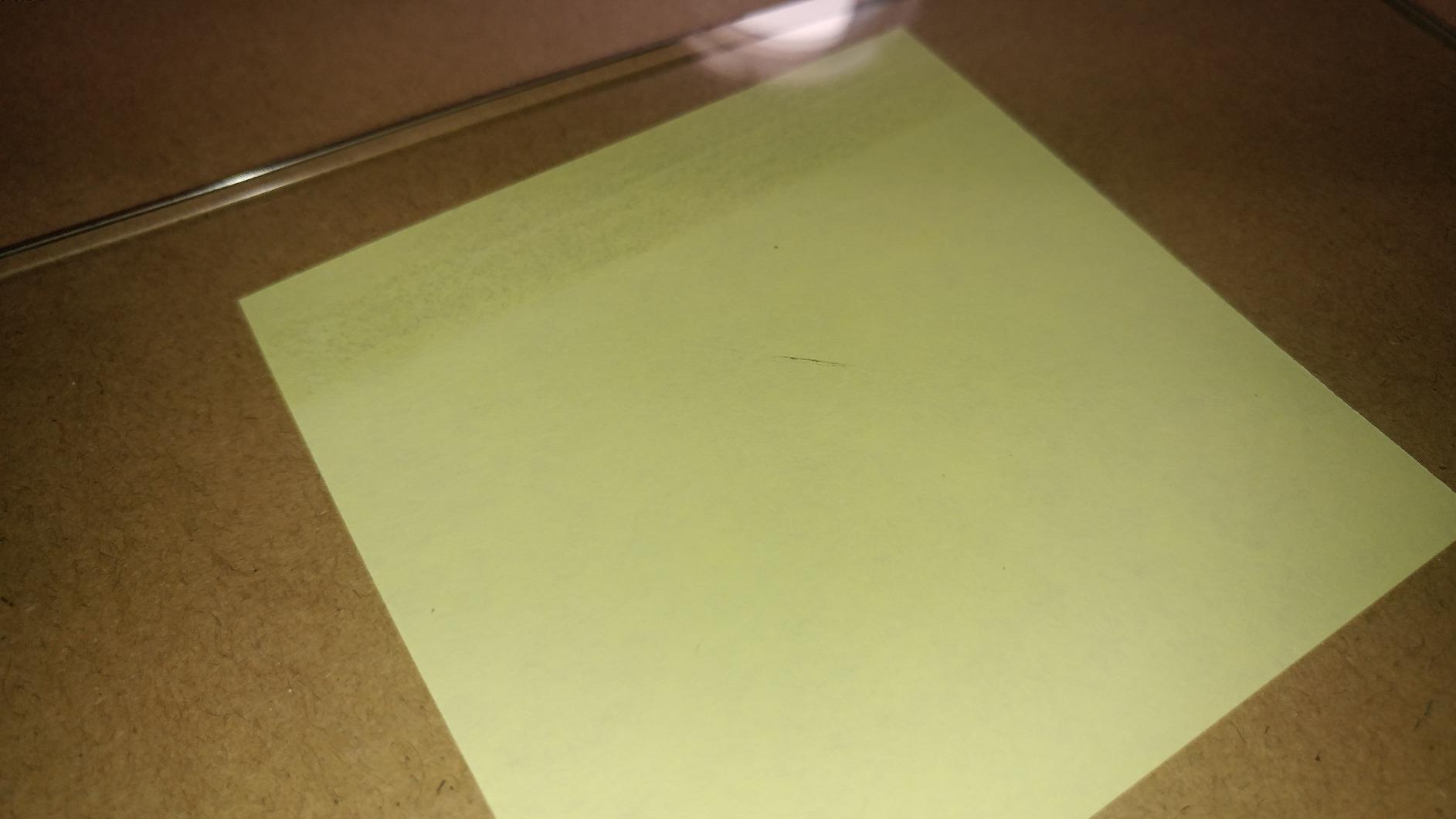
Who should go the glass route
Choose glass if you want the flattest possible surface, if you already have a glue stick routine you are happy with, or if you print display models where a smooth bottom matters more than release convenience. It is also the classic pairing for anyone whose budget printer came with a warped or springy plate.
It suits people who like controlling adhesion chemically rather than thermally. Thin glue layers are easy to tune and easy to wipe back and start again when a print goes wrong.
Where glass is the wrong tool
If you print PETG, glass is the wrong base. Community discussion is full of people warning that PETG bonds to smooth PEI and glass hard enough to damage the part or the surface, so pair glass with PLA and similar materials.
It also will not work on a printer whose bed sensor only detects metal plates, and the extra thickness means a Z-offset adjustment after fitting.
6. TIOPY Double Sided Textured PEI Plate for Prusa Beds – Top Rated
TIOPY Prusa Core One Double Sided Textured PEI Build Plate 254x241mm
Double textured PEI
253.8x241mm
Rated to 200C
Pros
- Very strong adhesion with no glue stick
- Flex and pop release when cool
- Matte texture gives a clean bottom
- Arrives flat with precise cut edges
- Stands up to repeated alcohol cleaning
Cons
- Magnetic base not included
- Re-level after swapping plates
- Edge not perfectly flush on some older machines
This is the Prusa-sized plate I would pick over the factory sheet for anyone whose prints keep lifting. The 253.8 by 241mm format fits the i3 MK2 through MK3S+ and MK4 bed layout, and owners report adhesion equal to or better than the original plate at a noticeably lower cost.
Adhesion here is strong enough to handle TPU without a glue stick, which is where many textured plates disappoint. For warp, that matters because a TPU base layer that fails to bond is usually the first layer, and everything after it inherits the problem.
The matte double-textured finish is a nice touch for functional parts, since the underside looks intentional rather than scarred. It also holds up well after repeated isopropyl alcohol cleaning, with no scratching reported in the review base.
Cut edges and mounting holes are precise enough that no trimming is needed, and the plate arrives flat. That saves you from the most common first-week complaint, which is a plate that rocks because it was cut slightly out of square.
Best fit for Prusa owners
It suits MK3, MK3S, MK3S+ and MK4 owners who want one plate for PLA, PETG, ABS, ASA, TPU, nylon and polycarbonate. The 200C rating covers the materials most people actually run on a home machine.
It is also a sensible choice if your main warp problem is not a bad bed but a weak first layer, since the grip is strong from the first layer without any prep spray or glue.
Things to know before buying
The magnetic base is not included. If your printer already has one, that is fine, but check before ordering so you are not left needing a separate purchase.
Re-level after fitting, and expect a slight edge gap on some older machines. The usable area is unaffected, but the first-layer squish setting will need attention.
7. 3DHUB Double Sided PEI Spring Steel Bed 235mm – Best Double-Sided Option
PEI Spring Steel Bed with Magnetic Sheet for Edner 3 pro/Ender 3 v2/S1,Ender 5 3D Printer,235mm*235mm (235-235, Smooth & Textured PEI)
Smooth and textured PEI
235x235mm
Magnetic sheet included
Pros
- Two surfaces on one plate
- Textured side grips and smooth side releases
- Includes high temperature magnetic sheet
- Wide filament and printer support
Cons
- Added coating thickness may need more bed heat
- Dimensions exclude the front tab
- Never use acetone on the coating
Doubling up smooth and textured on a single 235mm plate is the practical middle ground between glass and full textured PEI. You get the grippy side for ABS and the finicky first layers, and the smooth side for a cleaner bottom when you are printing something you intend to display.
The included 3M high-temperature magnetic sheet rated to 130C saves a step, so you can apply the base and start printing without hunting for a compatible magnetic sheet separately.
It fits the Ender 3, Ender 3 Pro, Ender 5, CR-20 family, Geeetech A10 series and Artillery Genius, and works with PLA, PETG and ABS out of the box.
Keep acetone away from the PEI coating. Isopropyl alcohol at 75-90% is the safe cleaner and it is all you need between prints.
When two sides make sense
Double-sided plates suit mixed-work machines where you would otherwise be constantly gluing and cleaning. The textured side handles engineering filaments, the smooth side handles display PLA, and one plate covers both without re-gluing mid-week.
It is a good fit for anyone who wants the release characteristics of a smooth sheet without giving up the grip that fights corner lift on large parts.
Limitations to know
Two coatings mean extra thickness, and users report needing a slightly higher bed temperature to reach the same grip. Adjust the temperature before judging the plate.
The published dimensions do not include the front tab, so measure your bed before buying. Fit is the most common disappointment with generic 235mm plates.
8. Creality Ender 3 Max PEI Plate 310x320mm – Best for Large Beds
Creality Ender 3 Max Neo Bed Upgrade, PEI Sheet 310 x 320mm Removable Magnetic Flexible Texture Surface Heated Bed Plate Build Surface for CR-10S PRO/CR-10 V2/ CR-10 V3/ CR-X/CR-X Pro/Ender-3 Max
Frosted gold PEI
310x320mm
Magnetic base included
Pros
- Strong adhesion fixes corner lift
- Prints release once the bed cools
- Spring steel returns to flat after bending
- Base includes the soft magnet
Cons
- Rear spring clips make alignment fiddly
- Needs about 10C more bed heat than glass
- Reports of size mismatch on one model
On a 310 by 320mm bed, warping is less about adhesion and more about plate flatness. A part that size puts real stress across a wide footprint, and a thin sheet simply cannot stay flat, so a spring steel core with a frosted PEI coating is the correct answer rather than an optional upgrade.
Owners with a history of bed-related failures describe this plate as the fix. It fits the CR-10S Pro, CR-10 V2, CR-10 V3, CR-X, CR-X Pro, Ender-3 Max and Ender-3 Max Neo, and works with PLA, PETG, PEEK and ABS.
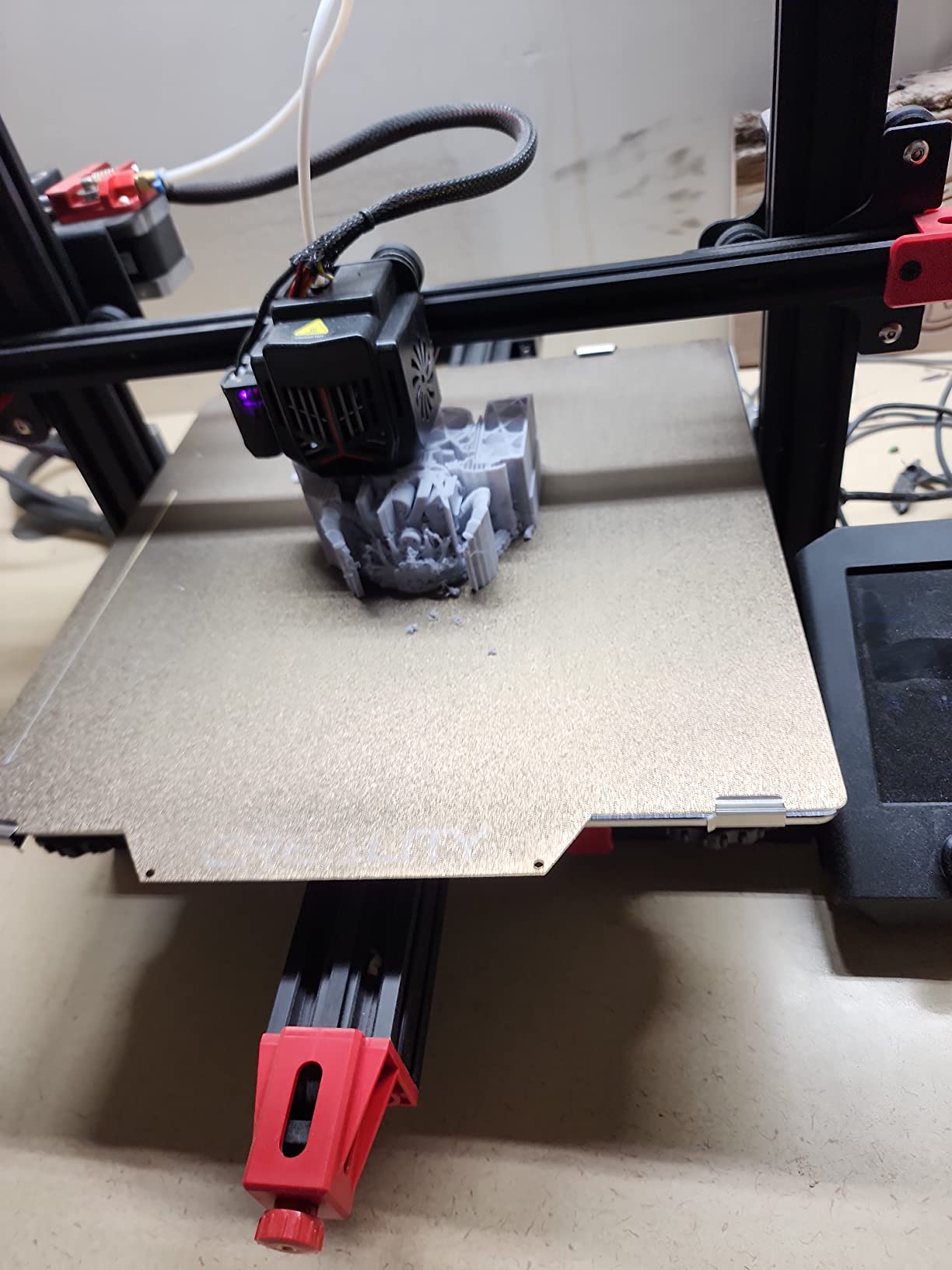
The kit includes the PEI plate plus the soft magnet platform sticker, and installation takes under two minutes. Lift the plate, flex it, and prints come off without scratching or prying.
The matte gold underside on finished prints is a pleasant side effect, and the spring steel is reported to return to flat after repeated flexing rather than taking a permanent set.
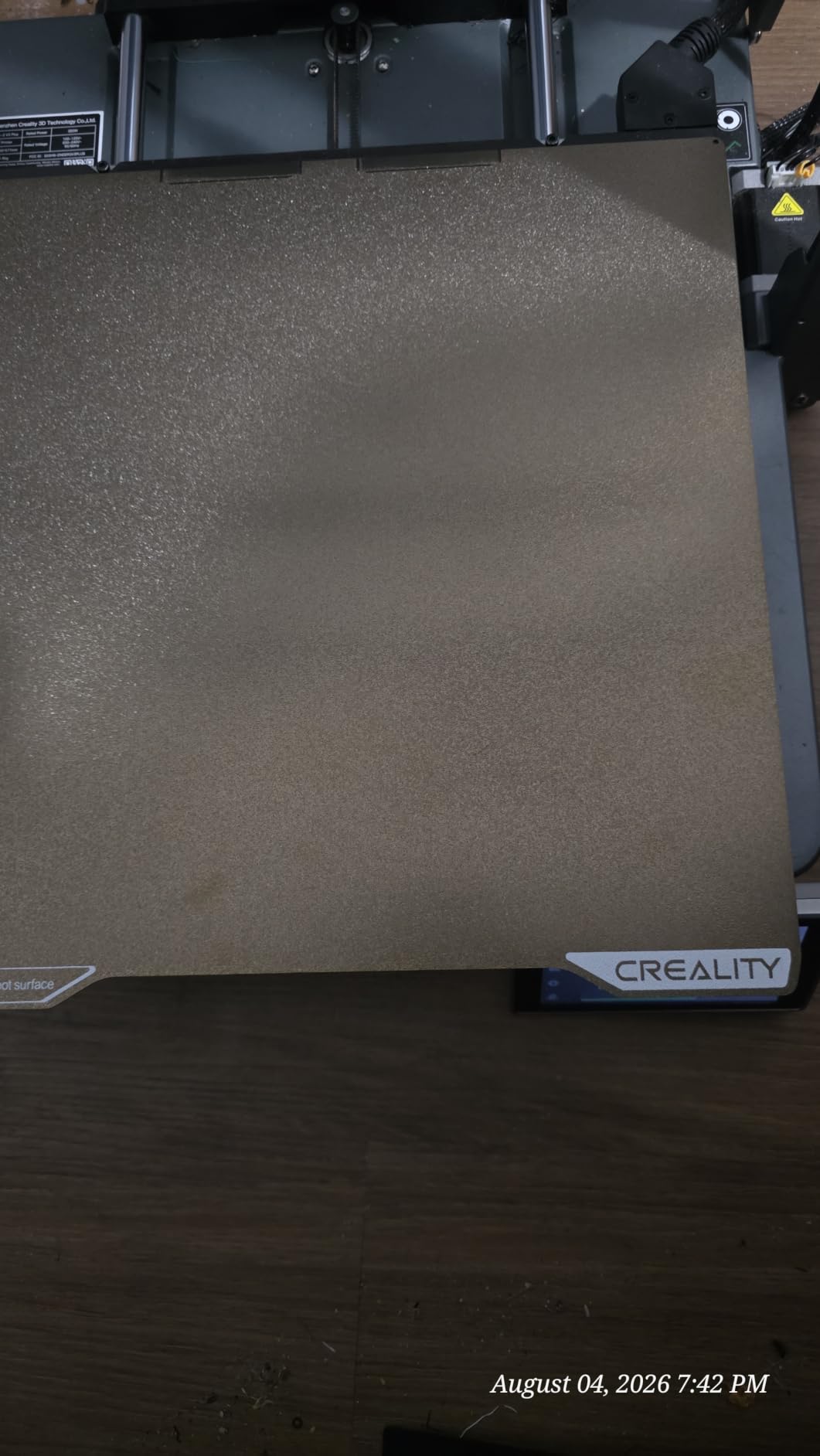
Who needs a plate this size
This is for large-format Creality machines and anyone whose warp problem is scale-related. If your prints span most of the bed, small-footprint tricks like a brim will not save you, and a rigid thick plate will.
It also suits users running multiple parts on one plate, since consistent adhesion across the whole surface is what makes that layout reliable.
Practical cautions
Set the bed about 10C above what you would use for glass or metal to get the same grip. That is a plate property, not a fault, but it catches people out the first time.
The rear spring clips make it awkward to lay the plate down straight, and there is at least one report of a size mismatch against a claimed fit, so measure your bed. This plate also costs more than generic PEI sheets of the same style.
9. BCZAMD Gold Double Sided PEI Sheet for Prusa i3 Beds – Hardened Steel Option
BCZAMD Prusa MK4 I3 MK3 MK52 Gold Double Sided Textured PEI Spring Steel Sheet Powder Coated PEI Build Plate for Prusa i3/Aquila pro/CR6 SE MK2.5S MK3 MK3S, 253.8 x 241MM
Hardened spring steel
253.8x241mm
Double sided gold PEI
Pros
- Hardened steel resists deformation
- Double sided textured coating
- Supports PLA ABS PETG TPU and PUA
- Backed by a replace or refund warranty
Cons
- Costs more than comparable third party sheets
- Printer must be re-leveled after fitting
- Long standing listing with a low sales rank
This is an established third party sheet for the Prusa i3, Aquila Pro and CR-6 SE family, and its selling point is the steel rather than the coating. Hardened flexible spring steel is specified to resist deformation under heat, which is the failure mode that causes mid-size prints to bow.
For warp, that rigidity does the quiet work. A plate that stays flat keeps the first layer at a consistent height across the footprint, so the part is held down evenly instead of only in the center.
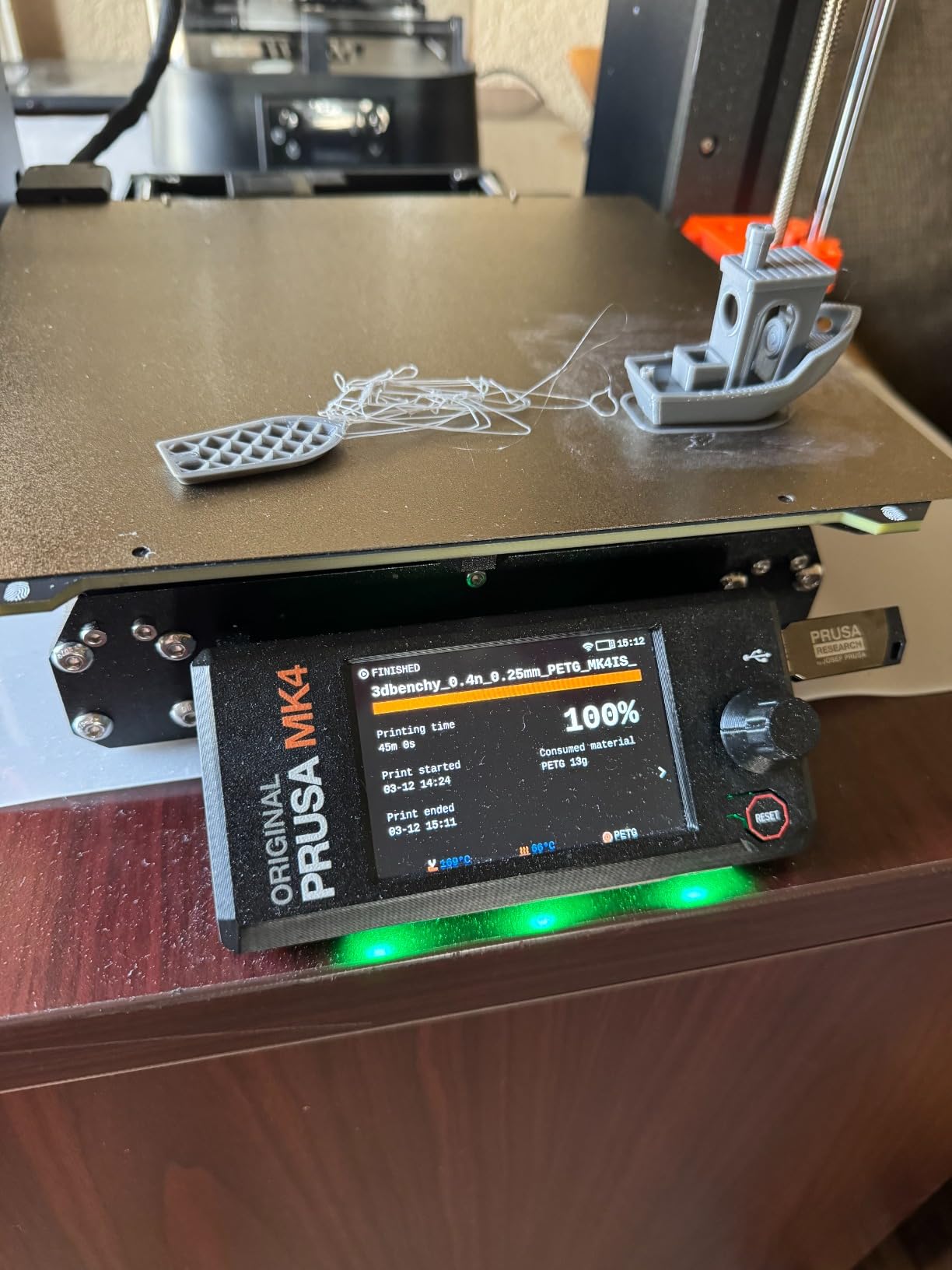
Both sides are PEI powder coated, so you get a textured grip on either face and can turn the plate over when one side wears. Prints release by bending rather than prying, which protects both the part and the coating.
Filament support covers PLA, ABS, PETG, TPU and PUA at 253.8 by 241mm, roughly 10 by 9.4 inches. It also pairs with printers that lack auto bed leveling if you add an inductive Z probe.
Who should buy this sheet
It suits Prusa i3 and MK-series owners who want a durable double-sided plate with a warranty behind it. The replace or refund policy is a genuine advantage over no-name sheets if the coating arrives damaged.
It is a good choice for PUA and TPU work, where a weaker plate tends to flex enough to cause first layer ripple on larger parts.
Where it falls behind the alternatives
It is priced above comparable third party PEI sheets, and you still have to re-level the printer after fitting. Neither point is disqualifying, but if you are purely chasing adhesion per unit of cost, there are cheaper options in this list.
Its sales rank in the category is low for a listing of this age, which mostly means it is an older product rather than a worse one. It has been fit on Prusa hardware for years.
10. Creality Ender Textured PEI Build Plate 235mm – Factory Original Upgrade
Creality Official Ender 3 S1 Pro Original Build Plate, 235x235mm Texture Surface PEI Sheet Magnetic Removable Flexible Spring Heat Resistance Bed Plate for Ender 3 V3 SE/KE, K1, Ender 3 S1, CR-10 SE
Textured frosted PEI
235x235mm
Removable and magnetic
Pros
- Much better adhesion than the original plate
- Flex to release once the bed cools
- Textured finish looks professional
- Dual lifting tabs for safe handling
Cons
- Only grips reliably while the bed is hot
- Magnetic base may need applying
- Periodic alcohol cleaning required
When the problem is a plate that arrived with the printer, a factory original textured sheet is the least risky fix. This 235mm plate is engineered to hold adhesion across a wide temperature range specifically to limit model warping, and it works with PLA, ABS, ASA, PETG, TPU, PC and PA.
It is stick-when-hot and release-when-cool, which is the behavior you want for warp control. The part stays anchored through the layers that matter, and lifts away cleanly once the bed drops to room temperature.
Spring steel is reported to still look fine after well over a hundred flex cycles, so the bend-to-release habit will not deform it. The frosted texture leaves a clean, professional underside on display pieces.
Dual lifting handles and rounded edges make it easier to peel the plate off the bed without burning your fingers, and the magnetic force is specified to resist dislodging at high temperature.
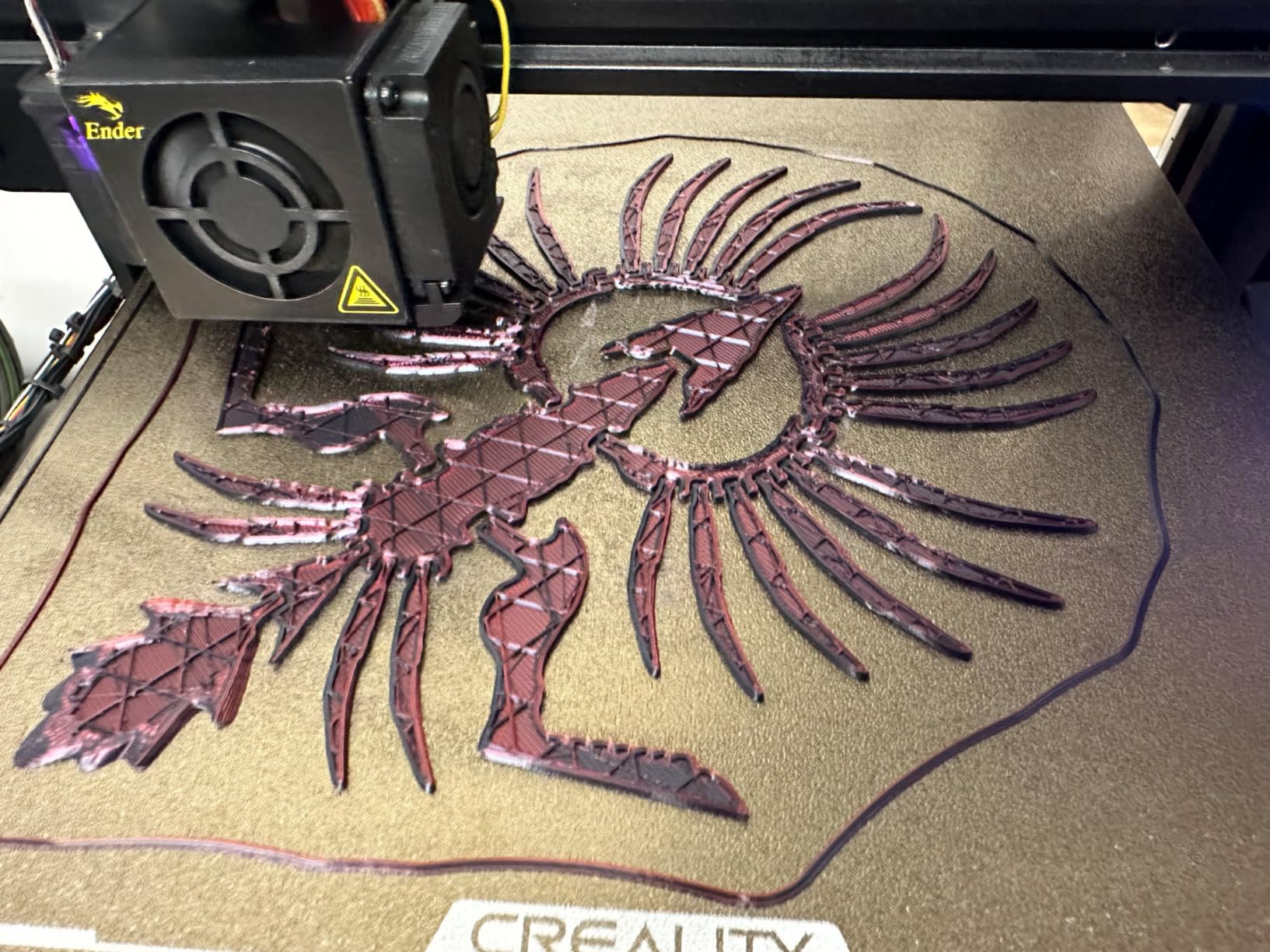
Best fit for Ender and K1 owners
It fits the Ender 3 S1 and Pro, K1, Ender 3 V3 SE and KE, CR-10 SE and Ender 5 S1, plus any other 235mm bed. If your machine shipped with a low-grip magnetic sheet, this is the direct replacement.
It suits anyone who wants manufacturer-backed fit and coating without paying for a large-format plate they will never use.
Watch for these limits
Adhesion depends on bed temperature. On a cold bed or a very low temperature profile the plate will not hold, so keep the bed hot for the first layers. There are also occasional reports of parts failing to adhere when printed without a raft.
You will need a magnetic adhesive base if your printer does not already have one, and the coating needs an alcohol wipe periodically to keep performance consistent.
11. SAHVAIM Thick 0.77mm Textured PEI Plate 257x257mm – Best for High-Temperature Filaments
Upgraded Thicker Textured PEI Plate 0.77mm with QR Code for Bambu Lab P1S/P2S/P1P/X1/X1C/A1/X2D 3D Printer, 257x257mm Dual-Textured Plate, Heated Bed Magnetic Flexible Spring Steel PEI Sheet Plate
0.77mm spring steel
257x257mm
Textured to 300C
Pros
- Thick steel resists deformation and warp
- Textured PEI rated to 300C
- Strong grip for ABS
- ASA and nylon
- Second plate enables hot swapping
Cons
- Adhesion can be too strong for large ASA parts
- QR detection can need slicer attention
- Must be cleaned regularly
This plate is built around one number: 0.77mm of spring steel. On a 257mm platform, thickness is the difference between a plate that stays flat and one that bows under a hot, heavy part, and the extra rigidity here is aimed squarely at large-print warp.
Both sides are usable textured PEI rated to 300C, and the filament list covers PLA, PETG-CF, ABS, TPU, nylon, PC, PA, ASA and PVA. It fits the Bambu Lab X1 Carbon, X1, X1E, P1P, P1S, A1 and P2S platforms.
Owners report better grip than the plate their machine came with, and a second unit is a common purchase because it lets you hot-swap between a textured surface and a smooth one without waiting for the bed to cool.
Prints release as the bed returns to room temperature and the plate flattens again, so the removal step is a wait rather than a fight. Clean dust and oil with detergent and water, and keep acetone off the PEI.
Best for ABS, ASA and nylon work
This is the plate to pick if your printer lives in an enclosure running high-temperature filaments. Grip that holds at 300C matters more than any surface finish, because at those bed temperatures weak first layers fail early and visibly.
It also suits anyone whose current plate visibly deforms, since a thicker core is the direct answer to a bowed bed on a 257mm machine.
Limits worth knowing
For ASA specifically, the grip can be excessive and large parts are hard to peel off. Plan on cooling the bed fully before removal rather than forcing it.
The QR code used for plate detection can need slicer or firmware attention on some models, and the coating needs regular cleaning to keep adhesion consistent.
12. IdeaFormer-3D Textured PEI Plate with QR Code 256x256mm – Budget Pick for Bambu Lab
IdeaFormer-3D P1S A1 Textured PEI Build Plate with QR Code for Bambu Lab 256x256mm, Good Adhesion X1 X1C PEI Sheet PLA PETG ABS Spring Steel Bed Plate for Bambu Labs P2S P1P P1S A1 X1 Carbon
Textured PEI with QR code
256x256mm
Rated to 300C
Pros
- Adhesion and release match or beat the OEM plate
- More flexible than the original
- QR code recognized on P1S
- Even textured finish on print bases
Cons
- Thinner and more flexible than the OEM plate
- Some plates need calibration after fitting
- Texture can wear at the nozzle wipe zone
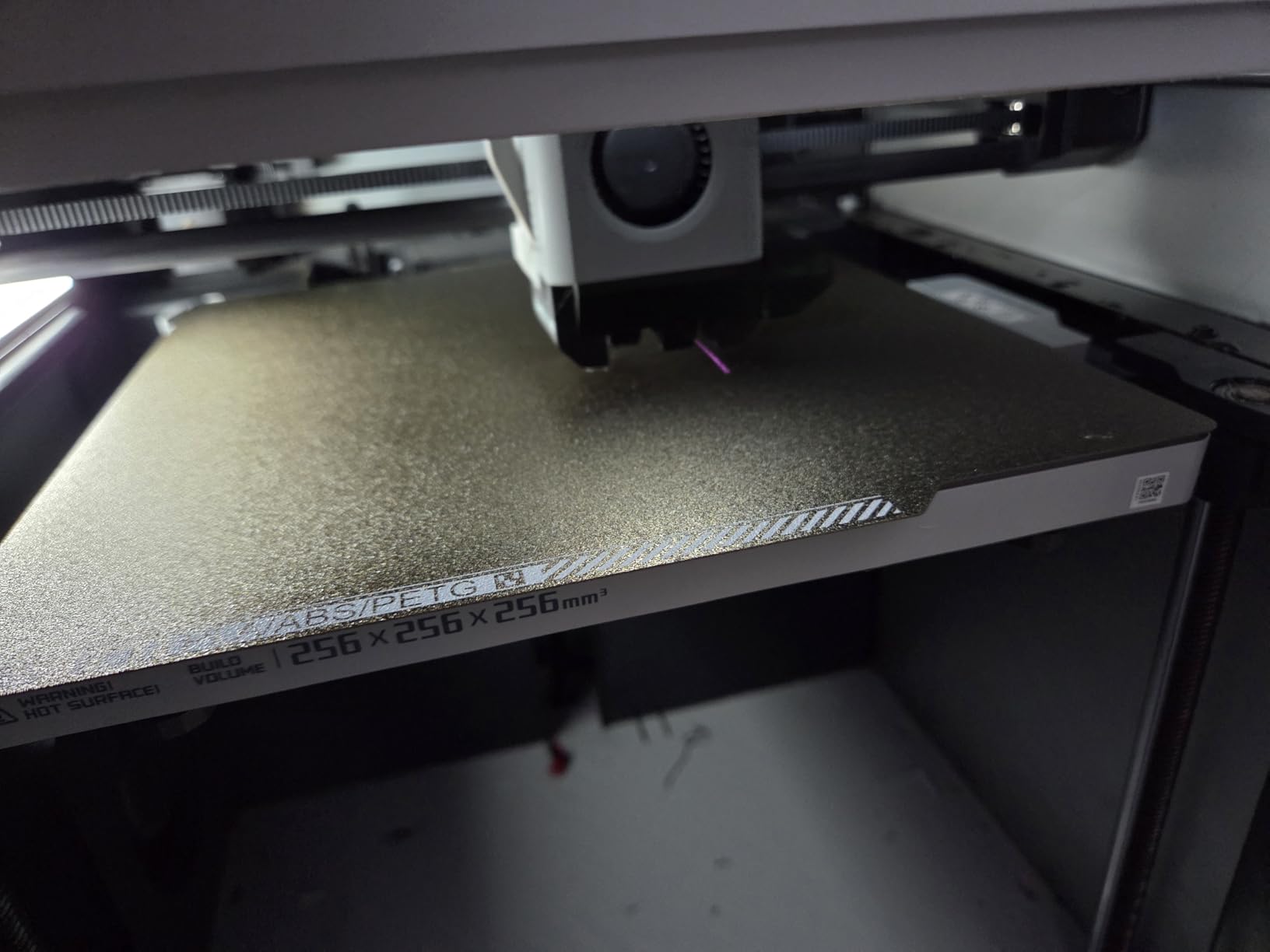
This is a straightforward third party textured plate for 256 by 256mm Bambu Lab platforms, and it holds up well against the machine’s own plate. The coating is rated to 300C and covers PLA, PETG, TPU, ABS, ASA, PVA, PET, PA, PC, nylon and nylon-CF.
For warp, the useful detail is that it is more flexible than the original plate. That makes parts pop off more readily, which means you are less likely to lever against a corner and stress the first layer after a long print.
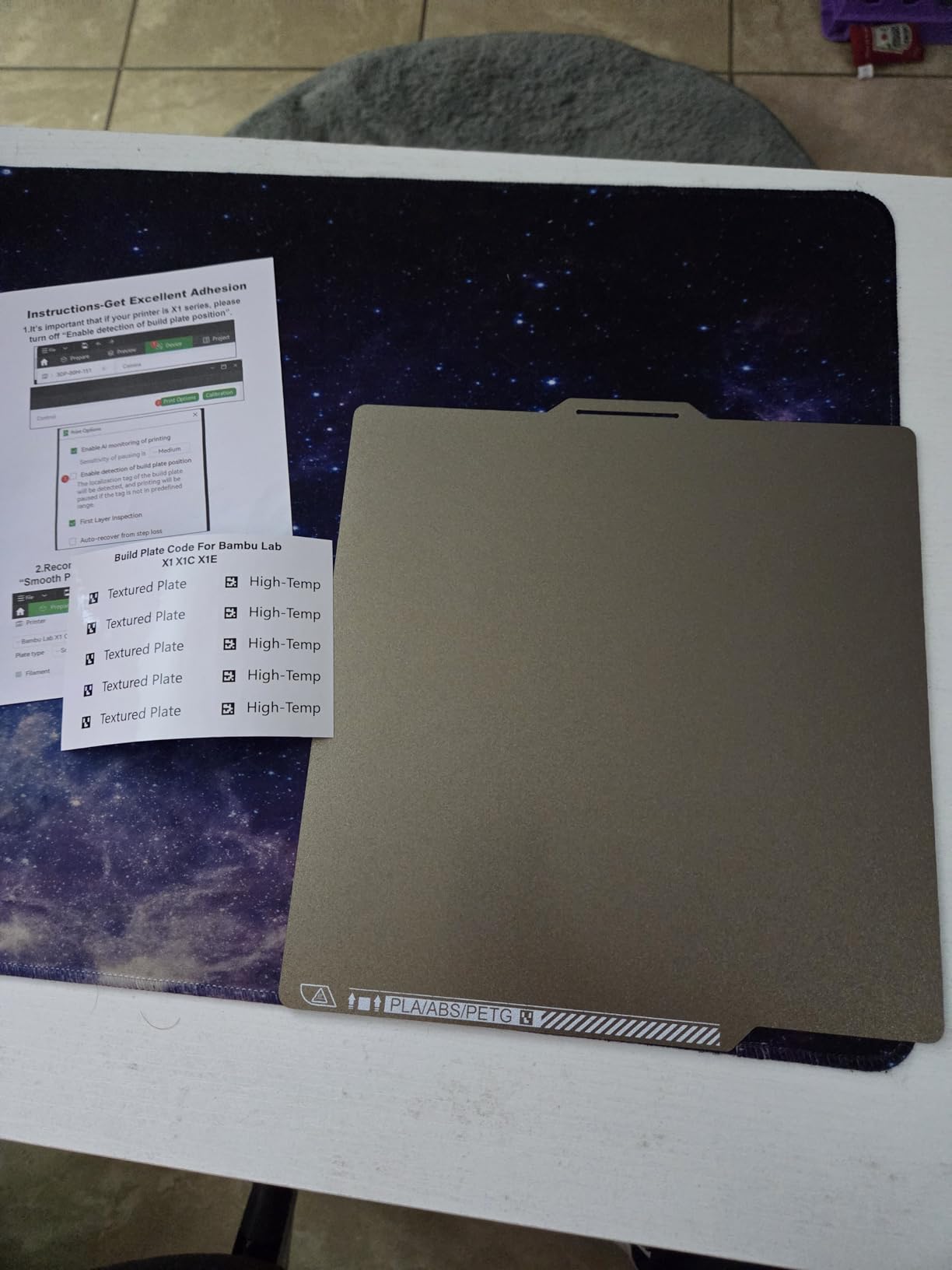
Dual sided QR identification codes are read by the P1S, which enables the printer’s hot bed leveling on the X1 and X1C. That recognition alone puts it ahead of many third party plates on those machines.
Owners report good bed heat retention and an even textured finish on print bases, and reviews describe the value favorably against OEM plates.
Who it suits
It works for anyone who wants a second textured plate for a P1S, P2S, A1, X1, X1C or P2S without paying for the factory sheet. A spare plate also solves the hot-swap problem, since you can move between materials without a cooldown.
It is a sensible choice for PLA and PETG work where you want a clean textured underside and easy part removal.
Considerations before ordering
It is slightly thinner and more flexible than the OEM plate, and some units need calibration after installation before adhesion behaves. One review also notes adhesion becoming too strong after extended use, particularly for support bases.
Keep an eye on the texture where the nozzle wipes itself, since that zone wears first. One listing image shows two plates when only one is included.
Why Prints Warp: Thermal Contraction Is the Real Problem
Warping starts inside the plastic, not on the bed. As a layer is laid, the outer edge of the part cools and contracts faster than the still-warm center, and that differential thermal contraction puts the print in tension. If the first layer is gripping firmly enough to resist that pull, the part stays flat. If it is not, the corners lift.
That is why adhesion alone does not solve warp. A grippy surface handles the stress for the first few layers, but a long print in a drafty room with a cold bed can still curl a part the surface could have held. Community discussion on Reddit and the Prusa forums consistently treats the surface as one variable among several rather than the whole answer. If the machine is also dropping off the network partway through a long job, our printer offline fix guide is worth reading before you change any hardware.
The practical stack is four parts. Surface gives you a first layer that grips while the bed is hot. Bed temperature keeps the base of the part above the point where it softens, so contraction is spread over time instead of concentrated at the end. Brim or raft widens the footprint so a small part has more contact area. Enclosure stops moving air from cooling the edges faster than the middle.
Two failure modes are worth naming because they get blamed on the surface. A large ASA part can lift the whole PEI sheet off the magnetic base, which is a magnetic system failure rather than an adhesion failure. And a glass plate that has warped from a bent carriage or a loose bed mount will keep producing warped prints no matter which surface you lay on top of it.
How to Choose a Build Plate That Stops Warping
Match the surface to the filament. Textured PEI is the general answer for PLA, PETG, ABS and ASA. Smooth PEI with a glue stick is the choice when a glossy bottom surface matters, and it is the surface to avoid for PETG, which can bond to smooth PEI hard enough to damage the part or the coating. Borosilicate glass with a glue stick remains a valid, low-cost anti-warp combination for PLA. G10 garolite and PVA come up for nylon and other warp-prone engineering filaments, though neither appears in this roundup.
Get the bed temperature right. These are the numbers most people check first, and they matter as much as the plate. PLA wants 55-60C, PETG wants 70-80C, and ABS and ASA want 90-110C. Spring steel conducts heat faster than glass, so a plate change can shift your real mid-bed temperature, and users on forums report a setpoint producing a noticeably cooler surface than expected. After changing plates, adjust temperature before you blame the surface.
Look at thickness and flatness. On a 235mm bed, a standard sheet is fine. On a 257mm or larger bed, thickness starts to matter, and 0.77mm of spring steel resists deformation better than a thin sheet. Rivets and locating holes should line up with your bed, and the plate should sit flat when you look at it edge-on before the first print.
Check the magnetic system and the fit. Some plates ship with a magnetic adhesive base and some do not, so read the listing before ordering. Measure your bed, including whether the published dimensions include the front tab, and note that a thicker plate always means a Z-offset adjustment afterwards.
Set a cleaning habit. Fingerprints and oil kill adhesion faster than any plate wears out. Wipe PEI with 75-90% isopropyl alcohol before each print, wash and dry glass before reapplying glue, and keep acetone away from PEI coatings. Handling the plate by its edges keeps fingerprints off the print area, and for resin printers that use a different build surface entirely, our miniature resin printer guide covers that side of the hobby.
Slow the first layer down. 20-25mm/s on layer one keeps the nozzle in contact with the plastic long enough for it to bond. Then add a brim and keep the bed hot until the part is off the plate.
Frequently Asked Questions
How do I keep my 3D prints from warping?
Use a four-part stack: a build surface that grips while the bed is hot, a bed temperature matched to the filament, a brim to widen the part footprint, and an enclosure to stop drafts cooling the edges. Textured PEI spring steel is the default surface. PLA wants 55-60C, PETG 70-80C, and ABS or ASA 90-110C, and layer one printed at 20-25mm/s bonds more reliably.
Why is my 3D print warping on the bed?
The most common cause is differential thermal contraction. The edges of a part cool and shrink faster than the warm center, and if the first layer is not gripping hard enough, that tension lifts the corners. Low bed temperature, a loose or uneven bed, moving air and a small footprint all make it worse. Warp is separate from adhesion failure, which looks more like a part that never sticks in the first place.
Is PETG or PLA more prone to warping?
PETG is the harder material to hold down. It bonds so aggressively to smooth PEI and glass that parts and coatings get damaged during removal, and it needs a higher bed temperature at 70-80C. PLA is easier to keep flat at 55-60C and forgives a little more. If PETG is your main material, use a textured surface so the part releases without force.
Why is my PLA peeling off the bed?
Usually the first layer is being printed too fast or the nozzle is too far away, so there is not enough contact. Check bed leveling and Z-offset, drop first layer speed to 20-25mm/s, and confirm the bed is at 55-60C. Fingerprints, oil and a worn surface also reduce adhesion, so wipe the plate with isopropyl alcohol before every print and replace a bubbling or scratched sheet.
Does a 3D printer need a heated bed?
For PLA, no. A textured or magnetic surface grips well enough on its own, and a flexible magnetic plate even works on printers with no heater at all. For PETG, ABS and ASA, a heated bed is close to essential, because those materials need a warm base to stay flat through a long print. A heated bed also lets you remove parts more easily once the surface cools.
How long does a textured PEI build plate last?
It depends far more on care than on time. Owners report textured PEI plates still performing well after many months and well over a hundred flex cycles, and reviews mention no scratching after repeated alcohol cleaning. Never use acetone on a PEI coating, wipe with 75-90% isopropyl alcohol instead, and expect the coating to wear first in the zone where the nozzle wipes itself.
What is the best material for a 3D printing build plate?
PEI-coated spring steel is the best all-around material because the coating grips while the bed is hot and releases as it cools, while the steel core stays flat. Borosilicate glass is the most dimensionally stable option but needs a glue layer, and textured PEI rated to 300C is the right pick for ABS, ASA, nylon and polycarbonate in an enclosure.
The Verdict for Warp-Free Printing in 2026
For most people, the best 3d printer beds for warping prints come down to one decision: move to a textured PEI spring steel sheet that grips hot and releases cold. The Creality original removable magnetic surface is the most flexible starting point, the coated Ender 3 glass bed is the strongest value if your printer is an Ender class, and any plate rated to 300C covers ASA, nylon and PC.
Whichever you choose, pair it with a brim, a bed temperature matched to your filament and a closed door. Then run the first layer at 20-25mm/s and let the bed stay hot until the part comes free.