
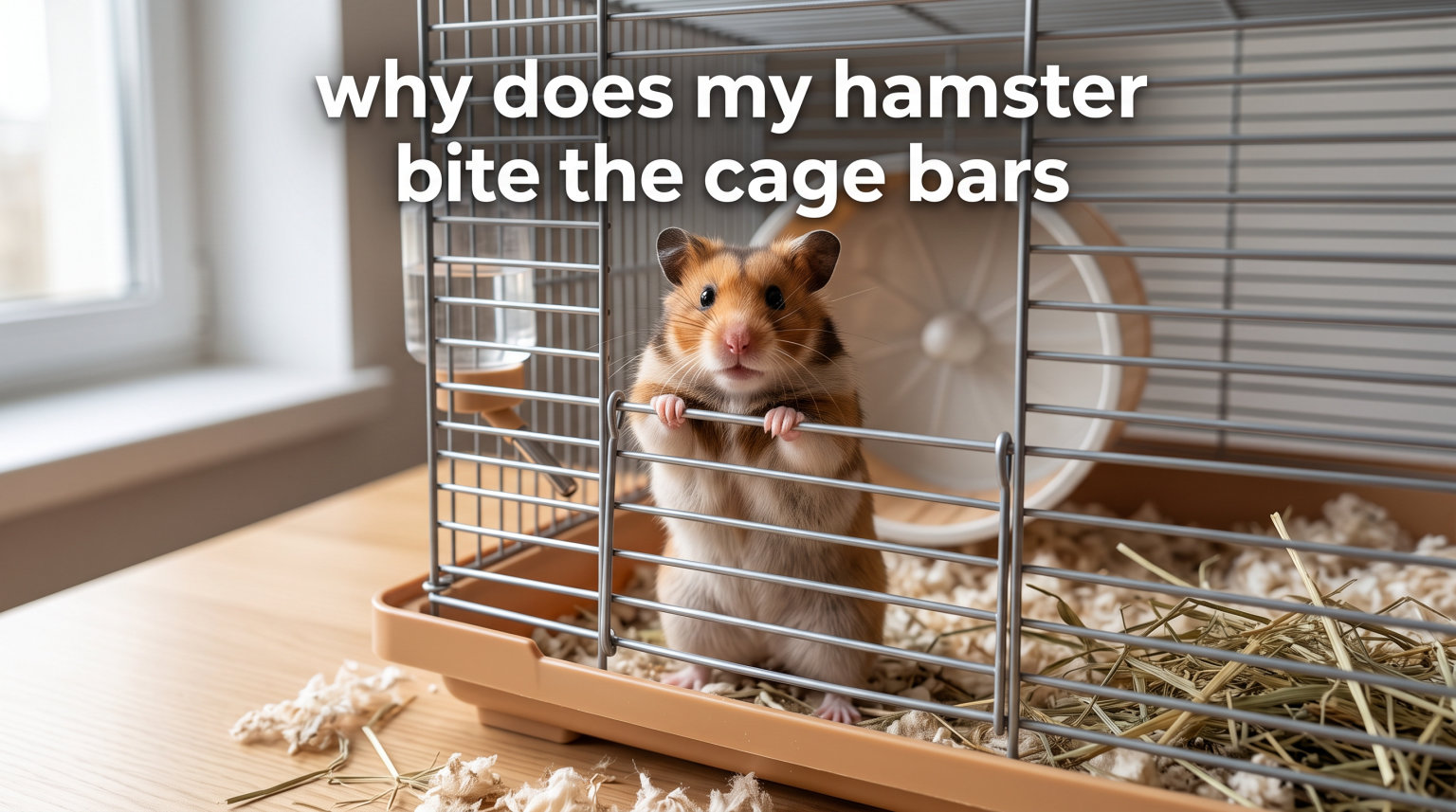
Hamsters bite cage bars primarily because of boredom, stress, dental needs, or learned behavior. When a hamster’s enclosure is too small or lacks enrichment, bar biting becomes a repetitive coping mechanism known as stereotypic wire-gnawing in animal welfare research.
If you are asking why does my hamster bite the cage bars, you are not alone. Thousands of hamster owners deal with this frustrating behavior, especially at night when the constant chewing can keep the whole house awake. The good news is that bar biting is not random. It is your hamster communicating that something in their environment needs to change.
Understanding the root cause is the first step. Once you know what is driving the behavior, you can make targeted changes that actually work. Quick fixes like lemon juice or bitter sprays address the symptom, not the problem. Let me walk you through what is really happening and how to fix it for good.
Table of Contents
Why Does My Hamster Bite the Cage Bars? (4 Main Causes)
Bar biting always traces back to one of four causes: boredom, stress from inadequate space, natural dental needs, or a learned habit. Here is how to tell which one applies to your hamster.
Boredom and Lack of Enrichment
Boredom is the number one cause of bar biting. Hamsters are active, intelligent creatures that travel miles each night in the wild. A cage with nothing but a wheel and a food bowl leaves them with pent-up energy and nothing to do.
When I first kept hamsters, I assumed a running wheel was enough enrichment. It is not. Hamsters need foraging opportunities, tunnels to explore, different textures to investigate, and mental challenges. Without these, they turn to the bars for stimulation.
Animal welfare researchers classify bar biting as a stereotypic behavior, meaning it is a repetitive action with no obvious purpose that develops when an animal cannot express natural behaviors. Studies referenced by the RSPCA and Royal Veterinary College link wire-gnawing directly to environmental deprivation.
Stress from a Cage That Is Too Small
Stress is the second most common trigger, and it usually stems from a cage that is simply too small. Many commercially sold hamster cages are far below the minimum recommended size. A cramped enclosure prevents natural behaviors like running, burrowing, and exploring.
The widely accepted minimum floor space is 100cm by 50cm of unbroken floor area. That means a single connected space, not multiple small levels added together. Many pet store cages fail this standard dramatically.
Female hamsters typically need even more space than males. They are more active and more prone to stress-related behaviors when confined. If you have a female Syrian hamster in a standard pet store cage, stress-driven bar biting is almost guaranteed.
Natural Dental Needs
Hamster teeth grow continuously throughout their lives. In the wild, they wear teeth down naturally by gnawing on roots, twigs, and hard seeds. In captivity, if they lack appropriate chew items, they will chew whatever is available, including metal bars.
Dental-driven chewing tends to look slightly different from stress chewing. Your hamster may chew methodically and rhythmically rather than frantically. They might also chew on other hard surfaces like plastic or wood accessories.
The fix here is straightforward: provide wooden chew blocks, safe natural twigs, and hard seed varieties. However, dental chewing alone rarely causes excessive bar biting. It usually combines with boredom or stress.
Learned Behavior and Attention Seeking
Some hamsters learn that bar biting gets results. If you rush over every time your hamster chews the bars, they learn that chewing equals attention. This is especially common with hamsters that are handled frequently and then left alone.
Forum communities on Reddit and The Hamster Forum consistently report this pattern. Owners describe hamsters that start biting bars the moment they are returned to their cage after playtime. The hamster is saying, “Take me back out.”
Breaking this cycle is tough but possible. The key is not to reward the bar biting with attention. Instead, wait for a pause in the chewing before interacting. Pair this with making the cage itself more rewarding, so being in it does not feel like punishment.
The Health Risks of Bar Biting
Bar biting is not just annoying. It can cause serious physical and mental health problems for your hamster. The risks fall into three categories that every owner should understand.
Tooth Damage and Breakage
Metal bars are unforgiving. Repeated gnawing can chip, crack, or break your hamster’s teeth. Broken teeth make eating painful or impossible, leading to weight loss and malnutrition. Misaligned teeth from bar biting may require ongoing veterinary trimming for the rest of the hamster’s life.
Veterinary dental care for small animals is expensive and stressful for the hamster. Prevention is far easier than treatment.
Brain Damage from Constant Vibrations
This risk surprises most owners. Hamster Welfare and other expert sources warn that the constant vibrations from gripping and gnawing metal bars can, in extreme cases, cause brain damage. A hamster’s skull is tiny, and the repetitive shaking travels directly through the skull to the brain.
This is not a minor risk with occasional chewing. It applies to chronic, habitual bar biters who chew for hours each night.
Mental Health Decline
The psychological impact is something most competitors underplay. Chronic bar biting can develop into an obsessive behavior that the hamster cannot stop, even when their environment improves. This stereotypic behavior functions like a compulsion.
Hamsters can become depressed, withdrawn, and fixated on the bars to the exclusion of all other activities. Some refuse to use their wheel, ignore food, and spend every waking hour chewing. At this stage, simply upgrading the cage may not be enough. Rehabilitation requires patience and a completely enriched environment.
How to Stop Hamster Bar Biting
Stopping bar biting requires addressing the root cause, not just the symptom. Here are the solutions that actually work, ranked by impact.
Upgrade to a Larger, Bar-Free Enclosure
This is the single most effective solution. A glass tank or DIY bin cage eliminates the bars entirely, which eliminates the behavior. Tanks and bin cages also allow for deep bedding that wire cages cannot support.
A DIY bin cage is a budget-friendly option. A large plastic storage bin, modified with mesh ventilation panels, can provide double the floor space of a standard pet store cage at a fraction of the cost. Many hamster communities on Reddit recommend this as the first step for budget-conscious owners.
Provide Deep Bedding for Natural Burrowing
Burrowing is a natural hamster behavior that most cages completely fail to support. In the wild, hamsters dig elaborate tunnel systems underground. When they cannot burrow, that energy gets redirected into bar biting.
Provide at least 6 to 10 inches of safe bedding in one area of the enclosure. Paper-based bedding or aspen shavings work well. Pack the bedding loosely enough for digging but firmly enough to hold tunnels.
This solution is underexplored by most guides, but it makes a dramatic difference. Many owners report that simply adding deep bedding reduces bar biting significantly within days.
Add Enrichment and Foraging Opportunities
Scatter feeding is one of the simplest enrichment upgrades. Instead of putting food in a bowl, hide it around the cage and bury it in the bedding. This forces your hamster to forage, which mimics their natural food-seeking behavior and keeps them occupied for hours.
Add tunnels, cork logs, sand baths, and platforms at different levels. Rotate toys weekly so the environment stays novel. A bored hamster is a bar-biting hamster, so keep things interesting.
Offer Appropriate Chew Alternatives
Provide a variety of chew-safe items so your hamster can satisfy their natural gnawing instinct safely. Wooden chew blocks, applewood sticks, and Whimzees dog treats are popular choices in hamster communities.
Place chews near the spots where your hamster bites bars most. This redirects the chewing behavior to an appropriate target. However, chews alone will not solve the problem if boredom or stress is the root cause.
Manage Nighttime Bar Biting
Bar biting at night is the most common complaint, and the noise can be unbearable. While you work on the long-term solutions above, move the cage out of your bedroom if possible.
Temporary fixes include covering the bars with cardboard (make sure ventilation is maintained) and providing an out-of-cage playpen session before bedtime to burn off energy. But these are stopgaps. The real fix is always a better enclosure.
Minimum Cage Size Requirements
Getting the cage size right is the foundation of preventing bar biting. Here are the standards recommended by hamster welfare organizations.
The RSPCA and most welfare-focused sources recommend a minimum of 100cm by 50cm of unbroken floor space for all hamster species. That is approximately 5,000 square centimeters. Many experienced keepers and European welfare standards recommend even more, with some citing 120cm by 50cm as a better target.
For bedding depth, aim for a minimum of 6 inches across the cage, with one section built up to 10 inches or deeper for burrowing. Female hamsters, particularly Syrians, often need the largest enclosures you can provide because of their higher activity levels.
When evaluating cages, focus on floor space rather than height or multiple levels. Hamsters are ground-dwellers. A tall cage with tiny levels offers far less usable space than a wide, single-level enclosure. Unbroken floor space is what matters.
If your current cage does not meet these standards, that is very likely your answer to why your hamster bites the bars. Upgrading the enclosure resolves bar biting in the majority of cases.
FAQ
How to stop hamsters from biting cage bars?
What are the signs of an unhappy hamster?
Are cages with bars bad for hamsters?
Is it normal for hamsters to bite their cages?
Do hamsters grow out of bar biting?
Conclusion
If you have been wondering why does my hamster bite the cage bars, the answer almost always comes down to environment. Boredom, stress from a small enclosure, unmet dental needs, and learned attention-seeking are the four primary drivers behind this behavior.
The most effective solution is also the simplest: upgrade to a larger, bar-free enclosure with deep bedding for burrowing. Add enrichment like scatter feeding, tunnels, and safe chew items, and address nighttime habits with patience rather than punishment. Quick fixes like bitter sprays do not solve the underlying problem.
Your hamster is communicating with you through this behavior. By making their environment richer and more natural, you give them the chance to thrive instead of just coping. Start with the cage size and bedding depth, and you will likely see the bar biting fade away on its own.