
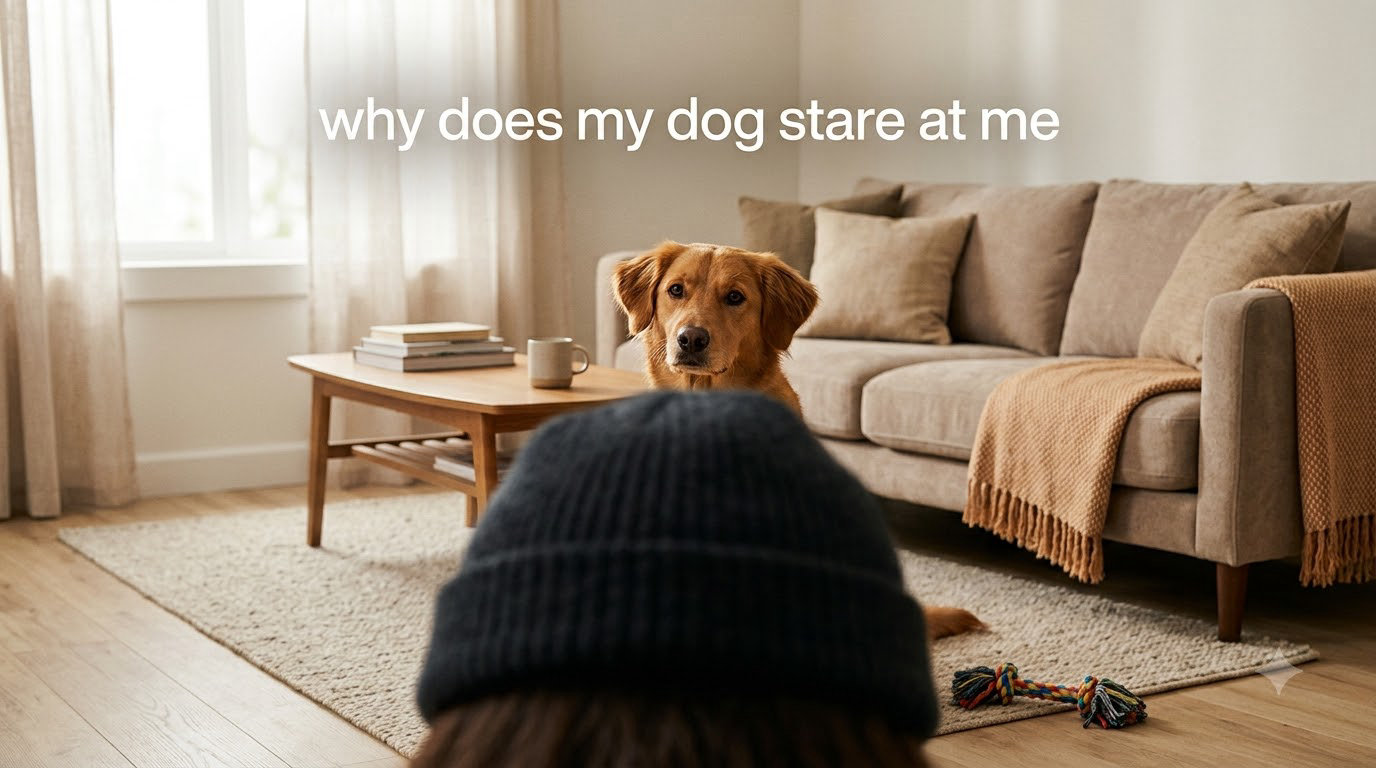
You are sitting on the couch, scrolling through your phone, when you feel it. That familiar weight of a gaze boring into you. You look up, and there is your dog, locked in on you with an unblinking stare that makes you wonder if you forgot to feed dinner or if something deeper is going on.
If you have ever caught your dog staring at you and asked yourself, “why does my dog stare at me,” you are far from alone. It is one of the most common questions dog owners ask veterinarians, trainers, and behaviorists. The answer is almost always more positive than you think.
Dogs use eye contact as one of their primary tools for communication. While humans rely on words, your dog relies on gaze, posture, and subtle facial movements to tell you what they need, how they feel, and how much they trust you. Understanding the different types of stares can transform your relationship with your dog and help you spot problems before they escalate.
Whether your dog gives you soft, loving eyes from across the room or locks on with an intense, unblinking gaze, there is a reason behind it. Just like understanding your dog’s behavior in general, decoding the stare requires context, body language awareness, and a little science. Let us break down every reason your dog might be staring at you.
Table of Contents
Why Does My Dog Stare At Me? The Short Answer
Your dog stares at you because staring is one of the most important ways dogs communicate with humans. The specific meaning depends on context, but here are the most common reasons:
- Affection and bonding — Mutual gazing releases oxytocin, the “love hormone,” in both you and your dog
- Reading your body language — Dogs watch us to predict what happens next
- Communicating a need — Hunger, potty breaks, thirst, or the desire to play
- Begging for food — Especially common at the dinner table
- Seeking attention — Your dog wants interaction, petting, or playtime
- Confusion or uncertainty — Your dog is trying to figure out what you want
- Warning signals — Whale eye, hard stares, and resource guarding can indicate stress
- Cognitive dysfunction — Senior dogs may stare blankly due to age-related decline
Most staring is completely harmless and actually signals a strong, healthy bond. However, learning to read the difference between a loving gaze and a warning stare is one of the most valuable skills any dog owner can develop.
8 Reasons Your Dog Stares at You
1. Affection and Love (The Oxytocin Bond)
The most heartwarming reason your dog stares at you is simple: they love you. When your dog holds soft, relaxed eye contact with you, they are experiencing a genuine emotional connection.
Research published in the journal Science found that mutual gazing between dogs and their owners triggers the release of oxytocin in both species. Oxytocin is the same hormone that bonds mothers to their babies and creates feelings of trust and attachment. This means that when you and your dog lock eyes, you are both getting a chemical boost of affection.
This oxytocin loop is unique to the dog-human relationship. Wolves, even those raised by humans, do not show the same hormonal response to eye contact. Your dog’s ancestors literally evolved alongside humans to communicate through gaze, making that loving stare a product of thousands of years of companionship.
If your dog approaches you with relaxed ears, a slightly open mouth, and soft, blinking eyes, they are saying “I love you” in the clearest way they know how.
2. Reading Your Body Language
Dogs are masters at reading human body language. They watch our movements, facial expressions, and even the direction of our gaze to predict what is about to happen.
Your dog might stare at you because they are trying to figure out whether you are about to grab the leash, head to the kitchen, or settle in for a movie. This is not random watching. It is active information gathering. Dogs have evolved an extraordinary ability to read human social cues, including pointing gestures, eye movements, and shifts in posture.
This is why your dog seems to know when you are about to leave for work or when dinner is coming. They have learned your patterns through careful observation and staring is how they stay one step ahead. Think of it as your dog keeping a running diary of your habits so they can anticipate what matters most to them.
3. Communicating a Need
Sometimes the stare is a direct request. Since dogs cannot say “I need to go outside” or “my water bowl is empty,” they use eye contact to get your attention and direct you toward what they want.
If your dog stares at you and then glances at the door, they probably need a potty break. If they stare and then look at their food bowl, hunger is the likely culprit. Some dogs combine staring with other signals like pawing, whining, or circling to make their message unmistakable.
This form of canine communication is actually a sign of intelligence and a strong bond. Your dog has learned that looking at you is an effective way to get results. Instead of being annoyed by it, try to appreciate that your dog trusts you enough to ask for help.
4. Begging for Food
The dinner table stare is a classic. Your dog parks themselves nearby, fixes you with a hopeful gaze, and waits for even a crumb to drop. This is begging behavior, and it works because we humans often reward it.
Dogs are opportunistic eaters by nature. If staring at you while you eat has ever resulted in a piece of chicken or a bit of toast, your dog has learned that staring equals food. This is positive reinforcement in action. Every time you give in, you strengthen the behavior.
If the begging stare bothers you, the solution is consistency. Never reward it with food, and eventually your dog will learn that staring at the table does not pay off. You can also redirect your dog to a designated spot, like a bed or mat, during mealtimes.
5. Seeking Attention
Not all attention-seeking is about food. Many dogs stare at their owners simply because they want interaction. Your dog might want to be petted, played with, or just acknowledged.
This is especially common in breeds known as “velcro dogs,” such as Labrador Retrievers, Golden Retrievers, and Vizslas. These dogs form intense attachments to their people and use eye contact to maintain that connection throughout the day.
If your dog stares at you with a wagging tail or a play bow, they are asking for engagement. A quick game of fetch, a training session, or even a few minutes of belly rubbing can satisfy that need and reduce attention-seeking stares.
6. Confusion or Uncertainty
Sometimes your dog stares because they genuinely do not know what to do. This is common during training sessions or in new situations where your dog is unsure of the expected behavior.
If you have ever given your dog a command and they respond by locking eyes with you instead of obeying, they are probably not being defiant. More likely, they are confused and looking to you for clarity. This is actually a good sign. It means your dog sees you as a leader and trusts you to guide them.
Dogs also stare when they are trying to understand cause and effect. If you pick up your keys, your dog might stare to confirm whether this means you are leaving. If you grab a particular jacket, they might stare to see if it means a walk is coming. This observational behavior shows intelligence and a desire to understand their world.
7. Warning Signs: Whale Eye and Resource Guarding
Not all staring is friendly. A hard, unblinking stare can be a warning sign that your dog is uncomfortable, anxious, or feeling possessive. Learning to recognize this type of stare is critical for safety.
Whale eye is a term used by behaviorists to describe when a dog turns their head away but keeps their eyes fixed on you or another trigger, revealing the whites of their eyes. This is a classic stress signal. You will often see it when a dog is guarding a toy, food bowl, or resting spot and feels threatened.
A hard stare is different from a soft, loving gaze. The eyes are wide and unblinking, the body is stiff, the ears are pinned back or forward rigidly, and the mouth is usually closed. This is a dog saying “back off” in the clearest possible terms.
Resource guarding is one of the most common triggers for warning stares. If your dog stiffens and stares when you approach their food bowl, bed, or a favorite toy, they are guarding that resource. This behavior should be addressed with the help of a professional trainer or behaviorist, as it can escalate to aggression if mishandled.
Never punish a dog for showing warning signs. Those signals are your dog’s way of communicating discomfort before resorting to a bite. Removing the warning through punishment makes a dog more dangerous, not less.
8. Cognitive Dysfunction in Senior Dogs
If your senior dog has started staring at walls, corners, or into space for long periods, it may be a sign of cognitive dysfunction syndrome. This condition is similar to dementia in humans and affects a significant percentage of dogs over the age of eleven.
Cognitive dysfunction syndrome can cause disorientation, changes in social interaction, sleep cycle disruptions, and altered responses to familiar people and environments. Staring at nothing is one of the most commonly reported symptoms by owners of aging dogs.
If you notice this behavior along with other changes such as getting stuck in corners, forgetting house training, or seeming confused in familiar settings, schedule a veterinary exam. While there is no cure, early diagnosis allows for management strategies including dietary changes, supplements, medication, and environmental modifications that can improve your dog’s quality of life.
Do not assume that blank staring in an older dog is just “getting old.” It is a medical sign that deserves professional attention.
Soft Eyes vs Hard Stare: How to Tell the Difference
One of the biggest content gaps in most articles about dog staring is failing to clearly explain how to distinguish an affectionate gaze from a warning stare. Here is a practical guide.
Soft eyes look relaxed. Your dog’s facial muscles are loose, their ears are in a natural position, their mouth may be slightly open, and they blink normally. Their body is relaxed, and they may have a loose, wagging tail. This stare says “I trust you” or “I love you.”
Hard stares look tense. Your dog’s body is rigid, their eyes are wide and unblinking, their mouth is closed tight, and their ears are either pinned back or locked forward. The tail, if wagging, is stiff and rapid. This stare says “I am uncomfortable” or “back away.”
Whale eye sits somewhere between a hard stare and avoidance. Your dog averts their head but keeps their eyes locked on the trigger, showing the whites of the sclera. This almost always signals anxiety or stress.
The context matters just as much as the eyes. A soft gaze while you are relaxing on the couch together is affection. A hard stare while your dog is eating or chewing a bone is a warning. Always read the whole dog, not just the eyes.
What to Do When Your Dog Stares at You
For most dogs, staring is normal, healthy behavior that you do not need to stop. However, if your dog’s staring has become excessive, bothersome, or you simply want to redirect it, here are practical steps.
Identify the cause first. Before changing anything, figure out why your dog is staring. If they need a potty break, meet that need. If they are hungry, feed them on a consistent schedule. Addressing the root cause eliminates the stare far more effectively than ignoring it.
Do not reward begging stares. If your dog stares at the dinner table, never give them food. Rewarding the stare, even once, reinforces the behavior. Instead, train your dog to go to a designated spot during meals using treats placed there in advance.
Redirect attention-seeking stares. If your dog stares because they want attention, redirect them to an appropriate activity like chewing a toy or working on a puzzle feeder. This teaches your dog to self-soothe rather than rely on you constantly.
Use positive reinforcement training. Teach your dog an alternative behavior, like going to a mat or making eye contact on cue. Reward calm, non-staring behavior with treats and praise. Dogs repeat what gets rewarded, so be intentional about what you reinforce.
Consult a professional for warning stares. If your dog shows hard stares, whale eye, or resource guarding, do not try to fix it alone. A certified professional dog trainer or veterinary behaviorist can develop a safe, effective behavior modification plan.
How do I say ‘I love you’ in dog language?
How do you tell if your dog is bonded to you?
Should I let my dog stare at me?
What to do when your dog won’t stop staring at you?
Why does my dog obsessively stare at me?
What does it mean when my dog stares at me when I pet her?
Why does my dog do nothing but stare at me?
Understanding Why Your Dog Stares at You
The next time you feel those eyes on you, remember that your dog is doing what dogs do best: communicating. The question “why does my dog stare at me” has a beautiful answer in most cases. Your dog is showing love, seeking connection, or simply trying to understand you better.
The vast majority of dog staring comes from affection, bonding, and a desire to communicate. That oxytocin-fueled gaze your dog gives you is a product of thousands of years of evolution and a relationship unlike any other in the animal kingdom. Treasure it.
At the same time, stay alert to the warning signs. Hard stares, whale eye, and sudden changes in staring behavior deserve attention. Knowing the difference between soft eyes and a hard stare keeps both you and your dog safe.
Ultimately, your dog’s stare is an invitation. They are inviting you to pay attention, to connect, and to understand them as deeply as they understand you. For more insights into canine communication, check out our guide on why dogs lick you and what that behavior reveals about your bond.