
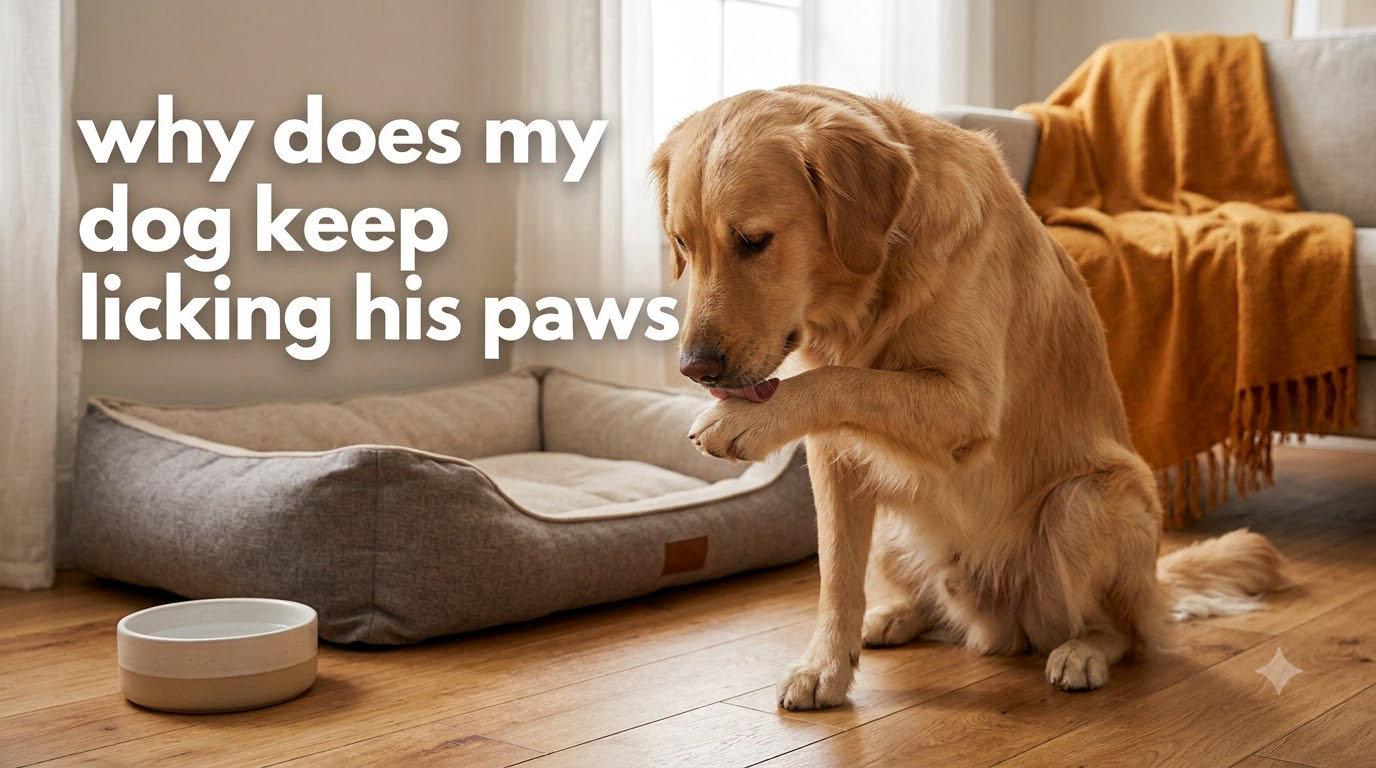
If you are reading this, you have probably watched your dog go to town on his paws and wondered what is going on. You are not alone. Paw licking is one of the most common reasons dog owners search for answers online, and for good reason. While a quick grooming lick here and there is perfectly normal, persistent licking often points to an underlying issue that needs attention.
When clients and friends ask me why does my dog keep licking his paws, my first answer is always the same. It is rarely just a habit. Excessive paw licking is typically a symptom of something else, whether that is allergies, pain, an infection, parasites, or even anxiety. The trick is figuring out which one applies to your dog.
In this guide, I will walk you through every major cause of excessive paw licking in dogs, from the obvious to the overlooked. You will learn how to tell the difference between normal grooming and a problem that needs a vet. I will also share practical home remedies and clear warning signs so you know exactly when to seek professional help.
Before we get into the medical causes, it helps to understand the broader picture of why dogs lick in general. Licking is deeply wired into canine behavior, but when it becomes obsessive and focused on the paws, it is time to look deeper.
Table of Contents
Why Does My Dog Keep Licking His Paws? Common Causes
Dogs lick their paws for a wide range of reasons. Most cases fall into one of these six categories:
Allergies — Environmental triggers, food sensitivities, or contact irritants that make paws itch intensely.
Pain or injury — Cuts, thorns, cracked pads, foreign objects, or joint pain from arthritis.
Skin infections — Bacterial or yeast infections, often developing as a secondary problem from constant licking.
Parasites — Fleas, ticks, and mites that cause intense itching and irritation.
Behavioral issues — Anxiety, boredom, stress, or compulsive disorders that drive repetitive licking.
Hormonal or immune conditions — Less common but worth ruling out with your vet.
In my experience, allergies account for the largest share of cases by far. Let us break down each cause in detail so you can start narrowing down what might be affecting your dog.
Allergies: The Most Common Cause of Paw Licking
Allergies are the single biggest reason dogs lick their paws excessively. The itching drives them crazy, and licking is the only way they know to scratch that hard-to-reach spot between their toes. If your dog is licking after walks, during certain seasons, or after meals, allergies should be your first suspect.
Environmental Allergies (Atopic Dermatitis)
Environmental allergies, also called atopic dermatitis, are incredibly common in dogs. Pollen, grass, mold spores, and dust mites can all trigger an allergic reaction that makes your dog’s paws itch. Dogs absorb these allergens through their skin, particularly on the paws and belly where the fur is thinner and contact with the ground is constant.
If your dog licks his paws more during spring or fall, seasonal environmental allergies are a likely culprit. You might also notice redness between the toes, a rusty discoloration of the fur from saliva, or repeated ear infections alongside the paw licking.
Breeds like Labrador Retrievers, German Shepherds, Golden Retrievers, and French Bulldogs are genetically predisposed to atopic dermatitis. Reddit users frequently report that German Shepherds are especially prone to this behavior, which matches what veterinarians see in practice.
Food Allergies
Food allergies are less common than environmental allergies but they do happen. Proteins are the usual trigger, with beef, dairy, chicken, and wheat being the most frequent culprits. If your dog’s paw licking happens year-round with no seasonal pattern, a food allergy is worth investigating.
The standard diagnostic approach is an elimination diet. Your vet will recommend switching to a novel protein or hydrolyzed protein diet for 8 to 12 weeks to see if symptoms improve. It takes patience, but it is one of the most reliable ways to identify a food trigger.
Contact Allergies
Contact allergies happen when your dog’s paws react to something they touch directly. Lawn treatments, de-icing salts in winter, certain cleaning products, and even some types of carpet can cause localized irritation. The itching is usually limited to the paws and tends to flare up after exposure.
Rinsing your dog’s paws after walks is a simple way to reduce contact allergens. I recommend keeping a container of water or pet-safe wipes by the door during high-allergen seasons.
Pain, Injury, and Physical Discomfort
Sometimes the answer to why does my dog keep licking his paws is something you can actually see. Dogs lick painful areas instinctively, and the paws are vulnerable to a wide range of injuries.
Start by carefully examining each paw. Spread the toes apart and check the pads, the spaces between them, and the nail beds. Look for cuts, scrapes, embedded objects like foxtails or thorns, cracked or torn pads, broken nails, and redness or swelling.
Foxtails and grass awns are a particularly sneaky problem. These barbed seed pods can burrow between toes and work their way deep into the tissue, causing intense licking and eventually infection. If your dog suddenly fixates on one paw after a walk through tall grass, check carefully for foreign material.
Joint pain and arthritis are another often-overlooked cause. Older dogs with osteoarthritis may lick their paws or wrists as a way to soothe aching joints. If the licking is accompanied by stiffness, reluctance to jump, or limping after rest, talk to your vet about pain management options.
Skin Infections: Bacterial and Yeast
Here is where things get tricky. Paw licking can cause infections, and infections make dogs lick more. It is a vicious cycle that can be hard to break without treatment.
Constant moisture from licking creates the perfect environment for bacteria and yeast to thrive. The warm, dark spaces between your dog’s toes become a breeding ground. Once an infection takes hold, it causes even more itching, which leads to more licking.
Signs of a bacterial or yeast infection include a foul or musty odor coming from the paws, red and swollen skin between the toes, discharge or pus, hair loss on the feet, and thickened or crusty skin. A yeast infection specifically, often caused by Malassezia, tends to produce a distinct sour smell and reddish-brown stained fur.
Pododermatitis is the medical term for inflammation of the paw skin, and it can result from bacterial, yeast, or allergic causes. Your vet can diagnose the specific type of infection through a skin scraping or cytology and prescribe the right treatment, which may include medicated wipes, shampoos, or oral medications.
Parasites: Fleas, Ticks, and Mites
Parasites are a classic cause of paw licking that should never be overlooked. Even a single flea bite can trigger intense itching in a sensitive dog, and certain parasites specifically target the feet and lower legs.
Flea allergy dermatitis is one of the most common parasitic causes. When a flea bites, it leaves behind saliva that triggers an allergic reaction in some dogs. The itching is not limited to the bite site but spreads across the body, with the paws, lower back, and base of the tail being favorite targets. Many owners are surprised to learn that their dog has fleas because they never see the fleas themselves. Flea dirt, which looks like tiny black specks of pepper in the fur, is often the only visible sign.
Keep your dog on a year-round flea and tick preventative. It is one of the simplest and most effective steps you can take to rule out parasites as a cause of paw licking.
Mites are another possibility. Demodectic mange and sarcoptic mange can both cause intense itching and paw licking. Sarcoptic mange is highly contagious and causes severe, relentless itching, often starting on the ears and elbows before spreading. Demodectic mange tends to cause patchy hair loss and is more common in young dogs or those with weakened immune systems.
Behavioral Causes: Anxiety, Boredom, and Stress
Not all paw licking has a physical cause. Dogs are emotional animals, and licking can be a self-soothing behavior that helps them cope with stress, anxiety, or boredom. Think of it as the canine equivalent of biting your nails.
When a dog is anxious, the repetitive motion of licking releases endorphins that calm him down. Over time, this behavior can become habitual or even compulsive. Dogs with separation anxiety may lick their paws obsessively when left alone. Dogs who are under-stimulated or bored may turn to licking simply because there is nothing else to do.
Forum discussions reveal a pattern that many owners miss. Multiple Reddit users report that their dogs started licking paws after moving to a new home, after a family member left, or during other major life changes. If the licking began around a stressful event, anxiety is a strong candidate.
Nighttime licking deserves special attention because most resources do not cover it well. Many dogs lick their paws more at night, and owners often find the sound keeping them awake. At night, the house is quiet and distractions are gone, so anxiety and boredom become more pronounced. If your dog licks paws before bed or wakes you up with nighttime licking, behavioral causes are likely contributing.
Identifying the trigger is the first step. If you are interested in understanding other pet behaviors, you will notice that cats and dogs share some self-soothing patterns. For dogs, increasing exercise, providing puzzle toys, and addressing separation anxiety through training can significantly reduce stress-driven licking.
Lick Granuloma: When Licking Becomes a Chronic Wound
If your dog has been licking the same spot on his leg or paw for weeks or months, you may be dealing with a lick granuloma. Also known as acral lick dermatitis, this is a condition where constant licking creates a thick, raised, often hairless sore that refuses to heal.
Lick granulomas typically start with an underlying itch or pain trigger. The dog licks the area for relief, but the licking damages the skin. The damaged skin itches more, so the dog licks more. Eventually, the licking continues even after the original trigger is gone because the behavior itself has become self-reinforcing.
These sores are notoriously difficult to treat. They often require a multi-pronged approach that includes addressing the original cause, using physical barriers like an Elizabethan collar or protective booties to prevent licking, and sometimes behavioral medication to break the compulsive cycle. Large breed dogs, particularly German Shepherds and Dobermans, are predisposed to lick granulomas.
When to See a Veterinarian: Red Flags
Not every lick requires a vet visit, but certain signs mean you should not wait. Here is a clear checklist to help you decide when it is time to call your veterinarian.
You should schedule a vet appointment if you notice any of the following:
Bleeding or open sores on the paws from excessive licking.
Limping or favoring a leg alongside the licking, which signals pain.
Swelling, redness, or warmth in the paw or between the toes.
Foul odor or discharge that suggests infection.
Hair loss on the paws or staining from saliva.
Sudden onset of intense licking that was not there before.
Licking that disrupts sleep, eating, or normal activity.
Reddit users frequently express distress about seeing their dogs lick paws until they bleed. If you are at that point, do not wait. Bleeding paws indicate the skin barrier is broken and infection is likely already setting in.
As a general rule, if home interventions do not improve the licking within one to two weeks, it is time for professional help. Chronic licking almost always gets worse without treatment, not better.
How to Stop Your Dog From Licking His Paws
Once you have an idea of what is causing the licking, you can start working on solutions. Here is a practical breakdown of home remedies, veterinary treatments, and prevention strategies.
Home Remedies You Can Try Today
These remedies can help soothe mild irritation and reduce licking while you investigate the root cause. Always check with your vet before trying new treatments, especially if the skin is broken.
Paw soaks: Soak your dog’s paws in cool water mixed with a small amount of Epsom salt or diluted apple cider vinegar for 5 to 10 minutes. This soothes inflammation and helps flush out allergens and debris.
Oatmeal paste: Grind plain oatmeal into a fine powder, mix with warm water to form a paste, and apply it to itchy paws. Oatmeal contains compounds that calm irritated skin naturally.
Coconut oil: Apply a thin layer of food-grade coconut oil to dry, cracked paw pads. It moisturizes and has mild antibacterial properties. Just make sure your dog does not immediately lick it all off.
Paw wipes after walks: Use pet-safe wipes or a damp cloth to wipe your dog’s paws after every walk. This removes pollen, grass, salt, and other environmental triggers before they cause a reaction.
Dietary omega-3 supplements: Fish oil supplements can reduce inflammation and improve skin health from the inside out. Talk to your vet about the right dosage for your dog’s size.
Veterinary Treatment Options
When home remedies are not enough, your veterinarian has a full toolkit to address paw licking. The right treatment depends on the underlying cause.
For allergies, your vet may recommend antihistamines, corticosteroids for severe flare-ups, or long-term immunotherapy (allergy shots) based on test results. Cytopoint and Apoquel are two prescription options specifically designed for dogs with atopic dermatitis, and they have helped many dogs find relief.
For infections, medicated shampoos containing chlorhexidine or miconazole are commonly prescribed. Severe infections may require oral antibiotics or antifungal medications for several weeks.
For behavioral licking, your vet might recommend anxiety medication, pheromone diffusers, or a referral to a veterinary behaviorist for compulsive cases.
Prevention Strategies
Preventing paw licking starts with addressing the most common triggers before they become problems. Here is what I recommend based on what works for most dogs.
Keep your dog on year-round flea, tick, and mite prevention. This single step eliminates a major category of causes. Wipe or rinse paws after every walk, especially during allergy season. Maintain a regular grooming routine that includes checking between the toes and trimming hair that traps moisture and debris.
Make sure your dog gets enough physical exercise and mental stimulation every day. A tired dog with a puzzle toy and a long walk under his belt is far less likely to develop boredom-driven licking habits. Rotate toys regularly to keep things interesting.
If your dog has known allergies, work with your vet on a long-term management plan rather than waiting for flare-ups. Consistency is what keeps symptoms under control over time.
FAQ
When should I worry about my dog licking his paws?
How do I treat my dog licking paws?
Why does my dog keep licking his paws but nothing there?
What home remedies soothe itchy dog paws?
The Bottom Line on Paw Licking
If you came here asking why does my dog keep licking his paws, the answer almost always comes down to allergies, pain, infection, parasites, or anxiety. Rarely is it just a harmless quirk.
Start by examining the paws yourself, try basic home remedies, and pay close attention to when the licking happens. If things do not improve within a week or two, or if you see any red flags like bleeding or swelling, call your vet. Early intervention prevents minor irritation from becoming a chronic, hard-to-treat problem.
Your dog depends on you to figure out what is bothering him. With the right approach, most cases of paw licking can be managed effectively, and your dog can get back to being comfortable and happy.