
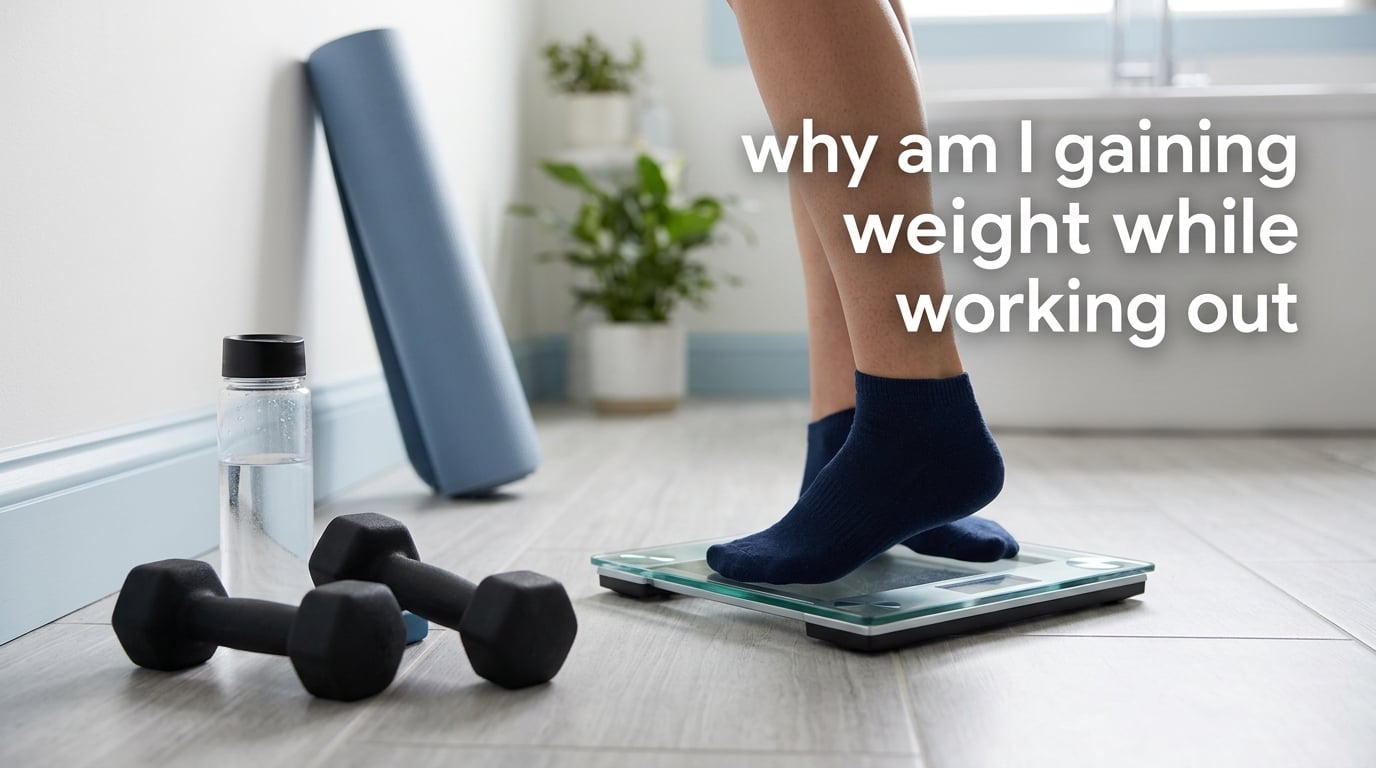
You started working out two weeks ago, and the scale went up three pounds. Now you are staring at the number, wondering if all that effort was a mistake. I hear this story constantly, and the frustration is real.
Here is the direct answer: gaining weight when you start exercising is completely normal and happens because of water retention from muscle repair, glycogen storage, and muscle growth, not fat gain. In fact, research and clinical experience show that 1 to 4 pounds of temporary weight gain is typical in the first few weeks of any new workout program.
If you are asking yourself why am I gaining weight while working out, you are not alone. Thousands of people search this exact question every month, and the answer comes down to biology working in your favor, not against you.
In this guide, I will break down the science behind exercise-related weight gain, give you a realistic timeline for when the scale should start cooperating, and show you how to track progress in ways that actually matter.
Table of Contents
Muscle Growth and Density: Why Muscle Weighs More Than Fat
Muscle tissue is denser than fat tissue, meaning a pound of muscle takes up about 15 percent less space than a pound of fat. This is one of the biggest reasons your weight can creep up while your body actually looks leaner.
When you start strength training or any resistance-based exercise, your body responds by building new muscle fibers. This process is called body recomposition, where your body simultaneously builds muscle and loses fat. The scale may not move, or it may even go up, because muscle weighs the same as fat per pound but takes up significantly less volume.
Think of it this way: if you lose one pound of fat and gain one pound of muscle, the scale reads exactly the same number. But your waist is smaller, your clothes fit differently, and your body composition has improved.
Many people on fitness forums report this exact experience. They feel slimmer, see definition in the mirror, and notice their jeans fitting looser, even though the scale shows a higher number. That is muscle growth happening in real time.
A useful comparison from exercise science: 10 pounds of muscle burns roughly 50 calories per day at rest, while 10 pounds of fat burns only about 20 calories per day. So building muscle actually increases your resting metabolism over time, making future fat loss easier.
Water Retention from Muscle Inflammation
When you exercise, especially with new movements or heavier loads, you create microscopic tears in your muscle fibers. This is not dangerous, it is actually how muscles get stronger. Your body repairs these micro-tears through a natural inflammation response.
That inflammation process draws water to the affected muscle tissues to support healing and deliver nutrients. This extra water can add 1 to 3 pounds to the scale within the first day or two after a workout. This is temporary weight gain, not fat gain.
The inflammation-related water retention is why you might step on the scale the morning after a tough session and see a jump. Your body is literally healing itself, and that requires fluid.
This type of water weight typically resolves within 3 to 5 days as the inflammation subsides and muscles complete their repair cycle. If you stay consistent with workouts, your body adapts and the inflammatory response becomes less dramatic over time.
People often report gaining 2 to 4 pounds overnight after starting a new program. That is not physically possible from fat, since gaining a single pound of fat requires roughly 3,500 excess calories. Overnight weight changes are almost entirely water.
Glycogen Storage and Water Weight
Your muscles store carbohydrates in the form of glycogen, which serves as a quick energy source during exercise. When you start working out regularly, your muscles increase their glycogen storage capacity to fuel your workouts more efficiently.
Here is the part that surprises most people: every gram of glycogen your body stores comes with roughly 3 grams of water. That means if your muscles store an additional 400 grams of glycogen, you are also holding onto about 1,200 grams of water. That is over 3 pounds of combined weight from energy storage alone.
This glycogen-water combination is not something to fight. It is your body preparing for better performance. Without adequate glycogen stores, you would feel sluggish and weak during workouts.
The same mechanism explains why low-carb diets produce rapid initial weight loss. When you restrict carbohydrates, your body depletes glycogen stores and sheds the associated water. It looks like fat loss on the scale, but it is mostly water.
When you start exercising and eating to support your workouts, your glycogen stores replenish and expand. The scale goes up, but your energy and performance improve alongside it.
Increased Appetite and Diet Changes
Exercise increases energy expenditure, and your body responds by ramping up hunger signals. This is a normal physiological response, but it can lead to unintentional overeating if you are not paying attention.
Two key hormones drive this process. Ghrelin, your hunger hormone, increases after exercise. Leptin, your fullness hormone, can become less effective at signaling satisfaction. The result is a genuine biological drive to eat more after workouts.
Many people fall into the trap of compensatory eating, where they unconsciously eat back the calories they burned during exercise. A 30-minute jog might burn 300 calories, but a single post-workout smoothie can contain 400 or more.
Research also shows that people tend to overestimate how many calories they burn during exercise while underestimating how many calories they consume. This calorie mismatch can lead to genuine fat gain over time, even with consistent workouts.
If you suspect appetite changes are driving your weight gain, try tracking your food intake for a week. You might be surprised by how quickly small extras add up, especially from cooking oils, snacks, and beverages.
Supplement-Related Weight Gain
If you started taking supplements when you began working out, some of them could be contributing to scale weight. This is separate from fat gain and is usually tied to water retention.
Creatine is the most common culprit. It works by drawing water into your muscle cells, which can add 2 to 5 pounds of water weight in the first week of use. This is well-documented and entirely expected. The extra water makes muscles look fuller and supports strength gains.
Pre-workout supplements often contain caffeine and other stimulics that can affect fluid balance. Some also include creatine or carbohydrate sources that contribute to glycogen loading.
Protein powders and mass gainers add calories that many people do not account for. A daily protein shake adds 120 to 200 calories, and if your goal was calorie balance, those extra calories can lead to gradual weight gain over weeks and months.
None of these effects are harmful, but they can explain unexpected numbers on the scale. Understanding what your supplements do helps you interpret weight changes accurately.
Hormonal Factors and Sleep Quality
Your hormones play a major role in how your body responds to exercise, and two factors that competitors rarely discuss deserve attention: cortisol and sleep quality.
Cortisol is your body’s primary stress hormone, and intense exercise temporarily raises cortisol levels. When cortisol stays elevated due to overtraining, inadequate recovery, or general life stress, your body holds onto water weight more stubbornly. This can make the scale refuse to budge despite your best efforts.
This is where sleep becomes critical, and it is a topic almost no competitor covers. Sleep deprivation directly undermines your fitness progress in several ways. Missing even one night of quality sleep increases hunger hormones the next day, reduces insulin sensitivity, and raises cortisol levels. Over time, chronic sleep deprivation can make weight management significantly harder.
A study published in the Annals of Internal Medicine found that dieters who got adequate sleep lost 55 percent more fat than those who were sleep-deprived, even with the same calorie intake. Sleep quality matters just as much as exercise consistency.
If you are working out hard but sleeping fewer than 7 hours per night, your weight fluctuations may be partly driven by hormonal disruption rather than anything wrong with your training program.
Timeline: When Will the Scale Start Moving?
Understanding the timeline of exercise-related weight changes helps you stay patient and avoid quitting prematurely. Here is what research and clinical experience suggest:
Weeks 1 to 2: Expect 2 to 4 pounds of water weight from inflammation, glycogen storage, and muscle repair. The scale may jump up quickly. This is entirely normal.
Weeks 3 to 4: Initial inflammation subsides and water weight begins to stabilize. You may see the scale dip slightly as your body adapts to the new routine.
Weeks 5 to 8: This is when most people start seeing meaningful changes in body composition. Fat loss typically becomes measurable, and muscle growth contributes to a leaner appearance even if scale weight holds steady.
Months 3 and beyond: Your body is well-adapted to exercise. Progress becomes more predictable, and the initial weight fluctuations are behind you.
People on fitness forums consistently report that the 4-to-6-week mark is where everything clicks. If you can push through the initial frustration, the results tend to follow.
Signs You Are Making Progress Beyond the Scale
The scale tells you one thing: your total body weight. It cannot distinguish between muscle, fat, water, and glycogen. If you want to know whether your workouts are working, track these indicators instead:
Clothing fit: Are your pants looser around the waist or thighs? This is one of the most reliable indicators of fat loss.
Strength gains: Are you lifting heavier weights or doing more reps than when you started? Progressive strength improvement means your muscles are growing.
Energy levels: Do you feel more energetic throughout the day? Improved fitness boosts daily stamina.
Mirror changes: Do you see more definition or shape in your muscles? Body composition changes often show up visually before they show up numerically.
Body measurements: Use a tape measure around your waist, hips, arms, and thighs weekly. Losing inches while the scale holds steady means you are losing fat and gaining muscle.
Workout performance: Are your runs faster, your recovery quicker, your endurance better? Performance improvements are direct evidence of fitness gains.
Sleep quality: Regular exercise improves sleep depth and duration. If you are sleeping better, your body is responding positively.
These non-scale victories often paint a much more accurate picture of your progress than the bathroom scale ever could.
When Should You Be Concerned About Weight Gain?
Most exercise-related weight gain is harmless and temporary. But there are situations where weight gain warrants a closer look.
If you have been working out consistently for more than 8 weeks and the scale continues climbing while your clothing fit and measurements are also increasing, you may be in a calorie surplus. This means you are consuming more calories than you burn, which leads to genuine fat gain. Tracking your food intake for a week can confirm whether this is happening.
Sudden, dramatic weight gain of more than 5 pounds in a single week, especially accompanied by swelling in your legs or ankles, could indicate an underlying medical issue. In this case, consulting a healthcare provider is the right move.
If you are experiencing persistent fatigue, mood changes, or unexplained weight gain despite consistent exercise and reasonable eating habits, your thyroid function or hormonal balance may need evaluation. A doctor can run simple blood tests to rule out these factors.
The vast majority of people asking why they are gaining weight while working out are experiencing completely normal physiological adaptation. But listening to your body and knowing when to seek professional guidance is always wise.
FAQ
Is it normal to gain weight while exercising?
Why did I gain 10 pounds in a week after working out?
Do you gain weight before losing it?
Why did I gain 2 pounds overnight after working out?
What are signs your body is burning fat?
Is it normal to gain 5 pounds when you start working out?
Final Thoughts on Weight Gain While Working Out
So, why am I gaining weight while working out? The answer comes down to water retention, glycogen storage, muscle growth, appetite changes, and possibly supplements or hormones. None of these mean your workouts are failing. In fact, they mean your body is doing exactly what it should.
The scale is a single data point, and it is often the least reliable one. If your clothes fit better, your strength is improving, and your energy is climbing, you are making progress regardless of what the number says.
Give your body 4 to 6 weeks to adapt. Track measurements instead of just weight. Prioritize sleep alongside exercise. And remember that the people who see long-term results are the ones who trust the process through the frustrating early weeks.
Your body is building something stronger, even when the scale tells a different story.