
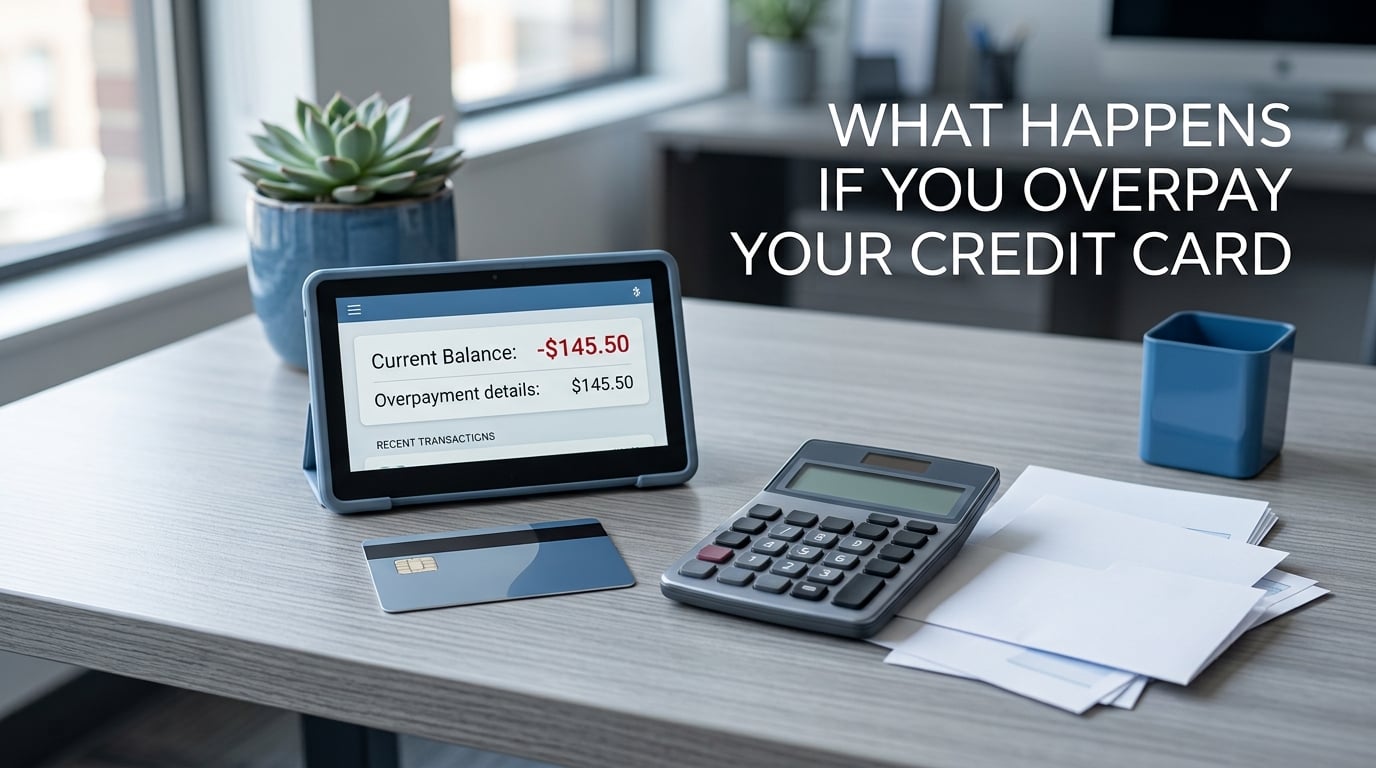
Wondering what happens if you overpay your credit card? The short answer: there are no penalties. When you pay more than your full balance, the excess amount becomes a credit on your account that either reduces future purchases or gets refunded to you.
I’ve helped dozens of readers untangle this exact situation. Some overpaid by $20 through an autopay glitch. Others accidentally sent hundreds more than they owed. In every case, the outcome was manageable. This guide walks you through what really happens, your legal rights, and how to avoid it in the first place.
Table of Contents
What Happens If You Overpay Your Credit Card
When you overpay your credit card, the excess payment creates a negative balance on your account. That means your issuer owes you money instead of the other way around. The overpayment shows up as a statement credit that automatically applies to future purchases until the balance returns to zero or positive.
Think of it like prepaying your utility bill. If you accidentally paid $150 when you only owed $50, you’d have $100 sitting as a credit on your account. Your next purchases draw from that credit until it’s used up. Credit cards work the same way.
This differs from a debit card, where overpaying simply transfers money to the merchant’s account. With credit cards, your issuer holds the extra funds and applies them to your next charges. You can still use your card normally during this time.
How a Negative Balance Looks on Your Statement
Your online account will display a negative number, like “-$45.00,” rather than a zero balance. That minus sign is your confirmation that the overpayment registered correctly. Most issuers also flag the transaction as a “credit” or “payment in excess” on your transaction history.
How to Get Your Money Back After an Overpayment
You have two main options when you overpay: leave the credit on your account, or request a refund. Most people choose to leave it for future purchases since that’s the path of least resistance. But if you need the cash back, requesting a refund is straightforward.
Option 1: Leave It as a Statement Credit
This is what happens by default. Your negative balance stays on the account and reduces future charges. If you charge $100 next month and have a -$50 credit, your statement would show $50 owed. This approach requires zero action from you and works well if you regularly use the card.
Option 2: Request a Refund From Your Issuer
If you want the cash back, contact your issuer directly. Most banks let you request a refund through your online account, mobile app, or by calling the number on the back of your card. Here’s how the major issuers handle it:
Chase: Call the number on your card or message them through the Chase mobile app. Refunds typically arrive within 3-7 business days as a bank deposit.
American Express: Request through your online account under “Account Services” or call customer service. Amex often sends refunds within 1-2 weeks.
Bank of America: Use the “Chat with us” feature in the mobile app or call. Bank of America typically processes refunds within 7-10 business days.
Capital One: Request through your online account or the mobile app. Refunds usually arrive within 5-7 business days.
Some issuers will also mail you a physical check if you request account closure. One Reddit user mentioned receiving a check from Discover within 10 days of requesting closure on an overpaid account. That timeline aligns with what most issuers report.
Does Overpaying Your Credit Card Affect Your Credit Score
No, overpaying does not directly hurt your credit score. The overpayment itself doesn’t get reported to credit bureaus as negative information. In fact, a lower credit utilization ratio (the amount you owe divided by your total credit limit) can slightly improve your score.
Here’s where confusion happens. Some users on Reddit reported a credit score drop after overpaying. I dug into those cases and found the real culprit was usually an account closure or a credit limit change that followed the overpayment.
If your issuer flags the overpayment as potential fraud and closes your account, that closure can lower your score by reducing your total available credit. This indirect effect is rare but worth knowing about.
Your credit utilization ratio actually improves with an overpayment. If you have a $5,000 limit and owe $500, your utilization is 10%. After overpaying by $300, your balance shows -$300, and your utilization effectively becomes 0%. Lenders see this as excellent credit management. The score benefit is small but real.
Risks of Large Overpayments You Should Know
Small overpayments under $100 rarely cause problems. But larger amounts, especially over $1,000, can trigger your issuer’s fraud detection systems. Banks monitor for unusual payment patterns, and a sudden large overpayment looks suspicious to their algorithms.
Fraud Alerts and Account Freezes
If your issuer suspects fraud, they may freeze your account until you verify the source of the funds. This means you can’t make new charges until the issue resolves. You’ll typically receive a call, email, or text asking you to confirm the payment was legitimate.
One forum user described being asked to provide bank statements proving where the overpayment funds came from. This verification process can take 24-72 hours, during which your account is locked. It’s annoying but resolves quickly once you confirm the payment.
Account Closure Risk
In extreme cases, issuers may close accounts that receive large overpayments, especially if the pattern suggests money laundering or fraud. If your account closes with a credit balance, the issuer must refund the remaining amount. Federal law requires them to send you a check within 30 days of account closure.
Federal Law Protections for Credit Card Overpayments
You have specific legal rights when you overpay your credit card. The Truth in Lending Act and Regulation Z require issuers to refund overpayments promptly. Understanding these protections helps if your issuer gives you trouble.
The 7-Day Refund Requirement
If you request a refund in writing, federal law requires your issuer to send the money within 7 business days. This is the most concrete timeline you have. When calling customer service, ask for written confirmation of your refund request. That starts the 7-day clock.
The 6-Month Issuer Obligation
If you don’t request a refund, your issuer must still try to return the money after 6 months. At that point, they must make efforts to send you the funds, even if you haven’t asked. This prevents issuers from holding your money indefinitely as a profit source.
How to Avoid Overpaying Your Credit Card
Most overpayments happen accidentally. An extra zero in the payment amount, autopay triggering before your statement closes, or a manual payment made after autopay already paid. These tips help you avoid the hassle entirely.
Check Your Balance Before Paying
Always log into your account and check your current balance before making a payment. The balance shown is what you actually owe, not what your statement said last month. Paying your statement balance when you have a $0 current balance is the most common overpayment mistake.
Set Up Autopay Carefully
Autopay is convenient but risky. Set it to pay the “minimum payment” or “statement balance” rather than the full current balance. The statement balance option is usually best because it pays your last statement in full while avoiding double payments. Avoid autopay options that pay the “current balance” since those can trigger overpayments if your balance changes between autopay calculation and payment posting.
Use Account Alerts
Most issuers let you set up alerts for payments received. Enable notifications so you know immediately when a payment posts. If you see two payments in one day, you can catch the mistake before it becomes a bigger issue. Capital One, Chase, and Amex all offer customizable payment alerts through their mobile apps.
FAQ
Do I get my money back if I overpay my credit card?
Will my credit score go down if I overpay?
What if I paid my credit card twice by mistake?
Is it bad to overpay your credit card?
How long does a credit card refund take?
Key Takeaways About What Happens If You Overpay Your Credit Card
Overpaying your credit card is not a financial disaster. The extra money creates a credit on your account that applies to future purchases, or you can request a refund at any time. Federal law protects you with a 7-day refund requirement and a 6-month issuer obligation to return unclaimed overpayments.
Watch out for large overpayments that might trigger fraud alerts, and always check your balance before paying to avoid the mistake in the first place. With these basics covered, you’ll know exactly what happens if you overpay your credit card and how to handle it smoothly.