
You reach into the pantry for brown sugar, ready to bake a batch of cookies, and your measuring cup hits what feels like a brick. Sound familiar? If you have ever chipped away at a rock-hard lump of brown sugar, you are not alone. This is one of the most common frustrations home bakers face.
The good news is that learning how to keep brown sugar from hardening is surprisingly simple. With a few pantry-friendly tricks and the right storage container, your brown sugar can stay soft and scoopable for months. Our team has tested every method below, and these are the ones that actually work in 2026.
Table of Contents
Why Does Brown Sugar Harden?
Brown sugar hardens because of one simple fact: it is hygroscopic. That means it readily absorbs moisture from the air, but it also loses that moisture when exposed to dry conditions.
When brown sugar sits in a container that lets air in, the molasses coating on the sugar crystals gradually dries out. As the moisture evaporates, the sugar crystals fuse together into one solid block. This process can happen in as little as a few days if your container is not properly sealed.
White sugar does not have this problem because it lacks the molasses layer. The molasses is what gives brown sugar its soft, damp texture and its rich flavor. It is also what makes the sugar so prone to clumping and hardening when it dries out.
Humidity plays a big role too. If you live in a dry climate or run your heater through winter, your brown sugar will harden much faster. Bulk buyers often notice this most. One Reddit user in r/Baking reported that buying a large bag from Costco left them with rock-hard sugar within two months when stored in a standard zip-top bag.
How to Keep Brown Sugar from Hardening: 5 Proven Methods
Each of these methods works by either sealing out dry air or introducing a controlled moisture source. You can combine methods for the best results.
1. Use an Airtight Container (The #1 Solution)
The single most effective thing you can do is transfer your brown sugar from its original bag into a truly airtight container. Glass jars with rubber gaskets, heavy-duty plastic containers with silicone seals, and vacuum-sealed canisters all work well.
A Mason jar with a tight-fitting lid is a budget-friendly option that many bakers swear by. One Reddit user shared that vacuum-sealing sugar in a jar keeps it soft for months because you remove the air entirely. The key is to make sure no air can circulate around the sugar once the lid is on.
Always press out as much air as possible before sealing. Even a small pocket of dry air will slowly pull moisture out of your sugar over time.
2. The Bread Trick
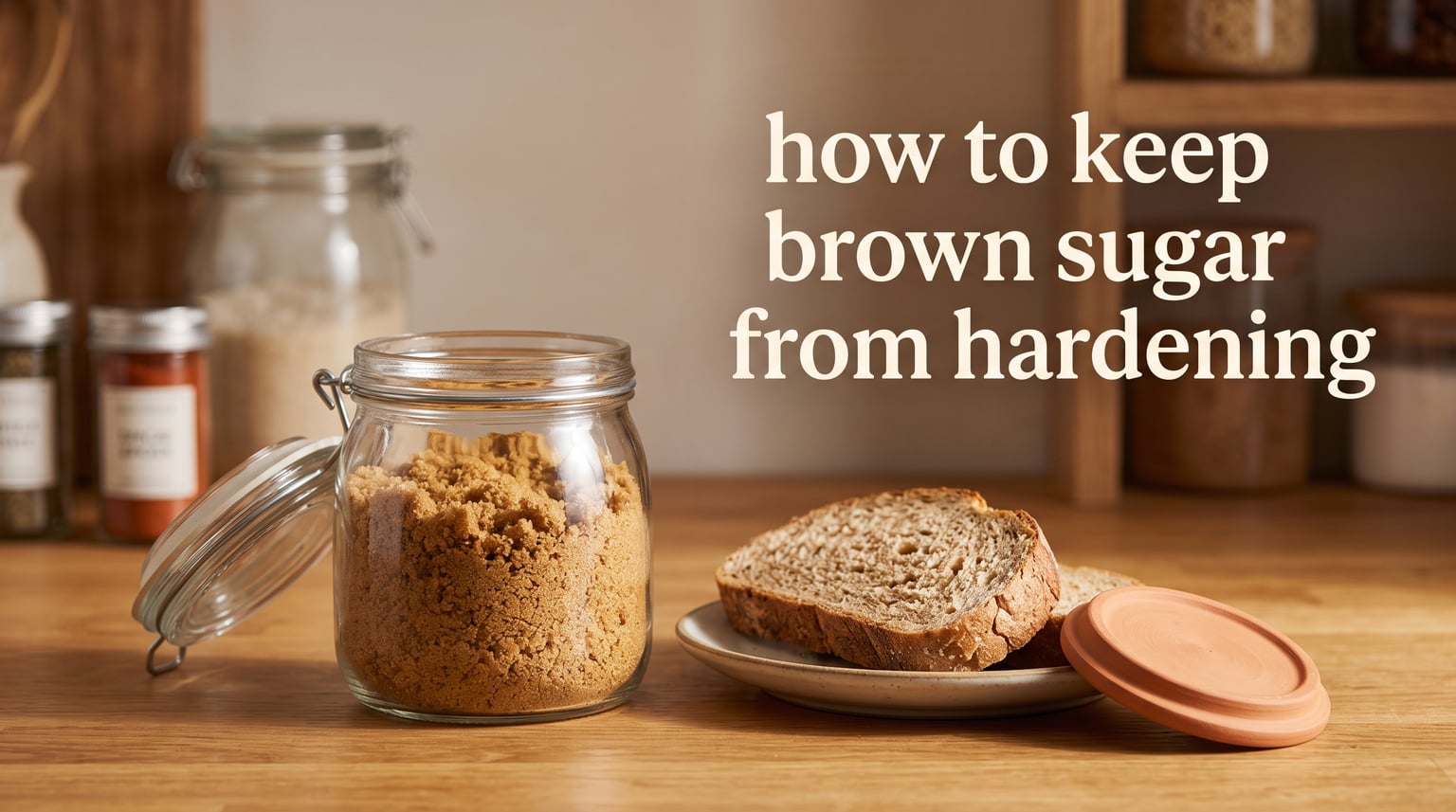
This is the most popular method in baking communities, and for good reason. Place a single slice of fresh bread into your brown sugar container, then seal it tightly. Within a day or two, the sugar will absorb the moisture from the bread and stay soft.
The bread slowly releases moisture into the sealed environment, creating a humid microclimate that keeps the molasses in the sugar from drying out. You can use any type of bread, from basic sandwich bread to a fancy bakery loaf. The sugar will not take on a bread flavor.
Replace the bread slice every one to two weeks, or whenever it starts to dry out and become hard. If the bread gets stale or moldy, swap it immediately. This is especially important if you bake infrequently and your sugar sits unused for long stretches.
3. The Marshmallow Method
If you do not have bread handy, a few marshmallows will do the same job. Drop three or four marshmallows into your sealed brown sugar container. They contain enough moisture to keep the sugar soft for weeks without any replacement.
Marshmallows are a favorite in the Cottage Food Business community on Facebook because they do not go stale as quickly as bread and they never add flavor to the sugar. Just check them occasionally and replace them if they shrink or harden.
4. Use a Terra Cotta Sugar Saver
A terra cotta brown sugar saver is a small clay disc designed specifically for this purpose. Soak the disc in water for 15 to 20 minutes, pat off the excess moisture, and place it directly in your sealed sugar container.
The porous terra cotta slowly releases moisture over time, keeping the sugar soft for up to three months. When the disc dries out, just soak it again. One Reddit user recommended soaking the disc every three months for continuous protection.
This method is ideal if you want a reusable, food-safe option that does not involve putting food items like bread or apples into your sugar. It is the approach professional bakers often prefer.
5. The Apple Slice Method
An apple wedge or slice works just like bread but adds a subtle fruity note. Place a single slice of apple in your sealed container and leave it overnight. The sugar will soften by morning.
Remove the apple slice after a day or two to prevent it from spoiling. This is a quick fix rather than a long-term solution, but it works well if you need soft sugar fast.
Where Should You Store Brown Sugar?
Store brown sugar at room temperature in a cool, dry spot in your pantry. Keep it away from direct sunlight, heat sources like the oven or stove, and areas with temperature swings.
Avoid the refrigerator. The fridge is a low-humidity environment by design, which means it will actively pull moisture out of your brown sugar and make it harden even faster. This is one of the most common mistakes people make.
If you buy in bulk, divide the sugar into smaller airtight containers. You only expose a portion at a time, and the rest stays sealed and soft until you need it.
How to Soften Already-Hardened Brown Sugar
If your brown sugar is already rock-hard, do not throw it out. You can bring it back to life with any of these three methods.
Microwave Method
Place the hardened sugar in a microwave-safe bowl. Cover it with a damp paper towel and microwave in 30-second intervals, fluffing with a fork between each round. The sugar should soften within two to three rounds. Use it immediately, because it will re-harden quickly as it cools.
Oven Method
Preheat your oven to 250 degrees Fahrenheit. Spread the hard sugar on a baking sheet and warm it for about five minutes. The gentle heat softens the molasses so you can break the sugar apart with a spoon or your hands. Again, work fast because the effect is temporary.
Food Processor Method
For sugar that is one solid brick, break off chunks and pulse them in a food processor until the sugar returns to a soft, crumbly texture. This is a physical fix rather than a moisture-based one, so you will still want to add a bread slice or terra cotta disc afterward to keep it soft.
FAQ
What is the thing that keeps brown sugar soft?
Do mason jars keep brown sugar soft?
Is there any way to save hardened brown sugar?
Should you store brown sugar in the fridge?
How often should you replace the bread in brown sugar?
Final Thoughts
Knowing how to keep brown sugar from hardening comes down to two principles: seal out dry air and add a moisture source. An airtight container is your foundation, and the bread trick, marshmallows, or a terra cotta disc take care of the rest.
Once you start using these methods, you will never have to chip away at a sugar brick again. Pick the approach that fits your kitchen and say goodbye to hard brown sugar for good.