
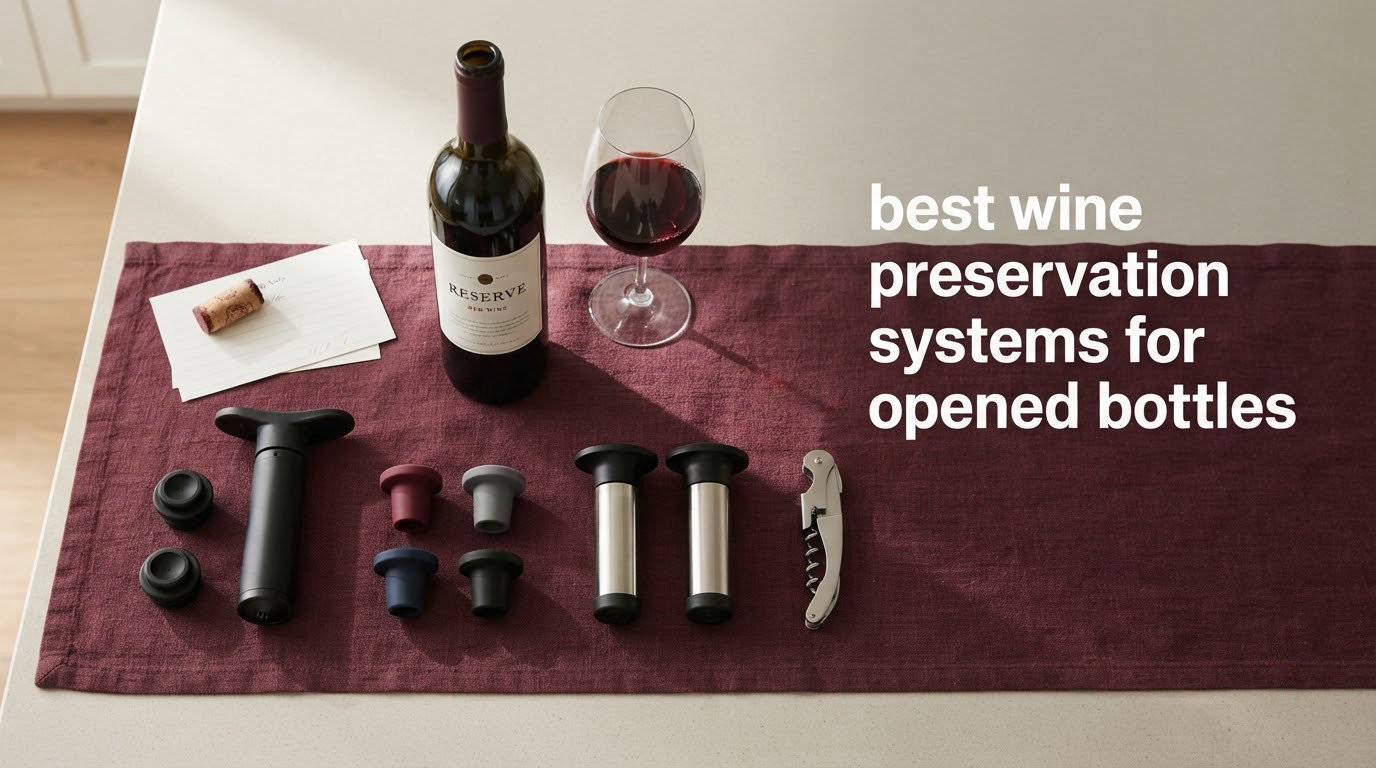
Most opened bottles of still wine are drinkable for two to five days, and no device on the market changes that fact for long. What a good wine preservation system does is push the drinkable window out, so a single glass with dinner does not cost you the rest of the bottle.
The best wine preservation systems for opened bottles fall into four technology groups, and the cheapest group is usually enough. Here is the short version before the full reviews.
Best overall: Vacu Vin Original Wine Pump – a manual vacuum pump and reusable stopper that removes the headspace air. Owners report 3 to 5 days on reds and 3 to 4 on whites when pumped nightly.
Best for long-term preservation: Coravin Timeless Three Plus – a fine needle pushes through natural cork and replaces the emptied volume with 100 percent argon, so the bottle is never opened at all. Measured in weeks, not days.
Best multi-bottle budget kit: WOTOR Wine Vacuum Pump with 4 Stoppers – same vacuum mechanism as the classic pump, four stoppers in the box instead of one.
Best gas spray per use: Private Preserve – a can of carbon dioxide, nitrogen and argon blend sprayed into a recorked bottle, listed at 120 uses per can.
Best for sampling a cellar: Coravin Model One – the same needle-through-cork principle in a simpler body, sold with two capsules of roughly 15 glasses each.
Best for limited hand strength: Vin Fresco Electric Wine Preserver – a USB-C rechargeable one-button vacuum pump with four silicone stoppers, rated for up to 10 days of flavor retention.
We read the customer reviews for all ten systems closely enough to know where the marketing language breaks down. Every rating and review count below comes straight from the product data, and the duration figures we quote are the honest ones rather than the shelf claims.
If you are also thinking about storage, our wine cooler guide for small kitchens covers temperature and capacity, which matters as much as the seal once the cork is out.
Table of Contents
Top 3 Wine Preservers in 2026

Vacu Vin Original Wine Pump
- Manual vacuum pump
- Audible click seal indicator
- Reusable stopper
- Battery free

Coravin Timeless Three Plus
- Needle through natural cork
- 100 percent argon capsules
- Three bottle setup
- Aerator included

WOTOR Vacuum Pump with 4 Stoppers
- Four reusable stoppers
- Manual resistance pump
- Lightweight 96 g
- Up to 10 day claim
All 10 Wine Preservation Systems Compared in 2026
This table is the fastest way to see which mechanism each system uses. The features column matters more than the brand, because the mechanism sets the realistic duration.
| Product | Specifications | Action |
|---|---|---|
| Vacu Vin Original Wine Pump |
|
Check Latest Price |
| Coravin Timeless Three Plus |
|
Check Latest Price |
| WOTOR Vacuum Pump with 4 Stoppers |
|
Check Latest Price |
 Private Preserve Gas Spray Private Preserve Gas Spray |
|
Check Latest Price |
 Ivation Electric Opener Aerator Preserver Set Ivation Electric Opener Aerator Preserver Set |
|
Check Latest Price |
 DASH Serve and Preserve Wine Set DASH Serve and Preserve Wine Set |
|
Check Latest Price |
 Coravin Model One Preservation System Coravin Model One Preservation System |
|
Check Latest Price |
 Vacu Vin Concerto with 4 Stoppers Vacu Vin Concerto with 4 Stoppers |
|
Check Latest Price |
 Airgone Argon Gas Flush FreshPort Airgone Argon Gas Flush FreshPort |
|
Check Latest Price |
 Vin Fresco Electric Wine Preserver Vin Fresco Electric Wine Preserver |
|
Check Latest Price |
1. Vacu Vin Original Wine Pump – The Best Wine Preserver Overall
Vacu Vin Original Wine Pump – 1 Vacuum Wine Stopper – Wine Saver – Black
Manual vacuum pump
Audible click seal indicator
1 reusable stopper
3.04 oz, 1.5 by 6.7 inch
Pros
- Highest rating and largest review base in this roundup
- Distinct click tells you the vacuum is complete
- Battery free and easy to rinse clean
- Stores flat in a fridge door
Cons
- Base kit includes only one or two stoppers
- Vacuum alone will not fully hold a heavy complex red
- Rubber gasket can wear out over years
- Fit varies on unusual bottle mouths
There is no clever mechanism here, and that is exactly why we keep coming back to it. The stopper goes in the neck, the pump sits over the stopper, and you pull until the patented click fires. That click is the whole quality control system: no click means no complete seal, and you pump again.
Owners who pump it nightly report the window stretching to 4 or 5 days on reds and 3 or 4 days on whites, which lines up with what you would expect from removing air rather than replacing it. That is a real gain over an unprotected bottle, and it costs nothing per use.
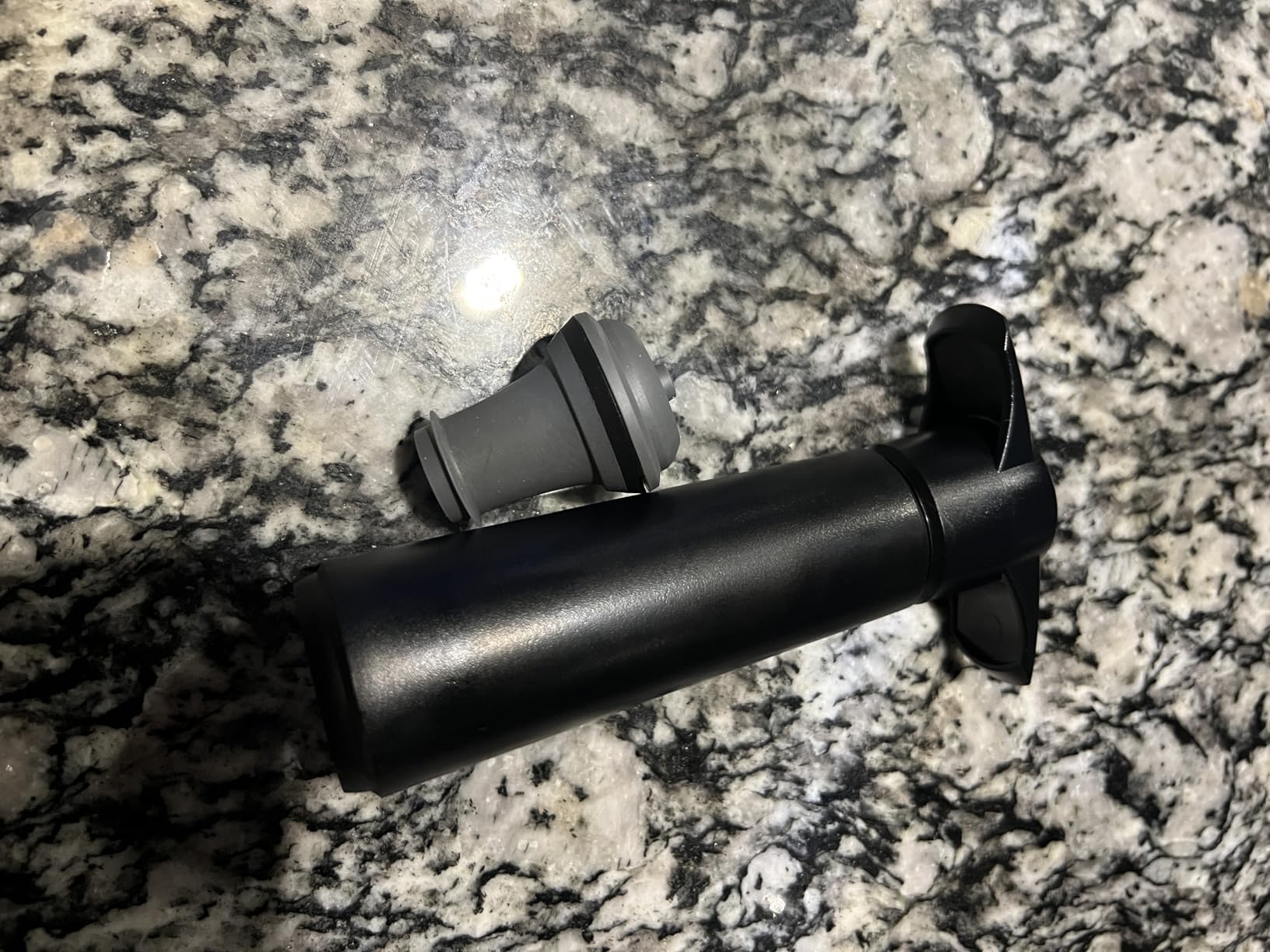
With nearly 20k reviews at a 4.7 average, this is the most proven device in the group by a wide margin. Repeat purchase as a gift is common in the reviews, and the made-in-the-Netherlands build has held up for people using it for years.
The honest limitation is that removing air is not the same as replacing it. A vacuum slows oxidation, it does not stop it, and in a heavy complex red the aromatics still flatten a little earlier than a gas blanket would manage.
Who the Vacu Vin suits best
It suits almost everyone, and it is the right first purchase for a household that regularly opens one bottle and finishes it over two or three evenings. A solo drinker or a two-person household with different tastes is the textbook case.
It also suits anyone who refuses to maintain a device. No capsules, no charging base, no proprietary plug, nothing to refill. If a preservation system fails because it sat in a drawer unused for a year, that is a design failure, and this design has none.
What to check before buying
Count your stoppers. The base kit is a pump and a single stopper, so if you routinely have two bottles open at once, buy the four-stopper version or a multi-kit instead.
Also consider bottle mouths. The stopper fits most standard wine bottles, but very wide or unusually shaped necks are where fit complaints cluster, so check the neck diameter against the bottles you actually drink.
2. Coravin Timeless Three Plus – Best Long-Term Preservation
Coravin Timeless Three Plus Wine Preservation System- Black
Needle through natural cork
100 percent argon capsules
2 by 8.5 inch body
Aerator and clearing tool
Pros
- Pours a glass without ever opening the bottle
- Argon genuinely displaces the headspace air
- Three-bottle layout suits a small cellar
- Works well for tasting wines side by side
Cons
- Needles can bend with repeated use
- Must be cleaned carefully or the capsule port clogs
- Twisting gets harder as the unit ages
- Argon capsules add ongoing cost per use
Among the options in this group, only the needle systems do not just mitigate oxidation, they remove the event. The needle enters through the natural cork, wine travels down the tube to your glass, and a burst of pure argon fills the space the wine just vacated.
That is why the duration claims for this category are measured in weeks while pumps are measured in days. The people who own one use it to sample from bottles they intend to keep for years, which is a different job from rescuing a part bottle with one glass in it.
The kit is well thought out for that job. You get the Timeless Three system, a Coravin aerator that doubles as a second closure for screw caps, two argon capsules, a needle clearing tool and a bottle collar. Owners consistently describe it as well made and gift-worthy, which matches our own impression of the finish.
Maintenance is the real cost, physical and financial. The needle clearing tool exists because the mechanism clogs if you do not clean it, and owners report that the caps get harder to twist as the unit ages. Each capsule is a single-use consumable, so the per-glass running cost never goes away.
Who the Coravin suits best
It suits a collector with bottles they want to taste without committing to them, and a wine club member with a monthly shipment that will never be finished in one sitting. It also suits a restaurant tasting room, which is exactly where the system came from.
It does not suit someone who opens one inexpensive bottle a week and drinks it the same evening. You would be spending premium money and premium consumables to solve a problem that a fridge already solves.
What to check before buying
Check the closure on every bottle you plan to use it on. The needle needs natural cork that is elastic enough to reseal around the hole. Synthetic and artificial corks do not reseal, and that is the single most reported failure of this technology.
Then work out the capsule math honestly. Each capsule is rated at roughly 15 five-ounce glasses, so count the glasses you actually pour and ask whether that per-use cost is acceptable to you.
3. WOTOR Wine Vacuum Pump with 4 Stoppers – Best Value Pick
WOTOR Wine Vacuum Pump with 4 Wine Stoppers, Reusable Bottle Sealer, Black
Manual vacuum pump
4 reusable stoppers
96 g
3.07 by 5.27 inch
Pros
- Four stoppers in the box for a multi-bottle household
- Same simple insert and pump operation
- Lightweight at 96 g
- Reusable stoppers with no consumables
Cons
- Plastic build feels basic in the hand
- Window is shorter than argon based systems
- Full vacuum needs several manual strokes
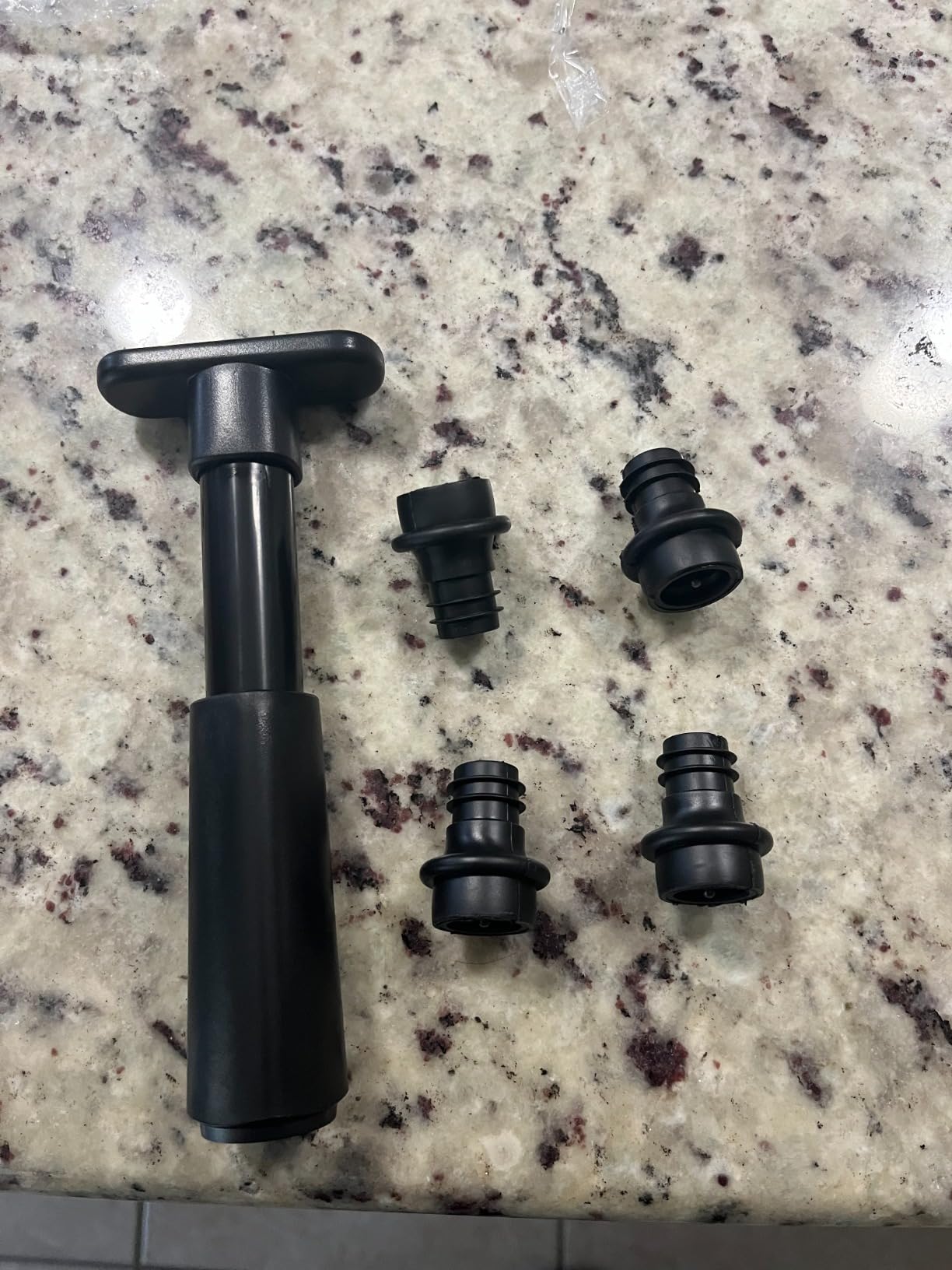
Functionally this is the same idea as the classic pump, with one meaningful difference: you get four stoppers instead of one. For a household that regularly has two or three bottles open at different times, that is the difference between a tool you use and a tool you fight over.
Operation is the familiar one. Insert the stopper, place the pump, and pump until you feel strong resistance. There is no audible click here, so resistance is your only confirmation that the seal is complete, which takes a little getting used to.

With over 2k reviews at 4.6, the feedback is consistently positive about value and about having multiple stoppers on hand. The reported drawbacks are the honest category ones: plastic feels less substantial than metal, and the freshness window is shorter than gas-based preservation.
For most people reading this guide, this is the device we would actually buy first. The gap between it and the premium pump is small in practice, and the gap between it and a needle system is enormous in both price and learning curve.
Who the WOTOR suits best
It suits a house where tastes differ, a dinner party, or anyone rotating through a wine club box. Four active stoppers means you are not constantly pulling one off a bottle to use on another.
It also suits a first-time buyer. There is nothing to charge, nothing to replace, and the whole kit washes and stores in a drawer.
What to check before buying
Check the pump stroke count against your patience. Reaching a full vacuum takes repeated manual strokes, and if you only intend to seal bottles for a day, a partial stroke is enough anyway.
Check your bottle shapes too. The conical stopper profile is a common fit, but as with any vacuum stopper, unusual neck diameters are the first place problems show up.
4. Private Preserve Gas Spray – Best Inert Gas Per Use
Private Preserve Wine Preservation System | 100% Green Gas Based | Suitable for all Wine, Port, Sake, Cognac, Whiskey, Fine Oil and Vinegar
Inert gas blend
120 uses per can
10.5 by 6 by 6 inch can
Recork and store upright
Pros
- Inert gas genuinely slows oxidation for days to weeks
- Also preserves spirits oils and growlers
- Very low cost per use
- Fast four step process
Cons
- Real uses per can often fall short of 120
- Can feels empty even when full
- Needs a good airtight stopper to work
- Relies on recorking and upright storage
This one attacks the problem the opposite way from a pump. Instead of pulling air out, you push gas in. The can contains a blend of carbon dioxide, nitrogen and argon, and you spray it into the neck of a recorked bottle so the headspace fills with something that will not react with the wine.
The process is four steps and takes seconds: open the bottle, spray, re-cork immediately, store upright. Users who metered a short burst report getting well past the advertised use count and holding part bottles for two weeks or more.
What the review pattern shows is unusually consistent: the gas works, the counting is unpredictable, and the stopper quality decides the result.
The most useful thing about this product is that it is not wine-only. The same can protects opened spirits, growlers of beer, and fine oils, which spreads the cost across things you would otherwise waste.
Who the Private Preserve suits best
It suits a drinker with several bottle types open at once, and anyone who already owns a decent natural cork or re-sealable stopper. It also suits households that want to preserve spirits and wine on one consumable.
It suits a careful user more than a casual one. The gas does nothing if the recork is loose, so the discipline of recorking immediately and standing the bottle up is the whole technique.
What to check before buying
Buy a quality stopper as part of the same decision. Without a tight closure the spray is money spent on a headspace that still breathes.
Also plan for upright storage. The technique depends on the bottle standing up, which matters in a fridge where things lie at odd angles.
5. Ivation Electric Opener, Aerator and Preserver Set – Best Gift Set
Ivation Stainless Steel Electric Wine Opener, Aerator & Preserver Gift Set
7 piece set
Stainless steel look
2.2 pounds
Electric opener plus vacuum
Pros
- Covers opening aerating and preserving in one box
- Electric extractor pulls corks without breaking them
- Every piece is functional not decorative
- Blue LED base keeps it all organised
Cons
- Undercharged unit can leave a cork half pulled
- Vacuum window is shorter than argon systems
- Proprietary charging plug is a replacement risk
- Occasional early component failure reports
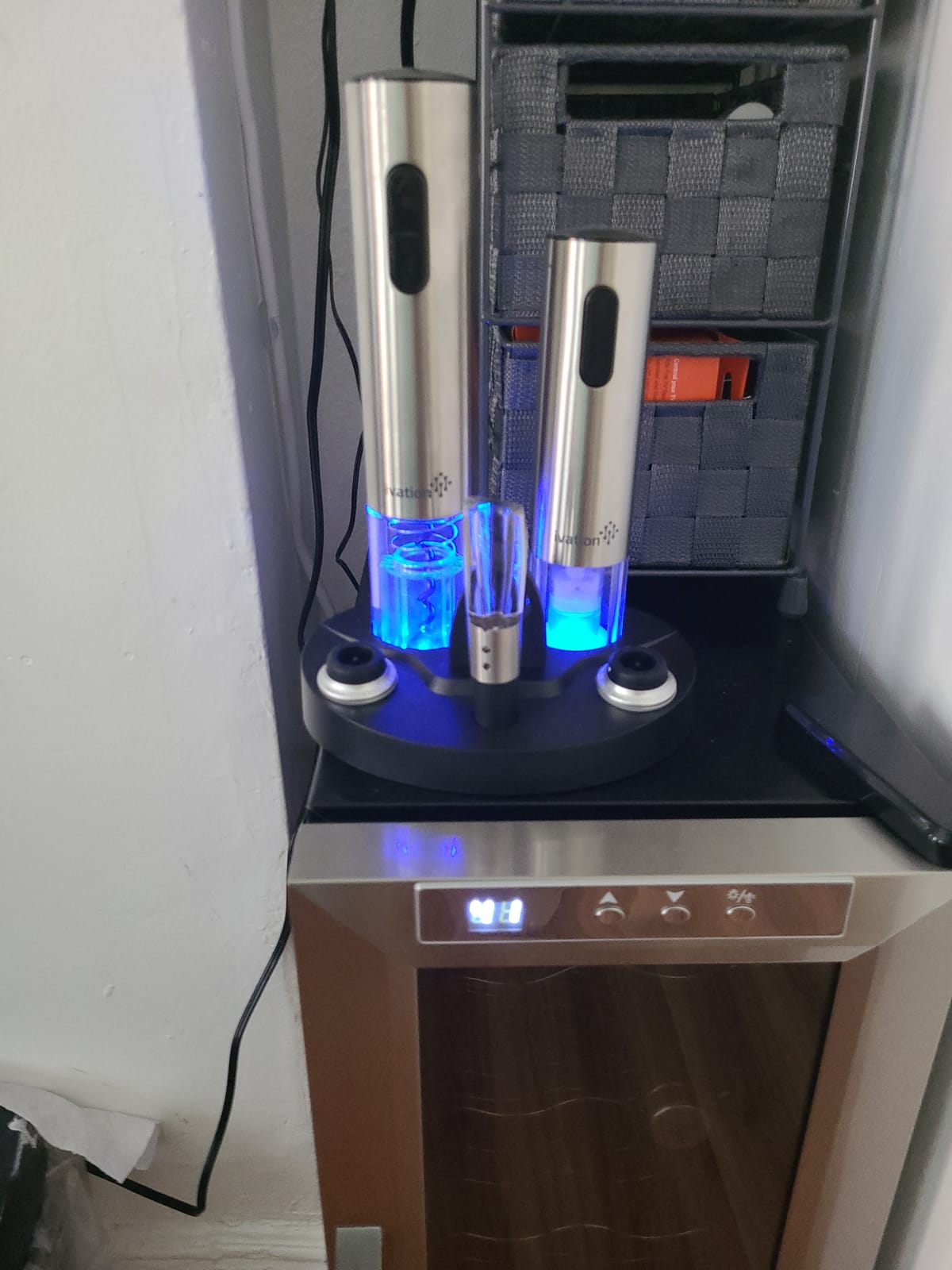
This set is not a dedicated preserver, it is a wine toolkit where preservation is one of the jobs. You get an electric corkscrew, a vacuum pump with date-stamped stoppers, an aerator, a foil cutter and a charging base, which is a genuinely appealing gift for someone who has just started buying better bottles.
The vacuum side works the way a manual vacuum works. The distinction worth knowing is that the opener and the pump are separate functions, so the same unit opens your bottle and then seals it again, rather than the pump being part of the opening mechanism.
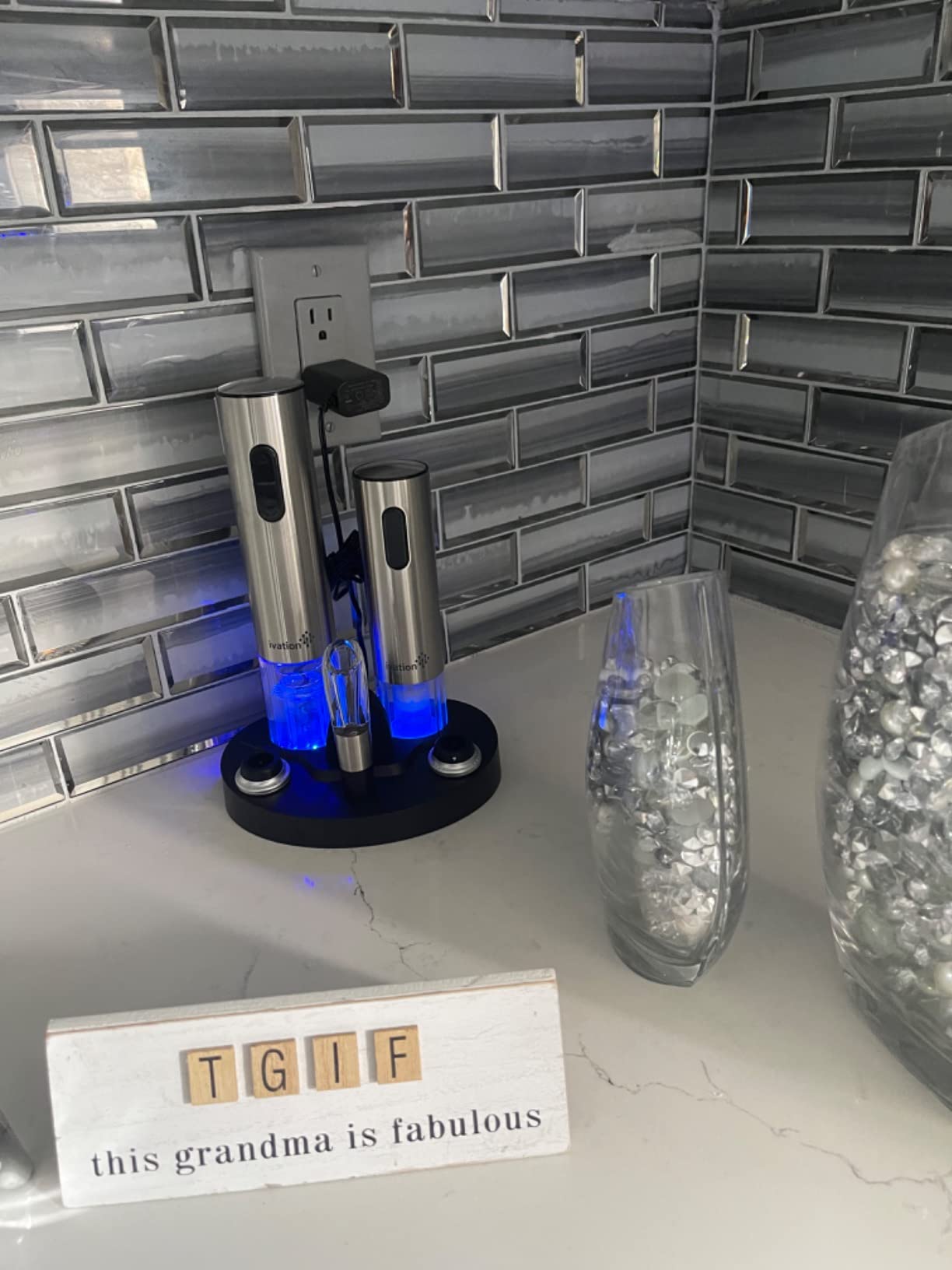
With over 4k reviews at 4.6, the most repeated comment is that the set looks good on a counter and that nothing in it is decorative. The aerator and the vacuum stoppers get singled out most often as the pieces that actually extend the life of a part bottle.
The dominant caveat is charge level. An undercharged opener can leave the cork partially pulled, which is an unpleasant way to discover the battery is flat. A few owners also report a single component failing within the first year, and the proprietary plug is worth keeping.
Who the Ivation set suits best
It suits a new wine drinker who needs an opener anyway, and anyone buying for a host or a housewarming. It also suits a countertop where a loose collection of accessories would look untidy, because the charging base solves that problem.
It is a weaker choice for a serious collector, who wants the corks to come out by hand and the preservation to last for months rather than days.
What to check before buying
Check the charge before an occasion. That is the single failure mode owners report, and it is entirely avoidable if you top it up the night before a dinner.
Check whether you already own a good vacuum stopper. If you do, this set’s preservation value drops and you are really buying an opener, aerator and gift presentation.
6. DASH Serve and Preserve Wine Set – Best Electric Two-in-One
Dash Serve & Preserve Wine Set – Rechargeable Electric Wine Preservation System – Wine Bottle Opener, Vacuum Sealer, 2 Reusable Caps + Charging Base – Aqua
Rechargeable opener and sealer
2 reusable caps
2.8 pounds
Stainless finish
Pros
- One device both opens the bottle and pulls the vacuum
- Two caps fit any standard bottle size
- Opens in about 8 seconds per bottle
- Charging dock keeps pieces together
Cons
- Motor torque reported weakening after months
- Vacuum performance inconsistent on some units
- One early failure reported around two months
- Smaller review base than the rest of the list
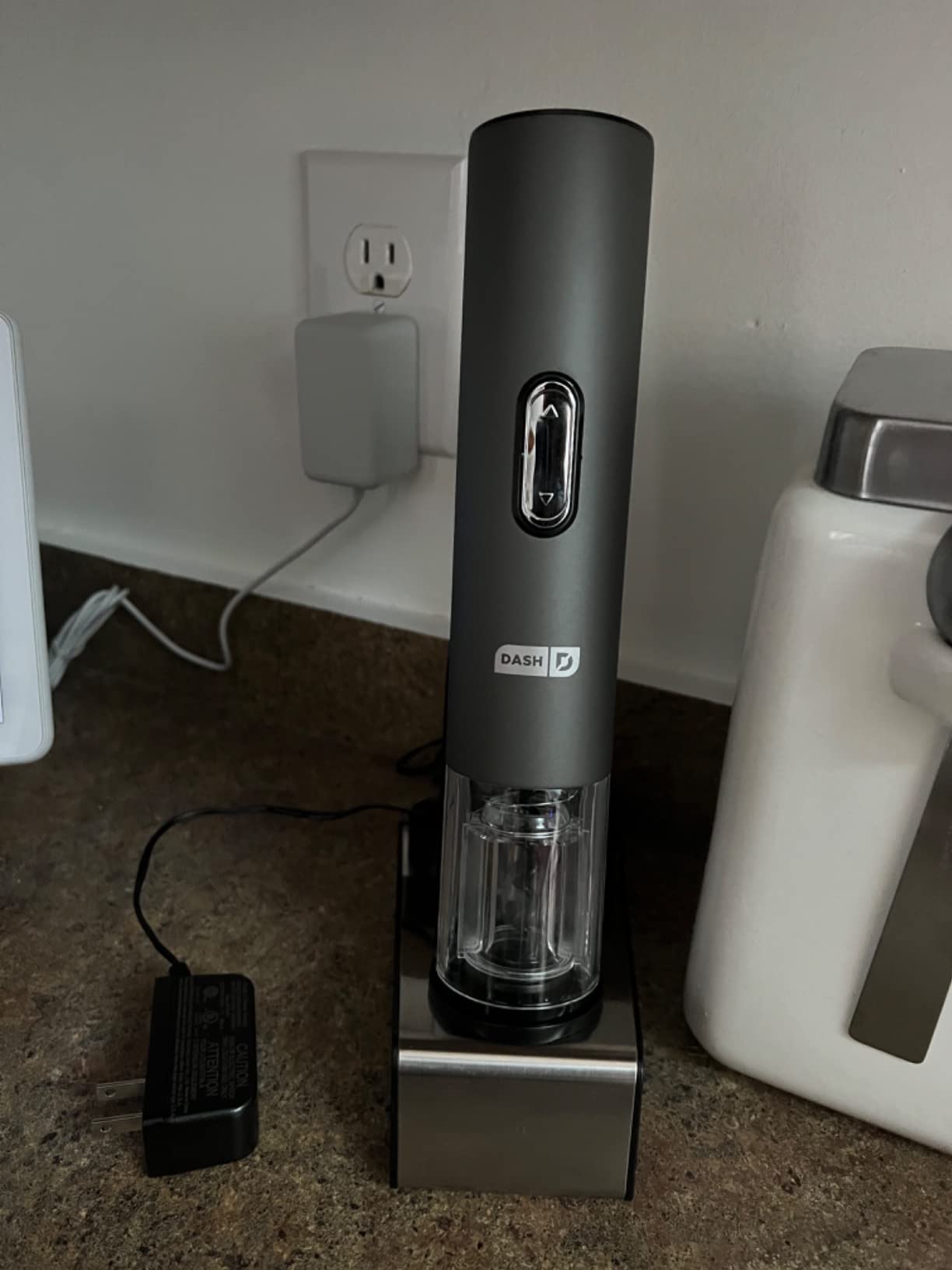
The design idea here is elegant: the opener head is double-sided, so the same body that pulls the cork can be flipped over the bottle to pull a vacuum. One device, one charging base, no separate pump sitting in a drawer.
Rechargeable is the selling point for anyone who found hand pumping tiring. It opens up to 30 bottles on a single charge and the caps are reusable, so there is no consumable beyond electricity.
The review base is the smallest among the electric options here at 250 ratings and a 4.4 average, so treat the sentiment as directional rather than settled. What comes up repeatedly is enthusiasm for the two-in-one idea and for the appearance, especially as a gift.
The critical feedback is durability. Owners report corkscrew torque weakening after months of use and a vacuum that stopped performing, plus one device failing around the two-month mark that the manufacturer resolved outside the normal return window.
Who the DASH set suits best
It suits a household that wants electric convenience and does not want to remember a manual pump, and anyone who gifts wine accessories. It also suits someone who stores extra food in bottles, since the caps double as a sealer for that.
It is a less confident choice for someone who opens wine rarely and would rather own one durable tool for a decade than a rechargeable one for a few years.
What to check before buying
Check that the caps fit the bottles you own. The claim is that two reusable caps fit any size wine bottle, and that is the feature most worth confirming with your own glassware in mind.
Check the warranty terms. This one carries a one-year manufacturer warranty, which is shorter than the practical life most people expect from a wine tool.
7. Coravin Model One – Best for Sampling From a Cellar
Coravin 100015 Model One Advanced Wine Bottle Opener and Preservation System, Includes 2 Coravin Argon Capsules
Teflon coated needle
99.99 percent argon capsules
2 capsules included
3 by 5.5 inch
Pros
- Pour without pulling the cork
- Argon capsules rated at about 15 glasses each
- Teflon coated needle handled real cork cleanly
- Storage pouch and visual guide included
Cons
- Fails on synthetic and artificial corks that do not reseal
- Argon capsules are expensive to keep buying
- Body is utilitarian rather than elegant
- Needle must be cleaned after each use
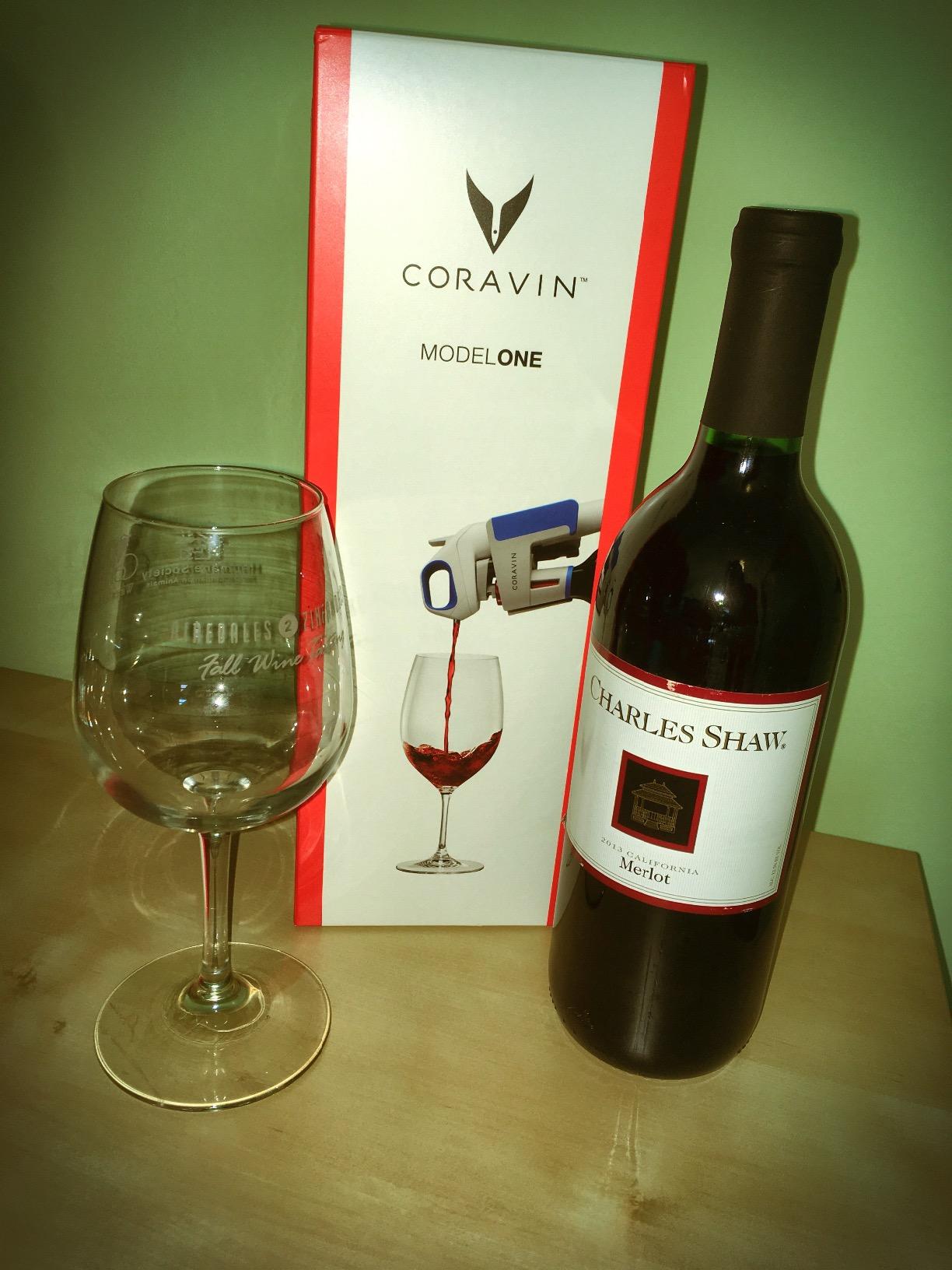
This is the simpler Coravin, and simpler is the right word when you only need to taste, not to keep bottles on a long rotation. It uses the same needle-through-cork principle, with a Teflon-coated needle that is gentler on the cork than bare steel.
Buyers often report laying the bottle on its side afterward and finding no leakage at all, because the cork re-swells around the puncture. Where owners do report problems, it is almost always a synthetic cork in a moderately priced bottle.
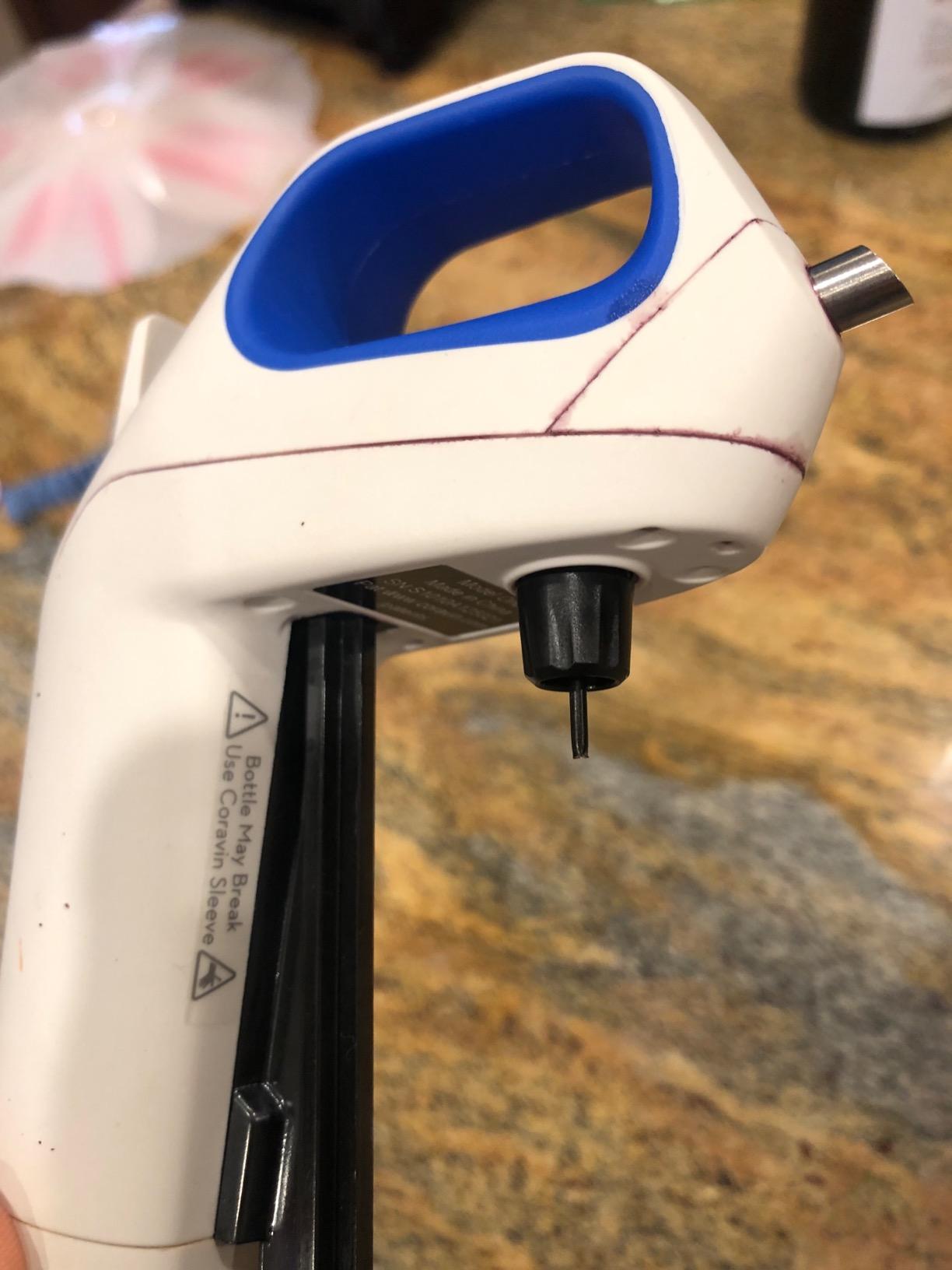
At 4.3 stars across 1124 reviews, it is the lowest-rated Coravin here, and the review text explains why: the seal is reliable, but the design is functional and the running cost is high. The included capsules are the expensive part of the equation over time.
The needle cleaning requirement is the routine people forget. Clean it after each use and it works indefinitely; skip it and you will be clearing a clog with the included tool while a bottle sits open to air.
Who the Coravin Model One suits best
It suits someone with a modest cellar of natural-cork bottles they want to sample over months, and a wine club member whose standard shipment is more than one person can drink. Travel is a secondary use, since the storage pouch is included.
It does not suit a casual drinker or anyone whose wine comes mostly in screw caps. The screw-cap closure is what the Coravin aerator is for, not the needle, and that is a different product function.
What to check before buying
Inventory your bottles by closure before buying. If most of what you drink has a synthetic or artificial cork, this device will leak and you will have paid for the privilege of finding out.
Then check the capsule cost against how many glasses you pour. At roughly 15 five-ounce glasses per capsule, the running cost is what makes people describe the investment framing as fragile.
8. Vacu Vin Concerto with 4 Stoppers – Best for Several Open Bottles
Vacu Vin Concerto Wine Saver – Vacuum Wine Stopper – 4 Black Stoppers
Pump plus 4 stoppers
0.11 kg
BPA-free reusable stoppers
Click seal indicator
Pros
- Four stoppers cover several open bottles at once
- Audible click confirms a complete vacuum
- Stoppers are reusable and dishwasher safe
- Ergonomic pump is easy on the hand
Cons
- Freshness window shorter than argon systems
- Stoppers wear over time and can lose their seal
- Costs more and takes more space than the single version
This is the pump for a busy bar cart rather than a single fridge. Four reusable dishwasher-safe stoppers means you can keep several different bottles sealed at once, which is the situation where a single-stopper kit quietly frustrates you.
The mechanism is identical to the classic Vacu Vin, down to the patented click. Insert the stopper, place the pump, and pump until the airtight seal clicks.
With over 16k reviews at 4.5, this brand’s reputation is well evidenced, and the feedback pattern for this kit matches the single-stopper version: the click is the selling point, the stoppers are the reason people buy two kits.
Criticism here is mild and typical of the category. The window is shorter than gas-based systems, the rubber stoppers eventually wear and can lose their seal, and it simply occupies more drawer space than the smaller kit.
Who the Vacu Vin Concerto suits best
It suits a house that drinks a lot of different bottles, a host who keeps multiple reds and whites sealed simultaneously, and anyone who runs a small home bar setup. It also suits people who simply lose small parts and want spares.
It is overkill for a solo drinker who opens one bottle and finishes it the same night, and the dishwasher-safe stoppers are the reason many people buy this model twice.
What to check before buying
Check whether you will actually use four bottles at once. If your habit is one open bottle at a time, the single-stopper kit does the same job with less to wash.
Check drawer space too. The pump and four stoppers occupy noticeably more room than the two-piece version, and the ergonomic pump is a chunkier object than a bare stopper.
9. Airgone Argon Gas Flush for Wine and Food – Best Multi-Use Argon Can
Airgone Argon Gas Flush for Wine, Coffee and Food Preservation | FreshPort
Argon flush can
Up to 150 flushes
Two second flush
3.84 oz
Pros
- Two second flush with no pump or vacuum hardware
- Argon protects wine coffee tea herbs and more
- Low per-use cost at around 150 flushes
- Works across multiple storage systems
Cons
- Requires a separate Fresh-Port valve or topper
- Can feels empty even when it is full
- Not a standalone wine preserver without extra hardware
This is the same chemical idea as a needle system, delivered as a spray can instead of a capsule. Heavier argon displaces the oxygen in the headspace while carbon dioxide vents through the degassing valve, and the whole flush takes two seconds.
Where it earns its place is breadth. The same can protects coffee, tea, herbs and pantry goods, so if you already store those in Fresh-Port containers, the per-use cost drops dramatically compared with wine-only gas.
It is not, however, a bottle-in-a-drawer solution. You need a compatible Fresh-Port valve or topper, sold separately, and without one the gas has nowhere to go.
With 146 reviews at 4.5, the sentiment is clear but the sample is modest, and it skews toward buyers who already own the storage hardware.
The recurring practical note is the can itself. Gas expansion means it feels empty even when it is full, so judging remaining gas by feel does not work, and most owners learn to track usage by habit rather than appearance.
Who the Airgone can suits best
It suits a coffee and pantry enthusiast who already uses Fresh-Port storage and wants to extend the same approach to wine. It also suits anyone who wants argon, the most inert and wine-friendly gas, without a needle system.
It does not suit someone who wants one small device and nothing else. The dependency on separate hardware is the dealbreaker for most casual buyers.
What to check before buying
Confirm you own, or will buy, a compatible Fresh-Port valve or wine topper. Everything about the two-second flush depends on that seal.
Then count your other uses. The value case only makes sense if the can serves coffee, tea and pantry goods as well as bottles, because a wine-only user gets better economics from a wine-specific gas can.
10. Vin Fresco Electric Wine Preserver – Best for Limited Hand Strength
Electric Wine Preserver – Rechargeable Vacuum Saver With Airtight Seal – Automatic Air Remover Pump for 10 Days of Flavor & Freshness – Preservation System (Black & Rose Gold)
One button electric pump
4 silicone stoppers
USB-C rechargeable
1.95 by 3.95 inch
Pros
- Electric pumping helps with arthritic or limited hand strength
- Charge lasts for months of regular use
- Four food-grade silicone stoppers included
- Compact and attractive on a counter
Cons
- Some owners could not get any stopper to seal
- Extraction is slower than a manual pump
- Stoppers do not fit some standard or UK bottles
- Support reported as unresponsive on fit complaints
This is the most specific fix in the group. If hand-pumping a vacuum has become uncomfortable, whether from arthritis, a rotator cuff injury or just a bad week, a one-button rechargeable pump removes the strain entirely and preserves the same mechanism underneath.
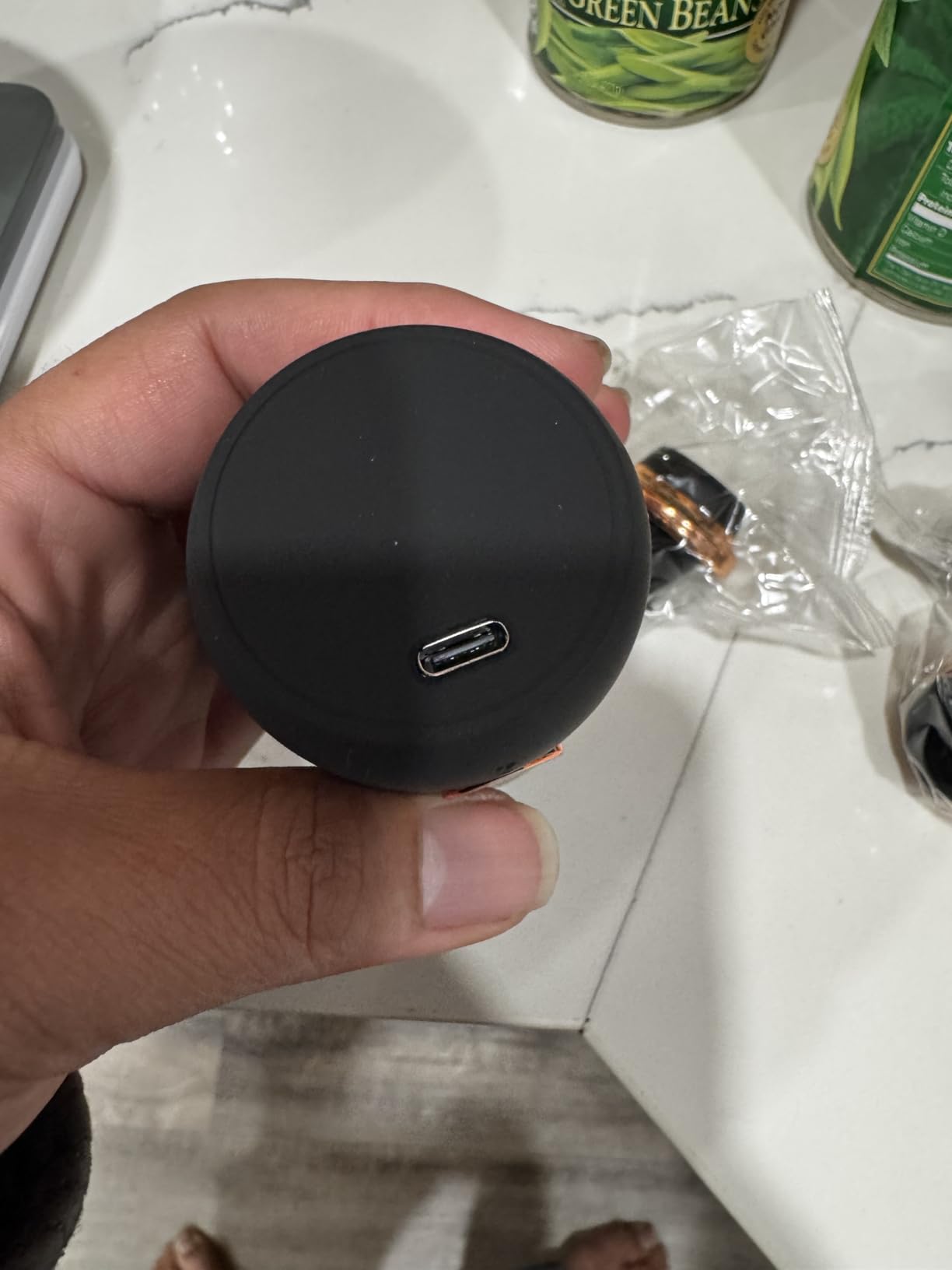
It comes as a complete kit: the electric pump, four food-grade silicone stoppers, a USB-C cable and a manual. Buyers who get on with it report fresh-tasting wine over several days and a charge that holds for months of regular use.
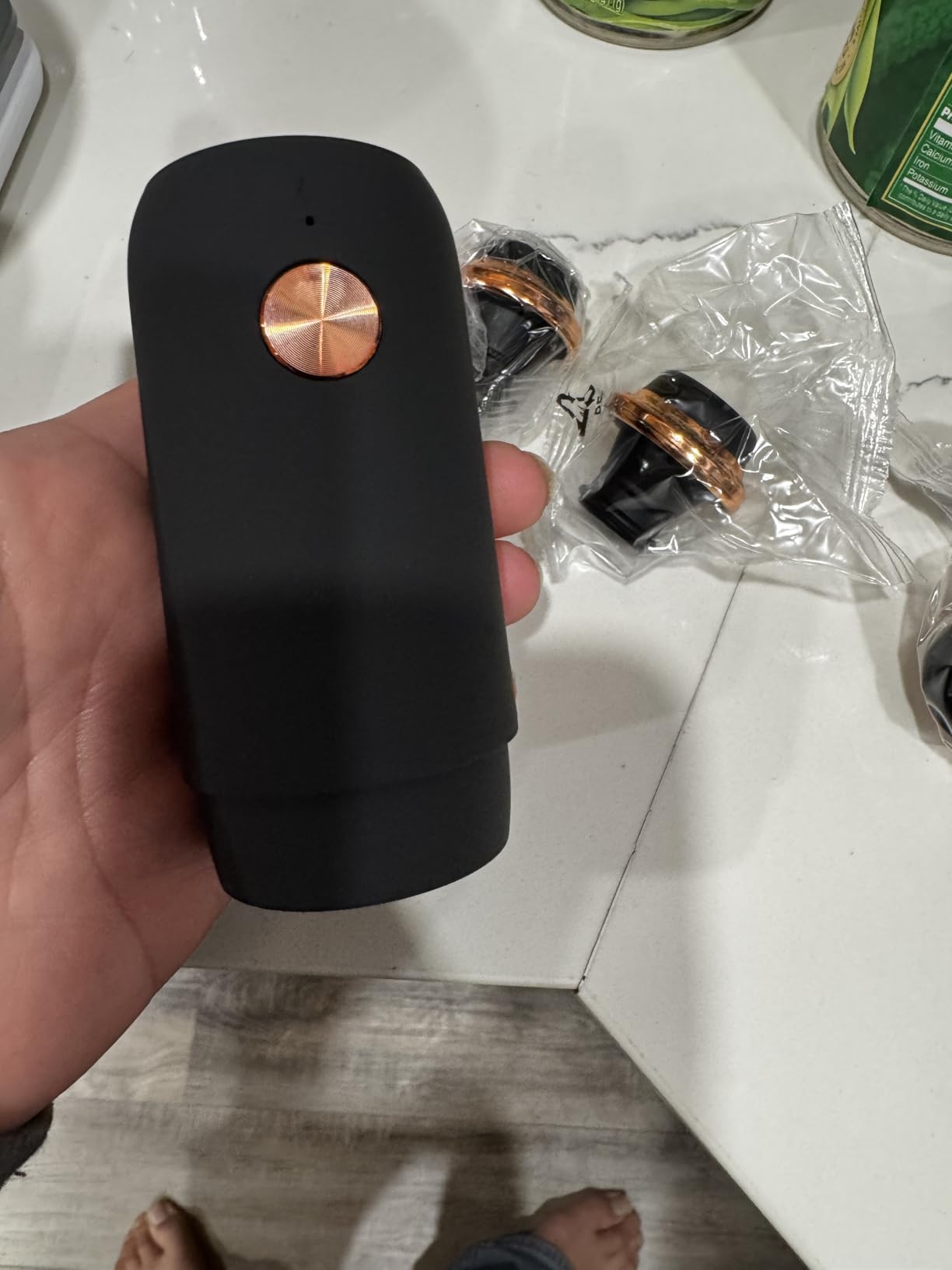
This is the lowest-rated product in the group at 4.2 across 202 reviews, and the negative feedback is specific rather than general. The seal is the problem: some owners could not achieve suction on any of the four stoppers, and others found them too small for standard bottles, including UK and Australian formats.
A few also found extraction slower than a manual pump and reported no answer from support on fit complaints. If you have a non-standard bottle, that is a real risk on this model specifically.
Who the Vin Fresco suits best
It suits anyone whose hands cannot comfortably work a manual pump, and anyone who prefers one-button simplicity to a click-and-stroke rhythm. It also suits a gift buyer who wants something that looks modern on a counter.
It is a riskier choice with unusual bottle formats. The silicone stopper profile draws the most complaints in this product’s reviews, so standard bottles are the safe assumption.
What to check before buying
Check your bottle necks against the included stoppers first. This is the single issue that splits the reviews on this product, and it is cheap to verify before you commit.
Then check the charge habit. A USB-C unit that sits in a drawer for a month will not be ready when you want it, so top it up alongside the bottle you are saving.
How Wine Preservation Actually Works
Oxidation is the only real enemy. Once a bottle is open, oxygen in the headspace, the air gap between the wine and the closure, reacts with the wine and flattens its aromatics. Every system on this page attacks that one problem in one of three ways.
1. Remove the air. A pump draws the headspace down until the stopper seals against a partial vacuum. No air means no oxygen, at least for a while. This is the most common approach and the least expensive.
2. Displace the air. An inert gas blanket of argon, nitrogen, or a carbon dioxide blend is pushed into the headspace. Argon is the most inert and is the gas used in the needle systems, while spray cans typically use a blend.
3. Absorb what is left. Oxygen-absorbing stoppers bind residual oxygen chemically. They are the cheapest option per use and the shortest-lived, which is why they suit casual drinkers.
The main types of wine preserver
Four categories cover everything on the market, and they map onto the three mechanisms plus one hybrid.
Manual vacuum pumps – a hand pump and reusable stopper, the cheapest and most common method, measured in days.
Powered vacuum pumps – the same vacuum with an electric motor, for anyone who cannot pump by hand, still measured in days.
Inert gas sprays – a can that blankets a recorked bottle, sitting between days and weeks depending on the stopper and the technique.
Argon needle systems – a needle through natural cork that pours a glass without opening the bottle, and replaces the headspace with pure argon, measured in weeks to months.
Manufacturer claims versus real-world duration
Vacuum products are commonly listed at up to 10 days of freshness. That is the packaging claim, and it is achievable for a full-bodied red pumped nightly. What drinkers actually report is 4 to 5 days on reds and 3 to 4 on whites, which is the number we would plan around.
Unprotected, an opened bottle of most still wine gives you 2 to 3 days for a delicate white and 3 to 5 days for a full-bodied red. Sparkling wine is hours, not days. A preserver does not change those baselines, it just moves them.
Compatibility warnings that cost people money
None of these systems work on sparkling wine. Pressurised bottles leak, lose carbonation and generally are not compatible with a vacuum or a spray. Do not buy a preserver expecting to cover a Friday-night champagne bottle.
Needle-through-cork systems need natural cork that reseals. Synthetic and artificial corks do not, and the leakage reports in the reviews cluster exactly there. Screw caps are a different case again: the Coravin kits include a screw-cap closure as a stopper, which is what the aerator is for.
The free method every paid device must beat
Put the cork back in, stand the bottle upright in the fridge, and move on. Two sommeliers told one r/wine poster that this was sufficient and that vacuum pumps did not make much of a difference, and that poster is exactly the use case the free method serves.
For a bottle finished within a day, we agree. Cold slows oxidation, an upright bottle keeps the liquid in contact with the closure, and a tight recork limits air exchange. The free method is the honest baseline, and any device that cannot clearly beat it for your own drinking pattern is not worth owning.
Where a device earns its place is a second bottle. Households drinking more than one style at a time, wine club members and cellar samplers are the users for whom a seal changes behaviour rather than just adding a step. If you are curious about the wider kit side, our wine making kit guide for beginners covers the equipment that comes before any bottle reaches a glass.
Frequently Asked Questions
Are wine preservers worth it?
What is the best wine bottle preserver?
Is a Coravin system worth it?
Is there a cheaper alternative to Coravin?
How long does wine last with a vacuum pump?
Can you preserve sparkling wine after opening?
Our Verdict on the Best Wine Preservers for Opened Bottles
The Vacu Vin Original Wine Pump is our pick for the best wine preservation systems for opened bottles because it is the most proven device in the category by a wide margin, and because its mechanism is the one most people actually need. Buy the multi-stopper version if you have more than one bottle open at a time.
For the best budget route, the Private Preserve gas spray costs the least per use and works on spirits and oils as well as wine, provided you already own a tight stopper. For the premium tier, the Coravin Timeless Three Plus is the most complete package in this group, pairing the needle system with an aerator, screw caps and a clearing tool, and it is worth it only if you are sampling bottles you intend to keep.
Whatever you choose, start with the free baseline. Re-cork, stand it upright, refrigerate, and only add a device once that method stops being enough for how you actually drink. Every rating and review count on this page came directly from the product data we worked from, and we earn a commission on qualifying purchases without that changing what we report.