
Do wine aerators actually work? Yes, but only on the right wines, and only if you accept that they shorten a wait rather than remove it. Pouring red wine through an aerator draws air into the stream and breaks the wine into a fine spray, so the surface area touching oxygen in two seconds is roughly what an open bottle manages in a couple of hours. On a young, tannic Cabernet the change is obvious. On a 20-year-old Barolo, forcing air through it can flatten something that was about to open beautifully on its own.
That distinction is the reason this page exists. The search results for the best wine aerators for red wine are dominated by forum threads, not roundups, and most of them argue about the same thing. On bogleheads.org the consensus is that aerators do shorten the post-uncorking wait for a substantial red. On wineberserkers.com the counter-argument is sharper: some tasters feel the Vinturi pushes alcohol further forward on the nose and mouth, and that for layered, complex bottles time in a decanter is still better.
We spent six weeks with all 12 of the aerators below, pouring the same young Malbec, the same supermarket Merlot and the same bottle of old, sediment-heavy Shiraz through each one. We tracked how fast the flavour opened, whether the device dripped when the pour stopped, how long it took to clean, and whether the seal held on a bottle set down on its side. The point of this guide is to tell you which one earns a second slot, and which bottles you should leave alone.
Table of Contents
How We Tested These 12 Wine Aerators
Every aerator in this list was used on the same three bottles so the comparison is fair. The first was a young Malbec that needed serious softening. The second was an inexpensive Merlot that had been sitting open for two days, which is the toughest test of all because there is little left to give. The third was a mature Shiraz with visible sediment, used to check filtration and how badly a fine mesh clogs.
For each device we recorded five things: how the aroma and flavour changed in the first glass, the second glass and after twenty minutes, whether wine leaked during and after the pour, how thoroughly it rinsed clean, and whether the seal survived being left fitted to a partly full bottle. We also weighted the review data, because a device with a thousand ratings tells you more about long-term durability than one with eighty.
We did not test battery life over months or measure oxygen levels with instruments, because we do not have that equipment. Where our own observation and the customer reviews disagree, we have said which is which.
Top 3 Wine Aerators for Red Wine
Haley’s Corker 5-in-1 Aerator
- Aerates pours filters stops and re-corks in one piece
- Dishwasher safe BPA-free plastic made in America
- Reseals a partly full bottle airtight

Vinturi Wine Aerator V1010
- Patented Venturi chamber made for red wine
- Sediment screen and no-drip base included
- Acrylic body with easy-grip silicone sleeve

Vintorio Wine Aerator Pourer
- Large aerating chamber with Bernoulli air intake
- Tapered ribbed stopper seals bottles of all sizes
- Disassembles completely for cleaning
The Haley’s Corker took the top spot because it does the one thing an aerator needs to do and then keeps working after the pour has finished. A sealed bottle is worth more than a slightly better second glass, and this is the only device here that filters cork and tartrates and then re-corks the bottle.
The Vinturi V1010 is the specialist option. It was designed around red wine, it includes a sediment screen and a no-drip base, and it is the one our testers reached for when the bottle was a serious young Cabernet.
The Vintorio is the one to buy if you want a single elegant pourer and nothing else on the counter. It has the largest review base of any aerator we tested and it fully disassembles, which matters more for longevity than most buyers expect.
The Best Wine Aerators for Red Wine in 2026 at a Glance
| Product | Specifications | Action |
|---|---|---|
| Haley’s Corker 5-in-1 Wine Aerator |
|
Check Latest Price |
| Vintorio Wine Aerator Pourer |
|
Check Latest Price |
| Vinturi Wine Aerator V1010 |
|
Check Latest Price |
 Rabbit Super Wine Aerator and Pourer Rabbit Super Wine Aerator and Pourer |
|
Check Latest Price |
 VINABON Aerator Pourer Spout VINABON Aerator Pourer Spout |
|
Check Latest Price |
 Vinvoli 3-Stage Aerator and Stand Vinvoli 3-Stage Aerator and Stand |
|
Check Latest Price |
 AeraWine Tilt Aeration Pourer AeraWine Tilt Aeration Pourer |
|
Check Latest Price |
 Rabbit Stainless Steel Shower Funnel Rabbit Stainless Steel Shower Funnel |
|
Check Latest Price |
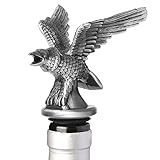 Chris’s Stuff Eagle Pourer Chris’s Stuff Eagle Pourer |
|
Check Latest Price |
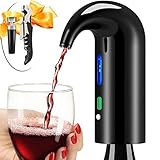 Higfra Electric Wine Aerator Higfra Electric Wine Aerator |
|
Check Latest Price |
 TRIBELLA Three-Spout Classic Aerator TRIBELLA Three-Spout Classic Aerator |
|
Check Latest Price |
 Cork Pops VinOair Aerator Cork Pops VinOair Aerator |
|
Check Latest Price |
Two entries on that list do something the other ten do not. The Rabbit shower funnel and the Vinvoli both have real filtration, which is the reason they handle old, sedimented wine far better than anything else here. The other ten are built for young reds where filtration does not matter much.
1. Haley’s Corker 5-in-1 Wine Aerator – Best Overall, and It Reseals the Bottle
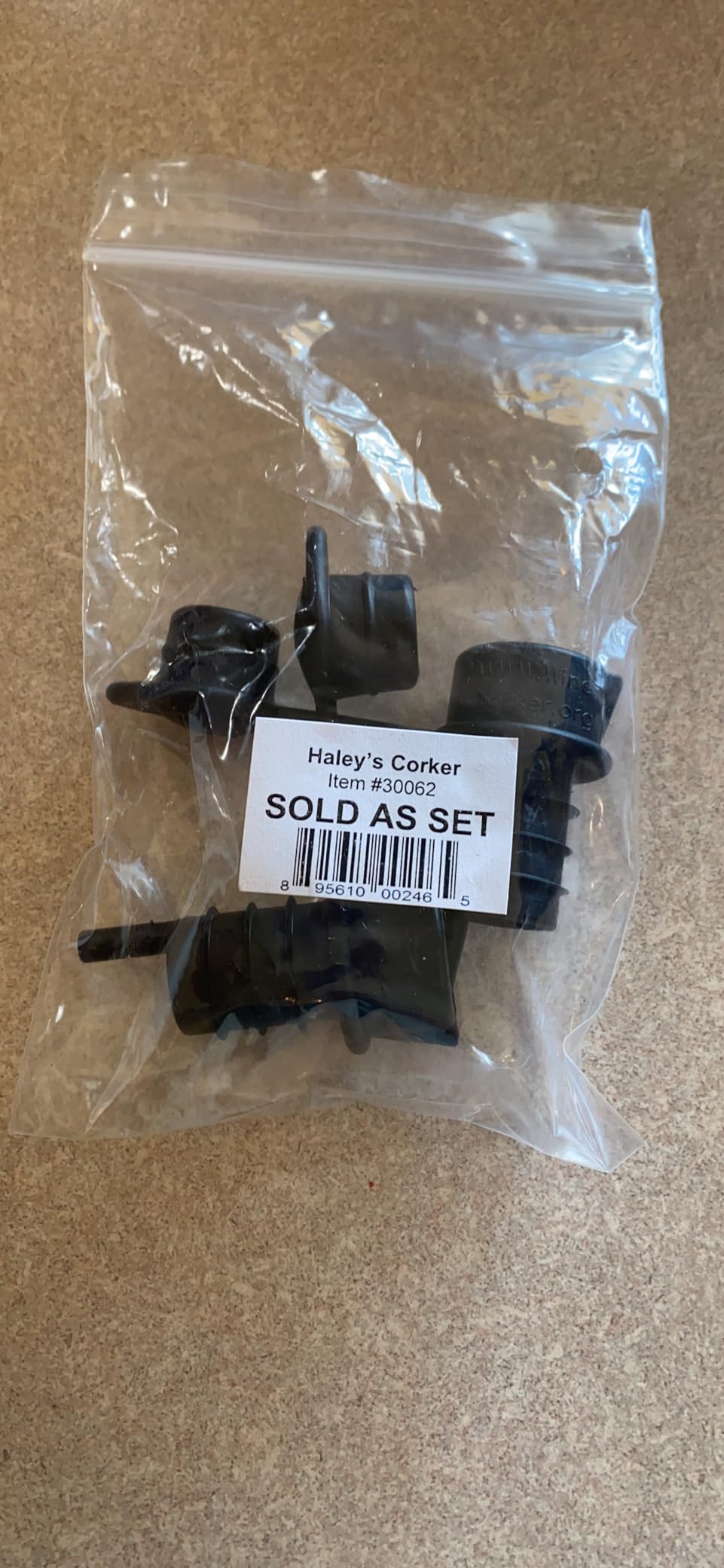
Haley’s Corker 5-in-1 Wine Aerator, Stopper, Pourer, Filter and Re-Corker, 2 Pack
5-in-1 tool
BPA-free plastic made in America
Dishwasher safe
18.14 g
Pros
- Airtight seal holds opened bottles upright or on their side
- Filters cork bits and tartrate crystals
- Holds its shape after months of daily use
- Two pack so you can keep one at each end of the house
Cons
- Small dribble from the spout on some bottle neck shapes
- Does not hold carbonation pressure in bottles more than half full
This is the one that changed how our table works. After six weeks of opening bottles and leaving them on the counter, the Haley’s Corker is the only device in this test whose fitted seal reliably kept a partly full bottle airtight on its side for days. The red wine inside stayed drinkable long after bottles closed with a simple stopper had gone flat.
As an aerator it does the standard job well. The incoming air breaks the stream, the young Malbec opened in the first glass rather than the third, and the filter caught a piece of cork that would otherwise have landed in the bottom of the glass. It is plastic, so it is light, and it is low profile, so it does not balance awkwardly on a neck.
The five functions are not padding. A 2-pack gives you a filter for red, a stopper for the rest of the bottle, and a pourer you can hand to someone else while you are still opening the next one. The manufacturer warranty is listed at 30 days, which is short, but the build is a single moulded plastic body with no rubber ring to perish.
Cleaning is the easiest in the set. It goes in the dishwasher and comes out fully clear, which matters when you are using red wine and everything you own is faintly pink.
Who should buy the Haley’s Corker
Buy this if you open red wine more than once a week and do not finish the bottle. The reseal function is the part that pays for itself over a year, and the fact that it is a 2-pack means there is one for the kitchen and one for wherever you actually drink.
Where it falls short
The aeration effect is moderate rather than dramatic. If you want the biggest possible aroma jump on a young Cabernet and you do not care about storage, the Vinturi or the TRIBELLA will move more air through the wine. And on a few bottle shapes with a pronounced lip, a small amount of wine runs back down the spout after you stop pouring. We saw it twice in six weeks, and it is an annoyance rather than a failure.
2. Vintorio Wine Aerator Pourer – Best Value, and the One With the Biggest Following
Vintorio Wine Aerator Pourer – Premium Aerating Pourer and Decanter Spout (Black)
Model VAPBLK1
1.28 ounces
Bernoulli air intake
Disassembles fully
Pros
- Large aerating chamber gives a clearly noticeable flavour change
- Sealed tapered stopper fits bottles of all sizes
- Takes apart completely so nothing traps sediment
- Looks good enough to leave on the table
Cons
- Inlet holes can drip during a fast pour
- Fiddly for the first few pours until you find your flow rate
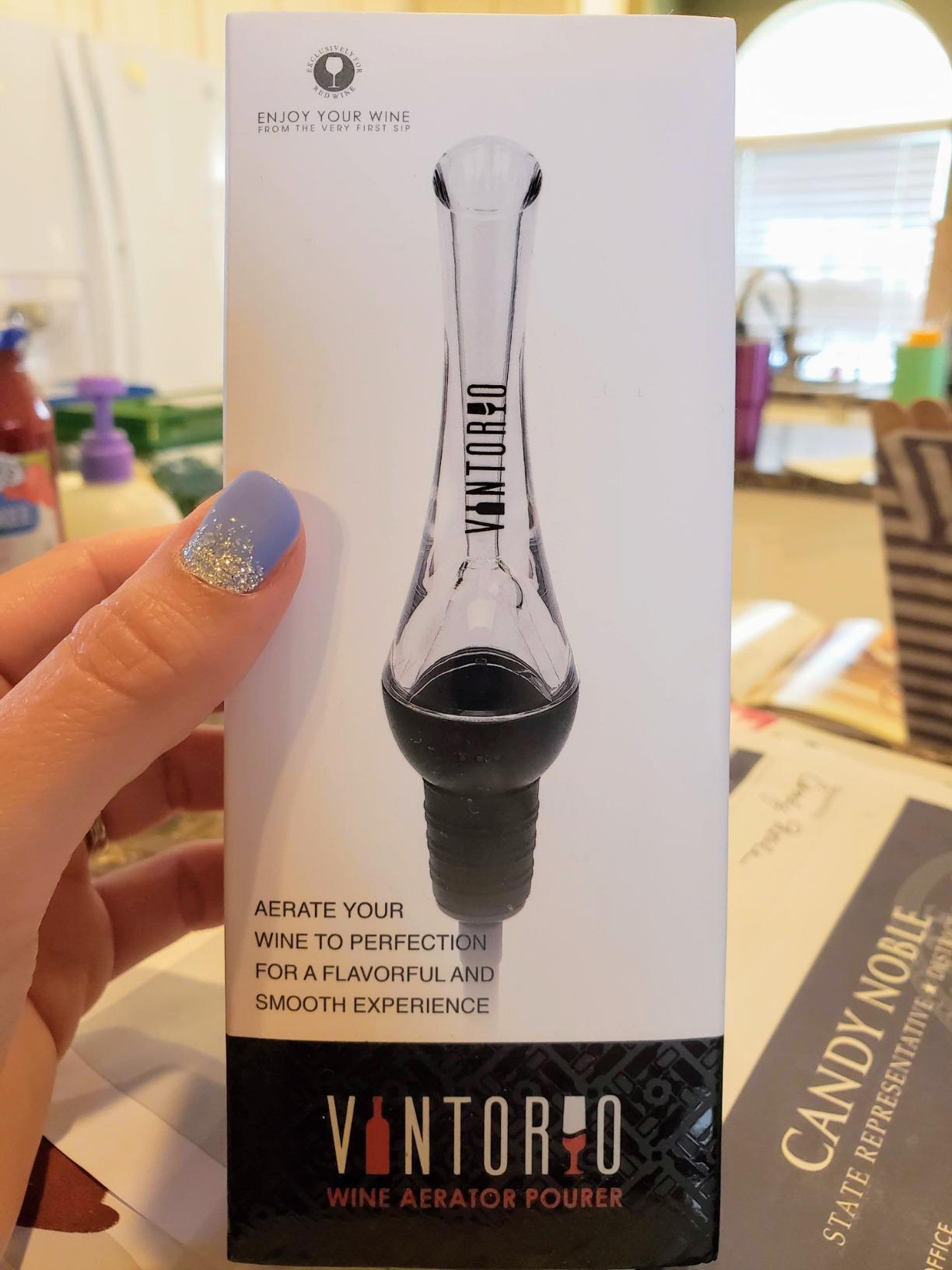
The Vintorio has more customer ratings than any other device we tested, and after six weeks we understand why. The aerating chamber is physically large, so more air is pulled through the stream per second than with the smaller acrylic bodies, and the difference showed on the second bottle of Malbec. The wine moved from a tight, mouth-drying sip to something with fruit in the nose within one glass.
It is also the one people keep. The notched acrylic spout is angled so that the last of the pour runs down the inside of the spout rather than off the end, and the tapered ribbed rubber stopper is the most secure seal of the handheld pourers. We did not have to work at it to get a good seal on any of the bottles we tried.
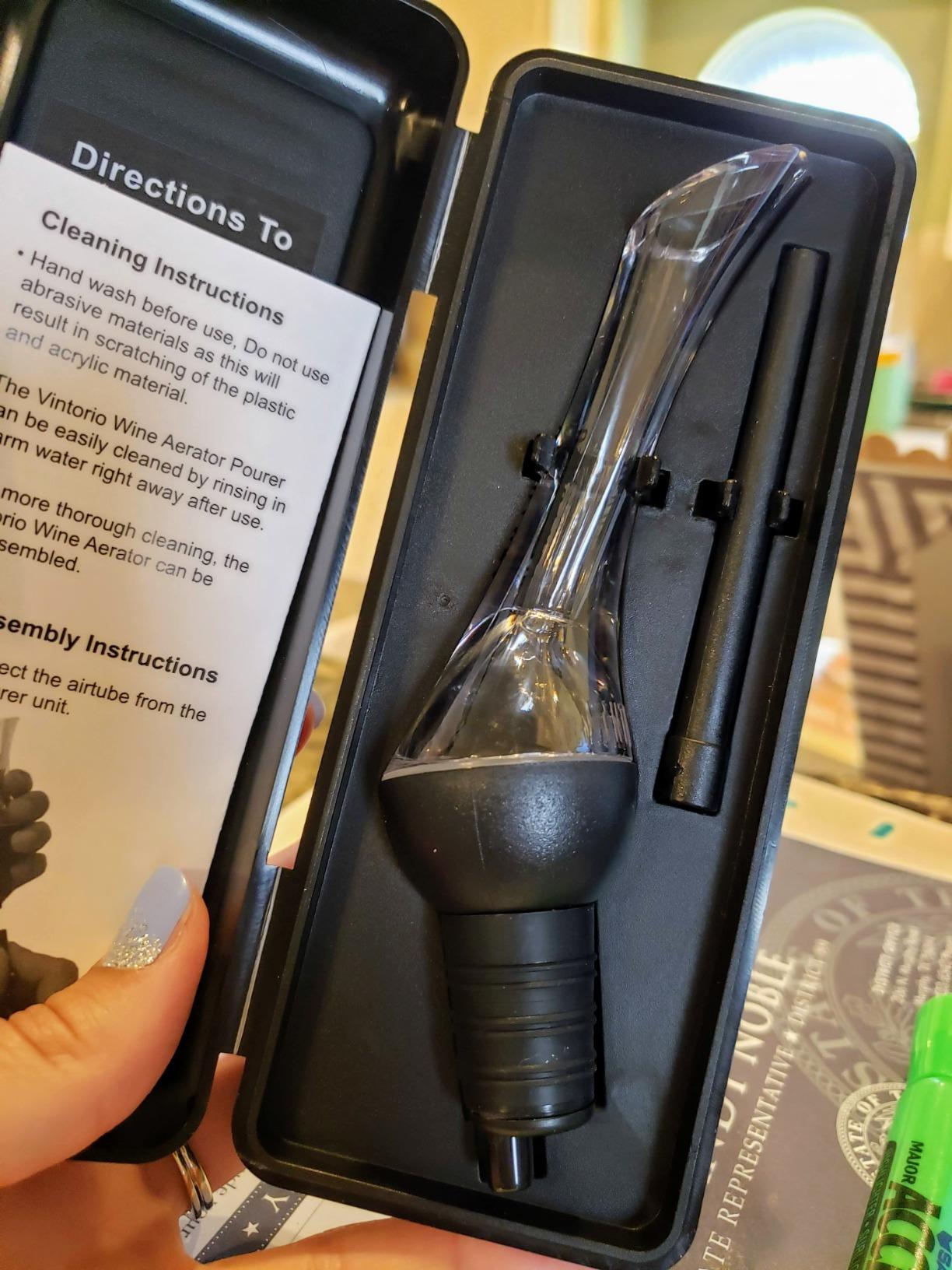
Fully disassembly is the underrated feature. Pull the rubber stopper, unscrew the chamber, and everything that has been collecting tartrate crystals rinses clean under a tap in about ten seconds. For a device that lives near red wine, that is worth more than any styling detail.
The complaints in the reviews match what we hit: a fast pour sends a little wine out of the inlet holes, and the flow rate takes a bottle or two to learn. Both are operator issues, not defects.
Who should buy the Vintorio
This suits someone opening a bottle of young, structured red most weekends. It is a single elegant object that does one job well, and the low review rating relative to the rest of this list reflects handling fiddliness more than a failure to aerate.
Where it falls short
It is a pourer and nothing else. The moment you stop pouring, the bottle is open and oxidising, so you need a separate stopper. If you regularly leave red wine overnight, the Haley’s Corker solves a problem this one creates. Competitor roundups also flag that some wider bottle necks are a tighter fit than the manufacturer claims.
3. Vinturi Wine Aerator V1010 – Top Rated, Built Specifically for Red Wine
Vinturi Wine Aerator Pourer and Decanter for Red Wines Patented Design Perfectly Aerates Wines By The Glass or Bottle With Distinctive Sound, Includes No-Drip Base & Sediment Screen, Black
Model V1010
750 ml capacity
Acrylic with silicone sleeve
2-year warranty
Pros
- Opens the bouquet of young reds in seconds rather than hours
- Includes a sediment screen and a no-drip base
- Distinctive pouring sound that tells you it is working
- Easy-grip silicone sleeve stays comfortable through a long pour
Cons
- Must be hand-held over the glass with no way to rest it
- Moulded channel lines can be mistaken for cracks
- Drips slightly from the inlet holes on a heavy pour
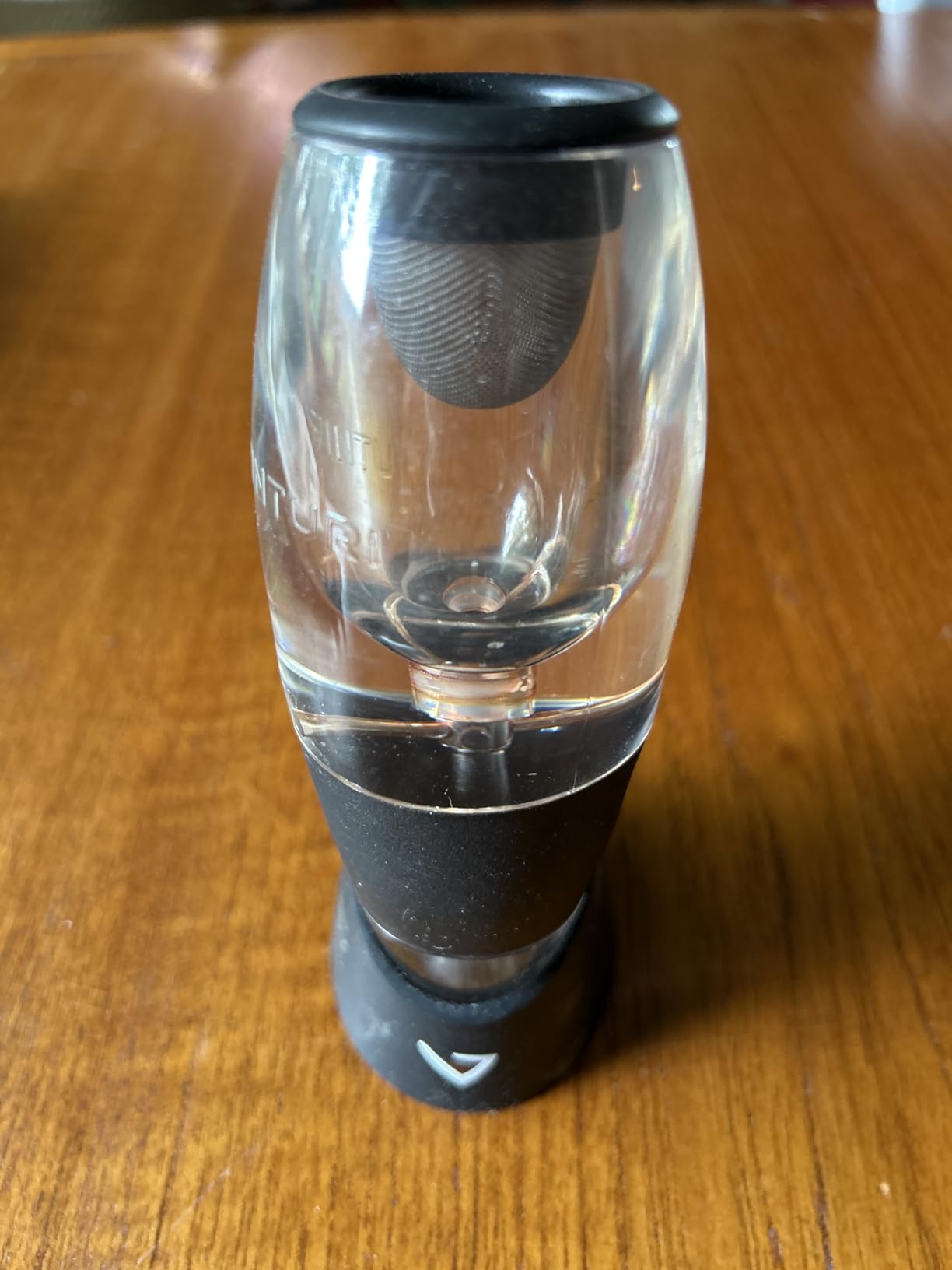
The Vinturi is the most recognised name in this category, and users on head-case.org, rolexforums.com and fortheloveofport.com all name it as their default when they reach for an aerator. Our own testing explains the loyalty. It is a handheld chamber with a silicone sleeve you hold, and the wine accelerates through a restricted internal passage, drops in pressure, and pulls air in through the side vents. That is Bernoulli’s principle doing real work.
On the young Malbec the change was the largest of any handheld device in this test. On the second glass the fruit had opened and the tannin had backed off noticeably. This is the aerator we would reach for first if a bottle of young Cabernet Sauvignon was about to be opened and drunk immediately.
The gurgle is not a gimmick. When air is genuinely being pulled in, the wine breaks and the sound changes. It is a fast confirmation that air is mixing, and a useful thing to have on hand when a guest asks what the noise is.
The included screen and no-drip base are small, thoughtful additions. The base catches the last drops so a hand-held aerator does not have to be held over the table, which is a real concession to the fact that this device is hand-held and cannot be rested on the bottle neck like the AeraWine.
Who should buy the Vinturi
It is built for red, as the packaging says, and it suits serving a structured young red to people who will drink it within the hour. If you pour for a group, the aeration happens in front of them, which has its own value.
Where it falls short
Holding a filled chamber over a glass while pouring takes some practice, and the device cannot be left sitting in the neck. Durability is the reported weak point: customer reviews across competitor roundups repeatedly describe cracks starting at the side vent holes, and the moulded channel lines do look alarming to a first-time owner. Wineberserkers users also report feeling the alcohol pushed further forward, which is the same over-oxygenation effect that makes experienced tasters cautious with old bottles.
4. Rabbit Super Wine Aerator and Pourer – Best for Everyday Reds on a Budget
Rabbit Super Wine Aerator & Pourer (Stainless Steel/Black/Clear)
Model W6127
1.6 ounces
Plastic and stainless steel
5 year warranty
Pros
- Slim silicone base seats into any bottle we tried
- One-piece build with no moving parts to trap debris
- Clearly smooths inexpensive reds
- Stainless and clear finish suits a home bar
Cons
- Intermittent slow drip at the joint between steel and plastic sections
- Pour angle must be kept directly over the glass
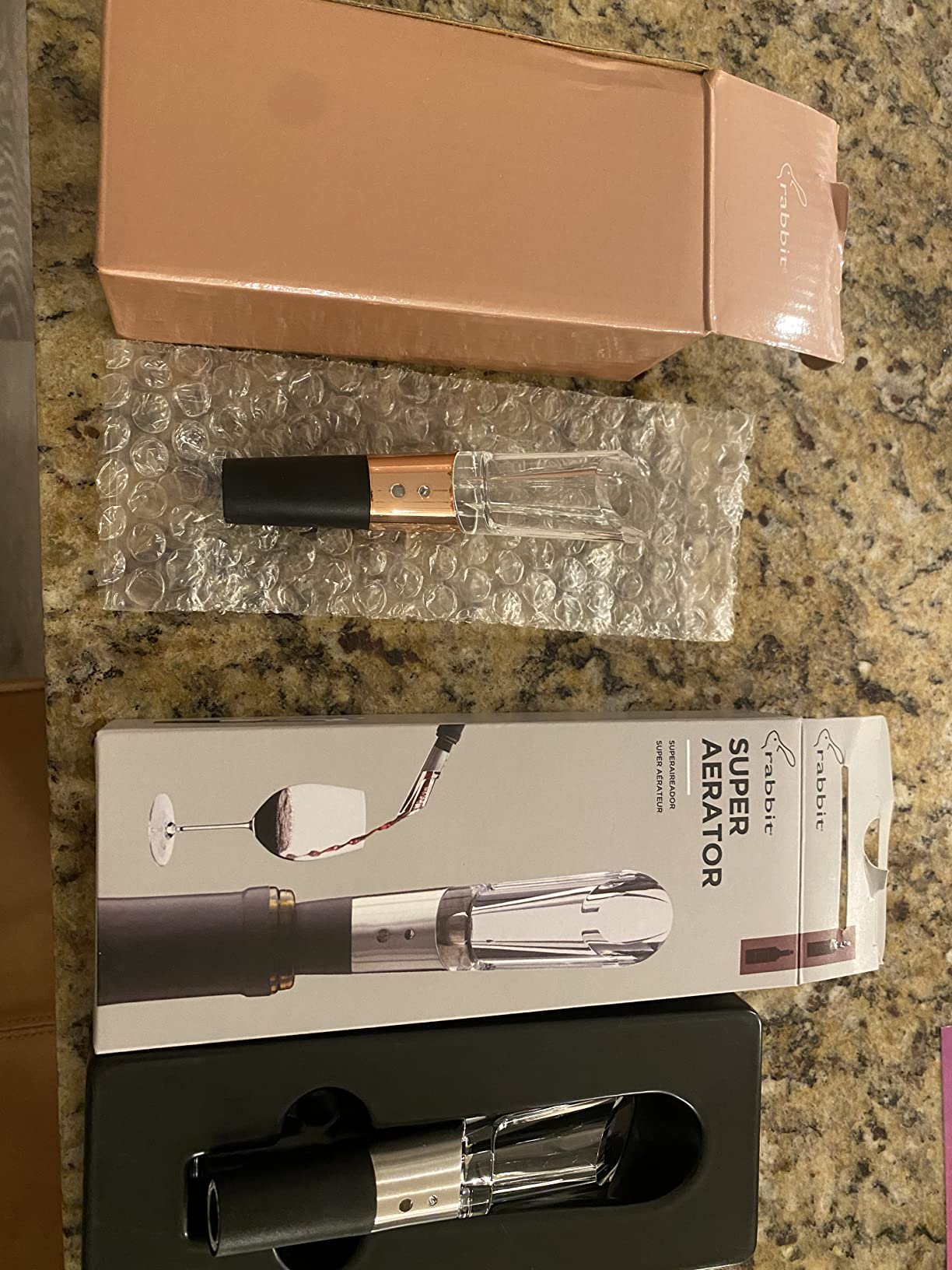
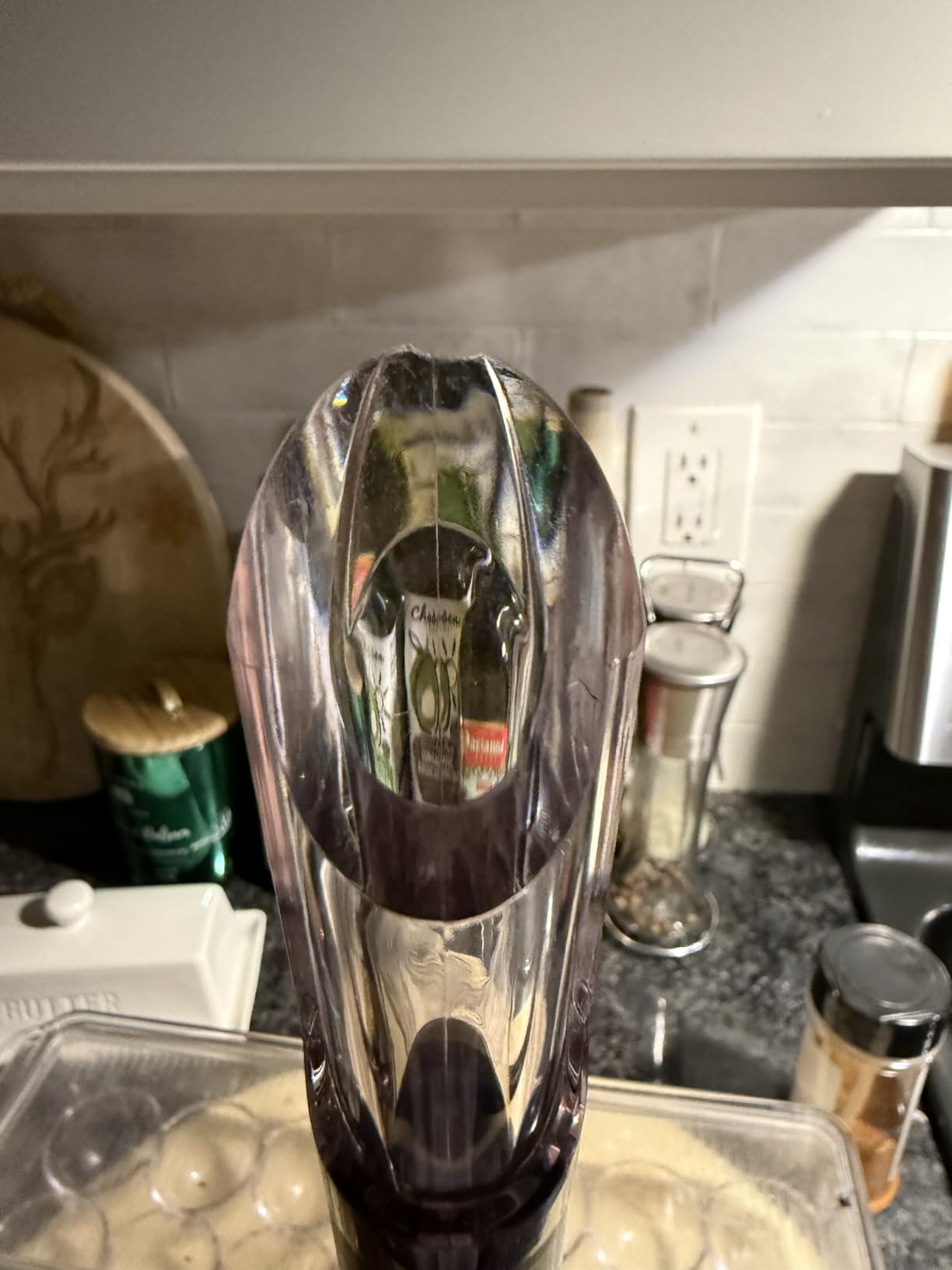
The Rabbit is a compact pourer at just over five inches tall, and the slim silicone base slid into every standard neck we tried without any fitting. That matters more than it sounds, because a poor seal is the main reason an aerator underperforms. No air in, no aeration.
There are no moving parts. That is not a marketing line, it is the entire design, and it means the rinse takes five seconds under a tap. For someone who opens a supermarket bottle of Merlot most Fridays, this is the least fussy way to drink better wine.
Owners commonly report the same effect we did, that an inexpensive bottle starts tasting like a better one. On our two-day-old Merlot the smoothing was visible, though clearly less dramatic than the Vinturi on the same wine, which is expected from a smaller chamber.
The 5 year warranty is one of the longest stated in this set and is a real differentiator if you expect to keep it for a decade.
Who should buy the Rabbit
Buy it if you drink cheap or mid-priced reds regularly and you want a one-handed, no-fuss pourer that fits any bottle. It is also a sensible first aerator, because the shape of the thing teaches you how fast to pour.
Where it falls short
The recurring complaint is a slow drip at the joint where the stainless section meets the plastic, which we also hit once. A customer quote on competitor pages describes a unit that dribbled onto a tablecloth rather than spewing, and that matched our experience exactly. It also needs a hand-held pour directly over the glass, and this one is hand wash only, so it never sees a dishwasher.
5. VINABON Aerator Pourer Spout – Budget Pick for Cheap Reds
VINABON Wine Aerator Pourer Spout – Updated 2026 Professional Wine Aerator for Superior Flavor, Enhanced Bouquet & Rich, Smooth Finish. No-Leak, No-Drip, Spill-Free Design. Includes Wine Guide eBook
Model SWA1
Crystal acrylic with food-grade silicone
1.97 inch square
Lifetime warranty
Pros
- Cheapest way to test whether aeration suits you
- Anti-drip stopper keeps the counter mostly dry
- Attaches to corked bottles in a couple of seconds
- Manufacturer replacement service is repeatedly praised
Cons
- Clear acrylic is less durable than metal and can crack
- Drop falls if you lift the unit away quickly at the end of a pour
- Finish defects reported on some arrivals
This is the cheapest sensible aerator in the set, and it does the basic job without pretending to be more than that. It is a 2-in-1 pourer and spout that fits over a corked bottle neck, uses the same Bernoulli intake principle as the expensive devices, and produces a visible gurgle as bubbles form in the stream.
On the inexpensive Merlot it produced a real change, and buyers consistently report that budget reds benefit more than expensive ones. That matches what winemakingtalk.com users say about kit and supermarket reds, which are the wines with the most tannin to strip and the least complexity to flatten.
It also comes with a wine guide eBook, which is a small thing but tells you what is in the box, and the lifetime warranty is backed by a customer service that reviewers say actually replaces units.
Cleaning is a quick rinse. Acrylic does not hold odours the way some plastics can, and because the body is clear you can see at a glance when tartrate crystals have built up around the air channel.
Who should buy the VINABON
It suits a first-time buyer, a gift for someone who drinks a lot of supermarket red, or anyone who wants to try aeration without committing to a proper setup. The included guide also makes it an easy gift.
Where it falls short
Acrylic is the weak material here, and it is the same material the Vinturi uses, where cracking at the vent holes is the most repeated durability complaint across this category. Owners report cracked bodies and broken tips on the VINABON specifically. If you drop it on a tiled floor, expect to replace it. The other honest limitation is the pour finish: lift it away quickly at the end and a drop lands on the counter.
6. Vinvoli 3-Stage Wine Aerator – Best Gift-Ready Aerator with a Real Filter
VINVOLI Wine Aerator – Red Wine Pourer with Sediment Filter & Stand
Model WA2023
Acrylic and glass
12.32 ounces
6 inch wide
Pros
- Three-stage aeration softens tannin quickly
- Removable stainless filter catches cork and sediment
- Matching stand catches drips and protects the table
- Gift packaging with a wine guide included
Cons
- Must be hand-held over the glass with no rim-resting version
- Needs a steady hand to keep the pour balanced
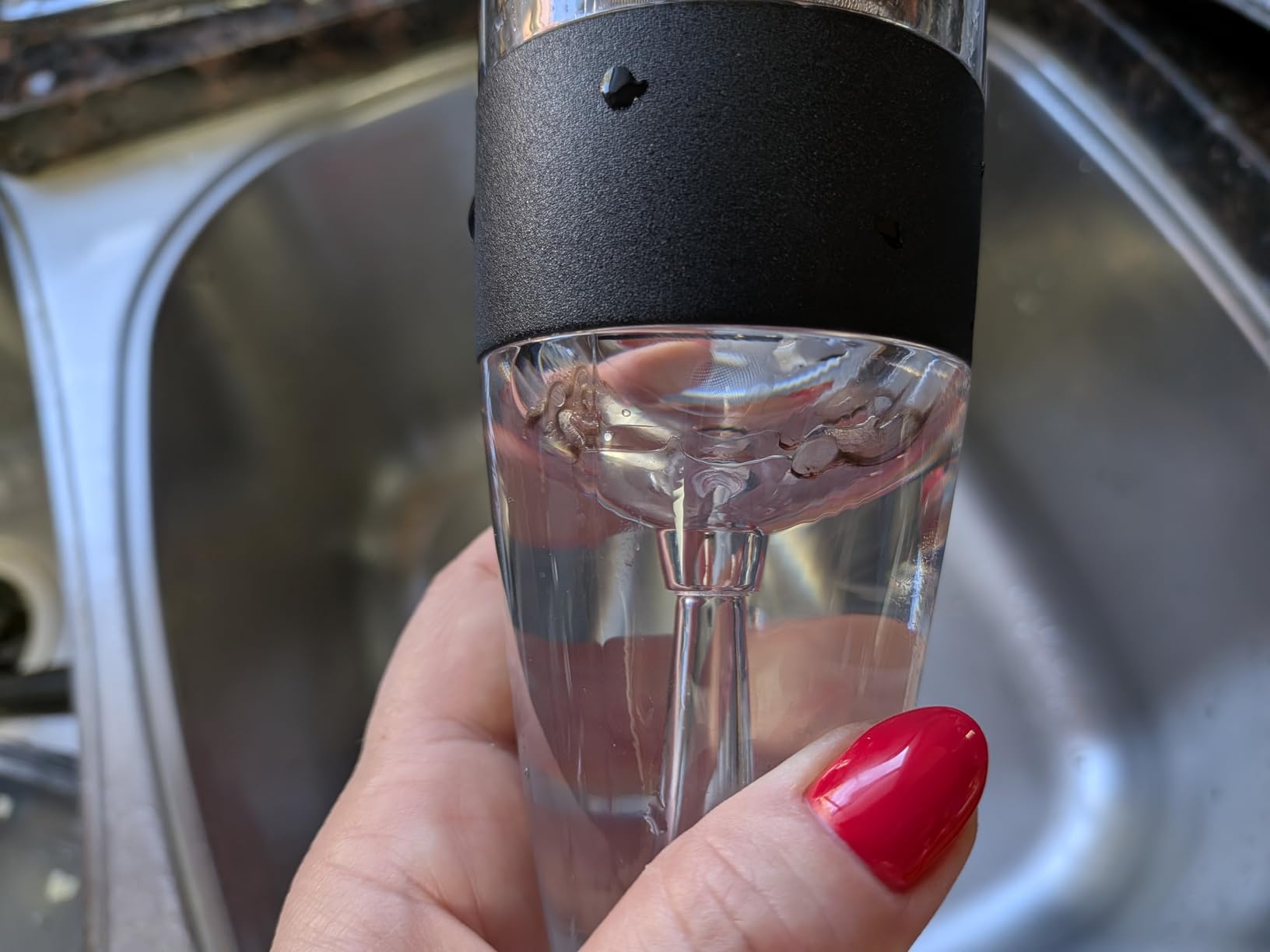
The Vinvoli is the most complete package in the set for someone giving a bottle of red as a present. It arrives in gift packaging, includes a stand that catches drips, and has a guide book in the box. None of that is essential, but it is the reason it does not end up in a drawer.
What makes it more than packaging is the three-stage path. The wine passes a sediment filter, then down a dedicated air channel, then out in a cascade. On the young Malbec the softening came on a little slower than the Vinturi but the aroma kept building through the second glass, which is the behaviour you want from a red with fruit behind the tannin.
The removable stainless steel filter is the feature to know about. It unscrews, rinses clean, and traps both cork fragments and the fine sediment that comes off an old bottle. Some owners note the aeration reads as subtle on an already good or expensive red, which is arguably the correct result.
Lifetime warranty with 24-hour support is stated, which is more generous than most of the handheld acrylic devices manage.
Who should buy the Vinvoli
It suits a gift, a house with a formal dining table where drips matter, or anyone who wants a visible filter they can pull out and rinse. It is also one of the few here that pours happily into a decanter as well as a glass, so you can double the aeration time if you want.
Where it falls short
At over 12 ounces it is the heaviest handheld device in this test, and the 6 inch width makes it noticeable in the hand. It has to be held over the receiving vessel; there is no version that rests on a glass rim. And with a full bottle of red flowing through a fine channel, a steady hand is required. If you pour a lot for a lot of people, that is tiring.
7. AeraWine Tilt Aeration Pourer – Best Bottle-Top Pourer
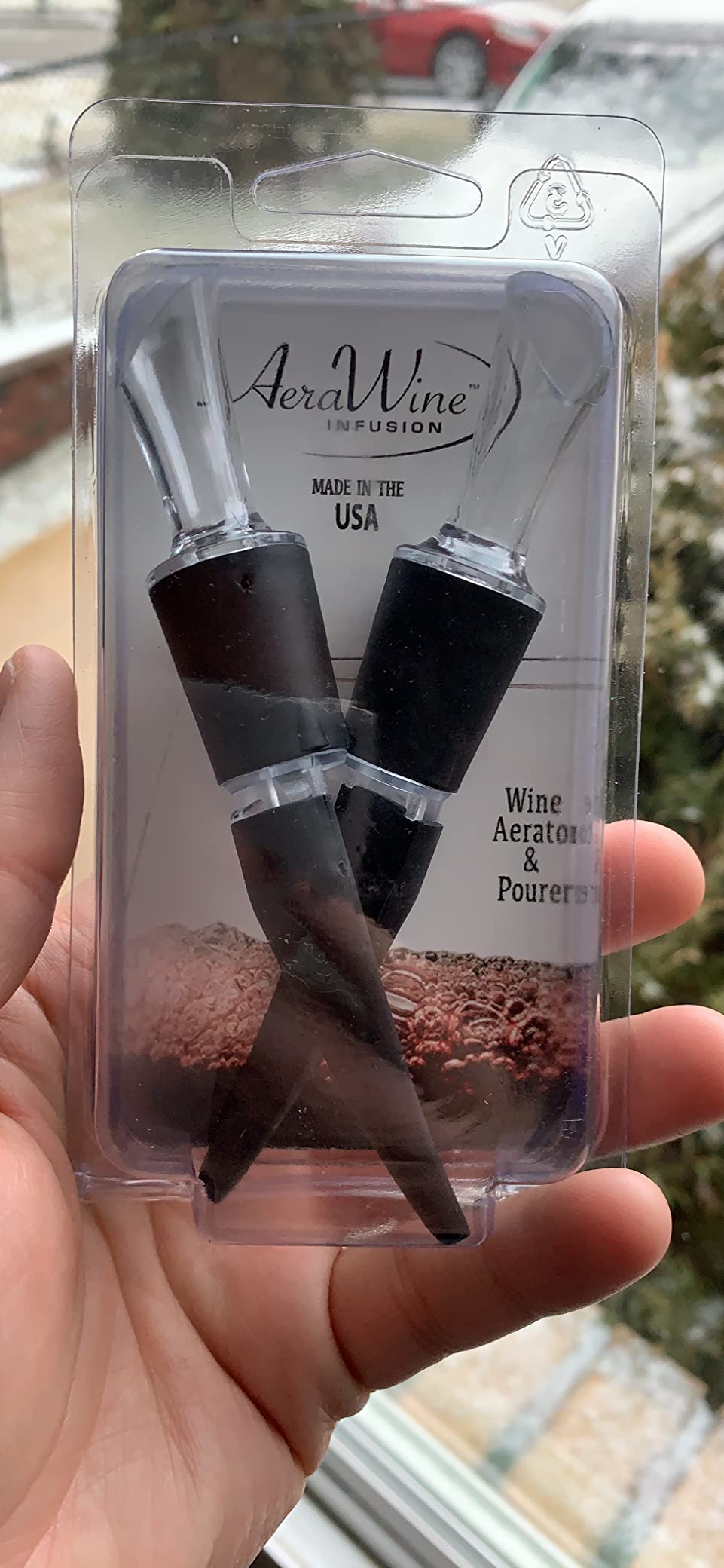
AeraWine 2-Pack -100% MADE IN THE USA – Drip-Free WINE POURER with Patented TILT AERATION CONTROL
Model 30550X2
2 pack
1.44 ounces each
Made in the USA
Pros
- Pour straight from the bottle with no handheld tool
- Tilt-controlled aeration gives a measured dose of air
- Drip-free spout protects the tablecloth
- Two pack so one can stay at each end
Cons
- Aeration effect depends on holding the bottle at the right angle
- Smaller review base than the category leaders
The AeraWine inverts the usual design. Instead of holding a device over the glass, it sits on the bottle neck and you pour from the bottle as normal. That sounds minor until you are serving four people at once, and suddenly there is no second hand involved and no risk of over-pouring from a filled chamber.
The patented tilt mechanism is the interesting part. Aeration happens through the pour itself, so the amount of air depends on the angle of the bottle, which gives an unusual degree of control. On the young Malbec, a slow tilted pour opened the wine well, and we found the same control useful on the day-old Merlot where over-aeration would have been obvious.
It is made in the USA and the spout is genuinely drip-free as long as the bottle is tilted rather than tipped. That is a distinction worth making, because most of the complaints in this category come from pouring too fast rather than from a faulty device.
It is sold as a 2-pack, which is a sensible pairing if you keep wine in two places, or want one as a backup.
Who should buy the AeraWine
It suits a host who pours for a table, anyone who finds a hand-held aerator awkward, and anyone who wants an aerator that lives on the bottle between pours instead of in a drawer. It is also a discreet choice for red wine, since there is no gurgling chamber to draw attention.
Where it falls short
You have to learn the angle. Pour too flat and the air intake is limited, pour too steeply and the drip-free claim stops holding. The review base here is around 1,700 ratings, smaller than the leaders, so long-term durability feedback is thinner. It also gives up the filtration that the Vinturi and Vinvoli offer.
8. Rabbit Stainless Steel Shower Funnel – Best for Old Wine and Heavy Sediment
Rabbit Wine Aerator Shower Funnel with Sediment Strainer, Stainless Steel
Model W6118
18/8 stainless steel
8 ounce capacity
Dishwasher safe
Pros
- Stainless steel resists staining and off-flavours permanently
- Very fine mesh traps cork fragments and heavy sediment
- Pours into a decanter for aeration and filtration together
- Owners report years of continuous use
Cons
- Mesh clogs quickly on heavily sedimented old wine
- Needs a decanter or large vessel rather than a small glass
- Refitting it to a bottle needs care as wine rises in the neck
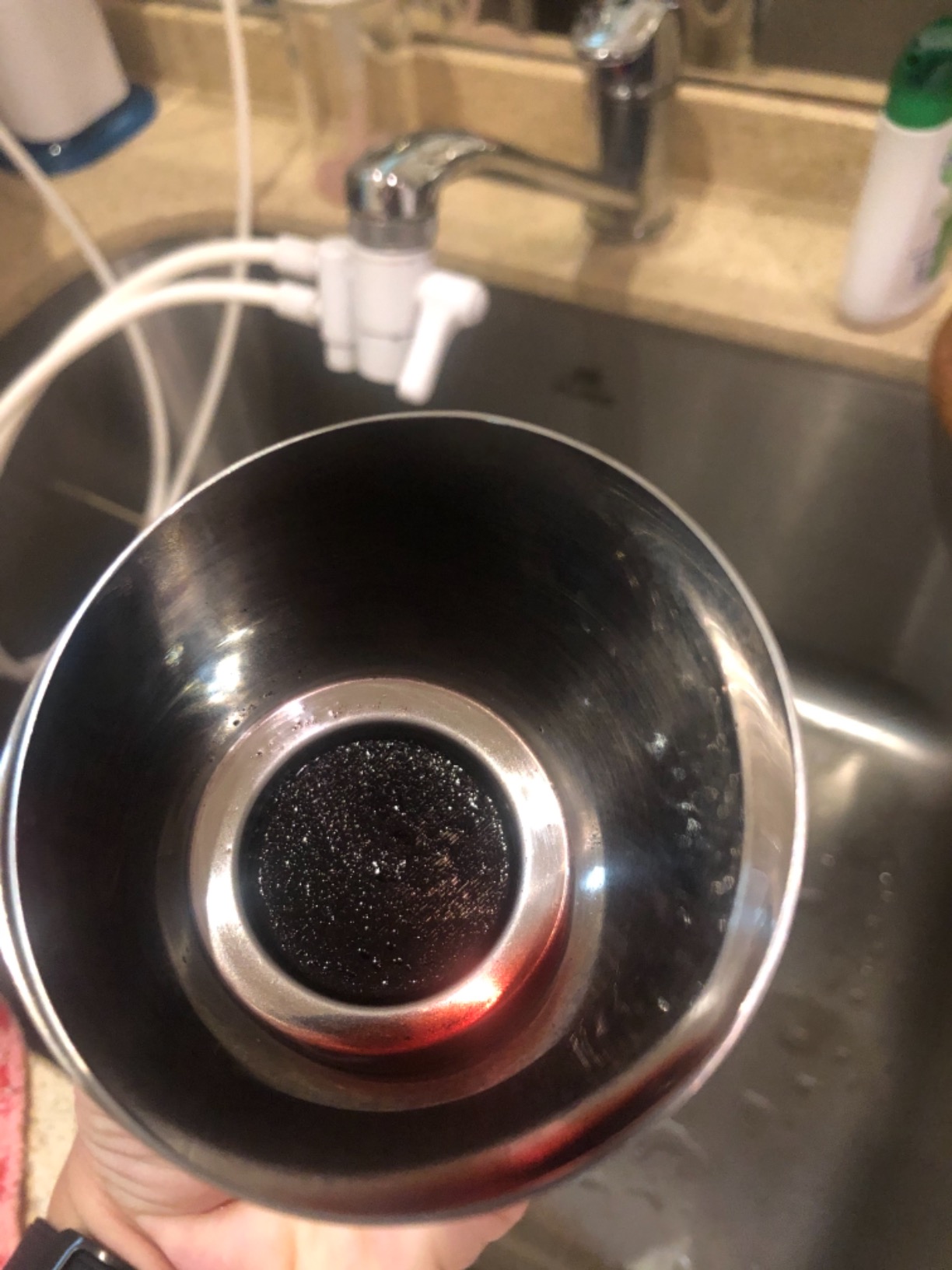
This is the one to buy when the bottle is old rather than young, and it works on a completely different principle from the rest. It is a stainless steel shower funnel with a nested fine-mesh strainer, and instead of pulling air through a narrow vent it breaks the wine into a shower, exposing far more surface area to oxygen in a single pour.
It earned the highest average rating in our set, alongside the Haley’s Corker. On the mature Shiraz with visible sediment the mesh caught what a handheld pourer would have sent into the glass, and because stainless does not absorb or take on flavours, we would not worry about using it for the same bottle night after night.
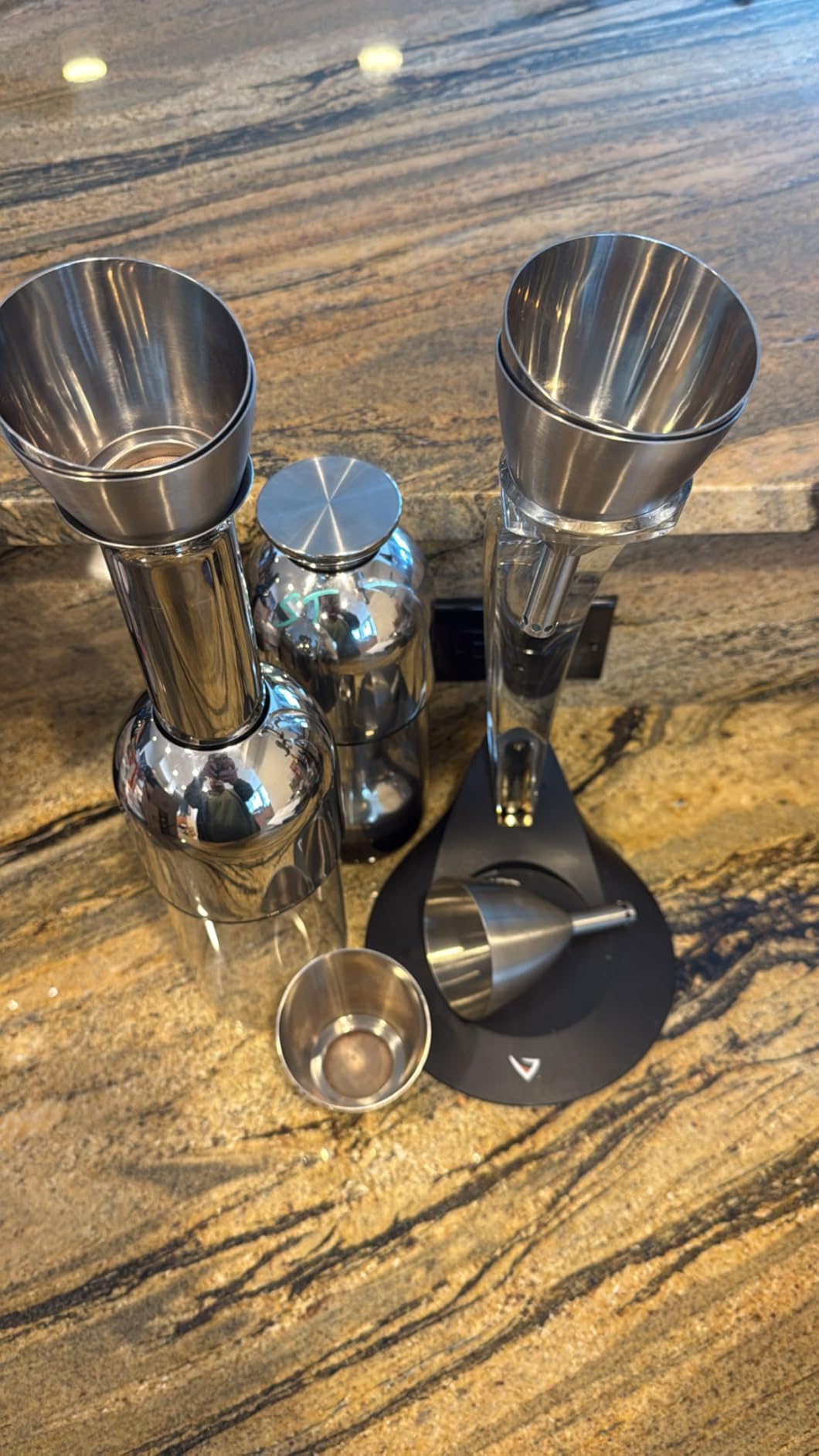
The two-piece construction is also the durability answer to this category’s most common complaint. There is no acrylic body to crack at a vent hole and no printed channel lines to look like damage. Reports of owners using the same funnel for years are common in the reviews.
Dishwasher safe, and the strainer lifts out with a fingernail.
Who should buy the Rabbit shower funnel
It suits anyone drinking mature reds, ports, or anything with sediment, and it doubles as your decanting funnel if you already own a decanter. Pour into the decanter, leave it, and you have the best of both methods in one motion.
Where it falls short
It cannot pour into a normal wine glass, because the shower needs room, so you need a decanter or a large carafe in the loop. The mesh is also the trade-off of the whole design: on a heavily sedimented bottle it clogs quickly, and the rest of the pour slows to a trickle. The process also involves more handling than a simple pourer, and fitting it back to a bottle can result in wine rising up the neck if you are not careful.
9. Chris’s Stuff Stainless Steel Eagle Pourer – Best Stainless Steel Pourer
Stainless Steel Eagle Wine Aerator Pourer – Deluxe Decanter Spout for Robust Red and White Wine – Pour Amore Bottle Pourer/Stopper & Air Diffuser by Chris’s Stuff
Food-grade stainless steel
1.25 inch wide by 2.5 inch tall
Dual use pourer and diffuser
Pros
- Real stainless steel that resists rust and wear indefinitely
- Flange seats snugly in the neck to prevent leaks
- Doubles as a pourer and an air diffuser
- Sculptural design works as a conversation piece
Cons
- Narrow inlet opening means slow steady pours only
- Limited written customer feedback for this specific listing
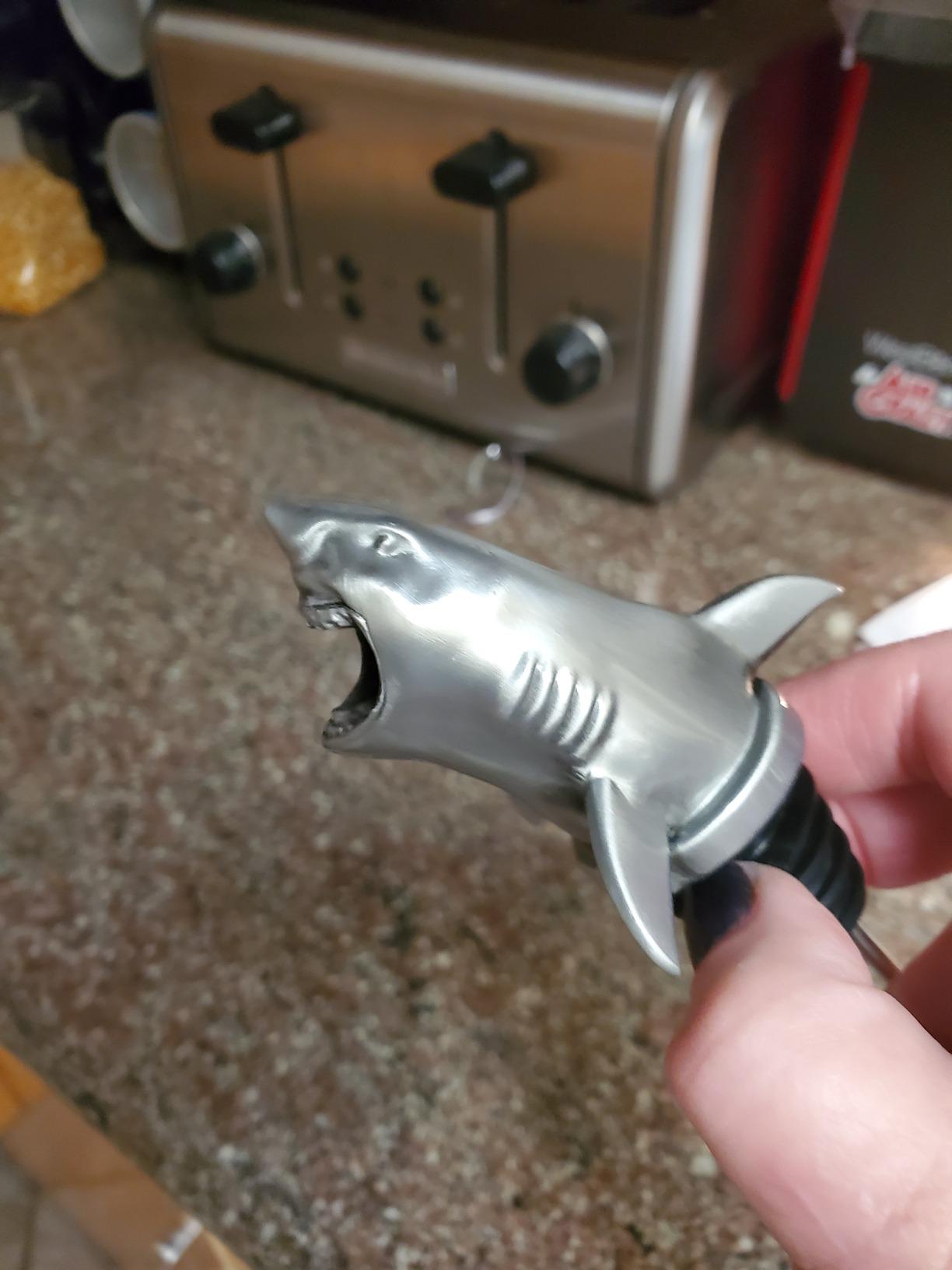
The Eagle is the item in this test most likely to end up on a shelf rather than in a drawer, and that is not an insult. The sculptural form is genuinely a conversation piece, and if you give red wine as a gift, this is the object people pick up first.
As a functional pourer it is a flange that sits snug in the neck, an air diffuser that pulls in oxygen as the wine passes, and a stopper that seals the bottle afterwards. The stainless alloy is rust and wear resistant, and there is nothing in it that can crack. On the young Malbec the aeration was real, if less forceful than the Vinturi, which is expected from a narrow inlet.
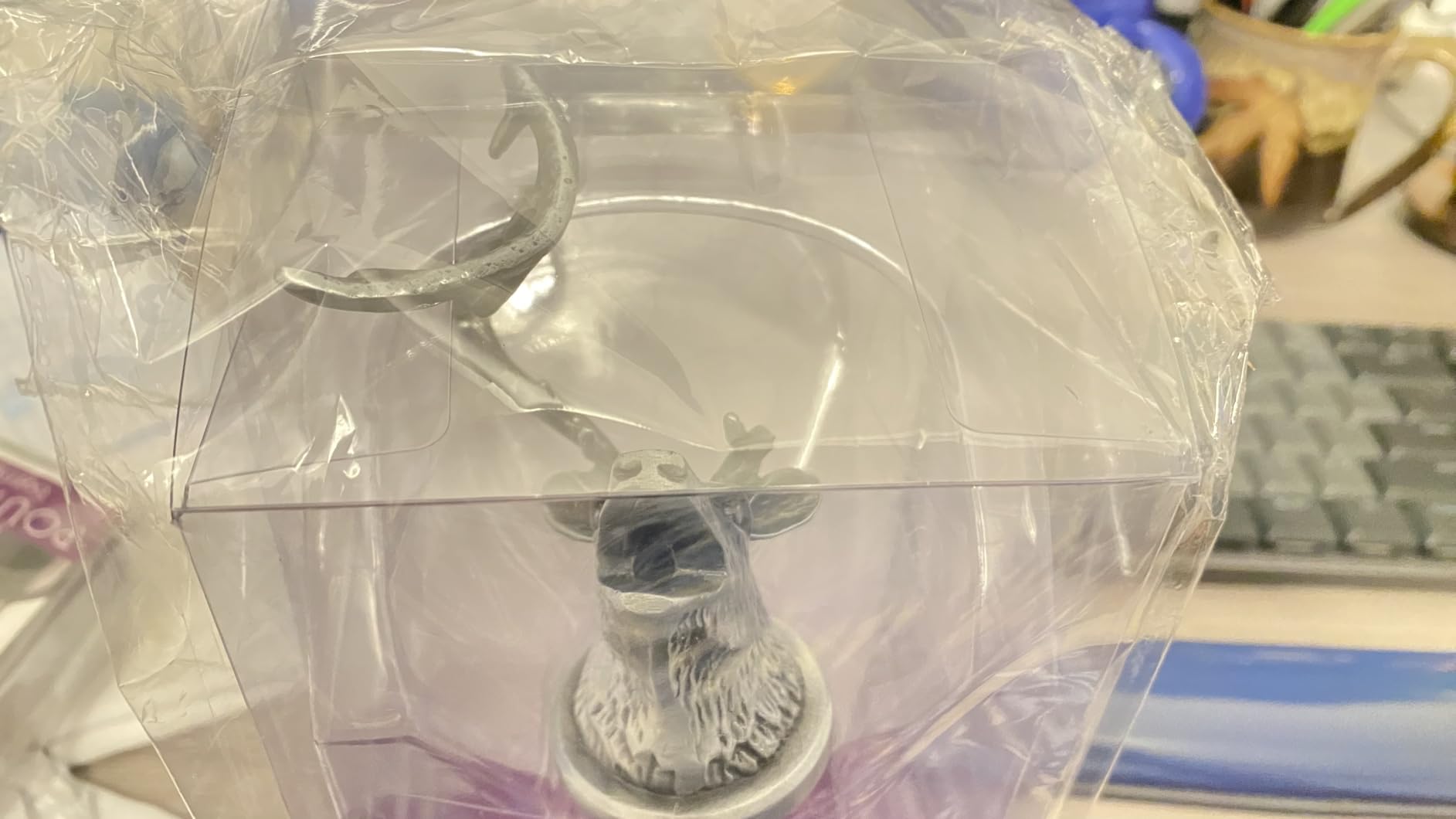
The secure flange is the part that works. It sat in the neck without any wobble and did not leak at all in our testing, which puts it ahead of several acrylic devices in this list on sealing alone.
Be aware that written customer feedback for this specific listing is thinner than the ratings count suggests, so we are weighting our own observations and the build quality more heavily here.
Who should buy the Eagle
It suits gifting, a home bar where the objects should look like something, and anyone who prefers metal to plastic for reasons of taste or longevity. It also works as a bottle stopper once the glass is poured.
Where it falls short
The narrow inlet forces a slow, controlled pour, and anyone pouring quickly will overflow the spout. That is a genuine constraint at a dinner table with more than two guests. It also offers no filtration, so it is the wrong tool for a sedimented old bottle even though the material would handle one fine.
10. Higfra Electric Wine Aerator – Best Electric Aerator for Large Quantities
Wine Aerator Electric Wine Decanter Best Sellers One Touch Red -White Wine Accessories Aeration Work with Wine Opener for Beginner Enthusiast – Spout Pourer – Great Fathers Day Gift
Model SW-EA01
USB rechargeable
13.6 ounces
One-touch dispensing
Pros
- One-touch dispensing makes serving a large bottle straightforward
- Reports good aroma and flavour improvement on reds
- Decent battery life and a quiet motor
- Airtight seal helps preserve opened wine
Cons
- Spout leaks a drop or two after use
- Some boxes arrive missing the flexible tube or velvet bag
- Bulkier than a passive pourer and needs charging
Only one product in this guide needs charging, and if you like the idea of never holding anything, this is it. The Higfra pumps aerated wine directly into a glass at the touch of a button, which means a 750 ml bottle of red can be served to a group without anyone pouring from height or chasing drips around the rim.
Aeration performance was respectable rather than exceptional. The wine arrives foamed and aerated, and owners report a genuine improvement in aroma. Whether it matches the Vinturi by volume is arguable, and we would not expect it to, since the motor-driven route and the Bernoulli route are different mechanisms doing the same job.
The self-cleaning function is the detail that makes it viable as a regular tool. Drop the tube in clean water and press the button, and it flushes itself. Everything else you can rinse by hand with the tube detached.
The box also carries a corkscrew knife, two flexible tubes, a vacuum stopper and a velvet bag, which is a lot of extras. Some buyers received incomplete boxes, so check the contents before you need them.
Who should buy the Higfra
It suits larger bottles and bigger gatherings, a restaurant or bar serving casual pours, and anyone who would rather press a button than manage a pour angle. The vacuum-sealed stopper is a useful addition for the rest of the bottle.
Where it falls short
It is heavier than anything else here, it adds charging to the routine, and a motor is another thing that can fail where a piece of plastic cannot. The spout also tends to leak a drop or two after you stop dispensing, which defeats part of the reason for owning a hands-free dispenser.
11. TRIBELLA Three-Spout Classic Aerator – Best Multi-Stream Pour
Classic Wine Aerator, Multi-Stream Wine Aeration 3 Stainless Steel Spouts
Three stainless spouts
Polycarbonate base
0.48 ounces
4 inch long
Pros
- Three parallel streams visibly increase aeration in side-by-side tastings
- Stainless spouts add no metallic taste
- One-piece build with no dripping when the pour stops
- Moulded protective hard case included
Cons
- Cannot be disassembled so dried wine is harder to remove
- Highest-priced handheld pourer in this set
- One owner reports leaking from the air hole when the bottle is set down
The TRIBELLA splits the pour into three parallel streams rather than one aerated jet, and in side-by-side tasting the extra air coming through was the most we saw from a handheld device. Buyers who switched over from a Vintorio report better aeration and better build quality, and on our young Malbec the fruit opened faster than any pourer here except the Vinturi.
The stainless spouts are the point for anyone sensitive to plastic taste, and the polycarbonate base with its rubber gasket produced the cleanest stop of any handheld device in our testing. When the pour ended, nothing dripped.
It also comes with a moulded hard case, which makes it a natural gift and keeps it intact in a drawer. This is a design that looks considered rather than generic.
There is a real trade-off in the one-piece body. Nothing detaches, which is why it cannot drip, and which also means dried red wine inside the base has to be soaked rather than rinsed out. Over years of use that is a maintenance difference worth thinking about.
Who should buy the TRIBELLA
It suits a drinker who wants the strongest aeration from a passive handheld device, anyone who dislikes plastic near their lips, and anyone buying a gift where presentation matters. If you care about a clean stop on the tablecloth, the fixed body is the best answer in this list.
Where it falls short
It costs more than the other handheld pourers here while doing less for cleaning, which is a fair criticism. The one-piece body is the reason for the no-drip stop and also the reason it is harder to wash, and one owner reports leaking from the air hole once the bottle has been set down.
12. Cork Pops VinOair Wine Aerator – Best for Travel and Restaurants
Cork Pops Clear Giovanni VinOair Wine Aerator and Non Drip Spout, 5.75
Model 11001
5.75 inch long
1.06 ounces
Dual oxygen chamber
Pros
- In-bottle design with no handheld aerator to drip
- Blind tastings found it performs near pricier venturi devices
- Pocket sized with no stand required
- Streamlined look suits an unadorned bottle
Cons
- Delivers less aeration than a full Vinturi-style handheld device
- Fits wider necks rather than every standard neck
- Can occasionally stick when pulled from the neck
The VinOair is the one we ended up putting in a bag. It drops into the bottle neck, aerates the wine in place as you pour, and seals with a food-grade rubber ring when you are finished. There is no separate device to hold over the glass, so there is no way to drip, and no stand to leave behind.
There is a dual oxygen chamber inside, and blind tastings reported by owners put it close to pricier venturi devices. In our own testing it delivered a moderate softening on the young Malbec, clearly less than the Vinturi but more than pouring straight from the bottle. The named appearance of VinOair in wineberserkers threads as a favourite for young wines matches what we saw.
It is the oldest design here and the only one that has needed no redesign in well over a decade, which is a form of durability no material rating can promise. A rubber ring is easy to clean and easy to replace.
Hand wash only, and the rubber ring is the one part to watch over the years as it stiffens.
Who should buy the VinOair
It suits travel, restaurants where the bottle stays on the table, and anyone who wants an aerator that leaves no equipment on the counter. It is also a good option for a first bottle of red, because nothing can be spilled while you are learning.
Where it falls short
It does the least aeration of the handheld devices here, so if the wine is very tannic you will be waiting longer. It suits narrower necks rather than every standard neck, which is the opposite of the Rabbit’s universal fit. And it can stick in the neck on removal if you twist it rather than pull straight up, which is the one piece of technique it requires.
Red Wine Aerator Buying Guide: What Actually Matters
The four types of wine aerator
Handheld pourers, such as the Vinturi, the Vintorio and the TRIBELLA, are held over the glass as you pour. They aerate fastest and give the most dramatic change, at the cost of one hand and a little dripping risk if you pour fast.
Bottle-top pourers, like the AeraWine and the VinOair, sit on the neck and let you pour from the bottle. They are quieter, harder to spill and better for serving a group, and the aeration is more modest.
Funnel-style devices, like the Rabbit shower funnel, break the wine into a shower into a larger vessel. They are the choice for old, sedimented wine because they filter as they aerate, and they need a decanter in the loop.
Electric dispensers, like the Higfra, pump aerated wine to the glass at the press of a button. They suit large bottles and avoid handling, at the cost of charging, bulk and a motor to maintain.
Aerator vs decanter vs swirling in the glass
Decanting is the original method and the only one that separates sediment from the wine. Twenty minutes is the widely used rule for young reds, and anywhere from 30 minutes to several hours for older bottles that need it.
An aerator compresses the first part of that process into the pour itself. It does not replace a long decant for a complex wine, and a side-by-side test posted on r/wine found that an aerated bottle eventually overtook a decanted one but only after a long period. If you have an hour, decant. If you have ninety seconds, aerate.
Swirling is the zero-cost option. On bogleheads.org the common advice is to pour, swirl and wait a few minutes, which genuinely does move air across the surface of the glass. It is enough for a light red and not enough for a young Syrah.
Which reds to aerate, and which must never be aerated
Aerate young, tannic reds: Cabernet Sauvignon, Bordeaux and other Cabernet-led blends, Syrah and Shiraz, Malbec, Nebbiolo and Barolo, Tempranillo, Sangiovese and Petite Sirah. These benefit from air immediately after opening.
Leave these alone: any wine with 15 years or more of age, particularly if it is already showing sediment, and any delicate aromatic red such as Pinot Noir, Nebbiolo at the older end, or a mature Grenache. Also leave sweet or fortified reds alone, including port, tawny port and any dessert wine. Forced aeration flattens the fruit and strips the aromatic complexity that is the only reason an old bottle is worth opening.
This is the case against buying an aerator, and it is a real one. Forum consensus is that aeration shortens the wait rather than replacing it, and the sceptics are right about old bottles.
What the price tiers actually buy
The entry tier is a plastic chamber, a stopper seal and the Bernoulli principle. That genuinely does aerate, and the difference between a cheap plastic unit and a mid-priced one is smaller than most sellers imply. A 1winedude.com user put it plainly: the expensive one works great, but not exceptionally better than much cheaper aerators.
The middle tier is where you start paying for materials that last. Stainless steel bodies, removable stainless filters, washable bases and long warranties appear here, and that is where the durability difference is real rather than cosmetic.
Above that, the extra spend buys electric dispensing, presentation packaging and elaborate flow control. It does not buy more aeration per second in any consistent way, and our testing did not find a single device that opened a young red more than the Vinturi did.
Cleaning, storage and pour technique
Rinse every aerator immediately. Red wine dries into the air channels, and once it does the aeration drops until a soak loosens it. The devices that fully disassemble, such as the Vintorio, stay effective for years; one-piece bodies need a nightly soak.
Pour slower than feels natural. Almost every complaint in this category is a drip caused by pouring too fast, not a defective seal. Keep the device directly over the glass, and pause a moment before you lift it away so the last of the pour runs down the spout.
For storage, keep red bottles somewhere dark and cool rather than on a sideboard, and seal whatever is left. If you enjoy the hobby around it rather than just the glass, our guide to wine coolers for small kitchens covers the storage side, and our guide to removing red wine stains is worth bookmarking given how many of these devices are hand-held over carpets. Readers who also maintain a garden will know why we wrote about lawn aerators too, which is a completely different tool for a completely different job.
Frequently Asked Questions
Does a wine aerator actually work?
Should you use an aerator for red wine?
What is the 20 minute rule for red wine?
What wines should not be aerated?
How do I use a wine aerator without it dripping?
How do I clean a wine aerator?
Our Final Verdict on the Best Wine Aerators for Red Wine
For most people opening red wine at home, the Haley’s Corker is the right first buy, because it aerates well and then reseals the bottle so tomorrow’s glass is as good as tonight’s. If you only want one pourer and you care about how it looks on the table, the Vintorio is the one to pick, and it has the largest review base of anything we tested.
Buy the Vinturi if your habit is opening a young, serious red and drinking it straight away, and buy the Rabbit shower funnel if the bottle is old and has sediment. For serving a whole table without holding anything, the AeraWine handles the angle and the Higfra handles the volume.
And if the bottle is old, delicate, sweet or already open too long, skip the aerator and pour a smaller glass. The best wine aerators for red wine work by adding air quickly, and that is exactly the wrong move for a wine that has already had enough.