
If your smoke alarm goes off every time you sear scallops, the problem is usually not the detector. It is cooking aerosol, steam and airborne flour drifting into a sensing chamber that was never designed for a kitchen. Nuisance alarms are the number one reason households pull the battery out, and a battery-out alarm is far more dangerous than a loud one.
That is the filter we used to build this list of the best smart smoke detectors for kitchens in 2026. Every pick below was judged on how it behaves around a cooking surface, whether you can silence a false alarm from your phone, and whether the alert still reaches you when the router is down. Six models made the cut out of a much longer candidate pool, and they cover three genuinely different approaches: battery-connected units, Matter over Thread, and hardwired alarms.
Two things before we get into the picks. First, a smart detector is an addition, not a replacement. State and local fire code still set the minimum number and placement of alarms, and no app notification changes that. Second, the most reliable way to stop kitchen false alarms is placement. NFPA guidance puts alarms at least 10 feet from cooking appliances, which usually means outside the kitchen doorway rather than inside it. We cover the specifics below.
One more note on scope. Every unit below either uses photoelectric sensing or, in the case of the Kidde and Ring combination, sits in the same brand family that replaced the discontinued Nest Protect line. That matters, because sensing type is the single biggest factor in whether an alarm survives contact with a real kitchen.
Table of Contents
Top 3 Smart Smoke Detectors for Kitchens

Kidde Smart Smoke and CO with Ring
- Smoke plus CO in one body
- Ring app alerts with no subscription
- Two AA batteries
- Wire-free interconnect

eufy Security Smoke Alarm E10
- 70 mm compact body
- Five-year sealed lithium battery
- 656 ft hub range
- UL 217 10th edition

Heiman Interconnected Smoke Alarm 3-Pack
- No hub or app needed
- Dual-beam photoelectric sensor
- 656 ft inter-unit range
- Ten-minute hush control
All 6 Smart Smoke Detectors Compared for Kitchen Use in 2026
The full lineup sits below so you can compare power source, sensing approach and connectivity at a glance. Two columns matter more in a kitchen than anywhere else: whether the sensing chamber is photoelectric, and whether you can reach a silence control from your phone while the room is full of smoke and you are holding a pan.
| Product | Specifications | Action |
|---|---|---|
| Kidde Smart Smoke and CO with Ring |
|
Check Latest Price |
| eufy Security Smoke Alarm E10 |
|
Check Latest Price |
| Heiman Wireless Interconnected 3-Pack |
|
Check Latest Price |
 Heiman Matter Over Thread S1-TM Heiman Matter Over Thread S1-TM |
|
Check Latest Price |
 Heiman Smoke and CO Bundle with Gateway Heiman Smoke and CO Bundle with Gateway |
|
Check Latest Price |
 Kidde Smart Smoke and Air Quality Alarm Kidde Smart Smoke and Air Quality Alarm |
|
Check Latest Price |
Why Kitchen Alarms Go Off, and How to Stop It Safely
A photoelectric detector will still nuisance-trip in a kitchen. Knowing the specific triggers is the difference between fixing the problem and swapping the hardware four times.
The usual culprits, in the order we hear them from readers:
Cooking aerosol and grease vapour, especially from high-heat searing, deep frying and unattended oil
Steam, from a pot lid, a kettle or an uncovered pan of boiling liquid
Flour and other airborne dust, which is at its worst for the minute or two right after you dump dry ingredients into a bowl
Aerosol cooking spray, which puts a fine particle cloud directly into the room
Humidity above roughly 85 percent relative humidity, common in a windowless kitchen after a run of cooking
Incense, candles and takeaway food reheated with excess oil
Burnt food, which is a real combustion event even when it is not a fire
Heiman’s dual-beam chamber reads particle size and density rather than just counting particles, and that same physics is why every photoelectric model here reacts less to grease vapour than an ionization chamber would. TheFirePanel, a professional fire-safety forum, puts the same point plainly: photoelectric alarms also prevent false alarms due to cooking if that is your biggest concern, while ionization sensors tend to be nuisance-prone.
When the alarm sounds while you are cooking and there is genuinely no danger, here is the safe sequence. Do not remove the battery. That is First Alert’s own published support guidance, and pulling the battery converts a nuisance alarm into the exact scenario the alarm exists to prevent.
Instead: turn on the range hood or a fan to move air out, open a window or door to cross-ventilate, clear the room of the actual source, then press the hush or test-and-silence button on the unit. The Heiman 3-pack gives you a ten-minute silence window on the button itself. If you have a connected model, silencing from the app is better still, because you can do it from the far side of the house.
Users in r/homeowners who cook heavily consistently get pointed toward photoelectric or dual-sensor units and, more often than not, toward moving the detector. That advice is correct, and it is free.
Photoelectric vs Ionization vs Dual-Sensor for Kitchens
A photoelectric smoke alarm is the right choice for a kitchen, and a dual-sensor alarm is better still if you can find one at a sensible price. Ionization-only units are the worst fit for a cooking space because cooking aerosol is exactly the kind of particle that trips their sensing chamber.
Here is the mechanism. A photoelectric sensor projects a light beam across a chamber. Smoke particles scatter that beam, and the scatter is what triggers the alarm. Cooking grease droplets and steam are large, slow-moving and reflective, so they scatter the beam readily. An ionization sensor instead uses a charged chamber that a tiny amount of smoke measurably changes the conductivity of. Fire smoke from a flaming event is electrically active enough to move it; cooking vapour is not, and the chamber drifts toward nuisance triggering.
The tradeoff runs the other direction too. Ionization chambers genuinely do respond faster to fast flaming fires, which is why the NFPA position is that a household should have both sensor types available or a dual-sensor unit rather than choosing one. In a kitchen doorway or hallway adjacent to the kitchen, where the fire will be a smoldering one that grows over minutes, photoelectric is the stronger performer and by a wide margin.
One honest caveat. A widely repeated anecdote from r/smarthome is that optical alarms can produce more false positives in some older rental properties while ionization alarms catch fast flaming fires sooner. That is consistent with the physics rather than a contradiction of it, and it is the argument for a dual-sensor unit if your kitchen is unusually dusty or enclosed.
Where to Place a Kitchen Smoke Detector
You should not put a smoke detector directly above or beside your stove, and the NFPA guideline that alarms sit at least 10 feet from cooking appliances is where that rule comes from. Kitchen-specific alarms are still required in most jurisdictions, but the geometry that works for a hallway does not work for a range hood.
Smoke rises, spreads along the ceiling and banks down a wall when there is a change in air pressure. From a ceiling mount, NFPA and fire-official guidance puts the alarm at least 10 feet horizontally from the cooking surface. On a wall mount, the alarm sits no more than 6 inches below the ceiling, because smoke that reaches the ceiling does not stay there and will miss a unit mounted at eye level.
The other half of placement is about what to avoid. An alarm near a door, a window, an air return or a bathroom doorway picks up drafts and humid air that carry cooking particles and steam directly to the chamber. That is how a well-made detector ends up sounding every Sunday morning.
Which is why the strategy that experienced owners use is to place the smart detector on the ceiling just outside the kitchen doorway, or in the adjacent hallway, and keep it within 10 feet of the kitchen door. You get earlier warning of a fire that starts at the range, and you keep the cooking aerosol on the wrong side of a closed door. Mike Holt’s electrical forum gives the same guidance in one line: if you have a photoelectric smoke-only detector, place it outside the kitchen to avoid false alarms from cooking.
One more thing worth knowing. Escape time in a modern home with synthetic furnishings is a small number of minutes, not the roughly 17 minutes that fire safety guidance once assumed. Placement is not where you economise.
How We Evaluated Kitchen Smoke Detectors
We weighted cooking behaviour above everything else, then looked at what happens when the network or the power fails. The criteria, in order of weight:
Cooking nuisance-alarm resistance: photoelectric sensing first, dual-beam or particle-reading chambers preferred, UL 217 10th edition listing as evidence the manufacturer was tested for it
Silence reach: can you stop an alarm from your phone, and how long does the unit stay quiet afterward
Connectivity independence: does the alarm still sound locally when Wi-Fi is down, and does the local sound still work during a power cut
Installation reality: hardwired with battery backup, battery only, or a hub-dependent design that needs a second purchase
Sealed battery life as advertised, and whether end-of-life is signalled audibly
Carbon monoxide coverage in the same unit, since cooking appliances are a CO source as well as a fire source
Interconnect range for whole-home scaling
We also read the negative reviews closely. A life-safety device that owners describe as silencing too slowly or triggering on humidity is a different product from one whose spec sheet reads well, and in this category the review history moved our picks more than the datasheet did.
1. Kidde Smart Smoke and CO Detector with Ring (RGCUDR-RW)
Kidde Smart Smoke & CO Detector with Ring, AA Battery, RGCUDR-RW
Smoke plus CO in one unit
Two AA batteries
Ring app alerts, no subscription
Alexa voice alerts
Pros
- Smoke and carbon monoxide in a single body
- Ring app notifications work without a paid plan
- Manufacturer claims cooking-related false alarm reduction over prior Kidde generations
- No wiring needed so it suits rentals and older homes
- Wire-free interconnect across Kidde alarms
Cons
- Battery powered so cells need periodic replacement
- Professional monitoring requires a Ring subscription
- The faster detection figure comes from internal testing
This is the unit we keep recommending first, and the reason is not the app. It is that a smoke and carbon monoxide sensing package in one body, running on two AA cells, gives you the full protection set without an electrician and without a second device on the ceiling.
Kidde states that the sensing here is engineered to reduce cooking-related nuisance alarms compared with earlier Kidde generations, and separately claims detection more than 25 percent faster than a leading competitor based on internal testing. Treat that second number as manufacturer research, not lab data. Reviewers question it directly, and we would rather flag it than repeat it as fact.
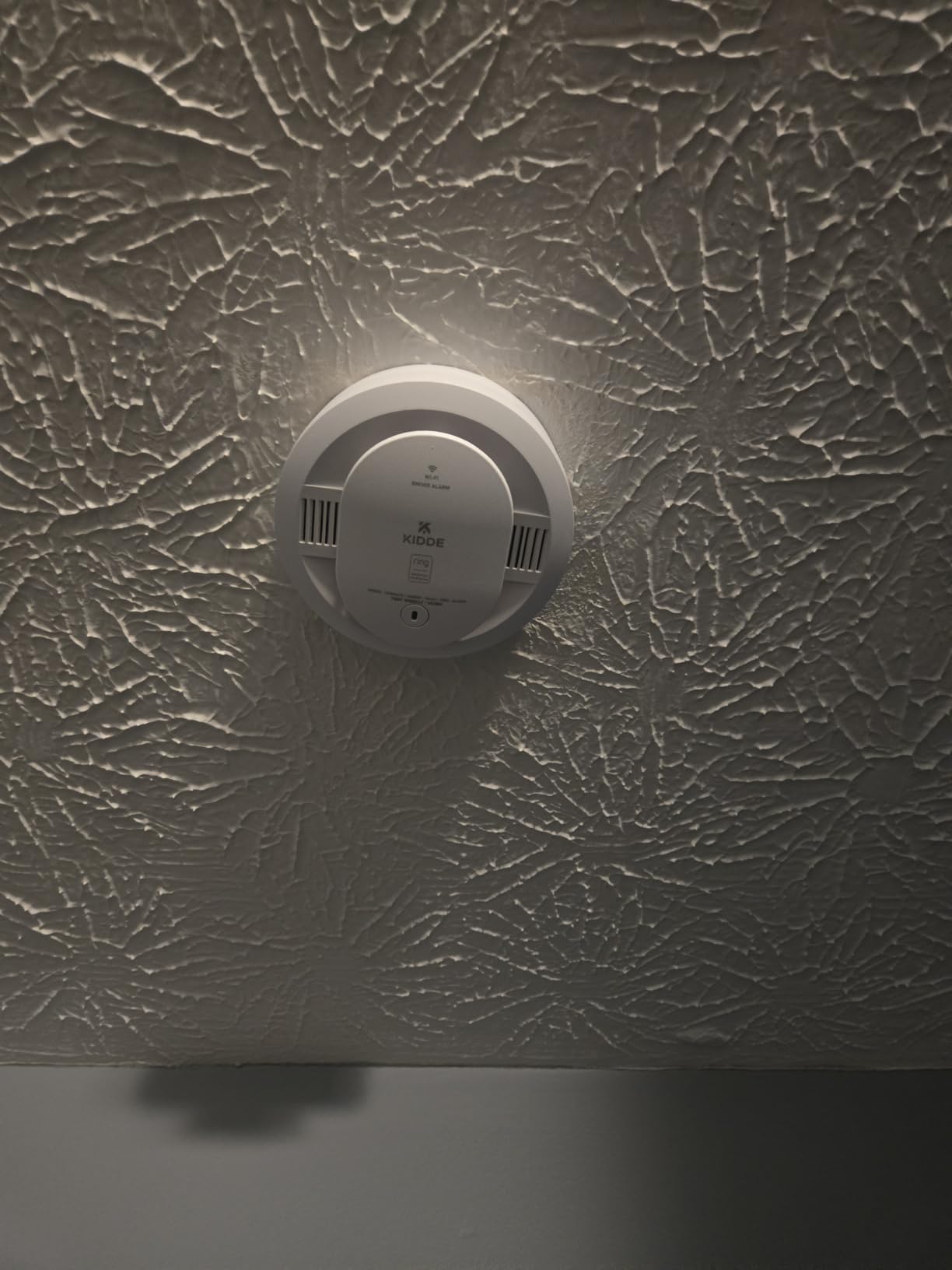
The 4.3 average across 426 reviews is the deepest review pool of anything we tested, and the pattern in the feedback is consistent. What people like: dual detection in one unit, app notifications that work without a subscription, and battery power that means no rewiring. What people flag: batteries still need replacing, and a Ring subscription is required if you want professional monitoring rather than just your own phone.
The interconnect is genuinely useful in a kitchen context. These units talk to each other over their own radio, so if a burner gets away from you in a pan and ignites the range hood grease, the alarm outside the kitchen sounds at the same time as the one on the ceiling. For a whole-home build, the same wire-free approach means you are not running new cable to each new location.
When this is the right kitchen alarm
This is the pick for anyone who wants phone alerts plus carbon monoxide coverage plus no installation work. It suits a rental where drilling a new electrical box is not an option, and it suits a hardwired-free house where you need coverage today rather than after an electrician visits.
For a heavy-cooking household, position it on the ceiling outside the kitchen doorway rather than over the range. The reduced false alarm behaviour makes it more forgiving than most, but it is still a particle-sensing chamber reacting to what is in the air, and a closed door between it and the range costs you nothing.
When this is the wrong kitchen alarm
If your kitchen is small, windowless and you cook six nights a week, the honest limitation is that this is a smoke detector, not a cooking-aware one. It has no particulate discrimination beyond photoelectric sensing, and no hush feature is described as app-addressable in the way the Ring ecosystem could support. Owners who want a silence they can trigger from another room should verify that capability in the Ring app before buying.
Professional monitoring is a paid add-on. If you want someone to call a fire department rather than just you, budget for the subscription separately.
2. eufy Security Smoke Alarm E10 – Best Kitchen Value
eufy Security Smoke Alarm E10, Smoke Detector, Ultra-Compact 70 mm Design
UL 217 photoelectric sensing
70 mm diameter body
Five-year sealed battery
656 ft wireless range to hub
Pros
- UL 217 10th edition compliant sensing with reduced false alarm risk
- Very compact 70 mm body that disappears on a kitchen ceiling
- Five-year sealed lithium battery ends low-battery chirps
- 656 ft open-air wireless range to the hub
Cons
- Requires a separate eufy HomeBase hub
- HomeBase needs minimum firmware to pair
- Some reviews question reliability for life safety
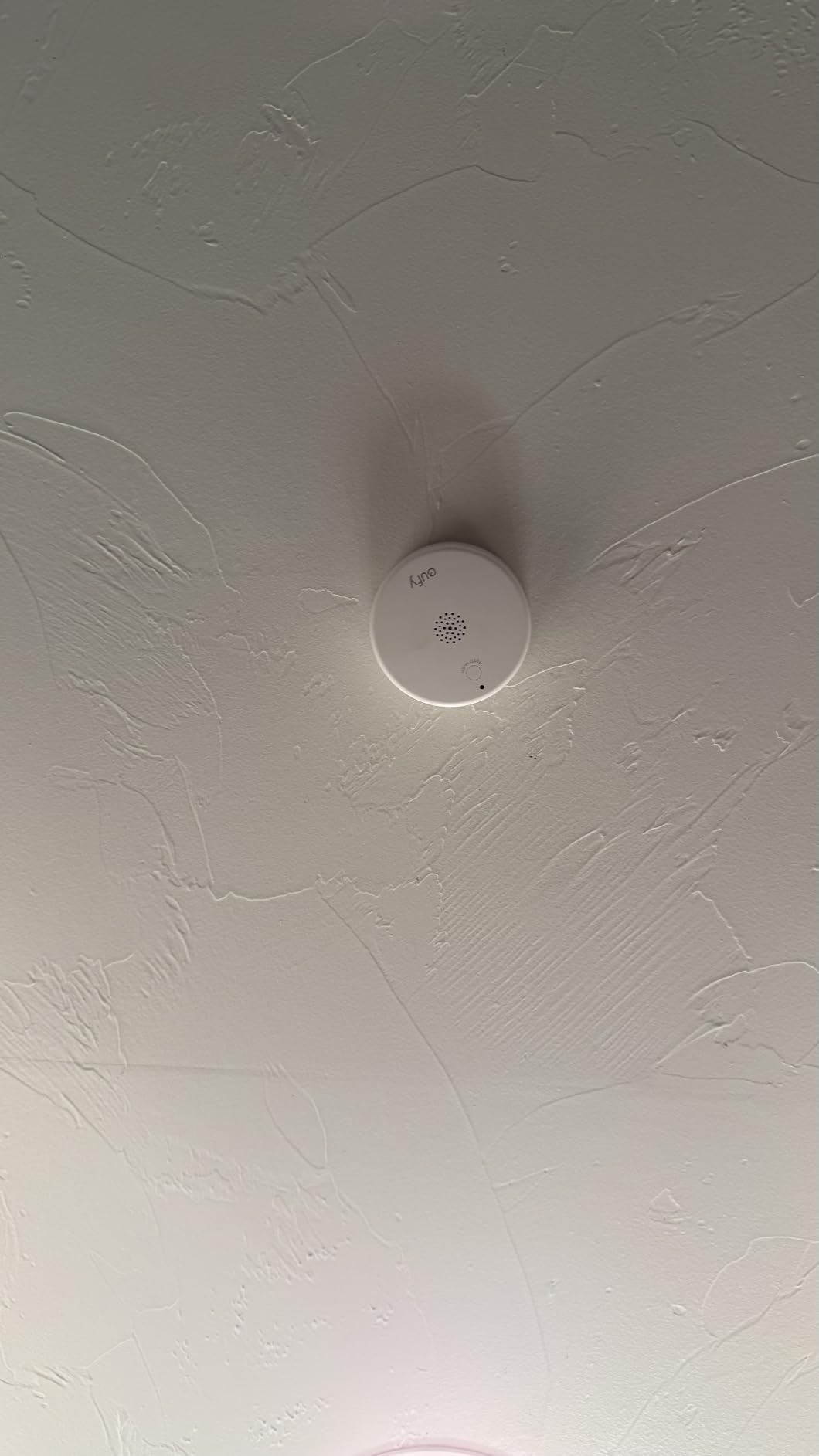
The physical design is the reason this makes a kitchen list. At 2.75 inches across and 1.08 inches deep, it is roughly a third of the volume of a traditional alarm, which matters on a small kitchen ceiling where a standard unit looks like a 1970s fixture.
Sensing is UL 217 10th edition compliant, which is the current US standard and, importantly, covers photoelectric alarms directly. The marketing describes accurate detection across smoke types with reduced false alarms. Buyers on r/homeassistant and r/smarthome report easy installation and a genuinely loud alarm, and the long wireless range means the hub does not need to sit next to the detector.
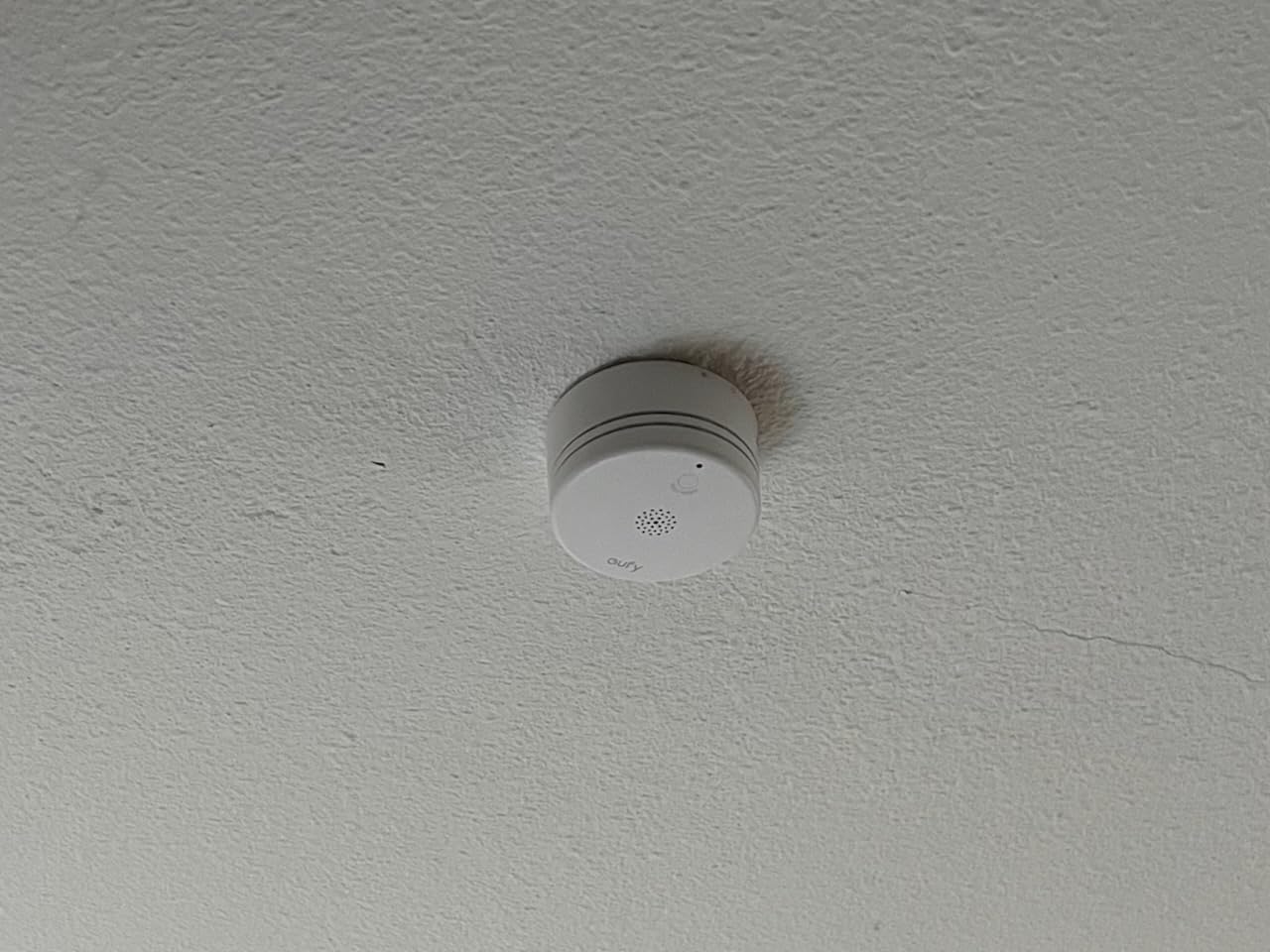
What you are trading away is independence. This is not a standalone alarm. It requires an eufy HomeBase Mini, HomeBase 2, HomeBase 3 or HomeBase Pro, each with a stated minimum firmware version, and without that hub the detector cannot operate. That is a real cost and a real commitment to one ecosystem, and the most common reservation in the reviews.
The 4.4 average across 221 reviews is the highest rating in this set. The five-year sealed lithium battery also removes an entire category of kitchen annoyance: a low-battery chirp at 2am that you then blame on smoke.
When this is the right kitchen alarm
This suits someone already running eufy cameras and a HomeBase, who wants the alarm to join that system rather than fight it. The long open-air range and compact body make it the easiest of these six to place discreetly in a kitchen-adjacent hallway or a small kitchen ceiling.
It is also a reasonable first smart alarm for a household that wants to test whether phone alerts change their behaviour, without committing to a whole-home system on day one.
When this is the wrong kitchen alarm
If you do not run eufy already, you are buying a hub before you buy an alarm, and that changes the maths considerably. Renters who may move should weigh that lock-in before ordering.
Some reviews question reliability for a life-safety device, which is a fair concern given the hub dependency. If your Wi-Fi is down, your phone alert is gone; confirm you are comfortable relying on the local siren alone in that scenario.
3. Heiman Wireless Interconnected Smoke Alarm 3-Pack (S1-R)
Heiman Smoke Detector, Wireless Interconnected Smoke Alarm for Home, 3 Pack
Dual-beam photoelectric sensor
Three interconnected units
No app or Wi-Fi needed
85 dB siren
Pros
- No hub app or subscription required
- Magnetic pads or two screws for tool-free install
- Linked alarms sound within roughly 30 seconds
- Compact body blends into a ceiling
- Dual-beam sensing reduces steam and cooking trips
Cons
- Not a connected detector so no phone alerts
- Some buyers report the sealed lithium cell dying early
- A minority raise reliability concerns on a life-safety device
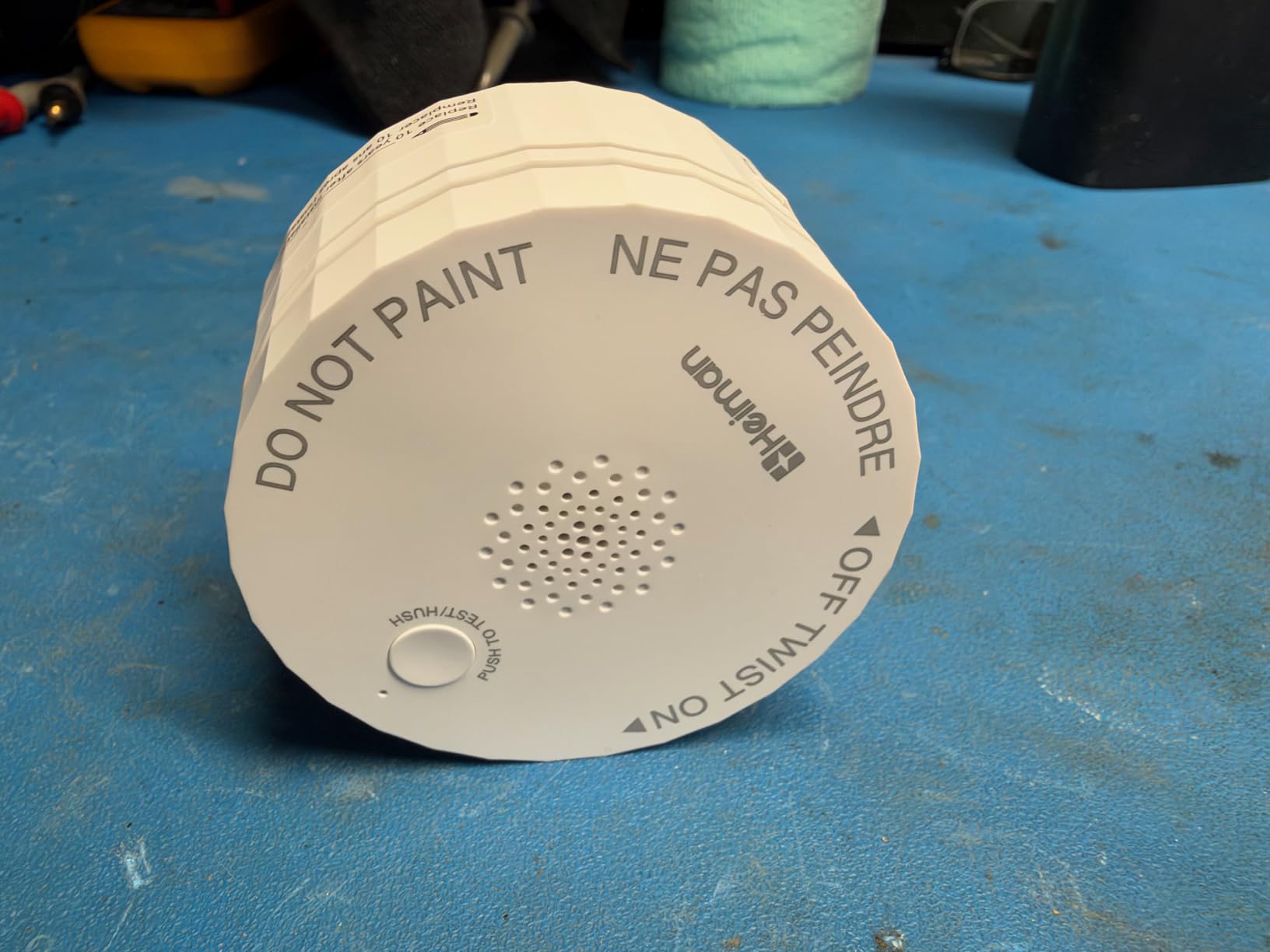
This is the practical answer for a house that needs full coverage and does not need a phone to know about it. Three photoelectric alarms, interconnected over their own radio up to 656 feet in open air, with no hub, no app and no subscription anywhere in the chain.
The sensor here is a dual-beam photoelectric chamber rather than a single-beam, and it is certified to UL 217 10th edition. That design reads particle size and density instead of just detecting smoke presence, and it is the technical reason reviewers describe it as calmer around cooking steam.
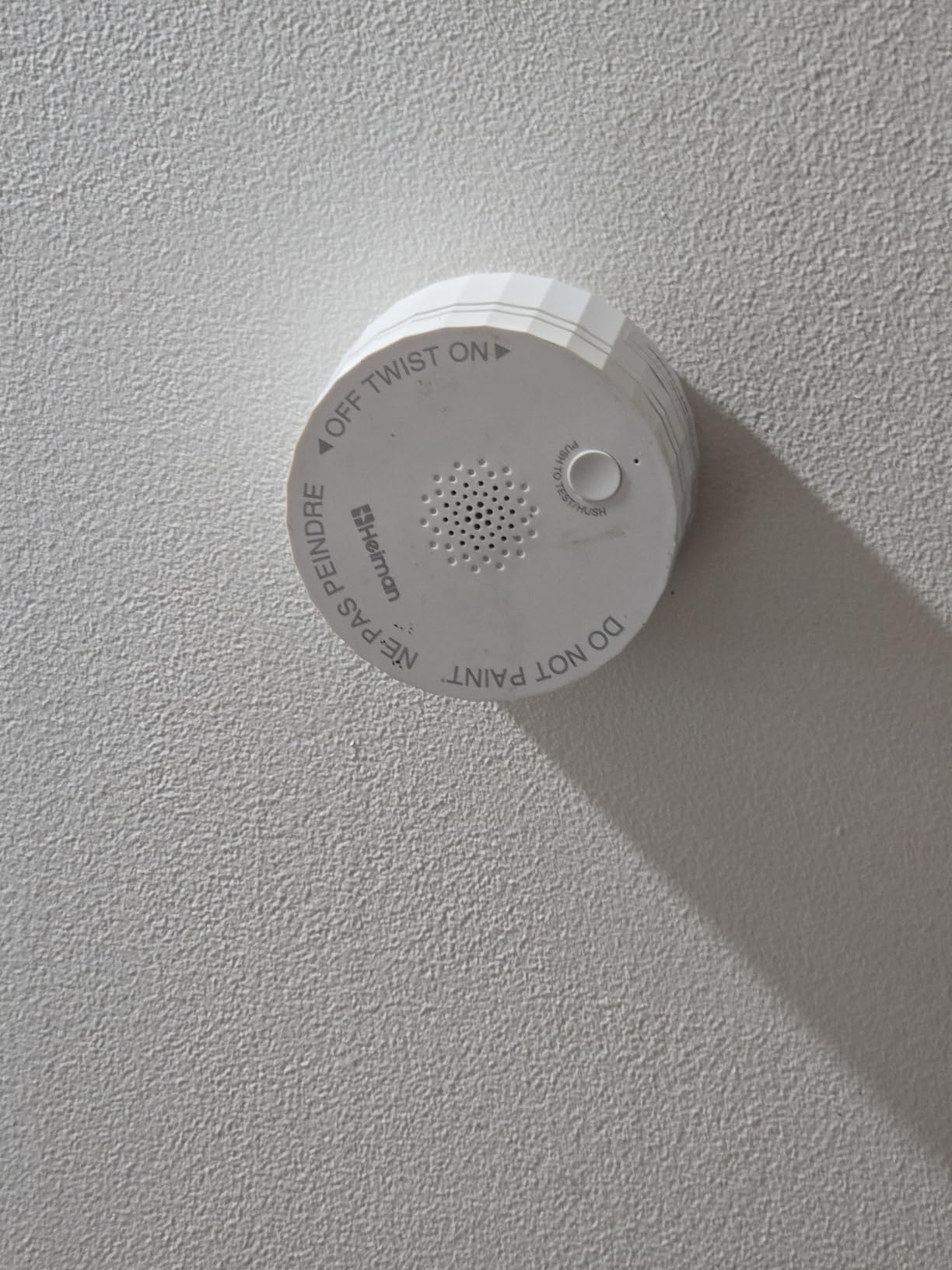
At 85 dB at 10 feet with LED status indicators, and with every linked unit sounding within about 30 seconds of the first trigger, this is the loud-and-early option. Buyers describe the alarm as piercing enough to hear through several closed doors, which in a two-storey house with sleeping children upstairs is the feature that matters most.
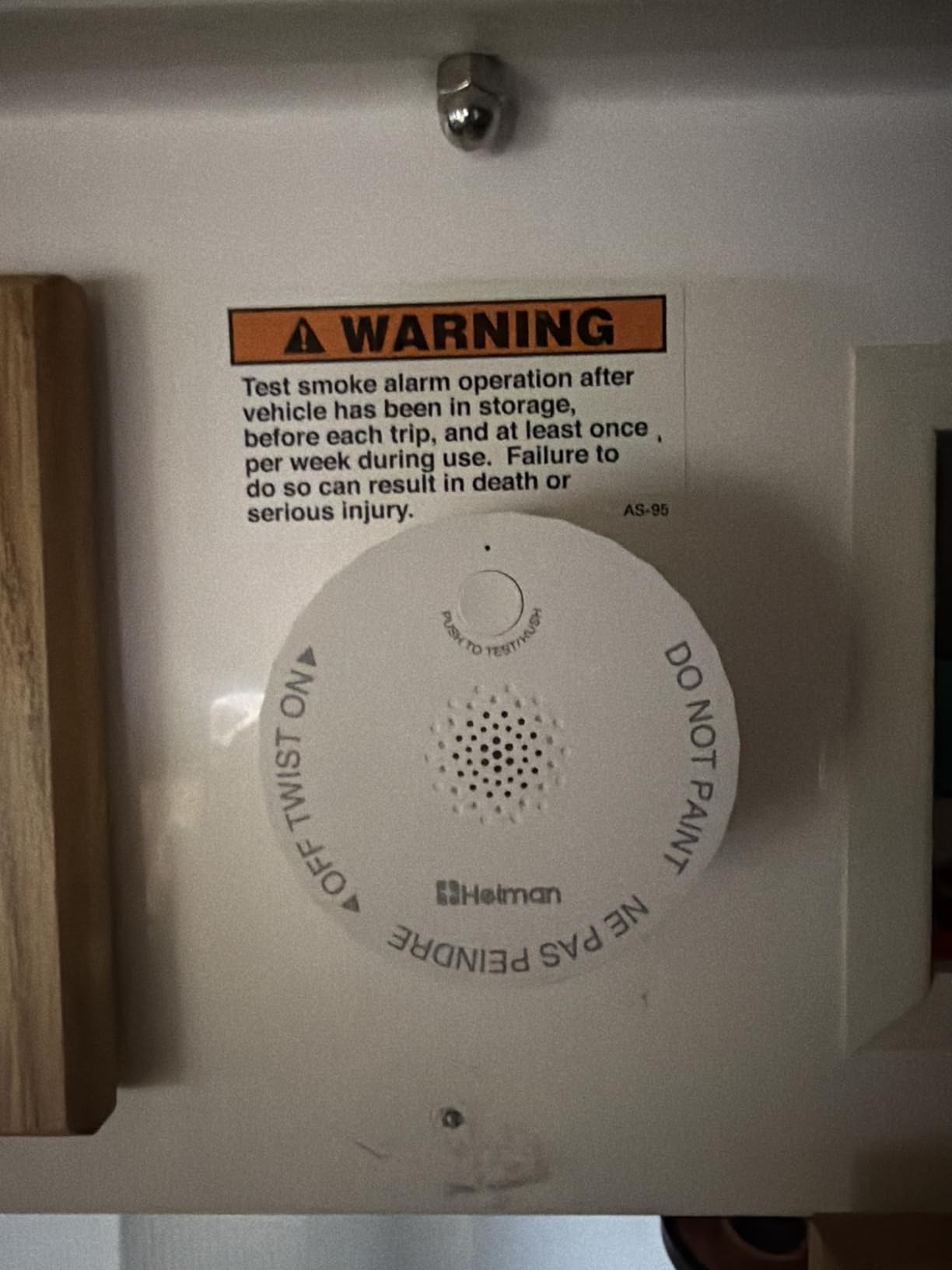
Installation is genuinely fast. Magnetic adhesive pads handle a rental or a temporary position; two screws handle a permanent ceiling mount. Each unit measures 2.75 inches in diameter and 1.45 inches deep, with an ABS and PC housing rated UL94 V-0 and a 100 degree Celsius upper temperature rating.
When this is the right kitchen alarm
Choose this for whole-home coverage on a budget, particularly if you want one alarm outside the kitchen doorway and several more elsewhere without buying into any smart-home ecosystem. The ten-minute nuisance silence on the one-touch test and silence button is the practical feature for a cooking false alarm.
It also works as a companion to a connected alarm: your phone-aware unit sits where you want remote alerts, and these cover the rest of the house at 85 dB.
When this is the wrong kitchen alarm
If you want an alert on your phone while you are at work or travelling, this does not do that. Units communicate only with each other, and there is no gateway in the box.
Be cautious about the battery claim. Some buyers report the lithium cell failing well short of the advertised sealed-battery life, so plan on testing it on the same twice-yearly schedule as any alarm rather than assuming a decade of silence. One reviewer also received a non-interconnected configuration and expected the units to talk to each other, so confirm interconnect is included before you rely on it.
4. Heiman Matter Over Thread Smoke Detector S1-TM
Heiman Smoke Detector, Matter Over Thread, with Temp&Humidity Sensor, S1-TM
Matter over Thread radio
Local control no cloud
Dual-beam photoelectric
85 dB with LEDs
Pros
- Matter over Thread keeps automations local and hub-optional
- Works across Apple Home and Google Home as well as Alexa SmartThings Homey and Home Assistant
- Adds temperature and humidity reporting in the app
- UL 217 10th edition certified and CSFM listed
Cons
- No customer reviews yet for a life-safety device
- Requires a Thread Border Router which excludes some setups
- Home Assistant needs IPv6 enabled and mDNS unblocked
This is the most interesting unit in the lineup for anyone who cares about their kitchen sensors not routing through a cloud server. It speaks Matter over Thread, so automations run locally over your own network through a Thread Border Router, and the phone app is optional rather than required for the core behaviour.
It is UL 217 10th edition certified and CSFM listed, with the same dual-beam photoelectric approach as the 3-pack. The alarm is 85 dB with LED indicators, and it includes temperature and humidity sensors reported through the app, which gives you a free read on whether your kitchen is sitting above the humidity level that drives nuisance trips.
Ecosystem reach is broad for a Matter device: Apple Home, Google Home, Alexa, SmartThings, Homey and Home Assistant, across a listed set of supported hubs including second-generation Nest Hub, Nest Hub Max, second-generation HomePod, HomePod mini, Apple TV 4K, SmartThings Hub v3, SmartThings Station and several Echo models.
There is one honest caveat that we will not soften. This listing has no customer reviews, and there is no independent field history for a life-safety device. That is a meaningful gap. You are buying the specification sheet and the certification, not a track record.
When this is the right kitchen alarm
This fits a Home Assistant or Apple Home household that wants local control and dislikes the idea of a life-safety alarm depending on a cloud connection. If your internet goes down, the automation still runs on your LAN.
The temperature and humidity reporting is quietly useful for a kitchen. If your alarms start going off more often in winter, the app will usually show the humidity that explains it.
When this is the wrong kitchen alarm for you
You need a Matter controller with a Thread Border Router. If your setup lacks one, this alarm simply cannot join it. Home Assistant users should also note the setup detail: IPv6 must be enabled on the HA box and the LAN must not be blocking IPv6, router advertisements or mDNS. Internet IPv6 is not required.
The pool of confirmed compatible hubs is narrower than for a standard Wi-Fi device, and with no reviews yet we would install it alongside an alarm we already trust rather than as your only coverage.
5. Heiman Smoke and CO 3-Pack Bundle with Gateway
Heiman Smoke Detector 3pack and CO Detector 3pack with Gateway
Three smoke detectors
Three CO detectors
Included gateway
Battery operated
Pros
- Smoke and carbon monoxide coverage in one bundle
- Six alarms plus a gateway is a complete kit
- Gateway gives one bridge point for smart home integration
- No separate hub purchase beyond the included gateway
Cons
- No customer reviews or rating yet for a life-safety bundle
- Listing gives minimal specification detail including no dimensions or weight
- Bundle cost is higher than buying a single connected alarm
This is the shopping-list shortcut: three smoke detectors, three carbon monoxide detectors, and the gateway that bridges them into a smart home, all battery operated. If your job is to cover a whole house that has no existing CO detection, the contents of one box are the contents of seven.
The gateway is the important part to understand. These alarms speak to each other and to the gateway over RF, and the gateway is what connects them to your ecosystem. That is the single point where a hub failure would take your remote alerts down, while the local sirens carry on working independently.
Unlike the rest of this list, we cannot tell you how reviewers feel about it. The listing carries no published rating and no review count at fetch time, and the specification detail on the page is thin enough that dimensions and weight are not stated. For a life-safety bundle, buying on packaging alone is a bigger step than it would be for a router.
When this is the right kitchen alarm
It makes sense when the priority is getting complete smoke and CO coverage across a property in one transaction, and you want the alarms to appear in a smart home. Put the smoke detector covering the kitchen-adjacent hallway rather than over the range, and place the CO detectors near sleeping areas and near the kitchen’s combustion appliances.
Battery operation means no electrician and no rewiring, which also makes it the more realistic option for a rental.
When this is the wrong kitchen alarm
There is no independent evidence about nuisance-alarm behaviour, and the total cost works out higher than buying one well-reviewed connected alarm. If you only need kitchen coverage, this is overspending.
Because there is no rating and no review history, we would put a unit with an established track record on your own ceiling first, and treat this as the way to extend coverage afterwards.
6. Kidde Smart Smoke and Indoor Air Quality Alarm (P4010ACSAQ-WF)
Kidde Smart Smoke Detector & Indoor Air Quality Monitor, WiFi, Alexa Compatible Device, Hardwired w/Battery Backup, Voice & App Alerts
Hardwired, battery backup
Photoelectric sensing
Tracks TVOCs and humidity
Voice hazard alarm
Pros
- Only widely available alarm combining smoke detection with TVOC and humidity tracking
- Voice alarm states whether it is fire or an end-of-life warning
- Wi-Fi alerts reach your phone and can be shared with friends and family
- Installs as a drop-in on the same two screws as an older 2-wire unit
- 85 dB alarm with green amber and red status LEDs
Cons
- Nuisance alarms are the dominant complaint in reviews
- Silence window lasts only a couple of minutes and app silencing can lag
- Rating of 3.3 is the weakest in this set
This is the only hardwired smart alarm in the group and the only one that also reports indoor air quality, tracking total volatile organic compounds from cleaning products, paint and vapors alongside humidity. It is described as the first UL listed smoke and indoor air quality monitoring device, and the voice alarm announces the hazard type so you know whether it is fire or an end-of-life warning.
We included it with a clear warning attached. The 3.3 average across 194 reviews is the weakest score here, and there is one dominant cause: nuisance alarms. Multiple one-star reviews describe false triggering two or three times a month from humidifiers, cleaning sprays, vaporizers and cooking, alongside a short silence window and app-based silencing that lags.
That is the honest picture. A unit that alerts you twice a month for no reason trains you to ignore it, and an ignored alarm is the failure mode that gets people hurt. Owners also raise concern about a physical disable switch on the body, and note that the 5.1-inch-wide housing is bulky next to a standard detector.
What works well is the installation. Hardwired with battery backup, it drops onto the same two mounting screws as an older 2-wire unit, which is far less disruptive than the new-cable install most buyers fear. Setup is a QR code scan on the back of the device. It runs to Alexa, Google Home, iPhone and Android, and carries a 10-year limited manufacturer warranty on the alarm itself, which the maker is careful to say is not a battery performance claim.
When this is the right kitchen alarm
For a hardwired house with existing alarm wiring and a code requirement to meet, this is the only unit in the lineup that satisfies both. It also suits anyone who cooks with a gas range and wants to watch volatile compounds and humidity rather than guess at them.
Install it on the ceiling outside the kitchen doorway. Its TVOC sensor gives you a plausible explanation for alarms that a plain smoke detector cannot explain, which is genuinely useful when you are trying to work out whether a false trip came from spray cleaner or from dinner.
When this is the wrong kitchen alarm
Do not put this directly inside a small, actively cooked kitchen. The review pattern on false alarms from humidity and cooking is consistent enough that we would not lead with it for that use, and the two-minute silence window is not long enough to ride out a smoke event without physically resetting the unit.
It also cannot be used where there is no wiring. For a rental or an older home without alarm cable, choose a battery-connected model instead.
Buying Guide: 7 Things That Matter for a Kitchen Detector
Sensor type first, and there is no close second. A photoelectric chamber is what keeps a kitchen alarm alive past its first dinner party. Dual-sensor units give you ionization coverage as well, which is the NFPA-recommended configuration, but they are harder to find connected.
Power source decides everything downstream. Hardwired with battery backup satisfies local code and keeps working during a power cut, but needs an electrician if you do not already have alarm wiring. Battery-only installs in an afternoon and suit rentals. Hub-dependent designs are neither: they are battery units that need a specific base station, which adds a purchase and an ecosystem commitment.
Code compliance is not optional and smart units do not change it. Local fire code sets how many alarms you need and where they go. A connected detector is a supplement to that layout, not a substitute for it.
Sealed battery life matters more than people expect. A five-year sealed lithium cell beats replaceable AAs for the simple reason that a chirping low-battery warning at night is itself a nuisance alarm. Where a manufacturer claims ten years, plan to test on schedule rather than trusting the decade to run itself out.
Smart ecosystem fit is where most mistakes happen. Decide whether you need a phone alert at all. If yes, confirm the app supports remote hush, because that single feature determines how you will handle the next cooking false alarm. If your hub, border router or base station fails, the local siren still sounds but the phone alert does not, and you should know that before you need to. If the rest of the kitchen is going connected at the same time, our guide to the best smart refrigerators for connected kitchens covers that half of the upgrade.
Carbon monoxide coverage is worth bundling if your range, oven or furnace is gas or if you have an attached garage. Two of the six models here cover smoke only, and one bundles CO as separate hardware in the box, so check what you are actually getting rather than assuming a connected alarm monitors CO.
Subscription honesty: check which alerts need a paid plan. The Kidde and Ring unit sends you app notifications without a subscription, with professional monitoring as the paid tier. That distinction is worth more to most households than any additional smart feature.
On maintenance, test every alarm twice a year, replace the entire unit at ten years rather than just the battery, and never pull a battery to stop a nuisance alarm. For the rest of a home’s smoke coverage, our guide to the best smoke detectors for bedrooms covers the sleeping-area side, and if you are pairing smoke detection with water monitoring, our picks for smart leak detectors for basements cover the other half of the utility space.
Frequently Asked Questions
What type of smoke detector is best for a kitchen?
Should you put a smoke detector in a kitchen?
Why is my smoke detector going off while I’m cooking?
Can photoelectric smoke alarms false alarm?
Are smart smoke detectors code compliant?
Is it worth getting a smart smoke detector?
How often should I replace a smoke detector?
The Best Smart Smoke Detector for Your Kitchen
The Kidde Smart Smoke and CO Detector with Ring is our pick for most kitchens, because it combines smoke and carbon monoxide sensing, app alerts that need no subscription, and a wire-free interconnect that suits both rentals and whole-home coverage. If you already run an eufy HomeBase, the E10 is the better physical fit for a small kitchen ceiling.
Whatever you choose, place it on the ceiling outside the kitchen doorway rather than over the range, and if you want one alert that reaches your phone while the rest of the house relies on loud sirens, our smart display hub picks for kitchens cover the hub side of that setup. Updated for 2026.