
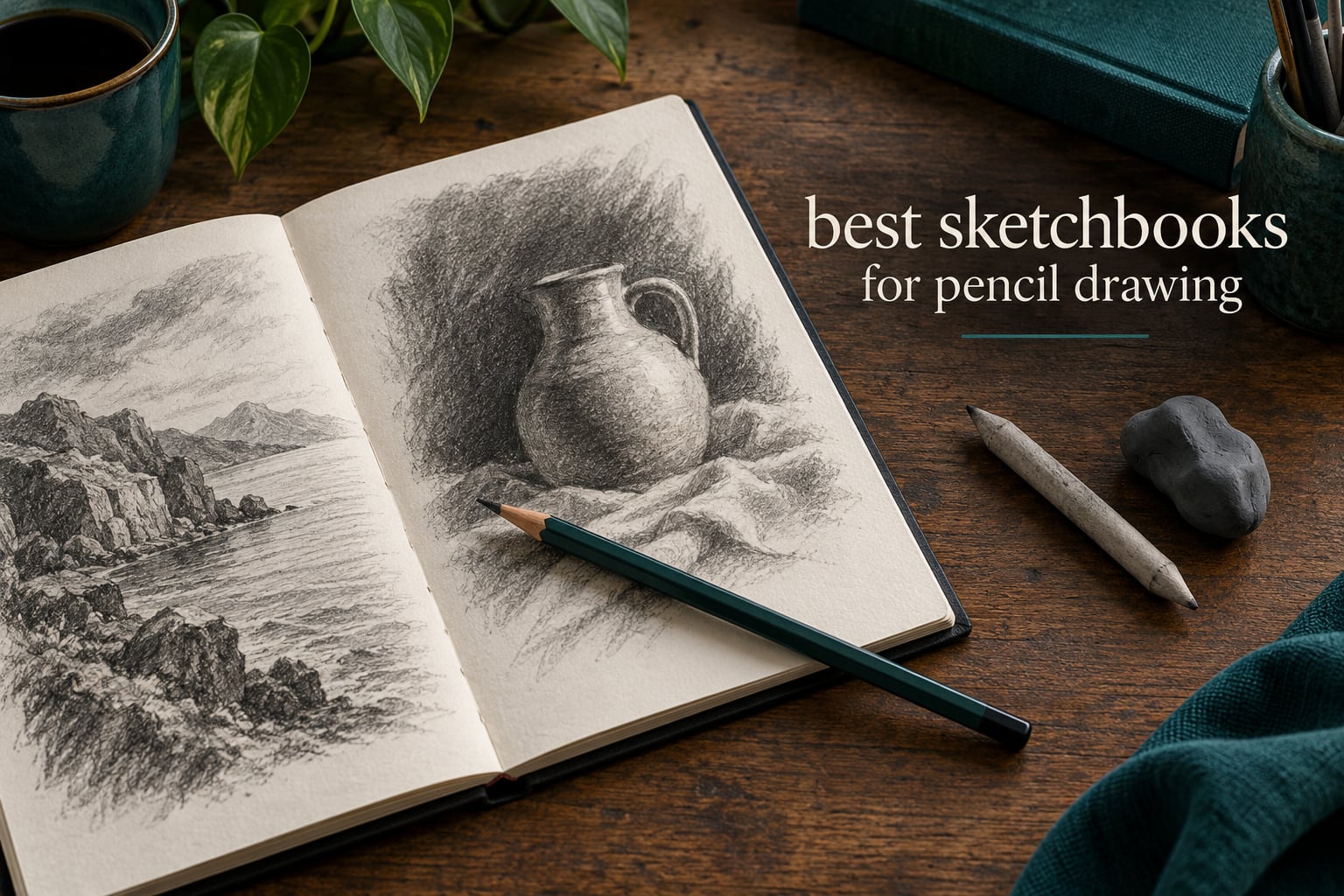
If you have ever finished a pencil drawing and then found a grey smear across the shading where your palm rested, you already know the paper matters more than the pencil. That smudge is not a graphite problem, it is a paper problem, and it is the single complaint that comes up most often when artists compare sketchbooks online.
We spent weeks working through ten of the most widely reviewed books on the market with the same kit each time: a Uni 2B, a Mars Lumograph 4B, a 2H for the tightest line work, a kneaded eraser, a vinyl eraser and a blending stump. Our aim was simple. Find out which books actually grip a soft pencil, which ones survive repeated erasing, and which ones survive being carried. Because the best sketchbooks for pencil drawing are not the ones with the heaviest paper or the prettiest cover, they are the ones whose surface, weight and binding match the way you draw.
Three variables decide almost everything. Paper weight determines whether the page survives blending, shading and scrubbing without denting or tearing. Tooth, the micro-texture of the surface, determines whether graphite anchors into the sheet or slides off it. Smudge resistance determines whether your hand ruins the drawing you just made. Get those three right and the rest is preference.
If you are still deciding whether you want to draw on paper at all, start with our drawing tablet guide for beginners. If you already draw and just need a better book, keep reading.
Table of Contents
Top 3 Sketchbooks for Pencil Drawing Right Now

Strathmore 400 Series Sketch Pad
- Fine tooth that grips graphite
- Micro-perforated sheets
- Wire bound
- 100 sheets at 5.5 x 8.5 inch

Conda Hardbound Sketch Book
- Hardbound spiral cover
- 90 gsm acid-free paper
- 80 sheets at 8.5 x 11 inch

Leda Art Supply Large Sketchbook
- 160 stitched pages
- 7 x 10 inch format
- Elastic closure and back pocket
These three cover the range most people actually need. The Strathmore 400 Series is the one we hand to anyone who asks for a single recommendation. The Conda is the toughest book here for the money and travels best. The Leda is the most pleasant object to own, with a stitched binding that opens properly flat and enough pages to stop you rationing.
Best Sketchbooks for Pencil Drawing in 2026
| Product | Specifications | Action |
|---|---|---|
| Strathmore 400 Series Sketch Pad |
|
Check Latest Price |
| Conda Hardbound Sketch Book |
|
Check Latest Price |
| Leda Art Supply Large Sketchbook |
|
Check Latest Price |
 ARTEZA Hardcover Sketchbook ARTEZA Hardcover Sketchbook |
|
Check Latest Price |
 String & Space 200 gsm Sketchbook String & Space 200 gsm Sketchbook |
|
Check Latest Price |
 MOFUNY Mixed Media Sketchbook MOFUNY Mixed Media Sketchbook |
|
Check Latest Price |
 Strathmore 200 Series Sketch Pad Strathmore 200 Series Sketch Pad |
|
Check Latest Price |
 Pentalic Hardbound Sketchbook Pentalic Hardbound Sketchbook |
|
Check Latest Price |
 ALKALO Square Sketchbook ALKALO Square Sketchbook |
|
Check Latest Price |
 UCreate Poly Cover Sketch Book UCreate Poly Cover Sketch Book |
|
Check Latest Price |
1. Strathmore 400 Series Sketch Pad — Best Overall for Pencil Drawing
Strathmore 400 Series Sketch Pad, 5.5×8.5 inch, 100 Sheets – Artist Sketchbook for Drawing, Illustration, Art Class Students
5.5 x 8.5 inch
100 sheets
Fine tooth, uncoated
Micro-perforated, wire bound
Pros
- Fine texture that grips graphite and charcoal
- Micro-perforated sheets remove cleanly for finished work
- Wire binding lets the pad lie flat while drawing
- Acid-free paper that resists yellowing
- 33k+ reviews reporting consistent quality over decades
Cons
- Thinner than heavy artist paper for very soft graphite
- Surface fairly smooth for large layers of soft colored pencil
- No ribbon bookmark included
This is the book we keep coming back to, and the reason is unglamorous: the paper behaves. The surface has a fine, even tooth that catches graphite dust instead of letting it roll off. Hatching sits down cleanly, cross-hatching builds tone without the patchy skipping you get on a slick sheet, and a soft 6B will lay a solid dark value without you having to press.
At 5.5 by 8.5 inches the page is smaller than most people expect from a drawing pad, and that turns out to be an advantage. You draw smaller, so you fill pages faster, which means more practice pages per book. It also fits inside a jacket pocket or a small messenger bag, which is how most of our drawings actually get made.
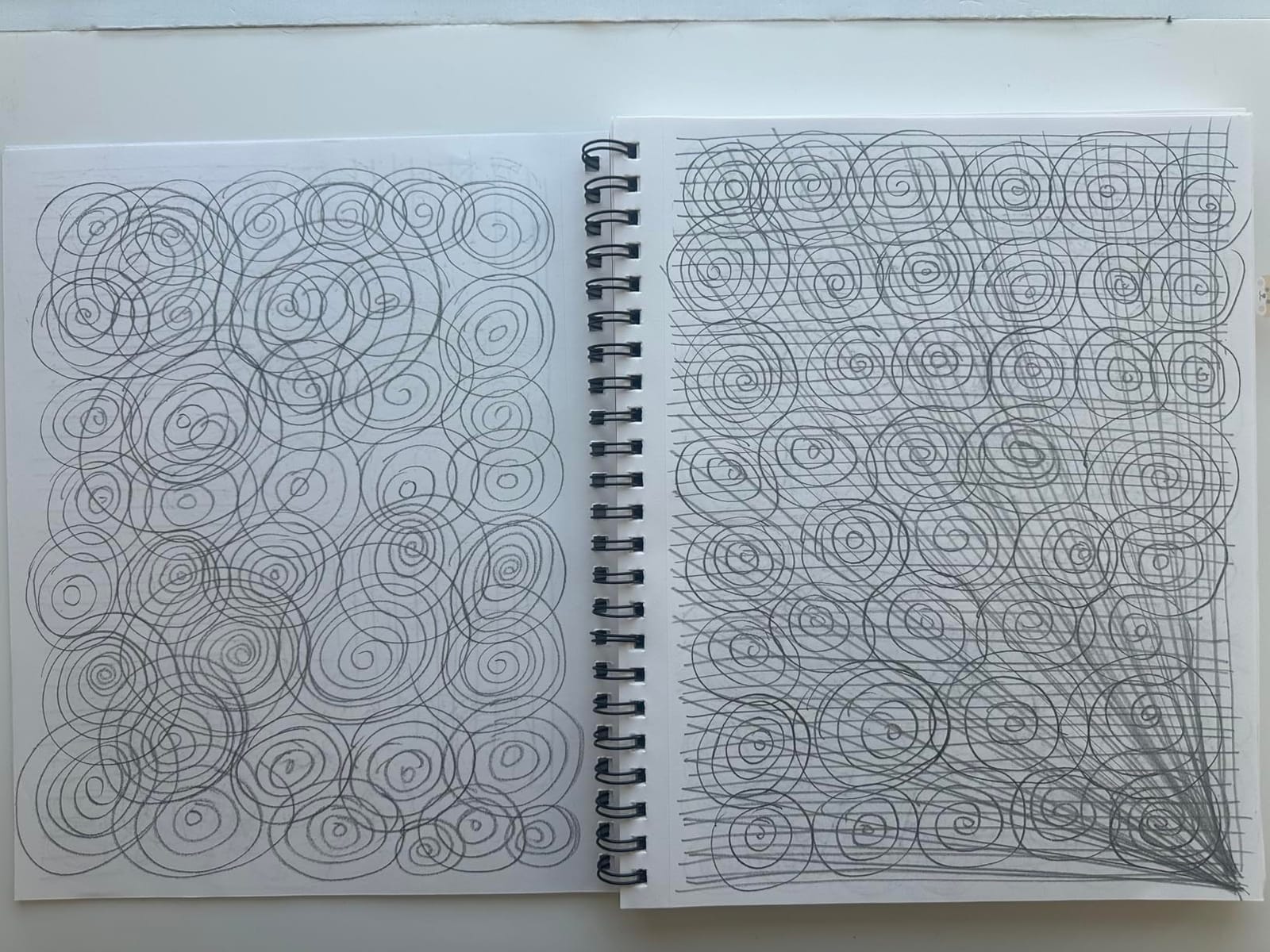
The wire binding is genuinely useful for pencil work because you can fold the pad back past the edge and brace the page with your wrist. When you are shading with the side of a 4B, that extra support is the difference between a controlled stroke and a fluffy one. The micro-perforated edges are a small touch that matters more than it sounds: a page tears off along a clean line instead of dog-earing.
The honest limitation is weight. Reviewers consistently describe the sheets as thinner than heavy artist paper, so if your work involves scrubbing an eraser across a dark 8B for twenty minutes, this paper will dent before a 200 gsm book would. It is also smooth enough that soft colored pencil layers build more slowly than they would on a toothier sheet. For graphite alone, that is rarely a problem.
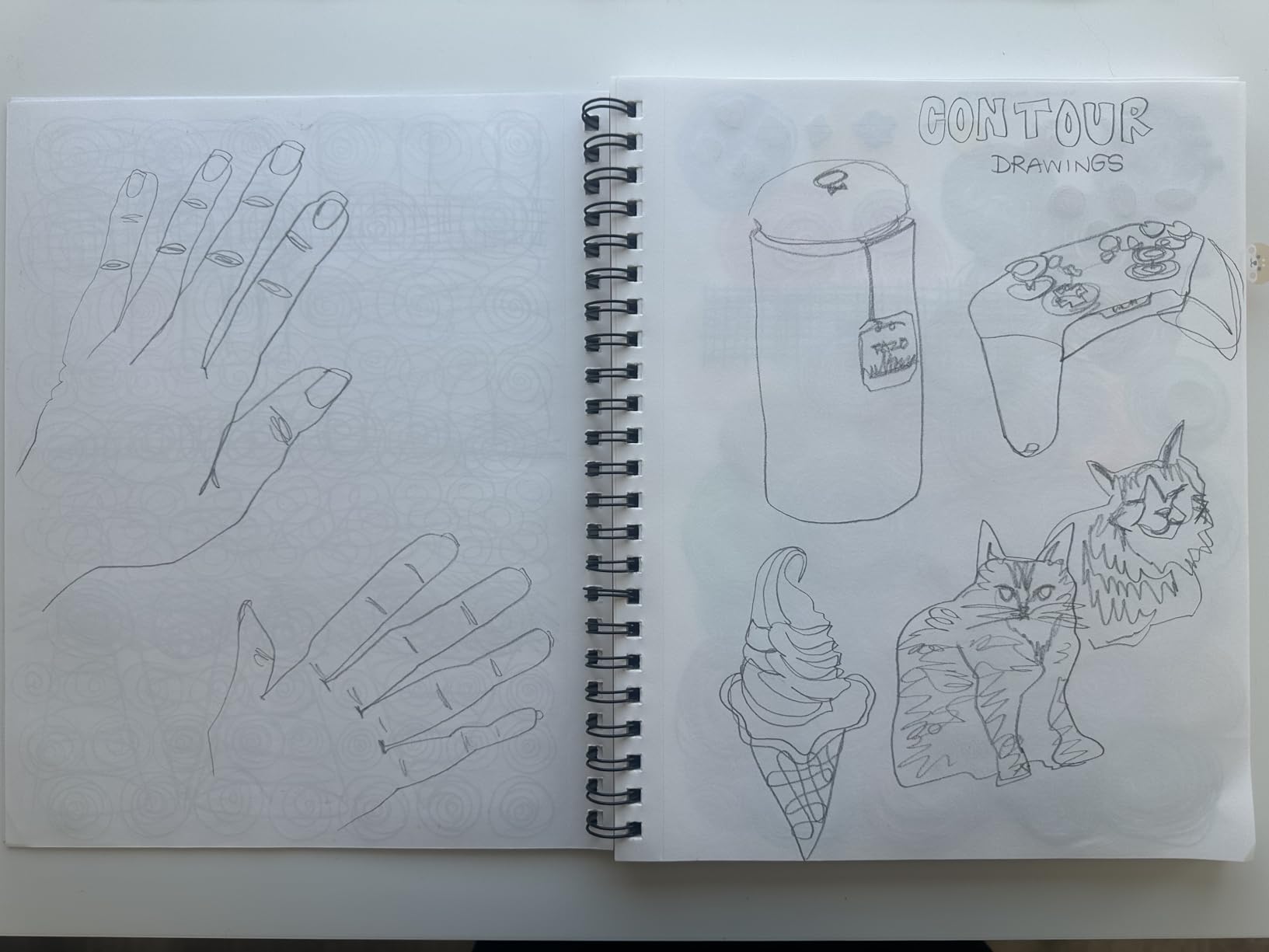
Why this paper works for soft pencils
A fine tooth anchors particles rather than letting them sit proud of the surface. That is what stops a 4B or 6B from wiping off onto your hand, and it is why a lightly drawn line here still reads as a line rather than a faint smudge. Long-term owners report the paper quality has stayed consistent for decades, which is unusual in a product this widely used.
When to choose something else
Skip it if you work mainly with alcohol markers, wet media, or very heavy charcoal, where the lighter paper will show you. It is also awkward if you draw hard against an edge, because the wire coils sit where a hand naturally rests when you work to the margin. For pure graphite in a portable format, though, we could not find anything better.
2. Conda Hardbound Sketch Book — Best Value Hardcover
Conda 8.5″x11″ Hardbound Sketch Book, 80-Sheets 90gsm Double-Sided Hardcover Sketchbook, Spiral Sketch Pad, Durable Acid Free Drawing Art Paper for Adults
8.5 x 11 inch
80 sheets
90 gsm / 60 lb
Smooth, acid-free, spiral bound
Pros
- Rigid cover protects artwork in a bag
- Pages take hard pressure and repeated erasing
- Acid-free paper resists yellowing over years
- Spiral opens flat with a perforated page edge
Cons
- Smooth finish gives limited tooth for blending
- Not intended for markers
- 80 sheets is fewer than rivals at a similar tier
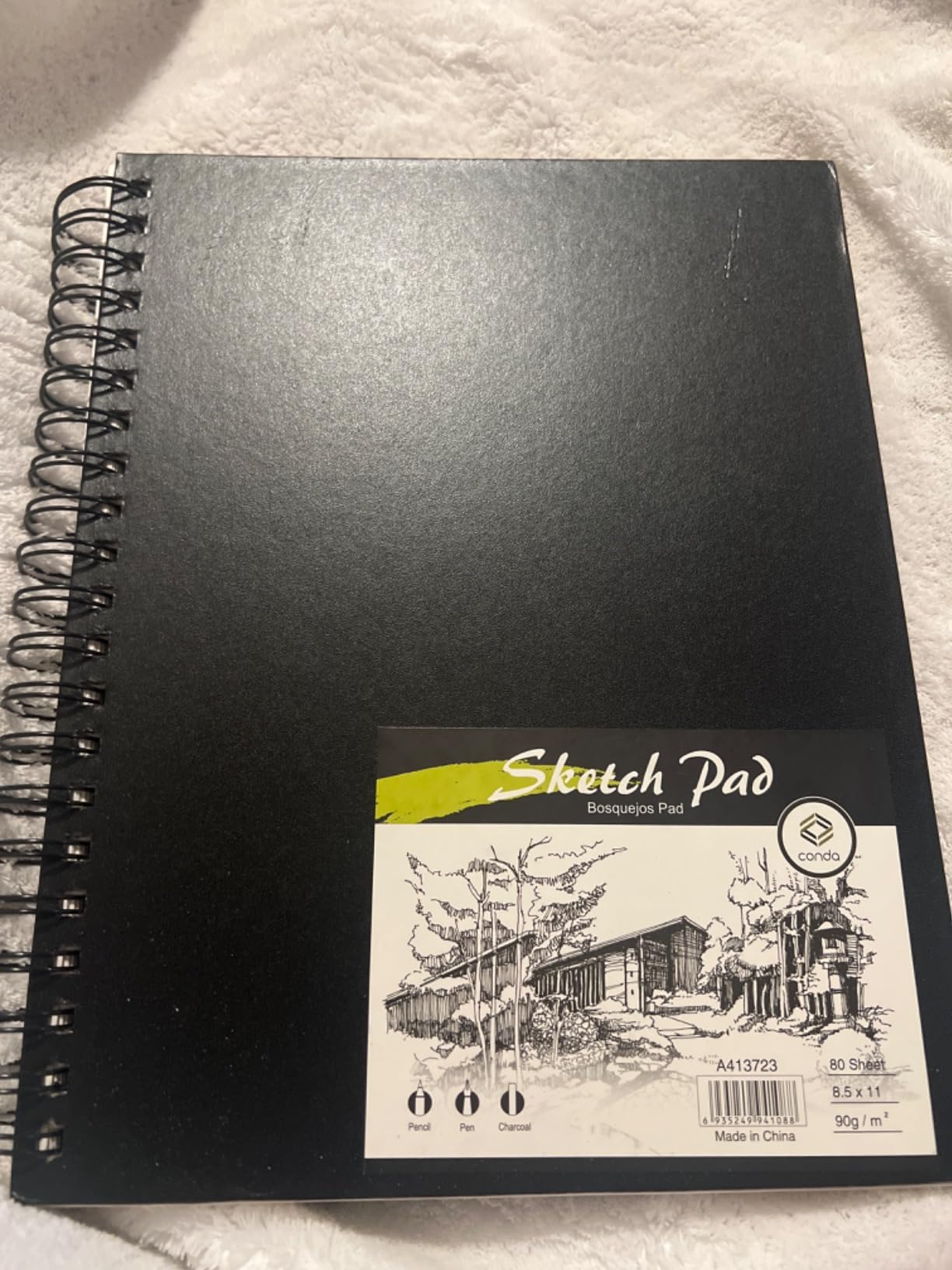
The Conda is the reason most people never need to move up a size. It is a genuine hardcover rather than a flexible cover, it is full letter size, and the paper is acid-free. For a book that lives in a backpack and takes a beating from a water bottle, that combination is hard to argue with.
At 90 gsm the pages are noticeably tougher than the practice-weight pads on this list. Owners report pushing hard into the surface and erasing repeatedly without the sheet cockling, which is the exact failure mode that ruins lighter books. Spiral binding plus a rigid cover means the book opens flat on a table or your lap, with no need for a drawing board underneath.
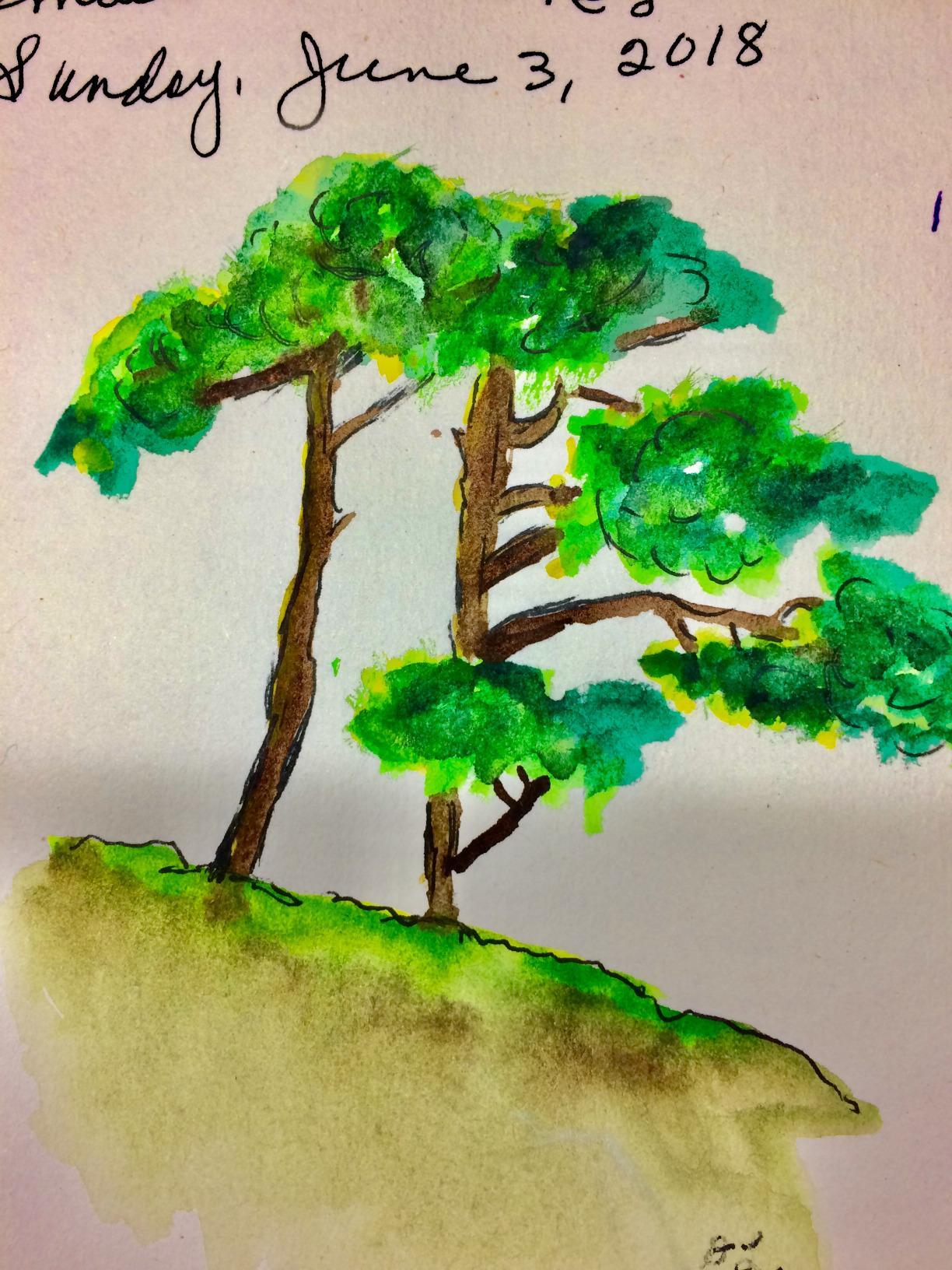
The trade-off is surface. The finish is smooth, which means there is less tooth to hold a blended graphite gradient, and a heavy hand will tend to polish the page rather than build a texture. If your pencil work is mostly line and hatching, that is a non-issue. If you plan to spend long sessions building soft smudged values, expect to work harder for the same depth.
Reviewers are also clear that this is a dry-media book. The manufacturer does not recommend markers, and users report feathering and bleed when they try anyway. At 80 sheets it is not the longest book here, but the hardcover means fewer pages get ruined in transit, so the actual usable count tends to be higher than the number suggests.
What the smooth finish means for graphite
Smooth paper gives you crisp, controlled lines and very little tooth texture in the finished drawing. That is a feature if you draw portraits, hands or architectural detail, because fine marks stay sharp. It is a drawback for large soft shading, where a toothier sheet would hold more pigment with fewer passes.
Where it falls short
This is not the book for mixed media or marker work despite its toughness, and the smooth surface will frustrate anyone who wants a visible pencil grain in the finished piece. It is also a format to think about if you mind the back of a drawing, because heavy graphite will ghost noticeably at 90 gsm, so put a sheet behind your page if you care about the reverse.
3. Leda Art Supply Large Sketchbook — Best for Thread Binding and Travel
Leda Art Supply Large Sketchbook 160 Pages Softbound Cover Sketchbook for Artists – Leather Drawing Notebook for All, Ideal for Ink, Water Color, Pen, Pencils | 7 x 10 inch Art Journal
7 x 10 inch
160 pages / 80 sheets
81 lb cream paper
Sewn thread binding
Pros
- Sewn thread binding folds back and lies flat without damage
- Soft water-resistant cover with elastic and back pocket
- Cream paper reads warm under graphite
- 160 pages so you stop rationing
Cons
- Light paper can bleed with heavy markers and wet media
- Smooth surface gives limited grain for blending
- Soft cover needs more care than a hardcover in a bag
The Leda is the only book on this list held together with sewn thread rather than glue or wire, and that changes how it feels in use. You can fold the cover completely back, crease the spine, and the book keeps working. Nothing cracks, nothing detaches, and a two-page spread is genuinely usable, which no spiral-bound book can promise.
The 7 by 10 inch format is an unusual size that works better than it sounds. It is narrow enough to carry in a coat pocket and wide enough for a half-figure study. The paper is described in the listing as 81 lb cream paper, which gives a warm tone that softens the clinical look of bright white without the yellow cast of toned paper.
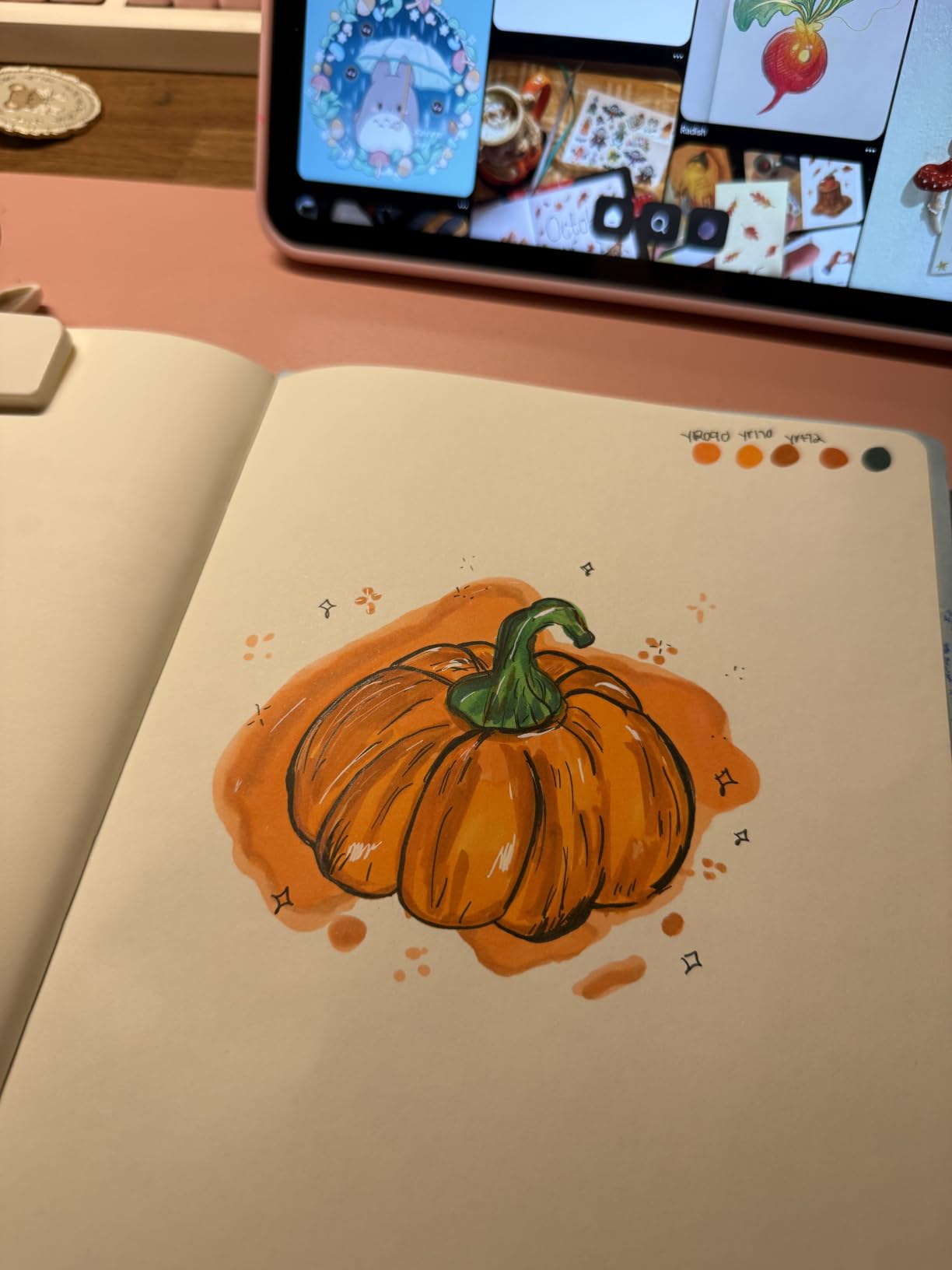
What makes it a pleasure is the object quality. The soft faux leather cover flexes, the elastic closure holds without straining, and the accordion back pocket swallows loose sketches so they do not bend in your bag. Many owners report buying a second one once the first is finished, which tells you how the ownership experience lands.
The limitation is weight. This is a light book, so heavy markers will bleed and pages will buckle under a wet wash. The smooth finish also means less grain in your graphite than a textured sheet would leave. If you draw dry and you care about how the book feels to handle, neither of those matters much.
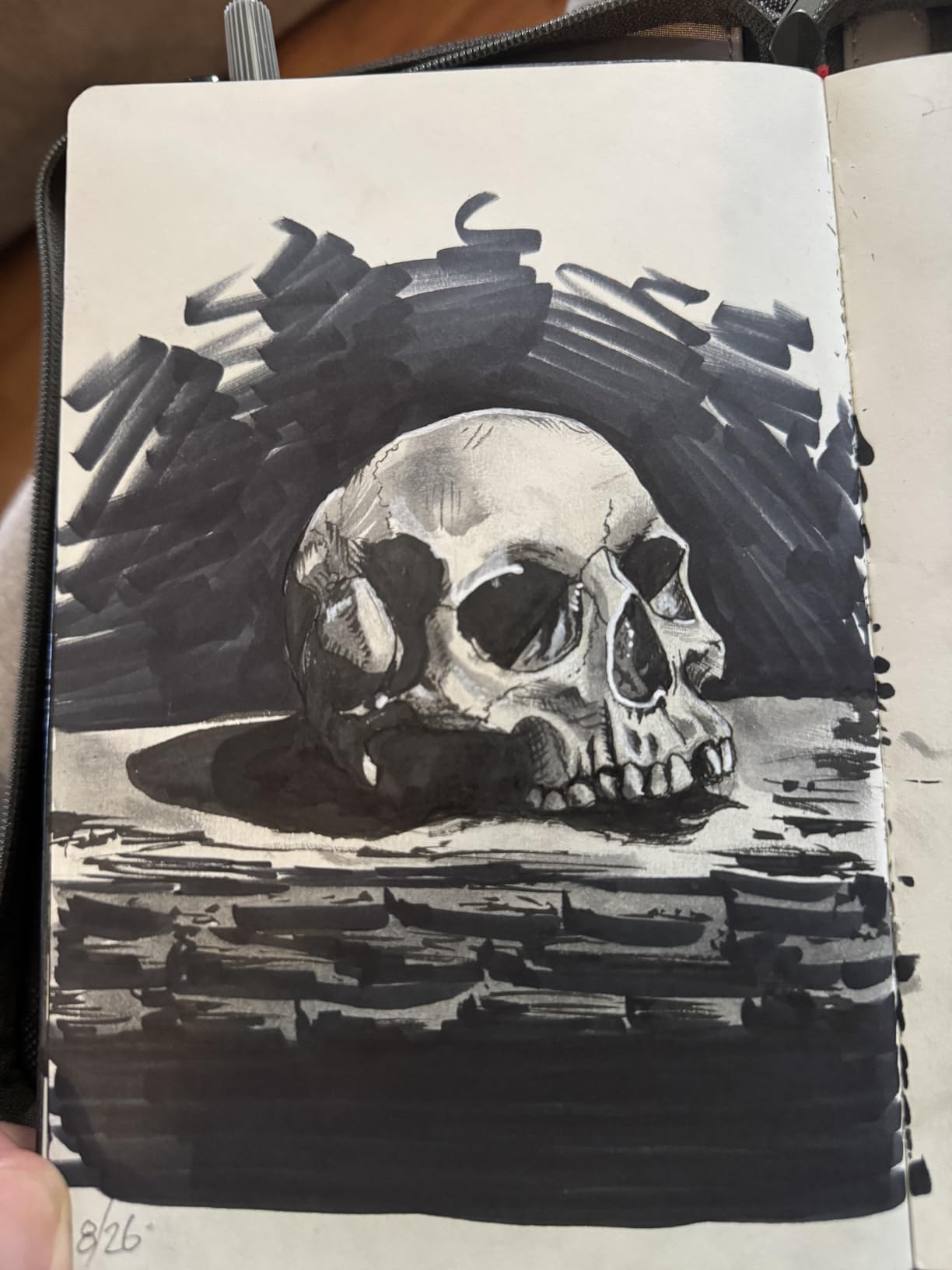
Why sewn thread beats spiral for pencil
A thread-bound book opens to any angle, including fully flat, so there is no ring of coils pushing into your forearm and no coil shadow crossing the drawing. There is also no spiral hole near the edge to catch your palm. For pencil specifically, that removes two of the three things that cause smudging on the go.
Where it falls short
It is the least protective option here for a bag full of pens, and the elastic strap can leave an indentation in the soft cover over time. The elastic also disappears when the book is filled, which is a small design failure reviewers mention more than once. This is a pencil and pen book, not a wet media book.
4. ARTEZA Hardcover Sketchbook — Best for Daily Practice
ARTEZA Drawing Sketchbook, 8.5 x 11 in, Hardcover, 110 Sheets
8.5 x 11 inch
110 sheets / 220 pages
68 lb / 100 gsm acid-free
Hardcover with ribbon bookmark
Pros
- 110 sheets give a long run of practice pages
- Semi-smooth tooth blends pencil and charcoal cleanly
- Hardcover and inner pocket survive daily handling
- Ribbon bookmark holds your place
Cons
- Pages are bound in and cannot be removed without cutting
- Smooth texture works poorly with kneaded or rough erasers
- Alcohol markers bleed though not onto following pages
Two hundred and twenty usable pages is the number that matters here. The ARTEZA is built for the person who draws most days and wants a book that lasts a season rather than a fortnight. At 100 gsm the sheet is heavier than most practice pads, which means it does not shine or dent after a few weeks of blending.
The surface is semi-smooth with just enough tooth to grip graphite. Reviewers describe colored pencil and charcoal blending smoothly on it with minimal show-through, and a semi-smooth surface is also why a 4B builds tone without the skipping you get on a rough sheet.
The hardcover is genuinely rigid, with a ribbon bookmark and an expandable inner pocket for reference images or receipts from the supply shop. One owner reports a child’s daily use left the book intact, which is about as demanding a durability test as this format gets. It also suits colored pencil and pastel, the two mediums that turn a sketchbook into a general art book.
What you give up is flexibility. The pages are bound in, so removing a finished piece means cutting, and the smooth surface frustrates a kneaded eraser, which needs tooth to pick up graphite. A small number of owners have reported the spine loosening with time. None of that matters much if the plan is to fill the book.
Why page count matters for daily drawing
At 100 gsm the sheet survives repeated erasing without cockling, which is the practical difference between a practice book and a disposable one. The semi-smooth tooth keeps hatching crisp while still letting a blending stump move the pigment around, so you get both line quality and tonal control from one page.
Where it falls short
If you want to pull a finished drawing out and frame it, this is the wrong format, since you would be cutting the page out at the binding. Marker artists should also look elsewhere, because alcohol ink still bleeds even though it does not reach the following page. The paper is good value rather than archival.
5. String & Space 200gsm Sketchbook — Best Heavyweight Paper
Artist’s Sketchbook Hardcover – 200GSM Very Thick Paper – Large, Spiral Sketch Book for Drawing and Mixed Media – Sketch Pad, Art Book – 8.25 x 11.4, 40 Sheets / 80 Pages
8.25 x 11.4 inch
40 sheets / 80 pages
200 gsm paper
Spiral bound with hardcover
Pros
- Heaviest paper here
- minimal bleed-through or ghosting
- Hardcover and spiral work in either orientation
- Handles charcoal
- pastel and light watercolor
Cons
- Only 40 sheets
- the shortest book in the set
- Bulky and less portable because of the paper weight
- Coil can restrict cover fold-back on smaller sizes
At 200 gsm this is the heaviest sheet in the group by a clear margin, and that is the entire point. Heavy paper does three things for pencil work: it resists the pressure of a hard 6B, it survives scrubbing, and it stops graphite ghosting onto the next page. If you draw dark and often, that is worth more than any feature list.
The format is unusual and well considered. An 8.25 by 11.4 inch page gives a slightly longer drawing area than letter size, and the spiral combined with a chipboard cover means the book works in either orientation. Owners use it for charcoal, oil pastel, colored pencil and light washes, and the paper takes all of them without transferring.
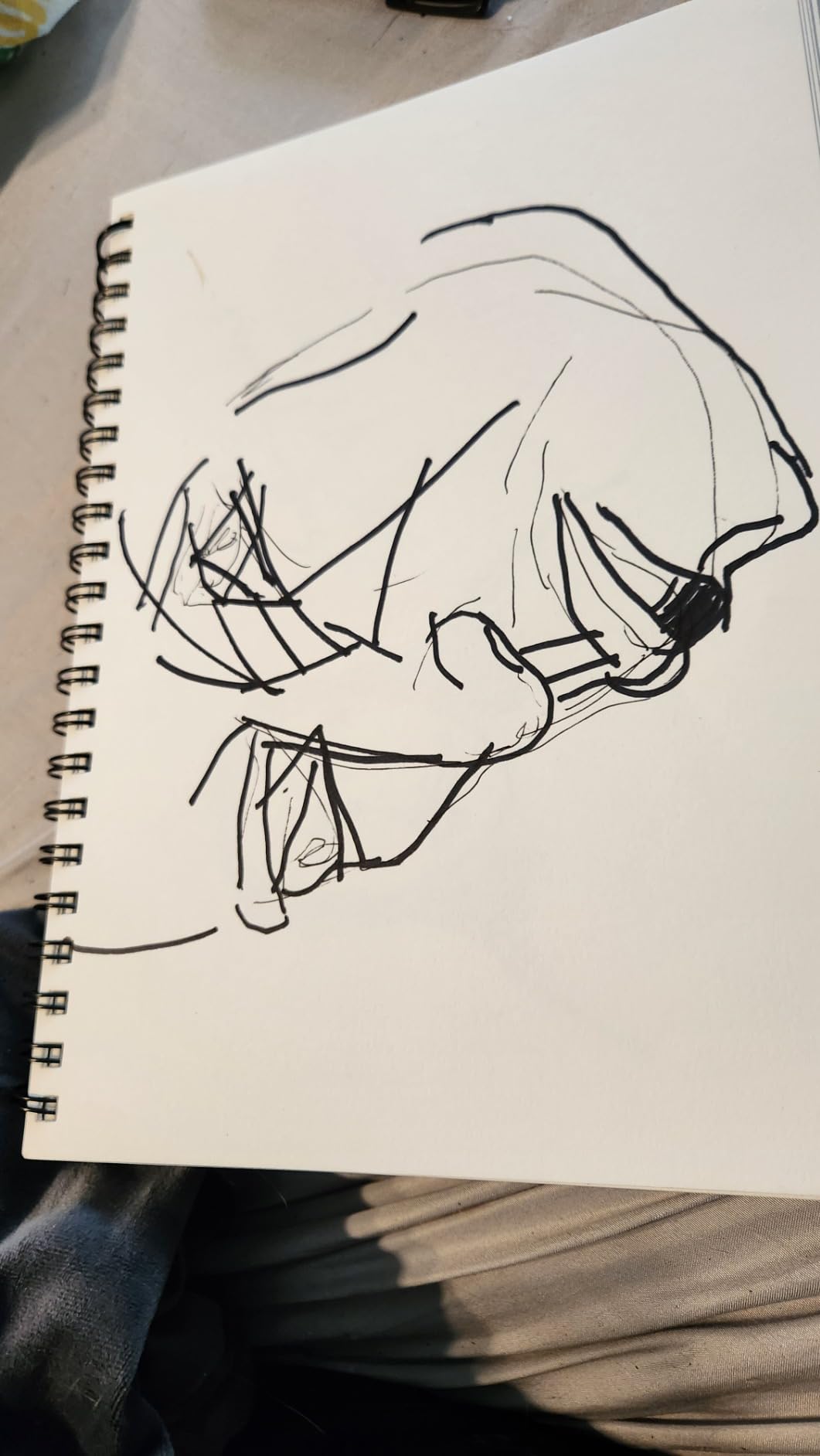
What you trade for that toughness is length and portability. Forty sheets is a fraction of what most books here offer, and because the paper is so heavy the book is bulky in a way a 70 lb pad is not. If you travel, this is not the one. If you sit at a desk and produce finished work, it is the one.
The other recurring note is that the coil limits how far the cover folds back on the smaller sizes in the range, so if you draw to the very edge of a page you will feel the rings. Reviewers rate this highly and treat the sheet count as the honest trade rather than a fault.
What 200 gsm changes for graphite
About double the weight of the mid-range pads here means the fibres do not compress under a soft pencil. Values stay dark, the tooth keeps its bite, and an eraser does not pull up a fuzzy layer of fibre. It is the difference between a drawing that feels permanent in the book and one you worry about touching.
Where it falls short
Forty sheets will disappear quickly for anyone drawing daily, and the sheer mass works against portability. It is also overkill if you only ever make light contour sketches, where a lighter paper gives you the same result at a fraction of the bulk. Buy this one for finished work, not for warm-ups.
6. MOFUNY Mixed Media Sketchbook — Best Large Format
MOFUNY Mixed Media Sketchbook 9×12, Drawing Paper Pad 60 Sheets_98lb/160gsm
9 x 12 inch
60 sheets
98 lb / 160 gsm uncoated
Top spiral, rotates 360 degrees
Pros
- 160 gsm paper takes heavy erasing and light washes
- Top spiral and rigid covers let the book lie fully flat
- Enough tooth to grip graphite rather than feeling slick
- Perforated sheets tear out consistently
Cons
- Paper is absorbent
- so not ideal for detailed watercolor work
- Still spiral bound
- which some artists prefer to avoid
Nine by twelve inches is the size most people picture when they think about a drawing pad, and the MOFUNY fills it properly. There is no margin wasted on a border that you cannot draw on, which means a portrait study or a wide composition fits without scaling down in your head first.
The 160 gsm sheet is thick enough to scrub and thick enough to stop ghosting from a full-page gradient. Reviewers describe it as taking ink, light washes and acrylic without transferring to the next page, and as having enough tooth that graphite feels like it is biting rather than sliding. That is exactly what you want from H through 6B.
The top spiral is the feature owners single out most. Because the binding is at the top edge, the page area stays clear from top to bottom and the book rotates 360 degrees on a desk. Rigid front and back covers add the weight needed for the book to sit flat without a board underneath. Perforated edges tear out cleanly when you want to keep a finished piece.
The honest limitation is absorbency. The paper drinks water, which is exactly what you want for ink, gouache and light washes and exactly what you do not want for controlled washes where you need time to blend edges. Users also point out that it is still spiral bound, so the coils do sit near your hand at the top of the page.
Why the top binding helps your hand
Most smudging happens because the heel of your hand rests on the page to the side of the drawing. On a top-bound book the coils run along the top edge only, so the left, right and bottom of the page are all clean paper to rest on. Left-handed artists, who often need a clear margin on the right, get that margin here without having to search for a sideways format.
Where it falls short
For pencil alone, 160 gsm is generous, and you are carrying more weight than you need for light sketching. The absorption that makes ink behave also makes fine watercolor work difficult. If your drawing is graphite-only and mostly small, a smaller book would serve you better.
7. Strathmore 200 Series Sketch Pad — Best for Beginners
Strathmore 200 Series Tape Bound Sketch Pad, 50 lb. Sketch Paper, 9 X 12 inches, White, 100 Sheets (25-509)
9 x 12 inch
100 sheets
50 lb matte paper
Light grain, wire bound
Pros
- Light grain texture grips pencil and charcoal
- Lightweight paper resists creasing in a sketch context
- 100 large sheets make the book last a full term of practice
- Standard choice for art classes and warm-ups
Cons
- 50 lb stock is thinner than the 400 Series
- Best suited to practice rather than finished pieces
- Not for wet media or heavy erasing pressure
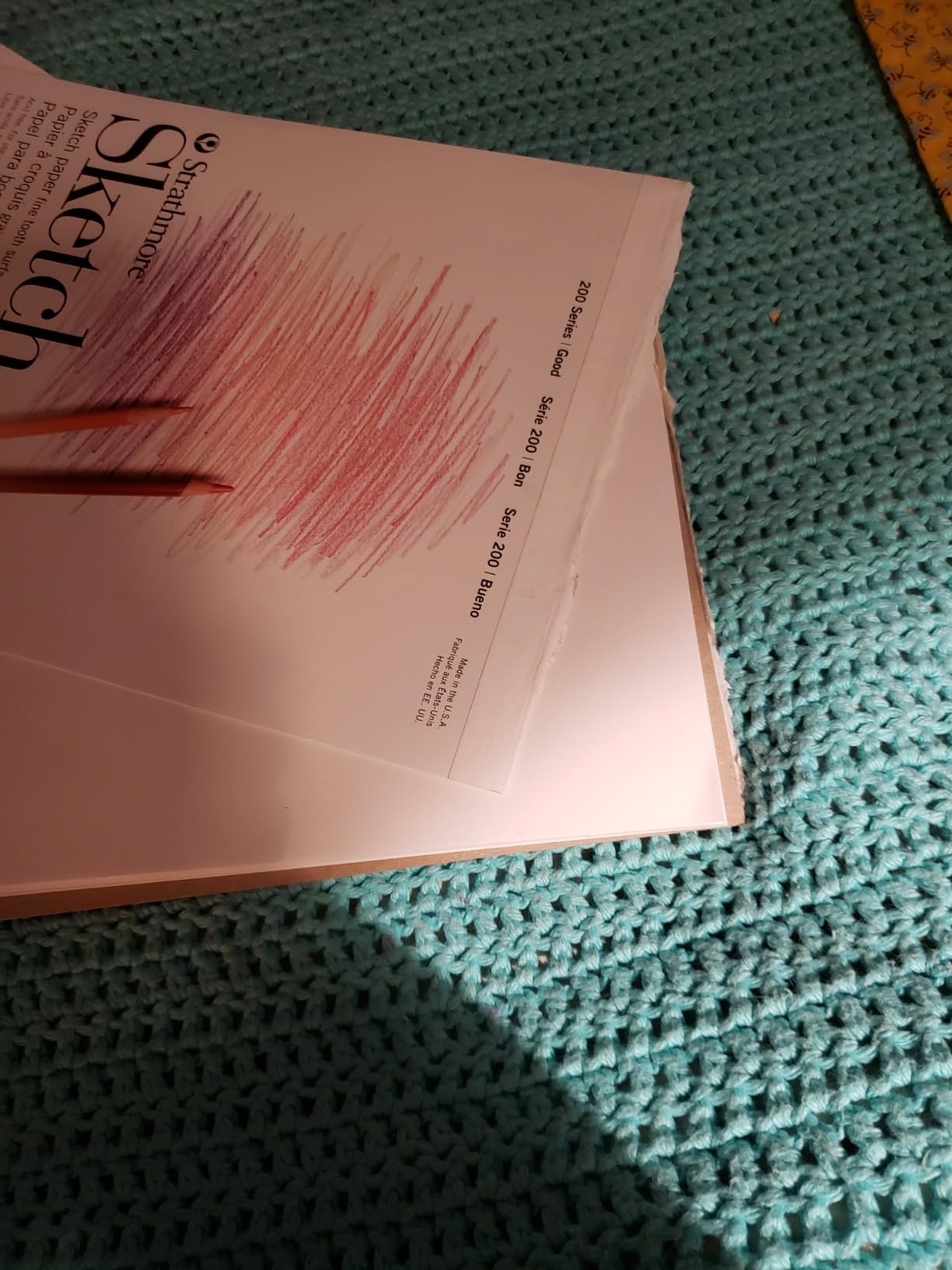
There is a specific reason beginners hesitate to buy a proper sketchbook: the fear of wasting expensive paper on a bad drawing. The Strathmore 200 Series is the antidote. It is a large, generous format with 100 sheets that is light enough in the hand that you forget it is there, and the weight of a discarded warm-up costs you nothing in hesitation.
The paper is described as matte with a light grain, and that grain does real work. Pencil and charcoal pigment catch on the texture rather than sliding, which for a beginner is the difference between shading that looks like shading and shading that looks like a grey smear. Because the paper is thin, the pad stays flat in a bag and does not need a board.
Wire binding and chipboard backing keep the sheets aligned and make the pad easy to turn one-handed while sketching. At 9 by 12 inches there is plenty of room for gesture drawings and figure work, which is what most practice sessions are actually made of. It is a long-established student paper and it shows in the consistency.
The tradeoff is durability. Reviewers are consistent that 50 lb is intentionally lightweight, which makes it right for warm-ups, classroom work and life drawing but wrong for finished pieces you intend to keep or display. Heavy erasing will mark it and wet media will ruin it, so treat it as practice paper and move up a weight when you are ready.
Why beginners should not overbuy
Most of a beginner’s first hundred sketches are warm-ups, not portfolio pieces, and paper that feels precious makes the hand stiff. A light paper you will fill quickly teaches you to commit to a mark, which matters far more than the weight of the sheet.
When to move up a weight
Move to 100 gsm or heavier once you start keeping pieces, blending long gradients or erasing back into the page repeatedly. Until then the thin sheet is not a compromise, it is the right tool for the job.
8. Pentalic Hardbound Sketchbook — Best Classroom Pick
Pentalic – 8.5″x 11″ Hardbound Sketchbook, 110 Sheets, Black
8.5 x 11 inch
110 sheets / 220 pages
70 lb bright white
Hardbound embossed cover
Pros
- Bright white acid-free paper that takes pencil and pastel cleanly
- Hardbound textured cover protects the pages
- 110 sheets in standard letter size
- A long-running classic format used in classrooms
Cons
- Smooth surface offers only moderate tooth for blending
- Letter size gives less drawing area than a 9 x 12 pad
- Lightweight 70 lb paper can ghost with heavy pressure
The Pentalic is the format most people picture when someone says sketchbook: a black hardbound cover, bright white pages, letter size. It has been the default in American art classrooms for decades, and the reason is that it is dependable, unremarkable and hard to ruin. For a class of twenty students drawing for a term, it does the job without any of them worrying about it.
The paper is bright white 70 lb acid-free sheet. Bright white matters more than beginners expect: it gives you the full tonal range, so your lightest 2H marks are visible and your darkest 6B still reads as dark. Many budget papers are grey or cream, which flattens the value scale before you begin.
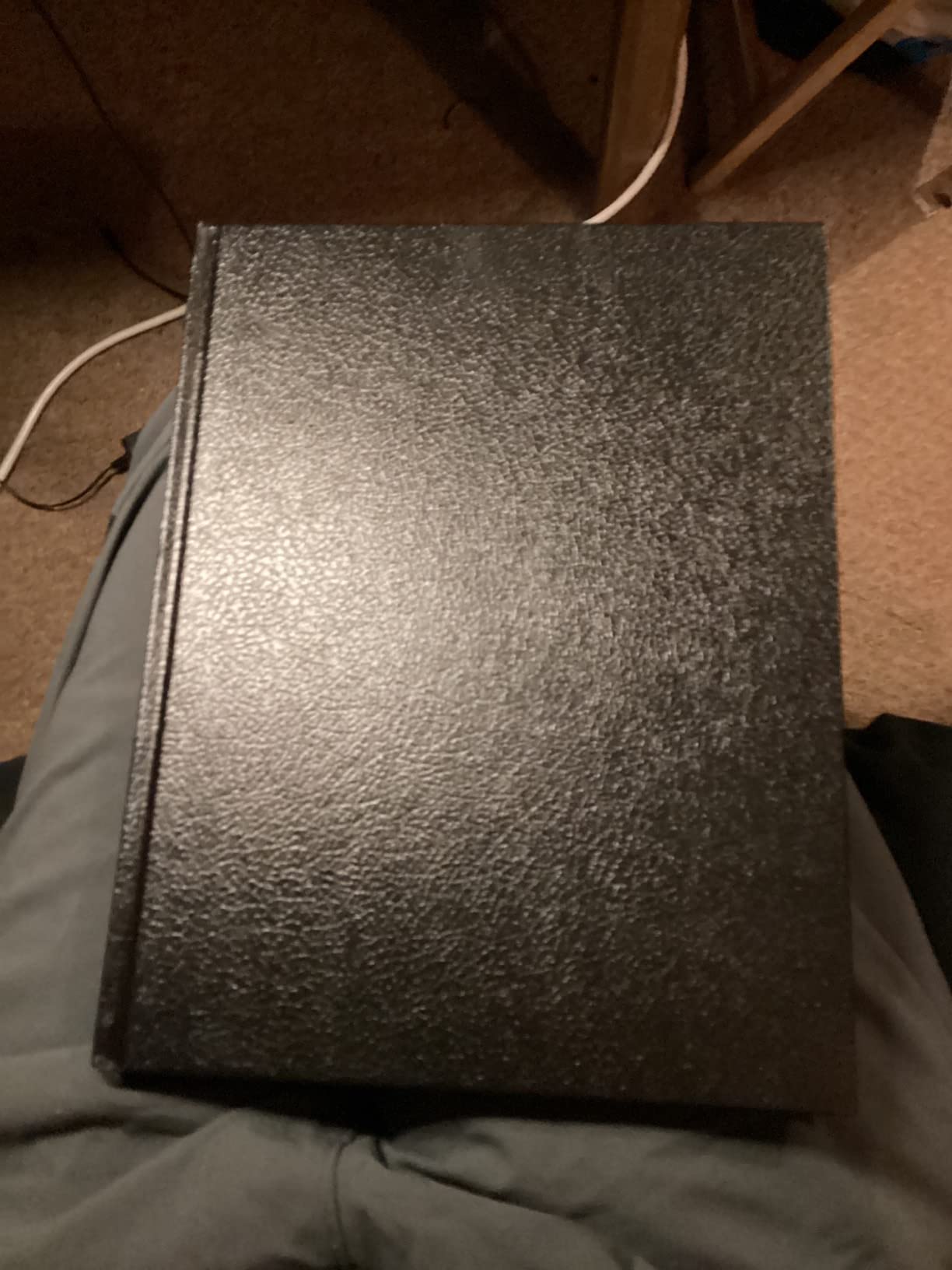
At 110 sheets you get 220 usable pages, which is a long run for a single book. The hardbound textured cover with an embossed finish protects the pages in a backpack and takes a beating. It also suits pastel and charcoal reasonably well, so it is not limited to graphite even though that is what we tested.
The recurring limitation is the smooth surface. Reviewers mention only moderate tooth for blending, and 70 lb is light enough that heavy pressure will ghost to the reverse. Letter size also gives you less drawing area than the 9 by 12 pads here, which you notice on large compositions rather than on quick studies.
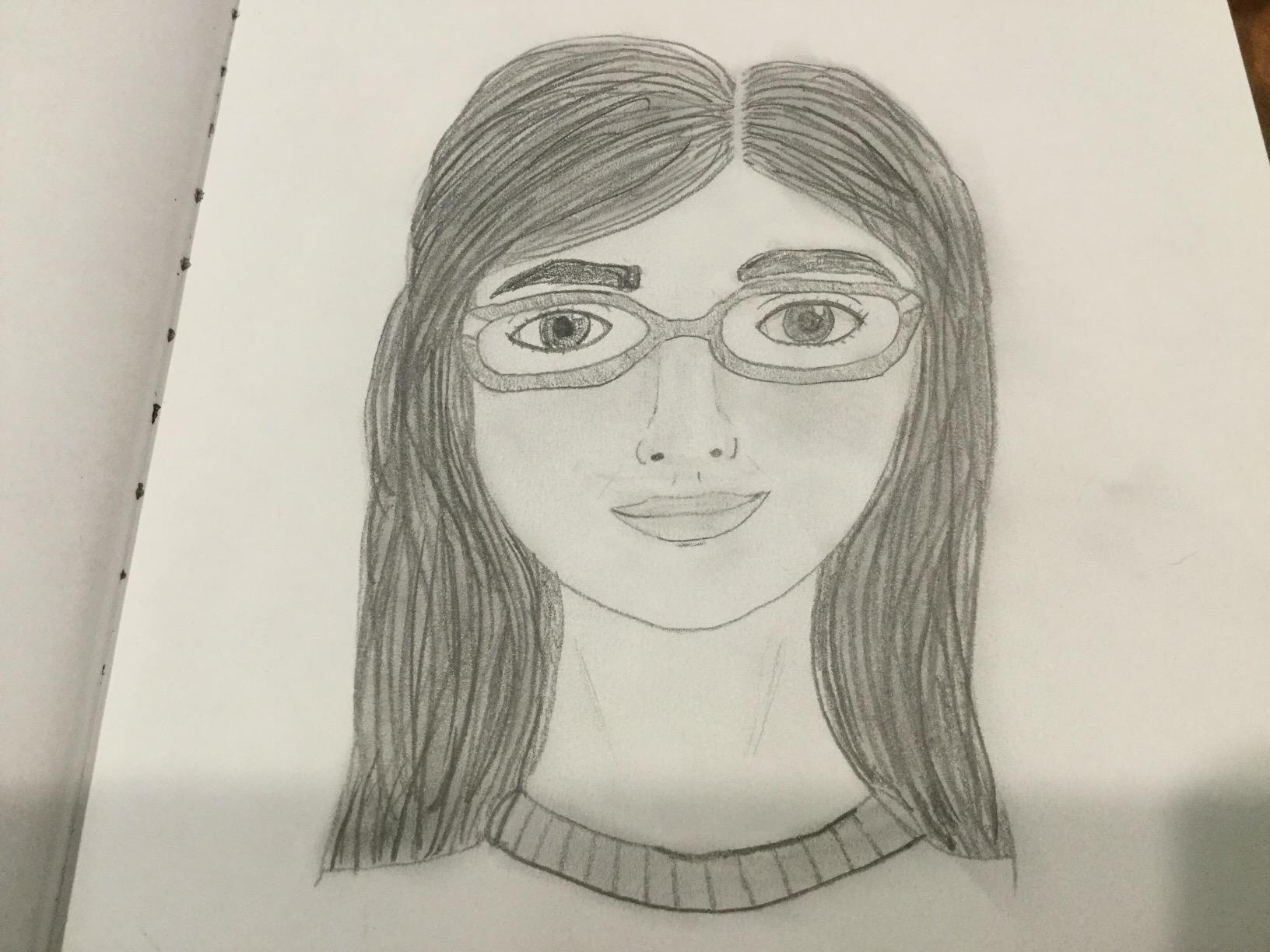
Good paper for beginners and classroom sets
Bright white acid-free paper at this weight keeps a full range of values and survives a term of daily handling without tearing. The embossed hardbound cover means a dropped book does not crease the pages, and 220 pages means you rarely have to carry more than one.
Where it falls short
If you blend a lot, the smooth finish will frustrate you, and a kneaded eraser will pick up almost nothing from it. Light paper plus hard pressure also means ghosting, so use a backing sheet for finished work. For graphite practice and class work it is hard to beat.
9. ALKALO Square Sketchbook — Best for Lay-Flat Drawing
Sketchbook for Drawing, 120 Pages Sketch Book, 122LB/180GSM Thick Paper
8 x 8 inch square
120 pages
122 lb / 180 gsm acid-free
180 degree lay-flat, PU leather
Pros
- 180 gsm paper resists bleeding and ghosting
- Binding opens fully flat at 180 degrees
- Waterproof PU leather cover
- Perforated pages plus inner pocket and ribbon bookmark
Cons
- Square 8 x 8 page is smaller than letter or tabloid pads
- Heavy markers can still bleed slightly
- Modest review base compared with the others
The ALKALO solves the binding problem properly. It opens completely flat at 180 degrees, which means no ridge under your forearm and no hardware anywhere near the drawing surface. For pencil work, where your hand travels across the page constantly, that is not a small comfort, it is the whole design.
The paper is 122 lb, or 180 gsm, and acid-free. That weight sits between the heavy practice pads and the heaviest artist paper here, and it holds a dark value without the sheet cockling under the eraser. Owners repeatedly report repurchasing it, which is the strongest signal a book can send.
The soft PU leather cover resists water and dust and does not flex enough to let the pages curve, which is what makes the flat opening work in the first place. Perforated pages tear out easily, and there is an inner pocket and a ribbon bookmark for reference material. Permanent markers still seep slightly even at this weight, but not to the following page.
Two caveats are worth stating plainly. The square 8 by 8 inch format is smaller than letter and much smaller than a 9 by 12 pad, so a half-figure study needs planning. And this book has a much smaller review base than the others here, so you are trusting a shorter track record.
Why 180 degree lay-flat matters
A book that folds fully open gives you an uninterrupted drawing surface with no shadow from a spiral and no coils pressing into the side of your hand. It also lets you work across a two-page spread, which turns two portrait studies into one continuous composition when you need it.
Where it falls short
The square page is the constraint for anyone used to letter or larger formats. Heavy markers can still mark through, so treat it as a dry media book. The smaller review history also means less long-term evidence about how the binding holds up over years.
10. UCreate Poly Cover Sketch Book — Best All-Rounder for Dry Media
UCreate Poly Cover Sketch Book, Heavyweight, 9″ x 12″, Black, 75 Sheets
9 x 12 inch
75 sheets
70 lb acid-free
Perforated, spiral bound, poly cover
Pros
- Heavyweight 70 lb paper suited to pencils and crayons
- Spiral binding lies flat for on-the-go drawing
- Perforated sheets remove finished artwork cleanly
- Poly cover survives daily handling by students and children
Cons
- Poly cover is less rigid than a hardcover
- 70 lb is thinner than the 160 to 200 gsm pads here
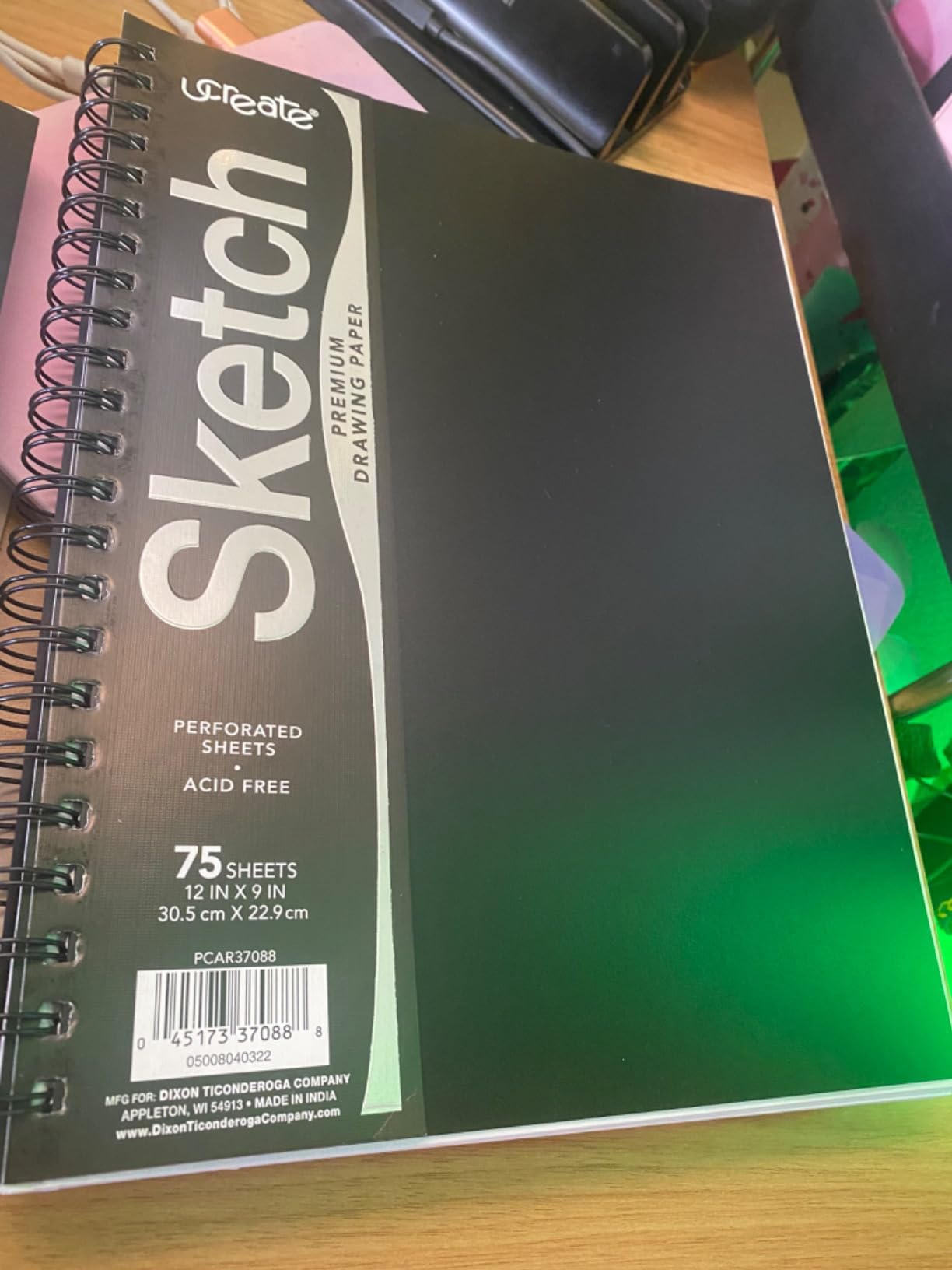
The UCreate is the one that gets recommended without a caveat attached. It has the second-largest volume of owner feedback of any book in this group, and that feedback is consistent: the paper is solid for dry media, the spiral lies flat, the perforations tear cleanly, and it survives being handled daily by children and students.
At 9 by 12 inches and 75 sheets, it splits the difference between a big practice pad and a large artist book. The 70 lb paper takes pencil, colored pencil and crayon without cockling under normal pressure, and the wire spiral plus chipboard back keeps the pages aligned so the book does not splay when you carry it one-handed.
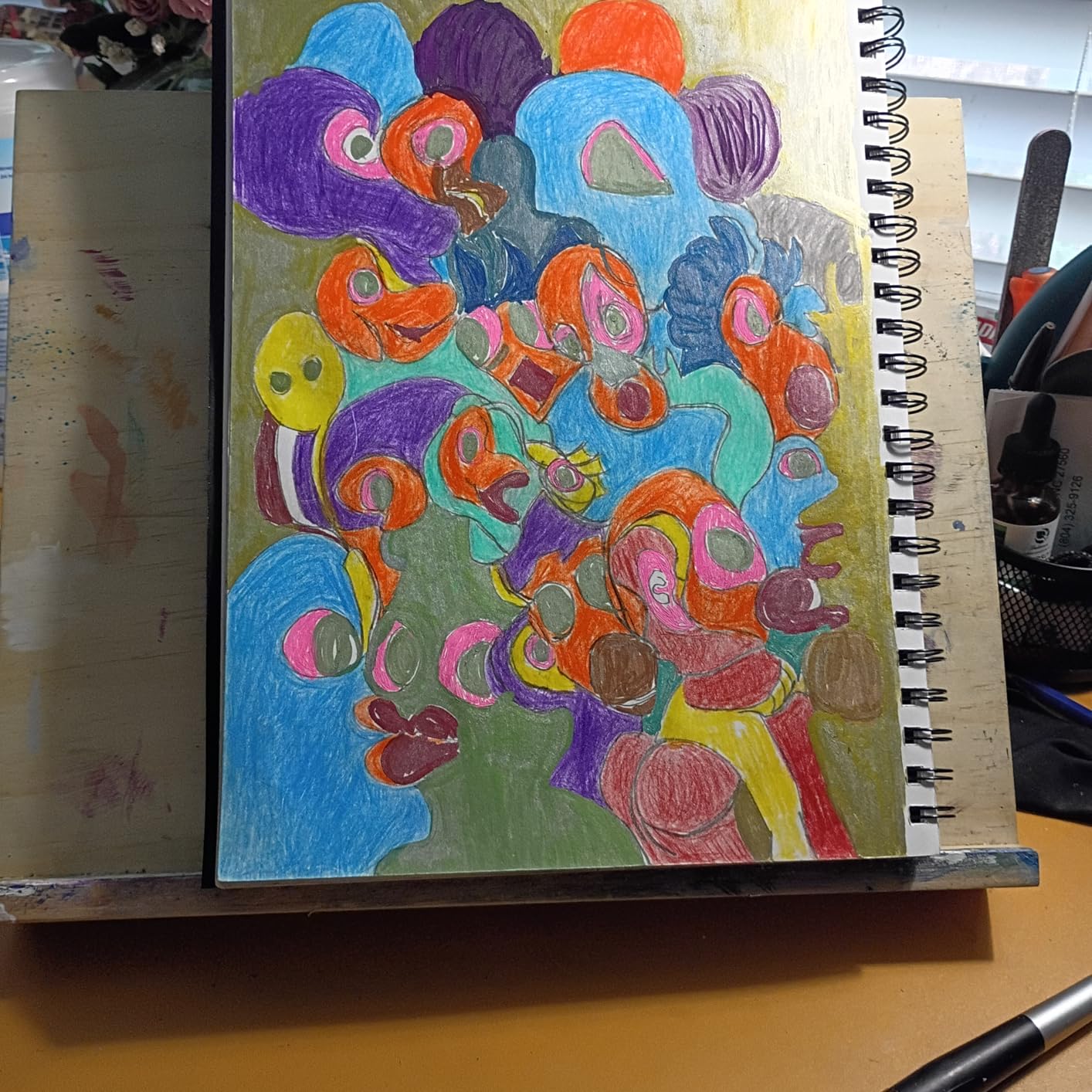
The poly cover is the reason it survives school environments. It is flexible rather than rigid, so it bends into a bag, but it is tough enough to take daily handling without creasing. Perforated edges mean a finished drawing comes out clean, which is exactly what you want when the work is for a school wall or a gift.
Two limitations are consistent across reviews. The poly cover gives less protection than a true hardcover if something spills on it, and 70 lb is lighter than the 160 to 200 gsm pads in this roundup, so it is not the choice for heavy charcoal or prolonged scrubbing. For pencil, charcoal and pastel in an active book, it holds up well.
A safe first serious book
Most people who graduate from a cheap pad end up here. The paper is heavier than a warm-up sheet, the format is large, and the book is tough enough to be thrown in a bag. It is a safe upgrade that will not punish you while your hand technique is still developing.
Where it falls short
If you already blend heavily or draw with very soft pencils, go heavier. The flexible cover also means less protection than the hardcover options here, so keep it away from water. Within those limits it is hard to argue with, given how many people use it daily.
How to Stop Graphite Smudging in a Sketchbook
Smudging is the complaint that comes up most when artists compare books, and it is nearly always caused by the hand rather than the paper. Graphite is a powder. Until it is pressed into the fibre, it sits on the surface and transfers to anything that touches it, including skin. The fix is a combination of paper choice and working method.
1. Pick a toothier sheet. Graphite anchors to micro-texture. The Strathmore 400 Series and the MOFUNY both have enough tooth to hold particles, while very smooth surfaces such as the Conda and Pentalic let more of it sit loose.
2. Use a blending stump, not your finger. A stump gives you control and pressure, and it picks up loose graphite as it works, which means it stops moving pigment back onto the sheet. Fingers do the opposite. Keep a cloth or tissue nearby and wipe your hand instead of dragging it across the page.
3. Rest your hand past the drawing. Before you start a passage, move your hand to a clean area and use that as your anchor. A sheet of scrap paper under your palm is a cheap, effective guard and works on any book.
4. Build light to dark. If you lay a soft 6B down heavily at the start, the first layer is loose powder that smudges on contact. Layer lightly with an H or HB first, press harder as you go, and the compressed pigment resists transfer far better.
5. Finish with spray fixative if the piece is done. Workable fixative locks graphite in place without making it permanently glossy. If you are still correcting, avoid it, because fixed graphite will not lift cleanly with an eraser.
6. Pick a heavier sheet for finished work. Above roughly 160 gsm, the fibre does not compress under a soft pencil, so pigment sits deeper. This is why the heavier books on this list feel noticeably cleaner to work on even before you change any technique.
Sketchbook Buying Guide: Paper Weight, Tooth and Binding
Paper weight is the biggest lever you control
Weight is measured either in gsm (grams per square metre) or in pounds per ream, and both appear in the listings above. The lb figure describes weight per 500 sheets of a standard ream, while gsm describes the sheet itself, which makes gsm the more honest number when comparing books of different sizes. The two are only loosely related.
As a rough guide, anything at or below 70 lb is practice weight and suits warm-ups, gesture work and classroom use. Around 100 gsm is the sweet spot for daily drawing and repeated erasing. At 160 gsm and above you are into finished-work territory where soft pencils and long blending sessions stop being risky.
Be aware that brands do not always convert consistently, and the two figures on a listing sometimes disagree. The Conda is listed at 90 gsm and 60 lb, while the ARTEZA is listed at 100 gsm and 68 lb, so the lb numbers are close but not identical. When the two figures on a listing do not line up exactly, trust the gsm, because that is measured on the sheet you are actually buying.
Tooth decides how your pencil behaves
Tooth is the texture of the sheet. A fine tooth grips graphite and gives the drawing a visible grain once you work into it, which many artists prefer. A smooth surface gives crisper fine detail but less texture, and soft graphite will smear more easily because there is less to anchor it.
Matching tooth to pencil grade matters more than most buyers expect. Hard grades from 6H to H need a smooth surface, because on a rough sheet they skip and catch. Soft grades from 4B to 6B need tooth, because that is what stops the pigment sliding. HB and 2B sit in the middle and work on almost anything.
Binding decides whether you can draw properly
Thread-bound books fold back and lie flat, with no hardware near the drawing surface. This is the best option for pencil because there is nothing for your hand to rest against. Spiral binding is a close second: it lies flat but puts a row of coils along one edge, which is why top-spiral formats are preferable when you can get them.
Wire-bound pads such as the Strathmore 200 Series keep the sheets aligned and portable, but the pages only sit flat if you put them somewhere flat, so a board or a tabletop is worth having. Hardcover books add protection for travel but are bulkier and more rigid than most people need.
Size and format
A 9 by 12 inch pad gives the largest drawing area and is standard for finished work. Letter size at 8.5 by 11 is the practical compromise and fits most folders. Smaller formats such as 5.5 by 8.5 or 8 by 8 are for sketching on the go, where the constraint is your pocket rather than your page. Square formats are unusual and suit composition studies rather than large work.
Paper colour, acid-free and page count
Bright white paper gives you the widest tonal range. Cream paper looks warmer and is more forgiving visually, while toned tan and grey paper suit value studies because your whites are already drawn in for you. Acid-free paper is worth paying for if you want to keep a sketchbook for years, since it resists yellowing.
Page count is the most misleading number on a listing, because sheets and pages are not the same thing. A book described as 110 sheets gives you 220 usable pages if it is printed on both sides. Judge books by sheets for thickness and by total pages for how long the book will last.
Beginner and experienced splits
If you are new to graphite, buy light and buy often. The Strathmore 200 Series and the UCreate cover practice, they do not punish mistakes, and they build the habit of drawing every day. Once you start blending long gradients or erasing back into a finished area, move to 100 gsm and above, where the ARTEZA and the Conda sit.
For mechanical pencil users, look for a smooth surface rather than a toothy one. A hard 0.5 or 0.7 mm mechanical pencil pushes graphite into the fibre, so a fine-tooth sheet grips the mark and stops the line from looking weak and scratchy. The Strathmore 400 Series and the MOFUNY both suit this.
How We Tested These Sketchbooks
We compared ten books across the range above using the same approach for each one. Every book was drawn in for a minimum of ten pages before we formed an opinion, because the first impression of a surface is misleading.
1. Graphite range test. We laid H, HB, 2B, 4B and 6B side by side on the same page and checked for skipping, grain, streaking and how evenly each grade held a value.
2. Eraser durability test. We shaded a dense 6B block, then erased it repeatedly with both a vinyl and a kneaded eraser, watching for cockling, fluffing and tearing.
3. Smudge test. After each grade dried, we pressed a palm and the back of a hand onto the tone and graded the transfer from clean to unusable.
4. Show-through test. We checked the reverse of every page under raking light for ghosting after full shading.
5. Handling test. Each book went into a bag with pens, a water bottle and a set of pencils, and we noted whether the cover, binding and pages survived the week.
We also read the owner reviews closely and used them to correct our own impressions, since the same trade-offs show up repeatedly across thousands of reports.
Frequently Asked Questions
What sketchbook is best for drawing?
For most people the Strathmore 400 Series Sketch Pad is the strongest all-round choice. Its fine uncoated tooth grips graphite, charcoal and colored pencil without the skipping you get on very rough paper, and the wire binding lets the pad lie flat while you shade. If you want a hardcover that survives a bag instead, the Conda hardbound sketch book offers more protection at a lighter paper weight.
What paper weight is best for pencil drawing?
Around 100 gsm is the sweet spot for daily drawing, because it survives blending and repeated erasing without cockling or tearing. Below 70 lb you are looking at practice paper that suits warm-ups and gesture work. At 160 gsm and above the fibre no longer compresses under a soft pencil, which makes the heaviest books the right choice for finished pieces and heavy shading.
Is a toothy or smooth paper better for pencil drawing?
Match the surface to the pencil grade. Hard grades from 6H to H need a smooth sheet, because on a rough one they skip and catch. Soft grades from 4B to 6B need tooth, because the texture anchors the pigment and stops it sliding or smearing. HB and 2B sit in the middle and work on almost any surface, which is why they are the safest place to start.
How do I stop graphite from smudging when I draw?
Use a blending stump rather than your finger, rest your hand on a clean area or scrap sheet instead of the drawing, and build light to dark so later layers compress earlier ones into the fibre. A paper with more tooth anchors graphite and reduces transfer. Once a piece is finished, a workable spray fixative locks the pigment permanently.
Should a beginner buy an expensive sketchbook?
No. Beginners should buy lighter and cheaper paper and draw many more pages, because a book that feels precious makes the hand stiff and slows learning. The Strathmore 200 Series or the UCreate poly cover sketch book give you a large page count at low weight per sheet. Move to 100 gsm or heavier once you start keeping finished pieces and blending long gradients.
Which Sketchbook Should You Buy?
Start with the Strathmore 400 Series Sketch Pad if you want one book that handles every kind of pencil work, from 2H line to a dark 6B. If you need something tougher and more portable, the Conda hardbound sketch book protects pages in a bag for very little per book. Pick the Leda Art Supply Large Sketchbook if you draw on the go and want a binding that truly lies flat, and go for the MOFUNY when you want a large page that sits flat for finished work. Whatever you choose, buy for the paper weight and the tooth first and the cover second, because that is what changes how the drawing looks.