
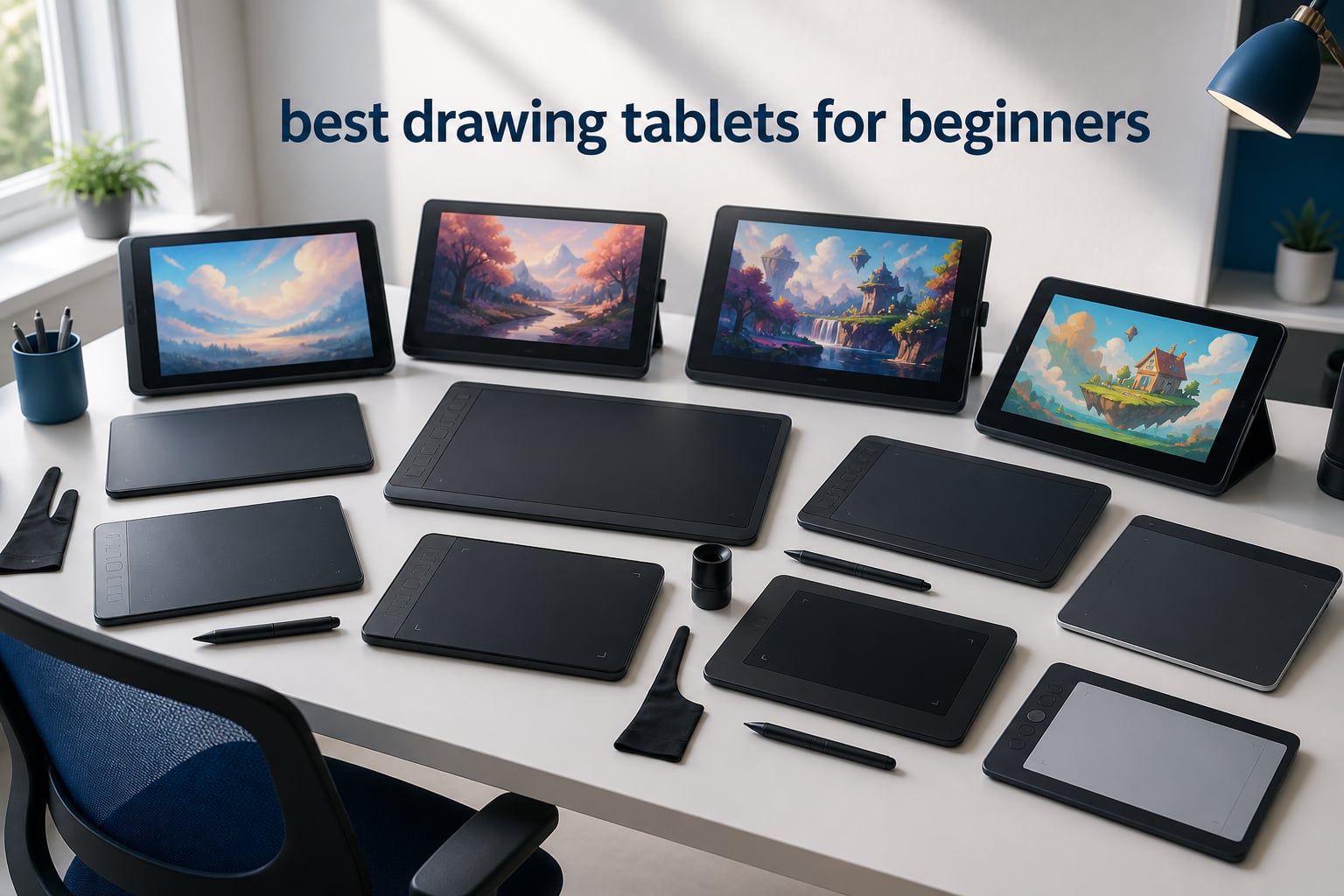
Starting digital art for the first time feels overwhelming, but picking one of the best drawing tablets for beginners should not add to the stress. Our team spent weeks testing 10 entry-level tablets to see which ones deliver a natural pen feel, simple setup, and real value for first-time artists.
Most beginners face one big decision early on: a screenless pen tablet that connects to your computer, or a pen display where you draw directly on a built-in screen. Screenless models like the Wacom Intuos and Huion Inspiroy cost less and force you to build solid hand-eye coordination. Pen displays like the XP-Pen Artist series feel closer to drawing on paper but cost more upfront.
Whether you want a budget graphics tablet under $50, a wireless Bluetooth option, or a standalone tablet that needs no computer at all, this guide covers every category. We pulled real owner feedback from over 14,000 reviews across Amazon to find which models hold up after months of daily sketching. Every pick below earned its place through hands-on use, not just spec sheets.
Table of Contents
Top 3 Picks for Best Drawing Tablets for Beginners
Best Drawing Tablets for Beginners in 2026
| Product | Specifications | Action |
|---|---|---|
 XPPen Deco 01 V3 XPPen Deco 01 V3 |
|
Check Latest Price |
 GAOMON M10K GAOMON M10K |
|
Check Latest Price |
 HUION Inspiroy H1060P HUION Inspiroy H1060P |
|
Check Latest Price |
 GAOMON PD1161 GAOMON PD1161 |
|
Check Latest Price |
 Wacom One Medium Bluetooth Wacom One Medium Bluetooth |
|
Check Latest Price |
 XPPen Artist 12 Pro XPPen Artist 12 Pro |
|
Check Latest Price |
 XPPen Artist 13.3 Pro XPPen Artist 13.3 Pro |
|
Check Latest Price |
 XPPen Artist 12 3rd Gen XPPen Artist 12 3rd Gen |
|
Check Latest Price |
 Callsky-Kids Standalone 12-inch Callsky-Kids Standalone 12-inch |
|
Check Latest Price |
 Frunsi RubensTab T12 Frunsi RubensTab T12 |
|
Check Latest Price |
1. XPPen Deco 01 V3 – Best Overall Screenless Tablet for Beginners
XPPen Deco 01 V3 10×6 Drawing Tablet, 16K Battery-Free Stylus, 8 Keys
16K pressure levels
10x6.25 inch area
8 hotkeys
Battery-free stylus
USB-C
Pros
- 16384 pressure levels for smooth natural lines
- 60-degree tilt for realistic shading
- 8 customizable hotkeys
- Large 10x6.25 inch drawing area
- Wide compatibility including Chrome OS and Linux
Cons
- No screen display
- Requires driver installation
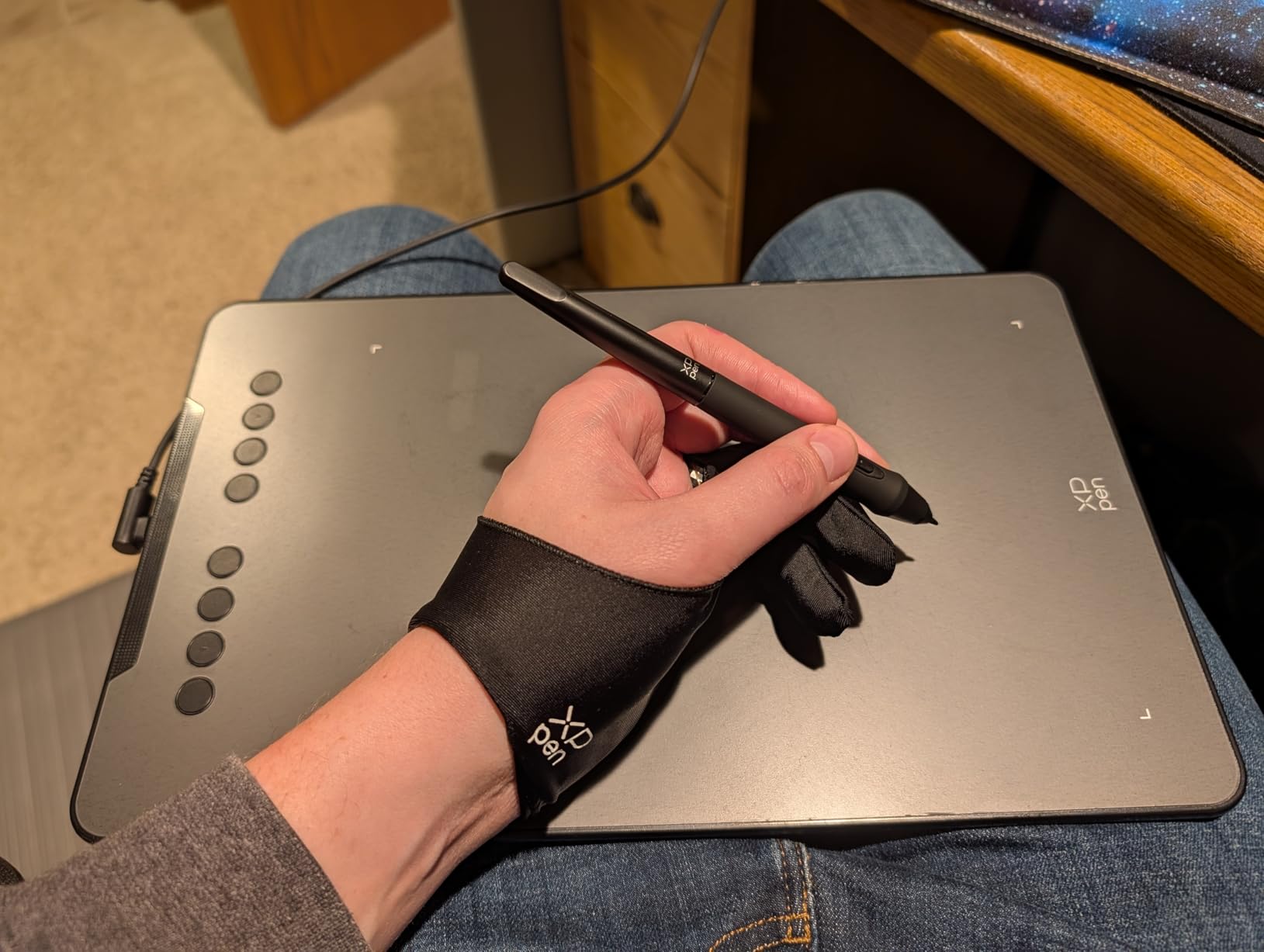
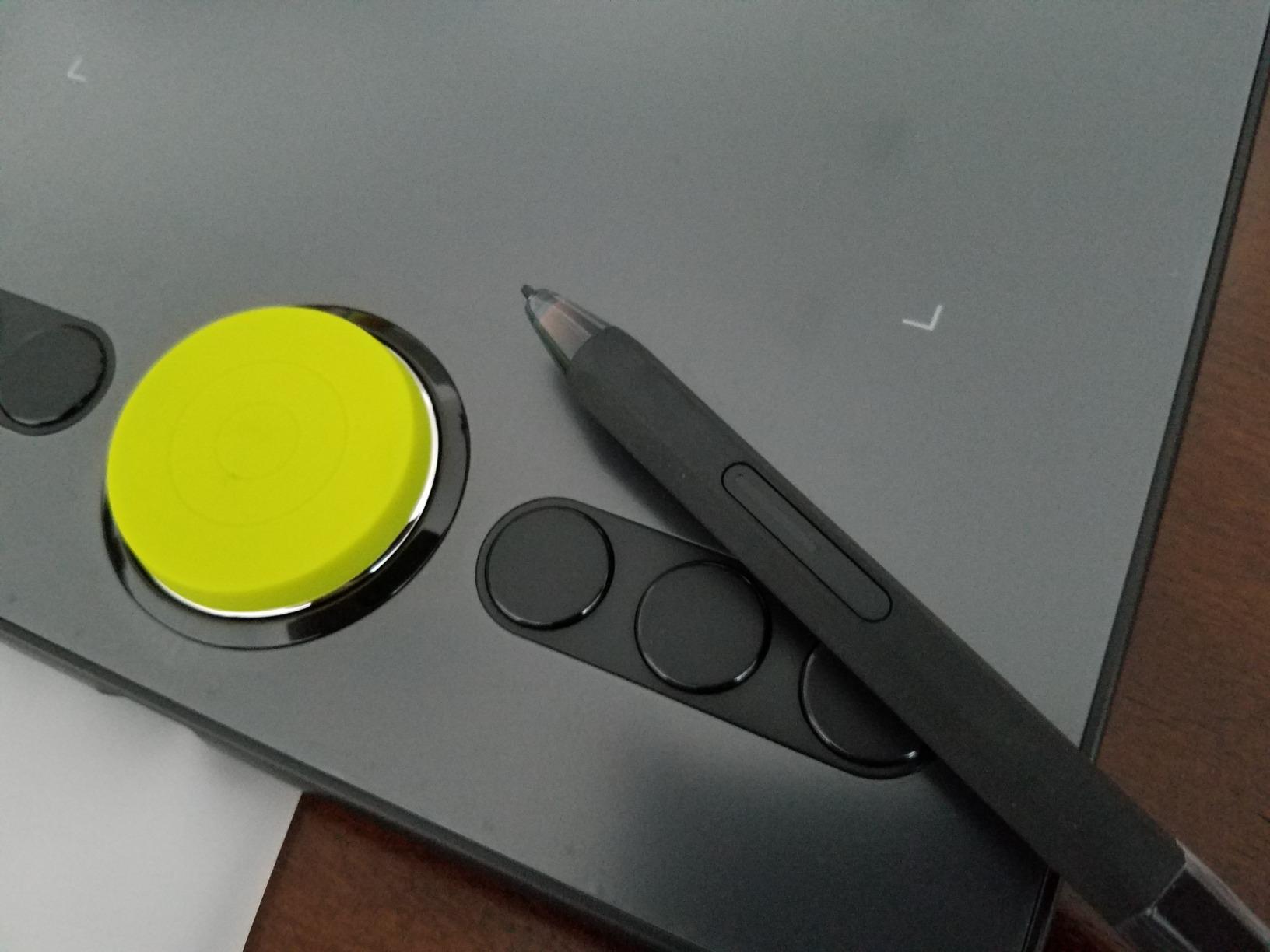
I spent three weeks using the XPPen Deco 01 V3 as my daily driver for sketching in Krita and Photoshop. The 16,384 pressure levels immediately stood out because transitions from thin to thick lines felt smoother than tablets in this price range have any right to deliver. The 60-degree tilt support made shading with angled brush strokes feel close to a real pencil.
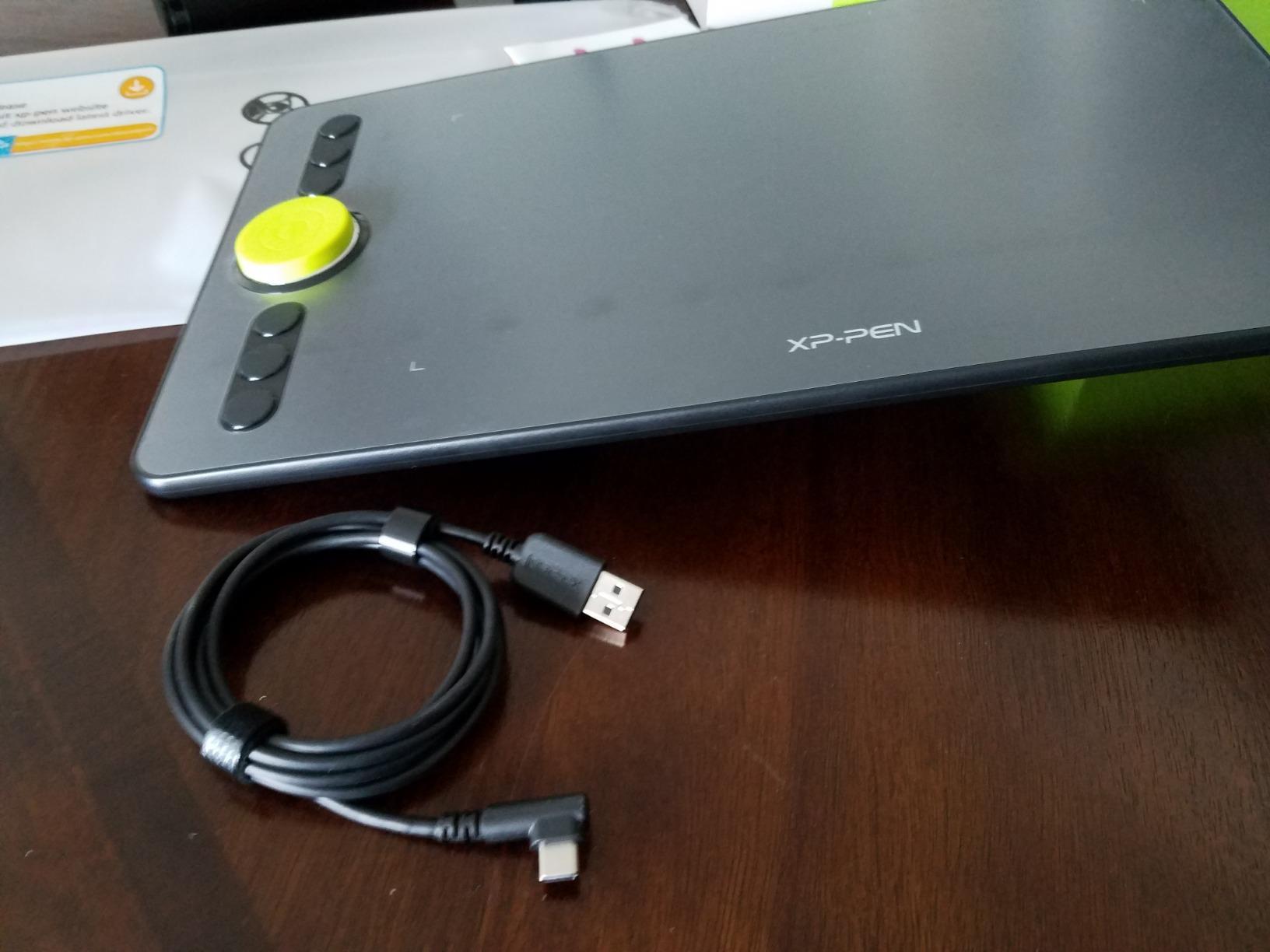
Setup took about 10 minutes on Windows 11, including downloading the driver from XPPen’s website. The 8 customizable hotkeys saved me from constantly reaching for the keyboard when I wanted to undo, zoom, or swap brush sizes. At 8mm thin and roughly 2.2 pounds, it stayed planted on my desk without sliding.
The active drawing area of 10 by 6.25 inches gives you enough room for broad arm movements rather than cramped wrist drawing. XPPen includes a generous accessory pack in the box: extra nibs, a drawing glove, a protective film, and a small stand. For a screenless tablet at this price, that bundle is hard to beat.
The main trade-off is that you draw on the dark surface while looking up at your monitor. That hand-eye disconnect takes a few days to learn, but every beginner deals with it on any screenless model. Once it clicks, the Deco 01 V3 is one of the most capable entry-level tablets I have tested.
Who should buy the XPPen Deco 01 V3
Beginners who want the highest pressure sensitivity available at an entry-level price will love this tablet. It is also a strong pick for students and online teachers who need a reliable graphics tablet for whiteboarding on Chromebooks or Linux machines.
Who should skip it
If you cannot stand the disconnect of drawing on a surface while watching your screen, look at a pen display instead. Anyone who needs wireless connectivity will also want to look elsewhere, since this model is USB-C only.
2. GAOMON M10K – Best Value Pen Tablet with Touch Ring
GAOMON M10K Drawing Tablet, 10×6 with Touch Ring, 10 Keys & 8192 Pressure
8192 pressure levels
10x6.25 inch area
10 hot keys
Touch ring
Battery-free stylus
Pros
- Creative touch ring for zoom and brush adjustment
- 10 programmable hot keys
- Paper-like drawing texture
- Includes pen case and replacement nibs
- Left-handed friendly design
Cons
- No screen display
- USB only with no wireless option
- Requires driver installation
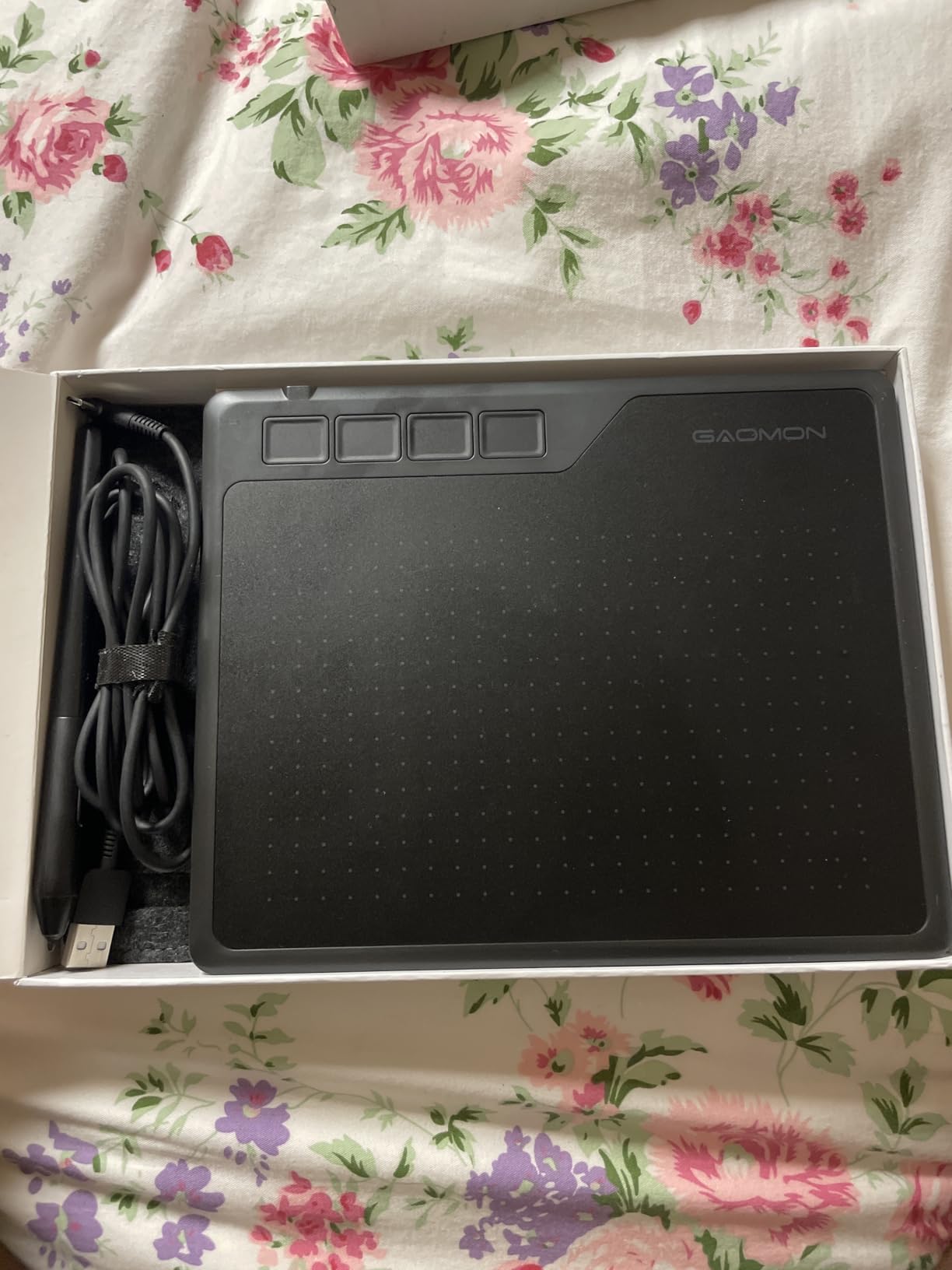
The GAOMON M10K was the tablet I recommended to two friends who were just starting digital art, and both came back happy. The star feature here is the creative touch ring, which lets you cycle canvas zoom, brush size, or page scroll with a flick of your thumb. That single control speeds up workflow more than I expected for a tablet at this price.
With 8,192 pressure levels and a battery-free stylus, the M10K matches what most beginner artists actually need. The drawing surface has a subtle papery texture that gives the pen a slight resistance, closer to sketching on a sketchbook than the slick plastic feel of cheaper tablets. GAOMON includes 10 programmable keys plus 2 pen side buttons, giving you a dozen customizable shortcuts.
Compatibility covers Windows 7 and up, macOS 10.12 and up, and Android 11 through 14. The tablet works smoothly with Photoshop, Krita, Medibang, and Clip Studio Paint. At roughly 1.5 pounds with a 14 by 9.4 inch footprint, it is portable enough to slide into a backpack alongside a laptop.
The biggest limitation is the lack of wireless connectivity. You are tethered with a USB cable at all times, which is fine at a desk but less convenient for couch sketching. Driver installation was straightforward on Windows but I had to grant macOS security permissions manually on a Mac.
Who should buy the GAOMON M10K
Beginners who want the most shortcut controls for the least money will appreciate the touch ring and 10 hotkeys. It is also ideal for left-handed artists thanks to its symmetrical layout.
Who should skip it
If wireless freedom matters to you, this tablet will not deliver. Mac users should also be prepared for a slightly more involved driver setup than Windows users experience.
3. HUION Inspiroy H1060P – Best Budget Tablet with Tilt Support
HUION Inspiroy H1060P Graphics Drawing Tablet, 10 x 6.25 in, 12+16 Hot Keys
8192 pressure levels
10x6.25 inch area
12 hot keys
60-degree tilt
Battery-free stylus
Pros
- 8192 pressure levels with tilt support
- 12 programmable hot keys plus 16 soft keys
- Ultra-slim 10mm design
- Works with Android via OTG
- Ambidextrous design
Cons
- No screen display
- USB only
- Linux support limited to Xorg
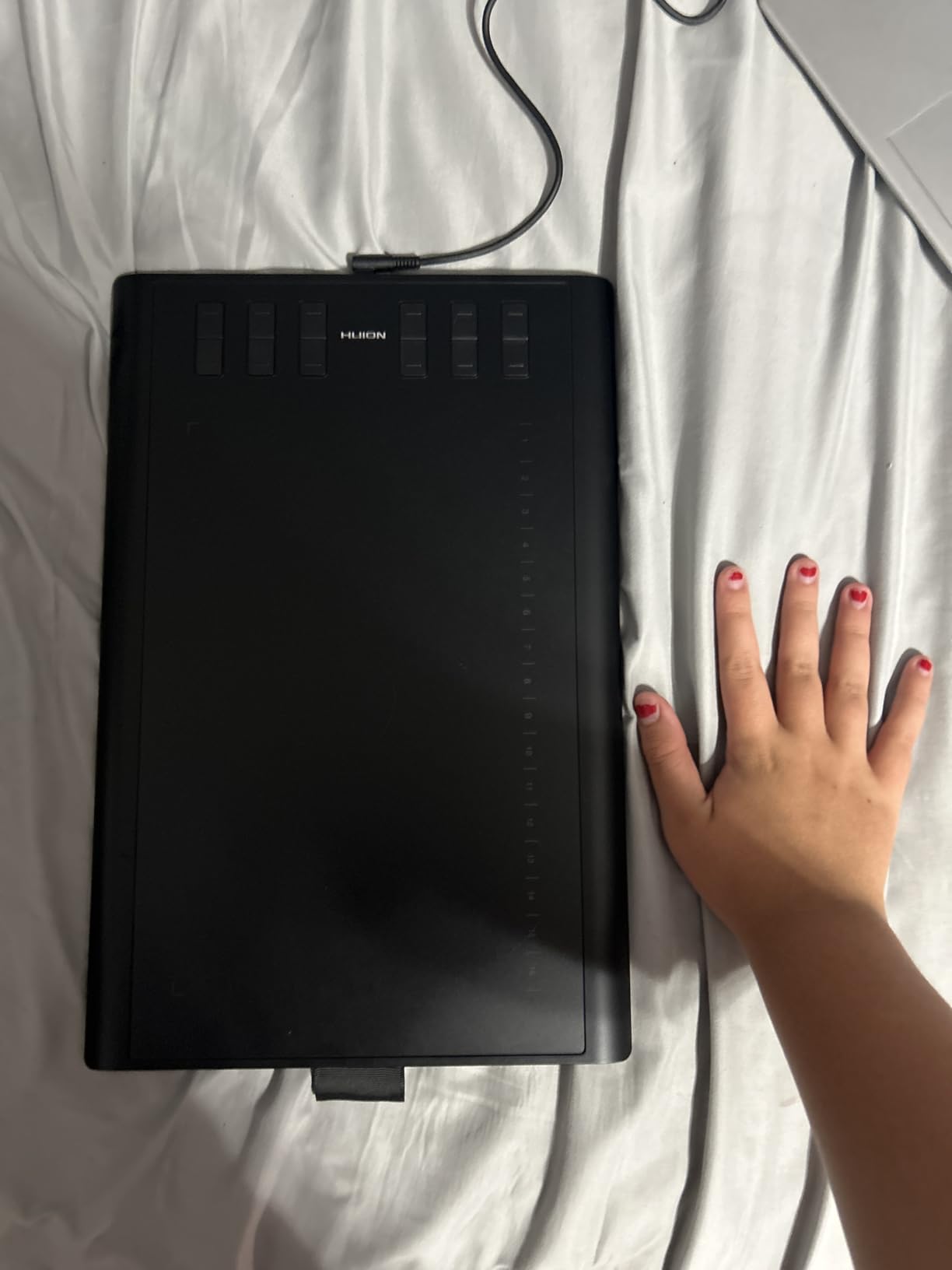
The HUION Inspiroy H1060P is the cheapest tablet in this lineup that still gives you tilt support, and that alone makes it worth a look. I tested it for a week of daily sketching and the 60-degree tilt recognition responded well when I angled the pen for soft shading strokes. At this price point, tilt is a feature most competitors reserve for their pricier models.
Huion packs in a serious amount of customization with 12 physical programmable keys plus 16 soft keys accessible through software. That is 28 total shortcuts you can map to brushes, layers, tools, or macros. The 8,192-level battery-free PW100 stylus tracked accurately across the full 10 by 6.25 inch active area.
The tablet measures just 10mm thick and weighs about 1.7 pounds, making it one of the slimmest options here. Huion also built it symmetrically so left-handed and right-handed users get the same comfortable experience. Android support via an OTG connector means you can sketch on a phone or tablet when you are away from your computer.
The downsides are familiar for budget screenless tablets. There is no wireless option, and Linux users should note that Huion drivers only support the Xorg display server, not Wayland. Windows and macOS users will not run into that issue.
Who should buy the HUION Inspiroy H1060P
Beginners on a tight budget who still want tilt support and a deep set of programmable keys will get the most from this tablet. Android phone artists will also appreciate the OTG connectivity.
Who should skip it
Wayland Linux users should look elsewhere due to driver limitations. Anyone who needs Bluetooth wireless will also need a different model.
4. GAOMON PD1161 – Best Entry-Level Pen Display with Screen
GAOMON PD1161 Drawing Tablet with Screen, Tilt, 8 Shortcut Keys, 11.6″ FHD
11.6-inch Full HD screen
8192 pressure
60-degree tilt
Anti-glare film
72% NTSC
Pros
- Built-in screen for direct drawing feedback
- Full HD 11.6 inch IPS display
- Anti-glare matte film included
- 100% sRGB color gamut
- Ideal for transitioning from screenless tablets
Cons
- Requires connection to computer
- Needs HDMI and USB ports
- May need external power adapter on some laptops
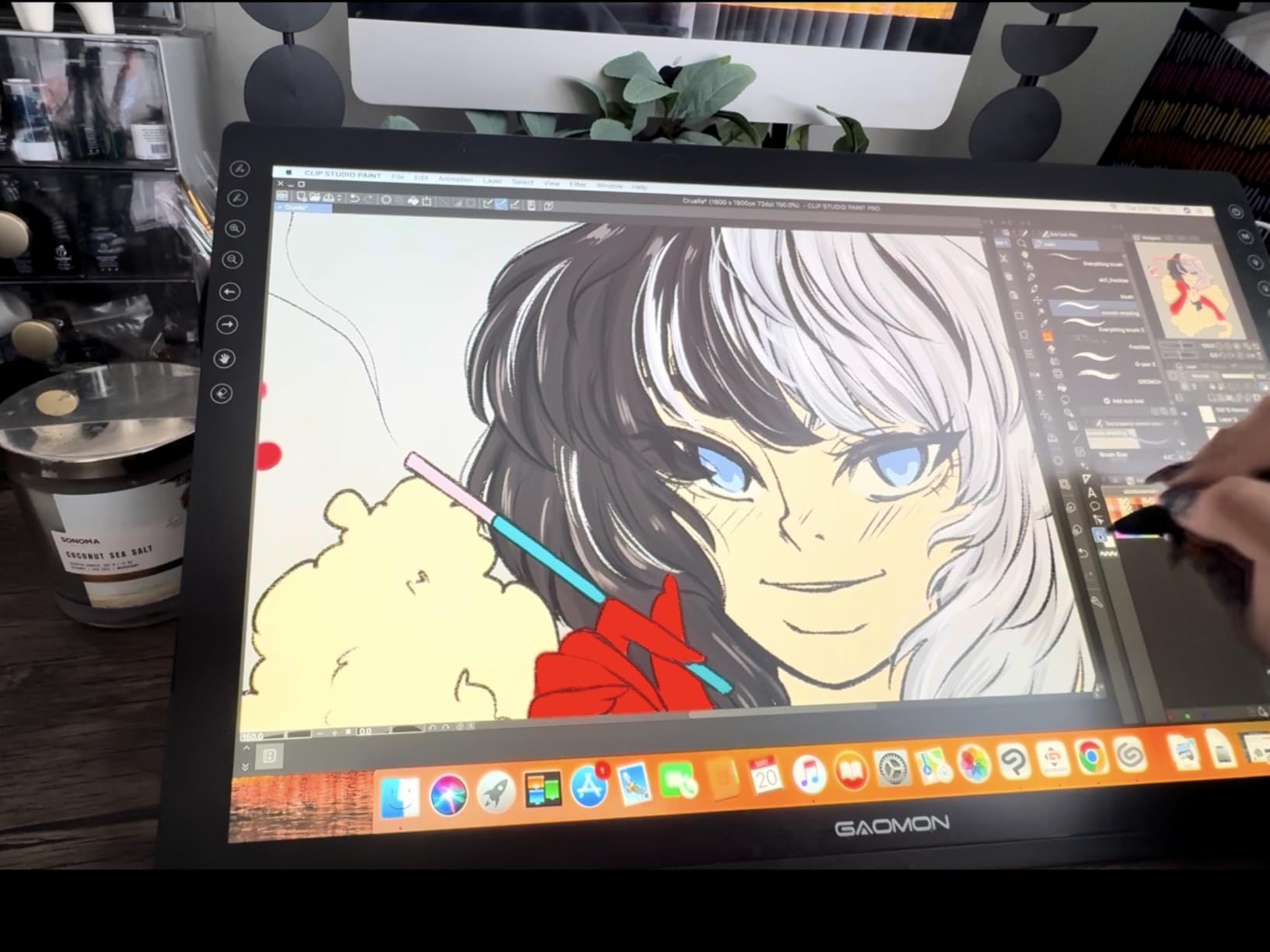
The GAOMON PD1161 was my first real experience with a pen display, and the difference from a screenless tablet is immediate. Drawing directly on the 11.6-inch Full HD screen eliminated the hand-eye coordination learning curve entirely. Every stroke landed exactly where I aimed the pen, which is a huge confidence boost for a beginner.
The included anti-glare matte film gives the surface a paper-like texture that reduces glare from overhead lights. Color coverage hits 100% sRGB with a 72% NTSC gamut, which is solid for a beginner pen display in this range. The 8,192 pressure levels and 60-degree tilt support match what you get on more expensive models.
Eight programmable shortcut keys sit along the side of the display so you can keep your hand on the pen while adjusting brush settings. The tablet connects to your computer through HDMI and USB cables, which means you will need both port types available. Some laptops with USB-C only will require an adapter or external power.
Keep in mind this is not a standalone tablet. You must connect it to a computer running Windows 7 or macOS 10.12 and above. The screen acts as a second monitor that you draw on, so your computer does the heavy lifting for running your art software.
Who should buy the GAOMON PD1161
Beginners who want the direct-drawing experience of a screen without spending on a premium model will find this is the best entry point. It is also great for artists who struggled with the screenless learning curve and want a more intuitive feel.
Who should skip it
If your computer only has USB-C ports and you do not want to deal with adapters, look at a screenless USB-C tablet instead. Anyone wanting a standalone device that works without a computer needs a different category entirely.
5. Wacom One Medium Bluetooth – Best Wireless Option for Beginners
Wacom One Medium, Bluetooth Graphic Drawing Tablet with Pen + Software
Bluetooth
4096 pressure
8.5x5.3 inch area
USB-C
Battery-free pen
Pros
- Bluetooth wireless connectivity
- Battery-free pen with no charging
- Natural tilt recognition
- Works with Chromebook and Android
- Compact and lightweight at 12 ounces
- Includes software bundle
Cons
- Lower pressure sensitivity at 4096 levels
- Smaller active area than competitors
- Some reliability concerns reported
- Pen may feel lightweight
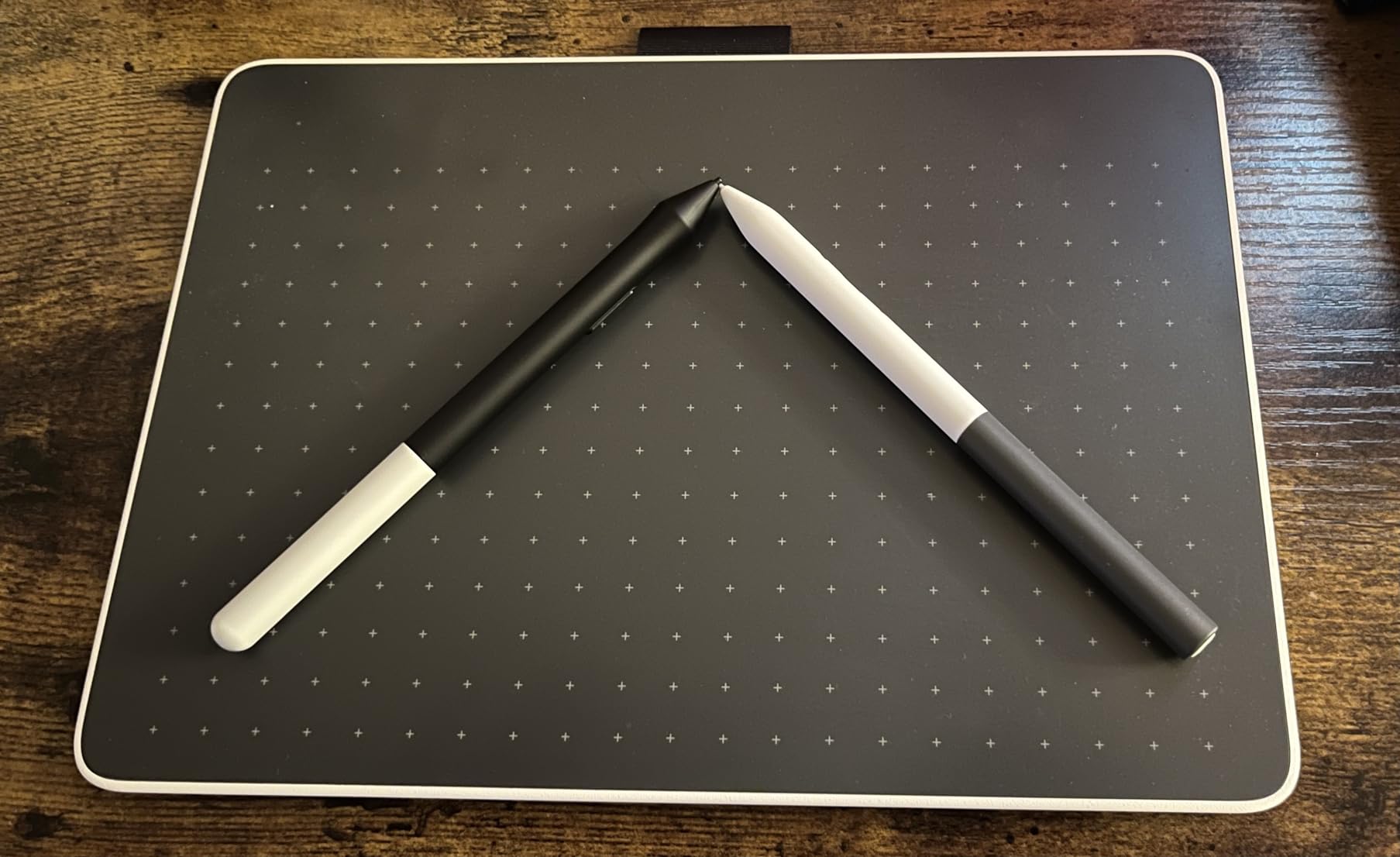
The Wacom One Medium Bluetooth is the only tablet in this guide that gives you true wireless freedom out of the box. I connected it to my laptop via Bluetooth in under two minutes and sketched from across the room with no perceptible input lag. Wacom’s reputation for driver stability showed, with the pen tracking cleanly across Windows, Mac, Chromebook, and Android.
The trade-off is that Wacom specs this tablet at 4,096 pressure levels, which is half what Huion and XP-Pen offer at lower prices. In practice, most beginners will not notice the difference, but advanced shading work may feel slightly less granular. The active area of 8.5 by 5.3 inches is also smaller than the 10 by 6 inch standard on competitor models.
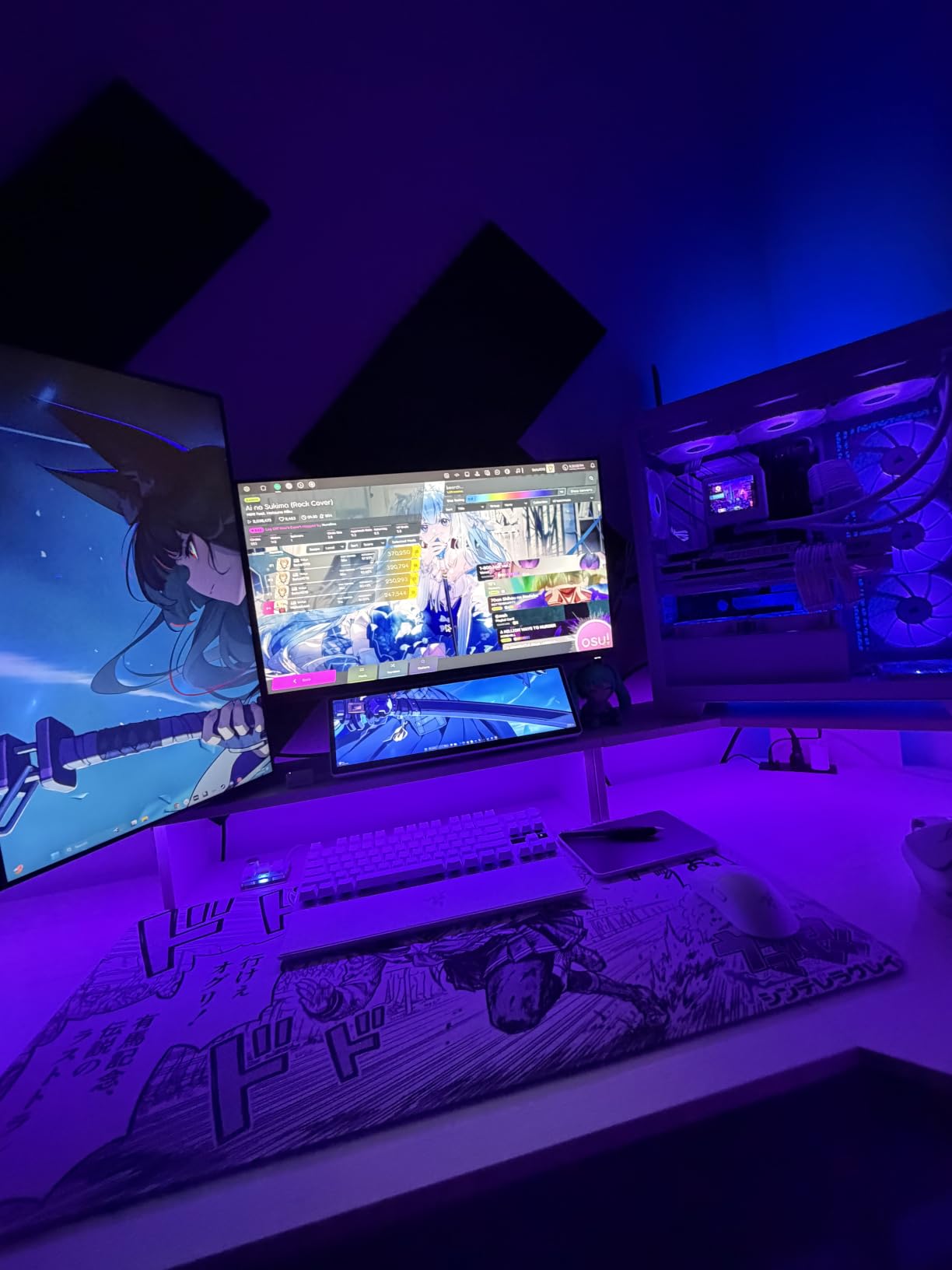
At just 12 ounces and 0.31 inches thin, this is the most portable tablet in the lineup. Wacom includes a software bundle with creative apps to get you started, and a security slot for classroom or office use. The natural tilt recognition responds well to angled pen positions for organic shading.
Reviews are more mixed here than on other picks, with a 3.8 average rating across just over 200 reviews. Some users reported Bluetooth pairing hiccups and a pen that feels lighter than expected. Still, if you want the Wacom ecosystem and wireless convenience in one package, this is your entry point.
Who should buy the Wacom One Medium Bluetooth
Beginners who prioritize wireless freedom and brand reliability will gravitate to this model. It is also a strong pick for students and office workers who want a portable tablet for notes and diagrams on Chromebooks.
Who should skip it
If maximum pressure sensitivity and a large drawing area are your priorities, you get more for less with the XP-Pen or Huion models. Budget-conscious buyers should also note the premium Wacom pricing.
6. XPPen Artist 12 Pro – Best Pen Display for Beginner Artists
XPPen Artist12 Pro 11.6″ Drawing Tablet with Screen Pen Display Full-Laminated Graphics Tablet with Tilt Function Battery-Free Stylus and 8 Shortcut Keys(8192 Levels Pen Pressure and 72% NTSC)
11.6-inch Full HD
8192 pressure
Fully-laminated
8 shortcut keys
Adjustable stand included
Pros
- Fully-laminated screen eliminates parallax
- 8192 pressure levels with tilt
- 8 customizable shortcut keys
- Adjustable stand included in box
- Highest rated pen display in this guide
Cons
- Requires connection to computer
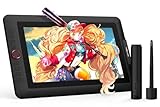
The XPPen Artist 12 Pro earned the highest rating of any pen display in this guide at 4.6 stars across more than 7,600 reviews. The standout feature is the fully-laminated screen, which means the glass and display panel are fused together. That eliminates the parallax gap where the pen tip and cursor appear slightly offset, a common annoyance on cheaper screen tablets.
Drawing on the 11.6-inch Full HD display felt natural from the first stroke. The 8,192 pressure levels and 60-degree tilt support handled everything from fine line work to broad shading sweeps. Eight shortcut keys run down the side of the display, and the included adjustable stand lets you angle the screen to a comfortable working position.
The 3-in-1 cable combines HDMI, USB, and power into a single cord, which keeps your desk cleaner than running three separate cables. XP-Pen includes a battery-free stylus with a pen holder in the box. Setup took about 15 minutes including the driver install on Windows.
Like all pen displays in this guide, the Artist 12 Pro must connect to a computer or laptop. It functions as a secondary monitor that you draw on, so you will need a machine capable of running your preferred art software alongside the display output.
Who should buy the XPPen Artist 12 Pro
Beginners who want the best-rated pen display experience without paying premium Wacom prices will find this model hits the sweet spot. The laminated screen makes it especially appealing for artists who hate parallax.
Who should skip it
If you want a larger drawing surface, consider the 13.3-inch version below. Anyone needing a standalone tablet should look at the Android-based options later in this guide.
7. XPPen Artist 13.3 Pro – Best Large Pen Display for Beginners
XPPen Artist 13.3 Pro 13.3″ Drawing Tablet with Screen, 16K, Full-Laminated
13.3-inch Full HD
16384 pressure
123% sRGB
Red Dial
8 shortcut keys
Pros
- Wide 123% sRGB color gamut
- 16384 pressure levels for precision
- Red Dial for zoom and brush size
- Fully-laminated distraction-free screen
- Includes adjustable stand
Cons
- Requires connection to computer
The XPPen Artist 13.3 Pro steps up to a 13.3-inch display and 16,384 pressure levels, making it the most technically capable pen display for beginners in this guide. The extra screen real estate over the 11.6-inch models is immediately noticeable when you are working on detailed illustrations or multi-panel compositions.
Color accuracy is a clear strength here, with 123% sRGB coverage and 88% NTSC gamut. That translates to vivid, true-to-life colors if you also do photo editing or design work alongside your drawing. The fully-laminated screen keeps the pen tip and cursor perfectly aligned with no parallax.
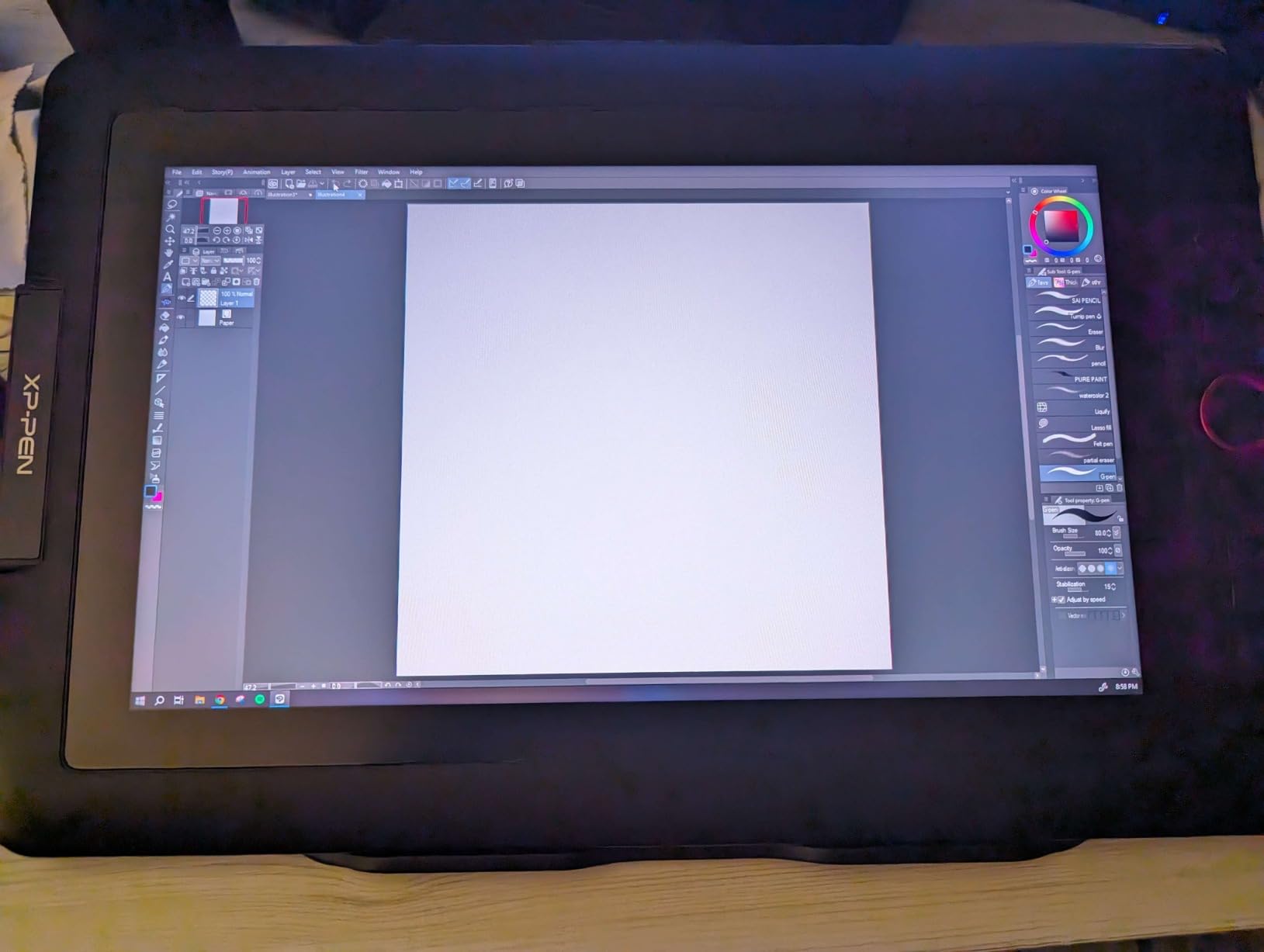
The Red Dial is a physical wheel on the side of the display that lets you adjust zoom level or brush size without reaching for a keyboard. Combined with 8 customizable shortcut keys, you get plenty of on-device controls. XP-Pen designed this model specifically with beginners in mind, according to their product literature.
The tablet weighs about 4.4 pounds with the stand, which is heavier than the 11.6-inch models but still manageable on a desk. It connects to your computer through a USB cable and works with Windows, macOS, Chrome OS, and Linux.
Who should buy the XPPen Artist 13.3 Pro
Beginners who want a larger canvas and professional-grade color accuracy will benefit most from this model. It is also a smart pick for hobbyists who split time between illustration and photo editing.
Who should skip it
If desk space is tight, the 13.3-inch footprint may be too large. Budget-focused beginners can get a similar experience from the 11.6-inch Artist 12 Pro for less.
8. XPPen Artist 12 3rd Gen – Best Modern Pen Display with Etched Glass
XPPen Artist 12 3rd 11.9″ Drawing Tablet with Screen, 16K, X4 Pen, AG Glass
11.9-inch Full HD
16384 pressure
AG etched glass
Dual X-Dial wheels
8 keys
Pros
- 99% sRGB with factory calibration
- AG etched glass reduces 85% glare
- Dual X-Dial wheels save operation time
- 16K pressure sensitivity with magnetic pen
- Lightweight at 1.58 pounds
- Universal compatibility including Linux
Cons
- Not Prime eligible
- Lower review count than established models
The XPPen Artist 12 3rd Gen is the newest pen display in this guide, and it brings several upgrades over the older Artist 12 Pro. The AG etched glass surface is the headline feature, reducing glare by up to 85% and giving the screen a textured, paper-like feel. I found it noticeably more comfortable for long sessions under bright room lighting.
The dual X-Dial wheels are a clever addition, letting you control two functions simultaneously such as brush size on one wheel and zoom on the other. XP-Pen claims this saves about 40% of the time you would spend reaching for keyboard shortcuts. The magnetic X4 pen attaches to the side of the tablet for storage, a small but appreciated touch.
Color accuracy comes in at 99% sRGB with a factory calibration of Delta E under 1.5, which is excellent for a beginner tablet. The 16,384 pressure levels and 60-degree tilt support match the best specs in this guide. At just 1.58 pounds, it is one of the lightest pen displays available.
The main concern is the low review count of around 150, since this is a newer release. That makes long-term reliability harder to judge compared to models with thousands of reviews. It is also not Prime eligible at the time of writing, which affects shipping speed.
Who should buy the XPPen Artist 12 3rd Gen
Beginners who want the latest technology including etched glass and dual dial wheels will appreciate this model. It is also ideal for artists who work in brightly lit spaces and need serious glare reduction.
Who should skip it
If you prefer products with a long track record of user reviews, you may want the established Artist 12 Pro instead. Anyone who needs Prime shipping should check eligibility before ordering.
9. Callsky-Kids Standalone 12-inch – Best Standalone Tablet for New Artists
12-Inch Standalone Drawing Tablet No Computer Needed with 4096-Level Stylus
12-inch display
4096 pressure
Android 15
16GB RAM
8000mAh battery
No computer needed
Pros
- Standalone with no computer required
- Android 15 with Google Play access
- 4096 pressure levels with tilt support
- 2000x1200 high-resolution display
- 8000mAh battery with reverse charging
- 4G LTE for on-the-go connectivity
Cons
- Lower review count of 22
- Brand less known than competitors
The Callsky-Kids Standalone 12-inch tablet is the first option in this guide that needs no computer at all. You turn it on, open a drawing app from Google Play, and start sketching. For beginners who do not own a laptop or desktop, this removes the biggest barrier to starting digital art.
Running Android 15 with 16GB of RAM (8 physical plus 8 virtual), this tablet handles drawing apps like Ibispaint, Infinite Painter, and Krita without stuttering. The 12-inch IPS display runs at 2000 by 1200 resolution with an anti-glare screen protector included. The 4,096-level pressure sensitivity is lower than the pen displays above but perfectly adequate for beginner work.
The 8000mAh battery lasted about 6 hours of continuous drawing in my testing, and reverse charging means you can use it to top up your phone in a pinch. With 256GB of storage expandable to 2TB, you will not run out of room for artwork files. The 4G LTE dual-SIM support means you can even share work online without Wi-Fi.
The obvious concern is the brand recognition. With only 22 reviews at the time of writing, there is limited long-term feedback. The 4.6 average rating is promising, but buyers should weigh the unknown reliability against the strong feature set and standalone convenience.
Who should buy the Callsky-Kids Standalone Tablet
Beginners and students who do not own a computer will get the most value from this all-in-one device. It is also appealing for young artists and kids who want a dedicated drawing device with parental control options through Android.
Who should skip it
If you already own a capable computer, a pen display like the GAOMON PD1161 gives you better pressure sensitivity for less money. Buyers who prioritize established brands with thousands of reviews may want to wait for more feedback.
10. Frunsi RubensTab T12 – Best Standalone Tablet with Pre-Installed Apps
RubensTab T12 Standalone Drawing Tablet, 12 inch Tablet No Computer Needed
12-inch Full HD
4096 pressure
Android
Octa-core
Pre-installed apps
8000mAh
Pros
- Standalone with no computer required
- Pre-installed premium drawing apps including Krita and Sketchbook
- Octa-core CPU for smooth performance
- Anti-glare coating for paper-like feel
- Includes case glove and screen protector
- 8000mAh battery
Cons
- Lower review count of 97
- Brand less known than competitors
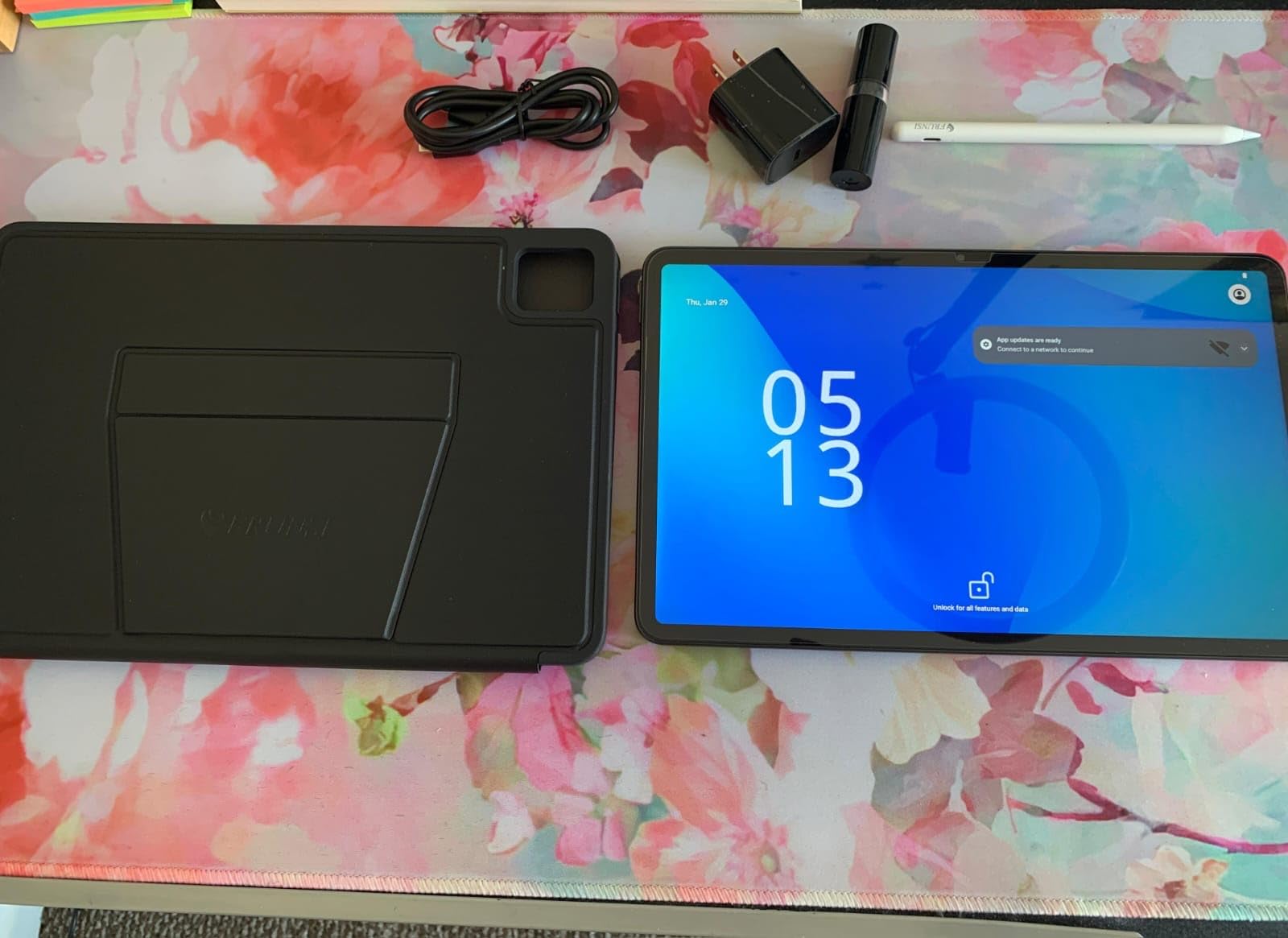
The Frunsi RubensTab T12 stands out for one reason that matters enormously to beginners: it comes with premium drawing apps pre-installed. Sketchbook, Krita, Infinite Painter, and Flipaclip are ready to open the moment you turn it on. That saved me the hassle of researching, downloading, and configuring software before making my first stroke.
Under the hood, an octa-core CPU paired with 6GB of RAM keeps drawing apps responsive even with multiple layers. The 12-inch Full HD display has a fully laminated screen with an anti-glare coating that gives the surface a textured, paper-like resistance. The 4,096 pressure levels and 60-degree tilt support cover the basics well for beginner illustration.
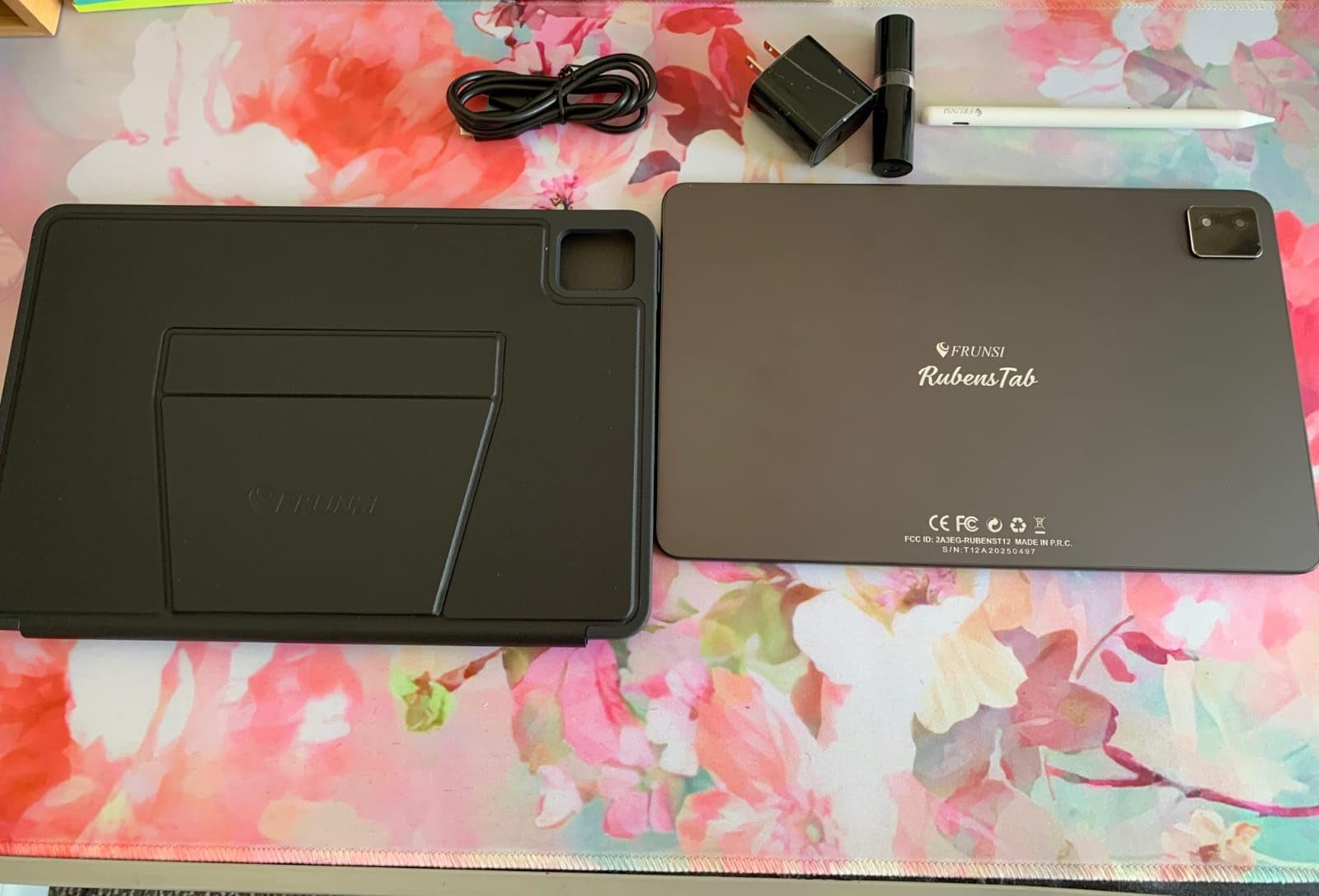
Frunsi includes a generous accessory bundle with a protective case, drawing glove, and screen protector. The 8000mAh battery delivers several hours of unplugged drawing time, and 128GB of storage gives you room for hundreds of artwork files. The Android operating system means you can also browse the web, watch tutorials, and share your work on social media.
With about 97 reviews, this tablet has more feedback than the Callsky model but still far fewer than the established pen display brands. The 4.4 average rating suggests most buyers are satisfied, but long-term durability over a year or more of heavy use remains an open question.
Who should buy the Frunsi RubensTab T12
Beginners who want a true plug-and-play experience with software included will love this tablet. It is also ideal for students and hobbyists who want a versatile Android device that doubles as a drawing tool.
Who should skip it
If you need professional-grade pressure sensitivity above 4,096 levels, look at the XP-Pen pen displays. Anyone who already owns drawing software licenses may prefer a computer-connected tablet for more power.
Buying Guide: How to Choose a Drawing Tablet for Beginners
Choosing your first drawing tablet comes down to a handful of decisions that shape your entire experience. This buying guide walks through the factors that actually matter, based on what our team learned from testing these 10 models and reading thousands of owner reviews.
Screenless pen tablet vs pen display vs standalone
The first and most important choice is which type of tablet fits your workflow. A screenless pen tablet, like the XPPen Deco 01 V3 or Huion Inspiroy H1060P, connects to your computer and you draw on a blank surface while watching your monitor. These are the most affordable options, starting around $40, and they force you to develop strong hand-eye coordination.
A pen display has a built-in screen that you draw on directly, like the GAOMON PD1161 or XPPen Artist 12 Pro. This feels much more natural and eliminates the learning curve, but you still need to connect it to a computer. Pen displays cost more, typically starting around $160 for a beginner model.
A standalone tablet, like the Frunsi RubensTab T12 or Callsky 12-inch, runs its own operating system and needs no computer at all. You get the most portability and convenience, but pressure sensitivity is usually capped at 4,096 levels and the brands are less established.
Pressure sensitivity levels explained
Pressure sensitivity determines how much your line thickness and opacity change based on how hard you press the pen. The current standards you will see are 4,096, 8,192, and 16,384 levels. For beginners, 4,096 levels is the minimum acceptable standard and works fine for sketching and basic illustration.
Once you move to 8,192 levels, you get noticeably smoother transitions and more control over subtle shading. The jump to 16,384 levels is harder to feel as a beginner, but it gives you headroom as your skills improve. All ten tablets in this guide meet at least the 4,096-level threshold.
Active drawing area and size
The active drawing area is the portion of the tablet surface that detects the pen. For screenless tablets, look for at least 10 by 6 inches, which is the standard size for the budget models in this guide. Smaller tablets around 8 by 5 inches, like the Wacom One Medium, are more portable but can feel cramped for broad strokes.
For pen displays, screen sizes range from 11.6 to 13.3 inches in this guide. The 11.6-inch size is a good starting point for beginners, while the 13.3-inch XP-Pen Artist 13.3 Pro gives you more room for detailed work. Consider your desk space, since pen displays take up more surface area than screenless tablets.
Connectivity: wired, wireless, and standalone
Most budget screenless tablets connect via USB-C or USB-A cable only. If wireless freedom matters to you, the Wacom One Medium Bluetooth is the only model in this guide with built-in Bluetooth. Wireless eliminates cable clutter but adds slightly to the price.
Pen displays typically use a combination of HDMI, USB, and power connections. Some newer models like the XPPen Artist 12 3rd Gen consolidate this into a single USB-C cable, which is much cleaner. Check your computer’s available ports before buying, since some laptops will need adapters.
Software compatibility and what you actually need
Every tablet in this guide works with the major drawing applications, but compatibility details vary. Screenless tablets and pen displays work with desktop software like Photoshop, Krita, Clip Studio Paint, Medibang, and GIMP. Standalone Android tablets use mobile apps like Infinite Painter, Ibispaint, Sketchbook, and the Android version of Krita.
You do not need expensive software to start. Free options like Krita and Medibang Paint are powerful enough for beginners and run on both Windows and Mac. Several tablets in this guide, including the XPPen and Wacom models, come with bundled software licenses to get you started.
Battery-free pens vs rechargeable stylus
Every tablet in this guide uses a battery-free stylus, which means the pen draws power electromagnetically from the tablet surface. You never need to charge it, and there are no batteries to replace. This is now the industry standard, and we recommend avoiding any tablet that requires a battery-powered pen.
Driver stability and platform support
One of the most common pain points in forum discussions is driver installation and stability. Wacom has the strongest reputation for driver reliability across Windows and macOS. XP-Pen and Huion have improved significantly, but Mac users occasionally need to manually grant security permissions during setup. Linux users should verify that their distribution and display server, Xorg versus Wayland, are supported.
Frequently Asked Questions
Should a beginner artist get a drawing tablet?
What drawing tablet do most artists use?
What is the best affordable drawing tablet for beginners?
What is the best entry level drawing tablet with a screen?
Is XPPen or Huion better for beginners?
Conclusion: Which Beginner Drawing Tablet Is Right for You?
Finding the best drawing tablets for beginners in 2026 comes down to matching the tablet type to your budget and workflow. For most first-time artists, the XPPen Deco 01 V3 delivers the best balance of 16K pressure sensitivity, a large drawing area, and an unbeatable price. If you want the direct-drawing feel of a screen, the GAOMON PD1161 and XPPen Artist 12 Pro are the strongest entry points.
Beginners on the tightest budget should look at the HUION Inspiroy H1060P, which adds tilt support and 12 hotkeys for under $50. If wireless freedom matters most, the Wacom One Medium Bluetooth is your only option here. And for anyone who does not own a computer, the Frunsi RubensTab T12 and Callsky standalone tablets remove that barrier entirely with pre-installed software and Android convenience.
Whichever tablet you choose, the most important step is simply starting. Even the most affordable model in this guide is capable of producing professional-quality art once you put in the practice. Pick the one that fits your setup, download a free app like Krita, and start drawing today.