
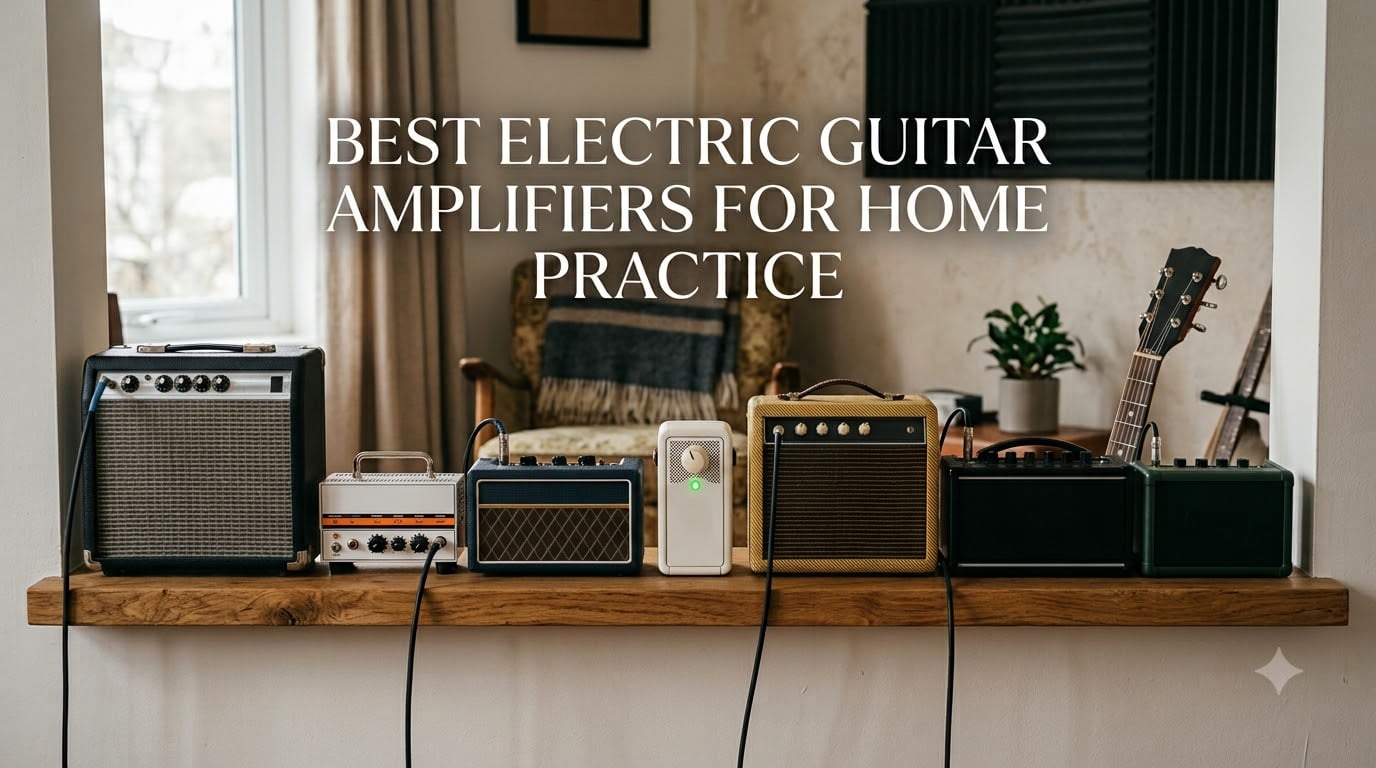
I have spent the better part of three years playing through just about every small amp that belongs in a bedroom, a dorm room, or a cramped apartment corner. What I learned is simple: the best electric guitar amplifiers for home practice are not just shrunken stage amps. They are designed to sound full, responsive, and inspiring at the low volumes your neighbors will actually tolerate.
That distinction matters more than most players realize. A 100-watt half stack turned down to whisper volume sounds stiff, dull, and lifeless. A well-designed 10 to 25 watt practice amp, on the other hand, hits its sweet spot right where you actually play. Reddit threads from r/Guitar and r/GuitarAmps repeat the same complaints over and over: amps that are too loud for apartments, cheap models that sound tinny, and the frustration of missing a headphone jack for late-night sessions.
In this guide, our team covers seven practice amps that solve those exact problems. We tested them in real bedrooms and apartments, played them at 1 a.m. with headphones, and recorded with the ones that offer USB interfaces. Whether you want a bare-bones budget combo, a pocket-sized smart amp, or a modeling amp with a full effects suite, there is a pick here for you. We also included a buying guide covering wattage, speaker size, and the practice amp versus regular amp question.
Table of Contents
Top 3 Picks for Best Electric Guitar Amplifiers for Home Practice
If you want the short version before the deep dives, here are the three amps our team would buy with our own money. The Fender Mustang LT25 takes the top spot for its preset library, USB recording, and 4.8-star rating across more than 4,100 reviews. The Positive Grid Spark GO is the best value if portability and app control matter most. And the Fender Frontman 10G is the budget pick that gets you real Fender clean tone without spending much at all.

Fender Mustang LT25
- 25W Digital Modeling
- 30 Presets + 30 Custom Slots
- USB Recording Interface
- Color Display

Positive Grid Spark GO
- 33 Amp Models + 43 Effects
- 8-Hour Battery
- Smart Jam AI
- Bluetooth + App Control

Fender Frontman 10G
- 10W Solid State
- 6 Inch Speaker
- Built-In Overdrive
- Headphone Jack + Aux In
Best Electric Guitar Amplifiers for Home Practice in 2026
Here is the full lineup side by side. Every amp below earned its place through a combination of review scores, feature depth, and real-world quiet-play performance. Wattage ranges from 5 to 25 watts, which is the sweet spot for home use, and every single pick includes a headphone output for silent practice.
| Product | Specifications | Action |
|---|---|---|
| Fender Mustang LT25 |
|
Check Latest Price |
| Positive Grid Spark GO |
|
Check Latest Price |
 Fender Champion II 25 Fender Champion II 25 |
|
Check Latest Price |
 Marshall MG15GFX Marshall MG15GFX |
|
Check Latest Price |
 Fender Frontman 20G Fender Frontman 20G |
|
Check Latest Price |
 JOYO JAM Buddy II JOYO JAM Buddy II |
|
Check Latest Price |
| Fender Frontman 10G |
|
Check Latest Price |
1. Fender Mustang LT25 – Best Overall Modeling Amp for Home Practice
Fender Mustang LT25 Guitar Amplifier, 25-Watt Combo Amp with 8″ Speaker
25W Digital Modeling
8 Inch Fender Speaker
30 Presets + 30 Custom Slots
USB Recording Interface
1.8 Inch Color Display
Pros
- Excellent tone quality and versatility
- 30 presets plus 30 custom slots
- USB audio interface for recording
- Intuitive color display interface
- Sturdy build quality
Cons
- Mini-USB instead of USB-C
- Effects can feel digital
- Some distortion sims lack crunch
I plugged into the Mustang LT25 expecting a beginner box and got a genuine workhorse. The 1.8 inch color display makes browsing the 30 preloaded presets effortless, and each one covers a distinct style, from glassy clean to thick modern gain. When I found a tone I loved, saving it into one of the 30 custom slots took seconds.
What sold me was how good this amp sounds at low volume. The 8 inch Fender Special Design speaker stays articulate even when the master knob barely leaves the minimum, which is exactly what apartment practice demands. Forum users on r/Guitar consistently rank the Mustang series among the best-sounding desktop amps under 200 dollars, and after a month of nightly sessions I agree.
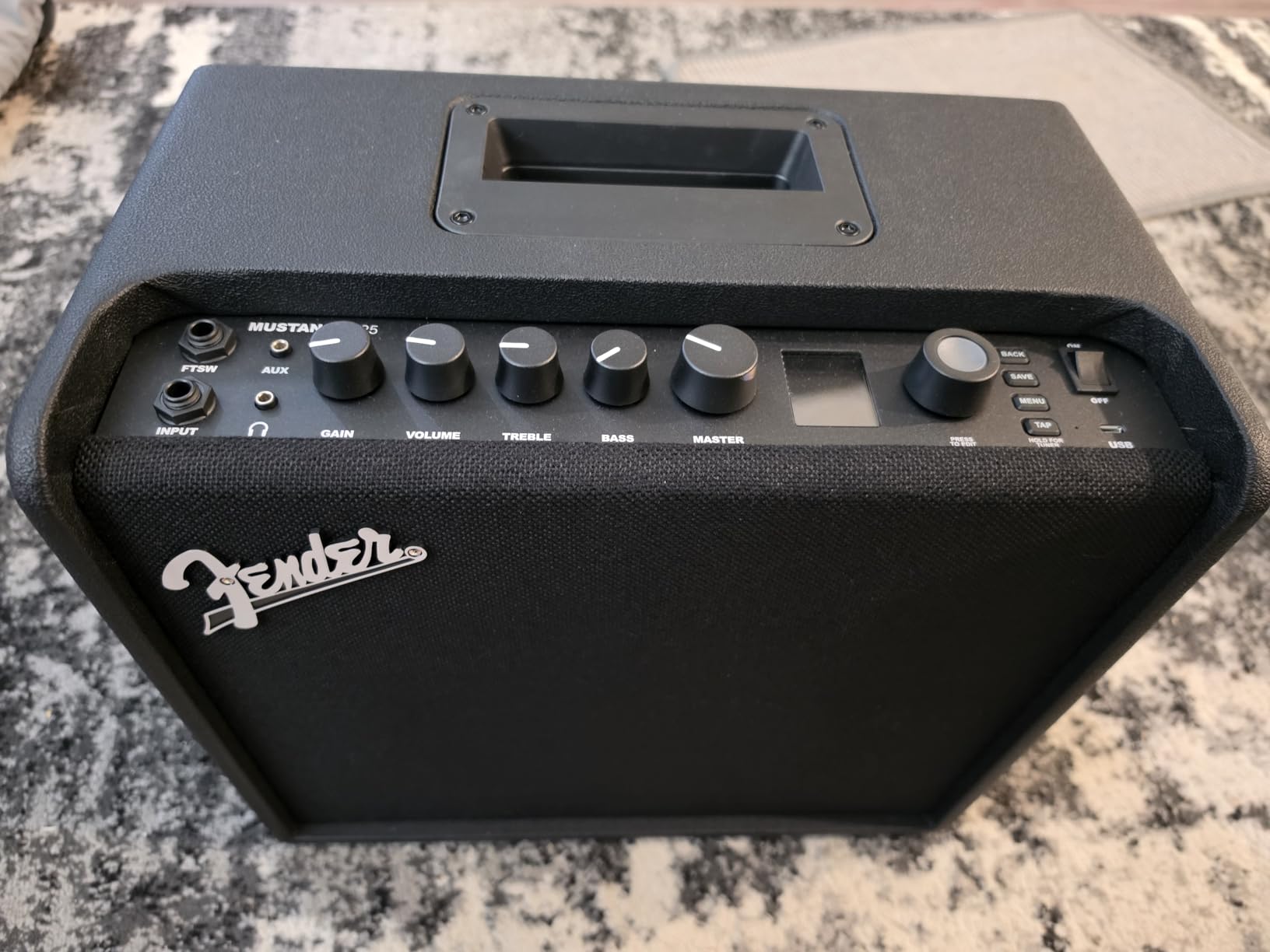
The USB audio interface is the feature most competitors overlook. I recorded demo tracks straight into my DAW without a separate interface, and the direct tone was clean and quiet. For a home player who wants to dip a toe into recording, this alone justifies the pick.
The downsides are minor but real. The mini-USB port feels dated next to modern USB-C gear, and the effects can sound slightly digital compared to pricier modeling amps. A few distortion presets also lack the crunchy bite metal players want. None of that stopped it from earning a 4.8-star average across 4,170 reviews, with 88 percent of buyers giving it five stars.
Who the Mustang LT25 is right for
This is the amp I recommend to beginners and intermediate players who want variety without menu-diving frustration. If you like switching between funk cleans, blues breakup, and high-gain rock in a single session, the preset system is a joy.
It is also the smart choice for anyone who wants to record at home, since the USB interface removes the need for extra gear.
Who should look elsewhere
Purists chasing analog tube feel will find the modeling slightly sterile at the edges. If your whole world is doom metal gain, a dedicated high-gain amp serves you better.
Players who need battery power for outdoor or travel practice should consider a portable pick like the Spark GO below instead.
2. Positive Grid Spark GO – Best Ultra-Portable Smart Amp
Positive Grid Spark GO 5W Ultra-Portable Smart Guitar Amp & Speaker
5W Smart Amp
33 Amp Models + 43 Effects
8-Hour Battery
Bluetooth + App
16 oz Metal Enclosure
Pros
- Exceptional sound for its size
- Smart Jam AI backing tracks
- 8-hour battery life
- Doubles as Bluetooth speaker
- 100k+ ToneCloud presets
Cons
- Bluetooth can connect slowly
- App interface is convoluted
- Requires manual reconnection each power cycle
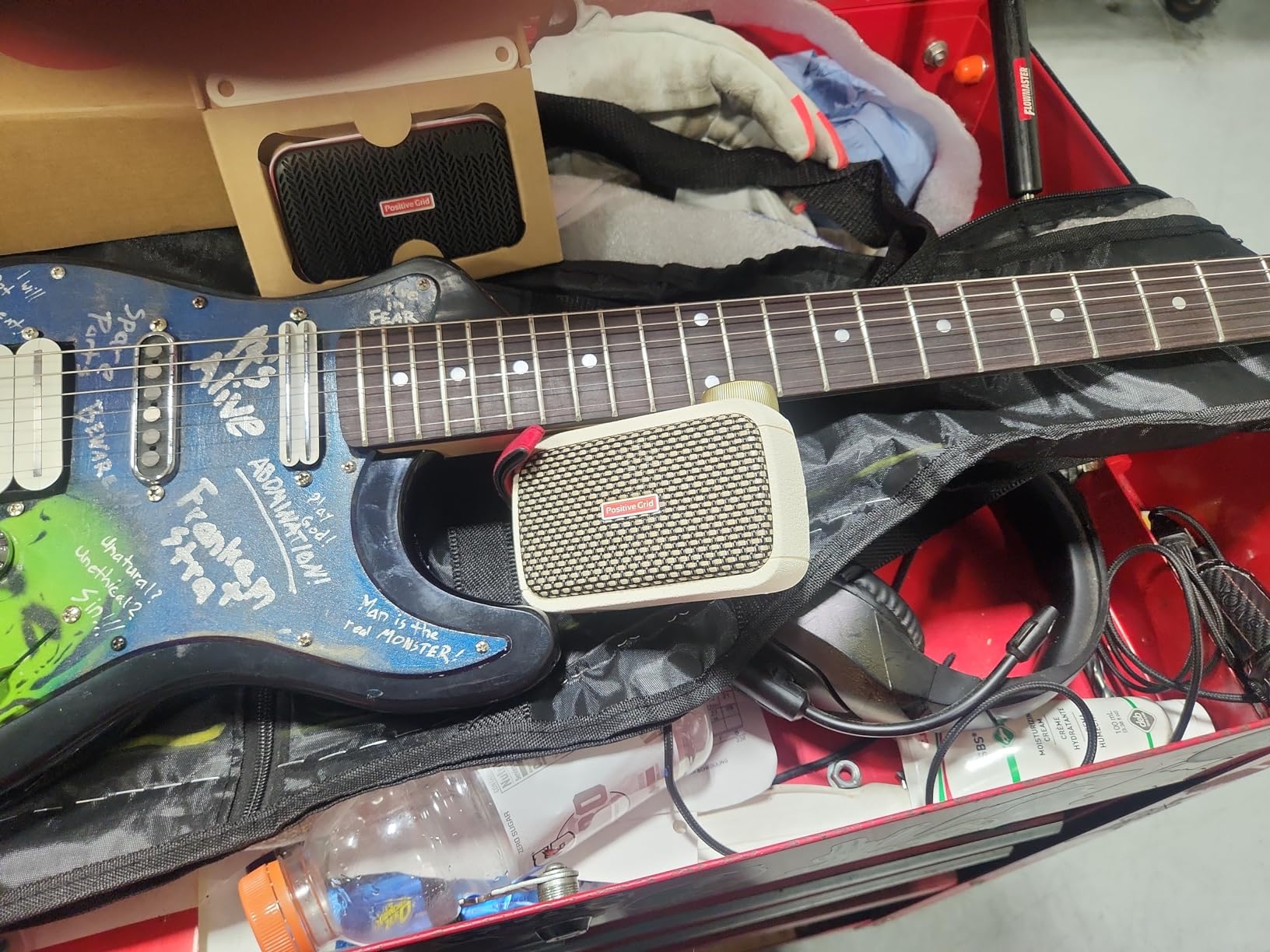
The Spark GO is the amp I toss into a backpack without thinking twice. At 16 ounces and roughly the size of a large wallet, it disappears into a gig bag pocket, yet Positive Grid’s computational audio trickery makes it sound far bigger than any 5-watt pocket box has a right to.
The Smart Jam AI feature is the reason I keep reaching for it. Play a few bars and the app generates a drum and bass backing track that follows your style and tempo. It turns a boring scale workout into something that feels like a band rehearsal. Auto Chords is another killer practice tool, displaying chords in real time as you play along with songs.
With 33 amp models, 43 effects, and more than 100,000 community tones on ToneCloud, the depth here rivals amps three times the size. The 8-hour USB-C battery got me through a full week of hour-long couch sessions on a single charge. It also works beautifully as a plain Bluetooth speaker, which is how mine spends its off hours.
The frustrations are app-related. Bluetooth can be slow to pair, and the amp asks for a manual reconnection every time it powers on. The app itself takes an evening to learn. Still, 4,428 reviewers rate it 4.6 stars, and guitar.com named the Spark family a top practice solution for good reason.
Who the Spark GO is right for
Travelers, couch players, and apartment dwellers who want a full practice rig that fits in one hand. If AI backing tracks and a giant tone library appeal to you, nothing at this size competes.
It is also perfect for players who already own a big amp and want something for hotel rooms, offices, or the kitchen table.
Who should look elsewhere
If you hate fiddling with apps, much of the magic stays locked away, and the raw 5-watt speaker cannot fill a room like a 25-watt combo.
Players who want a traditional knob-and-switch experience should stick with a standard combo amp like the Frontman 20G.
3. Fender Champion II 25 – Best for Built-In Effects
Fender Champion II 25 Watt Electric Guitar Combo Amp, Speaker, USB & Aux
25W Solid State
8 Inch Speaker
Multiple Amp Voicings
Reverb Delay Chorus Tremolo
USB Recording
Pros
- Multiple amp voicings for versatility
- Built-in effects suite with tap tempo
- USB port for direct recording
- Loud with impressive headroom
- Clean tube-like Fender tone
Cons
- Single channel design
- Instructions are minimal
- May need EQ tweaking out of the box
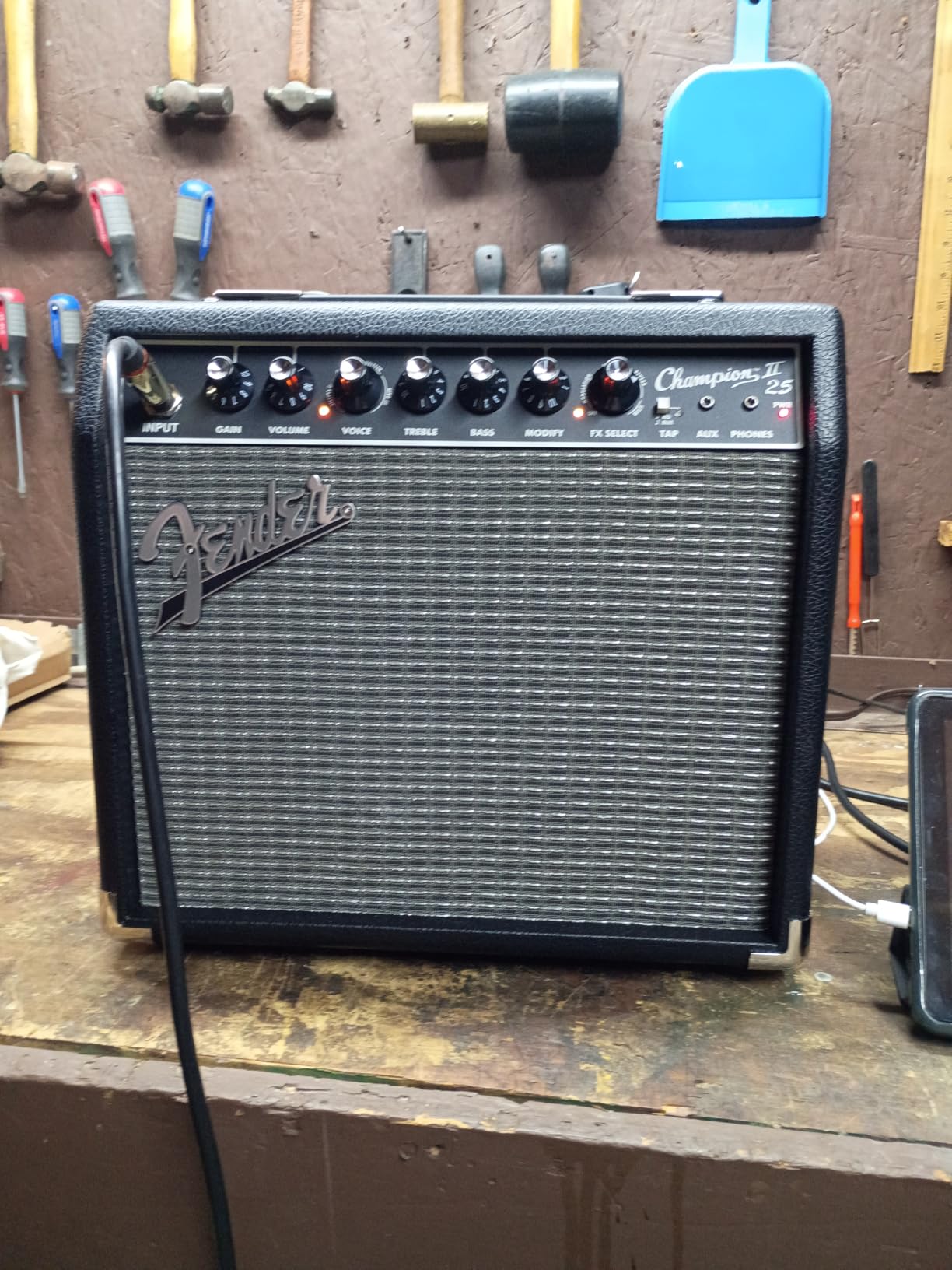
The Champion II 25 is the amp I hand to friends who want effects without buying a pedalboard. Reverb, delay, chorus, tremolo, and Vibratone are all baked in, and the tap tempo button lets you sync delays to the song you are playing along with. That is a genuinely pro feature on an amp in this class.
The amp voicing switch is the hidden gem. Classical, Modern, British, and High Gain settings change the entire character of the amp, so a single knob twist takes you from Blackface-style clean to British crunch. I was surprised by how loud and clean this little box stays, with headroom that belies its 8 inch speaker.
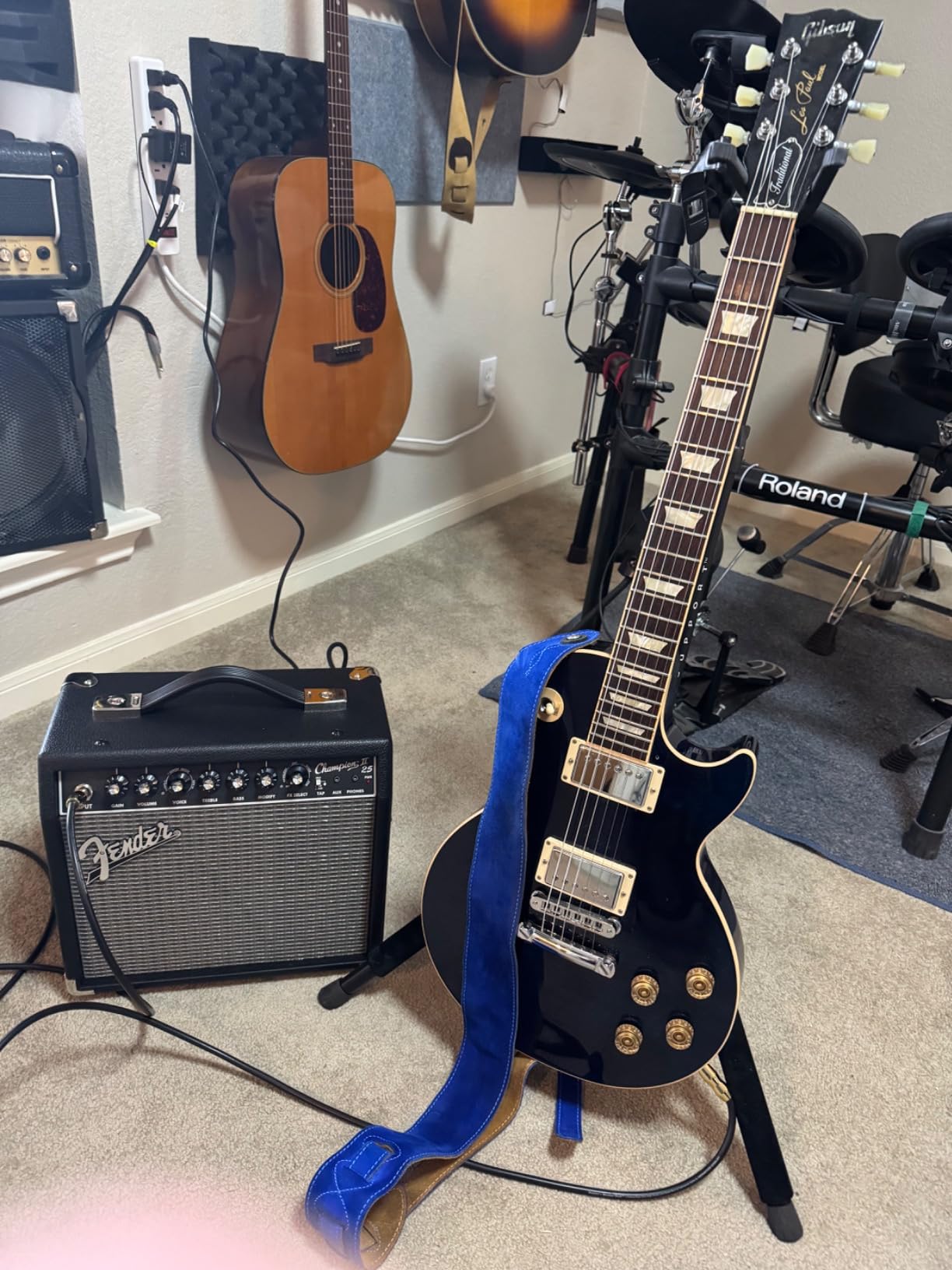
Recording works through the rear USB port, and I captured a few scratch tracks with no fuss. The clean tones have that touch-sensitive, tube-like Fender character the brand is famous for, which explains why long-time Champion 20 owners on Reddit upgrade here without hesitation.
The gripes: the printed manual is nearly useless, so budget some experimentation time. Some players find the bass and treble need adjusting before the amp sits right. And the single-channel design means switching between clean and dirty mid-song requires a pedal. With 80 percent of its 204 reviewers giving five stars, most buyers consider these fair trades.
Who the Champion II 25 is right for
Players who want a traditional amp feel plus a real effect suite in one box. If you practice everything from country cleans to classic rock, the voicing switch covers that spread.
It suits intermediate players upgrading from a bare-bones starter amp who suddenly want reverb and delay available at all times.
Who should look elsewhere
If you want deep editing, preset saving, and app control, the Mustang LT25 offers far more flexibility for a small step up.
Gigging guitarists should note the 50-watt version adds a second channel and a 12 inch speaker for not much more money.
4. Marshall MG15GFX – Best Multi-Channel Practice Amp
Marshall MG15GFX Combo Electric Guitar Amplifier – Black
15W Solid State
8 Inch Custom Speaker
4 Channels: Clean Crunch OD1 OD2
Digital FX + Reverb
3-Band EQ
Pros
- Four channels covering wide gain range
- Built-in chorus phaser flanger delay octave
- Dedicated studio and spring reverb
- 3-band EQ for precise shaping
- Classic Marshall build and tone
Cons
- 15W is limited for band practice
- Digital effects may not satisfy analog purists
Some tones just need a Marshall badge, and the MG15GFX delivers the classic British snarl at bedroom volume. Four channels, Clean, Crunch, OD1, and OD2, mean you can dial in anything from chiming pop to saturated rock and switch between them instantly rather than riding a gain knob.
The effects section is deeper than most rivals at this wattage. Chorus, phaser, flanger, delay, and octave are all onboard, plus a dedicated reverb control offering both Studio and Spring types. I spent an entire evening just on the Spring reverb and a Crunch channel, playing old Shadows licks like it was 1962.
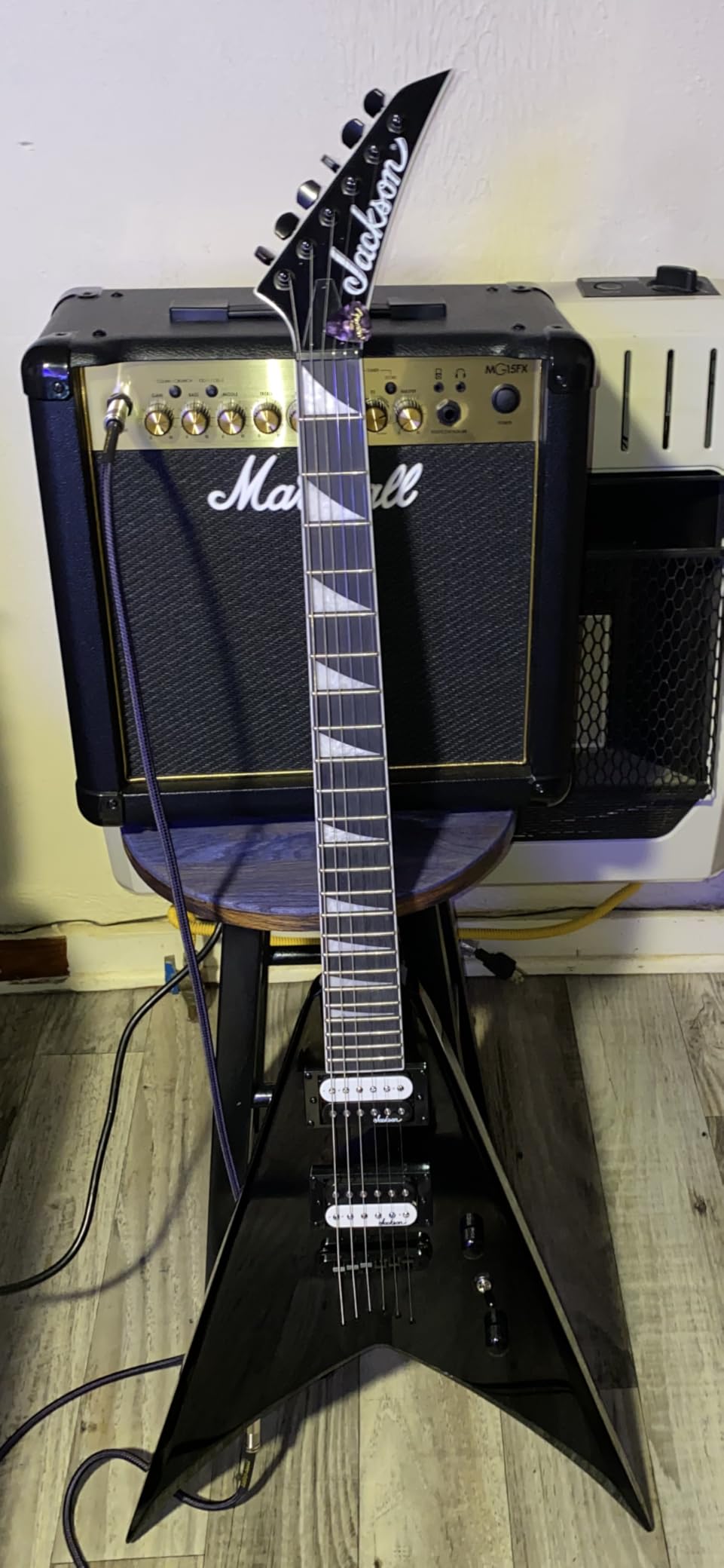
The custom 8 inch speaker leans into that unmistakable midrange bark, and the 3-band EQ gives you enough control to tame it. Build quality feels properly Marshall, with a solid cabinet, metal corners, and 16.3 pounds of reassuring heft. A headphone out and MP3 line-in round out the practice essentials.
At 15 watts this stays firmly a home amp, which is the point here but worth stating plainly. Digital-effect purists will notice the modulation is serviceable rather than luxurious. Those small caveats have not stopped 85 percent of its 257 reviewers from awarding five stars.
Who the MG15GFX is right for
Rock and blues players who want instantly accessible gain stages and iconic Marshall looks on a shelf. The four-channel design suits anyone who flips between clean rhythm and lead tones mid-practice.
It is also a strong pick for classic rock fans who want spring reverb without buying a single pedal.
Who should look elsewhere
Metal players chasing modern ultra-tight gain may prefer the Champion II’s High Gain voicing or the Mustang’s high-gain presets.
If you need recording output or preset storage, this Marshall offers neither USB nor app connectivity.
5. Fender Frontman 20G – Best Simple Two-Channel Amp
Fender Frontman 20G Electric Guitar Amplifier, 20-Watt Amp, 8″ Speaker
20W Solid State
8 Inch Speaker
Clean + Drive Channels
3-Band EQ
Headphone + Aux Jacks
Pros
- Clean channel is clear and crisp
- Drive channel with independent volume
- 3-band EQ for tone shaping
- Lightweight at 15.4 pounds
- Quality Fender construction
Cons
- No built-in reverb
- Drive channel not as refined
- US voltage and plug only
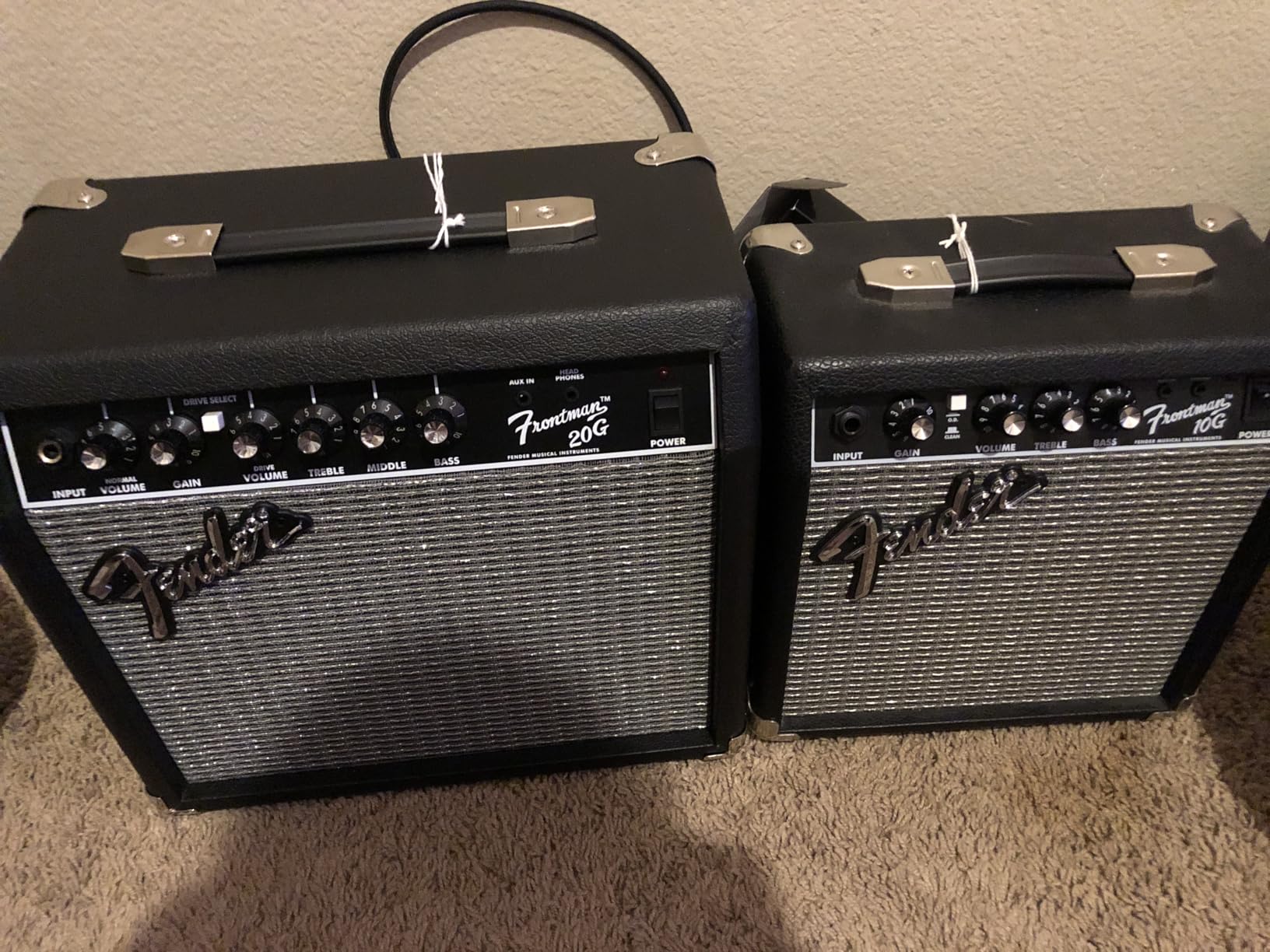
The Frontman 20G is the amp I recommend when someone says they just want to plug in and play. Two channels, a 3-band EQ, and nothing to learn. The Clean channel is genuinely crisp and musical, and it takes pedals beautifully if you ever add an overdrive or delay to the chain.
The Drive channel gets its own volume control, so you can balance clean and dirty levels properly, something many budget amps get wrong. At 20 watts through an 8 inch speaker, there is plenty of volume for a bedroom or a small jam with a friend on acoustic.
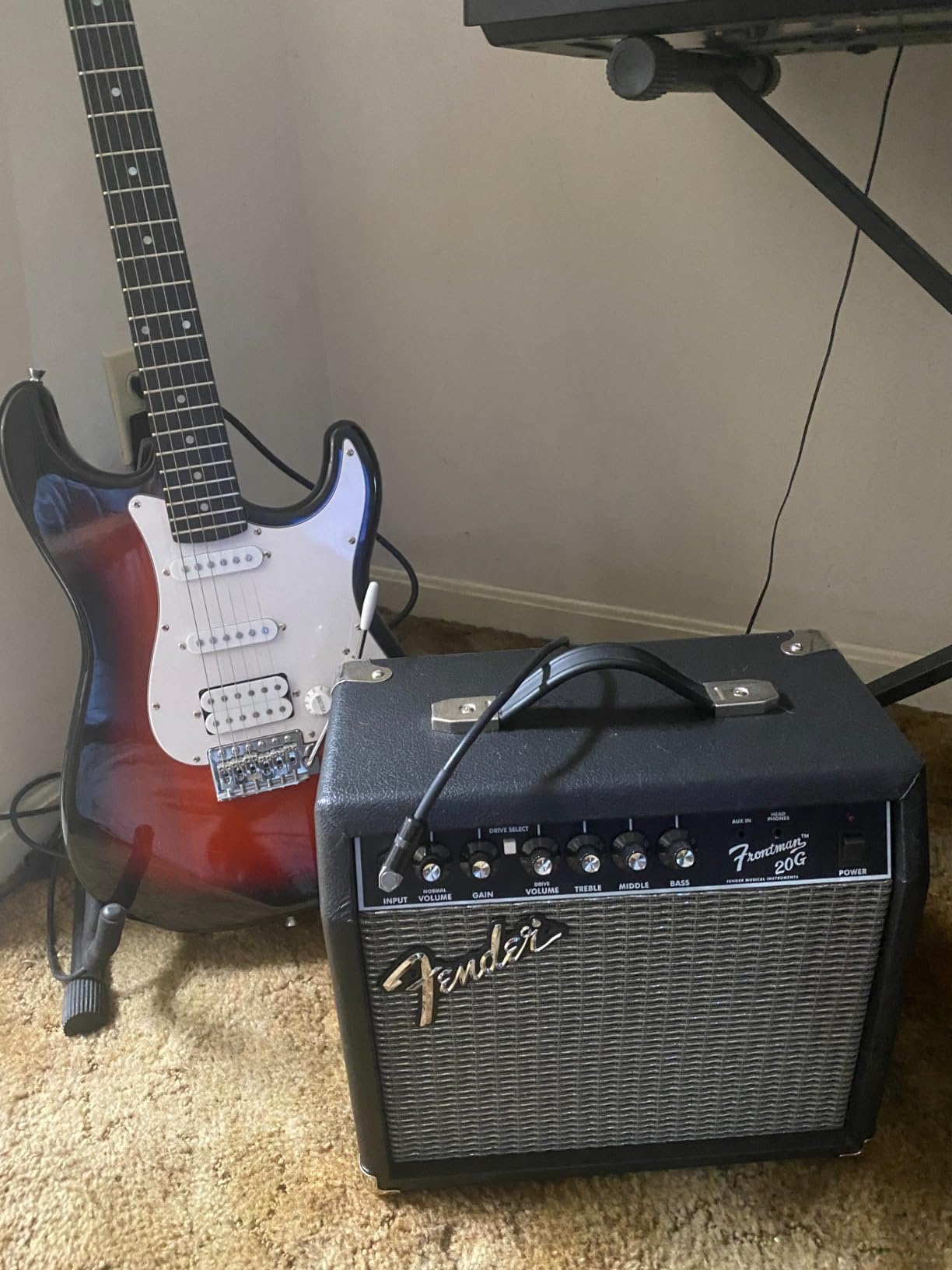
Headphone jack and aux input check the two boxes that matter for home practice: silent late-night sessions and playing along with tracks from your phone. At 15.4 pounds, moving it between rooms is an afterthought.
Be aware of two limitations. There is no reverb, which I felt the moment I switched from the Champion II. And it ships US-voltage only, so international buyers need a step-down transformer. With 4.6 stars from 1,058 reviews, the value equation clearly still works for most buyers.
Who the Frontman 20G is right for
Beginners and no-nonsense players who value simplicity and a great clean tone over feature lists. If you plan to build a small pedalboard later, this is an ideal pedal platform.
It suits anyone upgrading from a 10-watt starter amp who wants more headroom and a fuller 8 inch speaker.
Who should look elsewhere
If built-in effects are a must, the Champion II 25 or MG15GFX cover that at a similar tier.
Buyers outside the US should confirm voltage compatibility before ordering.
6. JOYO JAM Buddy II – Best Battery-Powered Practice Station
JOYO 10W Portable Guitar Practice Amp & Multi-Effects Pedal Combo Amplifier with Footswitch,OTG Recording, Bluetooth,14 Amp Models,3-Band EQ,36 Drum Patterns & Looper (JAM Buddy II, Orange)
10W Portable Amp
Dual 2 Inch Speakers
14 Amp Models + 9 FX
Drums + 30-Sec Looper
5-Hr Battery + Bluetooth
Pros
- 14 amp models from jazz to metal
- 36-pattern drum machine
- 30-second looper
- Bluetooth playback + OTG recording
- Rechargeable 5-hour battery
- Palm-sized 1.87 pound design
Cons
- Looper limited to 30 seconds
- Only 7 true amp models
- Headphone jack may not fit all earphones
- No app support on this model
The JAM Buddy II is a practice Swiss Army knife that weighs less than two pounds. Inside the orange palm-sized box sit dual 2-inch full-range speakers with a bass radiator, 14 amp models, 9 effects, a 36-pattern drum machine, and a 30-second looper. It is less an amp and more a complete practice routine.
The drum machine is what makes nightly practice actually happen for me. Instead of clicking along with a metronome, you play over proper drum grooves, which builds timing and phrasing faster. Layer a quick loop on top and you have a three-part jam going in under a minute.
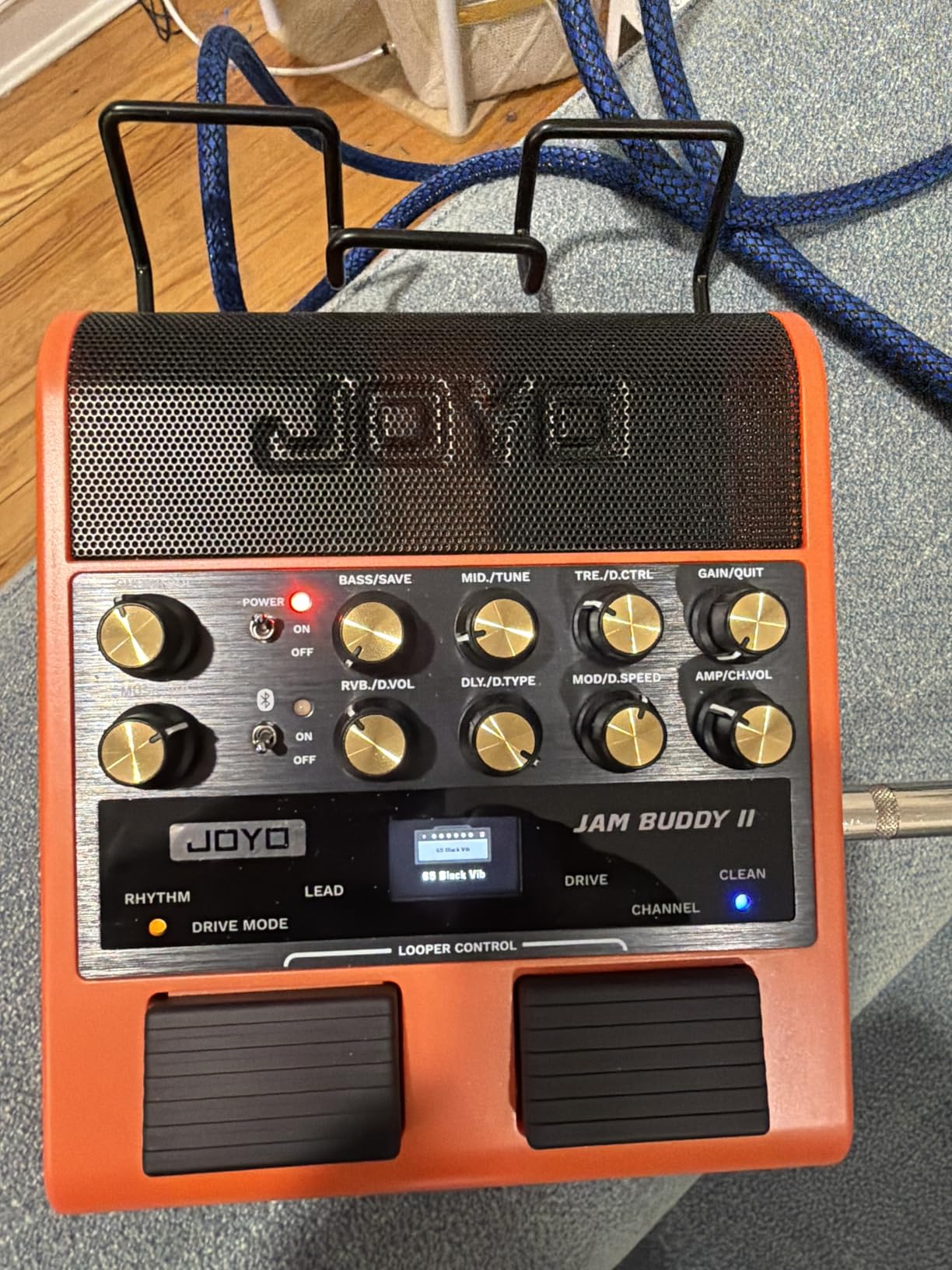
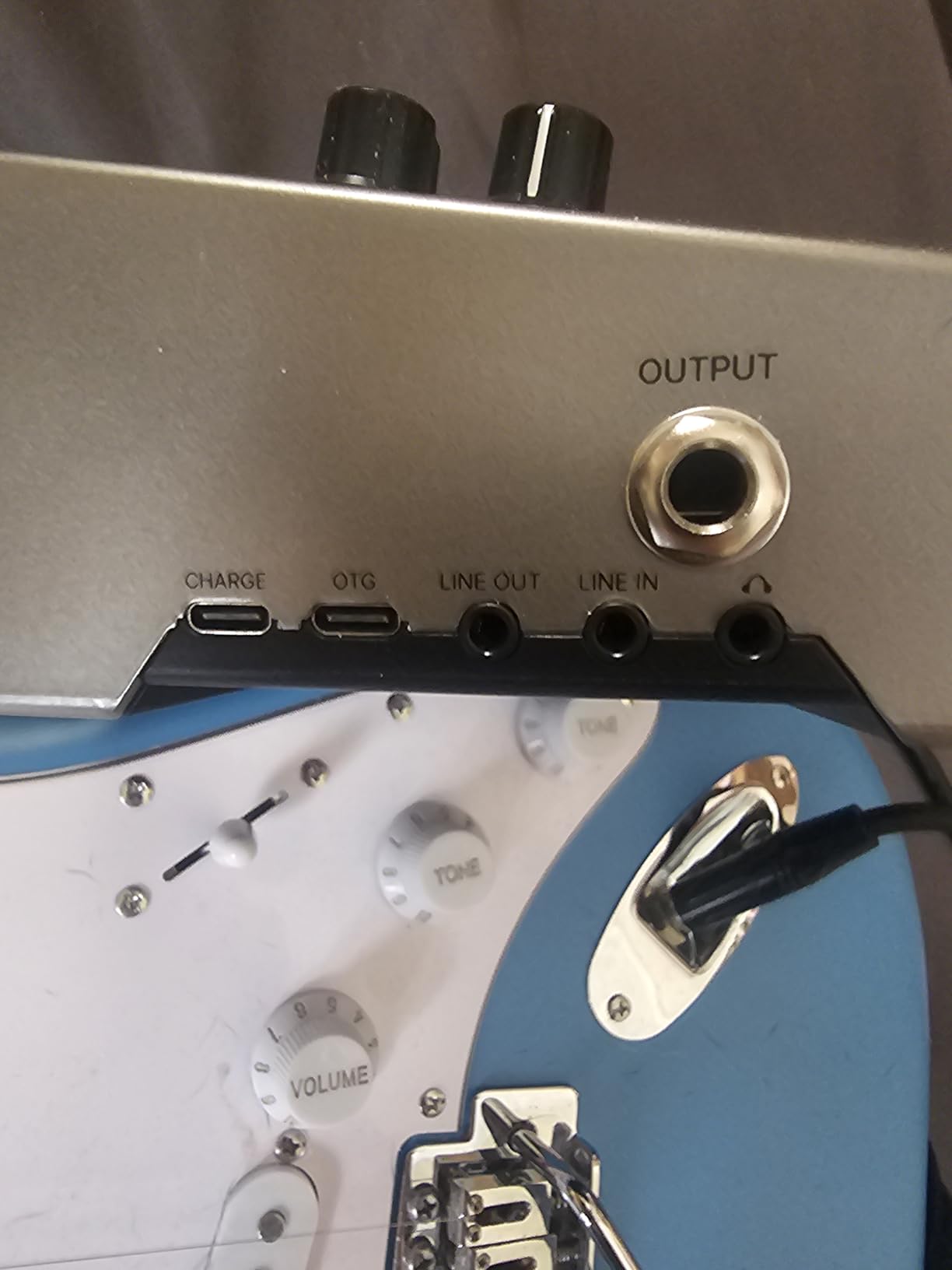
Connectivity is where JOYO quietly wins. Bluetooth streams backing tracks wirelessly, and the USB-C OTG connection records straight into a phone with no interface needed. The rechargeable battery runs about five hours, and the included phone mount clips your screen right onto the amp.
Honest limits: the looper caps at 30 seconds, and only 7 of the 14 “models” are true amp sims, the rest add a fixed tube screamer you cannot adjust. The headphone jack also refuses some earphone designs. Still, at 81 percent five-star from 359 reviews, plenty of players call it the most fun per dollar in their collection.
Who the JAM Buddy II is right for
Players who want drums, looping, and Bluetooth in a take-anywhere package. It suits beginners building timing skills and travelers who refuse to skip practice.
Anyone recording quick phone demos will love the OTG USB-C audio interface.
Who should look elsewhere
If you want deeper modeling and AI backing tracks, the Spark GO covers similar ground with far more polish.
Players needing big, room-filling tone should accept a larger combo, since 2-inch speakers have physical limits.
7. Fender Frontman 10G – Best Budget Practice Amp
Fender Frontman 10G Electric Guitar Amplifier, 10-Watt Amp, Black/Silver
10W Solid State
6 Inch Speaker
Built-In Overdrive
2-Band EQ
Headphone + Aux Jacks
Pros
- Great clean Fender tones
- Compact 11.7 pound design
- Headphone output for silent practice
- Aux input for playing along
- Closed-back design boosts bass
Cons
- Overdrive can sound compressed
- Only 2-band EQ with no mids
- No built-in reverb or effects
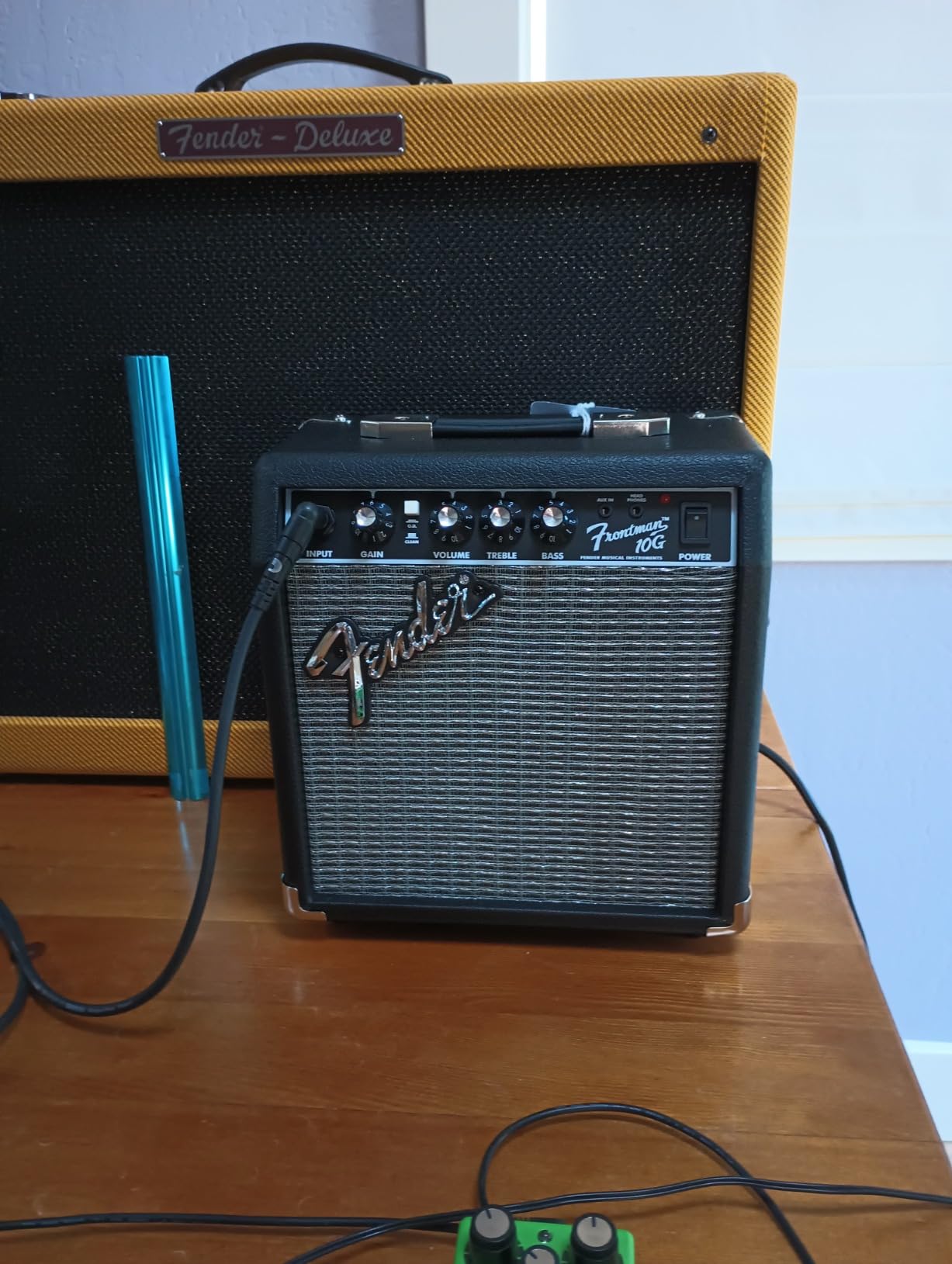
The Frontman 10G is the best-selling practice amp on Amazon for a reason, with 13,557 reviews and a 4.6-star average. For a beginner’s very first amp, it nails the fundamentals: real Fender clean tone, a headphone jack, and an aux input, all in an 11.7 pound box that tucks into any corner.
The closed-back cabinet is a clever touch at this price, delivering beefier bass response than the open-back toys it competes with. The clean channel stays sweet at low volume, which is exactly how this amp will be used 95 percent of the time.
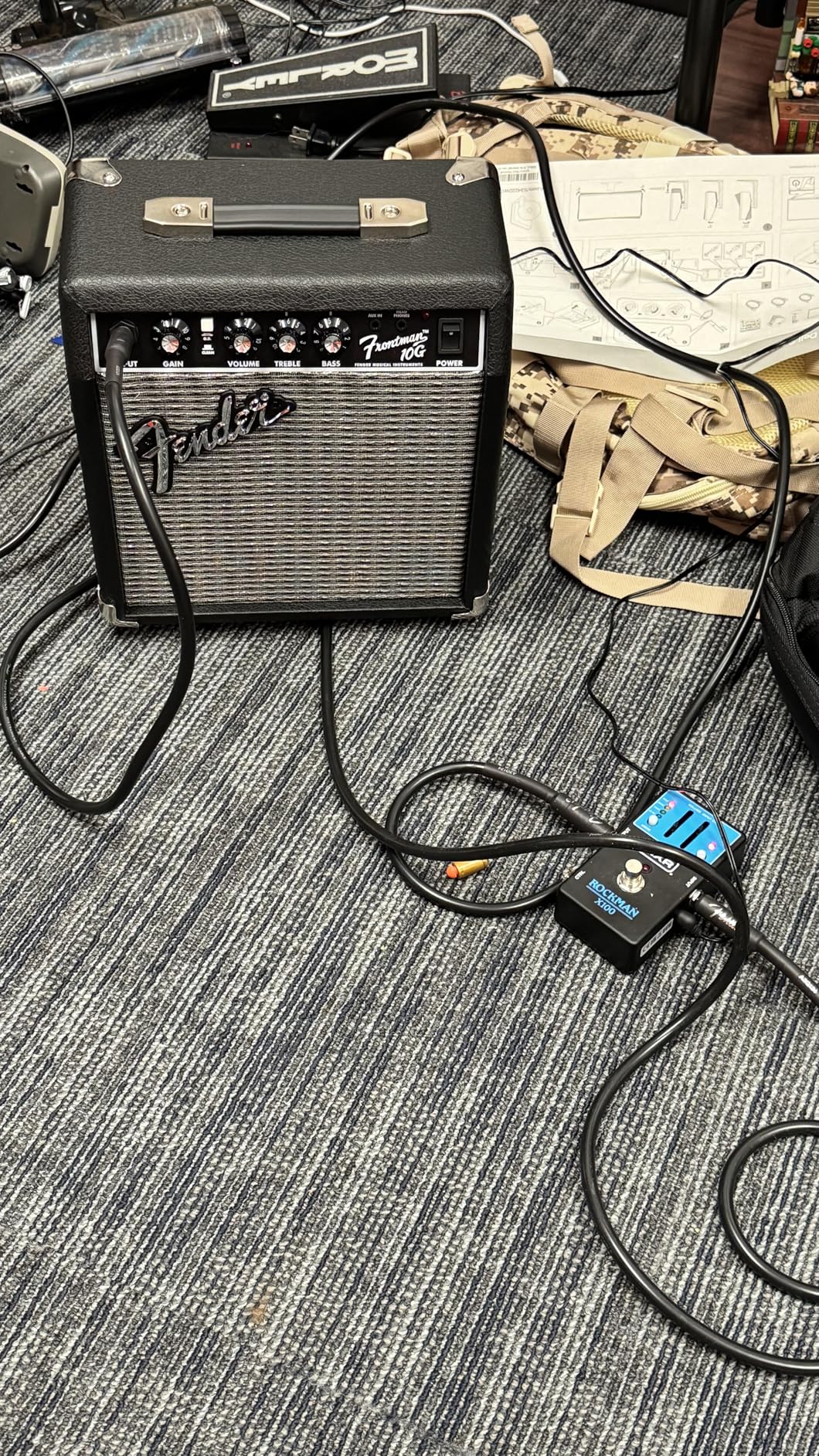
The built-in overdrive gives newcomers their first taste of distortion without buying a pedal. Experienced players will notice it sounds compressed and reach for a pedal instead, and the 2-band EQ leaves no mid control, a real limitation for shaping gain tones.
There is no reverb or any other effect, so what you save in money you pay back in features. But if the question is whether a total beginner can plug in tonight and get inspiring tone for under a hundred dollars, the answer is a clear yes. That is why it remains Reddit’s most-recommended starter amp year after year.
Who the Frontman 10G is right for
First-time guitarists, parents buying for kids, and anyone wanting a cheap second amp for another room. It is the classic first amp for good reason.
It also works well as a grab-and-go backup for players whose main amp lives at a rehearsal space.
Who should look elsewhere
Anyone who already knows they want effects should start at the Champion II 25 or JAM Buddy II instead of adding pedals later.
Intermediate players will outgrow the 2-band EQ and 6 inch speaker within a year of serious playing.
How to Choose a Practice Amp: Buying Guide
Choosing among the best electric guitar amplifiers for home practice comes down to five practical questions. Here is how our team thinks through them after years of apartment playing.
How many watts do you need? For home practice, 5 to 25 watts is plenty. Tube amps need volume to sound good, but solid state and modeling amps, like every pick in this guide, sound their best at the low end of their range. A 100-watt amp at home is a paperweight with a volume problem.
Speaker size shapes your tone. A 6 inch speaker, like the Frontman 10G’s, sounds tight and focused. An 8 inch speaker, used by the Mustang, Champion, MG15GFX, and Frontman 20G, adds warmth and low-end depth. Sub-compact amps like the Spark GO and JAM Buddy II use computational audio or small drivers with radiators to fake bigger cabs surprisingly well.
Headphone output is non-negotiable for apartments. Every amp in this guide has one, because silent practice is the number one request in every forum thread we read. If you share walls or play after 9 p.m., test the headphone jack early, some budget amps treat it as an afterthought.
Modeling and effects versus simplicity. Modeling amps like the Mustang LT25 and Spark GO give you dozens of amps and effects in one box, perfect for exploring your identity as a player. Traditional amps like the Frontman 20G do one or two sounds extremely well and stay out of your way. Beginners usually stay motivated longer with modeling variety.
Think about recording and connectivity. USB or OTG recording, present on the Mustang, Champion II, and JAM Buddy II, turns your amp into an audio interface and saves you buying separate gear. Bluetooth makes playing along with your library effortless. These are the features most budget guides skip, and the ones you will use daily.
Practice amp versus regular amp. A practice amp is a compact, low-wattage amplifier designed for home use, typically with a headphone output, simple controls, and often built-in effects or modeling. A regular amp is built for stage volume and projection first. You can use a regular amp at home, but it will rarely sound as good quiet as a purpose-built practice amp does, and quiet is the whole game at home.
Frequently Asked Questions
What is the best guitar amp for low volume practice?
A low-wattage solid state or modeling amp is best for low volume practice. The Fender Mustang LT25 and Positive Grid Spark GO sound full and responsive at whisper levels, and both include a headphone output for completely silent sessions.
What is the best practice amp in 2026?
The Fender Mustang LT25 is the best practice amp in 2026 for most players, thanks to 30 presets, a USB recording interface, and a 4.8-star rating from over 4,100 reviews. The Positive Grid Spark GO is the top portable pick, and the Fender Frontman 10G leads the budget category.
What is the difference between a practice amp and a regular amp?
A practice amp is a compact, low-wattage amplifier designed for home use, usually 5 to 25 watts, with a headphone output, simple controls, and often built-in effects or amp modeling. A regular amp prioritizes stage volume and projection. Regular amps can be used at home, but they typically sound stiff and dull at the low volumes a practice amp is designed to handle.
How many watts do I need for home guitar practice?
Between 5 and 25 watts is ideal for home guitar practice. Solid state and modeling amps in that range reach their sweet tone at apartment-friendly volumes, while anything louder mostly goes unused.
Conclusion
After living with all seven of these amps, our team’s verdict for the best electric guitar amplifiers for home practice in 2026 is straightforward. The Fender Mustang LT25 is the best overall choice for its presets, USB recording, and near-universal praise. The Positive Grid Spark GO wins for portable, app-driven practice, and the Fender Frontman 10G remains the budget king for first-time players.
Pick the one that matches how you actually play: effects explorers should grab the Champion II 25, classic rockers the MG15GFX, simplicity fans the Frontman 20G, and travelers the JAM Buddy II. Whichever you choose, an amp that sounds great quiet will get you playing more, and playing more is the whole point.