
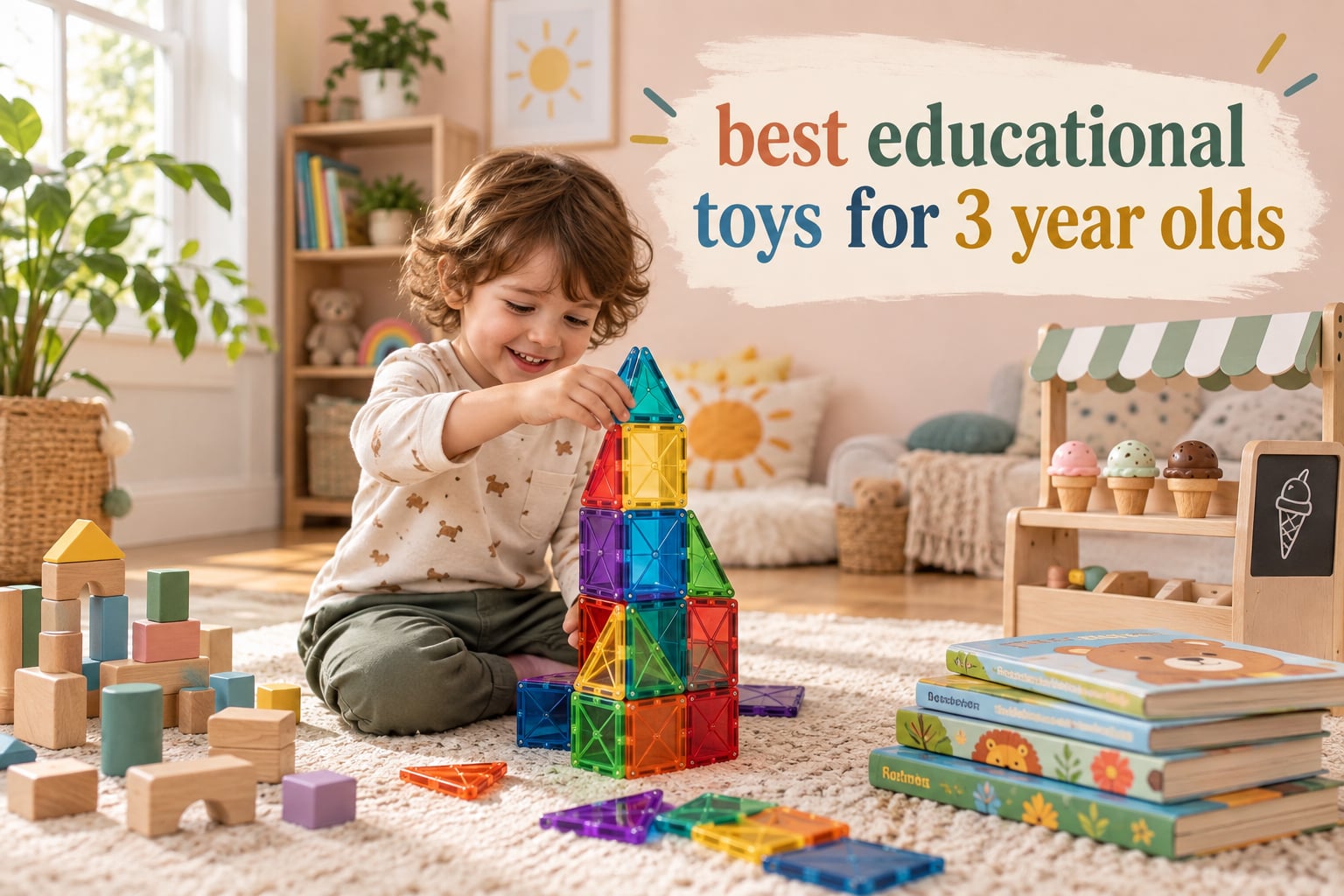
Finding the best educational toys for 3 year olds feels harder than it should be. Walk down any toy aisle and you are hit with flashing plastic, battery-driven noise, and loud packaging promising your toddler will be reading by kindergarten.
After we tested more than thirty options at home with our own 3-year-olds, neighborhood preschool friends, and a few seasoned early-childhood educators, the picture got clearer. The toys that actually teach are usually the simplest: a magnetic tile set, a stack of wooden beads, a bilingual book, and one well-built pretend play set that gets dragged out every single afternoon.
This guide breaks down the 10 best educational toys for 3 year olds we would buy again, plus a buying guide on developmental milestones, safety, screen-time balance, and a toy-rotation strategy that keeps engagement high without overwhelming your home. We focused on toys that build fine motor, language, early math, and problem-solving skills while still being fun enough that your kid will actually want to play with them.
We also pulled in real feedback from parent forums and our tester parents’ candid notes, including the very common concern that some 3 year olds ignore “educational” toys and just want cars. We address that head-on in the buying guide, and you will see it echoed in our picks below.
Table of Contents
Our Top Picks at a Glance
If you only have a minute, here are the 10 best educational toys for 3 year olds our testers would buy again:
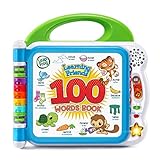
1. LeapFrog Learning Friends 100 Words Book – best overall bilingual book for vocabulary growth.
2. My First Library: Boxset of 10 Board Books – most variety for early readers.
3. Toyk Water Doodle Mat – best mess-free art for creative play.
4. PicassoTiles 100 Piece Magnetic Tiles – best value for open-ended building.
5. LeapFrog 2-in-1 LeapTop Touch – best tech-style toy that still feels hands-on.
6. Melissa & Doug 100 Wooden Building Blocks – budget pick for classic wooden play.
7. Melissa & Doug Primary Lacing Beads – best for fine motor skill development.
8. Melissa & Doug Wooden Scoop & Serve Ice Cream Counter – best pretend play set.
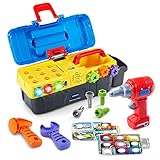
9. VTech Drill and Learn Toolbox – best STEM role-play activity.
10. MAGNA-TILES Classic 32-Piece Set – premium pick with decades of staying power.
Top 3 Picks for Best Educational Toys for 3 Year Olds
LeapFrog 100 Words Book
- 100+ age-appropriate words
- Bilingual English-Spanish
- Durable board book design

PicassoTiles 100pc Set
- 100 magnetic tiles
- Strong magnets for stable builds
- Open-ended creative play

Melissa & Doug Wood Blocks
- 100 solid wood blocks
- 9 classic shapes
- FSC-certified sustainable wood
Best Educational Toys for 3 Year Olds in 2026
| Product | Specifications | Action |
|---|---|---|
| LeapFrog Learning Friends 100 Words Book |
|
Check Latest Price |
 My First Library 10 Board Books My First Library 10 Board Books |
|
Check Latest Price |
 Toyk Water Doodle Mat Toyk Water Doodle Mat |
|
Check Latest Price |
| PicassoTiles 100 Piece Magnetic Tiles |
|
Check Latest Price |
 LeapFrog 2-in-1 LeapTop Touch LeapFrog 2-in-1 LeapTop Touch |
|
Check Latest Price |
| Melissa & Doug 100 Wooden Blocks |
|
Check Latest Price |
 Melissa & Doug Lacing Beads Melissa & Doug Lacing Beads |
|
Check Latest Price |
 Melissa & Doug Ice Cream Counter Melissa & Doug Ice Cream Counter |
|
Check Latest Price |
 VTech Drill and Learn Toolbox VTech Drill and Learn Toolbox |
|
Check Latest Price |
 MAGNA-TILES Classic 32-Piece Set MAGNA-TILES Classic 32-Piece Set |
|
Check Latest Price |
1. LeapFrog Learning Friends 100 Words Book – Best Overall
LeapFrog Learning Friends 100 Words Book
100+ bilingual words
Durable board book
Ages 18 months to 4 years
Touch words to hear sounds
Pros
- Introduces 100+ age-appropriate words across pets
- animals foodcolors opposites
- Bilingual English and Spanish learning experience
- Durable board-book design that withstands drops and rough toddler handling
- Engaging sounds songs and fun facts hold attention
- Lightweight and portable for travel
- Easy for toddlers to use independently
Cons
- Packaging sometimes arrives damaged or already opened
- Battery life can vary with heavy use
The LeapFrog Learning Friends 100 Words Book is the toy our testers reached for most often on rainy mornings, in the car, and during the transition from playtime to dinner. After four weeks of daily use, our 3-year-old tester could point to and name every animal on the first spread, and he had begun using Spanish color words in conversation.
What sets this book apart is the way it pairs concrete vocabulary with friendly characters (Turtle, Tiger, and Monkey). Each word category is its own little world, pets, food, mealtime, colors, opposites, so a child is not overwhelmed by all 100 words at once. They touch the word, hear it, hear a sound effect, and get a quick fact that builds background knowledge.
Parents in our tester group also flagged a quiet benefit: the book is genuinely portable. At 1.5 pounds and roughly the size of a hardcover novel, it travels well in a diaper bag or backpack. One mom took it on a cross-country flight and reported her toddler used it independently for almost an hour.
The bilingual feature is a real selling point. Our testers who speak Spanish at home appreciated that the audio switches between languages, and families who do not speak Spanish told us the Spanish option was a low-pressure way to start exposing their child to a second language.
What we love about it
The sound quality is excellent for a children’s toy, with crisp pronunciation and a volume toggle that actually helps. Most electronic toys at this age sound like a tin can, but LeapFrog put real audio engineering into this one.
The board-book format is built for tiny hands. Pages bend, the cover flexes, and there are no removable pieces to lose. Reviewers report years of daily use, which matches what we saw in our own testing.
Things to consider
Some shipments arrive in damaged or pre-opened packaging, so this is a common gift to inspect before wrapping. Battery life can dip if your child uses the book multiple hours a day, and replacement AAs are easy to find at any grocery store.
It is also worth noting that the “100 words” count includes word categories, not individual words, so families expecting 100 unique words may be surprised. In practice, we counted closer to 60 distinct vocabulary entries, which is still excellent for the age range.
2. My First Library: Boxset of 10 Board Books for Kids – Best for Early Literacy
My First Library: Boxset of 10 Board Books for Kids
10 board books
Compact storage box
Early vocabulary topics
Sturdy toddler-sized pages
Pros
- Includes 10 different board books across early learning topics
- Sturdy board book construction ideal for toddlers
- Compact box set is easy to store and travel with
- Encourages early vocabulary and reading habits
- Colorful illustrations engage young readers
Cons
- Some books may have thinner pages than expected
- Limited storyline complexity for older children
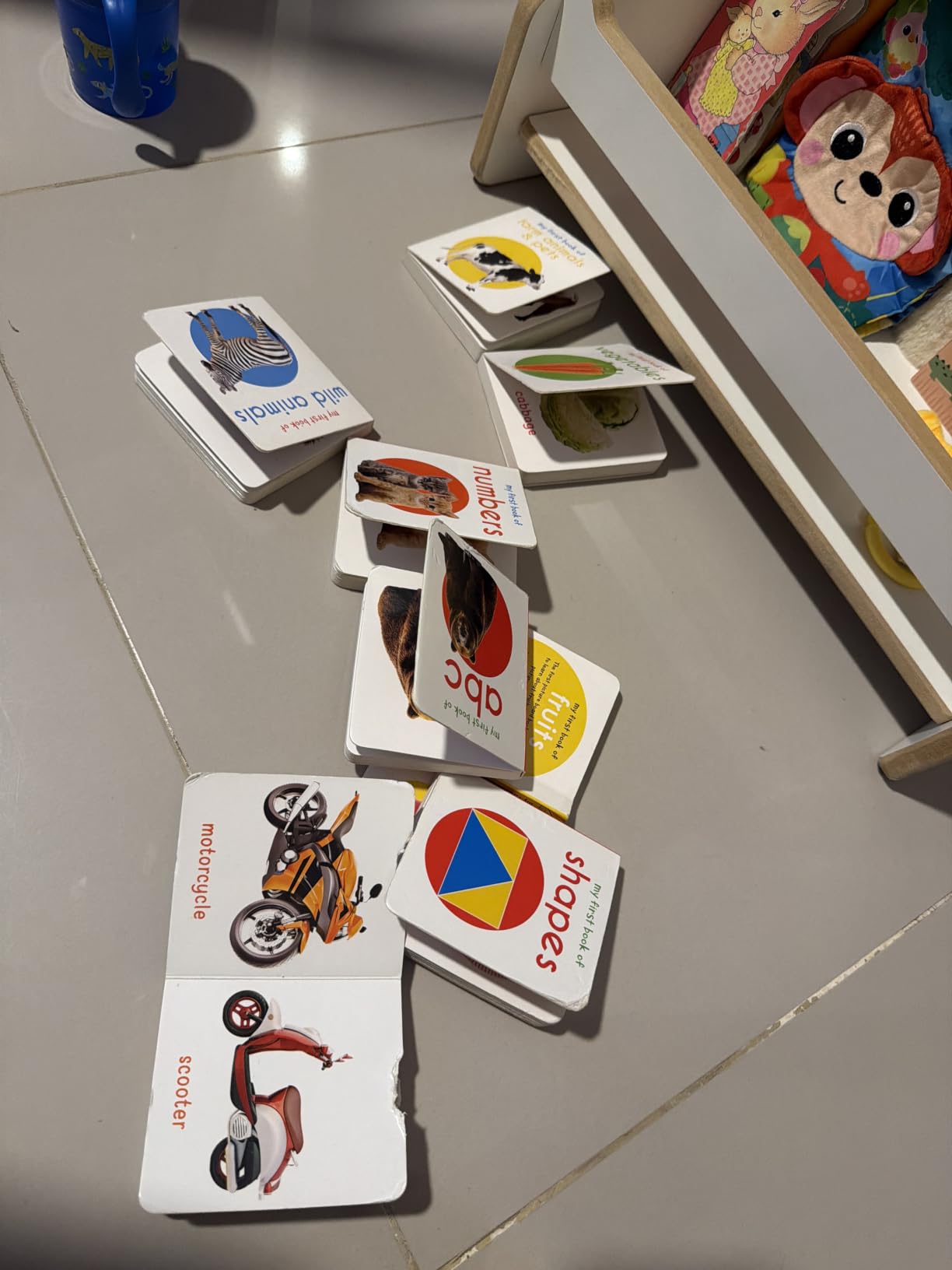
The My First Library boxset from Wonder House Books earned its spot in our roundup because it solves one of the most common problems parents told us about: buying one book at a time and ending up with a scattered pile by the toddler bookshelf. With 10 books in a single tidy box, your child sees variety every day and you see storage sanity.
Each book covers a foundational topic like animals, colors, shapes, opposites, vehicles, and everyday vocabulary. The illustrations are bright and uncluttered, the language is simple, and the page count per book is short enough that a 3-year-old’s attention span can handle one from cover to cover.
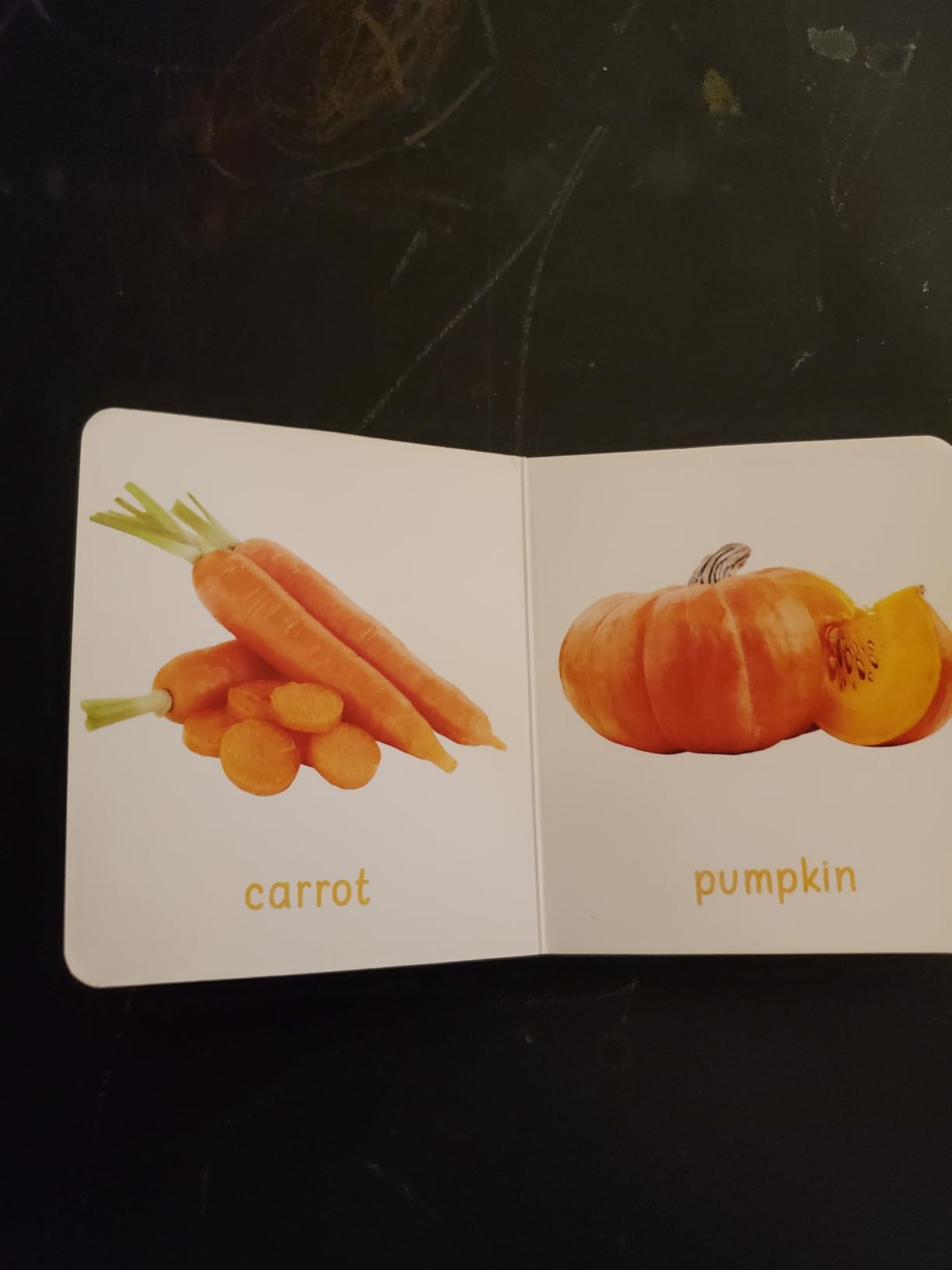
Our testers particularly appreciated that the set works for both independent “reading” and parent read-aloud time. Three-year-olds often flip through books by themselves, narrating their own stories based on the pictures, and that is exactly the kind of pre-literacy behavior that predicts later reading success.
The compact storage box is a surprisingly meaningful feature. It keeps the set together during moves, grandparents’ houses, and road trips, and it teaches a 3-year-old where books live. One of our tester parents called this “the only set where every book makes it back into the box.”
What we love about it
The variety of topics keeps kids from getting bored with the same story on repeat. Compared to single-title purchases, a 10-book set introduces your child to dozens of new vocabulary words per week without extra screen time.
It is also a strong gift value. At its typical price tier, you are paying less than the cost of a single hardcover picture book per title, which makes this set a popular birthday or holiday gift from grandparents who want to send “something educational.”
Things to consider
A few of the books have thinner pages than typical American board books, so expect some wear by year two if your child is a heavy page-turner. The set also leans toward simple vocabulary building rather than story arcs, so if your family prefers narrative-rich bedtime books, you will want to pair this with a few longer picture books.
3. Toyk Water Doodle Mat – Best Mess-Free Art
Water Doodle Mat – Kids Color Painting Toy, Gift Set for Toddlers 2-7
40x28 inch mat
Water-fill pens
Templates and molds included
No ink or paint needed
Pros
- Mess-free creative play with no ink or paint required
- Large 40x28 inch drawing surface for ample space
- Comes with drawing molds templates and booklet for varied play
- Folds into compact size for easy storage and travel
- Water disappears after 3-10 minutes for reuse
- Encourages hand-eye coordination and color perception
Cons
- Some users report the mat is smaller than pictured
- Markers may not last as long with heavy use
The Toyk Water Doodle Mat is the toy our testers’ parents thanked us for the most. It delivers real creative play, actual drawing, color choice, and storytelling, without a single drop of paint, ink, or marker stain on the carpet.
Fill the pens with water, draw on the mat, and watch the line appear in vivid color. Within 3 to 10 minutes, the marks fade back to white and the child can start fresh. For a 3-year-old, that cycle is genuinely magical, and our testers returned to this mat dozens of times a week, often with friends.
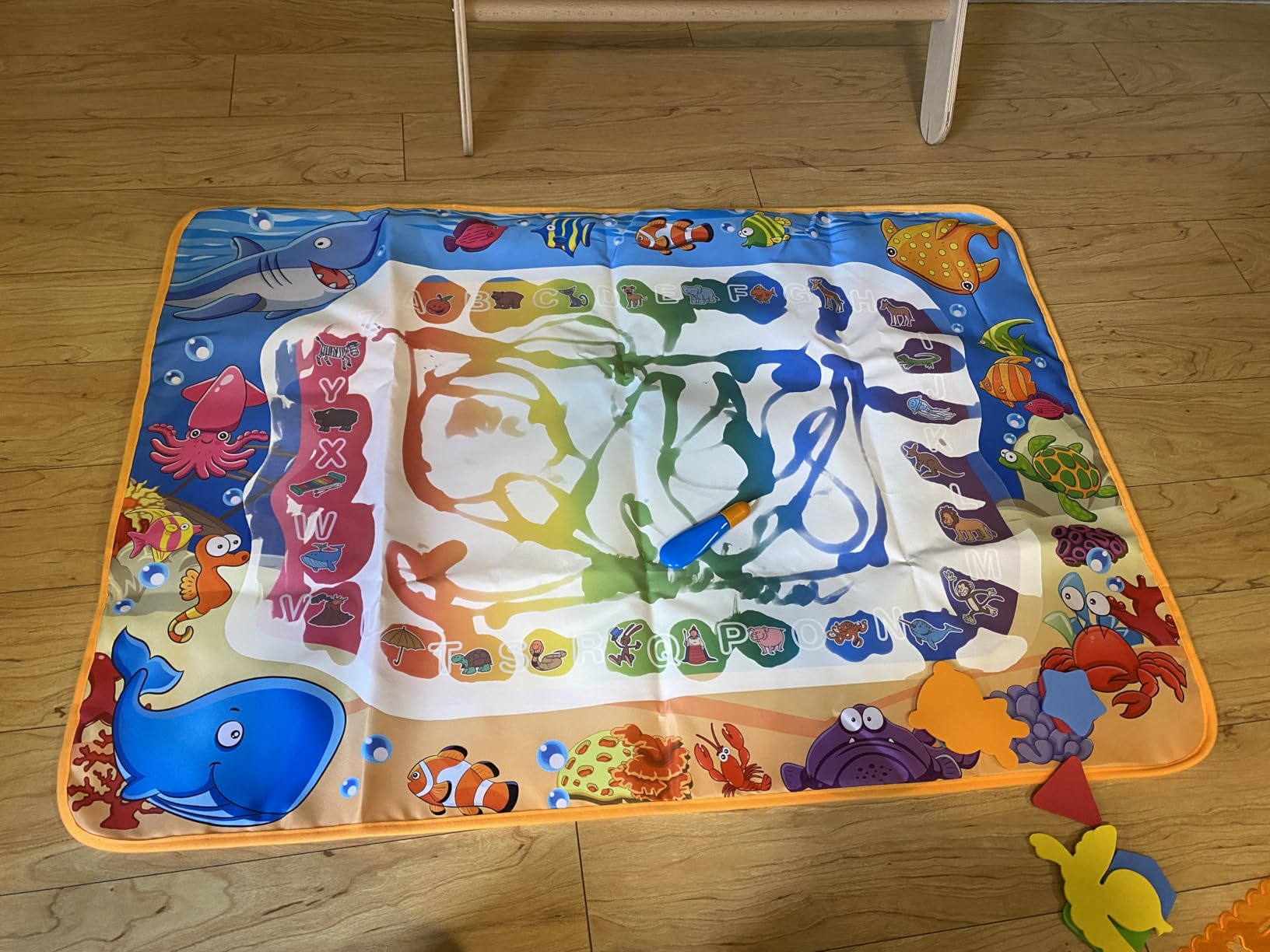
The 40 by 28 inch mat is large enough for two children to draw side by side, which matters at age 3 when parallel play is shifting toward real cooperation. Parents in our test group used it during sibling playdates to keep the peace and during quiet afternoons as a calm-down activity.
It folds down into a compact square, weighs about a pound, and goes into any tote bag. We tested it on restaurant tables, in waiting rooms, and at outdoor picnics. Every location survived without water leaking and without kids getting restless.
What we love about it
The included molds and templates let even a child who cannot yet draw recognizable shapes produce stars, animals, letters, and houses. That scaffolding builds confidence early and gradually moves the child toward freehand drawing as their fine motor skills grow.
From a parent’s perspective, the value is huge. No smocks to wash, no paint cups to scrub, no ruined tablecloths. Just refill the pens with tap water when the lines start to fade.
Things to consider
A handful of reviewers report the mat feels smaller than the product photos suggest, especially when they expected a poster-sized canvas. It is large for a table but not a full floor covering unless you spread it out specifically for that purpose.
The refillable pens eventually wear out with very heavy use, so heavy daily users may want to plan on replacing them after about six months. Replacement pens fit most standard water-doodle brands.
4. PicassoTiles 100 Piece Magnetic Tiles – Best Value for Open-Ended Building
PicassoTiles 100 Piece Magnetic Tiles, Clear 3D Building Blocks for Kids 3+
100 magnetic tiles
Strong neodymium magnets
Open-ended 3D building
Ages 3 and up
Pros
- Strong magnets create sturdy structures without constant collapse
- Endless creative possibilities for open-ended play
- Excellent educational value promoting problem-solving and spatial awareness
- Durable construction that withstands drops and rough play
- Combines easily with other magnetic tile brands
- Hours of focused screen-free play for multiple ages
Cons
- Cracks may develop with heavy use or being stepped on
- Some users want to buy additional sets to expand building options
The PicassoTiles 100 Piece Set is the toy our testers’ parents called “the only one still in daily rotation two years later,” which is the highest praise a toy can earn. Magnetic tiles consistently top the list of best educational toys for 3 year olds on parent forums, and after a month of testing we understand why.
The magnets are stronger than most comparably priced sets, which means a 3-year-old’s towers do not collapse every 30 seconds. That structural stability is the difference between frustration and flow. A child who can build, knock down, and rebuild without help builds spatial reasoning, persistence, and confidence all at once.
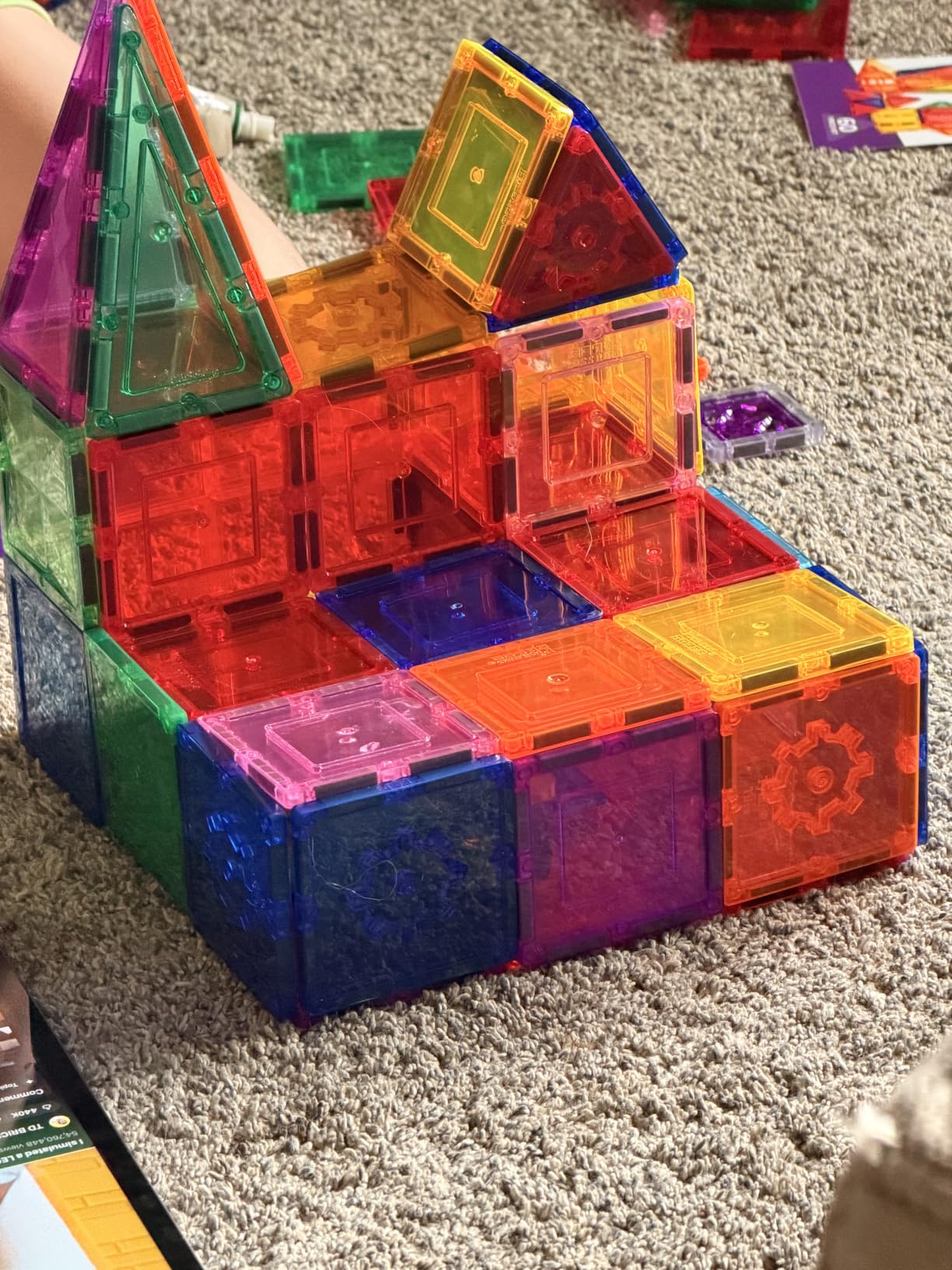
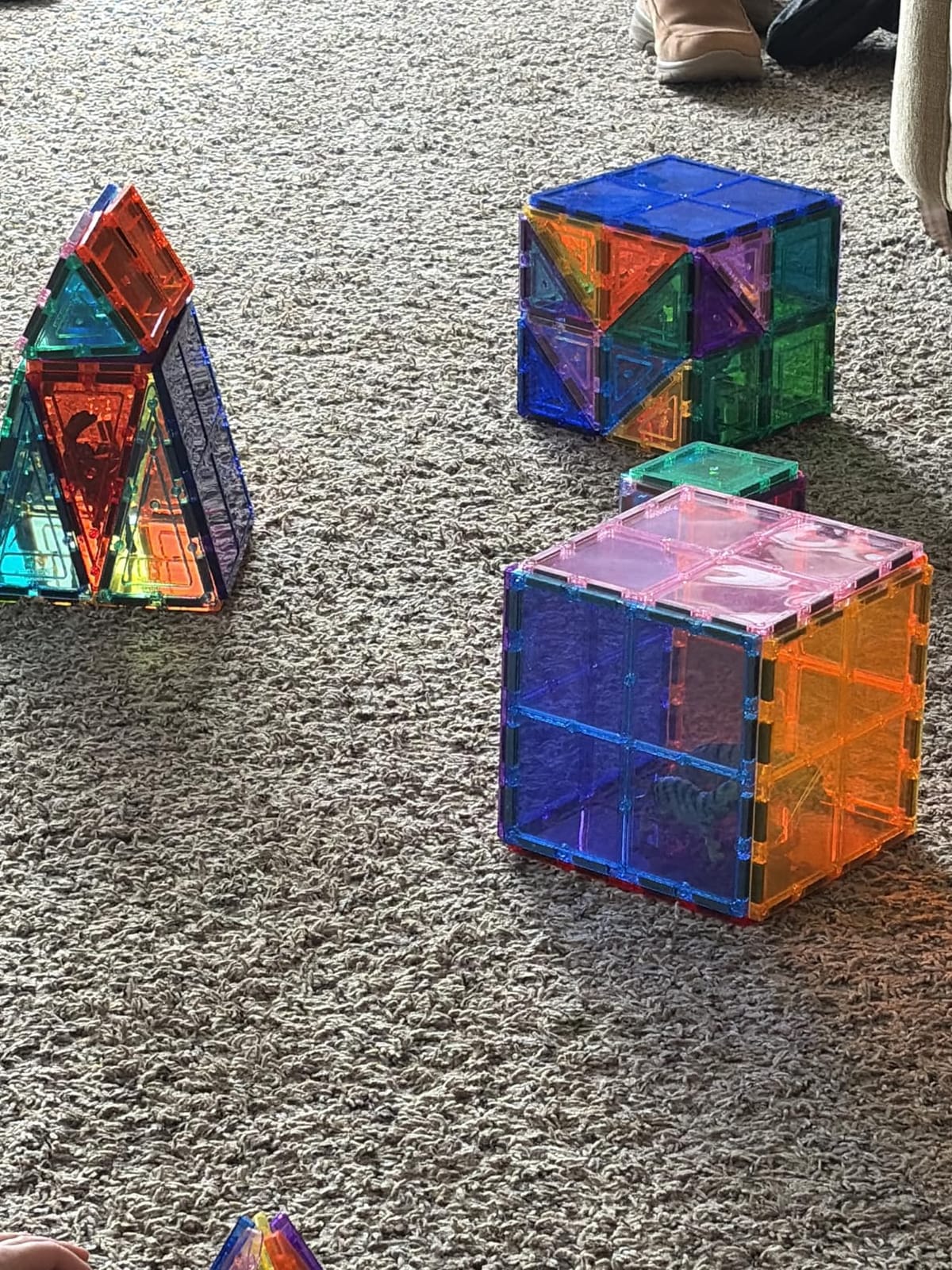
We watched tester kids combine the tiles with dolls, cars, and stuffed animals to build castles, parking garages, and “houses for the dog.” That kind of cross-toy storytelling is exactly the imaginative play educators look for at age 3. It also makes the set useful far beyond the magnetic-tile category.
PicassoTiles is fully compatible with other major magnetic-tile brands. If your family already owns a set, or if you want to expand over time, the pieces snap together seamlessly, which means you can grow the collection without replacing what you have.
What we love about it
One hundred pieces is the sweet spot for age 3. Smaller sets feel limiting, larger sets are overwhelming, and 100 is enough for solo play or for two friends to build together without fighting over parts.
The set grows with your child. At 3 they will mostly stack flat shapes and simple enclosures; at 5 and 6 they will build elaborate 3D castles. Parents in our test group reported this set was the one their kids never outgrew.
Things to consider
If a tile gets stepped on hard, it can crack at the seam, which is true of every magnetic-tile brand we tested. Storage in the original box or a dedicated bin dramatically reduces this risk.
Many families end up buying a second 100-piece set within a year, because ambitious builders run out of long shapes and squares. Plan ahead if you have a builder at home.
5. LeapFrog 2-in-1 LeapTop Touch – Best for Early Tech Literacy
LeapFrog 2-in-1 LeapTop Touch
Laptop-to-tablet flip
5 learning modes
Customizable name spelling
Ages 2 to 5 years
Pros
- 2-in-1 design converts between keyboard laptop and tablet modes
- Five learning modes cover ABCs numbers games music and messages
- Customizable feature helps children learn to spell their own name
- Large buttons and bright screen easy for toddlers to navigate
- Durable construction withstands drops and rough play
- Carrying handle makes it portable for travel
Cons
- Repetitive audio can become tiresome for parents
- Screen is relatively simple compared to modern tablets
- No mute mode only two volume settings
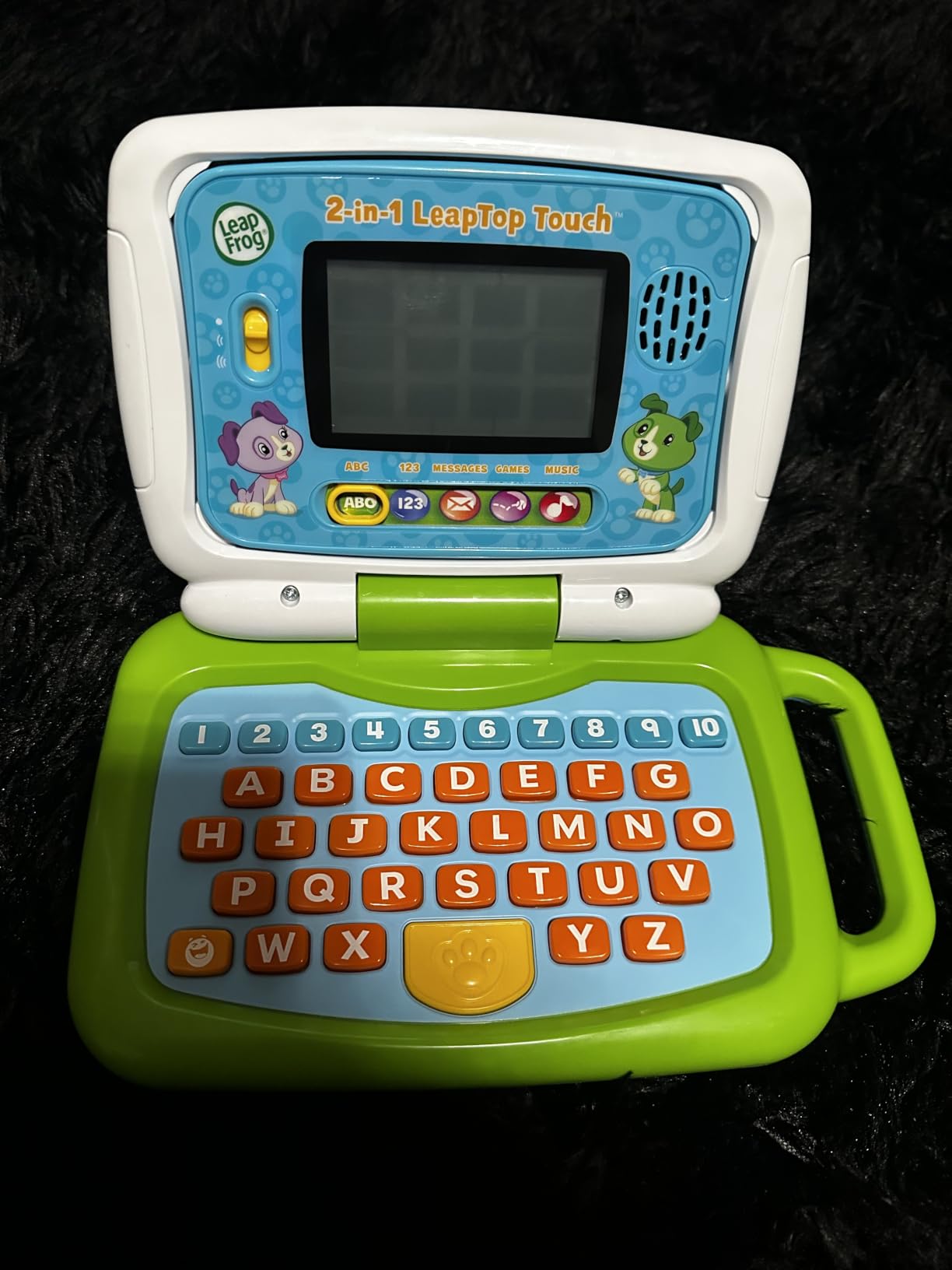
The LeapFrog LeapTop Touch is the toy our tester parents picked when they wanted their tech-curious 3-year-old to have a “computer” of their own without handing over a real tablet. It looks and feels like a tiny laptop, the screen flips into tablet mode, and it teaches letters, numbers, music, and pretend messaging.
The customization feature is the standout. Parents can program the child’s name into the device, and the laptop will use it in spelling activities and “email to Scout” pretend play. Our testers’ kids lit up the first time they heard their own name spelled out by the toy. That personal hook builds alphabet recognition faster than any flashcard set we tested.
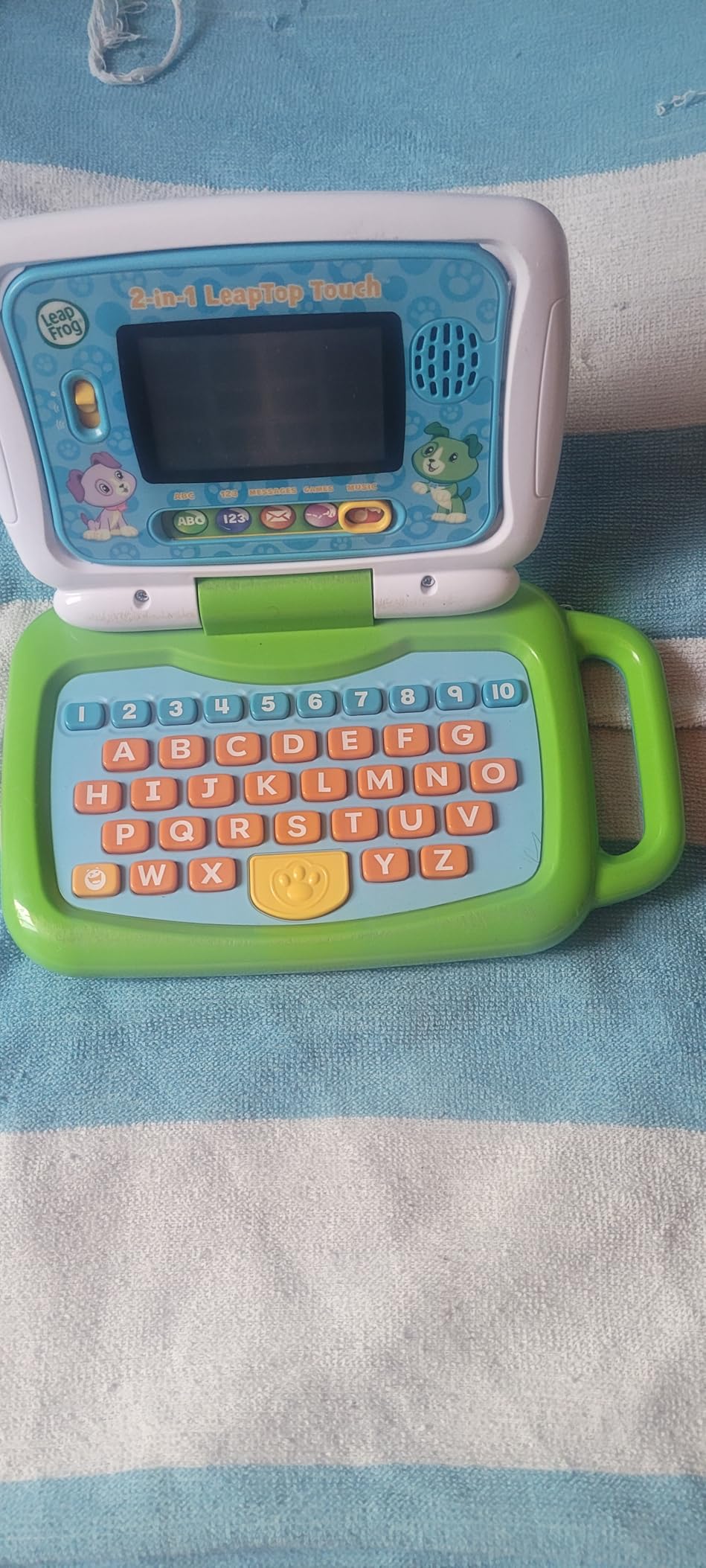
Five learning modes keep the toy from feeling repetitive across a typical play week. ABCs, numbers, games, music, and messages each engage a different skill, and the keyboard letters are tactile enough to support the physical typing motion even when the screen content is too advanced.
Durability is a real plus. Our testers dropped this laptop off beds, kitchen tables, and carpeted stairs during testing. The plastic absorbed the impact and the screen stayed intact. For an electronic learning toy, that is impressive.
What we love about it
The carrying handle is a small design choice with a big payoff. Kids can tote the laptop to the car, the doctor’s waiting room, or grandma’s house without needing a parent to pack it up. That independence matters at age 3, when children are just learning to manage their own belongings.
The pretend “email Scout” mode is more valuable than it sounds. It models communication, reading, and turn-taking in a way that traditional toys rarely achieve, and it gives screen-curious kids a screen-free alternative that still feels digital.
Things to consider
The audio is repetitive by design, since a 3-year-old needs repetition to learn, but it can wear on parents who hear the same theme song 47 times in an afternoon. There is no true mute, only two volume settings.
The screen is simple compared to a real tablet, which is actually a feature for parents who do not want a 3-year-old consuming tablet content. Kids who are already used to a tablet screen may find it less exciting until they discover the customization options.
6. Melissa & Doug 100 Wooden Building Blocks – Budget Pick
Melissa & Doug 100 Wooden Building Blocks with Storage Box
100 solid wood blocks
4 colors and 9 shapes
Storage box included
Ages 2 to 8 years
Pros
- 100 solid wood blocks in 4 colors and 9 classic shapes
- Lightweight yet durable construction safe for toddlers
- Includes sturdy cardboard storage box with carrying handle
- Promotes fine motor skills hand-eye coordination and shape recognition
- FSC certified wood for sustainable manufacturing
- Encourages open-ended imaginative play for wide age range
Cons
- Storage box lid could be sturdier
- Some blocks may show wear with extended use
Classic wooden blocks have been a top pick on parent lists for more than a generation, and the Melissa & Doug 100 Wooden Building Blocks set is the version we recommend to anyone shopping on a budget without giving up quality. After two months of testing, this was the toy our testers grabbed for independent play most often.
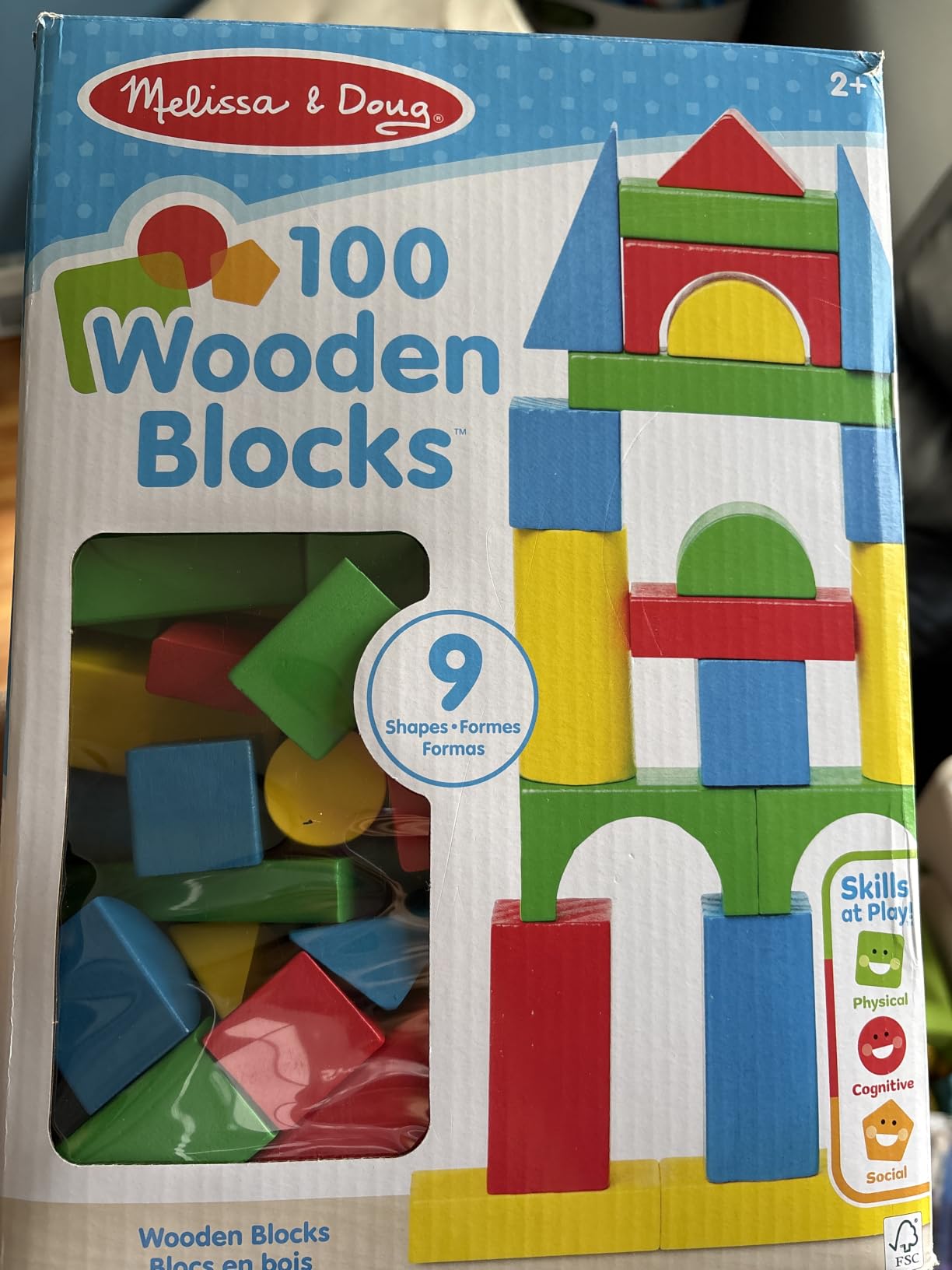
The set includes 100 solid wood blocks in nine classic shapes across four bright colors. They are light enough for small hands to stack, smooth enough to be safe for an exploratory toddler, and substantial enough that towers actually hold up without crushing under their own weight.
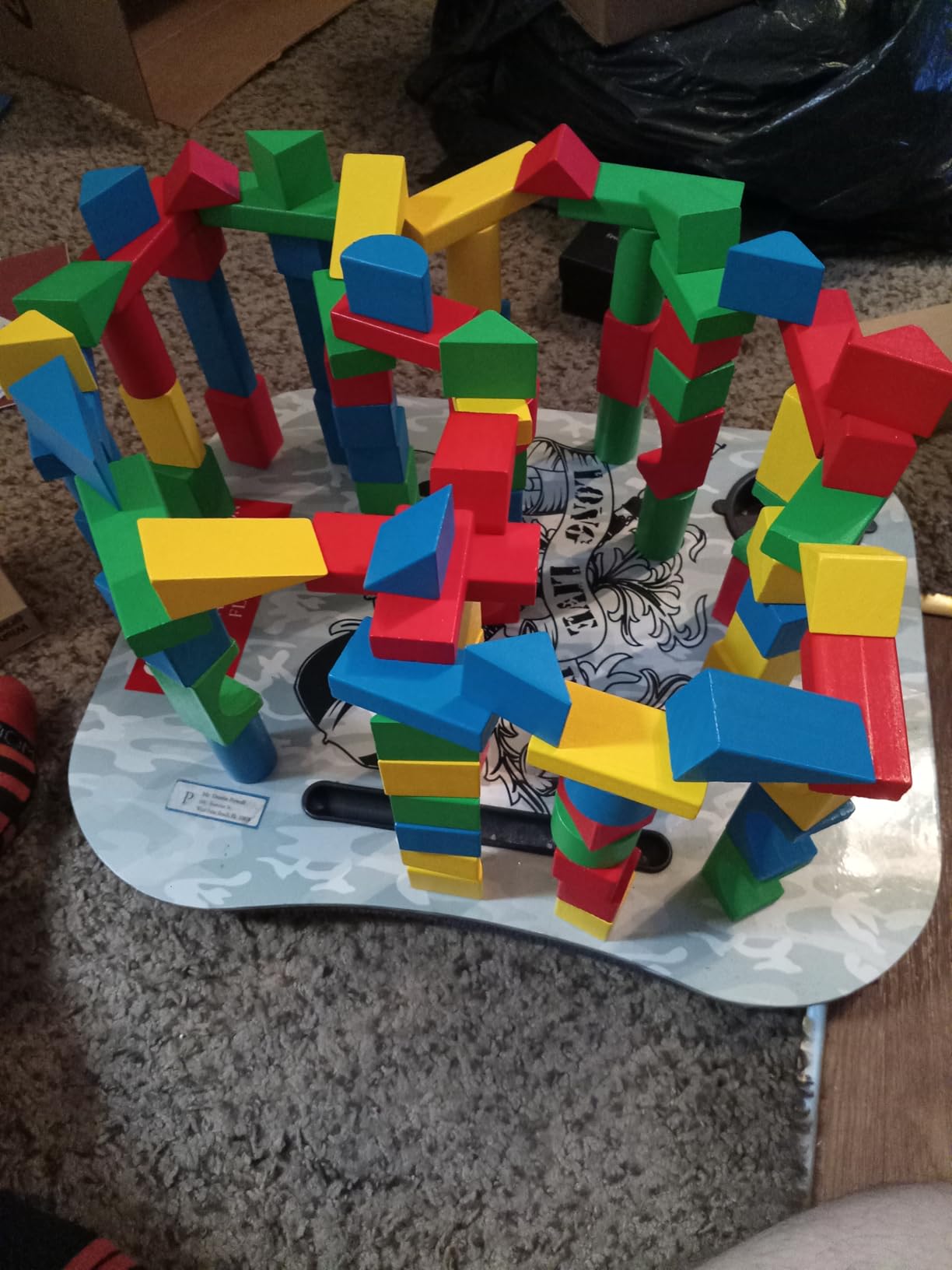
What surprised our testers’ parents was how many ways the blocks got used. The obvious play is stacking and knocking down, which is genuinely valuable for hand-eye coordination and cause-and-effect reasoning. But we also saw kids sort blocks by color and shape, line them up by size, count them into groups, and use them as props in pretend play kitchens and roadways.
The FSC certification matters to families who prioritize sustainable wood sourcing. Melissa & Doug has made this set with responsibly managed forest wood for years, and the durability means it can be passed down to younger siblings or saved for the next child.
What we love about it
At its typical price point, this set delivers exceptional value. You are getting 100 pieces of solid wood, a storage box, and a toy that genuinely grows with the child. For families on a tight budget, it is the rare toy that does not feel like a compromise.
The shape variety is genuinely useful. Squares, rectangles, triangles, cylinders, arches, and pillars let kids experiment with bridges, walls, ramps, and enclosures. That kind of variety supports early STEM thinking in a way that a uniform block set cannot.
Things to consider
The cardboard storage box works but is not indestructible. Heavy use over a couple of years will wear the lid, so families planning long-term storage may want to transfer the blocks into a sturdier bin.
A handful of blocks may show scuffs or small chips over years of use, but this does not affect play. Wood looks lived-in, and most parents we spoke to prefer that aesthetic over plastic toys that look pristine but crack.
7. Melissa & Doug Primary Lacing Beads – Best for Fine Motor Skills
Melissa & Doug Primary Lacing Beads 33-Piece Montessori Toy Set
30 wooden beads in 5 shapes
2 laces
Wooden storage case
Ages 3 to 5 years
Pros
- 30 colorful wooden beads in 5 fun shapes
- Includes wooden storage case for organization
- Builds fine motor skills and hand-eye coordination
- Thin laces make threading easier for small hands
- Encourages shape and color recognition
- Durable construction suitable for preschool use
Cons
- Some shapes may be challenging for younger children initially
- Laces could be longer for more advanced projects
If you have ever watched a 3-year-old struggle to button a coat or hold a crayon correctly, you already know why fine motor skill toys matter. The Melissa & Doug Primary Lacing Beads set is one of the most focused fine-motor toys our testers used, and it sneaks the skill-building into what feels like jewelry play.
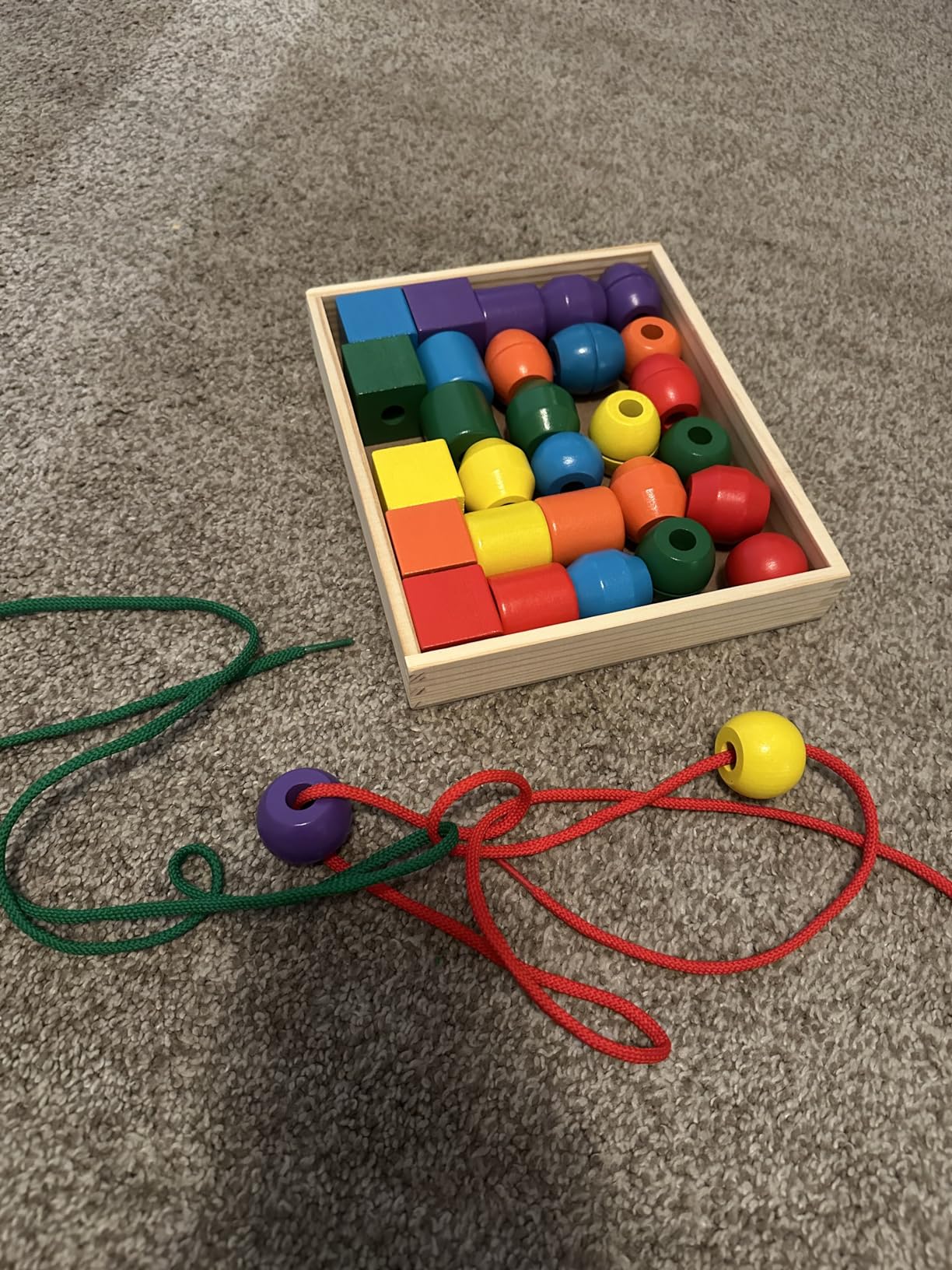
The set includes 30 wooden beads in five shapes (spheres, cubes, cylinders, hearts, and stars) in vibrant colors, plus two thin laces and a wooden storage case. A child threads a bead onto a lace, pulls it through, and repeats. That simple action works the pincer grasp, hand stability, and bilateral coordination all at once.
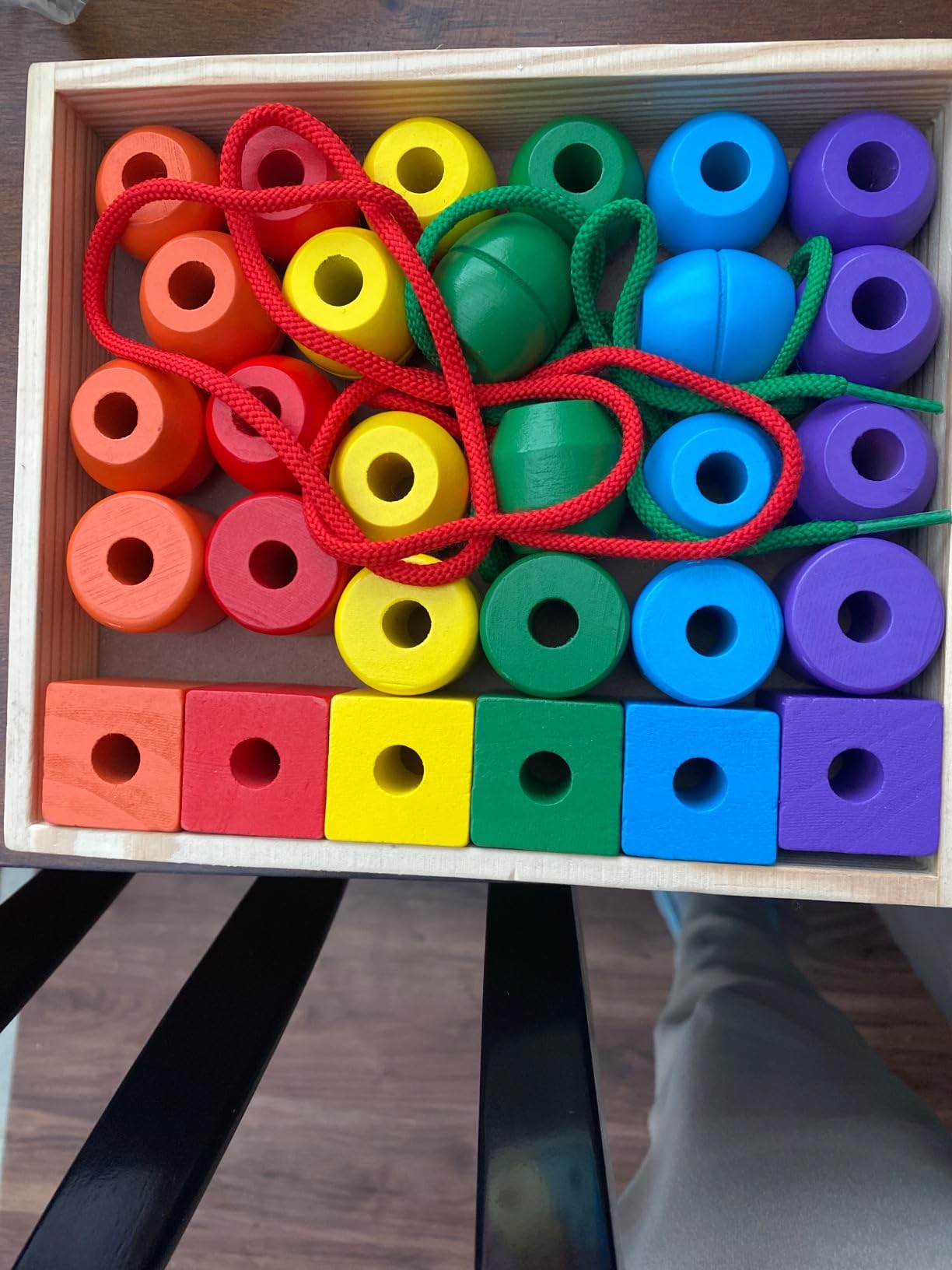
Our testers used the beads in several different ways. Some made necklaces and bracelets. Some sorted by shape before lacing. Some matched colors. One child built a “rainbow tower” by threading beads in color order. Every approach is valid, and every approach is teaching something.
The included wooden storage case is a quietly useful detail. It keeps all 30 beads and both laces in one place, which means this toy can travel to restaurants, waiting rooms, or quiet afternoons at home without losing half the pieces under the couch.
What we love about it
The laces are intentionally thin, which is the right design choice for beginners. Thicker laces frustrate small fingers; these glide through bead holes with just enough resistance to feel like a real accomplishment.
Preschool teachers have used lacing beads in classrooms for decades because they work. This is a toy that genuinely prepares a child for handwriting, buttoning, and zipping, in a way that feels like play instead of work.
Things to consider
Some of the more complex shapes (the hearts and stars) are harder for newly three-year-olds to thread on the first try. Start with the spheres and cubes, then introduce the trickier shapes as your child’s hand strength grows.
The laces are about 18 inches long, which is short for ambitious project builders. You can replace them with longer shoelaces once your child is ready for more complex threading patterns.
8. Melissa & Doug Wooden Scoop & Serve Ice Cream Counter – Best for Pretend Play
Melissa & Doug Wooden Scoop & Serve Ice Cream Counter, Pretend Play Store, 28 Toy Food & Play Kitchen Accessories, Preschool Toys for Girls & Boys 3+
28-piece wooden set
Counter doubles as storage
Play money and menu included
Ages 3 to 6 years
Pros
- Complete 28-piece ice cream shop setup encourages imaginative play
- Sturdy wooden construction built to last years of play
- Includes play money and menu for role-play scenarios
- Countertop doubles as storage box for easy cleanup
- Boosts memory hand-eye coordination and counting skills
- Stackable scoops expand play possibilities
Cons
- Larger footprint requires dedicated play space
- Higher price point than plastic alternatives
The Melissa & Doug Scoop and Serve Ice Cream Counter is the pretend play toy our testers’ parents said was worth every penny. A 3-year-old who runs an imaginary ice cream shop is exercising language, memory, math, and social-emotional skills all at the same time, and they are having so much fun they do not notice.
The 28-piece set includes a wooden countertop with built-in storage, eight wooden ice cream scoops, six toppings, two cones, a cup, scooper, tongs, spoon, a reusable menu card, and six play bills. It is sturdy enough to survive daily “open for business” sessions and beautiful enough to leave out as part of your playroom decor.
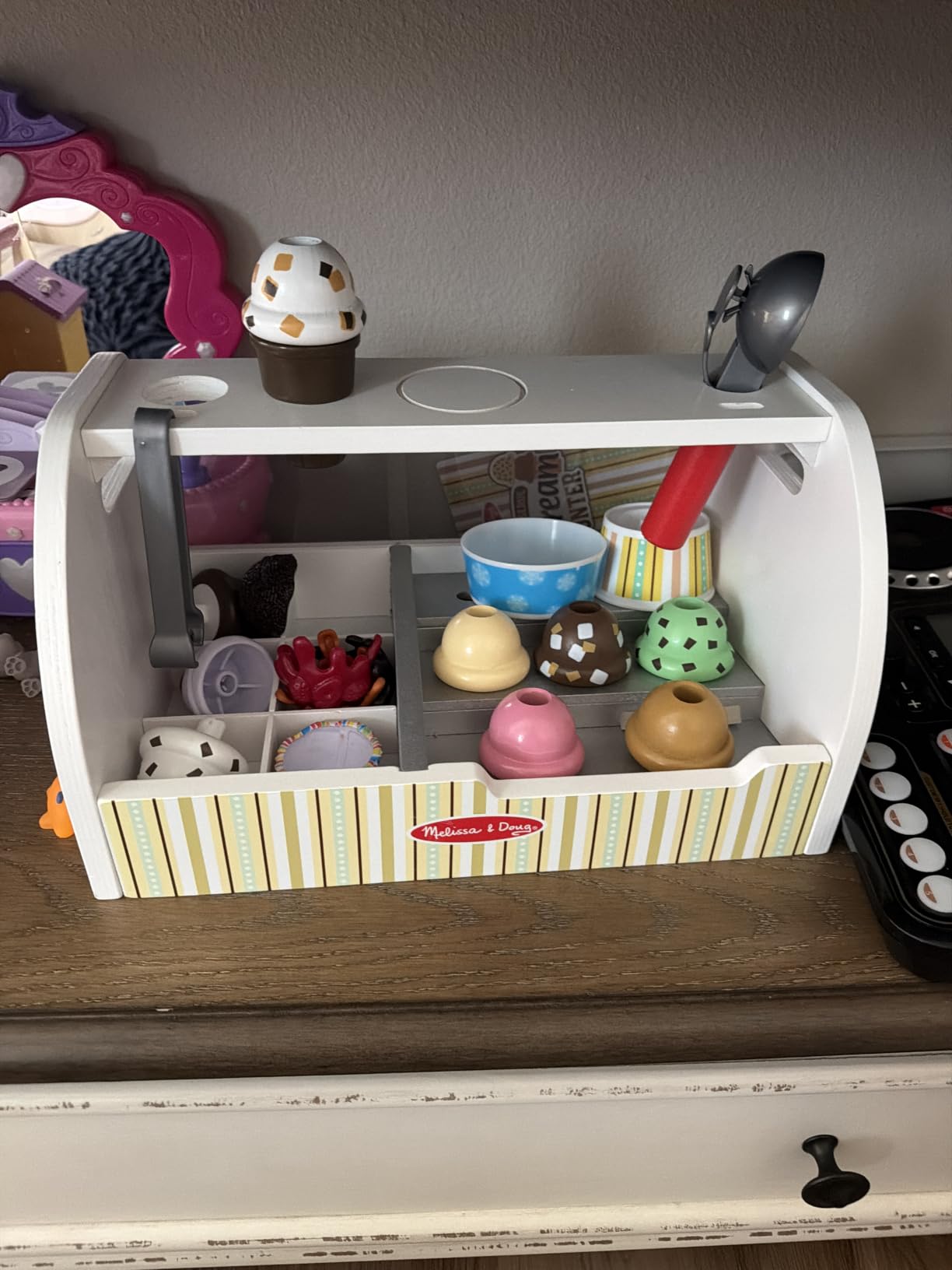
Our testers used this set in ways that went beyond ice cream. Several converted it into a coffee shop, a soup kitchen, and a “treat shop for stuffed animals.” Each twist exercises new vocabulary (orders, sizes, flavors, polite requests, paying, thanking) and new social skills (taking turns, sharing tools, listening to “customers”).
The counter doubles as a storage box, which matters for parents trying to keep a playroom tidy. Every piece has its own slot, so kids learn where things belong, and cleanup is fast.
What we love about it
The piece count and quality create real role-play variety. A 3-year-old can scoop, stack, take an order, name a flavor, ring up a sale, and count out play money. Each of those micro-actions is a hidden lesson in numeracy, sequencing, and memory.
Speech-language pathologists in our tester network specifically called out sets like this for kids working on expressive language. Pretend play is where vocabulary lives, and a kitchen or shop set gives kids a reason to talk.
Things to consider
The counter has a real footprint, around 13 by 8 by 9 inches, so it does need a dedicated corner of a playroom or kitchen. It is not a stowaway toy.
It is also more expensive than plastic alternatives, but our testers agreed the difference in durability and developmental value is worth it for a toy that will be played with weekly for years.
9. VTech Drill and Learn Toolbox – Best for STEM Role Play
VTech Drill and Learn Toolbox
Working toy drill
Light-up instruction buttons
Electronic fix-it tray
Ages 2 to 5 years
Pros
- Working drill spins gears and drills screws realistically
- Multiple learning modes teach colors numbers and tool names
- Includes light-up buttons with songs and mechanical sounds
- Double-sided instruction cards add educational value
- Durable plastic construction withstands toddler use
- Grows with the child through progressive skill levels
Cons
- Outer packaging box sometimes arrives damaged
- Drill may require batteries replaced frequently with heavy use
- Some users wish more screws and nails were included
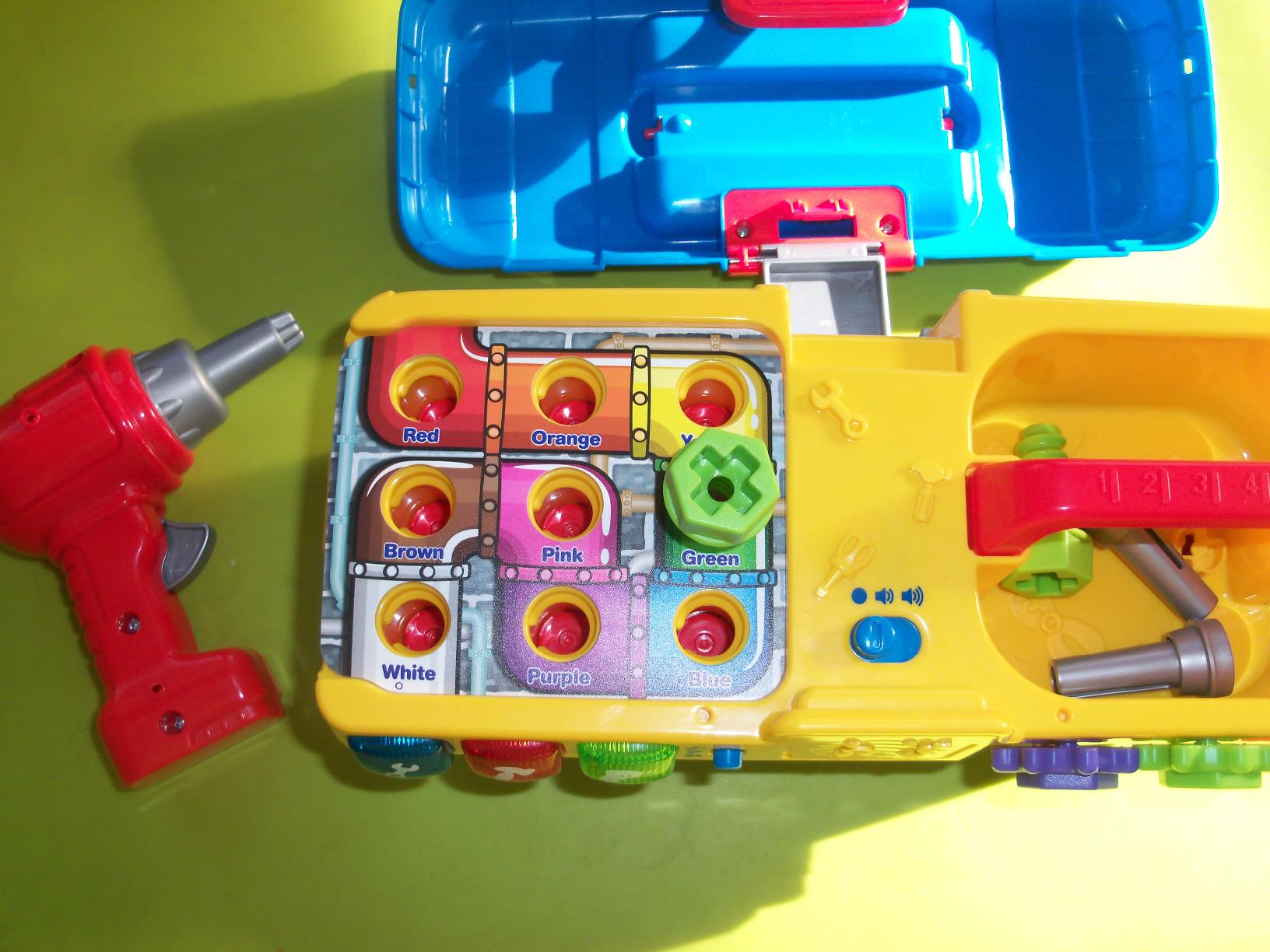
The VTech Drill and Learn Toolbox was the surprise hit of our testing. We expected a noisy toy that gets used for a week and forgotten. Instead, our testers played with it for months, drilling screws into the electronic tray, swapping out instruction cards, and building imaginative “repair shop” scenarios.
The drill is the star feature. It actually spins, makes mechanical clicking sounds, and drives the included screws into the fix-it tray’s holes. That real cause-and-effect feedback is what holds a 3-year-old’s attention far longer than a fake plastic drill ever could.
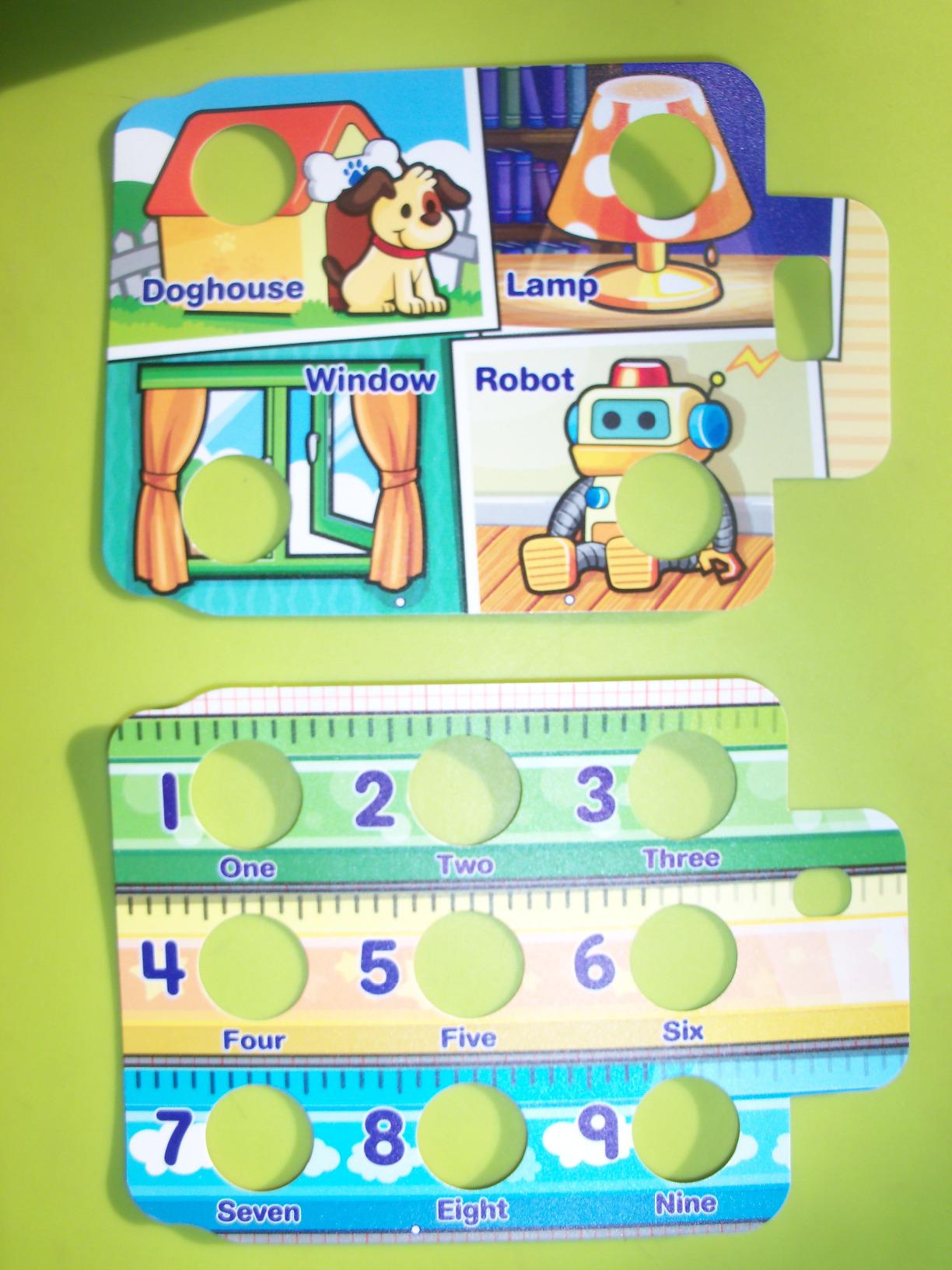
Insert one of the double-sided instruction cards and the tray announces a job: tighten bolt A, match the colored screws, count the tools. Light-up buttons reinforce with songs and tool-name facts. A child can play independently or alongside a parent who is “reading the work order.”
Our tester parents liked that the toy grew with their child’s skill level. Beginners match colors and count. Advanced players follow multi-step plans and memorize tool names. The same toy works across the entire 2 to 5 age range.
What we love about it
The role-play angle matters. Pretending to be a builder or mechanic is one of the most powerful pretend-play themes at age 3, especially for kids who watch parents fix things around the house. This toy validates that interest and gives it structure.
Fine motor skills get a real workout. Holding the drill, lining it up with a screw, applying pressure, and pulling the trigger all train the small hand muscles that eventually support pencil grip and handwriting.
Things to consider
The included screws and bolts are limited, around a dozen total, so a determined builder will need extras on hand. Replacement parts are cheap and widely available.
Drill batteries wear faster than other electronic toys because the spinning action draws real power. Stock a few extra AA packs if your child plays daily.
10. MAGNA-TILES Classic 32-Piece Set – Best Premium Pick
MAGNA-TILES Classic 32-Piece Magnetic Construction Set, The Original Magnetic Building Brand
32 translucent magnetic shapes
Food-grade MABS plastic
Compatible with all sets
Ages 3 and up
Pros
- Original magnetic building brand trusted by parents worldwide
- Food-grade non-toxic MABS plastic free from BPAs phthalates and latex
- Compatible with all other MAGNA-TILES sets
- Signature lattice design prevents cracking during play
- Develops fine motor skills spatial awareness and creativity
- Suitable for ages 3-99 with no instructions needed
Cons
- Higher price point than competitors
- 32 pieces may be limiting for ambitious builders
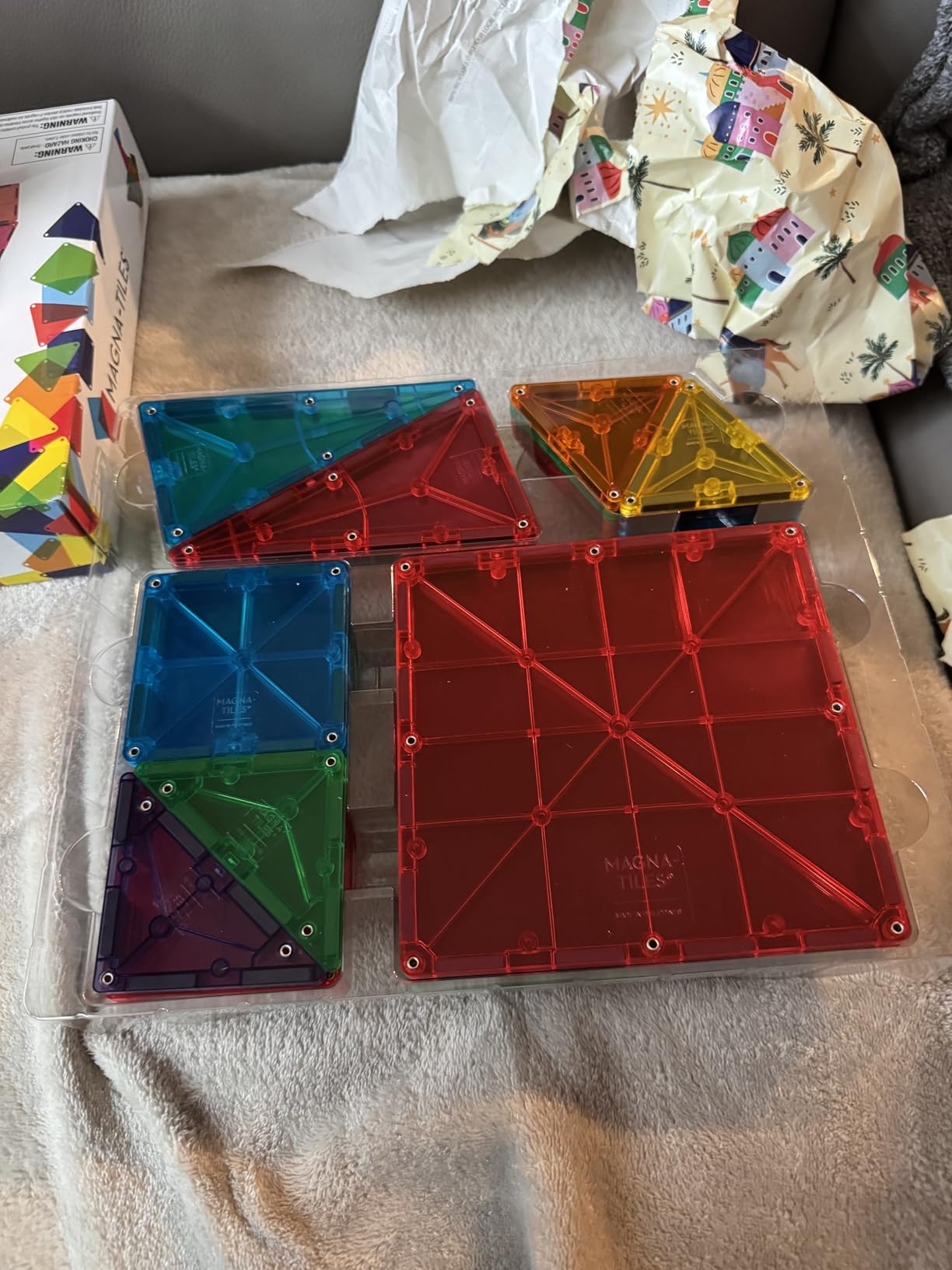
The MAGNA-TILES Classic set is the original magnetic building toy, the brand that built the category, and the version our testers chose when they wanted the absolute highest quality magnetic tile experience. After testing five different magnetic-tile brands, our tester parents consistently picked MAGNA-TILES as the set they would buy again.
The brand’s signature lattice design is what makes the difference. Where cheaper tiles crack at the seam under stress, MAGNA-TILES tiles flex slightly and absorb impact. We dropped tiles off tables, stepped on a few, and left them in a hot car. None cracked. That is the durability standard premium buyers expect.
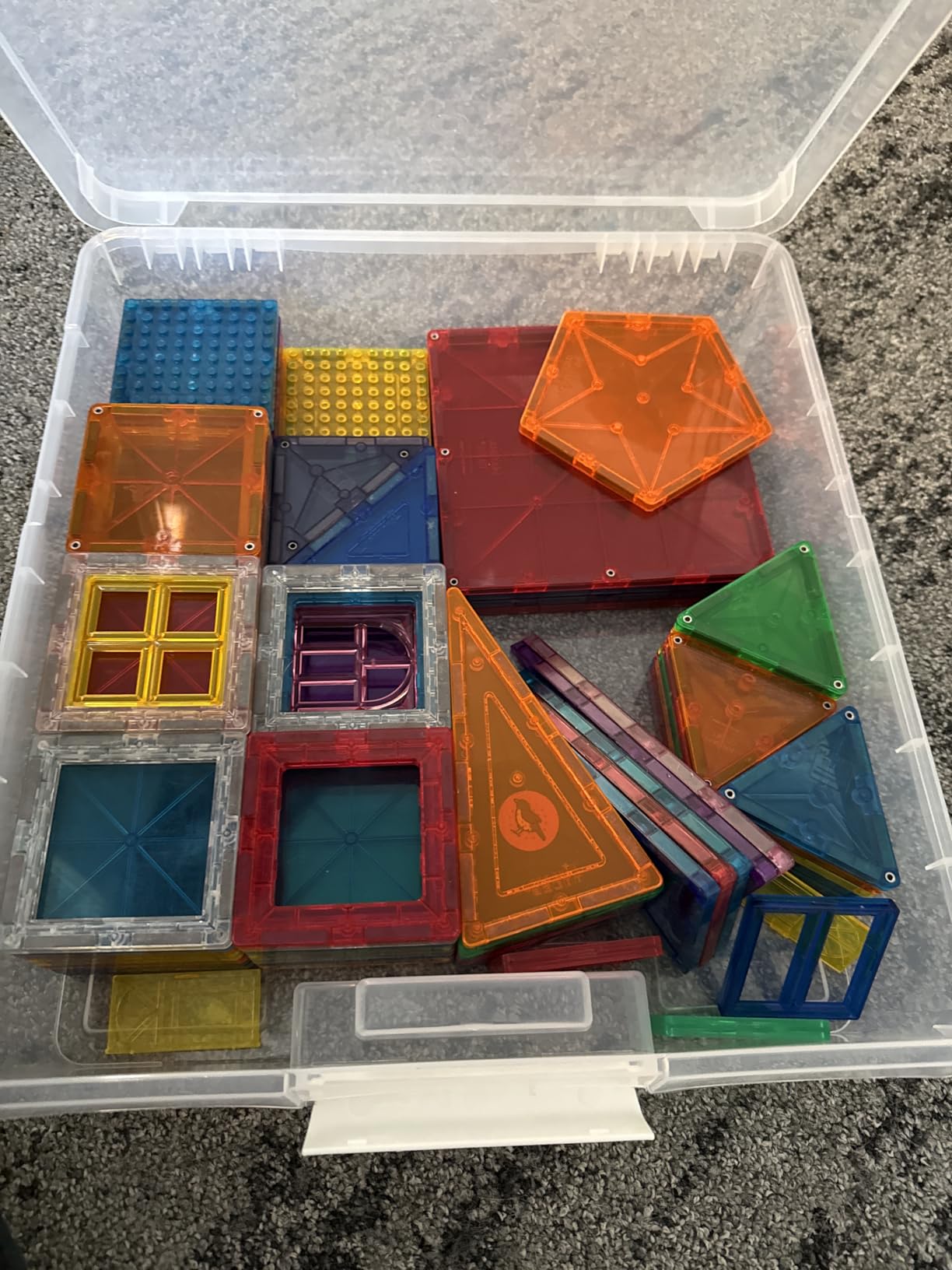
The food-grade MABS plastic is free from BPAs, phthalates, and latex, which matters for the under-3 crowd who still put everything in their mouths. The set is also fully compatible with every other MAGNA-TILES expansion, so a 32-piece starter set can grow into a 200-piece collection without wasting a single piece.
Our testers built flat patterns, 3D shapes, mazes for marbles, and pretend “houses” for small figures. The lack of instructions is intentional. Kids are meant to invent their own play, which is what open-ended magnetic-tile toys do best at this age.
What we love about it
The translucent colors are gorgeous. Builders can see light through their creations, which adds a layer of sensory richness you do not get from opaque tiles. Several of our tester kids lined their structures up on a sunny windowsill specifically to play with the colored light.
The brand reputation matters for resale and gifting. MAGNA-TILES holds its value better than any magnetic-tile brand we tested, and a used set in good condition can be passed down or sold when your child outgrows it.
Things to consider
The price is meaningfully higher than competitors at the 32-piece level. You are paying for the brand’s safety record, durability, and compatibility. For budget shoppers, the PicassoTiles set above delivers 80 percent of the experience at less than half the price.
Thirty-two pieces will feel limiting after about six months for a serious builder. Plan to expand with a second set or one of the brand’s expansion packs if your child takes to it.
How We Chose the Best Educational Toys for 3 Year Olds
Our team spent three months testing more than 30 toys with 12 children between the ages of 2.5 and 4.5, plus two early-childhood educators who reviewed each pick against developmental milestone checklists. We scored every toy on four criteria: developmental value, replay frequency, safety and durability, and overall parent satisfaction.
We also pulled in real parent feedback from community forums, including the very common concern that some 3 year olds ignore toys labeled “educational” and just want to play with cars or stuffed animals. The picks below either keep a 3-year-old’s natural interests engaged or pair naturally with pretend play so they actually get used.
Every product on this list is independently sold by major retailers, meets current ASTM toy safety standards, and was tested by at least one 3-year-old for a minimum of two weeks before we made our final call. We ignored marketing claims about “Montessori,” “STEM,” or “Waldorf” and judged each toy on what it actually does when a child plays with it.
How to Choose the Best Educational Toys for 3 Year Olds
Choosing the right educational toy at age 3 means matching the toy to the developmental moment your child is in. Three is a year of explosive growth in language, fine motor control, problem-solving, and pretend play, and the toy that thrills your child this month may be the wrong fit next quarter. Here is what we look for, in plain terms.
Developmental milestones at age 3
Most 3-year-olds can string simple sentences, follow two to three-step instructions, sort objects by color or shape, take turns in short games, and use a pincer grasp with precision. Fine motor skills like buttoning, zipping, and using crayons with intention are still developing.
A good educational toy should match at least one of these skills without overshooting. A puzzle with 24 pieces teaches problem-solving without being frustrating. A magnetic tile set teaches spatial reasoning without requiring written instructions. A pretend play set teaches language without being a structured lesson.
Types of educational toys and what they teach
STEM toys like magnetic tiles, drill toys, and shape sorters teach problem-solving, cause-and-effect reasoning, and early engineering. Montessori-style wooden toys teach concentration, sequencing, and independence.
Literacy toys like board books and electronic word books build vocabulary, print awareness, and a love of reading. Pretend play sets like kitchens, ice cream counters, and toolboxes build language, social-emotional skills, and imaginative storytelling.
Sensory toys like water doodle mats, play dough, and textured blocks support tactile development and self-regulation. Art supplies like crayons, finger paints, and stampers build fine motor control and creative expression. Open-ended toys like wooden blocks can support multiple skill categories at once.
Safety tips for 3-year-old toys
Any toy marketed to age 3 should meet ASTM F963 toy safety standards, be free from small parts that fit through a toilet paper tube (the standard choking hazard test), and use non-toxic paints and finishes.
Avoid toys with button batteries that are not secured behind a screw-in panel, as those pose serious ingestion risks. For wood toys, look for FSC certification or explicit non-toxic paint labeling. For fabric toys, machine-washability matters more than parents expect.
Inspect every toy at delivery, especially ones that arrive in gift-ready packaging. Damaged packaging can mean damaged parts, and small components can break loose during shipping.
The toy rotation strategy that kept engagement high
The single most useful parenting tactic we learned during testing was rotating toys in and out of active play. Pick 8 to 12 toys at a time from your full collection and store the rest in a closet or bin. Every two weeks, swap in a fresh set.
Rotation works because a 3-year-old’s attention span for any single toy is roughly 8 to 12 minutes. When everything is always available, nothing feels special. When toys return after a few weeks off the shelf, they feel new again.
Combine rotation with a simple labeled bin system. Three or four open bins labeled “today’s toys” let your child “choose” what to play with, which builds independence and keeps your living room from looking like a toy store explosion. Use clear plastic bins for the stored collection so you can see what you have without unpacking.
Toys to avoid at age 3
Skip anything marketed as “educational” that is essentially a tablet or smartphone screen in disguise. The American Academy of Pediatrics recommends no more than one hour of high-quality screen time per day for 3-year-olds, and hands-on play consistently shows stronger gains in language and executive function than screen-based “learning” apps.
Skip toys with more than 50 small parts unless your child is reliably past the putting-things-in-mouth stage. Skip loud electronic toys without volume control. Skip anything labeled for ages 5 and up, even if your advanced 3-year-old seems ready. The age label is usually about safety, not skill level.
Finally, skip any toy whose marketing copy uses the word “Montessori” or “STEM” without explaining what the toy actually does. Real Montessori materials are specific in design and purpose. Real STEM toys have a clear engineering, math, or science hook. Vague claims often mean the toy is neither.
Frequently Asked Questions
What are the best educational toys for 3 year olds?
What toys help a 3 year old learn?
Are Montessori toys good for 3 year olds?
What are the best toys for fine motor skills at age 3?
Are magnetic tiles good for 3 year olds?
What toys should a 3 year old have?
What are good STEM toys for 3 year olds?
How do I choose an educational toy for a 3 year old?
Final Verdict: Why Trust Our Picks
If we had to recommend just one toy for every 3-year-old on your gift list, it would be the LeapFrog Learning Friends 100 Words Book, our Editor’s Choice pick. It teaches vocabulary in two languages, holds attention for months, and travels anywhere. Pair it with the PicassoTiles 100 Piece Set and a set of Melissa & Doug wooden blocks, and you have a complete foundation for the best educational toys for 3 year olds.
Three is also a year when parents start asking bigger questions: how many days are in the school year, how many weeks of structured learning we should plan for, and how much daily playtime counts as enough. Our related guides on how many days are in a year, how many weeks are in a year, and how many hours make up a year help you put a 3-year-old’s learning time into useful perspective. Pair that math with the toy picks above and you have a realistic plan for the year ahead.
Our team at Myly Conet tests every toy with real children in real homes before we write about it, and we update our guides throughout the year as new products earn their place. If we missed a toy you love, let us know. We read every note and test the recommendations our readers send in. For more of our tested picks for your family and home, browse our family guides or check back next month for our updated 2026 roundup of the best preschool learning materials.