
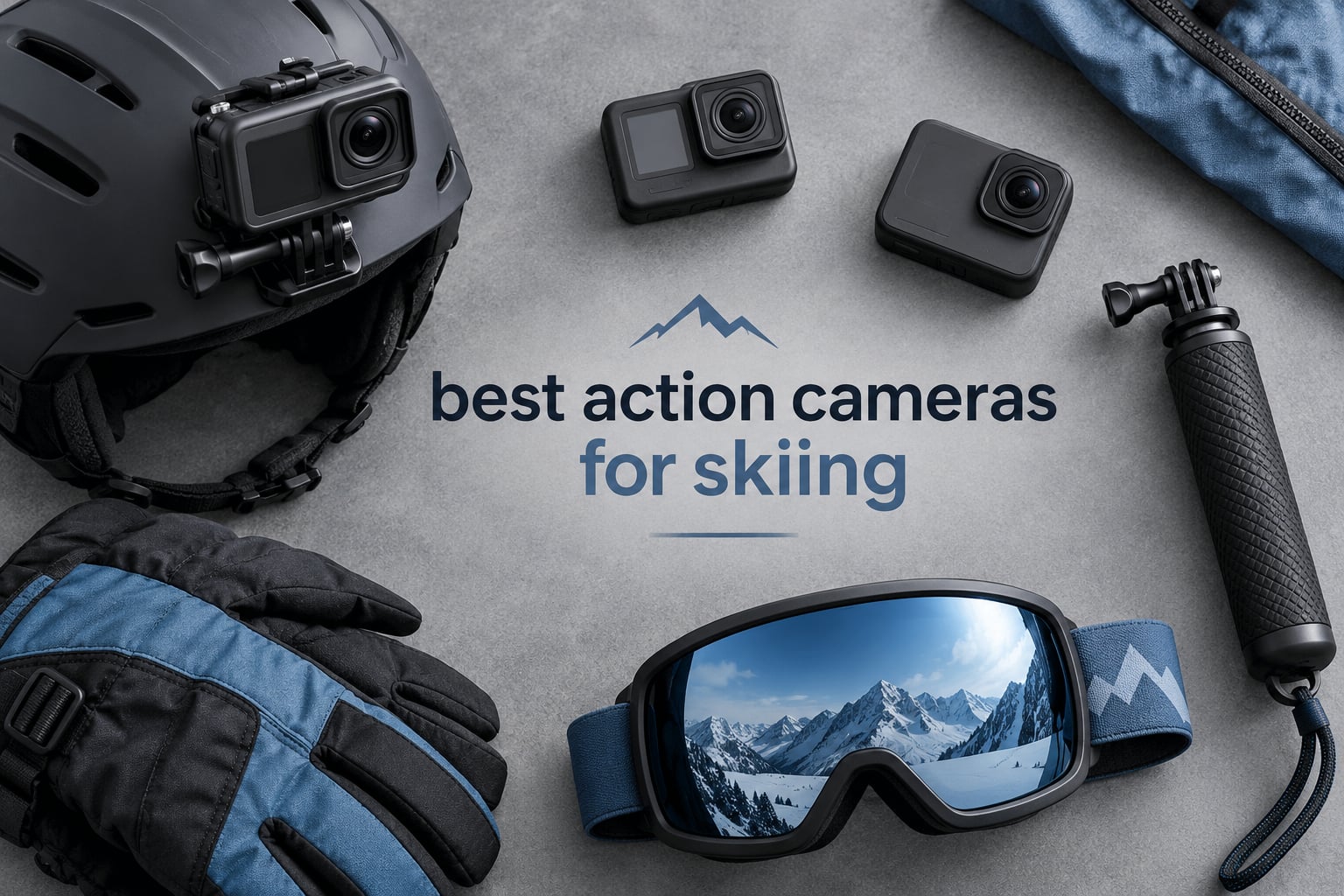
The fastest way to ruin a good ski trip is to trust a camera that was never tested against cold, wind and gloves. Batteries sag, touchscreens stop responding and lenses fog at the exact moment you drop into a steep pitch. We put eight action cameras through a ski-season checklist — cold-weather runtime, one-handed glove operation, snow glare handling, audio on an exposed ridge — and picked the ones that hold up when the weather turns.
This guide covers the best action cameras for skiing across every tier: a proven budget body, two conventional action cams, two 360 models and a Leica-tuned flagship. Every pick below was judged on the things that actually break on a mountain, not on marketing resolution alone.
Best overall: the AKASO EK7000, the most-reviewed camera in this roundup, with two batteries and a full mount kit in the box.
Best for cold-weather reliability: the DJI Osmo Action 4, rated to minus 20C and waterproof to 18m.
Best 360 pick: the Insta360 X4 for reframing freedom, or the Insta360 X5 for low light and a three-hour battery.
Best stabilized footage: the DJI Osmo Action 5 Pro, with 360-degree HorizonSteady and 13.5 stops of dynamic range.
Watch your battery: cold cuts runtime hard, so carry spares and keep them in an inner pocket between runs.
So which camera is best for skiing? For most skiers the DJI Osmo Action 5 Pro or the GoPro HERO13 Black deliver the cleanest stabilized footage in mixed sun and shade, but the AKASO EK7000 is the pick we would hand a beginner because it ships with spares and mounts and has been proven by tens of thousands of owners.
Table of Contents
Top 3 Picks for Skiing in 2026

AKASO EK7000
- 4K30 video and 20MP photos
- Two batteries and mounts included
- Waterproof to 131ft with case
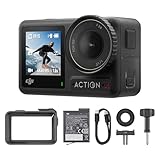
DJI Osmo Action 4
- Rated to minus 20C
- Waterproof to 18m
- 155 degree 4K/120 with 1/1.3 inch sensor
Best Action Cameras for Skiing in 2026 at a Glance
| Product | Specifications | Action |
|---|---|---|
| AKASO EK7000 |
|
Check Latest Price |
 Insta360 X4 Insta360 X4 |
|
Check Latest Price |
| DJI Osmo Action 4 |
|
Check Latest Price |
 Insta360 X5 Insta360 X5 |
|
Check Latest Price |
 DJI Osmo Action 5 Pro DJI Osmo Action 5 Pro |
|
Check Latest Price |
 GoPro HERO12 Black GoPro HERO12 Black |
|
Check Latest Price |
 GoPro HERO13 Black GoPro HERO13 Black |
|
Check Latest Price |
 Insta360 Ace Pro 2 Insta360 Ace Pro 2 |
|
Check Latest Price |
1. AKASO EK7000 – the most-reviewed camera in our roundup
AKASO EK7000 4K30FPS 20MP WiFi Action Camera with EIS Ultra HD 131FT Waterproof Underwater Camera Remote Control 4X Zoom Support External Microphone Black
4K30 video, 20MP photos
Digital EIS
Waterproof 131ft with case
Two batteries
Pros
- Two batteries and a dual charger in the box
- Almost 40k ratings averaging 4.4 stars
- Crisp 4K and 1080p60 footage
- Large mount kit included
- Simple on-camera controls
Cons
- Muffled onboard mic audio
- About 90 minutes per charge
- Clarity drops in low light
The AKASO EK7000 is the camera we recommend to anyone whose skis have snowploughed exactly twice. It is not the sharpest body here, but it is the one with the deepest well of real-world feedback, and that matters when you are strapping something to a helmet at 8am in a car park.
Two batteries and a dual charger come in the box, which removes the first thing most skiers have to buy. That matters on a mountain, because cold sharply reduces usable runtime and you will be swapping cells on a chairlift rather than in a lodge.
Spec-wise you get 4K30 and 2.7K30 video with 20MP photos, a 170-degree fisheye lens and built-in electronic image stabilization. The 2-inch rear screen is small by modern standards, but the physical buttons are chunky enough to find through a glove.
Video is genuinely competitive at 4K and 1080p60 for a body at this tier, and reviewers repeatedly report it looks cleaner in daylight than footage from cameras costing far more. The waterproof housing is rated to 131ft, so powder, ice and a dropped-in-a-creek recovery are all covered.
Where the EK7000 holds up on a ski trip
Daylight groomers and long easy runs are its sweet spot, where the fisheye lens shows the whole slope and stabilization keeps chatter down. The wrist remote means you can start recording from a glove without taking the camera off your helmet or chest.
What you give up compared with the flagships
Onboard audio is muffled, so plan on recording voice separately or accept wind-heavy scratch tracks. Low light is where the small sensor gives out, and the Wi-Fi app connection is unreliable enough that you should treat phone control as a backup rather than a workflow.
2. Insta360 X4 – the value entry into 360 ski footage
Insta360 X4 Standard Bundle – Waterproof 8K 360 Action Camera, 4K Wide-Angle Video, Invisible Selfie Stick Effect, Removable Lens Guards, 135 Min Battery Life, AI Editing, Stabilization
8K30 and 5.7K60 360 video
FlowState with Horizon Lock
135 minute battery
Pros
- Rated for operation to minus 20C
- Waterproof to 33ft without a case
- 135 minute battery
- Removable lens guards
- 4K60 wide-angle mode
Cons
- Reframing needs the app before sharing
- Bulkier than a standard action cam
- 8K files fill cards quickly
- Selfie stick not included in this bundle
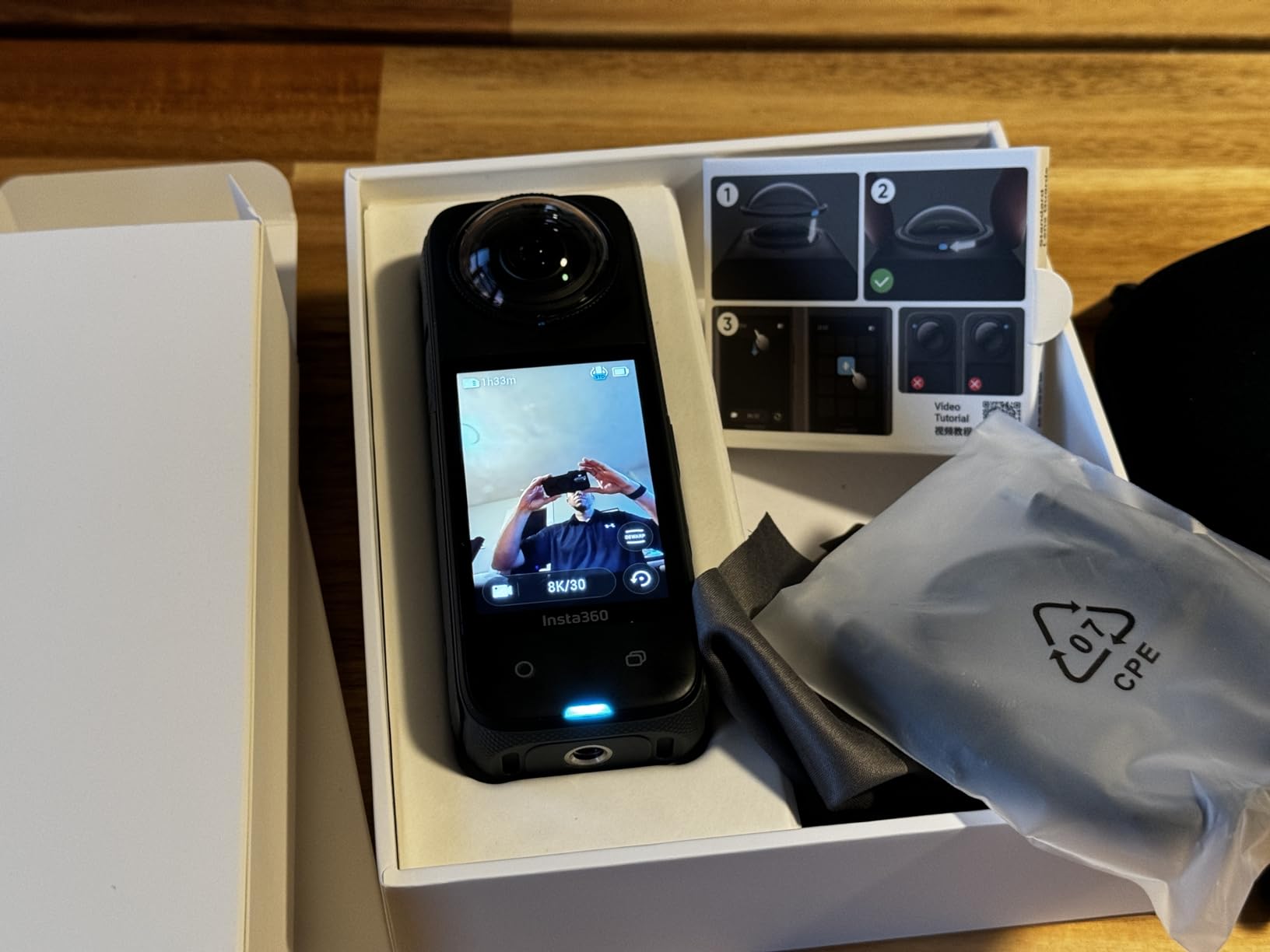
With the X4 mounted on a pole, you press record once and forget about framing. It captures the full 360 sphere at 8K30, then the app lets you pull any view out later — front-facing, rear-facing or a narrow follow angle that no fixed-lens camera can produce mid-run.
For skiing that reframing workflow is the whole argument. On a fast descent through trees, lining up a shot is close to impossible, and this camera removes that problem entirely.
FlowState stabilization combined with 360-degree Horizon Lock keeps pole-mounted footage level through roll and chop, and Active HDR preserves detail in the bright sky over a shaded run. Waterproof to 33ft without a separate case, so it is fine in deep snow and wet chairlift seats.
The battery is rated at 135 minutes, which is the single most useful number on a ski trip, and the camera is documented as cold resistant to minus 20C. Buyers also like the quickly removable lens guards, which matter when the body is scraping a lift railing.
Choosing the X4 over a conventional action cam
Pick the X4 if you ski alone, film solo runs, or want the invisible selfie stick look of yourself being chased down a run by a stick nobody can see. It also handles group shots, where a camera on a pole can capture everyone at once.
The editing step nobody mentions
360 footage is not shareable straight out of the camera. Every clip needs the app before it becomes a video, and 8K files fill high-capacity cards quickly, so budget for a large card and time in a lodge. The two-lens body is also bulkier in a helmet pocket than a standard action cam.
3. DJI Osmo Action 4 – the pick for cold-weather reliability
DJI Osmo Action 4 Essential Combo, Waterproof Action Camera Vlogging Camera
1/1.3 inch sensor, 2.4um pixels
4K/120 at 155 degrees
Waterproof 18m
Pros
- Rated for cold operation to minus 20C
- Waterproof to 18m without a housing
- 4K/120 at 155 degree field of view
- 10-bit D-Log M color
- Front and rear color touchscreens
Cons
- One battery only
- Curved adhesive base not included
- 10MP stills are modest
- Onboard audio needs an external mic
The Osmo Action 4 is the one we trust most when the forecast is ugly. Its battery is rated for operation to minus 20C, which is the specification that separates it from most bodies at this size, and the 1770mAh cell is claimed at up to 150 minutes.
That rating is not a marketing line. Cold is the number one complaint skiers have about action cameras, and a camera that keeps recording through a chairlift queue at minus 15 is worth more than one with a better sensor and a dead cell.
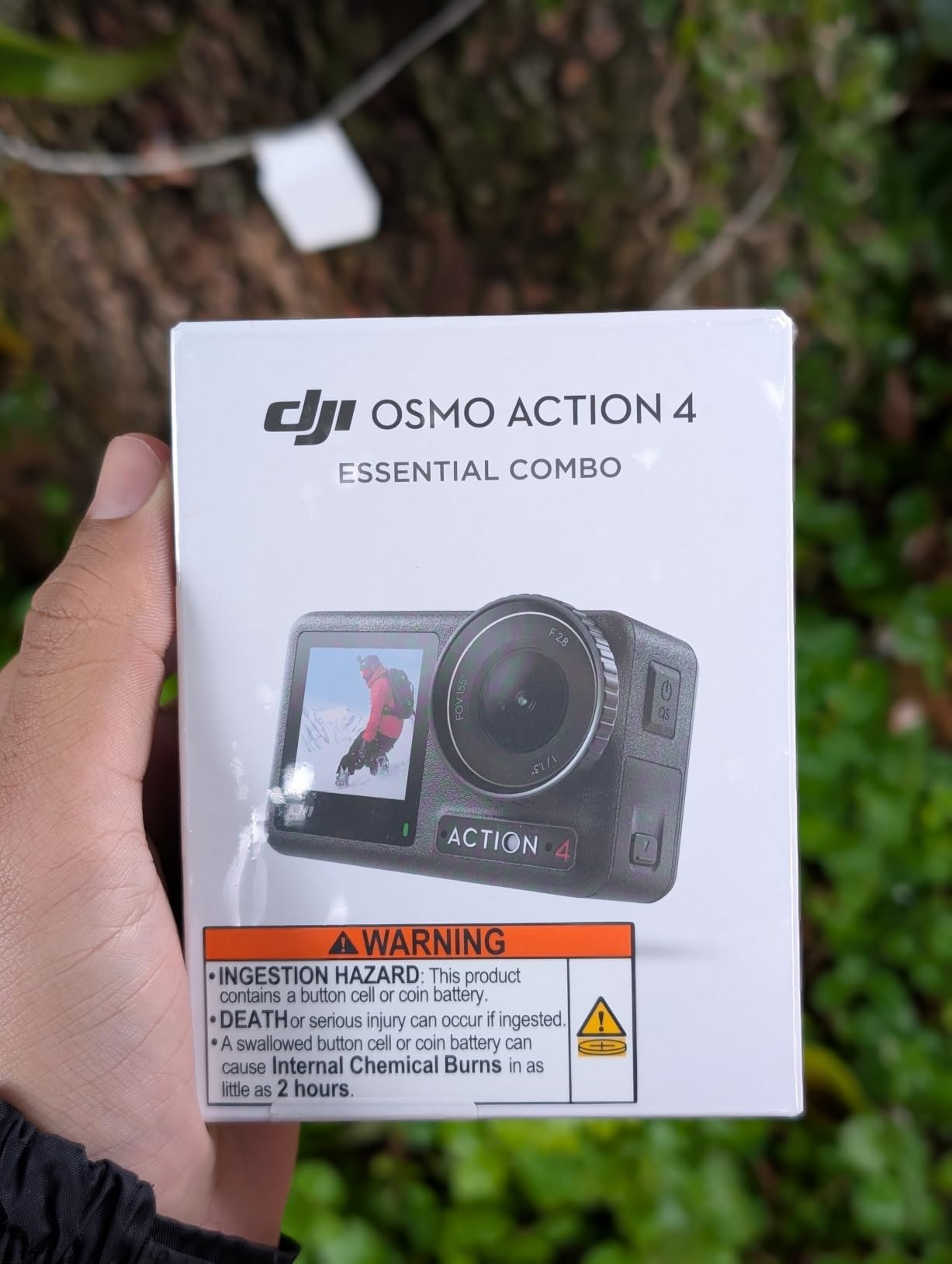
The 1/1.3-inch CMOS sensor with 2.4um pixels is the reason this body still looks acceptable under trees and on a flat-light afternoon, and 4K/120 at a 155-degree field of view captures a fast carve without cropping into the scene.
Waterproofing to 18m means no housing in deep powder, and the dual full-color touchscreens let you frame a vertical pole shot without guessing. RockSteady, RockSteady+ and HorizonBalancing cover the stabilization modes skiers actually switch between.
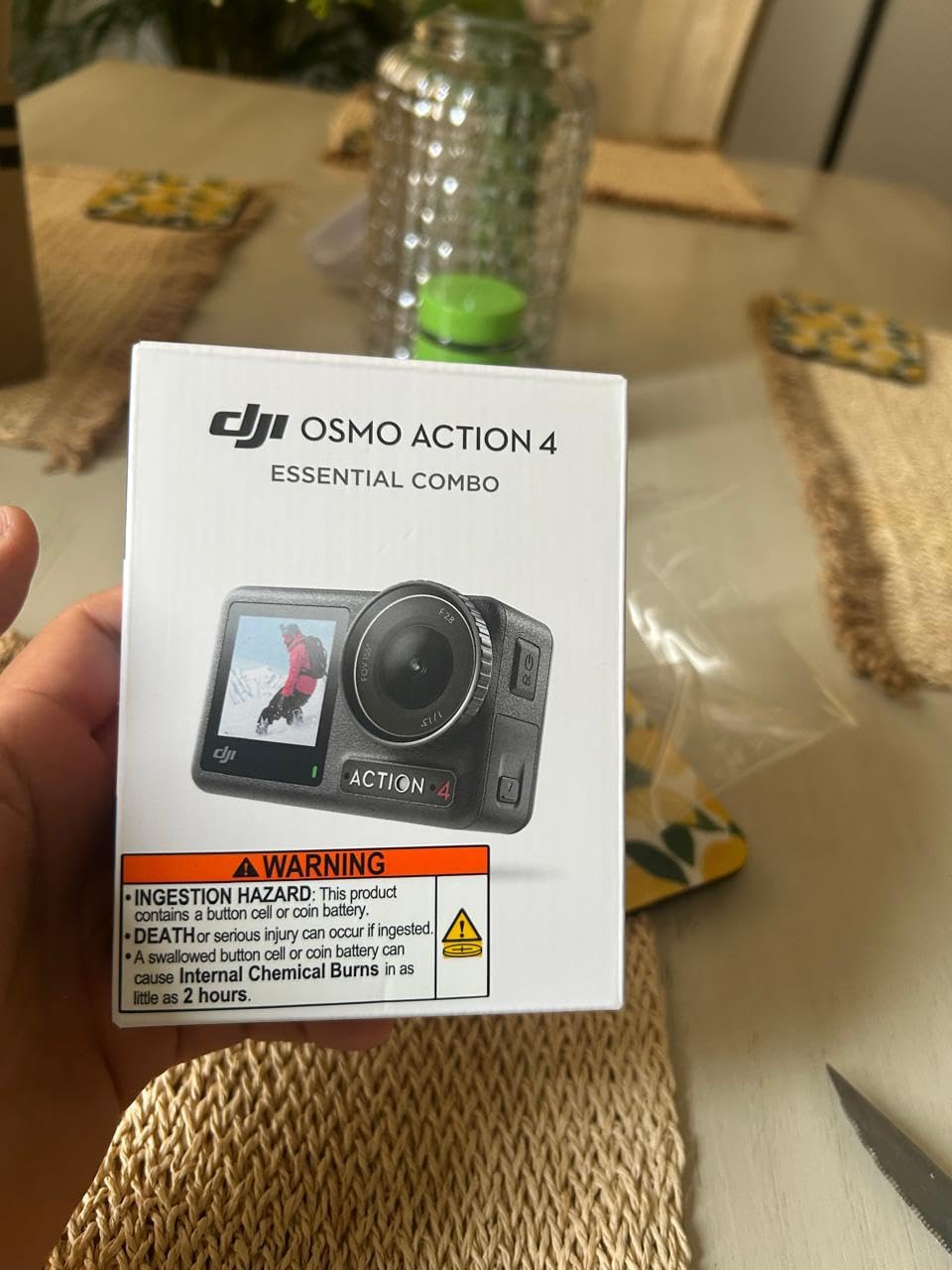
Why this is our cold-weather choice
Tree runs at four in the afternoon and lift-served mornings are where this camera earns its place. The large pixels keep noise down in shade, the -20C rating keeps it recording, and 18m waterproofing removes the housing from your pocket.
Watch the bundle contents
The Essential Combo includes a single battery and no curved adhesive base, so plan on at least one spare cell and a separate mount. Onboard audio is fine for scratch tracks but needs a DJI Mic transmitter for narration, and the app pairing adds a little setup friction.
4. Insta360 X5 – the best 360 camera for skiing
Insta360 X5 – Waterproof 8K 360° Action Camera, Leading Low Light, Invisible Selfie Stick Effect, Rugged and Replaceable Lens, 3-Hour Battery, Built-in Wind Guard, Stabilization, Triple AI Chip Design
Dual 1/1.28 inch sensors
8K30 360 video
Three hour battery
Pros
- Best low-light and night handling among the 360 models here
- Three hour battery covers a full day
- Replaceable scratch-resistant lenses
- Built-in wind guard and four mic array
- InstaFrame mode outputs ready-to-share video
Cons
- Bulkier and heavier than standard bodies
- 8K fills cards very quickly
- Reframing still requires the app
- Transfer relies on the cloud app
The X5 is the 360 ski camera to own if you can only own one. Dual 1/1.28-inch sensors and a triple AI chip design deliver strong low-light and night footage, which is exactly the gap that used to make 360 bodies useless after three in the afternoon.
It also fixes two things skiers complained about on earlier 360 models. The lenses are fully replaceable and scratch-resistant, so a scraped lens on a lift is a swap rather than a write-off, and a detailed reviewer notes it resolved SD-card disconnection problems reported on the previous generation.
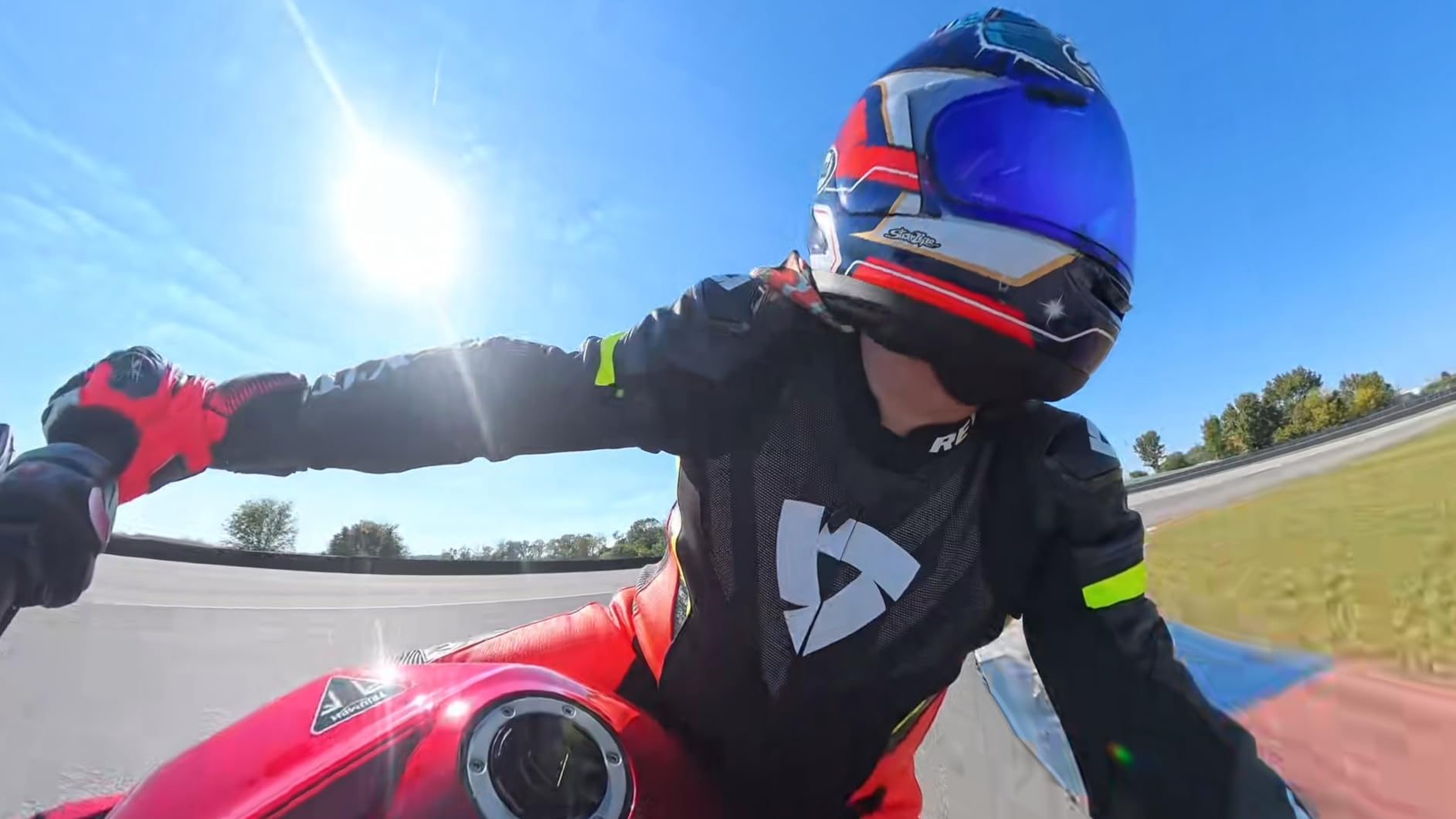
The built-in wind guard and four-mic array are a genuine upgrade for exposed terrain. On a ridge where wind noise usually ruins the audio, owners report usable tracks that isolate voices, which is one of the most common ski-photo complaints on the forums.
Battery life is listed at 208 minutes, or three hours, which means a full day of lifts without a midday swap. InstaFrame mode outputs flat, ready-to-share video with auto-framing, so you are not forced into a heavy edit before posting.

Best for solo skiers and night skiing
If you ski solo, this is the camera that makes a mountain look like it had a film crew behind you. The invisible selfie stick effect, the three-hour battery and the low-light processing combine into the strongest solo ski footage package here.
Where the size works against it
The two-lens body is bulky and carries noticeable weight, which matters if you are swapping between a helmet, a chest harness and a pole mid-day. At 8K the files are enormous, and moving footage off the card still runs through the cloud app, so budget time and card capacity for a trip.
5. DJI Osmo Action 5 Pro – the pick for rock-solid stabilization
DJI Osmo Action 5 Pro Adventure Combo, Waterproof Action Camera
1/1.3 inch Pro sensor
13.5 stop dynamic range
4 hours at minus 20C
IP68
Pros
- 360 degree HorizonSteady keeps footage level
- 3.6 hours of recording at minus 20C
- 13.5 stops of dynamic range for snow scenes
- 47GB onboard storage
- Adventure Combo includes three batteries and an extension rod
Cons
- Must be paired with the DJI Mimo app first
- Mimo app is not on Google Play
- Extension rod has no selfie button
- Runs warm during long recordings
Nothing else here holds a horizon as convincingly through a roll, a mogul field or a fall. The 360-degree HorizonSteady removes roll-axis shake entirely, and combined with the 1/1.3-inch Pro sensor and 13.5 stops of dynamic range, it holds a bright sky and a dark tree line in the same frame.
Snow is a brutal exposure problem, and that dynamic range is the single spec that solves it. Reviewers of this body consistently note the colour science needs very little grading to look right on white terrain.
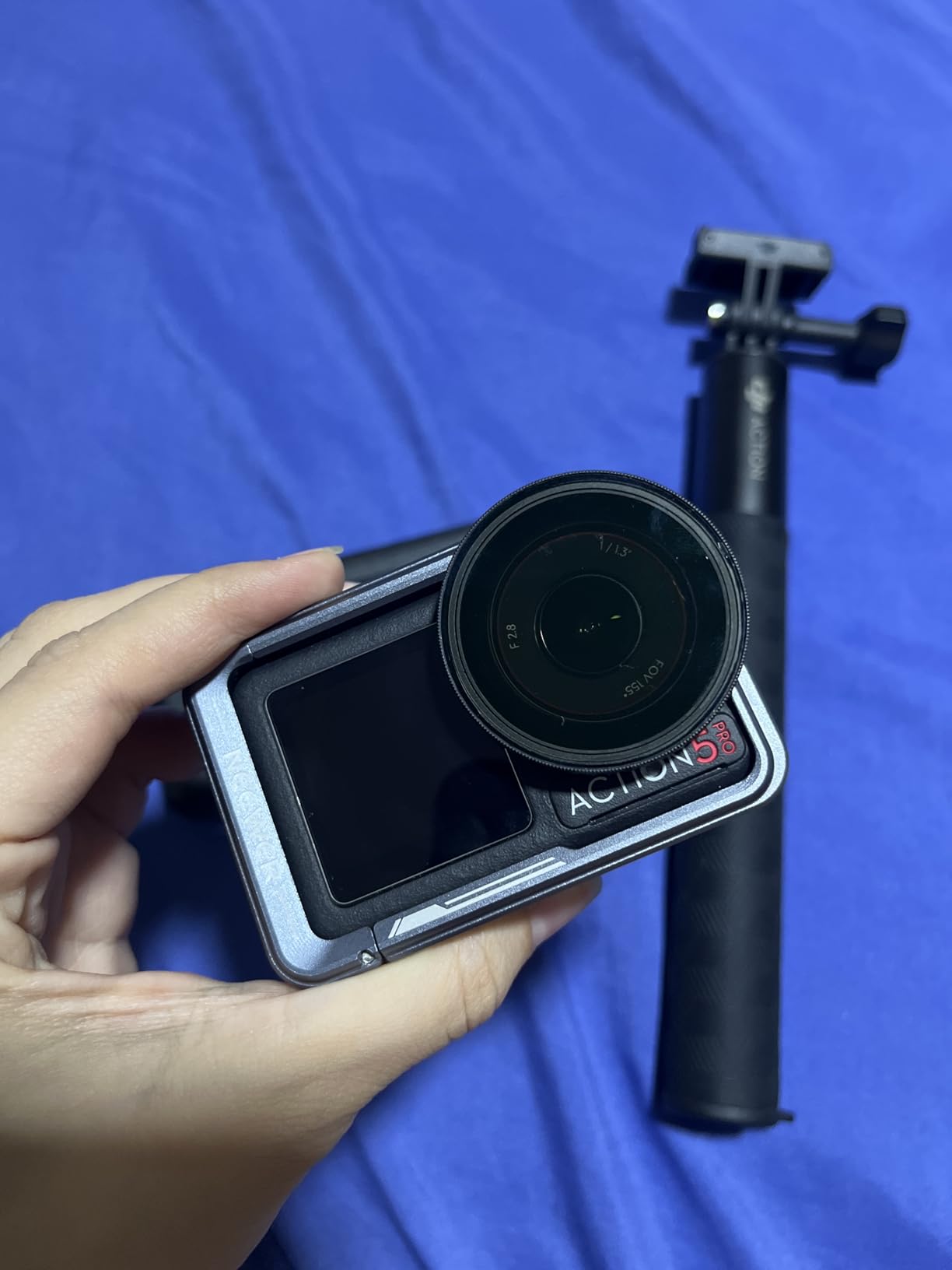
Battery figures are the other headline. The 1950mAh cell is rated at four hours of recording, and 3.6 hours at minus 20C, the only published cold-weather runtime figure in this roundup. IP68 waterproofing to 20m means no housing in powder or wet slush.
There is also 47GB of onboard internal storage, so you can start recording before you have inserted a card — a real advantage when a lift queue suddenly turns into a first run. Dual ultra-bright OLED screens let you frame while mounted vertically on a pole.
What the Adventure Combo actually adds
Three batteries and a multifunctional battery case cover a multi-day trip without a trip back to a charger, and the 1.5m extension rod gives you follow shots of a partner skiing behind you. It is a very complete box.
Software is the one real complaint
The camera must be paired with the DJI Mimo app before use, and Mimo is not available in the Google Play store, so it has to be sideloaded. That is a genuine annoyance on a mountain morning. The camera also runs warm during extended recording and the rod has no selfie button.
6. GoPro HERO12 Black – the safe GoPro choice
GoPro HERO12 Black – Waterproof Action Camera with 5.3K60 Ultra HD Video, 27MP Photos, HDR, 1/1.9″ Image Sensor, Live Streaming, Webcam, Stabilization
5.3K60 HDR video
27MP photos
HyperSmooth 6.0 with AutoBoost
Waterproof 33ft
Pros
- 5.3K60 HDR detail in mixed sun and shade
- HyperSmooth 6.0 is a class-leading stabilizer
- No housing needed for powder
- Frame grabs pull stills from video
- Folding mount fingers speed up swaps
Cons
- Enduro pack is short for long 5.3K shoots
- AutoBoost can over-smooth fine detail
- U3 microSD card required
- GP2 chip runs warm at 5.3K
HERO12 Black remains the reference point for high-speed skiing. HyperSmooth 6.0 with AutoBoost is still among the most proven in-camera stabilizers, and reviewers repeatedly single it out for tree runs and rough terrain where cheaper stabilizers judder.
5.3K60 HDR gives you genuinely fine detail on a groomer, and the water-repelling lens cover helps with the flare and artefact problems that snow reflection creates — one of the complaints skiers raise most often.
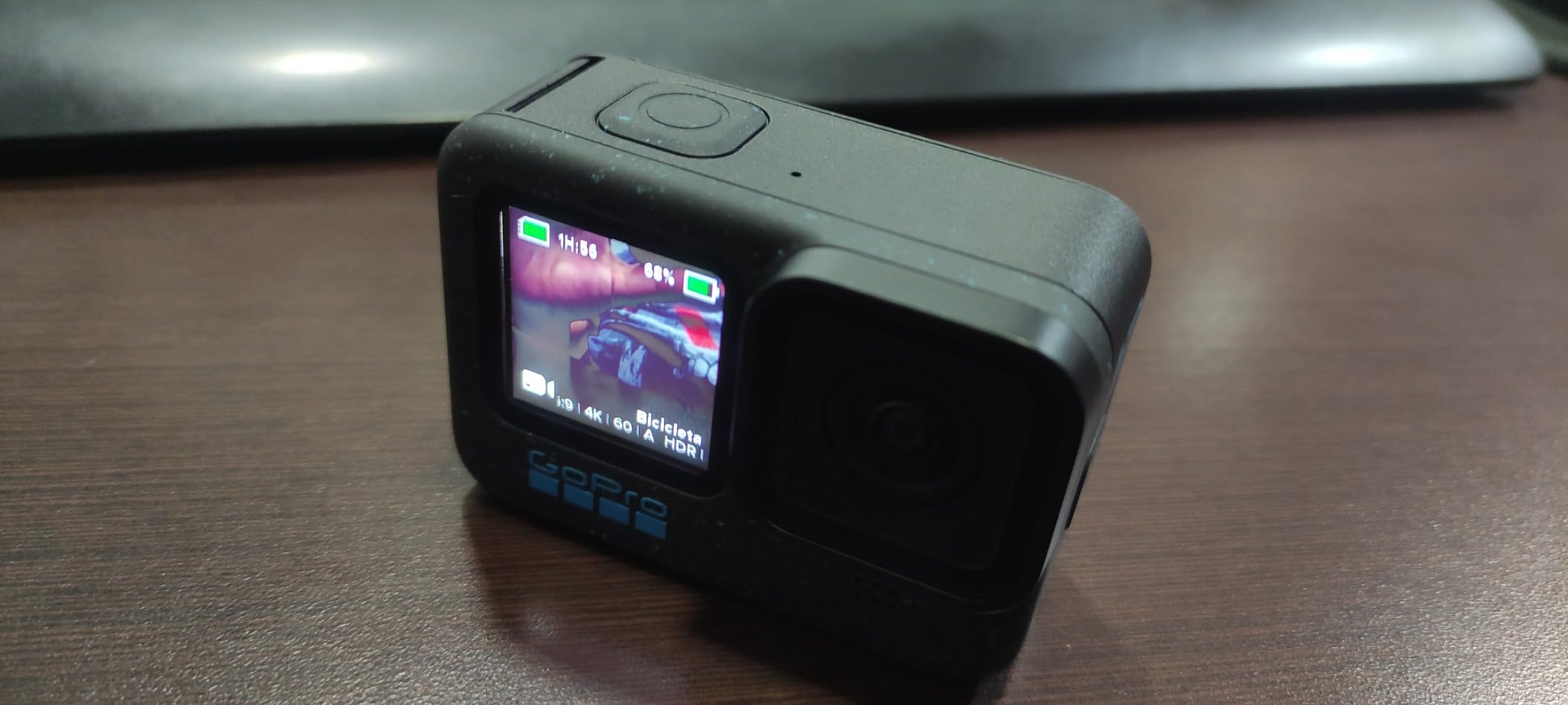
Photo flexibility is a genuine advantage. You get 27MP stills and can pull 24.7MP frames out of 5.3K video, so a run that looked rough in real time still produces a printable image in the lodge.
The folding mount fingers make helmet, chest and pole swaps fast, and at 33ft of waterproofing you can ski powder without a housing. That mount system is still the biggest practical advantage GoPro has, because the aftermarket accessory shelf is enormous.
Do you need the newest generation?
If you already own a HERO and your footage is good, the case for upgrading is weak. If you are starting fresh and want the safest mount ecosystem on the mountain, this remains the body to buy, and the frame-grab workflow suits family ski footage.
Where cold bites this camera
The Enduro pack is modest for extended 5.3K recording on a cold day, and the GP2 chip runs warm under sustained high-resolution capture. You will want a U3 card, which adds kit cost, and AutoBoost can soften fine detail at very high speed.
7. GoPro HERO13 Black – the most capable GoPro body
GoPro HERO13 (Hero 13) Black – Waterproof Action Camera with 5.3K HDR Video, 27MP Photos, 1/1.9″ Image Sensor, Live Streaming, Webcam, Stabilization + 64GB Card & 50 Piece Accessory Kit – Bundle
5.3K60 HDR and 4K/120
27MP photos
Horizon Lock
Enduro 1900mAh battery
Pros
- 5.3K60 HDR with GP-Log color depth
- HyperSmooth 6.0 with 360 degree Horizon Lock
- Enduro battery handles cold better than standard packs
- Front screen simplifies solo framing
- Bundled 64GB card removes a first-trip purchase
Cons
- About 1.5 hours of 5.3K per battery in cold
- Some parts of the 50-piece kit are low quality
- Wi-Fi 6 and Quik app add setup friction
- Kit includes far more accessories than most skiers need
HERO13 Black is the same 1/1.9-inch sensor generation as the HERO12 at 5.3K60, so the jump is refinement rather than resolution. What you gain is 360-degree Horizon Lock on top of HyperSmooth 6.0, widescreen and vertical capture modes, and a bigger Enduro pack.
That Enduro battery matters more than any of it in January. Owners consistently report it holding up better in cold conditions than standard GoPro packs, which is the difference between a full run of footage and a frozen shutdown halfway down.
The front-facing display is the feature skiers mention most. On a solo trip it lets you check framing on a helmet or pole mount without taking the camera off your head, which removes the guesswork that ruins a lot of self-shot ski video.
Wi-Fi 6 speeds up transfers when you are back in the lodge, and Bluetooth audio lets you connect a wireless mic if you want narration over the wind.
What the bundle does for you
A 64GB microSDXC card is included, and 5.3K fills cards quickly, so that saves a trip before departure. For a first ski setup it is a genuinely complete box with mounts in it.
Judge the kit separately from the camera
The most repeated criticism is accessory quality inside the 50-piece kit. Buyers report cheap-feeling mounts and one tripod that could not support the camera, plus far more parts than most skiers will ever mount. The camera body itself is rarely criticised. Budget roughly 1.5 hours of 5.3K recording per Enduro battery in cold conditions.
8. Insta360 Ace Pro 2 – the best low-light action cam
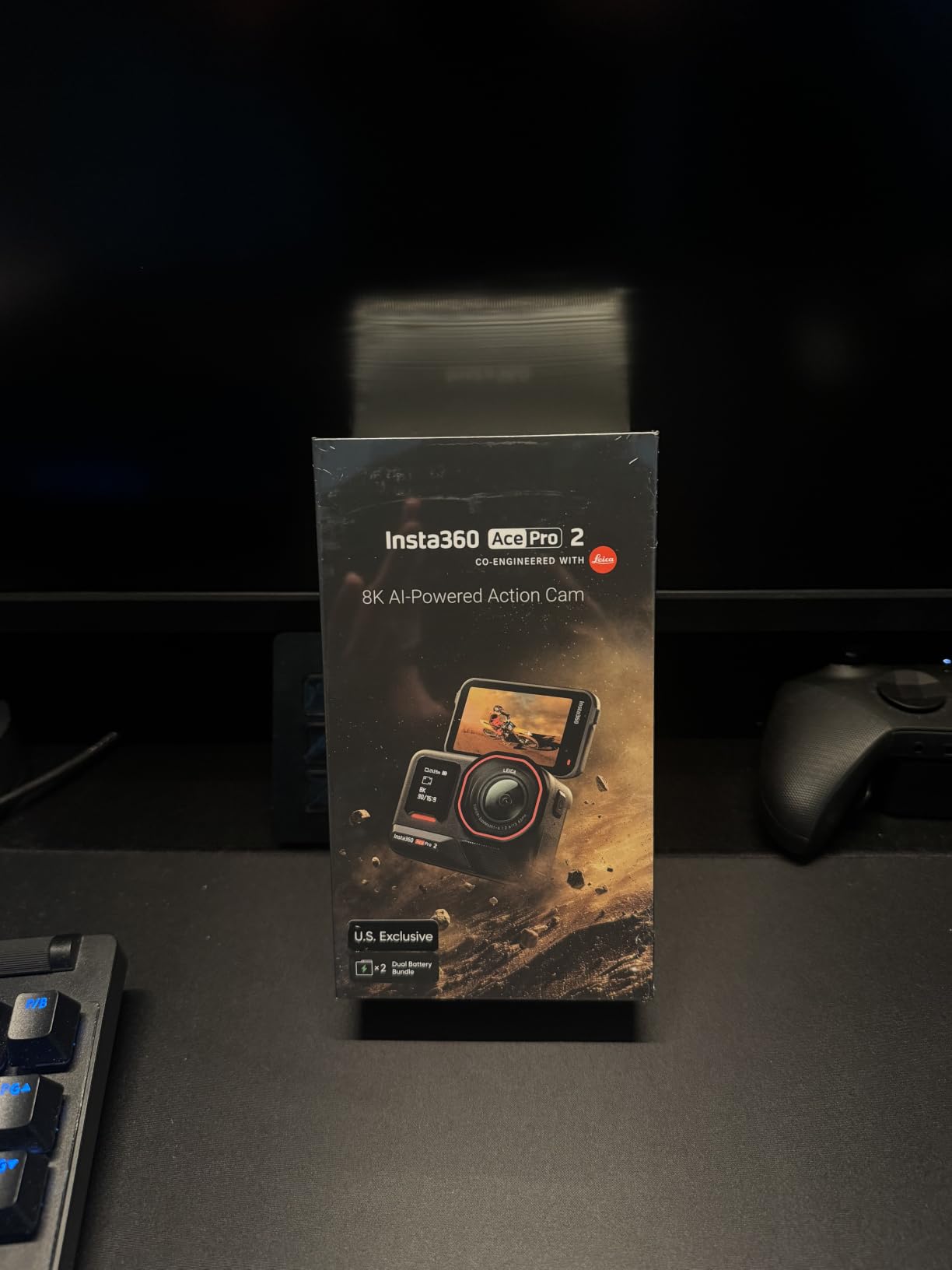
Insta360 Ace Pro 2 Dual Battery Bundle – 8K Waterproof Action Camera Co-Engineered with Leica, 1/1.3″ Sensor, Dual AI Chip, Leading Low Light, Superior Audio
1/1.3 inch 8K sensor
Leica Summarit lens
PureVideo up to 4K60
minus 20C
Pros
- Dual AI chips handle shaded tree runs
- Detachable wind guard improves ridge audio
- Leica Summarit lens and color profiles
- Flip touchscreen stays readable in sun
- Waterproof to 39ft and rated to minus 20C
Cons
- Not the sharpest still sensor here
- 8K fills cards quickly
- App-based editing adds a learning curve
- Magnetic mount and flip hinge are delicate
The Ace Pro 2 is the camera we reach for when the light dies early. PureVideo mode, driven by a dedicated imaging chip plus a 5nm AI chip, pushes low-light capture to 4K60 and is rated the class-leading low-light mode on a conventional body in this roundup.
The 1/1.3-inch sensor carries 13.5 stops of dynamic range with a 2.4um equivalent pixel size, which is how it holds the snow highlights without crushing the shaded trees at the edge of a run.
On the lens side, the Leica Summarit prime and Leica color profiles give the footage a distinctive, natural look that reviewers consistently prefer to a generic action-cam render. The 157-degree MegaView field of view is wide without going fully fisheye.
A hardware wind guard snaps on for exposed terrain, and reviewers single it out as a real-world win. Waterproof to 39ft and rated to minus 20C, so it belongs on a winter trip, and the dual battery bundle covers multi-day trips without a recharge stop.
Best for vlog-style ski edits
The flip touchscreen is bright enough to read in direct sun and swings around for vertical pole framing, which makes this a good companion to our guide to the best action cameras for vlogging. If your ski content is narrated, the Leica look grades cleanly.
One recurring frustration
The most common complaint, echoed by users comparing it to the Osmo Action 5 Pro, is having to flip the screen around to confirm that recording is running. Dual-screen DJI bodies solve that. 8K storage demands and app-based editing add friction on a trip day.
How to Choose an Action Camera for Skiing
We ranked these cameras on five criteria, in this order: cold-weather battery rating, waterproof depth without a housing, stabilization quality on rough terrain, low-light capability, and how easily the body can be operated with gloves on. We deliberately left marketing resolution last, because on snow a well-stabilised 4K clip looks better than a shaky 5.3K one.
Cold battery behaviour is the first filter. Lithium cells lose capacity fast below freezing, and a camera rated for normal conditions can shut down mid-run. Check the operating temperature before anything else. Three cameras in this guide carry a published minus 20C rating: the DJI Osmo Action 4, the Insta360 X4 and the Insta360 Ace Pro 2, while the Osmo Action 5 Pro publishes a 3.6-hour runtime at that temperature.
Waterproof depth without a housing. Powder, wet chairlift seats and the inevitable fall mean you want at least 10m so you are not fumbling with a housing at the top of a lift line. The HERO12 and HERO13 manage 33ft, the Osmo Action 4 18m, the Osmo Action 5 Pro 20m and the Ace Pro 2 39ft.
Stabilization and horizon control. Rocking terrain is where handheld footage falls apart. HorizonBalancing on the DJI bodies, 360-degree HorizonSteady on the Osmo Action 5 Pro, and Horizon Lock on both Insta360 360 models all keep a run level. If you can mount a sturdy tripod or grip for lift-side shots, stabilization matters less.
Mounts and safety. Helmet mounts give the lowest profile, chest harnesses give a more natural point of view that long-time skiers on ski forums often prefer, and pole mounts unlock third-person 360 shots. Whatever you choose, use a safety tether. Forum skiers document adhesive mounts letting go and cameras ending up in a creek, and a camera lost on a mountain is a real problem.
Storage and cards. 5.3K and 8K fill cards quickly. The Osmo Action 5 Pro uniquely carries 47GB of internal memory, so you can record before inserting a card. Everyone else should pack a spare V30 or faster card rather than one card for the whole trip.
360 or standard? A 360 camera lets you reframe after the run, capture group shots alone, and produce the invisible selfie stick effect that standard bodies cannot. A standard action cam gives you smaller files, faster editing and a narrower, less distorted field of view. If you plan to shoot talking-head segments on the same trip, our action camera vlogging picks explain the trade-off in more detail. Veteran skiers frequently argue that GoPro-style fisheye is unpleasant to watch, and if that bothers you, a 360 model reframed narrow is the answer.
Managing the cold on the mountain. Keep spare batteries in an inner pocket against your body and swap them between runs rather than charging in a cold car. Wipe the lens dry between falls to avoid fogging and to clear snow spray that ruins contrast. Add a wind guard or a mic cover for exposed terrain, and consider a cheap lens cloth for snow glare.
Frequently Asked Questions
Which camera is best for skiing?
Which GoPro is best for skiing?
Is anything better than GoPro for skiing?
Is a 360 camera better than a GoPro for skiing?
How cold is too cold for an action camera?
Final Verdict on the Best Action Cameras for Skiing
Our overall pick is the AKASO EK7000, because it arrives with everything you need and has been proven by tens of thousands of owners. The DJI Osmo Action 5 Pro is the choice if you want the cleanest, most level footage and the best cold-weather runtime. Pick the DJI Osmo Action 4 if you want that cold-weather confidence at a lower tier, and the GoPro HERO13 Black if mount compatibility matters more than anything else.
Choose the Insta360 X5 or X4 if you film alone and want third-person reframing, and the Insta360 Ace Pro 2 if night skiing and a natural Leica look matter most.
Whichever you choose, carry spare batteries, keep them warm, and use a safety tether. That habit will save more footage than any specification on this list.