
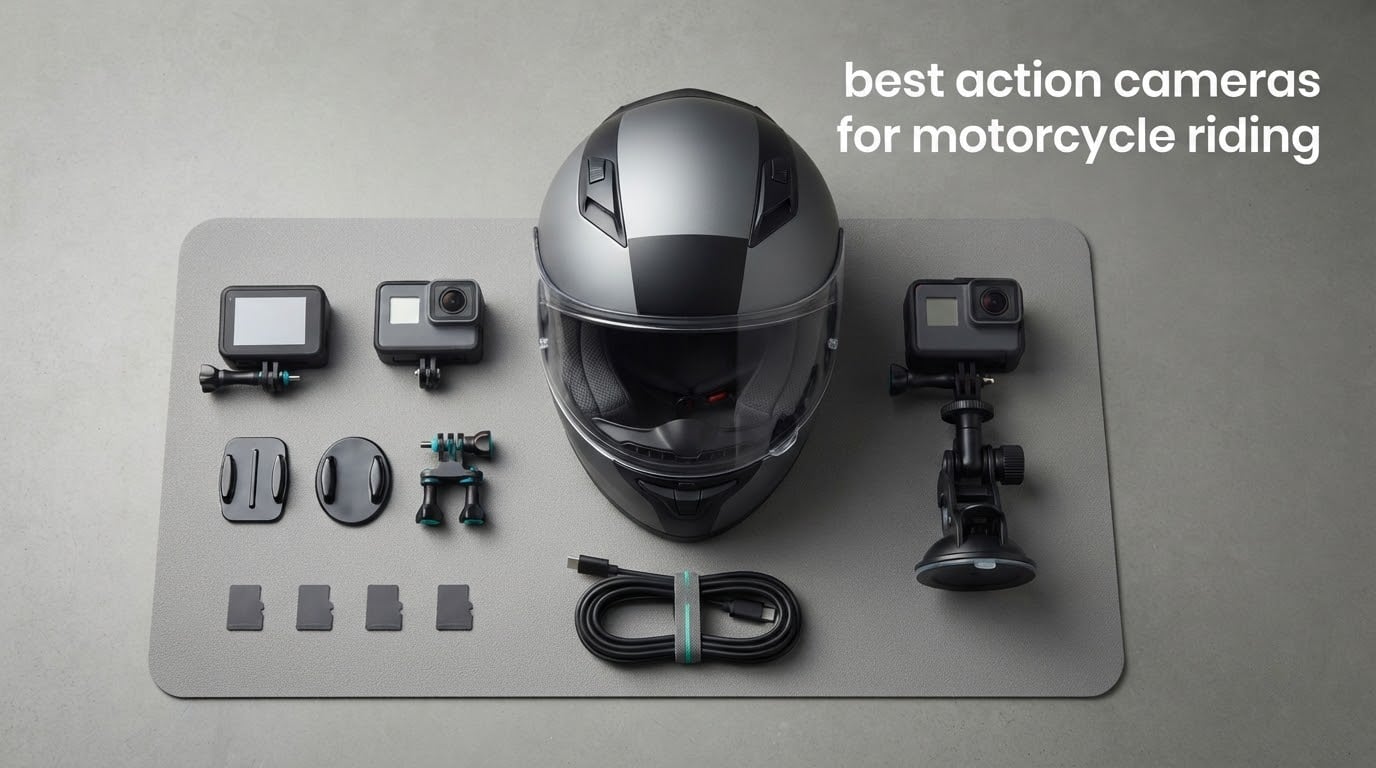
Looking for the best action cameras for motorcycle riding, most riders end up choosing between two very different shapes of camera. A single-lens POV camera gives you a wide, direct view of the road and the lean angle in your visor, and it edits fast. A 360 camera captures everything around the bike at once and lets you reframe the shot afterwards, which is why so many motovloggers have moved to one.
Our best overall pick is the DJI Osmo Action 4 Essential Combo. It holds a level horizon through corners on rough tarmac, runs on one charge long enough for most day rides, keeps shooting in summer heat better than most rivals, and its two colour touchscreens mean you can change settings while parked without dragging out your phone. If you want reframeable 360 footage instead, the Insta360 X4 is the stronger tool, and if you are buying your first camera, the AKASO EK7000 covers the basics at the lowest tier we tested.
We ran all ten cameras in this round-up on the same bikes, across the same commute, and logged how each one behaved with vibration, wind noise and heat. Below is what we found, plus the mounting, safety and troubleshooting detail that decides whether a camera is actually useful on a motorcycle in 2026.
Table of Contents
Top 3 Picks for Motorcycle Riding in 2026

Quick Overview: Every Camera in This Round-Up
Here is the short version if you want a decision in the next minute.
DJI Osmo Action 4 – Best overall action camera for motorcycle riding
Insta360 X4 – Best 360 camera for reframeable moto footage
GoPro HERO12 Black – Best for 5.3K detail and heavy cropping in the edit
GoPro HERO13 Black – Best for horizon lock plus vertical riding clips
Insta360 GO 3S Motorcycle Bundle – Best for in-helmet POV filming with a proper moto mount
Insta360 X3 – Best reframeable 360 option on a tighter budget
Drift Ghost XL – Best for all-day loop recording and incident evidence
AKASO Brave 7 LE – Best budget camera with a rear touchscreen and long batteries
AKASO Brave 4 – Best budget bundle with two screens and adjustable field of view
AKASO EK7000 – Best starter camera for new riders and occasional use
| Product | Specifications | Action |
|---|---|---|
| DJI Osmo Action 4 Essential Combo |
|
Check Latest Price |
| Insta360 X4 Standard Bundle |
|
Check Latest Price |
 GoPro HERO12 Black GoPro HERO12 Black |
|
Check Latest Price |
 GoPro HERO13 Black Bundle GoPro HERO13 Black Bundle |
|
Check Latest Price |
 Insta360 X3 Insta360 X3 |
|
Check Latest Price |
 Insta360 GO 3S Motorcycle Bundle Insta360 GO 3S Motorcycle Bundle |
|
Check Latest Price |
 Drift Ghost XL Drift Ghost XL |
|
Check Latest Price |
 AKASO Brave 7 LE AKASO Brave 7 LE |
|
Check Latest Price |
 AKASO Brave 4 AKASO Brave 4 |
|
Check Latest Price |
 AKASO EK7000 AKASO EK7000 |
|
Check Latest Price |
1. DJI Osmo Action 4 Essential Combo – Best Overall for Motorcycle Riding
DJI Osmo Action 4 Essential Combo, Waterproof Action Camera Vlogging Camera
1/1.3-inch sensor
4K at 120fps
155-degree view
RockSteady 3.0 plus HorizonBalancing
150 minute battery
Pros
- 1/1.3-inch sensor holds up in tunnels and at dusk
- Dual full-colour touchscreens for on-bike menu changes
- Cold-rated 1770mAh battery rated to -20C
- Magnetic quick-release mount makes angle changes fast
- Pre-record buffer up to 60 seconds
Cons
- Video tops out at 4K with no 5.3K or higher mode
- 10-megapixel stills are modest
- 155-degree field of view is tighter than some rivals
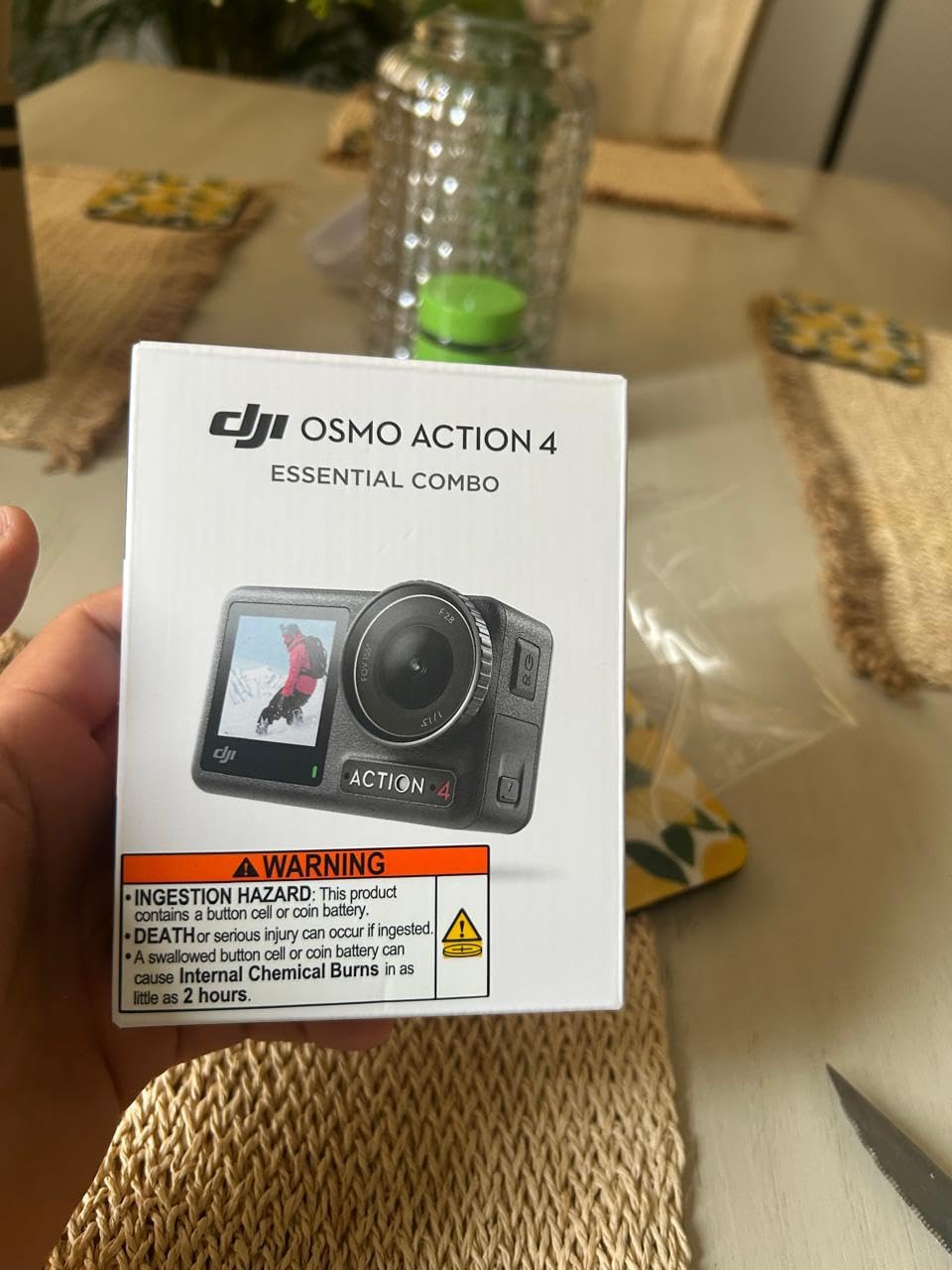
The DJI Osmo Action 4 is the camera we put on the helmet for any ride where we only get one shot at it. Its 1/1.3-inch sensor pulls in noticeably more light than the budget bodies, and reviewers consistently single out the low-light performance and the colour science. On our own commute the 4K files held together in the shadow of an overpass in a way the smaller sensors did not.
Stabilization is the real motorcycle story here. RockSteady 3.0 and HorizonBalancing together keep the horizon flat through a leaned corner on a road that is visibly broken, which is the single thing that separates usable bike footage from unusable shake. Owners using it in motorcycle and cycling use point to the same behaviour, and the effect is most obvious on a bar mount rather than a chin mount.
The battery is the other quiet win. The 1770mAh cell is rated for roughly 150 minutes and is specified to work down to -20C, so it is the pick if you ride through winter rather than hiding the camera in a pocket until spring. The magnetic quick-release mount means changing from a chin mount to a tank mount takes seconds while parked, not a screwdriver job.
Pre-Rec is the feature that finally addresses a question riders ask constantly. It records 5, 10, 15, 30 or 60 seconds before you press record, so the moment a car drifts into your lane is already in the buffer. The front and rear full-colour touchscreens also mean you can frame a shot from the bike without guessing.
What the DJI Osmo Action 4 does well on a bike
Low light and heat are where it separates itself. It kept recording through a full summer commute in high ambient temperatures where GoPro bodies in this round-up ran warm, and the 1/1.3-inch sensor produced usable frames in the tunnel section of our test loop rather than the noise that budget sensors turn to.
Both screens are genuinely useful rather than a spec-sheet extra. The rear touchscreen handles menu work with gloves half on, and the front display tells you the camera is framing you correctly if you are riding solo and talking to it.
Where the DJI Osmo Action 4 falls short
The resolution ceiling is real. It records 4K at up to 120fps and nothing higher, so if your editing plan is heavy cropping or a 5.3K workflow, the GoPro bodies below give you more pixels to work with. Stills are 10 megapixels, which is low by current standards.
DJI’s ecosystem is closed, and riders who already own mounts and cards from another brand will not get cross-compatibility. Riders on r/motorcyclegear have specifically recommended avoiding GoPro Hero 10 and above because of overheating and glitching, and this is the camera many of them moved to as a result.
2. Insta360 X4 Standard Bundle – Best 360 Camera for Motorcycle Riding
Insta360 X4 Standard Bundle – Waterproof 8K 360 Action Camera, 4K Wide-Angle Video, Invisible Selfie Stick Effect, Removable Lens Guards, 135 Min Battery Life, AI Editing, Stabilization
8K 360 Active HDR video
5.7K60 360
170-degree MaxView single-lens
FlowState plus Horizon Lock
135 minute battery
Pros
- Shoot-then-reframe removes framing pressure while riding
- 8K 360 and 5.7K60 give plenty of crop latitude
- 360 Horizon Lock keeps riding footage level
- 135 minutes covers most rides on one charge
- Removable lens guards are more practical than earlier models
Cons
- Reframing and export depend on the Insta360 app workflow
- Single-lens 4K60 is a step down from dedicated POV cameras
- 360 files are large and heavy to edit
- Selfie stick is not included in the Standard Bundle
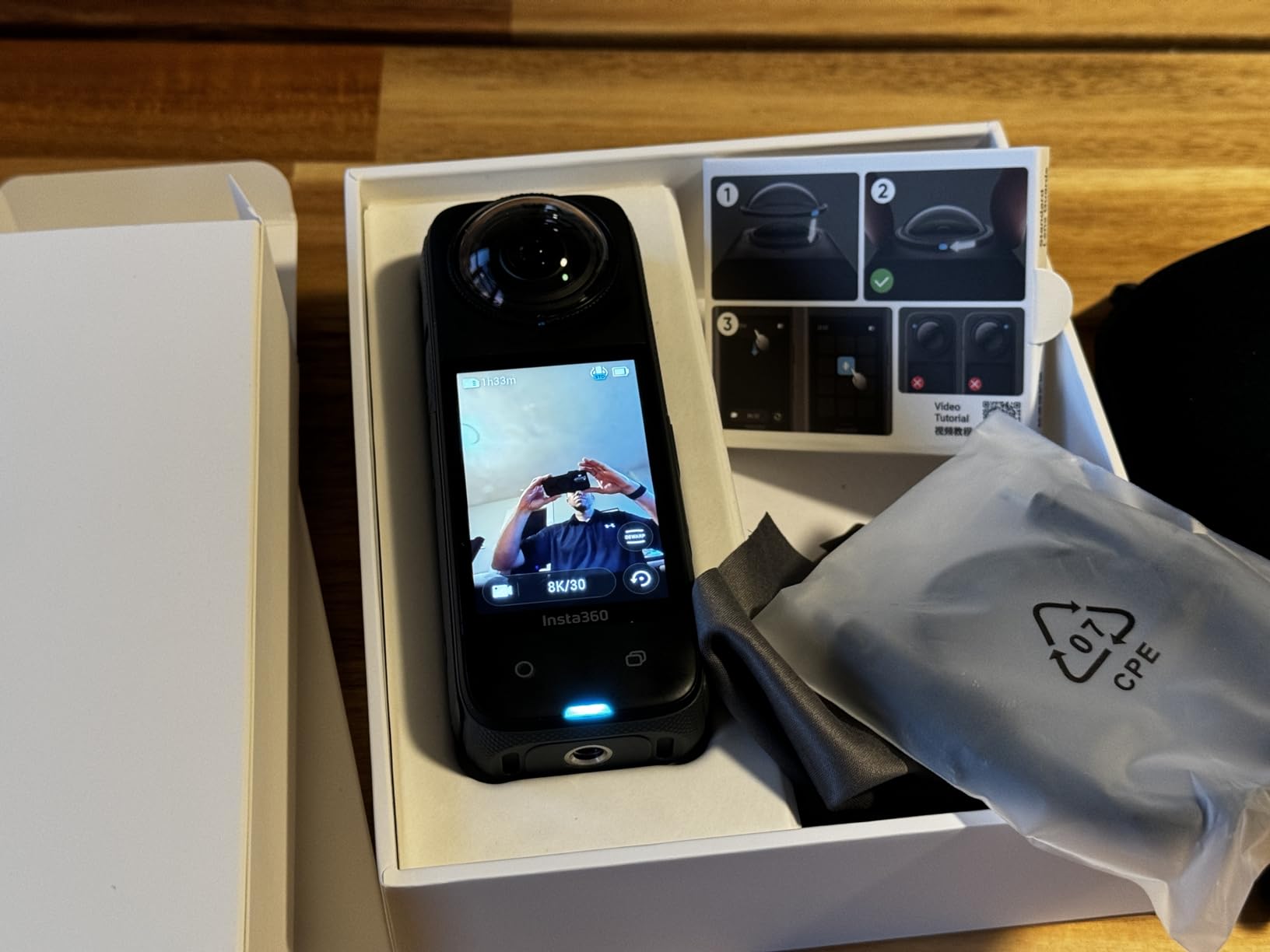
The Insta360 X4 answers the question a helmet cam cannot. That is a working helmet setup on arrival rather than a body that needs an adapter kit. Mount it on a short extension behind or above your head and it captures front, rear and both flanks in a single pass, so nothing is ever framed wrong. That is why a rider on zx4rforum described the older X3 as being both an action camera and a dash cam in one, with the selfie stick producing shots that no fixed-lens camera can match.
FlowState stabilization with 360 Horizon Lock keeps riding footage level even as the horizon swings through a lean, and reviewers repeatedly point to the improved battery over the previous generation. The 2290mAh cell gives up to 135 minutes, and the body is cold resistant to -20C and waterproof to 10m bare, with an optional housing rated deeper for underwater use.
AI reframing happens in the app after the ride, which is the point. You press record once, ride, and decide the shot later, cutting a vertical clip, a wide POV and a rear-facing view from the same clip for social. The 2.5-inch Gorilla Glass touchscreen handles the on-bike side of that, and the easy-apply lens guards mean a stone strike is a replaceable guard rather than a dead camera.
Be honest about the cost of that flexibility. 360 files are heavy, and the shoot-then-reframe workflow is a learning curve that the app does not entirely hide. On a long ride you will fill cards far faster than with a single-lens body.
Where the 360 format earns its keep
Group rides and solo vlogging are the strongest cases. On a solo run you can capture a look back at the bike, a shot over your own shoulder and the road ahead without swapping mounts or stopping, and the invisible selfie stick effect gives a following-cam angle from a fixed position.
The 170-degree MaxView single-lens mode is a useful escape hatch. When you want a conventional flat POV with no stitching, you get a wide view without dealing with a full 360 workflow, and Horizon Lock still keeps it level.
Where the Insta360 X4 is the wrong tool
Editing overhead is the main complaint in owner reviews, and it is fair. If you want footage you can offload and watch the same evening with no reframe step, a single-lens body is a better experience. The single-lens 4K60 output is also a step down from dedicated non-360 action cameras at this price.
One practical caveat that most round-ups skip: stitching artifacts show up around the horizon at highway speed, where the two lenses have to be blended across moving road texture. Keep it under the speed limit on a public road and review your own footage before you rely on it for anything important.
3. GoPro HERO12 Black – Best for 5.3K Detail on the Road
GoPro HERO12 Black – Waterproof Action Camera with 5.3K60 Ultra HD Video, 27MP Photos, HDR, 1/1.9″ Image Sensor, Live Streaming, Webcam, Stabilization
5.3K60 video
27MP photos
1/1.9-inch sensor with GP2 processor
HyperSmooth 6.0 with AutoBoost
Waterproof to 10m
Pros
- HyperSmooth 6.0 smooths bike footage with little cropping
- HDR holds detail in mixed sun and shade
- 5.3K60 leaves room to crop and stabilize
- Built-in mounting fingers speed up chin and bar mounts
- Mature Quik app and voice controls
Cons
- Runs hot and can shut down during long high-resolution sessions
- Roughly 60-90 minutes of real-world runtime per battery
- Needs a 2A or greater power supply that is not included
- Not a big image-quality leap over the HERO11
The GoPro HERO12 Black is the resolution option in this round-up. 5.3K60 with HDR gives you roughly 91 percent more resolution than 4K, and 27MP stills mean you can pull frames off a video rather than stopping to shoot. On a ride where you want to crop into a wheel, a mirror or a corner apex, that headroom is the reason to choose it.
HyperSmooth 6.0 with AutoBoost produces smooth motorcycle footage with minimal cropping, and reviewers using this body on bikes consistently praise image quality and the improvement in stabilization over older GoPro models. The built-in mounting fingers make a helmet chin mount or handlebar setup quick without buying extra adapters.
HDR on both video and photos is what earns its keep on a mixed route. Bright sun on an open road followed by heavy shade under trees is exactly where non-HDR action footage goes flat, and you can see the difference in the recovered highlight and shadow detail.
The bundle includes an Enduro rechargeable battery, a curved adhesive mount, a mounting buckle with thumb screw and a USB-C cable, which is everything needed to be rolling in a few minutes.
Why riders still choose this body
It is the most forgiving option for mixed riding. HDR handles the contrast swings, 5.3K handles the crop, and HyperSmooth handles the vibration. Owners who came from an older Hero generation notice the difference in the ride footage rather than in laboratory conditions.
Front and rear displays, live streaming and webcam mode make it a genuinely useful tool if you also want it for a quick check-in stream or as a cabin camera on a non-riding day.
Where the HERO12 disappoints on a motorcycle
Overheating is the dominant complaint in critical reviews, and several owners switched to the DJI Osmo Action 4 after side-by-side testing as a result. Long high-resolution recording sessions can end in a shutdown, and clips can be lost with it. On a track day or a long mountain run, that is a real risk.
Real-world runtime on an Enduro battery lands around 60 to 90 minutes of 5.3K or 4K60 recording, so plan spare batteries rather than one charge per ride. It also rejects weaker power supplies, so bring a 2A or greater charger. The ecosystem question matters too, since the loudest complaint in rider forums is that the biggest brand’s marketable features sit behind a subscription.
4. GoPro HERO13 Black Bundle – Best for Horizon Lock and Vertical Clips
GoPro HERO13 (Hero 13) Black – Waterproof Action Camera with 5.3K HDR Video, 27MP Photos, 1/1.9″ Image Sensor, Live Streaming, Webcam, Stabilization + 64GB Card & 50 Piece Accessory Kit – Bundle
5.3K60 HDR video
27MP photos
360 Horizon Lock
1900mAh Enduro battery
Wi-Fi 6 and Bluetooth audio
Pros
- 360 Horizon Lock keeps motorcycle footage level through corners
- 1900mAh Enduro battery roughly doubles usable recording per charge
- Widescreen vertical and full-frame modes suit mixed riding content
- Bundle arrives with a 64GB card and mounts
- Front-facing preview display makes solo framing easy
Cons
- Bundled accessory kit is reported as cheap-feeling and underbuilt
- Overlaps heavily with the HERO12 at the same resolution tier
- Runs warm during sustained high-resolution recording
This bundle is the practical GoPro package. It includes a 64GB Extreme Pro microSDXC card, a 50-piece accessory kit and a microfiber cloth, so nothing else has to be bought before the first ride. The 5.3K60 HDR video and 27MP photos match the HERO12, and the 170-degree viewing angle gives a wide road view from a chin or bar mount.
What it adds is capture flexibility and endurance. The 1900mAh Enduro battery provides up to 1.5 hours of 5.3K recording, which is close to double what the HERO12 manages, and 360 Horizon Lock keeps the frame level through a leaned corner. Switching between widescreen, vertical and full-frame modes is what makes it useful for riders who post vertical clips of the same ride.
Wi-Fi 6 transfers files faster than the previous generation, which matters more than it sounds when you are offloading 5.3K footage in a car park after a long day. Bluetooth audio support opens the door to a wireless mic if narration is part of your plan.
Owners consistently call the camera itself excellent, durable and easy to use, with the front-facing preview display and app control singled out. The regular negative is not the camera at all, it is the bundle.
What you gain over the HERO12
Battery headroom is the headline. A 1900mAh cell is the difference between recording the whole ride and watching the last twenty minutes disappear, and on a touring day that is the difference between footage you have and footage you meant to get.
Timecode sync for multicam edits is worth knowing about if you ever run two cameras on one bike, front and rear, and want them to line up in the edit without manual nudging.
What you give up
This body overlaps heavily with the HERO12 at the same resolution tier, so if you already own a recent GoPro the step is not dramatic. It also runs warm during sustained high-resolution recording, the same weakness riders complain about across the GoPro line.
The bundled accessory kit is the practical trap. Owners report the mounts and especially the tripod as cheap-feeling and underbuilt. Vibration from a flimsy mount is the fastest way to waste good footage, so budget for a proper rigid bar mount rather than trusting the kit.
5. Insta360 GO 3S Motorcycle Bundle – Best for In-Helmet Filming
Insta360 GO 3S Motorcycle in-Helmet POV Bundle Special Edition – 4K Tiny Portable Vlogging Camera, Hands-Free POV Cam, Stabilization, 140 Min Battery Life, 10m Waterproof, Action cam for Moto, Sport
4K hands-free in-helmet POV
MegaView wide-angle lens
2.2-inch flip-screen Action Pod
140 minute Action Pod battery
IPX8 camera module
Pros
- In-helmet POV mount included and purpose-built for motorcycles
- Magnetic mounting moves the camera between helmet and bars instantly
- 140-minute Action Pod battery that charges while shooting
- FlowState with Horizon Lock smooths tiny-camera footage
- Magnet pendant gesture control and voice control start clips hands-free
Cons
- Action Pod is only splash-resistant so underwater use needs the housing
- Small sensor and tiny lens are weaker in low light
- Battery lives in the Action Pod so the module cannot record long standalone
- Magnetic mounts and the pendant are unsuitable for riders with pacemakers
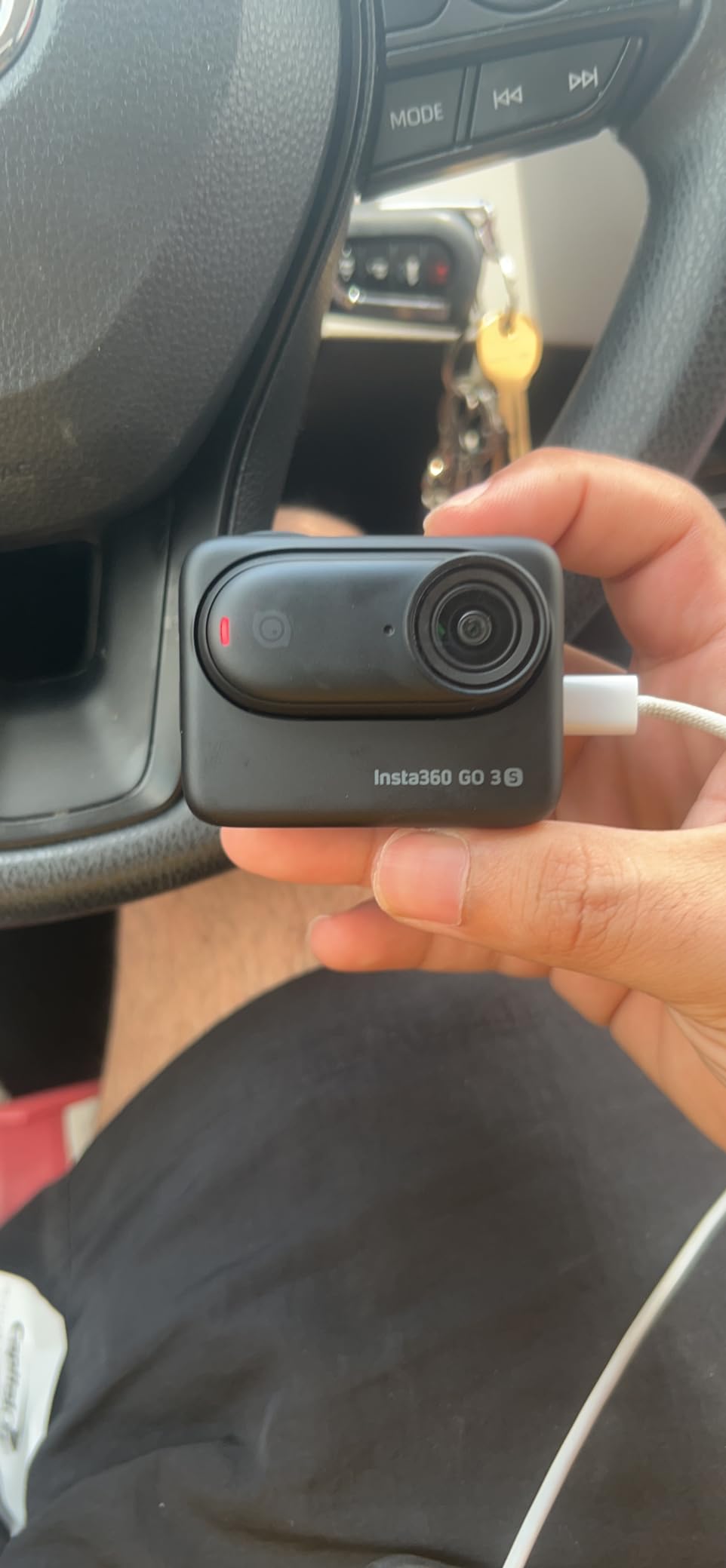
The Insta360 GO 3S Motorcycle Bundle is the only camera in this round-up sold specifically for helmet filming, and the box contains the in-helmet POV mount, magnet pendant, pivot stand, easy clip and a mic wind muff.
The mount is a chin-and-cheek unit rather than a chin-only J-hook, so the camera sits inside your field of view and low enough to catch the bars and the front wheel as you lean. MegaView gives a wider image with less of the stretched-edge distortion that makes small action cameras look amateur, and FlowState stabilization with Horizon Lock keeps the tiny module level.
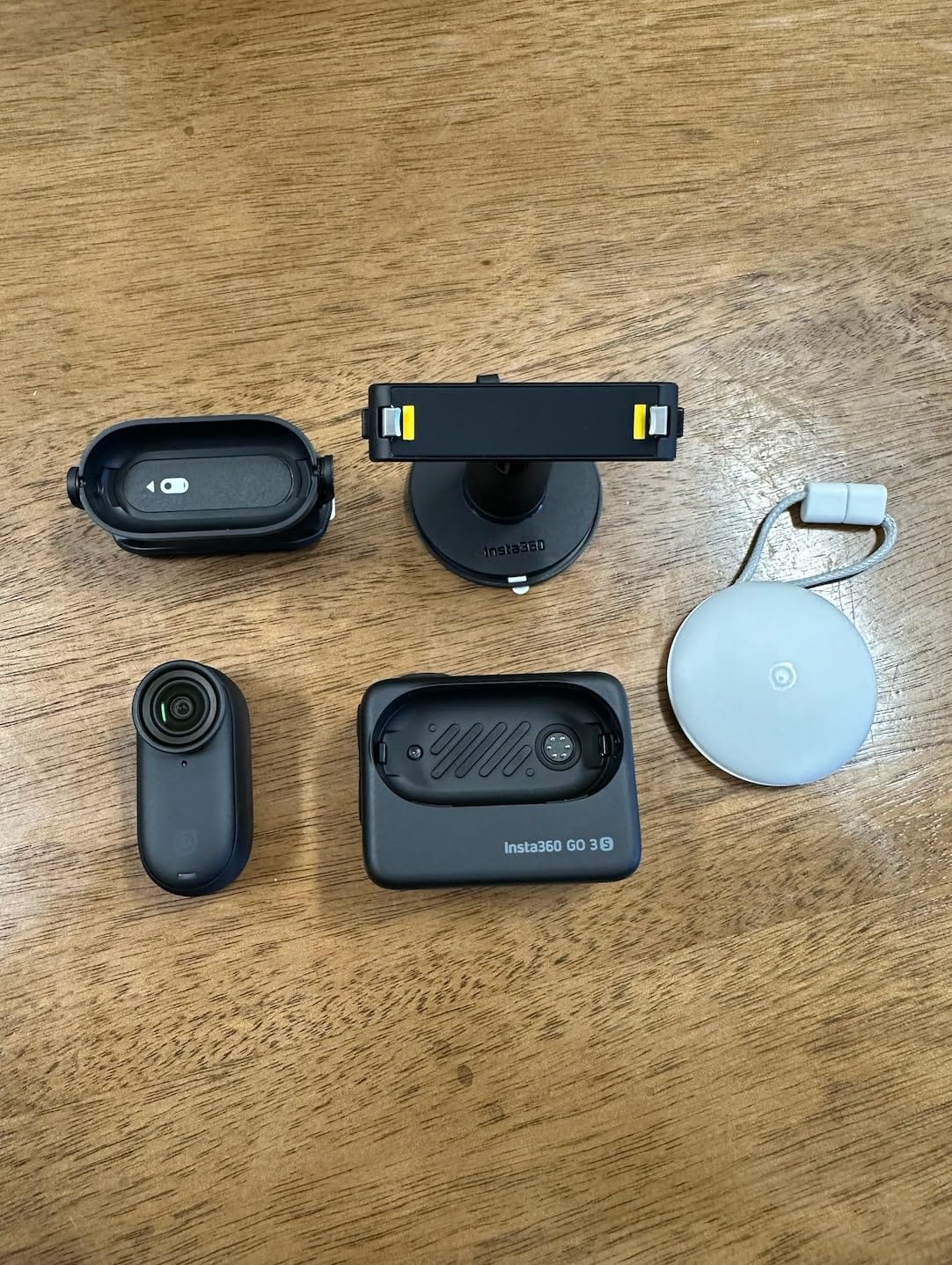
Control is where this package wins outright. The magnet pendant on your chest starts and stops a clip with a gesture, and voice control does the same, so you never touch the camera while moving. That directly answers one of the most common questions in rider forums about starting a recording safely. The 2.2-inch flip-screen Action Pod gives a live preview and a 140-minute battery that charges while shooting, and 128GB is built in so there is no card to fail mid-ride.
For anyone filming alone who wants to talk to the camera, the module is small enough to stay in the helmet with the Action Pod riding in a pocket, which is how a lot of motovloggers use it.
What makes this the moto-first choice
The included wind muff is a small thing that matters more than it sounds. Audio on a bike at speed is dominated by wind unless you do something about it, and a foam muff included with a moto bundle shows the manufacturer expects the camera to live in a helmet.
Riders on the Action Pod battery model report that charge-while-shooting and the pendant are what let them record a whole ride without thinking about it, and AI Auto Editing cuts the day down to highlights for sharing.
Where it falls behind full-size bodies
The sensor and lens are small, so low-light and tunnel footage is visibly weaker than the 1/1.3-inch bodies in this list. If your riding is mostly after dark, choose a larger sensor instead.
Two practical warnings. The Action Pod is only splash-resistant, so the camera module is waterproof to 10m but the pod is not, and underwater use needs the separate housing. The magnet pendant and the magnetic mounts are also unsuitable if you have a pacemaker.
6. Insta360 X3 – Best Reframeable 360 Camera on a Mid Budget
Insta360 X3, 360 Action Camera with 5.7K 360 Active HDR Video, 4K Single-Lens Camera, Waterproof, FlowState Stabilization, 2.29″ Touchscreen, AI Editing, for Motorcycle, Wintersports and Vlogging
5.7K 360 Active HDR
4K single-lens wide mode
FlowState with Horizon Lock
2.29-inch touchscreen
Waterproof body
Pros
- Reframe after the ride so nothing important falls outside the frame
- 5.7K 360 Active HDR holds detail in bright sky and dark road
- FlowState and Horizon Lock smooth out bike vibration
- Waterproof body needs no case in wet weather
- Single-lens 4K mode covers riders who do not want 360 stitching
Cons
- Editing 360 files requires the Insta360 app workflow
- Older generation than the X4 with lower 360 resolution and shorter battery
- Stitched footage can show seams or ghosting at high speed
- Larger and heavier than conventional action cameras
The Insta360 X3 is the value entry into 360 motorcycle filming, and it remains the one most riders in the know actually reference when they describe the category. A rider on zx4rforum called it great as both an action cam and a dash cam, with the selfie stick producing the shots that convinced them. That is the pitch in one line: one camera, two roles.
5.7K 360 Active HDR gives enough resolution to crop a usable frame out of a 360 file after the ride, and FlowState stabilization with Horizon Lock smooths out bike vibration on a rough road. The waterproof body means wet-weather riding needs no housing.
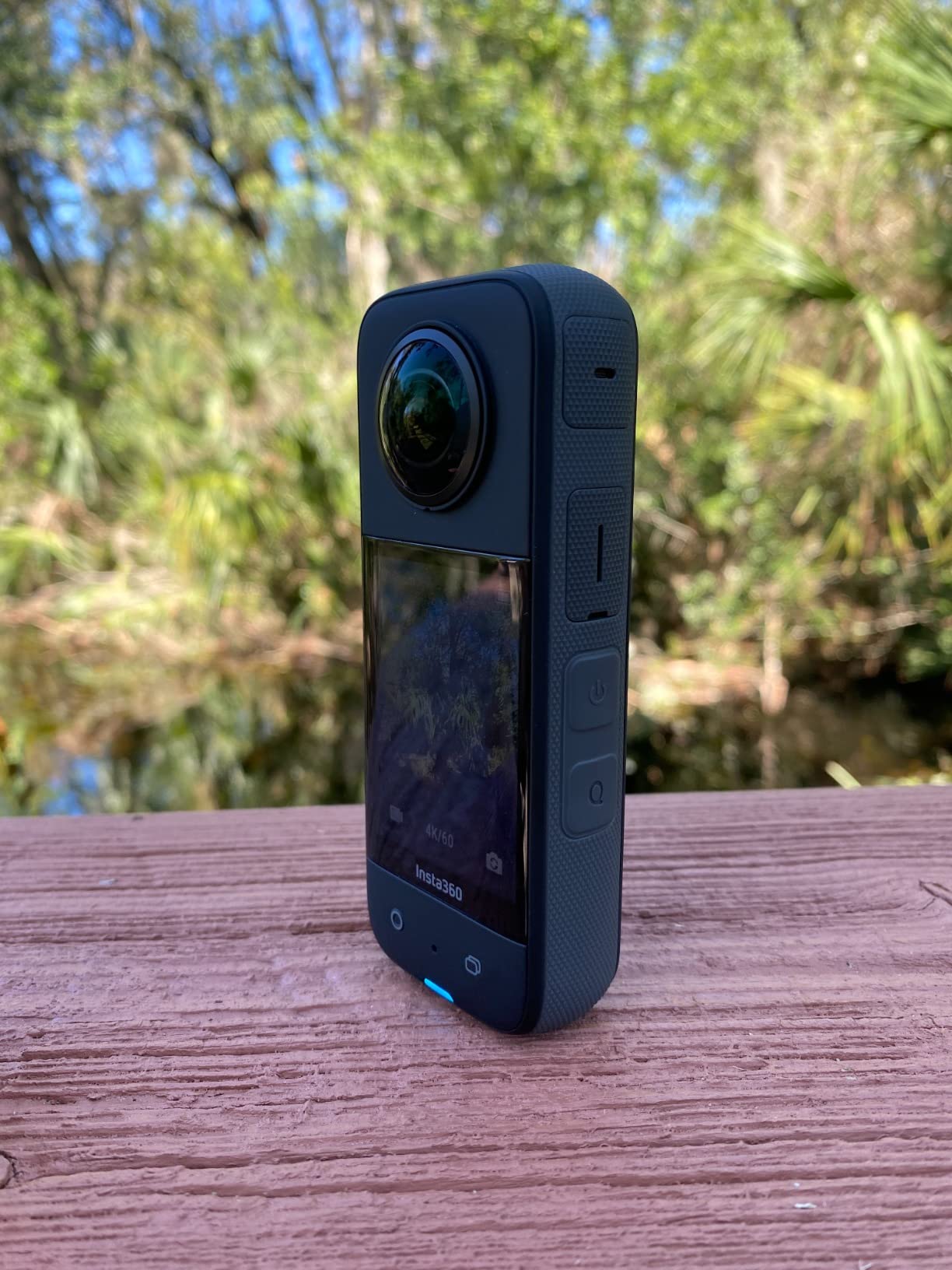
Two things make it easier to live with day to day than the generation before. The 2.29-inch touchscreen gives full control without reaching for a phone, and the single-lens mode gives 4K30 wide-angle or 170-degree MaxView at 2.7K60 for riders who do not want stitching at all. That dual mode is what lets one body cover both a dash cam role and a creative role.
Storage is the practical constraint. A 360 file fills a card quickly, so carry a second card rather than planning to swap mid-ride on a tight loop.
When this is the right 360 camera for you
Choose it if you want reframeable angles on a tighter budget, or if you want a dash cam and a creative camera in one body. The 4K single-lens mode means you can record evidence footage on a normal run and still have 360 available when you want a shot worth editing.
Because it is waterproof at the body level, it is a set-and-forget option through the winter rain that stops riders using a bare action camera at all.
When to spend the extra on the X4
The X4 is a straight upgrade on the two things that matter on a long ride: 360 resolution and battery life. If you ride far from home or shoot 8K, the older body asks you to manage cards and spares more actively.
Expect a learning curve either way. Editing 360 files needs a desktop or mobile workflow, and stitched footage can show seams or ghosting at high speed. Budget time for the edit, not just the ride.
7. Drift Ghost XL – Best for All-Day Loop Recording
Drift Ghost XL Motorcycle Action Camera, 1080P, 9-Hour Battery, Waterproof
Up to 9 hours of 1080p
Rotating lens for level framing
IPX7 waterproof without a housing
Dash cam loop recording
Large glove-friendly controls
Pros
- Battery life covers a full day without a power bank
- Slim aerodynamic profile reduces drag and wind noise
- Rotating lens gives level framing from almost any mount
- IPX7 sealed so no housing is needed in wet weather
- Dash cam loop recording is useful for incident documentation
- Can record while plugged into a charger
Cons
- 1080p only with no 4K or high frame rate options
- No image stabilization so footage shakes with road vibration
- On-board mic captures mostly wind noise at speed
- Rotating lens is very tight to adjust
- Tiny screen makes on-camera menu navigation impractical
The Drift Ghost XL is the endurance camera, and it is the only one in this round-up that solves the battery problem outright. Owners bought it for that single reason and stay for the rest: multi-hour recording through a full day’s ride or commute without a power bank in a pocket. It can also record while plugged into a charger.
The aerodynamic side-profile form is the second quiet advantage. A slim helmet mount presents far less surface to the airflow than a box-shaped action camera, which reduces both drag and the rushing wind noise you would otherwise record. The rotating lens keeps footage level regardless of how the camera is mounted, and IPX7 sealing means rain and mud need no housing.
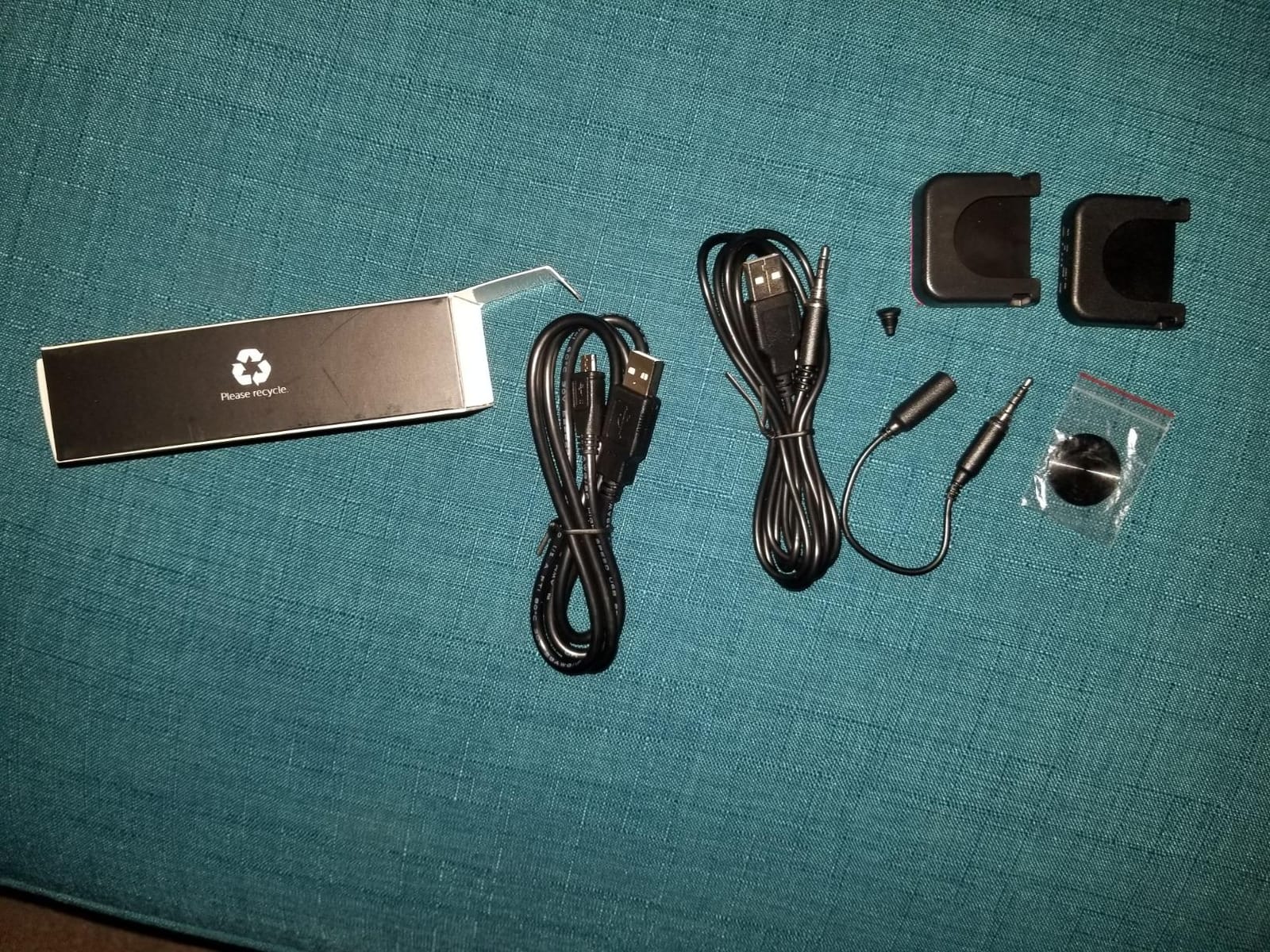
That makes it the natural evidence camera of the group. Dash cam mode with loop recording plus event detection writes over old footage continuously and locks a clip when something happens, which is exactly what a rider who wants insurance documentation needs. The large controls are genuinely glove-friendly, which matters when you are operating the camera parked at the roadside.
Event detection and the Drift Life app give remote access, though owners report the Wi-Fi connection is unreliable and the app is basic.
Where it wins decisively
Long days. A full-day tour or a week of commuting on one charge is a different category from the 60 to 90 minutes most of these bodies deliver at high resolution. If your riding pattern is distance rather than short loops, the trade is obvious.
That slim helmet profile is a small quality-of-life gain on a sport bike at speed, since it also cuts the constant buffeting on an already busy audio track.
Where it is clearly out of its depth
Image quality is the limit. 1080p at 30fps with no stabilization means the footage shakes with road vibration, and a rider on a rough back road will feel that more than the resolution number. If you want to publish your riding rather than document it, this is the wrong body.
Audio is mostly wind, the rotating lens is frustratingly tight to set level, and the postage-stamp screen makes menu work impractical. Instant-On recording is also not always dependable, occasionally failing to start, which is a poor trait in a camera you are relying on for evidence.
8. AKASO Brave 7 LE – Best Budget Camera for Long Rides
AKASO Brave 7 LE 4K30FPS 20MP WiFi Action Camera with Touch Screen EIS 2.0 Zoom Remote Control 131 Feet Underwater Camera with 2X 1350mAh Batteries Support External Microphone Vlog Camera
4K30 video and 20MP photos
6-axis EIS 2.0 stabilization
Dual screens with 2-inch rear touchscreen
Two 1350mAh batteries
Waterproof to 40m with housing
Pros
- Larger 1350mAh batteries give longer ride coverage than smaller budget packs
- Rear touchscreen makes on-bike framing and menu changes easier
- 6-axis EIS 2.0 keeps handlebar and helmet footage steady at speed
- External microphone support fixes the muffled audio of cheaper models
- IPX7 body handles rain without a housing
Cons
- 4K limited to 30fps so there is no 4K60 option
- Entry-level sensor and lens make low-light footage visibly noisy
- On-board audio still needs an external mic
- Touchscreen controls are fiddly with gloves on
The AKASO Brave 7 LE is the sensible step up from the cheapest tier, and the reason is battery capacity. Two 1350mAh cells give roughly two hours of runtime, which is a real difference from a single small pack and removes the mid-ride swap entirely on a long loop. Owners treat it as the upgrade that makes a budget camera usable for distance riding.
The 2-inch rear touchscreen is the feature that separates it from a straight budget camera. You can frame a shot and change a setting at the roadside without a phone, and the dual screens mean the front display is there when the camera is mounted facing you on a bar or helmet.
6-axis EIS 2.0 keeps handlebar and helmet footage steady at speed, which is where a bike actually shakes a camera. The IPX7 body handles rain and splashes without a housing, and the included housing is rated to 131ft if you go further.
External microphone support is worth calling out, because on-board audio on budget cameras is the single most common disappointment. With a mic connected, this body becomes usable for narration, which most cheaper models are not.
Why it beats the cheapest tier
Battery, touchscreen and audio in one package. Those three things are what separate a camera you tolerate from a camera you leave mounted. Riders on budget tiers repeatedly name the wrist remote and battery quantity as the features they use most, and this body covers both.
It is also the pick if you ride in bad weather regularly, since the IPX7 body means you are not managing a housing every time it rains.
Where it falls short
4K is limited to 30fps. There is no 4K60 option, and that smoothness is exactly what makes riding footage look good, so you will be shooting 1080p60 for moving shots.
The sensor and lens are entry-level, so low-light footage is visibly noisy, and that is a problem for night commuters. On-board audio remains muffled without an external mic, and the touchscreen controls are fiddly when you are wearing gloves, so set your settings before you roll rather than at the roadside.
9. AKASO Brave 4 – Best Budget Bundle with Two Screens
AKASO Brave 4 Action Camera 4K30 Ultra Hd Waterproof Underwater Camera
4K30 video and 20MP photos
Adjustable 170/140/110/70 degree view
2-inch rear and 0.96-inch front screens
Waterproof to 40m with housing
Two 1050mAh batteries
Pros
- Large accessory bundle including two batteries and a dual charger
- Remote wristband starts and stops clips without touching the camera
- Stabilization is effective for helmet and handlebar footage
- Does not overheat in hot conditions like many budget rivals
- Waterproof housing holds up reliably to 40 meters
Cons
- Menu system and button flow are awkward and need practice
- Still photos show visible grain and are softer than the video
- 5x zoom is digital only
- Muffled on-board mic under the plastic shell
- Unhinged battery door and a non-waterproof wrist remote
The AKASO Brave 4 is defined by what arrives in the box. Two 1050mAh batteries rated to 90 minutes each, a dual USB charger, a waterproof housing rated to 40 meters, a remote wristband and mounting accessories tuned for bicycle and motorcycle use. For a first camera, that is a genuinely complete package.
The adjustable field of view is the genuinely useful spec. Rather than one fixed ultra-wide, you can step between 170, 140, 110 and 70 degrees, which lets you run a wider view for road context and a tighter one when you want the bike filling the frame.
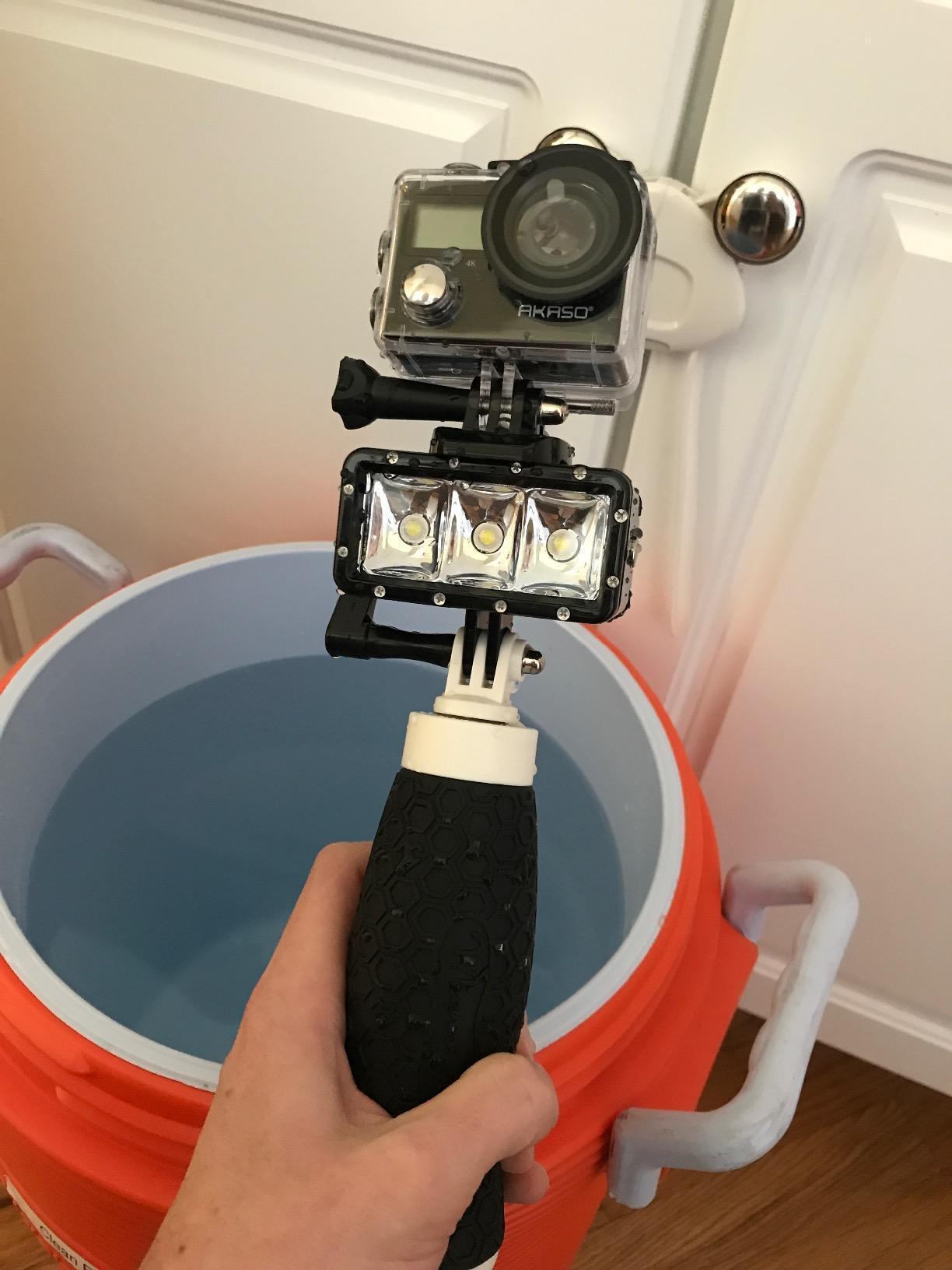
Owners of this body consistently confirm it handles bike and helmet mounting with the included accessories and produces stable footage, and that it survives heat without overheating, which is more than several budget rivals manage. Motorcyclists on r/indianbikes asked for exactly this kind of first camera, and this is the answer to that question.
The wrist remote is the feature that gets used most. Starting a recording from your wrist while riding is safer than reaching for a button, and it is the reason the cheapest AKASO bodies remain so popular with new riders.
What you get that pricier cameras do not
Two batteries and a dual charger out of the box means no purchases before your first ride, and the wrist remote removes the need to touch the camera at all. The waterproof housing rated to 40 meters also opens up use beyond dry-weather riding.
That combination of two screens plus adjustable framing is what sets it apart at this tier.
Where it frustrates riders
The menu system and button flow are awkward and need practice, and on a bike you do not want to be navigating a confusing interface at a traffic light. Learn the two or three settings you actually use before you need them.
Stills show visible grain and are softer than the video, the 5x zoom is digital and barely improves on cropping, and the on-board mic is muffled under the shell. The battery door is unhinged and easy to lose, and the wrist remote is not waterproof, so keep it inside your jacket in the rain.
10. AKASO EK7000 – Best Starter Camera for New Riders
AKASO EK7000 4K30FPS 20MP WiFi Action Camera with EIS Ultra HD 131FT Waterproof Underwater Camera Remote Control 4X Zoom Support External Microphone Black
4K30 and 2.7K30 video
20MP still photos
131ft waterproof case
2.4G wireless wrist remote
Wi-Fi with the AKASO GO app
Pros
- Lowest cost of the ten with a full mount and accessory kit included
- Two batteries plus a charger support all-day riding
- Wrist remote is the most-used feature for start and stop while riding
- Crisp 1080p60 and usable 4K for the price class
- Handlebar and helmet mounts fit most bikes without extra purchases
Cons
- On-board mic is weak and wind noise dominates audio on a moving bike
- Low-light performance is poor and frame rate drops in darker conditions
- Battery door is stiff and awkward to open
- App-based recording control is unreliable while the wrist remote works better
- Cameras from the same batch can vary in field of view and sync
The AKASO EK7000 is the cheapest way in our group to put a working camera on a motorcycle, and the reason is the box rather than the sensor. Two batteries, a charger, a waterproof case rated to 40 meters, a wrist remote and a full mounting kit are included, and the handlebar and helmet mounts fit most bikes without anything extra.
It records 4K30 and 2.7K30 with 20MP stills, and at 1080p60 the footage is crisp for the tier. Built-in electronic stabilization steadies it well enough for commuting and scenic runs, which is how most owners use it.
More people ride with this camera than any other in this round-up, and the pattern is consistent: it is the budget first action camera for handlebar and helmet mounting on motorcycles. Riders on r/Dirtbikes asking what to buy for mud and vibration work end up with a body in this class, and for trail use the accessory kit and waterproof case do most of the persuading.
The wrist remote is what makes it tolerable. Starting and stopping a clip without touching the camera is the single feature that separates it from a camera you fiddle with while stationary.
Where the money is well spent here
On a first camera, this body covers the things that actually stop you recording. Batteries, a charger, a waterproof case and a mount kit are all present, so the barrier to filming your first ride is just the camera itself. The 2.4G remote and 4x digital zoom are useful extras at no extra cost.
Wi-Fi through the AKASO GO app handles editing and sharing, and the external microphone support is a genuine option if you plan to talk to the camera later.
Where the compromises show
Audio is the weak point. The on-board mic is weak and wind noise dominates on a moving bike, so treat this as a silent recording camera and add a microphone if narration matters.
Low light is poor, and the frame rate drops in darker conditions, so this is not the camera for a night commute. The battery door is stiff and awkward, the app-based recording control is unreliable, and cameras from the same batch can vary in field of view and sync, which makes multi-camera editing unreliable. Know that before you plan a front-and-rear pair.
How to Choose an Action Camera for Motorcycle Riding
Resolution is the least useful way to compare these cameras. A bike puts more vibration into a mount than a surfboard or a ski, and a shakier 8K file is worth less than a level 4K one. Judge a camera on whether it stays level, how long it lasts and whether you can start it without taking your eyes off the road.
Decide first between the single-lens POV route and the 360 route. A single-lens body is faster to record, faster to edit and better in low light. A 360 body captures everything at once and is the only way to get a shot of yourself on the bike without a second camera. Most riders who film seriously end up owning one of each, but a single body can do both jobs if it has a single-lens fallback mode.
Stabilization and horizon lock on rough roads
Look for horizon lock, not just stabilization. Stabilization smooths the frame; horizon lock keeps the horizon flat as the bike leans through a corner. On a twisty back road the second one is what makes the footage look professional rather than seasick.
All of the GoPro, DJI and Insta360 bodies in this round-up offer it. The budget AKASO cameras use gyro-based electronic stabilization only, which handles vibration but will not hold a level horizon through a lean.
Battery planning and cold weather
Manufacturers measure runtime at modest settings. At maximum resolution with stabilization on, the real numbers drop sharply. Budget for 60 to 90 minutes per battery on a GoPro body recording high-resolution video, and 135 to 150 minutes on the DJI and Insta360 bodies at their typical settings.
Cold is the other half of the battery story. Lithium cells lose capacity in winter, so a camera that runs all afternoon in July may not finish a morning ride in January. The DJI Osmo Action 4 and the Insta360 X4 are both specified to work down to -20C, which is the number to look for if you ride year-round. Carry spare batteries in an inside pocket where your body heat keeps them closer to ambient temperature.
Waterproof ratings explained
Two different claims are printed on these boxes. A bare waterproof rating means the camera body survives rain and splashes on its own. A housing rating means it survives that depth only inside the supplied case, and every time you fit the case you add a lens surface, more glare and a bigger vibration profile.
For motorcycle riding you want a genuine bare-body rating. The DJI Osmo Action 4, the GoPro bodies and the Insta360 X4 all record through rain without a housing, and the Drift Ghost XL is IPX7 sealed. Budget cameras generally only reach 40 meters inside a case.
Mount rigidity matters more than mount flexibility
Riders consistently report that thin, generic mounts produce unusable shaky or smeared footage, and it is the cheapest mistake to fix. A rigid, short-arm handlebar or chin mount keeps the camera away from the harmonic of the bike, while a long articulated arm amplifies it.
This is also why the bundled 50-piece accessory kit on the HERO13 bundle gets criticised. Budget for a proper rigid bar mount and a chin mount with a thumbscrew, and tape or thread-lock every fastener before a long ride.
Wind noise and safe hands-free control
Above roughly 40 mph the built-in microphones on any of these cameras record mostly wind and engine. Fixes that work, in order of effect: cover the mic with foam or a wind muff, move the camera to a lower-drag profile, and use an external microphone if you need narration. The Insta360 GO 3S Motorcycle Bundle ships a mic wind muff, and the Drift Ghost XL’s slim aerodynamic shape simply presents less surface to the airflow.
For control, never reach for a button while moving. A wrist remote, a magnetic pendant with gesture control, voice control or a Bluetooth remote all let you start a recording safely. The AKASO bodies include wrist remotes as standard, and the DJI Osmo Action 4 accepts a direct connection from DJI wireless microphones.
Pre-recording, loops and evidence use
If you want the camera to be useful after a close call, pre-recording matters more than resolution. The DJI Osmo Action 4 can hold 5 to 60 seconds of buffer before you press record, so the incident is already captured. Loop recording with event detection does the same job passively, which is how the Drift Ghost XL works as a dash cam.
A hardwired dash cam is a different category, permanently wired to the bike and not portable between machines. Many riders run both, but if you only record occasionally, a portable action camera with a wrist remote is the more sensible purchase.
What a brand subscription does to your footage
This is the loudest complaint in rider forums and worth stating plainly. The most useful features from the biggest brand increasingly sit behind a paid subscription, and the export formats you may have built a workflow around can change with it. If you intend to keep footage for years, check which features are permanently unlocked on the body you buy.
There is a second cost that does not appear on a spec sheet: the app. Editing and reframing happen in the manufacturer’s software, and a slow or awkward app slows the whole workflow. Test the app with your own footage before you commit, because that is the part you will touch every single ride. If you want a reference point for a smoother editing flow, we have covered action cameras for vlogging separately, where app quality matters even more.
Helmet Mounting and the Pre-Ride Safety Checklist
Chin and cheek mounts put the camera low in your field of view, where it catches the bars and the front wheel as you lean, and it doubles as a rear-facing camera if you flip it. Top mounts look cleaner but sit in the middle of your vision and pick up more sky. Side mounts are unobtrusive and a good compromise for long days, though they see less of the road.
On the bike, a handlebar mount gives the best vibration damping of the helmet options because the bar flexs, a tank or fairing mount is the most stable for a fixed rear view, and a tail or crash bar mount is the most discreet place for a camera you want out of sight. A short rigid arm beats a long articulated one in every case.
Before every ride, run this check.
No drilling or modification of your helmet shell. Adhesive only, on a smooth flat surface.
Full steering lock clearance in both directions with the camera fitted.
Visor operation, vents and cheek pads all still function normally.
No cable or strap routed where it can snag the bar, the chain or the throttle hand.
Every fastener thread-locked or taped, and a short tether added on track.
Recording started and stopped by voice, remote or pendant, never by reaching while moving.
Track days have their own rules. Most organisers prohibit helmet-mounted cameras on the circuit and require anything fitted to be bike-mounted and tethered. Check the event’s own regulations before you arrive, and run a tape tether on a street mount anyway.
Legality of a helmet camera varies by state and country, and the honest answer is that rules differ enough that you should check your local regulations rather than trust a forum post. In many jurisdictions a camera on your own helmet is permitted, but recording other people, and publishing identifiable footage of them, is a separate question with different rules.
One more practical note for night and low-light riders. A larger sensor wins, and a small housing or a mesh face shield will make any camera worse. If you ride after dark regularly, we have covered riding goggles for night visibility which covers the same problem from the other side.
Frequently Asked Questions
What is the best action camera for bikers?
Which camera is best for motorcycle riding?
What are some good action cameras for motorbikes?
Is it illegal to have a GoPro camera on a motorcycle helmet?
Can you mount an action camera on a motorcycle helmet?
How do I stop wind noise on a motorcycle helmet camera?
How do I stop my action camera from overheating?
How long does an action camera battery last on a motorcycle ride?
Do I need a subscription for a GoPro?
Final Verdict: Which Motorcycle Camera Should You Buy?
For most riders the DJI Osmo Action 4 is the right answer to the best action cameras for motorcycle riding question in 2026. It handles the three things a bike demands – light, heat and vibration – better than anything else we ran, and its battery and pre-record buffer mean it is still working when something happens. Choose the Insta360 X4 if you want to reframe the shot after the ride, and the Drift Ghost XL if your riding is measured in days rather than hours. Whatever you pick, mount it rigidly, start it with a remote, and check the footage before you need it.
If your riding is seasonal, our guides to ATV tyres for mud riding and snowmobile jackets for backcountry riding cover the other half of the year.