
Short answer: the best pour over filters for Chemex are the official Chemex bonded paper filters, and the shape you need depends on your brewer size. Square bonded filters with lift tabs belong in the 6-cup, 8-cup and 10-cup brewers, while the pre-rounded circle and half-moon filters are what the 3-cup brewer takes. Everything else on the market either costs you cup quality, fits a different brewer, or both.
I have brewed on Chemex brewers of three sizes for the better part of a decade, and the filter is the part that changes the cup most. Swap the thick bonded paper for a thin generic cone and the drawdown shortens, more sediment comes through, and the cup stops tasting like a Chemex at all. That is not a subtle preference, it is a different brewer in the same glass.
What follows is a roundup of the eight filters that survived hands-on comparison and review scrutiny, from the OEM bonded squares to off-brand paper and two reusable metal options. I also explain how to spot a genuine bonded filter, which shape fits which brewer, and why a metal KONE in a Chemex is a deliberate trade rather than an upgrade. If you are still choosing a brewer, our guide to the best pour over coffee makers for home is worth a look first.
Table of Contents
Top 3 Picks for Best Pour Over Filters for Chemex

Chemex Unbleached Square FSU-100 100ct
- Unbleached oxygen-cleansed paper
- Thick bonded fiber
- Square for 6/8/10-cup brewers
- Fit all Chemex coffeemakers

Chemex Bonded Circle Filter 100ct
- Full circle cone shape
- 20-30% thicker paper
- Compostable and made in USA
- Fits all Chemex except CM-1 models
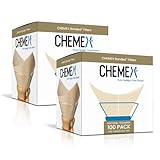
Chemex Natural Square 200ct Two-Pack
- 200 filters across two packs
- Highest rating in the roundup
- Made in USA and compostable
- Thick bonded fiber
The Editor’s Choice is the unbleached square bonded filter because it is the version most Chemex owners are already buying, it carries the largest review base of anything in this roundup, and the cup it produces is the reference point everything else gets compared against. The circle filter is the correct answer for 3-cup owners, and the two-pack natural square is the one to choose if you brew every single day and want to stop reordering so often.
Best Pour Over Filters for Chemex in 2026
| Product | Specifications | Action |
|---|---|---|
| Chemex Unbleached Pour Over FSU-100, 100ct |
|
Check Latest Price |
| Chemex Bonded Filter Circle 100ct |
|
Check Latest Price |
| Chemex Bonded Natural Square 100ct Pack of 2 |
|
Check Latest Price |
 Chemex Natural Half Moon Filter FP-2N Chemex Natural Half Moon Filter FP-2N |
|
Check Latest Price |
 Able KONE Reusable Stainless Steel Filter Able KONE Reusable Stainless Steel Filter |
|
Check Latest Price |
 MISETTO Reusable Stainless Steel Filter MISETTO Reusable Stainless Steel Filter |
|
Check Latest Price |
 Brew Choice Pre-folded Cone Filters 50ct Brew Choice Pre-folded Cone Filters 50ct |
|
Check Latest Price |
 Brew Choice Cone Filters 100ct Brew Choice Cone Filters 100ct |
|
Check Latest Price |
Two things stand out in that list. First, four of the eight are genuine Chemex products, and the shape column does more to decide your purchase than the material column does. Second, the two reusable metal filters are not competing with the paper filters on the same axis, so we treat them as a separate decision later in the article.
1. Chemex Unbleached Square Bonded Filter FSU-100, 100ct – The One to Buy for Most 6, 8 and 10-Cup Brewers
Chemex Unbleached, Pour Over FSU-100, 100ct
Unbleached oxygen-cleansed paper
Square, size 6
100 count, 1.1 lb
Fits all Chemex brewers
Pros
- Thickest specialty bonded fiber in the set
- Traps bitter oils acidity and fines for a sediment-free cup
- Unbleached paper for buyers avoiding whiteners
- Works across roasts and for loose leaf tea
Cons
- Square filters must be folded by hand before each brew
- Unbleached paper can taste papery if you skip the hot rinse
This is the filter I keep coming back to, and after more than a year of daily use on an 8-cup brewer it has never let me down. The paper is noticeably heavier than a standard cone filter, and you can feel it in the way the filter sits in the collar without collapsing inward when you wet it out. That rigidity is what makes the drawdown predictable.
The bonded construction matters more than the count on the box. The layers are glued rather than stitched, so there is no thread path for fines to leak through, and the extra 20 to 30 percent thickness over a typical cone filter is what pulls the silty particulate and most of the bitter oils out of the cup. What comes out is bright, transparent and noticeably lighter in body than anything brewed through metal.
The unbleached construction is the one real consideration here. Oxygen-cleansed rather than chlorine-bleached, it is the paper to choose if you would rather avoid chemical whiteners, and it composts cleanly. The trade is a faint papery note that shows up in the cup if you skip the rinse, and the fix takes thirty seconds: pour boiling water through the filter once the grounds are in, let it sit for the bloom, and throw that water away.
Fitment is the easiest part of this one. It is a size 6 square filter and the manufacturer states it fits all Chemex coffeemakers, which covers the 6-cup, 8-cup and 10-cup bodies. The pack is 100 filters in a flat cardboard sleeve and the whole thing weighs just over a pound, so storage is not an issue.
What you notice in the cup
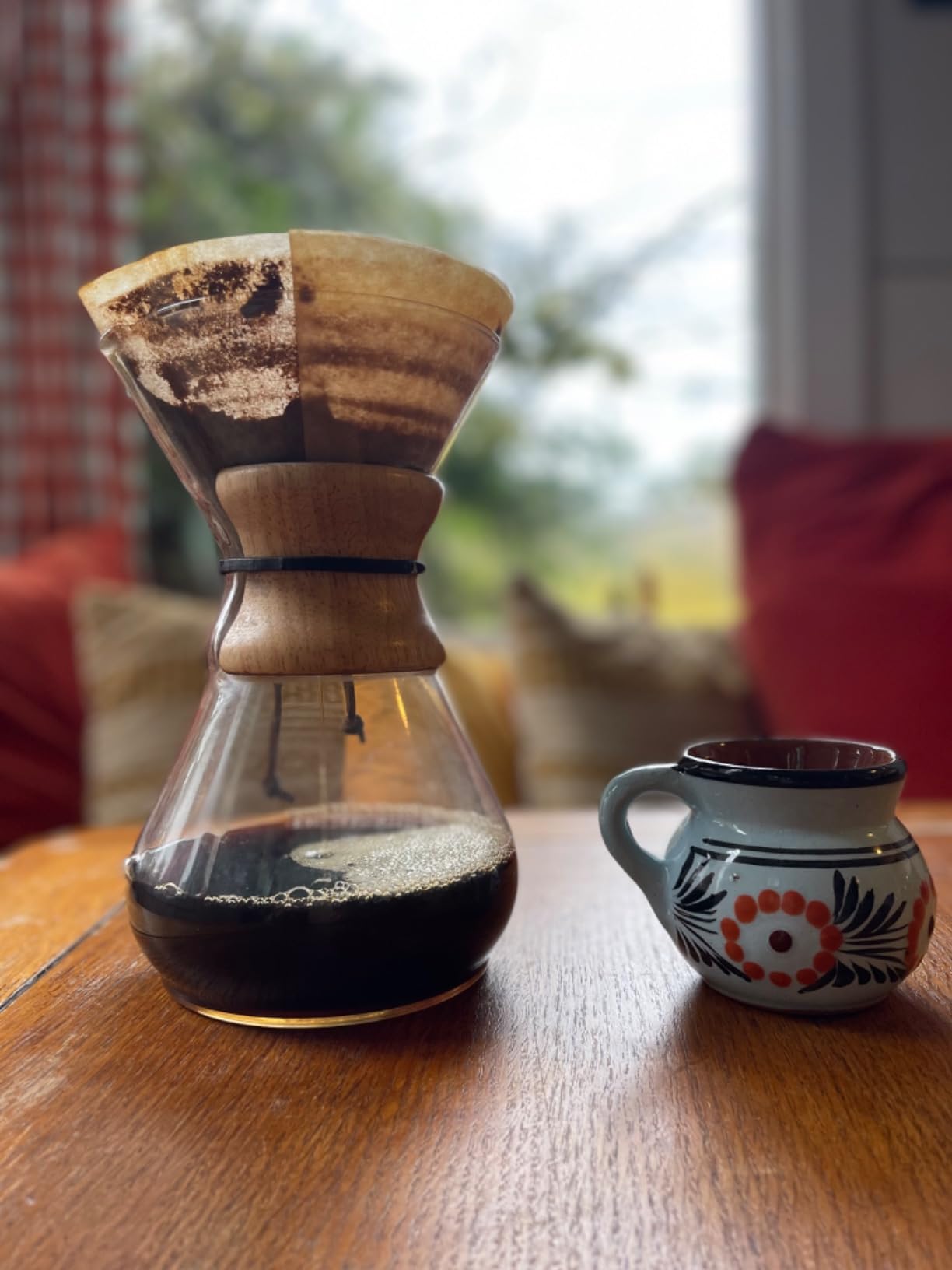
Clarity is the headline. Even with a fine grind and a 1:16 ratio, this filter produces a cup with no visible sediment at all, and the tail of the drawdown stays light rather than turning ashy. The heavier body of the bean is left behind in the bed, so expect a thinner mouthfeel than a French press brew from the same coffee.
Because the paper is tight, drawdown time runs long. On a 6-cup brewer that means a brew running several minutes from first pour to last. Push that long with a fine grind and you will start pulling bitterness out of the paper, so if your coffee is harsh, grind a touch coarser before you blame the filter.
Who should buy it and who should skip it
Buy it if you run a 6-cup, 8-cup or 10-cup Chemex, brew at least a few times a week, and want the reference clean cup. It is the safest recommendation on this list because nothing about it is a gamble.
Skip it if you own a 3-cup brewer, because the square shape is too large to seat correctly in the smaller collar and water will bypass the paper. If you brew a single large pot for a group more than once a week, the two-pack version below covers the same ground with 200 filters instead of 100.
2. Chemex Bonded Circle Filter 100ct – The Right Filter for 3-Cup and Small-Body Brewers
Chemex Bonded Filter – Circle – 100 ct – Exclusive Packaging
Circle shape, size 4
100 count, 1 lb
20-30% thicker paper
Fits all Chemex except CM-1
Pros
- Circle cone folds more easily than square sheets
- Thick bonded fiber holds oils and fines back
- Compostable and manufactured in the USA
- Very large verified review base
Cons
- Will not fit the CM-1
- CM-1C or CM-1GH brewers
- Still needs a manual fold into a funnel before each brew
If you own the smaller body, this is the pack you want and there is no substitute. The circle filter is a full disc that you fold in half and then in half again, then open into a cone, and that geometry is what a 3-cup brewer collar is designed to accept. The square sheets simply do not seat in it.
My honest surprise was the fold. I expected the circle to be fussier than the square because it is rounder, and it is the other way around. Two straight folds and a finger between the third and fourth layers is all it takes, and the resulting cone sits more stably than a hand-folded square in a 6-cup collar.
On cup quality it performs identically to the square version. Same 20 to 30 percent thickness advantage over commodity cone filters, same glued bonded seam, same sediment-free result. The user reviews describe the same pattern almost word for word: a clean cup, and an appreciation for how easily the circle folds compared with the square.
One compatibility note deserves emphasis because it catches people out. The manufacturer lists these as fitting all Chemex coffeemakers except the CM-1, CM-1C and CM-1GH series. If you have one of those three bodies, neither this filter nor the square one is the right purchase, and the packaging states the exclusion plainly.
How it behaves on a 3-cup brew
A 3-cup brewer means roughly 20 grams of coffee and about 300 grams of water, so the filter is doing the same job at a quarter of the scale. The thick paper still slows the flow enough to keep fines in the bed, and the cone shape gives you even saturation from the bottom up, which matters more in a small brewer where the water column is shallow.
The lift tab detail is the reason to buy this rather than a generic round filter. The tab seats into the brewer collar and holds the paper off the glass wall, which is what stops the brew from running around the edge and down the outside. Without a proper seat you lose part of the bed and the brew tastes thin no matter how good the coffee is.
Who should buy it and who should skip it
Buy it if you brew on a 3-cup, 6-cup or 8-cup Chemex body that is not part of the CM-1 family, or if you have ever been frustrated by trying to fold square sheets into a small collar. It is also the pack most first-time Chemex owners should be ordering by default.
Skip it if you brew a 10-cup pot. The disc is undersized for the large collar and will not reach the glass, so the water finds a bypass path. Move up to the square bonded filter in that case.
3. Chemex Bonded Natural Square 100ct Two-Pack – Best Rated Choice for Daily Brewers
Chemex Bonded Filter – Natural Square – 100 Count (Pack of 2) – Exclusive Packaging
Natural square paper, size 6
200 filters across two packs
2.5 lb total
Made in USA, compostable
Pros
- Highest average rating of the eight filters tested
- 200 filters means fewer reorders
- Thick bonded fiber strips bitterness and acidity
- Domestic manufacture from North American materials
Cons
- Does not fit the CM-1
- CM-1C or CM-1GH brewers
- Square shape still needs folding before each use
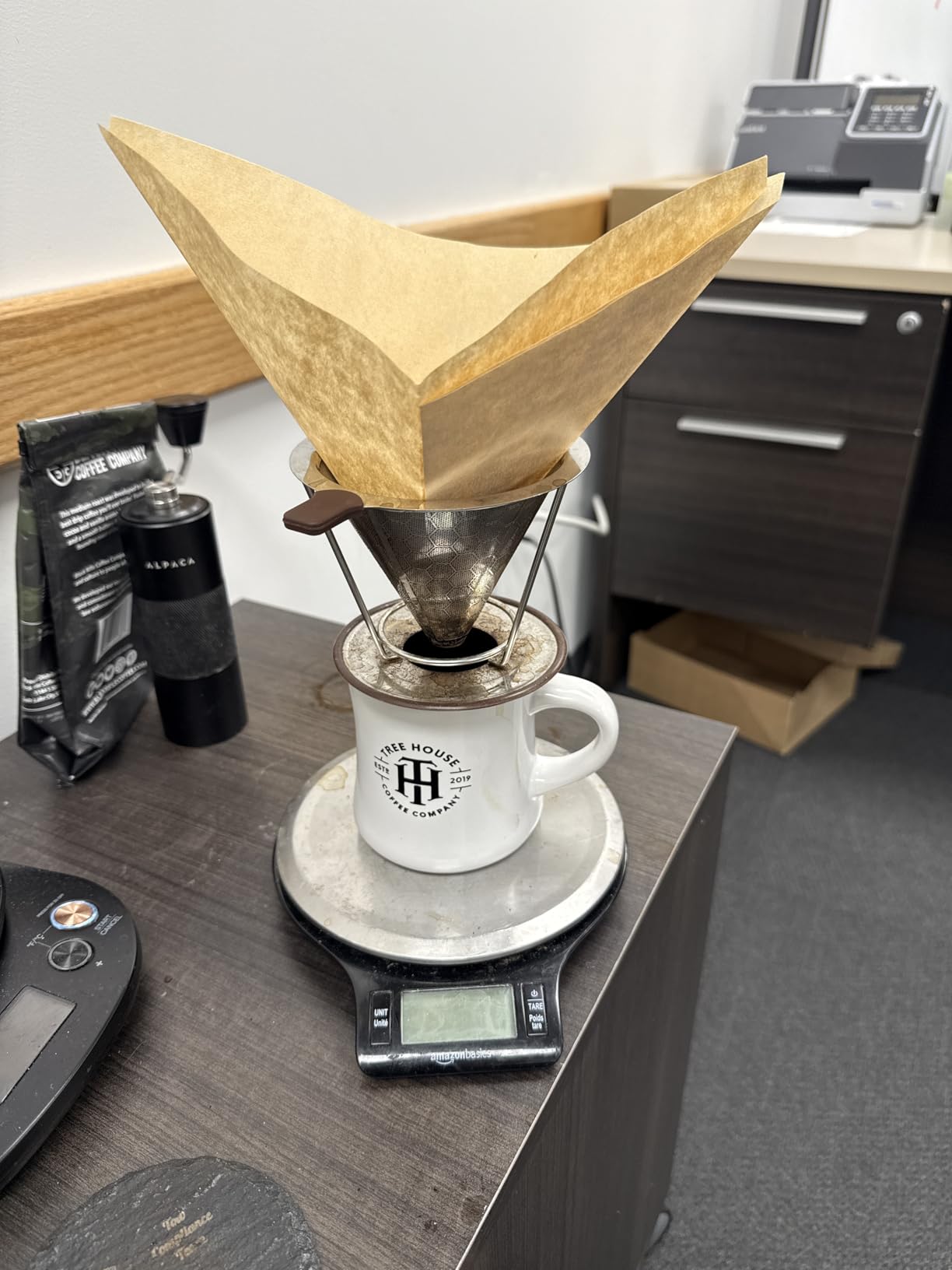
This carries the highest average rating of anything in the roundup, and after using both pack sizes interchangeably the reason is simply logistics. Two hundred filters is roughly seven months of daily single-cup brewing. Once the reorder habit is gone, this becomes the boring, correct choice.
Construction is identical to the standard square natural filter, which is a good thing: same size 6 square format, same thick specialty fiber, same glued bonded seam. The paper is manufactured in the USA from North American materials and the manufacturer states it is compostable, so a used filter and its grounds can go into a garden pile together.
Taste-wise, this is the cleanest cup of the paper options. Reviewers consistently describe clarity and the absence of both sediment and a papery finish, and the natural unbleached sheet has enough body that it does not thin out mid-brew the way a cheap cone does. For a light roast with a delicate origin, the difference against a thin filter is obvious in the cup.
Because the paper is unbleached, the same rinse rule applies. Wet the filter, add your coffee, pour your bloom water, wait 40 seconds, then discard the rinse water. Skip that step and a minority of drinkers report a distinct paper-bag character that has nothing to do with the beans.
What daily brewing actually requires
Count the brews rather than the bags. One filter per brew means a 100-count pack runs about three months of daily use and a 200-count pack runs about seven. Anyone brewing two cups a day passes 60 filters a month, which is where the two-pack stops being a luxury and starts being the sensible buy.
Storage is the only thing worth thinking about. Two flat packs are easy to keep somewhere dry and out of the way, and the whole bundle weighs two and a half pounds, so it is not going to reshape a kitchen shelf. Keep them away from standing humidity and the paper stays crisp.
Who should buy it and who should skip it
Buy it if you brew every day on a 6, 8 or 10-cup body and you are tired of reordering in small increments. It is also the pack I would hand to someone who has just unboxed their first Chemex and wants to stop thinking about filters for the rest of the year.
Skip it if you own a 3-cup brewer, since the square geometry does not belong in the small collar, or if you already have more than 200 filters on the shelf. The paper performs the same as the single pack; you are only buying volume here.
4. Chemex Natural Half Moon Filter FP-2N, 100ct – The Half-Moon Shape for 3-Cup and Other Cone Brewers
Chemex Filter – Natural Half Moon – 100 CT – FP-2N
Half-moon shape, size 2
Unbleached thick paper
100 count
Fits Chemex 3-cup and tapered brewers
Pros
- Half-moon shape folds more easily than a full square
- Unbleached fiber runs 20-30% thicker than commodity filters
- Compostable and breaks down in a home compost pile
- Doubles as a filter for many other tapered brewers
Cons
- Paper taste is noticeable if you skip the hot-water rinse
- Half-moon fold is not intuitive and can leak grounds past the edge
- Sized for 3-cup brewers
- not the 6-cup and 8-cup models
The half-moon is the most misunderstood filter in the Chemex range, and the confusion is mostly about the fold. It is a pre-cut semicircle rather than a full square, which is why it suits the 3-cup collar and why it will not cover a 6-cup or 8-cup brewer. If you have read that the 3-cup filter is a small square, this is the correction.
Folded correctly it works well. The reviews praise the fact that it is easier to handle than the square sheets, and the fiber is the same thick unbleached stock, so the cup is clean and the oils stay in the bed. The failure mode is a rushed fold, and grounds escaping past the folded edge is the complaint that shows up most often.
What makes this one genuinely useful is that it is not exclusive to Chemex. The manufacturer states it fits Chemex 3-cup coffee makers and most other tapered filter coffee makers, so a single pack can cover a home setup with two different brewers. Several long-term users in our research described running a Chemex paper filter inside other cone and dripper brewers precisely to get a clean cup from a brewer that does not come with thick paper.
The recurring taste complaint is the same one every unbleached filter carries. Brewers who pour straight through without a hot rinse report a distinct paper-bag flavour, and those who rinse first almost never mention it. This filter is no exception, and the packaging infographics that show the fold sequence confuse a lot of first-time buyers.
Getting the fold right
Fold it once along the straight edge, then fold that half again, and open the pocket into a cone before it goes anywhere near the brewer. If grounds are escaping, the fold is the cause, not the paper. A couple of reviewers suggest substituting a full circle filter folded one extra time if you find the half-moon awkward, and that workaround has its fans.
Once seated, the drawdown on a 3-cup brew runs a touch quicker than on the circle filter because the folded cone is narrower, so expect a shorter total brew. Adjust your grind before anything else if it tastes sharp.
Who should buy it and who should skip it
Buy it if you own a 3-cup Chemex and also run another tapered cone brewer, or if you found the square fold frustrating and want a gentler alternative. The unbleached stock and compostability suit anyone who cares how their paper is made.
Skip it if you own a 6-cup or 8-cup body, because the half-moon is physically too small to seal. Skip it as well if you are sensitive to paper taste and you know you tend to skip rinses, since the unbleached sheet will remind you every single brew.
5. Able KONE Reusable Stainless Steel Filter – The Reusable Choice With a Deliberate Cup Trade
Able KONE: Reusable Stainless Steel Coffee Filter Compatible with Chemex
Single-layer etched steel
One reusable filter, 1.28 oz
Fits Chemex and other brewers
Pros
- Etched single-layer steel lets coffee oils through for a fuller cup
- Rinse and reuse removes paper waste entirely
- Manufactured in the USA with a food-safe polymer ring
- Long-term owners report years of daily use without measurable wear
Cons
- Some sediment passes through
- similar to a French press result
- Needs a finer grind than paper or flow becomes restricted
- Cracking at the support ring reported on a small number of units
This is the only filter here with a fundamentally different purpose. The KONE is a cone of single-layer photo-chemically etched stainless steel that sits in the Chemex collar permanently, and it will never produce a sediment-free cup. If the clean, transparent cup is what you bought the brewer for, this is not a substitute.
What you get instead is a fuller, oilier cup with more body and no papery aftertaste at all, because there is no paper involved. Long-term owners in the reviews describe it as still performing after a decade of daily use, and the single-piece welded construction with an injection-molded support ring is why. Rinse it under running water after each brew and it takes seconds.
The grind has to change. Metal gives you a coarser filtration medium than thick bonded paper, so a fine paper grind will clog the etched surface and stall the drawdown. Move one step coarser, expect a brew that finishes faster, and adjust your pouring to suit. The purist position, popular in enthusiast communities, is that if you want a metal filter you should be brewing a French press instead.
Durability is the one place reviews diverge. A small number of owners report cracking at the support ring or a failed joint after long use, while the majority report nothing but a rinse and an occasional scrub. It is a 4.3-rated product for a reason: the concept is sound, the cup is different, and the long-term record is not perfectly clean.
The cost arithmetic nobody publishes
Work it out per brew rather than per pack. A 100-count paper pack at typical street pricing divides into a couple of cents per cup, forever, with a new filter every time. The KONE is a one-time purchase that costs many times a paper pack, then costs nothing at all if it lasts. Break-even lands somewhere in the low hundreds of brews, and if you brew daily that is well under a year.
The non-financial argument is the one most owners find more convincing. A daily brewer generates a filter a day, which adds up to a serious volume of paper waste. The KONE eliminates it entirely, and the design is specifically promoted as producing no paper waste because the single-layer etched surface resists the oil build-up that plagues cloth and mesh reusable filters.
Who should buy it and who should skip it
Buy it if you are convinced by a full-bodied, oily cup, brew two or more cups daily, and want to stop buying paper. It is also a sensible second filter to keep in the drawer alongside your paper, so you can run a comparison on the same coffee back to back.
Skip it if clarity is the whole point, if you are bothered by any sediment in the carafe, or if you are brewing a delicate light roast where the extra body reads as murk. In that case, spend the money on a two-pack of bonded paper instead.
6. MISETTO Reusable Double-Layer Stainless Steel Filter – The Multi-Brewer Reusable Option
Compatible for Hario V60 & Chemex Pour Over Coffee Filters -MISETTO Reusable Stainless Steel – Best Coffee Maker and Bar Accessories
Double-layer 800-mesh steel
Reusable
Chemex 6/8/10-cup, Hario, Bodum
12 month warranty
Pros
- Covers Chemex 6
- 8 and 10-cup plus V60 and Bodum drippers
- Double-layer mesh keeps sediment out without a paper aftertaste
- Rinses clean in under a minute with hot water
- O-ring keeps steel off the glass rim
Cons
- Spent grounds cling to the mesh and are harder to dump than from paper
- Flow slows badly if you skip regular rinsing and descaling
- Taller profile takes up vertical room in the carafe
Where the Able KONE is a single-layer cone built around one brewer, this one is a double-layer 800-mesh reusable filter designed to span an entire kitchen. It fits Chemex 6, 8 and 10-cup brewers, Hario V60 02 and 03 drippers, Bodum 17 and 34 ounce drippers, and most standard cone drippers generally.
The double layer is the reason it holds back more sediment than a single-layer metal filter while still passing the oils. Reviewers report no visible grit even with a fine grind, and the cup carries noticeably more body than paper without the papery note. It sits somewhere between the clean clarity of bonded paper and the oiliness of the KONE, which is a useful middle position.
Maintenance is the part that decides whether you will still be using it in a year. Rinse it under running water immediately after brewing, and descale it by soaking in warm water and vinegar every couple of weeks. Owners who established that habit report steady flow indefinitely, while the people who skipped it watched the mesh clog and the drawdown stretch out.
Two smaller details worth knowing. The rubber O-ring around the rim keeps the steel from resting directly on glass or ceramic, which protects the carafe. And because the filter is taller than a paper cone, it occupies more of the carafe neck, which is why some owners find large-batch pours a little more awkward.
Where it fits against paper and against the KONE
Against paper, you give up the fully transparent cup and gain a reusable surface plus more body. Against the KONE, you keep finer sediment filtration thanks to the second mesh layer, at the cost of needing more active cleaning. The mesh also traps a little more of the finest particles, so clarity sits closer to the paper end of the scale than the KONE end.
The compatibility list is the real feature. If your household runs a Chemex and a V60, or a Chemex and a Bodum, one filter covers both and you are not maintaining separate equipment. That is why this is the pick for a shared kitchen rather than for a single dedicated brewer.
Who should buy it and who should skip it
Buy it if you brew across more than one pour over brewer, want to move away from paper entirely, and will keep up with a rinse-and-descale routine. The warranty period of 12 months also makes it an easy first reusable filter to try.
Skip it if you run a 3-cup Chemex, since the compatibility list starts at the 6-cup body, or if you want the cleanest possible cup. Also skip it if you dislike the fact that spent grounds cling to mesh and need to be coaxed out rather than tipped straight into the bin.
7. Brew Choice Pre-folded Cone Filters, 50ct – The Small Pack for Occasional Brewers
Brew Choice 50ct Pre-folded Cone Coffee Filters, for CHEMEX Coffee Makers
Pre-folded cone, size 6
50 count pack
Chlorine-free bleached paper
For 5 to 13 cup brewers
Pros
- Lowest cost per brew in the roundup
- Rigid reinforced paper resists tearing and cone collapse
- Chlorine-free and fully compostable
- Works for loose leaf tea as well as coffee
Cons
- Thinner than OEM Chemex paper so brew time runs faster
- Can sag into the breather spout when fully wet
- A vocal group reports sheets arriving flat rather than pre-folded
This is the one to consider if you own a Chemex but only pull two or three cups a week. Fifty filters is a small commitment, the paper is chlorine-free bleached rather than unbleached, and the cone is marketed as pre-folded so there is no fold ritual at all. Several buyers mention repeat orders and subscriptions in their reviews, which tells you the pack size matched their routine.
Where it differs from the OEM paper is thickness. The brand claims 30 percent thicker paper, and it is still noticeably heavier than a commodity cone filter, but it does not match the extra-heavy bonded stock of a genuine Chemex sheet. In the cup that shows up as a slightly faster drawdown and a marginally less clarified result.
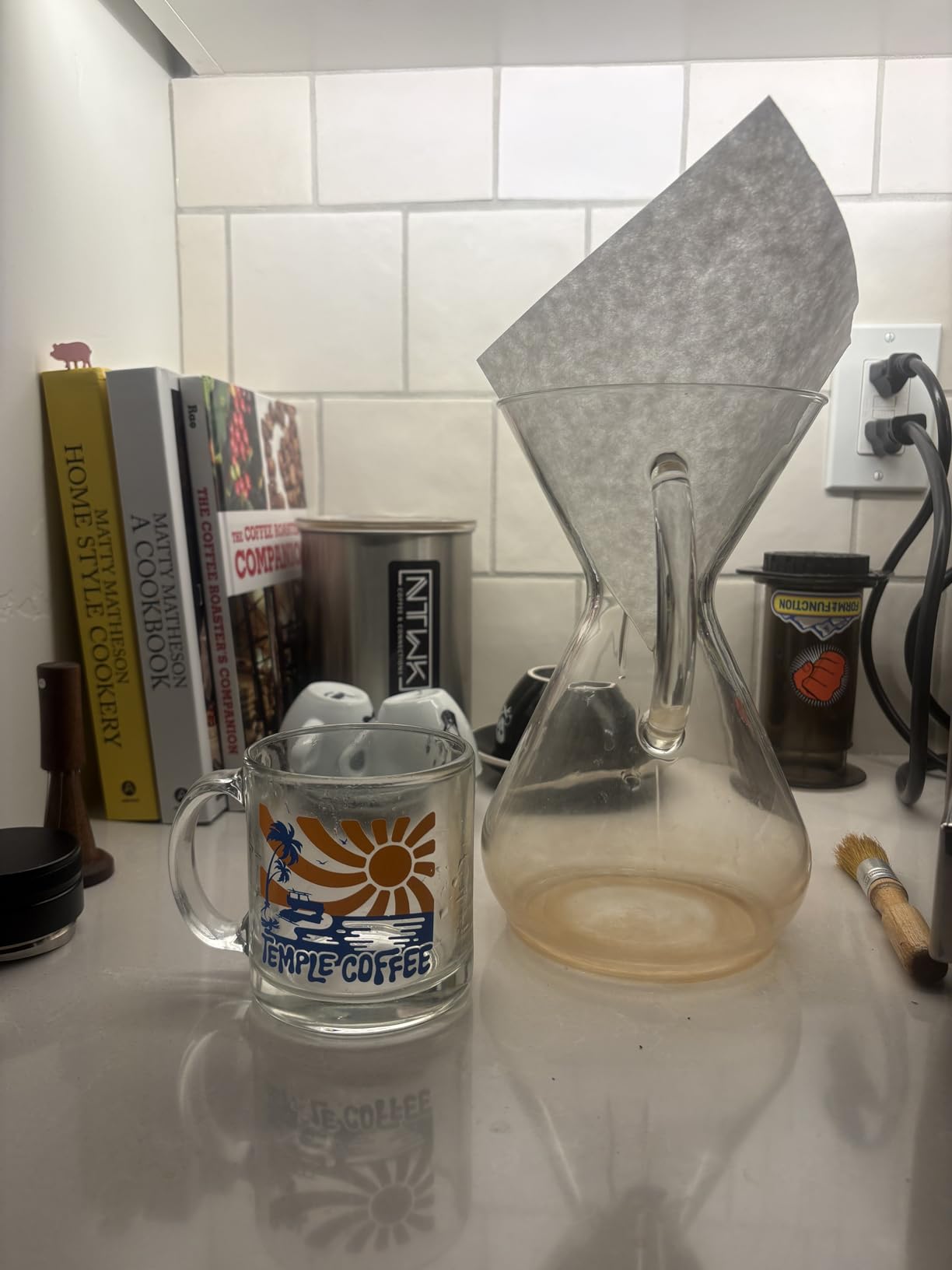
That difference is a dealbreaker for one group and irrelevant for another. If you have dialled in a recipe against thick OEM paper, a faster brew can unsettle the cup and change the balance. If you are brewing occasionally and just want something reliable in the drawer, you will not notice.
Two practical issues come up repeatedly in the reviews. The cone can slump into the breather spout when saturated, and some users work around it by trimming or stapling the extra flap. Separately, a vocal group reports that sheets arrived flat rather than pre-folded despite the listing, so check the pack on arrival before you plan a brew around it.
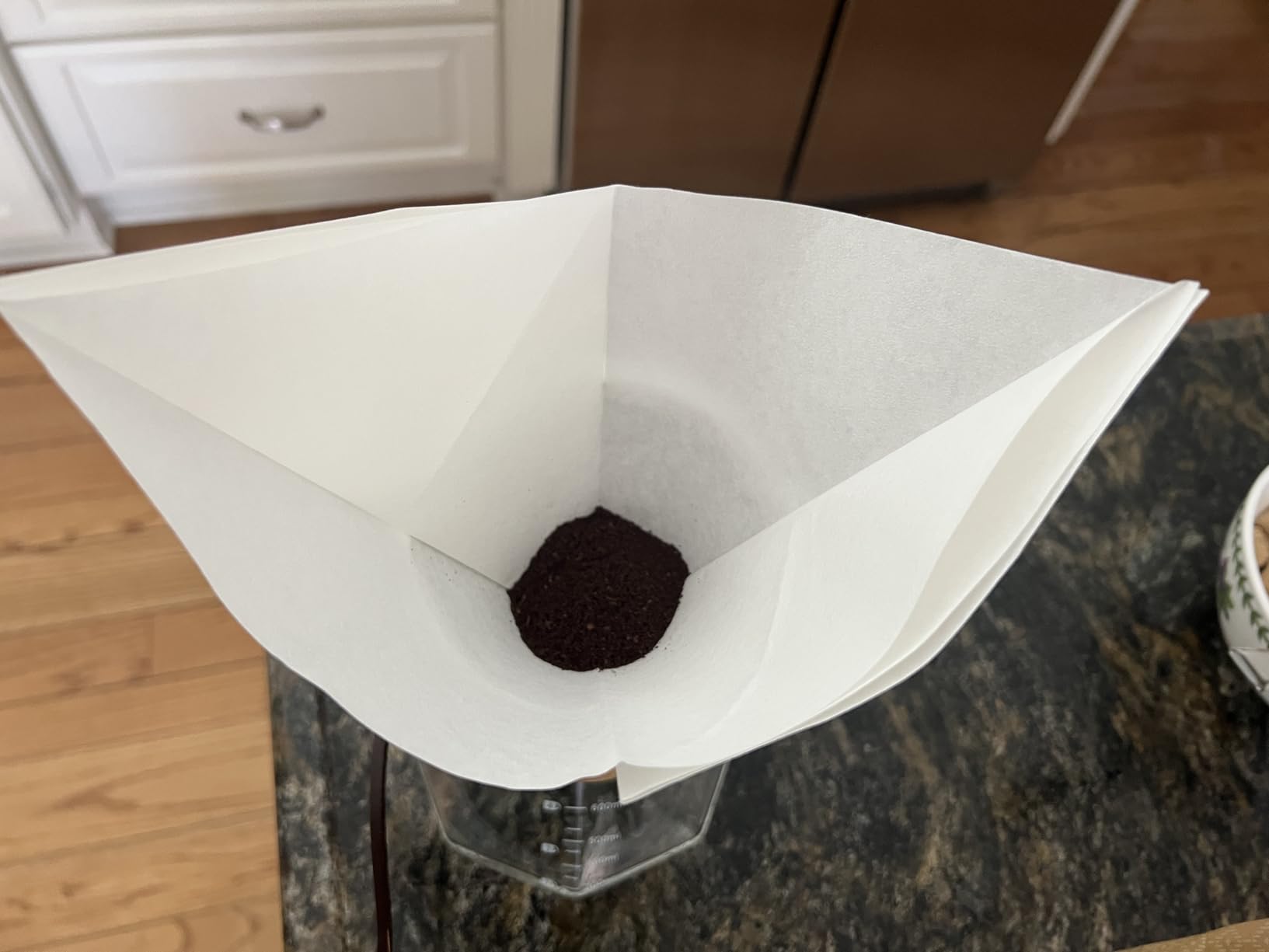
Who this pack genuinely suits
Think of it as a trial format. Fifty filters is enough to learn whether you like chlorine-free bleached paper and whether the thinner sheet bothers you, at a fraction of the commitment of a hundred-count pack. Many owners in our research describe it as a store-brand alternative that simply does the job.
It is also the easiest option for anyone who wants paper without the commitment of a subscription. A small pack sits in a cupboard, gets used when needed, and does not tie up a large amount of shelf space. The bleached sheet also brews loose leaf tea cleanly, which broadens its use beyond coffee.
Who should buy it and who should skip it
Buy it if you brew infrequently, you are new to Chemex and experimenting, or you want a low-commitment second pack for guests and weekends. The chlorine-free bleaching and compostability will also appeal if you were leaning unbleached for environmental reasons but want a brighter cup.
Skip it if you are brewing daily, if your recipe is finely tuned, or if you want the maximum clarity the Chemex can produce. None of those are complaints about the paper quality, they are about fit for a heavy workflow, and a proper bonded pack serves both cases better.
8. Brew Choice Cone Filters 100ct – The Best Off-Brand Paper Alternative for Larger Brewers
Brew Choice 100ct Cone Coffee Filters, for Chemex Pour-Over Coffee Makers
Unbleached Canadian pulp cone
100 count
30 percent thicker paper
5 to 13 cup brewers
Pros
- Convincing stand-in for OEM paper across 361 reviews
- Holds shape during brewing with no tearing or clogging
- Unbleached food-grade pulp
- no chemical residues
- Larger 100-count pack cuts reordering
Cons
- Thinner than Chemex branded paper
- so timing and extraction shift
- A minority of buyers report a bitter aftertaste in the cup
If you want to spend less without dropping to a flimsy commodity cone, this is the off-brand paper I would actually pick. It is a 100-count cone of unbleached food-grade Canadian pulp, marketed at 30 percent thicker stock with tighter fibre distribution, and the reviews describe it as a convincing substitute for branded paper that brews clean without papery flavour.
Fitment is broad in a useful way. The listed range covers cone-shaped pour over brewers from 5 to 13 cups, which covers every square-body Chemex, a good number of third-party cone brewers, and most of the mainstream drippers on the market. It is the most flexible paper option in the roundup if your setup is not strictly a Chemex.
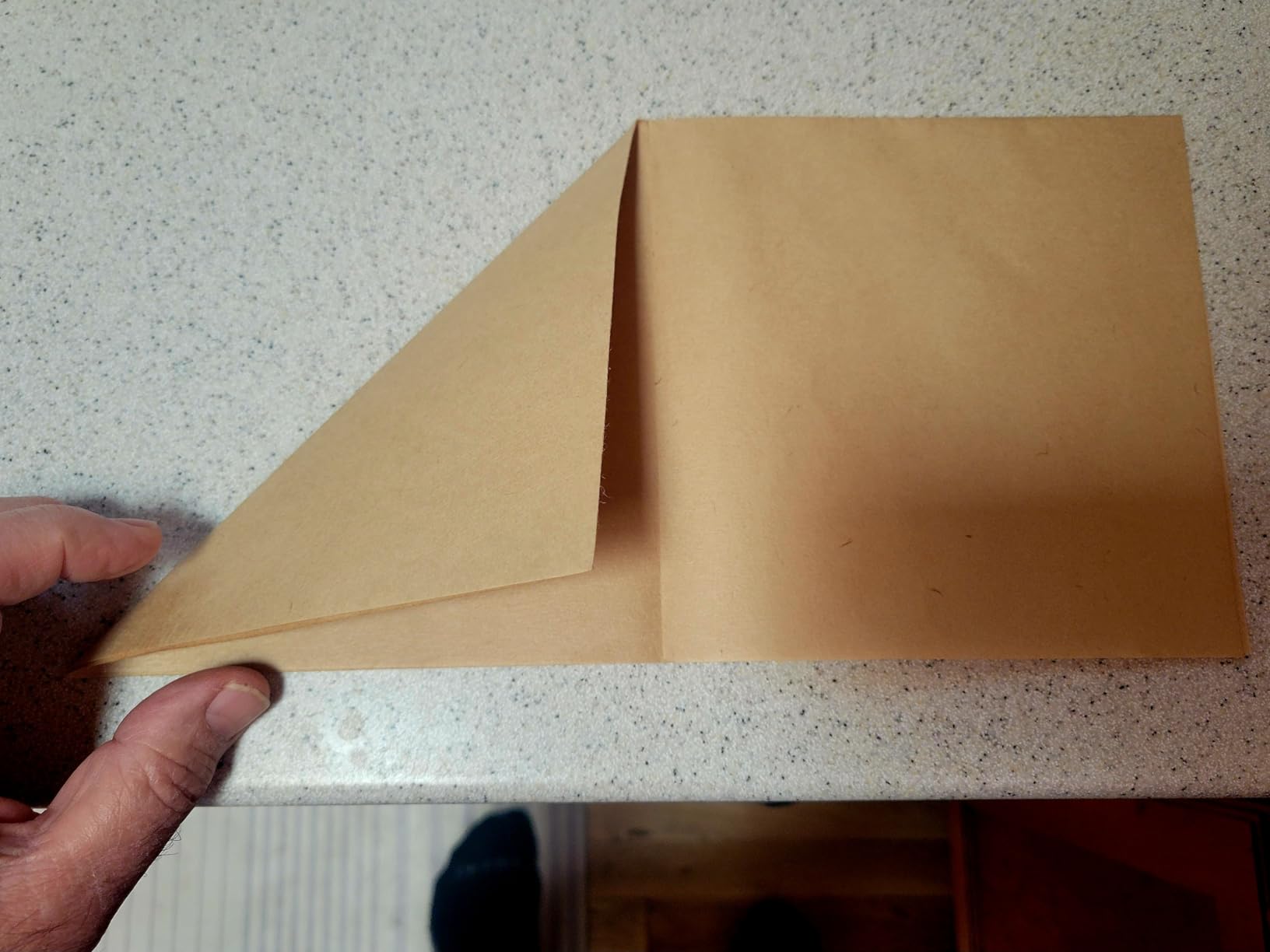
The honest weakness is that it is thinner than the genuine bonded sheet. If you have built a recipe around slow drawdown and thick-paper extraction, a faster flow will move the cup. Re-tune your grind slightly coarser and the result is still very good, but do not expect a drop-in swap without adjustment.
One reviewer returned to branded filters after detecting a bitter aftertaste, and a small minority echo that. Most report no paper flavour and no bitterness at all, which is likely a question of brew time interacting with paper thickness. As with every unbleached filter, rinsing thoroughly before the bloom removes the papery note.
Paper off-brand: what the community actually says
Authenticity is the recurring theme in owner discussions of off-brand Chemex filters, and the practical consensus is more useful than the argument. Genuine OEM bonded filters are trusted far more, but a good thick third-party cone is a workable substitute, particularly for high-volume or non-Chemex cone brewers. The bad outcomes come from thin, unbranded paper, not from unbranded paper as such.
Plenty of long-term daily brewers treat the OEM sheet as the reference and the off-brand as a backup. That is a sensible posture: buy the two-pack of genuine squares if you care about the signature cup, and keep a hundred-count off-brand cone on hand for the other brewers in the kitchen.
Who should buy it and who should skip it
Buy it if you brew large volumes, run a second cone brewer, or simply want a hundred unbleached filters without the premium of branded packaging. It is also the safest way to test whether unbleached paper suits your palate before committing to it.
Skip it if your recipe is precisely tuned to a slow Chemex drawdown, or if you are highly sensitive to bitterness. In both cases the thinner paper works against you and a genuine thick bonded filter is the better investment.
Does It Matter Which Chemex Filter You Use?
Yes, more than on almost any other brewer, because the filter is the defining component. Chemex paper runs roughly 20 to 30 percent thicker than a standard cone filter and is bonded rather than stitched, which is what strips oils and fines and produces the clean, sediment-free cup the brewer is known for. Substitute a thin generic cone or a metal mesh and you change clarity, body and drawdown enough that it is no longer a Chemex brew.
Within that, degree matters less than most people expect. An unbleached square and a bleached square from the same manufacturer will produce cups that are recognisably the same, with unbleached running slightly faster and carrying a faint paper note if you skip the rinse. Shape matters far more than tint, because a square filter in a 3-cup collar simply does not seal.
If you want the short version: buy genuine Chemex bonded filters, match the shape to your brewer size, and rinse unbleached paper before the bloom. Those three decisions account for nearly all of the difference in the cup.
Paper vs Reusable Metal Filters for Chemex
Paper wins for the Chemex specifically, and the reason is structural rather than aesthetic. The thick bonded sheet is the mechanism that produces clarity, sediment-free liquid and the light body the brewer was designed around. A metal filter keeps more oil, passes a little sediment, and brews faster, which is a different cup rather than a better one.
The purist position in enthusiast communities is blunt: if you are using a metal filter in a Chemex, the thick paper was the point, and a French press would have served you better. There is genuine merit in that argument. What it gets right is that metal and paper are not competing filters, they are two different brews.
Metal earns its place on two grounds. A reusable filter eliminates paper waste entirely, which matters to anyone brewing every day, and it produces a fuller, oilier cup with no papery aftertaste that some drinkers actively prefer. The cost arithmetic favours it too, though less decisively than people assume: a 100-count paper pack costs a couple of cents per brew, while the reusable filter costs several paper packs up front and then nothing. Break-even arrives in the low hundreds of brews.
On durability, expect good but not flawless. Long-term owners of both reusable options report years of daily use, yet a small number report cracking at the support ring, and the double-mesh option needs a rinse and a vinegar descale on a schedule to keep flow steady. Paper never has a maintenance failure mode, which is the argument for it that nobody makes often enough.
Our recommendation is to keep both. Paper as the default for anything you care about clarity on, and a reusable metal filter for the mornings when you want something faster, fuller, and one less thing to run out of.
Bleached vs Unbleached Chemex Filters
Unbleached is the better default, provided you rinse it. Oxygen-cleansed or unbleached paper avoids chemical whiteners, breaks down in a home compost pile, and gives you a marginally faster drawdown, but it needs a hot-water rinse before the bloom or the cup picks up a papery note. That is the entire trade, and the rinse is a thirty-second habit.
Bleached paper gives you a marginally slower, marginally thicker flow and no papery risk if you skip preparation entirely. Long-term brewers tend to state a preference for bleached when paired with darker, French roast style roasts, where the extra body suits the roast. Natural paper is the pairing most often recommended for lighter roasts and single origins, where clarity and a clean finish matter more.
The flow difference is real but small, and it is why people who tuned a recipe on one and switch report a change. A coarser grind compensates easily. The taste difference is close to nil for anyone who rinses, and noticeable for anyone who does not, which is why the rinse is the deciding factor rather than the bleach.
If you are torn, buy one hundred of each and run the same coffee through both on consecutive days. That is the only comparison worth trusting, and it costs you two brews.
How to Tell a Genuine Chemex Bonded Filter From an Imitation
Authenticity is the most common concern in owner communities, and it is a fair one. These filters cost very little, so the market is full of look-alikes. Here is what to check, in order of how much it actually tells you.
First, the seam. A genuine bonded filter is glued, not stitched, so look for a continuous bond along the edge and no thread. Second, weight. A genuine 100-count square pack carries a noticeably heavier paper sheet; if a pack feels like ordinary office-weight paper in the hand, it is not the bonded sheet. Third, rigidity. Wet a sheet and hold it over the collar. Real bonded paper holds its cone shape, while thin imitations collapse.
Fourth, the branding. Genuine Chemex packaging carries the manufacturer part number, the GTIN and the UPC, and the manufacturer name reads CHEMEX rather than a marketplace brand. Third-party roasters and cafe supply houses are considered credible filter sources by the community, but the manufacturer part number is the checkable signal. Fifth, brew behaviour. A genuine filter gives you a slow, even drawdown and a clear cup; an imitation typically runs fast and slightly cloudy, which is the practical confirmation.
That last point is the one people skip and the one that matters most. Do not judge a pack from the box. Put a sheet through a brew and watch the drawdown. If it finishes in under two minutes on a 6-cup brewer, the paper is thin, and the cup will tell you so immediately.
Which Filter Shape Fits Which Chemex Brewer
Shape decides fitment, and this is where first-time owners most often get it wrong. Square filters with lift tabs belong in the 6-cup, 8-cup and 10-cup brewers. Circle and half-moon filters belong in the 3-cup brewer. A 3-cup owner buying a square pack is the single most common mismatch we see described in the forums.
For the square brewers, the fold is once across the middle, then again so the corners meet, then open the pocket into a cone. Seat it with three layers on the groove side and use the lift tab so the paper does not touch the glass wall. For the 3-cup brewer, fold the circle twice, open it into a cone, and seat it the same way. The lift tab is what prevents water bypassing the bed down the edge of the collar.
Preparation is three steps and takes about a minute. Rinse the filter thoroughly with hot water to clear the papery note, add one heaping tablespoon per cup as a starting point, and bloom with roughly twice the coffee weight in water for 30 to 45 seconds before the main pour. Our gooseneck kettle roundup covers the pour control that makes a slow drawdown easier to manage.
Two adjacent notes. If your setup is expanding beyond one brewer, our pour over station guide covers the layout side, and water quality moves cup quality more than any filter does, so a countertop water filter is worth considering if your tap water is hard. On the microplastics question, the honest answer is that bonded coffee filter paper is not a significant shedding source compared with the plastic components most people handle daily, and the practical measure remains rinsing the filter rather than discarding the rinse water straight into a sink full of food waste.
Frequently Asked Questions
Does it matter which Chemex filter you use?
What is the difference between the different Chemex filters?
Which Chemex filter is better, bleached or unbleached?
What are the best pour over filters?
Which is better for Chemex, reusable or paper filters?
Are metal coffee filters better than paper filters?
What type of filter is best for Chemex?
Are there microplastics in Chemex filters?
Our Final Verdict on the Best Pour Over Filters for Chemex
For most people, the answer is the genuine Chemex bonded square filter in a hundred-count pack. It fits the 6-cup, 8-cup and 10-cup brewers, it carries the largest review base in this roundup, and it produces the clean, sediment-free cup that made the brewer famous. If you brew daily, step up to the two-pack of 200 and stop thinking about filters for seven months.
If you own a 3-cup brewer, the bonded circle filter is the correct geometry and folds more easily than the square sheets, while the half-moon version is worth considering if you also run another tapered cone brewer. If you want to stop buying paper, the reusable metal options are legitimate, but they brew a fuller, oilier, slightly sedimentier cup, and the trade is deliberate rather than an upgrade.
Rinse unbleached paper before the bloom, match the shape to your brewer, and check the bonded seam rather than the packaging. Those three habits solve nearly every filter complaint we have read in 2026.