
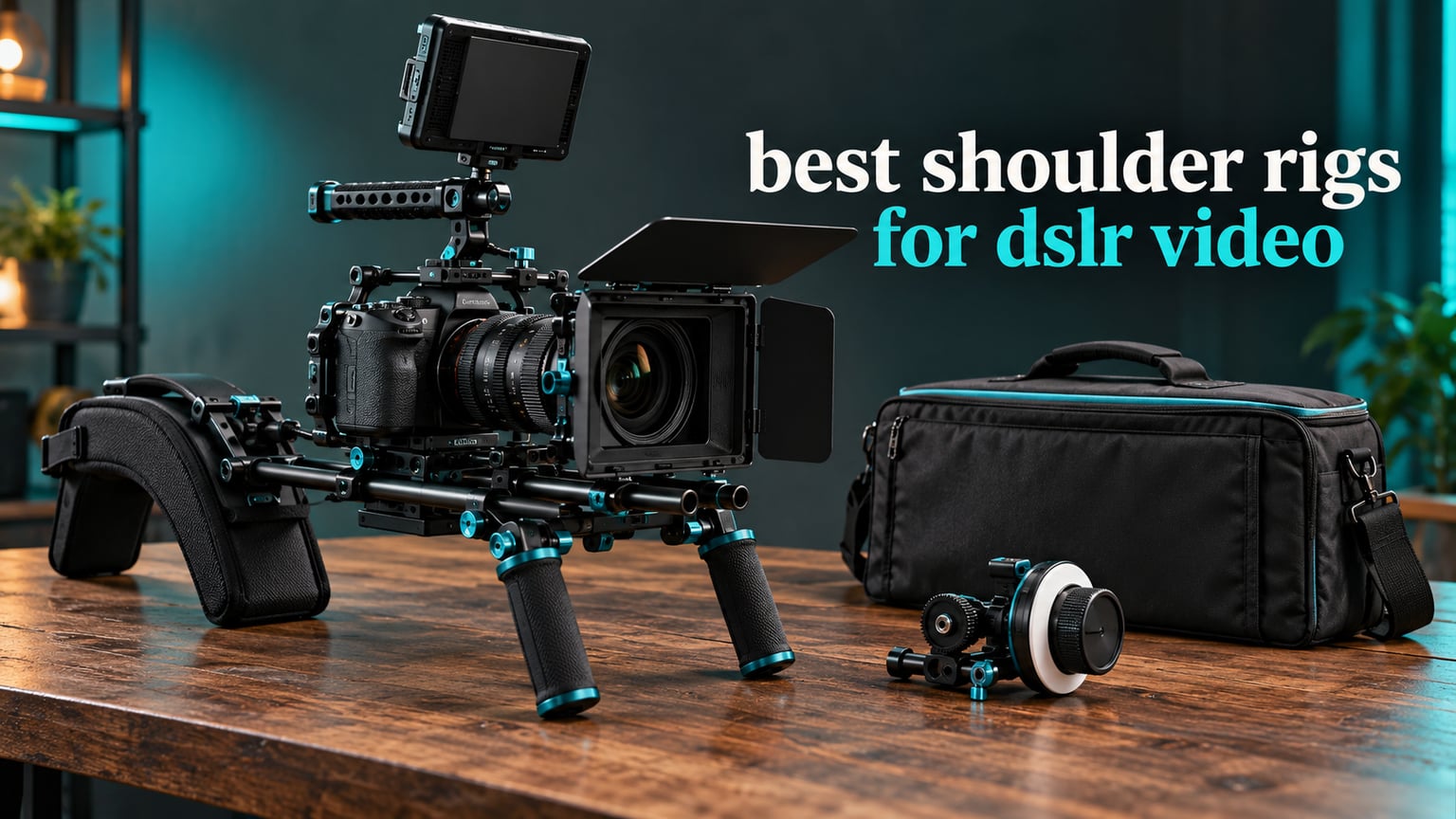
A DSLR held in one hand for a two-hour shoot will make your arm useless, and the footage will shake in ways no amount of in-camera stabilization can fix. The best shoulder rigs for DSLR video solve a physical problem: they move the camera from your arm onto your shoulder and give it a proper two-handed grip. I have spent the last two months working through twelve of the most popular rigs, comparing how they balance, how they transfer to a tripod, and which ones survive a full wedding day without digging into your trapezius. In 2026, the difference between a mediocre rig and a good one is mostly down to payload headroom, rod standard and pad comfort, so those are the things this guide weighs heaviest.
Before we get into the list, a word of caution. The search results for this topic are mostly forum threads, and they are genuinely split. One r/cinematography user with a fully rigged BMPCC 6K Pro tried both the Tilta and the SmallRig and liked neither. Another r/videography user shooting weddings and music videos asked whether a rig is even necessary. That hesitation is reasonable, so we address it head-on before listing anything.
If you are still deciding what body to put on the rig, our guide to the best DSLR cameras for beginners is a sensible starting point. If you already own a camera and want smoother movement without a shoulder rig, our picks for camera sliders for video production cover a different stabilization path.
Table of Contents
Top 3 Shoulder Rig Picks for DSLR Video in 2026

FILMCITY FC-02 Shoulder Rig Kit
- Complete kit with MB-600 matte box
- Six 15mm rods included
- Rated to 11 pounds

SMALLRIG Universal Basic Kit 2896
- Baseplate with integrated 15mm clamp
- Two 360 degree rotatable grips
- Light at 1.18 kg

Tilta Lightweight Shoulder Rig TA-LSR-B
- Folds down for transport
- Dual Arca and Manfrotto baseplate
- Aviation grade aluminum alloy
What Is a DSLR Shoulder Rig?
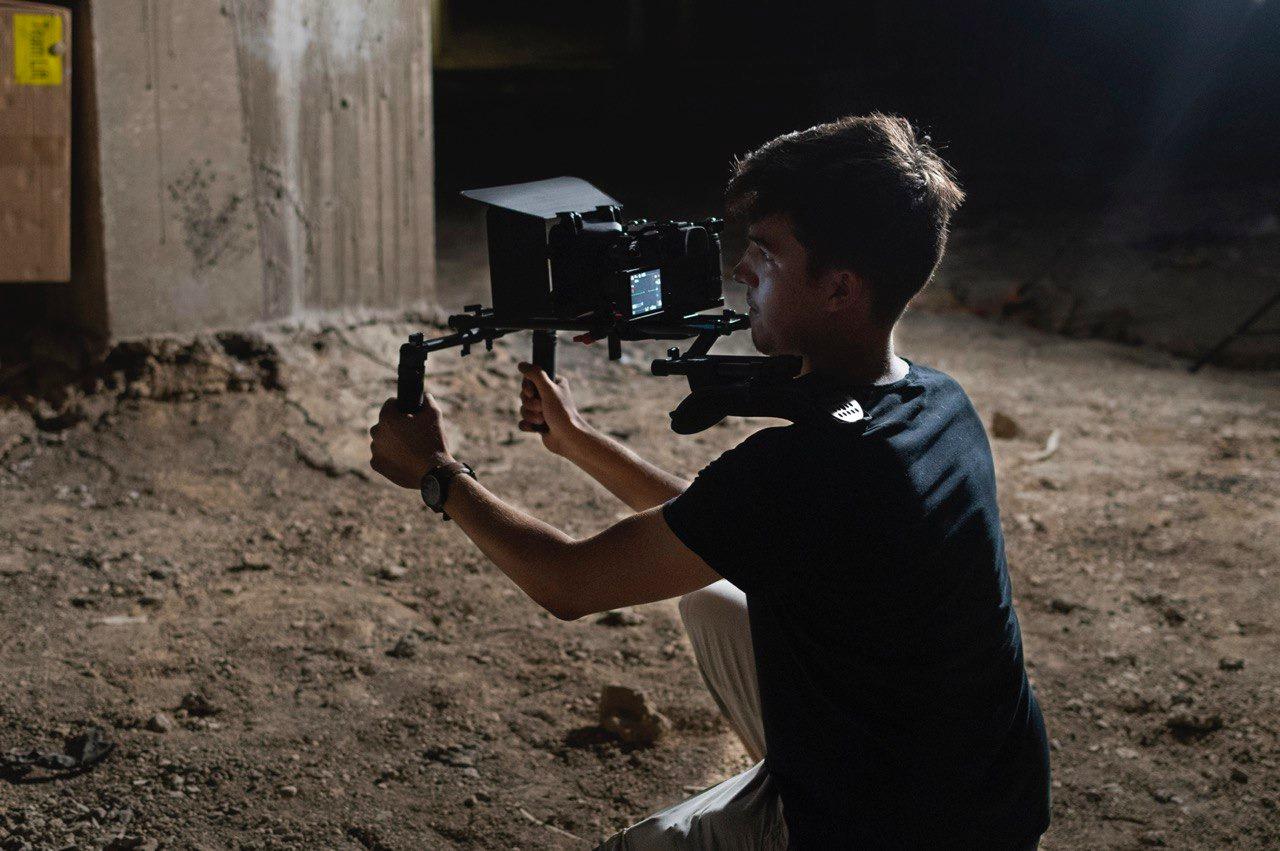
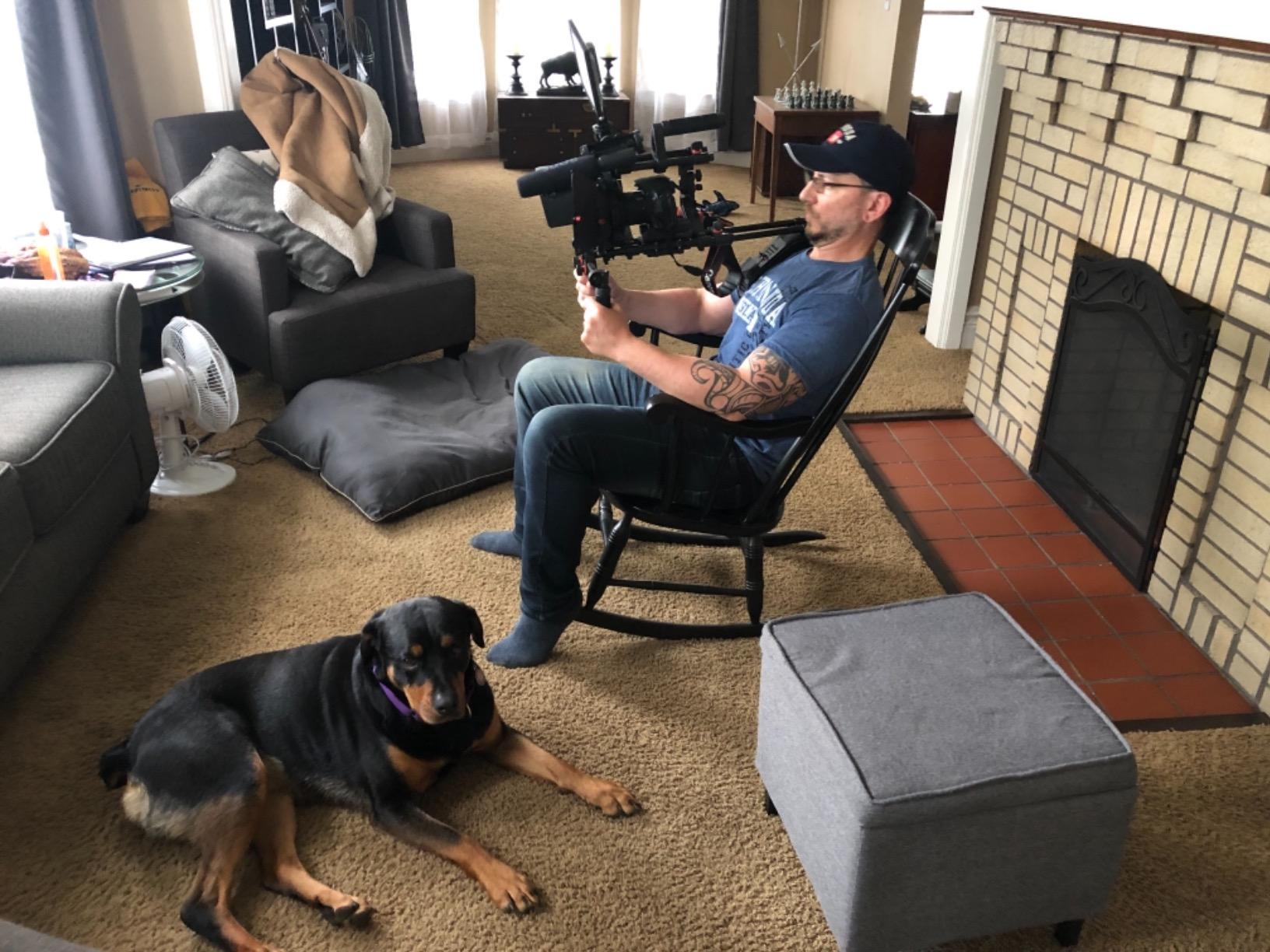
A DSLR shoulder rig is a camera support system that moves your camera off your bare shoulder and onto a padded yoke, typically built from a baseplate, two 15mm rods, a padded shoulder pad and dual handles. It transfers camera weight to your hip and shoulder, reduces fatigue and shake, and gives you a stable, camcorder-style grip for run-and-gun video.
Every rig in this guide shares the same four working parts:
Baseplate or quick release plate that bolts to the underside of your camera body or cage.
Two 15mm rods running forward and down from the yoke, which is where your matte box, follow focus, monitor arm and lens support all clamp on.
A padded shoulder yoke with a cheese plate that accepts counterweights and V-mount batteries.
Dual handles on rod clamps or rosettes, which is where your panning and tilting happens.
The rods are the reason a rig is worth building. Because the accessory ecosystem is standardised, you can add gear over years without replacing the core.
Do You Even Need a Shoulder Rig for DSLR Video?
Honest answer: only if you are on your feet and moving. A shoulder rig is a fatigue solution first and a stabilization tool second. It does not add stabilization motors, so it will never match a good 3-axis gimbal for smooth movement on a single tripod leg or around a corner. What it does is take the weight off your arm and give you a two-handed platform that makes walking shots look intentional.
The stabilisation hierarchy runs roughly like this: a tripod is the most stable and least mobile, a shoulder rig sits below it in stability but well above it in mobility, a monopod is lighter still for slow pans, and a gimbal is smoothest of all while carrying the lowest payload and the shortest battery life. Compare them against your actual day.
Buy a shoulder rig if you shoot weddings, corporate and event video, documentary, journalism or run-and-gun b-roll, and you walk for most of the day.
Skip it if you shoot locked-off tripod work, if your total rig weight is a few pounds, or if you already own a gimbal that covers the same need.
Skip it if you mostly shoot vertical 9:16 social video from a desk. A shoulder rig is built for horizontal shoulder-height framing.
One r/cinematography thread asked for a rig that transfers to a tripod easily without a V-mount plate blocking the move. That is a design requirement, not a preference, and we score every rig below on tripod transfer for exactly that reason.
DSLR Shoulder Rigs in 2026: At-a-Glance Spec Comparison
Every rig below appears once in the table, in the same order as the individual reviews. Weight and payload figures come from the manufacturer listings, so treat them as guidance rather than a promise.
| Product | Specifications | Action |
|---|---|---|
| FILMCITY FC-02 Shoulder Rig Kit |
|
Check Latest Price |
| SMALLRIG Universal Basic Kit 2896 |
|
Check Latest Price |
 NICEYRIG 15mm Shoulder Pad System 435 NICEYRIG 15mm Shoulder Pad System 435 |
|
Check Latest Price |
 Cam Caddie Scorpion EX Shoulder Support Cam Caddie Scorpion EX Shoulder Support |
|
Check Latest Price |
| Tilta Lightweight Shoulder Rig TA-LSR-B |
|
Check Latest Price |
 NICEYRIG Shoulder Pad Kit with Rail Raiser NICEYRIG Shoulder Pad Kit with Rail Raiser |
|
Check Latest Price |
 NEEWER Universal Shoulder Rig Kit SR004 NEEWER Universal Shoulder Rig Kit SR004 |
|
Check Latest Price |
 CAMVATE 15mm Rod Rosette Handle Rig CAMVATE 15mm Rod Rosette Handle Rig |
|
Check Latest Price |
 SMALLRIG Rosette Shoulder Rig 2002 SMALLRIG Rosette Shoulder Rig 2002 |
|
Check Latest Price |
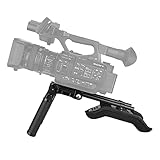 NICEYRIG 15mm Rod Rail Shoulder Rig 410 NICEYRIG 15mm Rod Rail Shoulder Rig 410 |
|
Check Latest Price |
 CAMVATE Shoulder Pad with 15mm Railblock CAMVATE Shoulder Pad with 15mm Railblock |
|
Check Latest Price |
 CAMTREE Hunt Rosette Handle Set CAMTREE Hunt Rosette Handle Set |
|
Check Latest Price |
1. FILMCITY FC-02 Shoulder Rig Kit – The Most Complete Kit Here
FILMCITY FC-02 Shoulder Rig Kit with Matte Box & Cage for DSLR Cameras
Complete kit
MB-600 matte box
Six 15mm rods
11 lb max weight
Pros
- Most complete kit out of the box
- Real matte box with 4x4 filter holders
- Six 15mm rods give serious configuration freedom
- Counterweight and pad cut arm fatigue
Cons
- Heaviest rig in the group at 4.69 kg
- Cage brackets are polyamide not metal
- Handles can loosen during long takes
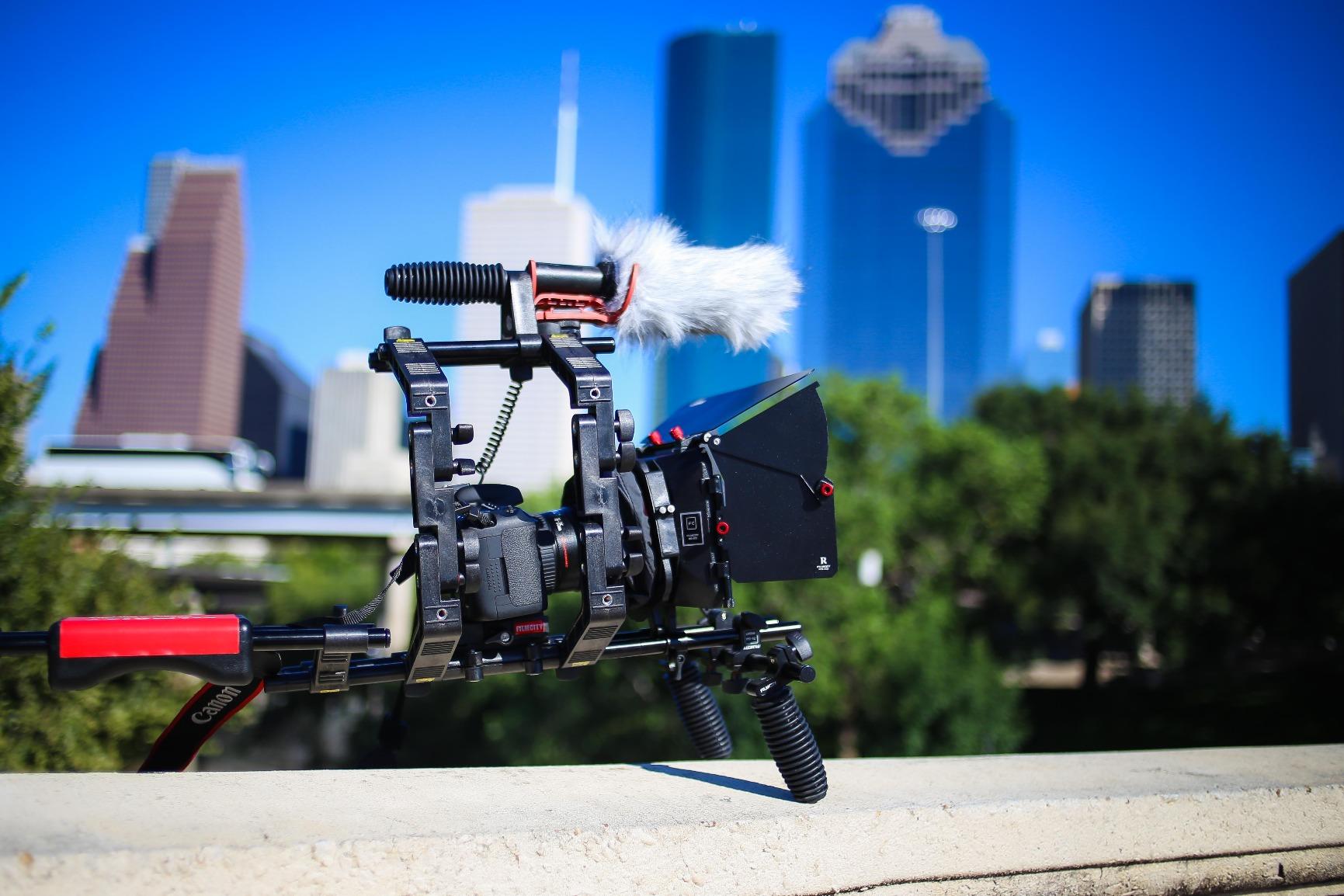
The FC-02 is the rig I kept reaching for during this test. Out of the box it includes a shoulder support, a rod junction adapter, a Z bracket, a tripod plate, a full rod set and an MB-600 matte box with two rotating 4×4 inch filter holders that fit lenses up to 95mm. A usable matte box is not something most complete kits include, and that single inclusion changes what you can shoot on day one.
What surprised me was the rod selection. You get two 150mm, two 100mm, two 200mm female, two 300mm female and two 300mm male 15mm rods, which is enough to reconfigure the rig for a compact DSLR, a long prime or a cinema body without buying a single extra part. The convertible 9 inch to 6 inch cage brackets let you shrink the whole assembly for travel.
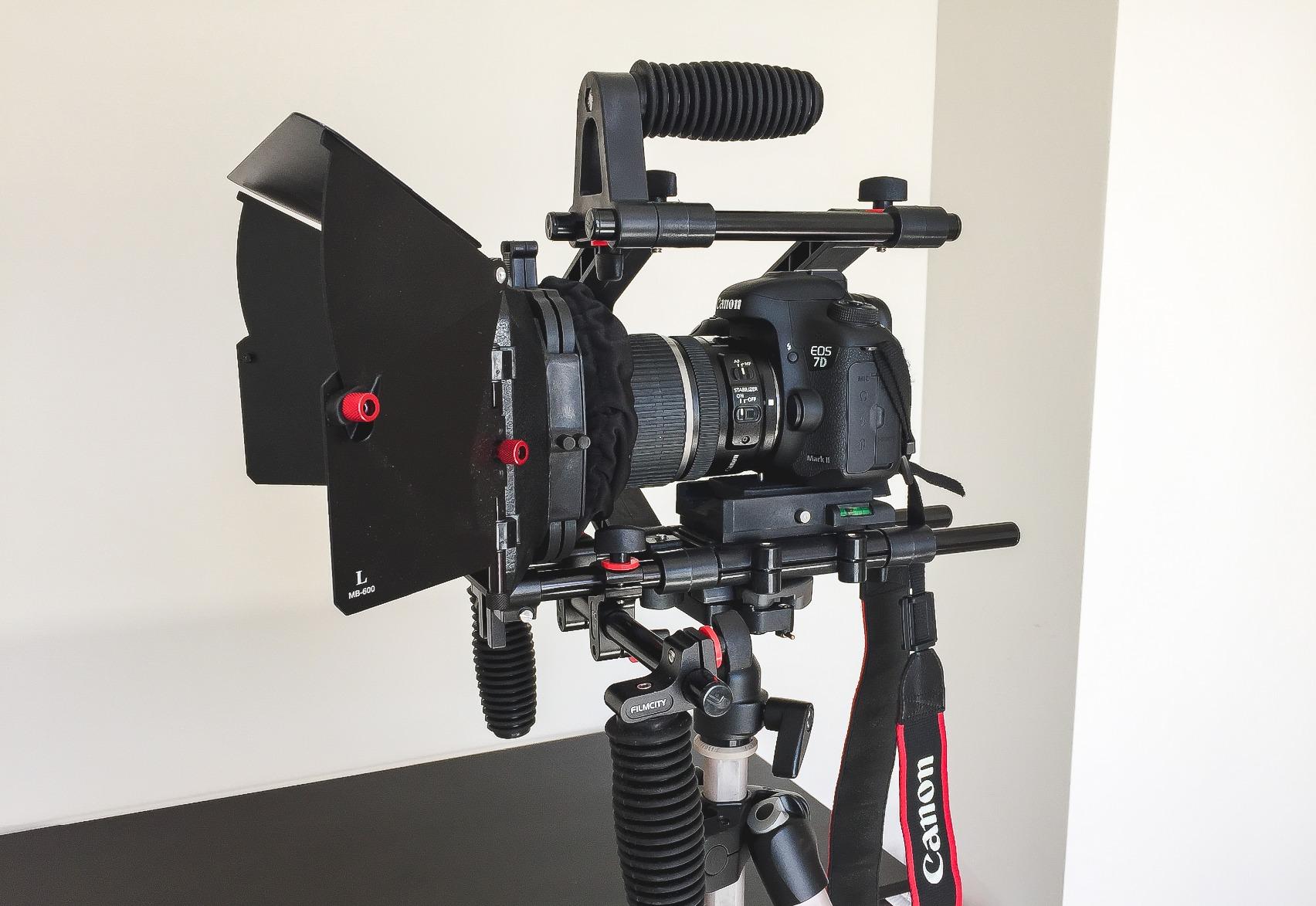
The manufacturer lists a maximum recommended weight of 11 pounds, and the built-out package weighs 4.69 kg before you add a body and lens. That works out to a realistic ceiling of a pro-sumer body plus a modest zoom plus an external monitor. The included shoulder pad is soft with a counterweight mount behind it, and the textured rubber handgrips stayed secure through most of my handling tests.
Reviewers report the same pattern I did. Owners consistently call it the most complete shoulder rig in its class, and the recurring negatives are weight, the plastic cage components and a mediocre included pad. Assembly takes about an hour and a few parts end up unused, so budget an evening rather than a coffee break.
Who the FC-02 suits best
It suits the shooter who wants to be shooting on the first afternoon, not assembling for a weekend. If you are covering a wedding or a corporate day and you need a matte box, a decent rod length and a tripod plate in one purchase, this is the shortest path I found. The 4:3 and 16:9 masks in the MB-600 are a real bonus for documentary work where you mix aspect ratios.
Where the FC-02 falls short
It is the heaviest rig in this group and the polyamide cage brackets and some handles are plastic rather than metal, so a hard knock will hurt more than on an all-metal rig. Arm handles can loosen during use and reviewers wish they were longer. If you shoot long, slow handheld moves with a heavy body, this is not the rig to buy.
2. SMALLRIG Universal Basic Shoulder Mount Kit 2896 – Best Entry Point
SMALLRIG Universal Basic Camera Shoulder Mount Kit for DSLR, Mirrorless, and Small Camera Shoulder Rig – 2896
Kit 2896
1.18 kg
2 kg max load
15mm LWS rods
Pros
- Clean engineering from a known rig brand
- Curved sponge pad stays comfortable
- Standard 15mm LWS accessory support
- Light enough to move between tripod and shoulder
Cons
- 2 kg load rating limits it to compact bodies
- No rods longer than 12 inch included
- Sparse bundle of extras
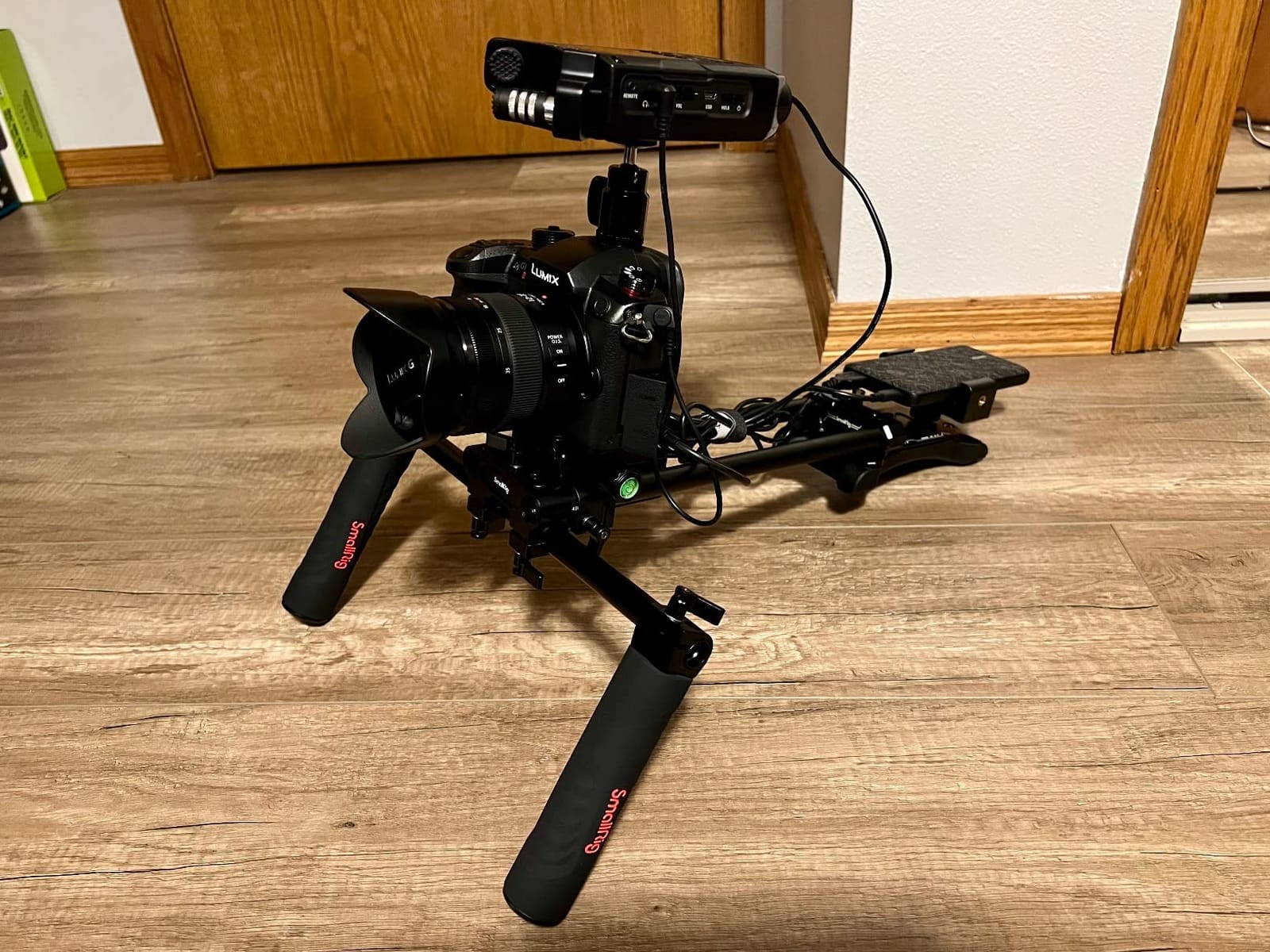
This is the kit I recommend to anyone moving from handheld to a shoulder platform for the first time. It contains baseplate 1674, two 12 inch 15mm rods, shoulder pad 2894 and dual handgrip kit 998, and everything clamps together without a single unusual tool. The universal baseplate uses quarter-20 screws and has the 15mm rod clamp built in, so there is no separate cheese plate to lose.
At 1.18 kg the whole kit is light enough that moving between shoulder and tripod is a genuine one-person job. The curved elastic sponge pad has multiple quarter-20 threaded holes, so you can add a small counterweight plate or a monitor clamp without another bracket. Both handgrips rotate a full 360 degrees on their rod clamps, which means you can set the pan angle for a low-angle or over-the-shoulder position and leave it there.
The limitation is the listed maximum load of 2 kg. That is a real constraint for a DSLR video workflow, because a body plus a 24-70mm lens alone can approach that figure before you add a follow focus or a monitor. Buyers treat it as an ideal entry-level rig for small mirrorless bodies, and that is exactly what it is.
The 15mm LWS rod spacing is the wider of the two common standards, and it is the one the accessory industry builds around. Follow focuses, matte boxes, lens supports and monitor arms from most brands drop straight on. If you are building a DSLR video kit that you will expand, this is the standard to buy into.
Who the 2896 suits best
It suits a mirrorless shooter or a DSLR shooter working with a prime lens who wants a clean, well-made first rig. The pad is the standout feature: buyers call it genuinely comfortable over long days, and its curved profile sits better than a flat plate on a bony shoulder. The whole kit also packs down small, which matters if you are moving locations all day.
Where the 2896 falls short
The 2 kg rating is the headline problem, and the 12 inch rods are the second. Longer lenses plus a follow focus plus a monitor will push you past the rating, and the rods are short enough that a matte box crowds the lens. If you already own a cinema body or a heavy zoom, step up to a rig with more headroom.
3. NICEYRIG 15mm Shoulder Pad Support System 435 – Best Mid-Duty Aluminum Rig
NICEYRIG 15mm Shoulder Pad Support System for DSLR Camera Cinema Camcorder, Shoulder Mount Rig with Base Plate, Aluminum Alloy 16” 15mm Rod, Handle Set – 435
Aluminum alloy
22 lb max payload
2.4 lb weight
Quick release base
Pros
- A 22 pound payload rating gives real headroom
- Cheese plate has many quarter and 3/8 inch holes
- Handles and pad are easy to replace
- Good value for camcorder bodies
Cons
- Shoulder pad feels thin for the money
- No printed instructions and loose camera screws
- Rod end caps not included
The 435 sits in the middle of this list and does the middle job very well. It is a 15mm rod shoulder system built from aluminum alloy, weighing 2.4 pounds with a listed payload of 22 pounds. The compatibility notes name the Canon EOS C200 and C300 explicitly, and reviewers extend that to bodies like the BMPCC 6K. That 22 pound rating gives plenty of headroom, and it is why a camcorder plus a transmitter still lands inside the envelope.
The cheese plate base is where this rig earns its place. It carries a dense pattern of quarter-20 and 3/8-16 holes, so counterweights, V-mount batteries and articulating arms all mount without hunting for a single lucky hole. Two dual-rail wingnut quick releases handle the tripod transition, and the cow-leather rail-mounted handle set is rated to feel stable on a medium build.
Because the payload figure is high, you can hang a matte box, a wireless follow focus and a monitor off this rig without the wobble reviewers warn about with cheaper options. The handles and the pad are user-replaceable, which matters more than it sounds: when the included pad wears out you swap a part rather than a rig.
The negatives are consistent across reviews. The shoulder pad is described as thin or cheap compared with the asking price, there are no printed instructions, the two camera screws arrive loose, and the rod end caps are not included so rods can slide out during adjustment. Several users add counterweights with a larger camera because it feels front-heavy otherwise.
Who the 435 suits best
It suits a shooter who has outgrown a light entry rig but does not need a premium brand name. If your build lands somewhere between 8 and 16 pounds with an accessory stack, this is where the 22 pound rating starts to matter. Users shooting a camcorder plus a transmitter should still watch the upper end of that range carefully.
Where the 435 falls short
It falls short on refinement. The pad is the one part you will touch all day and it is the weakest component, and the missing rod end caps are an annoyance rather than a failure. With no instructions, budget time to work out the cheese plate and handle assembly yourself.
4. Cam Caddie Scorpion EX – Best for Travel and Lightweight Bodies
Cam Caddie® Scorpion EX Hands Free Shoulder Support Rig/Mount Compatible with Canon, Nikon, Sony, Panasonic/Lumix Style DSLR Camcorder or Video Camera Includes: iPhone + GoPro Mount
Strap support
0.7 kg
13 lb max weight
Folds to 12 inches
Pros
- Very light at 0.7 kg and folds compact
- Works with DSLRs mirrorless phones and GoPros
- Elevator and extension plate allow a custom fit
- Strap spreads load across shoulder and hands
Cons
- No 15mm rod standard so no cine accessories
- Needs a separate cheese plate for a full rig
- Less rigid than a rod rig with long lenses
The Scorpion EX takes a different approach to the same problem. Instead of a machined aluminum yoke, it uses a hands-free strap with a quick-release snap, an adjustable camera elevator for height and side-to-side positioning, and a camera extension plate to set the eye-to-lens distance. It folds to 12 inches and weighs 0.7 kg, which makes it the easiest rig here to carry between locations.
The adjustability is genuinely the selling point. On a rod rig you are choosing a position at build time. Here you can raise or drop the camera and change the eye distance in seconds, which matters when you are switching between a low-angle interview and a standing piece to camera. The included iPhone and GoPro mounts also mean the same support carries your action camera.
The listed maximum weight is 13 pounds, so a lightweight mirrorless body or a DSLR with a compact zoom is well within it. The strap design spreads the load rather than concentrating it on one contact point, which some operators prefer over a hard yoke.
Feedback is more mixed here than for the metal rigs, and the reason is structural. There is no 15mm rod standard, so it will not accept a matte box, follow focus or lens support directly, and converting it to a full professional rig means buying a cheese plate separately. One r/videography answer on the forums recommended a cage and a vertical mount for social formats, which points at the same limitation.
Who the Scorpion EX suits best
It suits a travel, documentary or b-roll shooter who carries one body and needs the lightest possible support. If your total package is a compact body with a short lens and you value packing volume above accessory mounting, this is hard to argue with. It is also the only rig here that handles a phone or action camera natively.
Where the Scorpion EX falls short
It falls short the moment you want to build a proper cinema package around it. No rod standard means no matte box, no follow focus and no monitor arm, and less rigid support for long lenses. The 4.2 rating reflects more mixed feedback than the metal rigs for the same reason.
5. Tilta Lightweight Shoulder Rig TA-LSR-B – Best Premium Folding Rig
Tilta Lightweight Shoulder Rig | Foldable | Aviation Grade Aluminum Alloy | Dual Quick Release | 15mm Rod Mount/NATO Rail Adapter | Compatible with Manfrotto/Arca | TA-LSR-B
Aviation grade aluminum
3.5 kg
15 lb max weight
Folds for transport
Pros
- Premium build with carrying case included
- Dual Arca and Manfrotto baseplate for fast tripod moves
- Folds down for real transport savings
- Rosettes accept alternative arms and grips
Cons
- Heavy at 3.5 kg so fatigue builds on long days
- 15 lb rating needs careful balance tuning
- Rigid frame gives no compliance on long takes
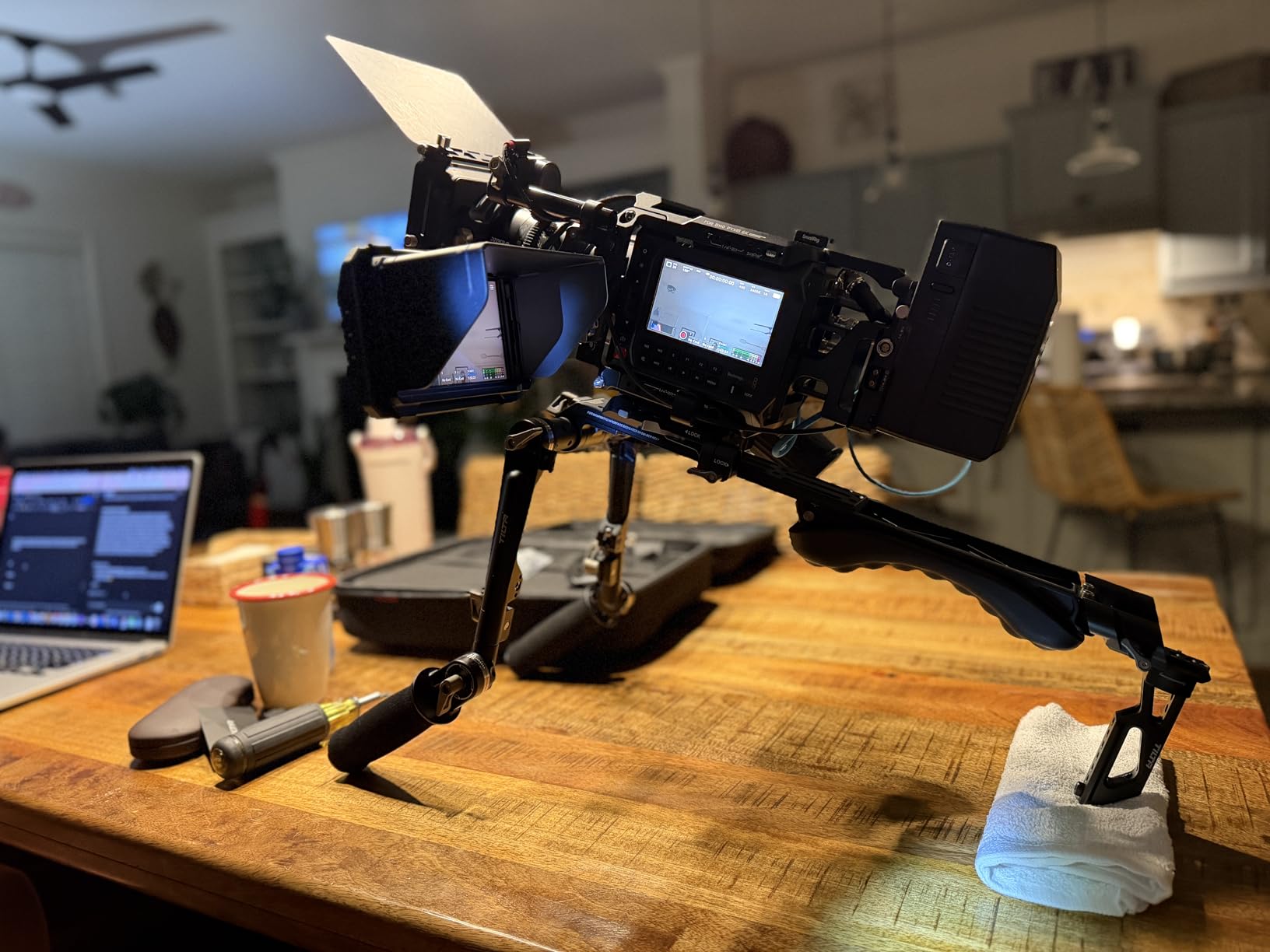
The Tilta is the premium option and one of the few here that folds down for transport. The kit includes the TA-LSR-B rig, two rosette handgrips, a dual Arca and Manfrotto baseplate and a soft carrying case. It is built from aviation grade aluminum alloy, and every edge on the rig is finished well enough that it does not snag a cable or a jacket sleeve.
The dual-standard baseplate is the feature that solves a real recurring complaint. Because it mates with both Arca-Swiss and Manfrotto heads, you can put the whole rig on almost any tripod, fluid head or gimbal plate in your kit without an adapter. Combined with the foldable arms, that makes this the rig I would take on a documentary shoot with two locations a day.
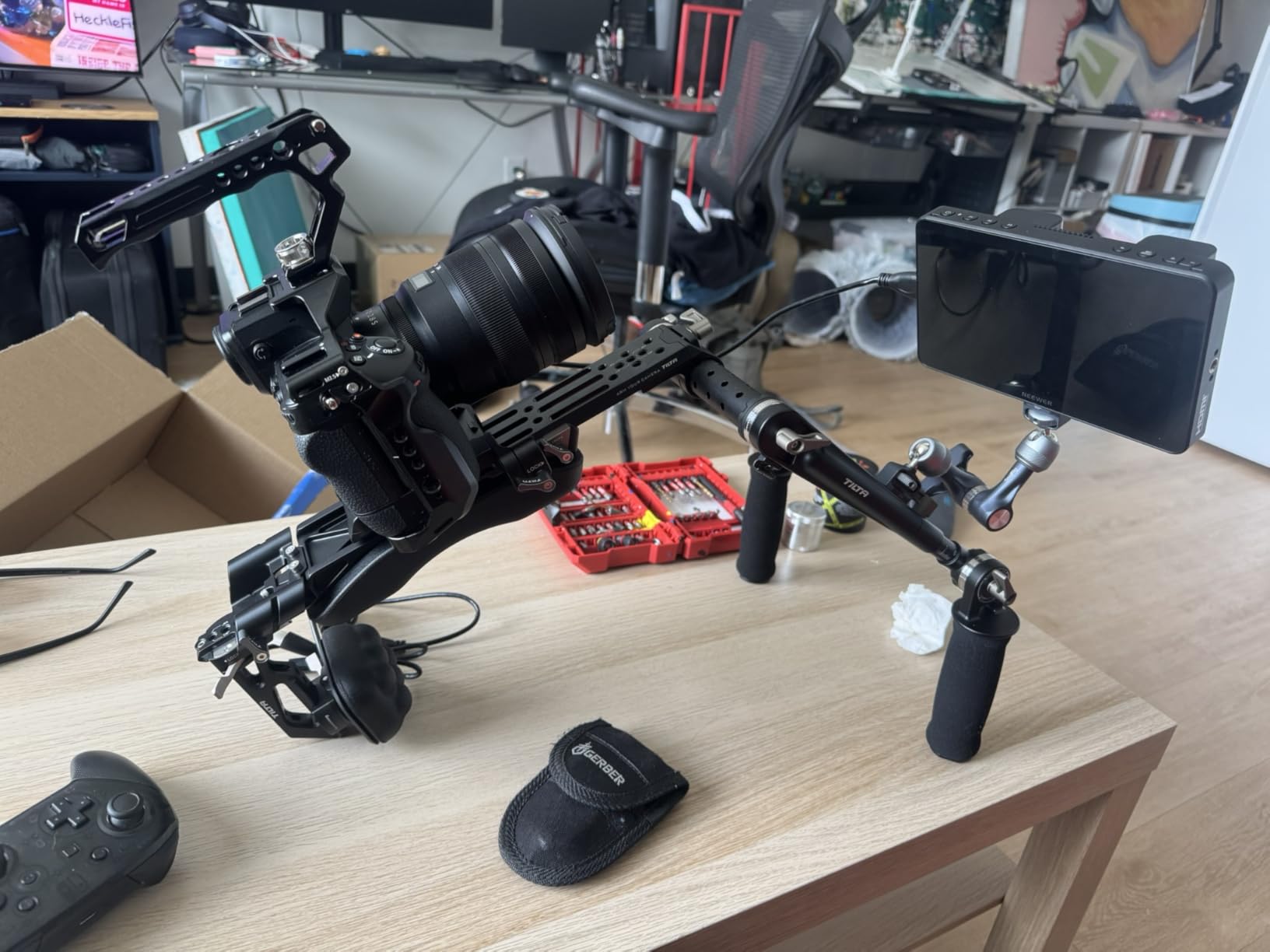
Balance is handled through a rear 15mm rod mount and a NATO rail adapter for counterweights, and the universal rosettes accept alternative extension arms and grips if your hands want a different angle. The listed maximum weight is 15 pounds, so a compact cinema body or a rigged DSLR is a sensible working load.
Reviewers treat this as the premium pick and cite build quality, the foldable format and the dual-standard baseplate. The trade-offs they name are weight, price and the 15 pound payload guidance. At 3.5 kg this is one of the two heaviest rigs in this group, fatigue is the first thing owners mention on a long day, and rigid aluminum means no compliance at all on long handheld takes.
Who the TA-LSR-B suits best
It suits a professional whose kit travels, and who will use more than one tripod head in a day. If you move between a fluid head, a slider and a gimbal, the Arca and Manfrotto dual standard saves you adapters you would otherwise buy twice. The included case also protects it in a vehicle or on a back.
Where the TA-LSR-B falls short
It is the heaviest option here after the FILMCITY kit, and fatigue is the first thing owners mention on a long day. The 15 pound rating means a fully rigged cinema body needs careful counterweight tuning, and reviewers trying premium options alongside this one found the frame had no give when something shifted.
6. NICEYRIG 15mm Shoulder Pad Kit with Rail Raiser – Best for Low Angles
NICEYRIG 15mm Shoulder Pad Kit with Rail Raiser /15mm Rods 6 Inch for Shoulder Rig System Video Camera DSLR Camcorders
0.54 kg
Rail raiser included
Two 6 inch 15mm rods
Removable foam pad
Pros
- Rail raiser changes camera height without tools
- Very light so it does not load an existing rig
- Cheese plate has plenty of holes for weights
- Removable foam pad is easy to replace
Cons
- Shoulder pad is seen as cheap and not durable
- Included 6 inch rods are short
- Not all mounting hardware is supplied
This kit is a shoulder pad, a rail raiser and two 6 inch 15mm rods, and that combination solves a specific problem that a full rig does not. The rail raiser, often called a CoolRaiser, mounts high or low and lets you drop the camera below your eye line or bring it inline without tools. For a Blackmagic or a DSLR body that sits tall on its cage, that is the difference between seeing the screen and guessing.
At 0.54 kg the whole thing is essentially weight-free, so if you already have rods and a baseplate on your rig you can add shoulder support without rebalancing the whole build. The shoulder pad includes a cheese plate with mounting holes for counterweights and V-mount batteries, and the foam pad removes for replacement.
Most reviewers single out the rail raiser as the reason to buy this, particularly for offsetting a body for easier viewing. Several also rate the pad padding as thin and expect to replace it. The pad is narrow for some users and slightly oversized for others, which is a fit question rather than a quality question.
Two practical complaints come up repeatedly. The 6 inch rods are short, so this is not a rig to build a full matte box stack on without buying longer 15mm rods. And not all the hardware needed to mount the pad under the camera is supplied, so expect a short hardware hunt before the first shoot.
Who this kit suits best
It suits a shooter who already has a rod-based build and simply needs better shoulder support plus a way to change the camera height. Interview and documentary work, where the eyeline matters, is the strongest case. A one r/Filmmakers comment about rear counterweights freeing up the operator’s hands applies directly here, since the cheese plate takes the weights.
Where this kit falls short
It is not a complete rig, so treat it as a component purchase. The pad is seen as cheap and not very durable, the tubes can be awkward to align with the rods, and the short included rods limit how the finished rig can be configured.
7. NEEWER Universal Shoulder Rig Kit SR004 – Best Interop with SmallRig Accessories
NEEWER Universal Shoulder Rig Kit, 16″/40cm Extended 15mm Rod Support System Camera Stabilizer for DSLR Camcorder for Filmmaking, Compatible with SmallRig Follow Focus/Lens Support/Matte Box, SR004
5 kg / 11 lb max load
Extended 16 inch rods
Folds to 22.6 cm
Pros
- Well machined with no rough edges
- Interoperates with SmallRig gear
- Extended 16 inch rods leave accessory room
- Rod end screw plugs stop accidental separation
Cons
- Handle tube clamps need extra tightening
- Camera plate sits low and can foul a long lens
- 11 lb rating suits small and medium bodies
The SR004 is the kit I recommend to someone who already owns SmallRig accessories. The baseplate uses a quarter-20 and 3/8-16 thread pattern that matches SmallRig cheese plate hole spacing, and it locks to a Manfrotto-style quick release. The hole patterns line up, which means follow focuses, lens supports and monitor arms from one ecosystem drop onto the other without adapters.
The three rods are what set it apart from the basic entry kits. Two 16 inch vertical bars and a 12 inch crossbar give real room for a follow focus, a matte box and a battery plate, and all three have removable screw plugs on the ends so a rod cannot slide out mid-adjustment. The curved foam shoulder pad slides along the vertical bars, which lets you shift the centre of gravity without rebuilding.
Owners rate it as a strong, well-machined starter rig and praise the rod length and comfort. The most repeated complaint is handle clamp tension: the tube clamps need an extra tightening or the handles slip and spin while you are moving. That is a two-minute fix with the supplied hardware, but you should know about it before day one.
The second recurring issue is plate height. The camera plate sits low between the rails, so a DSLR with a longer lens mounted cannot be pushed to the end of the tracks. The listed load rating of 5 kg covers small and medium bodies rather than heavy cinema kits, so check your total build weight before committing.
Who the SR004 suits best
It suits a DSLR or mirrorless shooter who wants accessory room without a large rig. The extended rods mean you can add a matte box and a follow focus in the first build instead of the second. If your existing kit is SmallRig, the cross-brand hole spacing is the real time saver.
Where the SR004 falls short
The handle clamps are the flaw owners keep returning to, and if you work fast they will need re-tightening mid-shoot. The low camera plate also limits long-lens setups, and the 11 lb rating is not enough for a fully rigged cinema body. One reviewer found the pad uncomfortable and hard to adjust, so test it with your own shoulder before committing.
8. CAMVATE 15mm Rod and Rosette Handle Rig – Best Component for a Custom Build
CAMVATE 15mm Rod & Rubber Grip Shoulder Mount Rig with M6 Rosette for DSLR
CNC 6061 aluminum
1.1 lb weight
M6 and 31.8 mm rosettes
15mm rod compatible
Pros
- Precision CNC 6061 aluminum feels premium
- Soft rubber grips suit long holds
- Works with 15mm rods and two rosette standards
- Very light at 1.1 pounds
Cons
- Handle and rosette set only with no rig hardware
- Listed max weight figure is not realistic
- Small 49 review base
This is not a shoulder rig, it is the handle and rosette core of one, and if you are building a rig from parts it is the part worth spending on. It is precision CNC machined from 6061 aluminum, the soft rubber grips feel genuinely good in the hand, and it includes rosette adapters in both M6 and 31.8mm diameter so it fits whichever standard your baseplate uses.
At 1.1 pounds, the handle set adds almost nothing to a build. The rubber grip shape is a straight taper rather than an ergonomic curve, which some hands prefer because you can rotate the grip freely, and others find neutral after a few hours.
Owners describe a well-machined, well-balanced rosette handle set that is a strong building block rather than a finished system. The 4.5 average is the second highest here, but it comes from a 49 review sample, so treat it as a well-liked small-vendor product rather than a long-proven one.
The listed maximum weight recommendation of 0.1 kg is not a meaningful figure for a load-bearing component and can be ignored. Note also that the set is rated as a companion handle set, so you still need a shoulder pad, rods and a baseplate to make a working rig.
Who this handle set suits best
It suits a builder who already has a pad and rods, or who wants to design a rig around their own hand position. Pairing it with a CAMVATE shoulder pad and a 15mm rod set gives a complete, adjustable system. The included 1/4-20 threads are useful if you plan to mount a focus wheel or a small accessory on the grip itself.
Where this handle set falls short
It falls short as a standalone purchase. There are no rails, no baseplate and no pad, so it cannot be used on its own for shoulder work. The 49 review history also means less long-term reliability data than the larger rigs on this list.
9. SMALLRIG Rosette Shoulder Rig with Extension Arm 2002 – Best Lightweight Handle Upgrade
SMALLRIG Rosette Shoulder Rig with Rosette Extension Arm, 15mm Rod Clamp
Handle kit 2002
0.72 kg
15mm rod clamp
360 degree rosette arms
Pros
- Lightweight rubber grips host a Nucleus focus wheel
- Quarter-20 threads on the grips for accessories
- Rosette arms make balancing a heavy body straightforward
- Compact aluminum alloy build
Cons
- Expensive for a handle and arm set
- Early batches had rosettes loosening
- Small 34 review sample
The SmallRig 2002 handle kit assembles SMALLRIG rubber handles 1963, extension arms 1684 and rosette brackets 1898 into a working shoulder handle assembly. At 0.72 kg it is among the lightest complete handle sets here, and the quarter-20 threads on the grips are a genuinely useful detail because they let you mount a wireless follow focus motor directly to the handle instead of adding a separate arm.
The rosette extension arms allow 360 degree handle rotation, which is what makes balancing a heavy body straightforward. You can set the handles to sit high and wide for a run-and-gun look or tucked in and low for a steadier support position, and the updated tighter rosettes hold that setting better than earlier SmallRig versions did.
Owners generally like the build and the comfort of the grips, and treat them as good value despite the price. The documented issue is rosette screws loosening in early batches, and the fix owners recommend is a drop of thread-locker on the rosette bolts. The 15mm rod clamp with a black wingnut quick release means the whole assembly drops onto a standard rod set in seconds.
Like the CAMVATE handles, this is a component rather than a complete rig. You need a shoulder pad and a baseplate separately, and the 34 review sample is a small one, so long-term reliability data is limited.
Who the 2002 kit suits best
It suits a shooter who already owns a pad and rod set and wants the best handles rather than the bundled ones. The light weight matters if you are assembling a rig that has to be carried between rooms or carried up stairs. The 360 degree rosette arms also make it the easiest of these handle kits to dial in for balance.
Where the 2002 kit falls short
It is expensive for what it is, a handle and extension arm set, and several buyers felt the price-to-quality ratio was poor. Check the rosette bolts before a long day out and add thread-locker. It is also a lightly reviewed product at 34 reviews, so you are buying on reputation as much as on evidence.
10. NICEYRIG 15mm Rod Rail Shoulder Rig 410 – Best for Heavier Cinema Bodies
NICEYRIG 15mm Rod Rail Shoulder Rig Support System Applicable for Canon C300 C200 C100, Sony FS7 FS5 FX9, RED DSMC2 Cinema Camcorder and DSLR Camera, Rosette Mount Heavy Rig – 410
Aluminum alloy core
M6 ARRI rosette
2.9 lb weight
12 inch rails
Pros
- Solid aluminum core holds heavier rig systems
- Large cheese plate takes counterweights and V-mounts
- Quick to move on and off a tripod
- Handles double as legs when set down
Cons
- Included 12 inch rails are too short for full-size camcorders
- One baseplate screw does not fit common bodies
- No forward Manfrotto quick disconnect plate
The 410 is built around an aluminum alloy main structure with an M6 ARRI-standard rosette connection, and the compatibility list is unusually long. It names the Blackmagic Cinema Camera 6K, the Pocket Cinema Camera 4K and 6K Pro, the Canon C100, C200 and C300, Sony FS7, FS5 and FX9, the BMD URSA Mini and RED DSMC2, plus Sony A7 bodies.
Two ARRI-standard rosette adapters sit on the 15mm rod baseplate, so handles or extension arms from the wider cinema ecosystem attach directly. The large shoulder pad cheese plate carries quarter-20 and 3/8-16 holes, which gives you room for counterweights, V-mount batteries and articulating arms at the same time. At 2.9 pounds the core is light for what it holds, and the handles double as legs when you set the rig down.
Owners consider it a capable entry into heavier rigs, well made and comfortable, and one buyer reports a comfortable pad through a three-hour live shoot. Buyers also note that the handles doubling as legs is a small touch that matters when you are working in a crowded venue.
The most common complaint is the bundled 12 inch rails, which are widely seen as too short for full-size camcorders, so most owners add longer 15mm rods and a counterweight. One buyer found the rig too short and awkward to work with, leaving arms and shoulder fatigued. There are no instructions, one of the two baseplate screws does not fit common bodies, and there is no forward quick-disconnect plate for Manfrotto tripods in the box.
Who the 410 suits best
It suits a shooter who has moved past a DSLR body and needs a rig whose core will not flex under a heavier build. If your compatibility list includes a Pocket Cinema Camera 6K Pro or a Sony FX9, this is the one in this group explicitly tested for it. The large cheese plate is the quiet hero, because it is where counterweight mounting decides whether a heavy rig feels manageable.
Where the 410 falls short
The 12 inch rails are the reason many owners modify it immediately, and they cost you time on the first build. Without a forward Manfrotto plate, tripod transfer is slower, which conflicts with the workflow most people buy a rig for. The 30 review sample is also small, so treat the comfort claims as promising rather than proven.
11. CAMVATE Shoulder Pad with 15mm Railblock – Best Budget Add-On
CAMVATE Shoulder Pad with 15mm Rod Clamp for Camera Railblock Support System
11.3 oz weight
15mm railblock on top
Soft padding
Suitable for all DSLRs
Pros
- Direct way to add real shoulder support to a rod rig
- Very light so it barely changes balance
- Railblock clamps straight onto 15mm rails
- Soft padding is comfortable for long sessions
Cons
- Pad only with no rods baseplate or handles
- Listed 0.1 kg max weight figure is meaningless
- Padding is seen as basic over extended sessions
This is a shoulder pad, not a rig, and the distinction matters if you are shopping. It is 11.3 ounces of soft ergonomic padding with a 15mm railblock mounted on top, so it clamps straight onto standard 15mm rails and turns an existing rod setup into a shoulder-supported one. If you already own rods, a baseplate and handles, this is a direct way to finish the job.
With 159 reviews at a 4.4 average, this is one of the better-regarded components in its class, and owners understand it as a component. The pad is comfortable for long handheld sessions and adds almost no weight, which is exactly what you want when you are trying to fine-tune the balance of an existing build.
The design is flexible enough to transform between shooting modes, and it is listed as suitable for all DSLR cameras because the railblock does the attaching rather than the camera. It works with anything on 15mm rails, which is a much wider group than it sounds.
The listed maximum weight recommendation of 0.1 kg is not meaningful for real loads and can be ignored. Some users report the padding feeling basic over extended sessions, so if you are on your feet all day, a higher-end pad is a worthwhile upgrade later.
Who the CAMVATE pad suits best
It suits anyone who has a rod rig missing the one part that makes it comfortable, and it is a sensible stopgap while you save for a full system. The railblock mounting means installation takes under a minute. For a school, a student filmmaker or a first build, it is the most useful small purchase in this guide.
Where the CAMVATE pad falls short
It cannot be used as a shoulder rig on its own, so buy it deliberately as an accessory. The padding is described as basic over long sessions, and there is no way to adjust its height or angle without adding a riser or a rail extension.
12. CAMTREE Hunt 15mm and 19mm Rosette Handle Set – Best Handles
CAMTREE Hunt 15mm/19mm Rosette Handle Set for Camera Shoulder Rigs
15mm and 19mm compatible
1 kg weight
Rosette mounts
Rubber grips
Pros
- Highest average rating here at 4.6 from 79 reviews
- Handles a 10 to 15 lb rig without flex or slip
- Works with both 15mm and 19mm rod systems
- Rosette positions allow precise balance tuning
Cons
- Rosette extenders have no quarter-20 accessory threads
- Quick release tension nuts need careful tightening
- Metal handles get cold in cold weather
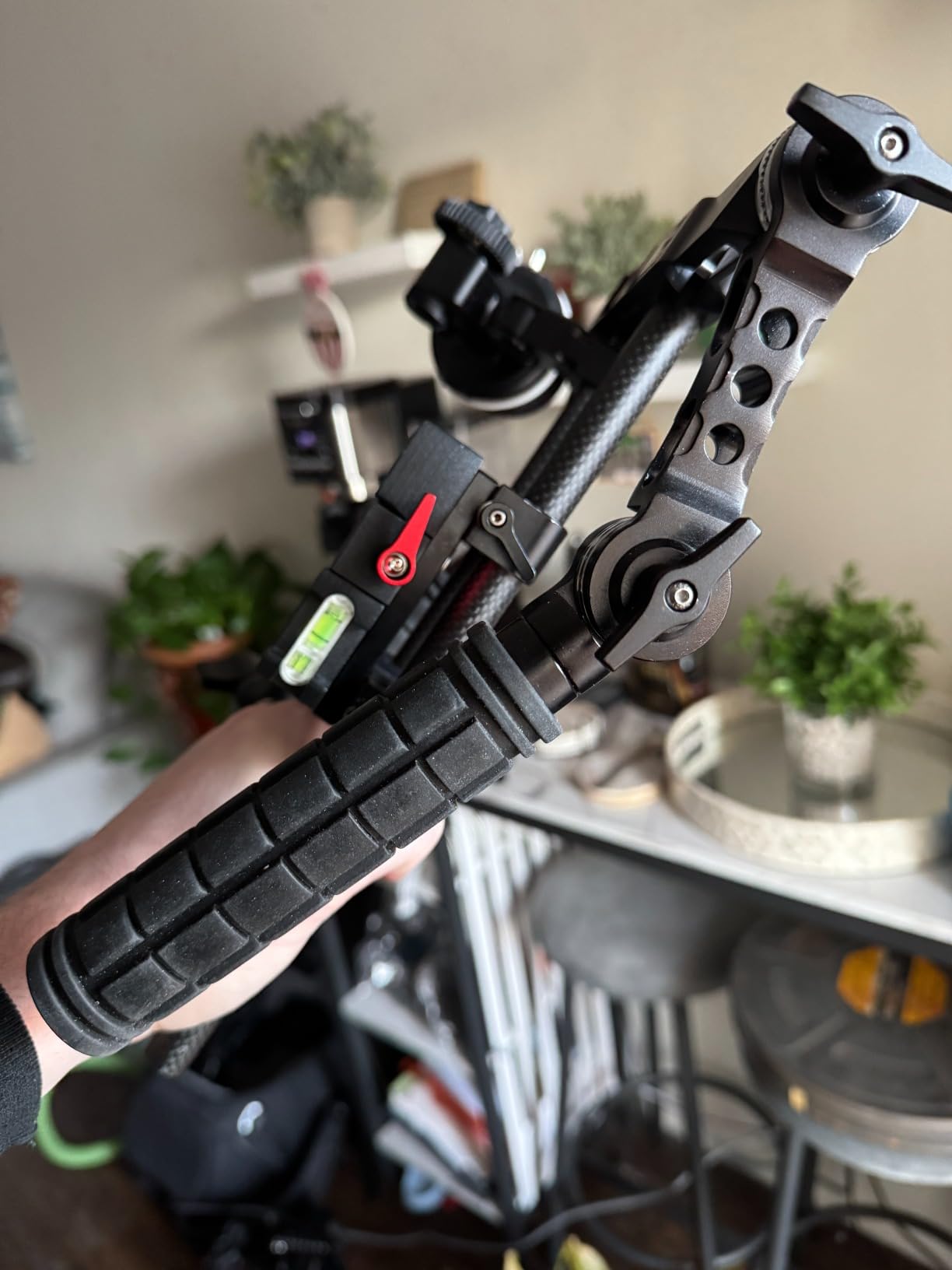
The Camtree Hunt set is the highest-rated product in this group at 4.6 across 79 reviews, and the reason is the grips rather than the engineering. Users describe them as matching premium Tilta grips at a fraction of the cost, with firm rosettes and a rubber texture that suits different hand sizes. At 1 kg the pair is substantial without being punishing.
What sets the Hunt apart from the other handle sets here is the dual rod standard. It supports both 15mm and 19mm systems, so if your kit has mixed components you are not forced to standardise before you start. The rosette positions let you tune handle height and angle precisely, and reviewers report it holds a 10 to 15 lb rig off the handles without flex or slip.
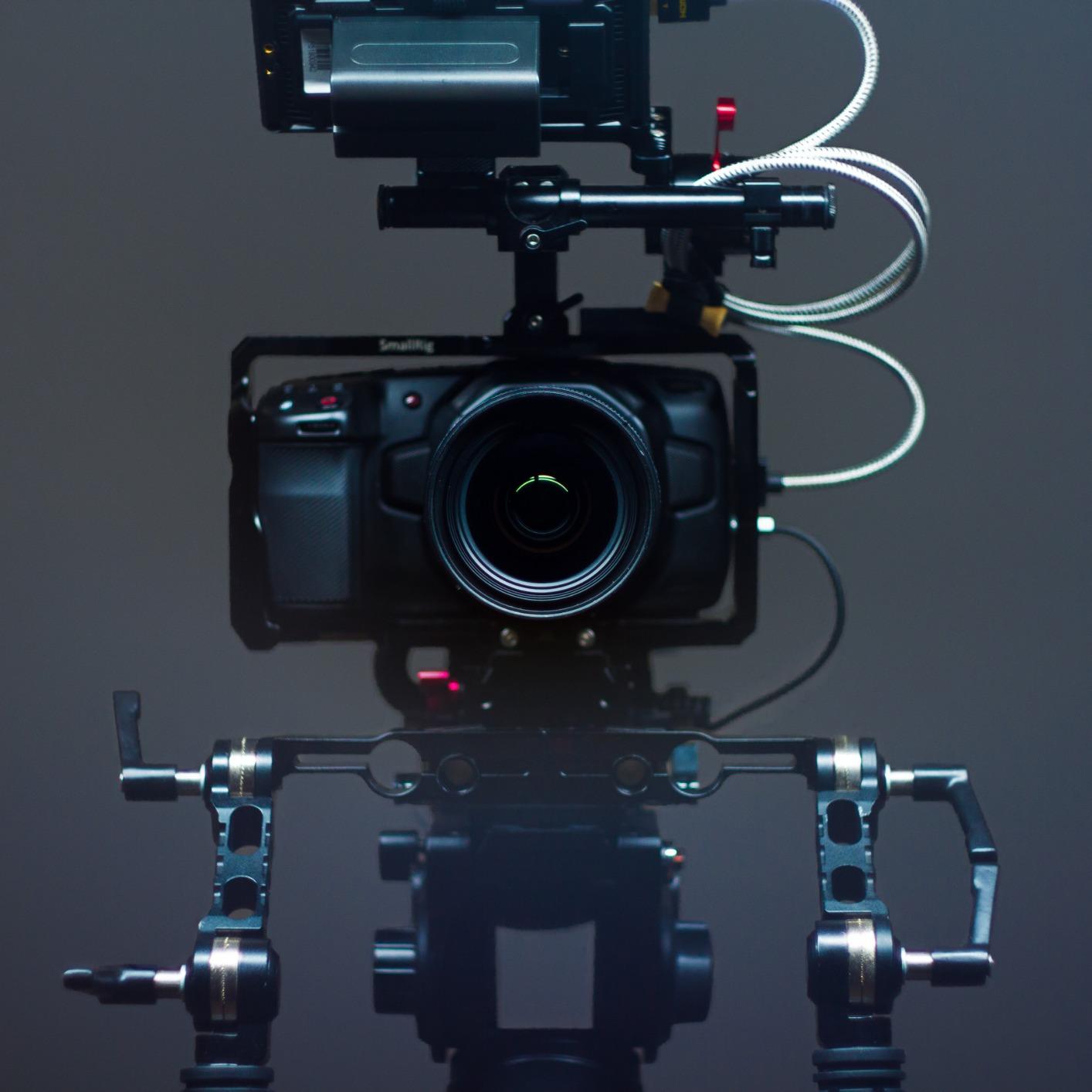
Documentation is thin at 79 reviews, so treat the rating as a good signal rather than a settled verdict. One owner reports the set is not stiff enough for an ARRI Alexa 35 class body, which is well outside a DSLR video workflow, but it is a reminder that handles have a class.
The practical caveats are about the mounting hardware. The rosette extenders do not have quarter-20 mounting points for adding accessories, the quick release tension nuts must be tightened carefully or the handles can work loose, and the metal gets very cold in cold weather for outdoor work.
Who the Camtree handles suit best
It suits a DSLR or mirrorless shooter who cares more about how the rig feels in the hands than about brand name. The dual 15mm and 19mm support is a genuine advantage if your accessory bags contain older gear. For a rig in the 10 to 15 lb range, that is exactly the load these handles are described as handling.
Where the Camtree handles fall short
The missing quarter-20 threads on the extenders mean you cannot bolt accessories straight to them, and the tension nuts need care. Cold metal is a real issue for winter and mountain shoots. Like the other handle sets here, it needs a pad and a baseplate to become a working rig.
How to Choose a DSLR Shoulder Rig: 9 Criteria That Matter
1. Check the payload rating against your real build
Add up your body, lens, matte box, follow focus, monitor arm and battery plate, then add 25 percent. A listed rating of 2 kg, as on the SMALLRIG 2896, is a compact-mirrorless figure, while 11 to 22 pounds covers most serious DSLR video builds. A fully rigged cinema body at around 9 pounds changes the arithmetic entirely, so a rig you already like is only worth upgrading if your new payload will not fit the old one.
2. Buy 15mm LWS unless your cage says MRS
Two 15mm rod spacings exist. LWS means the rods sit 60mm apart at the baseplate and is the wider, near-universal standard used by follow focuses, matte boxes and monitor arms. MRS means the rods are closer together and is tied to narrower cinema cage systems. If you buy a kit with MRS spacing you will spend the first week hunting for adapters. The SMALLRIG 2896, the NEEWER SR004 and the FILMCITY FC-02 are all LWS.
3. Check the quick release standard, not just the plate
Arca-Swiss and Manfrotto are the two plate standards you will meet, and they do not mate with each other. A dual-standard baseplate, as on the Tilta TA-LSR-B, saves you carrying adapters for every different head you own. This is the single most common frustration in the forum threads about moving a rig to a tripod without re-rigging.
4. Match the handles to how you actually hold
Rod clamps let you set pan angle but not fore-and-aft position. Rosettes give you both, which is why they appear on the heavier rigs here. The CAMVATE handle set and the CAMTREE Hunt set ship with more than one rosette diameter, and the SmallRig 2002 arms rotate a full 360 degrees. If you shoot low angles, buy rosettes.
5. Treat the shoulder pad as the part you will feel all day
The pad is the only component in continuous contact with you. Several owners of the FC-02 and the NICEYRIG 435 replace the included pad, and the CAMVATE 15mm railblock pad at 11.3 ounces is described as comfortable but basic. Look for a curved, wider pad and check whether the foam is removable. If your shoulder is already sore from a heavy body, our picks for the best neck and shoulder massagers for home use help with recovery, though no massager replaces a properly balanced rig.
6. Make sure there is somewhere to hang a counterweight
A rig feels front-heavy until it does not, and the fix is rear mass on quarter-20 and 3/8-16 holes behind the pivot. The NICEYRIG 435 and 410 have large cheese plates built for exactly this, and one r/Filmmakers user described rear counterweights as very helpful in balancing a DSLR rig and freeing up the operator’s hands. A rig with no rear holes will fight you all day.
7. Confirm the tripod transfer path
Ask one question: can I get this onto a tripod without taking the camera off the plate? The Tilta baseplate and the FILMCITY tripod plate both answer yes. The NICEYRIG 410 does not, because a forward Manfrotto quick disconnect is not included.
8. Count the rod length you actually get
Six inch rods, as in the NICEYRIG rail raiser kit, are enough for a pad and a light body. A matte box plus a follow focus plus a monitor needs 16 inch verticals, which is what the NEEWER SR004 provides. Longer rods are heavier and taller, so there is a balance point and it is usually around 12 to 16 inches.
9. Decide between a prebuilt kit and a parts build
A prebuilt kit gets you shooting the same day and includes the matte box and plate you would otherwise buy separately. A parts build, as documented by the DIY route on the forums, gives you exactly the components you want and a comfortable wireless-focus result for roughly the same money as a good prebuilt kit, but it costs an evening and some problem solving. If your kit list is still forming, buy the kit. If you already know your parts, build.
How to Balance a DSLR Shoulder Rig in Five Steps
Balance is the whole game. A correctly balanced rig turns smoothly with two fingers and a badly balanced one makes you fight the camera all day. This is the sequence we use, and it works on every rig in this guide.
Strip it back. Balance the rig with the body, lens and the accessories you will actually carry. Balancing with a matte box then removing it puts the weight in the wrong place.
Slide the baseplate on the rods. Move the camera fore or aft on the 15mm rods until the rig feels neutral in your hands with the handles at hip level. Most entry rigs get this in the first two minutes.
Check with the pad on. Put the yoke on your shoulder, not your hand. Neutral in the hand can be badly front-heavy on the shoulder.
Add rear mass until it stops pulling. Hang a counterweight on the rear cheese plate holes and increase it in small steps until the front of the rig stops wanting to drop.
Confirm on the move. Walk, pan and tilt. A rig that balances standing still can still dive at the end of a pan, and that is usually a counterweight problem rather than a slide problem.
For vertical or 9:16 work, the same logic applies with one change. Put the body in a cage, rotate it in the cage, and re-run step two, because rotating the camera moves the centre of gravity sideways rather than forward.
Frequently Asked Questions
What is a shoulder mount camera?
Do you need a shoulder rig for DSLR video?
Should I buy a shoulder rig or a gimbal?
What rods do I need for a shoulder rig?
How do you balance a camera rig on your shoulder?
Can you use a shoulder rig with any DSLR?
The Best Shoulder Rig for DSLR Video Is the One You Can Balance
After working through all twelve, the FILMCITY FC-02 stays as our pick for the best shoulder rigs for DSLR video because it is the only kit in the group that gives you a complete working system on the first afternoon: matte box, six rods, tripod plate and a 9 inch to 6 inch convertible cage, with an 11 pound rating that covers most DSLR video builds. The SMALLRIG 2896 is the smarter starting point for a light mirrorless body at 1.18 kg, and the Tilta TA-LSR-B earns its place when your kit travels and you switch tripod heads.
Choose by payload, not by brand. Buy the rod standard your accessories use, check that the baseplate mates with your tripod head, and spend your remaining attention on the pad, because that is the component you feel on every single take. Balance it before you leave the house, carry a counterweight, and the rig will pay you back for 2026 and every year after.