
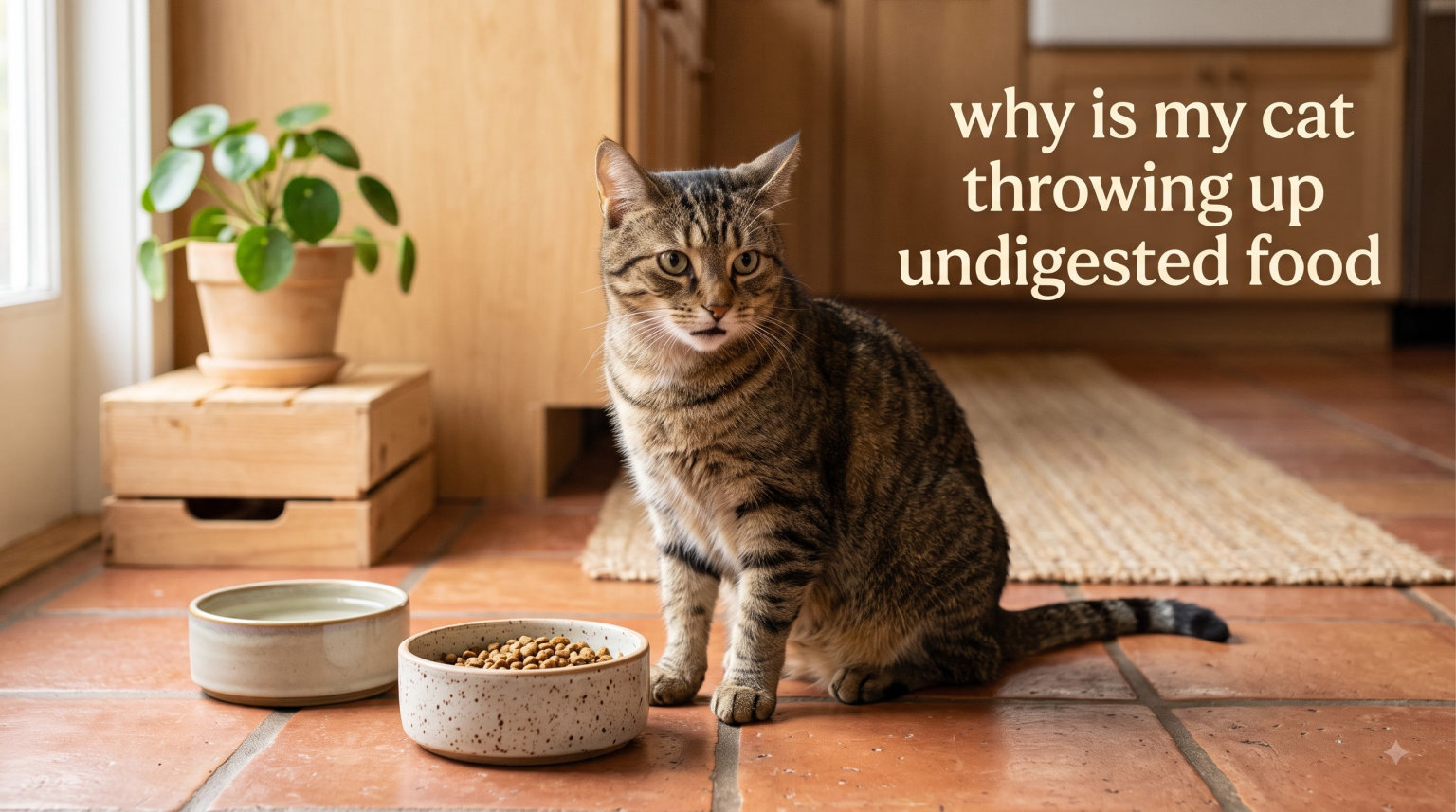
If you have ever watched your cat scarf down dinner only to hear that unmistakable gagging sound a few minutes later, you are not alone. Cat throwing up undigested food is one of the most common concerns cat owners bring to our inbox, and it covers a wide spectrum of situations from totally harmless to genuinely urgent.
Our team has talked with dozens of cat owners and read through current veterinary resources to put together this complete guide. We will walk you through what undigested vomit actually means, the most common causes, how to tell vomiting apart from regurgitation, what different vomit appearances can tell you, and most importantly, when to call your vet.
By the end, you will have a clear plan for figuring out whether your cat needs a small change at home or an urgent trip to the clinic.
Table of Contents
What It Means When a Cat Throws Up Undigested Food
When a cat vomits undigested food, it means the food was expelled from the stomach before stomach acid and digestive enzymes had a chance to break it down. You will usually see whole or nearly whole pieces of kibble, or recognizable chunks of wet food, sitting in a small puddle of liquid.
This happens because the cat’s stomach rejected the food before normal digestion began. In healthy cats, food moves from the mouth to the stomach, then into the small intestine within about 8 to 12 hours. If something interrupts this early stage, the food comes back up looking much like it did going down.
The reassuring news is that a single episode of undigested vomit is often nothing to worry about. Cats have a sensitive gag reflex and a relatively short digestive tract compared to dogs or humans. The concerning news is that repeated vomiting can point to an underlying problem that needs medical attention.
So the question becomes: is your cat having an isolated incident, or is this part of a pattern? Let us help you figure that out.
Vomiting vs Regurgitation in Cats
Before diving into causes, we need to clear up one of the most common points of confusion for cat owners: the difference between vomiting and regurgitation. They look similar, but they have very different causes and treatments.
Vomiting is an active process. You will see your cat’s abdomen contract and heave. There is usually warning noise, drooling, and obvious distress. The food comes up with force, often mixed with bile or stomach acid, and typically happens minutes to hours after eating.
Regurgitation is passive. The food comes up without any abdominal effort, almost like it simply fell out of the esophagus on the way down. It usually happens within seconds to minutes of eating, and the food looks completely undigested and is often tube-shaped because it never reached the stomach.
The distinction matters because regurgitation often points to esophageal problems like megaesophagus or strictures, while vomiting points to stomach or intestinal issues. If you are not sure which you are seeing, try to grab a quick video the next time it happens. Your vet will thank you.
Common Causes of a Cat Throwing Up Undigested Food
Now to the heart of the matter. Here are the most common reasons cats throw up undigested food, ranked from most to least frequent based on what veterinarians see in practice.
Eating Too Fast (The Classic “Scarf and Barf”)
The number one cause by far is what cat communities affectionately call “scarf and barf.” This is when a cat eats too quickly and the stomach rejects the overload before digestion can start.
You will recognize this because the vomit appears within minutes of eating, looks like whole food, and your cat goes right back to acting normal. It is especially common in multi-cat households where one cat feels pressure to eat before a housemate steals the food. Food-motivated cats, rescues who lived through food scarcity, and kittens are also prone to it.
The good news is that scarf and barf is not dangerous in itself. The bad news is that chronic fast eating can lead to other issues like bloating and aspiration if food goes down the wrong pipe.
Hairballs
Cats are meticulous groomers, which means they swallow a lot of hair. Most of that hair passes through the digestive tract without issue, but sometimes it accumulates in the stomach and forms a hairball that the cat needs to expel.
When a hairball comes up, it often brings undigested food with it. You will typically see tubular clumps of hair mixed with or wrapped around food. Long-haired breeds like Persians, Maine Coons, and Ragdolls are especially prone. Cats that groom excessively due to stress or skin allergies are also at higher risk.
Occasional hairballs are normal. If your cat is producing them more than once or twice a month, it is worth bringing up with your vet.
Food Allergies and Sensitivities
Food allergies and intolerances are a common but underdiagnosed cause of repeated vomiting. The most frequent triggers are proteins like chicken, beef, fish, and dairy, although some cats react to grains or additives.
Unlike humans, food allergies in cats often show up as digestive symptoms like vomiting and diarrhea rather than skin reactions. If your cat vomits regularly but otherwise seems healthy, a food sensitivity could be the culprit. Your vet may suggest an elimination diet using a novel protein or hydrolyzed protein formula for 8 to 12 weeks to identify the trigger.
Inflammatory Bowel Disease (IBD)
IBD is one of the most common chronic conditions in middle-aged and senior cats. It involves inflammation of the gastrointestinal tract that interferes with normal digestion and motility.
Cats with IBD often vomit periodically, sometimes with undigested food and sometimes with bile. They may also have diarrhea, weight loss, and a dull coat. The condition is manageable but not curable, usually with a combination of diet changes and anti-inflammatory medication.
If your cat has been vomiting on and off for weeks or months, IBD should be on your vet’s radar.
Hyperthyroidism in Senior Cats
Hyperthyroidism is extremely common in cats over 10 years old. The thyroid gland becomes overactive and speeds up the cat’s metabolism, which often causes increased appetite paired with weight loss.
Vomiting is a frequent symptom because the digestive system cannot keep up with the accelerated metabolism. If your senior cat is eating well but losing weight and occasionally throwing up undigested food, ask your vet to check T4 thyroid levels. Treatment options include medication, prescription diet, radioactive iodine therapy, or surgery.
Other Medical Causes Worth Knowing About
Several other conditions can cause a cat to throw up undigested food, and they are worth mentioning so you know when to push for more diagnostics.
Pancreatitis causes inflammation of the pancreas and often leads to vomiting, lethargy, and loss of appetite. Kidney disease is common in older cats and can produce vomiting as toxins build up in the bloodstream. Diabetes, especially if unregulated, can cause vomiting along with increased thirst and weight loss. Intestinal obstruction from a foreign object like string, a toy, or a hairball is a true emergency. Megaesophagus, a condition where the esophagus cannot move food properly into the stomach, leads to chronic regurgitation that looks like vomiting.
Any of these conditions requires veterinary diagnosis through bloodwork, imaging, or other tests.
What Different Vomit Appearances Can Tell You
Looking at what comes up is not glamorous, but it can give you and your vet valuable information. Here is a quick reference guide.
Clear liquid usually means the stomach is empty and your cat is bringing up saliva and gastric juices. It often happens when a cat goes too long between meals.
Yellow vomit is bile. Seeing bile means food has already moved out of the stomach and the small intestine is refluxing into the stomach. Occasional bile vomiting can be normal, but frequent bile vomiting may point to IBD or food sensitivity.
White foam is often stomach acid mixed with saliva. It typically points to gastric irritation and an empty stomach.
Pink or red streaks in vomit suggest blood from the esophagus or stomach. This always warrants a vet visit. Coffee-ground appearance also indicates partially digested blood.
Hair mixed with food confirms a hairball situation. Tubular shape with hair suggests the hairball came from the esophagus.
Undigested food in a tube or cylindrical shape without much liquid often indicates regurgitation rather than vomiting, which points back to esophageal issues.
Warning Signs That Need a Vet Visit
While an occasional vomit episode is usually nothing to worry about, certain signs mean you should call your vet promptly. Here is the list we share with worried cat owners.
Vomiting more than twice in 24 hours, or repeated vomiting over multiple days, means it is time for a professional look. Even one episode of blood in vomit, whether it appears red, pink, or like coffee grounds, requires prompt attention because it can indicate ulcers, foreign objects, or serious illness.
Watch for behavioral changes too. If your cat is hiding, refusing to interact, or seems lethargic, that is a red flag. Senior cats with new vomiting patterns, especially, need faster evaluation because they can dehydrate quickly and may have underlying conditions like kidney disease or hyperthyroidism.
Weight loss alongside vomiting is another major warning sign, even if your cat still seems interested in food. Pair that with diarrhea and the situation becomes more urgent. Finally, refusal to eat or drink for 12 hours or more is concerning in any cat, and kittens can become dangerously dehydrated in just a few hours.
Trust your instincts. If something feels off, it is always better to call your vet and be reassured than to wait and wish you had acted sooner.
Home Care Tips to Reduce Vomiting
For cats that are otherwise acting normal and have had a clean bill of health from the vet, several home strategies can reduce the frequency of undigested food vomiting.
Feed Smaller, More Frequent Meals
Instead of one or two large meals a day, split your cat’s daily food allowance into three to five smaller meals. This prevents the stomach from getting overwhelmed and is one of the simplest fixes for scarf and barf behavior.
Use a Slow-Feeder Bowl
Slow-feeder bowls have ridges or patterns that force your cat to eat around obstacles, slowing them down naturally. There are also puzzle feeders that turn mealtime into a mental game. Both work well for fast eaters.
Try a Whisker-Friendly Bowl
Some cats hate having their whiskers touch the sides of a deep bowl. This whisker fatigue can cause stress and quick eating. A wide, shallow dish lets your cat eat comfortably without whisker contact.
Transition Foods Gradually
If you are switching cat foods, mix the old and new food over 7 to 10 days. Start with 25% new food and 75% old, and slowly shift the ratio. Sudden food changes are a top trigger for digestive upset.
Brush Long-Haired Cats Regularly
Brushing your long-haired cat a few times a week dramatically reduces the amount of hair they swallow during self-grooming. Less hair in means fewer hairballs coming up.
Separate Cats at Mealtimes
In multi-cat households, feeding cats in separate rooms eliminates the competition that drives fast eating. Some cats also do better with their own dedicated feeding stations and consistent meal times.
When Home Care Is Not Enough
If you have tried smaller meals, slow feeders, and food transitions and your cat is still vomiting regularly, schedule a vet visit. Bring a timeline of when the vomiting happens, what the vomit looks like, and any other symptoms you have noticed.
Your vet will likely recommend bloodwork to check thyroid, kidney, and pancreatic function. Imaging like X-rays or ultrasound can rule out obstructions or structural problems. In some cases, your vet may suggest a prescription diet trial or referral to an internal medicine specialist.
The earlier you catch chronic conditions like IBD or hyperthyroidism, the easier they are to manage. Waiting too long can lead to dehydration, weight loss, and more complicated treatment down the road.
Frequently Asked Questions About Cats Vomiting Undigested Food
Why is my cat throwing up undigested food but acting normal?
How do I get my cat to stop throwing up undigested food?
When should I be concerned about my cat vomiting?
Is it normal for cats to throw up undigested food occasionally?
Final Thoughts on Why Is My Cat Throwing Up Undigested Food
Cat throwing up undigested food is one of those symptoms that can be completely benign or a sign of something serious, and the difference often comes down to frequency and accompanying symptoms. The most common cause is fast eating, but hairballs, food sensitivities, IBD, and senior cat conditions like hyperthyroidism all deserve attention.
Start with simple home adjustments like smaller meals, slow-feeder bowls, and gradual food transitions. Watch for the warning signs we covered and act quickly if they appear. With a little observation and the right care, most cats stop vomiting undigested food and go back to happy, healthy lives.
You know your cat better than anyone. If something feels off, trust that instinct and reach out to your vet. That is what they are there for.