
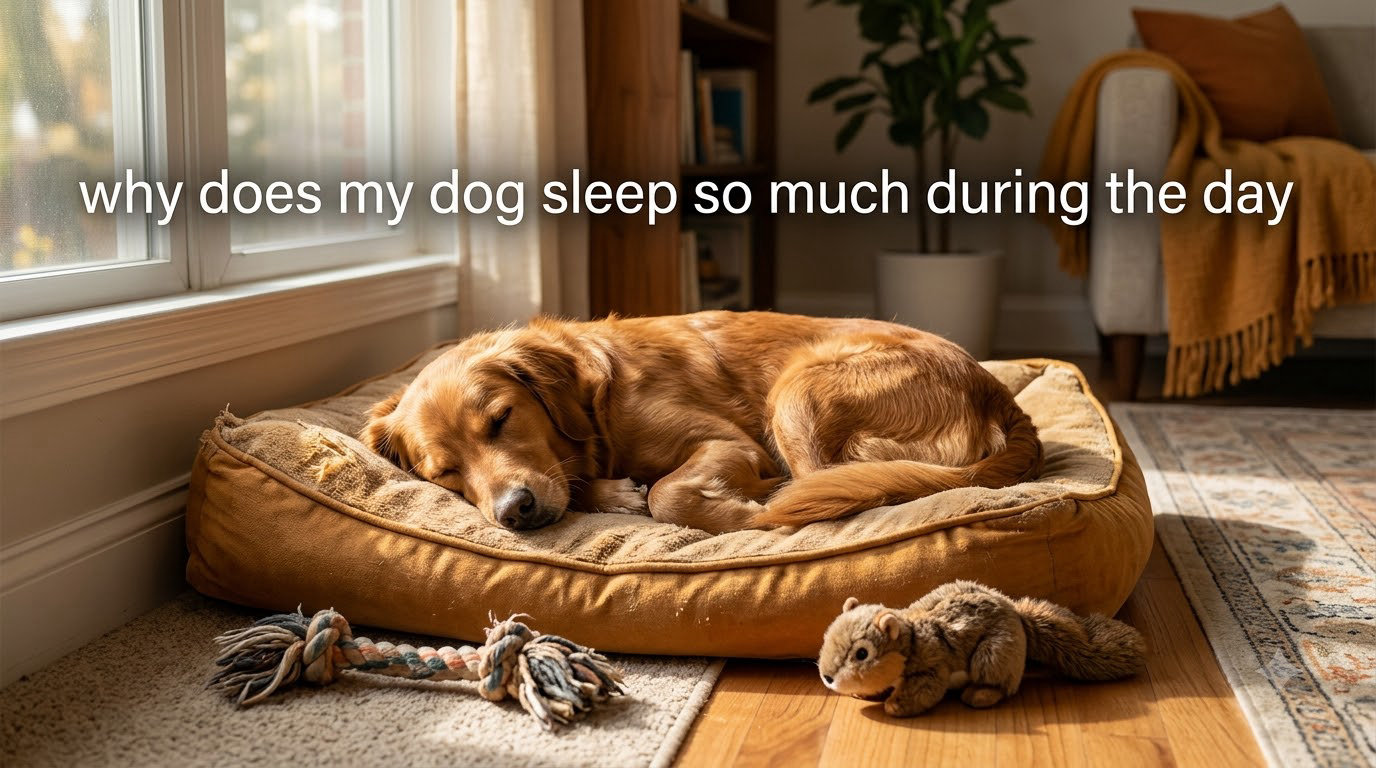
If you’ve ever watched your dog snooze through an entire afternoon while you wonder if something’s wrong, take a breath. Most dogs sleep 12 to 16 hours a day, with puppies and seniors pushing past 18 hours. This guide answers the question “why does my dog sleep so much during the day?” using veterinary research and real owner experiences. We’ll cover normal sleep ranges, the biology behind dog naps, breed and age differences, and clear warning signs that tell you when to call your vet.
I’ve raised three dogs over the past 12 years, and each one taught me something new about canine sleep. My current Labrador, Cooper, can sleep 14 hours straight on a rainy day and still take three more naps by evening. That’s not laziness. It’s biology.
Table of Contents
How Much Sleep Do Dogs Actually Need?
Most adult dogs need between 12 and 16 hours of sleep every 24 hours. Puppies often sleep 18 to 20 hours because their growing brains and bodies need extra rest. Senior dogs, usually those over 7 or 8 years old, tend to sleep 16 to 18 hours as their energy levels decline.
Here’s a quick breakdown by life stage:
- Puppies (under 6 months): 18 to 20 hours per day
- Adult dogs (1 to 7 years): 12 to 16 hours per day
- Senior dogs (7+ years): 16 to 18 hours per day
- Large or giant breeds: Often 14 to 18 hours regardless of age
These numbers come from veterinary sleep studies and resources like the Sleep Foundation and PetMD. Dogs don’t sleep in one long block like humans. They take multiple naps spread throughout a 24-hour period, which adds up to those high totals.
Why Do Dogs Sleep So Much During the Day?
Dogs sleep so much during the day because they’re crepuscular animals. That means their natural activity peaks happen at dawn and dusk, not during a midday work shift. Their bodies are wired to rest when the sun is highest and the world is quiet.
Dogs also have shorter sleep cycles than humans, around 15 to 20 minutes per cycle compared to our 90-minute cycles. This means they enter REM sleep more frequently but for shorter bursts. During the day, dogs cycle through light sleep, deep sleep, and short waking periods where they check their surroundings.
Energy conservation is another factor. Dogs evolved as opportunistic predators who conserved energy between bursts of hunting or herding. Today’s companion dogs don’t have those bursts, but the biology lingers. Without structured activity, their bodies default to rest mode.
Brain development also plays a role, especially in puppies. Sleep helps consolidate memories and process new experiences. When your puppy meets a new person or learns a new command, they often need a nap right after to “file” the information.
How Age Affects Your Dog’s Sleep
Age is one of the biggest factors in how much your dog sleeps. A 10-week-old puppy and a 12-year-old senior can both sleep 18+ hours a day, but for different reasons.
Puppies and Sleep
Puppies sleep 18 to 20 hours a day because their bodies are doing serious work. Growth hormone is released primarily during sleep, so rest is non-negotiable for healthy development. Puppies also nap frequently to recover from short bursts of intense play and exploration.
If your puppy seems to sleep every time you turn around, that’s normal. Their sleep is fragmented because their bladders can’t hold much, so they wake up to potty, eat, play briefly, and sleep again. This pattern usually settles into longer stretches by 4 to 6 months of age.
Adult Dogs and Sleep
Adult dogs between 1 and 7 years typically sleep 12 to 16 hours. Working breeds like Border Collies and Australian Shepherds often sleep closer to 12 hours because their minds and bodies need more stimulation to stay satisfied. Companion breeds like Bulldogs, Pugs, and Basset Hounds often sleep 14 to 16 hours without anything being wrong.
Senior Dogs and Sleep
Senior dogs sleep more for several reasons. Their stamina decreases, joints stiffen, and senses like hearing and vision may dull, leading to less engagement with their environment. Canine cognitive dysfunction, similar to dementia in humans, can also cause disrupted sleep patterns and increased daytime napping.
If your older dog’s sleep has gradually increased over months or years, that’s usually a normal aging pattern. A sudden change is different and worth a vet visit.
Breed Differences: Some Dogs Sleep More Than Others
Breed plays a significant role in how much your dog sleeps. Large and giant breeds like Mastiffs, Great Danes, Saint Bernards, and Newfoundlands often sleep 16 to 18 hours a day. Their bodies carry more weight and burn more energy just moving around, so they need more recovery time.
Brachycephalic breeds (flat-faced dogs like Bulldogs, Pugs, and Pekingese) also tend to sleep more. Their shortened airways make breathing less efficient, which can cause fatigue and slower activity levels.
On the other end of the spectrum, high-energy working breeds like Border Collies, Jack Russell Terriers, and Belgian Malinois often sleep less, around 10 to 14 hours, because they’re bred for sustained activity. If your Border Collie sleeps 16 hours a day, it could mean they’re not getting enough mental stimulation.
Here’s a rough breed tendency list:
- Heaviest sleepers: Bulldogs, Basset Hounds, Mastiffs, Great Danes, Saint Bernards
- Moderate sleepers: Labrador Retrievers, Golden Retrievers, German Shepherds, Beagles
- Lighter sleepers: Border Collies, Australian Shepherds, Jack Russell Terriers, Huskies
Boredom, Home Life, and Activity Level
Boredom is one of the most common reasons dogs sleep more than they should. A dog home alone for 8 hours while you work has nothing to do. Without toys, puzzles, walks, or companionship, their day is just one long stretch of nothing, so they sleep through it.
Working from home doesn’t always solve this either. I’ve watched my own dog sleep through entire Zoom meetings because I wasn’t engaging him. The dog isn’t being “lazy.” They simply don’t have a reason to stay awake.
Activity level matters more than breed expectations alone. A working Border Collie who gets 2 hours of fetch and agility training will sleep less than a sedentary Labrador who gets one short walk. Dogs adapt their sleep to match their energy output.
If your dog sleeps more than their breed average, try these enrichment strategies:
- Puzzle feeders: Make mealtime last 30 minutes instead of 3
- Scent work: Hide treats around the house for them to find
- Training sessions: 10-minute mental workouts tire a dog as much as 30 minutes of running
- Rotating toys: Keep 3 to 4 toys out at a time and swap them weekly
- Doggy daycare or dog walkers: Break up long alone stretches during the workday
If you’re also dealing with behavior issues, our guide on why dogs lick you covers other common signals dogs use to communicate their needs.
When to Worry About Your Dog Sleeping Too Much
Excessive sleep becomes a concern when it’s paired with other symptoms or when it represents a sudden change. Normal sleep is consistent with your dog’s typical pattern. Concerning sleep is different from what they usually do.
Watch for these warning signs along with increased sleep:
- Loss of appetite or sudden weight changes
- Lethargy that looks different from rest: Unwillingness to move, slow responses to you
- Changes in bathroom habits: Accidents in the house, straining, or unusual stool
- Difficulty waking up or seeming disoriented after naps
- Limping, stiffness, or signs of pain when they do get up
- Vomiting, diarrhea, or coughing
- Personality changes: Increased hiding, anxiety, or aggression
- Sudden increase in thirst or urination
These symptoms together can point to conditions like hypothyroidism, heart disease, diabetes, kidney problems, infections, or depression. Dogs can absolutely experience depression, especially after a major life change like losing a companion, moving homes, or being rehomed.
If you notice any of these alongside increased sleep, schedule a vet visit within a few days. If symptoms are severe or appear suddenly, same-day care is safer.
Sleep Disorders in Dogs
Some dogs experience actual sleep disorders, though they’re less common than simple excessive sleep from boredom or age. Knowing about them helps you recognize when something deeper might be going on.
Narcolepsy in Dogs
Narcolepsy causes dogs to suddenly fall asleep or collapse into REM sleep mid-activity. It’s more common in young dogs and certain breeds like Doberman Pinschers, Labrador Retrievers, and Poodles. Triggers are usually exciting moments like playing, eating, or greeting you at the door.
Episodes last seconds to minutes and dogs recover fully. While there’s no cure, narcolepsy in dogs is often manageable with lifestyle adjustments.
Sleep Apnea in Dogs
Obstructive sleep apnea happens when airways collapse during sleep, causing brief pauses in breathing. It’s most common in brachycephalic breeds like English Bulldogs and Pugs. Signs include loud snoring, gasping, and daytime fatigue despite long sleep hours.
Treatment ranges from weight management to surgery in severe cases. If your flat-faced dog sounds like a freight train at night and seems extra tired during the day, mention it to your vet.
REM Sleep Behavior Disorder
Some dogs act out their dreams, paddling, barking, or even snapping during sleep. This is different from normal twitching. If your dog regularly performs large movements or wakes aggressive after sleep, ask your vet about REM sleep behavior disorder.
Practical Tips to Help Your Dog Sleep Better
If your dog sleeps too much from boredom or poor sleep quality, small changes can make a big difference. I started applying these with Cooper last year, and his daytime energy noticeably improved within three weeks.
Step 1: Add morning exercise. A 20 to 30 minute walk or play session before you start your day helps your dog burn energy and stay alert longer.
Step 2: Use enrichment at midday. Stuff a Kong with peanut butter, freeze it, and give it to your dog when you leave for short trips. It keeps them mentally engaged.
Step 3: Schedule training sessions. Even 10 minutes of teaching new tricks tires a dog’s brain more than an hour of walking. Aim for two short sessions daily.
Step 4: Create a calm sleep environment. A comfortable bed in a quiet corner helps your dog actually rest well, not just sleep fitfully. Avoid placing the bed near drafts or high-traffic areas.
Step 5: Maintain a consistent routine. Dogs thrive on predictability. Feeding, walking, and bedtime at the same times each day regulate their circadian rhythm and improve sleep quality.
Step 6: Monitor for changes. Keep a simple log if you’re worried. Note your dog’s sleep hours, appetite, and energy levels each day. Patterns are easier to spot than isolated days.
If you’re bringing home a new dog and noticing extra sleep during the adjustment period, our guide to introducing a new dog covers what to expect during the first few weeks.
For cat owners wondering if similar patterns apply, our article on why cats purr explores another common pet behavior question.
FAQ: Common Questions About Dogs Sleeping During the Day
Is it normal for a dog to sleep all day everyday?
Are dogs happy if they sleep all day?
What breed of dog sleeps the most?
Should I let my dog sleep during the day?
Final Thoughts on Why Dogs Sleep So Much
So, why does my dog sleep so much during the day? Because their biology is different from ours. Dogs are crepuscular, their sleep cycles are shorter, and their energy is conserved for short bursts rather than sustained activity. Most dogs sleeping 12 to 18 hours a day are completely healthy, especially if they’re puppies, seniors, or large breeds.
The real question isn’t how much your dog sleeps, but whether their sleep pattern has changed and whether other symptoms are present. Track their baseline, watch for sudden shifts, and trust your gut when something feels off. With good enrichment, proper vet care, and a consistent routine, your dog will sleep exactly the amount their body needs to thrive.