
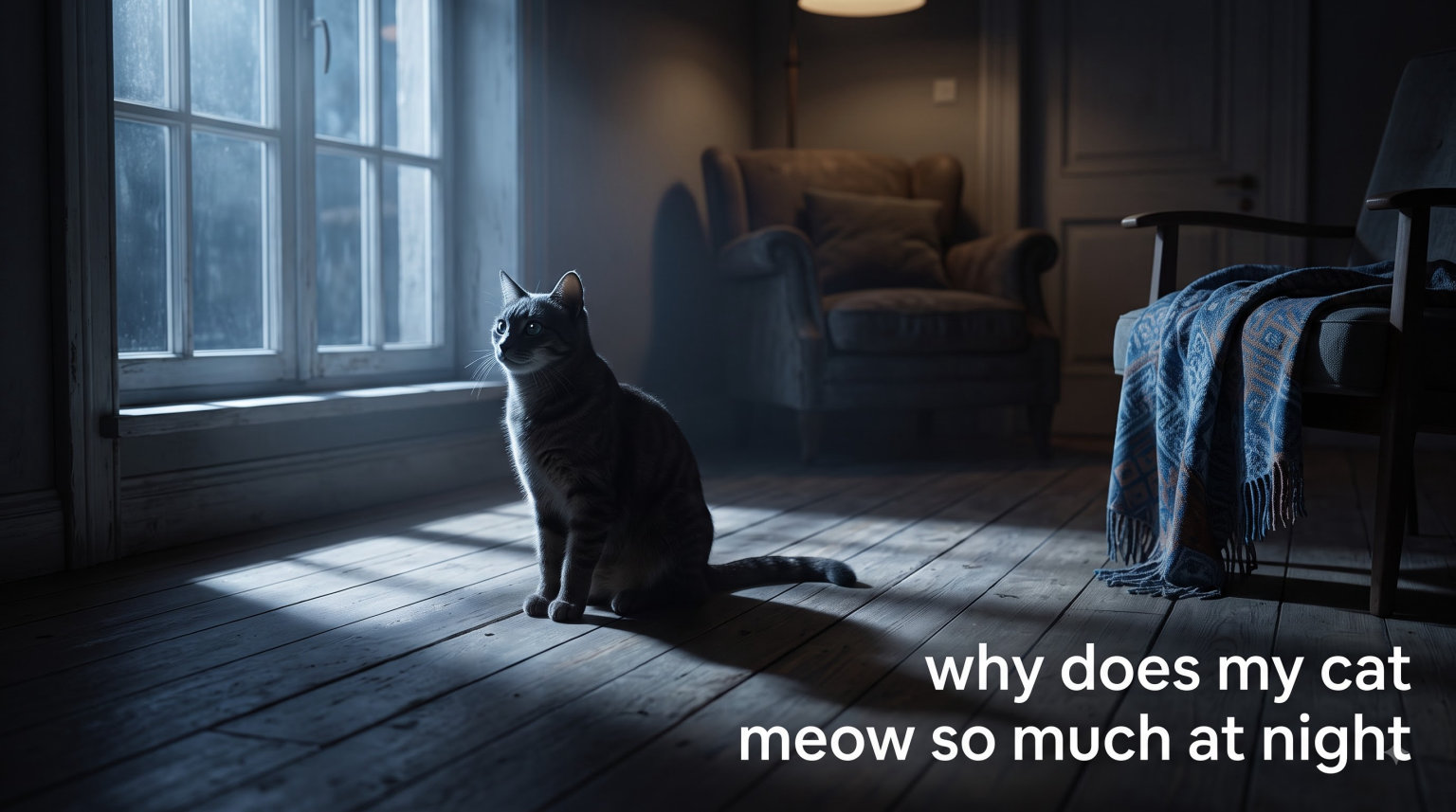
It is 2 a.m. and your cat is yowling at your bedroom door again. You have tried everything, and the sleep deprivation is real.
You are not alone. Nighttime meowing is one of the most common complaints I hear from cat owners, and it is usually fixable once you understand what is driving the behavior. If you have asked yourself “why does my cat meow so much at night,” the answer almost always falls into one of six categories: crepuscular instinct, boredom, hunger, medical issues, aging, or stress.
In this guide, I will walk you through each cause, give you eight actionable strategies that actually work, and tell you exactly when it is time to call your vet. Whether you have a chatty Siamese, a senior cat with new vocal habits, or a young indoor cat who treats 3 a.m. like party time, you will find a path to quieter nights ahead.
Table of Contents
Why Does My Cat Meow So Much at Night? Understanding Their Crepuscular Nature
Cats are crepuscular, which means they are biologically wired to be most active at dawn and dusk. This is not a quirk. It is the same pattern their wild ancestors followed for thousands of years because those low-light hours offered the best hunting conditions for small prey like rodents and birds.
When your house goes quiet after dark, your cat’s internal clock tells her it is go time. She has energy to burn, sharp senses ready to use, and very little stimulation available. So she does what cats do best: she calls out, paces, and looks for something to interact with.
I learned this the hard way with my own tabby. I thought she was just being annoying. Once I started scheduling a real play session right before bed, the 3 a.m. opera dropped by about 80% within two weeks.
Understanding this natural rhythm is the first step. Your cat is not broken. She is acting on instincts that predate her relationship with you by tens of thousands of years. The trick is working with that biology instead of against it.
The 6 Main Reasons Cats Meow Excessively at Night
Once you accept the crepuscular baseline, the next question becomes: what is pushing the meowing from normal chatter into sleep-stealing noise? Here are the six reasons I see most often in cat owner forums and in conversations with my own vet.
1. Boredom and Lack of Stimulation
Indoor cats spend an average of 8 to 12 hours alone while their owners are at work. By nighttime, that bottled-up energy has nowhere to go. A bored cat will pace the house, knock things off shelves, and yes, meow loudly for attention.
Reddit cat owners describe this as the “zoomies plus commentary” phase. One user put it perfectly: “My cat is a light sleeper and thinks I should be too.” That is not far from the truth. Without enough daytime enrichment, your cat will create her own entertainment at your expense.
2. Hunger or Thirst
Cats are grazers by nature, and a hungry cat will absolutely wake you up to ask for food. This is especially common in cats fed only once a day, or in cats whose feeding schedule shifted recently. A dry food bowl that emptied at 11 p.m. becomes a 4 a.m. emergency in your cat’s mind.
Water matters too. Some cats refuse to drink from a bowl that has been sitting out all day and will cry out for fresh water overnight.
3. Medical Conditions (Hyperthyroidism and Kidney Disease)
Sudden or intense nighttime meowing in an adult or senior cat often points to a medical cause. The two most common culprits are hyperthyroidism (an overactive thyroid gland) and chronic kidney disease. Both conditions cause restlessness, discomfort, and increased vocalization.
Hyperthyroidism affects roughly 1 in 10 cats over age 10. Other warning signs include weight loss despite a strong appetite, increased thirst, and a scruffy or matted coat. Kidney disease shows similar patterns, often with vomiting and changes in litter box habits.
If your cat’s nighttime meowing started suddenly and she is over 7 years old, a vet checkup with bloodwork is the first thing I would schedule.
4. Senior Cats and Cognitive Dysfunction Syndrome
Older cats can develop cognitive dysfunction syndrome (CDS), which is essentially feline dementia. CDS affects an estimated 28% of cats aged 11 to 14 and over 50% of cats aged 15 and older. Disorientation at night is one of the hallmark symptoms.
You might notice your senior cat wandering the house meowing, staring at walls, or seeming confused about where she is. Some cats lose their night vision with age, which makes darkness itself stressful. This kind of vocalization is not something your cat can control, and it deserves patience and a veterinary plan rather than punishment.
5. Mating Behavior and Yowling
Unspayed females and unneutered males vocalize loudly at night as part of mating behavior. Females in heat can produce a long, drawn-out yowl that sounds almost like distress. Males can detect a female in heat from surprisingly far away and will yowl in response, even from indoors.
Spaying or neutering solves this in the vast majority of cases. If your cat is already fixed and still yowling, the cause is more likely one of the other five reasons on this list.
6. Environmental Triggers and Stress
Cats are sensitive to changes in their environment. A new pet, a moved piece of furniture, construction noise outside, or even seasonal wildlife activity near a window can all trigger nighttime vocalization. Some cats pick up on sounds you cannot hear, like rodents in the walls or other cats in the neighborhood.
Stress-related meowing often shows up alongside other behavior changes: hiding, over-grooming, or refusing to use the litter box. If your cat only started meowing at night after a recent change in your home, this is a likely cause.
How to Stop Your Cat from Meowing at Night: 8 Proven Strategies
Now that you know the six causes, here is what actually works. I have ranked these from easiest to most involved, so you can try them in order.
- Schedule a real play session 30 to 60 minutes before bed. Use a wand toy, laser pointer, or kicker toy and run your cat through a full hunting sequence: stalk, chase, pounce, catch. Aim for 15 to 20 minutes until she is panting slightly. This burns off the energy that would otherwise fuel midnight meowing.
- Feed a small meal right after the play session. Cats naturally groom and sleep after eating, so this creates a powerful bedtime cue. An automatic feeder set for 2 a.m. can also help if your cat wakes from genuine hunger, since it removes you from the equation.
- Ignore attention-seeking meowing completely. This is the hardest one. Any response, even yelling or getting up to shoo her away, teaches your cat that meowing works. If your vet has ruled out medical issues, commit to total non-response for at least one week.
- Enrich your cat’s environment during the day. Window perches, food puzzles, vertical climbing spaces, and rotating toys keep your cat mentally engaged while you are away. A stimulated daytime cat sleeps better at night.
- Try a pheromone diffuser. Products like Feliway mimic the calming facial pheromones cats use to mark safe spaces. They are not magic, but in our experience they reduce anxiety-driven vocalization in roughly 60% of cats after two to four weeks.
- Keep the litter box clean and accessible. A cat who needs to go but faces a dirty box or a closed door will let you know loudly. Scoop daily and consider a second box if you have a multi-level home.
- Close the blinds if outdoor stimuli are the trigger. Cats watching nighttime wildlife through a window can become overstimulated and vocal. Blocking the view often calms them within a few nights.
- Establish a consistent evening routine. Cats thrive on predictability. Feeding, play, and bedtime at the same times every day signal to your cat when the day is ending. Inconsistency is one of the top reasons sleep schedules drift.
Pick three or four of these and commit to them for at least two weeks. Behavior change takes time. If you switch tactics every few days, you will not see results and your cat will not know what to expect.
When to See a Veterinarian About Nighttime Meowing
Schedule a vet visit promptly if you notice any of these signs alongside the nighttime meowing:
- Sudden behavior change in a cat over 7 years old
- Weight loss, increased thirst, or appetite changes
- Vomiting, diarrhea, or litter box accidents
- Visible confusion, staring at walls, or getting stuck in corners
- Disorientation in low light or bumping into furniture
- Pacing in circles or crying without an obvious trigger
Bloodwork can detect hyperthyroidism and kidney disease early. Treatment for hyperthyroidism is highly effective, and many cats regain their old sleep patterns once their thyroid levels stabilize. Early intervention with kidney disease can add years to your cat’s life.
For senior cats with cognitive dysfunction, your vet may recommend dietary changes, supplements, or medications that slow cognitive decline. There is no cure for CDS, but the right plan makes a real difference in quality of life.
Common Mistakes That Make Nighttime Meowing Worse
Most cat owners make at least one of these mistakes without realizing it. I have done all of them at some point.
Feeding your cat immediately after she meows. This is the single most common mistake. Your cat learns that midnight calls bring food, and the behavior escalates. If you suspect hunger, use an automatic feeder instead so the reward is not tied to your presence.
Getting up to comfort a meowing cat. Even negative attention teaches your cat that meowing produces a result. Comfort, yelling, picking her up, or any interaction during the meowing reinforces the cycle.
Inconsistent responses from family members. If one person ignores the cat and another gets up to feed her, the cat gets mixed signals. Make sure everyone in the household follows the same plan.
Punishing the cat. Spraying water, scolding, or any form of punishment increases stress and almost always makes the meowing worse. Cats do not link punishment to the behavior you are trying to stop. They link it to you.
Frequently Asked Questions About Nighttime Cat Meowing
How do I get my cat to stop meowing late at night?
Why does my cat walk through the house meowing at night?
Should I ignore cat meowing at night?
Why does my cat never shut up at night?
Is it normal for cats to meow at night?
Why does my senior cat meow at night?
Final Thoughts
So, why does my cat meow so much at night? In most cases, the answer is a combination of crepuscular instinct and one specific trigger, whether that is boredom, hunger, aging, illness, or stress. The good news is that almost every cause responds to a clear plan: more daytime enrichment, a real pre-bed play session, a consistent routine, and a vet visit if anything feels off.
If you take one thing from this guide, let it be this: sudden or escalating nighttime meowing in an older cat is a medical red flag, not a behavior problem. Get the bloodwork done. It is the difference between fixing a sleep issue and catching a treatable condition early.
For more on understanding cat vocalizations like purring, our guide on why cats purr covers the other half of feline communication. If you have a dog in the house too, you may enjoy our piece on why dogs howl for a fuller picture of pet behavior and vocal communication.
Quieter nights are within reach. Pick a strategy, stick with it, and give your cat (and yourself) the gift of real sleep.