
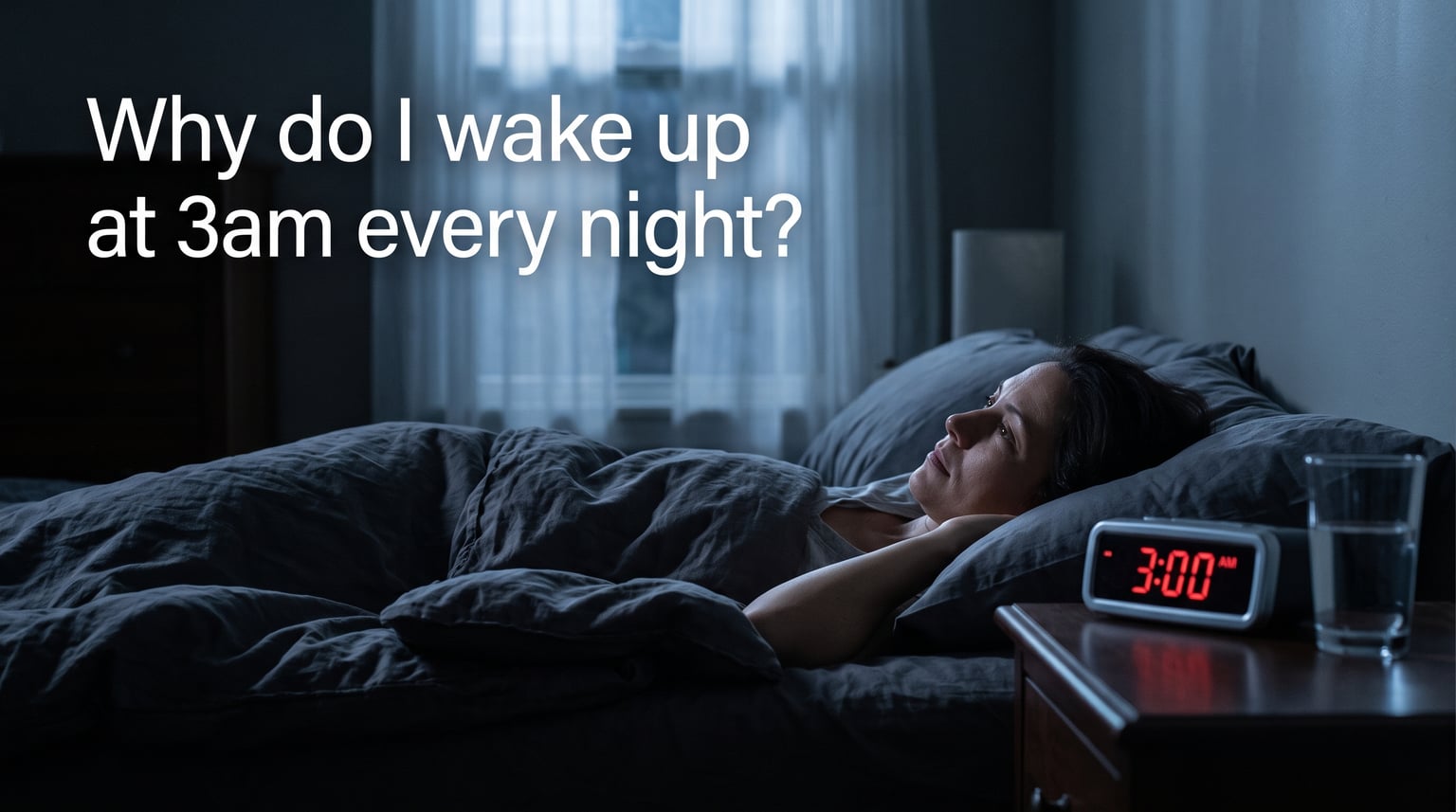
You open your eyes, and the clock reads 3:00 am. Again.
If this sounds familiar, you are far from alone. Thousands of people search every month trying to understand why they wake up at 3am every night, and the frustration of staring at the ceiling while the rest of the world sleeps is real. In sleep forums like Reddit’s r/sleep and r/ouraring, users describe waking “like clockwork” at exactly 3am for months or even years.
The good news is that waking at 3am is rarely a sign of something seriously wrong. Your body is doing what bodies do during the second half of the night. The challenge is figuring out which combination of factors is triggering your wake-ups so you can address them.
In this guide, we break down the science behind 3am awakenings, cover every major cause from cortisol spikes to blood sugar drops, and give you practical steps to both prevent and manage those middle-of-the-night wake-ups. Whether you have been dealing with this for a week or a decade, you will leave with a clear understanding of what is happening and what to do about it.
Table of Contents
Quick Answer: Why Do I Wake Up at 3am Every Night?
You wake up at 3am every night because your body naturally transitions into lighter sleep stages during the second half of the night, while cortisol levels begin their natural early-morning rise, making you more susceptible to waking from minor disruptions.
By 3am, most people have completed their deepest sleep and are cycling through lighter REM and Stage 2 sleep. During these lighter stages, your brain is more easily aroused by sounds, temperature changes, stress, or even your own racing thoughts. Combine that with a natural cortisol increase that starts around 2am, and you have a recipe for waking up.
The specific trigger varies from person to person. Common causes include stress and anxiety, blood sugar drops, environmental factors like noise or temperature, hormonal changes, alcohol consumption, and underlying conditions like sleep apnea. We cover each of these in detail below.
Your Sleep Cycles Explained
To understand why 3am hits so reliably, you need to understand how your sleep is structured. Your sleep is not one long, uniform block of unconsciousness. It cycles through distinct stages roughly every 90 minutes.
Each 90-minute cycle includes three phases of non-REM (NREM) sleep followed by a period of REM sleep. During the first third of the night, you spend most of your time in deep NREM sleep (Stage 3), which is hard to wake from. This is when your body repairs tissue, builds bone, and strengthens the immune system.
As the night progresses, your deep sleep periods get shorter and your REM periods get longer. By the time you reach the second half of the night, typically around 2am to 4am, you are spending much more time in lighter sleep stages. This is completely normal and happens to everyone.
The problem is that lighter sleep is easier to disrupt. A passing car, a drop in room temperature, a full bladder, or a sudden thought can pull you out of Stage 2 sleep or REM sleep with surprising ease. During deep sleep, those same disturbances would not register at all.
So when you wake at 3am, you are not experiencing a sleep malfunction. You are simply in a more vulnerable sleep stage at a time when your body is also preparing for its natural early-morning transition. The key is identifying what specific disruption is pulling you out of that lighter sleep.
Think of it this way: imagine trying to stay asleep while someone gently shakes your shoulder. If you are in deep sleep, you barely stir. If you are in light sleep, you wake right up. At 3am, your sleep is light enough that even small disruptions feel like a firm shake.
The Cortisol Connection: Your Body’s Built-In Alarm
Cortisol is one of the biggest reasons people wake at 3am. It is your body’s primary stress hormone, and it follows a daily rhythm tied to your circadian clock.
Cortisol levels are lowest around midnight and begin rising between 2am and 3am as part of your body’s preparation for waking up. This gradual increase is completely normal and happens even in people with excellent sleep. For most people, the rise is gentle enough that it does not wake them.
But if you are under chronic stress, your baseline cortisol levels may be elevated. That means the early-morning rise pushes cortisol higher than it should go, crossing a threshold that actually wakes you up. Your body shifts into a mild fight-or-flight state, your heart rate increases, and suddenly you are wide awake with your mind racing.
This is why stress and 3am wake-ups are so tightly linked. People who search “why do I wake up at 3am every night” are very often dealing with elevated stress during the day. That stress does not disappear at bedtime. It simply waits until your sleep lightens and your cortisol starts rising, then pulls you awake.
What makes this especially frustrating is the feedback loop. You wake up at 3am, you start worrying about not sleeping, that worry raises your cortisol even higher, and falling back asleep becomes nearly impossible. Forum users describe this exact spiral, noting that checking the clock and calculating how many hours of sleep they have left only makes things worse.
Blood Sugar Drops and Late-Night Eating
Your blood sugar level plays a direct role in sleep quality, and nighttime drops are a common but overlooked cause of 3am wake-ups.
When you eat a meal high in refined carbohydrates or sugar before bed, your blood sugar spikes and then crashes a few hours later. That crash triggers a stress response. Your body releases adrenaline and cortisol to raise blood sugar back to safe levels, and those hormones wake you up.
If you regularly eat dinner late, consume alcohol in the evening, or have a sugary snack before bed, blood sugar fluctuations may be driving your wake-ups. This is particularly common in people who skip dinner, eat very lightly, or follow restrictive diets.
A small, balanced snack containing protein and complex carbohydrates about an hour before bed can help stabilize blood sugar overnight. Think a handful of almonds, a banana with peanut butter, or a small bowl of oatmeal. The goal is slow, steady energy release, not a big meal that keeps your digestive system working hard.
Some users in sleep forums report significant improvement simply by adjusting their evening eating habits. Reducing sugar and alcohol in the hours before bed gave them more stable overnight blood sugar and fewer middle-of-the-night awakenings.
Environmental Factors That Wake You Up
Your bedroom environment has a bigger impact on your sleep than most people realize. Even small disruptions can pull you out of light sleep at 3am.
Light is one of the most powerful sleep disruptors. Streetlights, electronic devices, and even the small LED on your smoke detector can suppress melatonin production and signal to your brain that it is time to wake up. If light is creeping into your room, it could be contributing to your 3am wake-ups. Blackout curtains or a good sleep mask can make an immediate difference.
Noise is another major factor, especially in urban environments. Traffic, neighbors, pets, and household sounds can all break through light sleep stages. Many people benefit from white noise or pink noise machines, which create a consistent sound floor that masks sudden noises.
Temperature matters more than most people expect. Your body temperature naturally drops during sleep, and a room that is too warm can cause you to wake up. The ideal sleeping temperature is between 60 and 67 degrees Fahrenheit. If you wake up sweating or feeling too warm at 3am, your room may simply be too hot.
Finally, a partner who moves, snores, or gets up during the night can easily wake you from light sleep. If you share a bed, consider whether your partner’s sleep habits might be contributing to your wake-ups.
Stress, Anxiety, and the 3am Spiral
Stress and anxiety are among the most common causes of regular 3am wake-ups, and the mechanism is well understood by sleep researchers.
When you are stressed during the day, your nervous system stays in a heightened state of alertness. Even if you fall asleep fine at bedtime, your brain remains more reactive during the night. Minor thoughts or physical sensations that would normally be filtered out can trigger full wakefulness.
This often shows up as sudden, racing thoughts the moment you wake up. You go from asleep to mentally composing emails, replaying conversations, or worrying about tomorrow. That is your stress response kicking in at the exact moment your sleep is most vulnerable.
There is also a phenomenon called conditioned wake-up, which is fascinating and frustrating in equal measure. If you wake at 3am often enough, your brain starts to expect it. You develop an association between 3am and wakefulness, almost like a self-fulfilling alarm clock. Your mind actually anticipates waking up at that time, which makes it more likely to happen.
Breaking this cycle takes time and consistency. Forum users who successfully overcame habitual 3am wake-ups often mention cognitive behavioral therapy for insomnia (CBT-I) as a turning point. CBT-I helps reframe the anxiety around sleep and breaks the conditioned response over several weeks.
The most important thing to understand is that lying in bed feeling anxious about being awake makes everything worse. The harder you try to force sleep, the more elusive it becomes. Accepting that you are awake, staying calm, and using relaxation techniques works far better than counting the hours until your alarm.
Lifestyle Habits That Trigger Nighttime Wake-Ups
Several everyday habits can directly contribute to 3am wake-ups, and many people do not realize the connection.
Alcohol is one of the biggest culprits. A drink before bed might help you fall asleep faster, but as your body metabolizes the alcohol, it disrupts sleep architecture. You spend less time in deep sleep and more time in light, fragmented sleep. This rebound effect often hits in the middle of the night, pulling you awake around 2am to 4am. The more you drink, the worse the effect.
Caffeine has a much longer half-life than most people realize. That afternoon coffee at 3pm still has half its stimulating power at around 11pm. If you are sensitive to caffeine, even a midday cup can keep your nervous system wired enough to contribute to nighttime awakenings. Try cutting off caffeine by noon and see if your sleep improves.
Napping late in the day reduces your sleep pressure, making it easier for minor disruptions to wake you at night. If you need a nap, keep it under 30 minutes and finish before 3pm.
Screen time before bed deserves its own mention. The blue light from phones, tablets, and TVs suppresses melatonin production and keeps your brain in an alert state. Scrolling through stressful news or engaging social media content right before bed gives your mind plenty of material to surface at 3am.
Hormonal Changes: Menopause and Aging
If you are a woman over 45, hormonal changes may be the primary driver of your 3am wake-ups. This is one of the most common and least discussed causes.
During perimenopause and menopause, estrogen and progesterone levels fluctuate dramatically and eventually decline. Progesterone has a natural calming effect on the brain, and when it drops, sleep becomes more fragmented. Estrogen helps regulate body temperature, and its decline contributes to hot flashes and night sweats that can jolt you awake.
Harvard Health reports that 3am wake-ups become significantly more common in women after age 55, and hormonal shifts are the primary reason. Hot flashes can occur at any time, but they frequently strike during the lighter sleep stages of the second half of the night.
Aging also changes sleep architecture in both men and women. As we get older, we naturally spend less time in deep sleep and more time in lighter stages. This means older adults are simply easier to wake throughout the night, not just at 3am. Some wakefulness with age is expected, but chronic nightly awakenings are still worth addressing.
If menopause is driving your wake-ups, hormone therapy, lifestyle changes, and temperature regulation strategies can all help. Talk to your doctor about options, because you do not have to just accept poor sleep as an inevitable part of aging.
Medical Causes Behind 3am Awakenings
Sometimes, regular nighttime wake-ups point to an underlying medical condition that needs attention. Here are the most common ones to be aware of.
Sleep Apnea
Sleep apnea causes you to stop breathing briefly during sleep, and your brain responds by waking you up just enough to resume breathing. These micro-awakenings can happen dozens of times per hour without you realizing it. If you snore loudly, wake up gasping, or feel exhausted despite seemingly sleeping all night, sleep apnea may be the cause. A sleep study can diagnose it definitively.
Sleep Maintenance Insomnia
Sleep maintenance insomnia is specifically the inability to stay asleep through the night. Unlike sleep onset insomnia, where you struggle to fall asleep, people with sleep maintenance insomnia fall asleep fine but wake up and cannot get back to sleep. This is extremely common with 3am wake-ups and often has both psychological and physiological components.
Acid Reflux and GERD
Acid reflux often worsens when you lie flat, and symptoms can peak in the middle of the night. If you wake up with a sour taste, burning in your chest, or a cough, GERD may be contributing to your wake-ups. Eating earlier, avoiding trigger foods, and elevating your head can help.
Nocturia
Nocturia is the need to urinate during the night. If your bladder regularly wakes you at 3am, limiting fluids in the evening and avoiding caffeine and alcohol before bed can reduce trips to the bathroom. Persistent nocturia can also signal other conditions, so mention it to your doctor if it is frequent.
Vitamin and Mineral Deficiencies
Certain deficiencies can affect sleep quality. Magnesium deficiency, in particular, is linked to poor sleep and nighttime awakenings. Magnesium helps regulate neurotransmitters that calm the nervous system. Low levels of vitamin D, B12, and iron have also been associated with sleep disturbances. A simple blood test can check your levels, and supplementation under medical guidance may help.
The Spiritual Meaning of Waking Up at 3am
Many people search for spiritual or biblical meanings behind waking up at 3am, and this is one of the most common related searches. If you are curious about this perspective, here is what the cultural and spiritual traditions say.
In traditional Chinese medicine, the body’s organs are believed to follow a daily energy clock. The lungs are associated with the 3am to 5am time window, and waking during this period is sometimes linked to grief, sadness, or emotions that need processing. The liver time slot runs from 1am to 3am, and waking during this window is associated with anger or frustration.
Some spiritual traditions view waking at 3am as a time of heightened spiritual awareness or a sign to pray and reflect. This is sometimes called the “witching hour” or a time when the veil between dimensions is said to be thinnest. In some biblical interpretations, 3am is associated with spiritual warfare or a call to prayer.
From a scientific perspective, none of these spiritual explanations have medical backing. But they can still offer comfort and meaning to people who find them helpful. The most balanced approach is to understand the physiological causes first and consider spiritual interpretations as a complementary perspective rather than a replacement for evidence-based solutions.
What to Do When You Wake Up at 3am
Knowing what to do in the moment can make the difference between falling back asleep in 10 minutes and lying awake until dawn. Here are the steps that actually work.
Step 1: Do not check the clock. This is the single most important rule. Seeing the time triggers sleep anxiety, starts mental calculations about how much sleep you have left, and raises cortisol. Turn your clock around or move your phone out of reach.
Step 2: Stay in bed only if you feel relaxed. If you have been lying awake for more than 20 minutes and feel frustrated, get out of bed. Go to another room and do something calm in dim light. Read a physical book, stretch gently, or listen to soft music. Return to bed only when you feel sleepy.
Step 3: Try a relaxation technique. Box breathing, progressive muscle relaxation, or a body scan meditation can calm your nervous system. Breathe in for four counts, hold for four, exhale for four, hold for four. Repeat until you feel your heart rate slow.
Step 4: Do not turn on bright lights. Bright light suppresses melatonin and signals to your brain that it is daytime. Use only dim, warm-colored light if you need to see.
Step 5: Avoid screens entirely. Do not pick up your phone. No scrolling, no checking messages, no reading the news. The blue light and mental stimulation will keep you awake much longer.
Step 6: Keep a consistent routine. If you wake up at 3am regularly, having a predictable routine helps reduce anxiety. Knowing exactly what you will do takes the decision-making out of the moment and prevents the spiral of panicked thoughts.
Many forum users emphasize that acceptance is key. Fighting wakefulness creates more stress, which creates more wakefulness. Accepting that you are awake, staying calm, and trusting that you will fall back asleep tends to work far better than trying to force it.
How to Prevent Waking Up at 3am Every Night
Long-term prevention addresses the root causes rather than just managing symptoms. Here are the strategies with the strongest evidence behind them.
Maintain a consistent sleep schedule, even on weekends. Going to bed and waking up at the same time every day reinforces your circadian rhythm and helps your body settle into a predictable pattern. This alone can reduce 3am wake-ups for many people.
Manage daytime stress through exercise, meditation, journaling, or therapy. Since cortisol is a primary driver of nighttime wake-ups, reducing your overall stress load has a direct impact on sleep quality. Even 10 minutes of deep breathing or a short walk can lower cortisol levels.
Optimize your bedroom for sleep. Keep it dark, cool, and quiet. Invest in blackout curtains, a white noise machine, and breathable bedding. These changes seem small, but they compound over time.
Watch your evening intake. Stop caffeine by noon, limit alcohol, and avoid heavy meals within three hours of bedtime. If you need a pre-bed snack, choose something with protein and complex carbohydrates.
Build a wind-down routine that signals to your body that sleep is coming. Dim the lights, avoid screens for an hour before bed, and do something calming like reading or stretching. This helps lower cortisol and melatonin naturally rises.
Consider tracking your sleep with a wearable device. Many forum users on r/ouraring have identified patterns in their sleep data that helped them pinpoint causes. Seeing the data can also reduce anxiety by confirming that you are getting more sleep than you think, even with wake-ups.
When to See a Doctor About 3am Wake-Ups
Occasional 3am wake-ups are normal and not a cause for concern. But certain signs indicate it is time to seek professional help.
Talk to your doctor if you wake up at 3am three or more nights per week for a month or longer. Chronic sleep disruption affects your physical health, mental clarity, and emotional well-being, and it is worth addressing rather than toughing it out.
Seek medical attention promptly if you experience loud snoring with pauses in breathing, gasping or choking during sleep, or excessive daytime sleepiness. These are hallmarks of sleep apnea, which has serious health consequences if left untreated.
Also see a doctor if your wake-ups are accompanied by chest pain, frequent urination, persistent heartburn, hot flashes, or symptoms of anxiety or depression. These could indicate underlying conditions that need specific treatment.
A sleep specialist can conduct a sleep study, recommend CBT-I, or evaluate for conditions like sleep apnea, hormonal imbalances, or other medical causes. You do not need to solve this on your own.
FAQ
How can I stop waking up at 3am every night?
What is the myth about waking up at 3am?
What hormone wakes you up at 3am?
How do you prevent 3am cortisol spikes?
What does it mean if you consistently wake up at 3am?
What vitamin deficiency causes you to wake up at 3am?
How to break the cycle of waking up at 3am?
What does waking up at 3am mean about the liver?
Wrapping Up: Taking Control of Your Sleep
Understanding why you wake up at 3am every night is the first step toward doing something about it. The causes we covered, from sleep cycle transitions and cortisol rises to blood sugar drops, stress, hormones, and environmental factors, are all manageable once you know what to look for.
Start with the basics. Optimize your bedroom environment, adjust your evening habits around caffeine and alcohol, and practice a consistent wind-down routine. These changes alone resolve 3am wake-ups for many people within a few weeks.
If your wake-ups are driven by stress or anxiety, focus on stress management during the day. Your daytime stress directly shapes your nighttime cortisol patterns, and reducing one often reduces the other. Techniques like meditation, journaling, and CBT-I can make a meaningful difference.
Remember that waking at 3am is not a sign that something is fundamentally wrong with you. It is a sign that your body is doing exactly what it evolved to do during the lighter stages of sleep. The goal is not to never wake up, but to fall back asleep quickly and calmly when you do.
If you have tried these strategies for a month or more without improvement, see a doctor. Sleep apnea, hormonal imbalances, nutritional deficiencies, and other medical conditions can all drive persistent nighttime awakenings, and they respond well to proper treatment.
You deserve restful, uninterrupted sleep. With the right approach, those 3am stare-downs with your ceiling can become a thing of the past. Start with one or two changes tonight, be patient with the process, and give your body the support it needs to sleep through the night.