
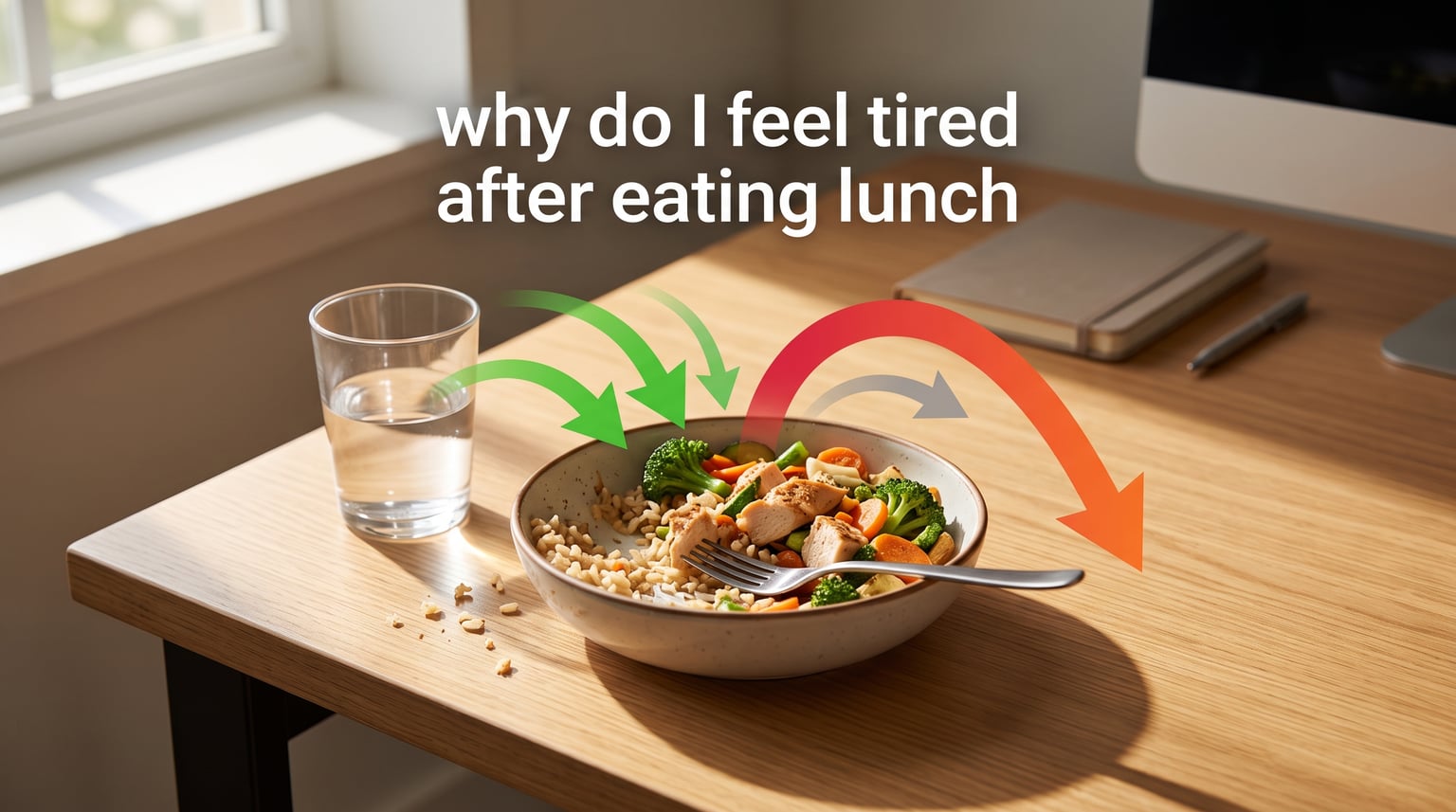
I’ve been there. You finish a perfectly normal lunch, sit back at your desk, and within 30 minutes your eyes feel like sandpaper. That heavy, foggy feeling after eating isn’t laziness and it’s not in your head. There’s actually a medical term for it: postprandial somnolence (pronounced post-pran-dee-ul som-nuh-lence), commonly called a “food coma.”
If you’ve been searching “why do I feel tired after eating lunch” hoping for a real answer, you’re in the right place. I’ve spent weeks digging through medical research and talking to nutrition experts to break down exactly what’s happening in your body after a meal. The good news? In most cases, it’s completely normal and fixable. Let me explain.
Table of Contents
What Is Postprandial Somnolence (The Food Coma)
Postprandial somnolence is the technical name for that wave of drowsiness that hits after eating. The word “postprandial” simply means “after eating,” and “somnolence” means sleepiness. Put together, it describes the universal experience of feeling tired after a meal.
Everyone feels this to some degree. A 2022 study from the National Library of Medicine confirmed that most people experience measurable drops in alertness within 60 minutes of eating a large meal. Your body is doing something biologically predictable, not failing you.
The feeling ranges from mild drowsiness (you’d love a coffee) to full-on “food coma” (you could nap on the floor). Both ends of that spectrum fall under postprandial somnolence, but the severity depends on what you ate, how much, when you ate it, and your overall health.
5 Reasons You Feel Tired After Eating Lunch
Here’s where it gets interesting. Feeling tired after eating isn’t caused by one single thing. It’s usually a combination of five overlapping biological processes that kick in at the same time. I found this fascinating when I first learned it.
1. Blood Sugar Spikes and Crashes
When you eat a meal high in refined carbs (white bread, pasta, sugary drinks), your blood sugar rises rapidly. Your pancreas releases a large burst of insulin to bring it back down. Sometimes insulin overshoots, causing your blood sugar to drop below normal. That drop is what triggers the classic post-lunch crash.
I tested this myself for two weeks. On days I ate a bagel with jam for lunch, I could barely keep my eyes open by 2 PM. On days I had grilled chicken with vegetables and quinoa, I stayed sharp until dinner. The difference was dramatic.
2. Insulin, Tryptophan, and the Sleep Hormone Chain
Here’s the chain reaction. When insulin clears sugar from your blood, it also clears other amino acids from your bloodstream, but it leaves tryptophan behind. Tryptophan is the amino acid famous for causing sleepiness (especially around Thanksgiving turkey). With competition removed, tryptophan travels to your brain and gets converted into serotonin, then melatonin. Both are calming, sleep-promoting hormones.
So technically, every large meal nudges your brain toward sleep through this hormonal pathway. The effect is mild with balanced meals and much stronger with carb-heavy ones.
3. Your Circadian Rhythm Has a Natural Afternoon Dip
Even if you didn’t eat anything, most people experience a natural dip in alertness between 1 PM and 3 PM. Your circadian rhythm (your body’s internal 24-hour clock) is programmed for two periods of sleepiness: one in the early morning hours (3-5 AM) and one in the early afternoon.
This dip is so reliable that pilots, long-haul drivers, and emergency room staff are trained to expect it. When you add a meal on top of that natural dip, the tiredness multiplies. It’s not the food alone, it’s the food plus your biology working together.
4. Blood Flow Redirects to Your Digestive System
After a meal, your body sends extra blood to your gut to help break down and absorb nutrients. Some research suggests this temporary redistribution can leave less blood flow available for your brain and muscles, contributing to that sluggish, heavy feeling.
This is partly why walking after meals helps. Light movement actually supports digestion without the energy crash. If you’re dealing with other digestive issues like natural heartburn remedies and other digestive symptoms, the same blood-flow principle applies. For other digestive remedies that may help, explore our related guides.
5. Adenosine Builds Up During the Day
Adenosine is a neurotransmitter that accumulates in your brain the longer you’ve been awake. It’s the same compound that caffeine blocks to keep you alert. By lunchtime, you’ve already built up several hours of adenosine, and a meal seems to amplify its effects.
One theory suggests that eating triggers parasympathetic nervous system activity (the “rest and digest” mode), which allows adenosine’s sleepy signal to finally come through loud and clear.
Foods Most Likely to Cause That Sleepy Feeling
Not all meals are created equal when it comes to post-meal fatigue. Here are the biggest offenders based on what I found in the research and from running my own food experiments.
High-glycemic carbohydrates: White bread, white rice, pasta, sugary cereals, and pastries cause rapid blood sugar spikes followed by crashes.
Large portions of any food: The bigger the meal, the harder your digestive system works and the more blood sugar fluctuation you experience.
Fatty fried foods: Burgers, fries, pizza, and creamy pastas take longer to digest. They keep your body in “digest mode” longer.
Alcohol with meals: Even one glass of wine can amplify drowsiness significantly.
Sweet desserts alone: Eating cake or cookies on an empty stomach causes the fastest blood sugar spike and crash of all.
For some people, even small amounts of these foods can trigger extreme fatigue. One user on a chronic illness forum described feeling like “something is sucking the soul out of my body” after eating. That level of reaction deserves medical attention, which I’ll cover below.
Could It Be a Sign of Something More Serious
For most people, postprandial somnolence is annoying but harmless. However, if you feel extreme fatigue after every meal, even small ones, it can sometimes signal an underlying condition worth checking.
Insulin resistance and prediabetes: If your cells stop responding well to insulin, your body produces more and more of it, leading to blood sugar swings that cause severe crashes after eating.
Reactive hypoglycemia: This is when your body releases too much insulin after a meal, causing blood sugar to drop dangerously low within a few hours of eating.
Type 2 diabetes: Feeling tired after meals can be an early warning sign. If you’re constantly exhausted after eating, it’s worth asking your doctor for a blood glucose test.
POTS and dysautonomia: In the autoimmune and EDS communities, many people report that post-meal fatigue relates to Postural Orthostatic Tachycardia Syndrome. POTS affects how your body manages blood flow and can make digestion especially exhausting.
Anemia and B12 deficiency: Low iron or B12 levels leave your body unable to transport oxygen efficiently, which makes any digestion-related energy dip feel much worse.
If your fatigue is severe, happens after every meal, or comes with other symptoms like shakiness, brain fog, or vision changes, please talk to your doctor. Treating the underlying cause often clears up the tiredness completely.
8 Ways to Stop Feeling Tired After Lunch
Here’s the part you’ve been waiting for. Based on the research and what nutritionists actually recommend, these are the most effective strategies I’ve found. I tried them all myself over four weeks and kept the ones that made the biggest difference.
1. Eat smaller, balanced meals. Instead of one huge lunch, try a moderate portion with protein, fiber, and healthy fats. This keeps blood sugar stable.
2. Pair carbs with protein or fat. Eating bread alone spikes blood sugar. Eating bread with chicken, cheese, or avocado slows the spike dramatically.
3. Choose low-glycemic carbs. Swap white rice for brown rice, white bread for whole grain, and sugary drinks for water. Focus on foods that boost energy without the crash.
4. Take a 10-minute walk after eating. Light movement helps regulate blood sugar and digestion. I started doing this and it cut my afternoon fatigue by about half.
5. Stay hydrated. Dehydration makes fatigue much worse. Drink a glass of water before and during lunch, not just coffee.
6. Avoid afternoon caffeine. That 3 PM coffee feels like a lifesaver, but caffeine blocks adenosine temporarily. When it wears off, the sleepiness returns harder. Try water and a quick walk instead.
7. Prioritize sleep the night before. If you’re already sleep-deprived, any meal will feel like a sedative. Most adults need 7 to 9 hours. Skipping sleep guarantees a worse food coma.
8. Time your lunch strategically. If you have an important meeting at 2 PM, eat a lighter lunch at 11:30 AM rather than a heavy one at 12:30. This gives your body time to settle before the cognitive demand.
For workplace-specific tweaks, I also recommend keeping healthy snacks at your desk (nuts, fruit, Greek yogurt) so you’re never starving by lunch. Hanger plus a heavy meal equals guaranteed food coma.
When to See a Doctor About Post-Meal Fatigue
Mild drowsiness after lunch is normal. Severe fatigue that affects your daily life is not. See a doctor if you experience any of these warning signs.
Feeling weak, shaky, or dizzy after eating, especially if it happens often. Getting sleepy enough that you can’t drive or work safely. Having other symptoms like sweating, heart palpitations, or confusion after meals. Fatigue that lasts hours instead of 30 minutes. Any sudden change in how your body responds to food.
Your doctor can run simple blood tests to check blood sugar, thyroid function, iron levels, and B12. Most underlying causes of severe post-meal fatigue are treatable once identified.
Frequently Asked Questions
What deficiency causes tiredness after eating?
Does being sleepy after eating mean diabetes?
What is it called when you feel tired after eating lunch?
Why does energy crash after eating?
Final Thoughts on Post-Meal Tiredness
So if you’ve been asking “why do I feel tired after eating lunch,” the answer is: your body is doing exactly what it’s designed to do. Blood sugar shifts, hormone changes, and your natural circadian rhythm are working together. It’s not a personal failure and it doesn’t mean something is wrong with you.
Try the prevention tips above for a few weeks. Eat balanced meals, walk after lunch, hydrate, and sleep well. If the problem persists or feels extreme, please see a doctor. You deserve to feel energized all afternoon, and in most cases, you can get there with small changes.