
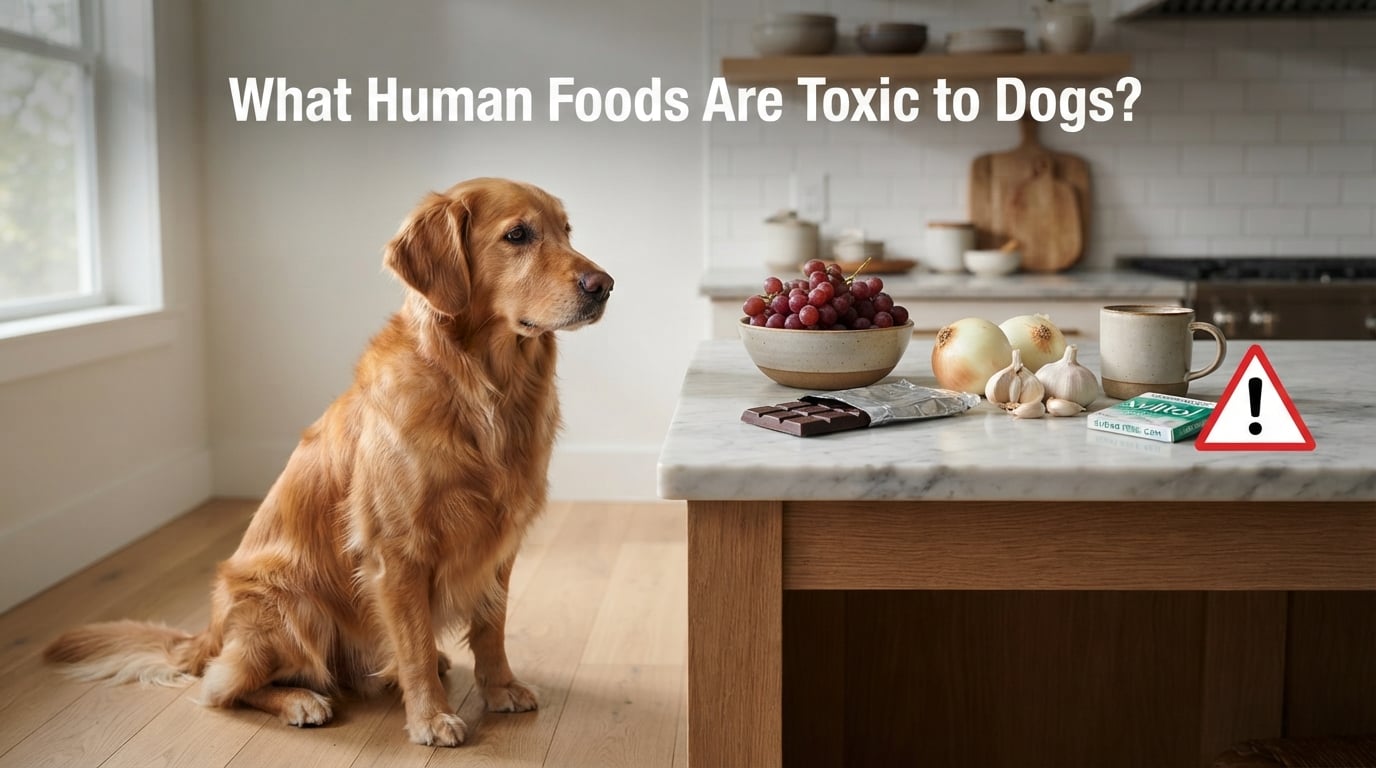
Human foods toxic to dogs include xylitol, grapes and raisins, chocolate, onions, garlic, alcohol, caffeine, and macadamia nuts. These foods can cause anything from stomach upset to anemia, seizures, kidney failure, liver failure, or death, so a suspected exposure deserves a prompt call to a veterinarian or pet poison-control service.
The safest rule is simple: do not wait for symptoms to appear after a dog eats a known toxic food. Keep the package or ingredient list, note what was eaten and when, and call your regular veterinarian, an emergency vet, or a pet poison-control service for advice tailored to your dog.
Emergency warning: Collapse, seizures, tremors, trouble breathing, repeated vomiting, a swollen abdomen, extreme weakness, or unresponsiveness call for emergency veterinary care now. Do not try to make a dog vomit or give a home remedy unless a veterinary professional specifically tells you to.
Dogs do not process every food compound as people do. The danger is not always obvious from a bite’s size, either: a food’s concentration, the dog’s body size, and the individual dog can all change the risk.
Table of Contents
Human foods toxic to dogs include several everyday kitchen staples
The most important toxic foods for dogs are xylitol-containing products, grapes and raisins, chocolate, onions and garlic, alcohol, caffeine, and macadamia nuts. Keep these out of reach, and treat any confirmed or likely ingestion as a reason to get veterinary guidance.
- Xylitol: This sweetener can cause a rapid insulin release, hypoglycemia, and liver failure.
- Grapes, raisins, currants, and sultanas: These can lead to acute kidney injury or kidney failure, and there is no reliably safe amount.
- Chocolate: Theobromine and related methylxanthines can cause vomiting, restlessness, tremors, seizures, and heart arrhythmias.
- Onions, garlic, chives, and leeks: Allium-family foods can damage red blood cells and cause anemia.
- Alcohol and unbaked yeast dough: These can cause alcohol poisoning; rising dough also creates a bloat risk.
- Coffee, tea, energy drinks, and caffeine pills: Caffeine can overstimulate the nervous system and heart.
- Macadamia nuts: These are linked with weakness, tremors, vomiting, and hind-leg problems.
- Very salty, fatty, raw, or cooked-bone foods: These may cause salt toxicity, pancreatitis, infection, obstruction, or internal injury.
This list separates true poisoning risks from foods that more often trigger digestive trouble. Milk, rich leftovers, and some fruits may not be poisonous in the same way as xylitol or grapes, but they can still make a dog ill and should not be treated as routine snacks.
Xylitol is among the most dangerous human-food ingredients for dogs
Xylitol, sometimes labeled birch sugar, is a sugar substitute found in some sugar-free gum, candies, baked goods, toothpaste, supplements, and peanut butter. In dogs, it may trigger a fast release of insulin, causing dangerously low blood sugar, called hypoglycemia, and it can also lead to liver failure.
Check labels rather than assuming a product is safe because it is marketed as natural, low-sugar, or sugar-free. Forum discussions repeatedly point to overlooked sources such as gum, toothpaste, and peanut butter, which is why ingredient-label checking matters before sharing any packaged food.
Xylitol symptoms can begin with weakness and progress quickly
Possible signs include vomiting, weakness, sleepiness, poor coordination, tremors, collapse, or seizures. A dog may look normal at first, which is not a reason to watch and wait after a known xylitol exposure.
Call for professional guidance immediately, tell the clinician the product name, and bring the package if you travel to a clinic. Never substitute a guess about the amount for expert advice; concentrations vary greatly between products.
Label-checking tip: Treat any food, supplement, or personal-care product labeled sugar-free as something to inspect before it comes near your dog. Put bags, purses, and bathroom products where a counter-surfing dog cannot reach them.
Grapes and raisins can cause unpredictable kidney damage in dogs
Grapes, raisins, currants, and sultanas are foods poisonous to dogs because they can cause acute kidney injury. Research summaries identify tartaric acid as a concern, but the response is unpredictable: some dogs can become seriously ill after a small amount, while others may not show an immediate reaction.
That uncertainty is exactly why grapes and raisins should be handled as an emergency. Do not use a dog’s size, the number eaten, or a past uneventful exposure as proof that the situation is safe.
Grape and raisin poisoning may not look dramatic at first
Vomiting, diarrhea, lethargy, poor appetite, abdominal discomfort, increased thirst, and changes in urination can occur. Kidney injury may develop after the initial stomach signs, so prompt veterinary direction has more value than monitoring at home.
Watch for less-obvious sources: trail mix, breakfast cereal, baked goods, fruitcake, cookies, and foods containing currants or sultanas. Owners often focus on fresh grapes and miss dried fruit, even though dried forms belong in the same avoid category.
Chocolate is toxic because dogs cannot clear methylxanthines efficiently
Chocolate contains theobromine and caffeine, both methylxanthines that affect the nervous system and heart. Darker chocolate and baking chocolate generally contain more of these compounds than milk chocolate, while cocoa powder can be especially concentrated.
Possible signs of chocolate toxicity include vomiting, diarrhea, thirst, restlessness, rapid breathing, an increased heart rate, tremors, seizures, and heart arrhythmias. The risk depends on the type of chocolate, the amount, and the dog’s size, so save the wrapper and call rather than estimating from an online chart.
Chocolate hazards extend beyond candy bars
Cocoa powder, baking chocolate, chocolate chips, hot cocoa mix, frosting, and desserts can all be problems. Holiday treats and baking projects can add another issue: they may also contain raisins, macadamia nuts, alcohol, or xylitol.
Do not assume that a dog who seems energetic after eating chocolate is fine. Stimulation and agitation can be early signs, and a professional can assess the exposure based on the actual product.
Onions, garlic, chives, and leeks can damage a dog’s red blood cells
Allium-family foods, including onions, garlic, chives, and leeks, contain organosulphoxides that can injure red blood cells. The result can be hemolytic anemia, meaning the body loses red blood cells faster than it can replace them.
Raw, cooked, powdered, dehydrated, and concentrated forms all deserve attention. Onion powder and garlic powder are common in sauces, soup mixes, seasoning blends, baby food, takeout, and table scraps, so “only a little seasoning” is not a reliable safety test.
Allium toxicity can be delayed and easy to overlook
Vomiting, diarrhea, weakness, pale gums, reduced appetite, rapid breathing, dark urine, and unusual tiredness can be signs of anemia or illness. Because effects can be delayed, call for advice even when a dog appears normal after eating a heavily seasoned food.
Garlic is not a safe home treatment for dogs. A food that has a reputation as healthy for people can still be one of the foods dogs cannot eat safely.
Alcohol and unbaked yeast dough can become life-threatening fast
Alcohol can depress a dog’s central nervous system and affect breathing, body temperature, and coordination. Beer, wine, liquor, cocktails, alcohol-containing desserts, and fermented food or drink are all off-limits.
Unbaked yeast dough is dangerous for two reasons. It can expand in the warm stomach and contribute to painful bloat, and fermentation can produce ethanol, leading to alcohol poisoning.
Alcohol poisoning needs urgent veterinary attention
Vomiting, disorientation, weakness, slowed breathing, low body temperature, collapse, and seizures are serious warning signs. Do not leave a dog to sleep it off, and do not try to counter alcohol with food or water.
Secure dough while it is rising and clean up spills before a dog can lick them. A kitchen cleanup matters as much as keeping a glass out of reach.
Caffeine can overstimulate a dog’s heart and nervous system
Coffee grounds, brewed coffee, tea, energy drinks, caffeine tablets, pre-workout products, and some sodas are human food dangerous for dogs. Caffeine may cause restlessness, panting, vomiting, an elevated heart rate, tremors, seizures, and heart arrhythmias.
Used coffee grounds and discarded tea bags can be easy for a dog to find in trash or compost. Treat access to these items seriously even if the dog did not drink a full cup of coffee.
Macadamia nuts can cause weakness and tremors in dogs
Macadamia nuts are toxic foods for dogs and are associated with weakness, vomiting, tremors, fever, and difficulty using the hind legs. Mixed nuts and cookies can hide macadamias among otherwise familiar ingredients.
High-fat nuts and nut-based treats can also contribute to digestive upset or pancreatitis. Keep nut mixes, baking supplies, and snack bowls off low tables, especially when guests are present.
Avocado, fatty scraps, and salty foods can cause serious illness
Avocado contains persin, and its high fat content can also be hard on a dog’s digestive system. The pit presents a separate choking or intestinal-obstruction risk, while fatty meat trimmings and rich leftovers can contribute to pancreatitis.
Salt-heavy foods such as chips, cured meats, salty dough, and heavily seasoned leftovers may lead to excessive thirst, vomiting, diarrhea, tremors, or seizures. Do not deliberately give salt water after a suspected exposure; call a veterinary professional for instructions.
Cooked bones, raw foods, and unsafe produce can harm dogs in different ways
Cooked bones can splinter and cause choking, mouth injuries, obstruction, or internal damage. Raw or undercooked meat and eggs can expose dogs and household members to bacteria such as Salmonella or E. coli, and raw diets also need professional nutritional planning.
Cherries are not a good dog snack because pits, stems, and leaves contain cyanide-related hazards and pits can obstruct the gut. Wild mushrooms are another no-guess situation: species identification is difficult, and some can cause severe poisoning.
Rhubarb can contain soluble oxalate crystals that may affect the kidneys, and the green parts of tomatoes contain solanine. Keep compost, garden produce, and dropped fruit picked up rather than relying on a dog to know what to avoid.
Milk and dairy are usually digestive problems, not a free pass
Many dogs have limited lactase, the enzyme needed to digest lactose. Milk, ice cream, cheese, and creamy sauces may cause gas, diarrhea, vomiting, or abdominal discomfort, particularly in lactose-intolerant dogs.
This is different from calling dairy a universal poison, but it does not make it a smart reward. Rich dairy desserts may also contain chocolate, xylitol, raisins, or sweeteners that change the risk entirely.
What to do if a dog eats toxic food is to call before trying home treatment
Acting quickly can help, but the right action is not identical for every food. A veterinarian or poison-control professional needs the dog’s weight, the food, the estimated amount, the time of exposure, the ingredient list, and any symptoms to judge the next step.
- Remove the remaining food and prevent another pet from eating it.
- Save the package, wrapper, recipe, or ingredient list; take a clear photo if that is faster.
- Write down the food, estimated amount, time, and your dog’s approximate weight.
- Call your veterinarian, an emergency veterinary clinic, or a pet poison-control service right away.
- Follow their directions precisely and take the packaging with you if asked to come in.
Do not induce vomiting, give hydrogen peroxide, offer milk, force food, or give activated charcoal unless a veterinary professional directs it. Those actions can be unsafe for some toxic ingestions and can complicate treatment.
Emergency signs mean a dog needs immediate veterinary care
Seek emergency care for seizures, collapse, severe weakness, trouble breathing, marked tremors, a swollen or painful abdomen, repeated vomiting, loss of coordination, or an unresponsive dog. Pale gums, dark urine, a racing heartbeat, or sudden profound lethargy also warrant urgent attention.
Symptoms are useful information, not a waiting threshold. Some toxic foods cause internal damage before a dog looks seriously ill, which is why early contact is the safer choice.
Do not rely on internet dose calculators: Dogs differ in size, health, exposure history, and sensitivity. For grapes and raisins in particular, there is no dependable safe amount that makes home monitoring a substitute for a professional call.
Preventing toxic-food exposures starts with labels, storage, and guest habits
Most dog poisoning episodes involving food are preventable. Use closed cabinets or high storage for baking supplies, gum, medications and supplements, coffee grounds, alcohol, trash, and holiday food; a countertop is not always high enough for a determined dog.
Teach family and guests one rule: ask before sharing any human food. This lowers the chance that a well-meaning visitor offers a chocolate cookie, seasoned meat, raisin bread, or a sugar-free item without checking the ingredients.
Holiday food risks rise when routines and supervision change
Chocolate treats, fruitcake, raisins, alcohol, rich roasts, onions, garlic, desserts, and discarded wrappers often appear together during celebrations. Put a dog in a calm, food-free room during cooking, serving, and cleanup if there is a realistic chance of scavenging.
Keep purses, backpacks, and overnight bags closed as well. They may contain gum, mints, supplements, snack bars, or toothpaste with xylitol that a dog can find before anyone realizes it.
Safe human foods for dogs are plain, portioned, and ingredient-checked
Many dogs can enjoy small amounts of plain cooked lean meat, plain cooked egg, carrots, green beans, cucumber, pumpkin, apple flesh with seeds and core removed, or blueberries. These are examples, not a replacement for a complete dog diet, and portions should fit the dog’s size and usual food plan.
Serve foods without butter, oil, salt, sauces, onion, garlic, sweeteners, chocolate, grapes, raisins, or alcohol. New foods can still upset an individual dog’s stomach, so introduce one simple item at a time.
If your dog has pancreatitis, diabetes, kidney disease, food allergies, or a prescribed diet, ask the veterinarian before adding human foods. The most dependable treat is one whose ingredients you know and whose portion is appropriate for that dog.
Frequently asked questions answer the biggest dog-food safety concerns
What is the most toxic thing a dog can eat?
What is the silent killer of dogs?
What human food should not be fed to dogs?
What is the number one cause of death in dogs?
Human foods toxic to dogs are best handled with prevention and a fast call for help
What human foods are toxic to dogs? The short answer is that xylitol, grapes and raisins, chocolate, allium vegetables, alcohol, caffeine, and macadamia nuts are key foods to keep away, with several other kitchen items carrying meaningful risks.
Save ingredient labels, secure food and trash, and make veterinary contact the first step after a suspected toxic ingestion. A quick, informed call is safer than guessing whether a small bite will be harmless.