
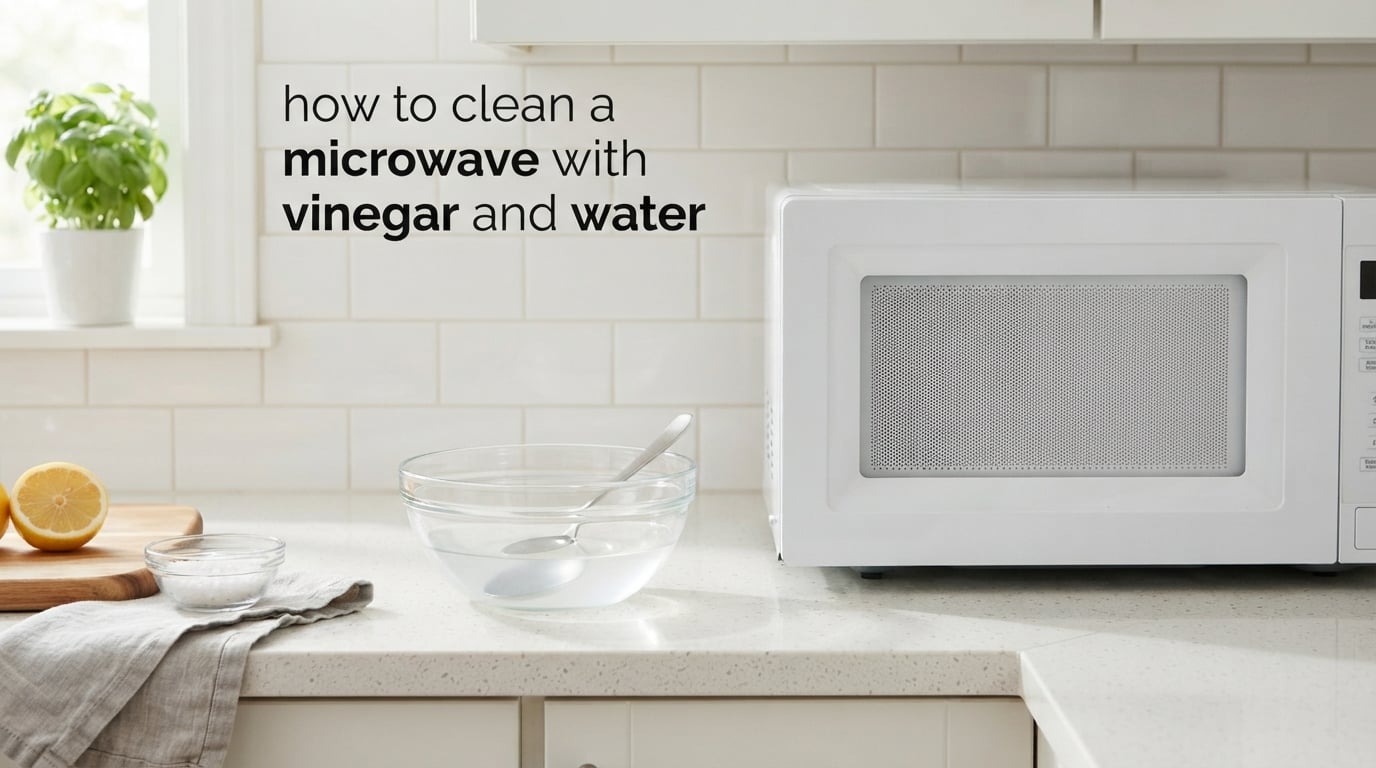
We’ve all been there. You open the microwave to reheat yesterday’s soup, and dried tomato sauce stares back at you from the ceiling. If you’ve been searching for a fast, natural way to deal with baked-on splatters, learning how to clean a microwave with vinegar and water is the answer.
I tested this method in my own kitchen after weeks of ignoring a particularly stubborn pasta explosion. The whole job took 8 minutes start to finish, and I used zero harsh chemicals. In this guide, I’ll walk you through the exact ratio, timing, and a few pro tips I picked up along the way.
Table of Contents
How to Clean a Microwave with Vinegar and Water: Step-by-Step
The simplest version of this method takes about 8 minutes total. Here’s the quick version before we get into the details.
- Mix 1 cup of water with 1 to 2 tablespoons of white vinegar in a microwave-safe bowl.
- Microwave on high for 3 to 5 minutes until the solution boils and steams.
- Let the bowl sit inside the closed microwave for 2 to 3 minutes so steam condenses on the walls.
- Carefully remove the bowl and wipe down all interior surfaces with a soft cloth or sponge.
- Remove the turntable, wash it in warm soapy water, dry it, and place it back.
Why Vinegar and Water Work So Well
The magic comes down to two things working together: heat and acid. White vinegar contains acetic acid, which sits at roughly pH 2.4. That strong acidity is enough to break down grease splatters and dissolve the mineral deposits that leave cloudy spots on microwave walls.
When you heat the mixture, the water turns to steam and fills the microwave cavity. The steam softens dried food and loosens crusted residue. The vinegar vapor rides along with that steam and gets into all the corners where a sponge can’t reach. Together, they cut the elbow grease you would normally need by about 90 percent.
This is also why vinegar beats plain water. Steam alone softens grime, but the acidic vapor actually dissolves it. That is why stubborn baked-on spots wipe away with almost no scrubbing.
What You’ll Need
Gather these supplies before you start. Everything is probably already in your kitchen.
- A microwave-safe glass bowl or large measuring cup (avoid plastic and metal).
- 1 cup of plain tap water.
- 1 to 2 tablespoons of distilled white vinegar (the clear kind, not apple cider).
- A soft, lint-free cloth or non-abrasive sponge.
- A damp paper towel or microfiber cloth for wiping down the door and seals.
Quick Safety Note
Never microwave dry paper towels or a dry cloth. The microwave can spark and ignite them, especially in older units. Always use a damp towel and only heat the water-and-vinegar bowl itself.
Detailed Step-by-Step Instructions
Follow these steps for a spotless microwave in under 10 minutes.
Step 1: Mix the Solution
Pour 1 cup of water into your microwave-safe bowl. Stir in 1 to 2 tablespoons of white vinegar. Use 2 tablespoons for heavier buildup and 1 tablespoon for routine weekly cleaning.
Step 2: Heat Until Steaming
Place the bowl in the center of the microwave. Run it on high for 3 to 5 minutes. The water should reach a rolling boil and the windows should fog up completely. If your microwave has lower wattage, go up to 7 minutes.
Step 3: Let the Steam Work
Do not open the door right away. Leave the bowl inside for 2 to 3 minutes. This resting period lets the steam condense on the walls and ceiling, which is what actually loosens the food. Skipping this step is the main reason some people think the method did not work.
Step 4: Wipe the Interior
Open the door carefully. Lift the bowl out with oven mitts since it is hot. Dip your soft cloth into the remaining warm liquid and wipe the ceiling, walls, and floor. The grime should slide off with light pressure.
Step 5: Clean the Turntable
Remove the glass turntable. Wash it in warm soapy water or place it on the top rack of your dishwasher. Dry it fully and set it back in place so it sits level on the rotating ring.
Step 6: Dry and Air Out
Leave the microwave door open for a few minutes to air out any lingering vinegar smell. Wipe down the outside and the door handle with a damp cloth.
Tips for Stubborn Stains and Stuck-On Food
Sometimes one round is not enough, especially if you are dealing with weeks of buildup. These tips solve the most common pain points.
For Baked-On Spots
If a chunk of dried food refuses to budge, dip a damp paper towel in baking soda and gently scrub the spot. Baking soda adds mild abrasive power without scratching the interior. Let it sit for one minute before scrubbing.
For Lingering Vinegar Smell
The vinegar scent fades within an hour for most people, but if you are sensitive to it, swap the vinegar for lemon. Squeeze half a lemon into the water and drop the squeezed halves into the bowl before heating. You get the same cleaning power plus a fresh citrus scent.
For Popped Popcorn or Tomato Sauce
These are the two biggest culprits for orange and yellow stains. Heat the solution for the full 5 minutes and let it rest for the full 3 minutes. The extra time is what breaks down sugar-based stains.
For First-Time Cleaning of a New Microwave
Always clean a new microwave before its first use. Manufacturing residue can leave a chemical taste. Run one vinegar-and-water cycle with no food inside, wipe everything down, then run a plain water-only cycle for 2 minutes. Your microwave is now food-safe.
How Often Should You Clean Your Microwave
For most households, a quick wipe-down once a week prevents buildup. I do a full vinegar-and-water steam clean every two weeks, and that is enough to keep grease and odors under control. If you microwave daily, do the full clean weekly.
Skip chemical degreasers. They leave residue that can absorb into food during the next heating cycle. Vinegar is non-toxic, food-safe, and cheap.
Alternative Cleaning Methods
If you do not have vinegar on hand, these alternatives work almost as well.
Lemon and Water
Squeeze half a lemon into 1 cup of water and drop the rinds into the bowl. Heat for 3 minutes and let sit for 3 minutes. The citric acid cuts grease and leaves a fresh scent. This is my top pick for anyone who dislikes the vinegar smell.
Baking Soda Paste
Mix 2 tablespoons of baking soda with 1 tablespoon of water to form a paste. Apply it to stains, let it sit for 10 minutes, then scrub gently with a damp sponge. Best for spot treatment rather than full cleaning.
Dish Soap and Water
Yes, you can use Dawn dish soap in a microwave. Add a few drops to 1 cup of water in a microwave-safe bowl, heat for 2 minutes, and wipe down. The steam softens grime and the soap lifts it. Rinse the interior with a damp cloth afterward to remove any soap film.
Vinegar and Baking Soda Combo
For the toughest jobs, run the vinegar-and-water cycle first, then follow with a baking soda paste on any remaining spots. The two ingredients work in sequence, not together (they cancel out if mixed at the same time).
Frequently Asked Questions
Can I clean the inside of the microwave with vinegar and water?
How long should vinegar and water be in the microwave?
Is it safe to use vinegar to clean a microwave?
Do you have to rinse after cleaning with vinegar?
Can I use Dawn dish soap to clean my microwave?
Final Thoughts
Learning how to clean a microwave with vinegar and water takes one session to master and saves you from harsh chemical cleaners forever. The exact ratio to remember is 1 cup of water to 1 to 2 tablespoons of white vinegar, heated for 3 to 5 minutes and rested for 2 to 3 minutes.
Pull this method out every two weeks and your microwave will stay fresh, odor-free, and food-safe all year. For more natural cleaning guides like this one, bookmark Myly Conet and check back for updates.