
Anyone who has stepped off a 12-hour flight feeling like they got hit by a truck knows the misery of jet lag. You land in Paris at 9 AM, but your body thinks it is 3 AM. You cannot keep your eyes open during dinner, yet you are wide awake staring at the ceiling at 4 AM.
The good news is that you can dramatically reduce jet lag symptoms with the right preparation and strategy. In this guide, I will walk you through exactly how to avoid jet lag on long flights using science-backed techniques that work before, during, and after your flight.
These are the same strategies I have used and refined across dozens of international trips, combined with advice from the CDC, Cleveland Clinic, and thousands of experienced travelers from communities like Reddit’s r/travel. Whether you are flying east to Europe or west to Asia, this guide covers direction-specific tips that most articles miss entirely.
Table of Contents
What Is Jet Lag and Why Does It Happen?
Jet lag is a temporary sleep disorder that happens when you cross multiple time zones faster than your body can adjust. Your internal clock, known as the circadian rhythm, stays locked to your home time zone while your destination operates on a completely different schedule.
This mismatch between your body’s sleep-wake cycle and local time triggers a cascade of physical and mental symptoms. The more time zones you cross, the worse the mismatch becomes.
According to the CDC, jet lag commonly produces these symptoms:
Difficulty falling asleep at the local nighttime
Waking up far too early in the morning
Daytime fatigue and low energy
Difficulty concentrating and brain fog
Stomach problems, indigestion, and changes in appetite
Travelers returning from Asia on Reddit frequently describe “waking up at 4 AM wide awake for a week straight.” That is your circadian rhythm fighting the new time zone, and it is completely normal.
Your body produces melatonin, the hormone that signals it is time to sleep, based on light exposure and your established routine. When you cross time zones rapidly, melatonin production stays on your old schedule. This is why light exposure management is one of the most powerful tools for beating jet lag.
How to Avoid Jet Lag on Long Flights: Before You Fly
Preparation is where jet lag prevention truly begins. What you do in the 3 to 5 days before your flight matters just as much as what you do during it. Here are the steps that make the biggest difference.
1. Gradually Shift Your Sleep Schedule
Start adjusting your bedtime 3 to 5 days before departure. Shift your sleep and meal times by 30 to 60 minutes each day toward your destination’s time zone. If you are flying east, go to bed earlier. If you are flying west, stay up later.
This gradual shift gives your circadian rhythm a head start. Instead of a sudden 6-hour jump on travel day, your body only needs to close a 2 or 3-hour gap on arrival.
2. Choose the Right Flight Time
Flight timing has a massive impact on jet lag severity, yet most travelers overlook it completely. Qantas recommends choosing flights that align with your natural sleep pattern and destination schedule.
For eastward overnight flights to Europe, aim for a departure in the late afternoon or evening. This lets you sleep during the natural nighttime portion of your flight and wake up aligned with morning at your destination.
For westward flights, daytime departures work better. You arrive in the evening local time, which lets you stay up a few hours and go to bed at a normal hour.
3. Pack Your Jet Lag Survival Kit
Reddit travelers consistently recommend building a “cocoon” for long-haul flying. Based on hundreds of forum recommendations, here is what experienced travelers pack:
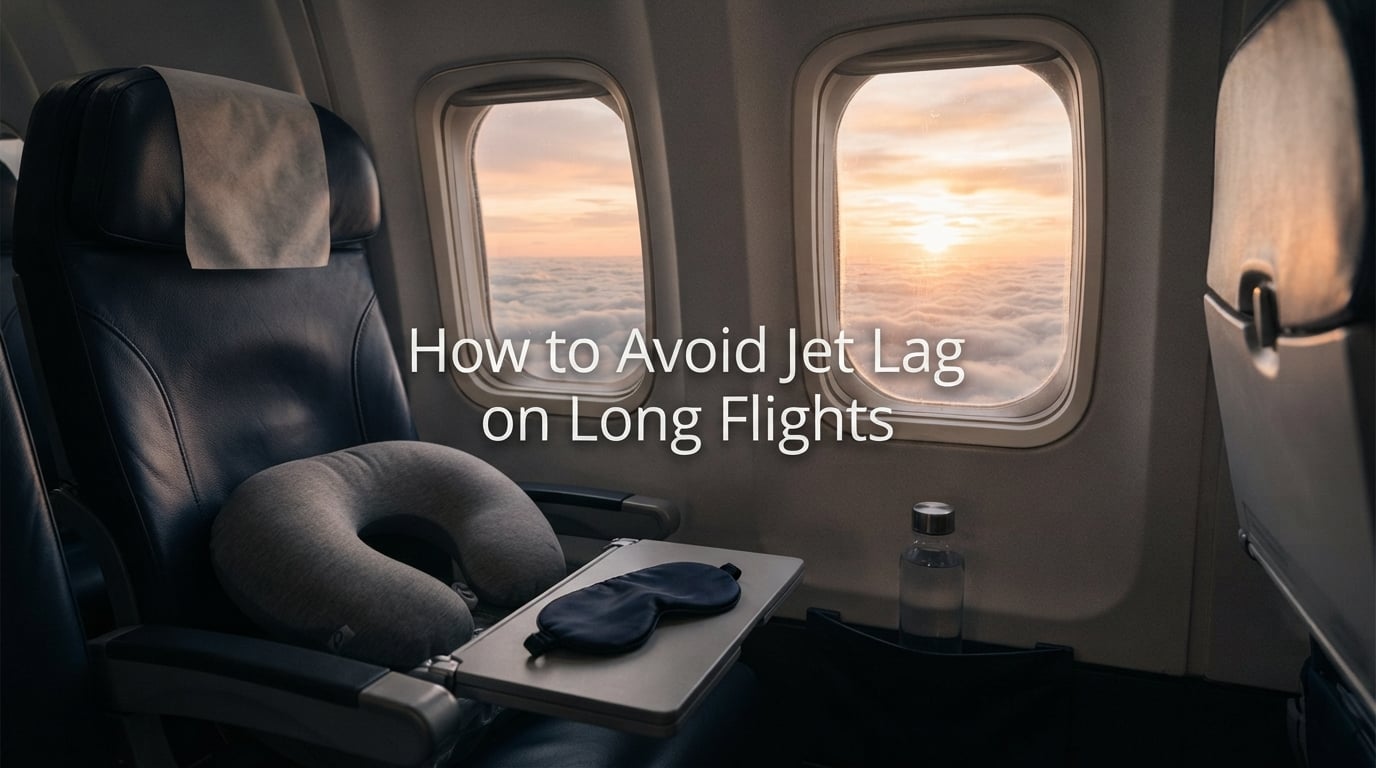
A quality eye mask to block cabin light completely
Noise-cancelling headphones or quality earplugs
A supportive neck pillow for sleeping upright
Compression socks to improve circulation during long flights
A reusable water bottle to track hydration
These items let you control your environment and sleep quality on the plane, which directly affects how you feel on arrival.
4. Arrive Well Rested, Not Exhausted
Rick Steves makes a point that many travelers ignore: leave home well rested. People often run themselves ragged with packing, last-minute work, and pre-trip stress, then board an overnight flight already depleted. Starting a long flight exhausted makes jet lag significantly worse.
Get a full night of sleep the two nights before your trip. Finish packing at least 24 hours before departure if possible.
East vs West: Why Direction Matters
Most jet lag guides skip this entirely, but understanding travel direction is one of the biggest content gaps in the travel space. The direction you fly determines how severe your jet lag will be and what specific strategies to use.
Eastward Travel Is Harder
Flying east is tougher on your body because you are advancing your clock forward. You lose time, which means you need to fall asleep earlier than your body wants to. Most people find it far harder to force themselves to sleep early than to stay up late.
For eastward travel, focus on getting morning light at your destination. Morning light signals your brain to shift your circadian rhythm earlier. Take a walk outside within an hour of waking up. Avoid bright evening light, which pushes your clock in the wrong direction.
If you are flying from New York to London, a 5-hour time difference means your body will resist sleeping at London bedtime. Melatonin taken 30 minutes before your target bedtime at the destination can help reset that rhythm faster.
Westward Travel Is Easier (But Still Tricky)
Flying west delays your clock, which is generally easier because extending your day aligns with most people’s natural tendency to stay up later. However, you may find yourself waking up far too early at your destination.
For westward travel, seek bright light in the late afternoon and evening at your destination. This helps push your clock later. If you wake up too early, keep the lights dim and try to rest rather than starting your day at 3 AM.
Travelers returning from Asia to the US often report the worst jet lag of their lives. An 8 to 12-hour time shift means you are essentially flipping day and night. Give yourself extra recovery days after trips like these.
During Your Flight: In-Flight Strategies
Your time in the air is where you either set yourself up for a smooth arrival or dig yourself into a deeper hole. Follow these steps to use flight time wisely.
1. Set Your Watch Immediately
The moment you board the plane, set your watch and phone to your destination’s local time. This simple psychological trick helps your brain start accepting the new schedule. Reddit travelers mention this tip more than almost any other.
Start thinking in terms of destination time immediately. If it is nighttime where you are going, prepare to sleep.
2. Hydrate Aggressively
Cabin air is extremely dry, often with humidity below 20 percent. Dehydration makes jet lag symptoms worse and amplifies fatigue, headaches, and brain fog. Drink at least 8 ounces of water for every hour of flight time.
Avoid alcohol on the plane. Many travelers use a glass of wine to fall asleep, but alcohol fragments sleep quality and worsens dehydration. The CDC specifically warns that alcohol disrupts sleep patterns and worsens jet lag.
Limit caffeine as well. A cup of coffee might seem essential for alertness, but it stays in your system for 6 to 8 hours and can prevent you from sleeping at the right time in your destination zone.
3. Sleep Strategically, Not Randomly
Whether you should sleep on the plane depends entirely on your destination time. If it is nighttime at your destination, sleep. If it is daytime, stay awake.
For overnight flights heading east, aim to sleep during the back half of the flight. Put on your eye mask and headphones, recline your seat, and create your cocoon. Avoid sleeping during the first hour or two of a long flight so your body starts the adjustment process.
For daytime flights heading west, resist the urge to nap for more than 20 to 30 minutes. Long naps during destination daytime will make it harder to sleep that night.
4. Eat Light and Eat on Schedule
Heavy meals during flights cause digestive discomfort and can interfere with sleep. Eat light, easily digestible foods. Qantas recommends eating meals that align with your destination time zone, not your departure zone.
Skip the large airline dinner if it does not match your destination schedule. Instead, eat a small snack and save your appetite for the right local mealtime.
5. Move Every Two Hours
Sitting immobile for hours causes stiffness, poor circulation, and deeper fatigue. Walk the aisle, do simple stretches in your seat, and rotate your ankles regularly. Compression socks help maintain blood flow and reduce swelling.
Exercise before your flight also helps. A light workout or brisk walk before departure reduces pre-flight stress and primes your body for better rest.
On Arrival: First Day Strategies That Work
What you do on the first day at your destination often determines how quickly you recover. These strategies help you sync up with local time as fast as possible.
1. Get Outside and Get Light
Sunlight is the single most powerful tool for resetting your circadian rhythm. Get outside within an hour of arriving. Natural daylight tells your brain what time it is in your new location.
If you arrive during the day, take a walk outside for at least 30 minutes. If you arrive at night, keep lights bright for a short time, then dim them an hour before your target bedtime.
2. Resist the Urge to Nap
This is the hardest but most important rule. Unless you absolutely cannot function, avoid sleeping during the day at your destination. A long nap anchors your body to the wrong time zone and extends your jet lag by days.
If you must nap, set an alarm for 20 to 30 minutes maximum. A short power nap can take the edge off fatigue without sabotaging your nighttime sleep.
Reddit travelers consistently say the fastest recovery comes from pushing through: “Just bite the bullet and jump straight into the new timezone.” It is uncomfortable for a few hours, but it works.
3. Eat Meals on Local Time
Your digestive system also runs on a circadian rhythm. Eating meals at the right local times helps synchronize your body clock. Have breakfast at local breakfast time, lunch at local lunch time, and dinner at local dinner time.
Keep portions moderate on the first day. Your digestion is already disrupted, and large meals can cause stomach problems that compound your fatigue.
4. Stay Active but Do Not Overdo It
Light activity helps fight off sleepiness during the day, but avoid intense workouts on arrival day. A gentle walk, some sightseeing at a relaxed pace, or light stretching is ideal. Save the intense exercise for day two or three when you are more adjusted.
How Long Does Jet Lag Last? Recovery Timeline
This is one of the most common questions travelers ask, and most articles never give a clear answer. Here is what to expect.
The general rule of thumb is that jet lag takes about one day per time zone crossed to fully resolve. Crossing 5 time zones means roughly 5 days of adjustment. Crossing 10 time zones can take a week or more.
The worst day for jet lag is typically day two or three at your destination. Day one is often masked by travel adrenaline and excitement. By day two, the accumulated sleep debt catches up with you.
Several factors affect your recovery speed:
Number of time zones crossed (more zones equals longer recovery)
Direction of travel (eastward takes longer than westward)
Age (older adults often take longer to adjust)
Individual sleep flexibility (some people adapt faster naturally)
How well you prepared before the flight
Jet lag does go away on its own as your body gradually syncs with the local time zone. But proactive management can cut your recovery time in half.
Tools and Apps That Help With Jet Lag
Technology can give you a significant advantage in the jet lag battle. Several tools are specifically designed to help travelers manage time zone transitions.
Timeshifter
Timeshifter is a science-backed app that creates personalized jet lag plans based on your sleep patterns, chronotype, and travel itinerary. It tells you exactly when to seek light, when to avoid it, when to take melatonin, and when to sleep. Qantas specifically recommends it, and many Reddit travelers swear by it.
Meditation and Breathing Apps
Qantas interviewed meditation expert Jonni Pollard, who recommends breathing techniques to calm the nervous system before and during flights. Apps like Insight Timer and Calm offer guided sessions designed for travel and sleep. Even 5 minutes of deep breathing can lower stress hormones that interfere with sleep quality.
Melatonin Supplements
Melatonin is the most studied jet lag supplement, and research generally supports its use for time zone transitions. Take 0.5 to 3 mg about 30 minutes before your target bedtime at the destination. Start this routine on the plane if it aligns with destination nighttime.
Avoid high doses. More melatonin does not mean better sleep, and large doses can cause grogginess the next day. Talk to your doctor before using melatonin, especially if you take other medications.
FAQ
What are 5 symptoms of jet lag?
What is the fastest way to cure jet lag?
How do you survive a 12 hour flight in economy?
Do jet lag pills actually work?
What not to do when jet lagged?
Wrapping Up
Learning how to avoid jet lag on long flights comes down to three phases: prepare your body before departure, manage your environment during the flight, and force alignment with local time on arrival. The travelers who suffer the least are the ones who start adjusting days before they ever set foot on the plane.
Start shifting your sleep schedule this week, pack your cocoon kit, hydrate aggressively, and resist that day-one nap. Your body will thank you, and you will actually enjoy the first day of your trip instead of sleeping through it.