
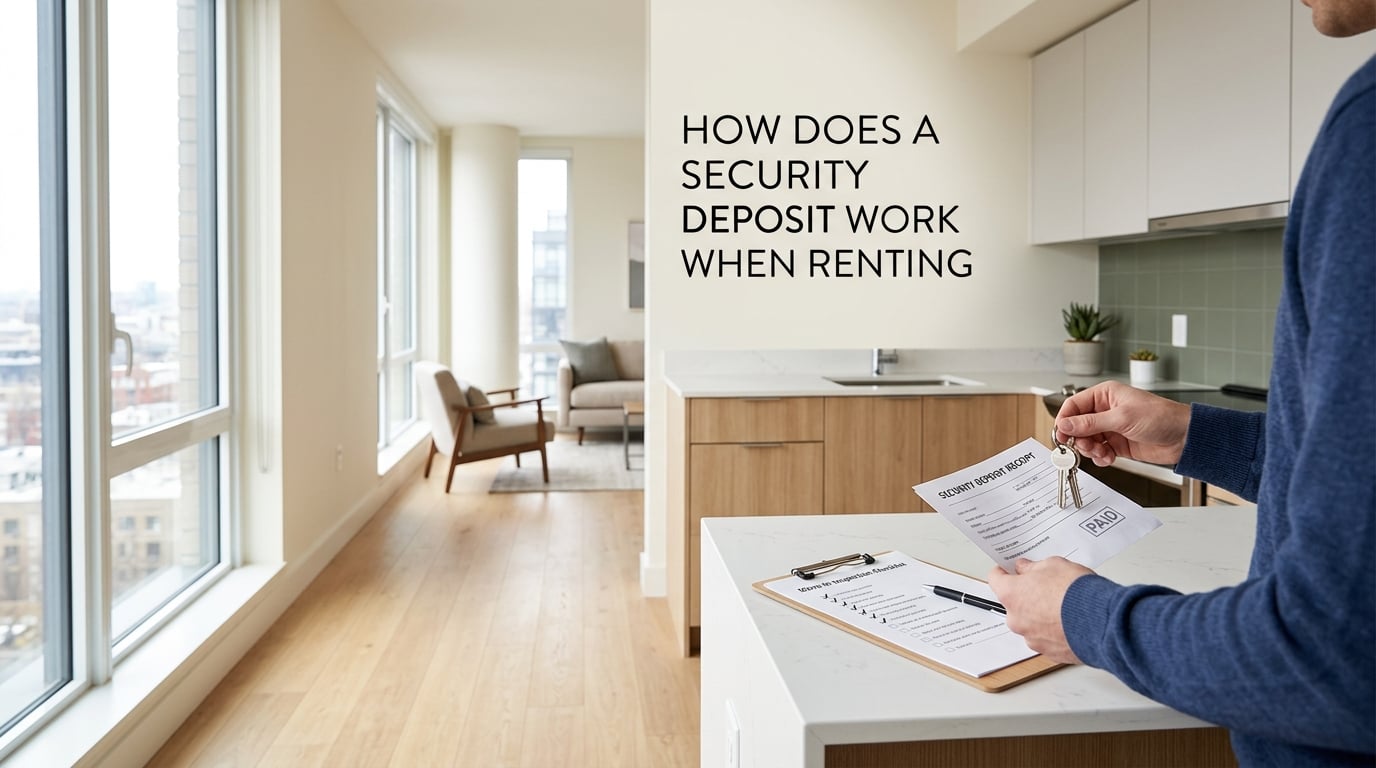
When I signed my first lease, I had no idea how a security deposit actually worked. I just wrote the check, got my keys, and hoped I’d see that money again two years later. After helping dozens of friends navigate rentals, and learning from my own mistakes, I can tell you exactly how does a security deposit works when renting — and what to do to protect every dollar of it.
A security deposit is money, typically one to two months’ rent, that a landlord holds during your tenancy to cover potential damages, unpaid rent, or lease violations when you move out. The landlord keeps it in an escrow account, inspects the unit at move-out, then returns it minus any valid deductions for damage beyond normal wear and tear or unpaid amounts. Most states give landlords 14 to 45 days to return the deposit, though the rules vary widely depending on where you live.
That short answer covers the basics. The rest of this guide walks through every stage of the process — from your first payment to your final refund — so you know exactly what to expect and how to avoid surprises. Let’s get started.
Table of Contents
What Is a Security Deposit When Renting?
A security deposit is a refundable sum of money that a tenant pays to a landlord before moving into a rental property. Unlike rent, the landlord doesn’t keep this money as payment. Instead, it acts as financial protection against potential damage, unpaid rent, or other lease violations during your tenancy.
Think of it as a safety net for both parties. The landlord has money set aside if you cause damage beyond normal use or skip out on rent. You have skin in the game to take care of the property and follow the lease terms.
The security deposit isn’t the same as first month’s rent or last month’s rent, even though you often pay all three at signing. First month’s rent covers your actual rent payment for month one. Last month’s rent sits with the landlord and applies to your final month (avoiding that last check). The security deposit stays untouched until move-out, when it’s either refunded or used to cover specific, documented issues.
When Do You Pay the Security Deposit?
You typically pay the security deposit before you move in, often at the same time as your first month’s rent and any other move-in costs. Most landlords require all upfront funds at lease signing, which usually happens a few days to a few weeks before your move-in date.
Yes, it’s normal to pay rent and security deposit at the same time. In fact, most landlords will not hand over keys until they receive all required funds. The common combination you’ll see at signing includes:
- First month’s rent
- Security deposit (often one to two months’ rent)
- Last month’s rent (in some states, especially higher-cost markets)
- Application fees and background check costs
- Pet deposit or pet fees if applicable
Always get a receipt for the security deposit. The receipt should list the exact amount, the date paid, and the property address. Some states require landlords to deposit your money into a separate escrow account and pay you interest on it. Ask your landlord or check your state laws to confirm what’s required where you live.
How Much Is a Typical Security Deposit?
A typical security deposit runs one to two months’ rent, though the exact amount depends on your state, your landlord’s policies, and your qualifications as a tenant. In competitive rental markets, you might see deposits equal to two or even three months’ rent, especially for units without brokers.
Is a $500 security deposit good? It depends on your rent. If you’re paying $600 per month, a $500 deposit is on the low end and a great deal. If your rent is $1,500, that same $500 deposit is unusually low and may signal a landlord who cuts corners on maintenance or has weak tenant standards. Most landlords charge at least one full month’s rent as the deposit.
Several factors can push your deposit higher or lower. Here’s what I’ve seen landlords consider when setting the amount:
- Credit score: A lower credit score sometimes means a higher deposit
- Rental history: Evictions or late payments can increase the deposit
- Pet ownership: Expect an additional $200 to $500 pet deposit per animal
- Income level: Some landlords charge more if your income is below a threshold
- Property type: Single-family homes often carry higher deposits than apartments
Some states cap how much a landlord can charge. New York limits deposits to one month’s rent for most residential leases. California generally caps deposits at two months’ rent for unfurnished units and three months for furnished ones. Massachusetts limits deposits to first month’s rent only. Check your state’s rules before signing so you know whether your landlord’s request is reasonable.
What Can a Landlord Use the Security Deposit For?
Landlords can only use the security deposit for specific purposes spelled out in your lease and state law. The most common deductions fall into four categories: damage beyond normal wear and tear, unpaid rent, cleaning costs, and lease break fees.
Damage is the most common reason for deductions. This includes broken windows, holes in walls, stained carpets, and damaged appliances caused by tenant negligence or misuse. The damage must exceed what’s considered normal wear and tear from everyday living.
Unpaid rent is straightforward. If you owe rent when you move out, the landlord can use your deposit to cover it. This includes unpaid late fees, utility charges, or any other amounts you owe under the lease.
Cleaning costs come into play when you leave the unit dirtier than you received it. Most landlords expect a “broom clean” condition at move-out. If the unit requires professional cleaning beyond standard turnover, the landlord may deduct the cost from your deposit.
Lease break fees apply when you move out before the lease ends without proper notice. The deposit can cover the landlord’s losses, including unpaid rent until they find a new tenant, re-leasing fees, and advertising costs.
What landlords cannot do with the deposit includes: charging for normal wear and tear, making upgrades or improvements, keeping the deposit as extra rent, or using it for anything not specifically outlined in your lease agreement.
Damage vs Normal Wear and Tear: What’s the Difference?
Normal wear and tear refers to the natural deterioration that happens from everyday living. Damage, on the other hand, results from negligence, accidents, or misuse. The distinction matters because landlords can only deduct for damage, not for the natural aging of the property.
Here are clear examples to help you tell the difference:
- Worn carpet in high-traffic areas: wear and tear
- Stains, burns, or torn carpet: damage
- Faded paint from sunlight: wear and tear
- Unapproved paint colors, nail holes larger than a picture hook, or writing on walls: damage
- Loose door handles from regular use: wear and tear
- Broken doors, missing handles, or cracked frames: damage
- Minor scuffs on walls: wear and tear
- Large holes, deep gouges, or unapproved mounting: damage
- Appliances that stop working from age: wear and tear
- Appliances that break from misuse or neglect: damage
If your landlord tries to charge for something that counts as normal wear and tear, you have the right to dispute it. This is where move-in documentation becomes critical. Strong evidence protects you when these gray areas come up.
How to Document the Move-In Condition
Documenting the condition of the rental at move-in is the single most important step you can take to protect your security deposit. Without proof of the unit’s original state, you have no defense when a landlord claims damage at move-out. With clear documentation, you have a much stronger position.
Here’s my step-by-step process that I walk every tenant through:
- Walk through the entire unit with your landlord or property manager on move-in day
- Take timestamped photos and videos of every room, including walls, floors, ceilings, appliances, and fixtures
- Note any existing damage on the move-in inspection checklist
- Keep copies of all communication with the landlord, especially texts and emails about repairs or issues
- Document quarterly throughout your tenancy if you notice new damage or issues
- Keep maintenance records and repair receipts
- Save the move-in checklist with your signature and the landlord’s signature
Photos matter more than most people realize. Courts and small claims judges consistently side with tenants who have visual evidence over landlords who rely on verbal claims. Spend 30 minutes the day you move in taking thorough photos. It pays off years later when you move out.
Security Deposit Return Timeline by State
State laws control how long a landlord has to return your security deposit after you move out. The range varies dramatically — from as little as 14 days in some states to as long as 60 days in others. Missing the deadline often means the landlord forfeits the right to make deductions.
Here’s a snapshot of return timelines in several popular states:
- California: 21 days
- New York: 14 days
- Texas: 30 days
- Florida: 15 days (if no deductions) or 30 days (with itemized deductions)
- Illinois: 30 days (45 days if landlord and tenant agree in writing)
- Pennsylvania: 30 days
- Massachusetts: 30 days
- Michigan: 30 days
- Washington: 21 days
- Virginia: 45 days
- Georgia: 30 days
- Ohio: 30 days
If your landlord doesn’t return the deposit within the legal timeframe, you may be entitled to additional damages. Some states require landlords to pay double or triple the deposit amount for bad-faith withholding. Pennsylvania, for example, allows tenants to recover the deposit plus attorney’s fees if the landlord fails to comply.
To protect yourself, always provide your landlord with a written forwarding address after you move out. Many states require this before the landlord’s return deadline starts. Send it via certified mail so you have proof of delivery.
What to Do If Your Landlord Withholds Your Deposit
If your landlord keeps part or all of your security deposit without justification, you have several options. Start with the simplest and work your way up if needed.
Step 1: Request an itemized statement. By law, most landlords must send you a list of deductions within the return timeline. If you didn’t receive one, ask for it in writing.
Step 2: Review the deductions against your move-in documentation. Check whether the damage existed before you moved in or counts as normal wear and tear. Many disputes come down to documentation.
Step 3: Write a dispute letter. Send a clear, polite letter explaining why each deduction is incorrect. Reference your move-in photos and state law. Include copies of your evidence, not originals.
Step 4: Negotiate. Some landlords will accept a partial refund or remove questionable charges to avoid escalation. A fair settlement saves both sides the hassle of court.
Step 5: File in small claims court. If all else fails, you can typically sue for the deposit amount in your local small claims court. Filing fees are usually under $100, and you don’t need a lawyer. Bring your documentation, photos, and a copy of your lease.
Many states also have tenant rights organizations, legal aid societies, or housing authorities that can help you draft demand letters or mediate disputes for free. Use these resources before paying for legal help.
Security Deposit Alternatives Worth Considering
Not every renter wants to tie up thousands of dollars in a security deposit. Several alternatives have emerged that offer landlords similar protection while freeing up cash for tenants. If you’re moving with limited savings, ask your landlord about these options.
Lease insurance, sometimes called a security deposit insurance policy, lets you pay a small monthly or annual premium instead of a traditional deposit. If damages occur, the insurance company pays the landlord, then collects from you. Common providers include LeaseTrack and Rhino.
Surety bonds work similarly to insurance but involve a third-party guarantor. You pay a percentage of the deposit amount upfront, and the bond company covers the landlord if you default or damage the property.
Pay-per-damage programs charge you only for actual damages at move-out, with no upfront deposit. These programs use digital inspection tools to track the unit’s condition over time and bill for any new damage you cause.
These alternatives benefit tenants who are short on cash, transitioning between leases, or moving across state lines. They also benefit landlords by reducing turnover friction and attracting applicants who can’t afford traditional deposits. Not every landlord accepts them, but it’s worth asking.
Move-Out Checklist to Get Your Full Deposit Back
Walking through this checklist the week before you move out dramatically increases your chances of getting your full security deposit back. Most deductions happen because landlords find unexpected issues during the final walk-through. You can catch and fix most of them yourself.
- Deep clean the entire unit, including appliances, baseboards, and windows
- Patch small nail holes and touch up paint with the original color if possible
- Replace burned-out light bulbs
- Clean the oven, refrigerator, and cabinets inside and out
- Vacuum and mop all floors, including corners and under furniture
- Remove all personal items and trash from the unit and any storage areas
- Take new photos and videos of the unit’s condition on move-out day
- Schedule a pre-move-out inspection if your state allows it
- Return all keys, fobs, parking passes, and remote controls
- Provide your forwarding address in writing
- Request a final walk-through with the landlord to confirm the condition
Doing this work yourself saves the landlord’s cleaning and repair costs, which keeps your deposit intact. Most tenants who follow this checklist walk away with 100% of their deposit refunded.
Frequently Asked Questions
Is a $500 security deposit good?
Is it normal to pay rent and security deposit at the same time?
How long does it take to get your security deposit back?
What can a landlord deduct from a security deposit?
Final Thoughts on How Security Deposits Work When Renting
Understanding how does a security deposit work when renting saves you money, stress, and time. The two things that matter most are documenting the move-in condition thoroughly and knowing your state’s specific rules on return timelines and allowable deductions. Take photos on day one, keep your lease and all communication in one place, and walk through the move-out checklist before returning your keys.
If you’re about to sign a lease, take an hour to read your state’s security deposit laws before you pay anything. If you’re moving out, schedule a pre-inspection if your state allows it, and address small issues before they become big deductions. A little preparation goes a long way toward getting your full deposit back. At Myly Conet, we help renters make informed decisions, and this is one area where being informed pays off directly.