
Whitening toothpaste works, but only on stains that sit on the surface of your enamel. The most effective formulas pair a chemical whitener such as hydrogen peroxide with a mild abrasive like hydrated silica, and most people see one to two shades of improvement in two to eight weeks of twice-daily brushing. No toothpaste on the market can change the natural colour of a tooth from the inside, which is the honest limit of the entire category.
That candour matters because the gap between what the packaging promises and what you actually see is the single biggest source of disappointment in this aisle. A tube that claims to remove fifteen years of discolouration in three days is describing a laboratory result, not your bathroom mirror. We pulled twelve of the strongest options currently on the market and ranked them by what is actually in the tube, what buyers report after weeks of use, and how each one behaves on sensitive enamel.
Below is our complete rundown of the best whitening toothpastes available now, from peroxide-based deep stain removal to low-abrasion formulas for people whose teeth already ache. We also explain the four mechanisms these products use, what a realistic week-by-week timeline looks like, and who should steer clear entirely. Every pick below names its active ingredient, so you can match the formula to your stain type and your tolerance before you buy.
Table of Contents
Top 3 Whitening Toothpastes in 2026

Crest + Scope Whitening
- Active fluoride anticavity formula
- Tartar protection
- Enamel-safe surface stain removal
- Scope-level breath freshening

Colgate Optic White Advanced
- 2% hydrogen peroxide
- Deep stain removal
- Enamel safe
- Icy Fresh flavor

Sensodyne Repair and Protect
- Stannous fluoride
- Repairing layer technology
- Clinically proven sensitivity relief
- Whitening and breath freshening
All 12 Whitening Toothpastes at a Glance in 2026
| Product | Specifications | Action |
|---|---|---|
| Crest + Scope Whitening Toothpaste |
|
Check Latest Price |
| Colgate Optic White Advanced |
|
Check Latest Price |
| Sensodyne Repair and Protect Whitening |
|
Check Latest Price |
 hello Epic Whitening Charcoal Toothpaste hello Epic Whitening Charcoal Toothpaste |
|
Check Latest Price |
 Luminex Whitening Toothpaste Luminex Whitening Toothpaste |
|
Check Latest Price |
 Crest 3D White Advanced Crest 3D White Advanced |
|
Check Latest Price |
 Marvis Whitening Mint Toothpaste Marvis Whitening Mint Toothpaste |
|
Check Latest Price |
 Opalescence Whitening Toothpaste Original Opalescence Whitening Toothpaste Original |
|
Check Latest Price |
 REMBRANDT Intense Stain Whitening REMBRANDT Intense Stain Whitening |
|
Check Latest Price |
 Sensodyne Clinical White Stain Protector Sensodyne Clinical White Stain Protector |
|
Check Latest Price |
 Arm and Hammer Advance White Arm and Hammer Advance White |
|
Check Latest Price |
 Dr. Sheffield’s Fluoride Free Whitening Dr. Sheffield’s Fluoride Free Whitening |
|
Check Latest Price |
How Whitening Toothpaste Actually Works
Every whitening paste on this list falls into one of four mechanisms, and the best ones combine two. Understanding which mechanism a product relies on tells you what kind of stain it can touch and how quickly you should expect to see something.
Abrasive action is the oldest approach. Particles of hydrated silica, calcium carbonate or sodium bicarbonate physically buff the stain layer off the enamel during brushing, much like polishing a surface. It is effective, fast and safe in moderation, but the strongest abrasives can wear enamel down over years of daily use, and that worn enamel exposes the yellower dentin beneath.
Chemical oxidation is what the peroxide formulas do. Hydrogen peroxide, carbamide peroxide and calcium peroxide break down the stain molecules themselves, which is why these pastes can lift colour that an abrasive would miss. This is also why they are the most likely to cause tooth sensitivity, and why the strongest results need several weeks rather than several days.
Optical brightening is the trick used by purple pastes. A blue or violet pigment sitting on the tooth surface cancels out the yellow tone underneath, making the tooth look brighter for as long as the paste is in contact with it. It is genuinely effective cosmetically and it removes nothing at all, which is why the effect washes away entirely by lunchtime.
Enzymatic action uses proteins such as papain and bromelain to break down the stain-linked proteins that hold discolouration to the dental pellicle, the thin protein film that coats every tooth. Enzyme pastes are the gentlest option on sensitive enamel and the slowest, so they fit a maintenance routine rather than a pre-event brightening plan.
Two further words you will see on packaging. Low abrasivity refers to how much dentin a paste would wear if you brushed for a fixed number of strokes, measured on a relative dentin abrasivity scale. Enamel safe simply means the formula stays inside the accepted abrasion range, not that it whitens without any change at all.
1. Crest + Scope Whitening Toothpaste – Best Overall Enamel-Safe Whitening
Crest + Scope Whitening Toothpaste – Pack of 3, 5.4 Oz Tubes – Anticavity Fluoride Toothpaste, Fresh Breath, Kills Germs – Tartar Protection, Enamel Protection – Minty Fresh Flavor
Active fluoride anticavity formula
Tartar protection
Enamel-safe surface stain removal
Scope-level breath freshening
Pack of 3 tubes
Pros
- Combines Crest cavity protection with Scope breath freshness
- Gently removes surface stains from coffee tea and food
- Fluoride strengthens enamel and controls tartar
- Multi-pack works well for a household
Cons
- Whitening is surface stain removal rather than deep bleaching
- Scope mint intensity is strong for some users
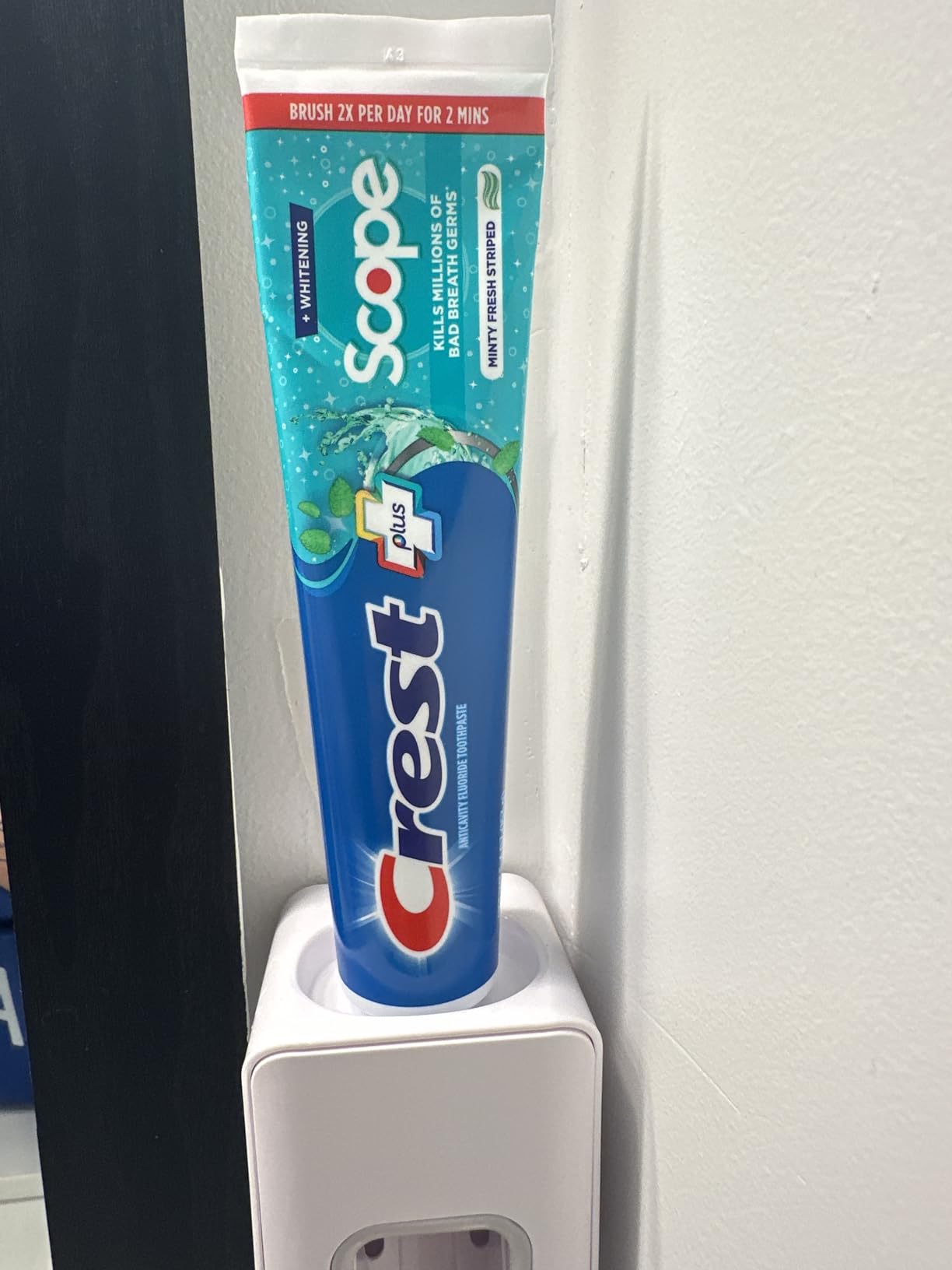
Crest + Scope Whitening is the paste I recommend to anyone who wants a brighter smile without gambling on their enamel. The formula does two separate jobs at once: an active fluoride anticavity system for cavity protection and tartar control, paired with a gentle surface-stain cleaner for the coffee, tea and food discolouration that builds up between professional cleanings.
What I like most is the restraint. This is not a peroxide formula, so it will not trigger the sharp twinge that stops people quitting peroxide mid-course. It also is not trying to bleach; it is removing the film that makes teeth look dull, which is a much lower bar but a bar most people clear comfortably.
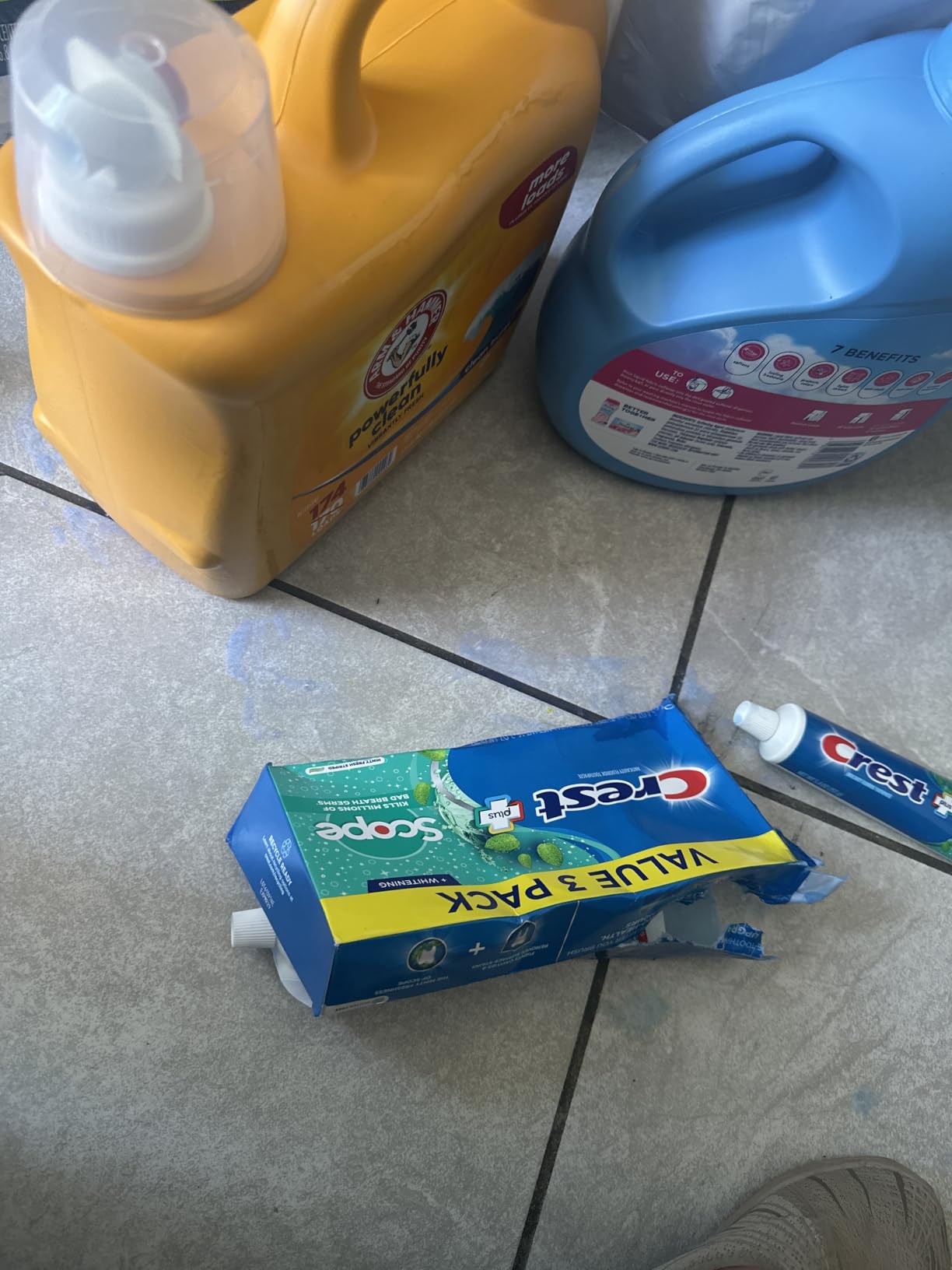
Buyer feedback lines up with the spec sheet. Reviewers consistently describe a gentle lifting of coffee and tea stains without any enamel or sensitivity complaints, and the multi-pack format gets called out as sensible for a shared household. The 4.8 rating across more than fifty thousand reviews is the largest review base of any paste in this roundup, which means the pattern here is not a small sample.
The one thing to set expectations on: the Scope flavour is genuinely intense. Users who prefer a soft, neutral mint often find it strong for the first few days. It is a flavour preference rather than a formula problem, and it fades as you get used to the rinse.
Who should buy Crest + Scope Whitening
Buy this if you drink one or two coffees or teas a day, brush twice daily already, and simply want the dull yellow film gone without changing your routine. It is also the one I would hand to someone who has tried a peroxide paste and quit after a week of sensitivity, because there is no peroxide to blame.
It is a sensible default for households where more than one person uses the same tube and the priority is cavity protection first, whitening second.
Who should skip Crest + Scope Whitening
Skip it if your discolouration is deep-set or intrinsic, such as tetracycline banding, a history of smoking, or discolouration that came from inside the tooth. An abrasive surface cleaner cannot touch it, and you will read the results as failure rather than as a mismatch between product and problem.
It is also the wrong choice if you are already using a peroxide paste somewhere in your routine, since you would be buying a second fluoride tube rather than a second whitening mechanism.
2. Colgate Optic White Advanced – Best Hydrogen Peroxide for Deep Stains
Colgate Optic White Advanced Hydrogen Peroxide Toothpaste, 3 Pack, 3.2 oz
2% hydrogen peroxide with HP Complex
Clinically proven enamel-safe whitening
Three 3.2 oz tubes
Icy Fresh flavor
Pros
- Hydrogen peroxide formula targets stains beyond the surface
- Whitening begins after the first brush
- Enamel safe and safe for daily use
- Icy Fresh flavor is refreshing
Cons
- 3.2 oz tubes are smaller than typical toothpaste sizes
- Hydrogen peroxide can cause sensitivity in some users
Colgate Optic White Advanced is the only pick here that states its peroxide concentration outright, and that transparency is part of why we rate it highly. The formula pairs 2% hydrogen peroxide with an HP Complex so it oxidises stain molecules rather than simply buffing them away, which is why it produces visible change in a shorter window than every non-peroxide pick on this list.
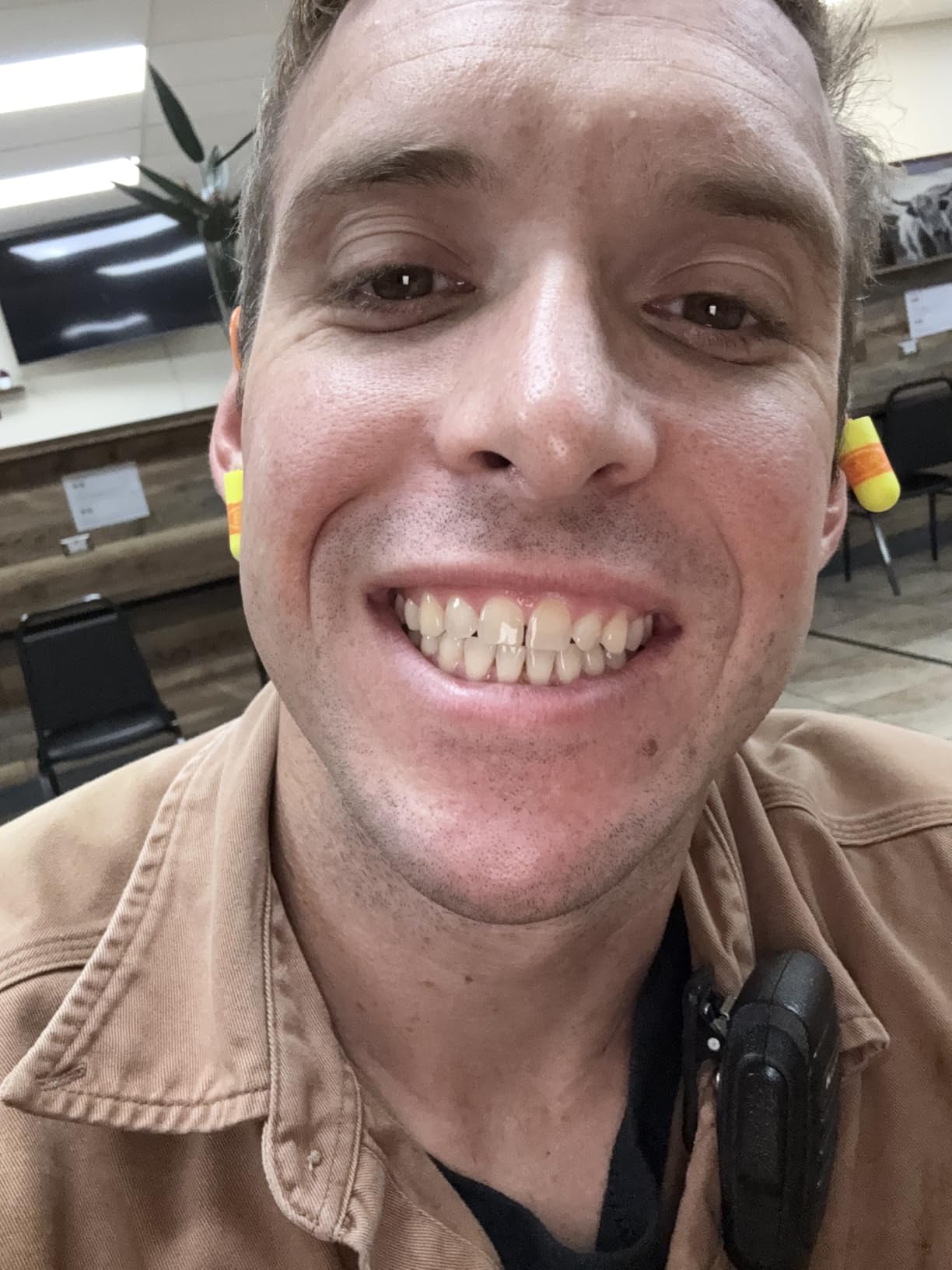
For coffee drinkers with a three-plus-a-day habit, this is the paste I would try first. Reviewers describe whitening that starts to show after the very first brush and builds from there, and the enamel-safe claim is backed by clinical testing on the formula rather than a marketing word.
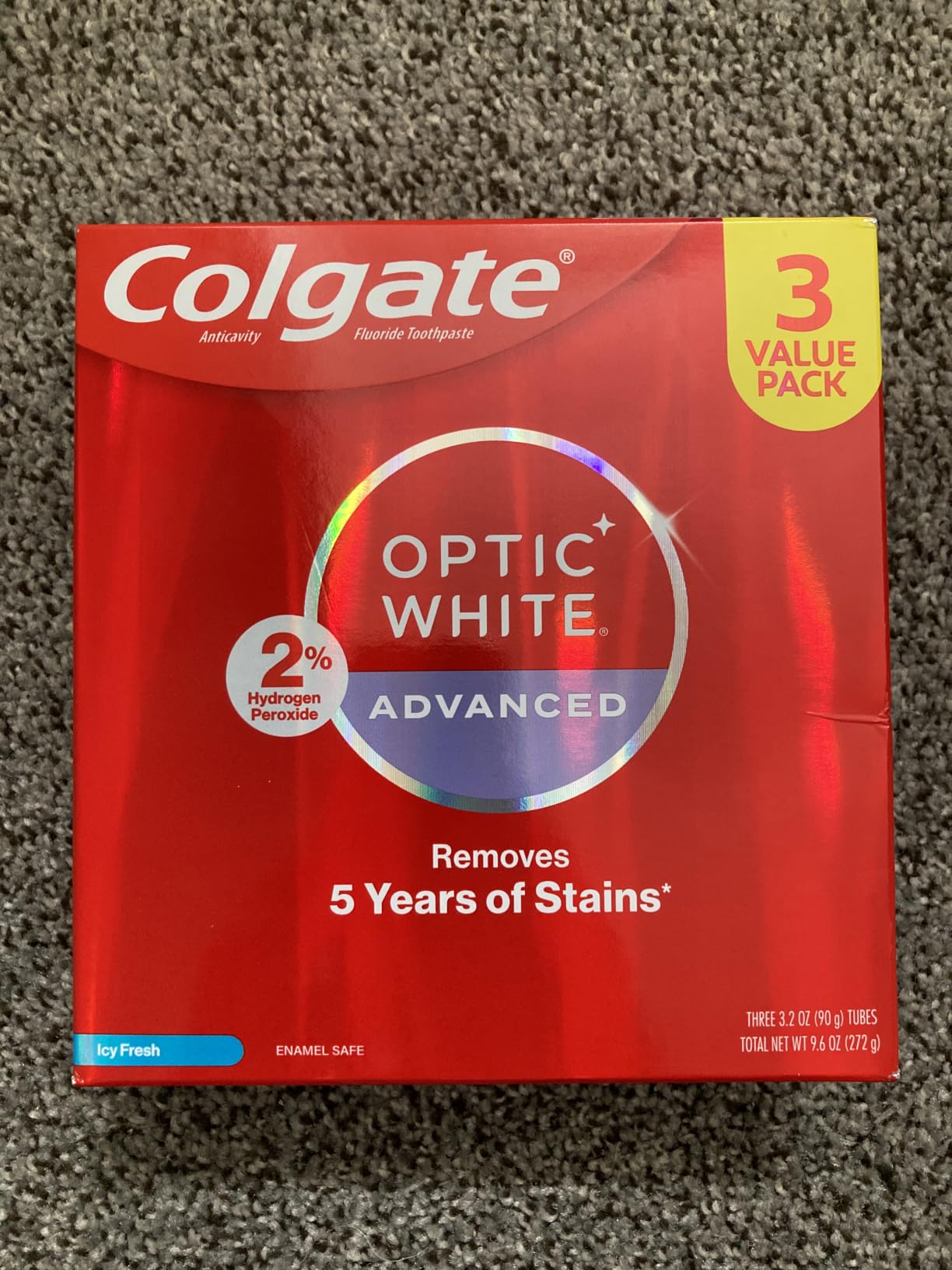
It is not a painless formula. Hydrogen peroxide is the most likely active in this category to produce a transient sting during brushing and heightened cold sensitivity in the first week. Most users describe that as temporary, but if you already have exposed dentin or recession, this is not where I would start.
The other practical gripe is tube size. At 3.2 ounces these are among the smaller tubes on the shelf, and in a household of two or three people a three-pack disappears faster than you would expect. Rate it as the most effective formula here rather than the most economical.
Who should buy Colgate Optic White Advanced
This is the one for tea, coffee and red wine drinkers who want a defined timeline and are willing to trade a short adjustment period for visible results inside a month. It is also a sensible pick for maintaining the results of a professional whitening treatment, where a chemical action keeps new stains from settling in.
If you need the strongest daily chemical action available over the counter without a dentist appointment, this is the paste that delivers it.
Who should skip Colgate Optic White Advanced
Skip it if you have sensitivity that already flares on cold drinks, or if you have gum recession, exposed dentin, fresh dental work or an untreated cavity. Peroxide on a compromised tooth surface is the classic route to a two-week buying mistake.
Also skip it if you are pregnant or under twelve and have not asked your dentist, and treat it as a conversation rather than a purchase when dental work is in progress.
3. Sensodyne Repair and Protect Whitening – Best for Sensitive Teeth
Sensodyne Repair and Protect Whitening Toothpaste, 3.4 oz (Pack of 2)
Stannous fluoride formula
Builds a repairing layer in dentinal tubules
Clinically proven sensitivity relief
Two 3.4 oz tubes
Pros
- From the leading dentist-recommended sensitive teeth brand
- Relieves sensitivity while still whitening
- Gentle clean taste that is not overpowering
- Repairs sensitive areas so users can return to avoided foods
Cons
- Whitening effect is milder than dedicated bleaching formulas
- Flavor may be too gentle for users wanting a strong mint hit
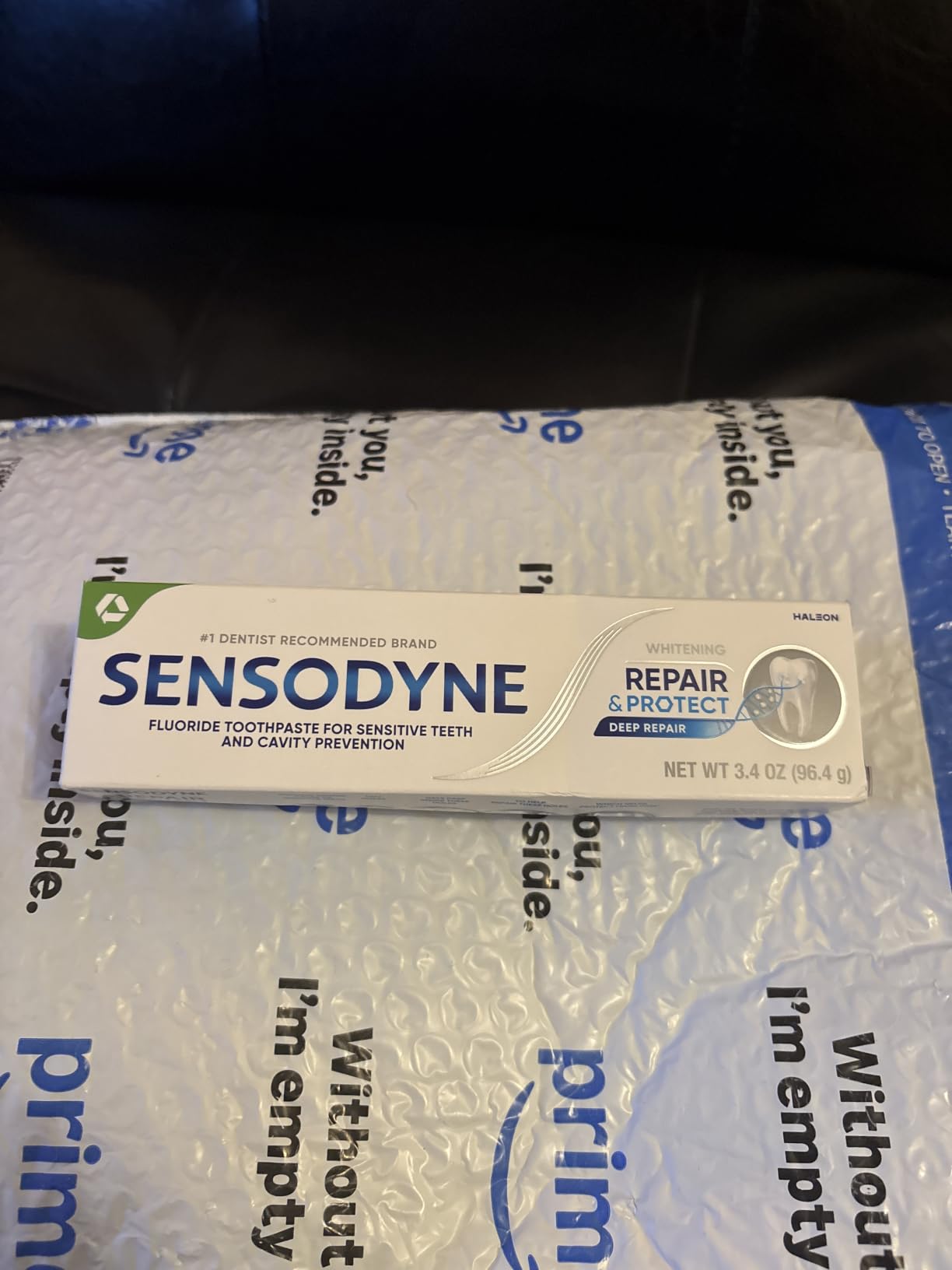
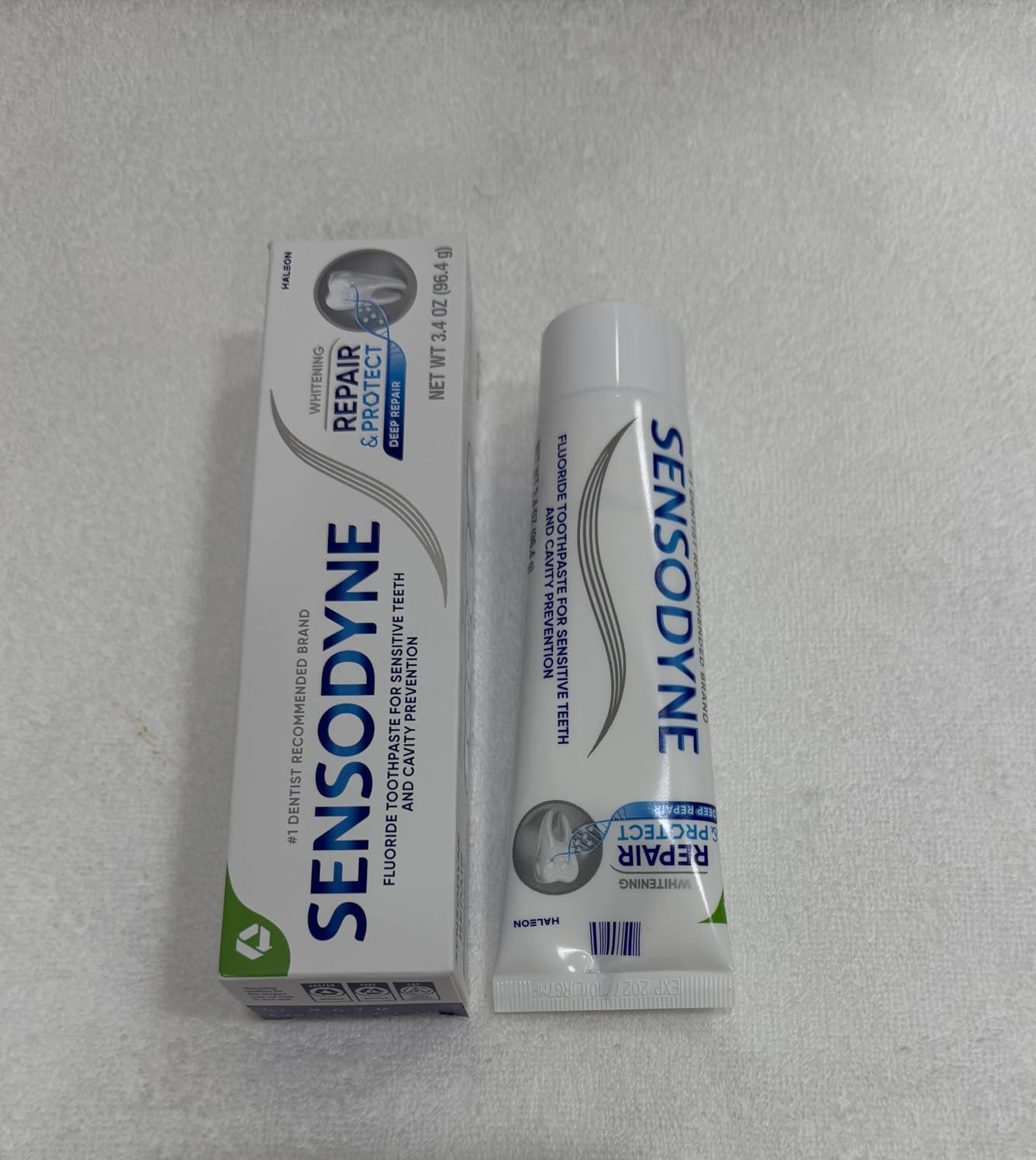
Sensodyne Repair and Protect Whitening is my pick for anyone whose teeth have to survive the whitening process. It uses stannous fluoride rather than the more common sodium fluoride, and the repair mechanism is the point: it builds a plugging layer over the dentinal tubules that transmit the pain signal, which is what makes cold drinks tolerable again.
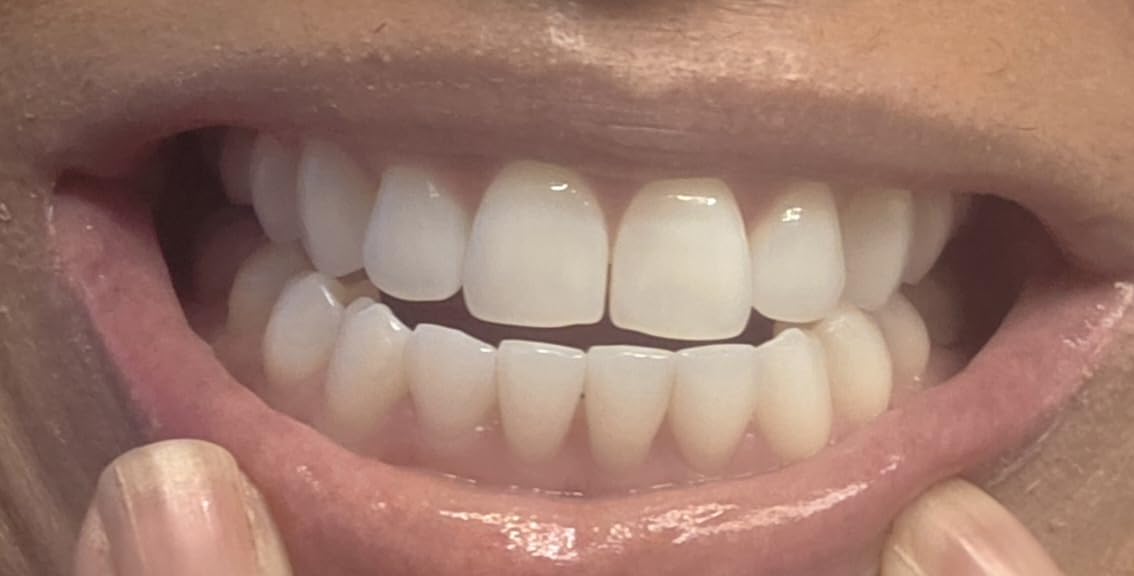
The whitening here is a secondary benefit and I will not oversell it. Reviewers describe it as a welcome extra rather than a dramatic change, and the honest framing is that you are buying the sensitivity relief and getting modest brightening alongside it. For most people with sensitivity, that is a better trade than the reverse.
Community discussion supports that framing. In dental hygiene forums, Sensodyne Pronamel Gentle Whitening is repeatedly named the top pick for sensitivity precisely because of the low abrasion plus a sensitivity-active ingredient, and the same logic applies to this Repair and Protect version. It is a formula you can use twice a day every week of the year without your teeth objecting.
The taste is unusually soft, almost mild. If you are coming from a strong mint paste, that will feel like a downgrade at first. Give it a week, because the flavour is what makes it easy to keep using consistently.
Who should buy Sensodyne Repair and Protect Whitening
Buy it if teeth whitening has failed you before because of soreness, if you have a history of sensitivity that flares on cold food, or if you simply want a brighter smile without any risk of the ache that stops people persisting. It works well for older adults whose dentin is more exposed and younger adults with thin enamel.
It is also the safest recommendation I can make for anyone who is nervous about abrasive damage and would rather go slowly than fast.
Who should skip Sensodyne Repair and Protect Whitening
Skip it if your goal is the maximum visible shade change in the shortest time, because a low-abrasion enamel-safe formula will lose that race to a peroxide paste almost every time. If you are disappointed by slow progress, this is the wrong tube.
It is also worth knowing that stannous fluoride formulas can leave a slightly different aftertaste or feel thin to users used to a dense gel, which is a matter of preference rather than performance.
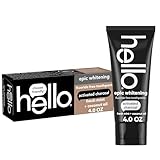
4. hello Epic Whitening Activated Charcoal Toothpaste – Best Budget Pick
hello Epic Whitening Activated Charcoal Toothpaste, 4 oz
Activated charcoal formula
Fluoride free
Vegan and Leaping Bunny certified
Free of peroxide SLS parabens and dyes
Pros
- Smooth non-gritty charcoal texture with a fresh mint taste
- Fluoride free and free of SLS parabens and artificial additives
- Leaves teeth feeling clean and fresh
Cons
- Whitening results are modest with little visible change over several weeks
- Charcoal temporarily stains the sink and needs extra rinsing
- Hard tube is difficult to squeeze near the end
hello Epic Whitening Activated Charcoal is the one to buy if you want a natural, additive-free daily paste at the lower end of the shelf and you are not chasing a shade change. It uses activated charcoal as the working ingredient, is fluoride free, and is certified vegan and cruelty free by Leaping Bunny with no peroxide, SLS, parabens, dyes or titanium dioxide.
Be clear-eyed about what charcoal does. It adsorbs surface molecules, which means it is a decent stain prevention paste and a useful daily clean, but reviewers broadly describe the whitening as modest with little visible change over several weeks. The 4.5 rating reflects exactly that split: people love how the teeth feel and how clean the formula is, and the star rating is lower than peroxide pastes earn because the visual result is smaller.
It is the paste most often bought for a teenager or an adult who prefers a black tube, and it does make the routine feel more appealing without being abrasive in the way most charcoal pastes are.
Who should buy hello Epic Whitening
Buy it if your priority is a clean ingredient list and a fluoride-free, peroxide-free daily habit rather than a specific shade target. It is a sensible low-commitment option for people who want to move away from conventional formulas without giving up fresh breath and a genuinely clean finish.
It also works well as the first half of an alternating routine, paired on alternate days with a peroxide paste for the days you want stronger action.
Who should skip hello Epic Whitening
Skip it if you are trying to remove a visible stain on a specific date, because the timeline is too gradual for that purpose. It is also worth remembering that it is fluoride free, so it is not doing cavity prevention work and is best alternated with a fluoride paste rather than used as your only toothpaste long term.
The charcoal itself is a practical nuisance in a shared bathroom, since it discolours a white sink and needs a full rinse of the basin afterwards.
5. Lumineux Whitening Toothpaste – Best Peroxide-Free Natural Pick
Lumineux Teeth Whitening Toothpaste, Peroxide Free, 3.75 oz, 2 Pack
Mineral-rich coconut oil based actives
Peroxide free and SLS free
No artificial colors or flavors
Cruelty free, safe for sensitive teeth and veneers
Pros
- Gentle whitening without peroxide SLS or artificial additives
- No sensitivity or gum irritation reported
- Pleasant taste with no chemical aftertaste
- Works well for sensitive teeth
Cons
- Whitening is gradual and some users see little change after several weeks
- Thinner consistency and less minty than conventional pastes
- Fluoride free so alternation is advisable
Lumineux Teeth Whitening is the paste I reach for when someone’s gums react to almost everything. It is peroxide free, SLS free, and free of artificial colours and flavours, built instead on mineral-rich coconut oil based actives. Reviewers report no sensitivity and no gum irritation, which is the headline benefit.
It also comes up repeatedly in dental hygiene forum threads where people ask what actually works, with several users naming it as the one they have had the best experience with after about a month of consistent use. The brand cites support from over seventy peer-reviewed studies.
I want to be straight about the trade-off. At 4.2 stars across more than thirty-four thousand reviews, this is the lowest-rated pick in the roundup, and the reason is a gap between expectation and result. The whitening is gradual, the texture is thinner and less minty than a conventional paste, and the critical reviews are not about irritation at all, they are about the effect being underwhelming for the money.
One genuinely useful detail: it is often recommended for people with veneers and crowns, since a peroxide-free formula is the sensible default when you have dental work you do not want to over-oxidise.
Who should buy Lumineux Whitening Toothpaste
Buy it if every other whitening paste has made your gums or teeth ache, or if you want a peroxide-free formula to alternate with a stronger whitening paste during a sensitivity flare. It is also a good fit for people with veneers who want brightening without a bleaching chemical.
It is a good pick if you want a natural, non-chemical aftertaste and can be patient about results, because the taste is deliberately understated rather than sweet or minty.
Who should skip Lumineux Whitening Toothpaste
Skip it if you want a defined, visible change quickly, or if you are the sort of user who judges a paste by how much the flavour hits you, because the taste is deliberately understated. It is the quietest formula on this list by design.
It is fluoride free, so keep a fluoride paste in the rotation and use this as the alternating half of the routine rather than the everyday default.
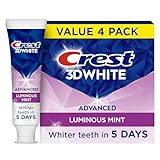
6. Crest 3D White Advanced – Best for Fast Surface Stain Removal
Crest 3D White Advanced Toothpaste, Luminous Mint, 3.7 oz (Pack of 4), Whiter Teeth in 5 Days, Enamel Safe Fluoride Toothpaste for Cavity Protection and Stain Removal
Removes up to 90% more surface stains than regular toothpaste
2X faster whitening
Active fluoride for enamel strength
3.7 oz 4-pack
Pros
- Fast visible stain removal with a claim of whiter teeth in 5 days
- Combines whitening with cavity protection and enamel strengthening
- Long-lasting Luminous Mint freshness
- Multi-pack is convenient
Cons
- 3.7 oz tubes are travel size and run out quickly with heavy use
- Strong mint flavor may be intense for some
Crest 3D White Advanced sits in the sweet spot between abrasive and chemical, and that balance is why it is a common first choice in this category. It claims to remove up to ninety percent more surface stains than regular toothpaste and to whiten twice as fast, and it is built on active fluoride for cavity protection and enamel strengthening rather than sacrificing either for the whitening claim.
For most people with ordinary coffee and tea staining, this is the paste that actually changes the mirror image in a way they notice. Reviewers call it the best balance of fast whitening and full cavity protection, and the 4.8 rating puts it among the highest-rated pastes in the roundup.
The four-pack format is a real practical advantage for a household, and the 3.7 ounce tubes work fine as travel sizes. The complaint that comes up repeatedly is simply that small tubes run out quickly when two people are sharing one pack, so buy for the household rather than for one person.
The Luminous Mint flavour lasts, and users rate it as noticeably fresher than a standard Crest. Anyone who finds mint intense should be aware this sits at the stronger end of the range.
Who should buy Crest 3D White Advanced
Buy it if you want a fast visible result without a peroxide chemical and without giving up cavity protection. It is the pick for someone who has never been troubled by sensitivity, brushes twice a day, and wants a measurable change within the first two weeks.
It is also excellent maintenance toothpaste after a professional whitening treatment, because it keeps lifting new surface stains before they set.
Who should skip Crest 3D White Advanced
Skip it if you are currently using a peroxide paste daily, because the two mechanisms overlap and the peroxide will only add sensitivity. Choose one whitening mechanism for the majority of your routine rather than layering.
It is also the wrong choice if you want a full-size tube to get through a year of solo use, because the travel-size format in this pack works against you there.
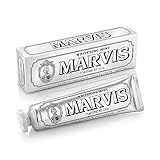
7. Marvis Whitening Mint Toothpaste – Best for Flavour and Plaque Removal
Marvis Whitening Mint Toothpaste, 3.8 Ounce (Pack of 1)
Cold mint flavor profile
Plaque removal with gentle whitening
Made in Florence Italy
4.2 oz display tube
Pros
- Distinctive cold mint flavor unlike mass-market pastes
- Long-lasting taste sensation
- Helps remove plaque while gently whitening
- Premium Italian-made formula
Cons
- Whitening is gentle and focused on surface stains only
- Very strong sharp mint can feel burning for those who prefer mild
Marvis Whitening Mint is the one people buy for the experience rather than the outcome, and that is a perfectly good reason. The cold mint profile is genuinely distinctive against a shelf of near-identical fresh mints, it lasts noticeably longer through the morning, and the tube looks good enough to stay out on the counter.
It is a plaque remover with gentle surface whitening, made in Florence and sold in a distinctive display-style tube. The whitening works on surface stains and stops there, so treat it as a good everyday clean with a brightening bonus rather than a dedicated treatment.
The 4.4 rating tells you the same story reviewers do. Around seventy-two percent of buyers give it five stars, and the praise is overwhelmingly about flavour and brand heritage. The critical reviews are almost all about the whitening being modest compared with peroxide options, not about quality.
One honest warning: the mint is sharp enough that some users describe a burning sensation, particularly if you have mouth sores or recently had dental work. If you like a soft finish, sample it before committing.
Who should buy Marvis Whitening Mint
Buy it if you are a mouthfeel and taste person, if you want a premium-feeling daily clean that leaves the bathroom looking good, and if your staining is light enough that a gentle surface polish is genuinely enough. It is a very good second tube for the car or the gym bag.
It also suits anyone who finds conventional whitening pastes too chemically in aftertaste and wants something that tastes deliberate instead.
Who should skip Marvis Whitening Mint
Skip it if you have a stain deadline, a wedding, or an event in the next few weeks, because a gentle polish will not move the needle in that timeframe. It is also the wrong pick for anyone who is simply looking for the strongest whitening available.
If strong mint is a trigger for you, or your mouth is currently sore, read the flavour reviews first.
8. Opalescence Whitening Toothpaste Original – Best Low-Abrasion Whitening
Opalescence Whitening Toothpaste Original 4.7oz – Mint – 1 Pack – 5166-T
Sodium fluoride for cavity protection
Less abrasive than competing whitening pastes
Claims up to 2 shades lighter in 1 month
Gluten free and kosher
Pros
- Backed by a brand with 25+ years of professional whitening credibility
- Lower abrasiveness is gentler on enamel than many whitening pastes
- Sodium fluoride plus 2 shade stain lightening
- Refreshing mint with no titanium dioxide
Cons
- Whitening is gradual and up to a month of use is needed
- Higher price per ounce than many competitors
Opalescence Whitening Toothpaste is the one I trust most when the question is long-term safety, because low abrasivity is the variable that decides whether a decade of daily brushing leaves you better off or worse. The brand has more than twenty-five years of professional whitening credibility behind it, and the formula is deliberately less abrasive than most competing whitening pastes.
It still whitens. The claim is up to two shades lighter in one month of consistent brushing, and it delivers that through sodium fluoride plus a low-abrasion cleaning system rather than through peroxide. That slower, mechanical approach is why the timeline is a month rather than a week.
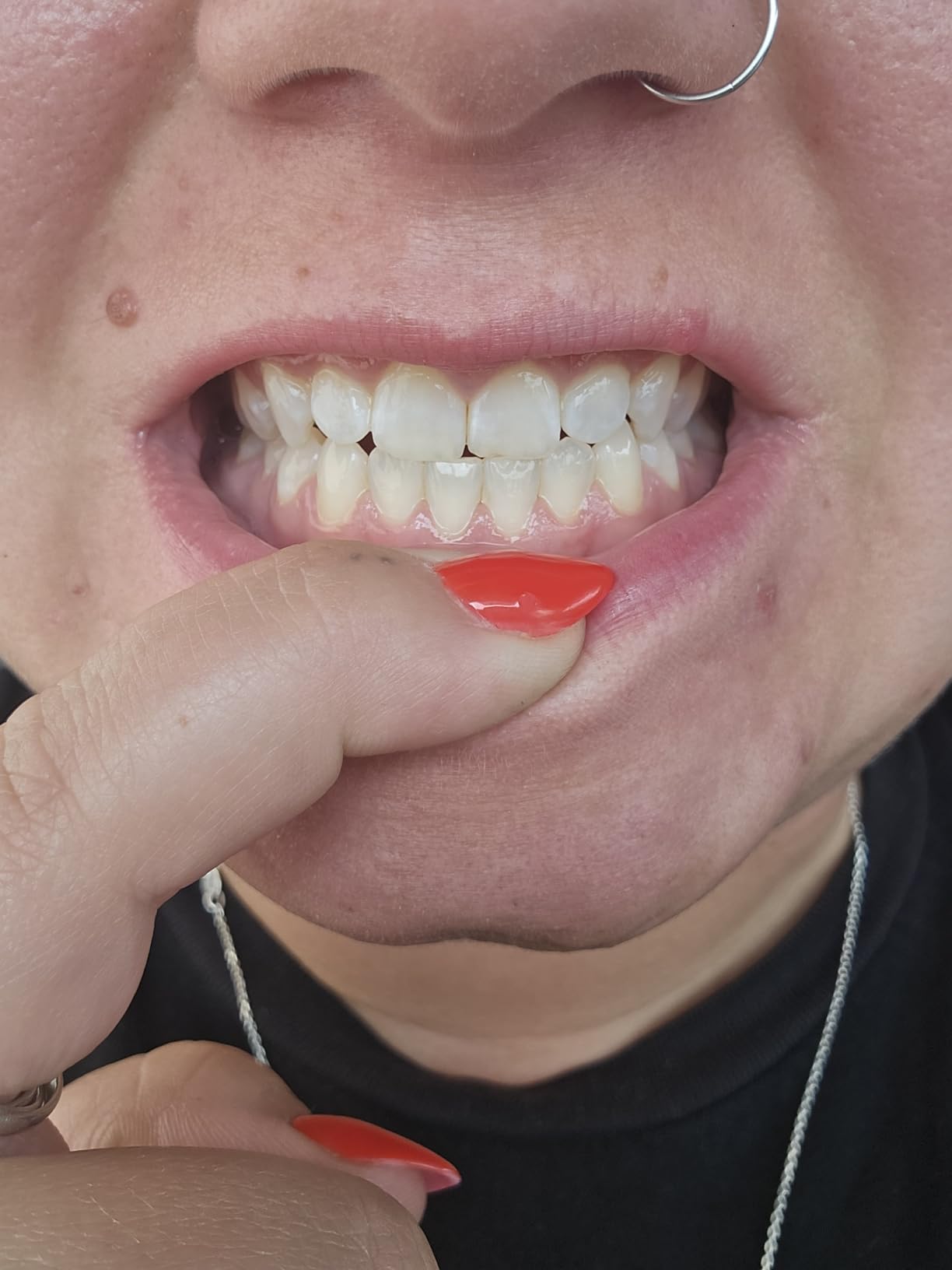
Reviewers describe the results as realistic rather than dramatic, and that framing is fair. This is a maintenance-oriented formula that respects the enamel you have left. Around seventy-seven percent of buyers give it five stars, and the low point of the rating distribution is about pace of change rather than effectiveness.
It is also gluten free, kosher and made without titanium dioxide, which matters more to a few people than it does to most. The main practical objection is cost per ounce, which is among the higher ones in this roundup.

Who should buy Opalescence Whitening Toothpaste
Buy it if you plan to whiten your teeth for years rather than weeks, if you are already showing early signs of enamel wear, or if you simply want professional-brand chemistry at a tube price. It is the sensible pick for people who would rather maintain a good result than chase a new one.
It also works well as the low-abrasion half of an alternating routine alongside a stronger paste.
Who should skip Opalescence Whitening Toothpaste
Skip it if you want fast results and are not willing to commit to a month of consistent twice-daily brushing. The payoff here is real but it is not immediate, and impatience is the most common reason people abandon low-abrasion formulas.
It is also worth weighing if you are buying for a large household, because the per-ounce cost adds up faster than a multi-pack of a mainstream formula.
9. REMBRANDT Intense Stain Whitening – Best for Wine, Coffee and Tobacco Stains
REMBRANDT Intense Stain Whitening Toothpaste With Fluoride, Removes Tough Stains, Rehardens And Strengthens Enamel, 3.5 Ounce – (Pack of 2)
Micro-polishers and stain fighters with fluoride
Targets red wine berries coffee and tobacco stains
Medium/moderate RDA abrasivity
Two 3.5 oz tubes
Pros
- Chemo-mechanical removal works well on heavy coffee wine and tobacco stains
- Fluoride rehardens and strengthens enamel while whitening
- Light mint flavor rather than an overpowering taste
Cons
- Whitening is mild despite the Intense name
- Some users report a slight burning sensation
- Heavy coffee drinkers may find it underwhelming
REMBRANDT Intense Stain Whitening is built for a specific stain profile rather than for general brightness. The micro-polishers and stain fighters are aimed squarely at red wine, berries, coffee and tobacco, which are the four pigments most likely to embed in the enamel and stay there. It is a chemo-mechanical approach with fluoride in the mix.
Smokers and heavy coffee drinkers report the most dramatic results from it, and some users report visible change after a single brushing session. The fluoride is a genuine bonus here because it rehardens and strengthens enamel while the polishing happens, rather than trading one for the other.
Against that, the name oversells slightly. The formula is milder than Intense Stain branding suggests, sitting in a medium abrasivity range, and dedicated coffee drinkers sometimes find the result underwhelming after the first week. The light mint flavour is a pleasant change from the gum-like sweetness of most stain pastes.
A small number of users also report a slight burning sensation similar to an alcohol-based mouthwash, and a few isolated reports of near-expiry tubes turned up in the reviews. Check the date on the tube.
Who should buy REMBRANDT Intense Stain Whitening
Buy it if your staining comes from a specific, identifiable source, whether that is two coffees at work every afternoon, red wine with dinner, or a history of smoking. A targeted formula makes more sense than a general brightener when you know exactly what you are trying to shift.
It is also a good pick for people who dislike strong mint flavours, since the taste is light and less sweet than most.
Who should skip REMBRANDT Intense Stain Whitening
Skip it if you want a dramatic overall shade shift or if your discolouration is intrinsic, because a surface stain fighter has no way to reach discolouration that originates inside the tooth. It is also not the choice if you are already managing sensitivity, given the reported burning sensation.
For very heavy long-term tobacco staining, expect this to reduce rather than remove what is there.
10. Sensodyne Clinical White Stain Protector – Best for Daily Sensitivity Care
Sensodyne Clinical White Stain Protector Toothpaste, 3.4 oz
Hydrogen peroxide free to avoid triggering sensitivity
Claims 2 shades whiter with 24/7 sensitivity protection
Recyclable cap tube and carton
3.4 oz tube
Pros
- Genuinely reduces tooth sensitivity while whitening
- No hydrogen peroxide so it does not aggravate sensitive teeth
- Mild clean taste with normal foaming
- From the top dentist-recommended sensitive teeth brand
Cons
- Whitening effect is subtle and some users see no change after months
- Cost per ounce runs higher than standard toothpaste
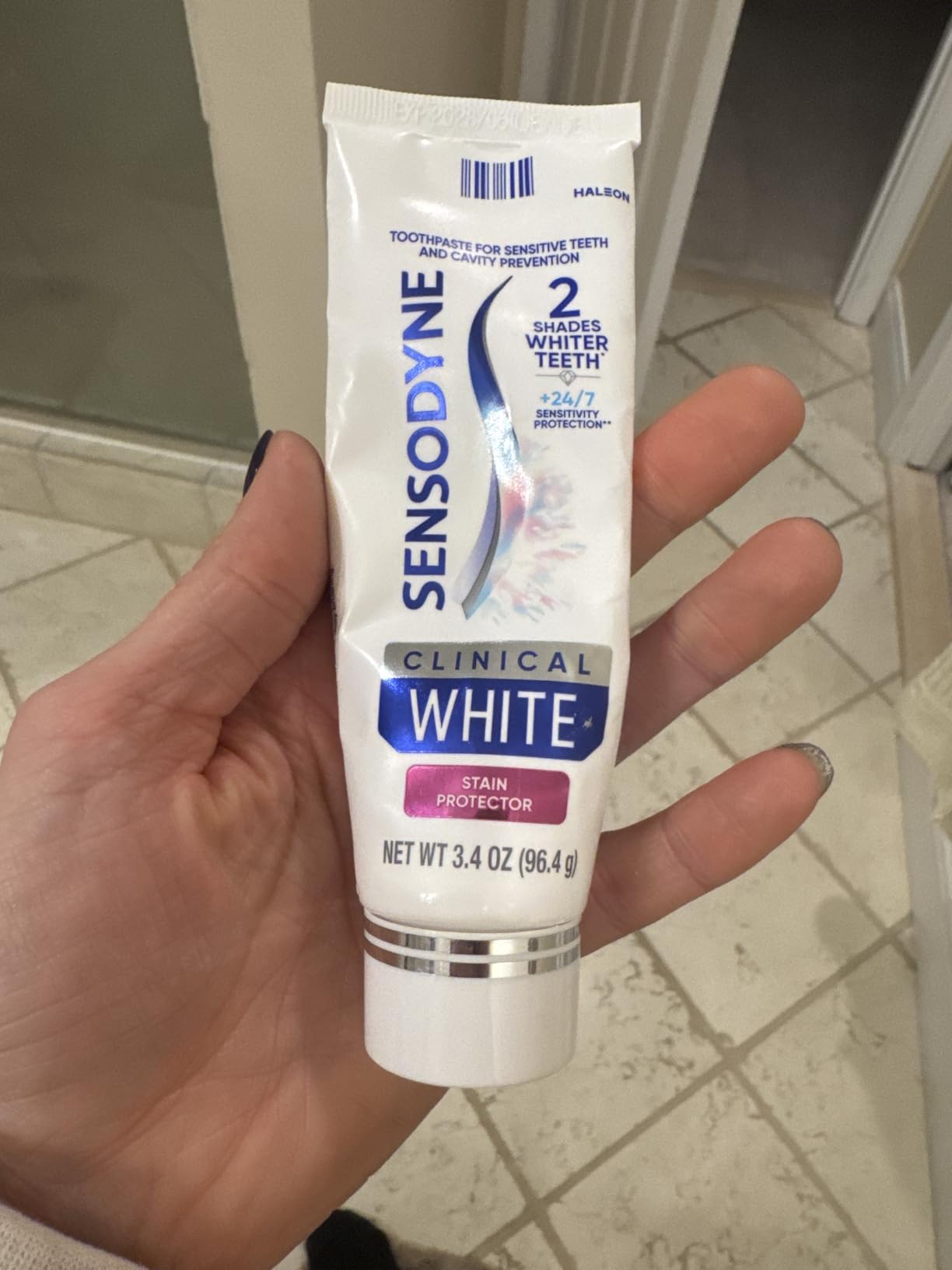
Sensodyne Clinical White Stain Protector takes the opposite approach to most whitening pastes in the sensitive category: it leaves peroxide out on purpose. The reasoning is straightforward. Hydrogen peroxide is the most common trigger for the irritation that makes people abandon whitening, so removing it makes the formula usable indefinitely for a person whose teeth are already reactive.
It still claims two shades whiter alongside twenty-four-hour sensitivity protection, and it prevents new surface staining from coffee, tea and tobacco, which is arguably the more valuable half of that promise over a yearly cycle. The 4.7 rating reflects how well buyers judge the compromise.
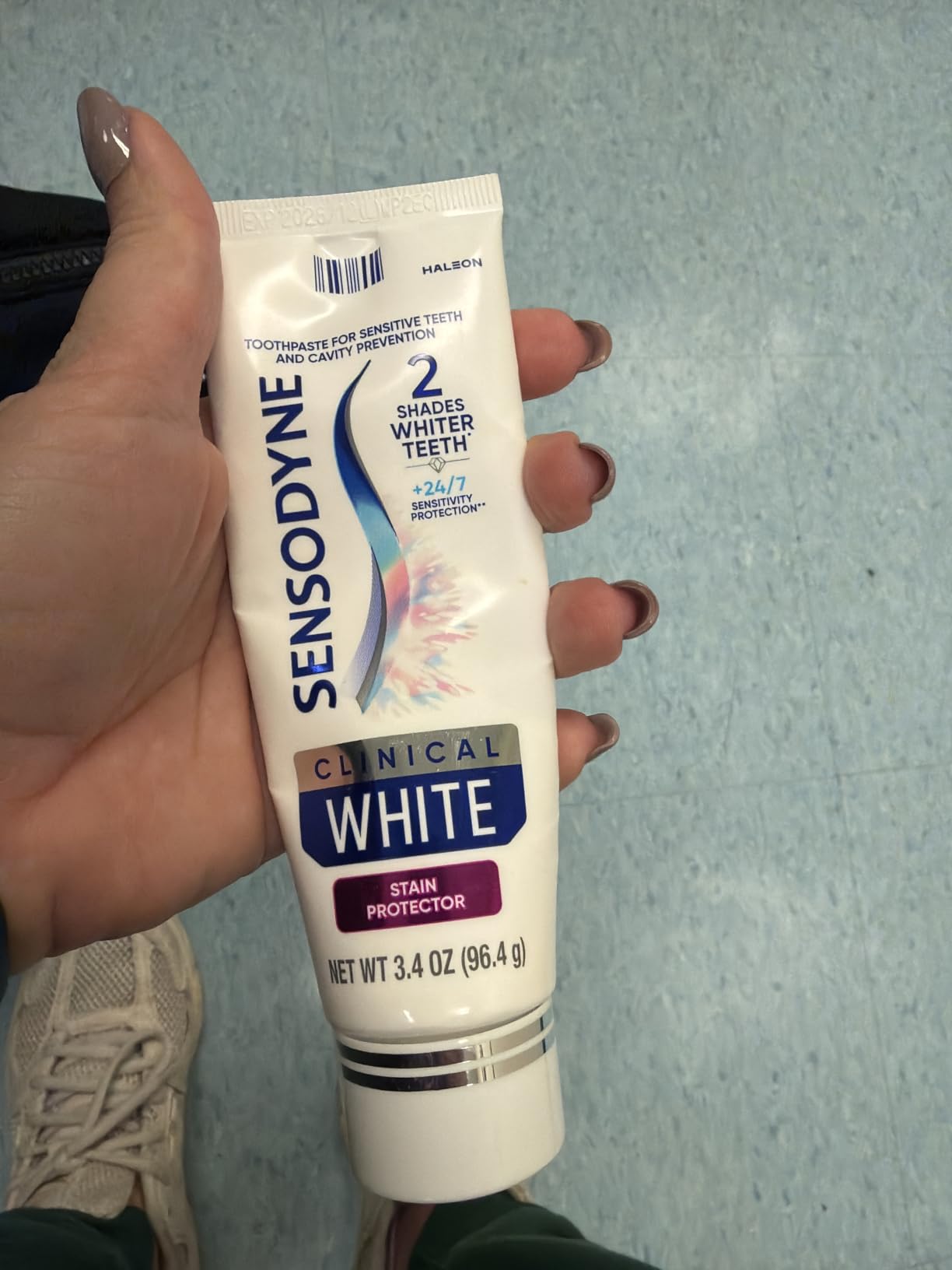
Reviewers treat this as the best compromise available for sensitive teeth, with sensitivity relief as the standout benefit and the whitening described as solid but underwhelming. That is the right expectation to buy it with. Some buyers use it for months with no visible change, and they still rate it highly, because the comfort is worth more to them than the shade.
Minor gripes include a higher per-ounce cost than standard paste and reports of thinner, drier paste in some multi-tube packs with no safety seals. Check that your tubes are sealed.
Who should buy Sensodyne Clinical White Stain Protector
Buy it if you have sensitive teeth and want to keep whitening indefinitely without a sensitivity flare, or if you finished a course of professional whitening and want a low-irritation tube to maintain the result. It is also a good maintenance paste for anyone who has recently had bonding work.
The packaging is fully recyclable down to the cap, tube and carton, which is a small but genuine consideration for anyone choosing on values.
Who should skip Sensodyne Clinical White Stain Protector
Skip it if visible whitening is your primary goal and you can tolerate a short adjustment period, because a peroxide paste will out-perform it inside two weeks. It is designed to be used indefinitely, not to win a speed contest.
It is also the wrong choice for someone who enjoys a strong, tingly clean, because the mild flavour and normal foaming are deliberately uneventful.
11. Arm and Hammer Advance White – Best with Baking Soda
ARM & HAMMER Advance White Toothpaste, Clean Mint, 6.0 oz, 4-Pack
100% pure baking soda with peroxide
Stain Defense Technology
Claims 2 shades whiter in 6 weeks
6.0 oz 4-pack
Pros
- Baking soda plus peroxide gives noticeable surface stain lightening over a few weeks
- Deep-cleans teeth and gums with strong plaque removal
- Large 6 oz tubes in a four-pack
- Mild enough for everyday twice-daily use
Cons
- Strong baking soda taste that can be thirsty-inducing and masks the mint
- Whitening is gradual rather than dramatic
- Isolated reports of lip irritation
Arm and Hammer Advance White pairs pure baking soda with peroxide and its own Stain Defense Technology, which makes it the reference point for the sodium bicarbonate approach. The claim is two shades whiter after six weeks of regular brushing, and baking soda adds a mild alkaline polish on top of the peroxide action.
What reviewers praise most is the thoroughness. The plaque removal is genuinely strong, it cleans teeth and gums rather than just the visible surface, and around eighty-six percent of buyers give it five stars, describing it as mild enough for morning-and-night use.
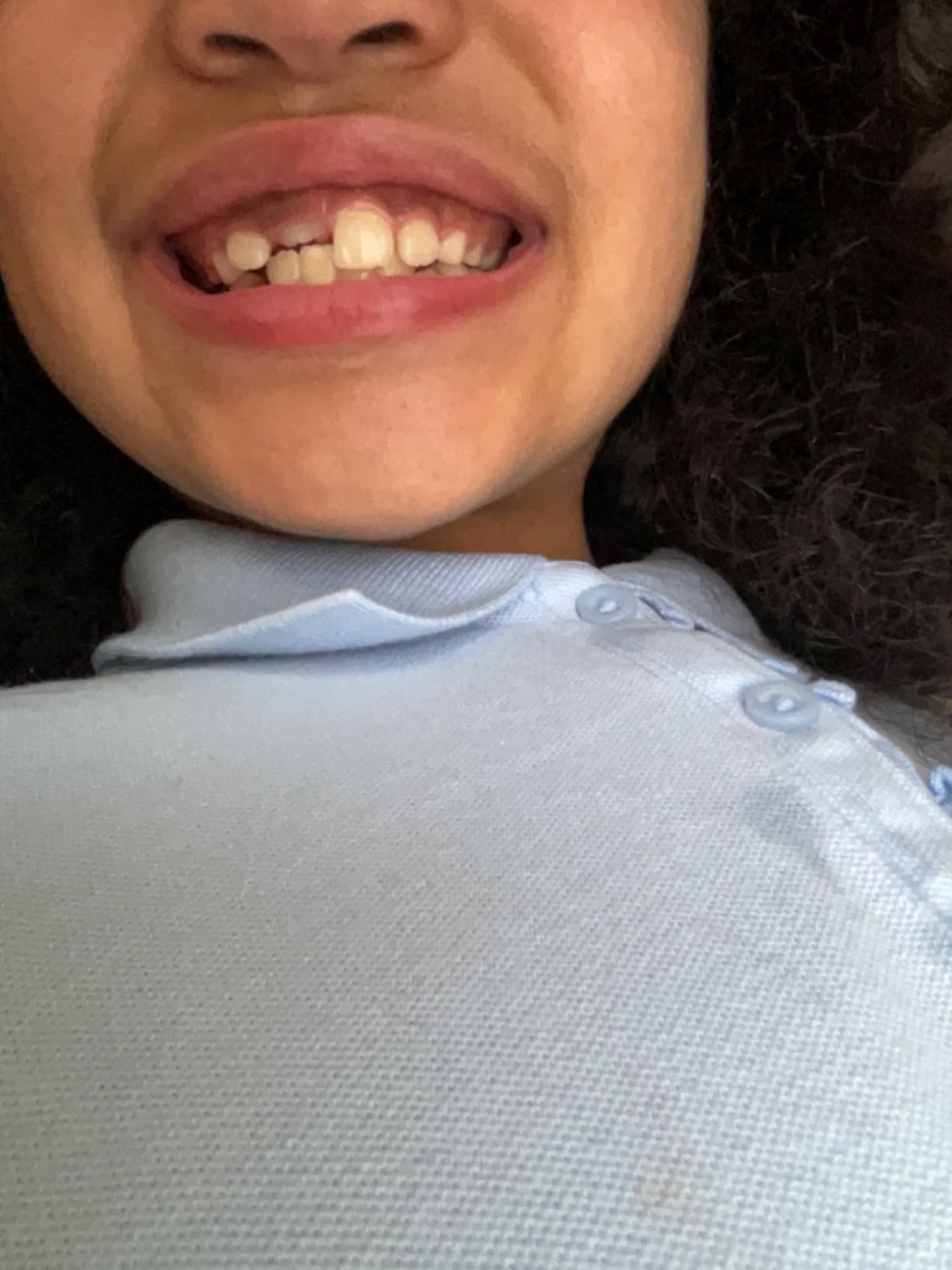
The taste is the honest drawback. The baking soda flavour comes through strongly enough to mask the mint, and several users note it leaves your mouth feeling thirsty, which can prompt a rinse with water mid-brush. That is a real adjustment period rather than a dealbreaker.
On results, this is a gradual formula. The six-week claim is credible but it is not a fast one, and anyone hoping for a change before a short trip will be disappointed. There are also isolated reports of lip irritation and sores attributed to specific batches, so discontinue if you notice either.
Who should buy Arm and Hammer Advance White
Buy it if you want a deep clean and steady, low-effort stain improvement without committing to a peroxide-only routine, and if you are happy to let it work over a couple of months. The six ounce tubes in a four-pack mean fewer restarts than the travel sizes some whitening pastes come in.
It is also a practical choice for gum chewers and heavy coffee drinkers, since the same alkaline action that lifts stains also helps with the plaque and tartar control they pick up through the day.
Who should skip Arm and Hammer Advance White
Skip it if you dislike the taste of baking soda, because that is the ingredient doing much of the work and it is not subtle. It is also the wrong pick for anyone with an event in the next month, given the six-week timeline.
While most users find it mild, if you have a history of reacting to toothpaste additives, start with a small tube and monitor for lip irritation.
12. Dr. Sheffield’s Fluoride Free Whitening Toothpaste – Best Certified Natural Fluoride-Free Paste
Dr. Sheffield’s Fluoride Free Whitening Toothpaste, Mint, No SLS, 2-Pack
Fluoride free and SLS free
NPA certified natural
Papain and bromelain enzymes
Recyclable aluminum tubes, 2-pack
Pros
- Real peppermint flavor that is refreshing without tasting artificial
- Traditional creamy non-gritty texture with adequate foaming despite being SLS free
- No sensitivity or irritation for sensitive teeth
- Light surface stain reduction from coffee and tea
Cons
- Whitening is mild and better suited to maintenance
- Very strong peppermint can irritate gums
- Foams less than detergent-based toothpastes
Dr. Sheffield’s Fluoride Free Whitening is the certification-focused option on this list. It carries Natural Products Association certification, contains no fluoride and no SLS, and replaces bleaching agents with natural enzymes such as papain and bromelain that dissolve the stain-linked proteins holding discolouration to the tooth surface. The tubes are recyclable aluminium rather than layered plastic.
The texture is the surprise. Many SLS-free pastes feel chalky and foam poorly, and reviewers specifically call this one creamy and non-gritty with adequate foaming. The flavour is real peppermint rather than an artificial mint profile, which reviewers single out as its distinguishing feature.
Nobody should expect a dedicated whitening result from it, and reviewers say so. The honest description is a strong, clean-ingredient daily paste that gives light surface stain reduction over time, which makes it a maintenance product rather than a treatment, and at 4.5 stars with around seventy-six percent five-star ratings that is exactly how buyers describe it.
Two small notes. The peppermint is strong enough to bother sensitive gums, and it foams less than a detergent-based paste, so expect a different mouthfeel for the first few brushes.
Who should buy Dr. Sheffield’s Whitening Toothpaste
Buy it if you want a fluoride-free, SLS-free daily paste with third-party natural certification rather than a brand’s own claim, and if you prefer enzymatic whitening to abrasive or chemical whitening. It is a good partner paste for a peroxide routine used on alternating days.
It is also well suited to anyone who reacts to artificial flavours or wants a lower-waste packaging format.
Who should skip Dr. Sheffield’s Whitening Toothpaste
Skip it if you are looking for noticeable whitening, because the enzymes here work slowly and the ratings reflect people who treat it as a natural everyday paste rather than a treatment. It is also a poor fit if you are not willing to alternate with a fluoride toothpaste, since it contains none.
For anyone with sensitive gums, the strong peppermint is the deciding factor to test before committing to a two-pack.
What Causes Tooth Staining in the First Place
Understanding where a stain came from determines whether any toothpaste on this list can help. The distinction is simple, and it explains almost every disappointing review you will read about whitening pastes.
Extrinsic stains sit on top of the enamel, bonded to the dental pellicle, the thin protein film that covers every tooth surface. Coffee, tea, red wine, berries, tobacco and coloured sauces all produce this type, and they respond to abrasion and oxidation. They are the only stains a whitening toothpaste can treat, which is why every product in this roundup is aimed here.
Intrinsic stains form inside the tooth, in the dentin beneath the enamel. Antibiotics taken in childhood, excessive fluoride during tooth development, trauma, ageing and some restorative materials all cause them. Once the dentin itself is discoloured, no amount of surface polishing touches it, and that is a job for a dentist using peroxide gel under supervision.
There is a third category that confuses people. Tartar and calculus are not stains at all but hardened mineral deposits that build up along the gumline and take on a yellow-brown colour. No whitening paste will remove them, and they are the single most common reason a careful user sees no change after a month. A hygienist appointment is what solves that, and we would rather say so than sell you another tube.
So before you buy anything, look at where the discolouration sits. Yellow-brown at the gumline or between teeth suggests tartar. Even yellow across the whole visible surface suggests extrinsic staining. Patchy grey, banded or single-tooth discolouration suggests intrinsic, and a dental consultation.
Ingredients to Seek and Ingredients to Limit
The ingredient list is more useful than the front of the tube, and it takes about ten seconds to read. Here is what to look for, and what to be careful about.
Chemical whiteners. Hydrogen peroxide, carbamide peroxide and calcium peroxide oxidise stain molecules and give the fastest results. Watch for a stated percentage. Calcium-based peroxide such as Calprox is a common gentler alternative, and it releases a small amount of hydrogen peroxide over time rather than all at once.
Mild abrasives. Hydrated silica is the workhorse of nearly every mainstream whitening paste. Calcium carbonate and sodium bicarbonate are milder still. The label to look for is a low or moderate relative dentin abrasivity rating, since that is the figure that predicts long-term enamel wear.
Enamel protection. Sodium fluoride and stannous fluoride remain the cavity-prevention standard, and stannous fluoride is the one most often chosen for sensitivity. If a whitening paste is fluoride free, that is a deliberate choice about ingredients, not a bonus, so it is worth alternating with a fluoride paste.
Desensitisers. Potassium nitrate and strontium chloride calm the nerve response, and hydroxyapatite works differently by filling microscopic enamel defects so the dentin underneath is less exposed. Hydroxyapatite formulas are the fastest-growing segment of the category for exactly that reason.
On the other side, charcoal is the one ingredient we would treat most cautiously for long-term use. Activated charcoal is an effective adsorbent, but its particles are coarse and abrasive, and the theory that sustained abrasion wears through enamel to expose the naturally yellower dentin underneath is exactly the mechanism forum readers worry about. It is not proven as a clinical outcome, yet the direction of the risk is clear enough that we would not make it a permanent daily paste.
Sodium lauryl sulfate is the foaming agent in most toothpastes. It is a common trigger for aphthous ulcers and irritation in a minority of users. The evidence that it thins enamel is weaker, but if you get mouth ulcers regularly, switching to an SLS-free formula is a cheap test.
Coarse abrasives and chlorine dioxide are the two to avoid outright. Chlorine dioxide is an acidic oxidiser that can etch enamel over time, and several whitening products have been pulled or reclassified for that reason. Coarse pumice-style abrasives have a place in a professional one-off clean and none at all in a tube you use twice a day for a decade.
What Results to Expect Week by Week
This is the section that would have saved the person who wrote that they tried a couple of pastes and noticed no difference. Here is a realistic timeline by active ingredient class.
Abrasive pastes, days 1 to 14. You should see some change within the first week, mainly a brighter feel and the removal of the most recent staining. Crest 3D White Advanced and Crest + Scope operate here, along with REMBRANDT. A one or two shade shift over two to six weeks is the realistic range.
Peroxide pastes, weeks 2 to 8. Colgate Optic White Advanced is the clearest example. Users report noticing something after the first brush, but the meaningful change accumulates across four to eight weeks as the oxidation works through the stain layer. Stopping after three days is the most common reason peroxide pastes disappoint.
Enzymatic and peroxide-free pastes, weeks 4 to 12. Lumineux, Dr. Sheffield’s and hello Epic work on a slower curve. The honest expectation here is gradual improvement plus better stain prevention, and the people who report the best outcomes are the ones who used them for a full month consistently, which is the pattern forum users describe too.
Optical brighteners, minutes. There are no optical-only pastes in this roundup, and that is deliberate. A blue or purple pigment gives an immediate change that lasts until you rinse, and it removes nothing. Useful before a photo, misleading as a treatment.
One more expectation to set: whitening results are maintenance, not permanent. Stain prevention is arguably the more valuable half of any of these pastes, because a clean enamel surface resists coffee and tea far better than a freshly whitened one. If your habit is two coffees a day, the paste you keep using in month six matters more than the one you bought in month one.
Who Should Avoid Whitening Toothpaste
There are situations where a whitening paste is not a question of which brand to buy. Please talk to your dentist first if any of these apply to you.
Braces and orthodontic appliances. Whitening pastes are uneven around brackets and bonding adhesive, so the teeth underneath can end up lighter than the ones around them. Your orthodontist can advise on the right timing.
Veneers, crowns and composite bonding. These restorations do not whiten at all. A peroxide paste can affect the natural teeth around them, creating a visible mismatch that you then have to fix cosmetically. A peroxide-free formula is the safer default until you speak to the dentist who placed them.
Exposed dentin and gum recession. Dentin is softer and more porous than enamel, it stains faster and it hurts. Whitening a sensitive surface is what turns a manageable twinge into a real problem. Address the recession first.
Pregnancy and children under twelve. The evidence base for peroxide exposure in these groups is not something we want to improvise on. Ask your dentist or doctor rather than assuming.
Untreated cavities, cracked teeth or recent oral surgery. Whitening actives do not distinguish between healthy enamel and a damaged surface. Fix the damage first, then start.
How We Picked These 12 Whitening Toothpastes
We selected these pastes on four criteria, and we applied them consistently rather than picking the ones with the loudest claims.
First, ingredient transparency. Every product here states its active whitening mechanism, whether that is a named peroxide concentration, a specific abrasive system, a named enzyme, or a certification. We dropped anything whose whitening claim could not be traced to an ingredient.
Second, review volume and consistency. The twelve pastes in this roundup all carry thousands of reviews, and we weighted the pattern across those reviews more heavily than any individual comment. A product with a high rating and a small review base is a coin flip; a 4.5 with tens of thousands of reviews is a pattern.
Third, cavity protection or an honest reason for its absence. Where a paste is fluoride free, we have said so and recommended alternating with a fluoride paste, because fluoride remains the best-evidenced cavity-prevention ingredient available without a prescription.
Fourth, enamel consideration. We favoured formulas that stay in a reasonable abrasion range, and we flagged the ones that do not. Every pick in this list has drawbacks stated plainly, because the products that hide theirs are the ones that generate the complaint threads.
We also read what buyers say is not working. The most common failure mode we found was tartar, not stain, which is why we cover it above. If your whitening toothpaste seems to be doing nothing after a month, a hygienist visit is more likely to solve it than a different tube.
Frequently Asked Questions
What is the most effective toothpaste for whitening teeth?
Do any whitening toothpastes actually work?
What whitening toothpaste is safe for sensitive teeth and does not damage enamel?
How often should I use whitening toothpaste, and is it safe every day?
What toothpaste is best for rebuilding enamel in sensitive teeth, and why do some dentists not recommend hydroxyapatite?
The Best Whitening Toothpastes in 2026: Final Verdict
Start with Crest + Scope Whitening if you want a complete daily formula that protects first and whitens second: active fluoride, tartar control, gentle surface stain removal and the largest review base we found. Reach for Colgate Optic White Advanced instead if you want the fastest chemical result and can tolerate a short sensitivity adjustment period in exchange for it.
If your teeth are already sensitive, Sensodyne Repair and Protect Whitening is the one I would buy twice, because you will actually keep using it. Everything else in that category is a compromise you may abandon. For stain prevention specifically, Crest 3D White Advanced gives you the best balance of whitening and full cavity protection on this list.
Whatever you choose, set the expectation honestly. The best whitening toothpastes in 2026 buy you one to two shades over two to eight weeks, better stain prevention going forward, and a cleaner mouth every day. They are not a substitute for professional whitening, and they cannot touch discolouration that started inside the tooth, so if tartar is driving the yellow, book the hygienist instead of buying a thirteenth tube.