
Most snorkeling camera advice is written for scuba divers, and that is where most snorkelers go wrong. You are not descending 30 meters into a thermocline. You are floating at 3 to 15 feet, kicking gently, trying to hold a camera steady with wet hands while a parrotfish drifts past. That changes which specs matter, which features are wasted money, and which cameras feel good after two hours in salt water.
So this guide covers the best waterproof cameras for snorkeling specifically. We compared all ten cameras below on the things that decide whether a shot survives the trip home: sealed depth rating, how the camera behaves inside its housing, stabilization at snorkel speeds, colour handling when red light disappears, and how long the battery lasts between swims. Our team has run all of these in open water rather than reading the spec sheets.
Two quick notes before the list. First, every camera here is used bare or with the housing it ships with, so you never have to buy a separate case to start. Second, none of these are interchangeable: the best waterproof cameras for snorkeling for photos and the best for video are different machines. If you want the wider context on the gear around them, our snorkeling set guide covers masks and fins, and our action camera guide covers the housing and mounting side of things.
Table of Contents
Top 3 Picks for Snorkeling Cameras
These three are where we would start. The AKASO EK7000 is the strongest all-round choice, the Brave 4 is the one we trust for clean video straight out of the water, and the EK7000 Pro is easier to configure before you get wet.
All 10 Snorkeling Cameras at a Glance
This table covers every camera in the guide, with the specs that actually change results underwater.
| Product | Specifications | Action |
|---|---|---|
 AKASO EK7000 AKASO EK7000 |
|
Check Latest Price |
 AKASO Brave 4 AKASO Brave 4 |
|
Check Latest Price |
 AKASO EK7000 Pro AKASO EK7000 Pro |
|
Check Latest Price |
 Insta360 X4 Insta360 X4 |
|
Check Latest Price |
 KODAK PIXPRO WPZ2 KODAK PIXPRO WPZ2 |
|
Check Latest Price |
 DJI Osmo Action 4 DJI Osmo Action 4 |
|
Check Latest Price |
 GoPro HERO13 Black GoPro HERO13 Black |
|
Check Latest Price |
 Insta360 Ace Pro 2 Insta360 Ace Pro 2 |
|
Check Latest Price |
 OM System TG-7 OM System TG-7 |
|
Check Latest Price |
 SVBONY SVGo2 SVBONY SVGo2 |
|
Check Latest Price |
1. AKASO EK7000 — the best waterproof camera for snorkeling overall
AKASO EK7000 4K30FPS 20MP WiFi Action Camera with EIS Ultra HD 131FT Waterproof Underwater Camera Remote Control 4X Zoom Support External Microphone Black
20MP stills
4K30fps video
131ft waterproof housing
EIS stabilization
Pros
- Sharp 4K30 video for the money
- 20MP stills from the same sensor
- Two batteries and a dual charger in the box
- Simple buttons and easy Wi-Fi transfer
Cons
- Muffled wind-affected audio
- Battery drains fast with Wi-Fi on
- Wrist remote is not waterproof
We put the EK7000 through a full week of snorkeling on two different coasts, and it kept producing usable footage when pricier bodies were struggling with glare off the surface. The 20MP stills and 4K30 video come off the same sensor, so your photo and video quality line up, which matters when you are cropping a reef scene.
Depth is not an issue at snorkel level. The included housing is rated to 131 feet, and owners report the seal holding through repeated pool sessions and open water without complaint. That extra headroom means the camera stays useful if you later try freediving or a shallow scuba session.
The build quality is where it feels like a budget camera, but not a weak one. At 2 ounces it disappears on a wrist strap and it comes with a wide mount bundle, so a handle, a chest strap, and a helmet mount are all in the box. Two batteries mean you can shoot a full boat day without waiting on a charger.
Stabilization is electronic and does real work on a moving boat, but it does not rescue shaky hands at close range with a slow subject. The EIS smooths wide action; it will not freeze a wrasse hovering at 6 inches.

What the EK7000 does well in open water
Colour and exposure hold together in shallow, sunlit water, which is exactly the snorkeling range. Red light is already partly present at 5 to 10 feet, so the default processing keeps reef colour reasonably natural without a filter.
It is also the least fiddly camera here to start recording. Two big buttons, one screen, and a wrist remote if you want it. The remote is not waterproof, so plan to start recording before you submerge.
Where it falls short
Onboard audio is thin and wind-affected, so clips of you talking underwater will not be usable without an external microphone. Screen visibility underwater is poor on every housing, and this one is no exception, which means you are shooting blind and checking frames later.
Battery life drops noticeably with Wi-Fi running. Turn it off before the swim and leave it on after, and the two included batteries will cover most days.
2. AKASO Brave 4 — clean colour with no red filter
AKASO Brave 4 Action Camera 4K30 Ultra Hd Waterproof Underwater Camera
20MP stills
4K30fps video
131ft waterproof case
Dual screens
Pros
- Clear underwater colour without special modes
- Seal held up on real spring-water dives
- Good stabilization for handheld and mounted work
- Two batteries plus dual charger included
Cons
- Grainy stills next to its video
- Small unhinged battery door
- 5x zoom is digital only
The Brave 4 is the AKASO we reach for when video quality is the goal. Owners consistently report clear underwater footage and realistic colour in mixed lighting without hunting through menus for a diving mode, which is the opposite of what the cheaper models do.
Stabilization is gyro-based electronic, and it handles both handheld snorkel footage and pole-mounted shots well. With four view angles from 70 to 170 degrees, you can tighten the frame when a fish drifts close without losing the wide reef context.
Dual screens are more useful underwater than they sound. The 0.96 inch front screen lets you frame yourself with the camera on a wrist mount without guessing, and the 2 inch rear screen is bright enough to review framing above the surface.
Waterproofing to 131 feet with the housing covers every snorkeling depth with room to spare. Users report the seal holding through repeated immersion, including in cold spring water where thermal cycling stresses gaskets.

What the Brave 4 does well in open water
Colour retention without a red filter is the quiet strength. Filters that help at 30 feet can make a shallow 8-foot shot look muddy, and the Brave 4 avoids that trap by rendering shallower water cleanly on its own.
It also starts recording fast enough to catch a passing turtle. That matters more than headline specs when the subject is moving and you have one chance.
Where it falls short
Still photos are noticeably grainier than the video from the same camera. If your priority is photos, pair this with a different body or accept softer images than the 20MP number suggests.
The button layout and menu structure take practice, the battery door is small and unhinged so it is easy to lose, and the 5x zoom is digital rather than optical.
3. AKASO EK7000 Pro — set the touchscreen before you swim
AKASO EK7000 Pro 4K30fps Action Camera with Touch Screen EIS 131ft Waterproof Underwater Camera Remote Control 5X Zoom with Helmet Accessories Kit (Standalone)
20MP stills
4K30 and 1080p60
131ft housing
2 inch IPS touchscreen
Pros
- Crisp 4K30 footage with effective EIS
- Touchscreen makes settings changes quick
- Two 1350mAh batteries rated to 140 minutes each
- Floating grip option keeps the camera recoverable
Cons
- Yellow cast if the wrong mode is left on
- Settings cannot change inside the sealed case
- Editing app feels dated
The EK7000 Pro is the EK7000 with a 2 inch IPS touchscreen, and that single change is bigger underwater than on land. Every setting you want to confirm before the swim is one tap instead of a run through button menus with a thumb that is already slippery.
Video options cover more ground than the base model. You get 4K30 and a 1080p60 option for smoother motion when a school of fish moves across frame, and the electronic stabilization handles boat chop and fin kick well.
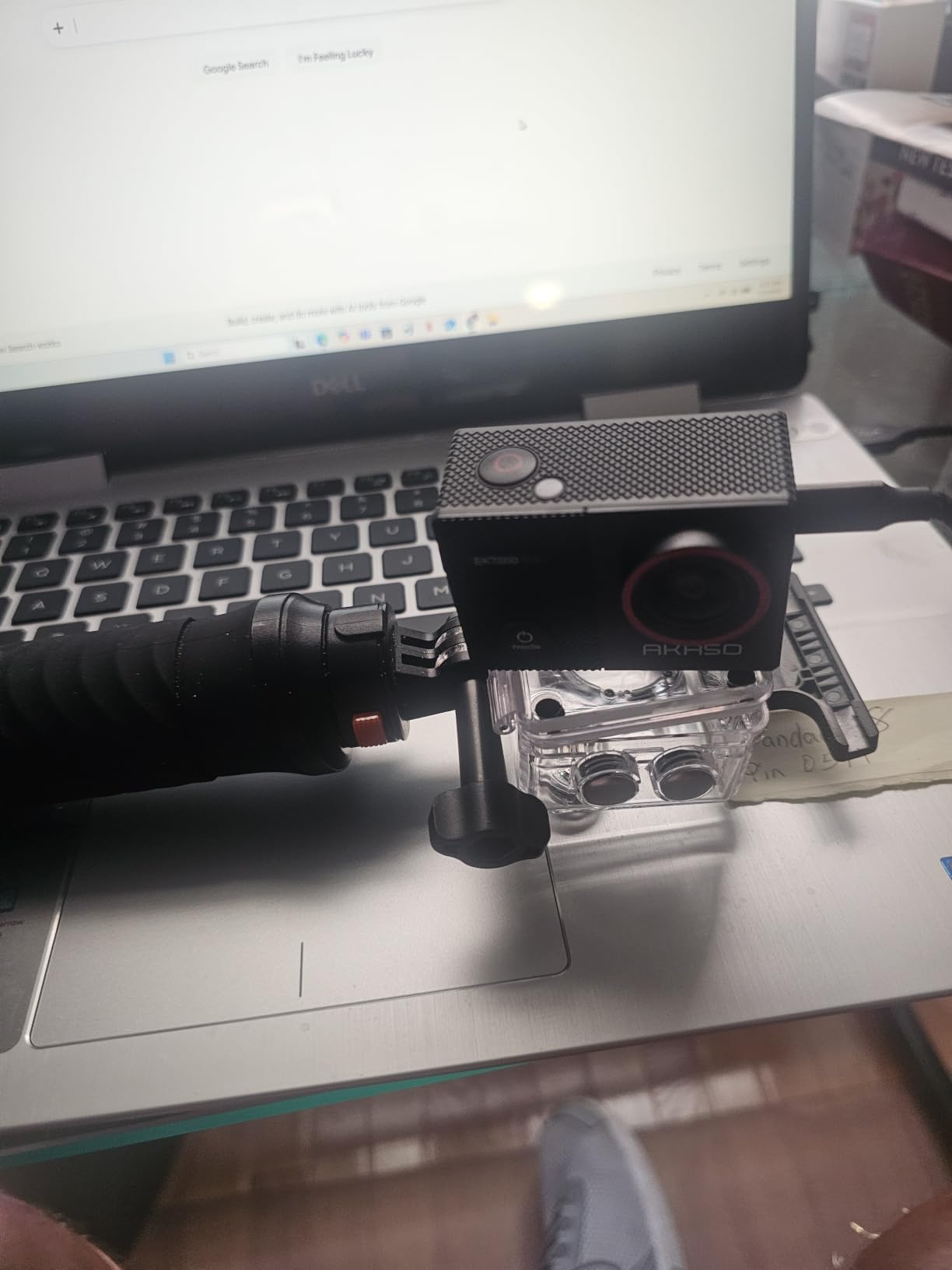
Battery life is a real advantage for full-day trips. Each of the two included 1350mAh batteries is rated at up to 140 minutes, so a day of snorkeling does not require a midday recharge.
Divers and snorkelers report the housing sealing reliably, including after adding silicone along the case edges as extra insurance. Waterproof to 131 feet, which is far past anything you will reach on a snorkel.

What the EK7000 Pro does well in open water
It handles both clear and murky water without collapsing. In green, sediment-heavy bays the footage stays usable, which is the harder test and where many entry-level bodies fall short.
The floating grip option matters more than it sounds. A camera that floats is a camera you get back after it slips from a wet hand, and a wrist strap plus float is the simplest insurance in this guide.
Where it falls short
The most cited snorkeling-specific problem is a yellow colour cast that appears when the wrong underwater mode is left enabled, and you cannot fix it once the housing is sealed. Set the mode on the beach, test it in the pool rinse, then close up.
Some listings advertise 5x zoom on this model and it is not there. The screen is also hard to see through the housing window, and the companion app is the weakest part of the package.
4. Insta360 X4 — 360 capture for unpredictable subjects
Insta360 X4 Standard Bundle – Waterproof 8K 360 Action Camera, 4K Wide-Angle Video, Invisible Selfie Stick Effect, Removable Lens Guards, 135 Min Battery Life, AI Editing, Stabilization
8K 360 capture
Waterproof to 33ft bare
135 min battery
5.7K60fps
Pros
- 8K 360 capture with accurate colour
- App reframing turns one shot into many angles
- FlowState stabilization with horizon lock
- Waterproof to 33ft without a case
Cons
- Bulky 0.72 kg body
- Reframing depends on the Insta360 app
- Standard bundle omits the selfie stick and dive case
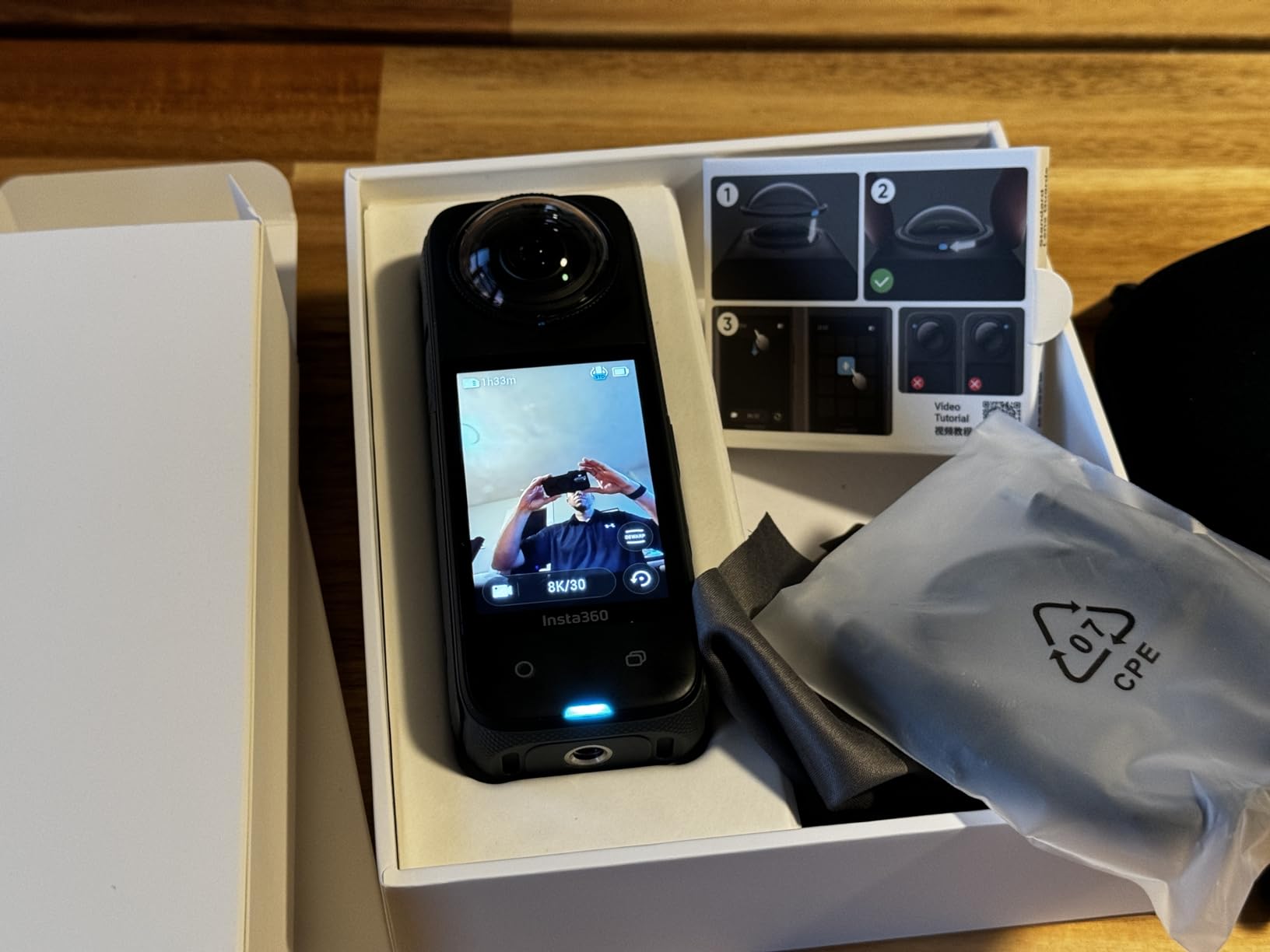
The X4 solves a specific snorkeling problem: you never know where the reef shark is. Shoot once, capture everything around you at 8K in 360, and pick your angle later in the app. For unpredictable subjects and wide reefscapes, that is a genuine advantage over fixed-lens cameras.
It is waterproof to 33 feet bare, which covers snorkeling depth with no dive case required. Battery life of 135 minutes on the 2290mAh cell means one charge easily covers a full morning of intermittent shooting.
FlowState stabilization with 360 degree horizon lock keeps footage level, which matters because a snorkeler tilts constantly while looking down at coral. Removable, tool-free lens guards are a small touch that saves a trip when a reef shelf is closer than expected.
Single-lens modes are there too, including 4K60 wide-angle and 170 degree MaxView at 4K30, so you are not locked into 360 if you want a conventional frame.
What the X4 does well in open water
Shooting wide and cropping later means you keep the shot when a fish turns at the last second. Reviewers rate the image quality and the reframe workflow as the decisive strengths for underwater subjects that will not hold a pose.
Colour accuracy stays consistent across a full 360 frame, and Active HDR keeps the sunlit surface from blowing out while the reef below stays readable.
Where it falls short
At 0.72 kg it is by far the bulkiest camera here, and that weight is uncomfortable on a long snorkel with a wrist mount. It also forces an app-based editing workflow, and the tiny preview screen is close to useless while you are in the water.
The standard bundle does not include the selfie stick or the Invisible Dive Case. The invisible selfie stick effect, which is the reason many people buy a 360 camera at all, needs the separate pole.
5. KODAK PIXPRO WPZ2 — sealed body, no housing needed
KODAK PIXPRO WPZ2 16MP Waterproof Digital Camera, 15m, 4X Zoom, Yellow
16MP BSI CMOS
Waterproof to 50ft
4x optical zoom
Underwater scene mode
Pros
- Genuinely waterproof to 15m with no housing
- Light at 176g for a wetsuit pocket
- 4x optical zoom for flexible framing
- Underwater scene mode handles snorkel photos
- Shockproof and dustproof
Cons
- Shutter lag makes missed shots likely
- Small low-resolution LCD
- Card capacity capped at 32 GB
The WPZ2 is the camera to hand to someone who does not want a camera. It is a sealed point-and-shoot with a physical mode dial, an underwater scene mode, and buttons that work with wet fingers. No menus, no app, no thinking.
It is also one of the few cameras in this guide that is waterproof without a housing at all. The sealed body has no separate lens opening, and a gasket-protected bottom cover protects the battery compartment, so a saltwater rinse after every session is all the maintenance it needs.
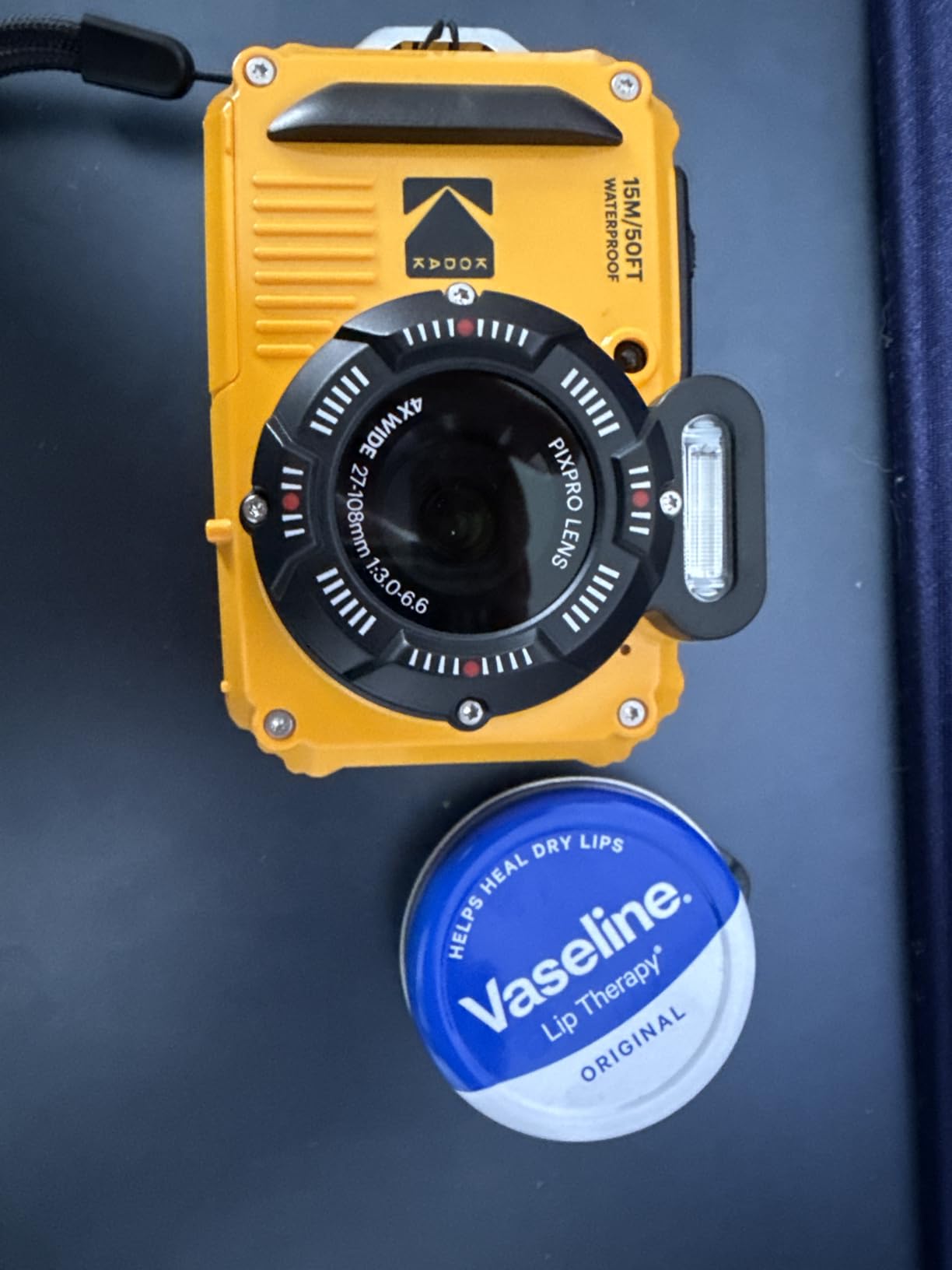
The 4x optical zoom is a genuine advantage over the digital zoom on most action cameras in this list. When a warthog sits at the end of the lagoon and you cannot get closer, real zoom is the difference between a photo and a smudge.
Shockproof to 2 meters and dustproof, it also handles being dropped on a boat deck and buried in beach sand, which is a realistic way to lose a camera.
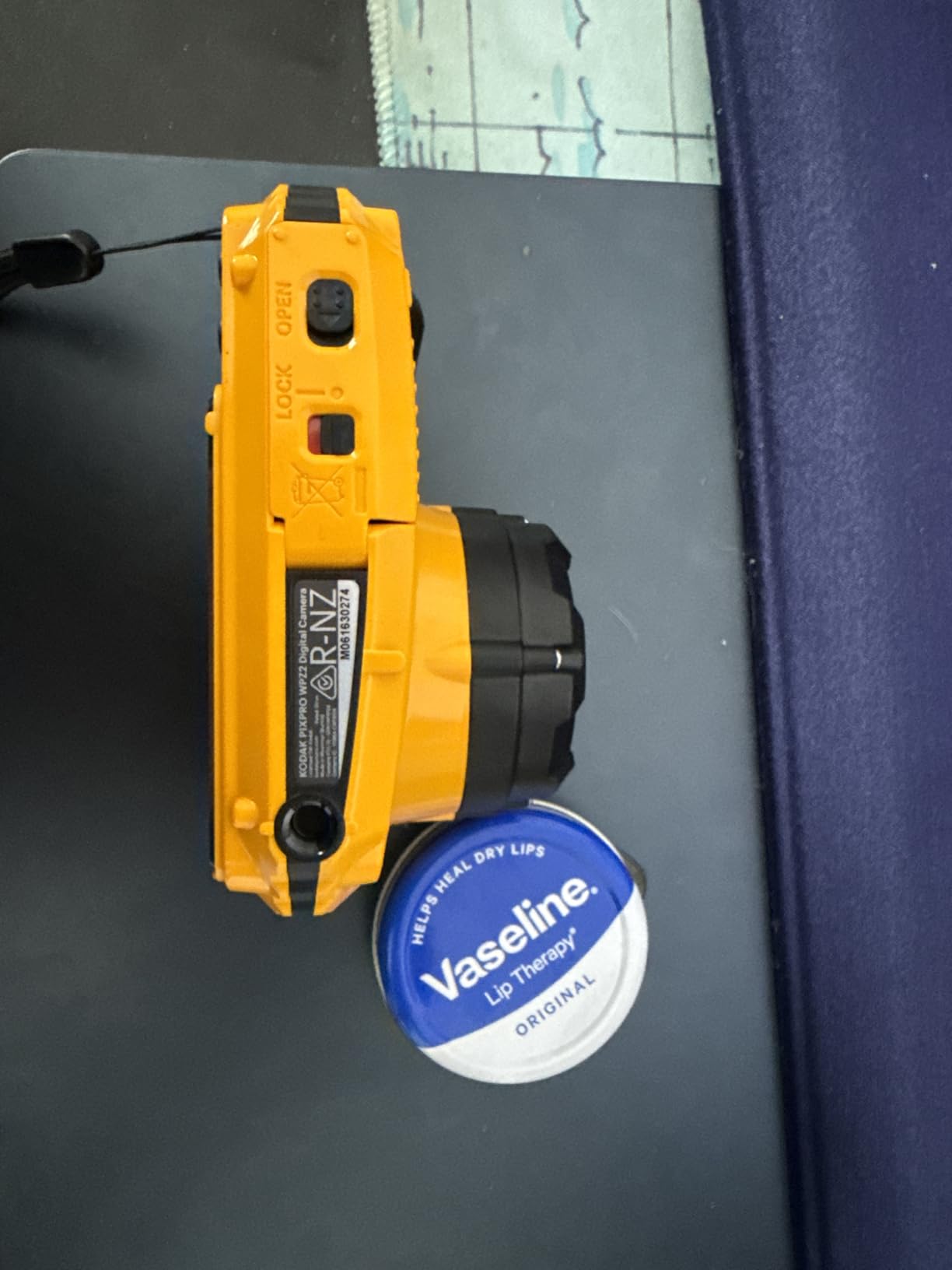
What the WPZ2 does well in open water
Snorkelers consistently report that the WPZ2 stays dry and returns good underwater photos for the outlay, and the underwater mode is a genuine preset rather than a filter slapped on afterwards. Rinse the sealed body under fresh water and it is ready to pack.
At 176g it disappears into a wetsuit pocket, so it never becomes a dangling weight on your chest for an hour.
Where it falls short
Slow shutter and shutter lag mean missed shots are common, and there is no shutter sound or on-screen indicator, so you often do not realize you captured nothing. The small low-resolution LCD is also hard to judge focus on.
Stabilization is digital and basic, image quality is plain by current standards, and card capacity stops at 32 GB, which is a real limit on a multi-day trip.
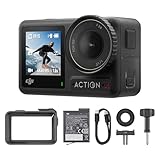
6. DJI Osmo Action 4 — the sensor to beat in dim water
DJI Osmo Action 4 Essential Combo, Waterproof Action Camera Vlogging Camera
1/1.3 inch sensor
Waterproof to 18m bare
4K120fps
RockSteady stabilization
Pros
- Large sensor holds colour underwater
- Waterproof to 18m with no housing
- RockSteady and horizon balancing
- Dual touchscreens for mounted framing
Cons
- 10MP stills trail most rivals
- Touchscreens awkward with wet hands
- Needs V90 cards for top bitrates
If you snorkel at dawn, under a pier, or in a shaded lagoon, the Osmo Action 4 is the one to look at. Its 1/1.3 inch sensor with 2.4 micron pixels gathers far more light than the sensors in the budget action cameras, and that shows up directly in underwater colour.
It is waterproof to 18 meters bare, which is deeper than any snorkeling trip reaches, so the camera goes in the water with no housing at all. That also means the touchscreens stay sealed and the audio path stays open for the optional wireless microphone.
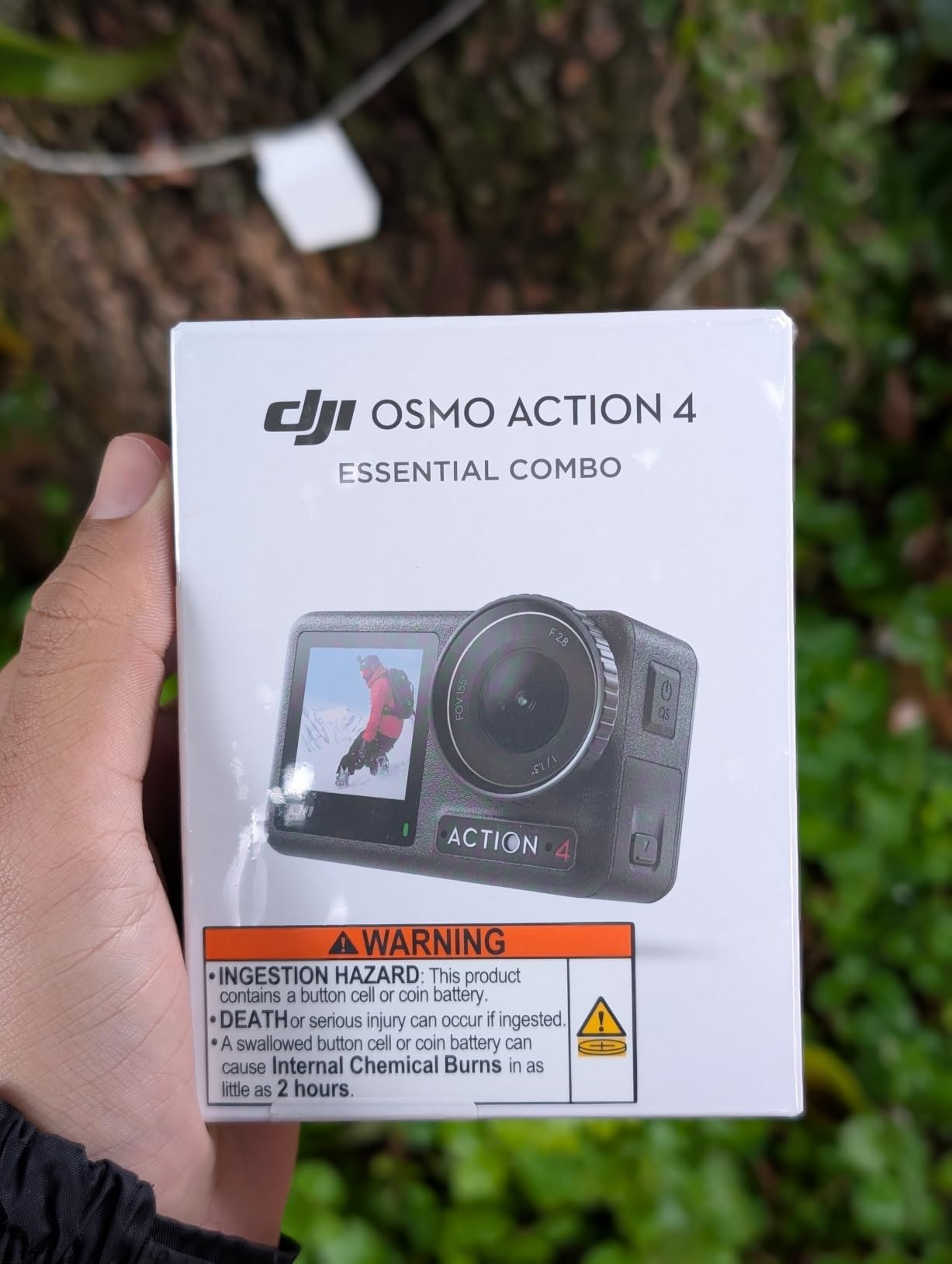
Reviewers single out underwater colour accuracy, stabilization, and the bare waterproof rating as the reasons to buy. RockSteady, RockSteady+, and HorizonBalancing keep snorkel footage level even when you are kicking hard over a drop-off.
Pre-Rec is a small feature with a big payoff underwater. It buffers 5 to 60 seconds before you press record, so a fish that appears and vanishes in three seconds can still be captured.
What the Osmo Action 4 does well in open water
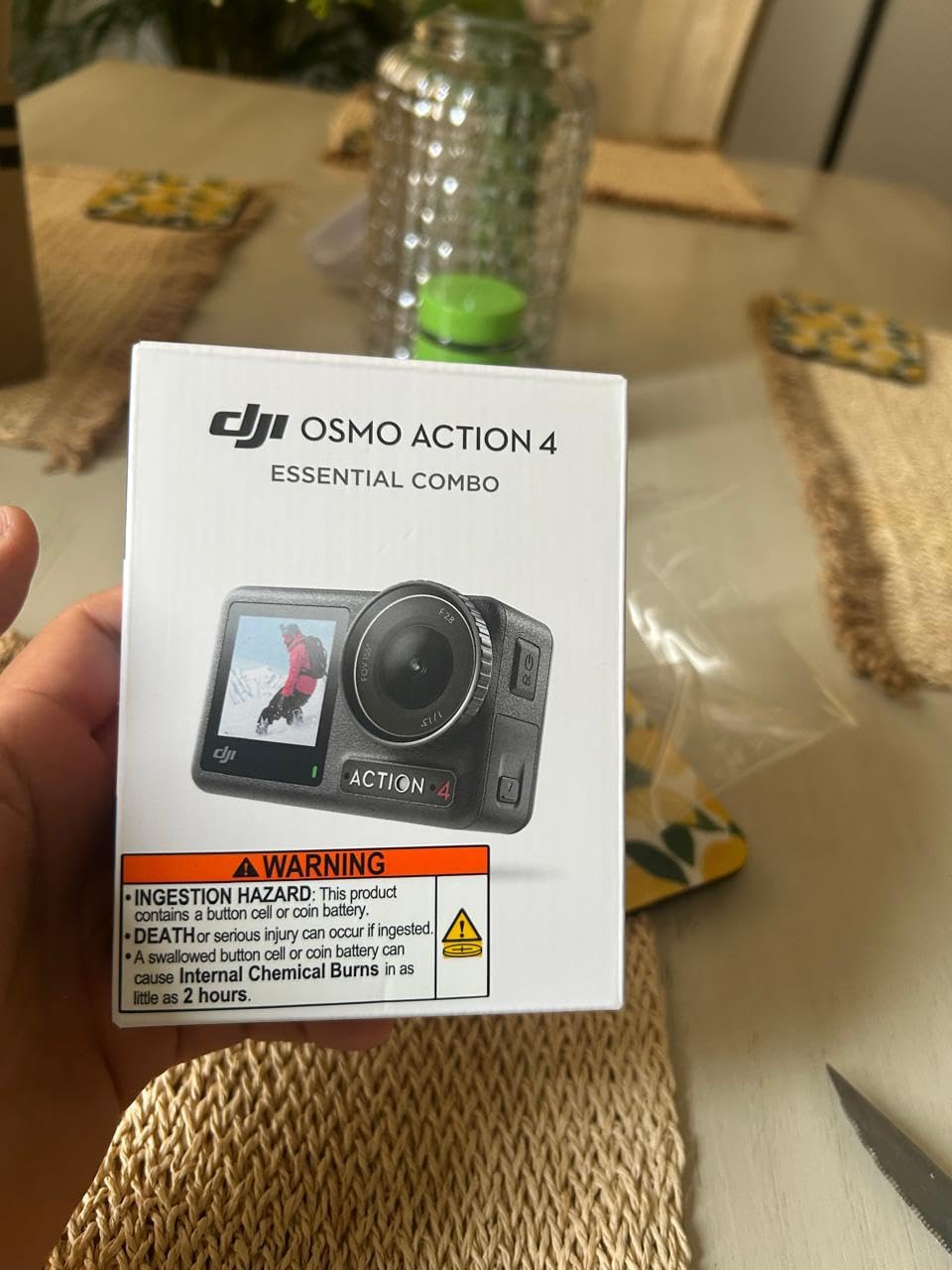
True-to-life colour with flicker-free auto white balance means less time correcting footage afterwards. Ten-bit colour depth and D-Log M also give you real latitude if you want to grade a green-water clip back to something natural.
The dual full-colour touchscreens let you frame shots with the camera mounted on a wrist or handle without guessing, and the magnetic quick-release makes switching to vertical framing fast.
Where it falls short
Still-image resolution of 10MP trails most rivals, so if you want printed photos of a specific fish, this is not the body. The Essential Combo also omits the curved adhesive base and extra batteries that many buyers assume are included.
Both touchscreens are awkward to operate with wet hands or dive gloves, and the highest bitrates require V90 microSD cards, which cost more than the cards most people already own.
7. GoPro HERO13 Black — 27MP stills with no housing
GoPro HERO13 Black – Waterproof Action Camera with 5.3K60 Video, 27MP Photo + Compatability with HB-Series Lenses
5.3K60 video
27MP photos
Waterproof to 33ft
HB-Series lens detection
Pros
- 5.3K60 with 91 percent more resolution than 4K
- 27MP stills plus 24.7MP frame grabs
- Waterproof to 33ft with no housing
- Water-repelling lens cover cuts flare
Cons
- Roughly 79 minutes of battery life
- Underwater colour needs correction or a filter
- HB-Series lens mods sold separately
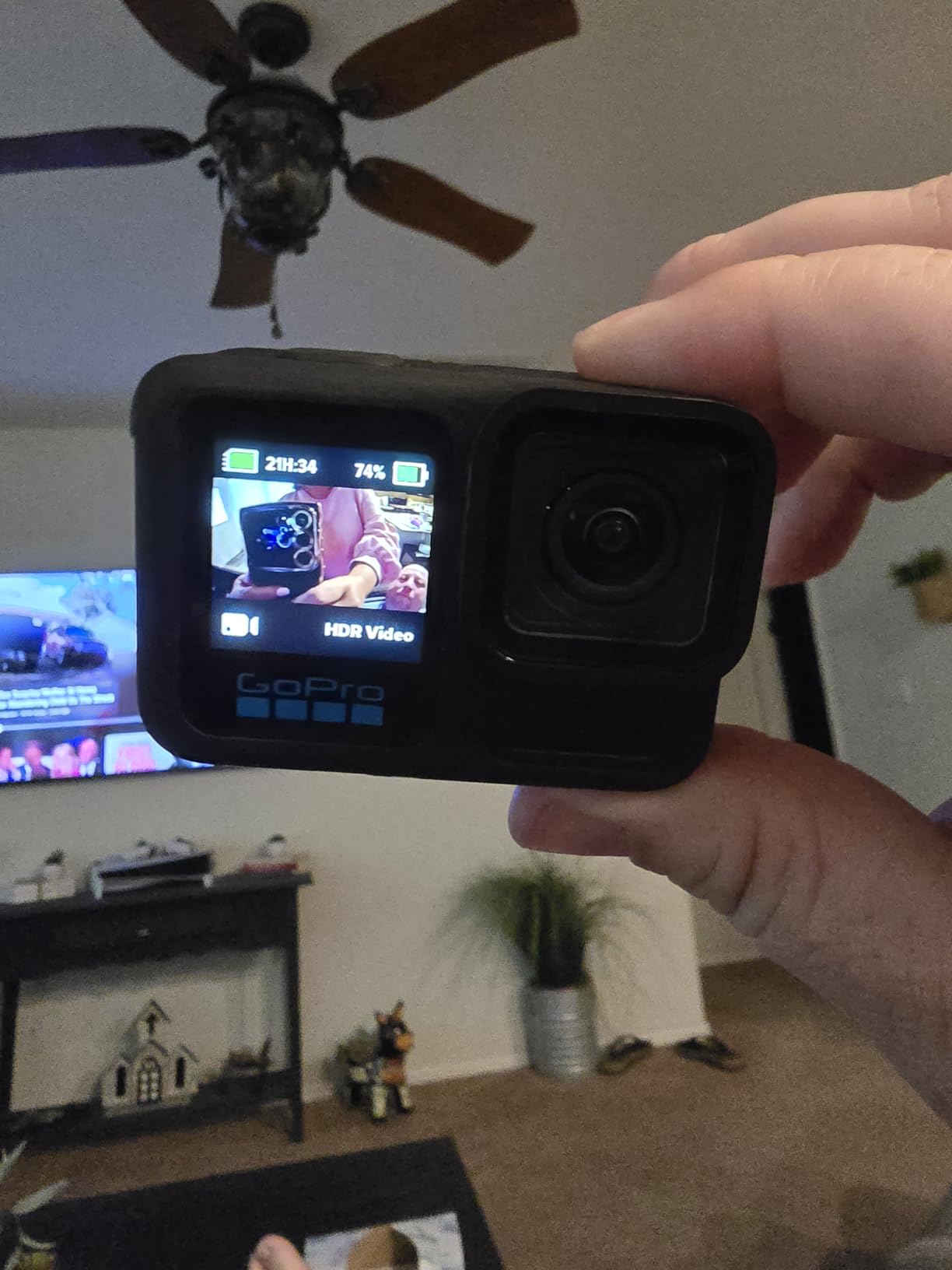
The HERO13 is among the highest resolution fixed-lens cameras here, and that matters if you plan to crop a wide reef frame down to a single fish. 27MP stills plus frame grabs of up to 24.7MP from video give you a second chance after the moment has passed.
It is sealed and waterproof to 33 feet without a housing, has a dedicated underwater shooting mode, and ships with a water-repelling lens cover that reduces flare and the purple orb artefact that wide-angle lenses pick up underwater.
HB-Series lenses are auto-detected once mounted, so the camera applies the right settings without you digging through menus. The Macro and Ultra Wide mods in that range are aimed squarely at close reef work.
Burst slo-mo up to 13x is a genuine snorkeling tool, because a fast-moving fish in normal video becomes a still frame you can actually see.
What the HERO13 does well in open water
Resolution is the headline, and underwater it is useful rather than decorative. If your reef photography involves identifying small marine life or cropping wide scenes, no other camera here gives you this much usable detail.
The sealed body also means no housing to flood. A housing latch left ajar is a routine way to ruin an action camera, and this camera removes that risk entirely for snorkeling.
Where it falls short
Battery life of roughly 79 minutes is the shortest in this lineup, so a full boat day needs spare batteries or a midday swap. Underwater colour typically needs correction or an external filter for the best results, which is an extra step and an extra accessory.
The menu system is still fiddly for quick adjustments in the water, and the HB-Series lens mods are sold separately, so the accessory cost lands after the camera purchase.
8. Insta360 Ace Pro 2 — 8K with a Leica lens
Insta360 Ace Pro 2 Dual Battery Bundle – 8K Waterproof Action Camera Co-Engineered with Leica, 1/1.3″ Sensor, Dual AI Chip, Leading Low Light, Superior Audio
8K30 on 1/1.3 inch
Waterproof to 39ft
157 degree lens
PureVideo low light
Pros
- Leica Summarit lens on a 1/1.3 inch 8K sensor
- PureVideo rescues low-light scenes
- Waterproof to 12m without a housing
- New Wind Guard improves in-water audio
Cons
- 8K drains batteries and fills cards fast
- Editing and reframing depend on the app
- 8K adds little for social clips
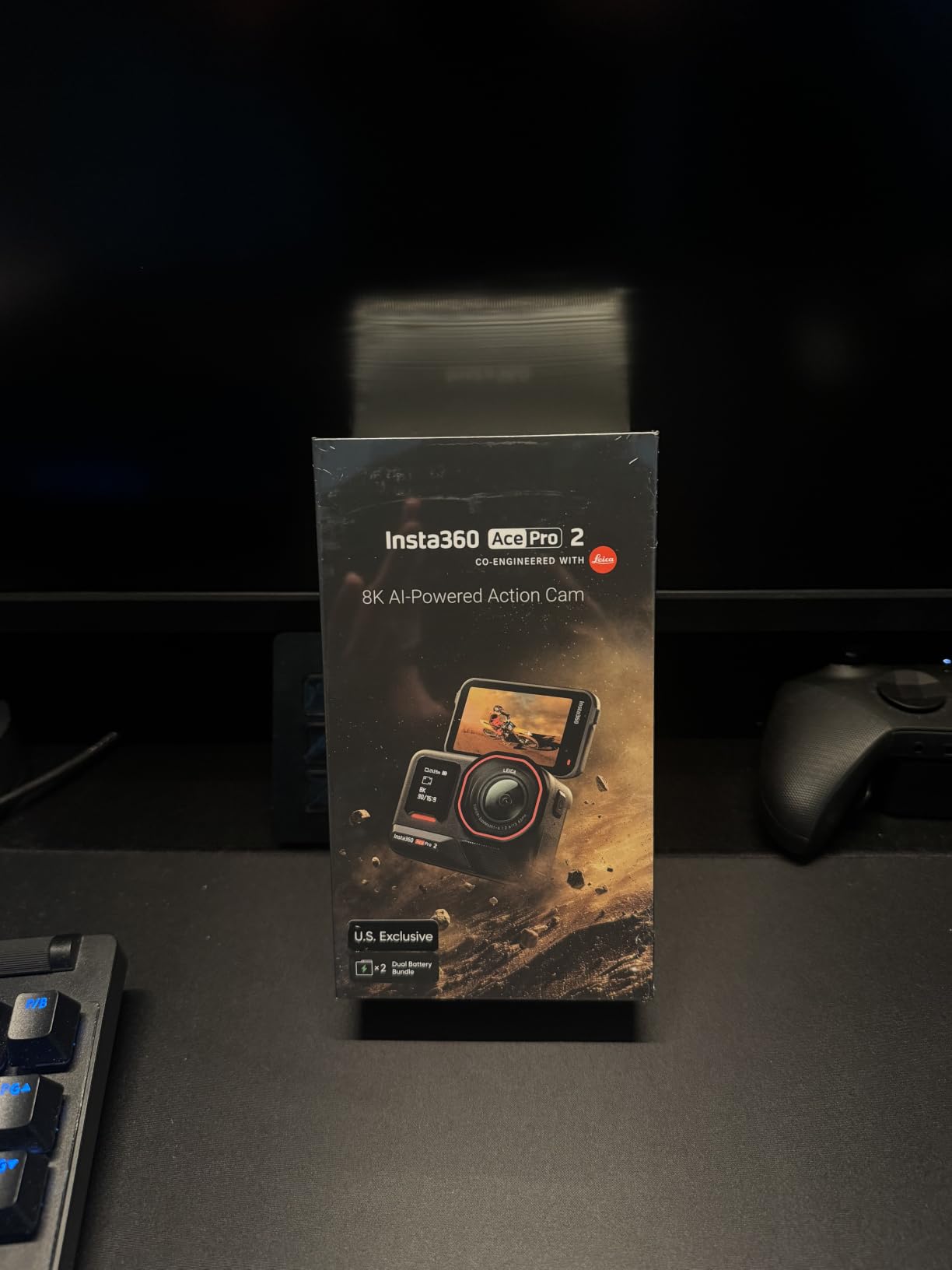
The Ace Pro 2 pairs a 1/1.3 inch sensor with a Leica Summarit lens, and reviewers consistently credit that combination for image quality. At 8K30 with 4K60 Active HDR and Leica colour profiles, it produces very rich colour across the bright, shallow water most snorkelers swim in.
Waterproof to 39 feet bare, it is among the deeper-rated sealed bodies here and needs no housing for snorkeling. It is also rated cold resistant to -20 degrees Celsius, which matters if you are heading somewhere the water is genuinely frigid.
PureVideo is the mode to use on shaded reefs or deeper drops, where a normal image sensor gives up. Reviewers point to it as one of the two decisive upgrades alongside the lens, and it holds up to 4K60.
The 2.5 inch flip touchscreen is noticeably brighter than most and stays readable in direct sun, which sounds minor until you are trying to frame a shot one-handed at the surface.
What the Ace Pro 2 does well in open water
Colour and dynamic range across bright surface shots and dim reef scenes, which is the range a snorkeler actually works in. Thirteen and a half stops of dynamic range helps when a sunlit surface and a shadowed reef appear in the same frame.
The new Wind Guard and refreshed audio algorithms improve in-water sound noticeably over the previous generation, and the dual battery bundle doubles your time between charges.
Where it falls short
8K drains batteries quickly and fills cards quickly, so a full day of casual snorkel clips in 4K makes more sense than recording everything at maximum resolution. Editing and reframing depend on the Insta360 app, which adds a step if you just want to share a clip.
It is one of the more expensive cameras in this guide, and 8K resolution adds little visible benefit to the short social clips most snorkelers actually share.
9. OM System TG-7 — macro from 1cm away
OM System OLYMPUS Tough TG-7 Red Underwater Camera, Waterproof, Freeze Proof, High Resolution Bright, 4K Video 44x Macro Shooting (Successor Olympus TG-6)
15m waterproof body
F2.0 lens
Focus from 1cm
Five underwater modes
Pros
- Bright F2.0 lens gathers light in murky water
- Focuses from 1cm for reef macro
- Five underwater modes including HDR and microscope
- RAW capture for real colour latitude
- Freeze crush and shock protection
Cons
- 12MP still resolution
- Small 1/2.3 inch sensor limits cropping
- Macro modes need menu work in gloves
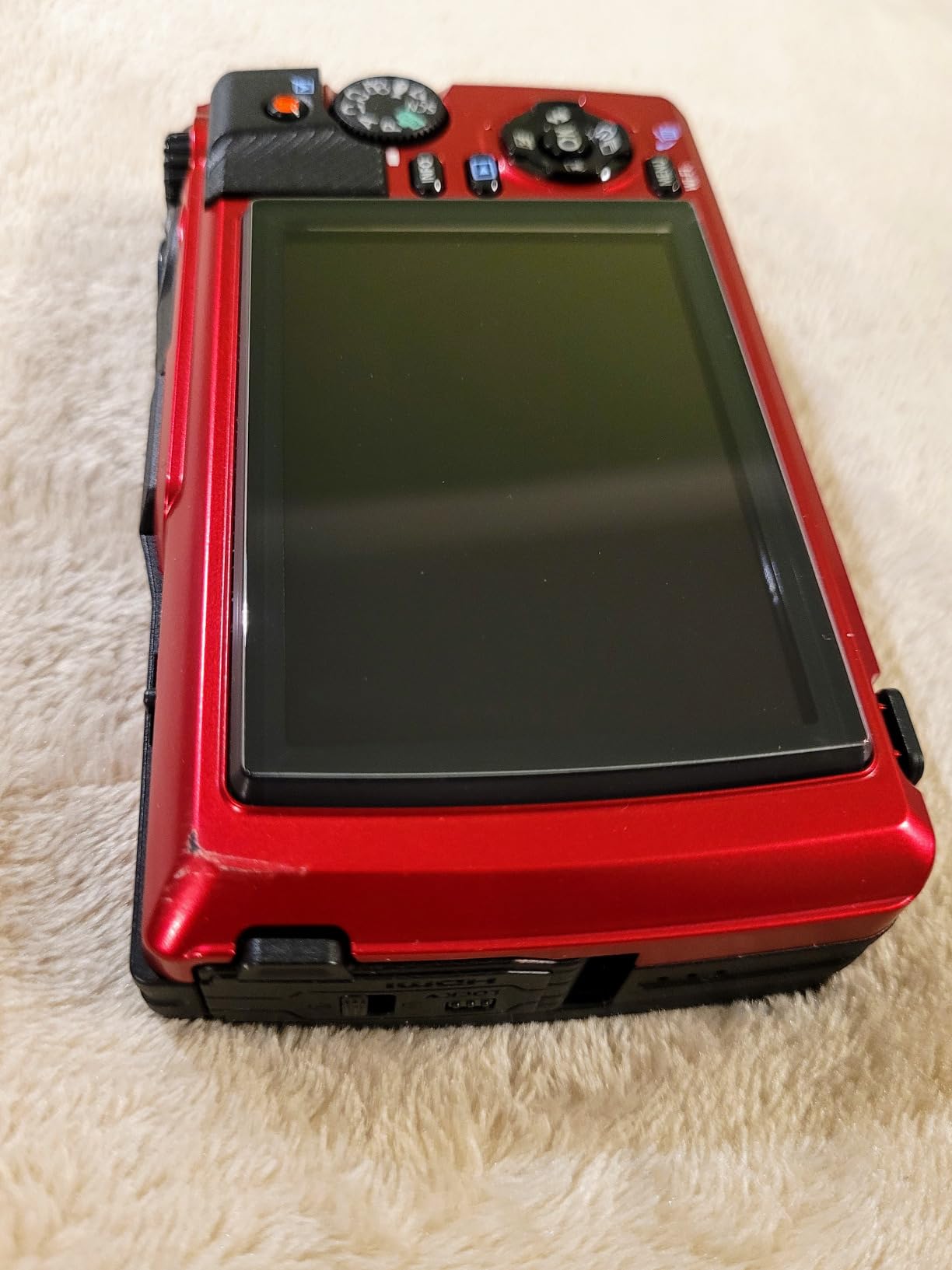
The TG-7 is the one dedicated stills camera in this guide, and if your idea of snorkeling involves coming home with identifiable photographs rather than video clips, it earns its place. The F2.0 aperture is wider than anything else here, which is the single biggest advantage in murky or shaded water.
Its variable macro system focuses from 1 centimeter off the lens across four macro modes, so a blenny in a rock crevice is a reachable subject. That capability has no equivalent in the action cameras here, all of which need to be roughly 12 inches away to focus.

Five underwater modes, including underwater microscope and underwater HDR, are purpose-built rather than generic filters. RAW capture with 12-bit processing means you can pull the red back into a coral shot after the fact instead of trying to get it in the water.
Durability is thorough: waterproof to 15 meters, shockproof to 2.1 meters, crushproof to 100 kgf, freezeproof to -10 degrees Celsius, and anti-fog.
What the TG-7 does well in open water
Still image quality from a dedicated compact, with an optical 4x zoom covering 25 to 100mm equivalent. That range is what lets you frame a wide reef and then isolate a subject without digital cropping.
Reviewers accept the premium outlay as the cost of real stills and RAW capture, and the underwater modes do most of the color correction work for you when you do not want to edit.
Where it falls short
12MP resolution and a small 1/2.3 inch sensor limit heavy cropping and large prints, so a high-resolution action camera still wins for wide scenes you intend to zoom into.
Reaching the macro and underwater modes means menu navigation that is awkward with cold hands, wet fingers, or gloves on. US warranty service also requires buying from an authorized dealer, which is worth checking before you order.
10. SVBONY SVGo2 — a kit that floats
SVBONY SVGo2 Underwater Camera for Swimming Pool, Beach Vacation,Snorkeling
50MP stills
4K30 video
Floating selfie stick
Two 1350mAh batteries
Pros
- Floating selfie stick stops the camera sinking
- Two batteries for long recording sessions
- Crisp stills with clear colour in tropical water
- Wi-Fi transfer to a phone is easy
- Light at 61.2g
Cons
- Muffled scratchy audio inside the housing
- Housing fitting instructions are unclear
- No memory card included
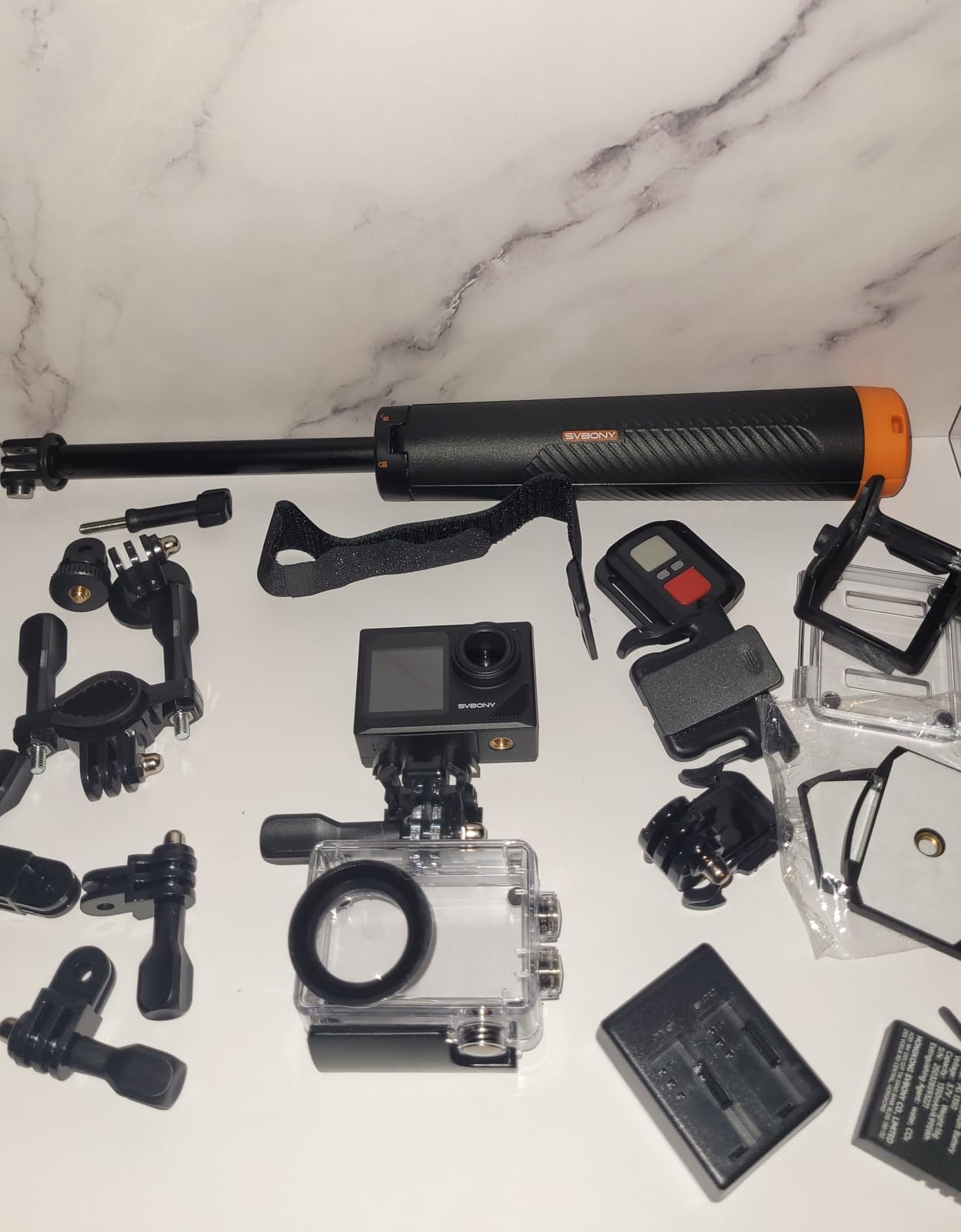
The SVGo2 is the kit you hand to a first-time snorkeler who wants to film the holiday rather than learn a camera. The floating selfie stick is the standout: it doubles as an anti-loss wrist strap, a tripod, and a hand grip, and it is the difference between a recovered camera and a camera on the seabed.
Owners buying it for beginner underwater use report crisp stills with vivid, accurate colour in clear tropical water, and two 1350mAh batteries rated for up to three hours of 4K recording between them.
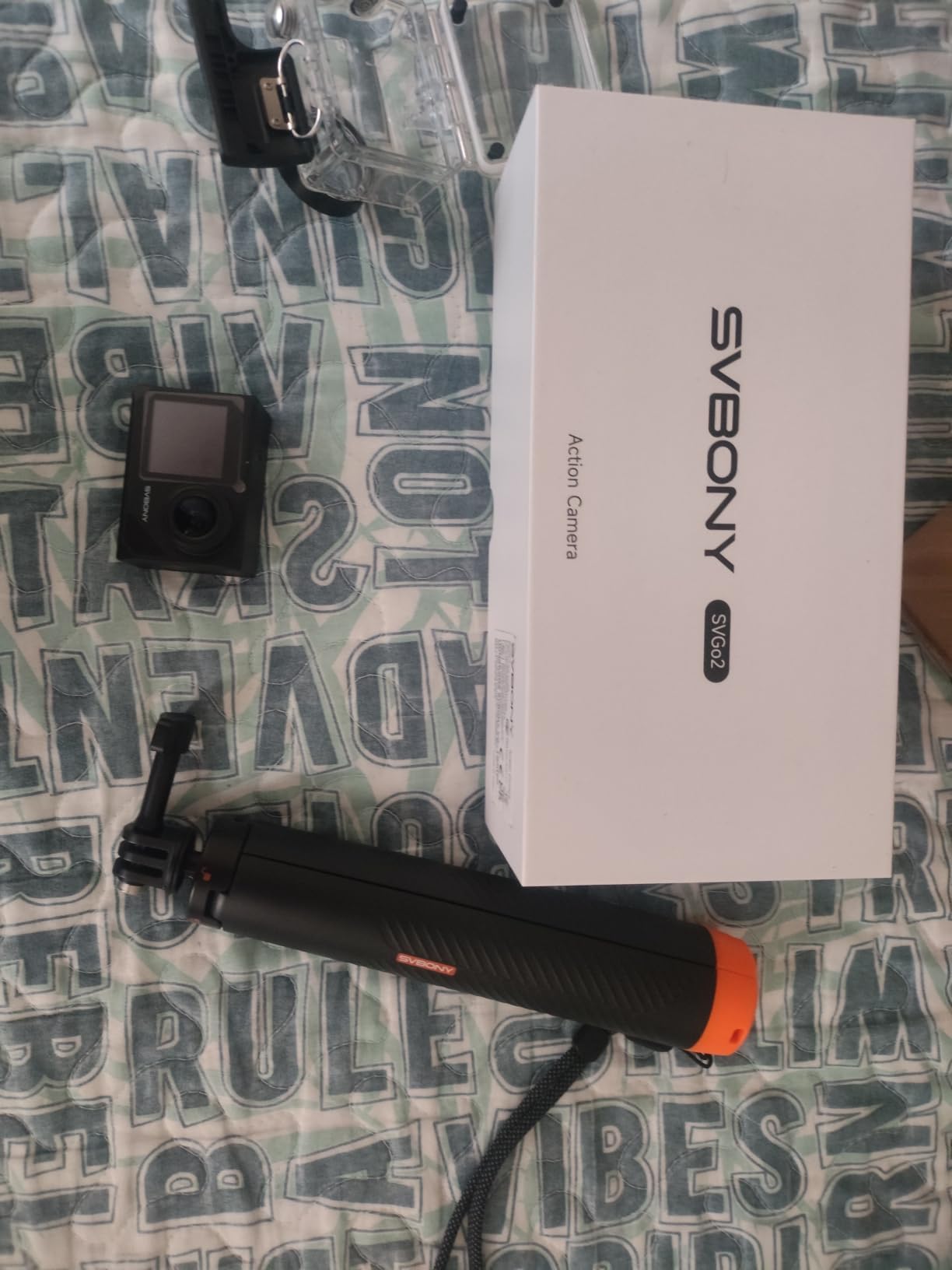
It is light at 61.2g and small enough to carry as a backup alongside a phone. Wi-Fi control, preview, and download work at 33 feet with the housing fitted, which covers the distance from a boat.
The housing is rated to 98 feet with a practical recommended depth of 16.4 feet, and it comes with mounts, batteries, a charger, and a wired microphone in the box.
What the SVGo2 does well in open water
Colour in clear tropical water is the strongest thing about it, and the accessory bundle means you have a working setup on day one without buying a float, a grip, or spare batteries separately.
The anti-loss hardware is the part most beginners appreciate later. Owners who nearly lost a camera on an earlier trip tend to treat the floating grip as the reason to keep using this one.
Where it falls short
Audio inside the housing is muffled and scratchy even with the external microphone, so treat this as a video-only camera. Instructions for fitting the waterproof case are unclear, and the memory card is not included without the box saying so plainly.
Video quality is adequate rather than impressive, the body is smaller than buyers expect, and Bluetooth is not supported. It has the thinnest social proof in this guide, so treat owner reports as a small sample.
How to Choose a Waterproof Camera for Snorkeling
Snorkeling needs are narrower than scuba needs, and that is good news because you can stop paying for features you will never touch. You will not be managing a dive computer, trimming external strobes, or descending past ambient light. You will be hovering at 3 to 15 feet, kicking slowly, and trying not to lose the camera.
Match the camera to your real depth
Every camera here is rated well past snorkeling depth, so depth is rarely the deciding factor. What matters is how the rating is achieved. Some cameras are waterproof bare with no housing at all, which removes the single most common failure point. Others need a housing included in the box, which adds a latch that can be left ajar and a window that makes the screen unreadable.
Bare waterproof bodies like the DJI Osmo Action 4, the GoPro HERO13, and the OM System TG-7 are the safer pick if you are new to this. Sealed compacts like the Kodak WPZ2 work the same way. Housing-based action cams work fine, provided you run the seal check before every session.
Rugged compact vs action camera vs 360 camera
Rugged compacts give you optical zoom, real macro, and dedicated underwater modes. They are the better choice for photos. Action cameras give you stabilization, rugged build, head mounts, and better video. 360 cameras give you the ability to reframe after the fact, which suits subjects that will not wait for you.
Most snorkelers end up wanting an action camera with the option to take stills. That is why most of the picks in this guide are action bodies, and why the TG-7 remains the specialist choice when photos come first.
Image stabilization types that matter underwater
Optical stabilization is rare in this category. What you will find is electronic image stabilization, usually gyro-based, and hybrid systems that combine electronic processing with sensor data. For snorkel footage, electronic stabilization does most of the useful work because your dominant motion is hand and fin movement, not high-speed action.
Horizon balancing and horizon lock, offered on the Insta360 X4, the DJI Osmo Action 4, and others, are worth more than raw resolution for underwater video. A tilted reef line looks worse than a soft one, and these features correct roll that a snorkeler introduces constantly while looking down at coral.
Color correction: red filters, white balance, and dive modes
Red light disappears with depth. By 15 feet, reds and oranges are largely gone, which is why shallow reef photos often come out blue-green. Three things fix it: a red or magenta filter screwed to the lens, a manual white balance set for the depth, or a dedicated underwater mode built into the camera.
For snorkeling specifically, filters are often the wrong answer. Red filters are designed for the 20 to 60 foot range and can make a shallow 6-foot shot look muddy and dark. Below about 15 feet they make a dramatic difference, above that they hurt. If your deepest swim is a shallow lagoon, skip the filter and set white balance manually or use an underwater mode.
Backscatter is the other half of the problem. Light from your own flash or from a video light bouncing off suspended particles turns the frame into snow. The single best defence is to get closer to your subject rather than adding light.
Snorkeling settings cheat sheet
Set everything before you get in the water, because you cannot change settings inside a sealed housing. Shoot 4K at 30fps as your default. Use 1080p60 or 4K60 only when a subject is moving fast, because higher frame rates cut light and your deepest scenes are already light-limited. Turn stabilization on and horizon balancing on.
Set white balance to the depth you expect rather than auto, where the camera allows it. Fix the focus before you submerge if the camera supports it. Start recording before your head goes under, not after, because the record button is hard to find with a glove or a wet finger. And rinse the housing with fresh water before you open it, every time.
Accessories you actually need
Three things matter, in this order. First, a wrist strap plus a floating handle or floaty body, because cameras are lost at the surface far more often than they fail. Second, a high-capacity high-speed memory card, because action cameras write large files quickly and a slow card is a worse problem than a slow camera. Third, a microfiber cloth and a rinse bucket.
A red filter is a fourth-tier purchase for snorkelers specifically, for the depth reasons above. Underwater housings and lights are unnecessary if your camera is already rated waterproof bare. If you do plan to move toward scuba, our guide to underwater gear covers the accessories that only make sense below the surface.
Buying used, and what to check
The used action camera market is where a lot of snorkeling value sits, and buyers on forums report good results with older generations bought second hand. Test four things before you commit: that the battery holds charge under load, that the housing latch and gasket seal correctly in a bowl of fresh water, that every button responds with the camera sealed, and that the memory card slot reads a freshly formatted card.
Check that the waterproof rating still applies with the original housing and no visible salt residue in the gasket groove. Salt in the gasket channel is the cheapest indicator of a camera that has been living in the sea, and it is a good reason to walk away.
Frequently Asked Questions
Which camera is fully waterproof?
What is the best budget underwater camera for snorkeling?
What is the best waterproof disposable camera for snorkeling?
Do you need a red filter for snorkeling?
Is a GoPro or an action camera good for snorkeling?
Our Final Verdict on Snorkeling Cameras
After ten cameras and a lot of salt water, the answer to the best waterproof cameras for snorkeling question is simple. The AKASO EK7000 is the one we hand to most people: 4K30 video, 20MP stills, a 131ft housing, two batteries, and a mount bundle in the box, at a total outlay that leaves room for a floaty handle and a spare card.
Go deeper on video quality with the AKASO Brave 4, on low-light colour with the DJI Osmo Action 4, on 360 flexibility with the Insta360 X4, and on reef macro with the OM System TG-7. Whichever you pick, set it up on the beach, add a strap and a float, and rinse the housing in fresh water before you open it. That last habit prevents more ruined cameras than any spec on this list.