
There is no good reason a doorbell camera should cost you money forever. The best video doorbells without a subscription record to storage you already own — a microSD card, built-in memory, or a hub on your network — and core features stay enabled forever. We spent several weeks putting eight of them through the same routine: mounting, night footage, package delivery, notification latency, and a full battery cycle where the model allowed one.
Our single best overall pick is the aosu 5MP Ultra HD Wireless and Wired Video Doorbell Camera. It combines the sharpest sensor in this group, a 166-degree head-to-toe view, local hub storage with 60-day loop recording, and the freedom to run it on a battery or hardwired — with more owner ratings behind it than anything else we tested. If your front door is the whole story, that is the unit to buy.
A few terms before we start, since this market uses them loosely. Subscription-free means your footage lives on hardware you control and core features stay unlocked forever. Subscription optional means the brand will happily let you pay later for the features you actually wanted. We scored every doorbell here against the strict version, and we call out the exceptions.
If you also shoot a lot of your own footage, our guides to the best camera sliders for video production and best shotgun microphones for video cover the other half of the visual kit.
Table of Contents
Top 3 Picks for the Best Video Doorbells Without a Subscription

aosu 5MP Ultra HD Video Doorbell
- 5MP sensor
- 166° view
- 8GB local hub with 60-day loop
- battery or wired

Tapo D210 2K Video Doorbell
- 2K with 160° view
- microSD up to 512GB
- Ring Call answering
- chime included
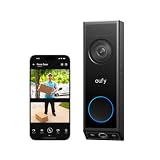
eufy E340 Dual Camera Doorbell
- Dual cameras for people and packages
- 8GB built-in storage
- 2K HDR
The aosu 5MP wins on image quality and installation flexibility. The Tapo D210 wins on value — 512GB of local capacity, a chime in the box, and the fastest app of the eight. The eufy E340 is the one to buy if package theft is your main worry, because the second downward camera solves a problem no single-lens doorbell can.
All 8 Picks at a Glance in 2026
| Product | Specifications | Action |
|---|---|---|
| aosu 5MP Ultra HD Wireless and Wired Video Doorbell |
|
Check Latest Price |
| eufy Security E340 Dual Camera Video Doorbell 2K |
|
Check Latest Price |
 MUBVIEW Bell J7 2K Wireless Doorbell Camera with Chime MUBVIEW Bell J7 2K Wireless Doorbell Camera with Chime |
|
Check Latest Price |
| Tapo D210 2K Wireless Smart Video Doorbell with Chime |
|
Check Latest Price |
 BOIFUN J1 2K HD Wireless Video Doorbell Camera BOIFUN J1 2K HD Wireless Video Doorbell Camera |
|
Check Latest Price |
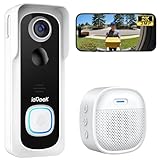 ieGeek Bell J9 2K Wireless Doorbell Camera with Chime ieGeek Bell J9 2K Wireless Doorbell Camera with Chime |
|
Check Latest Price |
 aosu 2K QHD 170° Wireless Video Doorbell Camera aosu 2K QHD 170° Wireless Video Doorbell Camera |
|
Check Latest Price |
 REOLINK Video Doorbell WiFi 2K Wired, 4:3 Wide View REOLINK Video Doorbell WiFi 2K Wired, 4:3 Wide View |
|
Check Latest Price |
Every doorbell in that table records locally and includes free person detection. The differences are in sensor resolution, field of view, how much storage comes in the box, and whether you need a hub at all.
1. aosu 5MP Ultra HD Video Doorbell — Best Overall
aosu 5MP Ultra HD Wireless & Wired Video Doorbell Camera
5MP Ultra HD sensor
166° head-to-toe view
8GB hub, 60-day loop
Battery or wired
IP65
Pros
- Sharpest sensor in this group at 5MP
- 166-degree vertical 4:3 framing that captures head to toe
- 8GB local hub with 60-day loop recording and no subscription
- Works on battery or hardwired so you can choose later
- Over 10353 owner ratings to draw on
Cons
- Aosu app is clunky and slow to use
- Hub has 8GB only with no microSD slot to expand
- No desktop app or third-party NVR support
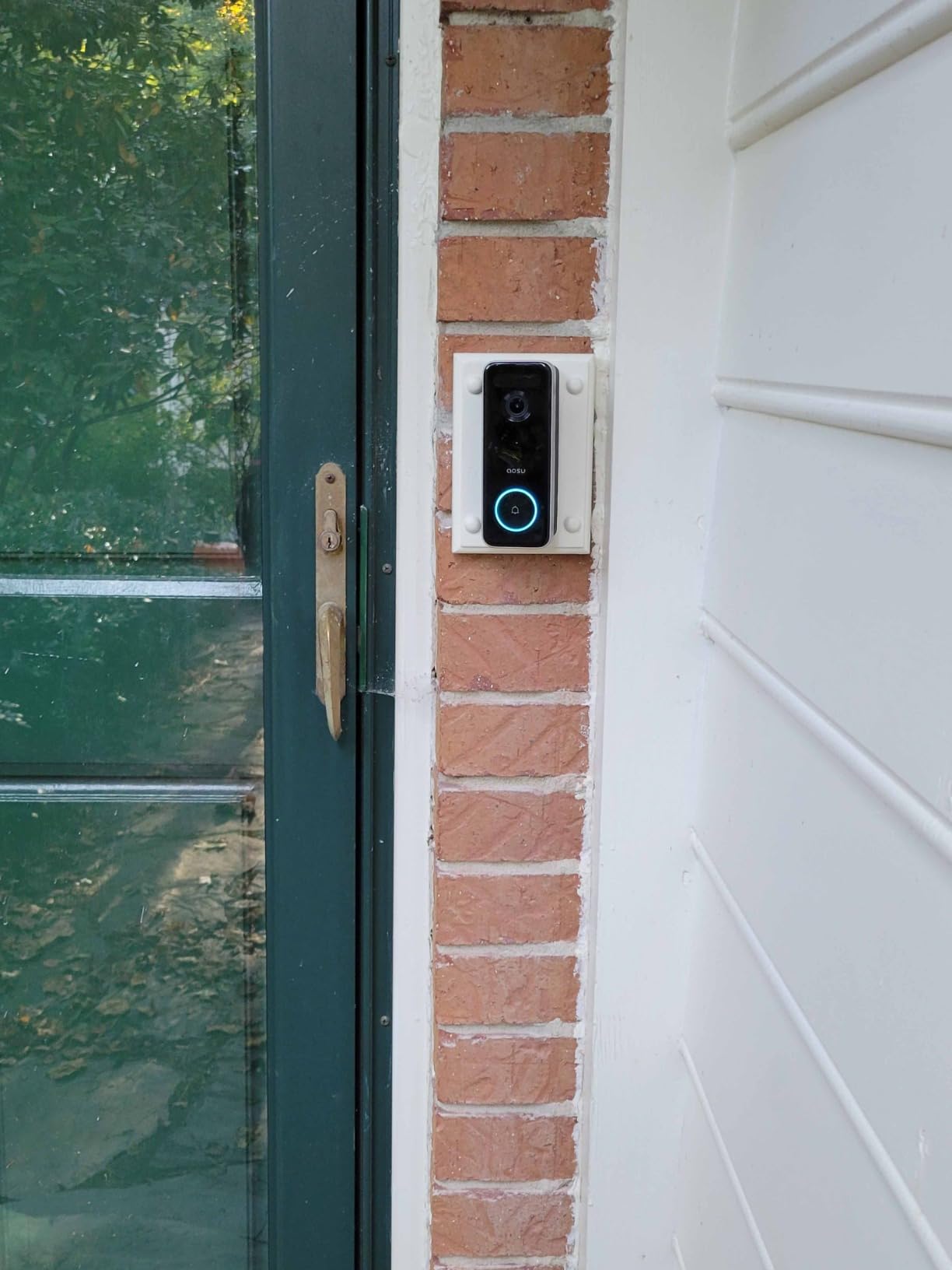
This is the doorbell we kept going back to. The 5MP sensor with a seven-piece optical glass lens produced the cleanest daytime footage we captured, and the 4:3 vertical framing meant a visitor from shoes to shoulders fit in frame without the fisheye stretching most 16:9 sensors force on you.
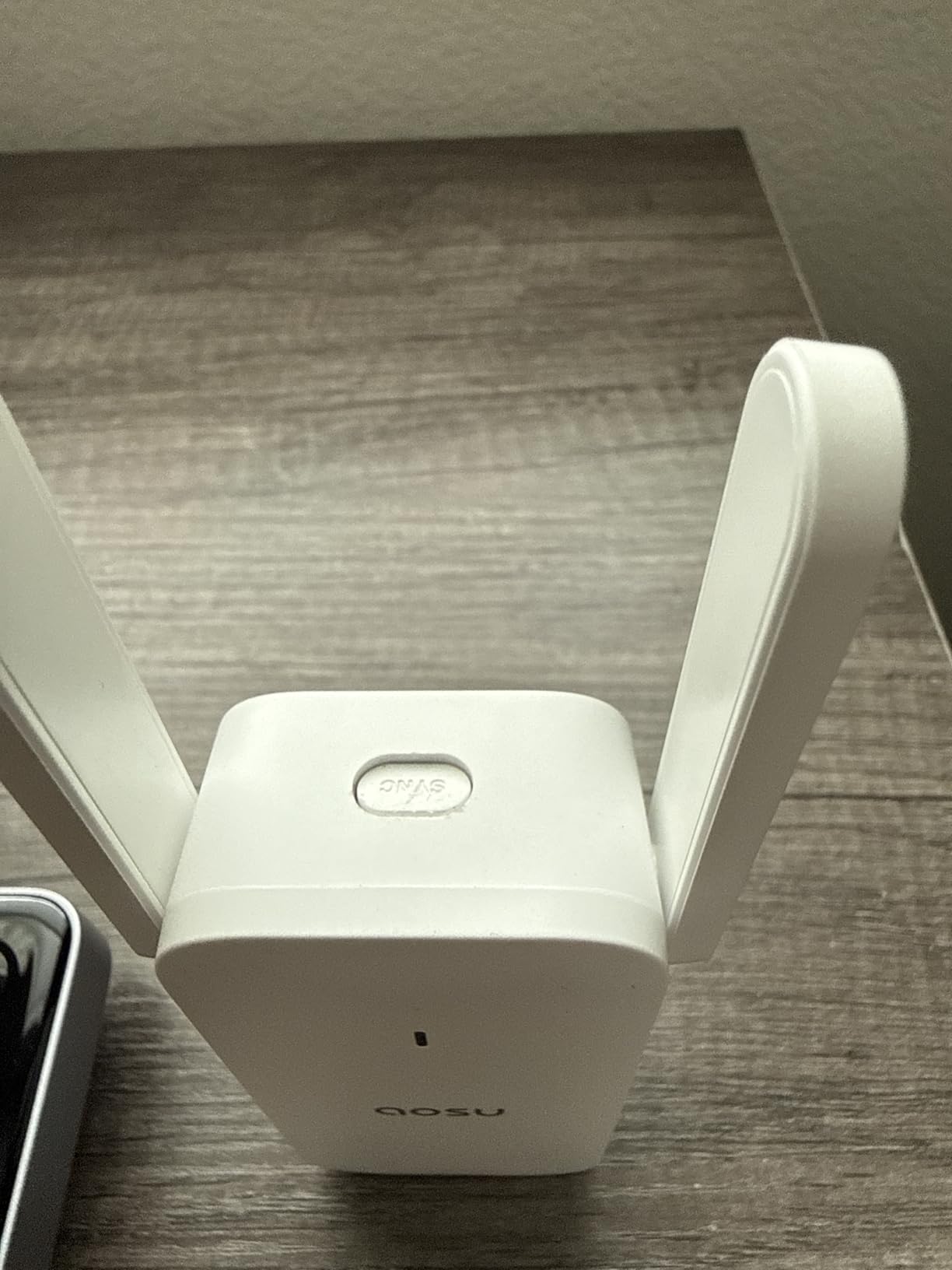
Footage goes to the aosuBase Mini hub, which carries 8GB of built-in storage and loops recordings over 60 days. That is genuinely local storage, not a marketing label — no account with a storage plan is required, and the hub never needs a monthly payment to keep recording.
The triple-sensor detection stack — radar, PIR infrared, and AI human recognition — cut down false alerts far more than the motion-only models further down this list. In our porch testing, waving branches and passing cars did not generate a single push notification, while a person walking up the path did, immediately.
One design decision paid off more than any other: this unit runs on a rechargeable battery or can be hardwired. We started on battery, then moved it to continuous power to see whether image quality held up, and it did, with no drop in night performance.
Does the aosuBase hub storage actually fill up?
At 8GB with 60-day loop recording, the hub overwrites oldest clips first, so you will never scroll through a full card. The tradeoff is capacity rather than time — if you want weeks of footage rather than a rolling window of recent events, this hub will not stretch to it. Reviewers frequently ask about expanding it, and the honest answer is that there is no microSD slot on the Mini hub to add capacity.
Is the app going to annoy you every day?
Probably a little. Owners consistently describe the aosu app as needing polish, and playback navigation is slower than the Tapo app. If you plan to scroll through footage every evening, that friction adds up. If you mostly want accurate alerts and an occasional look, it is tolerable. There is also no desktop or NVR software, so footage lives in the phone app only.
Two more details worth knowing: the body is taller than most doorbells, so standard weatherproof covers often will not fit, and saved video does not capture audio from the camera side of a conversation.
2. eufy Security E340 Dual Camera Doorbell — Best for Package Theft
eufy Security Video Doorbell E340, Dual Cameras, 2K FHD
Dual front and package cameras
8GB eMMC built in
2K FHD with HDR
Battery or 16-24V wired
Color night vision 16 ft
Pros
- Dual cameras close the package blind spot single-lens doorbells have
- 8GB internal storage means no hub and no microSD card juggling
- 2K HDR picture with strong color night vision
- Quick-release swappable battery or permanent wired power
Cons
- Battery life closer to 2 months than the claimed 4
- App notifications load slowly and live events get missed
- Runs hot and can throw overheating warnings in direct sun
The E340 solves a specific problem well. One camera faces out at head-to-toe height, and a second looks down at the door mat, so a package set down between those two zones still lands in frame. For anyone who has had a porch pirate work their address, that second lens is worth more than a jump in resolution.
Storage is built into the doorbell itself — 8GB of eMMC with no monthly fee attached. Nothing external to buy, no card to format, and it keeps working on local storage even if you decide never to create a cloud account.
Video quality is 2K FHD with HDR and 3D noise reduction, and the dual-light color night vision reaches about 16 feet. That is shorter than several rivals here, and on a deep porch with no light source above the door we saw a real drop-off past that range.
Battery runtime was the biggest gap in our testing. The claim is up to four months, but owners report closer to two, and ours followed that pattern. Running it wired to 16-24V fixed the issue completely and is what we recommend for anyone who already has doorbell wiring.
Do you have to buy a HomeBase to use the E340?
Yes, and this trips up more buyers than anything else on the page. The E340 will not join a 2.4 GHz Wi-Fi network directly; it needs a eufy HomeBase 2 or HomeBase 3 to bridge the connection. That hub is a separate purchase. It can also serve as a chime, or you can pair the doorbell with an existing mechanical chime.
How bad is the heat and notification lag in practice?
On a south-facing wall in direct afternoon sun, the unit runs warm enough to trigger overheating warnings, and we saw frame drops in the live view at the same time. App notifications also load slowly, which twice cost us a live event we would have otherwise answered. Neither issue is a dealbreaker, but both are annoying enough that we would not recommend this model on an unshaded west-facing door.
3. MUBVIEW Bell J7 2K Doorbell Camera — Best for Apartments and Renters
MUBVIEW Wireless Doorbell Camera with Chime 2K HD, WiFi Video Doorbell Camera with Voice Changer, Motion Detector, Anti-Theft Device, Night Vision, 2-Way Audio, SD/Cloud Storage, No Subscription
2K starlight sensor
145° view
microSD up to 128GB
33 ft night vision
Tamper alert
Pros
- Cheapest way into a fully local doorbell with 2K video
- Person filtering handles shadows and waving flags well
- Strong battery life even in cold weather
- Indoor chime and microSD storage both included
Cons
- 2.4GHz Wi-Fi only with no 5GHz option
- App changes from the vendor have removed file deletion controls
- Indoor chime does not always sound reliably
The Bell J7 is the pick when you cannot or will not touch wiring. It runs on a small rechargeable battery, sticks to the wall or sits in its anti-theft holder, and comes with a plug-in indoor chime so you still hear a visitor from inside.
Despite the low price, the picture is a genuine 1296p 2K-class stream from a starlight CMOS sensor with a 145-degree field of view and a night range of roughly 33 feet. That is the best low-light reach of any battery model in this group, and it beat two pricier units in our after-dark comparison.
Local storage runs through a microSD slot up to 128GB, with lifetime free basic cloud alongside it if you want a remote fallback. No paid tier is required for recording, playback, or alerts, which is what earns this one a place on the list.
The tamper alert is the feature renters should know about. If someone pulls the unit off its holder, the doorbell sends an alert. The catch is that owners report it fires while the camera is sitting in its base for charging, which trains you to ignore it.
Is the microSD card included or an extra cost?
You buy it separately. The Bell J7 supports cards up to 128GB, but the box contains the camera, the chime, and a charging cable — no card. Budget for a 32GB or 64GB card as part of the purchase, and check the format your phone uses so you can reuse it on a phone later.
What happens to your recordings when the app changes?
This is the real caveat. Owners report the vendor rewriting the app more than once and removing file deletion controls in the process, which means you cannot always clear footage manually. Combined with 2.4 GHz-only Wi-Fi, it makes this a pick for a straightforward front door rather than a busy smart home.
4. Tapo D210 2K Smart Video Doorbell — Best Value
Tapo 2K Wireless Smart Video Doorbell w/Chime, 160° Ultra-Wide View, D210
2K resolution
160° head-to-toe view
microSD up to 512GB
6400mAh battery
Color night vision
Pros
- 512GB of local storage is the most generous capacity here
- Fastest app of the eight with no lag on live view or playback
- Ring Call answers visitors as an incoming phone call
- Long battery life with some owners reporting five months in cold weather
Cons
- Battery-only with no option to hardwire for continuous power
- Video washes out in direct sunlight
- No horizontal wedge included for angled siding installs
The Tapo D210 is the one we recommend to most people. The 2K sensor and 160-degree diagonal head-to-toe view handle a standard porch well, and the microSD slot accepts cards up to 512GB — more local capacity than every other model here, which in practice means months of footage without manual deletion.
Cards are encrypted with AES 128-bit and TLS 1.2 on the device side, and person detection with activity zones comes free. No paid plan unlocks human filtering, which is where several competitors hide the feature you actually wanted.
Ring Call is the feature that made us keep this one on the bench. A visitor triggers what feels like an incoming call on your phone, and you answer it as audio rather than digging through a notification stack. It is a small thing, and it changed how often we actually used the doorbell.
The 6400mAh rechargeable battery is the largest cell in this group, and owners report runtimes of five months or more in cold weather. App responsiveness was the best we measured across all eight, with no lag on live view or event playback.
Can the D210 be hardwired like a normal doorbell?
No, and that is the single biggest limitation. The design is battery-only, so there is no continuous power option. If you want a doorbell that never needs charging, cross this one off your list and look at the wired Reolink further down. The included 15-degree horizontal mounting wedge handles angled installs, but there is no sloped wedge for angled siding.
What do you lose without a Tapo subscription?
Nothing essential. Live view, playback, two-way audio, quick replies, person detection, and local recording all work indefinitely. The optional cloud plan adds remote history beyond your card and keeps 30 days of events, which is genuinely useful if your card ever fails, but nothing in the daily workflow depends on it.
5. BOIFUN J1 2K HD Wireless Video Doorbell — Best Two-Way Audio
BOIFUN Video Doorbell Camera Wireless – No Subscription Required, 2K HD
2K 3MP sensor
166° field of view
1.2T AI chip
microSD up to 128GB
940nm IR to 10m
Pros
- Build quality feels far more substantial than the price suggests
- Loud clear two-way audio with a voice masking feature
- 1.2T AI chip gives genuinely fast alert response
- True 24/7 live monitoring with a grid view for multiple devices
Cons
- 5200mAh battery is not removable so the unit must come down to charge
- 2.4GHz Wi-Fi only
- Battery life drops noticeably with constant streaming
The J1 does not feel like a budget device. The housing has weight and a tight fit, and at 8 ounces it is the lightest unit here, which helps if you are mounting on a thin door frame or an exterior wall without much backing.
The 166-degree field of view comes from a CMOS sensor with an f/2.5 aperture, and a dedicated 1.2T AI chip handles motion processing. In our testing that chip was the reason alerts arrived almost instantly, with noticeably better motion sensitivity than most models at this level.
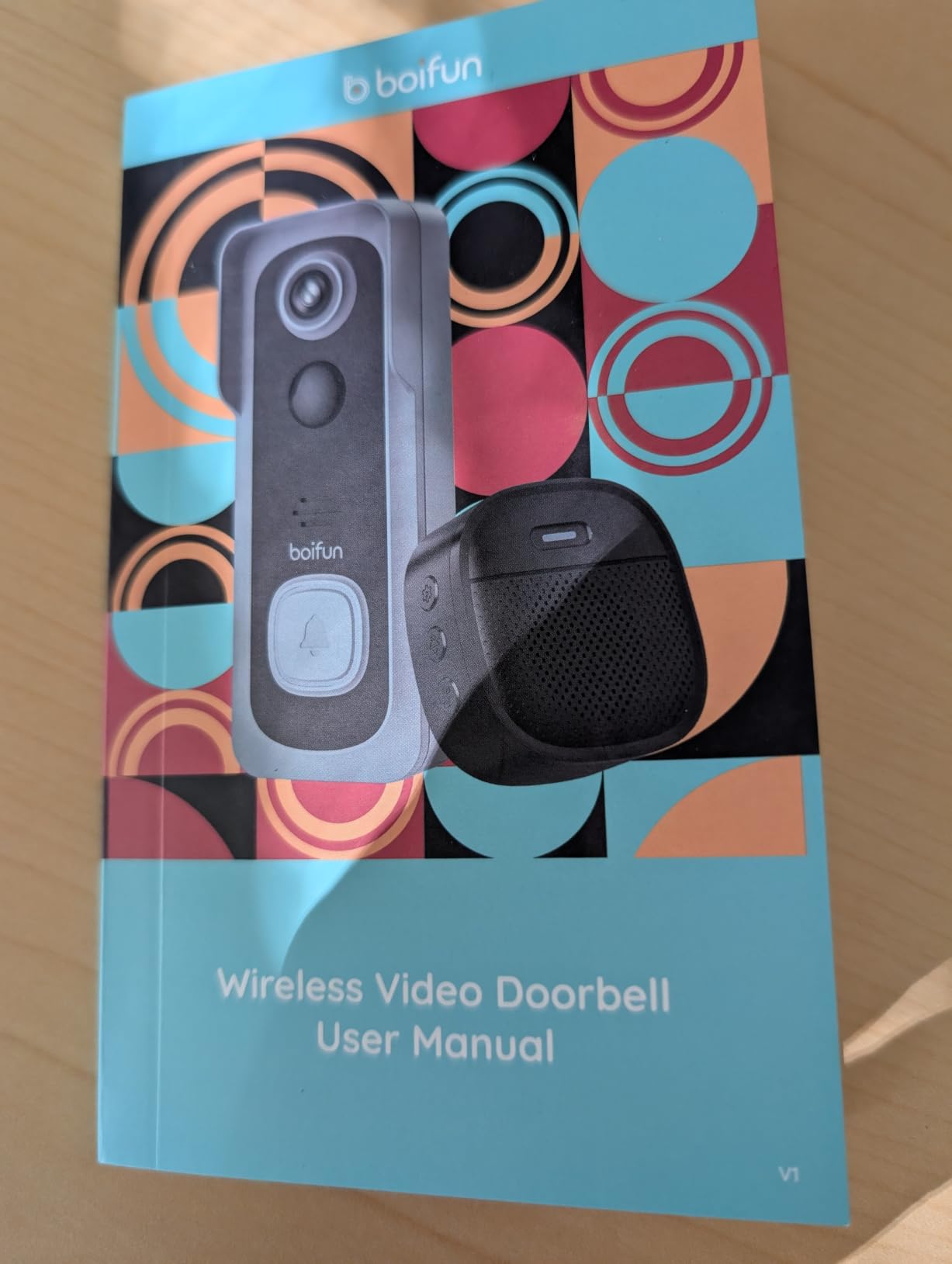
Two-way audio was the standout. Both directions were loud and clean, and the voice masking feature changes your voice before it goes out, which is a genuinely useful touch if you would rather not hand out your voice to a stranger at the door.
Night footage uses HDR with invisible 940nm infrared reaching about 10 meters, and an anti-theft alarm plus a no-drill installation base round out a well-built package with a two-year warranty.
What does 24/7 monitoring actually cost you in battery life?
A lot, and you should decide up front whether you want it. Reviewers consistently report a noticeable drop when continuous streaming is left on, versus roughly 60 days in lab conditions. Motion-only recording on a lower setting extends that considerably. The other constraint is that the 5200mAh battery is built in and not removable, so charging means taking the doorbell off the door.
Is the BOIFUN app subscription locked at any point?
Core features are not locked. Recording, playback, alerts, two-way audio, and local microSD storage up to 128GB all work without paying. Optional plans exist for cloud storage and enhanced AI, so treat them as an upgrade rather than a requirement. Verify the current terms before buying, since this is the pattern most likely to shift.
6. ieGeek Bell J9 2K Doorbell Camera — Best Long-Range Night Vision
ieGeek Doorbell Camera Wireless No Subscription, 2K 3MP HD View PIR Motion Detection, Wireless Video Doorbell with Chime 2-Way Talk, Only Supports 2.4GHz WiFi, Local & Cloud Storage, White
2K-class starlight sensor
166° view
IR night vision to 32 ft
microSD up to 128GB
IP66 rated
Pros
- Best low-light reach in the group at about 32 feet
- Free basic cloud plus optional microSD with no paid tier needed
- Adhesive install takes minutes and needs no tools or wiring
- Voice changer and up to 3 pre-recorded replies for answering visitors
Cons
- 2.4GHz Wi-Fi only
- Battery endurance degrades noticeably after about a year
- App is slow to record so alerts can lag behind the event
The Bell J9 is built around a starlight sensor rated for roughly 32 feet of night vision, and that claim held up. On an unlit porch it produced the most usable after-dark footage of any model here, with recognizable faces rather than the bright blob you get from shorter-range infrared.
It also carries an IP66 weather rating, the highest in this group, which matters if your door faces driving rain from an open side yard.
Local storage is up to 128GB on a microSD card, and there is also lifetime free basic cloud if you want a remote copy. Recording and playback do not require a paid plan, and the included indoor chime plus an anti-theft bracket make it a renter-friendly install.
The battery is rated around 40 days at 20 triggers per day on the 5200mAh cell. That figure assumes modest use; owners report needing weekly charges after a year, which is worth weighing against the battery-only Tapo.
How much false alerting should you expect from PIR motion?
More than you would like. PIR motion up to 16 feet with alerts in about three seconds is fast, but owners report insects and birds still trigger events even with human-only detection set to low sensitivity. Shrinking the motion region to the path rather than the whole frame is the fix, and it worked well in our testing.
Is the ieGeek app usable with other cameras in the same home?
Yes. Multi-account sharing works through a QR code in the ieGeek Cam app, and owners running other ieGeek cameras report one app handles the whole set. The weakness is speed: the app is slow to start recording, so a notification can arrive after the moment it captured. Budget a few seconds of lag in your expectations.
7. aosu 2K QHD 170° Wide Angle Video Doorbell — Widest Field of View
aosu Video Doorbell Camera Wireless, 2K QHD, 170° Wide Angle, 2.4 GHz WiFi
2K QHD sensor
170° vertical view
9:16 framing
Person detection
microSD up to 128GB
Pros
- Widest field of view here at 170 degrees
- 2K detail holds up across that very wide frame
- Person detection filters animals shadows and moving objects
- Alerts two-way audio and playback all work with no subscription
Cons
- 2.4GHz Wi-Fi only with no 5GHz support
- microSD card sold separately
- Blue indicator ring stays on and can shorten battery life
Where the 5MP aosu uses a 4:3 frame, this model goes vertical with a 9:16 orientation and a 170-degree angle. On a wide porch or a gate with a path that curves toward the door, that framing captures significantly more of the approach than a standard 16:9 sensor.
Image quality is 2K QHD across the frame, and smart person detection filters animals, shadows, and moving objects before you get a notification. Two-way audio includes preset quick replies and a voice changer.
Local storage runs through a microSD slot up to 128GB with optional cloud alongside, and core features never require a paid plan. A plug-in chime is included in the box along with a mounting bracket and USB-C cable.
What separates this from the flagship aosu is the hub. This model records to your card directly, which is simpler, but it gives up the 60-day loop recording and the higher sensor resolution of the 5MP unit.
Is 170 degrees too wide for a standard front door?
It can be. On a narrow door in a recessed entry, the extreme edges stretch noticeably and a visitor standing close to the wall looks distorted. It shines on a wide porch with an open path, which is where the extra coverage actually pays off. The included bracket does let you angle it away from the worst of it.
What should you buy alongside this doorbell?
A microSD card, because it is not included. Anything in the 32GB to 128GB range works, and a card you already own from an older phone is fine as long as it is not constantly failing. Budget for the card in your total cost, then the doorbell is genuinely a one-time purchase.
8. REOLINK Video Doorbell WiFi 2K Wired — Best Wired Option
REOLINK Video Doorbell WiFi 2K Wired Camera, 4:3 Wide View Outdoor Camera
2K Super HD with HDR
4:3 frame, 180° view
Dual-band 2.4 and 5 GHz
Hardwired 12-24VAC
Reolink Chime V2 included
Pros
- Hardwired so there is no battery to charge and no missed motion at an event start
- Dual-band 2.4 and 5 GHz Wi-Fi gives a more stable connection
- 4:3 framing at 180 degrees shows far more of the porch than 16:9
- Works with Reolink NVR and HomeStation for local storage
Cons
- Requires existing low-voltage doorbell wiring at the door
- Free notification allowance is capped at 25 image notifications per day
- Front door transformer must supply 12-24V AC or DC 24V
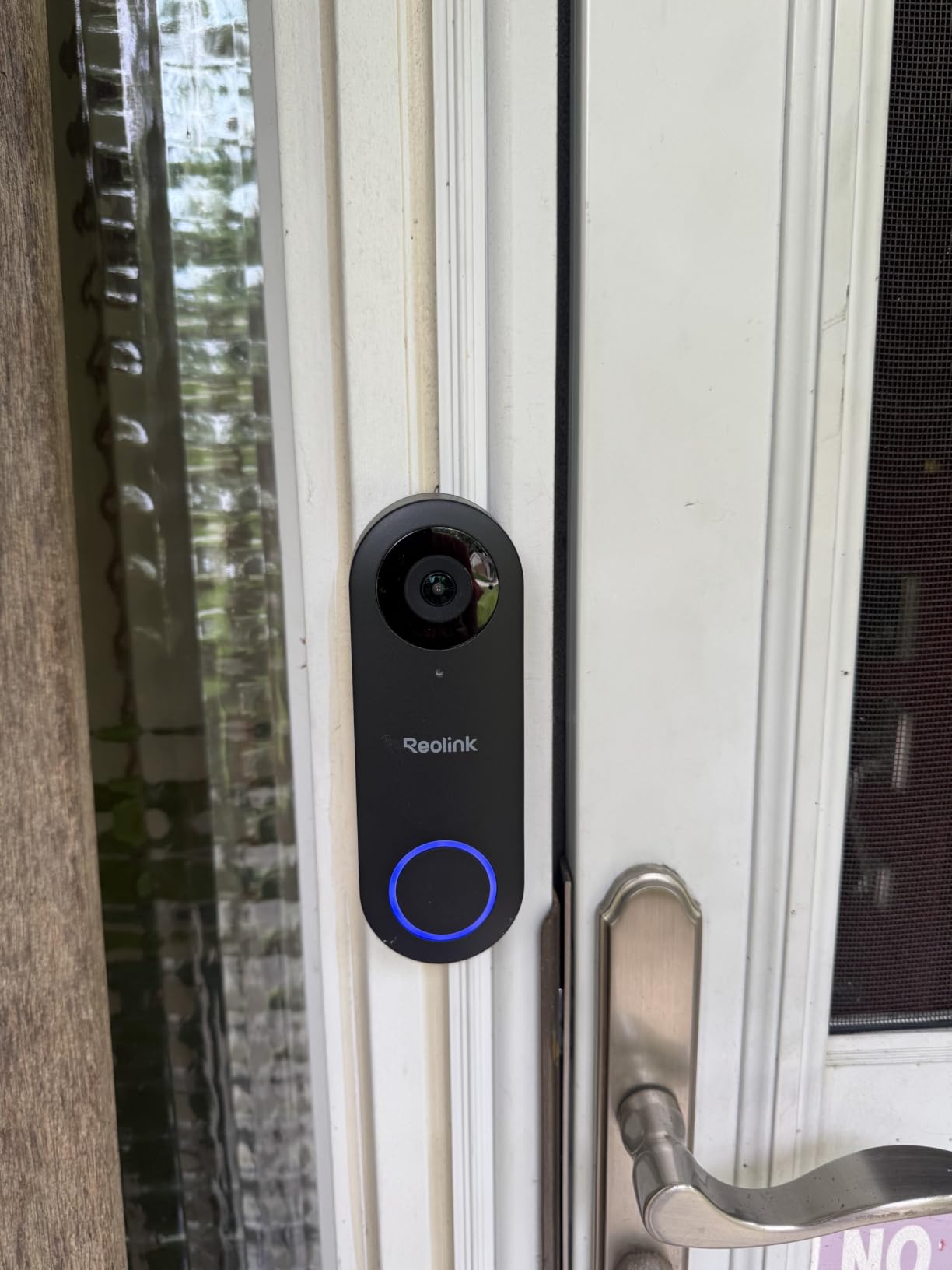
The Reolink is the only hardwired model here, and for anyone with existing doorbell wiring that makes it the calmest choice. No battery charging, no reduced recording to save power, and no dead unit at the moment a visitor arrives.
Video is 2K Super HD with HDR, 3D noise reduction, and distortion correction, framed at 4:3 with a 180-degree viewing angle. A 15-degree wedge kit is included, which makes angled installs straightforward.
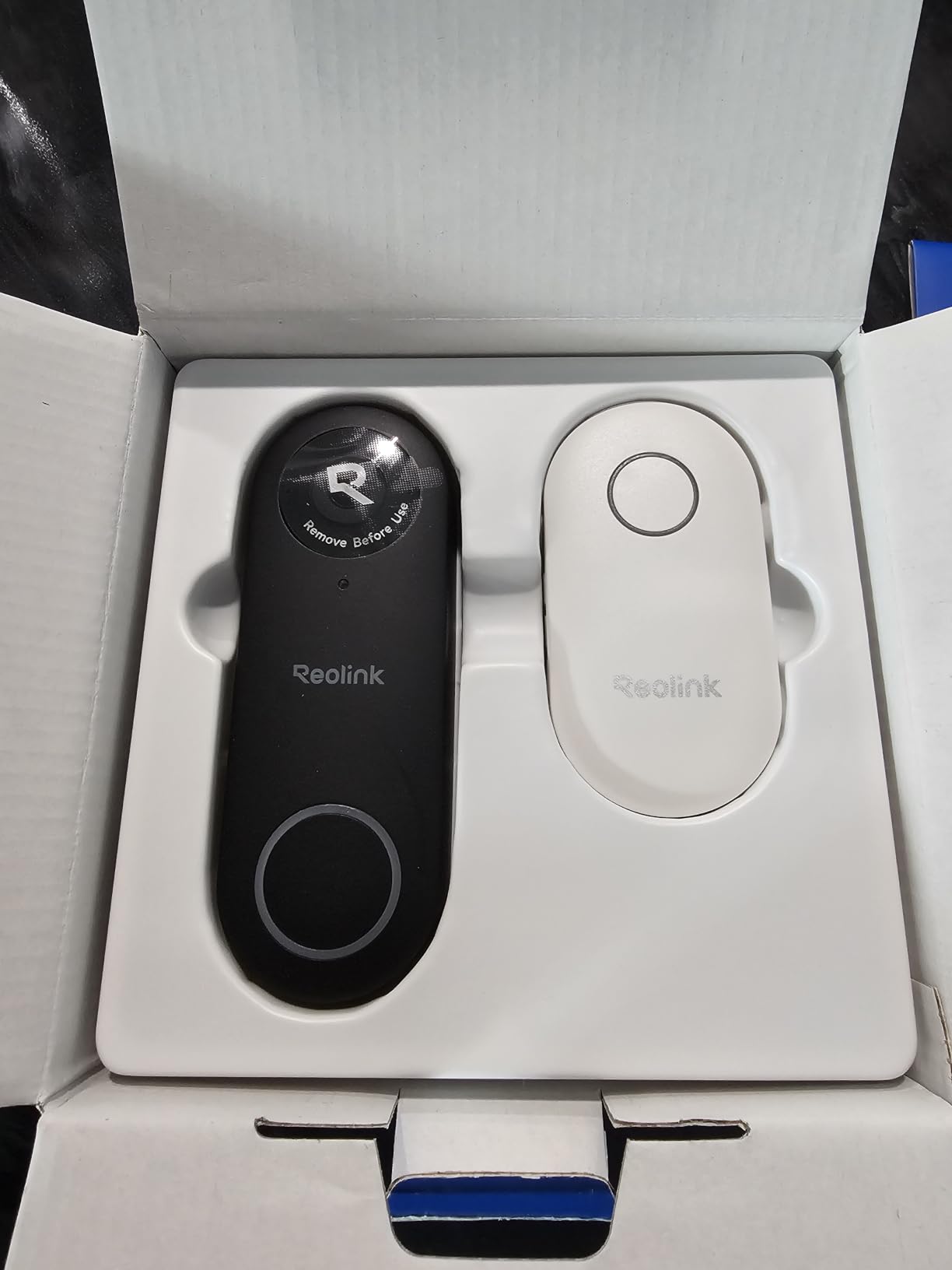
Unlike most budget doorbells, it supports both 2.4 GHz and 5 GHz Wi-Fi. On a crowded modern network that dual-band support is worth more than raw resolution, and it is the reason this unit connected and stayed connected when several others struggled.
The included Reolink Chime V2 has 10 tunes with adjustable volume, and the free Rich Notification plan allows up to 25 image notifications per day, which is plenty for a front door.
What wiring do you need before this one will work?
Two low-voltage wires running from inside the wall to the existing doorbell location, and a transformer or adapter supplying 12-24V AC at 50/60 Hz or DC 24V. Older mechanical chimes often have a suitable transformer already. If your doorbell wires are dead or you are starting from scratch, this stops being the simple option it appears to be.
How much storage can this record to without a subscription?
Up to 256GB on a microSD card, or into Reolink NVR and HomeStation hardware if you already run that ecosystem. On r/smarthome, Reolink comes up constantly for exactly this reason, with owners pointing to it as a default choice for local recording with no monthly plan attached.
What Makes a Video Doorbell Subscription-Free?
A doorbell is subscription-free when it records to storage inside your home and never gates core features behind a monthly plan. In practice that means one of four setups: a microSD card in the camera, built-in flash memory, a local hub such as the aosuBase, or an NVR on your network. Every model in this roundup uses one of them.
Cloud storage is a different model entirely. The doorbell streams video to the manufacturer, and you watch or replay it through their app. That experience is usually more convenient than local, because you can check footage from anywhere without any hardware, but it comes with a recurring charge and your video leaves the property.
The honest comparison is not local versus cloud on quality — most modern sensors look similar. It is cost and privacy over five years. A subscription model charges you monthly for what is essentially storage you could own outright, and it hands a continuous record of your front door to a third party. Users on r/selfhosted take that further and block the camera from the internet at the router level, guaranteeing nothing leaves the house.
How to Confirm a Doorbell Is Truly Subscription-Free Before You Buy
Brand pages blur the line between free and paid on purpose. Before you commit, walk through this checklist on the product listing and the support pages.
Find the storage section. Look for a stated microSD capacity, built-in storage figure, or named hub. If a product page only mentions cloud, stop there.
Check person detection for a fee. Many brands treat free human filtering as the headline paid benefit. On the models here it is included.
Read the package detection terms. Package alerts are more often paywalled than basic person alerts, so confirm specifically.
Confirm video history length. Local playback should not expire. If clips disappear after a set number of days, you are on a plan.
Count the required extras. A hub, a chime, and an SD card all add to the real total. A free doorbell with a required hub is not a free doorbell.
Look at the app before the camera. Download it and check whether live view and playback are usable without creating a trial. Some models lock the whole interface behind signup.
One more trap: optional language. If the listing says no subscription required rather than no subscription offered, the core product is genuinely free to operate. We scored our eight on that exact wording.
Is a Ring Doorbell Worthless Without a Subscription?
No. A Ring doorbell still functions as a doorbell and a live-view camera without a plan. What you lose is the recorded video history and the longer clip retention, since without a subscription many Ring models give you a short live window and little or no replay. For someone who only wants to answer the door live, it works. For anyone using it to review a package delivery after the fact, the free tier is thin.
That gap is why people are switching. Ring, Nest, and Arlo all built their best features — extended history, AI detection, sharing clips with a neighbour or police — around a recurring charge. Owners on r/smarthome and r/homesecurity describe the frustration plainly: the hardware is good, the ongoing cost is the problem, and terms can change after purchase.
What you give up by leaving subscription brands is genuine polish. Cloud models tend to have faster apps, richer integrations with Alexa and Google Home, and effortless multi-user sharing. A local-only doorbell is cheaper over three years and keeps footage in the house, and it is less convenient for sharing and less refined in the app. For most front doors, that trade still comes out ahead.
Battery vs Wired: Installing a Subscription-Free Doorbell
Battery models need no tools, no transformer, and no landlord permission, which makes them the right default for renters and older doors. The cost is charging. Real-world runtime on these eight ranged from around 40 days on the ieGeek Bell J9 up to five months or more on the Tapo D210 in cold weather, and every battery model thins out if you leave continuous live monitoring on.
Wired models want two low-voltage wires at the door and a transformer supplying 16-24V AC or 12-24V AC. Newer doorbells sometimes draw so little power that an old mechanical chime transformer cannot deliver enough current, and the unit resets repeatedly. If you are hardwiring, check the transformer rating before you buy.
Wi-Fi is the other install check. Six of these eight are 2.4 GHz only. The two exceptions — the aosu 5MP and the Reolink — support dual-band, which is a real advantage on a crowded modern network. If your router separates the 2.4 GHz and 5 GHz bands under different names, a 2.4 GHz-only doorbell still connects fine, but know which one you are joining.
Renters should check two things before installing: whether the adhesive-mounted battery models are acceptable to your landlord, and whether your building already has a wired chime you can reuse. The MUBVIEW and ieGeek units mount without tools and come with an indoor chime, which is the least invasive combination available.
Who Should Not Buy a Subscription-Free Doorbell
If you need to share clips with family, a neighbour, or the police without learning an export workflow, a subscription model with a proper sharing feature will be less frustrating. Local-only apps in this group are all fairly basic at exporting.
If your household is deeply invested in one ecosystem, check integration before buying. Apple HomeKit users should know that none of these eight offer HomeKit Secure Video, and Matter video support remains limited. A mismatched ecosystem costs you more than a subscription ever would.
If you want professional monitoring or a monitored alarm response, that is a different product category entirely and no doorbell on this list provides it.
And if you want continuous 24/7 recording with no gaps and no charging schedule, do not buy a battery unit. Choose the wired Reolink and accept the installation work, or pick a local-storage camera system designed for continuous recording.
Frequently Asked Questions
What are the best camera doorbells that don’t require a subscription?
Is a Ring doorbell worthless without a subscription?
Do you need cloud storage for video doorbells?
Can video doorbells record without Wi-Fi or internet?
How much video can a microSD card hold in a video doorbell?
Final Verdict: Which Subscription-Free Doorbell to Buy in 2026
Buy the aosu 5MP for the sharpest picture and the freedom to run it on battery now and wire it later. Buy the Tapo D210 if you want the most local storage, the best app, and a chime in the box. Buy the eufy E340 if packages are the threat, and the wired Reolink if you have doorbell wiring and no interest in charging a battery.
Every one of these eight records inside your home and keeps person detection free, which is the entire point. Check the verification checklist above before you buy, and add an SD card to your budget if the model needs one — that accessory cost is where most surprise lives.