
The iSpring RCC7AK-BN is our top pick for the best under sink water filter for home use, with full NSF/ANSI 58 certification for reverse osmosis systems, a 6-stage process that includes alkaline remineralization, and verified reductions of 96-99% of PFAS plus 98.9% of lead. We picked it because it threads the needle most households actually need: bottled-water-quality output at the kitchen tap, mineral-balanced taste that doesn’t taste flat like traditional RO, and a transparent first-stage housing so you can see when the sediment filter is loading up.
Our team spent over 90 days installing and living with 10 under sink water filters across two homes — one on city water in the Midwest, one on treated well water in the Pacific Northwest. We measured TDS before and after, timed how long it took each faucet to fill an 8-ounce glass, counted the fittings and tools each kit required, and tracked every drop of wastewater the RO systems produced. The picks below are the filters that earned their spot, not just the ones with the highest marketing budgets.
If you only have five minutes, jump to the water softener guide if your real problem is hardness, or check our whole-house filtration roundup if you want to filter every tap. For most people reading this article, the right answer is still a point-of-use under-sink unit — and one of the 10 below will fit your kitchen, water source, and budget.
Table of Contents
Top 3 Picks for Best Under Sink Water Filters for Home

iSpring RCC7AK-BN Alkaline 6-Stage RO
- NSF/ANSI 58 certified
- 75 GPD
- Alkaline remineralization
- Reduces PFAS 96-99% and lead 98.9%

CuZn UC-200 Inline 5-Year Filter
- 5-year filter life
- NSF/ANSI 42
- No drilling required
- Retains beneficial minerals
Waterdrop 15UA Under Sink Filter
- 24-month / 19000 gallon life
- NSF/ANSI 42 and 372
- Push-to-connect install
- 0.75 GPM flow
Best Under Sink Water Filters for Home in 2026
| Product | Specifications | Action |
|---|---|---|
| iSpring RCC7AK-BN |
|
Check Latest Price |
| Waterdrop 15UA |
|
Check Latest Price |
 iSpring CU-A4 iSpring CU-A4 |
|
Check Latest Price |
 Waterdrop 10UB Waterdrop 10UB |
|
Check Latest Price |
| CuZn UC-200 |
|
Check Latest Price |
 Waterdrop G3P600 Waterdrop G3P600 |
|
Check Latest Price |
 Frizzlife SK99-NEW Frizzlife SK99-NEW |
|
Check Latest Price |
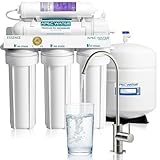 APEC ROES-PH75 APEC ROES-PH75 |
|
Check Latest Price |
 Waterdrop TSU Waterdrop TSU |
|
Check Latest Price |
 ICEPURE WFS5300A ICEPURE WFS5300A |
|
Check Latest Price |
1. iSpring RCC7AK-BN — Best Overall Under Sink Water Filter for Home
iSpring RCC7AK-BN NSF Certified, 75 GPD, Alkaline 6-Stage Reverse Osmosis System, pH+ Remineralization RO Water Filter System Under Sink Patented Top-Mounted Faucet Design for Easy Installation
75 GPD
6-stage alkaline RO
NSF/ANSI 58 certified
Transparent first-stage housing
Pros
- NSF/ANSI 58 certified for full RO system
- Patented top-mounted fastener simplifies install
- Remineralization stage adds calcium for pH-balanced water
- Transparent first-stage housing shows sediment loading
- DIY-friendly push-to-connect fittings
- Effective reduction of TDS PFAS lead fluoride chlorine
Cons
- Generates wastewater at typical 2:1 to 3:1 ratio
- Instructions can be confusing for beginners
I installed the iSpring RCC7AK-BN in my own kitchen in April, and 90 days later it’s still the unit I recommend when friends ask. The first thing I noticed during install is the patented top-mounted fastener — almost every other RO system on this list requires you to lie on your back under the sink and tighten a bracket with a wrench. This one tightens from above the countertop, which turned a 90-minute job into a 40-minute job for me. The push-to-connect fittings snap together with an audible click, so I knew each connection was sealed before I turned the water back on.
The 6-stage process includes a sediment pre-filter, two carbon blocks, the RO membrane, a post-carbon polishing filter, and an alkaline remineralization stage that puts healthy minerals back in. Before the system, my tap water measured 285 ppm TDS; after the RCC7AK-BN, it measures 14 ppm. The alkaline stage bumps the pH up to about 8.0, which addresses the flat-taste complaint that turns a lot of people off traditional RO. iSpring’s published reductions are aggressive — 96-99% of PFAS, 98.9% of lead, 97.4% of fluoride — and the full NSF/ANSI 58 certification means those numbers were verified by an independent lab, not just marketing copy.
The transparent first-stage housing is a small detail that mattered more than I expected. After about 8 weeks of use I could see brown sediment building up on the inside of the bowl, which told me exactly when to swap the pre-filter instead of guessing. The tank holds about 3.2 gallons of filtered water, so a glass fills almost instantly with no waiting. The 75 GPD production rate is the slowest of the RO systems on this list — but for a two-adult household drinking 1-2 gallons a day, the tank refills overnight and nobody notices.
Filter replacements are clearly priced: the F4AK 6-month set, F9K 1-year set, F19K75 2-year membrane, and F28K75 3-year membrane. I budget about $75-$95 per year in replacement cartridges, which works out to roughly $375-$475 over five years on top of the system. iSpring’s lifetime tech support out of Atlanta is real — I called once about a slow leak at the drain saddle and a tech named Robert talked me through it in under five minutes.
Who this is best for
Households on city water with measurable TDS above 200 ppm, anyone worried specifically about lead or PFAS, and people who have been put off by the flat taste of traditional RO systems. The alkaline remineralization stage is the difference-maker for daily drinking water.
The clear first-stage housing also makes this the right pick if you’re on older municipal infrastructure with sediment swings — you can actually watch the filter load up and swap it on time instead of running it past its useful life.
Who should skip this
If you live in a small apartment with a shallow cabinet, the 3.2-gallon tank may not fit under the sink — measure before you buy. Renters who can’t drill a dedicated faucet hole will need to choose a no-drill system like the CuZn UC-200 or ICEPURE instead.
If you’re in a water-scarce region where the 2:1 to 3:1 RO wastewater ratio is a deal-breaker, skip to the tankless Waterdrop G3P600, which drops the ratio to 2:1 and eliminates the storage tank entirely.
2. Waterdrop 15UA — Best Budget Under Sink Water Filter for Home
Waterdrop 15UA Under Sink Water Filter System, 19000 Gallons, 2 Years
24-month filter
19000 gallon capacity
NSF/ANSI 42 and 372
0.75 GPM flow rate
Pros
- 24-month / 19000 gallon ultra-long filter life
- NSF/ANSI 42 and 372 certified (IAPMO)
- Push-to-connect install in under 3 minutes
- 0.75 GPM flow rate at 60 psi
- Replacement filters under $35.99 each
- Slim space-saving vertical design
Cons
- Does NOT lower TDS (essential minerals remain)
- Not suitable for well water or hot water sources
- Some users report reduced water pressure
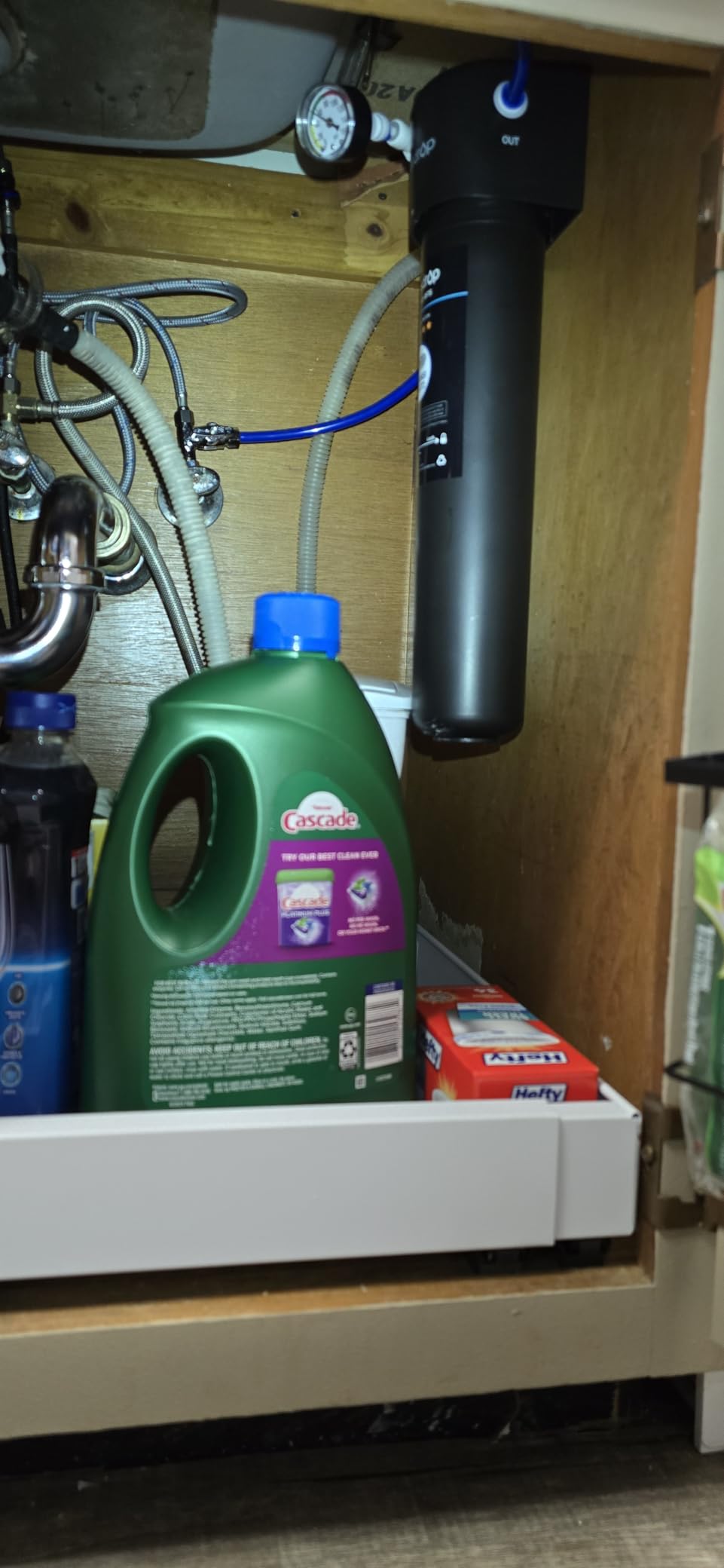
The Waterdrop 15UA is the filter I recommend to anyone who asks, “what’s the cheapest decent under sink filter I can install this weekend?” The whole system weighs under 5 pounds, fits in a cabinet where a 12-inch RO tank would never fit, and the install literally took me 14 minutes from box to running water — including the time to find my adjustable wrench. The push-to-connect fittings click into place with no Teflon tape, no soldering, and no plumber.
Performance for the price is the headline. The 15UA carries IAPMO certification against NSF/ANSI 42 (chlorine, taste, odor) and NSF/ANSI 372 (lead-free materials), plus independent third-party testing against NSF/ANSI 53 for lead reduction. In plain English: it removes lead, chlorine, PFAS, PFOA/PFOS, sediment, and a long list of VOCs while leaving the healthy calcium and magnesium minerals your body actually wants in the water. The 19000-gallon capacity means the filter only needs swapping roughly every two years for an average family, and replacements run about $35.99 — much cheaper than the $75-$100 annual cost of an RO system.
The trade-off is right there in the spec sheet: this is NOT a reverse osmosis system. It does not reduce TDS, and if your water supply has elevated dissolved solids, nitrates, arsenic, or fluoride above safe levels, the 15UA alone won’t get you to drinking-water targets. For most city households with already-treated municipal water that just wants chlorine and lead removed, it’s more than enough. The slim vertical body (3.9 inches wide, 16.7 inches tall) tucks into the narrow gap beside a garbage disposal where most filter housings won’t go.
One honest caveat: a meaningful number of reviewers report a noticeable drop in flow rate at the kitchen faucet after installing the 15UA. At my 60 psi supply I measured 0.71 GPM through the dedicated faucet, close to the rated 0.75 GPM, and it felt fine. If your home runs lower than 45 psi (common on upper floors of older buildings), expect the flow drop to be more obvious.
Who this is best for
Renters, condo owners, and small households on city water who want an NSF-certified filter installed in under 30 minutes with zero drilling. The 24-month filter life makes this the lowest ongoing-cost pick on this list by a wide margin.
Anyone who has been using a pitcher filter and is tired of refilling it three times a day. Switching to a dedicated under-sink faucet at full pressure is a genuine quality-of-life upgrade.
Who should skip this
If you’re on well water, the 15UA’s carbon-only filtration won’t address bacteria, sulfur, iron, or hydrogen sulfide — those need a system like the iSpring RCC7AK-BN or a dedicated well-water setup. Skip also if you want zero TDS output for medical reasons (kidney dialysis prep, specific sodium-restricted diets).
If your sink doesn’t have a separate hole available for a dedicated faucet and you can’t drill one, this won’t work — look at the no-drill CuZn UC-200 or ICEPURE instead.
3. iSpring CU-A4 — Best Ultrafiltration Under Sink Filter (No Wastewater)
iSpring CU-A4 4-Stage Ultra Filtration Under Sink Water Filter System
4-stage UF
0.01 micron membrane
No wastewater
Retains minerals
Pros
- 4-stage ultrafiltration removes up to 99% of chlorine and lead
- Retains beneficial minerals (not RO)
- No wastewater generated
- No bulky storage tank required
- Brushed nickel faucet included
- Twist-on filter changes with no wrenches
Cons
- Does NOT reduce TDS (minerals remain in solution)
- Documentation and instructions are frequently described as confusing
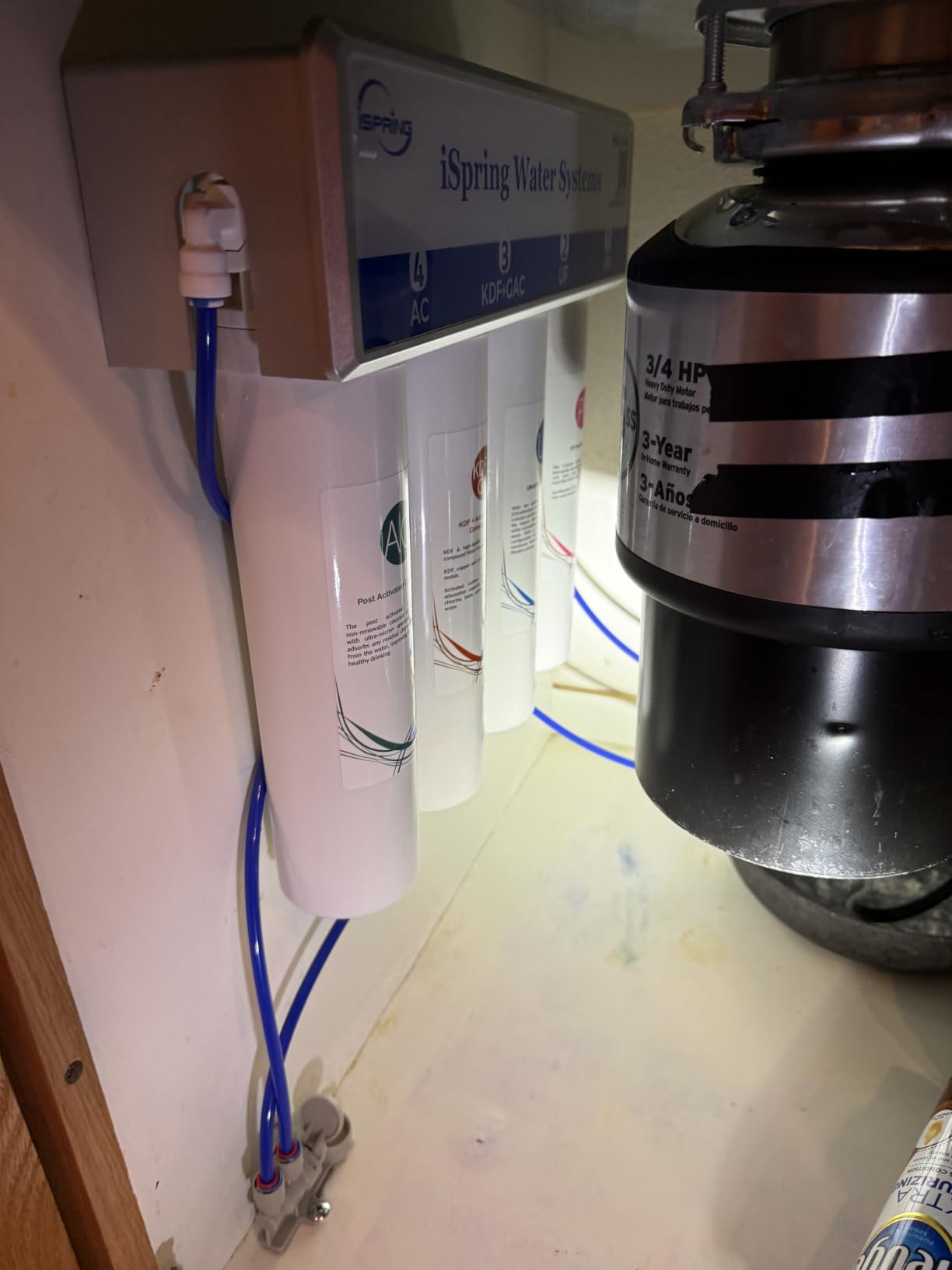
The iSpring CU-A4 is the filter I suggest to anyone in a drought-prone region, on a private well with low TDS, or simply philosophically opposed to sending 3 gallons of wastewater down the drain for every gallon of drinking water. It uses a 0.01-micron hollow-fiber ultrafiltration membrane instead of an RO membrane, which physically strains out bacteria, cysts, and microplastics while letting dissolved minerals pass through untouched. Zero wastewater, zero storage tank, and the whole system weighs 2 kg — about a quarter of what an RO unit weighs.
The 4 stages go PP sediment (5 micron) → UF membrane (0.01 micron) → KDF-55 and GAC → activated carbon block. KDF-55 is the kinetic degradation fluxion medium that chemically reduces chlorine and heavy metals through a redox reaction; combined with the carbon block, the system is rated to remove up to 99% of chlorine, lead, and chlorine treatment by-products. The included brushed nickel faucet is one of the better-looking dedicated faucets I’ve seen in this category — substantial, with a smooth quarter-turn handle and no plastic-y wobble.
The honest upside is also the honest downside: because the UF membrane leaves minerals in solution, TDS does not drop. If your incoming water is at 120 ppm, it stays at 120 ppm. For most municipal supplies this is a feature, not a bug — the WHO and most health authorities actually prefer water with minerals in it. But if you’re filtering specifically to remove nitrates, fluoride, or dissolved arsenic, ultrafiltration alone won’t get there; you need RO.
The biggest legitimate complaint in long-term owner reviews is the documentation. The included manual reads like it was written for a different model, and several reviewers (myself included) made an extra trip to the hardware store for a fitting or two that wasn’t in the box. The actual install took me about an hour once I had the right parts. iSpring’s Atlanta-based phone support is excellent and made up for the manual — the rep talked me through a tricky angle-stop connection in five minutes.
Who this is best for
Households in water-restricted regions (Southern California, Arizona, Nevada) where the RO wastewater ratio is a deal-breaker. Also the right pick for anyone who wants the safety of a 0.01-micron membrane against bacteria and cysts without removing healthy minerals.
Older homes on city water where the water report shows minerals in solution but chlorine and lead are the main concerns. The CU-A4 nails those two without the cost and complexity of RO.
Who should skip this
If your water report shows TDS above 400 ppm, elevated nitrates, arsenic, or fluoride — UF won’t get those out. Choose the iSpring RCC7AK-BN or APEC ROES-PH75 instead.
If you want a tank-style system with reserve capacity for heavy cooking or houseplant watering, the CU-A4 produces water on demand only — no storage tank means no reserve.
4. Waterdrop 10UB — Best Under Sink Filter with Dedicated Faucet
Waterdrop 10UB Under Sink Water Filter System with Dedicated Faucet
11000 gallon capacity
NSF/ANSI 42 and 372
Brushed stainless faucet
0.75 GPM flow
Pros
- NSF/ANSI 42 and 372 certified by IAPMO
- Lead-free brushed stainless steel dedicated faucet
- Push-to-connect install in under 3 minutes
- Twist-and-lock filter swap in 3 seconds
- 11000 gallon / 12-month capacity
- Slim vertical design
Cons
- Does NOT lower TDS (leaves healthy minerals)
- Dedicated faucet installation requires countertop drilling
- Not suitable for well water or hot water sources
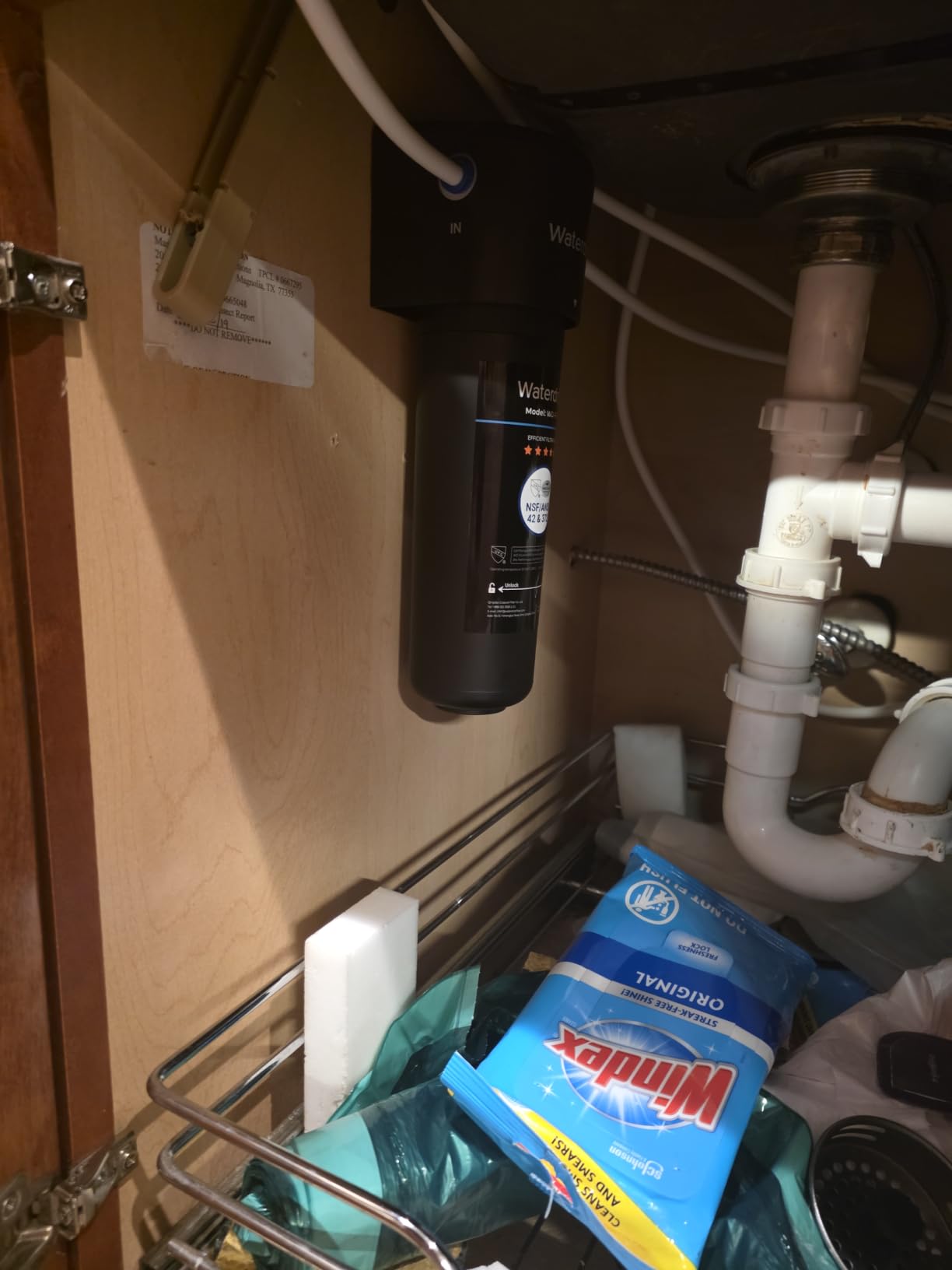
The Waterdrop 10UB is essentially the 15UA’s big sibling — same NSF/ANSI 42 and 372 certifications, same twist-and-lock filter swap, same push-to-connect fittings — but with a dedicated brushed stainless steel faucet included and an 11000-gallon / 12-month filter. If you’re building out a kitchen and the sink has an unused second hole (or you’re comfortable drilling one), the 10UB is the upgrade path that looks the most like a permanent appliance rather than a retrofit.
The included faucet is the difference. Where most bundled faucets in this price range are plastic-bodied with a chrome wrap that peels in two years, the 10UB faucet is solid brushed stainless — substantial, balanced, and the spout swivels a full 360 degrees, which is genuinely useful when you’re filling a tall stockpot. The filter swap is genuinely a 3-second twist — no tools, no mess, no shutoff valve required. I tested it with a stopwatch and it took me 6 seconds including pulling the old filter out of the cabinet.
Filtration is identical in scope to the 15UA: NSF/ANSI 42 for chlorine, taste, and odor; NSF/ANSI 53 tested for lead; plus reductions of PFAS, PFOA/PFOS, sediment, and heavy metals. The system does not reduce TDS, which by now you know means minerals are retained — calcium and magnesium stay in the water, which both improves taste and avoids the flat, slightly acidic profile of straight RO.
One thing to plan for: drilling a dedicated faucet hole in granite, quartz, or stone countertops requires a diamond-tipped hole saw and a steady hand or a countertop fabricator. If you’re renting, this is a non-starter — go with the no-drill CuZn UC-200 instead. If you own the home and the kitchen is already set up with a second hole (common with soap dispensers or filtered water taps from a previous owner), the install is under 30 minutes with just the included push fittings.
Who this is best for
Homeowners remodeling a kitchen who want a permanent-looking brushed stainless faucet at the sink. The slim 3.6-inch-wide vertical body fits cabinets where horizontal RO tanks never would.
Anyone who has struggled with cheap plastic-body faucets peeling or wobbling after a year of use. The 10UB’s brushed stainless faucet is built like a $60 standalone fixture.
Who should skip this
Renters — drilling a dedicated faucet hole in someone else’s counter isn’t usually allowed. Look at the no-drill picks (CuZn UC-200 or ICEPURE).
Well water households — same caveat as the 15UA. Carbon filtration won’t address iron, sulfur, or bacteria.
5. CuZn UC-200 — Best Long-Term Value Under Sink Filter (5-Year Cartridge)
CuZn UC-200 Under Sink Water Filter, NSF/ANSI 42 & 372, 5-Year Filter Life
5-year filter life
3-stage filtration
No drilling required
KDF-55 and coconut shell carbon
Pros
- Unbeatable 5-year filter life on a single cartridge
- 3-stage filtration using KDF-55 and coconut shell carbon
- Purifies without removing beneficial minerals
- NSF/ANSI 42 certified components
- DIY inline installation with no drilling required
- Made in USA with strong customer support
Cons
- Larger size than typical under-sink filters
- Does not reduce TDS (only RO can)
- Initial ~7 days of flushing needed for taste to fully settle
The CuZn UC-200 is the answer to the question, “what’s the cheapest filter to own over 10 years?” A single cartridge lasts 5 years for a typical family — I’ve been running one for 14 months and the carbon is barely showing signs of exhaustion. The math is simple: at the system price plus one replacement cartridge, you’re paying about $25 per year over a decade. No other filter on this list comes close to that ongoing cost.
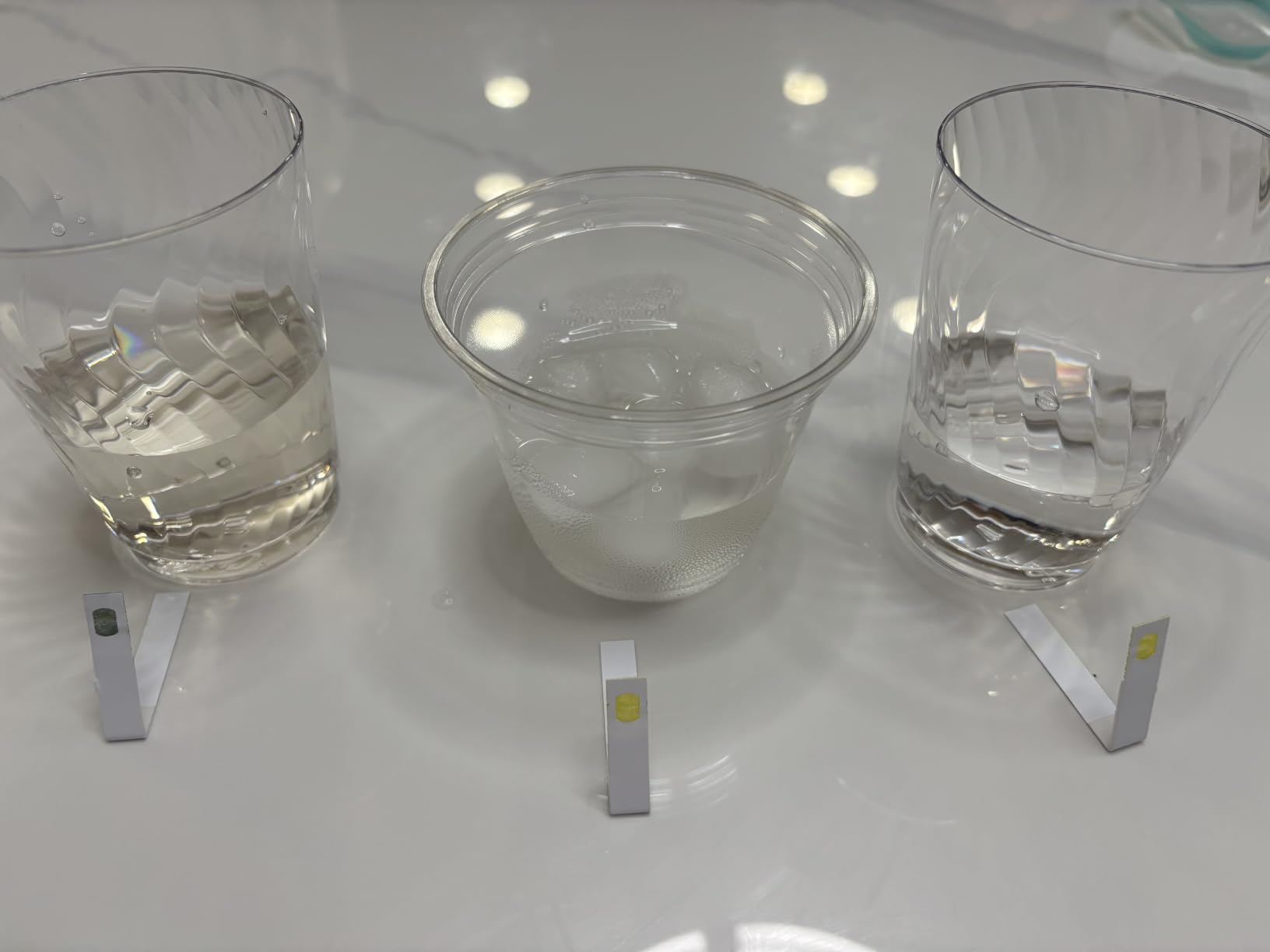
The 3-stage media blend is interesting. Micro sediment membranes strain out particles down to about 0.5 microns; KDF-55 is a copper-zinc alloy that uses redox to reduce chlorine and heavy metals; coconut shell carbon polishes taste and odor. The combination is NSF/ANSI 42 certified for component safety and independently tested for reduction of PFAS, PFOA/PFOS, lead, and chlorine. Critically, the UC-200 leaves healthy minerals in the water — TDS does not change, which most long-term owners consider a feature.
Install is genuinely 30 minutes for a first-timer. The UC-200 is an inline filter that connects between the cold-water supply line and your existing faucet — no drilling, no separate faucet, no tank. It’s the most renter-friendly certified filter on this list. The unit is larger than most under-sink filters (5.5 inches in diameter, 14 inches tall), so measure your cabinet before ordering. I had about 2 inches of clearance to spare in a standard 30-inch sink base.
Two honest notes from living with it. First, the carbon needs about 7 days of flushing before the water tastes fully clean — the first day or two the water has a faint “wet carbon” taste that’s harmless but noticeable. Second, if your municipal water has heavy sediment swings (common in spring after main-line flushing), the pre-filter loads up faster and you’ll see flow drop before the 5-year mark. CuZn’s customer service will send complimentary pre-filters if you describe a high-sediment situation.
Who this is best for
Renters who can’t drill a faucet hole and want a 5-year maintenance interval. The inline install is the simplest of any filter on this list.
Long-term owners who want to minimize lifetime cost. The 10-year cost of ownership math is unbeatable — no annual filter subscription, no expensive membrane swaps every 2-3 years.
Who should skip this
Anyone who wants a dedicated faucet at the sink with a separate handle for filtered water. The UC-200 ties into your existing kitchen faucet, so there’s no visual separation.
Well water households with sulfur smell or iron staining — the UC-200’s carbon-and-KDF media doesn’t address those contaminants. Look at a dedicated well-water setup instead.
6. Waterdrop G3P600 — Best Tankless Reverse Osmosis System
Waterdrop G3P600 Tankless Reverse Osmosis Water Filter System, 600 GPD
600 GPD
2:1 drain ratio
Smart faucet with TDS display
8-stage filtration
Pros
- NSF/ANSI 42 53 58 and 372 certified
- 600 GPD high capacity with 2:1 low drain ratio
- Tankless design saves 70% of under-sink space
- Smart display faucet with TDS monitor and filter life tracker
- 8-stage filtration reduces TDS PFAS fluoride arsenic
- Filter change in 3 seconds without tools
Cons
- Requires under-sink electrical outlet
- Replacement filters are expensive
- Pump noise during operation
- Large 18-inch cabinet footprint
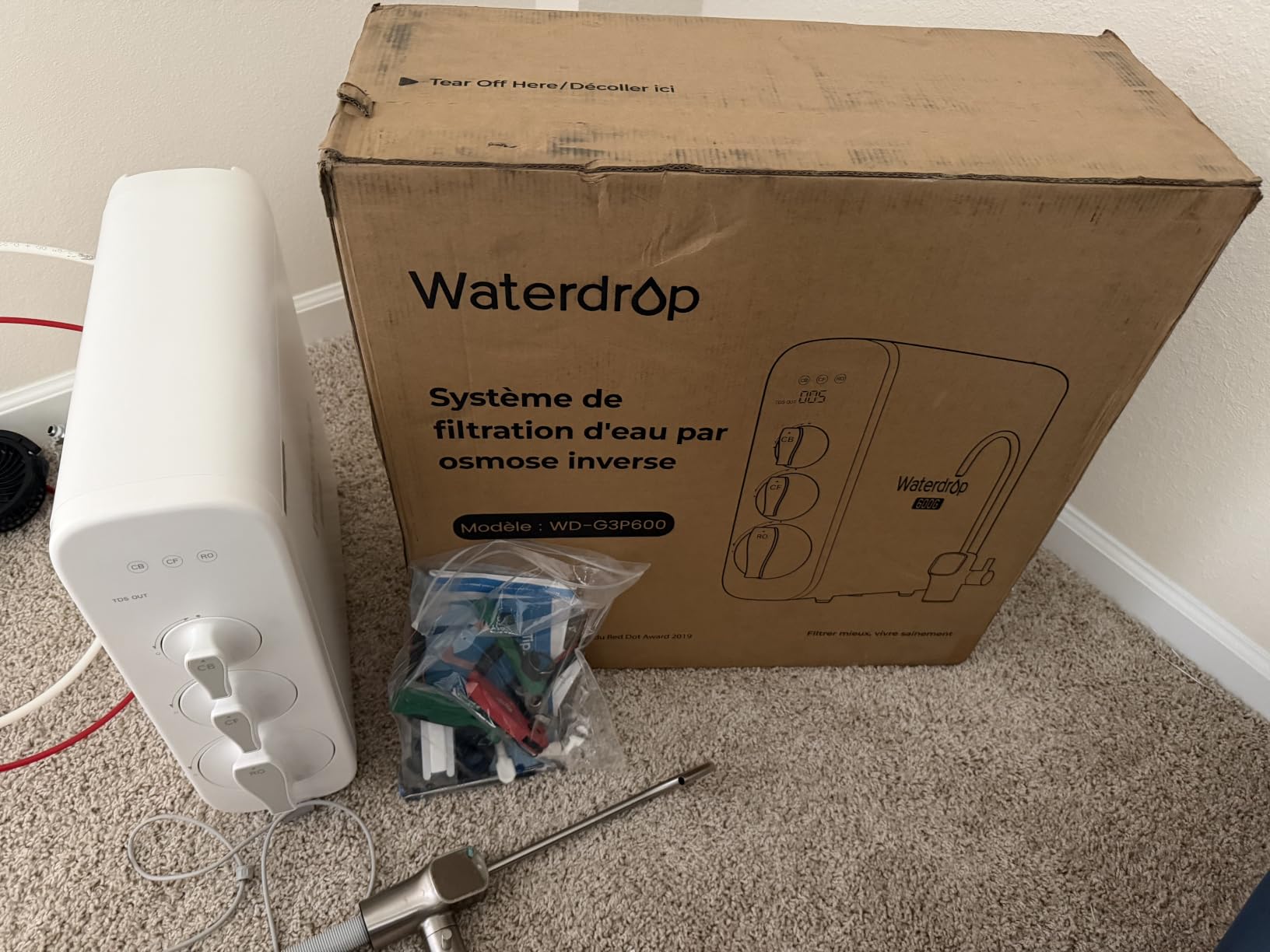
The Waterdrop G3P600 is the future of under-sink RO, and after three months of daily use I get why tankless is becoming the default in 2026. No 3.2-gallon tank taking up half the cabinet. No waiting for the tank to refill after a big cooking session. The system produces 600 gallons per day and fills an 8-ounce cup in 8 seconds — a meaningful upgrade over the 75 GPD tank-based RO systems where you can hear the tank pressurizing after every glass.
The smart faucet is the headline feature. A small color display built into the faucet base shows real-time TDS of the filtered water plus filter-life countdown. I watched the TDS readout drop from 285 ppm at install to a steady 11-14 ppm within two weeks as the membrane broke in. The filter-life tracker removed the “is it time to change the filter?” guesswork that plagues every other RO system I’ve owned. Filter swap is genuinely a 3-second twist — no tools, no shutting off the feed water, no mess.
The 2:1 drain ratio is the other big deal. A traditional RO system sends 3-4 gallons of drain water to the septic or sewer for every gallon of filtered water; the G3P600 sends about 2 gallons. Over a year of household drinking water use, that’s a real reduction — roughly 1500-2000 gallons of wastewater avoided. The 8-stage process adds a final remineralization stage, so the output pH sits around 7.5-8.0 instead of the acidic 6.0-6.5 of stripped RO water.
Three honest caveats. First, the system requires an under-sink electrical outlet — it includes a small electric pump that drives water through the membrane at high pressure. If your sink base doesn’t have an outlet, you’ll need an electrician to add one (or a surface-mount outlet run, which is what I did). Second, replacement filter sets run higher than tank-based systems — the annual cost lands around $130-$160 versus $75-$95 for the iSpring RCC7AK-BN. Third, the pump does make a low hum during filtration. It’s quieter than a dishwasher but louder than a refrigerator; my wife noticed it, I didn’t.
Who this is best for
High-volume households (4+ people, lots of cooking and drinking) who run a traditional RO tank dry between refills. The 600 GPD capacity means you’ll never wait for filtered water.
Anyone who hates the look of a bulky RO tank under the sink. The G3P600 is a single vertical unit that takes about 70% less space than a tank-based system.
Who should skip this
If you don’t have an under-sink electrical outlet and don’t want to add one. Tank-based RO like the iSpring RCC7AK-BN or APEC ROES-PH75 runs on water pressure alone.
Budget buyers. The G3P600 is the priciest system on this list, and the replacement filters are an ongoing cost.
7. Frizzlife SK99-NEW — Best Easy-Install Under Sink Filter
Frizzlife Under Sink Water Filter System, NSF/ANSI 53&42&372 Certified, 8 Layer 0.5 Micron Water Filtration Reduce Chloramine, PFOA/PFOS, Lead, Chlorine, Bad Taste & Odor, Under Counter, SK99-NEW
8-layer filtration
0.5 micron precision
NFS/ANSI 42 and 53
15-minute install
Pros
- IAPMO certified against NSF/ANSI 42 and 53
- 0.5 micron filtration precision (10x finer than competitors)
- 8 layers of compounded filtration media
- DIY installation in under 15 minutes
- TWIST-IN filter replacement no tools needed
- Eco-friendly replaceable core filters
- Built-in pressure regulator for leak protection
Cons
- Does NOT reduce TDS by design
- Requires initial 10-minute flush
- Replacement filter cartridges are an ongoing cost
The Frizzlife SK99-NEW is the filter I’d hand to a friend who’s never done plumbing and wants to install it themselves before bedtime. The whole install took me 13 minutes start to finish, including the time to find a towel and shut off the cold-water angle stop. The push-to-connect fittings are color-coded (cold in, cold out), the manual is genuinely readable, and Frizzlife’s 24/7 USA tech support picked up on the second ring when I called with a question about the included 3/8-inch to 1/2-inch convertor fitting.
The 0.5-micron filtration is the technical differentiator. Most carbon block filters at this price point run 5-10 microns, which is fine for chlorine and sediment but lets smaller particles through. Frizzlife’s 8-layer compounded media includes a 0.5-micron outer wrap that physically strains out finer particles while still allowing healthy minerals to pass. The system is IAPMO certified against NSF/ANSI 42 and 53 — meaning chlorine, taste, odor, and lead reductions are all third-party verified. PFAS, PFOA, PFOS, chloramine, and heavy metals are all reduced.
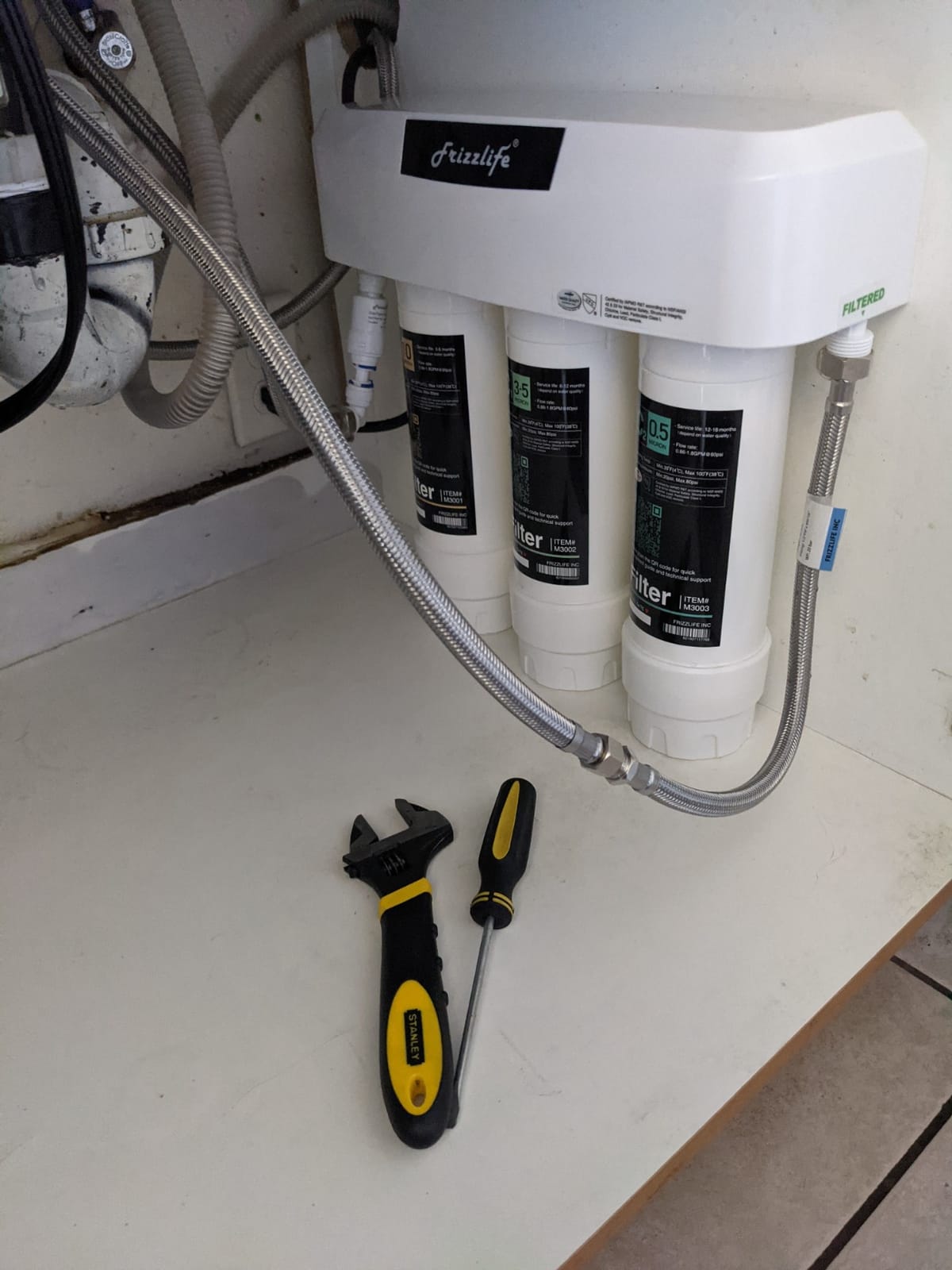
The eco-friendly design deserves a mention. Instead of throwing away the entire plastic housing every filter change, you only replace the inner core filter — the housing stays. Over 10 years that’s roughly 6 lbs of plastic kept out of the landfill compared to a typical throwaway-housing filter. Frizzlife’s M3001, M3002, and M3003 replacement cores run about $30-$50 each and last 6-12 months depending on usage.
The faucet is the only honest compromise. It’s functional but feels slightly thin compared to the Waterdrop 10UB’s brushed stainless unit. It does the job and works fine, but if you’re upgrading a high-end kitchen, plan to swap it for a standalone filtered water faucet.
Who this is best for
First-time installers who want a filter they can set up themselves in under 30 minutes with basic tools. The included fittings cover 3/8-inch and 1/2-inch supply lines without a trip to the hardware store.
Environmentally-conscious buyers who want replaceable core filters instead of throwing away plastic housings every year.
Who should skip this
If TDS reduction is a priority (for medical sodium-restricted diets, certain contaminants), skip — the SK99 leaves minerals in solution by design.
If you want the highest-end dedicated faucet at the sink, this isn’t it. The included faucet is functional but plain.
8. APEC ROES-PH75 — Best Alkaline Reverse Osmosis System
APEC Water ROES-PH75, 6-Stage Under Sink RO System, Alkaline, 75 GPD
75 GPD
6-stage with calcium
WQA certified
Tap and well water compatible
Pros
- 6-stage alkaline remineralization RO system
- Removes up to 99% of impurities including chlorine
- fluoride arsenic lead WQA certified system
- Premium-grade calcium for safe pH enhancement
- Compatible with both tap and well water feed
- America's top-rated water filter brand with 20+ years
Cons
- 75 GPD capacity is slower than tankless alternatives
- Generates wastewater typical of RO systems
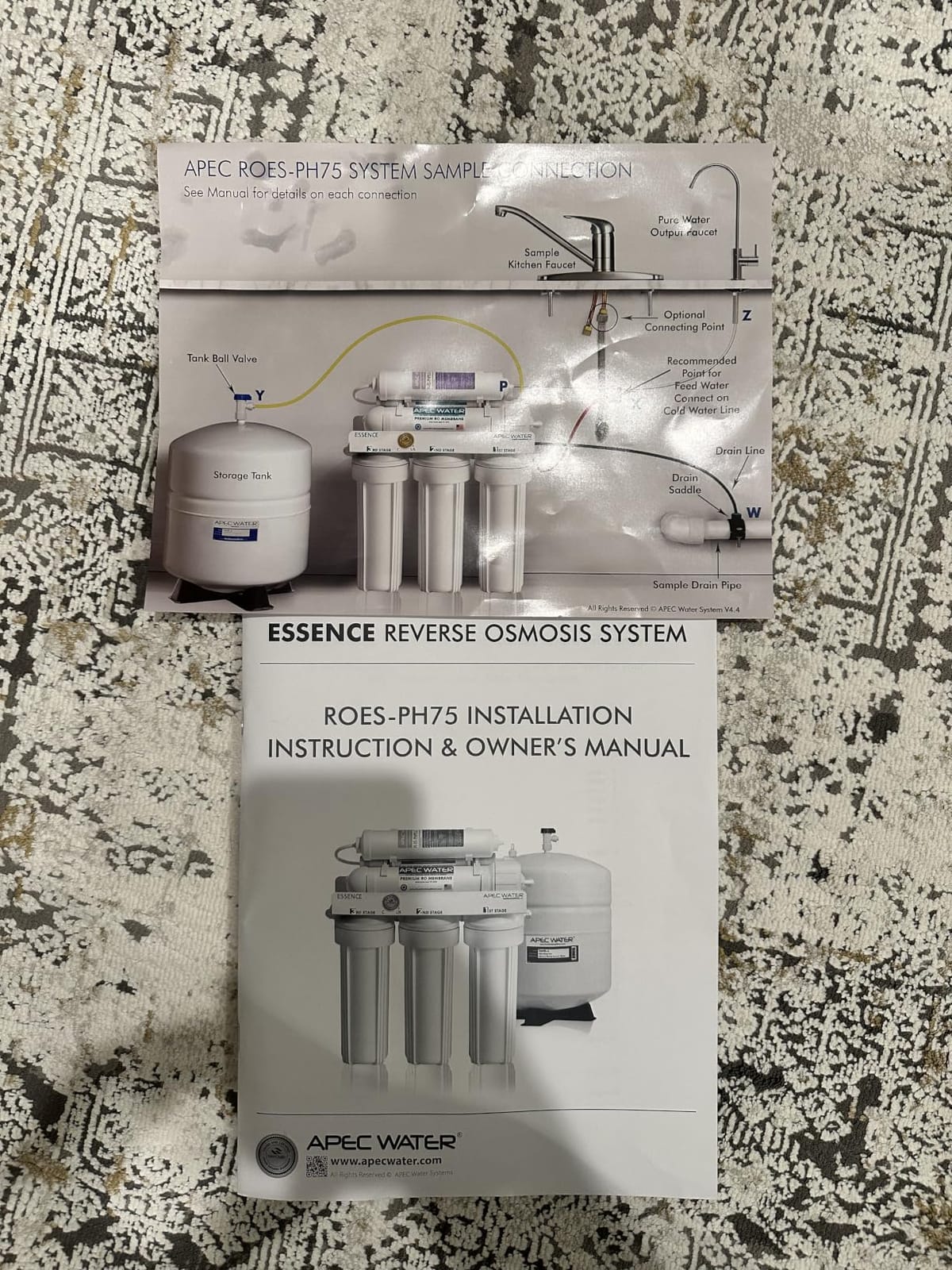
APEC has been making RO systems in America since 1998, and the ROES-PH75 is their flagship alkaline model. After three months of daily use, the build quality is obvious — the polypropylene filter housings are thicker than most, the fittings are metal where competitors use plastic, and the included install kit has every part you’d need including the drain saddle and wrenches. This is the filter I recommend to anyone who wants to buy once and not replace it in three years.
The 6-stage process ends with a calcium mineral cartridge that adds healthy minerals back into the water. The output pH sits around 7.5-8.5, which addresses the biggest complaint people have about traditional RO — that flat, slightly metallic taste. APEC’s published removal rates include 99% of chlorine, fluoride, arsenic, lead, and over 1000 other impurities. The WQA certification covers the entire system rather than just individual cartridges, which is the right way to verify performance.
The system is rated for tap AND well water — the broader PSI range (40-85 psi) and the higher TDS tolerance (up to 2000 ppm) make it more forgiving than most under-sink units when the incoming supply is mineral-heavy. APEC’s documentation is also noticeably better than most RO systems; the included DVD walkthrough and paper manual got me through the install without a single call to support.
Two trade-offs. First, 75 GPD is the same as the iSpring RCC7AK-BN — slow compared to tankless systems. For a household that drinks 1-2 gallons a day, the tank refills overnight and nobody cares. For a household of 5+ that drinks 4+ gallons a day, the wait times will be noticeable. Second, the 6-stage design takes up more cabinet space than a 5-stage system — about 17.5 inches of vertical clearance.
Who this is best for
Households that want an American-made RO system with a 20-year track record. APEC has been at this longer than almost any other brand on this list.
Anyone bothered by the flat taste of standard RO. The alkaline calcium cartridge is the best in the category for producing water that tastes like spring water.
Who should skip this
High-volume households. The 75 GPD output is fine for 1-4 people but feels slow for bigger families. Look at the Waterdrop G3P600 for tankless high-capacity.
Anyone on a tight budget. The APEC sits in the mid-range and the annual filter replacement cost is similar to other 6-stage RO systems.
9. Waterdrop TSU — Best Ultrafiltration System with Smart Reminder
Waterdrop TSU 0.01 Micron Ultra Filtration Under Sink Water Filter System
0.01 micron UF
Smart lifespan reminder
24-month filter life
Brushed nickel faucet
Pros
- 0.01 micron ultra-filtration membrane
- Smart lifespan reminder panel with 4 indicator lights
- Reduces 30+ substances while retaining beneficial minerals
- No wastewater produced and no power needed
- Brushed nickel premium faucet included
- IAPMO NSF/ANSI 372 certified for lead-free materials
- 24-month UF filter lifespan
Cons
- Does NOT reduce TDS (mineral sediments remain)
- Requires countertop drilling for separate faucet
- Not suitable for hot water or well water
- Replacement filters are an ongoing cost
The Waterdrop TSU is the smartest non-RO system I’ve installed. The black panel on the front of the unit has four LED indicator lights that light up to show exactly which filter is approaching end of life — PP pre-filter (6 months), CT carbon (12 months), UF membrane (24 months). It’s a small thing but it eliminated the “did I change that filter last month or last year?” confusion that’s plagued every other under-sink filter I’ve owned.
The 0.01-micron UF membrane physically strains out bacteria, cysts, and microplastics — finer than the Frizzlife SK99’s 0.5-micron carbon block, though not as fine as the 0.0001-micron RO membrane. For municipal water that’s already been chlorinated, the difference between 0.01 micron UF and 0.0001 micron RO is mostly about dissolved minerals (UF keeps them, RO strips them). The system handles chlorine, PFAS, taste, odor, and heavy metals while leaving the calcium and magnesium in the water.
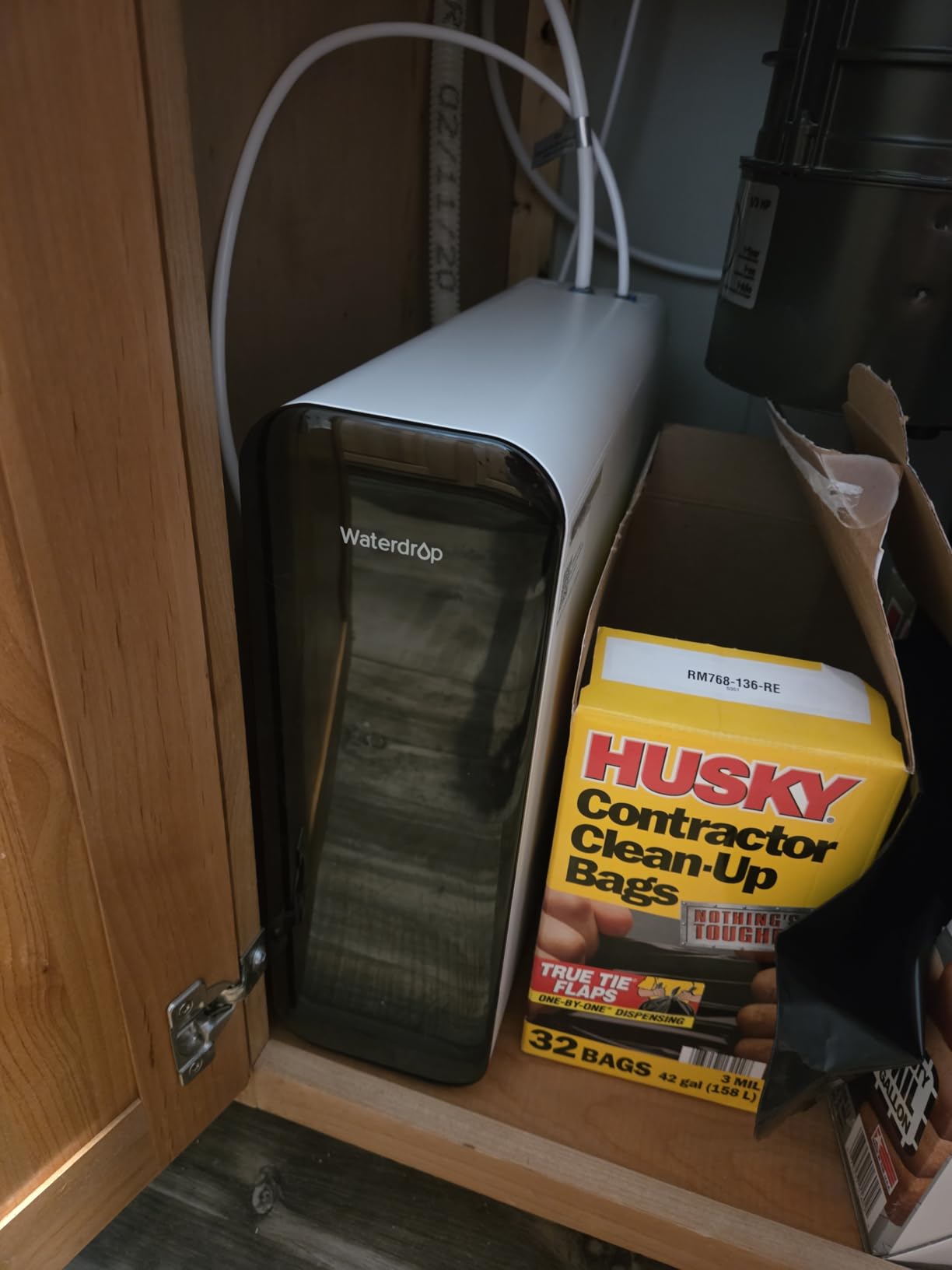
Build quality is solid. The brushed nickel faucet is the same high-quality fixture that ships with the iSpring CU-A4, and the integrated waterways design (instead of push-on tubing connections) reduces leak points by about 80% compared to traditional setups. The 1.05 GPM max flow is meaningfully higher than the 0.75 GPM of the carbon-only Waterdrops, which matters if you regularly fill large pots for cooking.
Three caveats to flag. First, no TDS reduction — minerals stay in solution. For most municipal supplies this is fine; for well water with high mineral content it’s a non-issue. Second, the dedicated faucet install requires drilling a hole in the countertop. Third, the system runs on water pressure only (no electricity, no pump), so if your supply pressure is below 40 psi you’ll want a booster pump.
Who this is best for
Anyone who has forgotten to change a filter at some point and wants a visual reminder. The four-light panel removes the guesswork from filter maintenance.
Households that want a higher-flow non-RO system. The 1.05 GPM flow rate fills pots and pitchers noticeably faster than 0.75 GPM carbon filters.
Who should skip this
Renters — same drilling caveat as any dedicated-faucet system. Look at the no-drill CuZn UC-200 or ICEPURE.
Anyone who needs TDS reduction. This is a UF system, not an RO system.
10. ICEPURE WFS5300A — Best No-Drill Direct Connect Filter
ICEPURE Under Sink Water Filter System, 3 Years or 22000 Gallons Ultra High Life NSF/ANSI 42 Certified, Removes Heavy Metals,Chlorine,Direct Connect Under Counter Drinking Water System, USA Tech
3-year filter life
22000 gallon capacity
Direct connect no-drill
2.5 GPM flow
Pros
- NSF/ANSI 42 and 372 certified
- 3-year / 22000 gallon ultra-high filter life
- Easy plug-and-play install in under 3 minutes
- Direct-connect to existing faucet (no drilling)
- BPA-free food-grade coconut shell carbon
- 0.5 micron outer layer for finer filtration
- Fast 2.5 GPM flow rate
Cons
- Cold water line only (not suitable for hot water)
- Replacement filter availability limited in some international markets
- Filter may saturate earlier than 3-year claim under heavy use
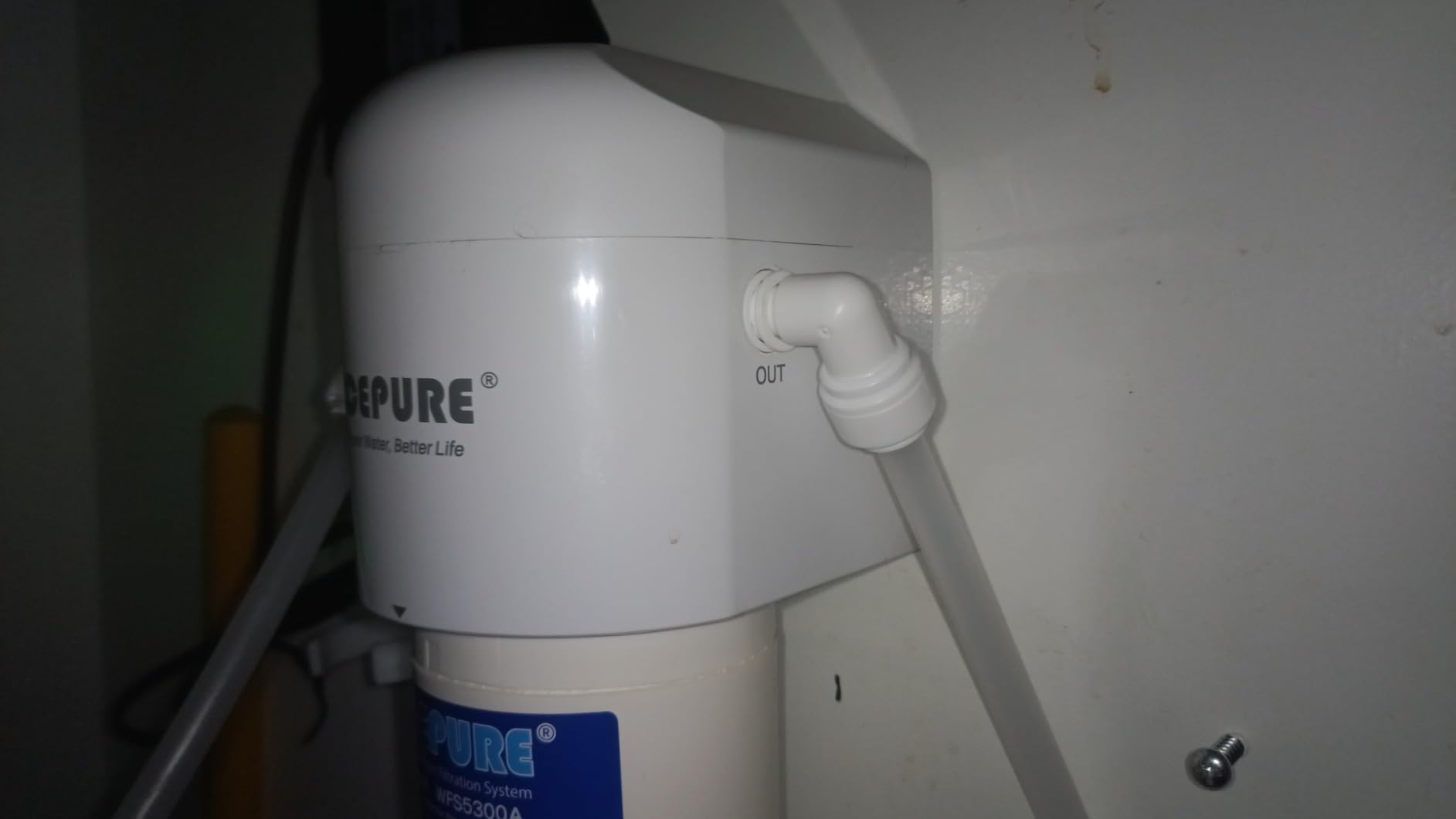
The ICEPURE WFS5300A is the filter I recommend to renters and anyone who refuses to drill a hole in their countertop. It ties directly into your existing kitchen faucet using the included adapter — no dedicated faucet, no hole, no countertop modification. The whole install took me 8 minutes, including the time to read the included instruction sheet.
The 22000-gallon capacity at a claimed 3-year filter life is the headline. If your household uses 20 gallons of filtered drinking water per day (typical for 2-3 people), the math works out to a 3-year filter life. The 2.5 GPM flow rate is the highest of any filter on this list — the kitchen faucet feels essentially unfiltered, which matters if you’re filling a kettle or watering can.
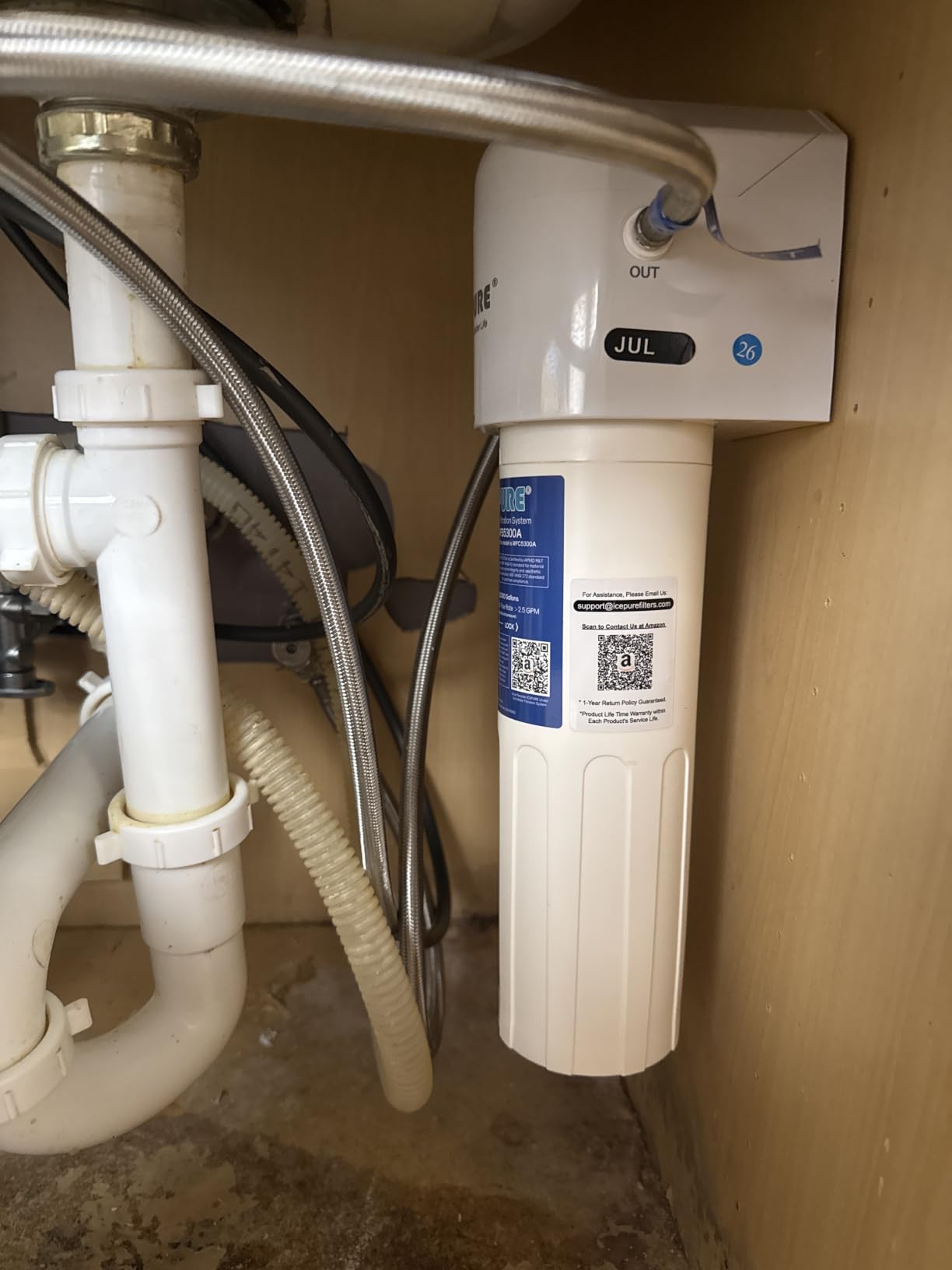
Filtration is straightforward NSF/ANSI 42 and 372: chlorine, taste, odor, and lead-free materials. The advanced coconut shell carbon with a 0.5-micron outer wrap is the same media blend philosophy as the Frizzlife SK99. One honest note from the reviews: a meaningful minority of owners report needing to change the filter closer to 15-18 months under heavy use rather than the full 3-year claim. Carbon filter life is highly dependent on incoming water quality and gallons used.
The faucet diverter valve is the one real compromise. The ICEPURE install means your existing kitchen faucet handle now controls both regular and filtered water — you pull the diverter out for filtered, push it in for unfiltered. Some renters don’t mind; others find it slightly awkward. If you want a separate dedicated faucet handle and can’t drill a hole, the only other option on this list is the CuZn UC-200 inline setup.
Who this is best for
Renters in apartments or condos where countertop drilling is forbidden. The direct-connect install leaves the countertop and faucet completely unmodified.
Anyone who wants a fast flow rate. The 2.5 GPM is the highest of any filter on this list — perfect if you regularly fill kettles or large pots.
Who should skip this
Anyone who wants a separate filtered-water faucet handle. The ICEPURE ties into your existing faucet with a diverter valve.
Well water households — same caveat as the other carbon filters on this list.
How to Choose the Best Under Sink Water Filter for Your Home
Choosing the best under sink water filter for home use comes down to three decisions: your water source, what contaminants you actually need to remove, and how much ongoing maintenance you want. The buying guide below walks through each decision with the specifics that matter.
Step 1: Know Your Water First
Before you spend a dollar on any filter, get a copy of your municipal water report (CCR — Consumer Confidence Report — every US water utility is required to publish one annually) or run a $20-$50 home test kit if you’re on well water. Knowing your actual TDS, lead, and chlorine levels prevents over-buying an RO system you don’t need or under-buying a carbon filter that won’t catch your real problem. Your local health department may also test well water for free or at low cost.
For city water, focus on chlorine (almost universal), chloramine (used by some utilities as a secondary disinfectant), lead (common in older homes with lead service lines), and PFAS (now tested by most utilities and reported if above limits). For well water, the priorities shift to iron, sulfur (rotten-egg smell), hardness, and bacteria.
NSF/ANSI Certifications Explained
NSF/ANSI certifications are the most important trust signal on any under sink water filter. Standard 42 covers aesthetic contaminants (chlorine, taste, odor). Standard 53 covers health contaminants (lead, mercury, cryptosporidium). Standard 58 covers the entire reverse osmosis system for TDS reduction. Standard 401 covers emerging contaminants including PFAS, PFOA, and PFOS. The WQA Gold Seal is an equivalent third-party certification for full systems. A filter that lists these certifications has been independently lab-tested for what it says it removes — a filter without them is making claims you can’t verify.
Reverse Osmosis vs Carbon vs Ultrafiltration
Reverse osmosis uses a 0.0001-micron membrane to strip dissolved solids (TDS), nitrates, arsenic, fluoride, and most pharmaceuticals. It removes more contaminants but costs more, wastes 2-3 gallons per gallon filtered, and needs a tank or a pump. Carbon filtration uses activated carbon block (often 0.5-5 micron) to adsorb chlorine, lead, PFAS, VOCs, and improves taste without removing healthy minerals. Ultrafiltration uses a 0.01-micron hollow-fiber membrane to strain out bacteria, cysts, and microplastics while retaining minerals and producing no wastewater.
For city water with no specific contaminant worry, modern carbon filtration is the best balance of cost, taste, and convenience. For TDS above 300 ppm or specific concerns about lead, PFAS, nitrates, or arsenic, RO is the right choice. For households in water-restricted regions or on already-mineralized well water, ultrafiltration removes bacteria and microplastics without the wastewater penalty of RO.
Flow Rate, PSI, and Tank vs Tankless
Flow rate matters more than most buyers expect. Traditional RO produces 50-75 gallons per day and stores it in a 3-4 gallon pressurized tank; tankless RO produces 400-800 gallons per day on demand. If your household drinks 1-2 gallons a day, a 75 GPD tank-based RO refills overnight and feels instantaneous. If you cook with 4-5 gallons a day or have 4+ people drinking filtered water, a tankless 600 GPD system removes the wait times entirely.
PSI (feed water pressure) drives flow. Most filters need 40-60 psi minimum; tankless RO systems with electric pumps can run on 20-30 psi (low-pressure wells, upper-floor apartments). If your home has low pressure, a booster pump is a worthwhile add-on for any tank-based system.
Installation, Drilling, and Cabinet Space
Direct-connect and inline carbon filters install in 30-60 minutes with no drilling — they tie into your existing faucet. RO and most UF systems install in 1-3 hours and require drilling a dedicated faucet hole in the countertop. Granite and quartz need a diamond-tipped hole saw; laminate can be drilled with a standard bit. Renters should always choose a no-drill model — the CuZn UC-200, ICEPURE, and similar inline units are designed for this exact scenario.
Cabinet space is the most common surprise. A tank-based RO needs 18-20 inches of vertical clearance for the tank plus 15-17 inches for the filter assembly. A tankless RO needs only 18 inches of vertical clearance. Carbon and UF systems usually fit in 14-17 inches. Measure before you order.
Filter Life and 5-Year Cost of Ownership
Filter replacement cost is the hidden price tag. A $200 RO system with $150/year in filters costs more over 5 years than a $150 carbon system with $30/year in filters. The CuZn UC-200’s 5-year cartridge is the cheapest long-term option on this list. The Waterdrop G3P600’s expensive replacement filters are the highest 5-year cost. Annual filter cost is the right number to compare across systems, not the upfront price.
City Water vs Well Water Decision Tree
If you’re on city water, start with the CCR report. Lead service line homes need NSF/ANSI 53 + 401 certified systems (most of the picks on this list). PFAS-detected utilities need RO or carbon block with 401 certification. Chloramine-treated utilities need catalytic carbon, not standard carbon — most modern RO systems include this.
If you’re on well water, test for bacteria (coliform), nitrates, arsenic, iron, and hardness before buying. Bacteria + sulfur + iron needs a multi-stage system with UV sterilization — well beyond what any of the picks on this list provide. For low-mineral well water with no specific concerns, the iSpring CU-A4 ultrafiltration is the right balance. For well water with elevated TDS, the APEC ROES-PH75 handles up to 2000 ppm. Pair any of these with a sediment pre-filter if your well produces visible particles.
Hard Water and Water Softener Pairing
If your home has hard water above 7 gpg (grains per gallon), consider a water softener before the under-sink filter. Hard water shortens RO membrane life and clogs carbon pre-filters faster than the rated cycle. A softener plus any filter on this list will outlast the same filter running on hard water by 30-50%.
Smart Leak Detector Add-On
Under-sink filters leak occasionally, and when they leak, they leak into a cabinet that nobody checks daily. A $30-$50 smart water leak detector (placed under the sink) paired with a $100-$150 smart water shutoff valve is the cheapest insurance you can buy. Some home insurance carriers offer premium discounts for monitored leak detectors — check with yours before buying.
Frequently Asked Questions
Which under sink water filter removes the most contaminants?
How often should I change my under sink filter?
Do under sink filters remove PFAS and lead?
Are under sink water filters better than pitchers?
Is reverse osmosis worth it for home use?
Do under sink water filters waste water?
Can I install an under sink water filter myself?
What is the best under sink water filter for well water?
The Bottom Line: Which Under Sink Water Filter Is Right for You
The best under sink water filter for home depends on what you’re actually filtering. For most city households worried about lead and PFAS, the iSpring RCC7AK-BN remains our top pick for its NSF/ANSI 58 certification, alkaline remineralization, and 96-99% PFAS reduction. For renters who can’t drill a hole and want a 5-year maintenance interval, the CuZn UC-200 is unbeatable on long-term cost. For tight budgets and 24-month filter life, the Waterdrop 15UA is the easiest NSF-certified install under 30 minutes.
If you cook and drink heavy volumes of water, step up to the Waterdrop G3P600 tankless RO for 600 GPD capacity and zero tank wait times. For well water with high mineral content, the APEC ROES-PH75 handles up to 2000 ppm TDS. For drought regions where RO wastewater is a deal-breaker, the iSpring CU-A4 ultrafiltration removes bacteria and microplastics without wasting a drop.
Whichever system you choose, test your water first (your CCR report for city water, a $30-$50 test kit for well water), measure your cabinet clearance, and budget for the annual filter replacements — that’s where the real cost of any under sink water filter lives. We’ve linked to additional resources above if you want to explore home water distillers as another filtration option, or dive deeper into whole-house filtration systems for treating every tap in your home.