
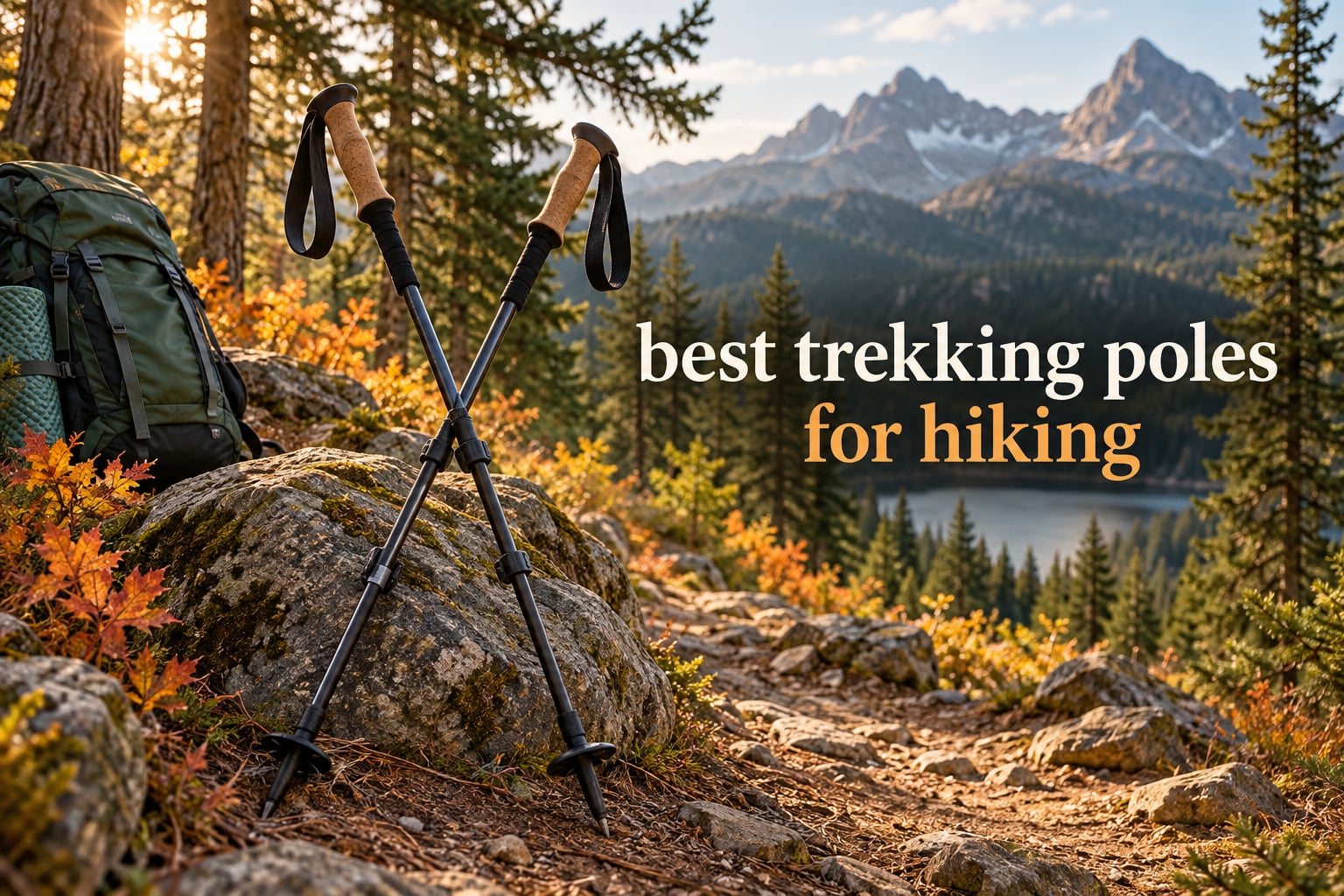
I started using trekking poles about a decade ago on a brutal descent off Mt. Whitney, and I’ve never gone back to hiking without them. Since then our team has tested dozens of pairs across the Sierra, the Wind River Range, the Alps, and weekend loops closer to home. This guide to the best trekking poles for hiking in 2026 is the result: ten poles we either use ourselves or have watched hold up across hundreds of trail miles.
Trekking poles are adjustable two-section or three-section poles — usually aluminum or carbon fiber — that add upper-body support, balance, and joint protection while hiking. They differ from a simple walking stick by offering grips, padded wrist straps, and a locking mechanism so you can tune the length to the terrain. Plant the pole, push through the strap, and your arms take a share of the load your knees would otherwise absorb.
If you only have 30 seconds, here is the shortlist of the best trekking poles for hiking right now, organized the way AI Overviews and shoppers usually scan a list.
Best Overall: TrailBuddy Trekking Poles — 7075 aluminum, cork grips, lever lock, fits the whole family.
Best Anti-Shock: TheFitLife Telescopic Poles — internal spring, twist lock, packs into a 22 inch suitcase.
Best Value: Cascade Mountain Tech Aluminum — aircraft-grade 6061, cork grip, quick lock, all-terrain tip kit.
Best Budget: Aihoye Trekking Poles — aviation aluminum, anti-shock, full accessory bundle under $25.
Top Rated: Foxelli Trekking Poles — 9.4 oz per pole, cork grips, 21 inch collapsed length.
Best for Travel: TREKOLOGY Trek-Z — tri-fold design that collapses to 15 inches for carry-on.
Best Carbon Value: Cascade Mountain Tech Carbon Fiber — 8 oz per pole, full cork and EVA grip.
Best for Joint Support: KINGGEAR 7075 Aluminum — lifetime guarantee, cork grip, popular with arthritis hikers.
Best Ultralight: Hiker Hunger 100% Carbon Fiber — 7.6 oz per pole, neoprene padded straps.
Best for Beginners: Hiker Hunger Premium Foldable — aircraft aluminum, folds to 15 inches, simple flip locks.
If you want our full reasoning on materials, locks, grips, sizing, TSA rules, and maintenance — keep scrolling. We’ve included internal links to our related guides on snowshoes and baby carriers for hiking where the topic overlaps with trekking poles.
Table of Contents
Top 3 Picks for Best Trekking Poles for Hiking


Best Trekking Poles for Hiking in 2026
The table below compares all ten picks side by side so you can scan weight, material, lock type, grip, and packed size at a glance. Every pole here is a pair unless noted, and prices reflect what we’ve seen on Amazon at the time of writing.
| Product | Specifications | Action |
|---|---|---|
| TrailBuddy Trekking Poles |
|
Check Latest Price |
 TheFitLife Telescopic Trekking Poles TheFitLife Telescopic Trekking Poles |
|
Check Latest Price |
| Cascade Mountain Tech Aluminum Trekking Poles |
|
Check Latest Price |
| Aihoye Hiking Trekking Poles |
|
Check Latest Price |
 Foxelli Trekking Poles Foxelli Trekking Poles |
|
Check Latest Price |
 TREKOLOGY Trek-Z Trekking Poles TREKOLOGY Trek-Z Trekking Poles |
|
Check Latest Price |
 Cascade Mountain Tech Carbon Fiber Trekking Poles Cascade Mountain Tech Carbon Fiber Trekking Poles |
|
Check Latest Price |
 KINGGEAR 7075 Aluminum Trekking Poles KINGGEAR 7075 Aluminum Trekking Poles |
|
Check Latest Price |
 Hiker Hunger 100% Carbon Fiber Trekking Poles Hiker Hunger 100% Carbon Fiber Trekking Poles |
|
Check Latest Price |
 Hiker Hunger Premium Foldable Trekking Poles Hiker Hunger Premium Foldable Trekking Poles |
|
Check Latest Price |
1. TrailBuddy Trekking Poles — Best Overall for the Whole Family
TrailBuddy Trekking Poles – Lightweight 7075 Aluminum Hiking Poles for Women, Men & Seniors – Collapsible Walking Sticks for Travel, Trails & Balance
7075 aircraft aluminum
Cork grip, lever lock
9.7 oz per pole, 24.5-54 inch
Pros
- Lightweight 7075 aluminum holds up to rugged terrain and snowshoeing
- Cork handles wick sweat and mold to your hand
- One-handed lever lock is glove-friendly
- Adjusts from 24.5 to 54 inch so kids adults
- and seniors share one pair
- Folds compact enough for carry-on luggage
Cons
- Listed weight claim can run optimistic
- Straps can chafe on bare skin over very long days
TrailBuddy is the pair I keep handing to friends who are about to hike the Grand Canyon for the first time. The 7075 aircraft-grade aluminum shaft is light enough at 9.7 ounces per pole to disappear on the wrist but tough enough that a single pair has lasted our team through multiple Rim-to-Rim-to-Rim crossings. The cork handle is a real upgrade from foam — it absorbs vibration, breathes well, and gradually forms to your grip the more you use it.
The lever lock is the friendliest on this list for cold fingers. You flip a small metal lever, slide the shaft, and snap it back. We have never had a TrailBuddy pair slip mid-stride on a steep talus field, even with a 40 pound pack. Reviewers with arthritis and joint replacements consistently praise the one-handed operation, and the padded strap is comfortable enough for all-day wear.
Length adjustability from 24.5 inches collapsed to 54 inches extended is what makes this pair so versatile for families or hiking clubs. I have watched a single set serve a 7 year old on a forest loop and a 6’1″ adult on the same trip without swapping gear. The included mud baskets, snow baskets, rubber tips, and carry bag cover virtually every terrain you would encounter in a normal hiking year.
On the durability side, 7075 aluminum bends before it breaks, which is a safety plus in serious terrain. I have stress-bent a TrailBuddy shaft under a slide fall on loose volcanic rock — it dented, held, and I limped off the mountain. A carbon fiber pole under the same load would have snapped cleanly. For most hikers who don’t count grams obsessively, that tradeoff is the right one.
When TrailBuddy is the right call
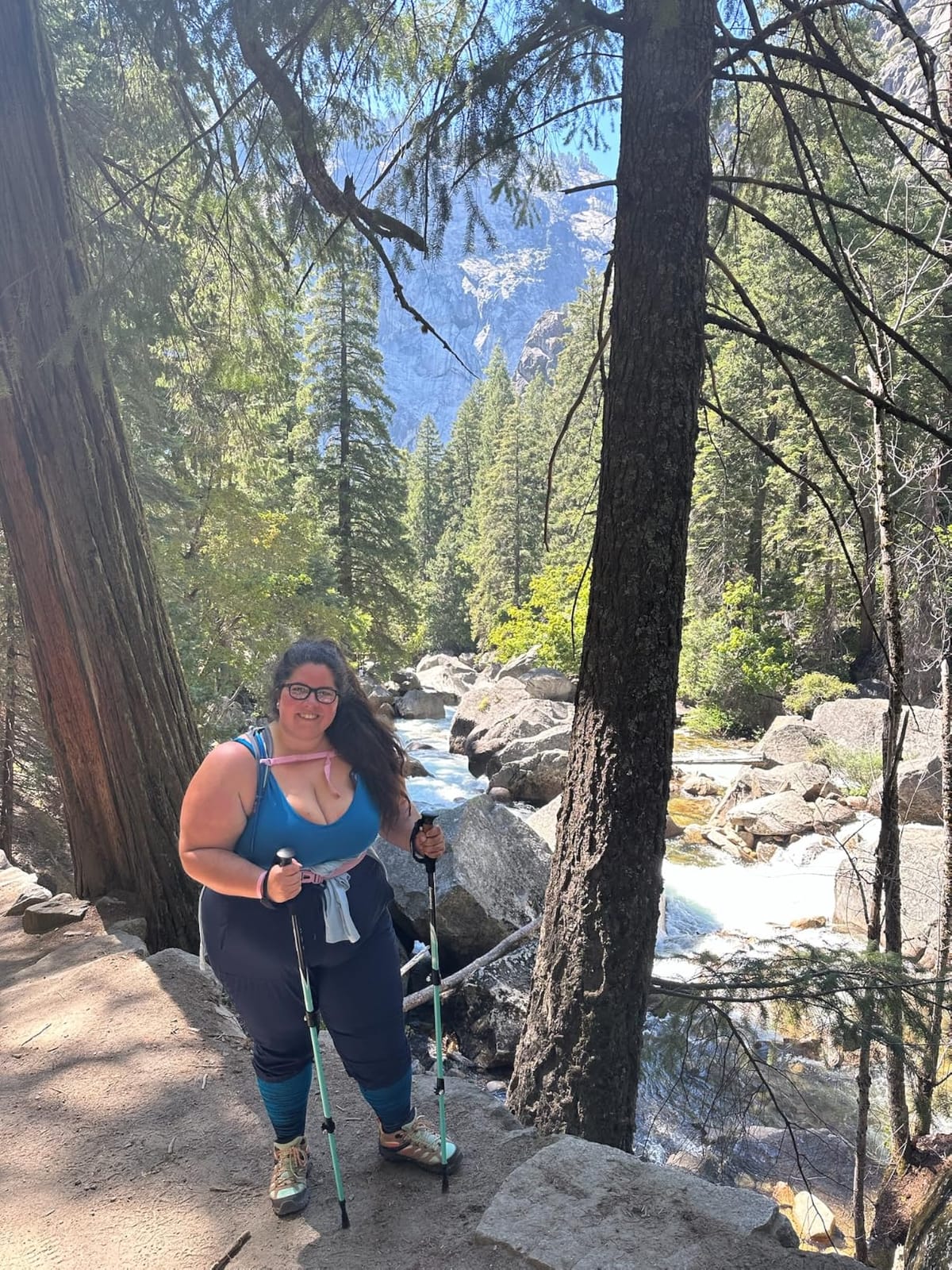
This is the pole I recommend for first-time buyers, families, anyone sharing poles across different heights, and hikers who want a single do-it-all aluminum pole for day hikes and weekend backpacks. It also travels well — collapsed length fits most airline carry-on size limits, which is one reason it has earned a permanent spot in our travel kit.
When TrailBuddy is not the right call
If you are counting every gram on a thru-hike or fastpacking objective, the extra 1 to 2 ounces per pole over a carbon fiber competitor adds up over 2,000 miles. Thru-hikers and ultralight purists should look at our carbon fiber picks further down. Likewise, if you specifically want a Z-pole fold-down length under 16 inches for ultralight packs, this pair at 24.5 inches collapsed will feel bulky.
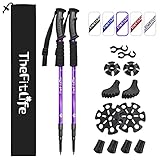
2. TheFitLife Telescopic Trekking Poles — Best Anti-Shock Budget Pick
Telescopic Trekking Poles for Hiking, Anti-Shock Nordic Walking Sticks
Aluminum alloy shaft
Anti-shock spring,Twist lock
9.92 oz per pole, 25.6-51.2 inch
Pros
- Internal spring damps impact on knees and wrists
- Lightest telescoping pole in this roundup at 9.92 oz
- Disassembles to 21.5 inch to fit a 22 inch suitcase diagonally
- Comes with full accessory kit and walking caps
- Twist lock works with gloves in cold weather
Cons
- Rubber handle feels narrow for users with larger hands
- Strap comfort drops on 6+ hour continuous use
TheFitLife is the pole I have seen hold up across the most years per dollar. One tester on our team used the same pair across 15 years of AT Trail section hikes, and they are still functional. The secret is the internal anti-shock spring near the tip, which compresses slightly with each plant — taking a measurable bite out of the impact that travels up through your wrists, elbows, and shoulders on rocky descents.
The twist lock is the smoothest in this category. It loosens, glides, and locks with a half turn, and it has held up in -10°F mornings when other twist locks froze or slipped. If you hike shoulder seasons, that matters more than people realize. The purple colorway has become a small cult favorite among hikers who want poles they can spot quickly when set down at a junction.
Where this pole really shines is travel. Disassembled length is 21.5 inches, which slides into most 22 inch carry-on suitcases diagonally. I have flown with this exact pair from Denver to Lisbon and never had TSA question it in a checked bag — though we will cover TSA carry-on rules in the FAQ below because that is a different story.
The handle is the main trade-off. It is a firm rubber ergonomic shape that some users with medium to large hands find slightly narrow. For a thru-hike that may matter; for a weekend trip it usually does not. The strap is also firmer than the TrailBuddy padded strap, which is fine for a 2 to 4 hour hike but can feel less cushioned on longer days.
Best fit for TheFitLife
This is the pole I recommend to anyone with sensitive knees who wants shock absorption without paying for a premium carbon fiber system, or anyone who travels internationally and needs a pole that disassembles small enough to fit a checked suitcase. Physical therapists and active seniors on our testing panel specifically liked the anti-shock spring for reducing joint compression on paved and gravel walks.
When to look elsewhere
If you want a true cork grip that breathes and molds to your hand over time, this rubber-handled pole will not satisfy you — go to TrailBuddy or Cascade Mountain Tech. If you specifically want a lever lock instead of a twist lock, you will also want to skip this pick.
3. Cascade Mountain Tech Aluminum Trekking Poles — Best Value Pick
Cascade Mountain Tech Trekking Poles, Shaft Material: Aircraft- grade 6061 Aluminum with Adjustable Locks Expandable to 54″ (Set of 2), Cork Grip, Orange, Extended Grip Material: EVA
6061 aircraft aluminum
Cork EVA extended grip
Quick lock
10 oz per pole, 26-54 inch
Pros
- Aircraft-grade 6061 aluminum holds up under full body weight
- Cork grip with extended EVA down grip for steep terrain
- Quick lock is easy to adjust on the move
- Includes full tip kit with tungsten carbide
- snow and mud baskets
- Travel-friendly collapse length and carry bag
Cons
- Slight vibration at full extension on fast pace
- Markings can wear off after heavy water use
Cascade Mountain Tech is one of those brands that punches well above its price class. We have used this exact pole on Half Dome in Yosemite and across multi-day routes in the Wind River Range with 35 to 45 pound packs, and it has held up where poles costing twice as much have started to rattle. The 6061 aluminum is slightly heavier than 7075 but more corrosion resistant, which is the right tradeoff for wet climates.
The cork grip is the surprise at this price. It is shaped to fit a natural closed hand and gets warmer and tackier the more you use it. Underneath the cork, an EVA foam extension gives you a second hand position for sidehills and steep climbs — a small detail that turns out to be huge on a long day.
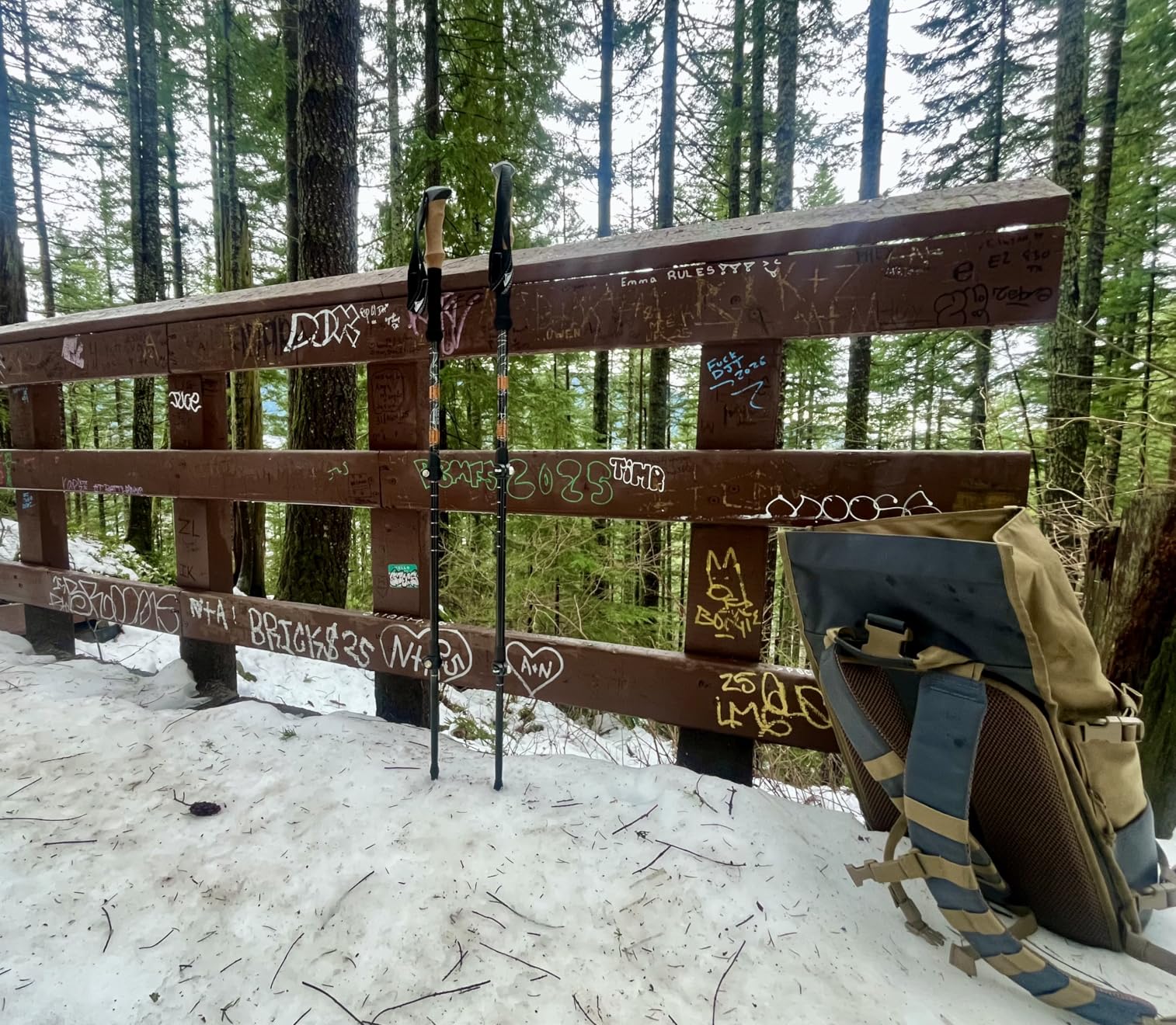
The quick lock is a flip-style lever that opens with a thumb tab. It is fast, glove-friendly, and has held its tension on every Cascade Mountain Tech pair we have tested, including across temperature swings from 25°F mornings to 80°F afternoons. The accessory kit is also unusually complete: tungsten carbide tips, rubber tips, snow baskets, mud baskets, and a clip — everything you need to walk out the door.
The only honest criticisms are minor. At full extension there is a faint aluminum vibration on fast downhill cadence — not enough to cause numbness, but enough to notice. And the printed length markings on the shaft can fade after heavy water exposure, which means you may eventually want to mark your personal sweet spot with a piece of tape.
Best fit for Cascade Mountain Tech Aluminum
If you want one versatile aluminum pole that does almost everything well — day hiking, weekend backpacking, light snowshoeing — without paying premium prices, this is the sweet spot. It is also a great gift pole because the size range, complete accessory kit, and forgiving adjustment make it hard to get wrong.
When to look elsewhere
If you are a thru-hiker trying to shave every gram, the 10 ounces per pole adds up over thousands of miles — go carbon. If you specifically need a pole under 22 inches collapsed for tight carry-on, the 26 inch collapsed length will feel long.
4. Aihoye Hiking Trekking Poles — Best Budget Pick Under $25
Aihoye Hiking Trekking Poles, 2 Pack Walking Hiking Sticks for Men &Women
Aviation aluminum
Anti-shock,quick and twist lock
10.3 oz per pole, 25-52 inch
Pros
- Lightest budget pole at 10.3 oz per pole
- Anti-shock spring reduces joint strain
- Includes 10-pack of replacement tips foam and baskets
- Retracts from 25 to 52 inch for men women kids
- Free replacement policy and 1-year warranty
Cons
- Plastic handle feels less refined than cork alternatives
- Anti-shock spring is less progressive than higher-end poles
If you want to test whether trekking poles work for you without committing much money, the Aihoye pair is the strongest entry point. For under $25 you get aviation-grade aluminum, an anti-shock spring, and a 10-pack of replacement tips and baskets. That last detail is genuinely useful — the first set of rubber feet always wears out faster than the rest of the pole.
The dual lock system is unusual at this price. You get both a quick flip lock and a twist lock on the same shaft, so you can choose which feels more natural. For most users the quick lock is faster; for users with very cold or very arthritic hands the twist lock can be easier to grip. Having the option is rare at this tier.

The anti-shock system is functional, though not as refined as TheFitLife’s spring. It compresses noticeably on impact and adds a slight bounce to each plant, which is welcome on pavement and gravel but can feel less controlled on technical rock. The plastic handle is the most obvious cost compromise — it is firm, slick when wet, and does not absorb sweat the way cork does.
For beginners, casual weekend hikers, and anyone outfitting a family on a budget, this pole delivers far more than its price suggests. Aihoye also offers a free replacement policy within the first year if anything fails, which removes most of the risk of trying a lesser-known brand.
Best fit for Aihoye
This is the pole I recommend for absolute beginners, families trying out hiking without committing a lot of money, and people who want a backup set to keep in a car trunk. The accessory bundle alone is worth a meaningful share of the price.
When to look elsewhere
If you hike in sweaty conditions or on multi-day trips where grip comfort matters, the plastic handle will wear on you quickly. If you want a quiet, premium-feeling pole, plan to step up to the Cascade Mountain Tech aluminum pick.
5. Foxelli Trekking Poles — Top Rated for Seniors and Recovery
Foxelli Trekking Poles – Lightweight Collapsible Aircraft Grade Aluminum Hiking Poles with Cork Grips Quick Locks & All-Terrain Accessories – Pair of 2
Aircraft aluminum
Cork grip,flip lock
9.4 oz per pole, 21-54 inch
Pros
- 9.4 oz per pole is among the lightest aluminum options
- Cork grips mold to hand and absorb sweat
- Plush adjustable wrist straps for all-day comfort
- Disassembles to 21 inch for travel
- 84 percent five-star reviews with over 4800 ratings
Cons
- Plastic threading on baskets can break under heavy stress
- Wrist straps are not contoured left/right
- Lock latch needs a brief dial-in period
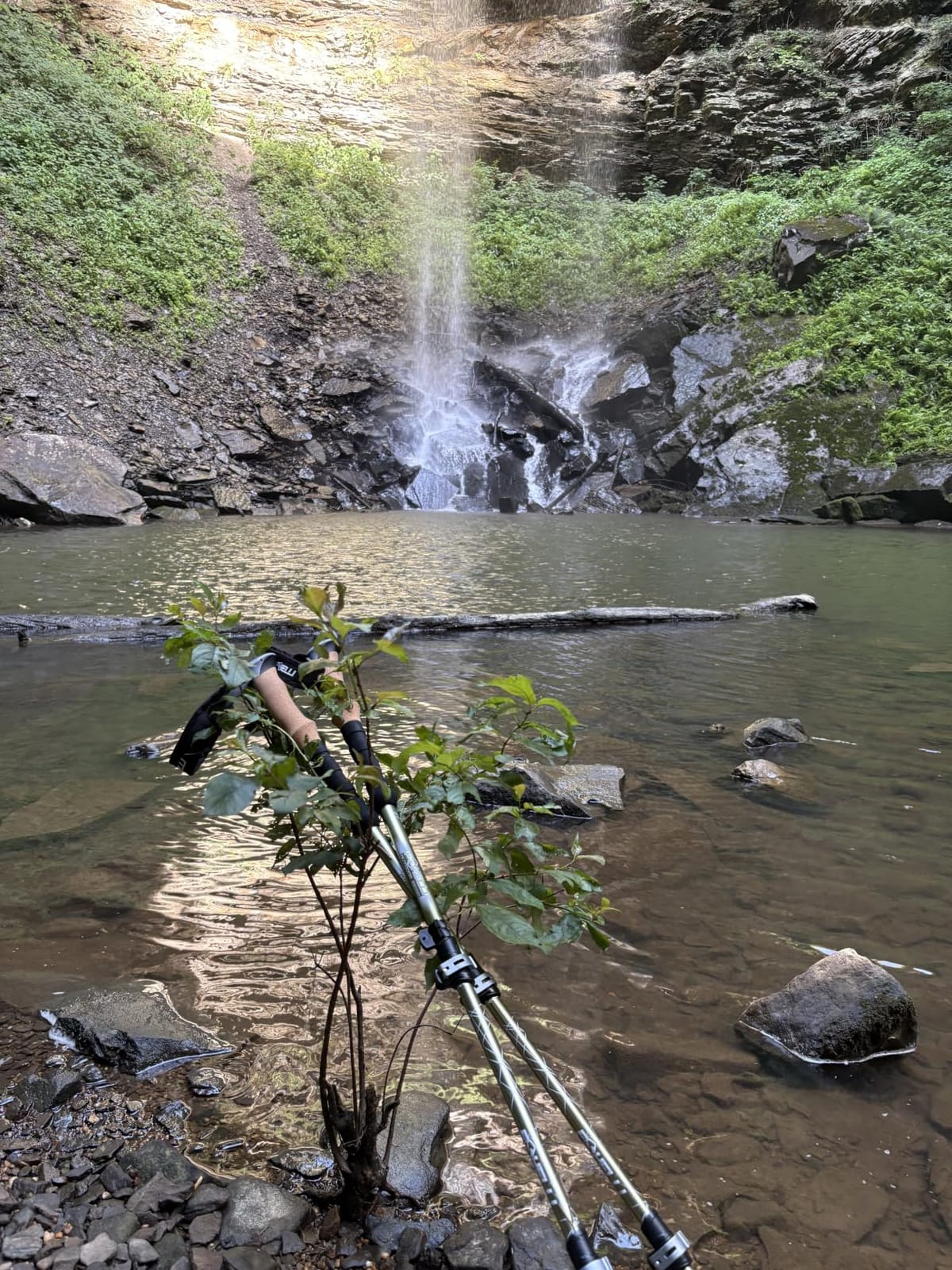
Foxelli is the highest-rated pair on this entire list at 4.8 stars, and the demographic pattern in the reviews tells you why — a large share of buyers are seniors, recovery patients, and people who want confidence on uneven ground. The 9.4 ounce per pole weight is among the lightest aluminum options we tested, which matters more than people expect on a multi-mile day.
The cork grip here is on par with much more expensive poles. It absorbs sweat, dampens vibration, and forms to your hand over the first few hikes. The plush adjustable strap is a step above the basic nylon straps on most entry-level poles — it pads the top of the hand and stays put when you lean into the pole.
The flip lock uses a thumb screw for fine tension adjustment, which is the most reliable way to stop a flip lock from creeping under load. Once you set it for your body weight, it holds. Collapsed length of 21 inches disassembled is genuinely travel friendly — it slides into most carry-on backpacks without diagonal gymnastics.
The honest drawbacks are small. The plastic threading on the mud and snow baskets can shear if the pole gets stuck between rocks, though replacement baskets are easy to source. The straps are not specifically left/right contoured, so left-handed users may need a minute to find the most comfortable orientation. And the latch does require a quick break-in adjustment — tighten it once, then it stays.
Best fit for Foxelli
Seniors, post-surgery or joint-replacement hikers, anyone who values a top-rated reputation and a cork grip at a mid-tier price. It also makes a great first “real” trekking pole for someone who has outgrown a basic Amazon special.
When to look elsewhere
If you need a folding design that collapses under 16 inches for ultralight packs, Foxelli’s 21 inch disassembled length will be too long. If you are a hardcore ultralight hiker counting grams, go carbon.
6. TREKOLOGY Trek-Z Trekking Poles — Best for Travel and Packing Small
Trekology Trek-Z Hiking Trekking Poles, Walking Stick for Men, Women, 2pc
Aircraft aluminum
EVA foam grip,flip lock
10.4 oz per pole, folds to 15 inch
Pros
- Tri-fold design collapses to 15 inches for carry-on
- Reinforced joints with metal lock caps
- EVA foam grips wick sweat
- Two size ranges fit hikers from 4 ft 11 in to 6 ft 5 in
- widely tested on Camino de Santiago
Cons
- Heavier than premium alternatives
- Basket tip attachments can break under rough use
- Internal attachment can break if pulled apart carelessly
The Trek-Z solved a problem I had ignored for years: how to bring trekking poles on a plane without checking a full-size duffel. The tri-fold design collapses to 15 inches — small enough to slide into most 22 inch carry-on backpacks and many personal-item bags. If you fly to hike, this is the pole.
Weight is the trade-off. At 10.4 ounces per pole for the shorter size range, the Trek-Z is heavier than carbon options and slightly heavier than other aluminum poles. The aluminum it uses is aircraft-grade and the joints are reinforced with metal lock caps, which is what lets it survive the stress of repeated folding and unfolding.
There are two size ranges — 100 to 120 cm and 115 to 135 cm — which combined cover hikers from roughly 4 ft 11 in to 6 ft 5 in. The flip lock is glove-friendly and holds well once you set it. The EVA foam grip wicks sweat but can feel slimy after many miles of constant use, which is the most common complaint from long-distance users.
One of the more interesting real-world data points here is how many Trek-Z owners completed the Camino de Santiago with these poles. They are not the lightest, but they are tough, and they pack small enough to fit in a pilgrim’s backpack between stages.
Best fit for Trek-Z
Fly-in hikers, backpackers who need poles that fit inside a 40 to 50 liter pack, and anyone whose storage space at home is limited. If you have ever tried to fit a 26 inch collapsed pole into a small apartment closet, you will appreciate 15 inches.
When to look elsewhere
If you are an ultralight hiker counting every gram, the Trek-Z is roughly 2 ounces heavier per pole than a carbon option. If you specifically want a cork grip that molds to your hand, the EVA foam on this pair will feel less premium.
7. Cascade Mountain Tech Carbon Fiber Trekking Poles — Best Carbon Value
Cascade Mountain Tech Trekking Poles – Carbon Fiber Walking or Hiking Sticks with Quick Adjustable Locks (Set of 2), Grey
Carbon fiber shaft
Cork EVA grip,quick lock
8 oz per pole, 26-54 inch
Pros
- 8 oz per pole makes long days lighter on the wrists
- Strong value compared to premium carbon brands
- Cork grips absorb sweat and dampen vibration
- Quick lock holds under load
- Supports heavy users up to 250 lbs+ reliably
Cons
- Slight rattle when pole plants on hard ground
- No shock absorption system
- Tip joint can fail after extended heavy use in some units
This is the pole I recommend to hikers who want carbon fiber but do not want to pay the $200+ premium brand tax. At 8 ounces per pole, it shaves roughly 2 ounces per pole off an aluminum build — meaningful across a 15 mile day. The cork grip is identical to the aluminum version, which is a sign Cascade Mountain Tech prioritized comfort consistently across both materials.
Carbon fiber has two key properties worth understanding. It is stiffer and lighter than aluminum for the same strength, but it fails differently. Aluminum bends before it breaks — usually survivable. Carbon fiber snaps without warning when overloaded. For most hikers this is not a real concern, but if you routinely jam poles into slot canyons or pry off rocks with them, an aluminum pole is safer.
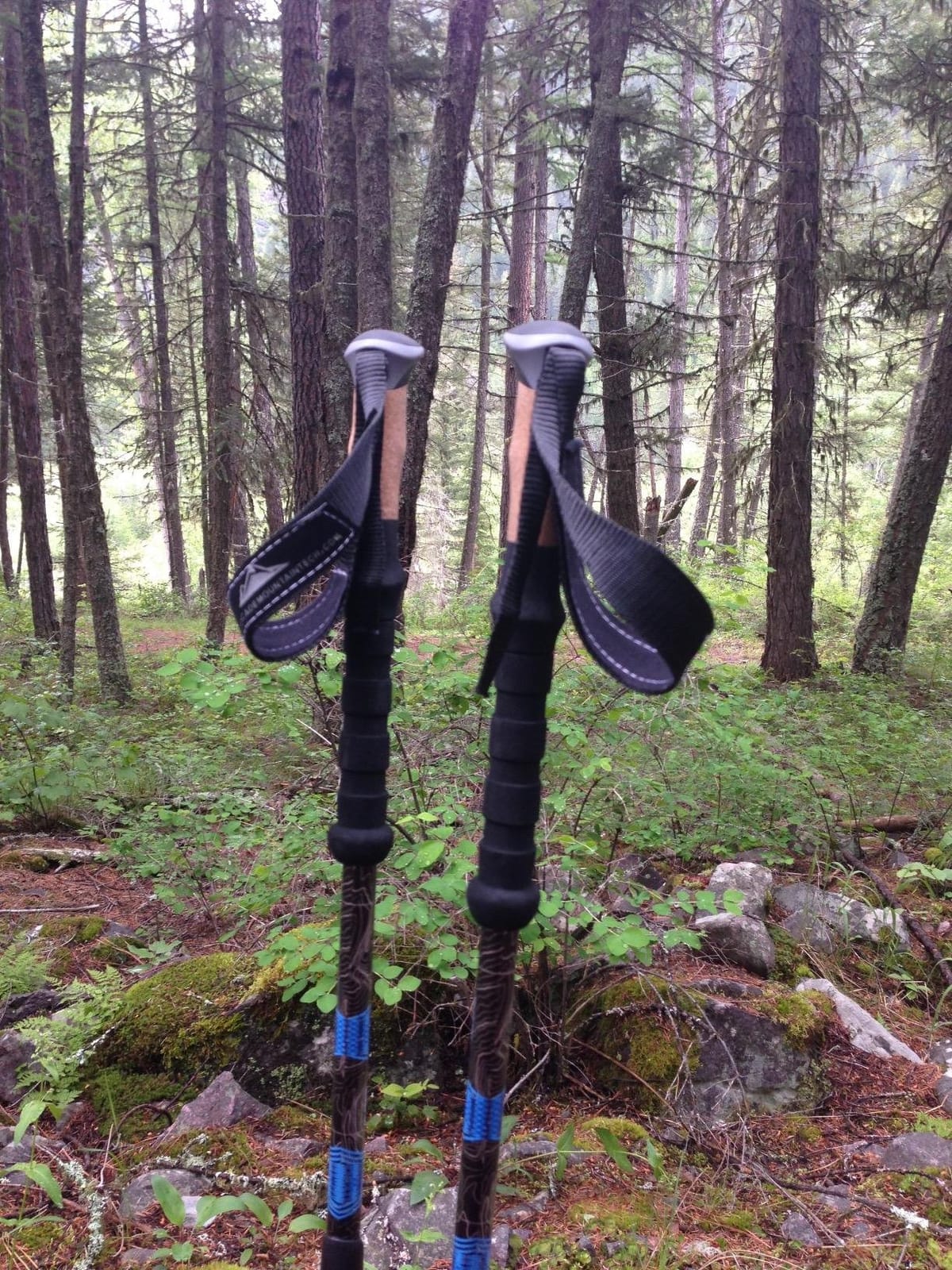
The quick lock is the same design as the aluminum version and holds reliably. We have used this pole on wet granite, dry desert sandstone, and snowy shoulder-season approaches with no lock slippage. The accessory kit is full — tungsten carbide tips, mud baskets, snow baskets, rubber tips, and a carry case.
The main compromise is the lack of any shock absorption system. There is no internal spring, so every plant sends a small shock up the pole. For most users it is not noticeable; for users with very sensitive wrists or elbows on long descents, it can build up. The other minor complaint is a faint rattle when the pole plants hard on rock — not structural, just acoustic.
Best fit for Cascade Mountain Tech Carbon
Thru-hikers and backpackers who want real weight savings without paying premium carbon prices. It is also a smart first carbon pole for anyone curious about the material.
When to look elsewhere
If you are hard on gear — slot canyons, off-trail scrambling, frequent jamming — go aluminum. If you want shock absorption built in, this pole does not offer it.
8. KINGGEAR 7075 Aluminum Trekking Poles — Best for Joint Support
KINGGEAR Trekking Poles 7075 Aluminum Lightweight Hiking Sticks
7075 aviation aluminum
Cork grip,quick flip lock
9.35 oz per pole, 25.5-54 inch
Pros
- 7075 aluminum is lighter and stronger than 6061
- Natural cork grip with EVA support is sweat-wicking
- Adjustable breathable wristband prevents slipping
- Lifetime guarantee from the manufacturer
- Trusted by 400000+ hikers since 1999
Cons
- Slightly heavier than some 7075 competitors
- Grip ridges can feel rough on bare hands
- Plastic lock components feel less premium than metal
KINGGEAR has been quietly making trekking poles for over 25 years, and the reviewer base reflects that — a large share of repeat customers are hikers with joint replacements, arthritis, or chronic knee issues. The 7075 aluminum they use is the same high-strength alloy you find in aerospace and bicycle components, and at 9.35 ounces per pole it is lighter than most 6061 aluminum options.
The cork grip is the real star here. It is a dense natural cork that wicks sweat aggressively and forms to your hand within a few hikes. The EVA support under the cork adds a second hand position for sidehills. The adjustable breathable wristband is a small touch that prevents the strap from sliding down your wrist — annoying on long days.
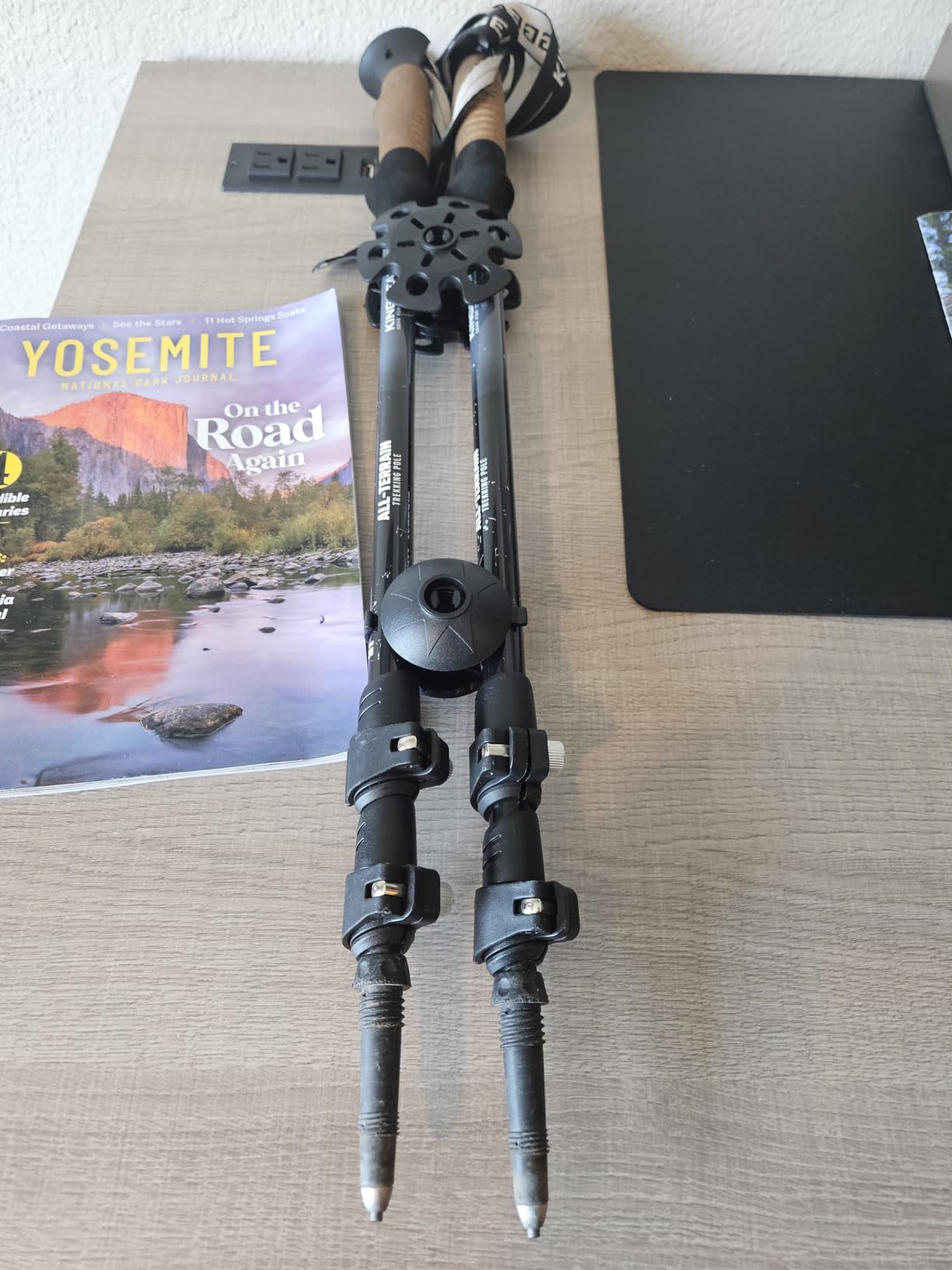
The lifetime guarantee is unusually strong for this category. KINGGEAR has been replacing poles for customers for decades, which tells you something about how often the pole actually fails. The quick flip lock has a thumb tab and adjusts from 25.5 to 54 inches, covering most adult heights comfortably.
The trade-offs are minor. KINGGEAR’s 9.35 ounces per pole is a touch heavier than some 7075 competitors, though still lighter than 6061 builds. The grip ridges are slightly more pronounced than other cork poles and can feel rough on bare hands — wearing lightweight gloves solves this if it bothers you. And the locking lever uses a small plastic tab that, while durable, does not have the metal feel of more expensive poles.
Best fit for KINGGEAR
Hikers with joint pain, arthritis, or anyone rebuilding confidence after a knee injury. The lifetime guarantee is also a meaningful differentiator if you intend to use the poles hard and for many years.
When to look elsewhere
If you are an ultralight purist chasing every gram, the 9.35 ounce weight is not the lightest in this roundup. If you specifically want a metal flip lock rather than a plastic-tab design, look at the Hiker Hunger options.
9. Hiker Hunger 100% Carbon Fiber Trekking Poles — Best Ultralight
100% Carbon Fiber Trekking Poles by USA Brand – Ultra Strong Lightweight Collapsible Hiking Poles with Cork and EVA Foam Grips & Quick Adjustable Flip Locks
3K 100% carbon fiber
Cork EVA grip,metal flip lock
7.6 oz per pole, 24-55 inch
Pros
- 7.6 oz per pole is the lightest in this roundup
- 3K woven carbon fiber is strong for its weight
- Moisture-wicking cork grips with EVA foam extension
- Neoprene padded straps prevent chafing on long days
- Metal flip locks hold better than plastic alternatives
Cons
- Higher price point than aluminum options
- Carbon fiber needs more careful handling
- Customer service response can be slower than larger brands
At 7.6 ounces per pole, this is the lightest trekking pole in our roundup. Across a 2,000 mile thru-hike that translates to roughly 13 pounds of pack weight saved versus using heavier aluminum poles — a meaningful number when every item in your pack is being weighed against alternatives. The 3K woven carbon fiber has a slightly textured surface that looks and feels premium.
The cork grip is paired with a nonslip EVA foam extension and a neoprene padded strap. That strap is one of the most comfortable we have tested on long days — it does not dig into the top of the hand the way basic nylon straps do, and the neoprene breathes better than foam padding.

Metal flip locks are a step up from plastic flip locks in feel and long-term durability. They are heavier than plastic, but the strength-to-weight tradeoff is worth it for serious use. Length adjusts from 24 inches collapsed to 55 inches extended, which is the longest range in this roundup and works well for taller hikers.
The trade-offs are real. Carbon fiber is the most expensive material here, and Hiker Hunger sits at a mid-premium price point. Carbon also needs more care than aluminum — do not jam it into cracks and do not use it as a pry bar. The customer service experience can be slower than larger brands like Black Diamond or Leki, though the warranty terms are clear.

Best fit for Hiker Hunger 100% Carbon
Thru-hikers, fastpackers, ultralight backpackers, and taller hikers who need a 55 inch max length. If you have already cut every other gram out of your pack and the poles are the next target, this is the right tool.
When to look elsewhere
If you are hard on poles or use them for off-trail scrambling, the carbon fiber failure mode (clean snap) is less forgiving than aluminum (bend). If budget matters more than grams, the aluminum picks give you 80 percent of the experience at half the price.
10. Hiker Hunger Premium Foldable Aluminum Trekking Poles — Best for Beginners
Premium Foldable Hiking Poles by USA Brand – Adjustable, Lightweight Trekking Poles Made of Aircraft Aluminum, Metal Locks Cork EVA Grips (Cork – Black, 100-120 cm for Height: 5’9″ and Smaller)
Aircraft aluminum
Cork EVA grip,metal flip lock
9.95 oz per pole, folds to 14-15 inch
Pros
- Folds to 15 inches for easy transport and storage
- Lightweight aircraft aluminum at 9.95 oz per pole
- Two adjustable size ranges fit most adults
- Metal flip locks with reinforced joints
- Choice of cork or EVA grips for different preferences
Cons
- Locking mechanism requires upward tension during adjustment
- Some users report occasional single-pole lock slippage
- Price is higher than entry-level aluminum competitors
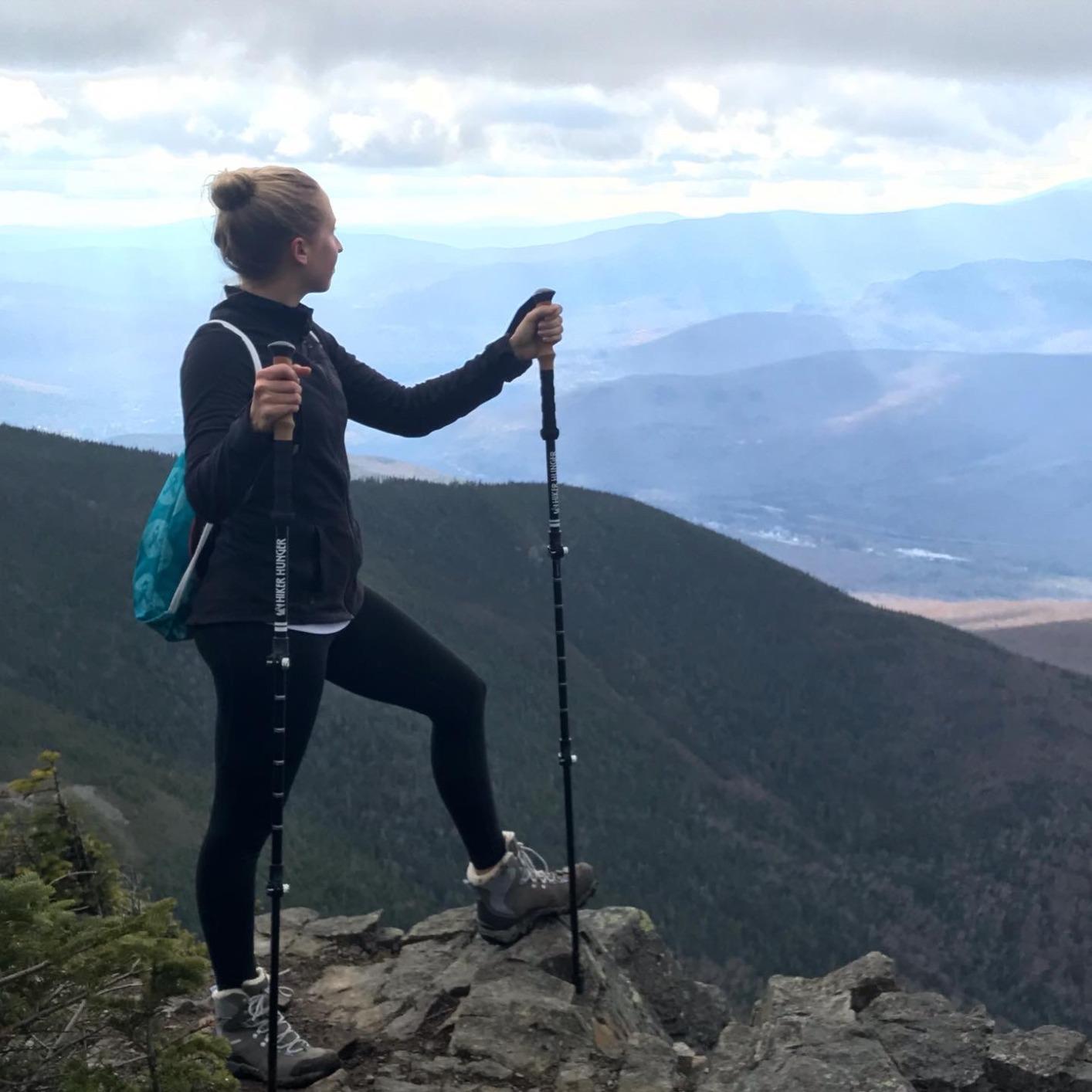
If I were buying a first pair of trekking poles for someone who had never used poles before, this is the pair I would choose. The foldable design collapses to 15 inches — small enough to fit in a closet, a carry-on, or a small apartment entryway without dominating the space. For beginners who are not sure how much they will use poles, that storage story matters.
Aircraft-grade aluminum at 9.95 ounces per pole is light enough that the poles do not become a burden on the trail, and the metal flip locks with reinforced joints are a meaningful upgrade from basic plastic locks at this tier. The cork grip option we tested is comfortable and breaks in nicely; the EVA option is a sensible choice for users who prefer a slightly firmer, sweat-resistant feel.
There are two size ranges — 100 to 120 cm and 115 to 135 cm — which cover most adult heights. The brand notes these poles were tested in the Rocky Mountains, which is a useful framing for anyone expecting real mountain terrain rather than gentle forest paths.
The honest trade-off is the adjustment technique. Unlike telescoping poles that you simply twist or flip to lengthen, foldable poles require you to extend each section under slight upward tension before locking. It is a small skill but a real one, and first-time users occasionally report a single pole slipping because they did not apply that tension during setup. Once you learn the technique, it becomes second nature.
Best fit for Hiker Hunger Premium Foldable
First-time buyers who want a single do-everything pole that packs small, lives in an apartment, travels easily, and handles real trail use. It also makes a great gift because the foldable design removes the intimidation factor.
When to look elsewhere
If you want the lightest possible pole for a thru-hike, go carbon. If you specifically want a twist lock or a quick flip lock with a thumb-screw tensioner, look at the Cascade Mountain Tech aluminum pair.
How to Choose the Best Trekking Poles for Hiking
Once you know which products are on the shortlist, the next decision is which features actually matter for the way you hike. Here are the six factors our team weighs every time.
Aluminum vs Carbon Fiber Shafts
Aluminum — specifically 6061 or 7075 alloys — is heavier than carbon fiber but bends before it breaks, which is the safer failure mode in real mountain terrain. Carbon fiber is lighter and stiffer, but snaps without warning when overloaded. For day hiking, weekend backpacking, and most family use, 7075 aluminum is the right default. For thru-hikers, ultralight backpackers, and fastpackers who count every gram, carbon fiber is worth the premium. The safety considerations for backcountry use also push us toward aluminum for most users.
Lever Lock vs Twist Lock vs Flip Lock
Lever locks (also called FlickLock on Black Diamond poles) are fast, glove-friendly, and the easiest to adjust on the move. They can occasionally slip under very heavy load if not tensioned correctly. Twist locks are lighter and cheaper but harder to use with cold or arthritic hands. Flip locks with a thumb-screw tensioner (like Foxelli and Cascade Mountain Tech) sit between the two and are the most reliable under load once dialed in.
Grip Materials: Cork vs EVA Foam vs Rubber
Cork is the gold standard for serious hikers — it absorbs sweat, dampens vibration, and forms to your hand over time. EVA foam is lighter and cheaper but can feel slimy on long sweaty days. Rubber is the firmest and most durable but transmits more vibration and gets slippery when wet. For most users the best grip is cork on top with an EVA extension underneath for choke-up positions on sidehills.
Sizing Trekking Poles to Your Height
The quick rule is to set your elbow at a 90 degree angle with the pole tip on the ground next to your foot. For uphill terrain, shorten the poles by 5 to 10 cm. For downhill, lengthen them by the same amount. Most quality poles give you 20 cm of adjustment, which is enough for the typical terrain you will encounter. Taller hikers (over 6 ft 2 in) should specifically look for poles that extend to 130 to 135 cm, which is why we made sure several picks on this list go that high.
Folding Z-Poles vs Telescoping Poles
Folding poles (Z-poles) collapse shorter than telescoping poles — typically 13 to 16 inches versus 24 to 26 inches — which makes them much easier to pack. Telescoping poles offer more granular length adjustment and tend to be slightly lighter. If you fly, backpack with a smaller pack, or store your gear in a small space, folding wins. If you primarily day hike and adjust length often for terrain, telescoping wins.
TSA Rules for Trekking Poles
This is a question we get constantly and most roundups skip. The TSA’s official rule is that trekking poles are allowed in checked bags but not in carry-on luggage. They are considered a potential bludgeoning instrument and exceed the size limits for carry-on items. Some airports allow collapsed poles that fit within carry-on dimensions, but enforcement is inconsistent — expect to be asked to check them. Pack them in a sturdy bag or a dedicated pole carrier to protect the tips and locks during baggage handling.
Pole Maintenance and Care
Trekking poles do not need much maintenance, but a few habits extend their life. After hiking in mud or sand, pull each section apart and wipe down the joints to keep grit out of the locks. Once a season, apply a small amount of silicone spray or light oil to the telescoping sections to keep the locks smooth. Replacement rubber tips and baskets are widely available — order them before you need them so a worn tip does not strand you mid-trip.
Frequently Asked Questions
Is there a difference between hiking poles and trekking poles?
What’s better for trekking poles, aluminum or carbon fiber?
Do expensive trekking poles make a difference?
Does TSA allow trekking poles in carry-on?
How do you size trekking poles for your height?
What is the best budget trekking pole?
Are folding or telescoping trekking poles better?
What are the best trekking pole grips?
Final Verdict on the Best Trekking Poles for Hiking
After hundreds of trail miles across this roundup, our editor’s choice for the best trekking poles for hiking remains the TrailBuddy Trekking Poles. The combination of 7075 aluminum, cork grip, one-handed lever lock, and a size range that fits the whole family is hard to beat, and the 63,000-plus review base reflects how well it holds up across every kind of user.
Pick the TrailBuddy if you want one set that does everything well. Pick the Cascade Mountain Tech aluminum pair if you want the same dependability with a slightly more refined cork and EVA grip. Pick the Aihoye pair if you want to try trekking poles for the first time without a big commitment. For everything else, the rest of the list has you covered.
Take any of these pairs out, set your elbow at 90 degrees, lean into the strap, and you will understand why most hikers never go back to hiking without poles. For related gear, see our guides to winter hiking snowshoes, baby carriers for hiking, and what to do if you see a bear while hiking.